Sunday, November 10, 2019

HANDING SAUDI ARABIA THE G20 PRESIDENCY DESPITE THE KHASHOGGI MURDER IS LIKE GIVING IT LICENSE TO KILL | OPINION


By HATICE CENGIZ AND CHRISTOPHE DELOIRE
Ever since the UN General Assembly so resolved in 2013, the fight against impunity for crimes of violence against journalists is celebrated on 2 November. Considerable mobilization is needed at the international level because more than 90% of these crimes go unpunished, in both countries at war and at peace. Should it be necessary to demonstrate the overriding need for this fight, there are murders that – because of the circumstances, protagonists or victims – have a special impact. Jamal Khashoggi's murder inside Saudi Arabia's consulate in Istanbul belongs to a category one might have thought long forgotten, the category of "state crime."

Perpetrated by Saudi government thugs and planned at a political level that the trial in Riyadh is taking care not to reveal, it will leave an indelible stain on the regime unless all the consequences have demonstrably been accepted and acted upon. It is not enough for Crown Prince Mohammed bin Salman to belatedly acknowledge "responsibility" because it happened "under my watch." A state crime requires a full public apology, says Agnès Callamard, the UN special rapporteur on extrajudicial executions. We are waiting for this apology. Just as Khashoggi's loved ones are waiting for his remains, and for justice to be done. The trial taking place behind closed doors does not respect international standards on justice. Rather than regarding a possible death sentence for five of the alleged perpetrators as a harsh punishment, we would regret that Saudi justice had thereby silenced forever men who know some of this affair's secrets. Since this tragedy, Saudi Arabia has continued to persecute its journalists with exceptional violence.

At least 32 professional and non-professional journalists are arbitrarily detained in Saudi prisons. This is twice as many as before MBS took over. Rarely has fear been so palpable, not just in the Arabian Peninsula but everywhere Saudis are to be found in the world. It's against this backdrop that Riyadh is getting ready to hold a conference on the media in early December. Foreign journalists and media experts have been invited to a "Saudi Media Forum" to discuss media freedom and independence. We fear it will be pure fiction ever if we'd like to believe otherwise. Aside from the expressions of international outrage last October, the sanctions adopted by Washington, Ottawa, Paris and Berlin against a handful of individuals suspected of involvement in Jamal Khashoggi's murder have not sufficed to persuade the regime to moderate its repressive policies. Germany was alone in suspending arms sales to Saudi Arabia. US Vice-President Mike Pence suggested that the release of Raif Badawi, a blogger sentenced to ten years in prison and a thousand lashes, would help to restore Saudi Arabia's international reputation. But just a month before that, US President Donald Trump insisted that Mohammed bin Salman stand beside him in the front row for the group photo of the G20's leaders during their meeting in Osaka, Japan.

 The sons of Malta's Daphne Caruana Galizia, Gauri Lankesh's sister in India and the families of Javier Valdez and Miroslava Breach in Mexico have already been fighting for two years to learn the truth about their deaths. Three years ago, the colleagues of Jean Bigirimana in Burundi and Pavel Sheremet in Ukraine tried to make up for the failings of the police by carrying out their own investigations in attempt to identify those responsible for Bigirimana's disappearance and the car bomb that killed Sheremet. The list of victims get longer by the day. In Mexico, at least 150 journalists have fallen victim to the drug cartels and the vicious cycle of violence and impunity since 2000.
The G20's leaders have a duty to act if they want to comply with the principle of responsibility. Without free, independent, trustworthy and diverse journalism, humankind will not be able to properly address any of the great challenges it is facing. Heads of state and government cannot content themselves with being the passive spectators of the murders of journalists. And yet, Saudi Arabia is poised to take over the G20's presidency for a year.
Treating Saudi Arabia's G20 presidency as a presidency like any other would be to give the Saudis a "licence to kill," to give them permission to suppress the truth and extinguish media pluralism. We call on the G20 not to trample on Jamal Khashoggi's memory. We ask its leaders to obtain clear undertakings from Saudi Arabia to respect press freedom and, as a first step, to release the 32 imprisoned journalists because, as Khashoggi said in his last column, "What the Arab world needs most is freedom of expression." This is also true for the rest of the world.
Video Report - Jirga | Molana Fazal-ur-Rehman | 10th November 2019

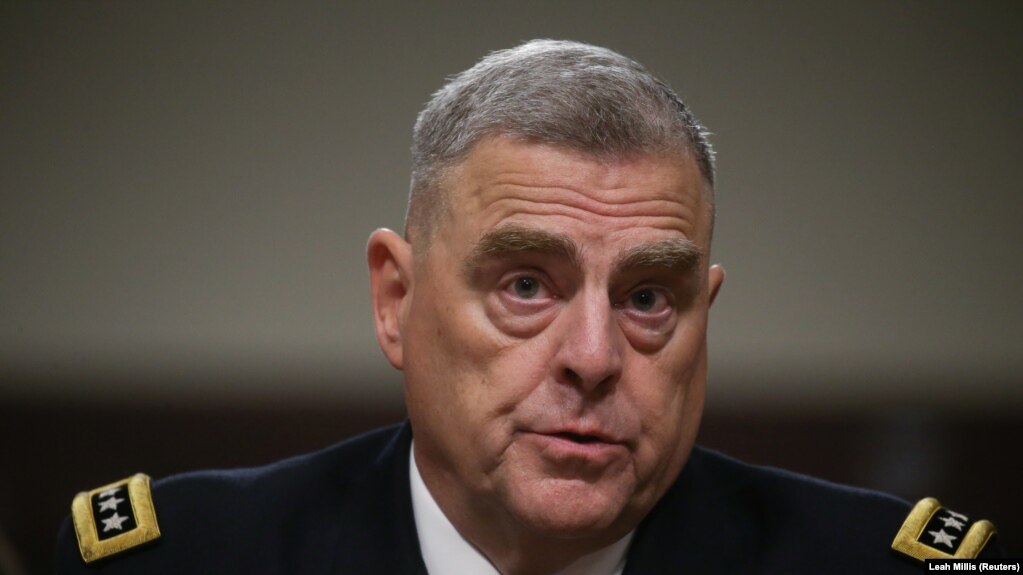
U.S. Troops To Stay In Afghanistan Several More Years, Says General

U.S. Army General Mark Milley, chairman of the Joint Chiefs of Staff, has predicted that American troops, already in Afghanistan for 18 years, would remain in the country "for several more years."

In an ABC interview broadcast on November 10, Milley noted that, after the September 11 attacks in 2001, the original reason U.S. forces went into Afghanistan was to make sure that the country never again would be a haven for extremists who would attack the United States.

"That mission is not yet complete," the general said. "In order for that mission to be successful the government of Afghanistan, the Afghan security forces, are going to have to be able to sustain their own internal security to prevent terrorists using their territory to attack other countries, especially the United States."

There are some 14,000 U.S. troops in Afghanistan, as well as thousands of European forces participating in the NATO-led Resolute Support mission.

President Donald Trump has repeatedly said it is time for the United States to pull back from its role in various conflicts around the globe, including in Syria.

Milley said U.S. troops will remain in the Middle Eastern country "for a significant amount of time because it's in our national interest to be there to help out."

The general said he expected American troop levels in Syria to stabilize at around 500, insisting that pressure must be maintained on fighters of the Islamic State (IS) extremist group.

"There will be less than 1,000 [U.S. troops], for sure," Milley told ABC. "Probably in the 500ish frame, maybe six."

There are currently several hundred U.S. troops in Syria.

Trump has recently approved an expanded military mission to secure oil fields in Syria's east, after announcing a complete withdrawal from the country.

https://www.rferl.org/a/u-s-troops-afghanistan-several-several-more-years-general-mark-milley/30262907.html

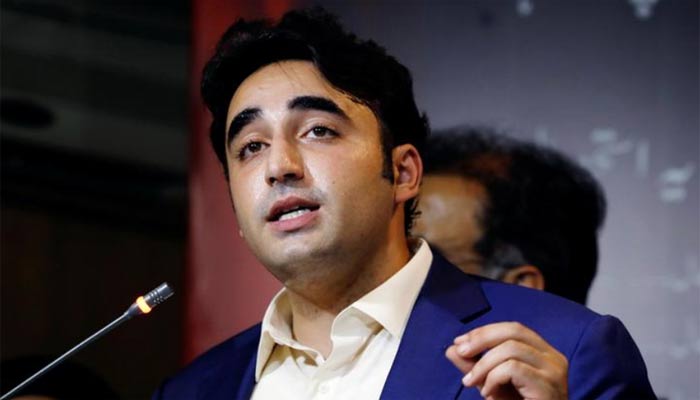
حکومت کے خلاف اپوزیشن متحد ہے، بلاول بھٹو

چیئرمین پاکستان پیپلز پارٹی (پی پی پی) بلاول بھٹو زرداری نے کہا ہے کہ ملک پر کڑا وقت ہے، اپوزیشن حکومت کے خلاف متحد ہے۔
بلاول بھٹو لاہور میں سینئر پارٹی رہنما جہانگیر بدر کی تیسری برسی کے موقع پر ان کی رہائش گاہ پہنچے، ان کی سیاسی خدمات کو خراج عقیدت پیش کیا اور ان کی بلندی درجات کے لیے دعا کی۔
اس موقع پر کارکنوں سے گفتگو میں بلاول بھٹو زرداری نے کہا کہ حکومت نے ملک کو مسائل میں پھنسا کر رکھ دیا ہے، اپوزیشن عوام کے مسائل کے حل کے لیے سڑکوں پر ہے، سب مل کر اس حکومت کو گھر بھیجیں گے۔
انہوں نے کہا کہ پیپلز پارٹی مرحوم جہانگیر بدر کی خدمات کو کبھی فراموش نہیں کرسکتی، وہ پارٹی قیادت کی تین نسلوں سے وفا کی علامت تھے۔
بلاول بھٹو نےکہا کہ پارٹی کارکن متحد رہیں اور عوامی رابطہ مہم تیز کردیں، جب وہ وسطی پنجاب میں آئیں گے تو پیپلز پارٹی کا جھنڈا ہر جگہ لہرائے گا۔
ان کا کہنا تھا کہ مولانا صاحب کا دھرنا چل رہا ہے، وہ بھی عوام کے درمیان ہیں، سب مل کر اس حکومت کو گھر بھیجیں گے۔
اس سے قبل پیپلز پارٹی وسطی پنجاب کے رہنماؤں نے قمر زمان کائرہ کی قیادت میں بلاول بھٹو سے بلاول ہاؤس میں ملاقات کی۔
ملاقات میں سیاسی صورتحال اور تنظیمی امور پر تبادلہ خیال کیا گیا۔

U.S. Troops To Stay In #Afghanistan Several More Years, Says General

U.S. Army General Mark Milley, chairman of the Joint Chiefs of Staff, has predicted that American troops, already in Afghanistan for 18 years, would remain in the country "for several more years."

In an ABC interview broadcast on November 10, Milley noted that, after the September 11 attacks in 2001, the original reason U.S. forces went into Afghanistan was to make sure that the country never again would be a haven for extremists who would attack the United States.

"That mission is not yet complete," the general said. "In order for that mission to be successful the government of Afghanistan, the Afghan security forces, are going to have to be able to sustain their own internal security to prevent terrorists using their territory to attack other countries, especially the United States."

There are some 14,000 U.S. troops in Afghanistan, as well as thousands of European forces participating in the NATO-led Resolute Support mission.

President Donald Trump has repeatedly said it is time for the United States to pull back from its role in various conflicts around the globe, including in Syria.

Milley said U.S. troops will remain in the Middle Eastern country "for a significant amount of time because it's in our national interest to be there to help out."

The general said he expected American troop levels in Syria to stabilize at around 500, insisting that pressure must be maintained on fighters of the Islamic State (IS) extremist group.

"There will be less than 1,000 [U.S. troops], for sure," Milley told ABC. "Probably in the 500ish frame, maybe six."

There are currently several hundred U.S. troops in Syria.

Trump has recently approved an expanded military mission to secure oil fields in Syria's east, after announcing a complete withdrawal from the country.

https://www.rferl.org/a/u-s-troops-afghanistan-several-several-more-years-general-mark-milley/30262907.html

Editorial: #Pakistan - #HIV- #AIDS in #Balochistan


The 30th anniversary of World AIDS Day is being marked on today on  December 1, 2018. World AIDS Day originated at the 1988 World Summit of Ministers of Health on Programmes for AIDS Prevention. Since then, it is organized every year by United Nations agencies, governments, and civil society.
Since 1988, remarkable progress can be witnessed that today millions of people living with HIV are leading healthy and productive lives, however, there is much more to be done, as the latest UNAIDS report proves that the great challenge is having no knowledge of HIV status. because UNAIDS estimates that more than 9.4 million people living with HIV still do not know their status.
Alarmingly, the number of AIDS patients has also increased in Balochistan. According to General Director Health Department Balochistan Dr. Shakir Baloch, the number of Acquired Immunodeficiency Syndrome (AIDS) patients has been greater from 3500 to 5000 in Balochistan, despite 1334 patients were registered with AIDS control program.
Addressing a Press conference at Quetta Press Club Dr. Shakir Baloch said that 1033 registered patients in which 911 patients of HIV-AIDS are being treated in Quetta under AIDS Programme while 301 patients were under treatment in Turbat.
Dr Shakir Baloch shared that HIV-AIDS patients were also reported in respective areas of Balochistan including Qila Saifullah, Zhob, Sherani, Gwadar, Loralai, Lasbella, Noshki, Qilla Abdullah, and Pishin. Among 4404 tested prisoners in Balochistan, while 71 of them have been found the suffering of HIV-AIDS”, adding, that about 6200 people died of HIV-AIDS in Pakistan while 231 men had lost their lives from the same disease in Balochistan.
The growing number of AIDs patients and deaths in Balochistan is quite vexing and alarming for people in Balochistan. Balochistan is already having a battle with a number of diseases and humanitarian issues, the AIDs is another challenge to be confronted by the people. In order to know the status, the people with minor symptoms must visit doctors and prevention must be applied. Here the stakeholders in society have to play their due role to create awareness among people against HIV-AIDS to save human lives from such diseases through religious teachings.

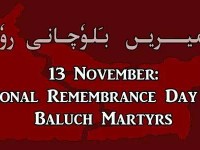
Baloch Martyrs Day: Free Balochistan Movement to organise Remembrance Day events

The Free Balochistan Movement (FBM) in a statement has announced to organise programs in Austria, Germany and Canada to pay tributes of Baloch martyrs of freedom struggle on 13 November 2019. The FBM statement to media further read that, like other nations of the world, the Baloch people have chosen a National Remembrance Day to pay tributes to their fallen heroes of the national liberation struggle. The Baloch nation celebrates 13 November as the ‘Baloch Martyrs Day (National Remembrance Day) every year.
The Baloch nation is well aware of its historical significance on 13 November, on this day, in 1839; when the occupation and expansionist army of British imperialism besieged the Kalat state with the intention to occupy Balochistan. The Baloch ruler at the time along with his companions revolted against the British army in defence of their motherland.
The ruler of Balochistan at the time, Mir Khan Mehrab Khan, along with his comrades, fought until the last breath to defend the Baloch national dignity and the Baloch land, knowing the fact the British invading army was superior to his men in numbers but their resolve and determination was greater than that of their enemy. The Baloch fighters recorded history by not surrendering before the enemy and embraced martyrdom on 13 November 1839 to prove that they love for Balochistan’s freedom and sovereignty is greater than the love of their lives.
The Free Balochistan Movement in its statement said that Baloch martyrs have nourished the Baloch freedom struggle with their precious lives against occupiers and strengthen the ongoing Baloch struggle for freedom.
On the same day, different programs will be organised from Party’s platform in the Austrian cities of Salzburg, Canada’s Vancouver city and in different cities of Germany to inform the world about Baloch resistance and liberation struggle against the occupation of Balochistan. The message of Baloch freedom struggle for a prosperous, peaceful and independent Baloch country will be spread around the world.
The FBM also said in its statement that there will be an online campaign on Social Media using hashtag #13NovBalochMartyrsDay to highlight the importance of 13 November and sacrifices of Baloch martyrs of freedom struggle.
FBM has requested all pro-freedom Baloch activists, national and international supporters of Baloch freedom struggle, social media activists, Human Rights activists and all freeborn peoples around the world to join the online campaign to express their support for Baloch freedom movement. The online campaign will continue from the morning of 13 November till the end of the day.
Emphasising on the importance of, November 13, 1839, the Free Balochistan Movement said that when the British army invaded Balochistan, the ruler of the Baloch state Mir Mehrab Khan, instead of surrendering before the enemy, chose the path of resistance and embraced martyrdom while defending motherland.
Hence, all Baloch should unite and jointly pay tributes for the martyrs of liberation struggle on this day and pledge that we [Baloch nation] will continue for the struggle for an independent Balochistan where all citizen will be treated equally, laws of the land will be prioritised. And we pledge that our struggle for national freedom will continue until we free ourselves from the yoke of Pakistani and Iranian occupation forces and regain our independence and sovereignty.

Calls for a free #Kashmir are becoming louder on both sides of the divided region

Kashmir: Independence activists draw inspiration from German reunification
Calls for a free Kashmir are becoming louder on both sides of the divided region. Can the German reunification model be applied to the India- and Pakistan-ruled Kashmirs? And what can Kashmiris learn from it?
On August 5, Indian Prime Minister Narendra Modi abrogated Jammu & Kashmir's semi-autonomous status and imposed a curfew in the volatile parts of the region. The move was slammed by Pakistan, which urged the United Nations to force India to reverse its Kashmir actions.
India and Pakistan each rule part of the disputed Himalayan territory but claim it in full. Both oppose the demand for an independent, undivided Kashmir ruled by the Kashmiri people.
Since New Delhi's decision to scrap Kashmir's special status, a "free Kashmir" movement has resurfaced on both sides of the Line of Control (LoC), which divides the India- and Pakistan-controlled Kashmir regions. Kashmiris have been demanding a sovereign state for decades, but their voices have mostly been ignored by both India and Pakistan.
Lately, there have been increasing reports about large demonstrations in Pakistan-administered Kashmir — officially called Azad Kashmir in Pakistan. Last month, clashes broke out between protesters and police in Muzaffarabad, the region's capital. The police were trying to disperse a protest rally organized by the People National Alliance (PNA), a group that seeks an independent Kashmir.
Inspirational factor
Kashmiri activists that seek independence from both India and Pakistan told DW they are hugely inspired by the movement that brought down the Berlin Wall and rejoined East and West Germany to form one German state.
Germany was officially reunited on October 3, 1990, under the guidance of then-Chancellor Helmut Kohl, after more than four decades of Cold War division. The historic event came less than a year after the Berlin Wall fell on November 9, 1989.
"We believe that the fall of the Berlin Wall and the subsequent reunification of Germany are an inspiration not only to us but to all freedom movements in the world. Like the pre-reunification Germany, Jammu and Kashmir has also been split into two territories, and a wall (LoC) was erected to divide the same people," Toqeer Gilani, the president of the Jammu and Kashmir Liberation Front (JKLF) in Pakistan-administered Kashmir, told DW. He added that "if Germany can be reunited, so can Kashmir."
"The post-World War II Germany was also forcefully divided by global powers. It was propagated that the division was necessary due to the 'ideological differences' between East and West Germany. We also experienced this in Kashmir," Gilani said.
Some experts say that although the German and Kashmiri dynamics are not totally similar, the "independent Kashmir" movement can still take inspiration from the German reunification success.
"As we approach the anniversary of the fall of the Berlin Wall, we should rejoice that people can overcome adversity and divisions. The people of Kashmir will take inspiration from what happened in Germany 30 years ago. A group of people has been kept apart by force," Shaffaq Mohammed, a British-Kashmiri MEP (Member of European Parliament), told DW.Ali Raza Syed, the chairman of the Kashmir Council, a Brussels-based non-governmental organization, says that just as in pre-reunification Germany, families are divided in India- and Pakistan-controlled Kashmirs. "They have the same culture, the same language. I think the German reunification inspirations can be applied to Kashmir," Syed told DW.
"You can threaten people, you can torture them, but you cannot govern a country out of fear," Mohammed said, referring both to the India-imposed lockdown in Kashmir and the oppression in the former German Democratic Republic, or GDR.
"If Kashmiris want to be independent of both India and Pakistan, it is their right," the Liberal Democrat MEP added.

https://www.dw.com/en/kashmir-independence-activists-draw-inspiration-from-german-reunification/a-51091943

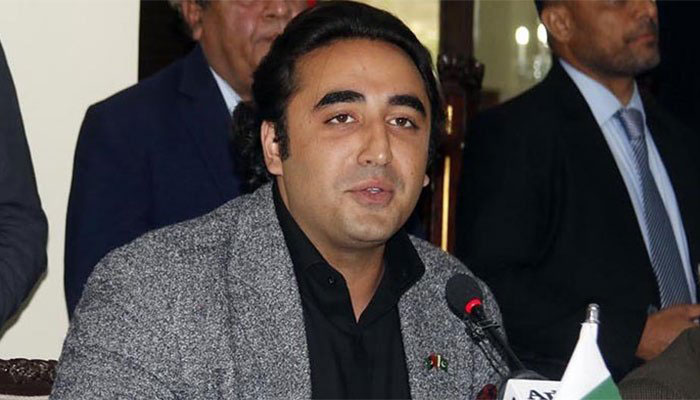
#Pakistan #PPP - We will all unite to send this government home: Bilawal

Pakistan Peoples Party (PPP) Chairman Bilawal Bhutto Zardari, on Sunday, said that the entire opposition was united and would send the incumbent government packing. 
Bilawal paid a visit to the house of late PPP leader Jahangir Badar on the occasion of his third death anniversary, said that the opposition had taken to the streets to oust this government. 
Speaking to workers of the party, Bilawal said that the government had increased problems of the people. He said that everyone would join forces to send these rulers home. 
"I urge my workers to stand firm and stay united--increase your contact with the people. When we enter Central Punjab, PPP's flags will be seen everywhere," he said. 
He paid tribute to Jahangir Badar, saying that the party could not forget his sacrifices. 
"His loyalty to the PPP spanned three generations," he said. 
Earlier, a PPP delegation comprising leaders from Central Punjab met Bilawal under the leadership of Qamar Zaman Kaira. Organisational structure and the political situation of the country came under discussion during the meeting. 
On the other hand, Prime Minister Imran had earlier said that if the opposition did not budge from its demand for his resignation, then there was no need to negotiate with them. 
Thousands of protesters have converged on the federal capital under the banner of the Azadi March, seeking to send packing Prime Minister Imran Khan packing.
The ‘Azadi’ March caravan, which set off from Sindh, left Punjab’s city Lahore on Wednesday and culminated its journey Thursday night in Islamabad.
Opposition leaders delivered fiery speeches against the PTI government on Friday, Saturday and Sunday, giving the prime minister a 48-hour ultimatum to resign.
JUI-F chief Maulana Fazlur Rehman gave Prime Minister Imran two days to step down, failing which the protesters threatened to march to the PM House, 'force' the prime minister to step down, and 'arrest' him.
The government announced on Saturday that they would approach the courts over Fazlur Rehman's statements, accusing him of "instigating the people" and rallying them for 'mutiny'.
While the ultimatum has run out, Fazl continues to push the demand for the prime minister to resign and go home.
https://www.geo.tv/latest/255713-we-will-all-unite-to-send-this-government-home-bilawal

Media freedom in Pakistan is seeing dark times, says panel

Atika Rehman
Press freedom in Pakistan is the worst today than it has ever been before, said panelists at a talk on censorship held at the Khalili Lecture Theatre (KLT) at SOAS on Friday.
The talk titled ‘Reign of censorship: Pakistan, Kashmir and India’ featured journalist Talat Hussain, writer and academic Farzana Sheikh, British journalist Christina Lamb and former Dawn columnist Cyril Almeida.The two-hour discussion focused largely on the history of censorship in Pakistan, and the gradual sophistication of tools used to silence journalists.
Prof Sheikh recalled a question put to Prime Minister Imran Khan about media freedom in Pakistan during his recent trip to Washington, which he dismissed as a joke and added that the Pakistani media is freer than that of the UK.
“In doing so, Mr Khan was speaking on behalf of many of his peers at the helm of increasingly authoritarian governments in South Asia. Yet for all his bombast, much of the evidence contradicts Khan’s claims,” she said, citing a 2019 Reporters Without Borders report which notes that censorship in Pakistan today is comparable to the Zia era.
Prof Sheikh spoke of the more recent disruption of artist Adeela Suleman’s display depicting extrajudicial killings at the Karachi biennale, and used it as an example of how even artistic expression is being stifled.
She also shared that blasphemy accusations are increasingly being used to silence dissent. Ms Lamb, who also co-authored ‘I Am Malala’, drew attention to the troubling and growing trend of censorship in India, where the government recently removed the citizenship of journalist Aatish Taseer after he criticised the Modi regime in a Time article.
“One of the things that shocked me is that of the journalists killed globally, the number coming from India is disturbing. I had not expected this because I still had that image that India was a place with robust media,” said Ms Lamb.
She also cited how shutting down the internet in occupied Kashmir is again a demonstration of how the Indian state is actively quashing freedom of expression.
Turning to Pakistan, Ms Lamb said that she was recently in the country when she witnessed a broadcast journalist say she was asked not to air a speech made by Maulana Fazlur Rehman ahead of the dharna. “I’m not sure what Imran Khan means when he says Pakistan’s media is freer because these kind of things don’t happen here [in the UK].”
She also said that blacklisting Stephen Butler of the Committee to Protect Journalists from entering Pakistan to participate in the Asma Jehanhir conference was evidence of blatant censorship.
“If you are trying to show that you have media freedom, that is not a very good way to go about it.” Mr Almeida started his talk by giving credit to what he said are “the brave journalists out there who are bringing us information on Kashmir”. About Pakistan, he painted a grim future. “Censorship is not going to get better in Pakistan. The two questions now are: how much worse will it get and how quickly that will happen.”
He unpacked a popular belief in Pakistan about retired Gen Pervez Musharraf’s liberal approach to the media, and said that Musharraf’s incentive to allow private media to flourish came from the Indian government’s propaganda through its private channels during Kargil and the attack on the Indian parliament. “If you look at these episodes in India, you see the newly risen private media who was able to rally national sentiment in a way that Indian state channels would not have been able to do. On our side, they saw how India mobilised their population effectively. So they hoped to do the same. It was not altruism that led Musharraf to do this.”
Mr Hussain highlighted the less talked about issue of self-censorship within media organisations.
“Nobody talks about what owners do to direct censorship at journalists. It has nothing to do with state’s censorship of journalism. It has to do with who they [media owners] like, who funds them and who their favourites are. More than the state of Pakistan, Malik Riaz is the one who controls 9/10th of media coverage. His ability to influence coverage is huge.”
https://www.dawn.com/news/1515916/media-freedom-in-pakistan-is-seeing-dark-times-says-panel

Pashto Music - Nashenas - زخوشرابی.یم.شیخه

Saturday, November 9, 2019

#TheDailyShow - Trump’s Impenetrable Wall Isn’t So Impenetrable

Video - "Read The Transcript" Is Trump's Latest Rallying Cry - with Stephen Colbert

Woman from China's mainland confronts Hong Kong protesters in Germany

Video Report - "Without Russia, the unification of Germany would've been impossible"

Video Report - EU should fear the jihadists it’s backing in Syria, not refugees – Assad to RT

Video Music - Lokan do do yaar banaye

Bilawal calls upon courts to deliver justice to Benazir

Pakistan People’s Party (PPP) Chairman Bilawal Bhutto Zardari on Wednesday questioned that when would his mother and former prime minister Benazir Bhutto get justice.
Addressing Multan Bar Association here, the PPP chief said he and his family have stood witness to the kind of justice imparted by the judicial system in Pakistan. “Today, we are still talking, thinking and fighting for justice, democracy and human rights,” he said, adding, “You can’t simply separate this struggle from the Bhutto family […] those who performed the legislation were hanged.”
“We respect our honourable judges and lawyers who fought against dictatorship and stood by democracy,” he said, while praising brave judges who, despite oppression, wrote dissenting notes which had put their lives at risk. “Ten years ago, then president Zardari sent a presidential reference to the Supreme Court to review the judicial murder of Zulfikar Ali Bhutto, but after 10 years, I went and knocked on the doors of the court and tried to become party in the petition but we are still waiting for justice,” he said.
“In Naya Pakistan, there shouldn’t be any place for political victimisation […] in Naya Pakistan, we are still facing fake cases,” he said, while asking for the release of Zardari in all cases. “Why new laws are made for PPP?” he asked.

https://dailytimes.com.pk/496328/bilawal-calls-upon-courts-to-deliver-justice-to-benazir/

Pakistan authorities demolish mosque of Ahmadi Muslims - Op-Ed - What ails Pakistan

Yasser Latif Hamdani
While the powers that be and politicians fight for the control of the state, there are festering wounds in our body politic that remain unaddressed. Real issues are persistently ignored and swept under the carpet with devastating results.On Friday yet another Ahmadi “place of worship” was desecrated by the state in Bahawalpur. Countless individuals remain behind bars on blasphemy charges including the young professor Junaid Hafeez. Countless young women from minority communities will continue to converted forcibly to Islam in Sindh. The Federal Capital will see yet another Dharna where inevitably religion will be misused. Fundamental rights such as freedom of religion and freedom of expression will continue be trampled for political expediency and freedom of press will continue to be denied. Meanwhile the economy continues to nosedive. By February 2020, we may even be on the FATF blacklist. Our brightest minds continue to flee the country. Such is the state of affairs in Pakistan in the closing months of 2019.
The tragedy is that this country has everything that can make it one of the leading economies of the world. It is blessed with geography, climate and a rich cultural heritage that should make it the destination of choice for tourists. It has mega cities like Karachi and Lahore and a capital city that ought to be the envy of the world. The Government tells us that Pakistan has jumped 28 places on the Ease of Doing Business index. Yet the tourists by and large do not want to come to Pakistan and hardly anyone wants to do business with us. This is because of the festering wounds. We have an image problem and all of it is our own doing. The powers that be have always tried to be clever by half and in the process ruined the country. They lost us half the country in 1971 and since then we have slipped deeper into the abyss. We have dug ourselves into a hole we cannot dig out of. It is important to take stock of it.
Consider the so-called religion card. We could learn much from history. When Gandhi invoked Ram Rajya, he did not have Modi in mind. He was warned against it but he did not listen. When the framers of Objectives’ Resolution in Pakistan tried to strike the balance between religion and modern democracy in 1949, they probably could not imagine General Zia ulHaq and his 11 years in power. They too were warned but did not listen. Today the PTI government speaks about Maulana Fazlur Rahman using the religion card but they fail to realize that their own rhetoric has opened the door. What the Prime Minister does not realize is that while he might interpret Riyasat-e-Medina as a progressive and humane democracy, there may be others who might have a very different idea of what that means. Then there is the obvious misuse of religion that PTI engaged in with their unthinking support of TLP in 2017. Who would want to visit such a country or invest in it? No number of Royal Visits will change the perception that the world has.
The only way this country can progress is through an unwavering and uncompromising stand on civilian rule, liberal democracy and a practical separation of religion from state.
So what do we do? The old man had it right when he spoke on 11 August 1947, but it was too fine for philistines. Yet it really is the only panacea for our ills. Hence one harps about it. Nothing less than a faithful implementation will do. That is easier said than done. We have gone too far into the deep end to do it though. Hence we have a decaying and rusting state that creaks more than it works. Instead of concentrating wholly and solely on the well being of the poor in the country and delivering them from illiteracy and poverty, we are more interested in point scoring. Corruption is a symptom of the disease not its cause. Cause is the cynical manner in which the powers that be have run it. Consequently we have not been able to foster a genuine spirit of selflessness and public service. Everyone is in it for themselves.
The ruling party had come on the promise of change but what change do we see in this government. The people who were the aiders and abettors of General Musharraf are in power yet again. While civilian politicians continue to be punished for crimes real and imagined, the military dictator who did much harm not just to the country but to his own institution continues to live a happy life abroad. The last minute de-notification of the prosecution team in the case against him is just another example of his friends taking care of him. Musharraf had spoken a great game on some of these key issues but eventually the unconstitutional and illegal nature of his regime forced him to make compromises that meant that his much-vaunted idea of enlightened moderation turned out to be a farce. When he left power in 2008, he had virtually rolled back all that he had attempted to bring about in the beginning. In the final analysis though he had promised to be Pakistan’s Ataturk, Musharraf was no better than General Zia. This should have been a cautionary tale for those who think anything good can come out of unconstitutional regimes and really the fruits of a poisonous tree can never be wholesome. Yet powers that be went back to the drawing board. Today Pakistan is something less than a hybrid. Since August 2018, Pakistan has ceased to be a democratic state all but in name.
The only way this country can progress is through an unwavering and uncompromising stand on civilian rule, liberal democracy and a practical separation of religion from state. If these three things are achieved, Pakistan will rise and these are sine qua non for its progress. Unless this happens we are bound to go in circles that we have been stuck in ever since independence.
https://dailytimes.com.pk/490614/what-ails-pakistan-2/

#Pakistan - Nimrita’s Murder

The final post mortem report of Nimrita, a student who was found dead in her hostel in Larkana, suggests that she was sexually assaulted and died due to asphyxiation. The initial speculation made by the police and university administration was that she had committed suicide but no evidence confirmed the idea. Sexual assault and murder are quite prevalent in Pakistan and the murder of Nimrita reaffirms this fact. Nimrita’s brother Dr Vishal, a medical consultant at Dow Medical College in Karachi, had told the media that the marks around her neck suggested that she had not committed suicide. He had further claimed that the marks on her neck looked like those made by cable wires, while the wounds on her arms suggested that someone was holding her down.
Now that the reason for her death has been affirmed, it is imperative that the government takes action. They should question the security provided by the university to the students residing in the hostel. A steady investigation should also be launched to find the culprits behind the act and penalise them in order to set a precedent. It is even more important to safeguard the minorities of this country due to the prevalent bias against them, which undermines their safety.
The judicial inquiry was also made on the request of Nimrita’s brother, whereas, the judge at the Sindh High Court (SHC) was reluctant to initiate the inquiry due to a lack of fulfillment of bureaucratic norms. In cases of assault, the government should urge law enforcement agencies to be more responsive and initiate an investigation as soon as possible. At the same time, the courts should also be vigilant to provide any support they can in order to assist in the matter.
https://nation.com.pk/08-Nov-2019/nimrita-s-murder

#Pakistan - The army and politics

Perception can sometimes become reality.
Addressing the JUI-F’s Islamabad sit-in, Maulana Fazlur Rehman complained of interference from above in every election in the past, including the one in 2018. He called on the Army to stop this or it would become controversial. Later, PPP chief Bilwal Bhutto-Zardari maintained that the Army’s presence inside and outside polling stations in the 2018 elections had made it controversial which should not have happened. Responding to the criticism, the DG ISPR has claimed that the Army is not interested in politics. “The country’s defence doesn’t allow us to answer such allegations,” he said. “We are busy in defending the country.”
While the DG ISPR’s reply to the Maulana provides some clarification on the matter, a perception has now been formed that the army is heavily involved in politics no matter how far it may be from reality. And recent events have contributed to this. How does one explain the phenomenon of the TLP? How come the party which claimed that it did not believe in the country’s Constitution was allowed to occupy Faizabad, paralysing all traffic between Rawalpindi and Islamabad for about three weeks? Who paid money to its workers for traveling back home? A supreme court judge asked the same questions in his decision on the Faizabad dharna and is currently being tried by SJC- the merits, timing and urgency of the case against him have been questioned by senior members of the legal fraternity.
There was a time when many people in Pakistan believed whatever was said by Army spokesmen. But things have changed after Army dictators ruled the country directly for 30 years and indirectly controlled it for the rest. Pakistan was made to pay a heavy price on account of the acts of commission and omission by military rulers including the separation of East Pakistan under Gen Yahya Khan, the loss of Siachen under Gen Zia ul Haq and a costly military misadventure under Gen Pervez Musharraf.
Currently the media in Pakistan is facing an unprecedented level of censorship and control that no particular institution wants to own up to it making it all the more suspicious. But there is a good idea where instruction, directions and advice originate from. Unfortunately for them the electronic media has demolished all iron curtains with the result that things kept secret in the past can no more be hidden.
https://www.pakistantoday.com.pk/2019/11/07/the-army-and-politics/

Bilawal alleges Zardari not given access to specialist doctors, personal physician

PPP Chairperson Bilawal Bhutto on Tuesday alleged that his father, former president Asif Ali Zardari, has not been given access to specialist doctors and his personal physician.
"Our family is increasingly concerned about his health. If anything happens to our father, this government will be held responsible," he said on Twitter. Zardari was brought to Pakistan Institute of Medical Sciences (Pims) from Adiala jail in Rawalpindi on Oct 22 and admitted to the cardiology department’s VIP ward. He underwent a number of tests and was declared to be out of danger.
The former president had complaints of backache, weakness and anxiety.
On Monday, a medical board at Pims attached Zardari to a Holter monitor to check variations in his heartbeat.
“The device has been put on because of the continuous variation in the patient’s heartbeat,” Pims media coordinator Dr Waseem Khawaja told Dawn.
He added that the patient would stay at the hospital until all his tests come back normal.
A Holter monitor is a battery-operated portable device that measures and records the heart’s activity for 24 to 48 hours, or longer, depending on the type of monitoring used.A Cardiac Centre doctor said the device has four or five electrodes that are attached to the chest.
He said patients are put on the device when they complain of dizziness because this can occur due to a low heartbeat. “Zardari is sick, as he is diabetic, has arthritis and has received stents,” he said, adding that he had all these medical issues when he was president as well.
PPP leader Rehman Malik, a day earlier, sought relief for Zardari and his sister Faryal Talpur on the pattern of legal remedy provided to former prime minister Nawaz Sharif and his daughter Maryam.“Asif Ali Zardari and Faryal Talpur are high-profile under-trial political personalities and they must not be treated like convicted prisoners,” he remarked.
Zardari was arrested by the National Accounta­bility Bureau (NAB) on June 10 after cancellation of his pre-arrest bail by the Islamabad High Court in the fake bank accounts case. Prior to his arrest, additional prosecutor general of NAB Jahanzeb Bharwana had told the court that the anti-graft watchdog was investigating billions of rupees transactions through 28 bank accounts for which the investigation team required custody of the accused persons.
Shahbaz 'deeply concerned'
Also on Tuesday, PML-N president Shahbaz Sharif said he was "deeply concerned and extremely alarmed" over Zardari's ailment. "The government must ensure the provision of the former President's legal rights. Adequate medical treatment is Asif Ali Zardari's basic human and legal right!" the former Punjab chief minister tweeted.
https://www.dawn.com/news/1515043

Bilawal Bhutto vows to keep fight on for public rights

PPP Chairman Bilawal Bhutto-Zardari says he will continue his fight for the people’s rights as the “selected” government has failed to resolve their issues.
He said this at a big rally here on Friday at the same venue where his mother Benazir Bhutto addressed a rally just two days before her assassination in December 2007.

Mr Bhutto-Zardari said he was happy to be in Muzaffargarh because of district’s attachment to his party. In 2008, the PPP won all five NA seats from the district, in 2013 one and in 2018 three seats. He said he visited the district during electioneering and his campaign was disrupted; later, on July 25, the polls were rigged and “selected” government was installed. He said in his first speech on the floor of the house, he asked Prime Minister Imran Khan to meet his promise of jobs and housing. He said accountability was for opposition parties only and his father former president Asif Ali Zardari was in illegal detention.
He said the PPP government in 2008 brave terrorism, recession and calamities but despite all these odds, the government accorded relief to farmers and government officials. The incumbent government, however, devalued currency and increased prices of kitchen items. The charged crowd chanted slogans after him: “Go, selected, go”.
Earlier, former foreign minister Hina Rabbani Khar, MNAs Raza Rabbani Khar, Mehr Irshad Sial and Nawab Iftikhar Ahmed, and former prime minister Yousuf Raza Gilani also spoke.PPP MNAs came to the venue with big processions. The party wanted to have the rally at the Faisal Stadium but the deputy commissioner allowed the event in the college sports ground.

https://www.dawn.com/news/1515714

Pakistan Failed to ‘Significantly Limit’ Funding, Recruitment by LeT, JeM on its Soil: US Report

Taking note of Pakistan's efforts in connection to the implementation of conditions laid down by Financial Action Task Force (FATF), the US slammed the country for failing to uniformly implement UN sanctions against outfits like LeT and its affiliates.
Pakistan has failed to “significantly limit” major terror outfits like Lashkar-e-Taiba (LeT) and Jaish-e-Mohammad (JeM) from funding, recruiting and training their fighters on its soil and has allowed candidates “overtly” affiliated with their front organisations to contest the general elections in July last year, according to a report released by the US State Department. According to the ‘Country Reports on Terrorism 2018’, Pakistan has failed to restrict the Afghan Taliban and the Haqqani Network from operating in safe havens on its soil, despite Islamabad’s open support for a political reconciliation between the Afghan Taliban and Afghan government. While the report noted Pakistan’s efforts in connection to the implementation of conditions laid down by Financial Action Task Force (FATF), it slammed the country for failing to uniformly implement UN sanctions against outfits like LeT and its affiliates.
“Although the Pakistani government voiced support for political reconciliation between the Afghan government and the Afghan Taliban, it did not restrict the Afghan Taliban and the Haqqani Network (HQN) from operating in Pakistan-based safe havens and threatening the US and Afghan forces in Afghanistan,” it said.“The government failed to significantly limit Lashkar e- Tayyiba (LeT) and Jaish-e-Mohammad (JeM) from raising money, recruiting, and training in Pakistan – and allowed candidates overtly affiliated with LeT front organisations to contest the July general elections,” the report said, referring to the Milli Muslim League (MML) founded by global terrorist Hafiz Saeed, which fielded candidates in the 2018 polls.The document highlighted significant terror attacks in Pakistan in 2018, which was conducted by several outfits like Tehrik-e-Taliban Pakistan (TTP), Jamaat-ul-Ahrar (JuA), Islamic State’s Khorasan Province (ISIS-K), and the sectarian group Lashkar-e- Jhangvi al-Alami (LJA).
“Pakistan experienced significant terrorist threats in 2018, although the number of attacks and casualties has continued to decrease from previous years. The major terrorist groups that focused on conducting attacks in Pakistan included Tehrik-e-Taliban Pakistan (TTP), Jamaat-ul- Ahrar (JuA), Islamic State’s Khorasan Province (ISIS-K), and the sectarian group Lashkar-e- Jhangvi al-Alami (LJA). ISIS-K claimed several major attacks against Pakistani targets, some of which may have been conducted in collaboration with other terrorist groups,” the report said.
Terror groups conducted attacks against governmental, non-governmental, and diplomatic targets in Balochistan and Sindh provinces, it continued. “Groups located in Pakistan, but focused on conducting attacks outside the country, included the Afghan Taliban, HQN, LeT and its affiliated front organisations, and JeM. Terrorists used a range of tactics to attack individuals, schools, markets, government institutions, and places of worship, including IEDs, VBIEDs, suicide bombings, targeted assassinations, and rocket-propelled grenades,” the report underlined.
The terror outfits targetted civilians, journalists, community leaders, security forces, law enforcement agents, and schools killing and injuring hundreds in 2018, the report noted adding, that religious minorities faced significant threats from the terror groups. The report said that Pakistan, being a member of the Asia/Pacific Group on Money Laundering (APG), a FATF-style regional body, agreed to implement international standards to combat money laundering, terrorism finance, and proliferation finance. While the country “criminalises terrorist financing through the Antiterrorism Act, the implementation remains uneven”. “In June 2018, the FATF placed Pakistan on its ‘grey list’ for deficiencies across its AML/CFT regimes, specifically citing concerns over Pakistan’s failure to fully implement the UN Security Council ISIL (Daesh) and al-Qaeda sanctions regime. FATF noted that UN-listed entities, including LeT and its affiliates, were not effectively prohibited from raising funds in Pakistan, or being denied financial services,” it said.
“Although Pakistan’s laws technically comply with international AML/CFT standards, authorities failed to uniformly implement UN sanctions related to designated entities and individuals such as LeT and its affiliates, which continued to make use of economic resources and raise funds,” the report noted.
https://www.india.com/news/world/pakistan-failed-to-significantly-limit-funding-recruitment-by-let-jem-on-its-soil-us-report-3828128/

Pakistan among worst countries for internet freedom: report

The report also found election manipulation in Pakistan through informational tactics through hyper-partisan commentators, bots, or news sites to disseminate false or misleading content.
Pakistan is among the worst 10 countries in the world for internet and digital media freedom, according to a report by an internet watchdog.The Freedom House, an international internet rights group, on Tuesday released its ‘Freedom on the Net’ (FoTN) report for the year 2019, titled ‘The Crisis of Social Media’, recording an overall decline in global internet freedom between June 2018 and May 2019. The watchdog in its report placed Pakistan at 26, out of 100 (100 being the worst) — one place down from last year’s ranking, Dawn News quoted the report as saying.
The country scored 5 out of 25 for obstacles to access, 14 out of 35 for limits on content, and 7 out of 40 for violation of user rights index. Globally, Pakistan is among the worst 10 countries in terms of internet and digital media freedom. In terms of regional ranking, Pakistan emerged as the third worst country after Vietnam and China, the report said. Besides decline in internet freedom, the report found election manipulation in Pakistan through informational tactics such as the coordinated use of hyper-partisan commentators, bots, or news sites to disseminate false or misleading content as well as technical tactics, including intentional restrictions on connectivity and blocking of websites, it said. Regressive policies
The report for Pakistan was authored by the Digital Rights Foundation. DRF Executive Director Nighat Dad said: “The score this year is the culmination of short-term and regressive policies by successive governments. Years worth of draconian legislation and investment in structures that stymie freedom of expression has led to an environment where the internet in Pakistan is more unsafe and less inclusive.” Internet penetration registered only marginal increases during the reporting period. There are 67 million broadband connections in Pakistan, an increase of 10m since the last report. However, it added that government initiatives to provide access to remote areas had progressed in recent years.
The report observed that authorities frequently disrupt telecommunication services during protests, elections, and religious and national holidays, often citing security concerns. During the 2018 general elections, mobile internet services were notably suspended in parts of Balochistan, and in all of former Federally Administered Tribal Areas (Fata) during both the election period and in the lead-up, the report saids.
The report noted that authorities had upped their efforts to silence critical journalists and activists using a range of techniques. Users were sentenced to death on charges of posting blasphemous content online, although their convictions were under appeal. Over 800,000 websites hosting political, religious and social content remain blocked while the Pakistan Telecommunication Authority continued to restrict content in a nontransparent and arbitrary fashion, the report said. It added that state and other actors were known to exert extralegal pressure on publishers and content producers to remove content, and these instances frequently went unreported.
It observed that most online commentators exercised a degree of self-censorship when writing on topics such as religion, blasphemy, civil-military relations, separatist movements, and women’s and other minority communities’ rights.
Increasingly, the report found, coordinated and inauthentic accounts were manipulating online content and spreading disinformation. Online journalists and activists, especially those scrutinising the military or intelligence agencies, had testified to the existence of state-sponsored troll armies being employed to silence dissent.
The report that governments around the world were increasingly using social media to manipulate elections and monitor their citizens, tilting the technology toward digital authoritarianism.
https://www.thehindu.com/news/international/pakistan-among-worst-countries-for-internet-freedom-report/article29896711.ece

I am targeted for being a defender of religious minorities, alleges Pak Christian activist

A Pakistani Christian human rights defender has accused the country's government and security agencies of targetting him and his colleagues for helping the victims of religious violence.
Naveed Walter, who recently migrated to the United States, and runs an NGO called Human Rights Focus Pakistan (HRFP) in Faisalabad, said, "I am targetted for being a defender of religious minorities and religious liberties, particularly for assisting minorities through legal proceedings for their protection and bringing culprits to justice."

The HRFP has been defending human rights since 1994. The NGO runs a 24-hour telephone line (0800-09494) and supports religious minorities in legal proceedings, as well as provides all possible assistance to victims of religious violence.

The reason for the crackdown against the NGO is a recent speech that Naveed gave at the United Nations Security Council (UNSC), in which he denounced the violence perpetrated in the name of religion in Pakistan.

The government claims that Naveed did not mention the Kashmir issue in his address and presented a negative image of the country at the international level, both in the address and the side meetings.Naveed told ANI, "Different government departments have pressurised me during international advocacy efforts, whenever I have addressed international forums. They even visited HRFP's office, and pressurised my colleague, followed me and tried to scare my family at home and field."

"They created problems in the renewal of the organisation's registration, blocked HRFP's bank account and when they couldn't stop me from doing my work by any of these hurdles, they threatened severely. We immediately relocated to the United States to be safe," Naveed said.

He further said that human rights defenders in Pakistan are being targeted when they raise their voices internationally.

"The authorities in Pakistan blame human rights defenders for damaging the country's image, just as how they blamed me, but they don't make the situation better and safer for minorities," he said.

"The HRFP staff is not afraid and will continue to work for the marginalised minorities and to protect the minority girls who are being abducted, forcefully converted and married off," he added.

He said that his organisation will continue to assist the families and victims of blasphemy by way of releasing them from prisons and raising the issues of discriminatory practices against the minorities.

The advocacy and awareness activities will also continue on local, national and international levels, Naveed said.

Religious minorities in Pakistan, be it Christians, Hindus or Sikhs, are being persecuted by state and non-state actors.

An estimated 1,000 women and girls from religious minorities are abducted, forcibly converted to Islam and then married off to their abductors every year. 
https://www.newkerala.com/news/read/243783/i-am-targeted-for-being-a-defender-of-religious-minorities-alleges-pak-christian-activist.html

Friday, November 8, 2019

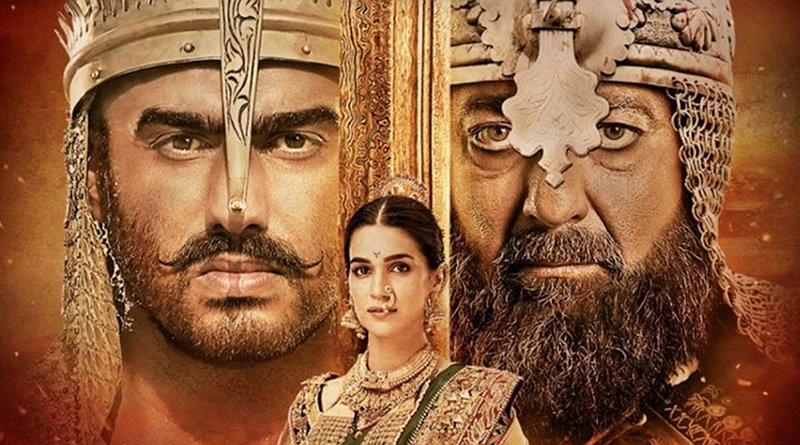
Bollywood Movie #Panipat - ‘Panipat’ Faces Backlash From The Afghan People – OpEd

By 

Bollywood Filmmaker Ashutosh Gowariker enters the ground with another epic movie, of which the teaser was just released a couple of days ago which takes the audience back to the 1700s. Some think the movie will be a huge success in the box office and be a blockbuster, yet others are not too impressed with the film’s lead actor Arjun Kapoor as the Maratha warrior Sadashiv Rao Bhau because of the unfair matching of his image to the role. The trailer has grand sets, a lot of sword-wielding and a blood bath. “We hope that the audience likes the trailer. We have tried to live up to the expectations,” said Ashutosh.

The release of the teaser prompted the people of Afghanistan, many people went on to social media and expressed harsh reactions towards the content of the movie, calling it an alleged picture of the great Afghan emperor Ahmad Shah Abdali. Although the lead actor Sanjay Dutt expressed in an interview that if the movie were an insult for Ahmad Shah Abdali he would not play the role, yet many of the Afghans are still concerned claiming that the movie highlights a negative image of Ahmad Shah Abdali and an insult for the Afghan history.

Former Afghan ambassador to India Shaida Abdali has tweeted: “The Indian cinema has historically played a key role in strengthening India-Afghanistan relations. I hope that our shared values and history have been taken into consideration.” Indian journalist Awik Sign also tweeted: “People of Afghanistan have huge respect to Abdali, but people in India hate him. I don’t think history has been displayed properly. India and Afghanistan have strong relations but these kinds of movies only earn money, serving no other purpose.”

Acting Afghan Ambassador to India Tahir Qadiri told Pajhwok News Agency that the movie was yet to be released and its content was yet to be determined. he added “We are in contact with Indian officials and have shared them the Afghans’ concerns. Ajmal Alamzai, cultural attaché at the Afghan embassy (New Delhi), said he knew about the movie two years ago and has already launched an investigation in this regard. “We have emailed the film director to share the scenario with us but no response from their side yet. We have tried several times to contact the director, but failed.” He further added that the film officials had told them that sharing the movie content was against their policy because it would diminish the value of the film in the market.

The movie showcases the Third Battle of Panipat between the Maratha Empire and the Afghan King Abdali Baba that happened on January 14, 1761. Abdali won the battle after killing more than 50,000 Indian soldiers. The director of the movie is veteran Indian film director Ashutosh Gowarikerm, who has also previously directed some controversial movies such as Lagaan and Jodhaa Akbar.
Afghan critics of the film think that:
that the movie is only for business purpose and not for any political or any other purpose, on the other hand the content postured in the movie has sparked concerns among ordinary Afghans, with many in social media expressing their fear saying that making such controversial movies could possibly harm the relations between India and Afghanistan.