Thursday, October 17, 2019

Will Pakistan’s Twenty-Second Package from the IMF Really Help?

Vaishali Basu Sharma
Islamabad is facing a challenging economic environment and a weak external position.
Pakistan has had more IMF programmes than all other South Asian countries combined, and none of the earlier twenty-one programmes appear to have left a lasting impact on its profligate bureaucracy and political leadership. The country’s budget deficit has remained stretched and there was no reform in increasing the tax base.
The latest bailout package is worth $6 billion, of which immediate disbursal, upwards of $1 billion, has been completed, while the remaining is due in the next three years.
The IMF’s fiscal programmes have shown remarkable effects on the economies of some countries. Yet in the case of Pakistan, there have mostly been negative effects. One of the main reasons for this is the non-compliance to the conditions agreed to at the time of obtaining the loan. Critical institutional and governance constraints also deter sustained growth.
Pakistan’s macro-economy
Islamabad’s debt and liabilities have peaked to a record 40.2 trillion Pakistan rupees (PKR), dangerously exceeding the size of its economy, equaling 104.3% of the Gross Domestic Product (GDP), a first in two decades. In 2000, the total debt and liabilities were equal to 106% of GDP.
Ironically, this dangerous threshold had been crossed during the first year of the government of Prime Minister Imran Khan, who has long remained very critical of the Pakistan People’s Party (PPP) and the Pakistan Muslim League-Nawaz’s (PML-N) economic policies that led to massive piling up of the debt. Exactly a year ago, Imran Khan’s Pakistan Tehreek-e-Insaf (PTI) government – after seeking electoral support on the basis of a new economic strategy of sustained growth through human development – approached the IMF for a bailout package.
Pakistan’s performance remains weak when compared to the rest of South Asia. Exports have hardly grown and development expenditure has been falling with a growing layer of aid-funded NGOs in a quasi-welfare state. The question is what plagues the Pakistani economy.
Restricted fiscal space
Pakistan suffers from debilitating revenue shortages which stand at PKR 3.8 trillion, hardly sufficient to meet the expenditures estimated at PKR 5.5 trillion in Budget FY2018-19. Government expenditure has been growing at a phenomenal rate, with the consolidated federal and provincial expenditure data indicating that actual government expenditure for FY2018-19 was around PKR 7.1 trillion. FY2019-20 budgeted PKR 7.288 trillion, indicating that growth in fiscal expenditure (BE over AE) is only PKR 188 million (2.6%). Such a small increase, if adhered to would imply near-zero fiscal impetus to a stressed low consumption economy.
State Bank of Pakistan’s latest data indicates that the government borrowed PKR 1.367 trillion from July 1 to Aug 2, 2019, as against net debt retirement of PKR 20.2 billion during the same period last fiscal year.
With banks parking their money in risk-free government securities in huge sums, the private sector has found no space to borrow from financial institutions since the beginning of this financial year.
Constraints in widening the tax base
The Federal Board of Revenue’s (FBR) tax to GDP ratio has sunk to just 9.9%, which is significantly lower than the 11.1% level that the PML-N government left Pakistan with. Lower taxes portend yet lower GDP rates for Pakistan.
Recently, Pakistan’s FBR attempted to initiate documentation drives to bring small scale traders, shopkeepers and undocumented sectors under the tax net. This un-regularised retail sector’s tax compliance and contribution to Pakistan’s economy is woefully marginal – a mere 0.25%, despite contributing 20% to the country’s total GDP and only 10-15% are legally registered. To widen the tax net, last month, the FBR introduced a simplified tax regime for traders, a fixed tax regime for small shopkeepers and a scheme for issuing business licenses to undocumented sectors.
These proposed measures of formalising the economy have already taken a toll on economic activity, given strong reaction through calls for strikes and shutdowns. At this stage, a settlement between the trade bodies and FBR appears uncertain.
The All Pakistan Traders Association has called these proposals ‘anti-business’ and have called for a long march in Islamabad on October 28-29. Traders claim that despite being labelled as ‘simplified’, the new tax regime is anything but, with various slabs within each category. They have demanded a simple tax regime with only one annual return. The revenues earned by the PTI government’s tax amnesty called the ‘Assets Declaration Scheme’ earned roughly PKR 55 billion ($350 mn) was far below expectations, even though the number of tax returns increased to two million, the highest ever in Pakistan.
What is more troubling for the PTI government is that those holding undeclared assets held under false names categorised as ‘benami’ availed of this tax amnesty in large numbers. Now the government claims to be initiating a belated crackdown against benami assets.
The large-scale misuse of ‘Iqama’, work permit based residential status, by many Pakistani nationals from the United Arab Emirates (UAE) has also surfaced. Pakistan’s Geo News made a startling revelation that 7,000 super-rich Pakistanis had acquired properties in the UAE by violating national law in the past eight years.
Attempts to raise dollar reserves
Khan’s PTI government is using an old, oft-used, developing-nation, method to raise savings by issuing a ‘dollar-based saving scheme’. The idea, floated by the State Bank of Pakistan (SBP) proposes to lower pressure on the dollar buying by issuing US dollar denominated certificates for deposits in rupees, on prevailing exchange rates. People’s trust in the local currency has already been shaken due to over 50% devaluation of local currency against the US dollar since January 2018 (PKR 146 from PKR 110 to $1).
Response to the scheme is lukewarm as yet, but if it takes off, it would strain Pakistan’s dollar reserves more when interest payments are made.
Foreign reserves of Pakistan are supported not by exports but by loans from friendly nations. Earlier this year, China provided $2.5 billion in loans to Pakistan to boost its foreign exchange reserves, which at $8.12 billion (as on March 1, 2019) was below the minimum level that the International Monetary Fund (IMF) and the World Bank (WB) prescribe. Pakistan has struggled to maintain reserves that are not currently sufficient to provide cover for even two months of imports, despite receiving $4 billion in loans from Saudi Arabia and the UAE.
Attempted reform in the public sector
In the practical beginning of an end to fiscal federalism, one of the structural reforms that the Pakistani government has initiated is giving the heads of federal ministries full autonomy to independently utilise development and non-development funds of all departments and projects under their control, and in effect disbanding the Financial Advisers’ Organisation (FAO). This should ideally reduce the red tape in the implementation of public sector development projects and schemes.
In an effort to improve the productivity and potential of state-owned enterprises, the PTI government has established the ‘Sarmaya-e-Pakistan Limited’ (SPL), a holding company to turn PSUs around by eliminating losses.
In FY 2017-18, cumulative losses of these state-owned enterprises crossed PKR 1.1 trillion (14% of AE). SPL is expected to gradually take over the management of these enterprises and would fast-track the restructuring of 20 loss-making public sector entities, apart from placing ten new companies in the fast-track privatisation list.
Power sector companies, particularly distribution companies and even large profit-making entities, like the National Bank of Pakistan (NBP) and State Life Insurance Corporation of Pakistan (SLIC), are also in the consideration zone for privatisation.
However, these grand schemes soon lost steam when some members of the SPL Board tendered their resignations, alleging lack of interest from the top level of the government to undertake any serious efforts to revive loss-making state-owned entities.
Serious threat from FATF
Pakistan currently figures on the FATF ‘grey list’ and is up for a final review of its status at the FATF plenary meeting in Paris next week. The alarming prospect of being blacklisted by the OECD-based FATF has spurred action on part of the SBP, which is trying hard to ensure compliance with international banking regulations. The SBP imposed over PKR 184 million worth of penalties on four commercial banks in July 2019 for compromising rules related to anti-money laundering and foreign currency exchange operations.
Pakistan’s National Counter Terrorism Centre has seized several properties of UN-designated terror organisations, like the Lashkar-e-Toiba (LeT) and Jaish-e-Mohammad (JeM). However, as The Wire reported, FATF’s global reviewers are quite unsatisfied with progress.
IMF’s past facilities have failed to reform
The PTI government has been attributing the privations faced by the people of Pakistan to harsh IMF conditions.
Previous IMF programmes for Pakistan have consistently failed, even in achieving their claimed objectives of growth combined with reduced inflation through financial ‘stabilisation’. Some theorists have assessed that evidence shows that IMF programmes harm human development, they not only fail to bring reform, but act as a shield protecting Pakistan’s ruling class from the need to reform. Experts concur that investment by, and future expectations of, the private sector are determined not just by stable exchange rates and low inflation, but more fundamentally by the institutional structure of a country, particularly contract enforcement institutions and the control of violence in society.
Inflation is unlikely to be resolved through IMF conditionalities like high interest rates, reduced public expenditure and exchange rate depreciation, as past experience shows, because in developing countries inflation is triggered by cost-push factors such as the prices of fuel, electricity and food. In Pakistan’s case, there are additional physical constraints to growth beyond the financial sphere, such as a shortage of electricity, gas and water. Prices will, in fact, increase as exchange-rate depreciation will increase the rupee prices of imported industrial inputs and in the attempt to cut down the fiscal deficit.
The Pakistani state has always managed to obtain waivers for structural slippages during its implementation of IMF bailout packages. This should be understood in combination of unilateral US, Chinese, Saudi aid plus IMF and World Bank programmes, which provide Pakistan with what can be called “geo-political rent”. Unlike in other cases, the bailout package for Pakistan is not based solely on economics but has ‘implicit geo-political/security deliverables’ or implications based on the understanding of Pakistan and USA, its main donor and ‘explicit economic conditionalities’ of the IMF.
These unstated geo-political conditionalities have in the past diverted the economic reform substance of the bailout, resulting in no restructuring of the economy.
Unhappiness is spreading?
Meanwhile, resentment amongst common people is rising. Clamour against runaway inflation, lack of employment, shortage of essential commodities and higher utility prices, has reached the streets of Pakistan. This unhappiness, within just one year of a new government, is sure to explode as soon as the opposition manages to overcome its recent reverses, with most of its leaders in prison for various allegations (true and false) in money laundering cases.
To his credit, Khan has tried to address all that plagues the economy; be it the need to widen the tax base, the need to regulate benami assets, the reform of sick PSUs, the fact remains that the pace and intensity of a reformer’s zeal are missing. And, Pakistan’s historical environment of inept governance, unaddressed structural weaknesses, a chronically weak tax administration, lack of fiscal consolidation, large public debt and rising number of loss-making state-owned enterprises, amid a large informal economy, remain.
https://thewire.in/south-asia/pakistan-22nd-imf-package

اسلام آباد سے لاپتہ ہونے والے 27 سالہ بلاگر گئے کہاں؟


سلیمان فاروق کے خاندان کا کہنا ہے کہ وہ سوشل میڈیا پر حکومت پر تنقید کرتے تھے اور شاید ان کی کوئی بات ’کسی کو پسند نہ آئی ہو‘، جبکہ ایک پولیس اہلکار کا کہنا ہے کہ ان میں شدت پسندی 
کے رحجانات تھے۔
راولپنڈی کے بحریہ ٹاون سے 4 اکتوبر کو لاپتہ ہونے والے نوجوان بلاگر سلیمان فاروق کو غائب ہوئے تقریباً دو ہفتے ہو چلے ہیں اور اب تک ان کے خاندان اور پولیس کو ان کے بارے میں کوئی معلومات حاصل نہیں ہو سکی ہیں۔ 
سی سی ٹی وی سے حاصل کی گئی فوٹج کے مطابق 4 اکتوبر کی شام ساڑھے پانچ بجے سلیمان فاروق بحریہ ٹاون فیز تھری میں ایک گھر سے ٹیوشن پڑھا کر نکلے تو ایک سفید کلٹس نے ان کی گاڑی کا پیچھا کرنا شروع ہو کر دیا۔
شاہدین کے مطابق سفید کلٹس کے ساتھ ایک اور ویگن نما گاڑی بھی تھی جس میں اسلحہ سے لیس جوان موجود تھے۔ انہوں نے سلیمان کی گاڑی کو روکا اور زبردستی اپنی گاڑی میں بٹھا کر لے گئے۔ ان کی گاڑی بعد میں ہائی وے پارک سے ملی۔
یہ ابھی واضح نہیں کہ معاملہ کیا ہے تاہم سلیمان کے اہل خانہ کو شک ہے کہ سلیمان کو سوشل میڈیا پر حکومتی اداروں پر تنقید کرنے کی وجہ سے نشانہ بنایا گیا ہے۔
انڈپینڈنٹ اردو سے گفتگو میں ان کی  بہن خالدہ نے بتایا کہ 6 اکتوبر کو 27 سالہ سلیمان کی منگنی تھی اور سب اس کی تیاریوں میں مصروف تھے، مگر اس رسم سے دو دن پہلے ہی ان کا اس طرح اچانک لاپتہ ہو جانا خاندان کے لیے بہت اذیت ناک ہے۔
خالدہ کے مطابق وہ پانچ بہن بھائی ہیں اور پڑھے لکھے خاندان سے تعلق رکھتے ہیں جن میں دو بڑے بھائی امریکہ میں ڈاکٹر ہیں جبکہ وہ خود تعلیم کے شعبےسے منسلک ہیں۔
ان کا کہنا تھا کہ سلیمان بہن بھائیوں میں چوتھے نمبر پر ہیں اور انہوں نے الیکٹریکل انجنئیرنگ کر رکھی ہے اور امریکہ کی یونیورسٹی سے بھی سکالر شپ حاصل کر رکھی ہے۔
خالدہ کے مطابق سلیمان آج کل سی ایس ایس کی تیاری میں مصروف تھے اور اسی سلسلے میں پڑھنے اکیڈمی بھی جاتے تھے جبکہ نوکری نہ ہونے کی وجہ سے ٹیوشن بھی پڑھاتے تھے۔
خالدہ نے کہا کہ انہیں نہیں علم کہ ان کے بھائی نے ایسا کیا جرم کیا کہ ان کا نام لاپتہ افراد کی فہرست میں شامل ہو گیا۔
سلیمان کی سوشل میڈیا پوسٹس کے بارے میں ایک سوال کے جواب میں خالدہ نے کہا: ’سلیمان بلاگز لکھتا تھا اور حکومتی پالیسیوں کا ناقد تھا، شاید یہ بات کسی کو پسند نہیں آئی۔‘
سلیمان کے ٹوئٹر اکاؤنٹ پر کوئی اتنی قابل اعتراض ٹویٹس نظر نہیں آئیں جن کی بنیاد پر ان کو کسی تفتیش میں شامل کیا جاتا۔ البتہ ان کے فیس بک اکاؤنٹ پر حکومت پر سخت الفاظ میں تنقید سے بھری پوسٹس ضرور نظر آئیں جن میں سے کچھ میں قانون نافذ  کرنے والے اداروں پر بھی تنقید کی گئی تھی۔
آن لائن متنازع مواد پوسٹ کرنے اور تنقید کرنے کے حوالے سے چئیرمین پی ٹی اے میجر جنرل ریٹائرڈ عامر باجوہ قومی اسمبلی کی کمیٹی میں پہلےہی کہہ چکے ہیں کہ ہر بات پر اکاؤنٹ بلاک نہیں کیے جا سکتے یا کارروائی نہیں کی جا سکتی اور نہ آزادی رائے کا حق ختم کیا جا سکتا ہے۔
سلیمان کے گھر والوں نے گمشدگی کی ایف آئی آر تھانہ لوئی بھیر میں درج کروائی ہے۔
اس معاملے پر جب پولیس سے رابطہ کیا گیا تو معاملہ حساس ہونے کے باعث پولیس اہلکار نے نام نہ ظاہر کرنے کی شرط پہ بتایا کہ سلیمان کے معاملے پر متعلقہ اداروں سے رابطے میں ہیں۔
 انہوں نےدعویٰ کیا کہ سلیمان میں شدت پسندی کے رحجانات تھے اور  وہی کچھ بلاگز میں بھی لکھتے تھے۔ تاہم پولیس اہلکار نے یہ بتانے سے گریز کیا کہ وہ اس وقت کہاں ہیں۔
 جب ان سے سوال کیا گیا کہ آیا صرف رجحان رکھنا ہی لاپتہ ہونے کی وجہ ہو سکتی ہے تو انہوں نے کہا کہ صرف رحجانات نہیں بلکہ کچھ مشتبہ رابطے بھی ملے ہیں۔
ان کا مزید کہنا تھا کہ سلیمان کی گمشدگی کی تحقیق جاری ہیں اور امید ہے کہ جلد ہی معاملہ حل ہو جائے گا۔
سلیمان کے لاپتہ ہونے پر سوشل میڈیا پر بھی کچھ پوسٹ موجود ہیں جن میں ان کے دوست یہ الزام لگا رہے ہیں کہ ان کی گمشدگی کے پیچھے قانون نافذ کرنے والے اداروں ہیں۔


Wednesday, October 16, 2019

Music Video - YG Feat. Dj Mustard "Pop It, Shake It"

Video Report - #Catalan #rally #Barcelona Tensions fly high in Barcelona as activists protest in support of jailed Catalan leaders

Video Report - 2020 October Democratic Debate in Ohio | The Daily Show

Video Report - 'What I've Seen Horrifies Me': NY Fed Insider On Giuliani Criminal Probe | MSNBC

Video Report - Nancy Pelosi: Trump had a meltdown in meeting

#PPP Music Video - Kal Bhi Bhutto Zinda Tha,Ajj Bhi Bhutto Zinda Hai ....

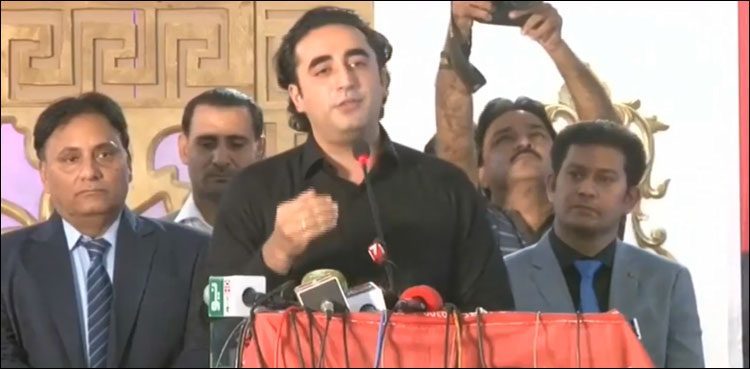
#Pakistan - #PPP - Bilawal Bhutto Media Talk in #Larkana | 16 October 2019

#Pakistan - #PPP - Bilawal Bhutto takes notice of Kathore Morr firing incident

Pakistan Peoples Party (PPP) leader Bilawal Bhutto Zardari on Wednesday took notice of deaths in a firing incident near Kathore Morr, M-9 motorway, ARY News reported.

The PPP leader has sought a report from Sindh Chief Minister Syed Murad Ali Shah and directed to launch an inquiry into the matter.
He also directed to provide the best medical facilities to injured.
At least three people were shot dead and two others sustained injuries, in a firing incident near Kathore Morr.
According to the rescue sources, the firing incident took place during an ongoing protest of the goods transport vehicles’ drivers. The bodies and the injured were moved to a nearby hospital.

Meanwhile, the drivers are observing protest by parking their vehicles at the Kathore link road and M-9.
The concerned authorities have reached the spot to hold talks with the protesting drivers and ensure the smooth flow of the traffic.

#Pakistan - #PPP - Govt will be responsible if anything happens to Zardari: Bilawal Bhutto

Pakistan People’s Party (PPP) Chairman Bilawal Bhutto Zardari on Tuesday said that incumbent government would be responsible if something happened to his father and former president Asif Zardari in jail.


Bilawal in his Twitter message wrote, “The Pakistani state continues to try and use my father’s ailing health to pressure my party.” He said despite being detained without being convicted of anything since August, Asif Zardari is still to receive medical care.
The PPP chairman further said despite multiple medical reports from the government’s own doctor that he should be provided with medical facilities in prison and shifted to hospital for investigation and treatment he has been denied his fundamental rights.
He added that not only has he not been taken to hospital he has still not been provided with a fridge to keep his insulin and medicine.
Bilawal continued that if anything was, God forbid, to happen to my father we will hold this government responsible, adding that despite these tactics we will not compromise on our principles or democratic politics. Meanwhile, a delegation of Chamber of Commerce & Industry (CCI), Larkana, called on PPP Chairman Bilawal Bhutto Zardari at the residence of Nisar Ahmed Khuhro on Tuesday and apprised him of the issues faced by the residents and the business community. The delegation consisted of its president Haji Ghulam Sarwar Shaikh, former president Abdul Ghaffar Shaikh, Masood Babu, Jamal Mustafa Shaikh, Mumtaz Ali Shaikh and others. They informed the chairman that work on uplift schemes is going on at snail’s pace which may be accelerated in the city. They told him that there is no Ladies Park in the entire city due to which women of Larkana are facing recreation and amusement problems which may be resolved on priority basis. The delegation further informed him that the condition of Sindh Small Industries (SSI) is very bad as there are cleanliness and massive prolonged electricity outages issues faced by the traders which may also be resolved immediately. They demanded of the Chairman that in development schemes of the city and in Sindh Small Industries they should be consulted and one of their representatives may be included in the development committee. They said work on some of the schemes demanded before is underway but its pace is very slow which may also be intensified. 
Abdul Ghaffar Shaikh requested Bilawal to have personal eye on all uplift schemes which will ensure change of fate of Larkana district.

State is responsible for creating jobs for its citizens: Bilawal Bhutto Zardari

Pakistan People’s Party (PPP) chairman Bilawal Bhutto Zardari says it is state’s responsibility to create jobs for its people, ARY News reported on Wednesday.
He was talking to media after inaugurating HIV Treatment Support Centre in Rato Dero, Larkana.
Bilawal said his party has decided support Maulana Fazal-ur-Rehman’s Azadi March against the Pakistan Tehreek-e-Insaf government.
Commenting on Larkana PS-11 by-polls, the PPP leader said his party is contesting against Grand Democratic Alliance (GDA) and Pakistan Tehreek-e-Insaf (PTI) backed candidate. “Only Maulana can clarify his party’s position on PS-11 by-election.”
The PPP chairman said his party is working in collaboration with the UNICEF and other organisations to find the cause behind increasing number of HIV cases in Sindh, specially in Larkana.
He also underlined the need of short-term and long-term planning to eliminate HIV from the province.
Replying to a query, he said the state is responsible for creating employment opportunities for its people, but unfortunately, here in Pakistan, the employment is increasing with every passing day.
He appreciated Prime Minister Imran Khan’s role for defusing tensions in the middle east and said Afghan war caused huge loss to us.

Tuesday, October 15, 2019

Video Report - Asfandyar Wali Khan and Maolana Fazle Rahman Joint Press Conference - Azadi March Islamabad

The Pakistani physicist’s work led to the discovery of the Higgs boson, but he was disowned in his home country for his faith. Now a Netflix film is putting him back in the spotlight.

By Abigail Beall
In 1979, Pakistani scientist Abdus Salam won the Nobel Prize for physics. His life’s work was key to defining a theory of particle physics still used today, and it laid the groundwork for the 2012 discovery of the Higgs boson – the particle responsible for giving all other particles mass.
Salam was the first Pakistani to win a Nobel, and his victory should have been a historic moment for the country. But instead, 40 years on, his story has largely been forgotten by the country in which he was born – in part because of the religious identity he held so dear. Now a new documentary on Netflix, Salam, The First ****** Nobel Laureate, is seeking to bring Salam and his achievements back into the spotlight. “Salam was the first Muslim to win a Nobel science prize,” Zakir Thaver, one of the film’s producers, tells BBC Culture. “[He] was so committed to his roots and bettering the plight of his people that he wore a turban in Stockholm to receive the prize from the King of Sweden.” During his acceptance speech, Salam quoted the Koran.
The film portrays Salam’s unwavering dedication, in the face of testing circumstances, to three things: his physics, his faith and his nationality.
Salam stood out right from the moment he was born in 1926 in the city of Jhang, then part of British India. His father, a teacher, believed Salam’s birth was the result of a vision from God he had received during Friday prayers, and so growing up, Salam was treated as a superior being to his siblings – made exempt from household chores like milking the cow and emptying the toilet area, and afforded time to work on his astounding skills in mathematics. Yet his childhood was not a particularly luxurious one. When he left his city to attend Government College University in Lahore, it was the first time he had seen an electric light. There, Salam’s skills in mathematics and physics set him apart from his classmates. He won a scholarship to attend Cambridge University, where he became one of the few South Asian faces at the time in St John’s College. But the pull of home was strong: after completing a doctorate at Cambridge, he then moved to Lahore to work as a Professor of Mathematics.
Reconciling science and religion
Throughout his life, Salam was a dedicated Muslim. He listened to the Koran on repeat while he worked in his office in his London home. He never saw his religion as a barrier to his science. In fact, he saw them working together, and claimed to colleagues that many of his ideas came to him from God. He was striving for a unified theory that would explain all of particle physics, which was in line with his religious beliefs. “We [theoretical physicists] would like to understand the entire complexity of inanimate matter in terms of as few fundamental concepts as possible,” he once said. But there were aspects of science, which directly contradicted his beliefs, that he did not accept – like the Big Bang theory.
While his faith was deeply important to him, it was also a source of great pain, thanks to the way in which his particular sect of Islam, the Ahmadiyya Muslims, has been treated in Pakistan. The Ahmadiyya movement was formed in 1889 in Punjab, in British India. Ahmadi Muslims believe their founder, Hazrat Mirza Ghulam Ahmad, to be the messiah. However other Muslims do not agree, and instead they believe they are still waiting for the prophet. “The Ahmadiyya Muslim Community is a law-abiding, loving community,” says Adeel Shah, an Ahmadi Imam based in London. “However, it has been subject to various forms of persecution and discrimination especially in Pakistan.”
In 1953, the trouble really began for the Ahmadiyya Muslim community with a series of violent riots in Lahore against the movement. The Punjab government inquiry found the official death toll from these riots to be 20 people, but other estimates put it much higher, some in the thousands. A law passed in 1974 declared Ahmadis to be non-Muslims and deprived them of their rights. As recently as 2010, two Ahmadi mosques in Pakistan were attacked, with 94 people killed and more than 120 injured.

The first Muslim to win the Nobel Prize in science had the very word ‘Muslim’ whitened out from his gravestone –  Zakir Thaver
“Even now, if an Ahmadi Muslim was to use an Islamic salutation [in Pakistan] he or she could be imprisoned for three years and this would be considered lawful,” says Shah. “Ahmadi Mosques are damaged, Ahmadi graves are desecrated, Ahmadi shops are looted and most of the time, the state turns a blind eye to what is happening.”
After the riots in 1953, Salam decided to leave Pakistan. He returned to Cambridge for a few years, before moving to Imperial College, London, where he helped set up the theoretical physics department. Despite the rejection from his home country he had suffered, he did not let Pakistan go, continuing to be involved in the country’s most prominent scientific projects. In 1961 he established Pakistan’s space programme while during the early 1970s, Salam was, controversially, involved in Pakistan’s efforts to build a nuclear weapon. But after the Prime Minister Zulfikar Ali Bhutto passed the law against the Ahmadiyya Muslims in 1974, Salam’s involvement with the country’s administration finally diminished. He went on to be outspoken against nuclear weapons.
In 1979, just five years after the law had been passed in Pakistan declaring him non-Muslim, Abdus Salam became the first Pakistani to win a Nobel Prize. To the world, he was the first Muslim to win a Nobel Prize in Physics. But in the eyes of his own country, he was not. On Salam’s gravestone, in the Pakistan town of Rabwah, he was described as the first Muslim Nobel Laureate, until local authorities scrubbed out the word ‘Muslim’. Thavar says they decided to replicate this defacement in the title of their documentary “as therein lies the story as well as the irony, the tragedy,” says Thaver. “The first Muslim to win the prize in science has the very word ‘Muslim’ whitened out. It’s the final affront to the most illustrious son of the soil.”
Unearthing a legend
Thaver says he and his co-producer Omar Vandal only learnt about Salam when, in the mid-’90s, they moved from Pakistan to the US to study at university. “We read Salam's obituary in the New York Times. Back home his story had been buried.”
Reading more about Salam, the pair discovered his story was buried because of his religion. “We became aware of the amazing potential Salam's story of humble beginnings had to inspire people to pursue science, and since have learnt of many who in fact have derived inspiration from his story,” says Thaver.
Salam’s contribution to physics was significant. He developed the theory of the neutrino, a subatomic particle first proposed by Pauli in 1930, and he worked on electroweak theory, for which he won the Nobel Prize.
The electroweak theory is fundamental to the Standard Model, which describes the smallest, most fundamental building blocks that make up all matter, called elementary particles, and how they interact through three different forces: electromagnetism, and what are known as weak and strong ‘interactions’. Salam worked on combining the theories of the electromagnetic and weak forces into one.
Despite his persecution, Salam’s dedication to his country and the people of Pakistan did not waver. He was offered British and Italian citizenship, but remained a Pakistani citizen until he died. Imam Adeel, who was also born in Pakistan but moved to London because of discrimination, says this is because of the Ahmadi way of thinking. “Ahmadi Muslims, including myself, still hold great love for Pakistan and will always be at the forefront of serving their nation whenever it calls them,” he says.
Beyond supporting his country, meanwhile, he was also passionate about promoting scientists in the developing world. To that end, in 1964 he founded the International Centre for Theoretical Physics (ICTP), in Trieste, Italy, specifically to provide a place for students from developing countries to connect with academics from around the world.
Piecing together the film detailing his life took Thaver and Vandal 14 years. “We were unknown, young, foolishly ambitious, aspiring filmmakers, and had set out to do something significant and hopefully historical,” he says.
The film features extensive archive footage, including of Salam, much of which has never been seen before. “It took a lot of time and effort to restore, catalogue and transcribe all our archives,” Thaver says. “We edited for almost two years.”
The pair filmed people who had never spoken on camera before, including Professor Salam’s secretary from the ICTP. “The family opened up their homes, so we could go through notebooks and hunt down old family pictures and video,” he says. “When you spend over a decade on a project, people want to be a part of your journey and help you out.”
Ahmad Salam, Salam’s eldest son, who appears in the film to talk about his father’s life, describes it as “a wonderful film made by two very dedicated, committed young men, who wanted to tell the unique story for the benefit of 200m fellow countrymen, most of whom have never heard of Abdus Salam,” he says.

Abdus Salam strived to make developing countries invest in education, science and technology – and that message is as relevant now as it was 50 years ago – Ahmad Salam
Footage in the film reveals a side of Salam never seen before. His old colleagues reveal the quirks of his research habits, explaining how he would come up with endless ideas – the majority of them eccentric but a vital few worthy of a Nobel Prize. His son Ahmad describes him as fiercely loyal. Once, he says, when Salam needed a suit tailored last-minute, the shop he visited made special arrangements to have it ready for him in time. He continued to buy suits at that shop for the rest of his life.
However, Ahmad says, part of the story is missing. “It focuses on Pakistan, and sadly, therefore, it doesn’t have time to explain Abdus Salam’s passion and anger to help overcome the greed and arrogance of the developed countries towards the developing countries,” he says.
Since the idea for the film was born, the documentary has become more and more important, says Thaver.
“In the early days, we felt it was an important story to tell because of its power to inspire children back home and to educate about a Pakistani, Muslim Nobel Prize winner who was an unsung hero,” says Thaver. “Over the years the plight of religious minorities in Pakistan, as well as the sub-continent at large, has worsened, and that’s given greater present-day significance and relevance to the story.” On top of this, he says, rising Islamophobia in the West makes Salam’s story even more relevant by celebrating Muslim achievement, particularly in science, where the Islamic world’s contribution has been underappreciated.
“Inequality in every sense is higher now than ever in history,” says Ahmad. “Abdus Salam strived to make developing countries invest in education, science and technology to help their economic prospects, whereby they would grow faster and more sustainably with the support of the developed countries. That message is as relevant now as it was 50 years ago.”
Salam: The First ****** Nobel Laureate is available on Netflix now.

http://www.bbc.com/culture/story/20191014-abdus-salam-the-muslim-science-genius-forgotten-by-history

Pakistan Faces Blacklisting Over Terrorism Financing and Money Laundering

BY KATHY GANNON
Pakistan is trying to avoid getting blacklisted by the Financial Action Task Force, a global watchdog, when it meets Wednesday in Paris.
A report earlier this month by the task force’s Asia Pacific Group, which monitors Pakistan’s progress, is not encouraging.
The report says Pakistan has fully implemented only one item from a list of 40 measures that the country should be taking to curb terrorist financing and money laundering. The other 39 measures were either partially implemented or in some cases overlooked entirely.
Iran and North Korea are currently the only two countries on the blacklist.
Being blacklisted would be a serious blow for Pakistan’s Prime Minister Imran Khan as he tries to boost its faltering economy and attract foreign investment and loans.
Pakistan got a mixed review for its efforts to curb terrorist financing and money laundering as it tries to avoid getting blacklisted by the Financial Action Task Force, a global watchdog, when it meets Wednesday in Paris.
A report earlier this month by the task force’s Asia Pacific Group, which monitors Pakistan’s progress, was not encouraging. It found Pakistan had fully implemented only one item from a list of 40 measures that the country should be taking to curb terrorist financing and money laundering, if it wants to stay off the blacklist. The other 39 measures were either partially implemented or in some cases overlooked entirely.
Iran and North Korea are currently the only two countries on the blacklist.
Just as Pakistan has been trying to get on its feet financially, having secured a $6 billion loan from the International Monetary Fund and a $6 billion package from Saudi Arabia, it might get knocked back down by getting put on the list.
“It would no longer be business as usual in Pakistan,” said Amir Rana, director of the Islamabad-based Pakistan Institute for Peace Studies.
Being blacklisted could even jeopardize Pakistan’s multi-billion dollar part in China’s Belt and Road Initiative, a global endeavor aimed at reconstituting the Silk Road and linking China to all corners of Asia. In Pakistan, it has been billed as a massive development program that will bring new prosperity to the South Asian nation, where the average citizen lives on just $125 a month.But if Pakistan is blacklisted, every financial transaction would be closely scrutinized, and doing business in Pakistan would become costly and cumbersome, said Rana. He said restrictions could be imposed on international lending agencies, including the International Monetary Fund, Asian Development Bank and the World Bank, which are all key money lenders to Pakistan.Rana also said Pakistan hasn’t made the institutional changes it needs to seriously tackle terrorism financing and the terrorist-declared groups that still operate in Pakistan — some of whom have been resurrected under new names.
He blamed police and bureaucratic incompetence, mismanagement and a conflicted military and intelligence apparatus. These security agencies are still undecided about whether to break all ties with groups they have long considered “assets,” particularly against neighboring India, Pakistan’s longtime nemesis.
At one juncture, Rana said Pakistan had sought to differentiate between what it considered bad and worse groups. Authorities put anti-India groups like Lashkar-e-Taiba in the less dangerous category, and put groups like al-Qaida, Tehrik-e-Taliban and the Baluchistan Liberation Army on the more dangerous list.If Pakistan’s security establishment was serious about breaking ties, Rana said, it needs to lay out a plan of action, one that details a reintegration plan for members of these groups as well as a strategy of how it would arrest and prosecute those who carry out acts of terror in other countries.Pakistan’s Foreign Minister Shah Mahmood Qureshi told reporters Friday that the economic affairs minister Hammad Azhar was already in Paris preparing for the meeting. Pakistan’s State-run television on Monday said Azhar presented Pakistan’s case to the task force ahead of its deliberations starting Wednesday.
Meanwhile, Qureshi accused neighboring India of lobbying to get his country blacklisted.
“India tried its best to get us blacklisted. God willing, you will see that all such efforts will fail,” he said.
Pakistan has reportedly lobbied both Turkey and Malaysia to seek an extension at the task force meeting, promising to be 100% compliant by June 2020.
Qureshi, meanwhile, said the government has spent the last 10 months taking steps to curb both money laundering and terror financing.
But the job is a big one.
Pakistan has banned 66 organizations declared terrorist or terrorist-supporting groups and listed another estimated 7,600 individuals under its anti-terrorism act. India’s most wanted man, Hafiz Saeed, lives in Pakistan and has a $10 million U.S.-imposed bounty on his head.Also based in Pakistan is the terrorist-designated group Jaish-e-Mohammad, which claimed responsibility for a February suicide attack in the Indian-controlled portion of the disputed Kashmir region. That attack killed 40 Indian soldiers and caused tensions to spiral upward between India and Pakistan, bringing the two nuclear-armed nations unsettlingly close to war. They’ve already fought three wars since Britain ended its colonial rule over the Indian subcontinent in 1947.Earlier this year, the United Nations added Masood Azhar, the head of Jaish-e-Mohammed, to its blacklist after several unsuccessful attempts. After the February attack, Pakistani Prime Minister Imran Khan’s government took control of the many schools run by Azhar’s group as well as clinics and even an ambulance service.Dozens of his activists have been arrested, but Rana, the security analyst, said the legal system is hindered by its use of what he called “secret courts.” He advocated for a free and transparent court system, rather than the current judicial procedures held behind closed doors or in military courts, also closed to public scrutiny.
The Asia Pacific Group report — which is set to be reviewed during this week’s task force meeting — said that while Pakistan seized some assets, the amounts seized were very small considering the extent of the money laundering and terrorist financing believed to be going on in the country. The report also criticized Pakistan’s efforts at stemming the movement of illicit money across borders.
The report gave good marks to Pakistan’s banks and larger exchange companies at putting in controls to detect and protect against money laundering and terrorism financing. However, it said the State Bank of Pakistan “does not have a clear understanding of the ML (money laundering) and TF (terrorist financing) risks unique to the sectors it supervises.” But it is improving, the report added.
Overall, much of the report suggested Pakistan had mostly failed at making the institutional changes needed to ferret out those who finance terror and put an end to it. Whether Pakistan joins Iran and North Korea on the blacklist remains to be seen.

https://time.com/5700577/pakistan-blacklisting-terrorism-financing/

Pakistan Finds Itself Isolated at Anti-Terror FATF Meet, On Verge of Being Placed in 'Dark Grey' List: Report


An official said that Pakistan is on the verge of strong action by FATF, given its inadequate performance, whereby it managed to pass in only six of 27 items.

In bad news for the Imran Khan government, Pakistan is on the verge of strong action by the international terror financing watchdog FATF and the country may be put in the 'Dark Grey' list, the last warning to improve.
Officials attending the ongoing plenary of the Financial Action Task Force (FATF) here said as per indications, Pakistan will be isolated by all members for not doing enough.
Pakistan is on the verge of strong action by FATF, given its inadequate performance, whereby it managed to pass in only six of 27 items, an official privy to the development said. The FATF will finalise its decision on Pakistan on October 18.
According to FATF rules there is one essential stage between 'Grey' and 'Black' lists, referred to as 'Dark Grey'.
'Dark Grey' means issuance of a strong warning, so that the country concerned gets one last chance to improve, another official said. 'Dark Grey' was the term used for warning up to Third Phase. Now it's just called warning — that is the fourth phase.
The FATF is an inter-governmental body established in 1989 to combat money laundering, terrorist financing and other related threats to the integrity of the international financial system.
Pakistan was placed on the Grey List by the Paris-based watchdog in June last year and was given a plan of action to complete it by October 2019, or face the risk of being placed on the black list with Iran and North Korea.
If Pakistan continues with the 'grey list' or put in 'Dark Grey' list, it would be very difficult for the country to get financial aid from the IMF, the World Bank and the European Union, making its financial condition more precarious.

Number of dengue cases in Pakistan crosses 31000

The total number of Dengue cases has reached 31,076 across the country, with 47 deaths this year so far, ARY News reported on Tuesday.

According to the health ministry, the tally of dengue patients across the country has jumped over 31,000 with the recent addition of 978 cases, reported during the last 24 hours.
Sources said, 8,626 patients have been tested positive with dengue fever in Islamabad, 6,833 cases have been reported in Punjab, 5,331  in Khyber Pakhtunkhwa (KP) 5,362 in Sindh, 2,843 in Balochistan and 1,355 cases have been reported in Azad Jammu and Kashmir (AJK).
During the current year, 49 deaths have been caused by dengue so far, said sources.
Moreover, at least 144 cases of dengue fever were reported in a single day from Karachi.
After the new 144 cases, the total figure of dengue cases has reached up to 2,140 in Karachi in the month of October, as per the report of the dengue surveillance cell.
The mosquito-borne disease which may prove fatal if not diagnosed and treated in time has spread rapidly throughout Pakistan and has caused serious concern among the masses.
Sources said that the special monitoring cell established to monitor the spread of the virus has forwarded its report to the Special Assistant to Prime Minister on Health Dr Zafar Mirza.

Monday, October 14, 2019

Video Report - France v Turkey: Politicians call for match to be cancelled

Video Report - Fears Africa’s Sahel region is under threat from Islamic extremism

Video Report - #Turkey #Syria Up to 1,000 US troops to withdraw from northern Syria

Video - #Afghanistan - #AfghanSchools - Attacks on Afghan schools soar

Video Report - CNN calls on President Trump to denounce horrific anti-media shooting video

Pakistani Christian girl, Sumara Anwar aged 14, faced sexual harassment and raped at a brick factory in Raiwind Lahore

Anwar Masih son of Sulakhan Masih aged 58, a poor Christian works for more than 15 years at Ghafor Bricks, village Maqu Wali Jhalar Raiwind Road, District Lahore and live here along with his children for more than 15 years; his wife has died a few years ago due to some health issues. There are more than 35 other families live in the factory quarters including Muslims. We can call it a small town/bricks factory colony. The families are cooperative and respect each other, caring about the social values and norms.   In spite of this binding, the incident of raping a minor occurred on 1st October 2019 at about 12 pm. When Sumara Anwar, a young girl aged 14, was alone at home while the other family members working in the brick’s factory. 

A local resident, Amjad Malooka aged 30, entered the home silently as he knew that Sara was alone at home, he took Sumara to a room and forcibly attempted rape, he slapped her when she showed resistance and refused doing so, and she shouted and screamed. Amjad threatened her and warned to shut her mouth otherwise she and her family will face consequences. But Sumara continually shouting, a neighbor followed the screams and shouting, came up at the spot and saw the happening. The news spread in the locality and Amjad ran away from the place of occurrence.

The distressed and poor family of Sumara Anwar has approached CTS on October 05, 2019 for legal assistance as well as for the protection of the family especially Sumara the minor, is in mental stress at the moment. 

Sumara reported CTS that Amjad often harassed her sexually, and wanted to touch her body. He attempted to rape her twice and threatened her for life if she tells to anyone. He often warned about the helplessness of her poor family that they cannot punish her. 

She further stated “I was afraid to share all happening me to my family; I was in doubt that they will not trust me and deliberately accuse me as guilty”.  

The family reported that Amjad is a habitual, and involved in such incidents previously too. He is a criminal mind and often have quarrel in the town. 

Shaukat Masih brother of Sumara informed CTS that Amjad Malooka is arrested at the spot, they called an emergency police helpline 15 police responded to the incident immediately. Case FIR no.2069/19 has been registered, offense under section 376 & 511 of Pakistan Penal Code dated on October 1 at Police station Raiwind City District Lahore. 

After arrest of Amjad the aggrieved family of Sumara faced serious threats. He asked the victim’s family for compromise and settle down the matter outside the court. 

The family facing life threats asked protection and support from CTS. 

The women, adolescents, and youth are in need to be trained to defend them at the scene instead to seek help or be victimized.

http://www.pakistanchristianpost.com/head-line-news-details/7208

Balochistan: Families of disappeared Baloch anxious for their loved ones

The relatives of enforced-disappeared Baloch persons continue to search for their loved ones have expressed concerns about the safety and whereabouts of their loved ones.
Families of disappeared Baloch have been flooding in the protest camp of Voice for Baloch Missing Persons to record the details of their missing relatives.
The aged and frail mother of abducted Abdul Rasheed son of Saleh Mohammad on Sunday made a passionate appeal from the camp of VBMP in Quetta for her son release on ‘humanitarian grounds.’
Her son was abducted on 15 November 2014 from Nohski Balochistan.
 The family of another four Baloch disappeared persons named Niaz Mohammad son of Qadir Dad, Mehran son of Rasool Bakhsh, Hameed son of Shahdad and Izzat son of Khorsheed have also appeal for the release of their loved ones.
The men were abducted on 5 April 2019 from their house in Kohaad area of Tump in district Kech Balochistan.
On Saturday, the family members of Elahi Bakhsh Bugti and Kado Bugti organised a protest at Lasbela Press Club to demand his immediate release.
Elahi Bakhsh was abducted Pakistani intelligence agencies on 2nd June 2011 whereas Kado Bugti was abducted on 5 December 2012.
The protesters who include women and children were carrying placard and banners for Elahi Bakhsh’s release.
The VBMP is a human rights organisation comprising families of disappeared persons from Balochistan which started its struggle for recovering of missing persons in 2009.

Air pollution: An inaudible killer in Pakistan

By: Yousaf Ajab Baloch
The report: “The State of Global Air 2019” ranks Pakistan as fifth country with fatal effects of Air pollution. Health and environmental experts’ term air pollution as emerging public health emergency in world and in Pakistan. Air pollution has been named as one of the leading cause of deaths in Pakistan with death toll reported to be 59,000 people every year.  Various reasons cause air pollution in country; however, solid moves and policies can be tangible measures to cope with the issue.
According to US-based Health Effects Institute and University of British Colombia report, ” The State of Global Air’ states: “Air pollution is the fifth leading cause of early death world-wide responsible for more death than malaria, road accidents, or alcohol.”  The mentioned report puts Pakistan among top 5 countries with highest mortality rate due to pollution. Shockingly, the top five countries with the highest mortality rate due to air pollution were all in Asia: China, India, Pakistan, Indonesia and Bangladesh.
At the same time, World Health Organization (WHO) estimates death of seven (7) million people annually worldwide. The pollution leads to the diseases such as stroke, heart diseases, lung cancer, Chronic Obstructive Pulmonary Disease (COPD), respiratory infections as well as pneumonia.
Similarly, the available statistics of WHO reveals that 9 out of 10 individuals die every year owing to high level of pollutants, like black carbon which penetrates deep into lungs and cardiovascular system. These pollutants then cause pneumonia, sever respiratory infections and heart diseases.    
The air pollution is being termed as a silent or invisible killer. WHO data demonstrates that 24 %( 1.4 million deaths) all stroke deaths are attributed to air pollution. When it comes to air pollution and heart diseases so 25% (2.4 million) heart diseases deaths are caused by air pollution annually. Likewise, due to air pollution 43% (1.8 million deaths) of all lung diseases, such as lung cancer, are the leading cause of pollution yearly.
In addition, there are a large number of affecting contributors to toxic air which put Pakistan at fourth position with considerable human health hazards. One of the chief reasons to air pollution includes large scale industries which burn fossil fuels as source of energy. Apart from it, a number of small and large scale factories use furnace oil having higher sulfur contents, these include power plants, cement, and sugar and fertilizer industries. Waste recycle plants, bricks kiln are also add to releasing contaminants.
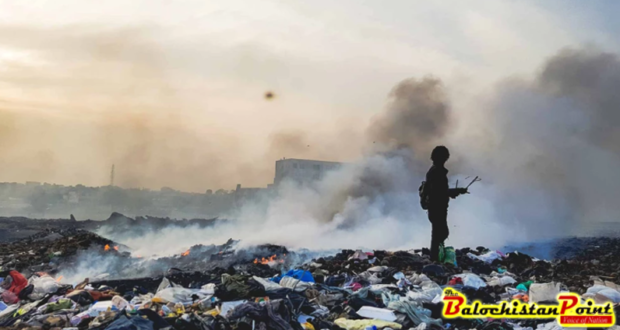
Among the main causes of air pollution, burning of solid waste is another issue. Because more than 55,000 tonnes of solid waste is produced on daily basis in Pakistan. Thus, burning of solid waste results emitting of toxic gases such as carbon monoxide and some other poisonous gases. Similarly, in the last two decades a huge increase has also been observed in the growing number of vehicles in Pakistan. Moreover, the massive traffic is massively contributing element to the air pollution in Pakistan. As carbon dioxide and carbon monoxide are the greenhouse gases which are contributing to the global warming.
Different studies and experts expect serious impacts on Pakistan’s papulation by 2030. According to the Pakistan Environmental Protection Agency (PAK-EPA) air pollution levels for the major Pakistani cities have been recorded seven times higher than those quoted by WHO. However, complete implementation of environmental policies and laws as well as enforcement of national environmental quality standard can be a productive measure to cope with the discussed burning issue. 
Finally, the air pollution can easily be confronted if the aforementioned measures are taken, such as (a) creatinine awareness on air pollution along with afforestation and plantation in urban areas can improve environment to fight toxic air. (b) Proper maintenance of machineries, vehicles and traffic free transportation can be effective measure to reduce impacts of air pollution. (c) Promotion of new technology in the industry can be tangible to reduce use of chemicals or smoke from industry which increase air pollution. (d) Developing public transportation system, control of burning solid waste and provision of pollution free fire at domestic and commercial level. Indeed, can assist   to overcome alarming situation of air pollution in Pakistan.

"Biggest Pressure" On Pakistan From Anti-Terror Watchdog FATF

Last week the FATF told Pakistan it had failed to fully implement a UN Security Council resolution against Hafiz Saeed and other UN-designated terrorists, as well as outfits like Jaish-e-Mohammed and the Lashkar-e-Taiba.
Pakistan is under pressure from global anti-terror watchdog FATF to crack down on terror groups operating from within its borders, National Security Advisor Ajit Doval said today at a meeting of Anti-Terrorism Squad chiefs in Delhi. The anti-terror agency, which last week told Pakistan it had failed to fully implement a UN Security Council resolution against Hafiz Saeed and other UN-designated terrorists, as well as outfits like Jaish-e-Mohammed and the Lashkar-e-Taiba, began a six-day session in Paris on Sunday to decide whether to retain it in a list of countries with inadequate controls over terrorism financing. "The biggest pressure on Pakistan comes from the functionaries of the FATF, which is meeting now," Ajit Doval said in his speech, adding, "The proceedings of the FATF have created so much pressure that probably no other action could have done the same".
In a 228-page report released last week, the Asia-Pacific Group of the Financial Action Task Force (FATF) said Pakistan was fully compliant with only one of 40 recommendations on curbing terror-financing. It further said the country was partially compliant on 26 and non-compliant on four.
Pakistan is now relying on allies within the FATF, like China, which holds the rotating presidency of the agency, Turkey and Malaysia to avoid being blacklisted, which could lead to being downgraded by the International Monetary Fund, the World Bank and the Asian Development Bank and facing negative assessments from credit agencies like Moody's and Standard & Poor's. India has lobbied hard for this blacklisting, arguing that Pakistan's anti-terror laws remain out of sync with FATF standards and UN Resolution 2462, which calls for criminalizing terrorist financing.
Interestingly, the rotating presidency of the Financial Action Task Force is currently held by China, meaning India will be keenly watching the Paris meeting.Prime Minister Narendra Modi hosted Chinese President Xi Jinping at an informal two-day summit in Chennai last week, where the Chinese leader is understood to have recognised the importance of working together, on a non-discriminatory basis, to strengthen frameworks against the training, financing and supporting of terror groups.
In his speech Mr Doval attacked Pakistan for making terrorism "state policy" and highlighted the difficulties of apprehending a criminal who has the support of the state.
"If a criminal has the support of a state, it becomes a great challenge. Some of the states have mastered this, in our case Pakistan has made it as an instrument of its state poli
cy," the NSA said, adding, "They not only recruit, provide training, weapons, intelligence, etc. but also give them resources and technology".
He spoke about the need for states investigating terror cases to network with each other and build a bank of "quotable and sustainable" evidence that could be presented to global agencies like the FATF.
"Pakistan has been using terrorism as the instrument of state policy. We all know Pakistan sponsors terrorism but in international forums we need evidence. Don't destroy this evidence... you have plenty of it. Let the world know about it," he said.
Mr Doval also indicated that the media had to play its part in the war on terrorism.
"We are not targeting one country. We need to have evidence. Put facts, use facts, don't destroy evidence, use them. How we did it against Pakistan? Give it to the media, use it," he said.
Pakistan has told the FATF that it has done enough by seizing over 700 properties belonging to the Lashkar-e-Taiba, Jamaat-ud-Daawa, Falah-i-Insaniyat Foundation and the Jaish-e-Mohammed but India and other FATF members have pointed out that seizures do not necessarily indicate compliance.

India and China to join forces in Kashmir as Pakistan fume at Beijing betrayal


INDIA have secured a big step forwards in its fight with Pakistan over disputed Kashmir after Islamabad ally China suggested military cooperation with New Delhi.

President  met with  Prime Minister Narendra  this week as the two countries looked to resolve their own conflict in the region. India and China have been at odds over the disputed Ladakh region in Kashmir, which sits near the Indo-Chinese border and has been the setting for conflict between the two countries for decades. Border disputes have led to skirmishes as recently as last month. In 1962, a war between New Delhi and Beijing was sparked in the Kashmir region spilling into Ladakh, with conflict engulfing the Himalayan territory for a month.
In 2017, a standoff occurred at the Doklam border as India resisted a road being built in the region by China, and earlier this month, Chinese and Indian military clashed again when the Chinese People’s Liberation Army objected to Indian patrols in Ladakh.
Despite this, talks were positive according to both parties, with Indian Foreign Secretary Vijay Gokhale saying: “One of the understandings the two leaders reached was that a new mechanism will be established to discuss trade, investment and services.”Crucially however, Xi Jinping reportedly suggested that Beijing and New Delhi will seek increased military cohesion in the Kashmir region, despite China being a longstanding ally to Pakistan and its Prime Minister .
The move is motivated by a need for boosted trust between China and India, but Pakistan will be doubting the reliability of Xi Jinping given the tensions between New Delhi and Islamabad.
India has placed a curfew and other restrictions on people in its part of Kashmir since downgrading the special status of the disputed Himalayan region on August 5.
Article 370 granted the region autonomy, self governance and self identity – but Indian Prime Minister Narendra Modi changed the legislation meaning the region is now split into two union territories.
Kashmir lost its right to frame its own laws and non-residents were allowed to buy property there in changes the Indian governm
Pakistan Prime Minister Imran Khan has called on India to lift curfews in the region which has been engulfed by violence for decades.
There has since been regular exchanges of fire between the two countries as Khan accused India of killing a Pakistani solider just two days ago.
In September, the war of words between Islamabad and New Delhi reached new levels when Khan hinted at nuclear warfare.