Sunday, October 6, 2019

Pakistan a safe breeding ground for terrorists: Mohammad Kaif slams Imran Khan

Terming Pakistan as "a safe breeding ground for terrorists", former India cricketer Mohammad Kaif lashed out at Pak Prime Minister Imran Khan.

Former India cricketer Mohammad Kaif on Sunday lashed out at Pakistan Prime Minister Imran Khan and termed the country as "a safe breeding ground for terrorists."
Kaif shared an article of an Indian publication and wrote: "Yes, but your country Pakistan certainly has a lot to do with terrorism, a safe breeding ground for terrorists. What an unfortunate speech at the UN and what a fall from grace from being a great cricketer to a puppet of Pakistan army and terrorists."
Ever since his speech at the 74th session of the United Nations General Assembly (UNGA), Imran Khan has been under severe attack from different quarters.
Ganguly had made the comment while replying to Virender Sehwag's tweet in which he had shared a video of Imran Khan.
"Viru...I see this and I am shocked...a speech which is unheard of...a world which needs peace, Pakistan as a country needs it the most...and the leader speaks such rubbish...not the Imran Khan the cricketer world knew...speech in UN was poor," Ganguly had tweeted.
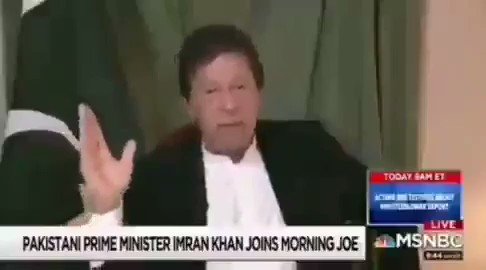
You sound like a welder from the Bronx, says the anchor.
After the pathetic speech in the UN a few days ago , this man seems to be inventing new ways to humiliate himself.
Viru .. I see this and I am shocked ..a speech which is unheard of .. a world which needs peace ,pakistan as a country needs it the most .. and the leader speaks such rubbish ..not the Imran khan the cricketer world knew ..speech in UN was poor ..
5,553 people are talking about this
Former Indian cricketer Sehwag shared the video on Twitter in which American anchors can be seen slamming the cricketer-turned Prime Minister Khan.
Sehwag shared the video and captioned the post as "You sound like a welder from the Bronx, says the anchor. After the pathetic speech in the UN a few days ago, this man seems to be inventing new ways to humiliate himself."
You sound like a welder from the Bronx, says the anchor.
After the pathetic speech in the UN a few days ago , this man seems to be inventing new ways to humiliate himself.
19.8K people are talking about this
In an interaction with an American news channel, Khan mocked the infrastructure in the country, saying "You have to go to China and see the way their infrastructure is. In New York, I am watching the car bumping around here."
The anchors did not take Khan's comment in a good manner and blasted Khan by commenting "You don't sound like a Prime Minister of Pakistan, you sound like a welder from the Bronx".
On Wednesday, cricketers including Mohammad Shami, Harbhajan Singh, and Irfan Pathan slammed Khan for his speech at the UNGA and said his words did not reflect sportsmanship.
At the UNGA, India Prime Minister Narendra Modi talked about India's growth and how the country has developed under his leadership, while Khan spoke about Kashmir issue and also warned India of a nuclear war.
On August 5, the Central government abrogated Article 370, withdrawing special status given to Jammu and Kashmir.
The Central government also brought in Jammu and Kashmir Reorganisation Bill, bifurcating the state into two Union Territories -- Ladakh and Jammu and Kashmir.

Hard Times Have Pakistani Hindus Looking to India, Where Some Find Only Disappointment

By 
By the time an angry Muslim mob stormed the local Hindu school and ransacked an adjacent temple a few weeks ago, many members of Pakistan’s dwindling Hindu minority had already been wondering whether it was worth trying to stay in a country where they felt increasingly unsafe.
In April, an angry mob vandalized a different Hindu temple, smashing its idols and chucking the pieces in an open sewer. In May, a Hindu veterinarian was accused of blasphemy in a neighboring town, his shop burned to the ground on the rumor that he was selling medicine wrapped in Islamic religious text.
More than 70 years after the partition of India and Pakistan, increasing violence in this officially Muslim country against the Hindu minority — about 1 percent of Pakistan’s 210 million people — is leading some Hindus to rethink the choices and fate that left their families on the Pakistani side of the line in 1947, residents say.
“Most of our elders at the time of partition did not migrate to India because they did not want to lose their businesses. But now they see it was the wrong decision,” said Kumar, a small-business owner from Ghotki District in Pakistan’s Sindh Province, where the attacks unfolded on Sept. 15. He asked that his last name be withheld, fearing mob violence.
“I am considering moving to India, where at least no one can kill me on the basis of my faith,” he said. The trepidation among Pakistani Hindus is mirrored in many ways among the Muslim minority in India, where a campaign of Hindu nationalism led by Prime Minister Narendra Modi’s party has left many Muslims feeling targeted. Sectarian fears in both India and Pakistan always peak during times of tension, and hostility between the neighbors is running particularly high right now.
In Pakistan, local officials say the pressure for Hindus to weigh moving to India has not been this great since a wave of sectarian violence led many to migrate in the 1990s, after a Hindu mob in India tore down a 16th-century mosque, the Babri Masjid, leading to retaliatory attacks in Pakistan.
The current migration is because of Mr. Modi’s open appeals to Hindu identity in India, they say, stripping the country of the secular framework it was founded on to give supremacy to their religion.Since Mr. Modi’s election victory, Pakistani Hindus say they have had an easier time obtaining religious or pilgrimage visas to India, which they can then convert to long-term visas if they seek Indian citizenship. Though the exact number of Hindu migrants is hard to pin down, indications of a wider push to go to India can be seen in the numbers of those long-term visas. In 2018, the Indian government granted 12,732 long-term visas, compared with 4,712 in 2017, and 2,298 in 2016, according to the Ministry of External Affairs. About 95 percent of long-term visas are granted to Pakistani Hindus, officials say. Millions of Hindus remained in Pakistan when Britain carved out the state from the subcontinent to create a Muslim homeland at independence in 1947. They were unwilling to abandon their homes and businesses, like the millions of Muslims who ended up on the Indian side during partition, where now about 200 million live.
But angry sectarian mobs on both sides of the border sought to change those demographics at the nations’ birth, killing up to two million people and displacing 14 million. Trains packed with terrified Muslims and Hindus fleeing in opposite directions on the railway between India and Pakistan arrived full of corpses, passengers massacred mid-journey.
Train service between the countries was suspended when they went to war in 1965 and 1971, but eventually resumed. Last month, Pakistan suspended India-bound trains once again, protesting New Delhi’s move to strip the autonomy from the portion of Kashmir it controls, a Muslim-majority state the countries have long fought over. Even among Pakistani Hindus who are considering going to India, there are very real reasons to hesitate.
Kumar is one who is torn. Though he was shaken by the recent violence in his hometown, he said he was still reluctant to pick up and leave when the trains start running again. He has said goodbye to neighbors who have migrated to India, only to see them return to Pakistan months or years later, disappointed.
Bhagchand Bheel is one of the disappointed. When he migrated to India in 2014, he was grateful to leave the violence and pressure of Karachi, Pakistan’s commercial hub. He boarded the Thar Express to Zero Point Station, the last stop before the border, where he and his family lugged their bags by foot into India, settling in a camp in the city of Jodhpur.
He was among his people, he thought, and could finally be free. But he is of a lower caste, and when he tried to enter a Hindu temple, he was barred entry by the priest because of it, he said. And when a friend tried to drink from the community water well, he was physically assaulted by upper caste Brahmins who accused him of polluting it.“In Pakistan, the only thing that matters is if you are Hindu or Muslim,” said Mr. Bheel, whose last name is derived from his tribe. “Because we are Hindus, in Pakistan we were discriminated against. But in India, I face discrimination because I’m a Bheel.”
Like many Pakistani Hindus, Mr. Bheel migrated after Mr. Modi came to power in 2014, after a long campaign promoting Hindu nationalism. Muslims in India say life has gotten progressively harder for them, too. Mr. Modi’s government is accused of turning a blind eye to the scores of Muslim men lynched by Hindu mobs. When an 8-year old Muslim girl was gang raped and killed in Kashmir last year by Hindu men, local police officers allegedly helped cover up the crime.
But despite the discrimination Muslims face in India, they do not tend to migrate to Pakistan in the numbers their Hindu counterparts in Pakistan do. Indian Muslims tend to migrate to the West instead.
In the Al Kausar Nagar migrant camp in Jodhpur, huts made out of thin, wispy branches, like birds’ nests, nestle in clusters, with quilts with vibrant Pakistani tribal designs hanging off their sides.
Bands of Pakistani Hindu women crouch over unfinished quilts, stitching away, hoping to sell them in the market to wealthier Indians. They complain that they receive little government assistance, siphoning what little electricity and water they can off municipal lines, and that the quality of public schooling for their children is not as good as it is in Pakistan, a main source of grievance for the many who migrated to give their children better opportunities.
This is not the Hindu paradise they had crossed the border to join, they said. This is not the India Mr. Modi promised them.
Mr. Bheel is wracked by doubt, the same doubt his grandfather had when he chose to keep the family in Pakistan during partition. Did he make the right choice?He left his home and siblings in Karachi, trading a lucrative job as an administrator of a medical clinic there to live as a migrant in India. His medical diploma, one of the few possessions he brought with him, hangs proudly on a wall, although it is not valid in India. He struggles to make ends meet here.“You take these decisions sometimes out of excitement for what your life could be,” Mr. Bheel said, his daughter cuddling beside him on a bench. “Then you arrive and realize it’s much different on the ground.”
Mr. Bheel looked on as his wife struggled to contain rainwater leaking from the ceiling, after a monsoon swiftly obliterated the sunny sky. Eventually she gave up, running out of pots and buckets.
“Maybe this wasn’t the right decision for me,” he said. “But maybe my children will look back and say, ‘My father made the right choice.’”

Saturday, October 5, 2019

14-year-old Christian girl abducted from Pakistan’s Faisalabad region

14-year-old Christian girl Samra Bibi was abducted from her house in Pakistan’s Faisalabad region on September 16th, reports International Christian Concern.
According to ICC, Habib was kidnapped while she was alone at home by man named Muhammad Ramiz who was known in the area for sexually harassing Christian girls. The report claims Police registered the abduction case after pressure from human rights organization, however change the girls age to 16. Habib’s father Munir Masih claims the authorities changed Samra’s age to 16, in order to make her of “legal age” to marry. The report further alleges that Habib was “forcibly converted and married”.
The opening of the investigations led to the arrest of one of Muhammad Ramiz, however according to AsiaNews agency “he was released an hour later thanks to a bribe payment and pressure from local Clerics”.
Naveed Walter, president of Human Rights Focus Pakistan, told media that “minority girls are an easy target for kidnappings, conversions and forced marriages. They are weak [and easy] victims of blackmail, rape and murder”.
Condemning the abduction, Member of EU Parliament Marijana Petir said that the incident was the “latest in a long series of kidnappings and forced conversions of underage minority girls, obtained under threat and after sexual violence.”
Walter further added that sometimes courts are more inclined towards criminals.
Earlier this year in April, another Pakistani Christian in Faisalabad testified against her captor after her release.

#Pakistan - National Assembly rejects bill that opens highest state offices to minorities

A Christian lawmaker presented the constitutional amendment to allow non-Muslims to be president and prime minister. Right-wing Islamic parties praise the rejection. For experts, minorities continue to be subordinate.
The National Assembly of Pakistan yesterday rejected a bill that would have given members of minorities the possibility of being elected to the highest offices of the state.
Naveed Aamir Jeeva, a Christian member of the Pakistan People's Party, presented the Constitution (Amendment) Bill 2019, which would have repealed Articles 41 and 91 of the Constitution, thus allowing non-Muslims to become prime minister and president of Pakistan.
Under Art 41, only a Muslim 45 years and older can be elected president. Art 91 states that the National Assembly will choose the prime minister from among "one of its Muslim members".
Minister of State for Parliamentary Affairs Ali Muhammad opposed the proposed legislation. He said that since Pakistan is an Islamic Republic, only a Muslim can be president and prime minister. At the same time, he noted that minorities enjoy complete freedom and security and that their rights are protected.
Standing next to him was Maulana Abdul Akbar Chitrali, of the right-wing Jamaat-e-Islami party, who praised the minister, adding that “no law against Islamic values and teachings can be passed, introduced or even debated in the parliament”.
According to experts, the rejection of the constitutional proposal is an attempt to keep the country's religious minorities in a subordinate position vis-à-vis Muslims.
In Pakistan, Islam is the majority religion (95-96 per cent), followed by Hinduism. Christians are about 1.6 percent.
The members of minorities are restricted to the humblest jobs, like garbage collection, and are often the victims of discrimination and violence, especially over land. Minority girls and women are often victims of sexual abuse.
http://asianews.it/news-en/National-Assembly-rejects-bill-that-opens-highest-state-offices-to-minorities-48184.html

Analysts: Pakistan Still at Risk of Being Placed on FATF Blacklist

By Niala Mohammad


Pakistan remains at risk of being placed on the "blacklist" of Financial Action Task Force (FATF), a global watchdog monitoring terror financing and money laundering around the world, experts warn.
The global watchdog's regional body — Asia Pacific Group (APG) — examined Pakistan's performance on key issues related to terror financing and money laundering at a two-day preliminary meeting in Bangkok in early September.
The final decision as to whether the country would be placed on the so-called blacklist is pending until the APG presents its final report to the FATF Plenary and Working Group meetings scheduled for later this month in Paris.
With a final decision ahead, some experts warn the stakes are high for Pakistan to be placed in the black list given the country's lack of notable progress on key demands of the FATF."Since no major decisions are made until October, Islamabad must know that no matter what happened in Bangkok, it's not out of the woods yet." Michael Kugleman, deputy director of South Asia Program at the Washington-based Woodrow Wilson Center, said."It's hard to know what transpired in Bangkok, or whether it helped or hindered Pakistan's prospects for getting relief at the important Paris meeting in October," Kugleman added.A 15-member Pakistani delegation led by the Minister for Economic Affairs Division Mohammad Hammad Azhar met with the APG in Bangkok to evaluate Islamabad's progress.The outcome of the evaluation has yet to be disclosed by the APG, although Indian media outlets speculated that Pakistan fared poorly in the evaluation and is headed toward blacklisting.
Pakistan Foreign Minister Shah Mahmood Qureshi denied those claims, however, brushing them aside as "Indian propaganda." FATF has not placed Pakistan on the blacklist! The world needs to take notice of Indian propaganda and fake news," Qureshi said in response to the media reports.
Pakistan's stance
Pakistan continues to defend its efforts of combating terror groups and their financial networks, emphasizing it takes quite seriously FATF requirements and the fight against terrorism."The Pakistan delegation effectively presented Pakistan's progress on each of the FATF action plan items and provided additional information/clarification to the APG-Joint Group," Hammad Azhar, Pakistan's minister for the Economic Affairs Division, said following APG's meeting in Bangkok.More recently, Pakistan's Prime Minister Imran Khan criticized India for working against Pakistan at FATF and charged that his nation has dismantled militant groups operating on its soil."The moment the election ended, we approached India. No response. But then we discovered they were trying to push us in the FAFT blacklist to bankrupt us. That's when we realized there was an agenda." Khan stated in his address at the UNGA.
Definitive action
Despite Pakistan's claims of having made headway in its fight against militant groups and their financial networks, some analysts insist Pakistan has not done enough. They say its lack of definitive action against known terrorist networks like Lashkar-e-Tayiba and Jaish-e-Mohammad are valid concerns for the international community.
Nadeem ul Haque, a former senior resident representative of the International Monetary Fund (IMF) charges that Pakistan may have fulfilled other conditions imposed on the country by FATF, but the country has yet to really counter what he called "visible terrorists".
"Pakistan is failing in catching the visible terrorists the world wants to catch. That seems to be the main problem. The rest of the conditions are virtually done," Haque said.
James Schwemlein, an expert on South Asia at the Carnegie Endowment for International Peace, charges that Pakistan has taken only modest steps.
"So far, it appears the authorities have taken modest steps to meet FATF requirements, such as freezing banking accounts and seizing properties, but are far from full compliance," Schwemlein said. "At this point, it does not appear that Pakistan has taken any irreversible step to improve its anti-money laundering and counter terror-financing regime."
Schwemlein said Pakistan's intelligence agency continues to maintain ties with militant groups.
"Pakistani authorities argue they have limited ability to constrain terror groups that operate with the support of the Pakistani intelligence services inside Pakistan, though Prime Minister Khan has pledged to gradually constrain and eliminate these militant proxy groups," he added.
Financial consequences If Pakistan were to be blacklisted by FATF, it would be of detriment to its already struggling economy, analysts warn. "With Pakistan's economy already suffering through a serious balance of payments crisis and new IMF-funded austerity measures, the last thing Pakistan needs is to be deprived of new capital and investment," Kugleman said. "The FATF blacklist is where the worst of the worst end up, and if Islamabad gets put on this list it will likely lose many potential new investors and banks that wouldn't want to be tainted by a sullied Pakistani brand," he added. Schwemlein of Carnegie Endowment for International Peace believes this is a possibility. "If Pakistan is deemed as not having made sufficient progress against its action plan, the FATF ministerial in October could choose [by consensus] to issue a call to action' to international banks and financial institutions to sever ties with Pakistani entities," he said. The FATF's action could simultaneously affect Pakistan's $6-billion loan program with the International Monetary Fund (IMF). "FATF blacklisting Pakistan would cause a big hiccup. They [the IMF] will remain engaged with the country but can stop or slow the pace of funds if conditions are not met by Pakistan," Haque said. Haque confirmed the IMF would have to take into account the FATF's actions toward Pakistan. "The economy is at a point where stoppage of flows will be very hurtful ... it will slow international transactions to the point of scaring away investors and even remittances," he added. Applying leverage Analysts charge that Prime Minister Khan's government may try to use Afghanistan and the stalled peace talks there as leverage to maneuver out of the potential blacklist. "If the U.S. administration thinks Pakistan is being helpful in advancing U.S. policy objectives in Afghanistan, Washington is unlikely to push for Pakistan's blacklisting," Schwemlein said. But those talks, at least between the U.S. and Taliban, appear dead for now after the Taliban intensified its violence in Afghanistan and prompted U.S. President Donald Trump to end talks with the group. Others argue there's too much in play for Pakistan to wield geopolitical issues. "For Pakistan, FATF is an issue with too much at stake to warrant the use of external geopolitical issues as leverage," Kugelman said.

#Pakistan - #PPP yet to decide about JUI-F march, says Bilawal


Pakistan Peoples Party (PPP) chairman Bilawal Bhutto-Zardari on Friday said that while his party supported the upcoming Jamiat Ulema-i-Islam-Fazl (JUI-F) march, it was yet to decide whether and to what extent it would participate in the anti-government protest.
The PPP chairman was talking to reporters after meeting former president Asif Ali Zardari, who had come to appear before the accountability court of Islamabad in the Park Lane case.
The accountability court was scheduled to indict Mr Zardari, his sister Faryal Talpur, and others on Friday. Since some suspects were not in attendance, the court directed the prosecution to produce all suspects on the next date and adjourned the proceedings without any progress till Oct 22.
Mr Zardari held a meeting with his son Bilawal Bhutto-Zardari and daughters Aseefa and Bakhtawar Bhutto-Zardari besides some PPP leaders.
Speaking to reporters, the former president conveyed his best wishes for the Azadi March, but added that the PPP chairman took all major decisions in consultation with the party leaders.
He said that the opposition parties were left with no option but to launch a protest against the incumbent government, adding that it was time for all political forces to unite against the regime that had crippled all business activities in the country and made it difficult for the common man to make both ends meet.
Responding to a question regarding the Azadi March scheduled for Oct 27, Mr Bhutto-Zardari said that major opposition parties — including PPP and PML-N — wanted a joint protest and rally. He made a categorical announcement for participating in JUI-F-led Azadi March and said that PPP supported the said demonstration but would decide its course of action after internal meeting of the core committee.
He said they had only one difference with the JUI-F on the issue of sit-ins as the party never wanted to take part in any activity which would derail democracy in the country.
Responding to another question, Mr Bhutto-Zardari said that the business community was so deeply concerned about the state of the economy and the government’s policies that they approached the army chief for redressal of grievances.
He said that Prime Minister Imran Khan had made parliament dormant and the people had been forced to settle their problems through street protests.
He said that the government had failed to deliver and in such frustration he was sending his political opponents, including women, to jail.
Referring to the PTI’s manifesto, the PPP chairman said that instead of creating 10 million jobs for people, the incumbent government made millions jobless, adding that PTI had promised to build five million houses but it made thousands homeless.
He said that everyone knew that this government was a product of rigged elections and the PPP was the only party that continued to fight the selectors.

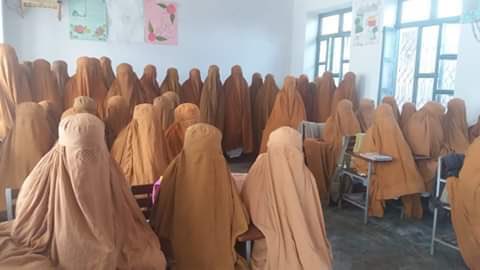
#Pakistan - ’اب کتابوں کی جگہ برقعے تقسیم ہوں گے‘


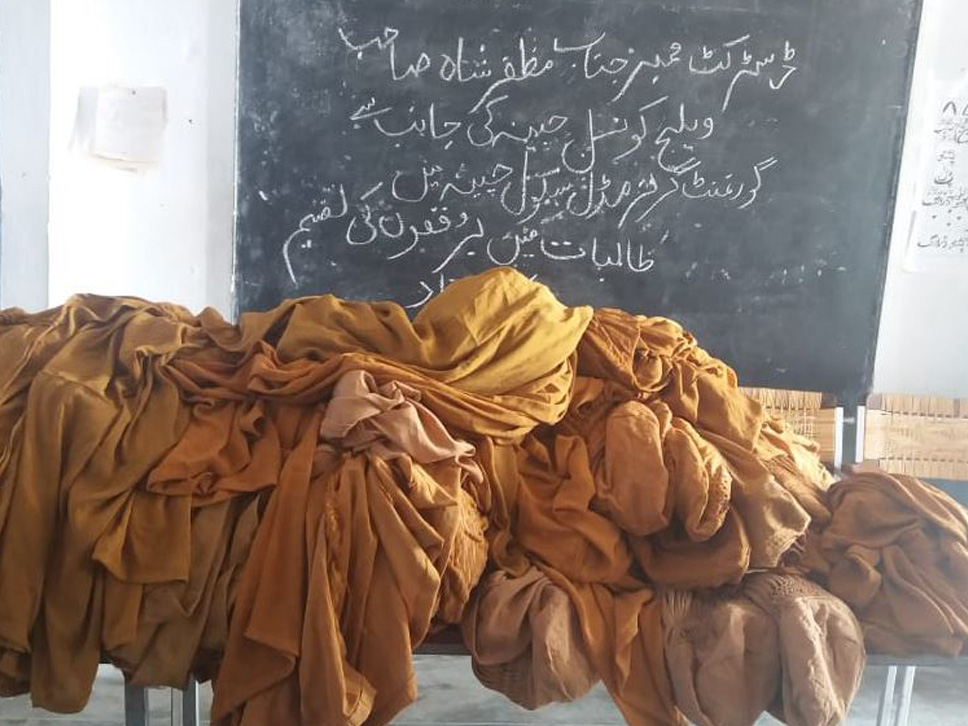
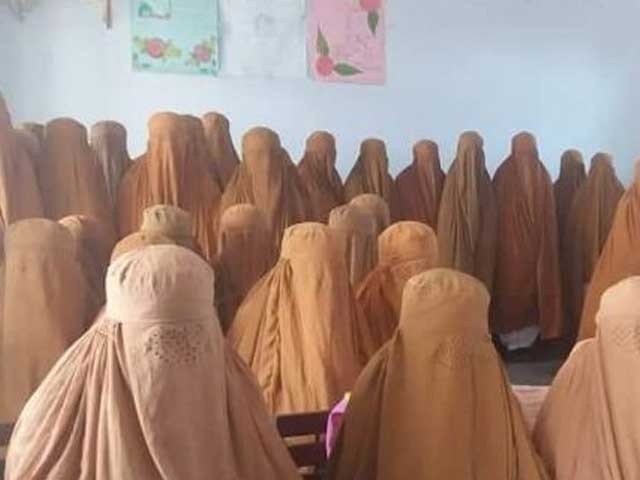
صوبہ خیبر پختونخوا کے شہر مردان کے علاقے رستم میں ضلعی کونسل کے ایک سابق رکن نے طالبات میں 90 شٹل کاک برقعے تقسیم کرکے سوشل میڈیا پر ایک نئی بحث کا آغاز کردیا ہے۔
مردان سے تعلق رکھنے والے صحافی ابوبکر صدیق نے انڈپینڈنٹ اردو کو بتایا کہ ضلعی کونسل کے سابق رکن مظفر شاہ نے دو دن قبل چینہ رستم کے مڈل سکول میں سرکاری فنڈ سے 90 برقعے خرید کر طالبات میں تقسیم کیے، جن پر 90 ہزار روپے کا خرچہ آیا ہے۔
انہوں نے مزید بتایا کہ مظفر شاہ نے علاقے کے دیگر سکولوں میں بھی ایسے ہی شٹل کاک برقعے تقسیم کرنے کا ارادہ ظاہر کیا ہے تاکہ ایک ہی رنگ سے ان کی بطور طالبات پہچان ہو سکے۔
جب انڈپینڈنٹ اردو نے مظفر شاہ سے اس بارے میں دریافت کیا تو انہوں نے بتایا کہ ’مجھے غریب طلبہ و طالبات کی مدد کرنے کے لیے تقریباً پانچ لاکھ روپے سرکاری فنڈ ملا تھا تاکہ ان کی یونیفارم اور دوسری ضروریات کو پورا کیا جاسکے۔ اس فنڈ میں سے ڈھائی لاکھ روپے لڑکیوں کے اور ڈھائی لاکھ روپے لڑکوں کے سکول کے لیے مختص تھے۔‘
جب مظفر شاہ سے سوال کیا گیا کہ انہوں نے طالبات کے لیے برقعوں کا انتخاب کرکے اپنی مرضی مسلط کرنے کی کوشش تو نہیں کی کیونکہ اس علاقے میں خواتین دیگر طرح کا پردہ بھی کرتی ہیں؟ جس پر انہوں نے جواب دیا کہ ’رستم میں خواتین برقع پہنتی ہیں، اسی لیے طالبات نے خود اس کا مطالبہ کیا تھا۔‘
اگر مردان میں پردے کی بات کی جائے تو حقیقت میں یہاں کی خواتین کی پہچان سفید چادر ہے۔ چونکہ مردان کے اکثر علاقوں میں مہمند قوم بھی آباد ہے لہذا مہمند خواتین برقعوں کا استعمال کرتی ہیں۔
دوسری جانب اگر مردان اور صوبے کے دیگر علاقوں میں پردے کے تاریخی پس منظر کا جائزہ لیا جائے تو معلوم ہوتا ہے کہ تقریباً ایک صدی پہلے تک پشتون خواتین میں پردے کا کوئی خاص تصور ہی نہیں تھا۔
 پشتون تمدن و تاریخ کے ماہر محمد ایاز خان نے اس حوالے سے کہا: ’پشتون اسلام سے زیادہ قبائلی روایات کی پیروی کرتے رہے ہیں۔ اسی لیے چاہے وزیر ہوں یا محسود، مہمند ہوں یا یوسفزئی، زمانہ قدیم میں ان تمام قبیلوں کی خواتین میں سرے سے پردے کا رواج  نہیں تھا۔ البتہ اگر کسی دور افتادہ علاقے میں جانا پڑ جاتا تو یہ خواتین کسی بھی رنگ کی ایک چادر اوڑھ لیا کرتی تھیں۔‘
ایاز خان کے مطابق: ’دراصل پشتون خواتین میں پردے کا رواج ہندوؤں کے براہمن اور کشتریا خاندانوں سے آیا ہے۔ کیونکہ وہ کسی اچھوت ذات کا اپنی خواتین کی طرف دیکھنا گوارا نہیں کرتے تھے۔‘
سوشل میڈیا صارفین کے تبصرے
دوسری جانب مردان کے سکول میں برقعوں کی تقسیم کے معاملے کو سوشل میڈیا صارفین نے تنقید کا نشانہ بناتے ہوئے کہا ہے کہ خواتین پر کسی طرح کا بھی ڈریس کوڈ مسلط کرنا پتھر کے دور میں جانے کے مترادف ہے۔
ایک صارف نے لکھا: ’اب کتابوں کی جگہ برقعے تقسیم ہوں گے۔‘
بعض صارفین کاموقف تھا کہ اگر برقع پر خواتین یا علاقہ مکینوں کو کوئی اعتراض نہ بھی ہو، پھر بھی سرکاری سطح پر ایسے کام  کرنے سے گریز کرنا چاہیے تھا کیونکہ اس سے دوسرے خیالات اور عقائد رکھنے والے لوگوں کے حقوق کو خطرہ لاحق ہوتا ہے۔
ایک صارف نے لکھا: ’نیا پاکستان بن رہا ہے۔‘
کچھ صارفین نے دلچسپ تبصرے بھی کیے۔ کسی نے کہا: ’صوبائی حکومت نے برقعے تو تقسیم کردیے لیکن انہیں یہ نہیں پتہ کہ اس طرح طالبات بغیر کسی کی نظروں میں آئے کلاس میں سو سکیں گی۔‘
ایک خاتون نے خیال ظاہر کیا کہ لڑکیوں میں برقعے تقسیم کرنے کی بجائے لڑکوں اور مردوں کو یہ سکھایا جانا چاہیے کہ وہ اپنی ذہنیت تبدیل کریں۔
حال ہی میں خیبر پختونخوا کی حکومت کو سکولوں میں عبایا لازمی قرار دینے پر بھی سخت تنقید کا نشانہ بنایا گیا تھا، جس کے بعد حکومت کو اپنا فیصلہ واپس لینا پڑا۔انیلا خالد 

مردان کے ایک سابق ضلعی کونسل رکن کی جانب سے طالبات میں شٹل کاک برقعوں کی تقسیم کے سوشل میڈیا پر چرچے ہیں اور لوگ اسے تنقید کا نشانہ بنا رہے ہیں۔