Wednesday, October 2, 2019

What civilians in Pakistan’s Kashmir face: Poor infrastructure, lack of jobs, press control


Both Imran Khan government and the global community have a part to play in setting Pakistan’s Kashmir on the path towards development.

On August 5, Indian Prime Minister Narendra Modi announced the withdrawal of Article 370 of the Indian constitution from Jammu and Kashmir, which revoked the state’s semi-autonomous status. Modi’s decision made international news headlines and newly enflamed tensions between India and Pakistan.
Kashmir has long been a flashpoint between the two nuclear powers. Media outlets have particularly emphasized the chaos and turmoil that has befallen the Indian state since August 5. Uncertainty in light of the decision has led to overflowing hospitals, food scarcity, lack of access to internet, and thousands of security forces patrolling checkpoints.
Less likely to appear in news coverage, however, is reporting on the political and humanitarian situation in the smaller Pakistan-controlled Kashmir (PK) on the other side of the Line of Control (LoC). Individuals living in PK are major stakeholders in the broader dispute yet have heretofore lacked a legitimate mouthpiece for voicing their political and socio-economic grievances. They have not had adequate means of expressing dissatisfaction with the Pakistani government’s regional policies, and generally suffer as a result of underdevelopment and disenfranchisement.
Most recently, on September 9, local police arrested at least 22 people demonstrating in favour of Kashmiri independence, after clashes between the police and activists became violent. Development and political enfranchisement go hand-in-hand in promoting security and stability. Within the context of the Kashmir dispute and broader conflict between India and Pakistan, it is thus especially important to highlight the sub-par living conditions in PK and to gear stakeholders towards taking more concerted action.
The Pakistani federal government has historically neglected basic development needs in PK, which suffers from poor infrastructure and a lack of available resources and technology. The Pakistani government has not taken sufficient measures to encourage development-oriented investment in the region, and some activists on-the-ground have even charged the Pakistani military with keeping the region’s people unprivileged.
PK is entirely dependent on the federal government for its financial resources and only about 25 per cent of the budget allocated to the region goes towards initiatives for development. Government estimates suggest that PK had a 10.3 per cent unemployment rate during the 2017-2018 fiscal year. The local government and local businesses have largely not taken advantage of natural resources and human capital present in the region. Combined with subpar literacy rates (an official 78 percent literacy rate accounts for individuals with only very basic proficiency) and a dearth of available jobs, young Kashmiris in particular migrate to Pakistan’s large cities in search of low-paying jobs at hotels, restaurants, and clothing stores. Though recent economic activities in PK, particularly billions in Chinese investment, have generated hope that the region’s economic future would improve, the movement towards achieving this has been slow. For instance, the mainstay of the China-Pakistan Economic Corridor in PK, the Mirpur-Muzzafarabad-Mansehra highway, is still to be constructed despite being proposed in 2016, and the Kohala hydropower project is facing local opposition due to environmental concerns.
Civilians living in PK also suffer from poor governance, an absence of political legitimacy, and disenfranchisement. Government action in PK has principally surrounded its ambiguous legal status: the federal government has disproportionately focused on securing its political hold over the region, neglecting actual governance in the process. The federal government grants the local PK government only limited resources and governing authority. PK lacks representation in the National Assembly of Pakistan as a result of its lack of international recognition, which means political control falls into the hands of federal officials who are unaware of local grievances.
June 2018 report from the Office of the United Nations High Commissioner for Human Rights (OHCHR) notes with concern the restrictions on right to freedom of expression and association in PK, particularly in relation to the cause of Kashmiri independence or the populace’s right to self-determination, a tight control over the press, and an outsized role of the military and intelligence agencies in local governance. In its follow up report in July this year, the OHCHR assesses that many of these concerns remain.
Political disenfranchisement, underdevelopment, and a disregard for human rights in Pakistan-controlled Kashmir bode poorly for long-term regional stability and security. As the international community assesses growing fissures between India and Pakistan, it must also encourage action to lessen Pakistan-controlled Kashmir’s isolation and encourage development and political participation.
Lack of access to basic resources and low government capacity may lead some individuals to seek group-belonging and stability in insurgency groups and recognised terrorist organisations. The region boasts proximity to large water sources, is resource rich, and its literacy rate is actually higher than Pakistan’s overall rate. Both the Pakistani federal government and the international community have a part to play in setting Pakistan-controlled Kashmir on the path towards development, and have a moral obligation to improve the lives of civilians on the ground.


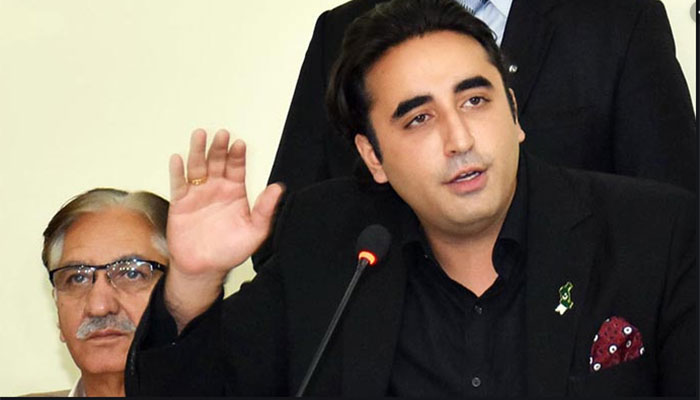
Video Report - - Bilawal Bhutto Press Conference On Earthquake In Mirpur Azad Kashmir | 2 Oct 2019

Pakistan Peoples Party (PPP) Chairman Bilawal Bhutto on Wednesday has arrived in earthquake-hit Azad Kashmir.As a gesture of solidarity with the quake sufferers, the PPP leader visited Mirpur District Hospital where he inquired about the health of the victims.

A NUCLEAR WAR BETWEEN INDIA AND PAKISTAN COULD KILL TWICE AS MANY PEOPLE AS WWII, STUDY FINDS


BY ROSIE MCCALL
The immediate effects of a nuclear war between India and Pakistan could cause up to 125 million deaths, a new study published in Science Advances has found. That's 2.5 times the fatalities of the Second World War, when an estimated 50 million people were killed as a direct consequence of military action.
The study, co-authored by researchers at Rutgers University, quantifies just how catastrophic a nuclear conflict between the two nations would be. In addition to the 100 million-plus death toll in the immediate aftermath, the study authors warn we could expect global vegetation growth to decline 20 to 35 percent as ocean productivity fell 5 to 15 percent⁠—a result that would cause mass starvation, ecosystem disruption and more deaths. It could take over a decade to fully recover from the impacts, they say.
"Nine countries have nuclear weapons, but Pakistan and India are the only ones rapidly increasing their arsenals," said Alan Robock, a Distinguished Professor in the Department of Environmental Sciences at Rutgers University—New Brunswick.
"Because of the continuing unrest between these two nuclear-armed countries, particularly over Kashmir, it is important to understand the consequences of a nuclear war."
Indeed, only last week in an address to the United Nations General Assembly in New York, Pakistani Prime Minister Imran Khan appealed for international support against India's decision to remove semi-autonomous status from its share of Kashmir last month and impose a lockdown on the majority Muslim population—stressing the threat of nuclear war.
"If a conventional war starts between the two countries, anything could happen," said Khan. "But supposing a country seven times smaller than its neighbor is faced with the choice: either you surrender, or you fight for your freedom till death, what will we do?"
"I ask myself this question and my belief is la ilaha illallah, there is no god but one, and we will fight. And when a nuclear-armed country fights to the end, it will consequence far beyond the borders."
Robock et al.'s calculations are based on a potential war scenario for 2025, when it is estimated the two countries could have 400 to 500 nuclear weapons between them. Each nuke could have an explosive power between 15 kilotons—equivalent to 15,000 tons of TNT, i.e. the same size as the "Little Boy" that fell on Hiroshima in 1945—and a few hundred kilotons, the researchers say. The largest known nuclear weapon in existence today, the Tsar Bomba, far exceeds those considered in the study with an explosive power of 50 megatons.
The researchers conclude that were India to release 100 strategic weapons in a nuclear conflict and Pakistan 150, the number of fatalities caused by the initial effects could total 50 million to 125 million people—the exact size depends on the size of the weapons used. For context, an estimated 50 million people were killed in the Second World War, although that number excludes those who died from disease and starvation. Many more would die from the mass starvation that would almost certainly follow, they add.
Starvation is likely because the explosions would cause fires that could, between them, release 16 million to 35 million tons of soot into the atmosphere. This soot would absorb solar radiation and heat the air, which would then cause the smoke to rise further, blocking our sun's light so that 20 to 35 percent less would fall on the Earth. This would trigger a period of global cooling—resulting in a nuclear winter—that would see surface temperatures drop 3.6 F to 9 F to levels not seen on Earth since the last ice age. We could also see global precipitation levels plummet 15 to 30 percent, affecting some regions more than others, the study's authors conclude.
As a result, they predict 15 to 30 percent less vegetation growth and a 5 to 15 percent decline in ocean productivity worldwide.
"Such a war would threaten not only the locations where bombs might be targeted but the entire world," said Robock. "I think we have been lucky in the 74 years since that last nuclear war that we have not had another due to mistakes, panic, misunderstanding, technical failures or hacking," Robock told Newsweek. "If the weapons exist, they can be used. And the ongoing conflict in Kashmir has the potential to escalate." Neither party is likely to initiate a nuclear conflict without major provocation, the study's authors wrote. However, they did warn of a new Cold War.
"India and Pakistan may be repeating the unfortunate example set by the United States and Russia during the 'Cold War' era: that is, building destructive nuclear forces far out of proportion to their role in deterrence," they write.
https://www.newsweek.com/nuclear-war-india-pakistan-death-toll-ww2-1462550

FATAH: Pakistan threatens the world with nuclear war

Tarek Fatah


Not since 1956 when Soviet Premier Nikita Khrushchev threatened the West with the infamous words, “We will bury you” have world leaders heard the head of a nuclear state brandish its atomic weapons to intimidate the world.
Almost 60 years after Khrushchev said these words at a reception in Moscow while addressing Western ambassadors, the Islamic State of Pakistan was back at the centre of the world’s attention as its prime minister raised the spectre of a nuclear war engulfing the globe.
Last Friday, Imran Khan rose to address a poorly attended hall of the UN General Assembly and in a not-so-disguised threat said, if the world did not pay attention to his penchant for a jihad against neighbouring India over the Indian state of Kashmir, a nuclear war would ensue and engulf the rest of the world:
“If a conventional war starts between the two countries … anything could happen. But supposing a country [Pakistan] seven times smaller than its neighbour [India] is faced with the choice either you surrender, or you fight for your freedom till death? “What will we do? I ask myself this question … and we will fight. … and when a nuclear-armed country fights to the end, it will have consequences far beyond the borders.”
Khan warned of a “blood bath” in Kashmir, where New Delhi has taken steps to fully integrate the territory with the rest of the country by amending the country’s constitution that hitherto had granted greater autonomy to the region than that given to the other 29 Indian states.
The Pakistani prime minister positioned himself as leader of the Islamic world and thus having authority to speak on behalf of India’s Kashmiri Muslims. In a provocative remark, Khan posed a rhetorical question: “Would I want to live like that?” Then answering his own question, he declared, “I would pick up a gun.”
And then to claim plausible deniability, he backtracked to say: “I am not threatening here about a nuclear war; it is a worry. It is a test for the United Nations. You are the one who said Kashmir has the right to self-determination. This is not the time for appeasement like that in 1939 in Munich.”
Was Imran Khan equating the world’s largest democracy India with Nazi Germany? Was he making a parallel between Prime Minister Narendra Modi and Adolf Hitler?
Outrageous as it may sound, but, yes the man known as ‘Taliban Khan’ did accuse the Indian leader of being a fascist just as Pakistani-Americans on the streets of New York roamed around with posters showing Mr. Modi as Hitler, chanting “Allah O Akbar” as they attacked and browbeat anti-Jihadi exiles from Balochistan and Sindh who were protesting human rights violations inside the Islamic State of Pakistan.
The threats of nuclear war by Imran Khan were met with a calm response from Indian diplomat Vidisha Maitra. Addressing the General Assembly in her right of reply to Khan, she said: “Prime Minister Imran Khan’s threat of unleashing nuclear devastation, qualifies as brinksmanship, not statesmanship. Even coming from the leader of a country that has monopolized the entire value chain of the industry of terrorism, Prime Minister Khan’s justification of terrorism was brazen and incendiary.”
And in response to the Pakistan Prime Minister’s declaration that “There is no God, but Allah,” the Indian diplomat said: “Unfortunately, what we heard today from Prime Minister Imran Khan of Pakistan was a callous portrayal of the world in binary terms. Us vs Them; … Muslims vs Others. A script that fosters divisiveness at the United Nations. Attempts to sharpen differences and stir up hatred, are simply put – hate speech.”
https://torontosun.com/opinion/columnists/fatah-pakistan-threatens-the-world-with-nuclear-war

Afraid For Her Life, A Pakistani Activist Vanishes ... And Escapes To New York


By TIM MCDONNELL

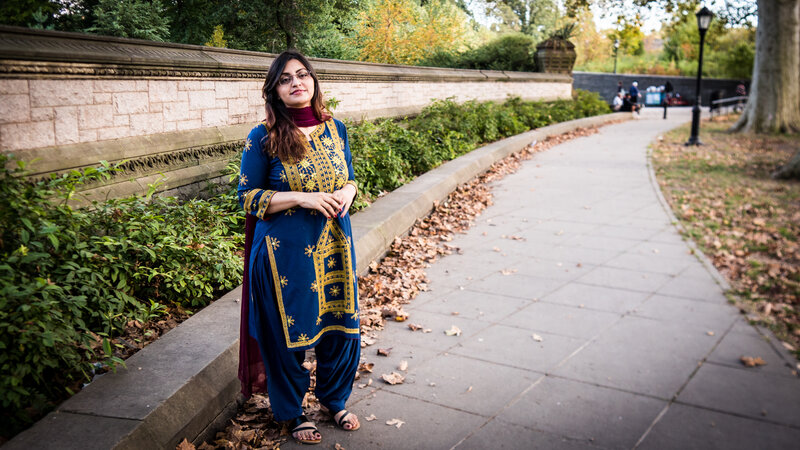
In May, one of Pakistan's most controversial women's-rights activists vanished.
Gulalai Ismail, 32, had spent much of her life organizing young women and girls to push back against child marriage and assert their rights in a male-dominated society. She founded an organization, Aware Girls, that provided leadership training and produced one alumna who went on to become the world's best-known girls' education advocate and youngest-ever Nobel laureate: Malala Yousafzai.
Ismail was used to making enemies, ranging from anonymous Facebook trolls to Taliban militants. But early last year, when she began to draw attention to the stories of women who claimed to have been raped or sexually assaulted by Pakistani security forces, she attracted the ire of her most formidable opponent yet: The country's all-powerful military and intelligence agencies.
Over the next year, she says she faced an escalating series of reprisals from the police and security officials, including intimidation, treason and terrorism charges, arrests and death threats. By the spring, after what she says was an especially harrowing 40-hour detention Pakistani intelligence officers without food, water or communication with her lawyer or family, Ismail began to fear for her life. She had good reason: Activists in Pakistan who anger the government have long been known to mysteriously disappear and never be seen alive again. So in May, when a friend tipped her off that a police team was on its way to her house, she said goodbye to her parents and slipped out the door. She wasn't seen publicly again for four months.
Then, on September 19, Ismail resurfaced in New York City, having slipped out of Pakistan and leveraged her activism network to secure the support of Senate Majority Leader Charles Schumer for an asylum claim.
"It is clear that her life would be in danger if she were to return to Pakistan," Schumer told The New York Times.
Ismail met with NPR in Brooklyn, near the home where she's staying with two brothers and two sisters who have lived in the U.S. for several years. She chose to keep many details of her journey secret, to protect people who helped her along the way. But she discussed her high-stakes escape and her plans to redouble her fight against gender-based violence.
This interview has been edited for length and clarity.
How does it feel to be in New York?
I had remained without any communication for four months, so it's been a bit overwhelming.
And when you live for so long in a state of insecurity it's not a magic bullet where all of a sudden you start feeling safe. Even today, if I go outside and someone is holding a camera I get a bit paranoid.
Let's back up — when did your situation with the Pakistani authorities escalate enough that you felt you had to leave the country?
In January 2018, I got involved with this group, Pashtun Tahafuz Movement. Young people from all over Pakistan had come to Islamabad protesting against extrajudicial killings and enforced disappearances.
But only a few were women, and so with some of my friends we decided that we are going to reach out to women. It became a movement about everyone who was persecuted by despotism and the military establishment. But the moment my support for the movement started, the state of Pakistan started persecuting me.
In November, I was taken to ISI headquarters [Pakistan's equivalent to the CIA]. They told my father that if you do not make sure that your daughter is silenced, we are going to kill her. I was glad I am seen as a threat to all these institutions of oppression. Why not? The system should feel threatened by a woman. But when I started raising the issue of sexual violence by the security forces, the situation became much more difficult for me. Many women had shared their stories of sexual violence by Pakistan's security forces. And the military did its best to silence the issue.
By that time my friends told me, 'Initially they were just intimidating you, and now it seems that they really want to harm you. And then one day they will not leave you alive.'
One morning, very early, I received a call from a friend, and she said the local media is reporting that police raid teams are prepared to come and arrest you. I went and woke my mother and father, and I told them, and I just left. I didn't know that this is my farewell to home. That was the last time I saw my parents, my sister. Our home was raided. Dozens of police and counter-terrorism people came to arrest me. My relatives' homes were raided, my friends' homes were raided.
So where were you?
We made a list of people who could provide me protection, who were not very close to me because we knew that my family and close friends would be under surveillance.I would usually live with them for around ten days, and then I would go to another location, so I lived in different cities of Pakistan. I did not have any mobile phone or social media.While I was in hiding, the Pakistan state was using all its machinery to find me. Once my driver was abducted and he was tortured for eight hours to get information about me, but he didn't know anything. Then a friend was picked up. He was beaten brutally, just because he is a friend.So in that situation, now this is not a legal battle. Now it is a battle for life. So I and my friends decided that now it's time to leave the country. But my name was on an exit control list. My pictures were pasted on all borders of Pakistan. During all this time I crossed hundreds of checkpoints, and I was just making sure they would not recognize me. I was given identity documents of a dead woman, so I would have like a fake identity.
What can you tell me about how you managed to get to America?
I was in hiding for four months. I cannot speak about exactly when I came here. Going outside of Pakistan was a life-risking journey. There were huge chances of not just me being arrested, but also people who had been supporting me.
Once the journey started, I was among people who I had never met before, and I was the only woman. I was given a lot of respect, but I was always extremely worried about my safety. Every few days I would be among new people, and I had no other choice but to trust them.
I had a U.S. visa, it was the only visa I had. Once I moved to a country where I was safe, I took a flight to the U.S. and I landed in New York.
What did it feel like when you finally managed to leave Pakistan?
I was in a state of uncertainty and disbelief. Those strangers sat in a circle and said a prayer. They said that the world may see this journey as illegal, but for us this is not illegal, it's a battle of survival. So we just pray that we are forgiven. They kept their hands on my head, and said may God protect you. And I bent, and I touched my soil, and you know it was so painful to leave soil where you have roots.
What happened with your family after you left?
My whole family had become at risk. One day a guy came out from the car and told my sister, 'You know, you're a look-alike of Gulalai and I'm afraid that one day we will shoot you instead of her mistakenly.' I'm afraid that my parents will be tortured or harassed or arrested.
When was when was the next time you were able to speak to them?
I couldn't speak to them even when I landed in the U.S. because I was just not sure if their communication is tapped. But when I was able to do it, it was a very brief video call and my mother and father were crying when they looked at me. I had never seen my father crying — in our culture men are not supposed to cry. They were just so glad to see me alive, because I think that they had stopped believing that I will ever manage to stay alive.
Now that you're out, what happens next?
I have paid a huge price for speaking out and for not silencing myself. In speaking about sexual violence in armed conflict, there's so much that the state is afraid of. And they would even kill people so that this crime is not exposed to the world. I am going to speak out about it as much as I can. I will continue empowering young women, because I know that when women human rights defenders are at risk there is very little support for them. I will continue raising my voice about the human rights abuses committed by state actors in conflict zones. When I was working in Pakistan I was able to work directly with young women, and it would give me a lot of inspiration. But the advantage that I have here is that I'm in a position where I can act as a bridge between the women of Pakistan and international policymakers.
As we're speaking, many of Pakistan's leaders are here in New York for the U.N. General Assembly. In his speech on Friday, Prime Minister Imran Khan accused India of committing human rights abuses in Kashmir, a subject he has raised before. How does that jibe with your story?
It's such hypocrisy. Pakistan has no moral authority, no credibility to point towards any country about their human rights abuses, when they themselves are being more authoritative and more oppressive against their own citizens. I was one lucky person who could leave the country. But dozens of activists of the same movement are still in jail. I condemn every human rights abuse committed in Kashmir. But what will happen in Kashmir should be decided by the people of Kashmir. If the Pakistani prime minister tries to lead the campaign for Kashmir, it harms the movement more than benefiting it.
One of the young women you worked with, Malala, became an international superstar. But her reputation within Pakistan is mixed. Some people were very opposed to her, for promoting what they see as Western, anti-Islamic values. Do you think attitudes in Pakistan toward women activists are changing?
Malala is a good friend, and I really admire what she's doing. Women activists have many more challenges than men activists. When a woman speaks up, she's not just speaking against one system of oppression. She is fighting the cultural norms, religion, the patriarchy. Many women have to fight the institution of family as well. Because she is challenging so many systems, by just existing she is seen as a threat. Take the example of sexual violence in armed conflict. Some other men also had mentioned these incidents, but no one charged them in cases of terrorism, sedition and treason. I said the same things and I was charged. So the system feels more challenged by a woman. However, the support that I have received back from my home is also immense. On the internet we see a lot of hate, but there is a lot of love out there as well. And I would not be alive today if people were not supporting me. So I think the attitudes are changing and people are gradually acknowledging the role of women activists.
Every time you've been arrested or intimidated, you keep coming back to protests, you keep organizing. What keeps you going?
When the most cruel forces unite to silence you, then living is resistance. Stay alive, because if you don't stay alive, you will not be able to resist. That is what I learned. If I was arrested, if I was killed, then it would block the path for many other young women. It would have sent a message of fear, and no parents would have ever dared to raise an independent daughter, because they might face torture and death.

Tuesday, October 1, 2019

Video Report - How will China's communist party manage challenges to its rule? | Inside Story

Video - #China #GlobalNews #China70thAnniversary - China's Xi: Will Remain Committed to Hong Kong, Macau Stability

Video - #China celebrates its 70th National Day with grand show in Beijing

Full Video - #China #GlobalNews #China70thAnniversary - China 70th anniversary parade and celebrations

70 years: #China's contributions to the world


By Wu Jinduo 

China has spent 70 years exploring a suitable road for its development, and it has simultaneously spent those 70 years continuously contributing to global progress. Since China's reform and opening-up began in 1978, the country has experienced rapid and sustained economic growth. 


The nation has formed a set of development models with Chinese characteristics through the advantages of a low-cost labor force, high capital accumulation and investment rates, continuous education investment and human capital accumulation, thereby joining the global industrial chain and reaping dividends now. It has also made unprecedented contributions to economic development, poverty eradication, environmental governance, scientific and technological innovation and international multilateral cooperation.

China has become the main engine of the world's economic growth. According to data from the UN, China's GDP in 2018 totaled $13.61 trillion, accounting for 15.86 percent of the global GDP. At constant prices, China's GDP grew by 6.6 percent year-on-year in 2018, twice the average global GDP growth which was recorded at 3.03 percent year-on-year. IMF data shows that China's contribution to world economic growth in 2018 was 21.74 percent, which is much higher than that of the US (16.25 percent) and the eurozone (8.24 percent). 

In 1980, China's contribution to world economic growth was only 5.22 percent. This figure has tripled in the past 40 years. World Bank data shows that China's annual contribution rate to world economic growth was 1.39 percent between 1961 and 1978, and 16.28 percent between 1978 and 2017. Although it was slightly lower than the US' contribution rate from1978-2017 (17.14 percent), it was significantly higher than it was before the reform and opening-up.

Over the past 20 years, China's contribution rate to world economic growth has been catching up to that of Japan, Asia's most developed country, and the US, the world's most developed economy. According to World Bank data, China's share of world GDP (9.22 percent) began to exceed that of Japan (8.63 percent) in 2010, and the gap between China and US has been narrowing since 2003.China's contribution rate to world economic growth has surpassed Japan's since 1992 and the US since 2006. By the PPP method, China's contribution rate to world economic growth has surpassed Japan's since 1992 and the US since 2005.

China's infrastructure network is becoming more and more comprehensive, and China provides diversified investment and financing-system assistance for infrastructure construction in many countries.

The 70th anniversary of the founding of the People's Republic of China also celebrates the country's rapid development in infrastructure construction. At the end of 2018, China's highway mileage was 4.85 million km, of which 143,000 km were highways, ranking first in the world. China's high-speed railway totals 30,000 km, also ranking first in the world. Its railway business mileage is 132,000 km, ranking second in the world. Under the Belt and Road Initiative (BRI), China has signed increasing numbers of win-win cooperation projects. By the end of August 2019, 136 countries and 30 international organizations have signed 195 cooperation documents with China. From 2013-18, China accumulated roughly$90 billion in direct investment for countries along the BRI. China's financial institutions have now constructed a long-term, stable and sustainable diversified financing system for national construction projects, providing financial guarantees for infrastructure construction in many countries. 

Furthermore, China has made great contributions to poverty alleviation globally. It was the first country to achieve the standard of poverty reduction laid out in the UN's Millennium Development Goals. In 1978, China's poverty-stricken rural population was 770 million, compared with 16.6 million in 2018. The incidence of poverty also dropped sharply from 97.5 percent in 1978 to 1.7 percent in 2018. Poverty reduction in China has accelerated the process of global poverty reduction. China's organized, planned and large-scale poverty alleviation development, especially the implementation of its prevision poverty-alleviation strategy, provides a model for global poverty reduction. 

Since 2015, China has fought to win the battle against poverty, and subsequently introduced top-level, four-pillar and eight-pillars trategies to alleviate poverty. It has established a complete policy system, a comprehensive mobilization system, a supervision and inspection system, and an assessment system for poverty alleviation. 

According to current poverty-alleviation standards in China's rural areas, the rural poor population decreased by more than 80 million people from 2013-2018, according to the official introduction of the Poverty Alleviation Office of the State Council. The incidence of poverty dropped from 10.2 percent to 1.7 percent. In 2013, 436 of China's 832 poverty-stricken counties had been lifted out of poverty. The number of people who experience reduced poverty has now stabilized between 8 and 10 million, which is a great achievement in the poverty reduction drive. In the future the difficulties of poverty alleviation will continue. There are higher costs of poverty alleviation in Western China, particularly in plateau alpine and arid desert areas, and in many areas of Southwest China where there is lack of fertile soil, economic development, highway construction and safe drinking water. Building a well-off society as a whole in 2020 will be a challenging target for China. 

China's desertification control provides a model for ecological control in arid areas worldwide. China's forest cover increased from 12.7 percent in 1976 to 22.96 percent in 2018. After years of efforts, the greening campaign in Northwest China has achieved great results. From 1978-2018, the total carbon sequestration of deforestation in Northwest China, North China and Northeast China amounted to 2.32 billion tons, equivalent to 5.23 percent of China's industrial carbon dioxide emissions during the same period. China has been attempting to control its desertification for many years. In recent years, a new technological combination of grass squares, desert algae and artemisia glue has been adopted, encouraging sandy soil to coagulate rapidly. The effects of scientific and technological desertification control are becoming increasingly clear.

From combating desertification to combating poverty, China is constantly looking for effective ways to deal with socio-environmental issues. Its ecosystem has been transformed from a vicious cycle to a virtuous one. With years of efforts and achievements, China has provided a valuable model for ecological governance in desert-climate areas around the world. At the same time, its control of desertification has led tens of millions of people out of poverty- a result which has been recognized by the international community.

China is also the world's largest contributor to global ozone-layer protection. At present, China holds more than 50 percent of the total ozone-depleting substances in developing countries. 

Finally, what is too important to be ignored is that China is approaching the cutting-edge level in the fields of information technology, communications, robotics and artificial intelligence. As China continues to open its market and integrate into the world, its technology innovations will spill over worldwide. With the gradual integration of science and technology into everyday life, China's new "four great inventions," online shopping, mobile payments, shared bicycles and high-speed rail, also provide convenience to more and more people around the world.

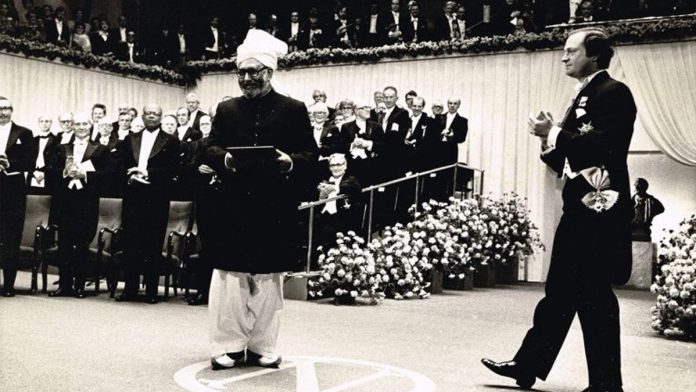
I hope my film’s Netflix release makes #Pakistanis see Abdus Salam beyond his #Ahmadi faith


I hope my film’s Netflix release makes Pakistanis see Abdus Salam beyond his Ahmadi faith.


Nobel laureate Abdus Salam remains a controversial figure in Pakistan because of his Ahmadi faith. But now, my documentary will finally be seen where it matters most.

As Netflix releases my documentary Thursday on Pakistani physicist and Nobel laureate Abdus Salam, I recall how after the fifth screening of Salam – The First ****** (Muslim) Nobel Laureate at the Chicago South Asian Film Festival last September, a young woman approached me in the lobby. She was of Pakistani origin. She thanked me for making this film. I could see that the film had visibly moved her.
She had travelled a long distance to attend the screening. Her voice shaking with emotion, the woman confided in me that her father was killed in Pakistan when two Ahmadi mosques were attacked in Lahore in 2010. That’s when it dawned on me how important and iconic the story of Abdus Salam is to so many people in Pakistan and elsewhere.
Now, its Netflix release on 3 October will fulfill our singular goal of having this film seen widely in Pakistan and across the world — for people to know the journey of a man of science and religion who achieved great feats and was ostracized by his own countrymen.

The trigger

The making of this film has been a long an arduous journey, mostly championed by the steadfastness of its Pakistani-origin producers Omar Vandal and Zakir Thaver.
Omar Vandal is a senior scientist at the Bill and Melinda Gates Foundation, and Zakir Thaver is a science enthusiast and television producer. Both were colleagues on a US university campus when they decided to embark on a journey to make this film. Filmmaker Mira Nair recommended them to find a director to helm the project, and they found me through a mutual acquaintance.
When they approached me to direct it in 2016, they had already spent twelve years collecting archival material and raising funds by all means necessary.
Until then I had known very little about Abdus Salam. Having studied physics in my undergraduate years in college and directed another film about a physicist, I had known the name as he was from the sub-continent. But beyond that my knowledge about him was limited.
What instantly triggered my interest in the project was the complex and layered character of the “man” Abdus Salam. He was a child prodigy who came from a remote village and rose to great prominence purely on the basis of his intelligence and his ability to navigate the echelons of power and politics with charisma and tact.
Despite innumerable obstacles and Pakistan rejecting him for his faith, he seemed adept at navigating two worlds at every stage in his life. He reconciled the East and the West, the traditional and the modern, the religious and the scientific, the exiled and the citizen, without much conflict.
This drew me in as a filmmaker and storyteller and ignited my interest in exploring the contradictions and revealing the layers that make Abdus Salam a towering figure even today.

The distribution challenge

After a challenging year in the editing room, the documentary was completed in 2018. It had its first public screening at a science film festival in Santa Barbara, California, where it won the best film award. Since then, it has won several international awards, and has been screened at more than 30 cities across the world.
From Sri Lanka to the Czech Republic to Holland to India, wherever we have screened the film, it has moved people to tears and inspired many. The response has been overwhelming.
Despite its success at many international film festivals, it was a challenge to get the film distributed, either via a broadcast medium, theatrical release or a streaming platform. Many attempts were made to get an American distributor, but there were no takers. Even many A-list film festivals rejected the film, probably because the story was not “western”, “American” or “edgy” enough.
I sometimes used to make a snide comment when addressing an audience after a screening, saying that Salam was discriminated when alive and is still being discriminated against in death.
After almost a year of trying relentlessly, we approached Vista India, a Mumbai-based digital partner, which showed great interest in representing the film and eventually took it to Netflix.

Why Pakistan should watch the film

Unfortunately, due to the volatile political and religious climate in Pakistan, the one place the film would have the greatest significance did not get to see it widely.
But now with the Netflix release, this goal will be achieved, circumventing any censorship or blockade.
And we hope people in Pakistan will embrace this film and restore Abdus Salam’s stature and respect, which is long overdue. Abdus Salam remains a controversial figure in Pakistan for his Ahmadiyya faith. We hope our film will open eyes to see him beyond this aspect.
The violation of human rights of minority communities has continued unabated in the subcontinent. From our political leaders to common citizens, tribalism dominates people’s minds. Religion is used to divide and disenfranchise people on a regular basis. Right-wing nationalism and religious extremism creep into the minds of even the most educated and powerful — thus, sowing the seeds of hate and animosity among different communities.
As filmmakers, we know we cannot change the world with one film. We would be delusional and egotistical if we thought we could.
But what we can certainly do is provoke a discussion, shine light in darkness and force people to consider an alternative that is just and humane.
The producers of Salam are of Pakistani origin and I was born in India. Abdus Salam was born in British India, but eventually migrated and was laid to rest in Pakistan. People in both India and Pakistan carry the painful legacy of Partition.
Although India and Pakistan speak of war more than peace, we hope our small joint contribution to the world speaks of peace, science and humanity more than anything.
Abdus Salam once famously said, “Scientific thought and its creation are the common and shared heritage of mankind”. He said this at a time when the world was bogged down by the Cold War, and parochialism was at its most extreme. It showed that Salam was always thinking global.
This is the message I took away from his life. Science tells us we are much bigger than our differences and ourselves.

Pakistan’s new UN envoy Munir Akram is ‘girlfriend basher’, India hater and war monger


Akram, who was Islamabad’s envoy at the UN from 2003 to 2008, had once called India ‘mother of terrorism’ and Kashmir 'India’s Afghanistan'.

Munir Akram, who is now Pakistan’s new ambassador to the United Nations in New York, is not just another Pakistani diplomat. He is maverick, known to be outspoken, sometimes even rude — and ferociously anti-India. He also has the distinction of once being labelled as a ‘diplo-basher’ by the US in an assault case.
Akram is also known for his strong language. Sample this for instance: When India once charged Pakistan with cross-border terrorism, he had said it was engaged in Kashmir’s “Freedom Struggle”. Akram even accused India of being the “mother of terrorism”.
A veteran diplomat and currently a columnist with Pakistan’s leading English daily Dawn, Akram was Islamabad’s envoy at the UN from 2003 till 2008.
While at the UN, Akram routinely lashed out at India over the issue of Kashmir.
During the 58th General Assembly session in 2003, attended by the then Prime Minister Atal Bihari Vajpayee, Akram had said what India called “cross-border terrorism” was basically “Kashmiri Freedom Struggle”.
This was in response to India’s then Political Counsellor at New York Harsh Vardhan Shringla, now India’s Ambassador to the US, who had said Pakistan’s claim on combating terrorism was 1 per cent intention and 99 per cent pretension.
Akram had also attacked Vajpayee for rejecting then Pakistani President Pervez Musharraf’s “action plan” and said India was the “mother of terrorism”.

Cut to 2019

After the scrapping of Article 370 that granted a special status to Jammu and Kashmir, Akram wrote an article in Dawn on 18 August in which he called Kashmir “India’s Afghanistan”.
“India’s war in occupied Jammu & Kashmir is over 70 years long. It has been fought by an occupation force of 7,00,000, seven times the maximum number of troops deployed at any time by the Soviet Union or US-Nato in Afghanistan. The Kashmir war will end only when New Delhi realises that it cannot break the will of the Kashmiri people and that it is doing grievous damage to the Indian state. This future is visible now,” he wrote.
His anti-India columns received much appreciation from the Pakistani Army, and one such article titled ‘The new Great Game’ was especially lauded by former Pakistani military spokesperson Asim Bajwa.
Akram had once said “the most proximate impediment to India’s quest for Great Power status remains Pakistan”.
“So long as Pakistan does not accept India’s regional pre-eminence, other South Asian states will also resist Indian diktat. India cannot feel free to play a great global power role so long as it is strategically tied down in South Asia by Pakistan,” he wrote in a Dawn article in 2014.
On September 29, after Pakistan Prime Minister Imran Khan’s speech at the UNGA where he spoke about a preemptive “bloodbath” in Kashmir once restrictions are lifted, Akram wrote an article in Dawn in which he referred to the speech as “impassioned, eloquent and substantive”.
“In contrast to Pakistani leaders of the last decade, whose presence at the UNGA was little noted and even less influential, Imran Khan was warmly acknowledged at every event he attended in New York and sought out by the leaders of UN member states, international organisations, global corporations and the mainstream media,” he said.

When Akram called Salman Khurshid a ‘rented Muslim’

Akram was known for his vitriolic statements, sometimes uncouth, even against the Muslim population of India. A case in example is when as a spokesperson for Pakistan’s foreign ministry, Akram called former Indian foreign minister Salman Khurshid as “kirai ka Muslim” (rented Muslim).
Always wearing an angry look on his face, as if he is going on a war, Akram had once called India the “sick man of Asia”. His brother, Zamir Akram, was also a trendy diplomat who had served India.
In a rather funny incident, then Pakistani foreign minister Khurshid Kasuri admitted in his voluminous book, Neither A Hawk Nor A Dove, that during the annual UNGA session in 2005, President Musharraf and Kasuri were looking forward to meeting the then Indian PM Manmohan Singh and foreign minister Natwar Singh on the sidelines.
However, after Musharraf’s speech at the UNGA, the Indian side turned ice cold because of a “hard-hitting” speech delivered by Musharraf, who had a year ago spoken about extending an olive branch to India and even sit for a dialogue on Kashmir, and New Delhi had agreed to it.
But the mood changed after Musharraf’s speech, in which he said India was trying to delegitimise the Kashmir struggle and was taking advantage of international anti-terrorist sentiment that became prevalent after 9/11. Kasuri later admitted in his book that the speech was written by Akram, who was a rabid India-basher, and neither Musharraf nor Kasuri had vetted it beforehand.

Accused of assaulting live-in partner

In 2003, when Pakistan was batting for a seat at the UN Security Council as a non-permanent member, Akram got embroiled in a major controversy, leading to the US State Department asking Islamabad to take away his diplomatic immunity.
This happened after Akram’s reported live-in partner Marijana Mihic had made a distress call to police at 1:36 am in December 2002, complaining that she was assaulted by him. But she changed her statement, when the police reached the couple’s “luxury townhouse”, and said she got injured after she fell down.
Meanwhile, the then city commissioner-in-charge of United Nations issues Marjorie Tiven wrote to the US Mission in New York on 26 December, demanding that Akram’s immunity be removed.
In an interview to the New York Post, Akram had said, “My government sent me here to represent my country. I came to stay — and my government wants me to stay.”
Owing to lack of evidence and Mihic’s refusal to press charges, no action was taken against Akram and he continued to remain Pakistan’s envoy to the UN until 2008.

#Pakistan - #Chaman blast and implications

On the day when neighbouring war-torn Afghanistan showed resilience and observed a by and large peaceful election despite glaring Taliban threats, militants struck in the border town of Chaman in Balochistan and killed senior leader of the Jamiat Ulema-i-Islam-Fazal (JUI-F) Maulana Mohammad Hanif and two others. The explosion, detonated with remote control in the main bazaar of Chaman, also left 11 other people injured. The police say the blast aimed at the life of Maulana Hanif, an influential cleric of the town and deputy general secretary of the JUI-F. On the appeal of the party, a partial shutdown was observed across the province to mourn the death of their leader. So far, no group or organisation has come forward claiming responsibility for the attack. Frontier Corps and police personnel are also clueless about the culprits. The death of the maulana also attracted widespread condemnation from politicians from both the treasury and the opposition benches of Balochistan assembly.
Balochistan has been in the news for target killing in recent days. In last month, in Kuchlak, two prayer leaders were killed, and of them one turned to be the brother of Afghan Taliban chief Haibatullah Akhundzada. The other deceased was also an Afghan citizen and had been the imam of the mosque for many years. Though no word has come from the security forces regarding the killing of those Afghan leaders in Balochistan, it is widely believed the attacks were the outcome of the internal fighting in the Taliban ranks. Those days, Afghan Taliban were negotiating a peace deal with the US in Doha, which has met a tragic end. The JUI-F has never been a known player in Taliban related affairs. Their rival, the late Maulan Samiul Haq, however, was known as the father of the Taliban. So, apparently it is hard to relate Maulana Hanif’s death with Taliban affairs. The fact already established, in the wake of the killings in Kuchlak, is that Taliban elements are present in the province. Their presence will keep creating multiple security challenges to the writ of the government and local populations, such as the Shia Hazara.
The occasional resurgence of militants points to the reality of the presence active cells of militants in Balochistan. The conduct of the JUI-F in the wake of its leader’s killing is very mature as it has not blamed any quarters unless some irrefutable proof is found. The party is in the middle of preparation for its political battles in Islamabad. Keeping crime and politics apart is the sign of political maturity.
https://dailytimes.com.pk/475311/chaman-blast-and-implications/

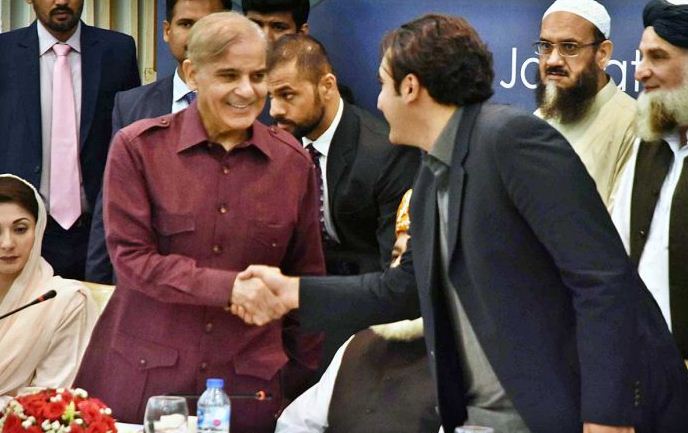
#PAKISTAN - Bilawal Bhutto Zardari meets Shehbaz Sharif

Yousaf Raza Gillani, Nayyar Bukhari, Sherry Rehman, Raja Pervaiz Ashraf, Naveed Qamar and Mustafa Nawaz Khokar are part of PPPs delegation. From PML-N Raja Zafar-ul-Haq, Murtaza Javed Abbasi, Rana Tanveer, Amir Muqam and Marriyum Aurangzeb are attending the meeting.Deputy Chairman Senate Saleem Mandviwalla and Farhatullah Babar also part of the meeting.
The meeting is scheduled at 2 pm at former CM’s residence in Islamabad as per the sources. Notably, the agenda of the meeting will be the political situation in the country along with the opposition’s march against the government.
A day earlier, PML-N leader Ahsan Iqbal had urged Jamiat Ulema-e Islam-Fazl (JUI-F) chief Maulana Fazlur Rehman to postpone the Azadi March to Islamabad to November citing time required for preparation.Talking to reporters in Rawalpindi after seeing his father Asif Ali Zardari, who is in Adiala Jail, on Monday Bilawal said it is the high time to send the puppet rulers and incompetent government home.Few days back, Bilawal Bhutto affirmed that PPP and JUI-F are on same page and want want to send the current PTI government back home but the tactics and strategies would be different for this very purpose. However, PML-N sides JUI-F to launch the Azadi March in order to dispose off the government.
A day earlier, PML-N leader Ahsan Iqbal had requested Jamiat Ulema-e Islam-Fazl (JUI-F) chief Maulana Fazlur Rehman to postpone the Azadi March to Islamabad to November citing time required for preparation.Speaking to the media, Iqbal said that JUI- F has been preparing for eight months but PML- N would be requiring some more time to mobilize its party workers.
Noting that the PML-N had already promised to support the Azadi March earlier, the party leader maintained that in order to have the party workers come out in full force, it was necessary for the Azadi March to be deferred to November.
Iqbal requested that an All Parties Conference (APC) be called to set the action plan for the JUI March or the Azadi March. He further added that the PML-N would reach out to Fazl and his party in this regard, he added.
https://dailytimes.com.pk/476185/it-is-a-morning-and-afternoon-story-about-bilawal-bhutto-zardaris-meeting-with-shehbaz-sharif/

Video - Mohsin Dawar First Speech in National Assembly After Arrest | 30 Sep 2019

Monday, September 30, 2019

Video - China Stirs Up Patriotism by Sending Tourists to Mao's Old Haunts

Video Report - #China #Communism China to mark 70 years of Communist Party rule

Video Report - The Chirac era: The life and time of France's former president

Video Report - Trump pressed Australia to help investigate Russia probe origin, source says

Video Report - Majority Of US Approves Of Impeachment Inquiry: Poll | Morning Joe | MSNBC

Video - 2 weeks diplomatic war - India Pakistan. Has Pakistan lost all its options?

Video - #BilawalBhutto Chariman PPP Bilawal Bhutto media talk | SAMAA TV | 29 Sep 2019

کٹھ پتلی حکومت نے عوام کے حقوق سلب کرلیے ہیں، بلاول

پاکستان پیپلز پارٹی کے چیئرمین بلاول بھٹو زرداری نے کہا ہے کہ پیپلز پارٹی کا احتجاج جاری ہے، ہم عوام کو بتائیں گے کہ کس طریقے سے کٹھ پتلی حکومت نے عوام کے حقوق سلب کرلیے ہیں۔
اڈیالہ جیل میں اپنے والد اور سابق صدر آصف زرداری سے ملاقات کے بعد میڈیا سے گفتگو میں بلاول بھٹو زرداری نے کہا کہ کٹھ پتلی حکومت کا سامنا کریں گے ہم ڈیل پر لعنت بھیجتے ہیں۔
انہوں نے مزید کہا کہ ہم نے اپنے اصولوں پر سمجھوتہ نہیں کریں گے اور نہ ہی دباؤ میں آئیں گے، ڈیل اور ڈھیل کی بات درست نہیں، ہم ڈیل پر لعنت بھیجتے ہیں۔
پی پی چیئرمین نے کہا کہ پاکستان پیپلزپارٹی پر نہ کوئی جرم ثابت ہوا ہے، نہ ہم جمہوریت، اٹھارویں ترمیم اور انسانی حقوق سے پیچھے ہٹیں گے اور نہ ہم کسی ڈیل کا حصہ بنیں گے۔
ان کا کہنا تھا کہ پاکستان کا عدالتی نظام اب بھی ویسا ہی ہے جیسا ایک آمر مشرف کے دور میں تھا، آصف زرداری بغیر کسی سزا کے جیل میں ہیں، اگر ایک سابق صدر کے ساتھ یہ سلوک کیا جارہا ہے تو ایک عام آدمی کو عدالتوں سے کیسے انصاف مل سکتا ہے؟
بلاول بھٹو نے یہ بھی کہا کہ پیپلز پارٹی اپنے حقوق کیلئے لڑنا جانتی ہے اور ہم اپنے حقوق کے لیے لڑیں گے، اگر وزیر اعلیٰ سندھ سید مراد علی شاہ کو کسی بھی طرح نشانہ بنانے کی کوشش کی گئی تو پاکستان پیپلز پارٹی اس کا بھرپور جواب دے گی۔
انہوں نے کہا کہ موجودہ کٹھ پتلی حکومت کا سامنا کریں گے، نیازی کا نعرہ جھوٹا نکلا ہے، عوام سڑکوں پر نکلنے کے لیے تیار ہیں۔
پی پی چیئرمین نے کہا کہ موجودہ دور میں کشمیر پر جو حملہ ہوا، اس کی تاریخ میں مثال نہیں ملتی، کشمیر کے معاملے پر پورے پاکستان اور کشمیری عوام کا ایک ہی مؤقف ہے۔
ان کا کہنا تھا کہ کشمیریوں کا اور ہم سب کا نعرہ ہے کہ ’سب پر بھاری رائے شماری ، رائے شماری‘ امید تھی کہ خان صاحب کی پوری تقریر اسی موقف پر ہوتی، لیکن عمران خان صاحب ناکام رہے۔
بلاول بھٹو نے یہ بھی کہا کہ مولانا فضل الرحمٰن صاحب کے ساتھ اخلاقی سپورٹ جاری ہے، کوِئی درمیانی راستہ نکلا تو مولانا کا مزید ساتھ دیں گے۔

#Pakistan #PPP - Bilawal Bhutto says any deal is out of question

Pakistan People’s Party leader Bilawal Bhutto said on Monday that he ‘curses’ the idea of any deal, reiterating that any concessional deal is out of question in relation to former president Asif Ali Zardari’s imprisonment at Adiala jail.
The PPP chairman was addressing media after meeting former president Zardari, who is facing imprisonment in fake bank accounts case.
Bilawal Bhutto reiterated his stance that the PPP knows how to fight back and will continue to do so.
On the matter of protest call given by the Jamiat Ulema-e-Islam’s central leadership, the PPP chairman said that his party has a different stance related to the protest and they are willing to find middle ground.
He further said that if there is any middle ground found in the meeting with the JUI-F, then the PPP will extend support more than mere cooperation.
The PPP chairman referred to the ongoing National Accountability Bureau inquiry against Chief Minister Sindh Murad Ali Shah, saying that if he is arrested without proven allegations, then the party knows how to respond.
https://www.thenews.com.pk/latest/534291-bilawal-bhutto-says-any-deal-is-out-of-question