Thursday, August 1, 2019

Pakistani men are ‘losing’ jannat on TikTok. And Imran Khan is busy targeting media


Pakistan’s TikTok is sparing none and having fun. Some call it un-Islamic and want a ban.


All work and no TikTok makes Pakistanis’ lives dull. These are the young and the old, the urban and the rural, the sassy new-age revolutionaries of Pakistani TikTok. In the times of curbs on mainstream media in Pakistan, a 15-second video on the social media platform is all it takes to dismantle any social, cultural and political argument.
Breaking the cultural hegemony of how men and women ought to behave, the Pakistani TikToker cares nothing about what the world says. Walking away from the global stereotype of a long-bearded man, he records his video, acting to the voice of a child asking for his favourite food.
In another video, he is seen acting to the voice of a little girl. The refreshing part is that this long-bearded man is just being plain silly and there is just so much comfort in how he takes to each voice-over.
In Pakistan, YouTube was banned between 2012 and 2016 because of the film Innocence of Muslims. Facebook was also banned for two weeks in 2010 because of alleged blasphemous content on pages like ‘Everybody Draw Mohammad Day’. In a land where the spectre of blasphemy charges is always a real and ever-present danger, TikTok has managed to stay safe so far – mostly because the Imran Khan government has its hands full, going after journalists and struggling to suspend some Twitter accounts.
Rural, lower middle-class Pakistanis largely dominate TikTok, but some urban ‘burger crowds’ also inhabit the platform with their tales of urban friendships, romantic troubles and caste jokes. Caste fights are seen when the rich and privileged can’t swallow that a user from an underprivileged background is getting more likes than him. TikTok is a great equaliser.
Not without politics
TikTok is no Facebook, where you want to rub it in about how perfectly happy your life is. TikTok is all about the imperfections. But no creative expression in Pakistan can keep politics away.
The government might have a noose around most TV news channels, but it is exposed rather hilariously on TikTok by naysayers. The TikTokers talk of Imran Khan’s promises of making Naya Pakistan; sometimes they remind the prime minister of how he said he’s not going to beg only to make a U-turn later.
When the prices of petrol go up in Pakistan, TikTok is lit with a donkey cart getting fuel at the station. Taking a jibe at the current state of the government, one user shows Rs 500, Rs 1000 notes to Imran Khan but the PM finally laughs when he is shown Rs 5,000 notes.
The Germany-Japan border gaffe is shot with not-to-miss props, suggesting the possible frame of mind PM Imran Khan was in when he told the world how “Germany and Japan killed millions until after the WWII” when they decided to have joint industries along their “border regions”.
TikTokers are not happy with anyone. One user dances to a song on how the Pakistan Peoples Party killed him with its arrow, then came the lion of the Pakistan Muslim League (Nawaz), and now his skin is being ripped apart by Imran Khan’s Shaukat Khanum hospital.

Bollywood is popular choice

The light-headed silliness is infectious. When Mehak dances at the Sargodha junction station, you know the setting and the character is real. Or, when the brothers from Karachi dance to Bollywood numbers in their videos, you feel like dancing too.
If Salman Khan has been known throughout his career for going topless, check these men on TikTok who tear out their t-shirts in literally every video. Why would they do that? How can they ruin so many t-shirts? No one cares for these questions as others are following their routine already.
If there is romance, then there is anti-romance as well. Like this nani gets annoyed when asked about romancing; she says, “what am I going to do with romance now, I’m old”. She is so endearing in her utter disdain.
But then if nani doesn’t want to romance, there are other oldies who want to have fun. This duet on Ek pardesi mera dil le gaya is just an insight into the diversity that at least Pakistan TikTok offers.
As entertaining as it is, there are rules too. Sajid Khan from Jhelum district of Punjab was booked for recording a TikTok video with an illegal weapon, a 30-bore pistol, in hand. He was booked for illegal possession of weapon by police.

No jannat for TikTok users?

There are always those who see the activity of TikTokers as un-Islamic. Protesters have charged that by being on TikTok, the youth were ruining their afterlife, in jannat obviously. And then there are those who want to get TikTok banned because too much fun can spoil a perfectly disciplined society. In January, a man from Nowshera district lodged a complaint with the authorities demanding that the government should ban TikTok as he saw it as a “social ill” for Pakistan.
Till it is banned, like in the past YouTube and Facebook were, Pakistan TikTok continues to democratise every discourse and continues to gather thousands of views with new set of influencers.

British High Commissioner called on Chairman PPP Bilawal Bhutto Zardari

Islamabad, 30 July 2019: British High Commissioner to Pakistan Mr. Thomas Drew called on Chairman Pakistan Peoples Party Bilawal Bhutto Zardari at Zardari House Islamabad on Tuesday evening.
Chairman Bilawal Bhutto Zardari and Mr. Thomas Drew discussed matters of mutual interests including political issues. Trade relations between both countries also came under discussion.
Chairman Bilawal Bhutto Zardari expressed his good wishes for newly elected British Prime Minister Mr. Boris Johnson.
Senator Sherry Rehman and Senator Mustafa Nawaz Khokhar were also present on the occasion.

US pressed Pakistan on FATF compliance during Imran Khan’s visit

Imran Khan’s delegation included among others General Qamar Javed Bajwa, chief of army staff who is often considered the real power center in Pakistan, and Lieutenant General Faiz Hameed, the newly appointed head of the Inter-Services Intelligence.
The United States had repeatedly pressed visiting Prime Minister Imran Khan and his delegation, which included the powerful army chief and the ISI boss, on compliance with counter-terrorism commitments that Pakistan has given to an international body that monitors and combats financing of terrorism.
Pakistan’s obligations to the Financial Action Task Force (FATF), the Paris-based body, as part of an ongoing discussion, was raised with Khan and his delegation at their meeting with US President Donald Trump at the White House and at a separate meeting with Secretary of States Mike Pompeo, a senior state department official told reporters Wednesday, revealing for the first time the depth and granular details of the counter-terrorism discussion.
Khan’s delegation included among others General Qamar Javed Bajwa, chief of army staff who is often considered the real power center in Pakistan, and Lieutenant General Faiz Hameed, the newly appointed head of the Inter-Services Intelligence that has been long accused of running and supporting terrorist groups operating in India and Afghanistan.
“At the White House meeting, the two sides also discussed the Financial Action Task Force, which was the subject the secretary also discussed at length with Prime Minister Khan and the chief of staff Bajwa,” the official said, and added, when asked if everyone on the Pakistani delegation including the ISI chief was on board, the United States “heard a consistent common message from the Pakistan delegation”.
The 38-member FATF, which coordinates its work with the International Monetary Fund that recently agreed to advance another bailout package to Pakistan, has put Pakistan on a “grey list” of countries with “strategic deficiencies” to combat money laundering and terror financing and is working with them to address those issues, according to a plan endorsed by the Khan government. But its progress was found inadequate at the monitoring agency’s plenary in June, and it is in imminent danger of being relegated to the “black list” of more egregious offenders such as North Korea, if it is still non-compliant by October.
While the Afghan peace process and Pakistan’s potential role in advancing it using its leverage with the Taliban was the chief purpose of President Donald Trump inviting and meeting Prime Minister Khan, counter-terrorism was next, according to the order in which the official listed out the subjects discussed by the two sides. Bilateral trade, which stands at around a paltry $6 billion, and other aspects of their ties followed.
The United States has pressed Pakistan for “sustained”, “meaningful”, “verifiable” and “irreversible” action against terrorism for years. The Trump administration dialed it up considerably, backed by bipartisan congressional support, and suspended millions of dollars in security aid.
There was no discussion about the resumption of that aid at any of the meetings — and to Khan’s credit he did not ask for it, as he had promised to the diaspora the night before his White House meetings. But the underlying reason for it — Pakistan’s reluctance to get rid of its terrorists remains at the “crux” of its problem along borders with India and Afghanistan — was re-litigated by the US side, which made it clear they will be watching closely.
Compliance with the FATF commitment will be crucial. As part of the rectification plan, Pakistan has agreed to undertake certain measures to stop financing of terrorism, arrest and prosecute individuals involved in terrorism, and the Trump administration intends to hold Khan to it, invoking his own “stated commitment” that Pakistan for its own future will prevent the operation of “all militant groups on its territory”.
“It’s a fact-based checklist,” the official said of Pakistan’s undertakings to the FATF. “We will certainly be looking how Pakistan is able to implement those commitment.”
The official hastened to add that the FATF check-list was not a list of US demands and they were obligations given to the international community, but added, at the same time, that it was a “discrete, tangible and measurable” yardstick for Pakistan’s counter-terrorism efforts.
https://www.hindustantimes.com/world-news/us-pressed-pakistan-on-fatf-compliance-during-imran-khan-s-visit/story-AzXO2BHwmytMSGPdugb17K.html

Wednesday, July 31, 2019

Urdu Music Video - mujhe tum nazar se giraa to rahay ho

Video Report - Najam Sethi Show | Who Will Rule The Senate? | 31 July 2019

Pakistan’s euphoria from Trump’s talks with Imran Khan may not last – thanks to terrorism, the Taliban and economics


  • Can Pakistan help the US tame the Taliban so that Trump can withdraw US forces from Afghanistan? That’s the price the US demands in exchange for aid for Pakistan’s floundering economy, but success is far from assured.
  • Pakistan’s Prime Minister Imran Khan received a hero’s welcome as he returned home from his recent visit to Washington, with jubilant supporters greeting him at the airport. A friendly and cowed domestic media hyperventilated about his successful visit. Apart from a renewal of high-level political engagement, the visit has raised hopes of resumption in economic and military aid, in return for Pakistan’s cooperation on easing an Afghanistan peace deal. Trump’s abortive offer of mediation on Kashmir was the icing on the cake. The visit ended five years of estrangement. But Pakistan’s euphoria may need to be tempered by the harsh realities of Afghanistan, terrorism and economic distress.
Khan’s visit was to “reset” bilateral ties. US President Donald Trump had cancelled US$1.3 billion in economic and military aid, blaming Pakistan for deceit and treachery in promoting terrorism and playing the spoiler in Afghanistan. Pakistan was also worried about its potential inclusion on the Financial Action Task Force’s blacklist on terrorism financing charges and unnerved by India’s cross-border military strikes against terrorist camps. Pakistan’s current patron, China, failed to provide 100 per cent protection, leaving the country feeling uncomfortable with its growing reliance on Beijing.America had made it clear that it expected Pakistan to take irreversible and irrevocable steps against terrorist groups. Before the visit, Pakistan arrested Hafiz Saeed, internationally declared terrorist and chief of the jihadi terrorist outfit Lashkar-e-Taiba, responsible for terrorist attacks on the Indian Parliament and Mumbai. Pakistan has arrested this terrorist several times before, only to release him when international pressure eased.
Pakistan’s floundering economy, kept barely afloat by loans from friendly countries and a promised IMF bailout worth US$6 billion, was another reason to seek American help. Pakistan’s currency is losing value, foreign exchange reserves are dangerously low and annual exports have stagnated at US$25.5 billion, far below Bangladesh’s exports of around US$41 billion.Pakistan is the breeding ground for scores of Islamist terrorist outfits, nurtured and used by the Pakistan Army in launching terrorist attacks in Afghanistan and India. In Washington, Khan made the surprising public admission that over 40 terrorist groups and up to 40,000 terrorists were operating in his country, and that Pakistan was trying hard to neutralise them. He also acknowledged that these groups were operating in Afghanistan and India. The White House statement said, inter alia, that “it is vital that Pakistan take action to shut down all [terrorist] groups once and for all”.
Pakistan has sought to leverage its control over the Taliban in helping to extricate America from the 18-year-old Afghanistan quagmire, a denouement Trump wants badly for his re-election campaign in 2020. For Pakistan’s military, American aid is crucial for upgrading and maintaining American military hardware in its inventory and sourcing new weaponry. Khan was accompanied by the army chief and military intelligence chief to Washington, reinforcing the belief that he is a “selected” rather than elected prime minister.
All Pakistani prime ministers invariably raise the Kashmir issue and solicit international mediation. Choreographed questions by Pakistani journalists and Khan’s flattery led Trump to come up with a fantastic story that, at the G20 Summit in Osaka, Indian Prime Minister Narendra Modi had asked him to mediate on Kashmir. India promptly rejected Trump’s assertion, reiterating its long-held position that Kashmir is a bilateral issue and no mediation is acceptable. But Trump’s ill-considered remarks gave Khan bragging rights and a propaganda point.
Pakistan, an American ally during the cold war, was showered with military and economic aid worth billions of dollars by several US administrations. Pakistan was also viewed as a proxy against India, because India chose non-alignment, with a tilt towards the Soviet Union. Leveraging relations with Pakistan to pressure India remains a recurring feature of American policy in South Asia. Pakistan’s useful role as a proxy against India also led to the China-Pakistan strategic nexus, soon after the Sino-Indian conflict in 1962.
The China-Pakistan nexus has matured into a strategic alliance, resulting in the China-Pakistan Economic Corridor and Islamabad as a client state of China. The Afghan jihad to oust the Soviet Union started another American gravy train, feeding generations of Pakistan’s military and civilian elite and their progeny. America and China also helped Pakistan’s nuclear weapons and missile development programmes during this period.
America needs Pakistan, particularly its army, to tame the Taliban and make it cooperate to reach an all-party peace deal in Afghanistan. While America seeks a face-saving retreat, Pakistan seeks a government in Afghanistan that is subservient to its interest and eliminating Indian influence. Though America describes India as a strategic partner, with an eye towards balancing an expansionist and aggressive China, exit from Afghanistan is Trump’s first priority. Both Russia and China also want America out of Afghanistan but are wary of the consequences of instability and Islamist extremism taking root again in this sensitive southern flank of China and Central Asia. All countries are hedging their ties with one another in pursuit of their respective interests. Can “Taliban Khan” (as he has been dubbed by his opponents) deliver on the promises made in Washington? The final outcome lies in the realm of the unknown.
https://www.scmp.com/comment/opinion/article/3020591/pakistans-euphoria-trumps-talks-imran-khan-may-not-last-thanks

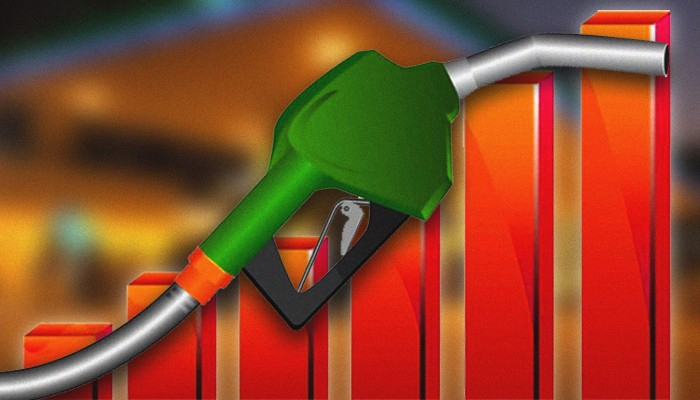
MASTER OF U-TURNS - PM Imran approves Rs5.15 price hike, petrol reaches Rs117.83 per litre

Prime Minister Imran Khan late Wednesday approved a summary of the Oil and Gas Development Authority's (OGRA) recommendation to hike the price of petrol by Rs5.15.

Per-litre prices of all petroleum products were jacked up, with petrol, diesel, kerosene oil, and light diesel now costlier by Rs5.15, Rs5.65, Rs5.38, and Rs8.90, respectively.
The new prices for a litre of petrol, diesel, kerosene oil, and light diesel were Rs117.83, Rs132.47, Rs103.84, and Rs90.52, respectively.
The new prices were set to come into effect starting Thursday, 0000 hours.
Earlier, the regulatory authority had recommended that the respective per-litre prices of petrol, diesel, kerosene oil, and light diesel be bumped up to Rs117.83, Rs135.72, Rs103.84, and Rs94.27.

After a year of press freedom violations, RSF writes to Pakistan’s premier

In an open letter to Imran Khan a year after he took office as Pakistan’s prime minister, Reporters Without Borders (RSF) calls on him to recognize the alarming decline in the state of press freedom in his country and to take urgent measures to address this.
 Constitution Avenue
Islamabad, Pakistan

Paris, 31 July 2019

Dear Prime Minister Khan,

When asked, during an official visit to the United States last week, about recent press freedom violations in your country, you replied: “Pakistan has one of the freest presses in the world (...) To say there are curbs on the Pakistan press is a joke.”

There is nothing funny about this “joke” for journalists in your country. You claim that the Pakistani press is one of the freest in the world. “The Pakistani media is even freer than the British media,” you added at another point during your visit.

It is clear that either you are very poorly informed, in which case you should urgently replace the people around you, or you are knowingly concealing the facts, which is very serious, given your responsibilities.

Just a few hours after you landed in the United States, the leading Pakistani TV news channel, Geo News, was censored yet again. Your fellow citizens found a blank screen when they tried to obtain independent, public interest reporting about your trip from this channel.

A month ago, a live Geo News interview with former President Asif Ali Zardari by the well-known journalist Hamid Mir was cut short after just a few minutes without any explanation. When contacted by RSF, the interviewer blamed you for this sudden and completely arbitrary act of censorship.

The signals of three other Pakistani TV news channels, AbbTakk TV24 News and Capital TV, were suddenly suspended from cable TV services on 8 July without any warning to their management, and remained suspended for several days. Najam Sethi, a well-known journalist who often works with 24 News, confirmed to RSF that the suspension was a reprisal for their coverage of a press conference by Maryam Nawaz Sharif, another opposition figure.

These brazen cases of censorship, which seriously threaten journalistic independence and pluralism, are characteristic of non-democratic regimes. You won the general elections a year ago by repeating the slogans “Tabdeeli!” (Change) and “Naya Pakistan!” (a “New Pakistan”) during the campaign.

It is nonetheless clear that, as far as press freedom goes, the change has been for the worse. Ranked 142nd out of 180 countries in RSF’s 2019 World Press Freedom Index, your country has fallen three places in the past year. And the events of recent months offer no grounds for optimism about the “new Pakistan.”

Ali Sher Rajpar, the president of the press club in Padidan, in southeastern Sindh province, was fatally shot five times at point blank range on 4 May, shortly after unsuccessfully requesting police protection because he had been threatened in connection with his coverage of local corruption.

Just four days before that, after another Pakistani journalist, Malik Amanullah Khanwas gunned down in the Parowa area of Dera Ismail Khan district, in northwestern Khyber Pakhtunkhwa province. He too was the president of the local press club.

Muhammad Bilal Khan, a journalist and blogger whose YouTube channel had more than 50,000 followers, was hacked to death in an Islamabad suburb in June. One of his latest videos was about one of your speeches and, in one of his last tweets, he criticized your intelligence agency, Inter-Services Intelligence (ISI). The police have made no arrests in any of these three cases.

When not targeted physically, journalists who cross certain red lines are subjected to judicial harassment. They include Shahzeb Jillani, an investigative journalist who was charged with “cyber-terrorism” in April in connection with a tweet referring to an ISI officer.

Even the prestigious daily Dawn – founded in 1941 by Muhammad Ali Jinnah, the father of the Pakistani nation, as part of the fight against British colonialism – is being subjected to harsh economic harassment. Your government has denied it any income from state advertising since 24 April. According to RSF’s sources, this arbitrary decision was a reprisal for an article published the previous day about a press conference you gave in Tehran in which you recognized that Pakistan-based militants had been involved in attacks inside Iran. In other words, your government does not tolerate your country’s media repeating what you say while abroad.

In the light of this recent surge in press freedom violations, of which this list is not exhaustive, you will appreciate that to talk of “one of the freest presses in the world” is clearly tantamount to an obscenity.

We therefore urge your government to allow Pakistan’s journalists to exercise their profession in complete safety and with complete independence, as envisaged in article 19 of the 1973 constitution.

The credibility of the Pakistani state and democracy is at stake.

Sincerely,


Christophe Deloire
Secretary-General

Tuesday, July 30, 2019

Video Music - Britney Spears - I'm A Slave 4 U

Video - Trump Tells Congressman to Go Back to Rat-Infested Baltimore | The Daily Show

Video - God Bless America, Except Baltimore - with Stephen Colbert

Video Report - Accused 9/11 mastermind open to testimony against Saudi Arabia

Video - #2020Election #CNN The 3 keys to winning a 2020 debate

Pashto Music - جنت او دنيا | غني خان | سردارعلي ټکر

Pakistan has a domestic abuse problem – but there’s a way to turn the outrage into action


Saba Karim Khan
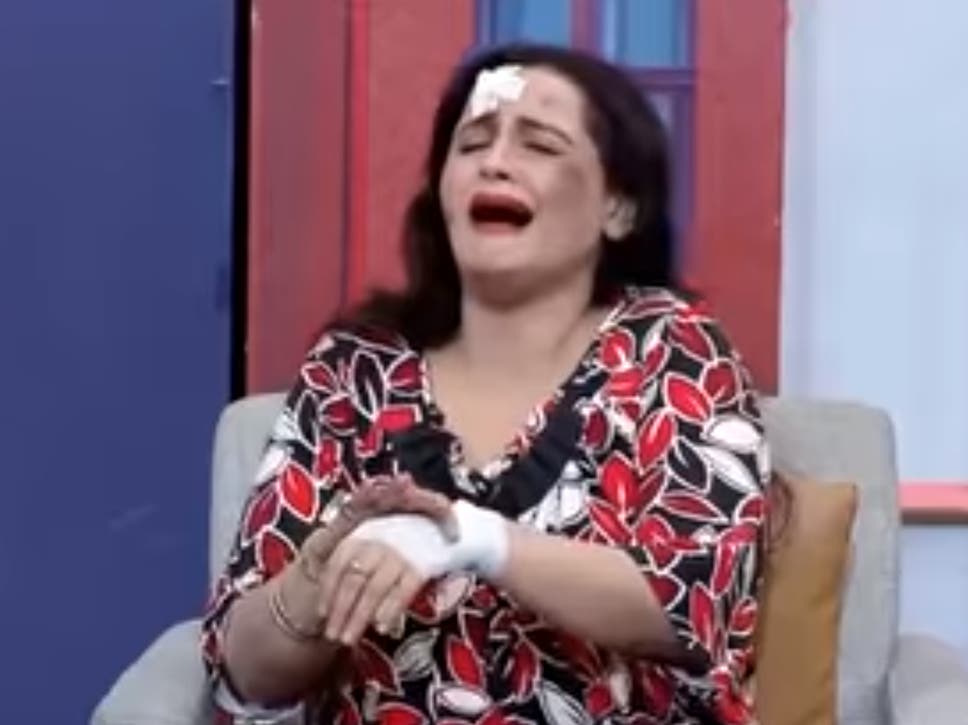
After a TV host in Pakistan made light of the issue days after the wife of Pakistani actor Mohsin Abbas Haider accused him of violence, it’s clear a cultural shift is needed to de-normalise this behaviour.
Several years ago, at my uncle’s funeral, a distant relative next to me, whispered: “Good riddance. His poor wife is finally free.” Struck by newly palpable grief, her words choked me. How could someone be callous enough to curse the dead even before they were buried? My uncle – as it turned out – was a chronic wife-beater and my aunt, a brave yet convention-bound woman.
More than a decade later, as #saynotodomesticviolence gains virality in Pakistan, I recalled those words. Should my aunt have confided in someone? Is there something we had missed? Would I offer newfound advice to my daughters? But first, what even comprises domestic violence? Is the “see what you made me do” alibi legitimate? And beyond the blame-game, how do we fix things? These questions are complex, unsettling, and Pakistani society has mostly shirked them.
Back then, the words at the funeral offered relief – the knowledge that for my aunt, the worst was finally over. Today, I realise that a trusted member of our extended family, intimidating his partner, signalled a graver dilemma: that domestic violence is normalised and the price for whistle-blowing, often too rancorous for victims to speak up.
As I sifted through my university years and entered the job market, stories from workmates, house-help and one time even a stranger on a flight, surfaced, signalling how domestic violence permeates society in a privileged, agnostic fashion in Pakistan, cutting across race, class and religion. The elderly lady who cooks in my mother’s home and the fashion celebrity earning a six-figure salary are both susceptible to abuse. Accounts ranged from evident coercion to invisible bruises, both equally harrowing.
In 2018, a United Nations report cut to the bottom-line: The most dangerous place for a woman is her home. According to the World Bank, almost one in three married Pakistani women report facing physical violence. So every time a victim is shamed for speaking up, or a court refuses to convict a perpetrator, or a TV show jokes about domestic violence, we are lowering the stakes and emboldening home-grown terrorism, literally.
Commonly understood reasons for domestic violence often fuel confusion: a stroke of bad luck; wrong place, wrong time; substance abuse; financial stress; laudable possessiveness; a sex game gone wrong; a man hard-wired to hurt; and the false guarantee that with time it will vanish. These myths must be dismantled. Toxic masculinity, cultivated in male upbringing across South Asia, is largely responsible for normalising, even applauding an imbalance of power between the sexes. By privileging typically “masculine” traits of aggression, control and a natural killer instinct, domestic violence offers an ego-boost, buttressing the belief that it is, after all, a man’s world. When this gets augmented with society’s blind-eye, abuse blossoms; by remaining tongue-tied, we are all complicit.
However, before judging victims for suffering, we must examine the cost of speaking up. From the outside, silence appears synonymous with cowardice but this couldn’t be farther from the truth. Often, victims are rippled by prospects of shame, fatigued with fear, yet wondering when to take the plunge. They are planning a careful exit, calculating risks, devising strategies that don’t place their children in jeopardy – none of it is simple, especially not in Pakistan – where even affluent women are labelled troublemakers for casting the die against men.
A year ago, an ex-colleague broke down mid-conversation at our dining-table – her husband would throw furniture at her in front of their six-year-old son and had recently begun choking her during role-play. Her cry was a water-shed; it stoked within me, the deepest revulsion, but I disallowed the fury to curdle into bitterness. It was an invitation to reflect on how to make the leap from outrage to action.
I realise that Pakistan needs its own revolution to stir things up but how might such a movement be ignited? The answer can be found via a two-pronged approach.
First, domestic violence must occupy a higher seat on every agenda: global, national, political and personal. Words come cheap so instead of what we’re used to, from our partners to the president, practical, life-saving solutions must emerge – policies, helplines, accountability bureaus, rapid court case resolutions, therapy units, funding for shelters. Only then can the benefits of unsilencing outweigh the costs. But foremost, what must accompany curative measures is conversation – a cultural shift that de-normalises domestic violence. So that mothers stop admiring sons for abusing wives because they suffered similarly or because “she must have asked for it”. So that we stop relying on post market failure fixes but instead, offer proactive support, which makes perpetrators rethink violent acts before they occur.
When I look back, in an ideal world, my advice to my aunt and colleague would’ve been: “Don’t walk, run”. Nothing about our world, though, is ideal. So, I’ve made their stories come alive to show that domestic violence is non-negotiable, that nothing about abuse is funny and that all of us are responsible to pick up the pieces. Only with collaborative will can we hope for bells to chime and ring in change, for a world where no one has to wait for a partner’s death to set themselves free.

Al Qaeda still resilient, closely works with Pakistani LeT, Afghani Haqqani Network: UN


A UN report said al Qaeda still considers Afghanistan a safe haven but the health of its leadership was uncertain. It also said the Islamic State remains much stronger than al Qaeda.

United Nations: Al Qaeda “remains resilient” and continues to cooperate closely with Pakistan-based terror outfits like Lashkar-e-Taiba (LeT) and the Haqqani Network, but the health of its leader Aiman Muhammed al-Zawahiri and how the succession will work are in doubt, according to a UN report.
The 24th report of the Analytical Support and Sanctions Monitoring Team was submitted to the UN Security Council Al-Qaeda Sanctions Committee here this month.
The sanctions monitoring team submits independent reports every six months to the Security Council on the Islamic State, al Qaeda and associated individuals, groups, undertakings and entities.Al Qaeda remains resilient, although the health and longevity of its leader, Aiman Muhammed Rabi al-Zawahiri, and how the succession will work are in doubt, it said.Al Qaeda considers Afghanistan a continuing safe haven for its leadership, relying on its long-standing and strong relationship with the Taliban, it said.
Under Taliban patronage, al Qaeda is keen to strengthen its presence in Badakhshan Province, in particular in the Shighnan area bordering Tajikistan, as well as in Barmal, in Paktika Province, it added.
“Al Qaeda continues to cooperate closely with Lashkar-e-Taiba and the Haqqani Network. Al Qaeda members continue to function routinely as military and religious instructors for the Taliban, the report said.
It further noted that the Islamic State of Iraq and Levant (ISIL) is reported to be moving towards a hub-and-spoke network in its remote provinces, a logical extension of the dispersed, delegated leadership approach.Better established affiliates are taking on elements of responsibility for lesser ones, channelling funds and assisting with propaganda. Over time, this may have the effect of regionalising the agendas of these networks,” the report said.This has already happened in the case of al Qaeda, which has long embedded itself in local issues and politics, bringing the group some successes but also some problems, as in Idlib, it stated.Further, groups aligned with al Qaeda are stronger than their ISIL counterparts in Idlib, Syrian Arab Republic, Yemen, Somalia and much of West Africa. The largest concentrations of active foreign terrorist fighters are in Idlib and Afghanistan, the majority of whom are aligned with Al-Qaeda.
The report, however, noted that ISIL remains much stronger than Al-Qaeda in terms of finances, media profile, current combat experience and terrorist expertise and remains the more immediate threat to global security.
It also stressed that the ability of local authorities to cope with terrorist challenges in Afghanistan, Libya and Somalia remains limited.
Referring to the Easter Sunday attacks in Sri Lanka that killed 258 people, the report said that despite the claim of responsibility by ISIL, member state investigations revealed that the ISIL core did not direct or facilitate the attacks, nor did it know about them in advance.”
“It was a locally instigated and led attack inspired by ISIL ideology. The bombings aimed to boost the global image of ISIL after its military defeat in Iraq and the Syrian Arab Republic,” it said.
Regional Member States expressed concern about dynamics in the region, in particular in Sri Lanka, southern India and the Maldives, that could contribute to internal threats. Since 2013, approximately 170 Maldivians have travelled to Iraq and the Syrian Arab Republic, and more than 70 have unsuccessfully attempted to travel, it said.
The report noted that as ISIL continues its evolution from a pseudo-state to a global network inspiring and directing terrorism, it may aim to build platforms for operations in areas in which it has not been active before.
The Easter Sunday attacks may serve as a blueprint for future ISIL terrorism in other unexpected locations. The return of foreign terrorist fighters to their home countries from Iraq and the Syrian Arab Republic may combine with indigenous radicalization in South Asia or elsewhere.
The Lanka attacks show the “continuing appeal of ISIL propaganda and the risk that indigenous cells may incubate in unexpected locations and generate a significant terrorist capability.
“These and other ISIL attacks on places of worship, alongside the attacks in Christchurch in New Zealand in March offer a troubling narrative of escalating interfaith conflict, it said. The report also noted that outside the core conflict zone, ISIL and Al-Qaeda are both contending for dominance and international relevance. Some Member States describe the existence of a number of local conflict zones, each of which has its own gravitational pull, drawing foreign terrorist fighters who either come from the region or have ethnic or linguistic ties to it,” it said. Afghanistan remains the most established of these, and concerns remain about the short and long-term threats posed by ISIL and Al-Qaeda-aligned groups and foreign terrorist fighters who have established themselves on Afghan territory, the report said. There are also growing concerns about West Africa and the Sahel, where ISIL and al Qaeda are both active and deconflict with each other in favour of destabilizing the more fragile regional States.
https://theprint.in/world/al-qaeda-still-resilient-closely-works-with-pakistani-let-afghani-haqqani-network-un/269831/

Pakistani military plane that crashed was used for surveillance after Balakot strikes


Pakistan military's media wing draws flak for not naming civilian victims and for referring to killed soldiers as martyrs.

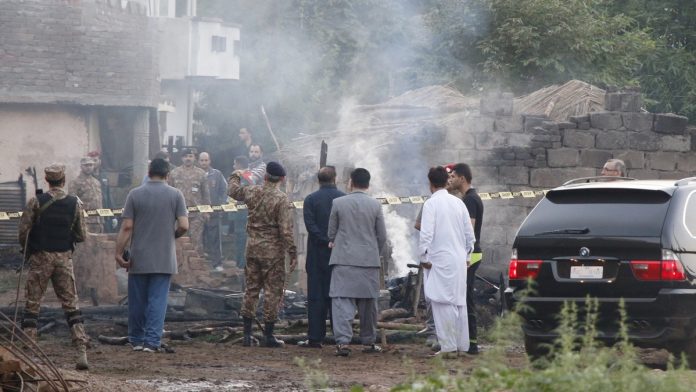
The aircraft that crashed in Pakistan Tuesday killing 18 people, including five military personnel, was a surveillance aircraft that the country’s army deployed to maintain a vigil on Indian military movement — both in air and land — following the Balakot strikes, defence sources told ThePrint.
The crashed aircraft was a King Air 350 turboprop of the Pakistan Army Aviation Corps and was inducted for surveillance around 2012.
The accident killed 18 people, including two pilots and three military personnel, and injured 12 others when the aircraft went down in a residential area in the garrison city of Rawalpindi early Tuesday.

Pak army statement draws flak

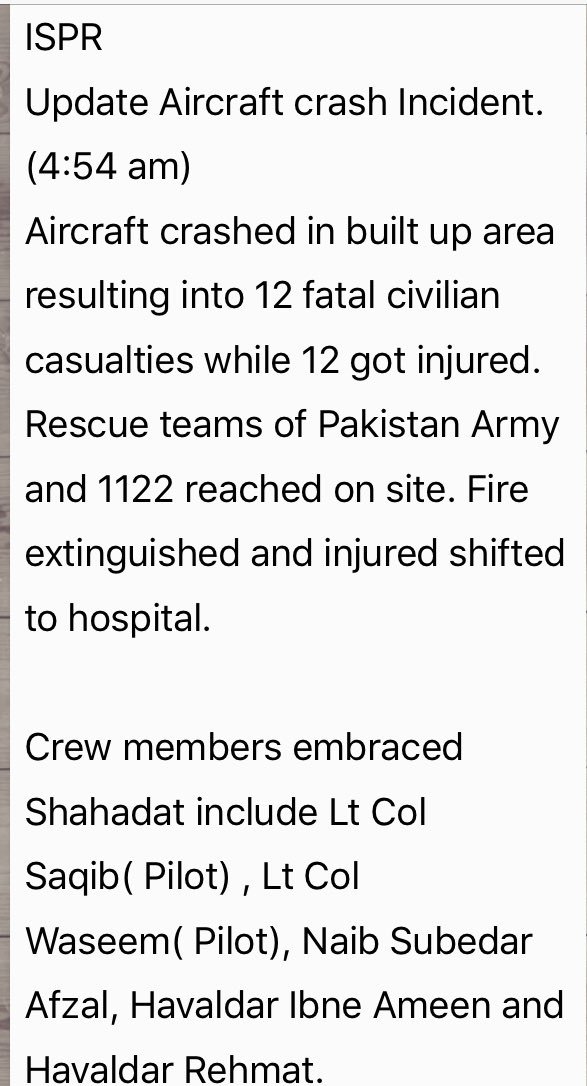
A Pakistan Inter-Services Public Relations (ISPR) statement said the two pilots and three military personnel killed had embraced “Shahadat” or martyrdom. The statement also mentioned that two high-ranking officials in the Pakistani Army were among the dead.
It, however, drew flak for leaving out the names of the 12 civilian casualties and for using the term Shahadat. The term martyr or martyrdom is generally used when a person is killed because of his religious or political beliefs.
The Indian military doesn’t officially use this term in case of soldier casualties and instead relies on killed in action.
Lahore-based journalist and rights activist Gul Bukhari tweeted, “The army crashes a plane in a residential area. And ISPR statement reads, “12 fatal civilian casualties… crew members embraced Shahadat. “And names each ‘shaheed’ and bloody civilians killed don’t merit being named.”

The army crashes a plane in a residential area. And ISPR statement reads, “12 fatal civilian casualties... crew members embraced shahadat.”
And names each ‘shaheed’ and bloody civilians killed don’t merit being named.


View image on Twitter


Plane was on a training mission

According to media reports, the Rawalpindi district commissioner Ali Randhawa said the incident occurred between 2:30 am and 2:40 am when the small military plane was on a training mission.
He added that the dead and injured were shifted to various hospitals of Rawalpindi, where paramedics said most of the victims were badly burnt. The cause of the crash is yet to be ascertained and the rescue operation was completed by the morning, according to authorities.

#QuettaBlast #Blast in #Pakistani city #Quetta kills five: police

Five people including two policemen were killed and 27 injured in a blast near a police station in southwestern Pakistani city of Quetta on Tuesday evening, a week after a similar blast that killed two people, police said.An explosive rigged motorcycle was detonated to target a police van parked outside the police station in the heart of Quetta’s busy shopping area, the city police chief said.
“Five people have been killed, including two policemen,” Abdul Razzaq Cheema, Quetta police chief told Reuters. Two women and a child are among the 27 injured in the blast, he added. In a similar blast last Tuesday two people were killed and 16 were injured when an explosive-rigged motorcycle went off outside a store in Quetta.
Violence in the Baluchistan province, which borders Afghanistan and Iran, has fueled concern about the security of investments, in particular an energy link planned to run from western China to Pakistan’s southern port of Gwadar.
https://www.reuters.com/article/us-pakistan-blast/blast-in-pakistani-city-quetta-kills-five-police-idUSKCN1UP22F