Tuesday, July 23, 2019

After Trump’s Kashmir Claim, India, US Work Together on Damage Control

New Delhi and Washington have been scrambling to minimise the cost of the political firestorm, with supportive messages from other wings and branches of the US government. 
After President Donald Trump made an incendiary claim that Indian Prime Minister Narendra Modi asked him to mediate on Kashmir, both New Delhi and Washington have been scrambling to minimise the cost of the political firestorm, with supportive messages from other wings and branches of the US government.
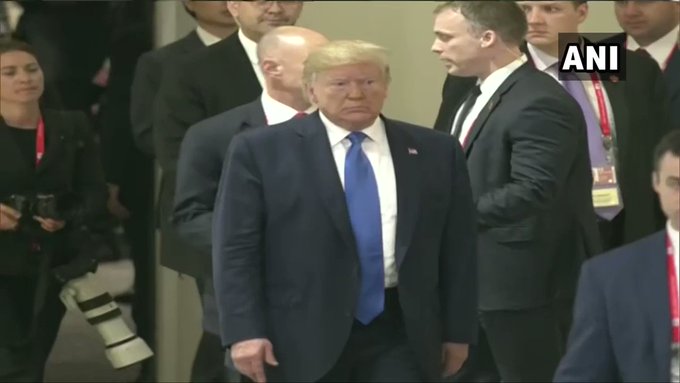
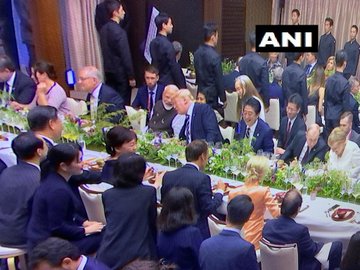
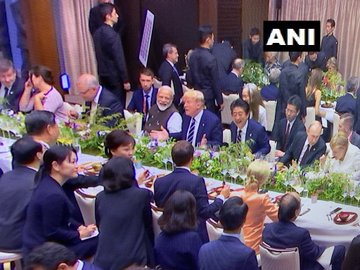
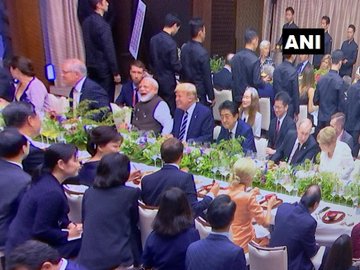
With visiting Pakistan Prime Minister Imran Khan on his side, Trump claimed that during their meeting at Osaka, Modi had asked him to be a “mediator or arbitrator” on Kashmir.
Within a couple of hours, India moved fast to issue a denial, just two minutes before midnight in Delhi. Later on Tuesday morning, external affairs minister S. Jaishankar “categorically” assured both houses of parliament that “no such request was made by the Prime Minister to the US President”.
From the US side, the official response came a few hours later with a tweet from acting assistant secretary of state, Alice G. Wells. Without referring to Trump’s remarks she reiterated the traditional US position that Kashmir is a bilateral dispute, and India and Pakistan should talk to each other.
While the Indian statement was categorical, the specificity of Trump’s so-called recollection of their conversation apparently led officials of both sides to check their written records of the meeting on June 28.

There was not even a mention of Kashmir in the records, as per sources. The US also informed India that a scan of their own records also brought up a similar absence of Kashmir at G-20 summit.
On Tuesday morning in Washington, the state department spokesperson also mirrored acting assistant secretary Well’s words that Kashmir is a bilateral dispute. She added that US would welcome India and Pakistan “sitting down” and was ready “to assist”.
The spokesperson said that the “first and foremost” step to create an atmosphere conducive for dialogue would be tackle the “menace of terrorism”.
When asked about the claims made about Trump-Modi meeting at Osaka, she said that there are usually “no (public) comments or readouts of President’s meeting”. The spokesperson also said that the two leaders “may have” have talked about the need for Pakistan to take “irreversible” action against terror groups based on its soil.
This line echoed the phrase in the “fact sheet” issued ahead of the conclusion of the bilateral meeting between the US President and Pakistan prime minister.
Indian officials were pleased that the “fact sheet” stated that Pakistan had to take action to “shut down all groups once and for all”. The sentence before this phrase also acknowledged that Pakistan had taken “some steps against terrorist groups operating within Pakistan”.
The Indian government’s statement, while definite in denying Trump’s claims, had to also take into account that the US president cannot be publicly called out for his verbal innovations.
As sources indicated, the Indian government will have to deal with Trump for another year and a half. If he wins the re-election bid in 2020, it means yet another four years.
‘Will not impact India-US relationship’
No country has yet learned how to handle the unpredictability of President Trump, so his surprising statements are now taken in stride, they added. Officials asserted his ‘inventive’ words will not actually impact the India-US relationship, which is largely managed by more junior administration officials and career bureaucrats.
During the parliament proceedings, the opposition may keep asking for a statement from Modi, but the government plans to ignore it for now. The strategy is not to intentionally stretch out this controversy, with the bet being that mainstream media would also move on to the next topic within a day or two, if they were starved of any “developments”.
In Washington, US officials have to walk a more precarious line. Not only they can’t publicly repudiate their leader, but US officials had to factor in the ongoing visit by a foreign leader, whose cooperation was required for an issue close to Trump’s heart.
For Trump, the key sign of success for Khan’s visit would be to get an assurance on Afghanistan, so that a quick peace agreement with Taliban could lead to all US troops returning home. Pakistan has been quick to grasp this opportunity, with Imran Khan effusively complimenting him that they are both on the same page.
Therefore, not surprisingly, the tweet from the US state department senior official made no reference to Trump’s actual words, which could have been interpreted as a denouncement.
After the Oval Office press interaction, voices from the Democrat-controlled house of representatives of the US legislative branch, the Congress, reiterated that Kashmir was a “bilateral dispute”.
Democrat Brad Sherman was the most outspoken, describing Trump’s words about Kashmir mediation as “amateurish” and “embarrassing”. Sherman also said that he had apologised to the Indian ambassador to the US, Harsh Shringla.
The senior Indian diplomat also spoke to the chairman of the House Foreign Affairs committee, Democrat Eliot Engel, who stated that pace and scope of any dialogue will have to be determined by India and Pakistan. “He reaffirmed that in order for dialogue to be meaningful, Pakistan must first take concrete and irreversible steps to dismantle the terrorist infrastructure on Pakistan’s soil,” added the read-out issued by the House committee.
The co-chairs of the bipartisan Congressional Caucus on India and Indian Americans also issued a statement that they wanted a bilateral resolution to the Kashmir dispute “consistent with decades of US policy”.
Making no reference to Trump or his words, they said, “The Republic of India is one of America’s closest and most important allies, and we look forward to working with Prime Minister Modi and Indian officials to combat terrorism and extremism throughout the region.”
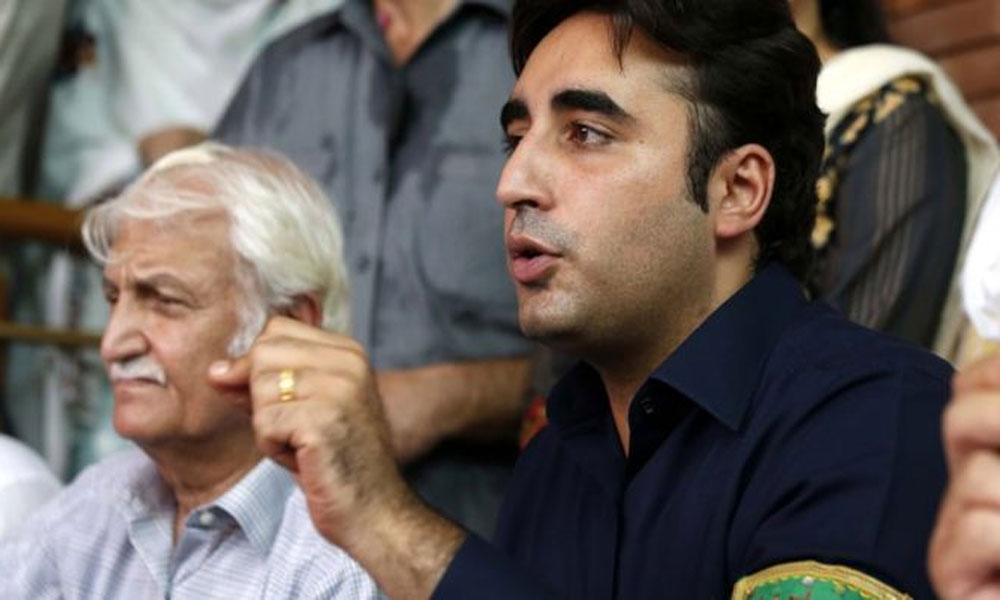
عمران حکومت کسی مخالف کو برداشت کرنے کیلئے تیار نہیں، بلاول

پاکستان پیپلز پارٹی کے چیئرمین بلاول بھٹو زرداری کا کہنا ہے کہ عمران خان
حکومت کسی بھی سیاسی مخالف کو برداشت کرنے کے لیے تیار نہیں۔
ایک بیان میں چیئرمین پی پی پی بلاول بھٹو زرداری نے کہا ہے کہ اپوزیشن پارلیمنٹ میں بات کرے تو خان صاحب ایوان میں آنا چھوڑ دیتے ہیں۔
انہوں نے کہا کہ ارکانِ اسمبلی کا حق غصب کر کے ان کے پروڈکشن آرڈر رکوائے جاتے ہیں، حکومت پر تنقید کرنے والے صحافیوں تک کو نشانہ بنایا جاتا ہے۔
بلاول بھٹو زرداری نے مزید کہا کہ اپوزیشن کی آواز دبانے کے لیے پہلے گرفتاریاں کی جاتی ہیں، گرفتاریوں سے آواز نہیں دبا سکے تو میڈیا پر سنسر شپ شروع کروا دی۔
انہوں نے یہ بھی کہا کہ جتنی میڈیا سنسر شپ آج ہے، ایسی تو صرف آمریتوں میں ہوا کرتی ہے، عمران خان کے پاس عوام کے سوالوں کا جواب نہیں تو زبان بندی کروانا شروع کر دی ہے۔

Monday, July 22, 2019

Video - Interview With #Pakistan’s Ex-Envoy To US Husain Haqqani

Video Report - The Women Leading The Puerto Rico Protests

Video Report - #PuertoRico - Massive protests shut down highway in Puerto Rico

US demands Saudi Arabia release 'critic of Islam'

VP Mike Pence calls upon Saudi Arabia, Eriteria, Mauritania and Pakistan to release religious dissidents
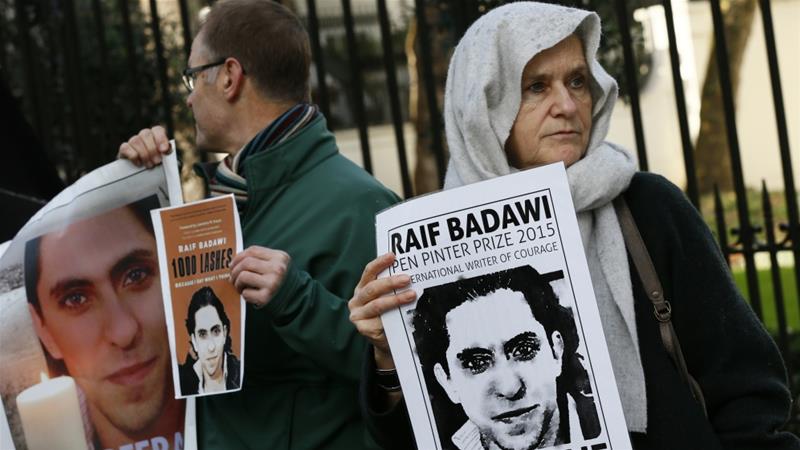
US Vice President Mike Pence on Thursday called out ally Saudi Arabia for the suppression of religious liberties and urged it to release Raif Badawi, a blogger imprisoned for reportedly insulting Islam.
Pence's highlighting of Badawi's ill-treatment comes in light of US legislators accusing the Trump administration of failing to act against the kingdom's leaders for the killing of Saudi journalist Jamal Khashoggi.
In an address to the Ministerial to Advance Religious Freedom conference at the State Department, Pence noted the detention of religious dissidents in Eritrea, Mauritania, Pakistan, and Saudi Arabia.
"All four of these men have stood strong in defence of religious liberty despite unimaginable pressure, and the American people stand with them," Pence said.
"The United States calls upon the governments of Eritrea, Mauritania, Pakistan and Saudi Arabia to respect the freedom of conscience and let these men go."
Republican and Democratic legislators - citing evidence of Saudi Crown Prince Mohammed bin Salman's role in the Khashoggi case, and incensed over the civilian death toll from the Saudi-led air campaign in Yemen that has killed thousands - have ramped up efforts to block President Donald Trump's arms sales to Saudi Arabia.The CIA has determined with "medium to high confidence" the Saudi crown prince, considered the de facto ruler of the kingdom, ordered the grisly killing of Khashoggi at its Istanbul consulate last year.
1,000 lashes
Badawi, who set up the Free Saudi Liberals website, was arrested in June 2012 for offences that included cybercrime and disobeying his father - an act considered an offence in Saudi Arabia.
The prosecution had demanded he be tried for apostasy, which carries the death penalty in Saudi Arabia, but a judge dismissed that charge.
He was sentenced in 2014 to 10 years in jail, fined $267,000, and given 1,000 lashes after prosecutors challenged an earlier sentence of seven years and 600 lashes as too lenient.
His public flogging in 2015 generated a global outcry.
Pence also cited the detention of a 90-year-old Orthodox Church patriarch by Eritrea, the jailing for apostasy of Mohamed Ould Cheikh Ould Mkhaitir, a blogger in Mauritania, and the imprisonment by Pakistan of Junair Hafeez, a lecturer accused of blasphemy.
The case of the Pakistani lecturer is likely to be raised next week in meetings in Washington between Trump administration officials and Pakistani Prime Minister Imran Khan in his first-ever meeting with the US president.
https://www.aljazeera.com/news/2019/07/demands-saudi-arabia-release-critic-islam-190718165243909.html

#Pakistan - Saudi Arabia fails to share prisoners’ list despite high-level commitment

The Senate Panel on Human Rights on Thursday expressed displeasure at the fact that the despite commitment at the highest level and repeated reminders by the Pakistani government, Saudi Arabia did not share the list of prisoners it had announced to release during the crown prince’s visit to Pakistan upon the special request of Prime Minister Imran Khan.
Senate Functional Committee on Human Rights was told that at present 114 prisoners in Riyadh and 128 in Jeddah are imprisoned due to pending payment of fines because of their financial situation and the fines begin from Rs8,000 and go till Rs2.2 million. Other than this, 3,000 people are imprisoned in Saudi Arabia over criminal offences.
While discussing the matter of incarceration of a Pakistani national, Mureed Abbas, languishing in Saudi prison for the last three years due to non-payment of fines, Additional Secretary Middle East Nadeem Khan told the committee that he went to Saudi Arabia as a driver and had an accident for which he was imprisoned and fined. His sponsor has a claim of 27,000 Saudi Riyals.
He said that the ministry is trying to get information about the sponsor and then Pakistan will work for the fine to be waived off. He also said that the government is trying to give relief to prisoners but cannot pay all the fines. He also observed that the problems being faced by the Pakistani community abroad is due to the high number of people, a disorganised community and lack of funds.
The committee members remarked that Pakistanis going abroad should be trained to behave well when outside the country and a fund should be maintained for paying their fines. The committee observed that the human rights ministry maintains a fund to pay for the prisoners who are from weaker segments of society but it is permissible for only within the country. The committee considered working out a proposal of bringing an amendment in Pakistan Penal Code (PPC) or any other relevant law to bring the overseas prisoners also under its ambit.
The committee was told that there is a similar fund maintained by the Ministry of Overseas Pakistanis Foundation and a welfare fund maintained by missions abroad but they are for different purposes and cannot be applied to payment of fines. The committee also decided to hold a briefing of the fund of human rights and to write to provincial governments to feel their responsibility towards contributing in this fund. The ministry was also directed to call an inter-ministerial meeting to get an understanding about the available resources and formulate a mechanism.
Ministry of Interior told the committee that such an inter-ministerial committee is already working in the Foreign Office (FO) and their recommendations may be seen by the committee. Therefore, the committee decided to call the members of the committee in next meeting along with their recommendations.
https://www.pakistantoday.com.pk/2019/07/04/saudi-arabia-fails-to-share-prisoners-list-despite-high-level-commitment/

Video - Prime Minister Benazir Bhutto addressed a joint meeting of Congress USA - JUNE 7, 1989

Video Report - Qamar Zaman Kaira Press Conference - 22 July 2019

Video - What was the real agenda of the Trump-Imran meeting? | Najam Sethi Show | 22 July 2019 |

Video - Message to President Trump. Why Imran is in USA & what President should not forget

Trump Makes His Peace With Pakistan’s Deception

By Eli Lake
Does anyone really believe the Pakistanis’ promise that they will be better partners in the war on terror?
When Pakistan Prime Minister Imran Khan visits Washington this week, he will have the benefit of meeting an American president with a short memory.
Just a year and a half ago, Donald Trump tweeted that the U.S. “has foolishly given Pakistan 33 billion dollars in aid over the last 15 years, and they have given us nothing but lies & deceit.” He then announced a suspension of that aid until Pakistan ended its relationship with various terrorist groups.
Now Trump is changing his tune. Last week he welcomed Pakistan’s arrest of the leader of the terrorist group that went on a four-day killing spree in Mumbai in 2008, despite the fact that he has been arrested and released several times before. Trump tweeted that the arrest was the result of pressure building over the last two years.
Some of this change in tone is to recognize the baby steps Islamabad has taken to address longstanding U.S. concerns. Khan’s government recently announced that it was investigating the funding of some terrorist groups the U.S. has long accused Pakistan’s military intelligence service of sponsoring.
Nonetheless, these steps are not nearly enough. Dr. Shakil Afridi, the heroic Pakistani physician who helped the CIA identify Osama bin Laden before the 2011 raid that killed him, remains in a high-security prison. According to recent reports, he is severely underweight.
A more powerful reason that Trump is changing his tune is that he needs Pakistan’s cooperation for his plan to withdraw U.S. forces from Afghanistan. Since the fall, U.S. special representative Zalmay Khalilzad has been negotiating what he says will be a peace agreement with the Taliban, whereby the group shares power with the elected government in Kabul. Nonetheless, the Taliban have continued a terror rampage against civilians and the military, killing a U.S. service member this month. The Pakistanis have enough short-term leverage with the Taliban to get them to allow an orderly exit of U.S. forces fighting America’s longest war.
In this respect, one might argue that a little amnesia can go a long way. Isn’t the pageantry of a White House visit a small price to pay for tamping down the Taliban?
Maybe so — but this logic also exposes the foundational problem with the U.S.-Pakistani relationship. Pakistan’s military and intelligence agencies play a double game. Its leaders give lip service to the wider war on terrorism when in Washington. Meanwhile its operatives in Southeast Asia continue to supply and fund the terrorists the U.S. has been fighting.
Husain Haqqani, a former Pakistani ambassador to Washington and now a fellow at the Hudson Institute, said Pakistan’s support for the Taliban is evident even in the peace negotiations. The planes that fly Taliban leaders to negotiations in Doha, he said, are provided by Pakistan’s military intelligence service.
Thomas Joscelyn, a senior fellow at the Foundation for the Defense of Democracies and co-founder of the Long War Journal, said the olive branch from Trump counts as a reversal of his administration’s policy. “The strategy that Trump endorsed in August 2017 was intended to put pressure on Pakistan to try to change their behavior,” he said. Yet to this day, the Pakistani military continues to support senior Taliban leaders as well as the deadly Haqqani network in the border region near Afghanistan.
All of which raises the question: Why should anyone believe the Pakistanis this time around? Trump’s advisers would say that the meeting offers an opportunity for Pakistan to get out of the president’s doghouse. A senior administration official told reporters Friday that Khan could agree to make permanent his government’s recent gestures toward counterterrorism. What’s the harm in trying a softer touch after taking a hard line? The Pakistanis have proved they can be spoilers when it comes to Afghanistan. A little pomp and flattery could persuade them to be more constructive.
That’s the positive spin, anyway. The deeper problem is that the U.S. has no real leverage in Afghanistan. Khan knows this, and so does the Taliban. Trump has made it clear that he wants U.S. forces out of the country, the sooner the better. Even if the Pakistanis can coerce or persuade their Taliban allies to back off until the U.S. leaves, what will stop them from violating a peace agreement after the U.S. is gone?
https://www.bloomberg.com/opinion/articles/2019-07-21/trump-welcomes-khan-and-makes-his-peace-with-pakistan-s-deception

Sunday, July 21, 2019

Giving ‘Jinnah’s #Pakistan’ back to the Religious Minorities


    By Maria Malik

Pakistan has an overwhelmingly Muslim community, which accounts for 95 per cent of its 216 million inhabitants. The Muslim population however belongs to several doctrinal groups. Sunnis are in the majority amongst Muslims, with Shia Muslims and Zikris facing discrimination. In 1974, the National Assembly of Pakistan has declared Ahmadis (also called Qadianis) a non-Muslim minority. There are several Christian denominations, Bahais, Buddhists, Hindus, Jains, Kalasha, Parsis and Sikhs who are identified as non- Muslim Pakistanis. The policy of Islamization in the 1970s and 1980’s, the subsequent rise of Taliban insurgency and the patronage of extremists groups by different political and religious groups in Pakistan have contributed to the intolerance and acts of violence against the religious and sectarian minorities of Pakistan.
The vague terminology of the current legislation has in fact allowed for the misuse of Sections 295-298 PPC, and has resulted in the persecution of minorities and the poor by providing the dishonest complainant with a mechanism for settling personal vendettas through the flawed system of justice. The law that is designed to protect people has actually become a tool for promoting intolerance. Although a majority of those charged under this law are Muslims, yet the law has made the non-Muslims even more vulnerable. In addition to this, the manner in which the religious groups in Pakistan propagate the flawed laws has resulted in vigilantism and mob violence. The state has consistently failed to intervene and protect its people against violence by maliciously motivated elements and the certainty of impunity has encouraged them to commit lawlessness.

Insertion of section 298A into the PPC during the process of Islamization is considered as a threat for the religious and sectarian minorities in Pakistan. Although the Blasphemy Laws apply to all Pakistanis alike, whether Muslims or Non- Muslims, however the religious minorities are more prone when it comes to the ‘misuse’ of this law. According to various national and international human rights organizations article 298B and 298C of PPC, coupled with the Blasphemy laws, has further institutionalized the marginalization of the Ahmedia Community in Pakistan. The abstruse legislation and the lack of procedural safeguards has made these laws open for widespread abuse and have reportedly been used to harass and target religious minorities, as well as to settle personal scores or carry out personal vendettas.
By taking certain measures the misuse of this law can be curtailed to a certain extent. For example, the minorities have very limited representation in the Parliament so there is a dire need to increase the reserved seats for the religious minorities. Moreover, the Parliament must have representation of all the religious minorities including Ahmedis, Christians, Hindus, Sikhs, Parsis etcetera and each shall be allotted seats according to their population ratio. The quota for religious minorities in civil and military services of Pakistan shall be fixed and/or increased. The system of separate electorate should also be re-instated in order to secure fair representation for the minorities.
Insertion of section 298A into the PPC during the process of Islamization is considered as a threat for the religious and sectarian minorities in Pakistan. Although the Blasphemy Laws apply to all Pakistanis alike, whether Muslims or Non- Muslims, however the religious minorities are more prone when it comes to the ‘misuse’ of this law
Secondly, at the social front, the state should take measures to revise the curriculum and to make sure that is free of hate speech and intolerance towards religious minorities and reflects pluralism, and co-existence which is the true spirit of Islam.
Thirdly, the state should take all necessary measures to make sure that it abides by the international treaties that Pakistan has ratified (ICCPR ratified in 2010) and also make serious efforts to implement the fundamental rights in letter and spirit to safeguard the status of minorities.
The composition of our criminal justice system includes Police, Prosecution and Courts among others. A criminal case is first registered as an FIR with the Police; the Prosecution carries out investigation upon it, the Courts then check whether the investigation carried-out was impartial and concerns of both the aggrieved parties are addressed adequately. Legal and executive/administrative lapse happens, usually, at the first two stages i.e. the Investigation of Police and the duty of the Prosecution to determine the impartiality of that investigation. There’s no check whatsoever on either the former or the later which makes it difficult for the Courts to determine whether or not there were some executive shortcomings in the investigation. To improve the system, a judicial officer shall supervise the investigation carried out by police.
Section 298B and 298C of the Pakistan Penal Code shall be amended and made objective in nature along with ensuring an independent and accessible judicial system that can dispense justice timely.
Lastly and most importantly, Parliament of Pakistan must make an amendment to make article 36 ‘Protection of Minorities’ a part of Fundamental Rights. Article 36 is presently part of the ‘Principles of Policy’, which states that the principles under this chapter shall be regarded as being subject to the ‘availability of resources’. The Constitution of Pakistan does not include as to what pertains to the availability of resources and do not provide any kind of timeline as by when these principles will be implemented effectively by the state. So article 36, which is meant to secure the status of religious minorities, is a part of non-operational part of the constitution. In fact it renders all other fundamental rights of the minorities useless by linking the implementation of article 36 with availability of resources. Until and unless the religious minorities are given proper constitutional safeguards, we cannot expect Pakistan to be a pluralist society.

The Barbaric Persecution of Ahmadis in Pakistan

Justice Markandey Katju

 Ahmadiyyas are a tiny peaceful community of about 5 million in Pakistan,( which has a total population of over 200 million ) who have been treated barbarically by religious extremists since long, the way Jews were treated in Nazi Germany.
The whole world celebrated Human Rights Day on 10th December, and on this occasion the Pakistan Minister for human rights, Shireen Mazari, waxed eloquent in a hypocritical statement about how Pakistan is committed to upholding human rights, and she mentioned about how the Pakistan Govt was taking up the issue of human rights violation of Kashmiris and Muslims in Europe in international fora. But her hypocrisy was revealed when not a word did she say about the horrendous genocidal treatment of Ahmadiyyas in Pakistan. Are Ahmadiyyas not human beings ? And if they are, are they not entitled to human rights ?
I myself have repeatedly condemned atrocities on Kashmiris by Indian security forces, as I believe no one should be persecuted, and I have condemned lynching of Muslims in India by cow vigilantes, but what about the atrocities on Ahmadiyyas in Pakistan ?
Ahmadiyyas were declared non Muslims by a Constitutional Amendment in 1974 at the instance of Z.A.Bhutto, who posed as being a great champion of the poor and oppressed, which was just hypocrisy, and the tyrant Gen Zia who issued Ordinance XX in 1984 making it a crime for Ahmadiyyas to ‘pose’ as Muslims or call their place of worship a masjid or call the Ahmadiyyas to prayers by azaan. Ahmadiyyas were forbidden to recite Quranic verses or exchange Islamic greetings publicly or gather on Eid.
Persecution of Ahmadiyyas had started soon after creation of Pakistan. In the 1953 riots hundreds of Ahmadiyyas were massacred, and so also in 1974. But it picked up momentum under Gen Zia’s rule. There have been several massacres of Ahmadiyyas, e.g. in the attack in Lahore on their place of worship in 2010 in which about a hundred were killed. In fact murders of Ahmadiyyas ( often in a ghastly manner e.g. by stoning them to death ) has been an almost annual feature in Pakistan for decades, with the police being bystanders or even collaborators. They have been barbarically treated, their places of worship vandalised and burnt down , their children harassed, their students victimised, and they were humiliated in various ways e.g. by making them state in their passport application that Mirza Ghulam Ahmed, the founder of their sect, was an imposter and they were non Muslims.
And what was their ‘crime’ ? That they do not regard Prophet Muhammad as the last Prophet ( which mainstream Muslims believe ) while still calling themselves Muslims.
I am not going into the question whether Ahmadiyyas regard Prophet Muhammad as the last Prophet or not ( some regard Mirza Ghulam Ahmed as a Mahdi or redeemer, not a Prophet ) but assuming they do not, and assert that Mirza Ghulam Ahmed was indeed another Prophet, are they cutting off anyone’s head, are they chopping off anyone’s limbs ? Everyone should be free to believe what he/she wants. That is what Jinnah, who is regarded as the founder of Pakistan, said in his speech of 11th August 1947.
And why should Ahmadiyyas not have a right to call themselves Muslims or call their place of worship a masjid ? If they do so, are they cutting off anyone’s head, are they chopping off anyone’s limbs ? If other Muslims don’t like Ahmadiyyas they need not associate with them or go to the Ahmadiyyas place of worship, but why should they persecute Ahmadiyyas ? To my mind such persecution is goodagardi and barbarism.
The present Prime Minister of Pakistan Imran Khan, who poses to be liberal and modern, being educated in Oxford, shamelessly hobnobbed with religious bigots like the Tehreeke Labayat during his election campaign to get votes, and spoke against Ahmadiyyas. He gave a PTI ticket to that rascal Amir Liaquat who anchored a TV programme in which venom was spouted against Ahmadiyyas, resulting in killings of many of them. And soon after he was sworn in as Prime Minister an Ahmadiyya place of worship was burnt down. He also forced out of the Pakistan Economic Advisory Council Atif Mian, a world renowned economist of Princeton University only because he was an Ahmadiyya ( an act for which even his ex wife Jemima condemned him ).
Ahmadiyyas have played an outstanding role in Pakistan. The first President of the UN General Assembly, Zafrullah Khan was an Ahmadiyya, and so was Nobel Laureate Dr. Abdus Salam. But Abdus Salam’s grave was desecrated because it had Quranic verses written on it, as were many other graves of Ahmadiyyas.
In my opinion the United Nations must now intervene, as it did in Bosnia, to prevent a forthcoming Holocaust of Ahmadiyyas, as it happened to Jews in Nazi Germany.

Fake polio markers highlight risks to Pakistan vaccination drive

Pakistan’s polio eradication campaign has hit serious problems with an alarming spike in reported cases that have raised doubts over the quality of vaccination reporting and prompted officials to review their approach to stopping the crippling disease.
The country is one of only three in the world where polio is endemic, along with neighboring Afghanistan and Nigeria, but vaccination campaigns have cut the disease sharply, with only a dozen cases last year compared with 306 in 2014 and more than 350,000 in 1988, according to Pakistani health officials.
However, there has been a worrying jump this year, with 41 cases recorded, 33 of them in the northwestern region of Khyber Pakhtunkhwa, where many people resent what they see as intrusive and coercive vaccination campaigns often involving repeated rounds of visits, officials say.
Just as alarming for health services, environmental sampling has shown the presence of the virus in areas across the country, a clear sign of gaps in vaccination, which must cover the entire population to be effective.
Hopes that transmission of the disease could be ended this year have been abandoned.
“We need to take the bull by the horns and accept there are problems,” said Babar Atta, Prime Minister Imran Khan’s point person on polio eradication.
As well as the difficulty in reaching very remote areas and keeping track of people moving through big cities like Karachi, there have been problems in collecting reliable data, exacerbated by resistance to efforts to force vaccination.
Efforts to eradicate the disease have for years been undermined by opposition from some Islamists, who say immunization is a foreign plot to sterilize Muslim children or a cover for Western spies.Local officials say parents suspicious of mass immunization campaigns have been getting hold of special markers, used by health workers to put a colored spot on the little fingers of children who have been vaccinated.“They themselves would mark the fingers of their children, in case of an official visit to countercheck the vaccinated children,” one official associated with an international organization told Reuters in the northwestern city of Peshawar.
Officials estimate that so-called fake finger marking, sometimes in collusion with health workers, is hiding the true scale of refusal rates - and thus gaps in vaccination.
In some areas, as many as 8% of families may be refusing or avoiding vaccination, a level which would mean the disease is not eradicated.
A senior official of the Health Department in Khyber Pakhtunkhwa said the exact data had been deliberately hidden by local health authorities nervous of being blamed for failing to ensure full coverage. “And the result of hiding figures had led us to face an epidemic-like situation today,” he said.
RESISTANCE
Polio, a disease transmitted through sewage which can cause crippling paralysis particularly in young children, is incurable and remains a threat to human health as long as it has not been eradicated. Immunization campaigns have succeeded in most countries and have come close in Pakistan, but persistent problems remain.
International observers have been watching the situation with alarm for some time. In October, the Independent Monitoring Board, which oversees the global polio eradication effort, wrote in its annual report that there was “something seriously wrong with the program in Pakistan”.

https://www.geo.tv/latest/243056-fake-polio-markers-highlight-risks-to-pakistan-vaccination-drive

#Pakistan - The arrest of Hafiz Saeed - A policy shift?

By 


International pressure or not, the arrest of Hafiz Saeed has come at a time when Imran Khan is visiting the US and the military leadership is holding talks with the US administration.
Once again, Hafiz Saeed, chief of Jamaat-ud-Dawah (JuD), is behind the bars. However, this time he has not been detained as an accused in the Mumbai attacks or jailed under Maintenance of Public Order (MPO) law but as chief of Lashkar-e-Taiba (LeT), a militant group alleged of cross-border infiltration into the Indian-held Kashmir.
In the FIRs of 23 cases lodged against the key leaders of the JuD, Saeed (mentioned as chief of LeT) and his aides are accused of terror financing and misusing of space donated by locals in different cities to spread terror and collect money used for terrorism purposes. The JuD leaders were booked in these cases in the first week of July under the Anti-Terrorism Act, 1997.
“The Counterterrorism Department (CTD) Punjab has registered 23 cases against the leadership of JuD, LeT, FIF (Falah-e-Insaniat Foundation) for making assets from terrorism financing through various trusts,” a CTD statement reads. “They made these assets from funds of terrorism financing, they held and used these assets to raise more funds for further terrorism financing. Hence, they committed multiple offences of terrorism financing and money laundering under Anti-Terrorism Act 1997. They will be prosecuted in anti-terrorism courts (ATCs) for commission of these offences,” it adds.
The recent action against them is believed to be taken in connection with implementation of the United Nations’ sanctions imposed on these groups and as a follow-up of the decision of the National Security Committee (NSC) in January 2019 to speed up action against banned outfits.
The arrest of Saeed comes at a time when Prime Minister Imran Khan is visiting the US and Pakistan’s military leadership is also holding talks with the US administration. Pakistan has been officially denying the presence of LeT in the country for the past many years.
The timing of the arrest is significant,” says Raza Rumi, political analyst. “Pakistan also faces scrutiny by FATF for alleged financing of terror groups. Many steps have been taken in recent months but this one remains the most important. The identification of Saeed as LeT chief is also meaningful and is a clear acknowledgement of the international view. Pakistan’s gradual return Westwards is noteworthy,” he explains.
The JuD is expected to challenge the cases against its leadership in the court. “We have seen such cases (associating leaders with the LeT and alleging them of terror financing) for the first time. This is quite new and strange for us,” says Ahmad Nadeem Awan, spokesperson of the JuD, adding, “We have moved the court against these cases. In 2009, the Lahore High Court’s full bench cleared Saeed and his aides of these charges after the state failed to produce evidence.”
AK Dogar, the council of Saeed in the Lahore High Court, says that superior courts have admitted that the JuD is not linked to any terrorist group or activity. “These new cases have been filed without any substantive evidence. Facts mentioned in the cases wrongly describe them as members of LeT and level unlawful allegations of terror financing.”
“Pakistan also faces scrutiny by FATF for alleged financing of terror groups. Many steps have been taken in recent months but this one remains the most important. The identification of Saeed as LeT chief is also meaningful and is a clear acknowledgement of the international view. Pakistan’s gradual return Westwards is noteworthy,” Raza Rumi explains.
In Lahore last week, an anti-terrorism court granted pre-arrest bail to Saeed and aides in a case till August 31. While the Lahore High Court issued notice to the CTD to submit a reply as the JuD moved court against these cases, the JuD claims that these cases do not have facts for referring these leaders as members of LeT and financing terror.
Hafiz Saeed founded the JuD in the mid-1980s and allegedly the LeT in early 1990s. Pakistan banned the LeT in 2002. Saeed was listed by the United Nations as an international terrorist in December 2008 for his alleged association with LeT, and al-Qaeda. A relief group, FIF, was founded to promote a soft image of the group by doing extensive relief work across the country. In 2012, the United States also announced a bounty of $10 million on Saeed for his alleged role in the Mumbai attacks.
Pakistan speeded up action against the JuD and its offshoots last year after country’s name was included in the grey list of the Financial Action Task Force (FATF) in June 2018. A recent meeting of the FATF decided to keep Pakistan in the grey list until next October. It said if the country does not meet the requirements to curb terror financing its name might be considered for the black list.
In February 2019, Pakistan banned the JuD for the first time. The government also announced taking over assets of these groups and froze their bank accounts. Similar action was taken in February, before the June 2018 meeting of the FATF, when the interior ministry, through a presidential ordinance, announced to take over the JuD and FIF assets — moveable, immoveable and human resource.
Pakistan renewed its efforts during the past few weeks after a preliminary meeting of the FATF discussed placing the country on a watch-list with countries failing to prevent terrorism financing. In May 2019, Pakistan banned 10 offshoots of the JuD.
The July 2019 arrest is not Saeed’s first. He was put under house arrest in 2006 after Indian authorities sought his extradition, alleging him of masterminding Mumbai train bombing that killed 186 in 2006. After three months, the Punjab government released him from house arrest on court order. He was detained again in December 2008 after his alleged involvement in the Mumbai attacks in November 2008. Again, he was set free by the Lahore High Court in 2009 for having no proof against him. He was detained and later house-arrested under the MPO in January 2017 and was released by the court by the end of the year due to ‘lack of evidence’.
Muhammad Amir Rana, security analyst and executive director, Pakistan Institute of Peace Studies (PIPS), says it could be “different this time”, referring to the history of Saeed’s arrests and releases in the past. “The CTD has to prove links of Saeed and his aides with the LeT, which were not proved in the past,” he points out.
“Because Saeed had rebranded himself as the head of a charity network, the prosecution could not present hard evidence against him. He was given relief by the courts. Now the ball is in the court of the government. It must prove that it is serious about prosecuting him,” says Rumi.
“If a weak case is submitted in the court again then the courts could repeat the past verdicts,” adds Rumi, director at the Center for Independent Media, Ithaca College, USA.

Taliban Attack Security Checkpoint and Hospital in Pakistan

 By Salman Masood

At least nine people were killed and at least 30 others wounded on Sunday in Taliban attacks on a security checkpoint and a hospital in northwestern Pakistan, breaking a lull in militant violence in the country, officials said.
A spokesman for the Taliban said the attacks — by gunmen on motorbikes and a suicide bomber — had been carried out to avenge the killing of one of its militants last month in the district of Dera Ismail Khan. A senior police official said the suicide attacker had been female, but the Taliban later released a photograph of a longhaired man whom the group identified as the bomber.
The two-pronged attack on Sunday took place in the same district, Dera Ismail Khan, which is in the province of Khyber-Pakhtunkhwa. In the first attack, two police officers at a security checkpoint in the town of Kotla Saidan were shot dead.
The assailants escaped after the shooting, and the security forces cordoned off the area to search for them.
Shortly after the bodies of the two officers were taken to the hospital, an explosion ripped through the emergency and trauma center there, killing four other police officers and three civilians. The suicide bomber detonated about seven kilograms of explosives near an entrance to the hospital, according to a preliminary police investigation.
Salim Riaz Khan, the police chief of Dera Ismail Khan, said that initial inquiries suggested that the suicide attacker had been a woman, but another security official said that the bomber had been a young boy with long hair, a common look for most Taliban militants.
Only a few suicide bombings have been carried out by women in the long history of militant violence in the country.
The blast heavily damaged the entrance of the hospital, and the emergency department shut down afterward. Those injured in the second attack were shifted to a military hospital in the district.
On June 23, counterterrorism police officials killed a militant fighter during a raid at his compound in Dera Ismail Khan. He had been wanted by the police in more than a dozen cases of killings and kidnapping for ransom.
Militant violence has ravaged Pakistan for years, especially in the northwestern regions, where the Taliban have a strong presence, but the attacks have declined in recent years. Sporadic violence still takes place, however.

Saturday, July 20, 2019

Why isn’t Pakistan polio-free? If India and Bangladesh can eradicate polio, why can’t Pakistan?


Samia Altaf


IN April 2019 Dawn ran an article ‘Will Pakistan ever become polio free?” I think the pertinent question should be: ‘Why isn’t Pakistan polio-free?’
The number of cases of polio has continued to increase from 17 in April 2019 to 41 till early July and counting; 33 in KP including the newly merged tribal districts, three each in Punjab and Sindh, and two in Balochistan. These numbers demonstrate a backsliding from last year’s total of 12 cases and eight in 2017. Here we are after three decades of efforts, generous international funding — GAVI alone disbursed $1,291,736,081 and the 2018 Pakistan government budget allocated Rs.7.83 billion for the Expanded Programme on Immunisation. All governments of the past three decades had vociferously declared polio eradication their priority, so there was no lack of political will.
The reason given by policymakers and programme administrators for failure of polio eradication range from lack of quality vaccinations and the mishandling of vaccine by eradication teams, parental/community refusals, religious issues, fear of vaccines and poorly paid vaccinators. Overarching climate change and worsening environmental conditions leading to severe and frequent droughts, settlements without basic sanitation and clean drinking water are recent additions to the list. For example, there are 564 slums in Karachi where drains are full of raw sewage. Poliovirus has been isolated from sewage of cities in KP and is suspected in sewage of other cities as well. Senior government officials blame the ‘culture’ of Pakistan.
If India and Bangladesh can eradicate polio, why can’t Pakistan?
These explanations may ring true. However, they ignore what lies at the heart of this persistent failure. That is the failure of programme leadership to undertake serious analysis to determine reasons for poor performance of the eradication programme, lack of a coherent appropriate strategy based on this analysis, and blind overreliance on antiquated vaccination drives. In this context, hoping to improve vaccination rates by tinkering at the margins of the vaccine delivery programme is not likely to work in future.
What is likely to work?
It is instructive here to look at other countries that have successfully eradicated polio. The example of United States was cited in an earlier op-ed by the writer in this paper (‘Polio: no quick-fix solutions’, Dawn, July 1). Granted United States’ development level is way above Pakistan’s so it may not be considered a useful comparison. Countries closer to home, such as India and Bangladesh have also achieved polio-free status. Even the little Southeast Asian ones, eg Vietnam, are polio-free. Meanwhile Nigeria, one of the three countries — Pakistan and Afghanistan being the other two — harbouring the virus, is on its way to becoming polio-free. Nigeria has not had any case for the past 22 months and even Afghanistan has had only 10 cases this year.
How did India and Bangladesh that are culturally similar to Pakistan and have more or less similar levels of development do it? Briefly, they did it because their leaders did not resort to gimmicks, engaged seriously with the issues, analysed data to design overall programme strategy and a mix of activities, all tailored to local conditions and challenges peculiar to different communities.
For example, India, which as recently as 2009 had 60 per cent of all global polio cases, was declared polio-free five years later in 2014.This achievement was the result of India’s Expert Advisory Group’s recommendation of a strategy designed to ensure that no polio cases are overlooked and no children missed by vaccinators.
Each state conducted a detailed risk analysis and had an emergency plan to deal with any new cases, in line with recommendations from the Independent Monitoring Board. These risk analyses included review of surveillance gaps to allow supplementary immunisation activities to focus on areas with gaps in immunity. Serosurveys were conducted in the highest-risk areas to provide definitive information on children’s immunity status. The analysis led to focus on Uttar Pradesh and Bihar, two of the poorest states which had uninterrupted polio transmission, to target the children of migrant workers. The polio vaccine was given to each child along the trail followed by workers, as they moved in and out of the two states.Although only 2pc of Bangladeshi children under five years old were immunised before 1985, this number jumped to 60pc within 10 years in spite of the overwhelming challenges faced by the country in the aftermath of it independence from Pakistan. By 2006, Bangladesh was polio-free. This result was possible because the government made the commitment to develop a national strategy in context of local conditions, and by instituting sanitary reforms. The cornerstone of the national strategy was routine immunisations. The strategy was based on local data and micro-planning that included mapping the community down to the most basic level to ensure all children could be reached by routine immunisations.
Sanitary reforms consisted of building latrines to reduce open defecation, to interrupt the faecal-oral route of transmission of virus. The strategy also included Regular National Immunisation Days and development of strong multisectoral collaborations such as mobilising 250,000 youth/student volunteers to educate communities. Bangladesh is now concentrating on quality surveillance and case detection (acute flaccid paralysis) to maintain its polio-free status.
If India and Bangladesh can eradicate polio, why can’t Pakistan?
Pakistan’s prime minister in his address on July 12, as he launched the low-income housing scheme in Islamabad acknowledged the learning and useful consultations he had, amongst others, with people who have done similar work successfully on low-cost housing in Mumbai (Bombay), India. Maybe his technical team for polio eradication should take a leaf from the prime minister’s book and learn from polio eradication experience of Uttar Pradesh and Bihar.

Historic election held in Pakistan's former tribal districts


By Asad Hashim
Millions were expected to vote in elections for the first time since Pakistani constitution was extended to region.
Pakistanis in the country's northwestern tribal districts have voted in provincial elections for the first time in the country's history, marking a key step in the merger of these areas into Pakistan's administrative and constitutional mainstream.
Polls took place across the seven districts that composed the former Federally Administered Tribal Areas (FATA) on Saturday morning, with 16 seats in the Khyber Pakhtunkhwa provincial assembly up for grabs.FATA, where the Tehreek-e-Taliban Pakistan (TTP) once thrived, was ruled directly by Pakistan's president under British-era colonial laws until last year, when the territories were merged into Khyber Pakhtunkhwa province by a constitutional amendment.
The move fulfilled a long-standing demand in the tribal districts, home to some five million people.
"We are very happy to vote in the tribal areas for the first time in elections for the provincial assembly," said Rahidullah Afridi, a 29-year-old voter at a polling station in Jamrud area of Khyber district.
"We are getting an opportunity to get the same rights as all other people [in Pakistan]." More than 280 candidates, including two women, are standing for election, according to Election Commission data. The majority of the contenders are independents, but all the major national parties are represented in the historic polls.
Some 2.7 million people were eligible to vote, with large turnouts reported at polling stations as polls progressed through the day.
Composed of seven main districts, the territories flank Pakistan's border with its northwestern neighbour, Afghanistan. In the past, they have been a haven for armed groups such as the TTP and its allies.
A series of military operations undertaken since 2007 has seen the country retake control of the districts, with most remaining elements of the Pakistani Taliban driven into Afghanistan, according to the Pakistani military.
Afghanistan and the United States, however, allege that elements of the Afghan Taliban continue to find safe haven in parts of the region.
'More energy'
The merger of FATA and the extension of regular Pakistani law and constitutional rights has been a controversial subject since it was passed in May last year, with many residents of the former tribal districts complaining that nothing has changed on the ground.
"We have not seen any real changes so far," Afridi said. "Right now, it is the same old and corrupt system from before, including the [colonial laws]," he added. "No changes have come, only the names have changed."
Afridi said he had voted for Prime Minister Imran Khan's ruling Pakistan Tehreek-e-Insaf (PTI) party in previous elections, but that this time he was voting for an independent candidate.
The same sentiment was also echoed by others in Jamrud, with some voters saying they were backing independent candidates against the mainstream political parties.
"Today we are seeing even more energy [at the polls] than we saw in the general election," said Shahji Gul Afridi, 50, a former member of parliament whose 25-year-old son Bilal was standing in the election.
"Men and women are both participating, it is an atmosphere of happiness."
Women's political participation has historically been low in this socially conservative belt of the country, although there were two female candidates standing in Saturday's polls."I am taking part in the tribal areas elections because women in the tribal areas do not take part in these types of activities, and it is very difficult for women here," Naheed Afridi, a candidate from the Awami National Party (ANP) told Al Jazeera."I am breaking the chains [for women] and there will be more women after me taking part in elections in the tribal areas. This is the first step of change."
Unofficial election results are due to come in after polls close at 5:00pm local time (12:00 GMT) on Saturday, the Election Commission said. Officials figures are likely to be announced by Sunday.

#Pakistan - Risks to the IMF programme - A lack of political consensus and the FATF

Pakistan has received the first immediate tranche of the latest IMF Extended Fund Facility (EFF) of $1 billion out of a total of $6 billion, giving the SBP reserves a much-needed boost to reach $8 billion after almost reaching a dangerously low level of below $7 billion, last seen in 2013. Future tranches will however come in after periodic review and in much lower volumes over the next three years. Those review meetings will mostly be an assessment by the Fund of whether or not Pakistan is fulfilling the financial conditions of the EFF so that they remain on track as the programme progresses. That the IMF resident representative Teresa Sanchez feels that the programme faces ‘significant risk from a failure to build political consensus around its key components’ means that there are political conditionalities attached to this bailout as well. Her concern is valid considering that the PTI does not have a majority in the Upper House and a very thin majority in the Lower. There are certain requirements in the latest EFF like amendments to the State Bank Act, NEPRA Act, Anti-Money Laundering Act and the State-Owned Enterprise Act, that will require legislation and therefore the opposition’s vote.
Clearly, the Fund too is observing how relations between the government and opposition are deteriorating by the day with no let-up by either side. While the government continues to lock up the top tier leadership of major opposition parties on unproven innovative charges, the opposition too is not taking it lying down as it dials up the temperature both in and outside of Parliament. Ms Sanchez also pointed out that remaining in the FATF grey list will make it difficult to secure much-needed private capital inflows in this fiscal year; however the listing did not affect disbursements of multilateral loans. It is still however essential to meet satisfactorily the FATF terms to avoid blacklisting and get off the grey list for long-term financial stability. The government must realise that if it wants to take full advantage of the IMF programme it will need to create some consensus with the opposition but if it continues push them up against the wall they will be unable to meet some key conditions set forth by the Fund.
https://www.pakistantoday.com.pk/2019/07/20/risks-to-the-imf-programme/

#Pakistan - More arrests, no results

 The National Accountability Bureau (NAB) continues with its newfound mission of arresting politicians belonging to the previous regimes. The latest performance of the NAB officials is the arrest of former prime minister and Pakistan Muslim League-Nawaz Senior Vice President Shahid Khaqan Abbasi. By the time he was arrested, everyone was clueless about the ground for his arrest, however, according to media reports, the purported corruption in the LNG (liquefied natural gas) import contract case might be the reason. The arrest warrant issued by NAB Chairman Justice (r) Javed Iqbal says: “Shahid Khaqan Abbasi is accused of commission of the offence of corruption and corrupt practices under Section 9(a) of NAB Ordinance 1999 and Schedule therefore I direct his arrest.” The warrant statement is an open-ended statement. The NAB chairman should have stated plausible reasons for the decision. Abbasi’s arrest does not come as a shocking surprise as he himself was predicting this, while the media was also full of reports in recent days that it was the matter of time.
NAB arrested Abbasi without any event, but in Karachi, a NAB team raided the house of another opposition leader Miftah Ismail and was not successful to take him into custody. Again, NAB is not bothered to explain why Ismail’s house was raided and in what case he is wanted. The continuous wave of arrests has muddied the already murky political situation of Pakistan. Every arrest, right or wrong, is being dubbed as political victimisation by the opposition parties. They are right in calling it a political victimisation era because of the way opposition members are being treated. A cursory look at the list of the arrested leaders reveals that all of them were arrested unnecessarily. PPP Co-Chairman Asif Zardari and his sister Faryal Talpur were fully cooperating with NAB investigators, while those arrested in the fake accounts case, months ago, have yet to be framed in any reference. Similarly, Opposition Leader Shehbaz Sharif and former minister Abdul Aleem Khan were arrested and kept in custody for months but only to be released when the watchdog body found no ground to institute a reference against them. The case of Aleem Khan is a textbook case for NAB has been investigating it since 2009 and still unable to go ahead. The NAB action cost Aleem Khan the ministry portfolio.
NAB’s performance on arrest count is exemplary, whereas the conviction rate is pathetic. For years, it has ruled with outdated regulations and incompetent investigators. This must end now. Pakistan needs an effective, powerful and modern accountability watchdog. The government must step towards the formation of the new body.

#Pakistan - PM has Saudi crown prince to thank for US visit


By Kamran Yousaf
Prime Minister Imran Khan is set to embark on an official visit to the United States on Saturday — made possible by the role played by Saudi Crown Prince Mohammed bin Salman — aiming to mend strained relations and attract much-needed investment for the country.
The prime minister is undertaking the maiden trip to Washington on the invitation of US President Donald Trump.
He will be accompanied by Chief of the Army Staff (COAS) Gen Qamar Javed Bajwa, meaning the discussions would be wide-ranging. Analysts believe he will play a key role in discussions away from the media glare where much of the serious business of the visit will take place, with the military looking to persuade Washington to restore aid and cooperation.
When Imran walks into the White House and meets Trump on July 22 that would be culmination of hectic behind-the-scene diplomatic efforts spanning many months for arranging the summit.
According to officials with direct knowledge of the efforts, Saudi Crown Prince Mohammed bin Salman used his personal contacts with Trump’s son-in-law Jared Kushner to arrange the invitation for the prime minister to the White House.
Kushner is also a senior adviser to Trump.
Efforts to arrange the prime minister’s trip to the US began in December last year after Trump wrote a letter to Imran, seeking his help in facilitating the Afghan peace process.An official, who is familiar with the development, told The Express Tribune that the prime minister was keen to have a face-to-face interaction with Trump because he was of the view that “such a meeting would help dispel many misperceptions the US president may have about Pakistan and its role in the region”.But given the apparent tensions in relations and deepening trust deficit between the two countries, it was not possible to convince the American establishment for the Trump-Imran summit.
The only possibility was if Pakistan could bypass the US bureaucracy and made a direct contact with Trump.
“That’s when the idea of using unconventional channel came,” revealed the official, who requested not to be named since he was not authorised to speak to the media.
Pakistan then decided to approach the Saudi crown prince knowing his ‘close contacts’ with Kushner.
Since assuming his office, Prime Minister Imran held several meetings with the Saudi crown prince in short span, something that helped him develop personal relationship with the future Saudi king.Sources confirmed that the Saudi crown prince used his ‘good offices’ to convince Trump through his son-in-law for a meeting with the prime minister.Another figure that complemented those unprecedented efforts was Republican Senator Lindsey Graham, who is considered close to Trump.Graham visited Islamabad in January and was ‘highly impressed’ with the ‘vision’ of Prime Minister Imran for Afghanistan and the region.
Graham believes Trump and Imran had ‘similar personalities’ and they would surely go along well with each other.
“If President Trump ever met Prime Minister Imran and he listen to what I have listen today, I think he will be far more enthusiastic about the region than he is today,” the influential Republican had told reporters after meeting Imran.The sources said Foreign Minister Shah Mehmood Qureshi stayed in touch with Senator Graham, who made personnel request to Trump for extending an invitation to the prime minister.The idea behind pushing for Imran-Trump summit was to have ‘candid and open’ discussions on some of the pressing issues facing both the countries and the region.Officials familiar with the agenda of the prime minister’s visit said discussions would focus on bilateral ties and regional issues — including Afghanistan and beyond.But unlike the previous visits, Prime Minister Imran may not necessarily stick to the ‘official brief’ on bilateral ties and other issues.He is likely to share his own vision for the future of Pak-US ties as well as for the region with particular focus on Afghanistan.
Observers believe that given the unconventional nature of both leaders, it will be interesting to watch if Trump and Imran click together. If that happens, analysts say, things could turn for the positive.
Trump’s main concern is Afghanistan while Imran is looking at reviving bilateral ties with the US in a manner that helps Pakistan’s faltering economy.
Some officials claimed that the fact Imran was invited at the White House was an acknowledgement of Pakistan’s ‘positive role’ in facilitating the Afghan peace talks.
The visit is not only being watched closely by many Pakistanis back home but also in neighbouring India.
The officials said they were aware of the ‘influential’ Indian lobby in Washington and; hence, the preparation was made accordingly.
The prime minister’s visit comes just days after authorities arrested Hafiz Saeed, the alleged mastermind of November 2008 Mumbai attacks.His arrest was welcomed by Trump, who claimed that it was possible after ‘great pressure’ exerted on Pakistan for last two years.
The arrest of Hafiz Saeed would help neutralise Indian propaganda that Pakistan was not going after all militant groups, officials maintained.