Wednesday, July 17, 2019

Fool’s gold – Pakistan could have made big money from gold mines, now it’s paying penalties


The $5.8 billion penalty in the Reko Diq case should make Pakistanis reconsider the military’s overwhelming presence in their lives.

At a time when Pakistan’s debt-ridden economy cannot afford further bleeding, a World Bank arbitration court has ordered Imran Khan’s government to pay $5.8 billion in damages to a multinational mining giant, which discovered gold and copper deposits in Balochistan only to have its mining lease arbitrarily cancelled.
Pakistan also lost another arbitration case against the asset recovery firm Broadsheet LLC, and has been ordered to pay $33 million in damages and costs. The company had been hired by Pakistan’s National Accountability Bureau (NAB) to search for the hidden assets of former Prime Minister Nawaz Sharif’s family. Broadsheet LLC’s contract was also terminated without regard to international contract law.
Both cases demonstrate how Pakistan’s economy suffers when the hyper-nationalist sentiment of an intrusive and politicised military interferes with economic decision-making. Within Pakistan, the military establishment manages to get its capricious decisions endorsed by a subservient judiciary. But Pakistan has faced a long streak of negative judgments in international arbitration tribunals and courts because of overly simplistic choices made by its generals.
Without the military’s interference, the large gold and copper deposits found at Reko Diq, Balochistan, would have brought in revenues for Pakistan instead of a $5.8 billion penalty. The deposits would have been exploited by Tethyan Copper, a joint venture between Chile’s Antofagasta and Canada’s Barrick Gold, and Pakistan would have shared the profits with the multinational corporation with mining experience.
With the military’s backing, nuclear scientist Samar Mubarakmand demanded ejection of foreign companies from Reko Diq in 2011, and subsequently started mining and smelting operations with his own team.
The Supreme Court, then headed by activist Chief Justice Iftikhar Chaudhry, ordered the cancellation of the Tethyan Copper contract in 2013.
In January 2015, the Pakistan military’s magazine Hilal published an article by Samar Mubarakmand, described as ‘an eminent scientist who led the team of scientists and engineers to conduct Pakistan’s Nuclear Tests at Chagai in May 1998’. The article titled ‘Destined Towards a Rich Pakistan: Reko Diq Mineral Resources’ suggested that Pakistan did not need to pay a foreign company to extract its minerals. It claimed that scientists who succeeded in making nuclear weapons for Pakistan could also make it rich by developing its natural resources.
Mubarakmand’s pitch was received well by the military as well as xenophobic civilians. Balochistan has long been a troubled province and, in the official Pakistani view, easy prey to the usual foreign suspects.
The hyper-nationalists thought the judgment of the country’s highest court was enough to turn a multinational company away without sufficient compensation. Some of the Reko Diq mines were turned over to the Metallurgical Corporation of China (MCC). The Chinese are, in Pakistani folklore, more mindful of Pakistan’s interests and security needs than Westerners and can be trusted to never have any truck with the Indians who allegedly encourage Baloch separatism.
But the Chinese could not extract even an ounce of Reko Diq’s copper or gold, nor could Mubarakmand’s team of patriotic scientists. Although the Chinese are still said to be involved in the mining project as part of the China-Pakistan Economic Corridor.
More recently, the Pakistan army’s Frontier Works Organisation (FWO) – a road and buildings constructor – has been involved in the Reko Diq project, even though it has no experience whatsoever of complex copper mining.
The World Bank’s International Center for Settlement of Investment Disputes (ICSID)’s award in favour of Tethyan Copper should serve as a reminder that military officers and nuclear scientists with a greater claim to patriotism are not the best persons to make decisions about commercial mining or understanding the inviolability of international contracts. But it is unlikely that the lesson will be learnt any time soon.
Pakistan’s generals and officers of the ubiquitous Inter-Services Intelligence (ISI) continue to believe that they are better positioned to define and defend Pakistan’s national interest. This belief persists in the area of economic decision-making even though economics and contract law are not taught at Pakistan Military Academy or the Army Staff College.
Corruption charges against civilian politicians have been used to wriggle out of international contracts. During the late 1990s, contracts of several Independent Power Producers (IPPs) funded by the World Bank were terminated. In 2011, several Rental Power Projects (RPPs) were cancelled amidst allegations that the civilian officials at the time received kickbacks from companies from the United States, Turkey and UAE.
The militarised anti-corruption drive is costing Pakistan more than the recoveries in unlawful assets of corrupt politicians or officials. The Broadsheet case, for example, shows how the generals hired an international firm to help them find hidden overseas assets but then lost the opportunity of recovering these assets by cancelling the asset recovery firm’s contract.
Now, not only won’t Pakistan fail to recover the assets identified by Broadsheet, it would have to pay the firm compensation for its work. Huge arbitration awards are hurting Pakistan’s already thin pocketbook. In 2017, Turkish company Karkey Karadeniz Elektrik Uretim AS won a $780 million award from ICSID over the unlawful termination of its rental power project.
There are other examples of militarised decision-making affecting Pakistan’s economy. Privatisation of large loss-making state enterprises, such as Pakistan Steel, and Pakistan International Airlines (PIA), has often been contemplated but shelved due to ‘national security concerns’. Xenophobic nationalism interferes with travel facilities for foreign businessmen and corporate executives as well as with large investment projects like the Reko Diq copper and gold mines.
Pakistan’s military and intelligence services have often looked upon managing the economy as integral to their remit of ensuring Pakistan’s security. One of the arguments for each of Pakistan’s four direct military coups d’état and for other military interventions in politics was the need to maintain equilibrium in the government’s finances.
The military has often spearheaded anti-corruption drives, although evidence suggests that public sector corruption in Pakistan has increased, not diminished, over the years, including during military regimes. It is not unusual for Pakistan’s national security apparatus to intervene directly or behind-the-scenes for the purpose of denying a local business or foreign investor their legitimate dues from the federal or provincial governments.
The permanent state apparatus wants to be able to sidestep constitutional and legal restrictions, including the opportunity to get out of inconvenient contractual obligations, by any means necessary. But that is not how the real world works. Cancelling contracts and juggling aid packages are not a substitute for land reform and sustained modernisation of agriculture, training of a skilled workforce, and nurturing of innovation or entrepreneurship.
The $5.8 billion penalty in the Reko Diq case should make Pakistanis reconsider the military’s overwhelming presence in their lives. Pakistan’s recurrent economic crises are partly the product of general disdain towards pursuit of economic activity in a culture that extols the virtues of the warrior more than that of the trader.

Tuesday, July 16, 2019

Dildar Sadqay Lakh'Waar Sadqay - Noor Jehan

#Pakistani journalists hold protests to denounce censorship

By Zarar Khan 
Pakistani journalists held nationwide protests Tuesday to denounce rampant censorship by the country’s powerful security services, massive layoffs due to budget cuts and months-long delays in payments of their wages.

The rallies, dubbed Day of Protests, were spearheaded by the Pakistan Federal Union of Journalists, which said that journalists, who face the roughest phase in the country’s history, have decided to “fight the unprecedented censorship.”
Tuesday was only the “beginning of a protest movement,” said Afzal Butt, union president.
Journalists and press freedom advocates say that the Pakistani military is pressuring media outlets to quash critical coverage while the newly elected government is slashing its advertising budget, squeezing a key source of revenue for private newspapers and TV stations.In the last few months, hundreds of journalists have been laid off as media houses came under financial constraints after government advertising was drastically reduced.At the rallies Tuesday, journalist wore black bands and held banners demanding an end to censorship, economic woes for those working in the media and abuse of media laws to curb free expression.Authorities control “even minute details of the media content these days, and dictate who will be the face of print and electronic media,” Butt said.
There was no immediate comment from the government.
Zafar Abbas, editor of the leading Dawn daily which has faced increasing pressures, said Pakistani journalists have seen severe restrictions in the past, including shutting down of newspapers, imprisonment of journalists and direct censorship.
“But what we are witnessing today in the form of pressures from the state institutions ... news blackouts and self-censorship, is far worse,” Abbas said.Abbas, it was announced Tuesday, will receive the prestigious Committee to Protect Journalism’s 2019 Gwen Ifill Press Freedom Award “recognizing extraordinary and sustained achievement in the cause of press freedom.”“Zaffar Abbas is the embodiment of journalistic courage, which is why the board is so pleased to honor him with the Gwen Ifill Press Freedom Award,” said Kathleen Carroll, chair of the CPJ board. “Every day he fights to deliver facts to Dawn’s readers in the face of pressure, obstacles, and blockades from the institutions in Pakistan that would much prefer to go about their business without scrutiny from the press or the public.”
Cyril Almeida, a prominent journalist associated with Dawn, was charged with treason after he published an interview with Nawaz Sharif in which the former prime minister accused the Pakistani military of aiding the militants who carried out the 2008 Mumbai attacks.
Ashraf Khan, president of the union of journalists in the port city of Karachi, said authorities are using the country’s cybercrime law as a tool to crack down on social media freedoms.
Authorities are also asking social media platforms such as Twitter and Facebook to suspend accounts and take down pages for a variety of reasons, Khan said.Abbas maintains these are among the worst of times for the media in the country.“Unless journalists and owners of media outlets unite for a joint struggle, all the gains that were made during the last few decades will be lost,” he said.
https://www.washingtonpost.com/world/asia_pacific/pakistani-journalists-stage-protests-to-denounce-censorship/2019/07/16/b066d250-a7a1-11e9-8733-48c87235f396_story.html?noredirect=on&utm_term=.675c2626e61f

#Pakistan - In financial matters #PTI proposes, IMF disposes

  • But the PM neglects other crucial issues
The third quarterly report of the SBP takes note of the persistence of vulnerabilities in the economy.  It recognizes the slowdown in economic growth in response to policy measures taken to curb the twin deficits. The report concedes that the measures impeded manufacturing activity while the higher cost of major inputs plus other factors took a toll on crop production. It also takes note of the slowing down in the tax revenue and of the inflation stubbornly keeping an upward trajectory. A number of economists challenge some of the IMF prescriptions as counterproductive like the big rise in bank rate, which they maintain has choked the private sector without bringing down inflation. The Prime Minister has made his bed and will have to lie in it for the next 39 months.
The SBP report also underlines several other vulnerabilities that urgently need the government’s attention, food insecurity being one. While all the provinces face the problem to varying degrees, Balochistan is the worst hit. Almost half of the province’s households face mild to severe food insecurity while at least 30 percent households experience hunger on a chronic basis. Alarmingly, of the 36.9percent food insecure households in the country, 18.3 percent face severe food insecurity. According to the SBP, almost a quarter of Pakistan’s population lives below the poverty line. Malnutrition in the case of such a large section of population carries costs for the economy. Stunting, anaemia or iodine deficiencies in childhood, lead to low labour productivity and make the country unattractive to prospective investors.
The country suffers from water stress, we are told, and urgently needs water-efficient agricultural technology and water conservation schemes. Further, in case the population continues to increase at the existing pace, it will become extremely challenging for Pakistan to sustain food self-sufficiency or ensure adequate water supplies. Resolving these issues does not need IMF permission.
The government remains focused on a single-item agenda, that of maligning major opposition leaders and sending them to jail. It continues to blame the opposition for all the problems in the country. Unless it focuses on the real issues that people face, it will hurt its own standing while the country suffers a lot.

#Pakistan: Ongoing harassment against Ms. Gulalai Ismail and her relatives

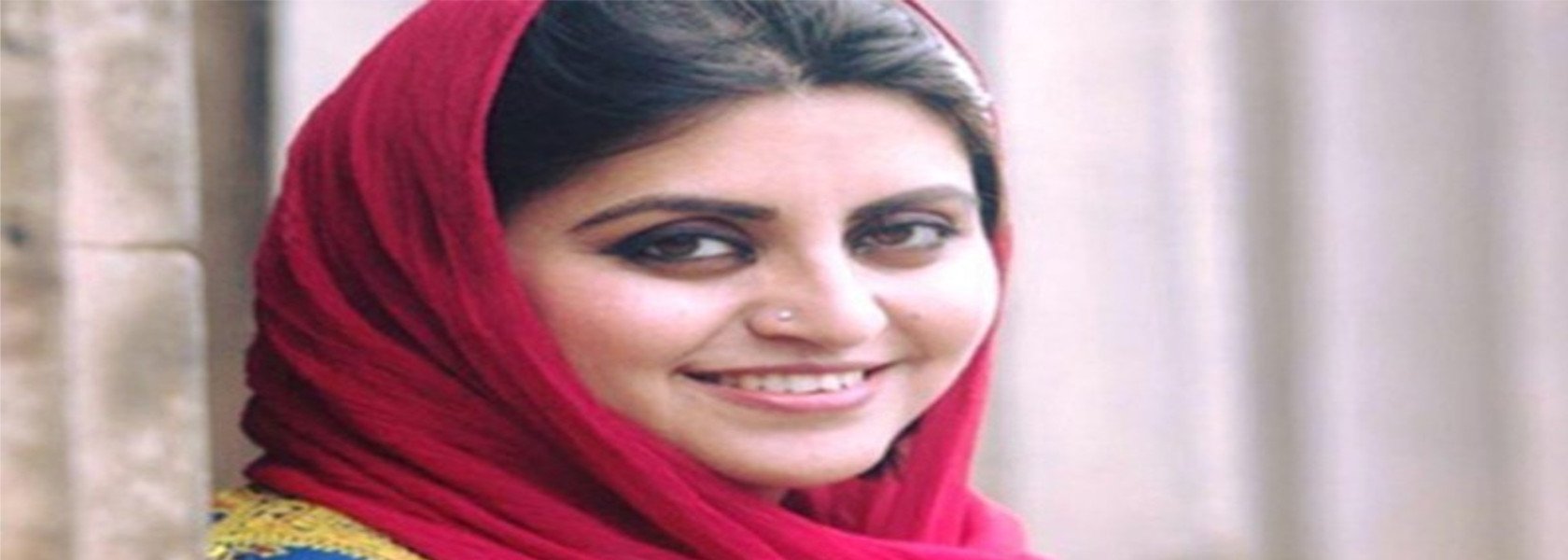
The Observatory has been informed by reliable sources about the ongoing judicial harassment against Ms. Gulalai Ismail and about threats and harassment against her relatives. Ms. Ismail, an ethnic Pashtun and woman rights defender, is the founder of the Seeds of Peace network and co-founder and Chairperson of the Aware Girls NGO, an organisation aiming at strengthening the leadership of young people, especially women and girls, enabling them to act as agents of change for women empowerment and peace building. Ms. Ismail has led a campaign against extrajudicial killings in Pakistan and was awarded the 2017 Anna Politkovskaya Award by ’the organization Reach all Women in War (RAW).
According to the information received, Ms. Gulalai Ismail was forced into hiding after facing charges of “defamation” (Section 500 of the Penal Code), “sedition” (Section 124-A of the Penal Code), “promoting enmity between different groups” (Section 153-A of the Penal Code) and other charges under Section 6/7 of Pakistan’s Anti-Terrorism Act. The charges stemmed from a speech she gave at a rally in Islamabad, in which she called for justice in the case of a 10-year-old girl who was raped and murdered in May 2019 and denounced the authorities’ inaction to bring the perpetrator(s) to justice [1].
Moreover, Ms. Ismail’s relatives have faced repeated acts of harassment and intimidation by security forces since two First Information Reports (FIRs) were filed against her by the police in Islamabad on May 22 and 23, 2019. For instance, on May 24 at dawn, the police raided her family home in Islamabad and threatened her family members. The family’s residence was again raided on May 27 and June 4. Again, on July 4, 2019, a large group of men in civilian clothes raided Ms. Ismail’s house in Islamabad three times and threatened to harm Ms. Ismail’s younger sister if the former did not cease her work as an activist. Security forces also took away the family’s driver, interrogated him, and subjected him to physical acts of ill-treatment. According to the information received, toxins were allegedly injected into his body, he was punched in the head, and he was beaten with a pistol. Furthermore, he was threatened with his children being killed. The driver was released eight hours later.
Moreover, on July 12, 2019, a FIR was lodged against Ms. Ismail and her parents by the Counter-Terrorism Department in Peshawar, accusing them of having received “financial support from terrorist organizations”.
The Observatory condemns the ongoing harassment against Ms. Gulalai Ismail and her relatives, and calls upon the Pakistani authorities to put an immediate end to these acts of harassment, which seem to be aimed to punish Ms. Ismail for her human rights work.
The Observatory recalls that this is not the first time that Ms. Ismail faces judicial harassment because of her human rights activities. Since October 2018, she has been placed on Pakistan’s Exit Control List and prevented from leaving the country. Moreover, on February 5, 2019, Ms. Ismail and other Pashtun Tahaffuz Movement (PTM) [2] members were arrested outside the National Press Club in Islamabad while they were taking part in a protest to denounce thekillingof Mr. Ibrahim Arman Loni, a teacher and PTMcore committee member in Baluchistan Province. Ms. Ismail was first taken to G9 Women’s Police Station in Islamabad before being moved to an unknown location, until her release on February 6, 2019 [3].
Actions requested:
Please write to the authorities in Pakistan, urging them to:
i. Guarantee, in all circumstances, the physical integrity and psychological well-being of Ms. Gulalai Ismail, her relatives, and all human rights defenders in Pakistan;
ii. Put an end to all acts of harassment - including at the judicial level and restrictions on the freedom of movement - against Ms. Gulalai Ismail, her relatives and all human rights defenders in Pakistan, and ensure that they are able to carry out their legitimate activities without any hindrance and fear of reprisals in all circumstances;
iii. Carry out an immediate, thorough, impartial, and transparent investigation into the above-mentioned events, in order to identify all those responsible, bring them before an independent tribunal, and sanction them as provided by the law;
iv. Conform to the provisions of the UN Declaration on Human Rights Defenders, adopted by the General Assembly of the United Nations on December 9, 1998, in particular with Articles 1 and 12.2;
v. Ensure in all circumstances respect for human rights and fundamental freedoms in accordance with international human rights standards and international instruments ratified by Pakistan.
Addresses:
Mr. Arif Alvi, President of Pakistan; Fax: +92 51 920 8479; Email: secretary@president.gov.pk
Mr. Imran Khan, Prime Minister of Pakistan, Minister in Charge for Interior and Narcotics Control; Fax: +92 51 922 04 04; Email: info@pmo.gov.pk
Mr. Shehryar Khan Afridi, Minister of State for Interior, Fax: +92 51 920 2624, Email: interior.complaintcell@gmail.com
Ambassador Farukh Amil, Permanent Representative to the United Nations in Geneva, Switzerland; Fax:022 734 80 85; Email: mission.pakistan@ties.itu.int
Please also write to the diplomatic mission or embassy of Pakistan located in your country.
***
Geneva-Paris, July 16, 2019
Kindly inform us of any action undertaken quoting the code of this appeal in your reply.
The Observatory for the Protection of Human Rights Defenders (the Observatory) was created in 1997 by the World Organisation Against Torture (OMCT) and FIDH. The objective of this programme is to prevent or remedy situations of repression against human rights defenders. OMCT and FIDH are both members of ProtectDefenders.eu, the European Union Human Rights Defenders Mechanism implemented by international civil society.
To contact the Observatory, call the emergency line:
• E-mail: Appeals@fidh-omct.org
• Tel and fax OMCT + 41 22 809 49 39 / + 41 22 809 49 29
• Tel and fax FIDH: + 33 (0) 1 43 55 25 18 / +33 1 43 55 18 80
[1] On May 15, 2019, 10-year old girl Farishta went missing near her home in Islamabad. Her parents reported her disappearance the same day, but it took four days for the police to register a FIR on the disappearance, and a proper search was not launched. Her body was finally found in a forest on May 21, 2019, leading to public outcry.
[2] PTM is an alliance that calls for the de-mining of the former tribal areas, greater freedom of movement in these areas, an end to extrajudicial killings, enforced disappearances and arbitrary detentions, and for the accountability of perpetrators of such acts within a truth and reconciliation framework.
[3] See Observatory Urgent Appeal PAK 001 / 0219 / OBS 015, published on February 14, 2019.

Sindh School Drive-2019 “Get Education to Move Forward”

By: Azhar Azad Mughal
The Sindh Education & Literacy Department,Govt of Sindh in collaboration with UNICEF has officially kicked off enrollment drive and it is in full swing in various parts of Sindh aiming at admitting as many out of school children as possible in order to make Sindh literate.The slogan introduced by the department “Get Education to Move Forward” is really fascinating and attractive that requires all of us to utilise all of our energies, available resources and make every possible serious effort to transform long-cherished dream of literate and educated Sindh into reality.
At present 52 percent children of Sindh are claimed to be out of school the responsibility of whose inclusion lies on our collective efforts and consciousness without which sustainable development goals are impossible to achieve.This is not an individual task or govt’s headache but rather collective cause that badly needs to be pursued with commitment,dedication,honesty of purpose,seriousness and sincerity.The figure of six million out of school children is really a great challenge for the stake holders the successful execution of which would certainly yield to fruitful results in the long term.The low literacy rate in the country despite lapse of 70 years’ of our independence shows our apathy and negligence on our part.
What are the reasons behind low literary rates due to which we have lagged behind in each and every discipline and field of life and have entirely failed to cope with the challenges ahead of us.We,as a nation, are not in position to compete with other nations of the world.In one of the reports about out of school children under heading ‘ Pakistan Has the 2nd Most Out-of-School Children in the World ‘it was shockingly revealed in 2017 that Punjab,the largest province in terms of population,has 9.2 million population of its children is out of govt-run-schools second to African country Nigeria around the world.The inclusion of article 25 in the constitution of the country makes it mandatory to ensure access of education as one’s birth and democratic right to all irrespective of caste, colour,creed and ethnicity.The drastic and pragmatic measures are badly needed to be adopted by the federal as well as provincial govts in Pakistan above lip-service and rhetoric.
Pakistan, in the light of the rankings of UNICEF,was placed 2nd in the category of most out of school children after Nigeria throughout the world which shows dismal and unsatisfactory performance on the part of successive governments.
There is no exaggeration in it to mention here that Sindh Education & Literacy department has taken a no of revolutionary initiatives and measures in connection with promotion of education including distribution of free books to the public sector students from class 1 to class XII,girl students are provided annual stipends to encourage their education and schooling,the students belonging to classes IX to XII have been exempted from paying enrolment and examination fees,recruitment of teachers through third party since 2001 on purely merit basis are widely welcome, applauded and highly appreciated.
No doubt , no nation can make visible and rapid progress without attaching importance and weight to education.It is always considered to be strong agent of change,reformation and revolution in society.Unless and until it is given due significance and top priority keeping in view the bright future of our nation and generations by concerned quarters,we will not be able to bring our nation on the path of progress and prosperity but rather lag behind in each and every field and discipline of life in the comity of nations.Those countries that got independence after us are ahead of us and stepping forward with pride and heads high because they attached the first priority and preference to education.For example, Bangladesh,once part of our country,China,our neighbouring country which tasted the fruit of freedom in 1949,Sri Lanka and others are advancing and working wonders with each passing day.Their literacy rates are varying but inspiring and encouraging in comparison to that of ours because of their active part and honest leadership that contributed a lot to the welfare and betterment of their subjects.
Startling and shocking statistics reveal that our beloved country’s 23 million children are said to be out of schools out of which 6 million children belong to Sindh and literacy rate of our country is not up to the mark and expectation owing to flawed,ill-advised policies,lack of will and apathy on the part of successive governments to implement its policies in letter and spirit in larger interests of the country.
Only the rhetoric and lip-service can not bring about any real change but it is the pragmatic approach that matters the most and counts in real sense.I went through somewhere that ” everybody wants to go to heaven but no body wants to die.”Practical measures are desperately needed to be taken for yielding to fruitful results.We can only lay the foundations of change when every one of us truly tries to play his/her positive and healthy part in his/her capacity for promotion and provision of quality education to our future generations.It is really a tedious and herculean task to accomplish that requires us sacrifice and a little sincere effort to be taken for our families’ sake,our generations’ sake,our nation’s sake and for our beloved country’s sake, and it should not be taken granted.It is not an individual assignment but collective cause for which all of us have to sacrifice our energies and valuable time to this long-cherished dream of educated and prosperous Sindh come true.
Illuminating and equipping our students with right kind of education that could enable our students to stand on their feet and help make them stable economically,develop their traits of characterisation,inculcate moral and social values, respect and regard for diversity,create awareness among them about great ideals and values of human rights,justice,fair play, equality,tolerance,enable them to abide by the law of the land,pave the way for co-existence,mutual harmony.
Only teacher should not be the target for all the ills of society.What role has been played by our so-called civil society for ensuring missing facilities in the centres of learning(educational institutions) for whose availability the teachers have been crying since long?
There is no iota of doubt that four fingers are not equal,there may be black sheepin teaching staff but by whom were they appointed?
Only teaching community should not be held responsible and targeted for deteriorating standard of education.
The civil society has every right to hurl criticism on teachers’ fraternity and finding fault with them in connection with their irresponsible and careless part in providing education to the future generations but at the same time it is their moral duty to point out the missing facilities in the schools due to which the students are suffering. Has any voice regarding missing facilities like washrooms, unavailability of solar system,lack of furniture been raised by those who clamour and make fuss against teachers?
Not to mention of provision of modern day equipments and facilities,even students lack roofs over their heads under the rays of scorching sun which shows numbness and apathy of the concerned quarters.
The frequent load shedding due to energy crisis in the country has made the matters worse and have affected the studies of our students badly in presence of rising temperature.The tenders were released in 2017 by govt for the purpose of installation of solar system in public sector schools in Sindhi for mitigating the sufferings of students but nothing conclusive and concrete has taken so far despite lapse of two years.
Despite rise in the temperature with each passing day and heat wave in the month of July, teachers are found busy in delivering lectures and imparting knowledge of their respective disciplines with professional zeal and enthusiasm.
The federal and provincial govts are requested to give topmost priority to education by providing missing facilities to the students of govt-run schools for they are great asset of our nation and country,who would run the affairs of the state institutions efficiently,justly and properly in case they are secure and equipped with quality education in the presence of facilities required.

Monday, July 15, 2019

Music Video - Beyoncé - Love On Top

Video Report - #Nasa: The next person on the moon will be a woman

Video Report - #EuropeanPower #IranNuclearDeal European powers urge unity to save Iran nuclear deal

Video Report - Ocasio-Cortez's fiery response on where she 'comes from'

Video Report - So What? CNN’s Camerota Blasts GOP Lawmakers’ Silence Over Trump’s Rac*st Tweets

Pakistan on the brink of civil dictatorship

ADNAN AAMIR
Imran Khan is accused of persecuting political opponents and the media under the guise of an anti-corruption crackdown.
As Imran Khan’s government in Pakistan approaches the end of its first year, the country is rapidly drifting towards civil dictatorship. The arrest of opposition politicians, a crackdown on the media, and the imposition of a draconian economic policy has been the hallmark of the Pakistan Tehreek-e-Insaf (PTI) government. This has frustrated hopes of achieving a measure of political stability, which had been expected after July elections last year.
During the highly charged 2018 election campaign, Imran Khan’s main promise was to eradicate graft in the country. He pledged to arrest corrupt politicians and billions of dollars allegedly parked by Pakistanis in overseas banks. After coming to power, Khan’s government has arrested opposition politicians, but without any due process.
In Imran Khan’s Pakistan, the list of incarcerated politicians is long. Three-time former prime minister Nawaz Sharif is in prison on corruption charges. In June, former president Asif Ali Zardari was arrested on corruption charges. (Khan had openly said in his election campaign that he would ensure the arrest of Zardari and Sharif.) A few days later, Hamza Shahbaz, the opposition leader in Punjab, Pakistan’s largest province, was also arrested on corruption charges. Furthermore, Mohsin Dawar and Ali Wazir, two members of parliament from tribal areas, are in police custody for an alleged attack on an army check point. Neither were allowed to attend the budget session, despite the fact that law requires all members of parliament to attend parliament sessions even if they are being held in prison.
The latest victim of this arrest drive was Rana Sanaullah, a provincial president from the largest opposition party, the Pakistan Muslim League, or PML-N. Authorities arrested Sanaullah after a huge collection of drugs was reportedly found in his private vehicle. More arrests are expected.
The problem is the pattern – no substantive evidence has been produced against any of the arrested leaders. Zardari and Shahbaz were arrested merely on the basis of suspicion, while Sharif serves a sentence in prison handed down by a judge reportedly put under intense pressure by the government. Whereas in the case of Sanaullah, who can definitively say how the authorities in Pakistan came to find drugs in a vehicle of a person who is subsequently arrested for possession?
The arrest of political leaders is widely seen more as a witch-hunt and less a genuine anti-corruption drive. The pattern has seriously affected the credibility of Khan’s government. Yet he is showing no hesitation. Instead, Khan last month set up a high-powered inquiry to investigate the rise in Pakistan’s debt across the past decade – to go after the “thieves who left the country badly in debt” as Khan himself put it, “so that no one dare leave the country in tatters ever again”. Yet this latest move is also seen as an attempt by Khan to further persecute his political opponents.At a time when there is no effective opposition left to challenge decision-making, the media seems to be the next target, with the authorities preventing the media from criticising the government. An interview of former president Zardari was stopped from going to air on Pakistan’s leading television channel, Geo News. Journalists critical of the government are facing sedition charges and other intimidation tactics. The social media team of Khan’s party PTI even promoted the hashtag #ArrestAntiPakjournalists on Twitter in an effort to intimidate reporters.
All this is a bad omen for government accountability. The PTI was able to passed a budget in June imposing record new taxes on people in a country already suffering due to economic turmoil. (Thousands of businesses joined in nationwide strikes at the weekend in protest.) The value of the Pakistani rupee has fallen significant in the past year, while inflation has skyrocketed. Still, the government has cut development funds and subsidies, while increasing taxes and sharply raising the of cost of domestic gas. What opposition there has been against these budget measures has been led by civil society and human rights activists in Karachi – with the bulk of the opposition and media largely silenced.
Ultimately, the cost will be felt by Pakistanis themselves, particularly lower- and middle-class sections. The frustration from this economic turmoil will be especially seen among the youth, with about 60% of Pakistan’s population under the age of 30. There are already fears this will push younger Pakistanis towards extremism.
Ultimately, this turn toward civilian authoritarianism coupled with economic turmoil will keep Pakistani politically destabilised. This will make it difficult for the continued development of mega-projects, such as the China-Pakistan Economic Corridor, part of Beijing’s Belt and Road ambitions, which has already been met with local resistance (The threat within: Pakistan’s ties to China). Khan’s actions therefore appear self-defeating, threatening not only to earn his government the wrath of people at home but also isolation abroad.
https://www.lowyinstitute.org/the-interpreter/pakistan-brink-civil-dictatorship

Will the EU's carrot-and-stick policy for Pakistan work?

The EU wants to promote trade, regional peace and democracy by tightening its strategic engagement with Pakistan. But does Brussels need to reset its priorities as Islamabad drifts toward authoritarianism?
As Iran buckles under sanctions and Afghanistan sinks deeper into violence, Pakistan is a relatively stable partner for the EU in a volatile region. In June, Pakistan and the EU signed the EU-Pakistan Strategic Engagement Plan, which creates a forum for regular military-to-military talks on security issues, while promoting democracy, the rule of law and human rights.
The EU describes the plan as "a forward-looking and ambitious political framework," involving cooperation on "new and untapped areas such as energy and climate change, education, culture, science and technology."Pakistan sees the agreement as a sign that the EU recognizes Islamabad's efforts in promoting the values of democracy, freedom of expression and human rights.
Pakistan's foreign minister, Shah Mehmood Qureshi, lauded the agreement after it was signed. "It shows engagement, it shows acceptability, it shows that the West wants to promote its ties with Pakistan," Quershi told DW.
Although it's true that both sides are keen to deepen their ties, serious differences remain. These include deficiencies in Pakistan's attempts to curb terror financing and money laundering, along with its commitment to democratic institutions.
But as the geopolitical situation in the region grows more unstable, the EU is seeking to balance its governance values with strategic imperatives, which include stopping terrorism, and a stronger role in mediating negotiations in Afghanistan.
"Pakistan is seen as an important geopolitical player," said Shada Islam, director of Europe and geopolitics at Friends of Europe, a Brussels think tank.
"So while there are concerns about human rights, women's status, press freedom and minority rights in Pakistan, the EU believes it is important to maintain good contacts with Islamabad. The new engagement plan is an illustration of that approach."
The EU's carrots and sticks
The EU's Pakistan strategy generally follows parallel tracks of reward and punishment. Good behavior from Islamabad is rewarded with tariff preferences like zero duties on two-thirds of all goods under the so-called the Generalized System of Preferences, or GSP+.
Since 2014, the GSP+ has given a major boost to Pakistani textile exports. The deal has also brought in foreign revenue in the face of China-driven trade imbalances. Trade with the EU has doubled and the bloc is now Pakistan's biggest export market.
But these economic benefits come with an obligation to uphold the EU's democratic values. Pakistan pledged to ratify and effectively implement 27 core international conventions on human and labor rights, environmental protection and good governance. Although Pakistan says it has progressed on implementing national and provincial legislation, the EU has criticized progress as being painfully slow.The EU's ambassador to Pakistan, Jean Francois Cautain, has regularly warned that "Pakistan was failing to take full advantage of the GSP+ scheme."
And considering the wide gaps between Pakistan's promises and actual implementation of the international conventions, it is currently unclear whether the country will continue to get duty-free access to Europe beyond 2020.
Pakistan financing terror?
If the GSP+ arrangement and the cooperation agreement are a step forward for Pakistan's international image, accusations of terror financing are a step back.Last year, the Financial Action Task Force (FATF), a global terror financing and money laundering watchdog, put Pakistan on its watch list, meaning that the country has "structural deficiencies" in stopping money laundering and terror financing. The EU reacted with concern, but stopped short of cutting off Pakistan's preferential trade status. The move was supported by the US, France, Britain and Germany. Pakistan barely escaped being blacklisted, thanks to the support of China, Turkey and Malaysia.
Read more: UN places Pakistan-based JeM militant leader Masood Azhar on blacklist
Pakistan fears that an FATF blacklisting would deal a blow to its already faltering economy, making it harder for global investors and multinationals to do business in the country.
It could also have implications for its $6 billion (€5.32 billion) IMF bailout plan. To alleviate pressure from the FATF ruling, Pakistan will have to demonstrate progress in disrupting transactions that finance terrorism and money laundering before the next FATF meeting being held in October in the US city of Orlando, Florida. Pakistan is optimistic that it will meet its obligations and is counting on EU support.
"Our government is sincere in fulfilling the political obligations. The Europeans feel Pakistan has taken sufficient steps in the right direction and downgrading Pakistan would not be helpful. So I am grateful to the European support for Pakistan in Orlando," said the Pakistani foreign minister.
Trouble at home?
Despite this optimism, Western diplomats in Islamabad appear increasingly concerned at the government's capacity to keep its commitments. And the government led by Prime Minister Imran Khan has been criticized for failing to live up to its promises of a "new Pakistan."More than a year into his government, Khan has yet to convince ordinary Pakistanis that his government has a viable economic plan to take millions out of poverty. Rising food prices, interest rates and currency devaluation are having a cumulative negative effect on the economy. The government blames the corruption of previous governments for the country's ills. Consequently, several leading opposition figures have been arrested, including former President Asif Ali Zardari. Khan calls it accountability, but his opponents say it's a political witch hunt. Private media are accusing the government of muzzling the press. Leading human rights activists and journalists say they have never experienced such pervasive silencing of dissent under a civilian government as is becoming a norm under Khan.
As the EU tries to nudge Pakistan toward a path of regional peace and democracy with the strategic engagement plan, Brussels needs to admit the limitations of cooperation. Khan's government is seen as weak and ineffective, as well as widely dependent on the country's powerful army.
In many ways, experts say, whether Pakistan follows a path of peace and democracy, or drifts toward authoritarianism, is largely up to the nation's most powerful institution, its military.

https://www.dw.com/en/will-the-eus-carrot-and-stick-policy-for-pakistan-work/a-49598181

#Polio Cases Surge in #Pakistan and #Afghanistan

By Donald G. McNeil Jr.
False rumors that children are fainting or dying have led parents to turn away vaccinators, threatening the campaign to eradicate the disease.
The global drive to eliminate polio, which has gone on for 31 years and consumed over $16 billion, has been set back again by a surge of new cases in Pakistan and Afghanistan.
As of July 10, there were a total of 42 polio paralysis cases in the two countries. They comprise a single large outbreak, because most cases are in the tribal areas along the border, where local people easily cross back and forth.Pakistan had 32 of the cases, compared to only three by the same date last year, and the situation is expected to get worse because hot summer weather favors the virus. There were only 12 cases in the country in 2018 and eight in 2017.For each paralyzed victim — usually a child below age 5 — there are about 200 others who are infected and shedding the virus in their stool, the World Health Organization estimates.
About 20,000 children are born each day in Pakistan. In cities with open sewers, and where other pathogens may attach to the same intestinal receptors that the vaccine does, it can take many doses to fully immunize a child.Last year’s hotly contested national elections temporarily threw the program off track as local officials were replaced, said Aziz Memon, head of Rotary International’s polio campaign in Pakistan. Cases have typically spiked during elections and moments of political turmoil, according to an article in The Diplomat, a current affairs magazine focused on Asia.Earlier this year, Pakistan announced that it would streamline its national vaccination drive in June in order to make the campaigns faster and less intrusive. Teams would try a friendlier approach and gather less data on the families they visited, the prime minister’s office said.
But false rumors spread on social media saying the vaccine had triggered fainting spells — or even that it had killed dozens of children — and many families locked their doors to vaccinators or hid their children.
The issue has split families; The Times of London recently described a Pakistani man returning from work and divorcing his wife on the spot after finding their children’s fingers marked with the indelible ink used by polio vaccinators. Islamic law allows a man to end a marriage by merely saying “I divorce you” three times; he threw his wife and children out of the house.
As in other countries, like Italy, vaccines have become politicized, with opposition parties spreading anti-vaccine rumors.
Babar bin Atta, the prime minister’s special assistant for polio eradication, said in a letter to the Dawn newspaper that population movements and increasing numbers of refusals were hurting the effort.The country, he said, would try to fix continuing problems with routine immunization, safe water and sanitation, and the high incidence of malnutrition.
Eradicating polio from Pakistan “may take longer than we hoped for," he said.
The virus is threatening to spread to other countries. In May, a sewage sample in a bordering province in Iran tested positive for the strain of virus circulating in Pakistan; Iran had its last case of polio paralysis in 2001.
A further threat to the eradication campaign is that a few countries — mostly in Africa — have been unable to eliminate some mutated strains of the polio viruses used in live vaccines. Those strains have reverted back into forms capable of causing paralysis.
In the last two years, there have been outbreaks of “vaccine-derived polio” in Angola, the Democratic Republic of Congo, Ethiopia, Indonesia, Mozambique, Niger, Nigeria, Papua New Guinea and Somalia.
Last week, a sewage sample in western China tested positive for a vaccine-derived polio strain, meaning the virus must be circulating there although no cases of paralysis caused by it have yet been detected.
Xinjiang, the province where it was found, borders on both Pakistan and Afghanistan.
Historically, such outbreaks have always been eliminated by the use of injectable killed vaccines, which cannot mutate, and live vaccines that protect against the mutated strains. But the outbreaks in some countries have gone on for many months.

Hafiz Saeed & 3 of his aides granted bail by Pakistan anti-terrorism court


Hafiz Saeed's lawyer insisted that Jamat-ud Dawah was not using any piece of land illegally and urged the court to accept bail pleas.
Mumbai terror attack mastermind and JuD chief Hafiz Saeed and his three aides were granted pre-arrest bail on Monday by an anti-terrorism court in Pakistan in a case pertaining to the banned outfit’s illegal use of land for its seminary.The Anti-Terrorism Court (ATC) in Lahore granted interim bail to Saeed and his aides – Hafiz Masood, Ameer Hamza, and Malik Zafar – until August 31 against surety bonds of Rs. 50,000 each, Dawn newspaper reported.
During the hearing, Saeed’s counsel insisted that Jamat-ud Dawah (JuD) was not using any piece of land illegally and urged the court to accept bail pleas.
Saeed-led JuD is believed to be the front organisation for the Lashkar-e-Taiba which is responsible for carrying out the 2008 Mumbai attacks. The US declared the LeT as a foreign terrorist organisation in June 2014.The US Department of the Treasury has designated Saeed as a Specially Designated Global Terrorist, and the US, since 2012, has offered a USD 10 million reward for information that brings Saeed to justice.Under pressure from the international community, Pakistani authorities have launched investigations into matters of the JuD, LeT and the FIF regarding their holding and use of trusts to raise funds for terrorism financing.
Meanwhile, the Lahore High Court (LHC) issued notices to the federal government, the Punjab government and the Counter-Terrorism Department (CTD) regarding a petition filed by Saeed and his seven aides, challenging charges of terror financing and money laundering against them.
A two-member bench of the LHC comprising Justice Shehram Sarwar Chaudhry and Justice Mohammad Waheed Khan asked the parties to submit their replies within two weeks.The Counter Terrorism Department (CTD) of Punjab Police on July 3 registered 23 FIRs against 13 leaders of the JuD including Saeed on the charges of “terror financing” in different cities of Punjab province.

Video - Mian Iftikhar Hussain speech at Mohmand

Sunday, July 14, 2019

Video - Trevor Noah - Talking Dems - Pete Buttigieg’s Approach to Reparations and Fixing the Economy | The Daily Show

Video Report - U.S. - Farm owner: Without immigrants 'this town would die'

Video Report - Brian Stelter: Trump's racism becoming more obvious, frightening

Video Report - Nicki Minaj’s Boycott of Saudi Arabia Sets a Moral Standard for Artists

Wahhabism confronted: Sri Lanka curbs Saudi influence after bombings


By Alexandra Ulmer, Omar Rajarathnam
Sri Lanka is moving to curtail Saudi Arabian influence, after some politicians and Buddhist monks blamed the spread of the kingdom’s ultra-conservative Wahhabi school of Islam for planting the seeds of militancy that culminated in deadly Easter bomb attacks.
On April 21, nine Sri Lankans blew themselves up in churches and luxury hotels, killing more than 250 people and shocking the country a decade after its civil war ended.
Sri Lanka has since arrested a Wahhabi scholar and is poised to take over a Saudi-funded school. The government also says it will monitor previously unchecked money flows from donors including prominent Saudi families to mosques on the Indian Ocean island.
“Nobody will be able to just make donations now,” said Muslim cabinet minister Kabir Hashim, who has urged Muslim communities to look at how radical ideas could have spread. He said the Department of Muslim Religious and Cultural Affairs would oversee donations.
The outcry in Sri Lanka is the latest sign that Wahhabism, which critics deem a root cause of the jihadist threat, is under pressure internationally.Jihadist organizations, including Islamic State - which claimed responsibility for the Easter bombings - follow an extreme interpretation of Islam’s Salafi branch, of which Wahhabism was the original strain.Saudi Arabia rejects the idea that Wahhabism is problematic and defends its record by pointing to the detention of thousands of suspected militants. Riyadh in June sent back five Sri Lankans allegedly linked to the Easter attacks.Saudi diplomats in Colombo have expressed “displeasure” over being targeted during a recent meeting with President Maithripala Sirisena, a Sri Lankan official told Reuters.Sirisena’s office, as well as Saudi Arabia’s Colombo embassy and the kingdom’s communications office in Riyadh, did not respond to requests for comment on the backlash against Saudi influence.
MONKS’ INFLUENCE
That backlash has focused on one man in particular - Muhammad Hizbullah, a businessman and politician who was the governor of Sri Lanka’s Eastern Province until he resigned in June following protests by hardline Buddhist monks. The monks, who are influential on the island where 70 percent of the population are Buddhists, and some members of parliament say Hizbullah’s links to Riyadh contributed to the spread of militancy in his native Kattankudy, a Muslim-majority town.Hizbullah’s family helped build Saudi-financed mosques and a Saudi-funded higher education institute, Batticaloa Campus, which has not opened yet, in the Eastern Province.The mosque and school projects were led by the Hira Foundation, a non-profit owned by Hizbullah and his son Hiras.Its financial statements show income of some $31,000 between 2014 and 2018, though Hizbullah told parliament Hira had received $2 million from foreign donors. He did not respond to a request from Reuters for further financial details.In an interview with Reuters at his home in the capital, Colombo, Hizbullah, 56, said most funds come from the Juffalis, a leading Saudi merchant family. Reuters also found two wires from other Saudis but was not able to trace them. Hizbullah said they were pooled contributions from smaller donors.The Sheikh Ali Abdullah Al Juffali Foundation Charity wired some $24.5 million to Batticaloa Campus between 2016 and 2017, bank statements and loan agreements seen by Reuters show.
Hizbullah warned the experience of the Juffalis, who he said have received hate mail, was spooking Saudi investors. He did not identify any investors.
Ongoing investigations have not shown that any Saudi money flowed to the plotters. And critics attribute moves against Saudi influence to burgeoning Islamophobia, including mob attacks on Muslim properties in May.“Not a single Saudi institution, charity or individual gave even one rupee to terrorists,” Hizbullah said.The charity did not respond to calls or messages seeking comment, and Reuters was unable to find alternative contact details for the Juffalis. The charity’s website lists the founders as Ali al-Juffali, a businessman and former member of the kingdom’s consultative assembly who died in 2015, and his four sons. The charity says its objectives include supporting orphans and activities that promote religious tolerance.The Juffalis, who promised a total of $100 million to Batticaloa Campus, have halted loans over the school’s uncertain future, Hizbullah said. Construction of the sprawling campus, designed in Islamic architectural style, has been paused, he added.
Hira also connects mosques with donors.
The modest Siharam Mosque, for example, was rebuilt in 2015 thanks to some $56,000 from the Juffalis, according to a mosque plaque and its ex-president M.Y. Adam, who said Hira received a 10% commission. Hizbullah did not respond to questions about mosque funding.
SCAPEGOAT?
In the Reuters interview, Hizbullah also denied allegations made by some monks that he had links to the attacks, and no evidence has surfaced to support that claim.His critics, however, point to a 2015 photograph that shows Mohamed Hashim Mohamed Zahran, who authorities say led the April suicide bombings and blew himself up at a Colombo hotel, grinning under his beard as he shakes Hizbullah’s hand. Hizbullah said he was seeking support from Zahran, also a Kattankudy native, for a parliamentary election. Back then, Hizbullah stressed, Zahran was just a charismatic preacher who could deliver some 2,000 votes in the devout town of roughly 50,000.His supporters - and even some opponents - say Hizbullah is a scapegoat. Ameer Ali Shihabdeen, an Eastern Province member of parliament from a rival party, said Hizbullah was being targeted despite a lack of evidence linking him to the attacks.Wahhabism spread to Sri Lanka’s Eastern Province three decades ago, when the area was convulsed by conflict between mostly Hindu Tamil separatists and the Buddhist-dominated government, according to local religious leaders and politicians.Muslim scholars received scholarships to study in Saudi Arabia, while impoverished farmers escaped clashes by becoming drivers or maids in the Middle East - often returning home with stricter Islamic practices, the sources said.
Saudi-funded mosques mushroomed. Women ditched their saris for all-enveloping black abayas. Some Sri Lankan Sufis, who follow a mystical form of Islam that Wahhabis consider heretical, said they began to be persecuted.Hizbullah’s political career, which included stints in parliament, blossomed during this time. In Kattankudy, his name adorns schools, a public hall and roads.Batticaloa Campus, the college funded by the Juffalis, initially planned to teach sharia, which some critics say limits women’s rights. Hizbullah said sharia only meant the academic subject of Islamic Studies, and that the discipline had been dropped from curriculum plans.Students would pay half standard tuition fees, which Hizbullah said was partly why this long-neglected area welcomes Arab donors’ deep pockets.A parliamentary committee last month called for authorities to take over Batticaloa Campus and compensate investors, citing incomplete documentation, possible violations of foreign exchange rules, and national security concerns.No decision has been announced yet, but a presidential spokesman told Reuters that Sirisena, a Hizbullah ally who is on the back foot ahead of presidential elections this year, also favors a takeover.
WAHHABI SCHOLAR BEHIND BARS
Some Kattankudy Sufis link the advent of Wahhabism to the 1990 opening of the Saudi-financed Center for Islamic Guidance, which boasts a mosque, school, and library. Reuters was unable to trace Saudi donors, who had names common in the Middle East, thanked on a plaque at the center.The center “brainwashed” youth and distributed flyers denouncing Sufism, according to H. M. Ameer, a community spokesman who said his house was destroyed during anti-Sufi unrest in 2004. Persecution intensified with the rise of Zahran, the suspected Easter bombings ringleader, whose followers attacked Sufis with swords in 2017, Ameer added.Representatives of the center did not respond to requests for comment about the Sufis’ allegations. They previously told Reuters the center practiced “moderate Islam”.
The center’s Riyadh-educated founder, Mohamed Aliyar, was arrested in May for allegedly funding Zahran.
The charge sheet, reviewed by Reuters, details his bank accounts but does not provide evidence of wrongdoing. A police spokesman did not respond to requests for details.
Aliyar’s lawyer Abdul Uwais said he was a victim of paranoia over Wahhabism.
Two sources from Kattankudy’s Muslim leadership said Zahran voraciously read Wahhabi texts from Aliyar’s center, but that the men were not known to be close.
https://www.reuters.com/article/us-sri-lanka-saudi-insight/wahhabism-confronted-sri-lanka-curbs-saudi-influence-after-bombings-idUSKCN1U00LY

Video Report - Fareed Zakaria outlines 'incoherence' of Trump strategy on Iran

Video Report - First-ever video from journalists inside border facilities

Video Report - New York power outages darken the iconic city

Video Report - Will Republicans condemn Trump's attacks on Dem congresswomen?

Video Report - Trump Tells Freshman Congresswomen to ‘Go Back’ to the Countries They Came From

Either election or revolution will take place now: Bilawal Bhutto

Pakistan Peoples Party (PPP) Chairman Bilawal Bhutto Zardari said on Sunday that either an election or a revolution would take place in the country now, as the masses could no longer tolerate the government’s economic policies.

Bilawal said so while addressing a workers convention in Sadiqabad. “The people are being murdered economically in this tenure. They cannot tolerate more than what they have already suffered, and now either an election or a revolution will take place,” he said.
The PPP chairman said the government brought trouble to the poor, and relief and amnesty scheme to the rich through the budget. “The puppets will be sent home,” he asserted.
Bilawal said the provinces were getting bankrupted, noting that Punjab’s development budget had been reduced. He said his party would continue raising the voice against a puppet chief minister of Punjab.
“Imran Khan did not fulfill the promises he made with the people. They used to say that they would commit suicide but they would not go to the IMF,” the PPP chairman said.
“It has turned out in one year that every promise made by Imran Khan was a lie. The selected prime minister took a U-turn and bowed before the IMF.”
He said the prime minister promised to provide 10 million jobs, but failed to provide even a single one.
Bilawal said his party would continue to safeguard the rights of the people, adding, “Now a free and fair election will have to be held”.

’میڈیا کے خلاف میڈیا ٹرائل بند ہونا چاہیے‘#Pakistan -

مونا خان   

جنگ گروپ سے وابستہ کچھ صحافیوں نے اچانک اپنے سوشل میڈیا اکاؤنٹس غیر فعال کیوں کر دیے؟


آئے روز سوشل میڈیا پر صحافیوں کے خلاف ٹرینڈز کیوں بنتے ہیں؟ خصوصا تنقید کرنے والے صحافیوں کے خلاف باضابطہ مہمیں چلائی جاتی ہیں۔

 یہ مہمیں کون چلاتا ہے؟ اور کیا یہ مہمیں صحافیوں پر نفسیاتی دباؤ ڈالنے کے لیے کی جاتی ہیں؟
گذشتہ روز جنگ گروپ کے کچھ صحافیوں نے اپنے ٹوئٹر اکاؤنٹ غیر فعال کیوں کیے؟ ان سوالات کے جواب جاننے کے لیے انڈپینڈنٹ اردو نے مختلف صحافیوں سے رابطہ کیا۔
ہم اس سے نہیں گھبراتے: حامد میر
حامد میر نے انڈپینڈنٹ اردو سے گفتگو کرتے ہوئے کہا ’میرے لیے یہ کوئی نئی چیز نہیں۔ میں گذشتہ کئی سالوں سے اس کا مقابلہ کر رہا ہوں۔ کسی نے اگر گرفتار کرنا ہے تو کر لے، اثاثے بھی چیک کرنے ہیں تو کر لیں، ہم اس سے نہیں گھبراتے۔‘ 
انہوں نے کہا اس میں قابل تشویش بات یہ ہے کہ خواتین صحافیوں کو دھمکایا جا رہا ہے۔ ’ہماری کمیونٹی کی خواتین ہماری بہن بیٹیاں ہیں اگر آپ کسی کے گھر میں گُھس جائیں گے تو ہم خاموش کیسے رہیں گے؟‘
حامد میر نے کہا ابھی تک سول حکومت کی جانب سے کسی نے رابطہ نہیں کیا اور نہ کوئی وضاحت دی گئی۔
صحافیوں کے اکاؤنٹ غیر فعال ہونے پر حامد میر نے کہا کہ جنگ گروپ کے جن صحافیوں نے اپنا ذاتی اکاؤنٹ ادارے کے کہنے پر غیر فعال کیے اور اب اس پر بات بھی نہیں کر رہے تو پھر اُن کا احتجاج کرنے کا کوئی حق نہیں۔
انہوں نے کہا انسان کو نوکری سے زیادہ عزت پیاری ہونی چاہیے، جو اپنے حق کے لیے نہیں بول سکتے وہ دوسرے کے حق کے لیے کیا بات کریں گے۔
صرف حکومت پر تنقید کرنے والے صحافی نشانے پر: عاصمہ شیرازی
معروف صحافی عاصمہ شیرازی نے انڈپینڈنٹ اردو سے گفتگو کرتے ہوئے کہا حکومت اور کچھ اداروں کی جانب سے کہا جا رہا ہے کہ اُن کی مرضی کا لکھا اور بولا جائے لیکن ایسا نہیں ہو سکتا کیونکہ زندہ معاشرے میں لوگ بات کرتے ہیں۔ 
’جو گرفتاری کی دھمکیاں دے رہے ہیں اُن سے یہ کہنا ہے کہ آئیں اور گرفتاریاں شروع کریں۔‘
انہوں نے کہا جو حکومت کے حق میں بول رہے ہیں اُنھیں کچھ نہیں کہا جا رہا لیکن جو حکومت پر تنقید کر رہے ہیں وہ سوشل میڈیا میں نشانے پر ہیں۔ ’میڈیا کے خلاف میڈیا ٹرائل بند ہونا چاہیے۔ تحقیقات ضرور کریں لیکن ایسا نہ کریں کہ جب کچھ نہ ملے تو گاڑی سے ہیروئن نکال لیں۔‘
احتساب کریں لیکن غداری کا سرٹفیکیٹ دینا درست نہیں: غریدہ فاروقی
سینیئر اینکر غریدہ فاروقی نے انڈپینڈنٹ اردو سے بات کرتے ہوئے کہا پہلے صحافیوں پر جب پابندیاں لگائی جاتی تھی تو طریقہ کار مختلف ہوتا تھا۔ اُنھیں مار پیٹ یا تشدد کا نشانہ بنایا جاتا تھا، اُن کے خاندان کو ہراساں کیا جاتا تھا، اُن کو مارا یا اغوا کیا جاتا تھا، لیکن آج کل سوشل میڈیا کے دور میں صحافیوں کے لیے یہ مشکلات کا نیا اضافہ ہے۔
’کبھی سوشل میڈیا پر اُن کے خلاف مہمیں چلوائی جاتی ہیں اور اب میڈیا مالکان کو اپروچ کر کے صحافیوں پر دباؤ ڈلوایا جا رہا ہے۔ جیسے اعزاز سید، عمر چیمہ کے ٹویٹر اکاؤنٹ بند کروائے گئے۔‘ 
غریدہ فاروقی نے کہا صحافی مقدس گائے نہیں ہیں، سب کا احتساب کریں، اثاثے چیک کریں لیکن احتساب کی آڑ میں کسی کو نشانہ بنانے کا اصول نہیں ہونا چاہیے۔
حکومت میں تنقید برداشت کرنے کا بھی حوصلہ نہیں: ارشد وحید چوہدری
صحافی ارشد وحید چوہدری نے کہا کہ اس سے قبل ملکی سلامتی کے مفاد میں خبر روکی جاتی تھی لیکن موجودہ حکومت میں تنقید برداشت کرنے کا بھی حوصلہ نہیں۔
انہوں نے کہا جو بھی صحافی حکومتی اقدامات/کارکردگی پر تنقید کرتا ہے اُس کو سوشل میڈیا پر نشانہ بنایا جاتا ہے۔ ’میرے خلاف بھی مہم چلائی گئی تھی جب میں نے بلاول بھٹو زرداری سے سوال کیا تھا۔اکثر اوقات جنگ اخبار میں کالم بھی چھپنے سے روک دیا جاتا ہے اور وجہ یہ بتائی جاتی ہے کہ ادارہ اس کالم کو چھاپنے کا متحمل نہیں ہو سکتا۔’
جیو نیوز کے اعزاز سید سے جب پوچھا گیا کہ انہوں نے اپنا ٹوئٹر اکاؤنٹ غیر فعال کیوں کیا تو انہوں نے کہا ’میں اس معاملے پر خاموش ہی رہوں گا۔ ناگزیر وجوہات کی بنا پر کمنٹ نہیں کر سکتا۔‘ 
انڈپینڈنٹ اردو نے جنگ گروپ کے عمر چیمہ سے رابطہ کیا لیکن انہوں نے فون نہیں اُٹھایا اسی طرح انڈپینڈنٹ اردو نے وزیر اعظم کی معاون خصوصی برائے اطلاعات ونشریات ڈاکٹر فردوس عاشق اعوان سے اُن کا موقف جاننے کے لیے رابطہ کیا لیکن بات نہیں ہو سکی۔

Video Report - Please Save Me - Pakistani Christian woman, moved to China with a man she met through a marriage agency , sending desperate messages