Saturday, July 13, 2019

What is behind the crackdown on freedom of speech in Pakistan?


Published 16 Jul 2018

The security establishment is trying to push a certain narrative on the Pakistani public ahead of the July 25 elections.
Last week, a journalist was suspended after he asked Pakistan's military spokesperson, Major General Asif Ghafoor, an uncomfortable question.
"Now that Nawaz Sharif has been sidelined, and former President Asif Zardari is about to be, maybe you should take care of the scourge called Imran Khan, too, as he will not spare anyone either?" Express News reporter Ahmed Mansoor asked at a press conference.
His comment implied what many in Pakistan have been wondering about: the perceived meddling of the security establishment in politics to pave the way for its favourite candidate, Imran Khan of the Pakistan Tehreek-e-Insaf Party (PTI), to win the upcoming general election. And it seems Mansoor's question was not well-received.
His suspension comes at the backdrop of a months-long crackdown on the freedom of expression in Pakistan in advance of the July 25 vote. For those who follow Pakistan's domestic affairs closely, it is clear that this effort to silence independent voices in the media is part of an attempt to unlawfully engineer the country's political landscape.

Controlling the public narrative

Today, it is quite difficult to steer the public discourse in Pakistan in one direction. Gone are the days when there was only one state-owned television channel that tightly controlled what people were allowed to hear or believe.
Pakistan now has dozens of independent news channels, and thanks to high mobile and internet penetration, the public lives and breathes politics. News shows are the most popular form of entertainment, and a vibrant social mediaallows the public to follow and comment on minute-to-minute developments. Conversations on militancy, foreign policy and court cases of politicians are staples at work, the dinner table and social gatherings.
As a result of all this, the general public has acquired a certain level of independence of thought and is no longer buying official narratives.
And despite the presence of security-establishment-friendly journalists and anchors, who push a certain discourse and observe the red lines, there are still some others who continue to do factual reporting.
That is why, in an effort to the reign in the "runaway" narrative before the elections, a brutal crackdown on media houses and journalists was unleashed.
In April, Geo TV, the most critical of the lot and the market leader, was taken off the air and its journalists were threatened. It came back only after its management reportedly agreed to all demands of the military. However, its broadcast is still being blocked in several areas of Pakistan.
In May, the circulation of Dawn, Pakistan's oldest and most-respected English-language daily newspaper, was blocked across the country. This came right after it published an interview with former Prime Minister Nawaz Sharif in which he questioned the lack of progress in the trial of the alleged mastermind of the November 2008 Mumbai attacks, Hafiz Saeed - a sensitive matter for Pakistan's security establishment.
Then, in June, at another press conference, Ghafoor declared that the military is monitoring "social media and who's doing what" and warned of "social media cells". He also showed a presentation slide with the social media avatars of prominent Pakistani journalists which some perceived as a veiled threat.
These are just a few examples of the ongoing campaign by the security establishment to intimidate critical media professionals in an attempt to turn public opinion against Sharif's Pakistan Muslim League (PML-N) party and in favour of Imran Khan's PTI.
All this has to be viewed in the context of the country's recent political history.

Political games

Last year, Sharif was forced to step down as prime minister after the country's supreme court unanimously disqualified him on grounds that he lied during a corruption investigation.
But some Pakistanis saw the story differently: It was Sharif's attempt to try former military ruler General Pervez Musharraf for treason, implement an independent foreign policy and force the military to curb support for Islamist and militant groups that got him ousted.
Now, there are new attempts to block Sharif's return to power and bring in a weak, puppet-like coalition parliament instead. The establishment needs a compliant and cooperative parliament to undo the 18th constitutional amendment, which was enacted in 2010.
This amendment has been a thorn in the security establishment's side for two key reasons. First, it makes the direct military intervention in civilian affairs and its endorsement by the judiciary a near impossibility. Second, it devolves power and resources to the provinces, capping funds available to the federal centre.
Successive transfers of power from one popularly elected government to the next in the long term would sound the death knell for the military's outsized role in Pakistan's politics and policymaking. 
But to reverse the 18th amendment, without throwing the country into political turmoil and mass riots, the military needs a change in government and to make this a reality it needs to sell a narrative.
Sharif has been portrayed as a dishonest politician involved in election-rigging andcorruption. After an inquiry into alleged vote-rigging at the 2013 elections failed to produce any results, the former prime minister was then targeted with a corruption court case for failing to disclose the source of funds used to pay for two luxury apartments in the UK.
This narrative has also failed so far, as polls continue to show that the PML-N is leadingin the polls ahead of the PTI. When Sharif returned with his daughter, Maryam, on July 13 to serve his jail sentence, he was greeted by a large crowd of supporters at the airport in Lahore. Thousands joined the rally despite the roadblocks, riot police and the shutting down of mobile networks.
What we are witnessing in Pakistan at the moment is the first mass resistance to the military's political engineering attempts since East Pakistan seceded to become Bangladesh after the Pakistani army's bloody attacks on the Bengali population in 1971.
The poll results on July 25, however, will show how much of this revolt will translate itself into a push-back to bring Sharif's party to power again.


As videotape scandal blows up in Pakistan, critics say judiciary’s independence ‘eroded’


Maryam Nawaz Sharif has alleged the judiciary acted under coercion to convict her father. ThePrint takes a look at how this might unfold.
Pakistan’s broken systems have been on display once again over the last week after Pakistan Muslim League Nawaz (PMLN) president Maryam Nawaz Sharif released a controversial videotape alleging that the country’s judiciary acted under coercion to convict her father.
In the video, accountability judge Arshad Malik can be seen allegedly admitting that he was “blackmailed” into delivering a verdict against former Prime Minister Nawaz Sharif in a corruption case in December last year.
Although an admission of a judge acting under duress should force the authorities to reopen the case against the former prime minister, analysts contend that the independence of the Pakistani judiciary has been eroded to the extent that such a scenario remains unlikely.

‘Blackmailed into convicting Nawaz’

Maryam stirred Pakistan’s entire political and judicial system last week when at a press conference she released a video featuring Pakistan’s National Accountability Bureau (NAB) judge Arshad Malik admitting that he was blackmailed into giving the verdict against her father Nawaz Sharif.
The particular verdict in question is the Al-Azizia judgment in which Sharif was found guilty of corruption charges and sentenced to seven years in prison.
In the video, Malik can be seen telling a sympathiser of the PMLN that there was no evidence of corruption, money laundering or kickbacks against Sharif, but he was forced to rule against him.
At one point, Malik says that “invisible forces” have a video of him of a very personal nature and if it were to be released, he would not be able to “sustain the pressure” and might even “commit suicide”.
Claiming that she’s in possession of more such tapes that prove her father was convicted in a fraudulent trial, Maryam has demanded that Sharif be released.
Following her press conference, Malik released a statement refuting Maryam’s claims.
“I want to clarify it there was neither any direct or indirect pressure on me nor was there any greed. I decided all these cases on the basis of evidence,” Malik said in the statement.
However, he has not made a single public appearance since.

Legitimacy of verdict in question

The videotape scandal has put the legitimacy of Nawaz’s conviction under scrutiny.
Pakistani legal experts argue that a judge admitting to have been blackmailed into giving a verdict against a prime minister is highly questionable.
“The fact that he has admitted to being under duress completely vitiates a trial. The judgment is now under question,” Ahmad Rafay Alam, lawyer and Yale World Fellow, told ThePrint.
However, two separate issues related to the videotape have also been highlighted.
“There is an issue about privacy, because Arshad Malik was recorded in a video without his consent. And the evidential value of the tapes are subject to forensic tests,” said Yasser Latif Hamdani, advocate of High Courts of Pakistan.
“But my own understanding is that these tapes are genuine. Both the government and PMLN have independently conducted forensic tests,” said Hamdani.
ThePrint could not independently verify this claim.
Maryam’s critics have argued she should have taken the tapes to the judiciary and not released them through a press conference.
Hamdani contends that her prime motive behind releasing these videotapes was political and not legal. And she seems to have succeeded in doing that.
“The leaked video is a vindication of Nawaz Sharif and shows how judiciary is manipulated behind the scenes to get decisions desired by the military,” Taha Siddiqui, exiled Pakistani journalist and a professor of journalism at French institute SciencesPo, told ThePrint.

Response of Imran Khan government, judiciary

The Imran Khan government in Pakistan initially said that it would facilitate an investigation looking into the legitimacy of these tapes. But it soon backed down, deferring the case to the judiciary.
Meanwhile, a major crackdown was launched against various media organisations for airing the “unedited version” of Maryam’s press conference.
“Right now the government in connivance with the military is trying to silence the media. It took channels off air and is asking them to even mute statements by political opposition on live TV when there is talk of the video,” said Siddiqui.
The scandal also seems to have also rattled the Pakistani judicial establishment.
“Judiciary has been shaken by these revelations,” said Hamdani.
Following Maryam’s press conference, the Acting Chief Justice of the Islamabad High Court had a 45-minute meeting with the Pakistan Chief Justice Asif Saeed Khosa. Their discussions reportedly centered on the videotape scandal and Malik.
The NAB comes under the administrative supervision of the Islamabad High Court.
Legal experts argue that there are potentially two options before the judiciary now.
“Either the Islamabad High Court can take the matter forward or the Supreme Court can initiate proceedings suo moto,” remarked Hamdani.

The precedent

After the scandal broke out, the Pakistani media highlighted a twenty-two-old legal precedent, possibly relevant to this case.
In 1997, Supreme Court Justice Malik Muhammad Qayyum had convicted former Pakistan prime minister Benazir Bhutto and ex-president Asif Ali Zardari in a corruption case. But it was later found that Qayyum had colluded with the executive and the ruling was overturned.
However, legal experts suggested that a repeat of that outcome is unlikely given the current state of judicial independence in Pakistan.

‘Erosion’ of judicial independence in Pakistan

Back in 2007, Pakistan saw a lawyers’ movement led by Iktikhar Muhammad Chaudhry, for restoration of judicial independence in the country.
“After 2007, judiciary became much more important and at some points completely independent,’ said Hamdani.
But the events of the past couple of years seem to have completely overturned that hard-fought judicial independence.
“Nothing of that movement survives today. It is very different powers at work now. Their independence is constantly under attack,” noted Ahmad Rafay Alam.
“Last year another judge came forward and spoke about how ISI (Inter-Services Intelligence) even manipulates which bench will have what judge to control the outcomes of political cases,” said Taha Siddiqui.
He was referring to Justice Shaukat Aziz Siddiqui, who was sacked in 2018 after he made the accusations.
“I don’t see anything happening in the Nawaz case,” said Alam.

#Pakistan - Democracy and no-trust move

The democratic history of Pakistan will pass another milestone if the process of a no-confidence move against the Senate chairman is done smoothly. A no-confidence move is a form of direct election to remove an incumbent office-bearer of a House, and it is the manifestation of democratic norm. No one should frown upon opposition’s no-confidence move against Senate Chairman Sadiq Sanjrani, which has submitted the request to the Senate secretariat. Opposition parties’ candidate is Hasil Bazenjo, a seasoned politician from Balochistan. 

The incumbent chairman, who was once a unanimous candidate of the opposition parties – the Pakistan People’s Party and the Pakistan Tehreek-i-Insaf – faces the no-trust move not because the opposition parties have an issue with him but because of the growing confrontation between the opposition and the treasury, mainly upped by the government side. PPP Chairman Bilawal Bhutto Zardari has advised Sanjrani to resign voluntarily, while Sanjrani has refused to accept the advice and has vowed to meet the fate. He is likely to face defeat given the numerical strength of the opposition benches. The opposition needs 53 heads to pass the no-trust resolution while their total number is 66 – most of them are from the PML-N (30) and the PPP (20). By unseating Sanjrani, the opposition parties have shown their resolve to make parliament relevant. Once they are disappointed from the parliament’s role, they may take to the street.

But it seems that the time is not far when the opposition will be turning to the agitation given the government’s tendency to trample democratic principles. Parliament has failed to take notice of an announced censorship on the media when it comes to give coverage to the opposition parties. The implications of censorship are not domestic; the international community is also taking notice of the muzzling of media and opposition. Foreign Minister Shah Mahmood Qureshi had to face the boycott of media at the ‘Defend Media Freedom’ conference in London on Thursday. A few present there launched vociferous attack on him for gagging the media. The exchange of words between Qureshi and a Canadian journalist is making the rounds on the social media. A similar situation may arise during the visit of Prime Minister Imran Khan to the US in the coming week.
Now when the democratic practices have come of age, all state organs should show maturity towards other democratic principles as well.

#Balochistan: #Pakistani forces abduct Baloch writer from Panjgur

Pakistani forces have abducted a Baloch writer from Chitkan area of district Panjgur Balochistan on Saturday midnight.
According to details, Pakistani Para-military forces raided the house of Iqbal Zaheer son of late Abdul Sattar Baloch in Chitakn and abducted him around 12 am Saturday midnight. Iqbal Zaheer Baloch is a freelance writer, social activist and teacher.
The forces also reportedly confiscated the laptop and books of Mr Zaheer and broke the furniture of his house.
In August 2010 Pakistani forces abducted Iqbal’s father master Abdul Sattar Baloch from Zaheer Medical store in Panjgur and kept him incommunicado for around ten months. Master Sattar mutilated and tortured dead body was found on May 11, 2011, from Panjgur.
In 2013 Iqab Zaheer son of Master Abdul Sattar was abducted and kept in illegal custody for around one month but he was released later.
Panjgur is among the restive districts of Balochistan where Pakistani forces have already abducted hundreds of people and many of whom were killed in custody.
July last year (2018) a mass grave containing four dead bodies was discovered in Panjgur, one of the dead bodies was identified as that of Khair Bakhsh Baloch who was abducted in June 2014. A Pakistani military official called his family and informed them that his dead body was among them.
The dead bodies were decomposed beyond recognition and his family had no other way of confirming his identity but to believe the Pakistani military official.
Lately, Pakistani forces have started abducting and intimidating the family members of previously abducted and killed Baloch activists.
On 17 June Ali Haidar son of abducted Mohammad Ramzan Baloch was abducted and kept in illegal custody for five days and on 19 June Pakistani forces abducted 70-year-old Shahsowar Baloch – father of four Baloch martyrs.
Both Ali Haidar and Shahsowar were released yesterday 21 June 2019.
Ali Haidar told BBC Urdu service that first day of his abduction he was slapped on the face and kicked but rest of the days he was only kept in a segregated room and questioned about the long march in 2013. He was also questioned about the people who hosted the Baloch marchers on their way to Islamabad.

#Balochistan: 19 people including women and children abducted from Kohistan Marri, Khuzdar

Pakistani forces have abducted at least twenty persons including women and children from Balochistan’s Kohlu, Gwadar and Khuzdar districts between Wednesday 3rd July 2019.
According to details, Pakistan army and their local collaborators conducted offensives against Marri Baloch civilian populations in Nisao, Jannatali, Siyah Koh, Soren Kaor, Sekhain and Padkae regions.
Pakistani forces flocked in from Dera Bugti, Pelawagh and Kohlu to attack the population including houses of Saed Ali Marri and Rabba Marri in Siyah Koh and abducted at least six Baloch women and their children (age 5-8 years).
Three of the abducted children have been named as Hameed Ullah, Naseebullah and Peerli whereas 70-year-old Mirza Khan is also among the latest victims of Pakistan’s forces enforced disappearances.
Two abducted women have been named as Mehr bibi and Noor Bibi Marri Baloch.
The identity of rest of the abducted persons including women and children could not be confirmed at the time of filing this report as Pakistan forces have blocked the exit and entrance routes to the above-mentioned area.
Pakistan forces also burnt down the houses of abducted persons and loot valuables including several motorcycles and around 300 livestock of local nomads.
Pakistan army have warned the residents of Siyah Koh to vacate the area as soon as possible and in case of refusal, the military will come back and take away the rest of the residents including women and children.
On July 6, Pakistan forces carried raids a houses in district Khuzdar Balochistan and abducted two Baloch youth from Greesha area.
The victims have been identified as Manzoor son of Elahi Baksh and Khair Bakhsh son of Shah Muhammad.
sources reported the Pakistani forces harassed women and children during their offensive in Khuzdar.
On July 7, Pakistan forces raided several houses in Balochistan’s district Gwadar but no arrests have been reported.

Pakistan slapped with $6 billion penalty in Reko Diq case

The International Center for Settlement of Investment Disputes (ICSID) has announced a massive $5.976 billion (Rs944.21 billion) award against Pakistan in the Reko Diq case, which is one of biggest in ICSID history.
The international tribunal on Friday issued a 700-page ruling against Pakistan in the Reko Diq case. Sources revealed to The Express Tribune that ICSID awarded a $4.08 billion penalty and $1.87 billion in interest. However, Pakistan has decided to challenge the award “very soon” by filing a revision application, sources said. The revision application may take two to three years to decide.
Earlier, Tethyan Copper Company’s (TCC) management, the complainant whose contract was terminated, had claimed $11.43 billion in damages. In 2012, TCC filed claims for international arbitration before the ICSID of the World Bank after the Balochistan government turned down a leasing request from the company. The litigation has continued for seven years. Former chief justice of Pakistan Iftikhar Muhammad Chaudhry’s verdict in the Reko Diq case was the first in a series of events that led to the massive award.
After the case was filed, Pakistan lost its first jurisdictional challenge, when the international tribunal said that it has the jurisdiction to adjudicate the Reko Diq matter. After that, the tribunal declared that there was no wrongdoing in the agreement – the grounds on which the Supreme Court of Pakistan terminated the deal in 2013 – and eventually, the tribunal held that Pakistan is liable to pay the damages.
The only remaining issue in the case was the final penalty on Pakistan, which has been now announced.
https://tribune.com.pk/story/2012667/1-pakistan-slapped-6-billion-penalty-reko-diq-case/

Friday, July 12, 2019

PPP Music Video - Bilawal Saeen - Bilawal - Bilawal

Full Video - #Pakistan #PPP - Bilawal Bhutto and PPP Jalsa in #Sukkur

ملک میں نالائق وزیراعظم کو مسلط کردیا گیا ہے #Pakistan -


پاکستان پیپلزپارٹی کے چیئرمین بلاول بھٹو زرداری نے کہا ہے کہ ہم یہاں اسلام آباد کو پیغام دینے کے لیے جمع ہوئے ہیں کہ عمران کا پاکستان نہ کھپے، نہ کھپے۔ ہمیں شہید ذوالفقار بھٹو کا پاکستان کھپے، بی بی شہید کا پاکستان کھپے۔ ان خیالات کا اظہار انہوں نے مہنگائی کے خلاف سکھر کے تاجران کی جانب سے جاری دھرنے کے دوران خطاب کرتے ہوئے کیا۔ پی پی پی چیئرمین نے کہا کہ ہم نے انسانی اور جمہوری حقوق کی جدوجہد کی ہے۔ شہید ذوالفقار علی بھٹو نے امیروں سے زمین چھین کر غریبوں میں تقسم کی۔ شہید ذوالفقار بھٹو نے اسٹیٹسکو کو توڑ کر عام شہریوں کو فائدہ پہنچایا۔ بلاول بھٹو زرداری نے کہا کہ شہید ذوالفقار علی بھٹو نے عوام کو پاکستان میں روزگار دینے کے ساتھ ساتھ انہیں مفت پاسپورٹ دے کر بیرون ملک روزگار کے مواقع بھی فراہم کیے۔ انہوں نے کہا کہ پاکستان کے عوام کو جس آئین کے تحت حقوق حاصل ہیں وہ بھی شہید ذوالفقار علی بھٹو کی مرہون منت ہیں۔ انہوں نے کہا کہ شہید محترمہ بینظیر بھٹو کے دور میں یہ بات عام تھی کہ “بینظیر آئے گی روزگار لائے گی”۔
 انہوں نے کہا کہ سابق صدر آصف علی زرداری کے دور میں معاشی بحران تھا، دہشت گردی تھی، بدترین سیلاب کا سامنا کیا، لیکن ا س کے باوجود ملک کے غریبوں کا خیال رکھا۔ تمام تر مشکلات کے باوجود ہم نے تنخواہوں میں اضافہ کیا۔ فوجی سپاہیوں کی 175 فیصد تنخواہوں میں اضافہ کیا یہ کام فقط پاکستان پیپلزپارٹی ہی کرسکتی ہے، کوئی آمر نہیں کرسکتا۔ انہوں نے کہا کہ ملک میں نالائق سلیکٹیڈ وزیر اعظم کو مسلط کردیا گیا ہے، جو ملک کا حشر سلیکٹیڈ نے کیا ہے وہ سب کے سامنے ہے۔ عمران خان سلیکٹیڈ ہے، سلیکٹیڈ ہے، سلیکٹیڈ ہے۔ انہوں نے کہا کہ عمران خان نے اپنا ایک وعدہ بھی پورا نہیں کیا، وہ جھوٹا ہے۔ بلاول بھٹو زرداری نے کہا کہ عمران خان نے آئی ایم ایف کے سامنے سرجھکایا اور بجٹ سیشن میں جنوبی وزیرستان کے دو اراکین کو آنے نہیں دیا اور سلیکٹیڈ اسپیکر نے بجٹ کی ووٹنگ تک نہیں کرائی۔ عوام کو معلوم نہیں کہ بجٹ کے حق میں کتنے ووٹ آئے تھے، یہ دھاندلی زدہ بجٹ ہے، جو دھاندلی سے پاس کرایا گیا۔ انہوں نے کہا کہ نااہل حکومت کی وجہ سے ٹیکس کلیکشن کم ہوا ہے، جس کی وجہ سے صوبائی ترقیاتی کام رک گئے ہیں۔ انہوں نے تاجروں سے مخاطب ہوکر کہا کہ آپ کا پیسہ ہے، جیسے چاہیں خرچ کریں اگر آپ کے پاس 50 ہزار ہیں تواس کا بھی حساب دینا ہوگا۔ انہوں نے کہا کہ جس غریب نے زندگی بھر جوڑ جوڑ کر پیسہ کمایا، اس کو بھی حساب دینا ہوگا۔ یہ ظلم کی انتہا ہے، اب غریب کو منی ٹریل دینا ہوگی۔ جو ٹیکس نہیں دے گا، وہ جیل جائے گا۔ بلاول بھٹو زرداری نے کہا کہ تھر کول منصوبہ سندھ کا ہے، جس سے پوراملک فائدہ اٹھائے گا، لیکن اس پر بھی 15 فیصد ٹیکس عائد کر دیا گیا ہے تاکہ منصوبہ ناکام ہو۔ یہ نیاپاکستان نہیں ہے 15 روپے روٹی اور 20 روپے کا نان یہ ہے نیا پاکستان۔ یہاں دالیں، سبزی، چینی دودھ، ادویات مہنگی، جینا مہنگا، مرنا مہنگا، خون سستا اور پانی مہنگا یہ ہے نیا پاکستان۔ واہ رے عمران خان واہ رے عمران خان۔ بلاول بھٹو زرداری نے کہا کہ سید خورشید احمد شاہ نے 14 نکاتی ایجنڈا دیا ہے ہی آپ کے سامنے رکھتا ہوں۔ بلال بھٹو زردری نے کہا کہ را کے ایجنٹ کلبوشن، انڈین پائلٹ اور کالعدم تنظیموں کے 
دہشت گردوں کے تو انٹر ویو چل سکتے ہیں لیکن اگر نہیں چل سکتا تو آصف علی زرداری کا انٹرویو نہیں چل سکتا۔

Rewards For Pakistan, Punishment For Afghans – Analysis

By Seema Sirohi
While the old thinking on Pakistan is back in the US, the Afghan government is being seen as a hindrance in US’ South Asia policy.
President Donald Trump’s South Asia policy will be two years old next month. It was seen as radical at the time for its tough stance on Pakistan and for trying to change the dynamic in Afghanistan in favour of the government.
But two years on, the policy seems to have done a 180-degree turn on some key aspects while the main objective has changed from finding a just peace to finding the quickest way out of Afghanistan.
Old thinking on Pakistan is back while the Afghan government is being treated as a hindrance. US Special Envoy for Afghanistan, Zalmay Khalilzad, is negotiating with the Taliban without preconditions despite a constant string of brutal attacks and no ceasefire.
Pakistan has dealt itself into the game with a little give here and there. The American hope – once again – is that Pakistan will deliver what they haven’t for decades.
Trump’s original South Asia policy had stipulated a “conditions-based” approach for maintaining US troops in Afghanistan, instead of a deadline-driven policy of the previous administration. The conditions haven’t improved, only worsened and the Taliban are ascendant on the ground and in meeting rooms of Doha.
The original policy had also addressed Pakistan’s duplicity head on — of providing safe havens to terrorists while playing victim. Trump’s famous New Year’s Day tweet in 2018 where he accused Pakistan of giving “nothing but lies an deceit” in exchange for more than $33 billion in aid over 15 years had created waves all around.
But on July 22 Trump will receive Pakistan’s Prime Minister Imran Khan in the White House. The distance between condemnation and invitation was indeed short. Even if the visit is mere optics with nothing of substance on the table, it is a public “thank you” from Washington, which serves the Pakistan army’s purpose just fine.
Army chief Gen. Qamar Bajwa’s recent trip to London seems to have helped. The British, ever ready to prove they still matter in the subcontinent, were persuaded by Bajwa to intervene with the Americans to ease up. Pakistan was under tremendous pressure from cuts in US security assistance, the grey listing by the Financial Action Task Force, constant focus on its terrorist proxies and India’s campaign.
But Bajwa and company used their cards deftly with Khalilzad who himself was under great pressure to deliver a deal. Once the talks began and there was faint progress, he felt the need to reward Pakistan, the very state he had once advocated should be declared a state sponsor of terrorism.
To further sweeten the pot, the State department has designated the Balochistan Liberation Army a terrorist organisation ahead of Khan’s visit to the White House. It is an old Pakistani request, which was resurrected and granted. Since the BLA had been targeting Chinese interests in Pakistan of late, the terrorist designation gives Washington plus points in Beijing as well.
Besides approving a visit for the Pakistani prime minister, Washington also gave a green signal for a $6 billion IMF bailout for the cash-strapped country. Only last July Secretary of State Mike Pompeo seemed to oppose a bailout because he didn’t want IMF money going to pay off Chinese loans. US’ Pompeo warns against IMF bailout for Pakistan that aids China.
But Pompeo has been quiet lately about Pakistan’s extreme indebtedness to China. Pakistan’s current financial crisis is at least partly due to the growing burden of the China-Pakistan Economic Corridor.
The costs of CPEC, the largest single component thus far of China’s Belt and Road Initiative, have sky rocketed — Pakistan is among eight countries with extremely high levels of debt to China. Will the CPEC books be opened to IMF officials? And how will the IMF ensure the money is not going into Chinese banks since money is fungible.
Yes, the IMF conditions are relatively tough this time and promises made by Pakistan in turn on revenue collection are unrealistic. It would appear the IMF has accepted the promises purely for political reasons — for the 13th time from Pakistan since the 1980’s.
The change in the US stance on Afghanistan is equally noteworthy. The Trump Administration seems to have decided that the pressure it put on Pakistan by cutting off security assistance has already delivered results – the Afghan peace process is in its seventh round. It’s time give Pakistan a break.
But a lot remains to be seen. Will Khalilzad be able to get a framework agreement in place by Sept 1 – the deadline set by Pompeo? If so, does it leave enough time to hold elections later in September? International donors are yet to commit any real funds for holding the elections. Getting the election machinery in place to conduct the polling also requires time.
If elections are postponed beyond a point, the legitimacy of President Ashraf Ghani’s government will come into question. Ghani wants elections sooner rather than later for obvious reasons. But he doesn’t have a firm commitment from the US on the issue.
Pakistan, of course, wants an interim government, which will include their Taliban friends. Imran Khan actually said so in March and suffered severe push back from the Afghans and even the US ambassador to Afghanistan. But it should surprise no one if the Taliban’s tactics in Doha are aimed at ensuring a result to Pakistan’s liking.
Interestingly, Khalilzad went to China after the latest round of peace talks and not Kabul. Is China playing guarantor and is that the agreement he has worked out in his shuttle diplomacy?
For India the latest developments will be sobering, if not alarming. Despite being the largest regional donor to Afghanistan, India seems out of the picture except for a couple of briefings by Khalilzad under duress.

#Pakistan - Sheikh Rashid must go home

Railway Minister Sheikh Rashid should tender his resignation from the railways ministry. This may not change the pathetic chugging of the railways immediately, but the symbolic move will help the railways come out of the jinx, it has been in since the firebrand politician from Rawalpindi took over the department one year ago, which was not doing well under his predecessor, Khawaja Saad Rafique. The move will also set a healthy trend of acceptance of the failure of the system by someone holding the highest post in a department. What justifies demand for the resignation of the minister is the latest train accident at Walhar Railway Station near Sadiqabad on Thursday where over a dozen people were killed while dozens more injured in a collision between passenger train Akbar Express and a freight train.

A probe ordered into the incident will ascertain the cause for the deadly collision, but initial report suggests that the accident happened due to human error in fixing the line signals. The manual signal system, called Kanta in the railway jargon, determines the track for a train, and it is all done manually. In the age of artificial intelligence when the sensor technology has the ability to intercept and thwart the imminent danger, it is quite criminal to rely on the outdated system at the cost of the passengers’ lives.
The political nature of governance in the Pakistan Railways never makes the passengers’ safety a priority. The minister, instead of making the railway journey a safe and happy experience, always showed his inclination towards initiating more number of trains.
 He gleefully referred to the number of trains he started during his tenure. During a Question Hour in parliament, it emerged that out of the 10 trains he initiated, six were running in losses. But who can question the powerful minister and who does care about the losses? Prime Minister Imran Khan, who often talks of loot and plunder as a result of arbitrary powers by previous rulers, has chosen not to take any action on the railway losses and spree of accidents. He tweeted offering his condolences to the families of the victims of the Rahim Yar Khan incident. “Have asked Railways Minister to take emergency steps to counter decades of neglect of railway infrastructure [and] ensure safety standards,” he wrote. Minister Sheikh Rashid, who earlier offered apology on a similar train accident near Hyderabad the last month, also expressed grief over the loss of precious lives caused by the Rahim Yar Khan accident. He announced compensation of Rs 1.5 million for the families of the deceased and Rs 500,000 each for the injured.
Thank you, Sheikh Rashid, for your condolence message. Now, resign and go home.

#Pakistan - Attacks on press freedom - International observers aren’t blind

The utility of avoiding attacks on press freedom, and instead promoting it, was to be seen in London when Foreign Minister Shah Mehmood Qureshi found himself at the receiving end of a Canadian who had had his Twitter account closed down in Pakistan. Mr Qureshi had gone to attend a seminar on press freedom in London, where he had gone to attend the Commonwealth meeting. Mr Qureshi found himself defending the Pakistani press as free around the same time as a news channel was forced to pull an interview of PML-N Vice-President Maryam Nawaz. Though the channel and interviewer were different, in much the same fashion, the interview was stopped by the channel just as that of PPP Co-chairman Asif Zardari’s was. This must be seen along with Prime Minister Imran Khan’s avowed distaste for TV channels interviewing those under trial or in jail. It would perhaps be quibbling to note that Ms Maryam is not either, being bailed in a case, or that Mr Zardari is not even under trial, and has been arrested so that a case might be built against him; but the principle of innocence being presumed until proof of guilt, seems to be going out the window.
Journalists are directly under attack with the latest online and offline threats being brought to the notice of the government, in the shape of a delegation which called on Human Rights Minister Shireen Mazari. The delegation included women journalists from the Coalition for Women in Journalism, and highlighted not just the threats being made on a website, but which they were also receiving individually on social media. That the issue is being internationalised was shown by this, for the delegation was a local chapter of an international organisation.
All of this presents an ugly picture of media where dissenting voices are not argued with, but threatened and silenced. It should be understood by the government that the days of keeping things under wraps are gone. The entire world listens in, and there are keen observers. For one, such strong-arm tactics will drive away the foreign investors so greatly desired by the government. The government should not bother praising Pakistan’s democratic credentials, when they are potentially so vulnerable to criticism.
https://www.pakistantoday.com.pk/2019/07/12/attacks-on-press-freedom/

#Pakistani Regime and the Military curbs press freedom under guise of democracy

By IMAD ZAFAR

 The  famous English novelist George Orwell once said, “Freedom of the press, if it means anything at all, means the freedom to criticize and oppose.” Freedom of the press is considered  vital for strengthening democracy and pointing out the flaws in the system.
However, in Pakistan, the journey for the press has always been a difficult one. From the era of General Ayub Khan to General Pervez Musharraf and then the transitional face of democracy, when first the Pakistan Peoples Party (PPPP and then the Pakistan Muslim League-Nawaz (PML-N) ruled, there have been invisible curbs on the freedom of press. We saw how journalists who did not buy self-created “patriotic” ideologies were termed traitors and accused of taking bribes from external hands.
However, since Pakistan Tehreek-e-Insaf (PTI) assumed power, curbs on freedom of press and expression have been imposed on a large scale. Recently 21 news channels were issued notices by the Pakistan Electronic Media Regulatory Authority (PEMRA) and three were taken off air without being given the opportunity to plead their case.
An interview of the former president of Pakistan, Asif Ali Zardari, was taken off the air after three minutes. There has been a complete ban on showing the narrative or viewpoints of the Pashtun Tahafuz Movement (PTM). Even Bilawal Bhutto Zardari’s speech at a workers’ convention in Sukkur, Sindh, on Wednesday was not aired live by many television channels amid a backlash by the government and powers that be.
It appears that only positive things about the incumbent government are allowed to be aired or published in the newspapers, and criticism is taken as an attack on PTI

It appears that only positive things about the incumbent government are allowed to be aired or published in the newspapers, and criticism is taken as an attack on PTI. It is strange that a party that came to power on the back of the media is now trying to curb the freedom of the press. PTI during the five-year tenure of PML-N was the blue-eyed party for some media groups. It was given unprecedented coverage during that time, and it has to be accepted that a few media groups actually maligned journalism by becoming allies of PTI.
In any case, PTI leaders’ speeches were never censored nor were television channels taken off the air, and circulation of newspapers was never interrupted during the tenures of the PPP and PML-N. There were a few cases of TV channels being taken off air or newspaper circulations being disturbed, but those measures were taken by the powers that be and neither the PPP nor PML-N governments anything to do with that.
But now, PTI is openly saying that it will not allow any leader of the opposition to go on television who has been convicted or is facing trial. This seems to be a threat to crush dissent, as if this logic is accepted, the question arises why Bilawal’s speech was not aired, as he is not facing any trial in the court. And how, by this logic, can business magnate Jahangir Tareen, who has been disqualified by the highest court of the country on charges of corruption, hold press conferences and appear in the media on a regular basis?
Tareen was declared corrupt and dishonest but because PTI is in the good books of the establishment, he was not sent to prison. However, on the same charges, Nawaz Sharif was put behind the bars. Imran Khan himself is facing an inquiry, and a case involving his party regarding a foreign funding case is also pending in the Election Commission of Pakistan, so this should mean that even the prime minister cannot appear in the media.
Then there are serious questions being raised on cases made against members of the opposition, and the recently released video of Accountability Judge Arshad Malik by the PML-N has raised serious questions about the judicial system of Pakistan. https://www.asiatimes.com/2019/07/opinion/pti-curbs-press-freedom-under-guise-of-democracy/

#Pakistan - Traders to observe nationwide strike from 13th

The business community has announced to observe countrywide shutter down strike on July 13 (Saturday) against hike in sales tax.

The All Pakistan Anjuman-e-Tajran (APAT) announced a nationwide shutter-down strike from July 13. A strike was underway in Gujranwala by the Anjuman-e-Tajran Cloth Board, while the association’s president announced that they would keep all shops and markets closed on Tuesday as well. Markets and shops would remain closed in Saeed Nagri Bazaar, Urdu Bazaar, Thakur Singh Bazaar, and Sarafa Bazaar for two days. The association’s president threatened that the strike might continue indefinitely if the additional taxes are not withdrawn.

http://www.thesindhtimes.com/pak/traders-observe-nationwide-strike-13th/

Chairman PPP Bilawal Bhutto Zardari Media Talk in Sukkur

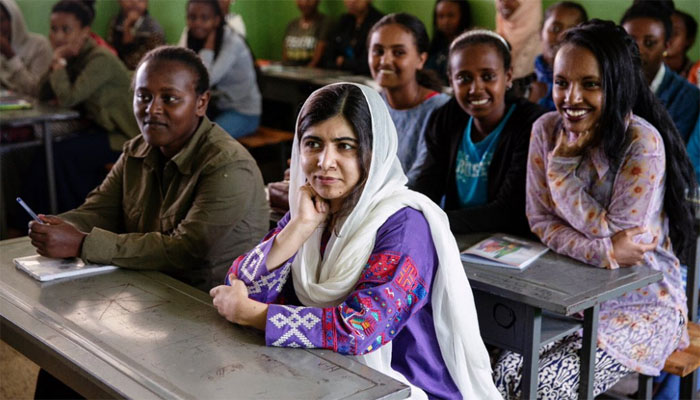
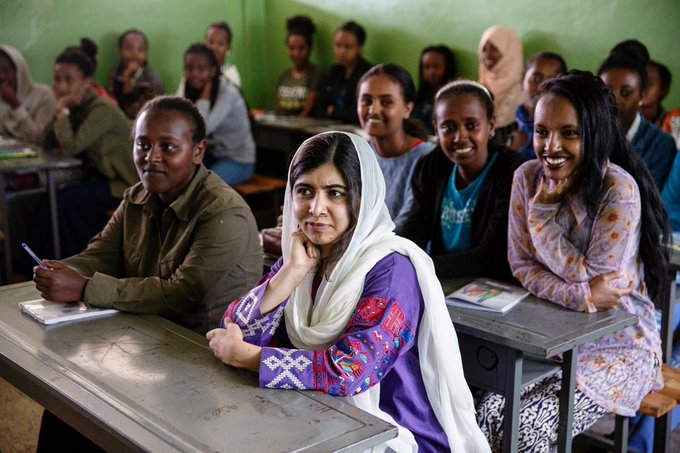
#Malala celebrates her 22nd birthday in Ethiopia


Nobel Peace Prize Laureate Malala Yousafzai is celebrating her 22nd birthday today (Friday, 12th July 2019).

Pakistani activist for female education took to twitter to show gratitude to all those who wished her on her auspicious day.
“Thank you for all the birthday wishes! I'm spending the day with young activists in Ethiopia, learning about their work for education and equality.”
Birthday girl, Malala wishes to live in a world where every girl can choose her own future. She took this day as an opportunity to ask her followers to support her cause of female education.
We wish Malala a Happy Birthday and success in all her future endeavors.