Thursday, June 27, 2019

#Pakistani Opposition Unites Against Military’s Political Role

Most opposition political parties in Pakistan appear to be uniting in opposing the growing role of the country’s powerful military in shaping the country’s politics, governance, and economy.
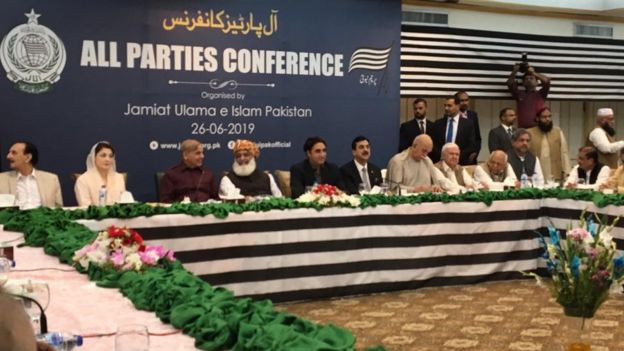
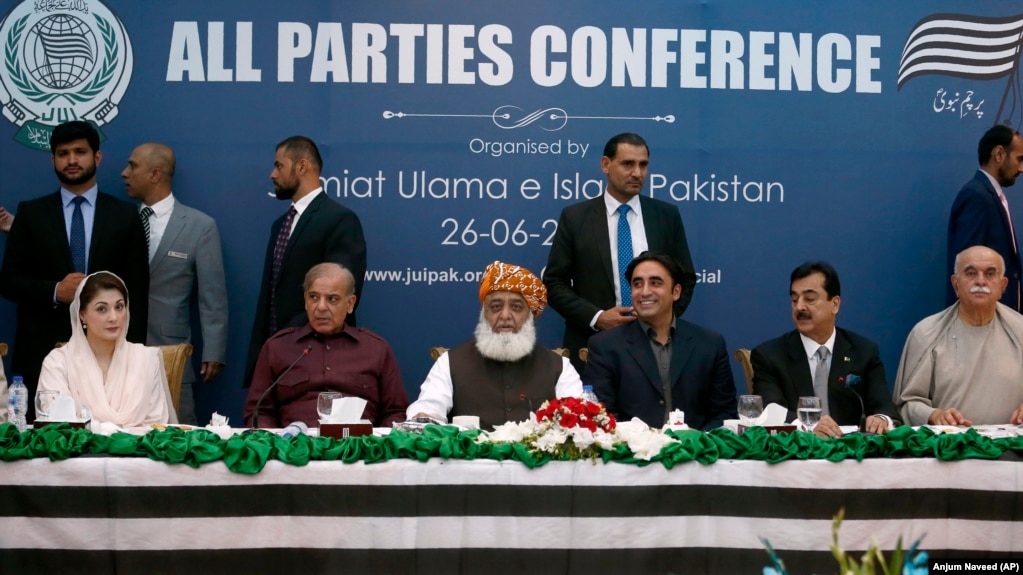
A major meeting of leaders of the country’s main liberal, conservative, ethno-nationalist, and Islamist political parties this week agreed on a charter of demands, an agitation date, and a way forward that extensively targets the military’s involvement in Pakistan’s politics and its role in shaping major policies.
Jamiat Ulma-e Islam (JUI), an Islamist political party, hosted the June 26 meeting that included the top leaders of the conservative Pakistan Muslim League Nawaz (PML-N), the liberal Pakistan Peoples Party (PPP), and nearly half a dozen other parties. Together they present a formidable opposition to the ruling Pakistan Tehreek-e Insaf (PTI), whose coalition government holds a thin parliamentary majority.
“This meeting has emphasized parliamentary, constitutional, and civilian rule in the country,” JUI leader Maulana Fazlur Rehman told journalists late on June 26. “We will oppose every move aimed at weakening the parliamentary democracy in our country.”
Rehman said the opposition will unite in moving a no-confidence motion against Sadiq Sanjrani, the current chairman of the Senate or upper house of the Pakistani Parliament. He vowed to mark July 25 as a “black day” to protest what the opposition claims were rigged elections on the same day last year.
Former lawmaker Afrasiab Khattak says the opposition meeting is significant because it shows their resolve to reverse what they see as “political engineering” by the military.
He told the RFE/RL Gandhara website that most opposition leaders are convinced the PTI’s rise since 2011 and its victory in last year’s parliamentary election was orchestrated by the military, which now holds a commanding influence over the administration. The PTI denies being supported by the military, and a spokesman for the military has repeatedly denied meddling in politics.
Khattak says the election of Sanjrani, a political novice, to lead the Senate in March 2018 was part of a larger scheme to dominate the current political system by orchestrating the PTI’s victory. “Removing the chairman of the senate will be a logical first step toward the subsequent removal of the puppet government,” he said of the opposition’s strategy.
Beyond the country’s treacherous power politics, some of the opposition’s most pressing demands also directly address the military.
“We demand that laws should be framed to deal with the issue of forced disappearances,” Rehman said. “People being held by the security forces must be presented before courts of law. We need to also legislate against torture.”
For more than a decade now, Pakistani political parties and human rights organization have accused the security forces of being involved in forced disappearances, extrajudicial killings, and other grave abuses in conflict regions such as southwestern Balochistan Province and parts of northwestern Khyber Pakhtunkhwa Province.
While the Pakistani military denies any involvement, these issues have prompted large-scale protests under the banner of the Pashtun Tahafuz Movement (PTM), a civil rights movement that emerged in February 2018.
The Pakistani military has accused the movement of colluding with the intelligence services of neighboring India and Afghanistan. But PTM leaders reject such accusations and say they are demanding rights and security for Pakistan’s largest ethnic minority, an estimated 35 million Pashtuns, through peaceful protests.
Months of tensions between the military and the PTM boiled over last month. On May 26, the military killed 13 PTM protesters at a check post in North Waziristan tribal district, according the movement’s members and witnesses. The military, however, said it only responded after protesters led by lawmakers Mohsin Dawar and Ali Wazir first opened fire.
The two PTM lawmakers are still in prison. Asad Qaisar, a PTI leader and speaker of the National Assembly or lower house of the Pakistani Parliament, has refrained from allowing them to participate in the ongoing budget session. Opposition leaders demanded that the two lawmakers must be allowed to participate in the parliament’s deliberations and called for the formation of a parliamentary committee to probe the May incident in Waziristan.
Rehman said that all leaders are united in opposing the military’s role in first-ever provincial elections in Waziristan and five other districts of the former Federally Administered Tribal Areas (FATA), which were merged into Khyber Pakhtunkhwa last year. “We reject the election commission’s recommendation of deploying army soldiers inside the polling stations during the upcoming elections in the erstwhile FATA,” he told journalists.
The opposition rejected the PTI’s proposed budget and ruled out new government initiatives to investigate alleged past corruption and grant the military a formal role in economic decision-making. It called for the freedom of press, which international watchdogs say is reeling from censorship imposed by the military.
Senior leaders of the ruling PTI, however, are not deterred by the opposition’s posturing.
“It is the job of the opposition to criticize and target us, while ours is to stop them,” Firdous Ashiq Awan, a special assistant to Prime Minister Imran Khan, told reporters. “There is not a single word in the [opposition] parties’ declaration against corruption,” she said, alluding to her party’s longstanding campaign that most Pakistan’s current problems stem from corruption by leaders of the PPP, PML-N, and other parties.
But opposition politicians are banking on rising resentment among Pakistan’s 207 million people amid rapid economic decline. The rupee, the Pakistani currency, dropped to another record low against the U.S. dollar this week. Since December 2017, the rupee has lost more than half its value. Runaway inflation, new taxes, and increasing utility prices are stoking widespread anger.
“We aim to relieve the masses of the crippling inflation created by the incompetent government that assumed power after a rigged election,” Rehman said.

'selected prime minister' - In Imran Khan’s Pakistan it’s not the economy, stupid. It is a dreaded word keeping PM awake


What was more or less an inside joke about Imran Khan being a 'selected prime minister' has now become a joke beyond borders.

Of all the things that Pakistan has banned in the past – from YouTube to Facebook – the latest is the most bizarre. This time, a word has become public enemy. And the word is ‘selected’.
Actually, it all began last August when Imran Khan came to power with his Naya Pakistan slogan.
Pakistan Peoples Party (PPP) chairman Bilawal Bhutto Zardari in the opening session of parliament cheekily called Imran Khan “prime minister select” while congratulating him for Pakistan Tehreek-e-Insaf’s (PTI) win. Bhutto was hinting at the possibility of the establishment helping Imran Khan win. Ironically, Khan had even thumped the desk then.
On Monday, almost a year later, a rather emotional deputy speaker Qasim Khan Suri banned using the phrase ‘selected prime minister’ for Imran Khan during the budget session. He said it was an insult to the entire parliament.
One would think that cricketer-turned-politician Khan sahib would want to wear that word on his sleeve, but his colleagues can now no longer utter it. So much for sportsmanship and some harmless sledging.

Joke to disaster

Opposition parties questioned the legitimacy of the ruling and termed it undemocratic, frivolous and a step towards censoring parliament.
Bilawal Bhutto said that it was because of Prime Minister Imran Khan’s “ego” that the word was banned.
Pakistanis – both in parliament and outside – have already found ways to bypass the ban.
Pakistan Muslim League-Nawaz’s (PML-N)information secretary Marriyum Aurangzeb chose the word “handpicked” instead for the prime minister.
What was more or less an inside joke about Imran Khan being a “selected prime minister” has now become a joke beyond borders. The ban has reopened the debate of how he came to power rather than preserve Imran Khan’s image.
Or, is this a classic case of a guilty conscience?
The general elections of 2018 were widely criticised by the PPP and the PML-N. They accused the military of intimidating their political workers and engineering the election in Khan’s favour. Censorship of mainstream media didn’t give parties a level playing field either.

The umpire’s finger

‘Selected’ is not the only word Khan should get banned. His naysayers have often described his relationship with the military by calling him a “ladla” (favourite child), “ghost employee” or “nikkay da abba” (father of the young child). Back in the day, Khan himself had referred to the establishment as “umpire” and pre-empted how the umpire’s finger would go up against Nawaz Sharif.
To refer to the political manoeuvring by the military without getting into trouble, a creative set of terms was invented: “Farishtay” (angels), “khalai makhlooq” (aliens), “Selectors” or “mehkma-e-zarat” (Department of Agriculture).
To refer to the powerful men in uniform, terms such as “boys”, “boots” or “namaloom afrad” (unidentified people or known unknowns) are often used.
The etymology of mekhma-e-zarat is one of the most hilarious.
Rana Iqbal Siraj, a PML-N candidate from Punjab assembly in 2018, in a viral video, had alleged that he was tortured by the personnel of a secret agency over his refusal to return his ticket. Subsequently, a raid was conducted on his fertiliser godown. He later backtracked, apologising that he actually was not threatened by agencies, it was the mehkma-e-zarat (department of agriculture) that raided his facility. Since then the department of agriculture has become synonymous with security personnel.

What is keeping Imran Khan up?

Historically, many political terminologies have been used for opponents in Pakistan’s parliament. “Mr 10 per cent” for Asif Ali Zardari, “Maulana Diesel” for Fazalur Rehman, “Sheeda Talli” for Sheikh Rashid’s over the top demeanour or “Lotta” to define turncoats. Those at the receiving end have always taken these terms with a pinch of salt and never asked for bans. After all, puns and metaphors are all that keeps ‘engineered’ assemblies alive.
Marred with economic crisis, incompetent governance, lack of vision and inability to deliver on the promises made to his constituents, the first year of the Imran Khan-led government has not gone well and the pressure seems to be getting the better of the PM.
Otherwise, why would Khan bother with who calls him what, knowing how he in his opposition days had called prime ministers and presidents dacoits, liars, cheaters and even cursed the same parliament that he is now the leader of.

Selected is elected

So, is Imran Khan a selected prime minister? Absolutely.
According to the dictionary, an election is “the act of choosing or selecting one or more from a greater number of persons, things, courses, or rights.”
Lahore High Court’s 2003 ruling on the subject follows the same theory. A selected prime minister is one who has been elected by parliament. Clearly, neither the speaker, the ruling PTI, nor the PM knows that.
Selected is elected. And Mr Prime Minister we all know what you think we didn’t know!


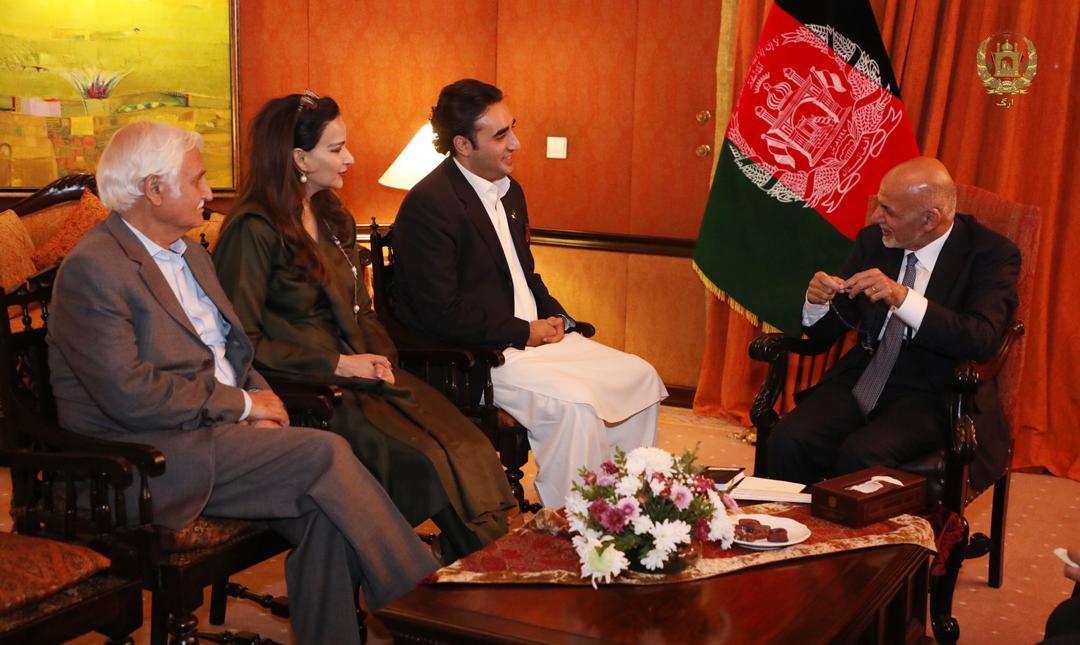
Bilawal meets President Ghani, shows well wishes for Afghan peace process


Pakistan People’s Party (PPP) chairman Bilawal Bhutto-Zardari on Thursday met Afghan President Ashraf Ghani who is on his two-day official visit to Pakistan, ARY News reported.
The PPP chairman welcomed President Ghani over his arrival in Pakistan.
Bilawal, Ghani discussed matters of mutual interests during the meeting. Bilawal expressed his well wishes for ongoing Afghan peace process.
The meeting was also attended by PPP’s senior leader Farhatullah Babar and Sherry Rehman.

Wednesday, June 26, 2019

Video - UAE and Russia show support for Iran on oil tanker attacks

#Video Report - #JamalKhashoggi #AgnesCallamard Analysis: UN rapporteur criticises Saudi’s Khashoggi murder probe

Video Report - #USMexicoBorder #Migrants Photo of drowned father and daughter on US-Mexico border highlights migrants’ perils

Video Report - Horrific image illustrates crisis at the US-Mexico border

#SaudiArabia - The Real Largest State Sponsor Of Terrorism


Adam Weinstein

Saudi Arabia—not Iran—is the biggest state sponsor of terrorism in the world today and Wahhabism remains the source of most radical Islamic extremism. For years Iran has borne the unenviable title of “world’s biggest state sponsor of terrorism.” However, out of the 61 groups that are designated as terrorist organizations by the U.S. State Department, the overwhelming majority are Wahhabi-inspired and Saudi-funded groups, with a focus on the West and Iran as their primary enemy. Only two are Shi’a—Hezbollah and Kataib Hezbollah, and only four have ever claimed to receive support from Iran. Nearly all of the Sunni militant groups listed receive significant support from either the Saudi government or Saudi citizens.

The Great Compromise

Wahhabism is an ideology of compromise between the ambitions of the zealot and the needs of the ruler. Wahhabism can be thought of as a religio-political subcategory of the Salafi approach to Islam. Salafis get their name from the al-salaf al-salih or “pious companions” of Muhammad whose practices they claim to imitate. What distinguishes Wahhabism from Salafism is that the former is dependent on the House of Saud for its power whereas the latter is a phenomenon that exists globally. 
The 18th century partnership of tribal leader Ibn Saud and cleric Abd al-Wahhab wedded two parallel sources of legitimacy in Arabia—religion and tribal kinship. The clerics known as ulema received their authority from God and then conferred it upon the Saud clan themselves. In exchange the ulema are protected from the risks that come with governance. Wahhabis must be distinguished from jihadi Salafis because Wahhabism is inextricably linked to the Saudi state and therefore not revolutionary in nature. The Royal family walks a tightrope between the liberalization necessary for economic development and strong political ties with the West, and the more conservative demands of the Wahhabi movement. One such demand is to turn a blind eye to the sponsorship and export of terrorism and jihad in South Asia, the Middle East, and even the West. 

Exporting Jihad And Buying Friends

Some contend that Wahhabism and Saudi Arabia are being used as scapegoats when in fact the real causes of Islamist terrorism are far more complex. Mohammed Alyahya made just this argument in his New York Times article “Don’t Blame ‘Wahhabism’ for Terrorism.” The crux of the argument is that “most Islamist militants have nothing to do with Saudi Wahhabism.” For example, he asserts that the Taliban are Deobandis which is “a revivalist, anti-imperialist strain of Islam that emerged as a reaction to British colonialism in South Asia” and al Qaeda “follow a radical current that emerged from the Muslim Brotherhood.” While a nuanced understanding of the causes of terrorism is important, it must not lead policymakers to ignore an obvious source.
It is certainly true that not all Sunni extremist movements find their roots in Wahhabism. Al Qaeda was inspired by the anti-state Islamist literature of Muslim Brothers like Hassan al-Banna and Sayyid Qutb. But organizations and movements evolve. The al Qaeda we know today is very much a product of the more extreme elements of the Wahhabi movement that is tolerated and promoted by Riyadh. However, it is Pakistan rather than the Arab world, which is the true ground zero of Saudi Arabia’s export of extremism. An invasive strain of Saudi-sponsored Salafism, often referred to as the Ahl-e-Hadith movement, has spread throughout Pakistan, all the while the fundamentalist Deobandi movement is increasingly supported by Gulf donors. According to a U.S. government cable, “financial support estimated at nearly 100 million USD annually was making its way to Deobandi and Ahl-e-Hadith clerics in the region from ‘missionary’ and ‘Islamic charitable’ organizations in Saudi Arabia and the United Arab Emirates ostensibly with the direct support of those governments.” This fusion of Salafism and Deobandism occurs at the expense of indigenous South Asian interpretations of Islam like the Sufi-oriented Barelvis.
The close relationship between Saudi Arabia and Pakistan began as early as the administration of Prime Minister Zulfikar Ali Bhutto. According to a recently available CIA report, in 1975, Bhutto “obtained assurances of generous aid from Saudi Arabia” during a state visit. In exchange for such support Pakistan “furnished military technicians and advisers to the armed forces of Saudi Arabia.” Other CIA documents reveal that during Zia ul-Haq’s military dictatorship, Pakistan viewed the Soviet presence in Afghanistan beginning in 1979 as an existential threat. So Pakistan’s Inter-Services Intelligence (ISI) agency was more than enthusiastic to train Pashtun mujahideen to fight the Soviets with Saudi and U.S. assistance.
Saudi officials naturally garnered greater respect from Pakistani officers than their American counterparts due to the revered status of the Kingdom as caretaker of the two holiest sites in Islam. The U.S. also underestimated the extent to which Pakistani officers would develop sympathies for the militants they spent years training. The ISI became an intermediary between Saudi Arabia and militant Islamic groups across South Asia. During the 1990s, the ISI shifted its focus towards Kashmir and the Punjab in an effort to counter perceived Indian aggression. But the deep connections fostered between the ISI and various militants resurfaced after 9/11 when their focus pivoted back to Afghanistan.
Meanwhile the ISI fought some militant groups while allowing others like the Haqqani Network to remain powerful. When Osama bin Laden was discovered in Pakistan, the U.S. ramped up drone strikes against safe havens, and the ISI retaliated by releasing the name of the CIA’s Islamabad bureau chief which resulted in numerous death threats. Since 9/11, Gulf dollars have continued to bolster extremist groups inside Pakistan even as Pakistani civilians die by the thousands from suicide operations linked to Saudi-sponsored madrasas.
In exchange for tolerating Gulf-sponsored terrorism Pakistani leaders get security. While in power they have an unofficial army of militants they can call upon to deal with anything from Baluchi separatists to keeping India on its toes. Once they leave power they have an escape hatch to protect them and their family. When Prime Minister Nawaz Sharif was found guilty of corruption, kidnapping, and hijacking, in the summer of 2000, Saudi Arabia accepted him to live in exile. Benazir Bhutto’s notoriously corrupt widow and ex-president, Asif Zardari, went on a “self-imposed exile” to the U.A.E. throughout 2016. And the former president and general, Pervez Musharraf, is currently hiding out in Dubai to avoid prosecution for treason charges.
But the export of extremism from Saudi Arabia is not always by design. In his history of Pakistan, Ian Talbot argued that “the exposure of the lower-class Pakistanis to the Islamic heartland further encouraged a mindset favourable to Islamization, although Zia was to find that its impact on sectarianism was to prove unpredictable and potentially destabilizing.” Saudi Arabia fears the effects of its own radicalization and recently deported 40,000 Pakistani workers over concerns of terrorism. Today South Asia is rocked by sectarian violence from the mountainous peaks of Kabul to the tropical markets of Karachi and posh hotels of Mumbai. This February, suicide attacks killed hundreds across Pakistan. The province of Sindh begged the central government to shut down Gulf-funded seminaries. Islamabad declined.

Controlling The Message

The internet age rendered in-person missionary work by Saudi clerics less relevant. The radical messages of Saudi preachers and their protégés can be viewed on mobile phones across the world. Students filter into the seminaries in Mecca and Medina and return to teach at the hundreds of madrasas spread across the world. These representatives of the Kingdom do not always preach a militant message. Sometimes, and perhaps more dangerously, they preach an apologist one.
In 2008, popular Indian televangelist Zakir Naik called 9/11 an “inside job” done by the Bush administration to defame Islam. He also commented that “If he [Osama bin Laden] is terrorizing America the terrorist, the biggest terrorist, I am with him.” Despite these comments Naik went on to win the King Faisal International Prize for his “service to Islam.” The conspiracy theories he peddles are crucial to Saudi Arabia’s standing among the Muslim masses that are not necessarily prone to violence. However, conspiracy theories that brush aside the problem of extremism within the Kingdom are nothing new. Rumors about U.S. involvement in the seizure of the Grand Mosque in Mecca led to an attack on the U.S. embassy in Islamabad in 1979 resulting in the death of two U.S. citizens.
Meanwhile Saudi Arabia spends millions on public relations firms in Washington D.C. every year in order to ensure it is not viewed as a state sponsor—or even enabler—of terrorism. The Kingdom attempts to contain the effects of its own hate preachers by campaigning to distance itself from the most egregious acts of terrorism in the Muslim world while still embracing a Salafi message. All the while in D.C. the Kingdom scrambles to disassociate itself not only from terrorism but from extremism altogether.

A Complicated Relationship

Australian Prime Minister Malcom Turnbull once asked President Obama “aren’t the Saudis your friends?” Obama famously replied “it’s complicated.” It is complicated. How can Saudi Arabia possibly serve as an effective partner against terror when its internal security is dependent on the continued export of terrorism? The answer is that for both Saudi Arabia and the U.S. the other has always been the perceived lesser of two evils.
In the early 1930s when U.S. companies first began to explore the Saudi oil market they were favored by the Royal family over the British who were viewed as imperialists disguised as businessmen. This enemy-of-my-enemy partnership grew closer during the Cold War and the goal to contain the Soviets was described as the “complementary foreign policy” of the U.S. and Saudi Arabia in a 1983 CIA memorandum. The fact that Saudi Arabia promoted a resurgence of Islamic fundamentalism in order to counter the Soviet Union did not alarm the U.S. intelligence community. Ayatollah Khomeini’s Islamic Revolution in Iran cemented Saudi Arabia’s position as the lesser of two perceived evils.
When the Gulf War incited harsh criticism of the Royal family for hosting non-Muslim soldiers they responded by coopting the majority of Wahhabi scholars into official government positions. Those who were too extreme for government work were encouraged to go abroad. The “28 pages”  report detailing connections between the Saudi government and 9/11 hijackers proved once and for all that it wasn’t only private Saudi citizens who provide financing and manpower to radical terrorist organizations but the government itself. But Saudi Arabia claims it too is in a fight against radical extremism. Yet the majority of terrorist attacks in the Kingdom remain directed at the Shi‘a minority in the Eastern Province and Western targets. In fact, the U.S. State Department website explicitly warns citizens in Saudi Arabia to avoid “places where members of the Shia-Muslim minority gather.” 
Ambassador Zalmay Khalilzad recently wrote in Politico that the Saudis claim to have adopted a  new “policy of honesty” and admitted to him that in the past they had funded extremists. However, partial confessions and lukewarm commitments to fight terrorism are a pillar of Saudi diplomacy. After 9/11, the Saudi government made some effort to share intelligence and set up rehabilitation facilities for low-risk terrorists. But this was largely a show of good will that produced few long-term gains in the war on terrorism. The infamous “Podesta emails” confirm that the U.S. intelligence community believes Saudi Arabia and Qatar are now  “providing clandestine financial and logistic support to ISIL.” The export of fanaticism and terrorism is a necessary release valve so that the fragile equilibrium of Saudi society does not implode.

One Terrorism Policy

When the late Taliban commander, Mullah Mansoor, was killed in May of last year, it was his recent trip to Iran that became the focal point of discussion. For years, however, Washington all but ignored that the vast majority of the ammonium nitrate used to construct IEDs that delimb American soldiers in Afghanistan comes from Pakistan. In 2007, at the height of the war in Iraq, the U.S. military estimated that 45% of all foreign terrorists targeting U.S. troops were Saudi. Now the debate in Washington is whether to designate Egypt’s Muslim Brotherhood and the Iranian Revolutionary Guard Corps (IRGC) as terrorist organizations. The Muslim Brotherhood has rarely engaged in terrorism and the IRGC’s main focus appears to be Iranian dissidents abroad and fighting ISIS in Syria. Meanwhile the metastasization of Gulf-sponsored terrorist networks continues unabated. Counterterrorism policy has been reduced to a popularity contest rather than an assessment of real threats.
The U.S. must stop treating implicit and explicit state sponsors of terrorism differently. Saudi Arabia’s compartmentalized efforts at containing rather than eradicating extremism should not be lauded as a genuine partnership. States that clandestinely sponsor terrorism, albeit sloppily, must be held to the same standards as those that openly provide support. Counterterrorism strategists must adopt a long-horizon approach and recognize that state sponsors of terrorist groups are responsible for the consequences even when those organizations inevitably go rogue and turn on their benefactor. And just as Pakistan paid a heavy price for tolerating Saudi support for Wahhabi terror, the U.S. and the West are starting to feel the brunt of their own negligence of Riyadh and Doha’s love affair with terrorists.
Indeed, the very phrase “biggest state sponsor of terrorism” is best removed from diplomatic vocabulary altogether because so long as it shines the spotlight on only one country, others will hide in its shadow.

Pakistan: How one girl overcame the armed men who blocked her school

For years, armed men surrounded a girls' school in a village in Pakistan's Balochistan province, to prevent the girls going inside. But one eventually made it to university and is now training to become a journalist. She told the story of her struggle to the BBC's Shumaila Jaffrey.
"I spent my childhood in fear," says Naeema Zehri, a student at Sardar Bahadur Khan Women's University in Quetta. "It still sends shivers down my spine when I think about it."
Naeema grew up in a tribal village in the Khuzdar district of Pakistan's restive Balochistan province. Her childhood coincided with a time when lawlessness was at its peak, she says. The news was full of tales of Baloch men being abducted and killed in targeted attacks. Fear, prejudice, and weapons were everywhere.
Balochistan is Pakistan's poorest province. It has endured long-running hostilities between separatist insurgents and the Pakistani army. In its remote mountainous villages, life is generally miserable, but women suffer particularly, Naeema says.
"My childhood was marred with poverty. We are seven siblings. My mother was not educated, so we had to depend on family charity to meet our basic needs. Education was a luxury that we could not afford."
For Naeema, getting an education was a struggle. She went to the free state-run girls' primary school in her village until the age of 10, but the school was shut down.
She says that from 2009 to 2013, the school was taken over by criminals supported by the local tribal chief and the men put up a barrier at the school entrance to keep the girls from the building. The BBC cannot independently confirm this, but such situations were not uncommon in Balochistan.
"The picket was barricaded; it was manned by six to eight armed individuals all the time. I remember walking past it in my childhood. We used to be terrified by the armed men standing out there. I would always fear that they might shoot me," Naeema says.
"Dressed up in shalwar kameez [loose baggy shirts and trousers worn by men in Pakistan], they used to have guns in their hands, their faces were always covered in scarves, only their eyes were visible."

'Don't send your girls to school'

The armed men never approached or threatened the children, Naeema says, but the picket served two purposes: it was to keep the girls away from education, and so the tribal chief's armed men could use the campus as a hideout.
"It was a clear message to the people," she says. "Don't send your girls to school."
The effect on the village was devastating. Government teachers did not dare to work in such an environment. Naeema and a few other girls were admitted to another school in a nearby village, but it was just a formality. Parents sent their girls there to get free cooking oil - which was provided by an international donor organisation to increase girls' enrolment in the area - but not to learn. Girls had their attendance marked in registers and then went home. Naeema says the teachers were scared, but partially corrupt too.
"There were many schools that only existed on paper in our area. Teachers were deputed in such schools and they were drawing salaries too - but the schools were completely dysfunctional," she says.
Meanwhile, the violence in Balochistan was taking its toll. Naeema had to face the abduction and death of her two maternal uncles within one year. She says they simply disappeared, and their bullet-riddled bodies were found months later.
"I was completely shattered. They were so young, so full of life; I couldn't overcome their deaths for a long time."
But the tragedy motivated Naeema to continue her education, she says. After finishing middle school she had to stop going to school but she didn't let it disrupt her studies.
"My family couldn't afford education, and they were also under pressure by the villagers."
That was because local women were not encouraged to pursue school education, she says - but to go to madrassas (religious seminaries) or to do chores.
"There is hypocrisy around that too. Women are not allowed to go out to get education, but when it comes to helping men in the field, there are no barriers. Those who stay home, they earn a living through embroidery - but it's the men who get and spend their wages."
Naeema continued her studies at home and took exams as a private candidate. When she finished high school, her education was interrupted for some time because her brothers opposed it. But the murder of her uncles gave her new purpose. She noted that there was a complete silence in the media, and it left a mark on her psyche.
"Are Balochs not humans? Why do their lives not matter? I found it extremely hurtful," she says. "When will people start showing sensitivity toward Balochs?" The experience made her want to take up journalism.

'Telling the stories of my people'

International media outlets are not allowed to report from Balochistan unless they have special permission from the authorities - which they rarely get. Pakistan's mainstream media is also under a blanket ban when it comes to reporting on the insurgency in the province.
Naeema says that when she heard about Balochistan's only women's university, she persuaded her family to let her keep studying. Her brothers opposed the idea but one uncle supported her and paid her fees for a year. After that, she was out of funds - but she applied for a USAID sponsored scholarship, funded by the US government, and now her education is completely covered.
"I want to become a journalist so I can tell stories of my people, the people of Balochistan," she says. "And let me tell you that I won't be scared... I will always stand with the truth."

آل پارٹیز کانفرنس:’حکومت ملکی سلامتی کے لیے خطرہ ہے‘

جمعیت علمائے اسلام (ف) کے سربراہ مولانا فضل الرحمان کی سربراہی میں منعقد ہونے والی اس آل پارٹیز کانفرنس نے پاکستان تحریکِ انصاف کی حکومت کو شدید تنقید کا نشانہ بناتے ہوئے اسے ’ملکی سلامتی کے لیے خطرہ‘ قرار دیا۔
اسلام آباد میں منعقدہ اس کانفرنس میں پاکستان مسلم لیگ ن اور پیپلزپارٹی کی اعلیٰ قیادت کے علاوہ عوامی نیشنل پارٹی، عوامی وطن پارٹی اور پشتونخواہ ملی عوامی پارٹی کے وفد بھی شریک ہوئے۔
مولانا فضل الرحمان نے اے پی سی میں اپنی تجاویز رکھتے ہوئے کہا کہ الیکشن کا ایک سال مکمل ہونے پر 25 جولائی کو یومِ سیاہ منایا جائے لیکن ساتھ ہی انھوں نے اپوزیشن کے تمام ارکان کے استعفے جمع کرنے کی بھی تجویز دی۔
اس بارے میں صحافی ایم بی سومرو کا کہنا تھا: ’اس وقت پنجاب میں مسلم لیگ نواز کے سب سے زیادہ ارکان ہیں۔ سندھ میں اپنے ارکان کو استعفیٰ دینے کے لیے آمادہ کرنا پیپلز پارٹی کی حکومت کے لیے مشکل ہو گا اور وہ خود بھی اس بارے میں ہزار بار سوچیں گے۔‘
ان کے مطابق ایک بات جس پر سب متفق ہوسکتے ہیں وہ 25 جولائی کو یومِ سیاہ منانے کی تجویز ہے۔
عوامی نیشنل پارٹی کی جانب سے تجویز رکھی گئی کہ اگر فوری طور پر اسمبلی میں کوئی تبدیلی نہیں لاسکتے تو سینیٹ چییرمین صادق سنجرانی کے خلاف عدم اعتماد کا ووٹ پیش کیا جا سکتا ہے۔
تاہم ایم بی سومرو کہتے ہیں کہ ’سینیٹ چیئرمین کے خلاف عدم اعتماد کا ووٹ لانا آسان نہیں ہوگا کیونکہ اس وقت ایک انتہائی طاقتور لابی ان کی پشت پناہی کر رہی ہے۔

آّل پارٹیز کانفرنس کے اعلامیے کا متن

اس کانفرنس کے اختتام پر جو اعلامیہ جاری کیا گیا اس میں حکومت اور اس کی کارکردگی پر کھلے لفظوں میں تنقید تو کی گئی لیکن اپوزیشن کی جانب سے کسی قابلِ عمل اقدام کا اعلان اس میں موجود نہیں تھا۔
اسی کانفرنس میں پیش کی گئی 25 جولائی کو یومِ سیاہ منانے اور اسمبلیوں سے مستعفی ہونے کی تجاویز کا بھی اس اعلامیے میں کوئی نام و نشان نہ تھا۔
کسی قابل عمل اقدام کی جگہ اعلامیے میں کہا گیا کہ تمام جماعتوں نے اس بات پر اتفاق کیا کہ موجودہ حکومت کے فیصلے ملکی سلامتی، خود مختاری اور بقا کے لیے خطرہ بن چکے ہیں اور نئے ٹیکسوں نے ملک میں کاروبار کی سانس روک دی ہے۔
اعلامیے میں مزید کہا گیا ہے کہ موجودہ حکومت نے 11 ماہ میں اپنی نااہلی پر مہر تصدیق ثبت کر دی ہے اور ملک کا ہر شعبہ زبوں حالی کا شکار ہے۔
اعلامیے کے مطابق ’غربت اور افلاس کی صورتحال عوامی انقلاب کا راستہ ہموار کرتی دکھائی دیتی ہے جبکہ بیرونی قرضوں کا سیلاب اور معاشی اداروں کی بدنظمی معیشت کو دیوالیہ کرنے کو ہے۔‘

’بلاول کی شرکت پر قیاس آرائیاں‘

بدھ کی صبح کانفرنس سے قبل یہ قیاس آرائیاں عروج پر تھیں کہ حزبِ مخالف کی کون سی جماعت اس کانفرنس کا حصہ بنے گی، شُرکا کا ایجنڈا کیا ہوگا اور کیا حکومت کے ساتھ تعلقات استوار کرنے کو ترجیح دی جایے گی یا نہیں۔
سب سے پہلے بلاول بھٹو زرداری کی شرکت کے حوالے سے سوالات اٹھے اور ایسا تاثر دیا گیا وہ شاید بجٹ اجلاس کی وجہ سے اے پی سی میں شرکت نہیں کر پائیں گے لیکن بلاول نے اجلاس میں شرکت کے بعد پارلیمنٹ ہاؤس کے باہر میڈیا سے گفتگو کرتے ہوئے کہا کہ 'میں نے مولانا فضل الرحمان کو زبان دی ہے کہ میں اے پی سی میں شریک ہوں گا۔'
سینیئر صحافی ایم بی سومرو کے مطابق میڈیا کی قیاس آرائیاں بےوجہ نہیں تھیں۔
’ایک روز پہلے پیپلز پارٹی نے اے پی سی میں شرکت کرنے والے وفد کا اعلان کیا تھا جس میں بلاول کا نام نہیں تھا۔ یہی وجہ ہے کہ سوالات اٹھنا شروع ہو گئے کہ آیا وہ اے پی سی میں شریک ہوں گے بھی یا نہیں۔‘
اپوزیشن جماعتوں کے لیے اس کانفرنس میں بلوچستان نیشنل پارٹی کے صدر اختر مینگل کی عدم شرکت ایک بڑا دھچکا رہی جنھوں نے مولانا فضل الرحمان کے صاحبزادے اسد محمود کو لکھے ایک خط کے ذریعے کانفرنس میں شرکت سے پہلے ہی معذرت کر لی تھی۔
تاہم بلاول نے پارلیمنٹ ہاؤس سے نکلتے ہوئے کہا کہ ’اختر مینگل کے سنجیدہ مسائل ہیں جو اگر حل نہیں ہوئے تو وہ اس بجٹ کو ووٹ نہیں دیں گے۔‘
لیکن پھر کچھ دیر بعد وزیرِ اعظم ہاؤس سے خبر آئی کہ بی این پی مینگل کے ارکان کا ایک وفد اختر مینگل کی سربراہی میں وزیرِ اعظم عمران خان سے ملاقات کے لیے پہنچا ہے۔
حکومتی ذرائع کے مطابق اختر مینگل نے اپنے چھ نکات وزیرِ اعظم کے سامنے رکھے جبکہ سرکاری اعلامیے کے مطابق ’گذشتہ دس ماہ میں جو مشکلات سامنے آئی ہیں ان کے حل کے لیے طریقہ کار مرتب کر لیا گیا۔
https://www.bbc.com/urdu/pakistan-48767829

Video - #Pakistan - All Parties Conference

Video Report - Pakistan opposition announces candidate for PM against Imran Khan

Attending APC on Fazlur Rehman's request, says Bilawal Bhutto

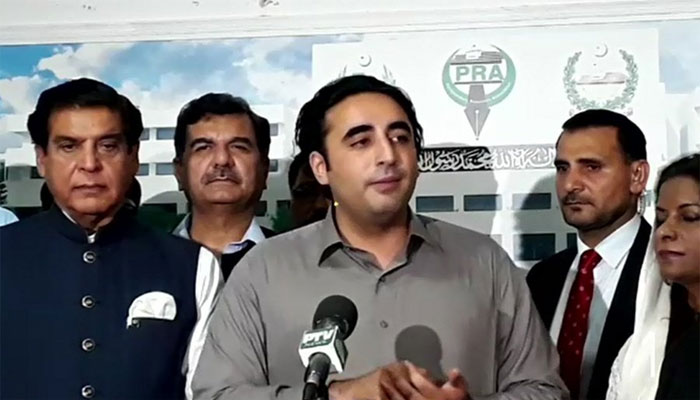
Pakistan Peoples Party (PPP) Chairman Bilawal Bhutto Zardari on Wednesday has said that he is participating in the All Parties Conference (APC) on the request of Jamiat Ulama-e-Islam (JUI-F) Chief Fazlur Rehman.

Addressing a press conference, Bilawal said that he will present points raised by Balochistan National Party-Mengal (BNP-M) President Akhtar Mengal in the meeting. Best decisions will be taken in the APC, he hoped. 

The PPP chief said that you will see me at both places, in APC and budget session. 

If production order of a terrorist can be issued and Musharraf’s government can be made with his vote then why FATA people are not allowed to participate in the assembly, he asked.  

https://dunyanews.tv/en/Pakistan/497668-Attending-APC-Fazlur-Rehman-request-Bilawal-Bhutto

Tuesday, June 25, 2019

Music Video - Shawn Mendes, Camila Cabello - Señorita

Video - Visiting the coldest town in the world - Chilling Out | 60 Minutes Australia

Video Report - 25 years after the Rwandan genocide | Dw Documentary

Video Report - #Bahrain workshop: "The US is presenting a delusional & unrealistic understanding"

Video Report - Has the door closed on diplomacy between #Iran and #US? | Inside Story

Music Video - AYA AYA BILAWAL...

Video - Bilawal Bhutto Press Conference outside National Assembly

Video - #BilawalBhutto #NationalAssembly Bilawal Bhutto Complete Speech in National Assembly

’عام انتخابات والی غلطی ضمنی الیکشن میں نہ دہرائی جائے‘

پیپلز پارٹی کے چیئرمین بلاول بھٹو زرداری نے کہا ہے کہ عام انتخابات میں ہوئی غلطی ضمنی الیکشن میں نہ دہرائی جائے۔
اسلام آباد میں پارلیمنٹ ہائوس کے باہر میڈیا سے گفتگو میں بلاول بھٹو نے ضمنی انتخابات میں پولنگ اسٹیشن کے اندر فوج کی تعیناتی پر سوال اٹھا دیا۔
انہوں نے کہا کہ پولنگ اسٹیشن میں فوج کی تعیناتی سے ادارہ متنازع ہوگا، فوج اہم ادارہ ہے، ماضی کی غلطیوں سے سبق سیکھا جائے۔
پی پی چیئرمین نے مزید کہا کہ عمران خان کو کیا ضرورت ہے کہ وہ الیکشن میں فوج کو پولنگ بوتھ کے اندر تعینات کرائیں؟ الیکشن کو صاف اور شفاف بنانے کیلئے دیگر کئی راستے موجود ہیں۔
ان کا بجٹ کے حوالے سے کہنا تھا کہ اگر عوام دشمن بجٹ پاس ہوا تو سڑکوں پر نکلیں گے،گھر گھر جائیں گے، اس بار اکیلے نہیں ساری اپوزیشن ساتھ نکلے گی اور ایک ساتھ چلے گی۔
بلاول بھٹو نے یہ بھی کہا کہ نندی پور کیس میں آج پی ٹی آئی کے بابر اعوان کو تو انصاف مل گیا، راجا پرویز اشرف کو نہیں ملا۔
پی پی چیئرمین نے سندھ میں فصلوں پر ٹڈی دل حملے کے نقصان کے ازالے کےلئے وفاق سے مدد کی اپیل کردی اور کہا کہ کاشت کاروں کو بچانے کےلئے وفاق کی مدد کی ضرورت ہے۔
چیئرمین سینیٹ صادق سنجرانی کے خلاف تحریک عدم اعتماد پر بلاول نے کہا کہ چیئرمین سینیٹ کے رہنے یا نہ رہنے کا فیصلہ آل پارٹیز کانفرنس کرے گی، اگر اے پی سی فیصلہ کرتی ہے چیئرمین سینیٹ کو جانا ہے تو انہیں جانا ہوگا، اگر فیصلہ ہوا کہ رہنا ہے تو وہی رہیں گے۔
مسلم لیگ (ن) میں میثاق معیشت کے حوالے سے اختلاف پر پی پی چیئرمین کا کہنا تھا کہ میں نہیں سمجھتا کہ ن لیگ میں میثاق معیشت پر کوئی اختلاف ہے۔
آل پارٹیز کانفرنس کے حوالے سے بلاول نے کہا کہ بحث کے بعد جو فیصلہ ہوتا ہے اس پر سب راضی ہوں گے جو مسائل ہیں ان کا حل ایک بندے کے بس کی بات نہیں، شاید ایک دن میں ساری باتیں طے بھی نہیں ہوسکیں جس کیلئے ہمیں بار بار ملنا پڑے گا اور بار بار کوشش کرنا پڑے گی۔
ان کا کہنا تھا کہ این ایف سی پر پیپلز پارٹی اے پی سی میں بات کرے گی اور اس پر مشترکہ حکمت عملی اختیار کی جائے گی، صوبوں کے وسائل کا شارٹ فال آرہا ہے۔

Chairman Bilawal Bhutto Zardari condemns PTI office-bearer’s attack and torture on senior working journalist and Karachi Press Club President Imtiaz Khan Faran

Pakistan People’s Party (PPP) Chairman Bilawal Bhutto Zardari has condemned PTI office-bearer’s attack and torture on senior working journalist and Karachi Press Club President Imtiaz Khan Faran during a TV show.
He said the attack against KPC President is unacceptable as PTI puppets have time and again proven that the fascism is their sole ideology.
Bilawal Bhutto Zardari said that the PTI Chairman and the sitting Prime Minister Imran Khan has trained his party workers, leaders and followers for tyranny, oppression, torture and unlawful dominance.
He said that the PTI could never succeed in suppressing the voice of the journalists and the freedom of expression.
The PPP Chairman said that the PPP has always been on the side of the journalists’ fraternity and would always defend them against all forms of aggression whether under dictatorial or their puppets rule.

https://mediacellppp.wordpress.com/2019/06/24/chairman-bilawal-bhutto-zardari-condemns-pti-office-bearers-attack-and-torture-on-senior-working-journalist-and-karachi-press-club-president-imtiaz-khan-faran/