Friday, May 24, 2019

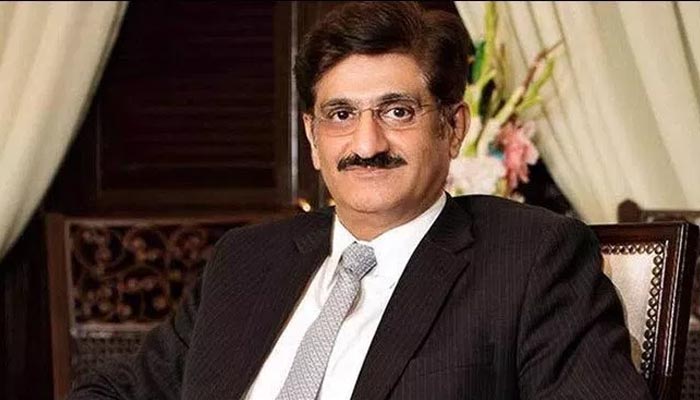
اسپتالوں کے ٹیک اوور کا نوٹیفکیشن واپس لیا جائے، وزیراعلیٰ سندھ

وزیراعلیٰ سندھ سید مراد علی شاہ نے کہا ہے کہ وفاقی حکومت کی جانب سے
سندھ کی تین صحت کی سہولیات جے پی ایم سی، این آئی سی وی ڈی اور این آئی سی ایچ کو ٹیک اوور کرنے کے حوالے سے جاری کردہ نوٹیفکیشن کے باعث غیر یقینی صورتحال پیدا ہوگئی ہے، لہٰذا ان اداروں میں فراہم کی جانے والی صحت کی خدمات کے وسیع تر مفاد میں نوٹیفکیشن واپس لیا جائے۔
انہوں نے یہ بات جمعہ کو وزیر اعلیٰ ہاؤس میں ایک اجلااس کی صدارت کرتے ہوئے کہی۔
اجلاس میں صوبائی وزیر صحت ڈاکٹرعذرا پیچوہو ، وزیراعلیٰ سندھ کے مشیر مرتضیٰ وہاب، چیف سیکریٹری ممتاز شاہ، وزیراعلیٰ سندھ کے پرنسپل سیکریٹری ساجد جمال ابڑو، سیکریٹری فنانس نجم شاہ، اسپیشل سیکریٹری ہیلتھ اصغر میمن، ایگزیکٹیو ڈائریکٹر این آئی سی وی ڈی ڈاکٹر ندیم قمر، ایگزیکٹیو ڈائریکٹر جے پی ایم سی سیمی جمالی، ڈائریکٹر این آئی سی ایچ ڈاکٹر جمال رضا، اسپیشل سیکریٹری ہیلتھ ڈاکٹردبیر اور دیگر متعلقہ افسران نے شرکت کی۔
وزیراعلیٰ سندھ نے کہا کہ نیشنل ہیلتھ سروسزکی وزرات کو چاہیے تھا کہ وہ صوبائی حکومت کے ساتھ سپریم کورٹ کی ہدایات کی روشنی میں طریقے کار وضع کرنے کے لیے تیاری کرنے کے حوالے سے اجلاس منعقد کرتی مگر افسوس کے ساتھ کہنا پڑ رہا ہے کہ ایسا کوئی بھی اجلاس منعقد نہیں کیاگیا۔
انہوں نے کہا کہ میں حیران ہوں کہ صحت کی سہولیات واپس لینے کے حوالے سے اسپتالوں کی انتظامیہ کو کسی بھی قسم کی کوئی اطلاع نہیں دی گئی۔
مراد علی شاہ نے کہا کہ صوبائی حکومت نے سپریم کورٹ میں نظر ثانی کی پٹیشن دائر کی ہے اور وفاقی حکومت کو چاہیے کہ وہ عدالت کے حتمی فیصلے تک انتظا ر کرے، مگر انہوں (وفاقی حکومت) نے غیر متوقع طورپر نوٹیفکیشن جاری کرکے غیر یقینی صورتحال پیدا کردی ہے۔
وزیراعلیٰ سندھ نے ایڈووکیٹ جنرل سندھ کو ہدایت کی کہ وہ سپریم کورٹ میں نظر ثانی کی پٹیشن کی سماعت کے لیے ارجنٹ درخواست دا ئر کریں۔
انہوں نے کہا کہ ان تینوں اداروں میں ہمارے مختلف اہم منصوبے جاری ہیں اور دیگر مختلف پائپ لائن میں ہیں لہٰذا ہم یہ بھی چاہتے ہیں کہ یہ ایشوز حل ہوں تاکہ صوبائی حکومت ان کے مطابق آگے بڑھ سکے۔
مراد علی شاہ نے کہا کہ صوبائی حکومت اپنی سخت محنت ، توجہ اور تندہی سے ان تین صحت کی سہولیات فراہم کرنے والے اداروں جے پی ایم سی، این آئی سی وی ڈی ، اور این آئی سی ایچ کو مثالی ادارے بنانے کا کام شروع کیا اور اس حوالے سے ان میں توسیع کرنے کے لیےبجٹ بھی مختص کیے تھے۔
انہوں نے کہا کہ صوبائی حکومت نےصوبے کے مختلف اضلاع میں این آئی سی وی ڈی کے 8 سیٹلائٹ مراکز بھی قائم کیے ہیں ۔این آئی سی ایچ کے سیٹلائٹ بھی دیگر اضلاع میں قائم کرنے کی منصوبہ بندی کی ہے اور جے پی ایم سی ایمرجنسی اور سائبر نائف پروجیکٹ بھی شروع ہونے والے ہیں۔
وزیراعلیٰ نے کہا کہ ہم محسوس کرتے ہیں کہ صوبائی حکومت ان تین اداروں کو بہتر طریقے سے چلا سکتی ہے کیونکہ ہم ان کے بہت قریب ہیں لہٰذا صوبائی حکومت کو ان اداروں کو مزیدترقی دینے کے لیے اس کےانتظامی کنٹرول میں رہنے کی اجازت دی جانی چاہیے۔

Ten-year-old girl raped and murdered in ‘increasingly brutal’ Pakistan

The murder of a 10-year-old Pakistani girl who was allegedly raped has sparked public outrage in the country, with police under fire for inaction and authorities accused of failing to protect children.
Farishta Mohmand's body was found in woodlands near her home in the capital Islamabad, five days after her father first raised the alarm.
Gul Nabi reported her disappearance the night she went missing, but police said officers waited four days to file a missing person's report.
Farishta Mohmand, 10, went missing on 16 May and her body was found on 20 May.
Farishta Mohmand, 10, went missing on 16 May and her body was found on 20 May. (EPA/AAP)
Mr Nabi said that when he made his report, police said she had likely run away with someone.
His daughter's body showed signs of rape and torture, Mr Nabi told CNN.
"The body was in bad condition, it felt as if someone had thrown acid on her," he said.

Farishta's death has become a lightning rod in a country where there is widespread violence against children and women.
Many have seized on the delay in police action as proof of institutionalized gender discrimination.
Earlier this week, the hashtags #FarishtaMohmand and #JusticeForFarishta became top trending terms on Pakistani Twitter, with many users calling for the resignation of the police responsible for handling the case.
With anger continuing to build, on Tuesday Interior Minister Ejaz Shah ordered an inquiry into the case.
Islamabad's inspector-general of police suspended the station house officer in Shahzad Town, a district of Islamabad where Farishta's father reported her missing.
By Tuesday evening, police said they had arrested three suspects, including a 14-year-old relative who is the main suspect.
Members of a civil society group, Volunteer Force Pakistan, hold a demonstration to condemn the rape and killing of Farishta Monmand, whose case triggered widespread condemnation and outrage, including on social media.
Members of a civil society group, Volunteer Force Pakistan, hold a demonstration to condemn the rape and killing of Farishta Monmand, whose case triggered widespread condemnation and outrage, including on social media. (AP/AAP)
Increasingly brutal society
The Human Rights Commission of Pakistan said the latest case bore a "chilling resemblance" to the 2018 killing of seven-year-old Zainab Ansari, whose body was found dumped on a garbage pile in the eastern province of Punjab.
Following Zainab's death, protesters took to the streets complaining that authorities were failing to keep their children safe after a series of similar killings.
A man called Imran Ali was arrested over her death, and hanged last October after being found guilty of murder, rape, abduction and sodomy of a minor.
Rights commission chairperson Mehdi Hasan said Farishta's death suggested Pakistan was becoming "an increasingly brutal society in which children are abused and discarded at whim."
"It is critical that stronger, more vigilant mechanisms be enforced to protect young children -- and young girls in particular -- who are among the most vulnerable members of our society," Hasan said.
"No society can afford to be this callous where its children are concerned."
People rally to protest against the murder and alleged rape of a 10-year-old girl, Farishta, in Islamabad, in Peshawar, Pakistan, 21 May 2019.
People rally to protest against the murder and alleged rape of a 10-year-old girl, Farishta, in Islamabad, in Peshawar, Pakistan, 21 May 2019. (EPA/AAP)
Rise in child abuse reports
Reports of child abuse in Pakistan are on the rise.
Over 3,830 cases of child abuse were reported in newspapers in 2018, an increase of 11 per cent on the year before, according to a Pakistan NGO called Sahil that campaigns against child sexual abuse.
Some 55 per cent of the victims were girls.
The most common reported crimes against children were abduction, sodomy and rape.
The Human Rights Commission of Pakistan said in its annual report that the country had failed to protect children, "with nearly all their fundamental rights and freedoms infringed on or put at serious risk of violation."
Very few victims of physical or sexual violence received protection, counselling or legal services.
Mumtaz Gohar, lead coordinator for a group called Child Right's Movement Pakistan, said Farishta's death was one of the rare cases that trended on social media. Most never got public attention.

Driven out of Mideast, ISIS sets up shop in India, Pakistan

Kaswar Klasra
Amaq news agency says Pakistan stronghold already caused casualties among Indian soldiers in Kashmir; India police also confirm presence of ISIS fighters in contested border area.
The Islamic State is creating a presence in South Asia after recent defeats in Iraq and Syria, where it ruled thousands of square miles of territory.
Considered a terrorist group by the Western world, ISIS announced the formation of bases in nuclear-armed India and Pakistan, two arch-rivals that fought three wars since their independence from Britain in 1947.
According to the ISIS-affiliated Amaq News Agency, the terror organization on May 11 officially proclaimed the existence of “Waliyah of Hind,” or India Province. Shortly afterward, on May 15, ISIS said it had established an additional stronghold called “Wilayah Pakistan.” Amaq claimed that Wilayah Pakistan had already inflicted casualties on Indian army soldiers in the village of Amshipora in the Shopian district of India-administered Kashmir. Indian police confirmed the presence of ISIS fighters in the contested area and noted that security forces recently killed Ishfaq Ahmad Sofi, an alleged ISIS operative in the region.According to local media reports, Sofi had been associated for more than a decade with several armed groups in Kashmir before joining Islamic State.The establishment of Wilayah Pakistan sent shock waves through local law enforcement agencies, and on May 16, Islamabad’s security forces raided suspected terrorist locales in Quetta, the capital of Baluchistan Province.
The forces killed nine ISIS members during a three-hour long operation, a spokesperson for the chief of the Baluchistan police told the Media Line. Four Pakistanis wounded during the assault were rushed to a hospital.
Though this was the first direct face-off between Pakistani forces and ISIS, the latter has been carrying out attacks in Pakistan for years. As far back as February 2016, Pakistan’s Intelligence Bureau had warned the government that ISIS was emerging as a threat. Concern over the extent of ISIS’s power resurfaced a year later following a suicide bombing at the Shrine of Lal Shahbaz Qalandar – located in Pakistan’s historic city of Sehwan – which killed scores of people and injured some 300 others.
A recent UN Security Council counter-terrorism report revealed that ISIS has been using Pakistan-based organizations such as Lashkar-i-Jhangvi and Jamaat-ul-Ahrar to carry out terror attacks on its behalf.Analysts believe that ISIS is desperate to establish new strongholds, including in Afghanistan, where it has repeatedly clashed with the Taliban.
“ISIS has been looking for new ventures after it was defeated in Iraq and Syria. Even in Afghanistan, things are not in ISIS’s favor,” says Rashid Hussain, a Rawalpindi-based security expert.“It is now trying its luck in Pakistan, India and Sri Lanka, where it already has been outsourcing attacks.”Alarmed by ISIS’s growing influence in the region, Pakistan and Russia are working together to curb the group’s activities. “Since ISIS has challenged both nations… Islamabad and Moscow are working together to counter the group,” a senior official in Pakistan’s Counter-Terrorism Department told The Media Line on condition of anonymity.The official said the two countries have been cooperating since 2016, adding that a “major shift in Russia’s policy… (came) after it expressed concerns about the possibility of Afghanistan turning into a refuge for Islamic State militants fleeing from Iraq and Syria. This is why it has extended (assistance) to Pakistan and the Taliban.”
A source from Pakistan’s Ministry of Foreign Affairs said Moscow was committed to denying ISIS a sanctuary in Afghanistan, especially if and when international forces are sent home. In Sri Lanka, ISIS claimed responsibility for last month’s series of Easter Sunday bombings in the capital Colombo that killed 290 people and wounded 500 others.
https://www.ynetnews.com/articles/0,7340,L-5513748,00.html

#Pakistan: Ethnic Backlash In #Balochistan – Analysis

By Tushar Ranjan Mohanty
Unidentified militants opened indiscriminate fire on labourers working in an agriculture field in the Manjho Shori area of Naseerabad District in Balochistan on May 15, 2019, killing three of them and injuring one. The deceased had come from Tando Adam area of the Nawab Shah District in Sindh, and were daily-wage labourers. The attackers managed to escape. Though no group has so far claimed responsibility for the killing, Baloch insurgent groups have a history of killing non-Baloch labourers.
In the intervening night of April 17 and 18, 2019, unidentified assailants shot dead at least 14 passengers after forcibly offloading them from a bus plying on the Makran Coastal Highway in the Ormara area of Gwadar District. Reports indicate that around 15 to 20 armed assailants wearing Security Forces’ (SF) uniforms stopped five or six buses travelling between Karachi (Sindh) and Gwadar (Balochistan), checked the identity cards of passengers, and offloaded 16 of the passengers from just one bus. Two of the offloaded passengers managed to escape despite sustaining injuries. Balochistan Inspector General of Police Mohsin Hassan Butt described the incident as a “targeted killing”. Baloch Raji Aajoi Sangar (BRAS, Baloch National Freedom Front) claimed responsibility for the killing.
On March 24, 2019, Police recovered three bullet-riddled bodies in the Zadin area under Rakhni tehsil(revenue unit) in Barkhan District. All the three deceased were residents of the Dera Ismail Khan District of Khyber Pakhtunkhwa (KP). No group claimed responsibility for the killings.
According to partial data compiled by South Asia Terrorism Portal (SATP), a total of 229 ‘outsiders’ have been killed in Balochistan since the killing of Nawab Akbar Bugti, leader of the Bugti tribe and President of the Jamhoori Watan Party (JWP), on August 26, 2006, (data till May 19, 2019). Bugti was killed in a military operation in the Chalgri area of the Bhamboor Hills in Dera Bugti District.
Baloch insurgents have essentially targeted people from other provinces. However, out of the 229 ‘outsiders’ killed, at least 178 were Punjabis alone. Eight Punjabis were killed in 2018; 23 in 2017. There were no such fatalities among Punjabis in 2016. The number of Punjabi fatalities in the Province stood at 22 in 2015; 17 in 2014; 29 in 2013; 26 in 2012; 13 in 2011; 21 in 2010; 18 in 2009; and one in 2008. No such fatalities were recorded in 2007 and 2006. While Punjabis have been the main targets, other non-native persons also fell to the ethnic collateral damage. Out of 51 non-Punjabi ‘outsiders’, 33 were Sindhis, while the ethnic identity of the remaining 18 is unascertained.
A series of attacks on ‘outsiders’ in Balochistan, as well as the destruction of national infrastructure followed the killing of Akbar Bugti. These killings have been orchestrated by Baloch insurgent groups such as the BLA, Baloch Liberation Front (BLF) and the Baloch Republican Army (BRA), among others, who began to voice anti-Punjabi sentiments in their campaigns in the wake of the military action against Bugti. A media report published on June 28, 2011, noted, “Almost all non-Baloch are on their hit-list.” Muhammad Khalid of Balochistan-Punjabi Ittehad stated, “The militants began to target the Punjabi settlers after Nawab Bugti was taken out by the military (in August, 2006). Before that there were occasional incidents in which Punjabis were targeted.”
Significantly, most of the Punjabi settler killings were recorded in South Balochistan, which accounts for 156 killings out of the total of 178, (principally in Bolan, Kech, Gwadar, Panjgur, Khuzdar, Sibi and Lasbela Districts); and 27 in North Balochistan (mostly in Nushki, Quetta and Mustang Districts). The overwhelming concentration of such killings in the South is because of the presence and dominance of Baloch insurgent groups in this region, while the North is dominated by Islamist extremist formations such as the Tehreek-e-Taliban Pakistan (TTP) and Lashkar-e-Jhangvi (LeJ), who engage principally in sectarian killings.
Forced disappearances engineered by Pakistani SFs are another reason behind the targeted killings of non-Baloch persons in the region. According to partial data compiled by the SATP, of the 4,317 civilian fatalities recorded in Balochistan since 2004 (data till May 19, 2019), at least 1,378 have been attributable to one or other terrorist/insurgent outfit. Of these, 435 civilian killings (263 in the South and 172 in the North) have been claimed by Baloch separatist formations, while Islamist and sectarian extremist formations – primarily Islamic State, Lashkar-e-Jhangvi (LeJ), TTP and Ahrar-ul-Hind (Liberators of India) – claimed responsibility for another 943 civilian killings, 860 in the North (mostly in and around Quetta) and 83 in the South. The remaining 2,939 civilian fatalities – 1,708 in the South and 1,231 in the North – remain ‘unattributed’. It is widely believed that Security Agencies are busy with “kill and dump” operations, particularly in the Southern region, against local Baloch dissidents, a reality that Pakistan’s Supreme Court has clearly recognized.
Irked, by such killings the Baloch insurgent groups target non-Baloch people or even some Baloch whom they suspect to be spying for the SFs. At least two labourers (ethnicity not known) were killed when unidentified militants opened fire on a coal mine in the Khosat area of Harnai District on May 9, 2019. After the incident, Frontier Corps (FC) personnel rushed to the spot and a vehicle carrying the FC personnel hit a landmine, resulting in three FC fatalities. BLA claimed responsibility for the attack in an emailed statement from Jeehand Baloch, a BLA spokesperson: “We want to make it clear to the local spies and death squad groups of Pakistan Army that they will not be forgiven for their crimes.”
‘Outsiders’ are also targeted as the Baloch groups believe that they are helping Islamabad push forward its China-Pakistan Economic Corridor (CPEC) project. The Project according to Baloch nationalists, brings no benefit to the Baloch, but constitutes just another tool for their exploitation. Not surprisingly, since its inception in Pakistan on April 20, 2015, CPEC has been under attack from Baloch insurgents. According to official figures 44 people had died and over 100 wounded in “attacks targeting CPEC projects mainly road construction in Balochistan, which began in 2014” till September 8, 2016. Since September 9, 2016, according to partial data compiled by SATP, at least another 31 persons have been killed in attacks targeting CPEC-related projects across the Province (data till May 19, 2019), including the most recent attack on May 11, 2019, in which four terrorists stormed the luxury Zaver Pearl-Continental Hotel, in Gwadar in Balochistan. The Hotel had around 70 guests at the time, including 40 Chinese nationals. Nine persons, including four hotel employees, one Pakistan Navy soldier and all four attackers, were killed during the eight-hour long siege.
Amidst all this, overall fatalities in the province are on the rise. Between January 1 and May 19, 2019, a total of 127 fatalities (58 civilians, 39 SF personnel, and 30 terrorists) have been recorded. During the corresponding period of 2018, the number of fatalities stood at 108 (39 civilians, 39 SF personnel, and 30 terrorists). Through 2018, there were a total of 381 fatalities (239 civilians, 79 SF personnel, and 63 terrorists). There were 343 total fatalities in 2017. Fatalities had registered declining trends between 2014 and 2017. 
Baloch insurgents have been fighting continuously against Islamabad’s coercion for more than a decade – and, indeed, intermittently for over seven decades – demanding independence for the ethnic Baloch areas of the country. They argue that the Province has been neglected by the Pakistani state and exploited for its mineral resources, and that the ‘outsiders’ that are being targeted by the insurgents are agents of Islamabad. Islamabad has done little to alleviate conditions in Balochistan, or to address the grievances of its people.

Lights out: ‘Circular debt’ cripples Pakistan’s power sector


By


Pakistani craftsmen work by candle light during a power outageDespite more than adequate electricity generating capacity, many Pakistanis still face blackouts.
Ashiq Mahmood sits at his desk in his marble wholesale showroom, feeling the temperature rise, wondering when the blackouts will come.
"Everything comes to a standstill when the load shedding starts," he says, referring to power outages that have plagued Pakistan for years, crippling industries and small businesses such as his.
The power cuts are not, as has been the case in the past, due to a lack of generation capacity. Instead, they're the result of a vicious cycle of unpaid debts of more than $10 billion and breakdowns in critical transmission and other infrastructure. The issue is another headache for the government, which is struggling with a large fiscal deficit and slowing economy.
Mahmood's marble manufacturing and retail business earns him and his family about 1 million Pakistani rupees ($6,600) a month, but as demand for electricity grows in Pakistan's searing summer heat, electricity outages mean he can hardly ever run at full capacity.
"If I'm not able to deliver an order on time [due to outages], then the customers just aren't going to come back, are they?" he says.
Last year, when power cuts lasted more than six hours a day in the main I-9 industrial area of Pakistan's capital Islamabad, Mahmood says sales dropped by at least 50 percent.

Enough power for the people?

Today, Pakistan's 207 million people and its industries need 15,000 megawatts (MW) of electricity generation capacity, according to power ministry data.
That number will increase as demand rises in the peak summer months. But the ministry says that demand could easily be met using the country's installed generation capacity of roughly 20,000MW from plants running on coal, oil, gas, hydroelectric and nuclear power.
But users across the country still experience a shortfall of roughly 2,000MW, the ministry says, resulting in outages of up to eight hours a day in some areas.
That is because, while the capacity to generate the required electricity exists, there is no money to pay for it, officials told Al Jazeera.
"As of today, we don't have any issue with availability of supply," said Nadeem Babar, head of the Prime Minister's Task Force on Energy Reforms. "Our issues are transmission and distribution constraints, and the high [revenue] losses in certain areas."
At the heart of the problem is a phenomenon referred to in Pakistan as 'circular debt' – a cascade of unpaid bills and government subsidies, coupled with transmission line losses.
A major component of this debt, according to a 2018 World Bank report, is unpaid subsidies from the government to power distributing companies, compensating them for the below-market tariffs these firms have to charge consumers.
As a result, distributors are often unable to pay power producers, who then find it difficult to pay for fuel and are forced to keep plants idle.
Many users do not pay their bills because they do not get the electricity they need, making it harder for distribution companies to upgrade their ageing transmission lines, leading to even more losses. Pakistan's power regulator says more than a quarter of the power generated never reaches consumers.
Smaller parts of the debt are composed of discrepancies between the government-notified tariff and market rates caused by delays in government adjustments to the tariff and fluctuating international fuel prices.
The end result: hours of load shedding. And as of April 10, Pakistan's circular debt in the power sector stood at roughly $10.6 billion, Babar told Al Jazeera. That number is increasing by $6.4 million every day, he said.
The government is having to deal with the power sector's debts while struggling under the weight of a spiralling fiscal deficit amounting to five percent of the size of the economy, according to central bank data, and slowing growth.
On Monday, the country's central bank raised interest rates by 1.5 percentage points to 12.25 percent, citing underlying inflationary pressures, and elevated fiscal and current account deficits.

Multiple fronts

The government is planning a multi-pronged approach to tackle its power issues.
First, it wants to raise tariffs so that they are closer to market rates.
"We have to change our tariffs to at least recover the costs," said Babar. "It is clear that customers should not be paying for theft of others … or inefficiencies of the system. But it is equally clear that customers should be paying for the cost of delivery of services."
Babar foresees an increase in power tariffs by at least 2 Pakistani rupees ($0.01) per unit (a 100 percent rise for the lowest consumer tariff, and 15 percent of the average tariff) over the next 18 months. But the government is still likely to maintain some subsidies.
The government will also be working on reducing transmission and distribution losses – long cited as a structural obstacle by analysts – in order to stem the financial losses in the sector.
Last fiscal year, losses due to theft or transmission system inefficiency stood at 29 percent of power generated, according to Babar, amounting to roughly 140 billion Pakistani rupees ($990 million) in electricity that was generated but never paid for because it never reached consumers.
The government is targeting these losses through both arrests of those found to be stealing electricity and by attempting to address the infrastructure problems that lead to transmission losses in the first place.
Asad Umar, Pakistan's recently fired finance minister, said the brunt of the immediate push was coming in the form of targeting those who steal electricity.
"This includes filing 21,000 cases [for non-payment of dues], arrests of 13,000 people, and connections being cut," he told Al Jazeera at a media briefing while he was still in office.
In addition, the government is investing in a $100 million pilot project to install 'smart' meters – which would make theft more difficult - in the northern city of Rawalpindi, with a view to expanding the project to cover the entire country. The total cost of the countrywide replacement of meters would stand at roughly $3.5 billion, said Babar.
Transmission line infrastructure overhaul – long a demand of power sector analysts - will be the next step. For an illustration of the extent of the problem on that front, consider this: in June 2018, power ministry data shows that there was a day when the system faced 3,700MW in transmission constraints.
"We had the demand, we had the supply, but we could not move 3,700MW," says Babar.
The government has now identified 19 major transmission constraint issues, and says it will address all of them – including the building of new transmission lines and overhauling old systems and transformers – by January 2020.
Finally, longer term, the government says it will be aiming to reduce the cost of generation of electricity by shifting the fuel mix from the current reliance on imported fuels such as furnace oil, LNG and imported coal towards domestic sources.

Hurting those most in need

This summer, the ministry expects a shortfall of roughly 2,500MW between demand and supply. This will result, Babar says, in load shedding of eight hours in areas where cost recoveries from consumers are below 40 percent.
"Recovery-based load shedding does punish users who are not paying their bills, or those who are outright stealing electricity. But it is also punishing their neighbors who may be paying bills on time and reducing consumption, but are 'stuck' in a high defaulter neighborhood," says Erum Haider, a political scientist at Georgetown University who is studying the sector.Analysts warn that the current system of load shedding disproportionately targets low-income neighbourhoods, and imposes a form of collective punishment, even on those paying their bills.
Haider says that according to data from a survey conducted across Karachi, Pakistan's largest city, individuals are using up to 12 percent of their monthly budget to pay utility bills.
"This seems a relatively high price to keep the lights on so your kids can do their homework, or get a full night's sleep," Haider told Al Jazeera.
For marble seller Mahmood's household, that rings true.
"They shouldn't be doing this injustice with us, when we pay our bills," says Farooq, Mahmood's nephew, who just spent a sleepless night without electricity. "We can't force [others in the neighborhood] to pay their bills, we can only speak to them."
US identifies LeT as one of three main threats to its soldiers in Afghanistan


The LeT's classification as a threat heralds more trouble for Pakistan, which is courting global scrutiny for failing to check terror financing.

The US Department of Defense (DoD) has identified Lashkar-e-Taiba (LeT), the Pakistan-based group responsible for multiple attacks in India, including 26/11, as one of three terrorist organisations that pose the greatest threat to its troops in Afghanistan.
The classification heralds more trouble for Pakistan, which has been courting international scrutiny for failing to check terror financing.

According to the US, the Hafiz Saeed-led LeT has an active strength of around 300 terrorists in the war-torn country.
The DoD identified the Haqqani Network, the Eastern Turkistan Islamic Movement (ETIM, of militant Uighur Muslims), and Lashkar-e-Tayyiba [sic] as groups that present the greatest threat to US and allied forces in Afghanistan,” the latest report on Operation Freedom’s Sentinel, the official name for US-led military operations in Afghanistan, said.
The LeT, formed in the 1980s, is one of the largest terror groups currently operating from Pakistani soil, with active support of the state machinery.
Experts tracking terror in the region point out that the US naming the LeT as a threat in Afghanistan is just a formal recognition of something that was always known.
This does put additional pressure on Pakistan to act because the US will press it more,” a source in the Indian security establishment said when asked about the latest development.

Under increasing scrutiny

Apart from its strikes on India, the LeT has also been linked to terror activity in Europe, Nepal, Bangladesh and Sri Lanka, among other countries.
Though the LeT was banned by Pakistan in 2002, it continues to raise funds and recruit cadres openly. Earlier this year, it also banned the LeT’s front organisation Jamaat-ud-Dawa and its “charity” arm Falah-e-Insaniat Foundation.
The US Department of the Treasury had earlier classified LeT chief Saeed as a specially-designated global terrorist, and, since 2012, the country has had a $12 million reward for information that may help bring him to book.
In December 2008, he was listed under UN Security Council Resolution 1267, which entails travel restrictions and an arms embargo. He was released from house arrest in Pakistan in November 2017.

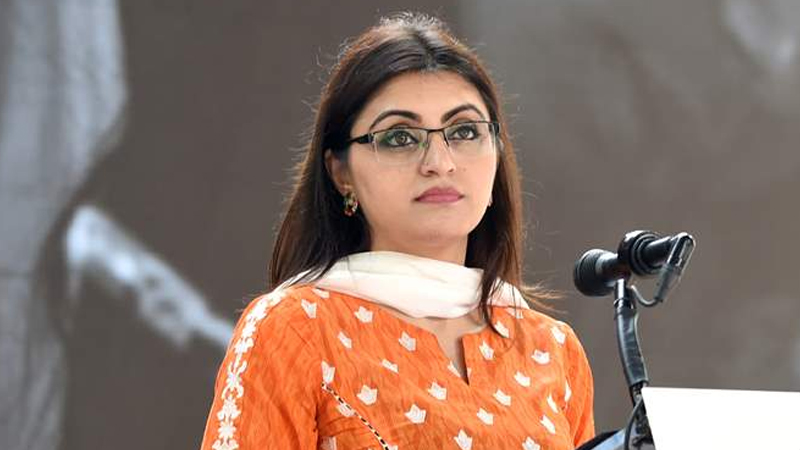
#Pakistan - #PTM’s Gulalai booked over anti-state speech

The police on Wednesday filed a case against Pashtun Tahaffuz Movement (PTM) Gulalai Ismail for allegedly defaming state institutions, creating unrest and inciting violence.
The First Information Report (FIR) lodged against the PTM leader mentions sections 500 (punishment for defamation), 153-A (promoting enmity between different groups, etc) and 124-A (sedition) of the Pakistan Penal Code, as well as sections 6 and 7 of the Anti-terrorism Act, 1997.
According to the FIR, Ismail – addressing a protest demonstration against the brutal rape and murder of a 10-year-old girl named Farishta – had purportedly incited law-abiding citizens to commit treason and violence. The FIR accuses Ismail of delivering hate speech, inciting ethnic sentiments against the state and Pakistan Army, and sparking a sense of fear and terror among the people.
The PTM is a rights-based alliance that, besides calling for the demining of the former tribal areas and greater freedom of movement in the latter, has insisted on an end to the practices of extrajudicial killings, enforced disappearances and unlawful detentions, and for their practitioners to be held to account.
Meanwhile, there were reports that Gulalai Ismail had been named in different FIRs registered against PTM leaders in different parts of the country after videos of her commentary against the state and its security institutes came to the forefront.
Investigations into the case have begun, statements of the affected and local police officers recorded and the medico-legal officer (MLO) of Polyclinic Hospital, who was found guilty of criminal negligence during the postmortem of the young girl’s body, sacked.
However, no action has yet been taken against Gulalai for her comments.
Shortly after the heinous rape and murder incident of Farishta was reported, a video of PTM leader Gulalai Ismail started doing the rounds on the social media in which she could be seen admonishing the state and its institutes, and terming the incident “one among many” that the state and its security agencies had allegedly forced on its ethnicities.

Interview - #Pakistani PM Imran Khan 'responsible for current economic mess'


BY Atif Tauqeer
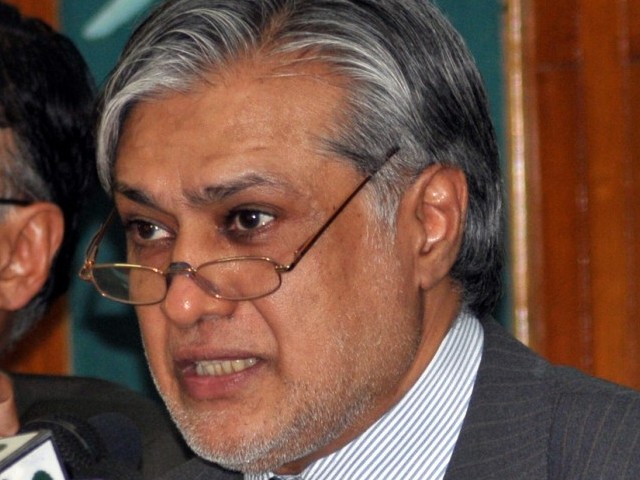
Pakistan is currently facing one of the worst economic crises in its history. In an exclusive DW interview, former Finance Minister Ishaq Dar accuses the current government of waging "economic terrorism" in Pakistan.
DW: How do you view the Pakistani government's economic policies? Will the IMF's financial bailout package help stabilize the economy?
Ishaq Dar: The incumbent government is incompetent and irresponsible. It actually wasted nine months to conclude its agreement with the IMF.
In 2013, when former Prime Minister Nawaz Sharif came to power, we had already worked out our own economic program. The cabinet approved it on July 4, 2013, just days after Sharif took oath. But the current government does not know what to do after assuming power; hence it has wasted time, which has created uncertainty in the market.
I am also not satisfied with the IMF conditions that the government has accepted. This IMF program will contract Pakistan's economic growth, with high inflation and high interest rates. The common people will face the brunt of this.
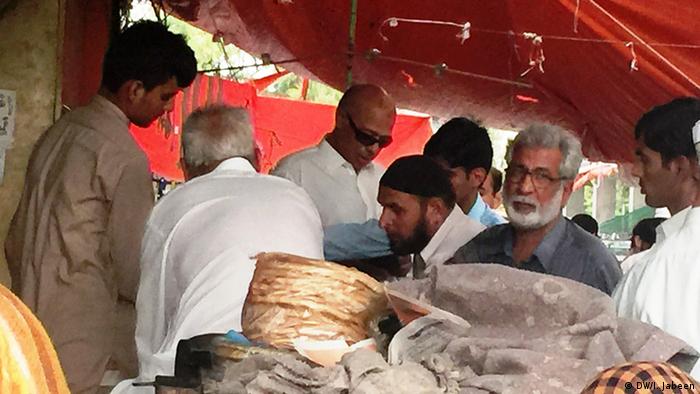
Food prices have substantially increased in Pakistan in the past few months (DW/I. Jabeen)
Food prices have substantially increased in Pakistan in the past few months
But can Prime Minister Imran Khan's government still turn things around?
There are no signs of it. Our government sealed a different kind of agreement with the IMF in 2013, and we successfully completed it in September 2016  the first time in the country's history. We made sure that the program focused on high growth, and in three years, Pakistan's growth reached close to 6%  the highest in the past 15 years.
At the same time, we brought the inflation level from 12% to 3.6% — the lowest in 40 years. We also managed to lower interest rates. All of these steps activated our economy, which grew from 22,000 billion Pakistan rupees (€129 billion) to 34,000 billion (€200 billion).
On the contrary, our successors have massively devalued the Pakistani rupee in the past nine months. The interest rates have spiked, and inflation has risen from 3.6% to over 9%. At the same time, the prices of essential commodities have increased by 200%.
Did Pakistan really need IMF assistance?
Actually, the current government asked for IMF assistance because its incompetence and a lack of vision caused the economic damage. Just two years ago, Pakistan was praised all over the world for its economic policies. In 2016, PriceWaterhouseCoopers predicted that Pakistan was on its way to join the G20 group of nations in the next few years. So the current economic mess is our own fault, and Khan's government is to blame for that.
But the ruling Pakistan Tehreek-e-Insaf (PTI) government says that it inherited the economic mess from the Sharif administration, and that it will take some time to fix it…
We only need to compare and look at the international reports on Pakistan's economy a few years ago. It takes hard work and a long time to build economy, but it takes just a few incompetent people and a short time to ruin the economy with the wrong policies. I think Khan's government has waged economic terrorism against the people of Pakistan.
How did you deal with the issue of Pakistan's large defense budget? There were reports that the country's powerful generals demanded that Sharif increase their funding, and his relations with the army turned sour after he refused to do so.
It is a fact that Pakistan is situated in a difficult region and cannot be complacent about its security. Our government always placed importance on national security. We spent a large amount of money to combat terrorism, and our efforts yielded results. But we could only meet the demands with what was available to us. I believe in implementing strict fiscal discipline, and I was supported at the time by Sharif. We didn't compromise on that.
But after coming to power, Imran Khan has reportedly increased the military budget, and according to some media reports, at the cost of the development fund.
Only Khan can tell about the increase in the military budget. It is, however, true that the incumbent government has slashed the development budget. Every government must give equal priority to development and security, as both depend on each other.
Pakistan needs to increase its growth and allocate more funds for development. This is the only way that we can pull people out of poverty and create jobs. In the past nine months, since Khan took charge, more than 1 million people have become jobless.
Ishaq Dar is a Pakistani politician, belonging to the Pakistan Muslim League (Nawaz) party. He is a former minister of industries and investment, minister of commerce and minister of finance. He is currently based in the United Kingdom.
The interview was conducted by Atif Tauqeer.