Friday, May 24, 2019

Bilawal Bhutto Zardari Condemns Blast In Quetta

Umer Jamshaid

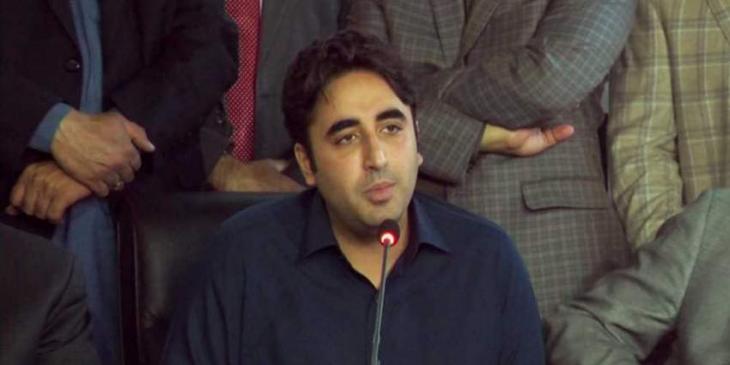
Pakistan People's Party (PPP) Chairman Bilawal Bhutto Zardari on Friday condemned the blast in a mosque in Pashtoonabad area of Quetta.
In a statement, he expressed his deep grief and sorrow over the loss of innocent lives and demanded from the authorities concerned to ensure better treatment facilities to those injured in the blast.

#Quetta - Two dead, several injured in blast inside mosque in Quetta

At least two people were killed and several injured in an explosion in a mosque in Quetta’s Pashtoon Abad area on Friday.
Rescue sources said, 15 people were injured in the blast with three said to be in critical condition at Quetta's Civil hospital. 
Police said the blast occurred inside Masjid Rahmania during Friday's prayers. 
Speaking to Geo News, the mosque administration said the blast occurred at 1:15pm and that there were approximately 30 to 40 people in the mosque for Friday prayers.
According to initial reports, the explosion shattered windowpanes of the houses nearby. The nature of the blast is yet to be determined. 
Police have cordoned the area and launched an investigation to ascertain the cause of the explosion.
Earlier this month, four policemen were martyred and 11 others were injured in a blast near a police van in Mini Market area of the provincial capital.
On April 14, at least 20 people were killed and dozens injured in a blast believed to be targeting the Hazara community in Quetta's Hazarganji sabzi mandi. 
Eight Hazara, an FC official and two children were among the dead. At least 48 others, including three security personnel, were injured in the blast.

Thursday, May 23, 2019

Video - #ChairmanNAB #BesharamNabBehayaChairman - Chairman NAB Leaked Audio Call - Javed Iqbal Leak Video With A Lady || Jumbo TV

Pakistani legislator kicked out of assembly for bringing her son


By Shereena Qazi

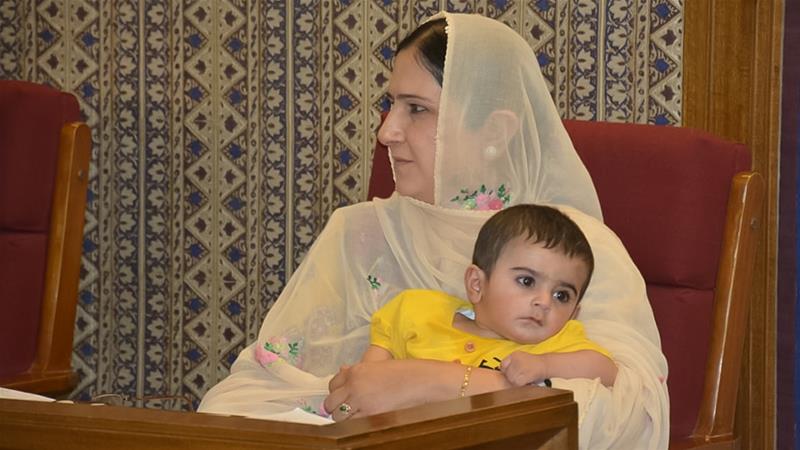
Mahjabeen Sheran, a member of the Provincial Assembly of Balochistan in Pakistan, who was asked to leave for bringing her unwell infant to the house, has vowed to campaign for establishing daycare centres in assemblies and government departments.
On April 29, Sheran was criticised by staff and fellow members of the assembly for bringing her seven-month-old son, who was sick and could not be left at home, to the chamber for a session. She was asked to leave the session.
"I was torn between attending the session and staying home taking care of my son," Sheran told Al Jazeera.
"So, I decided to bring my son because I didn't want to miss the session."
"We must respect those women who work and also take care of their household. It is not easy and we face challenges on daily basis."
MAHJABEEN SHERAN, A MEMBER OF THE PROVINCIAL ASSEMBLY OF BALOCHISTAN
Sheran is from Balochistan's Kech district and became a member of the assembly in 2018 on a reserved seat for women. She said it was the "worst" situation for her when she had to decide between taking care of her son and attending work.
"I felt embarrassed because some men in the session were making jokes and smirking about me bringing my son. At that point, I looked for someone to stand up for me and support me, but no one did," she said.
Several times in the past, Sheran had requested the assembly's secretary for a spare room to turn it into a daycare facility. Her request was denied repeatedly.
The legislator is now seeking support from political leaders and activists to establish daycare facilities in government offices and assemblies.
She said she will also propose a bill to allow mothers to bring babies to the assemblies and "to share the experiences of working mothers with men".

'Respect women'

A daycare centre was inaugurated in Parliament House in Pakistan's capital city Islamabad two years ago.
"How can a country succeed when the most important part of the society [women] are treated this way? Such incidents discourage women of this country from succeeding and being independent," Mumtaz Mughal, the regional director of Aurat Foundation, a non-profit organisation that works on women's rights and gender equality, told Al Jazeera.
"The fact that Mahjabeen Sheran was asked to leave for merely bringing her son to the session tells us that the patriarchal mindset exists heavily in our society and we have a lot of work to do in order to change that."
Sheran said she has seen women lawyers, activists and politicians taking their children to work if they have to. She said she was disappointed to know that bringing children to the assembly in Pakistan was against the law.
In a similar case as Sheran's, a Japanese politician, Yuka Ogata - a member of the Kumamoto City Assembly, was criticised by fellow members for trying to bring her baby to a council session. She said in her statement that she wanted to show the difficulties when women juggle with careers and raising children.
How can a country succeed when the most important part of the society [women] are treated this way?
MUMTAZ MUGHAL, REGIONAL DIRECTOR OF NON-PROFIT ORGANISATION AURAT FOUNDATION
Mette Abildgaard, a Danish MP, was asked to leave parliament after she brought her baby to the chamber in March this year.
In 2018, New Zealand Prime Minister Jacinda Ardern made history by attending the United Nations General Assembly accompanied by her newly-born baby.
Australian Senator Larissa Water became the first politician to breastfeed her two-month-old daughter during a vote in the country's parliament in 2017.
An Argentinian politician, Victoria Donda Perez, was praised for breastfeeding her infant daughter during a parliamentary session in 2015.
Back in Pakistan, Sheran's case went viral on social media, receiving support from people from across the country.
"People from all over the country were contacting me expressing their support for me and my campaign," she said.
"We must respect those women who work and also take care of their household. It is not easy and we face challenges on daily basis."

How the dangerous evolution of Pakistan’s national security state threatens domestic stability

By 

In February, a terrorist attack by Jaysh e-Mohammad (JeM) killed more than 40 Indian military personnel in the Indian state of Jammu and Kashmir. It triggered the worst escalation of India–Pakistan tensions for nearly two decades.The flare-up was a stark reminder that the Kashmir conflict appears to be intractable, with especially dangerous consequences for the weaker party, Pakistan.
At great economic cost, Pakistan has constructed a nuclear-armed national security state over many decades to counter the Indian “threat”. This somewhat ossified approach has done little to improve security in South Asia.
It is also generating dangerous new threats to stability inside the country.
The militarization of Pakistan during the Cold War
Kashmir has been in a geopolitical limbo, with a disputed border, ever since partition in 1947. The conflicting Indian and Pakistani claims to sovereignty over Kashmir have helped generate the emergence of a Pakistani national security state in which the military became a dominant political actor.
The Pakistan military has received the lion’s share of national resources and began acquiring nuclear weapons during the 1970s. But it has also played a key role in framing Islamabad’s national security policy.Because Pakistan was struggling to compete with India, which is much larger in terms of territory, population, economy and military power, it needed external support. The Cold War provided an opportunity for Pakistan to make an alliance with the US, which was looking to contain the Soviet Union in South Asia. In February 1954, the Eisenhower administration announced it was providing military assistance to Pakistan.American assistance significantly strengthened the role of the military and enabled it to become the key actor in Pakistan’s foreign and security policy. The civilian bureaucracy cooperated with the Pakistani military in a pragmatic fashion to help it exercise political control during the Cold War.The Pakistani judiciary provided legal justifications for military rule when required. Consequently, the Pakistani military ruled the country directly for 24 years from 1947 to 1988. During this period the parliamentary system was undermined and a “controlled democracy” became the norm.
Growing post-Cold War threats
The Pakistani military also used its political and administrative autonomy to establish its own commercial ventures. This included road building, real estate, cement factories and private banks. By establishing its own version of a military industrial complex, the Pakistani military assumed a dominant position in the country’s national security policies.The Inter-Services Intelligence (ISI) emerged during the Soviet occupation of Afghanistan in the 1980s as a second key player. Civilian political parties or leaders in Pakistan were effectively constrained in national security decision-making by a military-led coalition that encompassed intelligence agencies, the civil bureaucracy and the judiciary.The end of the Cold War did little to diminish Pakistan’s fixation with the Kashmir conflict. Its intense rivalry with India continued in South Asia, including in war-torn Afghanistan. But the post-Cold War era changed the strategic equation.First, India embarked on a successful process of economic liberalisation in the early 1990s. This significantly widened the wealth gap between a rising India and a desperately poor Pakistan.Second, the US no longer needed Pakistan after the Soviet withdrawal from Afghanistan in the late 1980s and drastically reduced its military support for Islamabad.
But the Pakistani national security state showed little willingness to adapt to the realities of a transformed strategic environment. Islamabad persisted with its involvement in proxy wars in Kashmir. It supported militant Islamist forces opposing the Indian presence and, in Afghanistan, it supported Taliban militants in a bid to counter Indian influence in that country.
In the post-Cold War context, Pakistan’s stance on national security has largely failed to balance India’s preponderance and generated significant new internal security threats from factions of Tehrik-e-Taliban (TTP) and other militant groups.
The war on terror and Pakistan’s dangerous double game
The 9/11 attacks helped restore Pakistan’s position as a key strategic partner of America in Washington’s war on terror. But the country’s national security state continued to pursue its anti-Indian agenda in Kashmir and Afghanistan, while ostensibly cooperating with US administrations in hunting down al-Qaeda terrorists in South Asia.
Osama bin Laden was eventually killed at a hideout inside Pakistan in May 2011, not far from a major Pakistani army base. This double game not only frustrated Washington, it also led to dangerous blowback at home.
Since the US-led war on terror, Pakistan’s internal security has been increasingly threatened by the activities of Taliban militants and the influx of al-Qaeda operatives into the country from neighbouring Afghanistan.
Over the past decade, Pakistan has experienced a gradual shift to more democratic processes. Nevertheless, the military has continued to play a dominant role in the making of foreign and security policy.
Today, Pakistan is a country in desperate need of peace and stability. But unless Pakistan’s national security state is reformed and brought under full civilian control, it is difficult to see how the country can reverse an ominous pattern of domestic instability and economic decline.

http://theconversation.com/how-the-dangerous-evolution-of-pakistans-national-security-state-threatens-domestic-stability-116886

Rape Allegations Against Pakistan’s Police


Saroop Ijaz
Prosecute Officers Implicated, Enact Wider Reforms.
 A 22-year-old woman in Rawalpindi district in Pakistan’s Punjab province reported to police that four men had abducted her at gunpoint and raped her. Most disturbingly, she alleged that three of the four assailants were police officers.
The authorities have since arrested all four suspects and suspended three police officers as criminal investigations proceed.
This is one of several recent incidents in which Pakistani police – the very people who should be tackling rape and protecting the public – have been accused of committing sexual violence. In April 2019, an assistant sub-inspector of police was charged with raping a woman in Bahawalpur district, Punjab. The woman had earlier gone to the police station to report that she had been gang raped, but says that the official later called her back to the station claiming he needed to record her statement, and then raped her. In September 2018, another police official was charged with raping a 6-year-old girl in Dera Ghazi Khan district, Punjab.
These cases highlight the difficulty Pakistan’s sexual violence survivors have getting recourse. Sexual assault victims often fear pressing charges because they and their families may become subject to harassment and intimidation by the police, due to harmful gender attitudes and pressure from perpetrators. Without proper witness protection, survivors can easily be intimidated into silence. These barriers reflect deeply entrenched gender inequality within Pakistani society, including in state institutions such as the police and judiciary.
The prompt police response in the Rawalpindi case reflected in large measure the willingness of the victim to speak up and the impact of media coverage. Now it’s up to local authorities to fully and fairly prosecute those responsible, whatever their affiliation.
Pakistan faces grave security challenges that require a rights-respecting, accountable police force able to protect the entire population. When police become perpetrators of sexual violence, the credibility of all police are damaged and victims are even less likely to seek their help. Pakistani authorities need to act decisively. They should ensure that police officers responsible for crimes are appropriately held to account; undertake long overdue reforms to increase the recruitment, retention, and promotion of female police officers; and make sure that female police officers are deployed so that all survivors of sexual violence get the assistance they need.

Bilawal Bhutto warns federal govt over taking administrative control of three Sindh hospitals

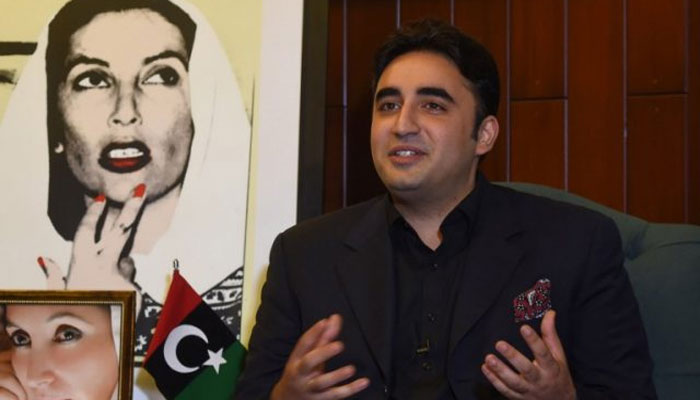
Chairman Pakistan Peoples Party (PPP) Bilawal Bhutto Zardari has strongly condemned the taking over of three key hospitals of Sindh by the Federal government and termed it as an attack on provincial autonomy.

In a statement, the PPP Chairman said “the people of Sindh have invested billions of rupees on revolutionary improvements in Jinnah Postgraduate Medical Center (JPMC). National Institute of Cardiovascular Diseases (NICVD) and National Health of Child Health (NICH) after these hospitals were handed over to the province under the 18th amendment.”
Expansion of NICVD hospitals to several cities of the province has excelled the performance of Sindh government, which paid for expensive cardiac treatments of patients from all over Pakistan, he added.
Bilawal Bhutto Zardari said that taking over these main health infrastructures without waiting for the final verdict of the Supreme Court on a review petition filed by Sindh government has displayed the arrogance of the Federal Government and a challenging contempt of the supreme judiciary by PTI government.
“An admission by NAB Chairman that he is holding back inquiries of corruption against government ministers to stop its imminent fall and the PTI government’s contempt of court action have exposed the constitutional crisis that the country is currently facing,” the PPP Chairman said.
He pointed out that PPP’s Sindh government was spending Rs12.5 billion on NICVD and Rs4 billion to JPMC annually to ensure quality free of cost treatments to patients from all over Pakistan. Sindh government has been providing state of the art health facilities to people from every corner of the country without any charges.
Bilawal Bhutto Zardari made it clear that his Party and the people of Sindh wouldn’t allow anyone to usurp the hard-earned assets of health facilities and categorically said that resistance will be mounted at every available forum, warning the Federal government to withdraw the said notification before the public outrage mounted.
https://www.thenews.com.pk/latest/475302-bilawal-bhutto-warns-federal-govt-over-taking-administrative-control-of-three-sindh-hospitals

Wednesday, May 22, 2019

Music Video - Da Zmungh Zeba Watan, Da Afghanistan Dai!!

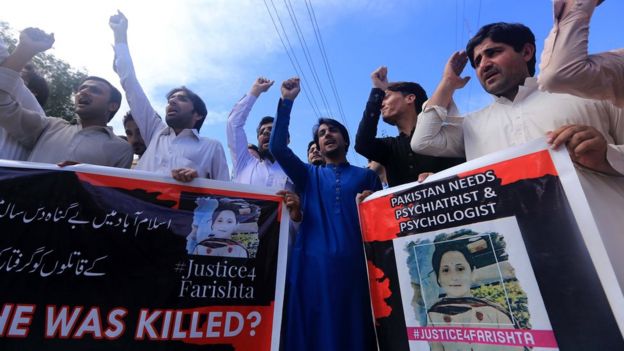
#میں_بھی_افغان_ہوں #FarishtaMohmand #Farishta: Outrage over #Pakistan child murder

The family of a 10-year-old Pakistani girl who was abducted and murdered have said they were ignored by police when they tried to report her missing.
They say police told them the child might have eloped, and they were made to carry out errands for officers
Farishta vanished in Islamabad on 15 May and a body believed to be hers was found on 20 May.
Police are investigating if she was raped and tortured, and protests are being held to demand justice.
The individual police officers involved deny wrongdoing.
Hundreds protested in central Islamabad on Tuesday calling for justice.
The case has been compared to the rape and murder of six-year-old Zainab Ansari in January 2018 - which sparked outrage and protests across the country. Calls for action are being made on social media, under the hashtag #JusticeFor Farishta.

What do the family say?

"The police didn't help us at all," Farishta's father Ghulam Nabi told the BBC at Tuesday's protest, which blocked a major intersection. "They would ask me to clean their office, to move their furniture, and to go get fruit for their Iftar [fast-breaking] dinner from the market.
"I was so distressed during those [four] days that I couldn't tell night from day."
n Wednesday, a case was formally registered against several police officials, alleging negligence. The chief of Shahzad Town police station, Muhammad Abbas Rana, has been suspended.
But he defended his and his officers' conduct, saying they had pursued the case and interviewed the family and neighbours on 16 May. He said the family were responsible for the delays in registering the case and that they did not follow it up properly. He denied they had been made to clean the police station.
A formal investigation was only launched on Sunday after a politician raised the case with the inspector general of Islamabad police.
The mutilated body of Farishta was found the following evening, triggering complaints that her life could have been saved had the police acted promptly.
Mr Nabi said that Mr Abbas Rana had initially refused to register a case - known as an FIR - telling him that his daughter might have "eloped with someone of her own free will". Mr Rana denied this.
Farishta went missing on Wednesday 15 May after she went out to play in the eastern Islamabad neighbourhood where her family lives. She did not return as expected when the evening call for prayer began at the local mosque - signalling the breaking of the daily fast.
At that time, families gather for a meal known as Iftar - and Farishta's absence triggered a panic.
After scouring the neighbourhood and checking with friends, her family went to the police to file a missing person report.
On Monday evening, their worst fears were realised when Farishta's body was found. After being told that the doctor meant to conduct the autopsy was on leave - and so it would be delayed - the family decided to stage a sit-in at the hospital.
They were joined by leaders and activists from the Pashtun Protection Movement (PTM), a group which advocates for the rights of Pakistan's minority Pashtun community, to which Farishta's family belongs.
They come from Mohmand, in north-west Pakistan, and are among tens of thousands of families displaced by Pakistan's war on terror in that region.
"The dead body lying in this coffin is not just mine but everybody's daughter," said Mr Nabi.

Iran gas pipeline deal with Pakistan hampered by US sanctions


Pakistan has backed out of a joint gas pipeline deal with Iran due to the threat of US sanctions. Pakistan could face a heavy financial penalty, as it promised to complete the project in a bilateral agreement with Iran.
Plans to complete a pipeline delivering Iranian gas to Pakistan stalled after Pakistan's energy ministry said last week that it could not continue with the project as long as Tehran was subject to US sanctions.
The pipeline agreement was first signed by Iran and Pakistan in 1995, and the US has repeatedly opposed the deal.
Iran completed its section of the pipeline in 2011, and reportedly offered Pakistan $500 million (€448 million) to help with construction. The estimated total cost of the pipeline is $7 billion (€6.2 billion).
The deal was originally conceived to deliver Iranian gas to India via Pakistan, but New Delhi withdrew from the agreement because of security issues and high costs.
Pakistan had singed an agreement to construct its section of the pipeline by the end of 2014. Under the conditions of the agreement, Pakistan could be subject to billions of dollars in penalties if it abandons the project. 
Pakistan's energy politics 
Pakistan has stepped up its imports of liquefied natural gas (LNG) from Qatar, and has also been importing LNG from the US since 2017. At the end of 2018, more than 40% of Pakistan's power demand was met by LNG.
Omid Shokri Kalehsar, a Washington-based energy security analyst, told DW that Pakistan was planning to diversify its energy supply while investing in renewable energy.
"If Pakistan can attract foreign capital to build its infrastructure in the energy sector, it will not be easy to realize the Iran-Pakistan pipeline project," he said. "US sanctions are another factor that forces Pakistan to find a better alternative to Iran."
According to Kalshsar, increased tension between Tehran and Riyadh has spurred Saudi Arabia to try and reduce Iran's role in providing regional energy security. 
Additionally, during his visit to Pakistan in February, Saudi King Salman proposed various energy projects, suggesting that Saudi Arabia could replace Iran as Pakistan's energy provider — at least in the short term.
Tehran threatens legal action
In February, Iran sent a formal letter to Pakistan and said that it was going to seek legal recourse if Pakistan backed out of the pipeline deal.
Pakistan reportedly asked Iran to reconsider, and said it was seeking funds to construct the pipeline, but had failed to find international support due to US sanctions on Iran.
Despite dropping out of the gas deal, Islamabad has been working to strengthen ties with Tehran. In April, Pakistani Prime Minister Imran Khan visited Tehran and met Iranian President Hassan Rouhani to discuss boosting bilateral economic development. 
However, Peter Frankopan, professor of global history at Oxford University, told DW that the pipeline deal would have been problematic even without US sanctions for "cost, security and strategic" reasons.  
A 'dead' project
Tehran is desperately seeking allies after renewed sanctions from Washington. Last week, Iranian Foreign Minister Javad Zarif visited New Delhi, shortly after India decided to follow US restrictions on buying Iranian oil.
Although Iran has massive natural gas reserves, sanctions, political tension and technology deficits prevent the country from taking full advantage of its gas resources. 
Iran currently exports 36.24 million cubic meters of gas every day. And although Tehran has announced plans to increase gas exports, its current share in the global natural gas market is less than 1%.
"This project appears to be dead in the water," Michael Kugelman, a South Asia expert at the Washington-based Woodrow Wilson Center for Scholars, told DW.
"Tensions between India and Pakistan, resistance from Pakistan's Saudi ally, and the US sanctions regime on Iran are also formidable obstacles and preclude any forward movement." 
Fatemeh Aman, a senior fellow at the Atlantic Council, a US international affairs think tank, told DW that Pakistan lacks both the funds and the will to complete the pipeline, and it does not want to spoil relations with its allies. 
"Pakistan's economic situation is much worse than when the project started," said Aman, adding that the pipeline would have had an enormous impact on the geopolitics of the region.
"Any multinational economic project, especially in the volatile South Asia region, could benefit the entire region and enhance its security," she said. "However, considering the current standoff between Iran and the US, along with the opposition of Iran's neighboring Arab states to this pipeline project, it seems that the project will not survive."

د ماشومې فرشتې د حيا پر لوټلو او وژلو د خواشينۍ ځانګړی پيغام #میں_بھی_افغان_ہوں

له هغې ورځې چې د لوی افغانستان جغرافيه په وجود نيمه شوې ده، له هماغه ورځې بیا تر ننه په لروبر کې د ناخوالو، وژنو شاهدان پاتې شوي يوو.
تر کله به زموږ په محکوم افغانستان کې زموږ پر حيا، ناموس او عزت ته د پنجابي تور لاسونه اوږديږي او د هرې ورځې په تېرېدو سره دغه جرايم پورته ځي او موږ پر دې يقيني يوو، چې پنجاب د پې، ټې، ايم په وجود کې د خپلې جغرافيې د ماتېدو حقيقي تصوير ويني.
په جنوبي او شمالي وزیرستان سربېره چې هلته پنجابي فوځ او ترهګرو وحشتونه کړي دي، ټول خبر يوو، خو دا چې اوس زموږ ولس د خپل حالت د بدلون او پنجابي عذاب څخه د خلاصون غږ پورته کړی دی، نو پنجابي اسټبلشمنټ، استخباراتي او فوځي ادارې د پښتون افغان د وژلو او پر ناموس يې د داغ لګولو هڅې زياتې شوې دي.
وړوکي لس کلنه پرښته چې پنجابي پوځ له ځان سره وړې وه، ډله ييز جنسي تېری کړی او بیا يې په شهادت رسولې ده، پنجابي پوځ زموږ په مال، سر او ناموس باندې هيڅ لاس نه نيسي، بلکې زموږ د تيت او پرک کولو لپاره له هرې حربې کار اخلي.
پنجاب دې حقيقت ته رسېدلی دی، چې نور يې په محکومه خاوره د اشغال او استبداد لړۍ خاتمه مومي او پښتون افغان له سره ژوند پيلوي.
موږ ډېر درېدلي يوو، د زېبا مومند د عزت لوټلو په هڅه کې پنجابی پوځي مردار شو، د خیسورې د حیات خان او اوس بیا د وړه فرښته مومند باندې جنسي تېری او مرګ د دوی د وحشت ښکاره بېلګې دي.
دې ملت د يووالي اراده لري، د خپل پت، عزت او سر خونديتوب د پنجاب په بربادۍ او ورکه کې ګوري، پنجاب به د خپلو ټولو وحشتونو پور پرې کوي.
په درنښت
جميل وقار
د لوی افغانستان تحريک ریس

پاکستان امریکی ڈالر سے جان چھڑا بھی سکتا ہے یا نہیں

12 مئی 2019 کو پاکستانی حکومت کے عالمی مالیاتی ادارے (آئی ایم ایف) کے ساتھ چھ ارب ڈالر قرض کے معاہدے پر اتفاقِ رائے ہوا تو اُس وقت ملک میں ایک ڈالر کے مقابلے میں روپے کی قدر 141 روپے تھی۔