Wednesday, May 15, 2019

Pakistan: Stifled Media – Analysis

By Sanchita Bhattacharya
On April 30, 2019, unidentified assailants shot dead journalist Malik Amanullah Khan near Landa Sharif Adda on the Multan-Dera Road in Paroa Tehsil (revenue unit) of Dera Ismail Khan in Khyber Pakhtunkhwa. Amanullah Khan was a local reporter who wrote for Urdu daily Meezan-e-Adl and was Chairman of Paroa Press Club.
Earlier, on December 3, 2018, Nurul Hasan, a Nowshera-based reporter of a private television channel, was shot dead by unknown motorcyclists in Peshawar, the provincial capital of Khyber Pakhtunkhwa.
According to South Asia Terrorism Portal (SATP) database, available since March 2000, the first incident of killing of journalists was recorded on February 7, 2005, when two journalists were shot dead by armed assailants in Wana, the headquarters of the then South Waziristan Agency of the Federally Administered Tribal Areas (FATA).
Since then, according to partial data collated by SATP, at least 38 journalists have been killed in Pakistan. A high of six journalists were killed in the year 2013 followed by five in 2010; four each in 2009, 2011 and 2012; three each in 2014 and 2015; two each in 2005 and 2017; and one each in 2006, 2007, 2008, 2018 and 2019. No such fatality was recorded in years 2000 to 2004. These numbers are likely underestimates. 
Also, according to the Committee to Protect Journalists (CPJ), at least 61 journalists have been killed in Pakistan between 1992 and 2018. A maximum of eight journalists were killed in 2010 followed by seven each in 2011 and 2012; five each in 2007, 2008 and 2013; four in 2009, three in 2014; two each in 1994, 2002, 2005, 2006 and 2016; one each in 1997, 2000, 2003, 2004, 2015, 2017 and 2018. No fatality was recorded in years 1992, 1993, 1995, 1996, 1998, 1999 and 2001.
Journalists in Pakistan have been subjected to abduction; murder by beheading, target killing, throat-slitting, hurling of bombs and beating to death; physical torture and suicide attack. And it is not just terrorists, insurgents, separatists, gangsters and drug traffickers whom journalists have to fear: state sponsored actors, including intelligence agencies, also pose a threat.
In one prominent case, on May 29, 2011, Saleem Shahzad, Pakistan Bureau Chief of Asia Times Online, was abducted after he exposed links between al Qaeda, a group of Naval personnel and the Inter-Services Intelligence (ISI) in the attack at the Pakistan Naval Station (PNS) Mehran within Faisal Naval Airbase in Karachi. 10 Security Force (SF) personnel were killed in the terrorist attack. Later on, June 1, 2011, his body was found with signs of torture, in the Mandi Bahauddin District of Punjab Province. In July 2011, The New York Times reported that US officials had reliable intelligence that showed that the ISI was responsible for Shahzad’s murder. Predictably, in January, 2012, Pakistan’s official commission of inquiry concluded that the perpetrators were unknown, a finding that was widely criticized as lacking credibility.
Though the available data clearly indicates that fewer journalists have been killed over past few years, reports show that the media is more stifled than it was earlier. The CPJ Annual Report 2018 thus observes,
…Despite a decline in fatal violence against journalists the media environment is worse today than it has been in recent years… Intimidation and threats of assault have led journalists and editors to avoid reporting stories on topics that would lead them into trouble. These topics include a wide range of touchy issues: religion, Chinese investment, relations with India, militant groups, and criticism of the military.
Another CPJ report, Acts of Intimidation: In Pakistan, journalists’ fear and censorship grow even as fatal violence declines, based on interviews with journalists across Pakistan, released on September 12, 2018, highlighting the plight of journalists in the country, noted that “the deterioration in the climate for press freedom in Pakistan accompanied a reduction in murders and attacks against the media” and “the two trends are linked, with measures the military took to stomp out terrorism directly resulting in pressure on the media”. The report adds, further, “conditions for the free press are as bad as when the country was under military dictatorship, and journalists were flogged and newspapers forced to close”.
More importantly, the September report, underlined the role of military in suppressing Press freedom,
The military garnered widespread praise for its crackdown on militancy after the school attack, which resulted in a sharp decline of terrorist incidents — and in turn, violence against journalists. Yet the stepped-up activity put the military in position to exert even greater control. The military has quietly, but effectively, set restrictions on reporting: from barring access to regions including Balochistan where there is armed separatism and religious extremism, to encouraging self-censorship through direct and indirect methods of intimidation, including calling editors to complain about coverage and even allegedly instigating violence against reporters. The military, intelligence, or military-linked and political groups were the suspected source of fire that resulted in half of the 22 journalist murders in the past decade. Hence it is easy to see how the military’s widening reach is viewed as a source of intimidation. The military has clashed with Pakistan’s elected government, which tried and ultimately failed to assert civilian control. Journalists find themselves in the middle of this battle, struggling to report while staying out of trouble.
Significantly, during the months before the 2018 General Elections of Pakistan, several journalists were beaten, abducted and otherwise intimidated, with just one thread tying them together – their criticism of the military.The witch-hunt against the media began after journalist Matiullah Jan wrote highly critical articles against Pakistan’s military and judiciary. On June 4, 2018, military spokesperson Major General Asif Ghafoor held a press conference where he claimed that a handful of journalists and bloggers were “anti-State and anti-military”. Unsurprisingly just a day later, on June 5, 2018, columnist and political commentator, Gul Bukhari was abducted in an Army-controlled area of Lahore by unknown attackers, including men in military uniform. She was, however, freed a few hours later.
On the same night, BOL TV broadcast journalist Asad Kharal’s car was intercepted by masked men near Lahore airport, and he was taken out of the car and beaten. He received severe injuries and was taken to Lahore Services Hospital for medical treatment.
Earlier, on January 10, 2018, prominent Pakistani journalist Taha Siddiqui was beaten and threatened by armed men, during an attempt to kidnap him in broad daylight, as he took a taxi to the airport in the capital, Islamabad. A few weeks after the incident, he relocated to Paris (France). According to a July 2018 report, Siddiqui claimed,
The army and intelligence agencies were threatening me and I suspect the people who tried to kidnap me were from the army. They do not like investigative reporting that uncovers the wrongdoings of those institutions.
According to an October 2018 report, several journalists and editors were of the opinion that the ongoing hostility towards media, was more dangerous than it had been under previous Governments. They saw it as coming from all pillars of the state, with Imran Khan’s government considered closely in sync with the courts and the military. The military is accused of pressuring the courts to block any opposition or even criticism of Pakistan’s Army.
Indeed, impunity and a lack of prosecution has characterised many of the attacks on journalists in Pakistan. The impunity enjoyed by killers of journalists in Pakistan is among the highest in the world. According to a report shared by International Center for the Protection of Media Freedom and Defending the Rights of Journalists (ICPFJ) on October 31, 2018, murdered journalists and their families had received justice in only one of 26 cases over the preceding five years. Iqbal Khattak, the Executive Director of Freedom Network, which prepared the report, observed, “Journalists continue to get target killed and threats against them continue to grow and the State’s legal system (police failure) and justice system (courts failure) have failed to provide them justice.”
Significantly, amidst this enveloping environment of intimidation, fear and state failure, Cyril Almeida, the Assistant Editor of Dawn, was awarded the 2019 World Press Freedom Hero award by the International Press Institute for his ‘critical’ and ‘tenacious coverage’ of the Pakistani military-security complex. Significantly, Almeida is under trial for treason – an offence that carries a potential death penalty – for an interview with former Prime Minister Nawaz Sharif, in which the latter accused the Pakistan Army of aiding the terrorists who carried out the 2008 Mumbai attacks, which killed 175 people, including 144 civilians, 22 Security Force personnel and all nine attackers. Afzal But, President of the Pakistan Federal Union of Journalists, notes, “This is the darkest period for journalism in the country’s history, no doubt about it.”
Assessing the overall situation of media, CPJ Asia Program Coordinator, Steven Butler, stated,
While the decline in the killing of journalists is encouraging, the government needs to counteract pressures that have resulted in rampant self-censorship and threats to the media. Pakistan must address the disturbing trend of impunity and attacks on journalists to shore up this faltering pillar of democracy.
Against this backdrop, Pakistan saw its first-ever two-day (May 2 and May 3, 2019) Sahafi (Journalist) Summit held in Karachi, the provincial capital of Sindh, to discuss at length the fast-emerging challenges to journalism in the country, including threats to independent news media from digital disinformation and financial cuts. The summit reportedly generated robust and inclusive discussions on the current challenges faced by the news industry in Pakistan, focusing, inter alia, on the coordinated and malicious spread of disinformation, the crisis of media literacy, regulations and the broadcast media’s struggling business model for revenue generation. The challenges faced by Pakistani women reporters were also discussed along with Pakistan’s media economy, including the issue of mass layoffs, investment in digital news and services and the role of news media owners.
In a society fixated on ‘righteous’ conduct overwhelmingly defined by religious extremism and militarized hypernationlism, journalists have come to dread violence for doing their job. With repeated physical attacks, fear has taken over the media, resulting in unprecedented self-imposed censorship. 

#Pakistan - #MyHealthMinisterIsTerrorist - #Peshawar doctors boycott OPDs after brawl with health minister

Doctors boycotted the outpatient departments at all government hospitals across Khyber Pakhtunkhwa Wednesday after an associate professor was beaten allegedly by Health Minister Hisham Inamullah Khan.
According to the KP Doctors Council, their primary demand was that an FIR be registered against the beating of Dr Ziauddin and a judicial inquiry be opened against Inamullah Khan. Dr Ziauddin works at Khyber Teaching Hospital.
The minister and his guard beat the assistant professor during a meeting of the hospital board of governors.
Dr Ziauddin and the minister shouted at each other during the meeting.
The minister claimed, however, that Nausherwan Burki, a cousin of Prime Minister Imran Khan, was egged by young doctors.
Inamullah Khan has said that when he reached the hospital to inquire further, he too was attacked. He claimed that Dr Ziauddin had attacked him but he was saved by his bodyguards.
A case has been later registered against Dr Ziauddin on the minister’s request. The police have arrested four young doctors after identifying them from CCTV footage of egging Burki.
Chief Minister Mahmood Khan summoned a report after ordering an immediate inquiry.

#Pakistan #PPP - Bilawal Bhutto writes letter to #NAB

Pakistan People’s Party (PPP) chairman Bilawal Bhutto Zardari has responded to the letter of National Accountability Bureau (NAB), Chief Minister’s Advisor on Information Barrister Murtaza Wahab has confirmed.
In the letter, Bilawal writes he could not appear before the anti-graft body on May 17 owing to some crucial engagements.
Bilawal Bhutto Zardari urged the NAB to set any date in the next week so that he could appear before it.The advisor said “PPP chairman he received letter from NAB on May 13. The letter was written on May 08.”

Tuesday, May 14, 2019

Video - Mai Baghi Hoon (Jeyay Bhutto)

Video Report - PTI Gives New Tax Amnesty Scheme To Pakistan | Najam Sethi Show | 14 May 2019

Video Report - Pakistani girls sold in China's 'bride market'

Video Report - Why Pakistani Girls Are Getting Married With Chinese Men?

Pakistan signed deal with IMF : Will it bring new taxes and Inflation?

We all know who’s behind ‘NABgardi’: Bilawal Bhutto

Pakistan Peoples Party Chairperson Bilawal Bhutto Zardari remarked on Tuesday that everyone knows who is behind the latest spade of ‘NABgardi’. 

“Our three generations have been battling them,” he wrote in a tweet on social media. “We will not stop now.”
The tweet comes the same day the National Accountability Bureau summoned him in the Park Lane cane on May 17, Friday. This is the second time he will appear before NAB in the case.


Pakistan: The Chant Of ‘Da Sanga Azadi Da’ – OpEd

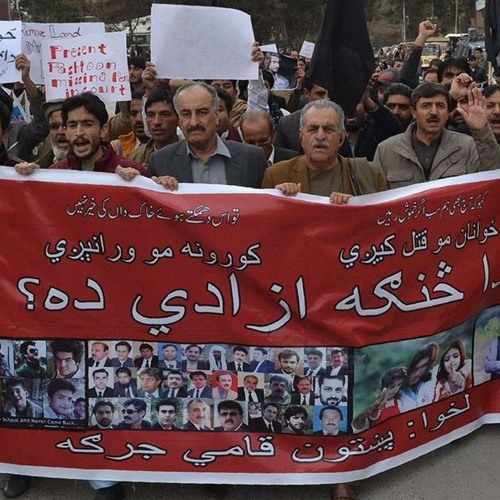
Nearly 15% of population of Pakistan (around 200 million) belongs to Pashtun ethnicity. Time and again our Pashtun brothers and sisters have proved their loyalty and love for Pakistan and sacrificed the most be it in terms of Pakistan movement or later whenever any rough time and situation arises in the border region or when the military operation was conducted in the North West region and they had to become IDPs. However, the slogan “Da Sanga Azadi Da” (what kind of freedom is this?) is voice of many Pashtuns these days and its echo can now be heard in whole country and raising many questions in minds of all Pakistanis. PTM – Pashtun Tahaffuz Movement; is the recent conflict the state and people are facing these days.
Looking back, the journey of PTM is not very long, being established by 8 university students in May 2014 with very basic demand of removing the landmines from tribal areas which had claimed more than 40 lives. The case of NaqeebUllah Mehsud and controversy of Rao Anwar, unfortunate incident of Tahir Dawar and all those missing persons cases brought the PTM in spotlight since 2018. This was the time PTM started gaining support from masses and people joined and rendered their support for them as the demands seemed genuinely worth considering. At the same time, the controversies and scandals started surfacing regarding PTM’s chairman and leadership– the Khaisor event and allegations of Matorkey brothers, and among them there are now voices of foreign hand involved behind PTM activities. Between this scramble of truths and politics and controversies and messed up situation, the major concern is its impact on a common young mind particularly Pashtun youth and those from the tribal belt – now part of KPK.
This goes without saying that the love for our forces and homeland runs in our blood and there is sheer intolerance for all anti state sentiments in our hearts. Amongst all the recent developments including the stance of government, the voice of Pashtuns, the statements of Pakistan Army, the media talk and analysis and all the other voices of political parties and human rights organizations makes a young mind inquisitive and curiosity of finding the facts and truth with the debate of patriotism and treachery reaches its peak. Being a young student, I have my own set of questions.
The PTM’s influential circle is mostly youth and young adults. University students and other educated/ well aware young adults who have paid a hefty price throughout their lives owing to a tiresome battle for peace they are fighting and now torn between militants and military. The sacrifices these people have made by leaving their houses and land and going through the struggles of rehabilitation and are still being scrutinized for what the militants and terrorist groups have done to them and their areas. The required support from government and other institutions is lacking for them. The basic demands of PTM is therefore voice of their hearts and these grievances have now become deep rooted and serves as a fertile land for all the anti state powers; be it the foreign agencies and militant groups from across border, regional politics and all others who have evil plans for our dear homeland and exploitation for them becomes very easy. Foreign funding, media access (as local media is not giving them coverage), international and national support at various forums etcetera are the baits being used.
Considering the severity of situation, the state cannot just sit idle and has to take actions which are bound to be disliked by the targeted community. The culprits or black sheep will get their due share but the sufferers are only going to be those young minds and people who once again put their trust in the wrong hands maybe, or whose sentiments and emotions have been exploited once again by people of some other motives who got off track by the period of time and nobody will claim responsibility of all this messed up situation from both ends – the PTM or the state.
Every new day is bringing new things and new dimensions to this conflict but need of time is to secure the future of our precious Pashtuns who love Pakistan no less than others and who are being held hostage time and again previously by the militants who are now again trying to reclaim them directly or indirectly and now by some other nationalists who are accusing the armed forces openly for all their issues (Ye jo dehshatgardi hai; iske peeche wardi hai). The correct answer to this puzzle lies only in genuine and considerate resolution of their mainstream problems. To share and make them understand the limitations (if there are any) so that they themselves can fight the elements who try to take advantage from plight of others. Hoping things to turn out the best way possible for resolution of this conflict and may our Pashtun brothers and sisters experience Azaadi the way they want!

Fresh #IMF deal a 'political blow' to #Pakistan PM Imran Khan


By  Haroon Janjua

After months of difficult negotiations, Islamabad and the International Monetary Fund (IMF) declared on Sunday that they had reached an agreement on a fresh bailout package for Pakistan. If the deal is approved by the IMF's management, the South Asian nation will receive $6 billion (€5.34 billion) in financial assistance over a period of three years to stave off a balance-of-payments crisis.
Abdul Hafeez Shaikh, Pakistan's de facto finance minister, told the state-run Pakistan Television that he hoped it would be his country's last bailout package from the IMF.
Under the deal, Pakistan would give up central bank control of the currency to adopt a market-based exchange rate and take measures to improve the functioning of loss-making state-owned firms as well as curtail subsidies, among other things. The World Bank and the Asian Development Bank would provide up to $3 billion in additional assistance in pursuance of the IMF deal, Hafeez Shaikh said.
The economy of the majority-Muslim nation with a population of over 200 million has slid deeper into crisis since Imran Khan took over as prime minister last year. Burgeoning fiscal and current account deficits and a dip in revenues from tax collection are at the heart of the crisis. "Pakistan is facing a challenging economic environment, with lackluster growth, elevated inflation, high indebtedness, and a weak external position," Ernesto Ramirez Rigo, who led the IMF mission to Pakistan, said in a statement on Sunday. "The authorities recognize the need to address these challenges, as well as to tackle the large informality in the economy, the low spending in human capital, and poverty."
A challenging environment
"Through the IMF bailout package, Pakistan will resolve its balance-of-payments crisis. There is currently a financing gap of $12 billion and the bailout will help bridge the gap this year as well as in the coming three years," Minister of State for Revenue Hammad Azhar told DW.Pakistan has gone to the IMF numerous times since 1980 seeking bailouts. The country has had a tense relationship with the lender as the conditions attached to the assistance are always unpopular.PM Imran Khan initially appeared reluctant to approach the IMF for aid, fearing that it would impose tough conditions on government policy. Instead, Khan's administration sought billions of dollars in help from "friendly countries," including Saudi Arabia, China and the United Arab Emirates, to fix the nation's finances.But with inflation climbing to over 8%, the rupee losing a third of its value over the past year, and foreign exchange reserves barely enough to cover two months of imports, it was forced to turn to the IMF.
Growing discontent
Analysts have warned that any IMF deal would likely come with strict conditions that could restrict PM Khan's ability to fulfil his grand promises to build an "Islamic welfare state," as the country is forced to tighten its purse strings.
"The IMF deal, with the austerity measures it will entail, will be a political blow to a Pakistani government that had promised to build out a new welfare state," Michael Kugelman, a South Asia expert at the Washington-based Woodrow Wilson Center for Scholars, told DW. "The IMF package will make it quite tough for Khan to achieve his economic promises and therefore undercut the populist image that he has sought to showcase to the electorate," he added.
This view is shared by Kaiser Bengali, a renowned economist in Pakistan. "The IMF has an agenda to privatize the assets of the country, which will lead to massive unemployment," said the expert.
The bailout announcement comes as discontent is already growing over measures Khan's government has taken to fend off the crisis, including devaluing the rupee by some 30% since January 2018, sending inflation to five-year highs.Khan came to power after winning a simple majority in last year's parliamentary elections on promises to improve the country's economy and provide jobs to people. But his critics say his government has so far not been able to honor his commitment to the masses. A government report published on Friday also noted that Pakistan's growth rate is set to hit an eight-year low, with the country's GDP rate likely to sink to 3.3%t against a projected target of 6.2%.
But some observers say the IMF package will be beneficial to end the growing uncertainty and build investor confidence. "The deal will put an end to uncertainty and improve Pakistan's financial situation," Abid Sulehri, an economist, told DW. "Even though it might have some negative effects, in the form of a rise in inflation, it will produce positive results in the long run."
US support?
When asked why China didn't come to Pakistan's rescue, Minister Azhar said: "China has already been providing funding for Pakistan's trade and infrastructure development, and we opted for the IMF funding so as to introduce structural reforms in the economy."The United States, which has tremendous influence over the IMF, warned last year that any potential international bailout for Pakistan should not provide funds to pay off Chinese lenders."Make no mistake. We will be watching what the IMF does," US Secretary of State Mike Pompeo said. "There's no rationale for IMF tax dollars, and associated with that American dollars that are part of the IMF funding, for those to go to bail out Chinese bondholders or China itself," Pompeo added. It's not yet clear if the bailout agreement reached on Sunday enjoys Washington's backing.Pakistan's crisis also comes as the country is facing possible sanctions from the Financial Action Task Force — an anti money-laundering monitor based in Paris — for failing to rein in terror financing.
The organization will soon decide whether to add Pakistan to a blacklist that would trigger automatic sanctions, further weakening its already faltering economy.

Pakistan is worried about conditions behind IMF’s $6 billion bailout, stock market crashes


 and 
National security imperatives of the waters are rising as surely as the sea levels around the world because of climate change.
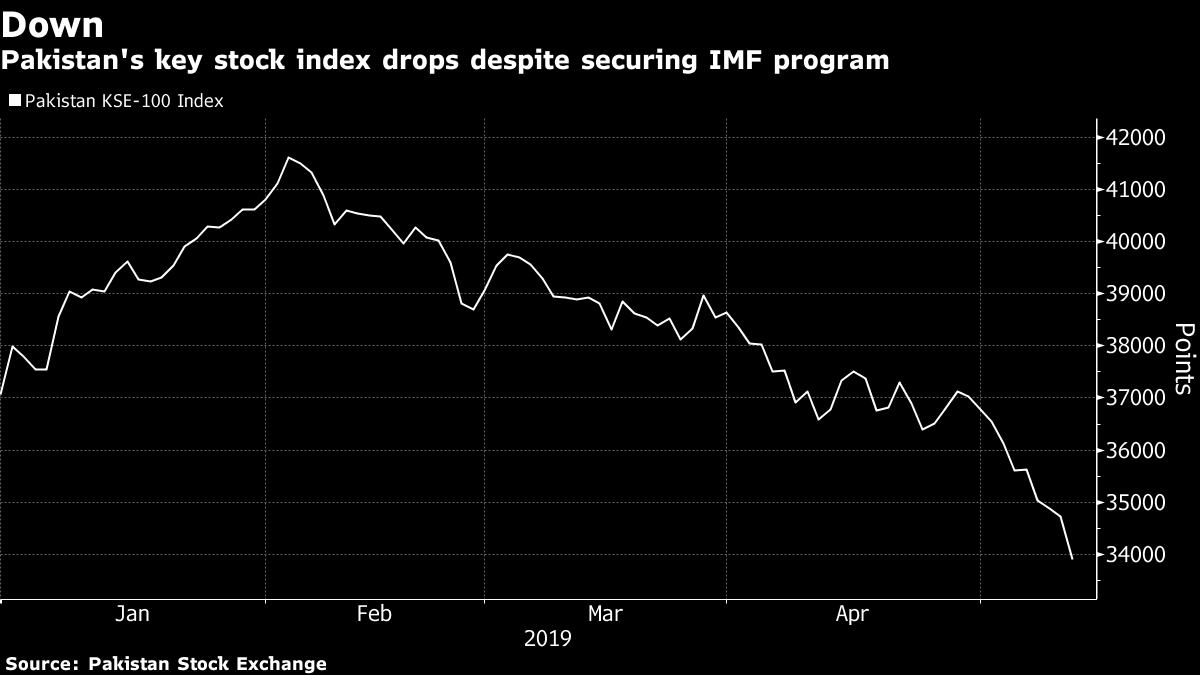
Pakistan’s stock market fell the most this year amid concern about the steps needed to seal a $6 billion loan agreed on with the International Monetary Fund.
The lender’s executive board will meet to approve the agreement for the 39 month loan, “subject to the timely implementation of prior actions and confirmation of international partners’ financial commitments,” IMF’s mission chief Ernesto Ramirez Rigo said in a statement.
A lack of clarity around these actions prompted speculation about further currency devaluations and interest rates increases, which rattled markets, according to NBP Fullerton Asset Management Ltd. and FIM Partners.
The loan would represent the 13th bailout since the late 1980s from the IMF to Pakistan, which is facing a balance-of-payments crisis triggered by high fiscal and current-account deficits and dwindling foreign exchange reserves. The pact was reached after Prime Minister Imran Khan overhauled his economic team, including the installation as central bank governor of Reza Baqir, who previously served in senior positions at the IMF, including in Egypt.
“The IMF statement is understandably vague at this stage and that is leading to more speculation,” said Mohammed Ali Hussain, Dubai-based head of research at FIM Partners, which handles $2.1 billion in assets. “Granular details about the program as well as the timing of conditions will play a role in market sentiment.”
An Egypt-style program, where most changes are required at the start, would be bad for sentiment though a gradual one “may play a bit better,” he added.
The nation’s benchmark KSE-100 Index of stocks fell 2.35% at close, the most in more than five months, erasing earlier gains of 1.5%. The rupee was little changed.

Graph: Bloomberg

More Needed

IMF’s Rigo noted efforts to stabilize the nation’s economy but said more needs to be done.
“Decisive policies and reforms, together with significant external financing are necessary to reduce vulnerabilities faster, increase confidence, and put the economy back on a sustainable growth path,” he said.
Abdul Hafeez Shaikh, an economic adviser to the prime minister, told state-run Pakistan Television that there had been some overspending by the government, so to “recover costs we will have to increase prices in certain areas of the economy.” The IMF facility “should be taken as a program of structural changes” and its success depends upon how successfully the country implements it, he said.
Pakistan agreed on a bailout after almost a six-month delay that prompted rating companies to downgrade the nation’s credit score earlier this year. The central bank has already devalued the currency by about 20% in the past year, making it the worst performer in Asia, according to a basket of 13 currencies compiled by Bloomberg.
“Any currency adjustment should be made as soon as possible,” said Amjad Waheed, chief executive officer at NBP Fullerton Asset Management Ltd., the nation’s largest mutual fund. “This will give confidence to foreign investors to enter the market. It will also encourage local investors to move towards equities.”
Prime Minister Khan has faced criticism from economists and opposition parties for delaying the loan and mishandling the economy. Khan had said the program was delayed as he set about securing more than $7 billion of loans from Saudi Arabia, the United Arab Emirates and China. While the IMF loan also doesn’t solve the financing gap, it opens up the possibility of Pakistan accessing debt markets, according to Hasnain Malik, head of equity strategy at Dubai-based Tellimer.
“This bailout package should be a positive in the medium to long run, provided the reform agenda is religiously pursued,” said Khurram Schehzad, chief executive officer of financial advisory firm Alpha Beta Core.
Pakistan’s opposition parties have asked for a parliamentary briefing on the details of the IMF loan agreement.
“We don’t accept it like this,’’ said Senator Sherry Rehman of Pakistan People’s Party, the nation’s second-biggest opposition party. “It seems that the agreement will bring a tsunami of price hikes.”

Deadly bomb attack targets policemen in Pakistan's Quetta


By Asad Hashim
Several wounded as bomb targets police vehicles outside a mosque in the third attack in Balochistan in three days. At least four policemen have been killed and several others wounded after a bomb attack targeted their vehicles while they stood guard outside a mosque in Pakistan's southwestern Balochistan province.
The attack on Monday night, third in the region in three days, targeted two police vehicles parked in the Satellite Town area of Quetta, the provincial capital of Balochistan, said city police chief Abdul Razzaq Cheema.
"Police vehicles provide security in various parts of the city for Taraweeh prayers [special prayers during Muslims' holy month of Ramadan]," Cheema told reporters. "As two of these vehicles stopped outside the al-Huda mosque, an explosion took place."
Twelve people were admitted to the city's main government hospital following the attack, the hospital spokesperson told Al Jazeera before adding that two of them were suffering from serious head wounds.
Images from the blast site showed blood and glass strewn across the wrecked police vehicles.
The attack comes two days after at least three gunmen stormed a five-star hotel in the southern Balochistan port city of Gwadar, about 700km south of Quetta, killing at least five people and engaging in a gun battle with the military that lasted several hours.The Baloch Liberation Army (BLA), an armed ethnic Baloch separatist group, claimed responsibility for that attack.On Saturday, two paramilitary soldiers were injured in an improvised explosive device (IED) blast in the province's Pishin district, about 70km north of Quetta, local media reported.The Pakistan Taliban, an armed group that has been fighting since 2007 to impose a strict interpretation of Islamic law in the country, claimed responsibility for the Pishin attack as well as the Monday's explosion in Quetta.
Targeted killings
Balochistan is Pakistan's largest and least-populated province. It has seen regular violence in recent years, with attacks claimed by Baloch separatists, Pakistan Taliban and local affiliates of the Islamic State of Iraq and Syria (ISIL or ISIS).
It has also seen a series of killings and bombings targeting Quetta's minority Shia Muslim population, killing more than 509 people, according to government data.
The province, rich in mineral and natural gas reserves, is also the focal point of much of the $60bn China Pakistan Economic Corridor (CPEC) project's trade component, with a new port constructed at Gwadar and a network of roads under construction.
The CPEC trade corridor will link southwestern China with the Arabian Sea through Pakistan, culminating in the port at Gwadar.
The Pakistan Taliban has frequently targeted Pakistani security forces and civilians in Balochistan, with attacks increasing in frequency as the group has been displaced from its erstwhile headquarters in Pakistan's northwestern tribal districts by sustained military operations.
The group is now believed to be based mainly in eastern Afghanistan, carrying out sporadic large-casualty attacks against civilians and government.

Video Report - Pakistan and IMF Sign Bailout Package With Severe Economic Cost | Najam Sethi Show | 13 May 2019

Monday, May 13, 2019

#Pakistan - Opposition rejects govt’s $6bn bailout deal with #IMF - #PTIMF


The two main opposition parties in the National Assembly, the Pakistan People’s Party (PPP) and the Pakistan Muslim League-Nawaz (PML-N), on Monday rejected the government’s bailout deal with the International Monetary Fund (IMF).
PPP leader Nafisa Shah said that those claiming to bring about change had only given inflation to the people. She said that the Pakistan Tehreek-e-Insaf (PTI) government had reached a deal with the IMF without taking anyone into confidence.
Meanwhile, PML-N leader Ahsan Iqbal said that the opposition would jointly react to the government policies on the occasion of budget announcement in the National Assembly (NA). PML-N spokesperson Marriyum Aurangzeb said that Prime Minister (PM) Imran Khan had shown his ineligibility by handing over the country to the IMF for only $6 billion. The conditions for bailout package would bring poverty, inflation and unemployment, she added.
Earlier on Sunday, Pakistan had reached an accord with the IMF for a three-year, $6 billion bailout package aimed at shoring up fragile public finances and strengthening a slowing economy. The deal, which still needs approval by the IMF board in Washington, would be the 13th such bailout since late 1980s. “Pakistan is facing a challenging economic environment, with lacklustre growth, elevated inflation, high indebtedness and a weak external position,” the IMF said in a statement, outlining the framework deal. The IMF forecasts Pakistan’s economic growth slowing to 2.9% this fiscal year from 5.2% in 2018, while the central bank has cut its estimate to between 3.5% and 4%.

#Pakistan - #PTIMF - He doesn’t know


By Najam Sethi


Acheeky reporter asked Imran Khan the other day whether it was easier to lead the opposition than to run government. Pat came the reply: “Government”. The Prime Minister couldn’t be more wrong. As he stumbles from one stupid decision to another, he would be advised to heed the wise old man with a leaky umbrella: If you know that you don’t know, you can learn and become a wise man; but if you don’t know that you don’t know, you’re a fool who will court disaster.
It has taken Imran Khan over nine months of U-Turns to finally decide that Pakistan cannot do without an IMF bailout plan. In the process, he has thrown Asad Umar overboard, his avowed right hand finance minister, and sacked Tariq Bajwa, Governor of the State Bank of Pakistan, whose three-year constitutional term still had a year to run. The irony is that both home spun gentlemen were striving to conclude a realistic adjustment programme with the IMF so that the expected hardship could be spread over the populace less inequitably and more gradually. On the other hand, the two gentlemen he has imported to replace them, Hafeez Sheikh and Raza Baqir, are blue-blooded by the standards of international donor finance institutions, including the IMF, and are likely to sign on the dotted line as and when required. The irony is that the IMF has long advocated the necessity of the SBP being independent, or at least autonomous, of the Finance Ministry. Now it is rubbing its hands in glee at the effective merger of the SBP with the Ministry of Finance under two IMF-chosen “experts”.
The PM’s decision to appoint Shabbar Zaidi as Chairman FBR, even as the incumbent, Jehanzeb Khan, is still working overtime to prepare budgetary plans, is another lesson in arrogant recklessness. The Establishment Secretary’s note for approval of the cabinet says that there may be a conflict of interest in Mr Zaidi’s case and contempt of court if proper procedures and concerns for selecting someone to such a post aren’t followed. The PM didn’t like this summary and ordered it replaced with a one point note seeking approval of the appointment on a pro-bono basis. It may be recalled that in at least four judgments between them, the Supreme Court, the Islamabad High Court and the Lahore High Court have struck down earlier Prime Ministerial appointments of Chairman Oil and Gas Regulatory Authority, Tariq Sadek; Chairman FBR, Ali Arshad Hakeem; Chairman Securities and Exchange Commission, Mohammad Ali; and Chairman PEMRA Absar Alam, for failing to follow strict guidelines of selection, competition and transparency. Indeed, even Presidential appointments without due process are open to challenge in the courts, as evidenced in the case of Salman Farooqui some years ago. Bilawal Bhutto says he may challenge Baqir’s appointment. Meanwhile, the appointment of Hafeez Sheikh has already been challenged in the Peshawar High Court and there is resistance from the FBR Officers Association to Mr Zaidi’s proposed nomination. The likelihood is that either Mr Zaidi will extricate himself from this mess by withdrawing his candidature or Imran Khan will ride roughshod over all objections and appoint him, only to face legal challenges in due course.
The recent cabinet changes also confirm the fact that Imran Khan is clueless about how to pick and choose a successful team. Why Usman Buzdar continues to be Punjab CM remains a mystery that has stricken half of Pakistan. Why Fawad Chaudhry, who was an effective pain in the opposition’s neck, was shunted to the Ministry of Science (“Hubble telescope was put into orbit by Suparco” will remain a priceless gem for a long time) and replaced by Firdaus Awan of no particular virtue, will rankle for months to come. Why, after having kicked out Asad Umar ignominiously, the PM is now desperate to bring him back into his fold, is equally baffling. And so on.
In a meeting of the PTI parliamentary Party last Wednesday, the PM was confronted with awkward questions. Why was Asad Umar sacked? Why are blue-eyed IMF boys being imported to run the economy when everyone knows the IMF programme is going to alienate the populace and make it bitterly angry at the PTI? Why are parliamentarian legislators being shunted from ministerial positions as enjoined by the constitution and replaced with non-accountable advisors and special assistants? Does the PM have any idea of how the graph of the PTI is falling outside the PM House and why his MNAs and MPAs are unable to show their faces in their respective constituencies?
Imran Khan’s response was not surprising. I am the PM. I am answerable to the people and not you. I will take whatever decisions I think are in the people’s interest. In effect, shape up or ship out.
It didn’t occur to the “selected” PM that this applies more than ever to him rather than anyone else. He doesn’t know that he doesn’t know.

Catch 22 - The #IMF has agreed to break #Pakistan’s fall. Again

Pakistan has already borrowed from the multilateral lender as often as Argentina.
FAMILIARITY, THEY say, breeds contempt. Few countries are as familiar with the IMF as Pakistan. The over-indebted country of 200m people has obtained 21 loans from the fund, as many as Argentina. On May 12th this familiarity deepened further. The country’s government, led by Imran Khan, a former cricket star who heads the Pakistan Tehreek-e-Insaf party, said it had reached a deal with the IMF’s staff to borrow another $6bn over three years. The agreement now awaits formal approval from the fund’s bosses in Washington, and the support of other international lenders, including the World Bank and the Asian Development Bank.
The loan will relieve Pakistan’s dollar shortage but do little to improve the IMF’s standing in the country. In return for its money, the fund expects the government to raise tax revenues and utility prices—and to let the currency fall, if need be. That will help narrow Pakistan’s wide trade and budget deficits. But it will also curb growth and increase inflation in the short term.
The full agreement has not yet been published. But some details have been released and others leaked to the local press. Pakistan must cut its budget deficit (before debt service) to 0.6% of GDP next fiscal year (which starts in July) from the deficit of over 1.7% that the IMF expects for this year. To meet this goal, the government has reportedly promised to remove tax breaks worth about 350bn rupees ($2.5bn or 1% of GDP) next year and to raise the price of gas and electricity. It has pledged to give the central bank, the State Bank of Pakistan, more autonomy in its fight against inflation (which has increased sharply to over 8%). It will also let market forces dictate the rupee’s exchange rate, which has been devalued by over 18% against the dollar in the past year.
To ease the public’s pain, the IMF will allow the government to spend more on welfare schemes, such as a cash-transfer scheme named after Benazir Bhutto, a former prime minister who was assassinated in 2007. But her son, Bilawal Bhutto Zardari, who now leads her party in opposition, seems unimpressed. After the government this month appointed a former IMF official to head the country’s central bank, Mr Bhutto Zardari accused it of surrendering Pakistan’s autonomy. “How can IMF negotiate with IMF?” he asked. A cartoon in the Friday Times, a local news weekly, showed Christine Lagarde, head of the fund, sitting across the negotiating table from herself.
In truth, Mr Khan’s government tried hard—perhaps too hard—to keep its distance from the fund. Instead of agreeing a deal as soon as it came to power in August 2018, it turned for help to friendly powers instead, including Saudi Arabia (which gave $3bn and deferred a similar amount of oil payments), the United Arab Emirates ($3bn) and China, which added another $2.2bn. China is investing heavily in Pakistan’s roads, ports and power plants, building what has been called the China-Pakistan Economic Corridor (CPEC). Some view this lending with suspicion, seeing Pakistan as a victim of China’s “debt-trap diplomacy”.
Such an assessment seems premature. CPEC spending may have contributed to the increase in Pakistan’s imports (the country’s current-account deficit exceeded 6% of GDP in the year to June 2018). But because this outflow of import spending was presumably matched by an inflow of Chinese capital, it cannot have been responsible for the dangerous dwindling of Pakistan’s foreign-currency reserves over the past year.
That was instead the result of Pakistan’s own macroeconomic muddle. The previous government pursued both an over-valued exchange rate, which was too strong for Pakistan’s beleaguered exporters, and imprudent fiscal spending, which was too strong for Pakistan’s feeble revenue-raising powers. The dollars provided by Pakistan’s allies in China and the Gulf have temporarily alleviated this problem of falling reserves. But solving it was always going to require policy reforms, which are difficult for bilateral allies to demand or monitor. Better to leave those tasks to the IMF.
Not that the IMF will find it easy. Pakistan is a regular taker of the fund’s loans but not a diligent follower of its advice. Many of the reforms it has promised in the latest agreement have been pledged repeatedly before, including widening the tax net, rationalising utility prices and respecting the central bank’s autonomy. When push comes to shove, Pakistan’s governments have been reluctant to follow through, afraid of losing the support of powerful, but lightly taxed, domestic constituencies.
For their part, the IMF’s staff have been reluctant to cut Pakistan off, for fear of the upheaval that would ensue. “Governments have tried to ‘game’ the IMF, and achieved partial success each time,” write Ehtisham Ahmad and Azizali Mohammed, two former IMF advisers, in their history of the pair’s relationship. Pakistan’s public might dislike the IMF less, if they knew how frequently their leaders disregard it.

Sunday, May 12, 2019

Pashto Music - ساقي | اجمل خټک | سردارعلي ټکر

Pashto Music Video - Sardar Ali Takkar - Ta Sa Khabar Ye Da De Maze Na

Pashto Music Video - Sardar Ali Takkar, Ghani Khan - Makh de tabaana sta

Music Video - سردار علی ٹکر - ’گلہ مے زکہ اوکڑا‘

سردار علی ٹکر - ایک پاکستانی گلوکار جس کی دھنوں پر افغان طالبان بھی رقص کرتے تھے


عسکریت پسندوں کے حملے میں بچنے کے بعد امریکہ منقتل ہونے والے پشتو گلوکار سردار علی ٹکر کی سریلی آواز ایک مرتبہ پھر پاکستان میں گونجی ہے۔

1980 کی دہائی میں جنرل ضیاالحق کے دورہِ آمریت میں فنکاروں خصوصا گلوکاروں کے خلاف بدترین کریک ڈاؤن کے دوران بھی ایک پشتو گلوکار کی پشاور میں جمنے والی نجی محفلیں سامعین سے کھچا کھچ بھری رہتی تھیں۔
یہ گلوکار سردارعلی ٹکر تھے، جو رواں سال پشتو موسیقی کے لیے خدمات کے صلے میں حکومت کا سب سے اعلیٰ سول ایوارڈ ’تمغہ امتیاز‘ وصول کرنے طویل عرصہ بعد پاکستان آئے۔
تقریبا ایک دہائی قبل ٹکر اور ان کا خاندان عسکریت پسندوں کے ایک حملے کے بعد کینیڈا اور پھر امریکہ ہجرت کر گئے تھے۔ 2009 میں اسلام آباد میں ہونے والے اِس حملے میں ان کی ایک بیٹی زخمی ہوئی تھی۔
اس حوالے سے عرب نیوز کو دیے گئے ایک انٹرویو میں سردار علی ٹکر کا کہنا تھا کہ اُن نامساعد حالات میں ہجرت کر جانا ہی درست فیصلہ تھا۔
’جب میں خود سے پوچھتا ہوں کہ اگر میرے خاندان کے کسی ایک فرد کے ساتھ  کچھ برا ہو جاتا تو وہ مجھ سے سوال کرنے میں حق بجانب ہوتے کہ میں نے ان کو دہشت گردوں کے رحم و کرم پر کیوں چھوڑ دیا تھا۔‘
پاکستان کے ایک معتبر انگریزی اخبار ’دی نیوز‘ میں چھپنے والی رپورٹ کے مطابق 2008 سے 2017 کے دوران مقامی طالبان عسکریت پسندوں نے کم از کم 13 نمایاں فنکاروں کو، جن میں اکثریت پشتون خواتین گلوکاروں کی تھی، بے دردی سے قتل کیا۔
ان فنکاروں میں سے بیشتر کو پشاور یا اس کے قریبی علاقوں میں ہلاک کیا گیا تھا۔ یہ وہ دور تھا جب پاکستان بدترین شورش کا شکار تھا۔
2016 میں عسکریت پسندوں نے معروف قوال امجد صابری کو کراچی میں ٹارگٹ کلنگ کا نشانہ بنایا، سردارعلی ٹکر بھی صابری کی طرح صوفیئزم کا پرچار کرتے ہیں جو اسلام کا ایک معتدل چہرہ ہے لیکن طالبان اس کے سخت مخالف ہیں۔
انہی حالات سے دلبرداشتہ ہو کر سردارعلی اپنی بیوی اور تین بچوں کے ساتھ 2010 میں کینیڈا چلے گئے ۔
جلد ہی اس معروف پشتو گلوکار کی امریکی درالحکومت واشنگٹن میں آمد کی خبریں پھیل گئیں، جہاں امریکی نشریاتی ادارے ’وائس آف امریکہ‘ کے دیوا ریڈیو نے ان کو ملازمت کی پیشکش کی اور اب ٹکر ایک ریڈیو پروگرام کی میزبانی کرتے ہوئے  پشتو موسیقی، برداشت اور صوفیئزم کی ترویج کرتے ہیں۔
ان کے اکثر مداحوں کا تعلق پاک ۔افغان سرحد کے دونوں جانب آباد پشتون علاقوں سے ہے، جہاں وہ انٹرنیٹ پر سردار علی کا پروگرام شوق سے سنتے ہیں۔
مردان کے روایتی حجرے میں دیے گئے انٹرویو میں 62 سالہ ٹکر نے امام غزالی کے مشہور قول کا حوالہ دیتے ہوئے کہا ’موسیقی دلوں کی سختی دور کرتی ہے‘۔
انہوں نے مسکراتے ہوئے بتایا کہ افغانستان کے اندر طالبان دور میں موسیقی کو غیر قانونی سمجھا جاتا تھا لیکن پھر بھی طالبان ان کی مرتب کردہ دھنوں پر روائتی اٹن رقص کرتے تھے۔
دلچسپ بات یہ ہے کہ سردار علی مکینیکل انجینیئر ہیں۔ انہوں نے موسیقی کو بطور مشغلہ شروع کیا تھا اور ان کی موسیقی کی تخلیقات جنرل ضیا الحق کے دور میں ہی منظرعام پر آئیں جن میں ان کی مشہور غزل ’گلہ مے زکہ اوکڑا‘ اپنے وقت کے بہترین شاہکاروں میں سے ایک تھی۔
سردار علی نے زیادہ تر 20ویں صدی کے معروف پشتو فلسفی شاعر خان عبدالغنی خان کا کلام گایا ہے جنہوں نے شاعری کے ذریعے مذہب میں شدت پسندی کی مخالفت کی۔
سردار علی ٹکر نے امریکہ واپسی تک مردان کے جس حجرے میں قیام کیا، وہاں سینکڑوں نوجوانوں کا رش لگا رہتا تھا جو ان کے گانوں اور ریڈیو پروگرام کے پرستار تھے۔
ٹکر نے فخریہ کہا: ’دیکھو مجھ سے ملنے والے کون ہیں، یہ وہ نوجوان ہیں جن کی عمریں 30 سال سے بھی کم ہیں‘۔
سردار علی نے اپنے مہمانوں سے جذباتی خطاب میں کہا کہ وہ ماضی کو دفن کر کے فن اور ثقافت کو ایک اور موقع دیں۔ پھر انہوں نے اپنی مشہورغزل گائی اور ان کی آواز اس دھرتی پر ایک بار پھر گونجی جیسے 
انہوں نے دس برس قبل چھوڑ دیا تھا۔

Video Report - چینی لڑکے ’لمبو‘سے شادی کرنے والی پاکستانی لڑکی مہک پرویز کے ہولناک انکشافات

#Pakistan - New wave of terrorism


Rahimullah Yusufzai
 A complex conglomeration of factors has resulted in the recent rise in small and large scale terrorist attacks across the country.
A new wave of terrorism has hit Pakistan as attacks have recently taken place in three provinces including Punjab, Khyber Pakhtunkhwa and Balochistan.
Punjab’s capital, Lahore, suffered the latest terrorist strike on May 8. The suicide bombing took place outside the Data Darbar, the popular shrine of 11th century Sufi saint Syed Ali bin Osman Ali Hajvairy, where a vehicle of the Elite Police was the apparent target. Ten people including four policemen and a security guard were martyred and 25 others were injured.
The police said the suicide bomber was a teenager aged 15 to 17. Wearing shalwar-kameez and a coat, he walked out of a fruit shop, crossed the road and headed for the police vehicle parked at the entrance of Data Darbar’s Gate Number 2 meant for women visitors. As is visible from the video footage obtained from CCTV cameras, a ball of fire could be seen immediately after the bomber detonated seven kilos of explosives he was carrying.
This was the second terrorist attack at the Data Darbar. On July 1, 2010, a suicide bombing had caused the death of more than 50 persons and injured around 200. This was one of the most devastating attacks against any shrine in Pakistan even though several have been targetted over the years.
Hizbul Ahrar, a splinter faction of the Jamaatul Ahrar, which in turn broke away from the mainstream Tehreek-i-Taliban Pakistan (TTP) in August 2014, claimed responsibility for the recent attack at the Data Darbar. Its spokesman, Aziz Yousafzai, insisted the attacker ensured that civilians weren’t harmed as his target was the police. He was wrong as civilians including a child were among the dead.
On November 11, 2017, Mukarram Khan aka Omar Khorasani had announced that he and his men were forming their own group, Hizbul Ahrar, after breaking away from the Jamaatul Ahrar, which was being led by Abdul Wali aka Omar Khalid Khorasani. Ironically, Omar Khorasani argued that the un-Islamic actions by the Omar Khalid Khorasani-led Jamaatul Ahrar such as attacks against the minority Christian community, as well as extortions and kidnappings for ransom had prompted them to break away and launch their own group which focused on attacking only the army and the police.
Lahore seems to be the favourite target of both these terrorist outfits. Apart from several terrorist strikes in Lahore claimed by Jamaatul Ahrar before the split, the attack at Wagah during the ceremonial daily closing of the border with India on November 2, 2014 that took the lives of 61 persons and caused injuries to another 200, was also claimed by them.
The government officials are hoping that the introduction of police and judicial system in the merged tribal districts now underway would also help improve the security situation. The militants are aware of all this and this is the reason they have been warning the police to leave the tribal districts or face the consequences.
Both the militant factions are based in Afghanistan’s eastern Nangarhar province after being evicted from Mohmand tribal district as a result of a major military operation by Pakistan’s security forces in late 2009. The splintering of the TTP primarily due to personality clashes began after the assassination of its head Hakimullah Mehsud in a US drone strike in North Waziristan on November 1, 2013 and the disputed selection of Maulana Fazlullah as his successor. The Hizbul Ahrar appears to be the stronger of the two factions as it has claimed most of the attacks since the split. The Jamaatul Ahrar has become weak after losing some of its known members, including former spokesmen Ehsanullah Ehsan and Asad Mansoor, who surrendered to Pakistan’s security forces in April 2017 and January 2018, respectively. The whereabouts and fate of its head Omar Khalid Khorasani has also remained a matter of conjecture in recent years.
The other major recent terrorist attacks include the one in Quetta on April 13 in which members of the Hazara community were targetted once again. Nine Hazaras were among the 20 who were martyred, the others including a Frontier Corps soldier and civilians. Both the Lashkar-e-Jhangvi and the Islamic State, or Daesh, claimed responsibility for the attack, making it clear their target was the Hazara Shia community members.
Balochistan also suffered other terrorist strikes, including the one claimed by Baloch separatists on the Makran Coastal Highway in which 14 passengers belonging to the Pakistan Navy, Pakistan Air Force and Pakistan Coast Guards were offloaded from buses and shot dead on April 18. Other attacks took place in Loralai, Chaman and Quetta.
In Peshawar, a 17-hour long operation on April 16 finally led to the killing of five alleged terrorists and capture of one more when the police and army soldiers raided a house in the upscale Hayatabad locality where they were holed up. A soldier and policeman were martyred in the action.
Incidents of target killings also happened in recent months in Dera Ismail Khan, Swat and other parts of Khyber Pakhtunkhwa.
A major cause of concern was the deteriorating security situation in North Waziristan, which like other six tribal agencies became a district when Fata was merged with Khyber Pakhtunkhwa in May 2018. The militants used improvised explosive devices (IEDs) to target military convoys and target-killed pro-government tribal elders and commoners. The soldiers and civilians fencing the Durand Line border in North Waziristan, as well as in Bajaur, also encountered frequent attacks by Pakistani militants based in neighbouring Afghanistan.
North Waziristan and certain other tribal districts serve as a gateway to Khyber Pakhtunkhwa and rest of Pakistan and provide a conduit to militants planning terrorist strikes not only in Peshawar, but also in Lahore and beyond.
Security officials believe the recent rise in terrorist attacks is the backlash against the military operation being carried out to clear the Alwara Mandi site on the border with Afghanistan. Alwara Mandi was the only area not cleared by the military during the massive Zarb-e-Azb military operation launched in June 2014. However, security officials used to claim that their troops were occupying the mountain peaks overlooking Alwara Mandi and were capable of blocking the militants’ movement. Still Alwara Mandi provided an opening to the militants to cross the border to carry out terrorist attacks in Dattakhel, Mir Ali and even Miranshah. The decision to clear Alwara Mandi was taken to primarily seal the border and resettle the internally displaced persons lodged at the relief camp in Bakkakhel near Bannu.
Military officials claimed major losses have been inflicted in Alwara Mandi on the North Waziristan militant group led by Hafiz Gul Bahadur and this would lead to improvement in the security situation. However, they are concerned that the reduction of roadside checkpoints has facilitated the militants as they now enjoy unchecked movement. They pointed out that the Pashtun Tahafuz Movement (PTM) factor has provided more freedom of action to militants in the wake of the PTM’s accusations against the security forces, particularly in the aftermath of the Khaisoor incident in which the soldiers were accused of violating the sanctity of chaddar and chardiwari.
The government officials are hoping that the introduction of police and judicial system in the merged tribal districts now underway would also help improve the security situation. The militants are aware of all this and this is the reason they have been warning the police to leave the tribal districts or face the consequences.

Video - "د ګوادر پر هوټل بريد کې پنځه کسان وژل شوي" #GwadarAttack