Sunday, May 12, 2019

Afghan Women Activists Fear Return Of Taliban-Era Repressions


Afghan President Ashraf Ghani has refused to put a bill to a parliamentary vote that would prohibit violence against women -- despite years of domestic and international focus on the legislation.
Khalida Khorsand, a 35-year-old rights activist from the western Afghan city of Herat, is skeptical about Taliban claims that it has dispensed with its strict rules against girls' education and women working.
The militant Islamic group made the declaration in the midst of recent peace talks with U.S. envoy Zalmay Khalilzad aimed at bringing an end to the long U.S. military presence in Afghanistan.
But Khorsand still remembers the notorious repressions under Taliban rule as a teenager in the western city of Herat when she risked the death penalty to study literature in a class disguised as a women's sewing group.
"After nearly 18 years without the Taliban in power, we now see that the Taliban are coming back in Afghanistan and there haven't been big changes for women's lives -- especially in rural areas," says Khorsand, who has dedicated much of her life since 2001 to advancing women's rights in western Afghanistan.
Even without the Taliban in power in Herat, Khorsand says, many hard-fought gains for women since the collapse of the Taliban regime already are under threat.She attributes that situation to what she calls "a Taliban way of thinking" by many Afghans and a proliferation of unregistered religious schools in Herat teaching "radical Islam" to as many as 50,000 young people.If the Taliban gets a role in the Afghan government as part of a peace deal, as Khorsand expects, she fears a floodgate will be opened for resurgent "radical Islamists" in Herat."I don't know why this has been allowed to happen under the current government of Afghanistan since 2014," Khorsand laments. "They are not paying attention to the rise of fundamentalists and radical groups in Herat.
"Now the city has become a safe haven for the radical groups that support the ideology of the Taliban," Khorsand says. "The fundamentalist groups in Herat are very organized and have a lot of money. They take the young people into madrasahs and teach to them the principles of the Taliban, and they are having an enormous impact on the young generation."
Those groups already have gained backing from municipal authorities for an unofficial ban on live musical performances in Herat and for a ban on celebrating Valentine's Day -- with both practices being declared "unIslamic."
In rural areas of Herat Province, where Khorsand worked for years to help women who are victims of domestic violence, Khorsand says she has seen disturbing signs of support for the punishments doled out by the Taliban under its strict enforcement of Islamic Shari'a law -- amputating the hands of thieves, publicly flogging people for drinking alcohol, and stoning to death those who engage in adultery.
Students at Herat's madrasahs deny being radical Islamists. But they also support a return to the prohibitions and punishments of the Taliban era."Allah says cut off the hands of a male thief and a female thief," says Jan Agha Jami, a 21-year-old at the Fakhr al-Madares madrasah in Herat. "When men and women commit adultery, whip them if they are single. If they are married, they should be stoned, and the Koran's rulings should be implemented in public."Music concerts are absurd because they are forbidden," Jami tells RFE/RL. "Music is bad for the mind, memory, and even human psyche. When a girl performs in front of strangers, the whole society is corrupted."Reflecting on the growing popularity of such beliefs in Herat, Khorsand says "it makes no difference for women in Afghanistan if the Taliban exists or doesn't exist.""The Taliban's way of thinking about women is the way many people are thinking in Afghanistan," she says. "A lot of Afghans have traditional ways of thinking and they believe the talk of the Taliban. Unfortunately, much of their way of thinking is against the rights of women."
Move Forward, Step Back
To be sure, Khorsand says there have been important advances for Afghan women since 2001 -- including language in the Afghan Constitution that enshrines the right to education and to work.
Women are members of parliament and can be seen on television, competing in sports, and performing in concerts in Kabul.
But the Afghan government since the collapse of the Taliban regime has included many conservative Islamists and former warlords whose attitudes about women are similar to the Taliban.
Sima Simar, the head of Afghanistan's Independent Human Rights Commission, says the gains for women since 2001 can easily be overturned and have rarely been implemented in rural areas where most Afghans live.The 2018 Women, Peace, and Security Index by Georgetown University and the Peace Research Institute of Oslo ranks Afghanistan as the second-worst place in the world to be a woman. Only Syria was ranked worse.That study notes that only 16 percent of Afghanistan's workforce is female and that half of all Afghan women have four years or less of education.UNICEF, the United Nations children's agency, says only half of school-aged Afghan girls now go to school, and that only one out of five girls under 15 are literate.
Nearly two out of three Afghan girls are married when they are teenagers or younger. On average, they are sent by their parents into arranged marriages between the ages of 15 and 16.
Most imprisoned Afghan women have been jailed for so-called "morality crimes," such as leaving an abusive husband or demanding to marry a man of their own choosing.
A study issued in January by UN Women and the nongovernmental gender equality group Promundo found that 80 percent of Afghan women have experienced domestic physical violence.
That study found that only 15 percent of Afghan men think women should be allowed to work outside of their home after marriage, and that two-thirds of Afghan men think women already have too many rights in Afghanistan.
It is in this environment that Afghan President Ashraf Ghani has refused to put a bill to a parliamentary vote that would prohibit violence against women -- despite years of domestic and international focus on the legislation.
Ghani has appointed only five women to a 37-member council tasked with trying to pave the way for direct peace talks between his government and the Taliban at a time when the Taliban refuses to talk directly with the Kabul government.Only 10 women were invited to be part of a 240-strong delegation for so-called "all-Afghan talks" with the Taliban, and even then, the first round of those talks was canceled over reported complaints by the Taliban over the composition of the delegation.
No Happy Ending
Khorsand was one of about 20 women who, under Taliban rule in Herat, regularly attended covert literature classes for girls and women at a place known as the Golden Needle sewing school.

The experiences of those young women were documented in a 2002 book by Sunday Times correspondent Christina Lamb called The Sewing Circles Of Herat.

Lamb tells RFE/RL that although women have fought bravely for their rights since the collapse of the Taliban regime in late 2001, many are now concerned that those gains will be lost as U.S. President Donald Trump's administration seeks a peace deal with the Taliban.

"Women are very unhappy because it seems as though in the rush to get out of Afghanistan, the Trump administration has prioritized only two things: that the Taliban renounce terrorism and that they stop attacking Americans and other NATO soldiers, and not that they respect the constitution and minorities and equal rights," Lamb says.

"This has left women very exposed -- which considering that women's rights had been very much part of the initial reason for removing the Taliban, it's very disappointing," Lamb says.

"I'm sure that the Taliban will insist on having some share in power as part of negotiations," Lamb says. "They are saying at the moment in these negotiations that things have changed, that they will allow girls to go to school and for women to work. But who knows what the reality will be were they to actually have power again.

"We certainly have seen in some areas [under Taliban control recently] women being lashed by Taliban because they're not regarded as being properly covered," Lamb says. "It's very risky and I can see why women are extremely concerned."
As for the women Lamb wrote about in The Sewing Circles Of Herat, she says most have not seen a happy ending to their story after 18 years.

"Sadly, those particular women who bravely met under the guise of the sewing circles and who were writing stories and poems secretly, most of them have left the country or have stopped writing because they are not happy with the situation," Lamb tells RFE/RL.

"One of them, a poet called Nadia Anjuman, was actually killed by her husband because he wasn't happy about the fact that she was speaking publicly and writing about women's rights," Lamb says.

In 2016, Khorsand left Afghanistan for Ottawa, Canada, where she lives with her husband and twin 14-year-old daughters and remains in regular contact with rights activists in Herat.

Khorsand tells RFE/RL she went to Canada for her daughters' sake because it is her "primary duty as a mother" to ensure that they get the best education she can provide them.

Once her daughters finish school, Khorsand vows to enroll in a university human rights program in Canada -- and then return to Herat "to continue the fight" for the rights of Afghan women.

Mena Mangal: journalist and political adviser shot dead in Kabul

A prominent Afghan journalist and political adviser has been gunned down in Kabul, just days after she warned on social media that she feared for her life.Mena Mangal was shot dead on Saturday morning in south-east Kabul. The attack, in broad daylight in a public place, prompted an outpouring of grief and anger from women’s rights activists, directed at authorities who had left her unprotected in the face of threats. “This woman had already shared that her life was in danger; why did nothing happen? We need answers,” said Wazhma Frogh, an Afghan human rights lawyer and women’s rights campaigner. “Why is it so easy in this society [for men] to keep killing women they disagree with?”
Mangal had shared her fears in a defiant post on Face­book on 3 May. She said she was being sent threatening messages but declared that a strong woman wasn’t afraid of death, and that she loved her country. Interior ministry spokesman Nas­rat Rahimi said unknown attackers had shot Mangal, and a special police unit was now investigating. In a tearful video posted to Twitter, Mangal’s mother named a group of men as suspected killers, claiming they had previously kidnapped her daughter. The group were arrested for that abduction, she said, but later bribed their way out of detention. Mangal made her name as a presenter on the Pashto-language channel Tolo TV, the country’s largest private broadcaster, and later worked for one of its key competitors, Shamshad TV.
Off-screen she was a passionate advocate of women’s rights to education and work, and had recently become a cultural adviser to the lower chamber of Afghanistan’s national parliament.
“Can’t stop my tears at the loss of this beautiful soul. She had a loud voice, and actively raised [that] voice for her people,” Frogh said.


Such a public killing was an “absolute dishonour” on the police, intelligence services and national security council, said the political analyst Mariam Wardak.
Over the past two decades of war in Afghanistan there have been many attacks on and assassinations of women in public positions, including policewomen and politicians, educators, students and journalists. Some have been targeted by insurgents who object to women having a role in public life, while others have been attacked by conservative relatives or members of their own community.
But there is a sense that the latest murder comes at a time when women are particularly vulnerable. Afghan women’s rights activists have warned that they have been almost entirely excluded from a US drive to broker peace with the Taliban, putting hard-won freedoms in jeopardy. When the Taliban ruled Afghan­i­stan, before the US-led campaign to topple them in 2001, they barred women from education and most work, forcing them to wear the burqa.
The fight for women’s rights was often presented as a major driver of western military intervention, but appears to have been largely sidelined as the US tries to wrap up its longest ever war. Although the Taliban has paid lip service to women’s rights at international meetings, in the parts of the country it controls there are harsh restrictions including a de-facto ban on secondary education for girls.
And just days before Mangal’s murder, the Taliban attacked the headquarters of an international aid group in Kabul, citing its work on women’s rights as one reason it was targeted.
The Taliban spokesman Zabihul­lah Mujahid said Counterpart Inter­national had carried out “harmful western activities” in Afghanistan, and was “promoting open inter-mixing between men and women”.

Saturday, May 11, 2019

The chilling message of the Saudi executions


A couple of weeks have passed since the dramatic beheadings of 37 Saudi citizensthat shocked the world.
According to Human Rights Watch, at least 33 of those who were executed were from the minority Shia community -- which has suffered a long history of persecution in Saudi Arabia.
With the Kingdom facing mounting criticism over bombing deaths and starvation in the Yemen war,imprisoned and reportedly tortured women activists, and the grisly murder of Washington Post columnist Jamal Khashoggi, many wonder why Saudi King Salman bin Abdulaziz Al-Saud offered critics another human rights issue? But these executions served a clear purpose -- to strike fear in the Saudi Shia population while rallying the royal family's ultra-conservative Wahhabi -- the official creed of the Kingdom -- fundamentalist base. In the end, to be Shia in Saudi Arabia has always been a complicated affair.
Few Americans know that Wahhabism, a branch of Sunni Islam, looks down on Shia Muslims as apostates. Violence against Shia communities is deeply rooted in the Saudi Kingdom's DNA. Like African Americans in the Deep South, the Shia have suffered discrimination and suspicion from the Wahhabi ruling elite since the founding of the country in 1932.
Those who were executed in April included protestorswho were arrested and convicted of terror-related crimes during the Arab Spring demonstrations in 2011 and 2012. However, the human rights group Amnesty International said the legal proceedings "violated international fair trial standards which relied on confessions extracted through torture."
According to trial documents obtained by CNN, some of the men repeatedly told the court that their confessions were false and obtained through torture.
When Crown Prince Mohammed bin Salman rose to power in 2017, there was some hope that the Salman dynasty would usher in reforms. However, anti-Shia rhetoric persisted. For example, the hardline cleric Saleh al-Fawzan, a member of the state-sponsored Council of Senior Scholars, claimed in 2017, that the Shia are infidels and that anyone who disagrees is also an infidel.
And al-Fawzan has also said that political dissidents who disagree with the Kingdom rulers should be put to death.
The disappearance and murder of Khashoggi, a critic of the Saudi government, after he entered the Saudi consulate in Istanbul, fell in line with the intentions of al-Fawzan's rhetoric.
The CIA later concluded that King Salman's son, Crown Prince Mohammed bin Salman (commonly known by his initials MBS), personally ordered his killing.
The Saudi government has repeatedly denied the allegations, although the US Senate voted to condemn the young prince for Khashoggi's grisly fate.
While Khashoggi's death sparked international outrage, the Trump administration steered clear of assigning blame, and many businesses have quietly continued their plans for expansion there.
Amid inflammatory rhetoric against Iran -- a country dominated by Shia -- coming from the White House, King Salman seemed encouraged to send a clear message of terror to his restive Shia citizens.
In doing so, the Saudi government seems to be ignoring the increased pressures it has recently faced on numerous fronts. Congress defied President Donald Trump in voting to suspend military aid for the kingdom's war in Yemen. The state-owned oil company Aramco's called off its initial public offering, while investors have reportedly pulled funding for MBS' ambitious economic plan called Vision 2030.
To counter these setbacks, King Salman has drawn inspiration from the earliest days of the Saud dynasty to secure his most loyal followers -- the archconservative Wahhabi faithful. Historical persecution of the Shias has been the life-blood of the Wahhabi sect that was borne in central Arabia more than 250 years ago. For centuries, the Shia who lived along the Persian Gulf suffered violence from Wahhabi believers, who labeled them infidels.
During my childhood in Dhahran, when my father worked at Saudi Aramco from 1952-1960, I witnessed persecution of Shia who call the oil-rich eastern province, known as Al-Ahsa, their home. Our friends lived in oasis towns where Shia communities have dwelled for centuries. The sad fact is that the staggering oil wealth that poured into Riyadh was siphoned away from the Eastern Province.
Little was spent in the Shia communities, yet they have represented the majority of Saudi manpower in Aramco -- now likely the world's most profitable company.
Instead of benefiting from the profits of vast oil fields that lay under historically Shia lands, they have been treated as second-class citizens since Ibn Saud, who would eventually go on to found Saudi Arabia, and his family conquered their homeland in 1913.
Even today, some Shia friends of mine call it "religious apartheid."
When I returned as a management consultant to Saudi Arabia in the 1980's, clerics had condemned mixing between Sunnis and Shia as well as intermarriage.
In numerous religious rulings, the late grand mufti, Abdulaziz Bin Baz, condemned the Shia community. Bin Baz's religious rulings are still available in the kingdom's official database and are often cited in Saudi court rulings, which are based on Islamic law.
More recently, a member of the Council of Senior Scholars said that Shia Muslims were "not our brothers ... rather they are the brothers of Satan...", according to Human Rights Watch.
Because of the historic conflict with the Shia community, the execution orders handed down by Saudi magistrates in April were expected.
But larger questions remain. Will MBS truly bring change and a more moderate Islam? Or do these April beheadings signal continued anti-Shia sentiment?
Is the Crown Prince trying to spark a conflict with Iran -- mother country of the Shia? And will this plunge America and the region into yet another unconstitutional war? Given the Saudi history of aiding and abetting extremists while claiming to be their enemy, should America be wary of being lured into another conflict? We should be very wary.
Recently, US National Security Adviser John Bolton announced that an aircraft carrier strike group with a bomber task force had been deployed to the Persian Gulf to deter Iran.
    The royal Saud family may be gambling that America will come to its rescue and plunge the US into, yet again, another war, in what would be another trillion dollar debacle. The truth is that America is extremely efficient at starting wars but dramatically incompetent at ending them.
    Any aggression against Iran risks rupturing ties with Europe and in the North Atlantic Treaty Organization, while provoking conflict with both Russia and China. If shooting erupts, the narrow Strait of Hormuz -- the gateway in and out of the Persian Gulf -- will surely be closed to oil tankers until the guns are silent. Lights of the industrial world will dim. It will be a time for lighting candles, unless cooler heads prevail. Perhaps this is a moment to stand up to the Saudi royals, (after the unpleasant experiences with al-Qaeda and ISIS -- both Wahhabi inspired) and not be lured in yet again to another conflagration without end.

    CIA warns Khashoggi associates about threats from Saudi Arabia


    Foreign security services warn pro-democracy advocates of potential retaliation by Saudi agents.
    The CIA and foreign security services have warned friends and colleagues of slain Saudi journalist Jamal Khashoggi that their continuation of pro-democracy work has made them targets of potential retaliation from Saudi Arabia.
    Democracy advocates Iyad el-Baghdadi in Oslo, Norway, Omar Abdulaziz of Montreal, Canada, and a person in the United States who asked not to be named were working closely with Khashoggi on politically sensitive media and human rightsprojects at the time of his killing, US publication TIME reported on Thursday.
    The three advocates have received security briefings in recent weeks, warning them of a possible threat from Saudi Arabia, the report said.
    El-Baghdadi - a Palestinian human rights campaigner and writer who won prominence during the 2011 Arab uprisings and has written critically of Saudi Crown Prince Mohammed bin Salman (MBS) - said Norwegian security services took him to a secure location on April 25 and told him of the possible threat.
    "Once I was there and settled down, they told me that ... they have received a tip from a partner intelligence agency indicating that I've been the target of a threat," he told Reuters News Agency.

    'Crosshairs on my back'

    El-Baghdadi said he spent three hours at the April meeting discussing with members of Norway's PST security service why he might be at risk.
    "They did not describe the nature of the threat except to say that I had crosshairs on my back, that I shouldn't travel and that I should warn my family immediately," el-Baghdadi told TIME.
    "But my entire conversation with the PST from beginning to end was about the Saudis."
    Apologies to virtually everyone who's been trying to get in touch, and thanks for your support. I'd like to make a couple important corrections:
    1. It is not clear at this time what the nature of the threat was, and there's no indication that it had translated into a specific plot. As I said earlier: They seem to have me in their cross-hairs but it's not clear what they want to do.
    76 people are talking about this
    The Saudi embassy in Oslo was not immediately available for comment. Saudi Arabia's government communications office did not respond to a request for comment.
    El-Baghdadi said the Norwegian authorities did not name the partner agency, but from the context of the conversation, he inferred they were referring to the US CIA.
    The Norwegian justice ministry, which is in charge of the security services, the Norwegian security police, and the foreign ministry all declined to comment.
    The CIA also declined to comment when contacted by Reuters.
    Friends and associates of Saudi dissident Abdulaziz, who has permanent resident status in Canada, confirmed to TIME that Canadian security officials visited him at his Montreal home recently and provided a similar threat briefing, prompting him to go into hiding for several days.
    Saudi Arabia has come under increasing global scrutiny over its human rights record since the grisly murder of Khashoggi last year inside the kingdom's Istanbul consulate and the detention of about a dozen women's rights activists.
    A bipartisan chorus of US legislators has called on the White House to harden its stance towards Saudi Arabia after Khashoggi, a critic of Crown Prince Mohammed, was killed by Saudi agents in a move widely seen as an attempt to stifle dissent.
    A CIA assessment blamed MBS for ordering the killing, which Saudi officials deny. Khashoggi's body has never been found.

    Fresh Saudi airstrikes claim lives of seven Yemenis

    At least seven people, including women and children, have been killed after Saudi-led warplanes carried out airstrikes against an area in Yemen’s southwestern province of Dhale.
    Yemeni Ministry of Public Health and Population said 17 others sustained injuries when Saudi fighter jets conducted aerial assaults against Qatabah district on Saturday.
    Yemen’s al-Masirah television network said six children and a woman were among the killed, while the injured included 11 children, five women and an elderly man.
    Saudi Arabia and a number of its regional allies launched a devastating campaign against Yemen in March 2015, with the goal of bringing the government of former president Abd Rabbuh Mansur Hadi back to power and crushing the Houthi Ansarullah movement.
    According to a December 2018 report by the Armed Conflict Location and Event Data Project (ACLED), a nonprofit conflict-research organization, the Saudi-led war has claimed the lives of over 60,000 Yemenis since January 2016.
    France, the United States, Britain and some other Western countries have faced criticisms over arms sales to the Saudi regime and its allies, whose aggression against Yemen has affected 28 million people and caused what the United Nations calls “one of the worst humanitarian crises in the world."
    In the latest protests against the arms exports, French human rights protesters held demonstrations on Thursday in a bid to block the loading of weapons onto a Saudi vessel that was due to dock in northern France later in the day.
    On Friday, the spokesman for Yemen’s Houthi Ansarullah movement fiercely slammed the French government for supplying Saudi Arabia and the United Arab Emirates (UAE) with weapons that have been used in their war on Yemen.
    Describing Paris’ move as “a clear hypocrisy to evade crimes”, Mohammed Abdul-Salam called on France and other countries to stop selling weapons to Saudi Arabia and the UAE, which have been involved in an atrocious military aggression against Yemen for more than four years.
    Meanwhile, the Saudi cargo ship Bahri-Yanbu, which reports said had not been able to load weapons due to protests, has reportedly picked up a shipment of French arms from Le Havre port in the Normandy region of northwestern France and will be headed to the Saudi port city of Jeddah.
    Last weekend, the ship had been loaded with weapons in the Belgian port city of Antwerp, where it berthed from Friday evening to Sunday evening last week, the Brussels Times reported.
    The protests came weeks after investigative website Disclose published leaked documents, showing Saudi Arabia was using French weapons, including tanks and laser-guided missile systems, against civilians in Yemen's war.
    Faced with growing criticism, French President Emmanuel Macron admitted that the weapons were indeed being used in the war but only within Saudi Arabia's border.
    "I would like to say here that what we reiterated was the guarantee for them (the arms) not be used against civilian populations," he said.
    Paris is a signatory of the UN Arms Trade Treaty, which oversees the international trade of conventional weapons.

    China not to compromise on matters of principle, economy resilient: vice premier


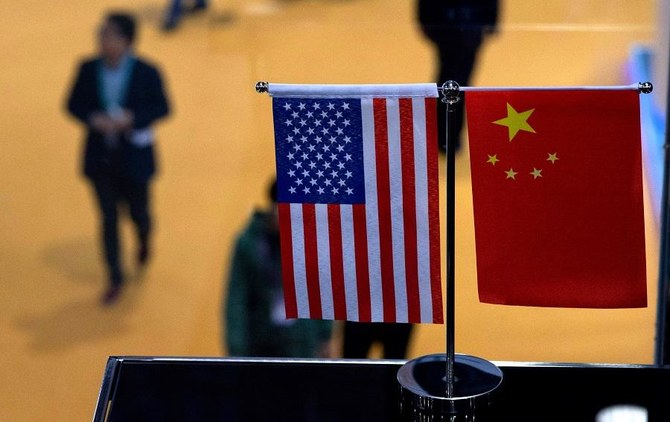
    Vice Premier Liu He said Chinese and US trade negotiators have agreed to meet again in Beijing in the future, and called on both sides to remain calm and not escalate trade tensions, after the 11th bilateral trade negotiations concluded in Washington on Friday local time.

    The Chinese economy remains resilient over the medium and long term and China is not afraid, said Liu.

    The 11th round of trade talks between China and the US wrapped up in Washington in the early morning on Saturday Beijing time. 

    "It is normal that we have small twists and turns during talks. It's inevitable," Liu said, telling reporters after the negotiation that both sides have clarified their stands and discussed the content of their next negotiation. 

    Liu also said China will not compromise when it comes to "matters of principles." Neither China nor the Chinese people are afraid, he added.

    Liu also confirmed that China will be forced to take countermeasures after the US on Friday increased an existing 10 percent tariff on $200 billion in Chinese goods and products to 25 percent.  

    Adding tariffs will harm the economies of both countries and the world, and does not serve any good in solving the bilateral economic and trade issues, said Liu. 

    Liu said he is prudently optimistic about the future, saying the Chinese economy has great prospects over the long term. 

    China should focus on its own thing, said Liu, pointing out that last year the Chinese economy reached the bottom of an economic cycle and is now on the rise. 

    The Chinese market is still vast with huge consumption and investment demands, which is obvious to the world, noted Liu. With the supply-side reform, the competitiveness of companies has been elevated, he said. 

    There is still sufficient room for fiscal and monetary policies and enough tools in the policy toolkit As long as China and the Chinese people maintain confidence, China's economy will maintain a smooth and healthy development despite some pressures, said the vice premier. 

    The Chinese stock market on Friday dropped sharply but rebounded quickly to close high. The purchasing manager's index remains above the 50 percent threshold in April.

    Chinese negotiators hope their US counterparts understand that China needs to be treated fairly and with dignity in order to reach a deal, Liu said.

    Beijing vows retaliation on US trade


    Ministry expresses 'deep regrets' in wake of added tariffs on Chinese goods
    The Ministry of Commerce expressed "deep regrets" on Friday at the United States' move to impose additional tariffs on Chinese imports and vowed to take necessary countermeasures.
    The comments came shortly after the US increased the rate of additional duties on $200 billion worth of Chinese imports from 10 percent to 25 percent, a move that economists said amounts to "typical trade bullying" that will backfire to hurt its own interests.
    The commerce ministry said in a statement that the 11th round of China-US high-level economic and trade consultations are underway, and China hopes the two sides can work together to resolve existing issues cooperatively.
    Foreign Ministry spokesman Geng Shuang said at a daily news briefing that a healthy and stable Sino-US relationship serves the interests of both countries and is expected by the international community.
    The world's two largest economies have been embroiled in tit-for-tat tariff exchanges since July over US demands that China change certain trade policies. To hash out differences, the countries have held high-level talks, the latest round in Washington.
    Chinese Vice-Premier Liu He, who leads the Chinese delegation, said on Thursday that he came to Washington with sincerity to engage in "rational and candid" exchanges with the US to resolve some of their disparities.
    Liu said the hike in tariffs is harmful to China, to the US and to the whole world.
    "The Chinese side believes raising tariffs is not a solution to the problems," he told the media upon his arrival in Washington on Thursday.
    Liu said the fact that he came this time, despite the pressure, shows the sincerity of the Chinese side.
    Early on Friday in Washington, the Chinese delegation said China hopes the two countries can meet halfway, and that they will make joint efforts to resolve existing problems through cooperation and consultation, Xinhua News Agency reported.
    Experts from both sides voiced strong opposition to the US tariff move, warning of collateral damage that will ripple around the globe.
    The latest tariff move by the US derailed the monthslong China-US trade consultations, and the US should take responsibility for that, said Wang Xiaosong, a professor at Renmin University of China's School of Economics.
    The two countries still have some leeway in advancing the talks, though the current tension has become severe, Wang said.
    Wang said he hopes China and the US will break the deadlock and come to a mutually beneficial resolution as soon as possible.
    "US President Donald Trump used to say that if China-US negotiations break down, a 25 percent additional tariff will be imposed on Chinese imports. But why did Washington raise the tariff while the 11th round of negotiations is underway? An explanation is needed," said Zhang Yansheng, a senior researcher at the China Center for International Economic Exchanges.
    "The sudden US move is typical trade bullying," Zhang said. He urged enhanced efforts across the globe to oppose protectionism to ensure global economic stability.
    Jonathan Gold, vice-president for supply chain and customs policy at the National Retail Federation, said tariff hikes will mean higher costs for US businesses and consumers and lost jobs for many US workers.
    The federation, the world's largest retail trade association, urged the US administration to stay focused on a trade agreement and expressed hope that the negotiations will get back on track.
    "It would be unfortunate to undermine the progress that has been made with more tit-for-tat tariffs that only punish Americans," Gold said in a statement.

    Video - WORLD THIS WEEK - US-China trade war, Istanbul election re-run, All-England European cup finals

    Video Report - #Opposition #Albania #Tirana Anti-government protest in Albanian capital

    Video - #YellowVests #France #Nantes Tear gas & water cannons in Nantes as Yellow Vests march for 26th weekend in row

    Video - #YellowVest #Lyon #march Yellow vests clash with police in #French Lyon

    Video Report - Cooper roasts Trump for 'your favorite President' tweet

    Video Report - Bilawal Bhutto Zardari and banned outfits - Why is #PTI criticizing Bilawal Bhutto Zardari on his stance over banned outfits?