
Saturday, May 11, 2019

'Tightening The Noose': Pakistani Journalists Turn To Social Networks As Mainstream Media Gagged


By Frud Bezhan
Pakistani television host Murtaza Solangi's current-affairs show was on-air, broadcasting a taped interview with an opposition figure about a military coup that took place a decade earlier, when the program was abruptly cut off.

The veteran journalist with independent Capital TV exchanged heated words with the managing director and was told to quit immediately. Solangi, who resigned the next day, suspected that the channel had been pressured to halt the broadcast.

"That is the level of censorship in Pakistan," Solangi recalled of that day in October. "In the mainstream media, the military establishment doesn’t allow critical voices."

Solangi's incident came amid signs that Pakistan's free press was coming under unprecedented pressure from the military -- an institution that has an oversize role in domestic and foreign affairs in the South Asian country.

In the past two years, dozens of prominent reporters have been fired or have left after being threatened; the nation's most popular TV channel has been forced off the air; and leading columnists have complained that stories that are critical of the army and intelligence agencies are being rejected by media outlets.

With the free press gagged, many journalists in Pakistan have turned to social media to get the word out. But even those platforms are under pressure from Pakistani authorities.

'No Other Option'

"Journalists with critical voices have no other option but to turn to social media," says Solangi, a former director at state-run Radio Pakistan who also worked as a journalist at Voice of America. "The authorities have tightened the noose around the media."
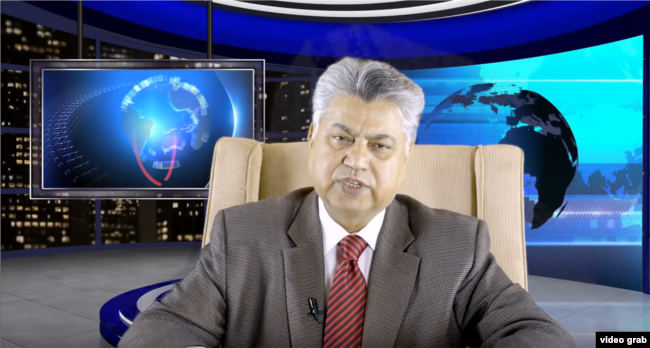
Pakistani television host Murtaza Solangi: "Journalists with critical voices have no other option but to turn to social media."
Since he left his current-affairs show, Solangi has continued his critical reporting on Twitter and YouTube on issues that are seen as off-limits to journalists in the mainstream media: criticism of Prime Minister Imran Khan’s government, believed to be close to the military brass; coverage of the Pashtun Protection Movement (PTM), which has denounced the army's heavy-handed operations in the militancy-hit tribal regions; and reporting on jailed former Prime Minister Nawaz Sharif, who was controversially removed from power and had a history of falling out with the military establishment.

Solangi is active on Twitter, where he has 245,000 followers, and has started his own YouTube channel in which he provides analysis of national issues.
Solangi is among dozens of leading Pakistani reporters who have left mainstream media and turned to social media.

Syed Talat Hussain, a prominent anchor and columnist, was the host of a prime-time current-affairs talk show on Pakistan’s most popular TV station, Geo News. In November, he announced on Twitter that he was leaving. He provided no explanation.
In April 2018, Hussain said in a tweet that the day Geo was unable to "allow space for balanced journalism" there would be "no reason for me to continue to appear on their platform."

His tweet came after Geo TV, part of Pakistan's largest commercial media group, Jang, was taken off the air in many parts of the country. The ban only ended a month later after talks between the military and the network's chiefs, who pledged to change the network's coverage.
Weeks earlier, Army Chief General Qamar Bajwa held an off-the-record briefing with a group of journalists in which he described Geo TV as "subversive" and warned the channel that it would face consequences for crossing "red lines" by challenging the military.

Since leaving Geo TV, Hussain has launched his own YouTube channel -- Straight Talk With Hussain -- that has garnered more than 41,000 subscribers. He has also increased his engagement on Twitter, where he has more than 3 million followers. ​

Crackdown On Social Media

Even as social media has become an important outlet for critical journalism, these platforms are coming under growing pressure from authorities.

In the past two years, dozens of journalists, activists, and government critics have faced legal action over their online posts.

In February, the government announced the creation of a new enforcement authority to clamp down on social-media users accused of spreading "hate speech and violence." That came after authorities passed a controversial cybercrimes law in 2016 that granted sweeping powers to the government to block online content they deem illegal. Offenders can face up to 14 years in prison. Critics say the moves are intended to curtail free speech and have led to unfair prosecutions.
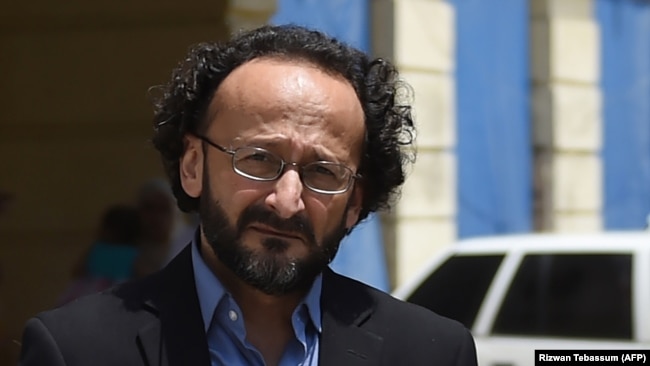
Pakistani journalist Shahzeb Jillani is accused of "cyberterrorism" and making "defamatory remarks against the respected institutions of Pakistan."
In April, Pakistan's law enforcement agency filed a case against Shahzeb Jillani, an investigative reporter who works for the Urdu-language Dunya News TV channel, who is accused of "cyberterrorism" and making "defamatory remarks against the respected institutions of Pakistan."

Jillani, who previously worked for the BBC and Deutsche Welle, is known for his critical reporting on Pakistan's army and intelligence services.
Reporters Without Borders condemned what it called the "trumped-up charges" against Jillani.

The Paris-based media watchdog said in a statement on April 16 that the case against Jillani has been designed to intimidate and silence Pakistan’s journalists.

Authorities have accelerated efforts to censor social-media platforms.

In the first half of 2018, Facebook restricted more content in Pakistan -- more than 2,000 posts -- than in any other country in the world, according to its figures. Facebook said the number was seven times higher than the previous six months.

Meanwhile, Twitter received requests from Pakistani authorities to remove content from more than 3,000 accounts, compared to under 700 in the second half of 2017, according to its figures.

Scores of Pakistani journalists and activists have received legal notices from Twitter on behalf of the government recently.

In January, journalist Mubashir Zaidi said he had received an e-mail from Twitter for a tweet about the unsolved killings of police officer Tahir Dawar and former lawmaker Ali Raza Abidi. Twitter notified him that his tweet was in violation of Pakistani law.
"We have identified many cases of censorship by social-media giants like Twitter and Facebook who willingly comply with Pakistani authorities’ demands," said Daniel Bastard, the head of Reporters Without Borders' Asia-Pacific desk. "We report these cases to our contact at Facebook and Twitter headquarters in California. After our intervention, sometimes the post is restored, sometimes it is not. We don’t get any explanation. This is one of the reasons why we call for Facebook and Twitter to be more transparent with this.

"The very fact that Pakistani journalists now have no other choice to move to social media to be able to express their views is a terrible sign of the dire state of free expression in Pakistan now," he added.

Unprecedented Pressure

Pakistan ranks 142nd out of 180 countries listed on the World Press Freedom Index 2019, compiled by Reporters Without Borders, dropping three places from 2017.

The Committee to Protect Journalists (CPJ) said in a report released in September that the climate for press freedom in Pakistan was deteriorating as the country's army "quietly, but effectively" restricts reporting through "intimidation" and other means.

The report said journalists who push back or are overly critical of authorities are attacked, threatened, or arrested. CPJ also said the Pakistani military, intelligence, and military-affiliated political groups were suspected in the killings of 22 reporters over the past decade.

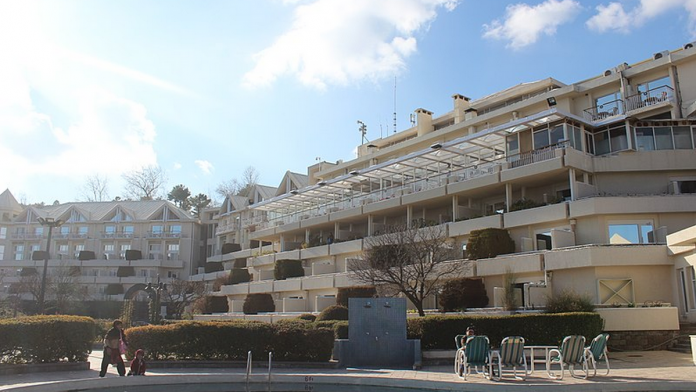
Balochistan militants claim responsibility for Pakistan hotel attack

The Balochistan Liberation Army, a militant group fighting for greater autonomy for the Balochistan region in southwestern Pakistan, claimed responsibility for Saturday’s attack on a hotel in Gwadar port, a spokesman said in an emailed statement.

 https://www.reuters.com/article/us-pakistan-security-claim/balochistan-militants-claim-responsibility-for-pakistan-hotel-attack-idUSKCN1SH0G1

Gunmen attack hotel in Pakistan's Gwadar, kill security guard


By Asad Hashim

Pakistan's military says three attackers storm Pearl Continental Hotel in port city, killing at least one person.
Gunmen have stormed a five-star hotel in Pakistan's port city of Gwadar, killing at least one person, according to the military. In a statement, Pakistan's military said three armed men killed a security guard as they attempted to enter the Pearl Continental hotel on Saturday in the southern city. Security forces surrounded the attackers in a staircase leading to the top floor of the building, it said, adding that a security operation to clear the area was ongoing. There were conflicting reports about additional casualties. Zia Langove, the provincial home minister, said initial reports indicated some people at the hotel had been wounded in firing on the premises.
The military, however, said that all guests at the hotel, which has 114 rooms, were safely evacuated.
The Baloch Liberation Army (BLA), an ethnic Baloch separatist group fighting for independence for Balochistan province, claimed responsibility for the attack saying that four fighters were involved.
"Our fighters have carried out this attack on Chinese and other foreign investors who were staying in PC hotel," said Jihand Baloch, a BLA spokesperson, in a statement emailed to Al Jazeera.Gwadar is the site of a major port built as the culmination of the China Pakistan Economic Corridor (CPEC), a trade corridor that links southwestern China to the Arabian Sea through Pakistan.The $60bn CPEC project has seen massive investment in infrastructure across Pakistan, including major roads and the Gwadar port in Balochistan province.
Recent days have seen an uptick in violence in the province, with ethnic Baloch separatist groups ramping up attacks against security forces and civilians.
On Thursday, at least five people were killed when BLA gunmen attacked a coal mine in the Harnai district of Balochistan. The BLA and other armed groups have been fighting Pakistani security forces for more than a decade, demanding independence for the ethnic Baloch areas of Balochistan province, which they claim has been neglected by the Pakistani state and exploited for its mineral resources.
Balochistan, located in southwestern Pakistan, is the country's largest but least populated province, with rich deposits of natural gas, coal, metals and minerals.
Rights groups allege that Pakistani security forces have abducted hundreds of pro-freedom Baloch political activists and fighters in their fight to quell the rebellion. Last month, an alliance of Baloch separatist groups ambushed a passenger bus en route from Gwadar to Karachi, Pakistan's largest city, killing at least 14 people.

Gunmen attack luxury hotel in Pakistan’s Gwadar port city

  • A group of attackers opened fire at the Pearl Continental hotel in Gwadar, where China is developing a multibillion-dollar port
  • Most of the hotel guests were evacuated in time, but a few people sustained minor injuries, said a minister.
  • A group of gunmen have stormed a five-star hotel in the southwestern Pakistani port city of Gwadar, the centrepiece of a multibillion-dollar Chinese infrastructure project in the country, a provincial minister said Saturday.“Up to four armed men entered the Pearl Continental hotel in Gwadar and opened fire,” said Balochistan provincial home minister Ziaullah Langu.
He said the “majority” of guests had been evacuated and security forces were engaging the militants.“However, there are reports of a few people sustaining minor injuries,” he said.
Mohammad Aslam, the on-duty officer in Gwadar, said he could hear gunfire but that the operation was coming to an end.“There were no Chinese or Pakistani guests in the hotel,” he said, adding that only staff were present in the building. No group immediately claimed responsibility for the attack.
The attack came three weeks after separatist gunmen targeting naval and security forces killed 14 people after forcing them off buses in Balochistan.
Pakistan’s poorest and largest province, Balochistan has been rocked by separatist, Islamist and sectarian insurgencies for years.Pakistani security forces have been targeting insurgents in the province since 2004, and have also been repeatedly accused by international rights groups of abuses there. The military denies the allegations. Balochistan is also host to a number of major projects under the multibillion-dollar China-Pakistan Economic Corridor (CPEC).The massive infrastructure project seeks to connect the western Chinese province of Xinjiang with Gwadar, on the Arabian Sea.But it has also drawn its share of attacks, particularly by separatists who have long complained that residents do not receive a fair share of profits from the province’s resources.
Violence in Pakistan has dropped significantly since the country’s deadliest-ever militant attack, an assault on a school in the northwestern city of Peshawar in 2014 that killed more than 150 people – most of them children. But militants still retain the ability to carry out attacks, and analysts have long warned that Pakistan is yet to tackle the causes of extremism.
https://www.scmp.com/news/asia/south-asia/article/3009859/gunmen-attack-luxury-hotel-pakistans-gwadar-port-city

Pakistan had all but eliminated polio. Then things went badly wrong.


By Haq Nawaz Khan and Pamela Constable
PESHAWAR, Pakistan — Nobody saw it coming.
The virus was so close to being wiped out. Millions of young children had been repeatedly inoculated, and in March older ones were added in a final nationwide vaccine push to ensure that Pakistan — one of only three countries where polio remains endemic — could be officially declared polio-free.
But another danger was lurking, in the same communities where vaccination efforts had long been underway. It was fear and suspicion, and it was so visceral — and so fast-moving in the digital age — that a single rumor of vaccinated children falling sick in a village school last month triggered panic and violence nationwide.
Since then, the anti-polio drive has been suspended until July while officials scramble to regroup. Half a dozen vaccinators or their guards have been killed, and new cases of children with numb or paralyzed limbs are being reported every week, setting back years of effort to eliminate the virus, health workers say.
“We blundered badly. We wanted to achieve a technical and operational success, a data-driven masterpiece. But we forgot that for a father and mother, the most sensitive thing is their child,” said Babar bin Atta, the government’s top anti-polio official. Despite intensive efforts to educate the public about the benefits and safety of the vaccine, he said, “we underestimated the degree of community resistance.”
At a time when fear and rejection of vaccines are rising globally and measles cases are spiking, polio is seeing at least a momentary resurgence in Pakistan. Between 1994 and last year, the number of infected children in Pakistan plunged from 20,000 to just 12. But 15 new cases have been reported this year. Unless the vaccination drive starts up again soon, some health experts fear that new cases could exceed 50 this year.
The threat of polio remains relatively low compared with that of measles, which was officially eradicated in the United States in 2000 but appeared in 350 new cases in 2018 and more than 700 this year. Across Europe, 34,000 measles cases were reported in January and February alone.
Measles can be fatal, especially to babies, and it caused more than 110,000 deaths worldwide in 2017. Polio, though rarely fatal, is incurable, and it can permanently paralyze a child within hours of infection. It is spread through fecal matter, especially in poor and unsanitary conditions, and is endemic only in Nigeria, Afghanistan and Pakistan.
“It is so depressing. One day of drama has ruined three years of work,” said a government epidemiologist in Pakistan, speaking on the condition of anonymity because he is not authorized to speak to the media. “People who used to welcome our teams into their homes are now closing the doors.”The hysteria that started at a school in the northwestern village of Mashokhel — and quickly spread via mosque loudspeakers and WhatsApp — had both unique cultural roots and broader, ­modern-day lessons.The northwest tribal belt, an ethnic Pashtun region near the Afghan border and the epicenter of polio in Pakistan, is deeply conservative, religious and suspicious of authority. Refusals for polio vaccines were once common there; many people suspected that the drops were part of a Western plot to control the Muslim birthrate, and Islamist militants periodically attacked vaccination teams.
Over the past several years, Atta and health officials said, educational campaigns and support from Muslim clerics helped change public opinion, extremist groups were driven from the ­region, and vaccine refusals plunged. But this spring, when officials announced that all children up to age 10 would be required to get polio drops, suspicion began to creep up again.
“We created a nuisance,” Atta said. “People got fed up with our teams making so many visits and asking so many questions. It only took one spark.”
On April 22, vaccinators spent the morning at a school in Mashokhel, a few miles outside Peshawar, the capital of Khyber Pakhtunkhwa province. Soon after they left, school administrators reported that dozens of students were vomiting and fainting. Among local residents, long-suppressed suspicions burst into a frenzy. An angry mob attacked the school and burned down the local health clinic.
“People were pelting my house with stones,” said Arshad Khan, 35, a longtime local health-care worker. He said that even during the years when Islamist militants were attacking vaccination teams, he stayed on the job. “There is nothing wrong with the drops,” he said, “but this misunderstanding, these fake reports, have hurt our efforts all over the country.”
As the news circulated that day via social media and cellphones, frightened parents rushed 40,000 children to hospitals in Peshawar. Health officials later reported that almost all were found healthy and sent home, but by then it was too late to contain the panic. Across the country, hundreds of thousands of parents refused to let their children receive the drops, and the vaccination drive was suspended.Police arrested 16 people in connection with an alleged plot to sabotage the polio campaign, including several staff members at the school, and pernicious messages and videos were posted online that added to the crisis. One showed a man, who was later arrested, instructing schoolboys to lie down on hospital cots and pretend to be sick. Another showed an unidentified man denouncing polio vaccinators as pimps and prostitutes working for the United States.Pakistani officials placed some of the blame on Facebook, saying they were in the process of asking the company to take down the posts. “They call this free expression, but there are some crazy pages with people playing a dirty game,” Atta said, adding that Facebook has millions of users in Pakistan. “They are exhorting anti-polio elements to go after our workers. People are being killed.”
Polio workers have long been targeted by Islamist militants, with more than 100 killed in the past decade. But over time, the attacks dwindled to a few incidents as public support grew and militancy was quashed. Now, in just three weeks, six vaccinators or their guards have been shot dead in Khyber Pakhtunkhwa and Baluchistan provinces. Some attackers, officials said, may not be religious fanatics but tribal militia members trying to “protect” their areas. In Peshawar, people are still shaken by the Mashokhel scare, and this week some said it had revived their suspicion of polio drops. Even some local officials said they plan to refuse to vaccinate their children. Some demanded to know why the government kept focusing on this particular disease and not others that are more common, such as malaria or dengue.
“I don’t understand why the government is forcing children to be vaccinated,” said Ashraf Ali, 38, a trading merchant who said he had now decided not to let his 2-year-old daughter receive the drops. “They keep insisting, but I keep refusing. I am the father of my children, and it is my choice.”
In Rawalpindi, a large city in Punjab province, water and sewer samples from many poor Pashtun communities have repeatedly tested positive for the polio virus. Health officials said they had hoped to vaccinate about 14,000 children there in the past month, but more than half of the parents refused. Several vaccinators were beaten.Noor Jahan, 30, a veteran vaccinator, made the rounds last week in a Pashtun neighborhood she has visited dozens of times. She chatted with families, trying to convince them that the drops were safe and that their children still needed a series of doses to become immune. People were polite but not really swayed.
“Look at how we live. The water is low, the sewers are bad, there is no health care when we get sick. But by hook or by crook, the government keeps bringing these drops to our houses and chasing our children in the street. Why?” said Ahsan Bahadur, 35, a father of two. “This is not up to the vaccine or the virus. It is up to God.”

Sindh senators demand removal of governor Imran Ismail

Legislators belonging to PPP and PML-N in Senate slammed Sindh Governor Imran Ismail for his statement about division of Sindh into two provinces.

After delivering hard-hitting speeches against the governor, who is senior leader of the ruling Pakistan Tehreek-e-Insaf, they stormed out of the House and did not return till it was adjourned for Friday morning. Speaking on a point of public importance, former chairman Senate Mian Raza Rabbani expressed anger over the governor, wondering how he could even think of dividing Sindh and added the governor should first resign from the governorship and then do whatever he wants to. Rabbani asserted that Imran Ismail was behaving like as if he had been made chief minister of the province and cautioned that no one should even be allowed to think of dividing the province.
Another PPP Senator Sherry Rehman demanded of the House to summon Prime Minister Imran Khan for giving an explanation on Imran Ismail’s what she called the controversial statement, which she believed was meant to weaken the federating units. PML-N leader Senator Mushahidullah Khan was then on his feet to say that the governor was the representative of the federation and if he started talking about division of the province and did not know about prestige of his office, he should better step down. Senator Sassui Palijo of PPP said that the governor had violated his position by making statement about the division of Sindh and made it clear that the ruling party would not allow anyone to divide Sindh.
http://www.thesindhtimes.com/sindh/sindh-senators-demand-removal-governor-imran-ismail/

Government Has No Plan, No Mission, No Vision: Bilawal Bhutto Zardari


PPP Chairperson Bilawal Bhutto-Zardari on Thursday lambasted the government for its inability to control the tsunami of inflation as a ruckus was created in the National Assembly.

PPP Chairperson Bilawal Bhutto-Zardari on Thursday lambasted the government for its inability to control the tsunami of inflation as a ruckus was created in the National Assembly."This government has no plan, no mission and no vision," he said, adding that the government had failed to meet its tax targets" he stated this while addressing in National Assembly.Amid protesting noises by the treasury benches, he alleged that the public was "suffering due to the government's incapability".He repeated his warning that the oppositionwould not accept any deal with the International Monetary Fund (IMF) unless the government gets it approved by the House.Bilawal once again questioned the sudden appointments of Hafeez Shaikh, Reza Baqir and Shabbar Zaidi as economic adviser, State Bank of Pakistan governor and Federal board of Revenue chairman, respectively.
"The government is not telling us why it is doing what it is doing," he lamented and repeated his suspicion that the country's economic decisions were being "taken by the IMF"."This is not the PTIgovernment any more.
This is the PTIMF government," Bilawal declared. His comments drew the ire of the treasury benches."What kind of 'Naya Pakistan' is this? What kind of hypocrisy is this?" he asked. When Speaker Qaiser asked that the word munafiqat be also expunged, Bilawal pointed out that munafiqat was an urdu word, and it was not non-parliamentary.
He then clarified that he meant 'hypocrisy'.Bilawal also responded to the protesting treasury members despite Speaker Qaiser's repeated instructions to address him only and said: "Why don't you understand that constructive criticism is in the government's favour? Instead of censoring criticism, lodging FIRs and sending to people to jail, [government should] watch, listen and learn.He said that the federal government had said that the country was bankrupt because of the 18th Amendment when in reality, the centre was robbing money from all the provinces.
He advised the government to "learn from Sindh" and said that the province had always met tax targets and generated revenue.PTI's firebrand MNA Murad Saeed gave an angry response to Bilawal's speech, saying that the current government was "exposing PPP's corruption".
He added that Bilawal knew nothing and is not credible enough to talk about Pakistan's issues.
"He just waved a chit, claiming that he has become the chairperson of the PPP," Saeed said. He raised questions over the Sindh government's performance and asked Bilawal to pay attention to the recent death of nine-month-old Nashwa, who had allegedly died due to medical malpractice.
Saeed also drew Bilawal's attention to the alarming increase in the number of HIV cases in Larkana.Meanwhile, opposition members gathered around the speaker's dice in protest. Speaker Qaiser repeatedly asked opposition leaders to return to their benches and urged PML-N's Khawaja Asif to address the Parliament but to no avail.
The sitting was then adjourned for prayers.Earlier, minister of State for Parliamentary Affairs Ali Muhammad Khan has urged private channels to not broadcast indecent programmes in the name of Ramazan transmission.
He was responding to a question in the National Assembly during Question Hour.The Minister of State said PEMRA monitors contents of about fifty-five private channels to check that they are not involved in obscenity, anti-Islamic teachings, and institutions of the country.He said government is not against private channels to earn money, but they should take care of Pakistani culture and Islamic traditions in their content.
He said state channels like ptv has always kept showcasing of Pakistani culture and promoting Islamic traditions supreme. He said that complete monitoring and evaluation of the content shown on PTV is ensured.
He said efforts are being made to convert three channels of PTV to High Definition.Responding to a question, Minister of State for Climate Change Zartaj Gul said the government is going to prohibit single use plastic bags in the federal capital by 14th August this year.The Minister of State said her ministry distributed cotton bags among Parliamentarians and journalists as an alternative to plastic bags.
She said five thousand cotton bags have been distributed amongst employees of the federal government and more are being procured for distribution in weekly Bazars and other markets free of cost.Minister for Aviation Ghulam Sarwar Khan informed the House that PIA has launched new routes like Sialkot-Sharjah, Lahore-Muscat, Islamabad-Doha and Lahore-Bangkok, Kuala lampur, Sialkot-Paris-Barcelona, Peshawar-Sharjah, Peshawar-AlAin and Multan-Sharjah.

Bilawal Bhutto says PTI govt once again bowed before int’l pressure

Pakistan People’s Party (PPP) Chairman Bilawal Bhutto Zardari has said that once again federal government has bowed before international pressure and isn’t completing Iran-Pakistan Gas pipeline project.
Bilawal Bhutto took to Twitter saying “Pakistan People’s Party (PPP) initiated this project at height of international sanctions because we put Pakistan first.”

He went on to say “People pay price of leaders’ weakness in expensive gas bills.”

Bilawal's remarks came a day after PM Imran Khan said, power and gas are expensive while inflation is rising. "But what I want you to understand is this: why do prices rise? It is because power and gas sectors are heavily under debt. When our government came to power, debts of both sectors had risen to Rs1,300 billion. There are only two ways to tackle debt; either you take more loans and our power sector is already so indebted that we cannot borrow any further and so we have to raise prices."

Bilawal Bhutto-Zardari, Imran Khan’s challenger

By Mehmal Sarfraz
This has left a vacuum in the Opposition politics and Mr. Bhutto-Zardari has stepped into this vacuum “with surprising ease”, said journalist Fahd Husain.
Bilawal Bhutto-Zardari, chairman of the Pakistan Peoples Party (PPP), has emerged as a leading voice of opposition to Imran Khan’s government in recent months. Nawaz Sharif, leader of the Pakistan Muslim League-Nawaz (PML-N), is unwell and in prison. PML(N) leaders, including Mr. Sharif’s daughter Maryam Nawaz, face several legal challenges over corruption cases and have gone relatively quiet.
This has left a vacuum in the Opposition politics and Mr. Bhutto-Zardari has stepped into this vacuum “with surprising ease”, said journalist Fahd Husain. “Gone is the awkwardness of speech and shyness of demeanour that once marked his political appearances. He is saying the right things, hitting the right tones and getting the right response.” Mr. Husain added that if Mr. Khan’s government is facing any real, hard-hitting and sustained opposition, it is from Mr. Bhutto-Zardari. “The PML-N will need to up its game if it wants to steal the thunder from the young Bilawal.”
According to news anchor Gharidah Farooqi, Mr. Bhutto-Zardari has challenged not just Mr. Khan’s government, but also the mighty military establishment, an element that went missing in Pakistani politics since the assassination of former PM Benazir Bhutto in 2007.
Ms. Farooqi believes the youth were neglected for a long time. They found some hope in Mr. Khan, but feel dejected by the performance of Prime Minister Khan. “Bilawal Bhutto is filling this vacuum. He has capacity, vision, strength and age by his side. The downfall of the ‘House of Sharif’ in Punjab and the bubble-vacuum of ‘tabdeeli’ aka change at the Centre have provided the much needed space to Bilawal.”Ms. Farooqi said it is Mr. Bhutto-Zardari’s fiery, aggressive style with a pinch of political sarcasm taking on both Mr. Khan and military heads that is attracting the public, especially the youth, towards him.
Even his political opponents have acknowledged Mr. Bhutto-Zardari’s rise. Recently, Ms. Nawaz, vice-president of PML(N), reached out to Mr. Bhutto-Zardari. She thanked him on Twitter for visiting her father to which Mr. Bhutto-Zardari responded, “We are all people first and politicians second.”
Mohammad Zubair, former Sindh Governor and a senior leader of the PML(N), said Mr. Bhutto-Zardari has truly emerged as an effective Opposition leader. “He has shown remarkable courage and command over macro issues of Pakistan. Because of his understanding of core issues and courage to speak his mind — a rare quality in Pakistan these days — Bilawal is respected among all Opposition parties, including the PML-N.”Asked if Ms. Nawaz’s appointment of PML(N) vice-president and her silence on the government is helping Mr. Bhutto-Zardari’s rise, Mr. Zubair said Ms. Nawaz has been silent for entirely different reasons. “Her own legal challenge, but more importantly her father’s legal issues have restricted her political activities. The recent reorganisation of the PML(N) was overdue and Maryam rightly makes her official entry as the vice-president. She’s not competing with Bilawal as the two have completely different support groups.”
Many analysts believe disgruntled PML-N workers were not happy with the silence of the party leadership, especially Ms. Nawaz’s, and were pointing out how Mr. Bhutto-Zardari had taken up the mantle of the Opposition.
Promising future
Ms. Nawaz is not Bilawal Bhutto-Zardari and the PML-N is not the PPP, said Ms. Farooqi, the anchor. “Maryam’s political future is still bleak; Bilawal’s is promising and shining.”
But it doesn’t mean that things are easy for Mr. Bhutto-Zardari. Mr. Bhutto-Zardari, who has captured national political atttention, should also work hard in Punjab, where Mr. Khan’s Pakistan Tehreek-e-Insaf (PTI) is in power.
“Bilawal has so far failed to seize the space in Punjab. It will be Punjab that can make him the next Prime Minister,” said Ms. Farooqi.
The PPP is almost nonexistent in Punjab, a province which it dominated decades ago. Mr. Bhutto-Zardari will surely have to focus his energies on Punjab while trying to rebuild the party nationally.
https://www.thehindu.com/news/international/bilawal-bhutto-zardari-imran-khans-challenger/article27103972.ece