Friday, May 3, 2019
European Parliament's Ultimatum To Pakistan On Alleged Rights Violations

European Parliament threatens Pakistan that if immediate steps are not taken to dismantle the bodies targeting minorities, it would be compelled to suspend all subsidies and trade preferences given to the country.
In a stern letter to Pakistan Prime Minister Imran Khan, 51 members of the European Parliament, have expressed concern and sought and assurance from him that alleged persecution of religious minorities must stop immediately.The letter, in fact, threatens Pakistan that if immediate steps are not taken to dismantle the bodies, which are targeting minorities, the European Commission would be compelled to suspend all subsidies and trade preferences given to Pakistan.
India is seeing this move in a positive light as the government is doing all it can to alienate Pakistan internationally. "It's a good move specially because the letter also talks about forcible conversion of Hindus. India also has been raising this issue for a long time now," a senior government official told NDTV.
The letter points out that women from minority groups are particularly vulnerable to abuse. "A report by the Movement for Solidarity and Peace in Pakistan found that at least 1000 girls belonging to Christian and Hindu communities, often minors, are kidnapped and forced to marry Muslim men every year," said the letter sent to Pakistan PM on April 30.
But what is important for India is the fact that the European Parliament now has acknowledged the growing influence of religious extremist groups, often with the support of the Pakistan government.
Recently India had sent a note verbale to Pakistan Foreign Office, after reports that two minor Hindu girls were abducted, forcibly converted to Islam and married off to Muslim men.The letter further highlighted that today's Pakistan is far removed from being the country that its founding father, Muhammad Ali Jinnah, had envisaged.
"Jinnah had always insisted that Pakistan would be a Muslim majority state, where people from all religions, whether Christians, Hindus, Sikhs, Buddhists, Ahmadis or Shias, would be treated equally. Over the last seven decades, successive governments in Pakistan have contributed to implementing discriminatory systems that have resulted in political, economic and social persecution of religious minorities, which have encouraged acts of violence against them by Radical Islamic Groups," the letter said.
Are the PTI-led govt's people, priorities and actions a throwback to the Musharraf era?

By Ahmed Yusuf

The Pakistan Tehreek-i-Insaf came into power in July 2018 with promises of bringing out a 'Naya' Pakistan.
Increasingly, however, the people it has chosen to elevate to its cabinet, as well as its priorities and actions, seem to hark back to the military dispensation of Gen Pervez Musharraf.
Eos casts an eye at the headlines then and now...
Centralisation of power
Gen Musharraf was all about centralisation of power even as he purported to be about devolving power to the grassroots.
This was inherent in his dispensation: a dictator who came to power on the back of a military coup is not about sharing power.
As Chief of Army Staff as well as the Chief Executive of the country and, subsequently, the president after a manipulated referendum, Gen Musharraf controlled all decision-making in the country.
Even after the political engineering of the 2002 elections which brought in a civilian parliamentary façade for the military government, he reinstituted the Zia-era Article 58-2b in the constitution, allowing the president to dissolve the national and provincial assemblies.
Also read: Debating 18th Amendment
There have been increasing calls in recent times both for a rollback of the 18th Amendment – which devolved more powers to the provinces – and for a presidential form of government.
Ironically, these balloons are being floated during the tenure of an elected government that strenuously denies its critics claims that it has come to power on the back of political engineering by the military.
But rather than being inherent in the form of the dispensation, this attempt to concentrate more power at the federal level has to do with a perceived lack of power.
A major component of dissatisfaction is the lack of resources at the federal level, particularly for the military, stemming from a greater portion of the divisible pool of revenue going to the provinces.
The calls to roll back the 18th Amendment which codified the new National Finance Commission (NFC) Award have mainly to do with this.
An inability to undo the constitutional amendment — because of a lack of parliamentary numbers — has led to the proposal being floated for a presidential system, which could hypothetically bypass such constitutional blockages.
The aim, however, is the same: a desire to concentrate power in Islamabad.

Economy in ill-health
The best thing that could have happened for General Pervez Musharraf is war — not ours but someone else’s. And that’s because war tends to revive an ailing economy, increase production in factories, and provide some employment, too.
While the Americans were initially apprehensive of Gen Musharraf — former American president Bill Clinton even addressed the Pakistani people on state television to underline the benefits of democracy — General Musharraf was more than a willing partner in George W Bush’s war on terror.
Significant money came in, to the extent that Pakistan did not borrow any money from the IMF for a few years.
That said, the shape and size of the economy remained haphazard. The IMF did come in, bringing with it a demand to privatise state entities and widen the tax net. Installed at the helm on the Pakistani side were men who had worked for international financial institutions before: Shaukat Aziz, Ishrat Hussain and Abdul Hafeez Sheikh.
The latter two have returned to the picture as the economy presents an all too familiar picture once again.
The pinch of inflation felt by common citizens has been intense. More intense than the last five years, and perhaps, more severe than the time Pakistan was fighting an internal war on terror. Money has simply disappeared from the market.
As former finance minister Asad Umer led delegations to meet IMF officials, it became very clear that even the IMF had run out of options to help Pakistan.
Most of what could have been cut from the development budget had already been cut, much of what could easily be privatised has already been privatised. Most of what that could be saved from public spending was being saved. And whatever money that could be eked out of taxpayers has been eked out.
The incumbent government is not the first to rely on Ishrat Hussain and Abdul Hafeez Sheikh, and it seems it won’t be the last either.

Accountability and the opposition
When he first took over, much like all previous military dictators before him, Gen Musharraf promised a clean start and taking to task all those who had allegedly looted the country.
The first days of Gen Musharraf’s dispensation saw the establishment of the National Accountability Bureau (NAB) which was entrusted with arresting and prosecuting white collar criminals in government and with bargaining with them for the return of their loot.
As political exigencies came to the fore, and especially as Gen Musharraf sought legitimacy through creating a political party and parliamentary allies, NAB was accused of using the threat of accountability as a tool for political ends.
Those that played ball were spared NAB’s hand, while those that didn’t felt the full force of its draconian laws.
Much of the same criticism is being levied by the current opposition.
While major opposition figures such as the Sharif brothers and their families as well as former president Asif Ali Zardari and his family face the courts for their alleged crimes, many among the current dispensation also accused of shady financial dealings – including the PM’s own sister and some among his closest circle — seem to be escaping NAB’s attention.
The overwhelming feeling is that the accountability drive, while laudable in theory, is once again being selectively used for political ends.

#Pakistan - Global terrorist - Masood Azhar ban
AFTER an over two-decade-long career piloting Jaish-e-Mohammad, one of the most lethal jihadi outfits in South Asia, the noose around Masood Azhar appears to be tightening, as the militant mastermind has been designated a global terrorist by the UN Security Council.
While some segments may see the move as a ‘victory’ for India, the fact is that Masood Azhar and his group have caused nothing but trouble for this country. The JeM may have made India-held Kashmir its focus, but its cadres have caused plenty of havoc in Pakistan as well. For example, its militants form the nucleus of what is known as the Punjabi Taliban, a loose confederation of jihadists, also consisting of sectarian elements. Though the JeM was banned in 2002 by Pakistan, its activities continued and Masood Azhar was largely a free man. Now, with the UN proscription, it is hoped that the group is permanently shut down and its head not allowed to continue his activities.
India had been trying for over a decade to get Masood Azhar blacklisted. Each time its efforts would be blocked by China on ‘technical’ grounds. What this translates to is that India was using the JeM and its head to project the Kashmiri freedom struggle as a ‘terrorist’ insurgency, hence the Chinese and Pakistani resistance to the move.
Now that the “political references” have been removed, as the Foreign Office has put it, China has lifted its technical hold, paving the way for the JeM chief’s blacklisting.
Two lessons emerge; first, that India has been trying to conflate the legitimate — and largely indigenous — Kashmiri freedom struggle with terrorism. This false binary must be exposed; India cannot be allowed to link the Kashmiri struggle for justice and rights with terrorism. Secondly, the state must realise that tolerating such groups is a liability for Pakistan. Far from serving any ‘strategic depth’, these outfits end up isolating the country internationally.
Perhaps if we had put our own house in order, India would not have been able to exploit the situation and associate jihadist groups with Pakistan. It is also hoped that the blacklisting of Masood Azhar will help strengthen the country’s case with FATF, to prove that Pakistan is working hard to eliminate all militant outfits.
Ultimately, all militant groups and non-state actors that promote hateful, divisive and sectarian narratives must be shut down. Their funds must be choked and their organisational capabilities neutralised. All of this — and more — has been highlighted in the National Action Plan; it is just a question of summoning the will to implement it.
#Pakistan - #PPP - Bilawal Bhutto Zardari questions progress on recovery of missing persons

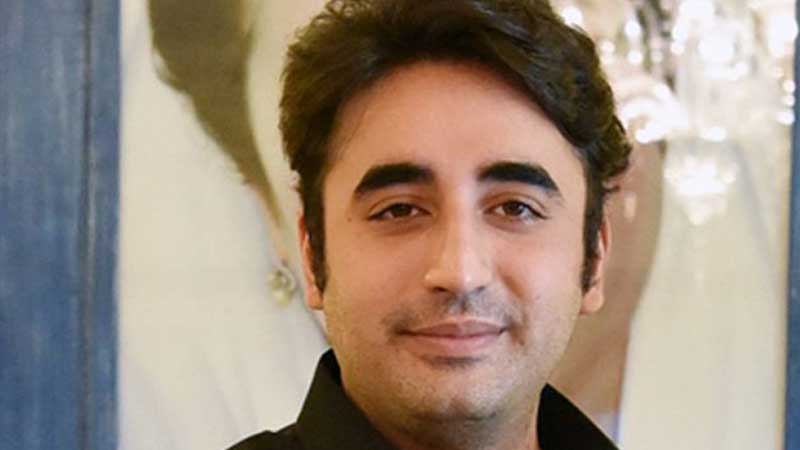
Pakistan People’s Party (PPP) Chairman Bilawal Bhutto Zardari on Thursday questioned progress on recovery of the missing persons in the country.
“I hear the head of Commission of Inquiry on Enforced Disappearances held a long televised press conference today. Missed it, any announcement on how many missing persons have been found? Any progress against those involved in this crime? Is ka ehtisab kon karay ga?” he posted on his Twitter handle.
Meanwhile, in a separate statement issued on the occasion of World Press Freedom Day, Bilawal Bhutto said that threats to the freedom of press are mounting in the third world countries as the new tools and tactics are being tested to gag the media in developing democracies. He said the policy of carrot and stick by the government has been let loose at different tiers of media houses and professionals in these countries, adding that Pakistan is no exception.
Bilawal said a vibrant and free media is necessary for a progressive democracy, adding that his party together with bona fide journalists and media persons will resist every kind of intimidation against the freedom of the press in the country. The PPP chairman said that his party had thrown away the draconian press and publication laws imposed by the dictatorial regimes and will continue to act as an umbrella for press freedom in the country despite facing worst kind of victimisation under different pretexts.
Bilawal pointed out that journalists and the PPP leaders and workers have fought shoulder to shoulder against the dictators and anti-democratic forces during the last five decades. “Dictators unleashed the world’s most expensive media trial against our leadership but they could not break the bond between the journalist fraternity and the jiyalas,” he added.
The PPP chairman pledged that being a true representative of every nook and corner and every segment of the society, his party will continue to join hands with the journalists for protecting and promoting freedom of press in Pakistan.
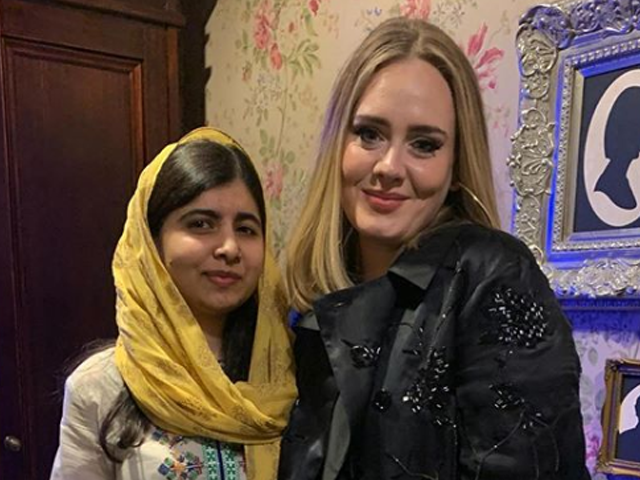
Malala rubs shoulders with Michelle Obama, Adele
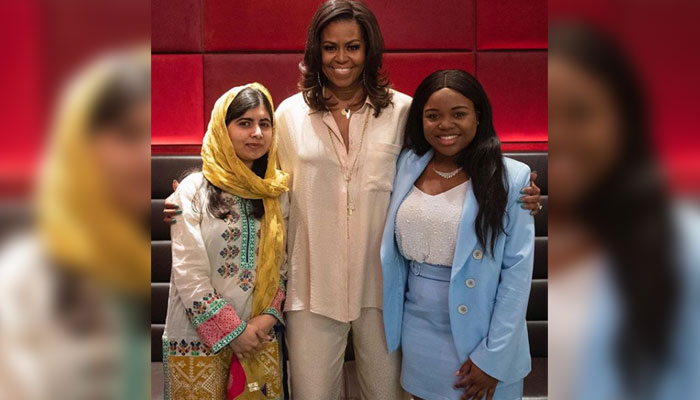
She further shared, “I also saw some old friends (Stephen Colbert) and made a few new ones (Rupaul and Adele).”
“Writing Becoming has been a deeply personal experience,” Michelle earlier shared. “I talk about my roots and how a girl from the South Side found her voice. I hope my journey inspires readers to find the courage to become whoever they aspire to be.”“Becoming” will be released in the US and Canada by Crown Publishing Group, a division of Penguin Random House, and in Britain by Viking, a Penguin imprint. It will also appear in audio format, read by the author.
Michelle’s only previous book — “American Grown,” about the White House garden — was published in 2013.
https://tribune.com.pk/story/1964894/4-malala-rubs-shoulders-michelle-obama-adele/
Pakistani media facing undeclared censorship: Bilawal Bhutto
Pakistan People’s Party Chairman Bilawal Bhutto said on Friday that Pakistani media is facing undeclared censorship, adding that everyone is entitled to fundamental rights in this country.
The PPP chairman was addressing a ceremony at the Press Club on the freedom of press day. The participants of the gathering discussed severe danger to the lives of journalists around the world.
Bilawal Bhutto said that the murderers of journalists are not arrested and often evade punishment.
He urged the government to do effective legislation to ensure protection of journalists.
Pakistan Muslim League-Nawaz leaders Mushahidullah Khan, IA Rehman, Mahmood Sham and Ashraf Khan were also present at the event.
#Pakistan - #Sindh Sindh Chief Minister Murad Ali Shah approves a road map for rule of law
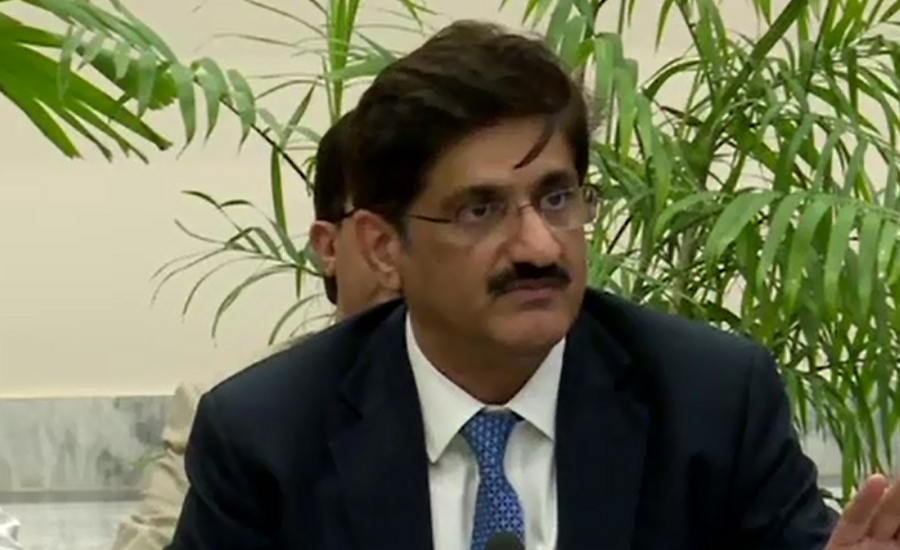
Sindh Chief Minister Murad Ali Shah approved the `Sindh Rule of Law Roadmap’ on Monday. It is document about reformative work in the criminal justice system which has been made in collaboration with international agencies.
He directed the home department to establish its implementation unit and place it in the next cabinet meeting for approval.
The document was presented in a meeting held under the chairmanship of the chief minister and was attended by two delegations, a Mission from United Nations Office on Drugs and Crime (UNODC) and British High Commission. The UNODC delegation included Ms Jouhaida, retired IG Niaz Siddiki, Syed Waaqas Shah, Ghulam Ali, and the BHC delegates were Ms Susan Loughhead and Eram Zehra. The chief minister was assisted by Advocate-General Salman Talibuddin, IG Dr Kaleem Imam, Principal Secretary to the CM Sajid Jamal Abro, Home Secretary Kazi Kabir and others.
The rule of law road map is a vision document that describes how specific challenges related to the justice delivery system in Sindh need to be addressed in a collaborative fashion in the next five years. All the stakeholders, including the home department and criminal justice institutions of the province, have identified the priority area of reforms.
The chief minister said that the road map was designed to expedite system-wide implementation efforts aimed at increasing public confidence and trust in rule of law, as well as to ensure that the institutions of the criminal justice system in Sindh were strengthened to carry out their statutory tasks within the framework of their respective responsibilities and in mutual cooperation with each other.
Shah said that the whole idea was to meet citizens’ expectations through evidence-based policy actions across the rule of law sector. The road map was developed by a team of technical experts who carried out extensive research and analysis.
Provincial Home Secretary Kazi Kabir said as an inclusive framework, the roadmap includes detailed institutional assessment and strategic prioritisation based on discussion and consultation with police, prosecution, prisons, probation and reclamation, law, as well as the Sindh High Court.

Why China dropped its opposition to UN blacklisting of Pakistan-based terror chief Masood Azhar

Sarah Zheng
India claimed decision to stop blocking sanctions on Jaish e-Mohammed leader as victory, but revised wording on listing also took into account Pakistani concerns.Beijing’s shift followed serious attack in Kashmir in February and comes amid growing concerns that China would be isolated over issue.China’s decision to support a United Nations measure to sanction Pakistan-based terrorist chief Masood Azhar after a decade of opposition follows rising international pressure in the wake of a deadly attack in India earlier this year. Analysts linked the climbdown to Beijing’s increasing concerns about being isolated diplomatically at a time of heightened global concern about terrorism, but some also argued that the shift was made possible by a change of wording that avoided angering China’s long-standing ally Pakistan.
On Wednesday, a UN Security Council committee blacklisted Azhar, head of the terrorist group Jaish e-Mohammed (JeM), after China released its technical hold on a proposal that would subject him to an assets freeze, travel ban and arms embargo.The shift came after a decade of lobbying from India, during which time China raised several holds on proposals to blacklist Azhar due to technicalities – a move that prompted criticism that Beijing was shielding the terrorist at the behest of its “all-weather” ally Pakistan.There were growing calls to sanction Azhar after the Pulwama attack in February, in which JeM – designated a terrorist organisation by the UN in 2001 – claimed responsibility for the death of 40 Indian security personnel in Kashmir. China’s foreign ministry said it no longer opposed the proposal after it was revised and resubmitted by the United States, Britain and France, and added that it firmly supported Pakistan’s efforts to combat terrorism.“After careful study of the revised materials and taking into consideration the opinions of relevant parties concerned, China does not object to the listing proposal,” ministry spokesman Geng Shuang said in a statement.“In international counterterrorism cooperation, we have to uphold the rules and procedures of the relevant UN body, follow the principle of mutual respect, resolve differences and build consensus through dialogue, and prevent politicising technical issues.”
China’s shift followed Indian Foreign Secretary Vijay Keshav Gokhale’s trip to Beijing in April, where the issue was reportedly raised. Indian Prime Minister Narendra Modi, who is up for re-election this year, welcomed the decision on Wednesday as one that would “make every Indian proud”.While the opposition Indian National Congress welcomed the UN decision, it also criticised the listing for not explicitly referring to the role Azhar played in the Pulwama bombing, as draft proposals reportedly had.The UN listing accused Azhar of conducting activities linked to al-Qaeda and referred to his former leadership of another terrorist group, Harakat ul-Mujahidin, but did not explicitly mention his activities in Kashmir.
Pakistan’s foreign ministry said previous proposals to blacklist Azhar did not meet the sanctions committee’s technical criteria and criticised “politically motivated attempts” to link the listing to the Pulwama attack and ongoing tensions in disputed Kashmir. It also attacked efforts by Indian politicians and media to paint the move as a victory for India, saying the position was “absolutely false and baseless”.Fawad Hussain Chauhdry, Pakistan’s minister for science and technology, tweeted that the omission of Kashmir in the listing was a “huge victory” for Pakistani diplomacy.While Pakistan has officially banned the JeM militant group, observers say it still operates openly, a claim Islamabad fiercely denies.The Pulwama incident sparked a tense stand-off between India and Pakistan, which have long been at odds over their competing claims to Kashmir.
Zhang Jiadong, a former Chinese diplomat in India and international relations professor at Fudan University in Shanghai, said: “This is a diplomatic concession from China for India, a signal of diplomatic support. “At the same time, it was also driven by the global anti-terrorism trend. Without the February terrorist attack in Kashmir, China may not have agreed to India’s request.”
The shift was the result of pressure mainly from the broader international community, and not just unilateral pressure from the Indian government, he said.“In the past, we mainly took Pakistan’s attitude into consideration, but now we need to balance Pakistan’s relationship with India and the rest of the international community,” Zhang added.But Mosharraf Zaidi, a former adviser to Pakistan’s foreign ministry and now a senior fellow at the policy think tank Tabadlab, said the removal of the more contentious language may have been a result of China’s diplomatic manoeuvring.“The material change in the Masood Azhar listing situation is not that China allowed it to happen, but that the US, France and others changed the language and references in the listing to China’s liking,” he said.“China’s objections would once again have caused Masood Azhar not to be listed, had the language of the listing not been expunged of political references, including references to occupied Kashmir.”Regardless, analysts said the listing removed a major source of tension between China and India, but noted that Beijing had also been put under pressure by the US, which had threatened to bypass the sanctions committee and take the measure to the full Security Council, where it would have to place its objections on record.“This would have isolated China further,” Srikanth Kondapalli, a professor in Chinese studies at Jawaharlal Nehru University in New Delhi, said.“China is getting isolated on this issue in the UN committee. China was isolated in the fifties and sixties, and it’s a nightmare for them.”
Avinash Godbole, a specialist in China-India relations at the OP Jindal Global University in Sonipat, India, said growing support for India’s stance in the UN Security Council cast Beijing in a poor light.“India had never let this unreasonable posture on the part of China become an obstacle in bilateral relations and instead focused on building consensus and pressure to resolve the dispute,” he said. “It’s a good step as there has been a lot of angry perception against China, especially since the Pulwama terror attack.”Wang Dehua, head of the Institute for South and Central Asia Studies at the Shanghai Municipal Centre for International Studies, said that resolving the Azhar issue was very important to India, which had complained that China maintained a double standard on counterterrorism.“China likely said that the blacklist proposal was conditional on the removal of Kashmir and Pulwama in the listing,” he said.
“Once this problem is resolved, it should be good for China in its cooperation with South Asia, with India and with Pakistan.”
Pakistan military can’t handle growing Pashtun storm, so it’s blaming countries like India

KRITI SHAH
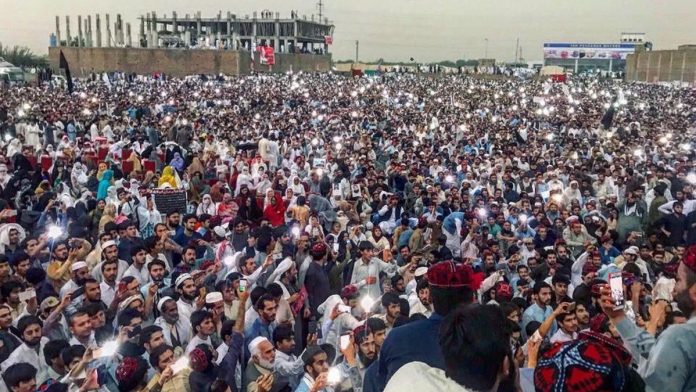
The Pashtun Tahafuz Movement is difficult for India to support because the movement owes its success to the absence of foreign funding or support.
Pakistan’s Pashtuns have stirred up a storm again and the army is now desperate to control it. The DG ISPR, Asif Ghafoor, the spokesperson for the Pakistan army, recently suggested that the Pashtun Tahafuz Movement receives funding from the Indian and Afghan intelligence services and ‘warned’ the Pashtun population to not take heed of the movement’s rhetoric. The statement is unsurprising and predictable, given that Pakistan has always looked to place the blame on someone else, for problems of their own creation.
Pakistan repeatedly blamed India and Afghanistan for stoking ethno-national sentiments within its nation. As a nation it has always projected Islam and Urdu as the common denominator among the different groups of the state, ignoring the ethnic and linguistic diversity of its people. Any assertion of ethno-linguistic identity for seeking political rights, be it the Baloch, Bengali or Pashtun, is seen as contentious and against the very idea of the state. The creation of Bangladesh cemented the idea that India was out to destroy, divide and break up Pakistan and that it would continue to apply pressure on Pakistan where it hurts. When Prime Minister Narendra Modi raised the issue of the Baloch, in August 2016, it was seen as a validation of this belief.
A movement such as the Pashtun Tahafuz Movement (PTM) is difficult for India support, not because it has the potential to backfire in terms of increased support for Kashmiri and Khalistan militants, but because the movement has been successful only due to the absence of foreign-state funding and support. The mass gathering of Pashtuns in different parts of the country is unprecedented and cannot be “bought” or “paid for”. Pashtuns are gathering in large numbers to join in the movement, by listening and sharing their grievances against Pakistan’s military and political policies toward them. Decades of regressive laws, militarisation and violence at the hands of the Pakistan army in the Pashtun homeland has united them, and has allowed the PTM to take the shape it has today.
The PTM is demanding a removal of arbitrary check posts and landmines that are scattered across the tribal belt, a return of “missing people” and set up of judicial inquiry to find those who have been picked up by the Pakistan military over the years and an end to the military subjugation of their home. While these seem straight forward and justified, the state has misconstrued them as deceitful and treasonous. Asif Ghafoor’s statement reflects that. While Prime Minister Imran Khan and the army have acknowledged that work needs to be done to improve life in the Pashtun tribal belt, they also believe that they are not only faultless for the Pashtun’s problems, but that the actions of the PTM are anti-state.
The movement began as a sudden reaction to the extra-judicial killing of a young Pashtun model in Karachi in January 2018. Naqeebullah Mehsud’s death at the hands of the military prompted many in his hometown of south Waziristan, to gather and protest against his killing. The movement quickly spread across the tribal belt and into other parts of the country, holding large rallies in Peshawar, Lahore, Karachi, Quetta, Swat, Dera Ismail, Bannu and Islamabad. Groups of Baloch and Hazara people have also attended the PTM gatherings, as minorities that have been at the receiving end of state’s suppression. The fact that the movement’s message and demands find resonance across the country, has given the military-intelligence establishment nightmares.
The idea of Pashtunistan, a unified nation for Pashtuns that straddle the Afghan-Pakistan border, has been a national movement in the region predating the creation of Pakistan. The PTM’s success gives rise to fears of a secessionist movement, one that will not only break up the country but threaten other ethnic groups to further assert their identity.
The PTM remains an entirely non-violent movement, one that is not working to secede or destroy the state. In fact, it works within the democratic polity of the state, simply demanding for a return of its constitutional rights. Should there be evidence of any foreign funding, support for the movement will plummet and leaders of the PTM are well-aware of that. Manzoor Pashteen, the figurehead for the movement has continuously reiterated his belief that the solution to the Pashtuns’ problems should be found within the constitution. He does, however, openly criticise the army, something no Pashtun party has done in the past. This has led to a media clampdown on any reportage of the movement, arbitrary arrests of its leaders on charges of terrorism, suspicious deaths of some members, and of course a blame game involving India.
The military will continue to do everything it can to muzzle the movement. Since it has already gone so far as to classify citizens protesting injustices, as anti-state, it will perhaps push the PTM further, accusing it of stoking sectarian, communal flames or terrorism. While the ruling Pakistan Tehreek-e-Insaf has already made offers of party tickets to PTM leaders in last years’ election, the PTM strength lies in the fact that is a civil rights movement, not a political ideology.
Pakistan continues to believe that India is the hand of God, directing everything wrong that is happening in its nation, without seeing reality for what it is. The military would find it more prudent to deal wholeheartedly with the Pashtun grievances now, than wait until the movement evolves into something stronger and more assertive. Cracking the military whip against the Pashtuns once again, will force the Pashtuns’ and other ethnic minorities’ hand, complicating matters for the army itself.
Thursday, May 2, 2019
CORRUPTION IN DNA - Pakistan's Fake Degrees
Investigating how Pakistan's degree mill profits from selling fake qualifications to people around the world.
Students usually work for years to gain a university degree, but a network of shady online institutions is offering degrees without any study or exams.
Hundreds of thousands of people from around the world are taking up this too-good-to-be-true offer. Alarmingly, some of them then use these fake qualifications to get jobs as doctors, teachers and engineers.
Hundreds of thousands of people from around the world are taking up this too-good-to-be-true offer. Alarmingly, some of them then use these fake qualifications to get jobs as doctors, teachers and engineers.
101 East exposes the sales tactics used by these fictitious online universities, with alleged links to Pakistani company, Axact.
After media reports exposed how Axact's network appeared to be profiting from bogus degrees, the company's founder, Shoaib Ahmed Shaikh, was arrested and charged with fraud.
Police raids at the company's headquarters in Karachi found lists of fake universities, blank degree certificates, names and phone numbers of their customers and call recordings of Axact staff trying to extract money from them.
But Shaikh insists his company is only running a call centre to render services to the fake universities.
Meanwhile, there are fears that people who have bought fake degrees are now working in professions where extensive training and knowledge is critical.
Meanwhile, there are fears that people who have bought fake degrees are now working in professions where extensive training and knowledge is critical.
"It could be a huge disaster," says Atta Ur Rahman, a former official of Pakistan's Higher Education Commission.
"You have medical doctors who are practising medicine without knowing medicine. There are accountants in the field of accountancy without knowing anything about accounts and this applies across various fields."
101 East follows the case against Axact and its founder, as it stalls in Pakistan's courts amid accusations of witness intimidation and bribery.
https://www.aljazeera.com/programmes/101east/2019/05/pakistan-fake-degrees-190501095813064.html
PM should seek another apology from people, labourers, says Bilawal

Addressing a public meeting of the Pakistan People's Party here in the Landhi area on Labour Day on Wednesday night, the PPP chairman sought another apology from the prime minister apparently in the backdrop of an apology sought by the PM earlier in the day in Islamabad while addressing the foundation day convention of Pakistan Tehreek-e-Insaf for calling Bilawal Bhutto Zardari Sahiba instead of Sahib in a previous address in a merged tribal district of Khyber Pakhtunkhwa.
The PPP chairman, while addressing the public meeting, vowed to hold the present government accountable for injustices and deprivation caused to the poor people and labourers in the country. “We will fight against your incompetency and will compel you to serve the masses,” he said on the occasion.
He said that PM Imran Khan had conceded his incompetency and complete failure in managing economy of the country by removing Asad Umer as being the first finance minister of his government.
He said that loans borrowed by the present government had been unprecedented in the history of the country as no previous government had taken such huge loans. The PPP chairman said that his party would not accept the deal the present government was about to sign with the International Monetary Fund till the time the same accord with the IMF was duly presented in the National Assembly for approval.
He said the present rulers belonging to the PTI had always blamed the previous regime of People's Party for securing massive foreign loans and also looting the national exchequer but at the end, the present government had hired the services of a person as finance adviser who had earlier served as finance minister during the tenure of former president Asif Ali Zardari.
“They have hired the services of finance minister of president Zardari but they haven’t adopted the people-friendly economic policies of People's Party,” he said. He said the present rulers believed that economy of the country would be benefited if rich got the opportunity to become richer. “Instead, the Peoples Party believes that if labourers, poor men, and farmers are given benefits then it will benefit the entire country as this money will circulate in the entire national economy and the country in turn will make progress,” said the PPP chairman.
The PPP chairman lamented that present government had introduced "an amnesty scheme for rich people" while poor masses in the country had been subjected to loans, taxes, and price-hike.
He said the present government had introduced anti-poor policies by increasing tax burden on them and also ending subsides being spent on destitute people. “Economic murder of poor people, unemployed youth, farmers, labourers, and small traders has been taking place in the country,” he said.
He lamented that the Federal Investigation Agency and National Accountability Bureau had been harassing businessmen and industrialists in Sindh and their families for investigating their Benami accounts so much so that businesses and mills of such traders were being shut down.
He said that mill owners of Sindh were being discriminated against and treated differently when investigation was launched against their benami accounts while industrialists in Punjab faced no such harassment, high-ended tactics, and closure of their industries when they faced probe under the same charges.
He said that businessmen and traders who didn’t come under the national tax net should not be treated and investigated in a manner as if they all were corrupt people. “If there are only two million registered taxpayers in the country out of the population of 200 million, it doesn’t mean that rest of 198 million masses in the country are all corrupt,” he said.Bilawal Bhutto said that his party would continue to wage struggle and raise its voice against high-ended tactics of the NAB, which he termed the practice of NAB Gardi. “We will not be afraid of the NAB and instead we will continue to raise our voice against NAB Gardi,” he said.He said that NAB had come into existence on the basis of a “Black Law” given during the regime of a previous dictator to do political victimisation and political engineering in the country.
He reiterated the stance of his party that the PPP was not against the accountability process in the country but accountability should be done across-the-board of all sections of the society under a uniform system without any discrimination, bias and on the basis of influence or status. “If there will be accountability in the country, then it will be of all the people and all the sections and if it is not the case, then there should be no accountability,” he said.
Bilawal Bhutto said that NAB was being used to deprive the people of Sindh of their due rights and resources in the country. “We will not keep silent and we will stop them as they are attempting to snatch your rights,” he said.He also criticised the federal government for not paying Rs120 billion to the Sindh government as its due share in the federal divisible pool. “Imagine how much benefit could be passed on to you people, how many job opportunities could be created for youth of the province if we possess these Rs120 billion,” he said.
He also criticised the political parties in the Sindh Grand Democratic Alliance and Muttahida Qaumi Movement, which were allies of the present government. He said that allies of the present government had to be accountable for the massive price-hike, unemployment, rendering people shelter-less, for pilfering water, and gas resources of Sindh, carried out by the present regime.
He said the present government of PTI had promised to give one million jobs and build five million houses but it failed to create a single employment opportunity or build a single housing unit till now. “Instead, the present government has made the people homeless in the garb of anti-encroachment drive for which its allies including the MQM will also be held accountable,” he said.
The PPP chairman said that he belonged to Karachi and he would continue the struggle for the just rights of people of the city, including their water needs, which were being denied by the Centre.
Bilawal said that being a native of Karachi, he would continue to strive for the grave injustices done to people of the city as their mandate was stolen in the last general elections while they, along with other people of Karachi, had not been properly counted in the last national census drive. “The mandate of people of this city was stolen in the last polls and instead the mandate was given through a fake process,” he said.
https://www.thenews.com.pk/print/465748-pm-should-seek-another-apology-from-people-labourers-says-bilawal
Masood Azhar’s terrorist tag victory for India, but doesn’t mean end of Pakistan terror
Getting China to relent on designating Jaish-e-Mohammed chief Masood Azhar a global terrorist is a major diplomatic victory for India. But New Delhi shouldn’t kid itself about having damaged Pakistan’s terror factory or treat this as another election trophy. Sustained pressure must be maintained on Islamabad to stop supporting terrorists.
Naxal attack exposes BJP’s national security campaign pitch as hollow
The attack on special police commandos in Gadchiroli in the middle of elections puts a big question mark on BJP’s campaign pitch on national security and claims of Maoist strongholds shrinking by 60 per cent. It’s a colossal intelligence failure, with no lessons learnt from past attacks, including in Chhattisgarh.
India doesn’t need a burqa ban. It’s just a pointless polarising issue
Unlike Sri Lanka, there is no immediate security crisis or terror challenge that calls for a debate on or a demand for burqa ban in India. The country is already witnessing an over-heated and vicious election campaign. Stop raising new and unnecessary polarising issues every day. Indian voters deserve better.
China backs UN blacklist of leader of Pakistan-based militants, ending a decade of opposition
Keegan Elmer
Beijing’s decision to support UN Security Council sanctions against Jaish-e-Mohammad head Masood Azhar is a breakthrough for India-China relations. India stepped up diplomatic efforts to convince China that Azhar should be labelled a terrorist following a deadly attack in Kashmir. China has agreed to a UN Security Council push to blacklist Pakistan-based terrorist Masood Azhar, head of Pakistan-based group Jaish-e-Mohammad, in a breakthrough for India-China relations.
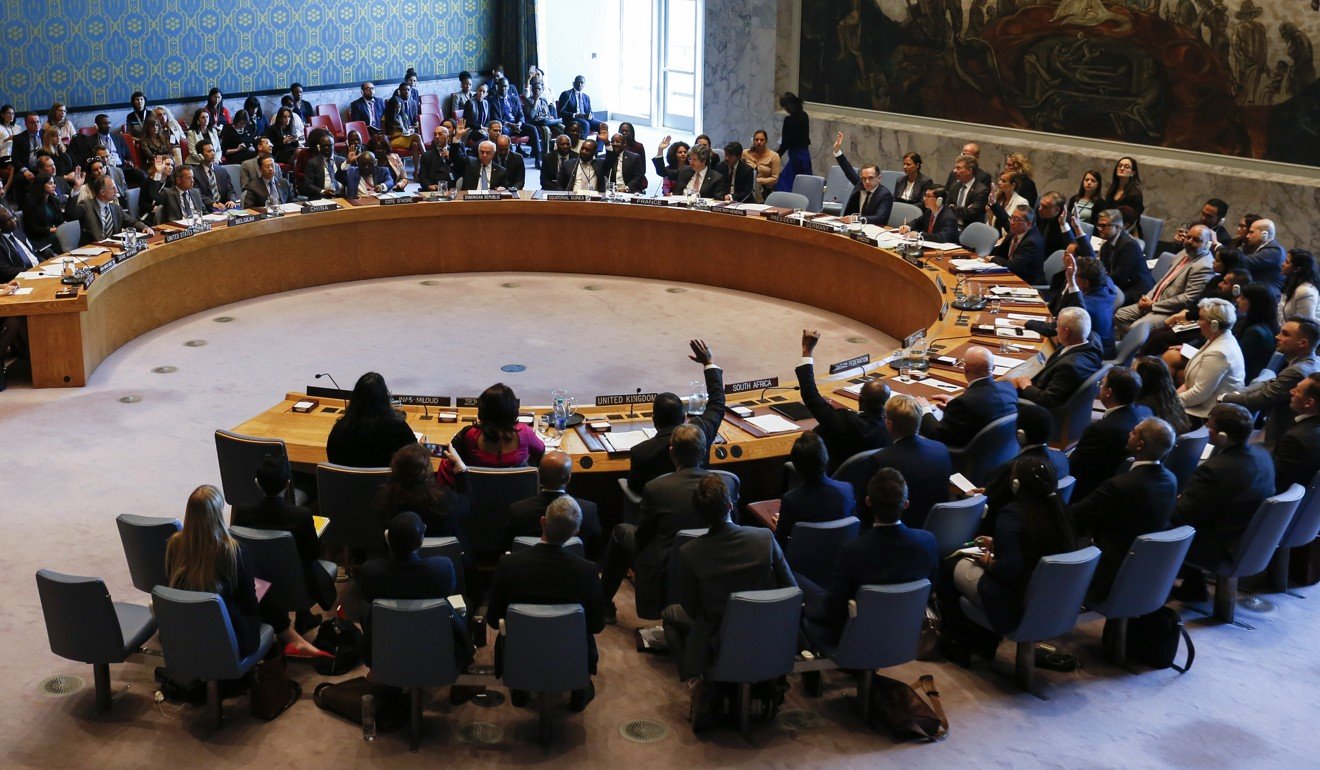
Beijing’s decision, ending a decade of opposition, came after New Delhi stepped up diplomatic efforts to convince the Chinese government that Azhar should be labelled a terrorist following a deadly terror attack in the disputed territory of Kashmir in February. Following China’s approval, the UN will issue a travel ban and arms embargo against Azhar. The move will also freeze his finances and assets. Jaish-e-Mohammad, also known as JeM, claimed responsibility for a suicide attack in Kashmir’s Pulwama district which killed 40 Indian troops.Indian Prime Minister Narendra Modi and Chinese President Xi Jinping “have developed a chemistry of trust with each other” since their meeting in Wuhan a year ago, said Madhav Nalapat, a professor of geopolitics at India’s Manipal University. Beijing’s approval of the UN sanctions “would be a win not for India or China but for the global war on terror”, he said before Beijing’s decision was announced.“Terrorists have neither a religion or a nationality, and should be opposed by all countries unitedly and in co-ordination.”
China, a permanent member of the Security Council, blocked the assembly’s move to sanction Azhar in 2016 and 2017. India first proposed the sanctions in 2009.
The United States, France and Britain put forward the proposal again in March. China vetoed that motion, but placed a “technical hold” on the decision, citing the need for more time for a “comprehensive and thorough assessment”.India’s Foreign Secretary Vijay Keshav Gokhale visited China last week, where he shared evidence of terrorist activities of JeM and Azhar and raised the issue of banning the group at the UN with China’s Foreign Minister Wang Yi.“My information is that President Xi Jinping (who has had multiple conversations with Prime Minister Modi) decided that relations with India were too important to be held hostage any longer to the pro-Pakistan lobby, and intervened to ensure that the block on the designation of Azhar as a global terrorist was removed,” Nalapat said.
“Opposition parties in India have mocked Modi for the Wuhan summit with Xi, but this move is among the fruits of Wuhan,” he said. Pakistan’s Prime Minister Imran Khan concluded a state visit to China on Sunday for the Belt and Road Forum and bilateral meetings with Chinese leaders. Xi told Khan at a meeting that he hoped Pakistan and India could “meet each other halfway” and improve their relations. Tensions flared after the Pulwama attacks, and China urged its two neighbours to exercise restraint. The attack ignited military engagement from both sides.
Indian planes conducted cross-border strikes on suspected terrorist camps, and dogfights ensued after which both sides claimed to have shot down enemy fighter jets.
https://www.scmp.com/news/china/diplomacy/article/3008490/china-backs-un-blacklist-leader-pakistan-based-militants
20 million Pakistani children smoke,Prime Minister Imran Khan receiving donations from tobacco companies.
Tobacco consumption in Pakistan is very high, even among children. The Ministry of National Health Services Regulations and Coordination has estimated that 1,200 children between five and 15 years of age start smoking every day in the country.
The report says there are 20 million child smokers in Pakistan. It also revealed that more than 100,000 people die every year in Pakistan from tobacco-related illnesses.
Tobacco control activists in the country are raising their concerns over Prime Minister Imran Khan receiving donations from tobacco companies. The country representative of Tobacco Free Kids, Malik Imran, believes that if PM Khan were to read some of the research done by the World Health Organization on the number of tobacco consumers, he would take action as the premier is an anti-tobacco advocate himself.
“PM Khan is committed to work against cigarette smoking,” Imran said on SAMAA TV’s show Naya Din on Thursday. “He knows it can lead to cancer,” he added.
The activist said the premier has not been properly advised by his team on whether to meet the tobacco companies. “Taking donations from the companies is a clear violation of Article 5.3 of the World Health Organisation’s (WHO) Framework Convention on Tobacco Control (FCTC),” he added.
The FCTC states that government representatives are restricted from meeting or receiving funds from tobacco companies, even as part of under Corporate Social Responsibility activities.
Imran said PM Khan may not be aware that being a signatory of the FCTC, Pakistan cannot receive any funds from tobacco companies. The government signed the FCTC in May 2004 and ratified it the same year. The FCTC is the first international treaty providing a framework for tobacco regulations.
He said that the tobacco industry is profiting as there is currently no tax levied on cigarettes, adding that even NAB is taking their revenue under consideration.
“The companies think they can get away with giving donations, but they cannot,” he added.
The role of parents and schools
Motivational speaker Shahzad Qamar believes that children are being influenced to start smoking because of their environment.
“Cigarette smoking has become very common in our society and young teenagers are being affected by it,” Qamar told SAMAA TV. He said shopkeepers should not sell cigarettes to children in school uniforms, adding that if someone sees that happening, they should stop it.
In schools, children should be taught about the health hazards of smoking and it should be a part of their curriculum. “Parents should not smoke in the house either,” he added.
Van drivers, security guards and other school staff should also not smoke in front of children, he suggested. “Smoking is the first step to addiction,” he said, adding that we need to break the misconception that cigarettes reduce stress.
The whole society should become a watchdog to stop the sale of cigarettes to underage children, urged Qamar.
Subscribe to:
Posts (Atom)