Monday, April 22, 2019

Blasts in Sri Lanka indicate volatile South Asia could be the next Middle East


From India's Kashmir issue to Myanmar's persecution of Muslim Rohingyas, South Asia remains a volatile sub-continent teetering on a very dangerous precipice.

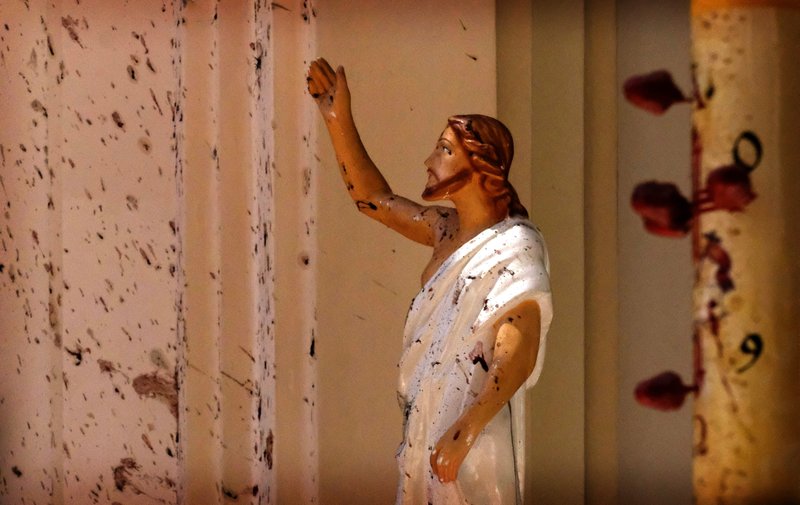
In Sri Lanka, memories of war and terrorism are very much alive. The decades-long civil war between the Sinhala-dominated government in Colombo and the Liberation Tigers of Tamil Eelam was brutal by any standards, and it ended a decade ago with a climactic battle near the Indian Ocean that took thousands of civilian lives. But Sri Lanka, beautiful and multicultural, has never had just the one fault line. On Easter morning, when hundreds of Christians and hotel guests were killed by suicide bombers there, we were tragically reminded that this is not a country at peace with itself.
In that, it’s not alone in South Asia. The entire subcontinent that the British once ruled from Delhi has seen, over the past decade, religious and ethnic identities harden and divisions deepen. Pakistan and Afghanistan continue to be hotbeds of extremism and terrorism, with religious minorities most vulnerable to violence. In Buddhist-majority Myanmar, democratization has proved a mixed blessing, as the new government has overseen the persecution and expulsion of its Muslim Rohingya minority.
Violence in Kashmir has flared up again after a decade of relative quiet, and the transformation there of a secular-nationalist separatist movement into one dominated by radical Islamist impulses is complete. The Indian northeast is on edge as the government in New Delhi builds up a giant register of citizens in order to isolate and expel migrants from Bangladesh that officials claim number in the millions. And this Indian election, more than any other since independence, is being fought on the basis of religion, security and identity.
One thing is clear: The naive presumption that economic growth and prosperity, or even increasing education, would help minimize these cleavages and prevent them exploding into violence stands completely discredited. Sri Lanka itself is perhaps the most advanced part of the Indian subcontinent when measured in terms of human development indicators. Even within India, it isn’t just the poor and left-behind north that is the problem.
Indian Prime Minister Narendra Modi first rose to national prominence because of his unapologetic response to religious riots in his home state of Gujarat in 2002 — and Gujarat, then as now, was both one of the richest and one of the most divided parts of India. Kerala, the most religiously integrated and the most advanced state in India, is also more divided than ever — and there, as in Sri Lanka, as in Kashmir, as in Pakistan, it is inflows of Gulf money and imported Wahhabi fanaticism that must bear a large part of the blame. The globalization of Muslim identity has come at the cost of local cohesions and compromises — and no state in the subcontinent has done enough to reverse this dynamic and keep Gulf money out.
Everyone in the subcontinent blames someone else for growing religious and ethnic terrorism. Afghanistan blames Pakistan; Pakistan blames India; India blames, well, the British for dividing the subcontinent in the first place. But the truth is that all of our postcolonial states have failed in one crucial respect. They never built up the sort of modern, inclusive, all-embracing national identity that is the only defense against violence in a region as integrated and as burdened with history as this one.
India came close. But the Indian state’s preferred belief in the country’s “composite culture” depended on the myth that different communities had lived in peace with each other for centuries before colonialism. That was, of course, nonsense; and a liberal project of nation-building that centers upon lies about the past cannot survive. (Illiberal attempts at nation-building, in contrast, depend upon telling lies about the past — yet another way in which the dice of history are stacked against liberals.)
Sri Lanka is a depressing illustration of how dangerous it is to allow “ascriptive” identity, such as belonging to a religious or ethnic group, to determine the attitude of a state. The Tamil Tigers claimed to be secular nationalists, but over the course of the long war they attacked many Buddhist religious sites and expelled and killed thousands of Muslims. Meanwhile, mainstream Sri Lankan politics became increasingly focused on the “protection” and militarization of Buddhist and Sinhala identity, and there has unsurprisingly been a recent flare-up in anti-Muslim riots.
You can’t move on from a past like Sri Lanka’s without proper reconciliation and an attempt to create a new, postwar identity. The LTTE may be dead and unmourned, but its legacy is its methods and the fear they evoke. Terrorists affiliated with the LTTE pioneered suicide bombing. Now, other Sri Lankans have tragically taken it forward.
The tensions of the past were controllable, perhaps. Even a civil war as brutal as Sri Lanka’s allowed for tourism, for pockets of growth and dynamism around Colombo, for progress on human development. The LTTE was beaten on the battlefield.
But, for the extremists of today’s South Asia, anywhere can be a battlefield and so military defeat is no longer an option. This great subcontinent, with its linked and ancient civilizations, the land where Buddhism and Hinduism were born, the place where Christianity and Islam put out their first outposts, teeters on a very dangerous precipice. If it is not to become the next Middle East, then it needs to radically rethink how it approaches nationalism and identity.- Bloomberg 

Video - Chairman PPP Bilawal Bhutto Zardari NA Speech

Bilawal says interior minister is a ‘facilitator of terrorists’

PPP chairperson Bilawal Bhutto Zardari severely criticised on Monday the PTI government and claimed that the sitting Interior Minister Ijaz Shah was a ‘facilitator of terrorists’.

Shah was a close aide of former military dictator Pervez Musharraf and served as director-general of the Intelligence Bureau from 2004 to 2008.
Former prime minister Benazir Bhutto had named Shah as one of the few people who should be investigated if she were assassinated.
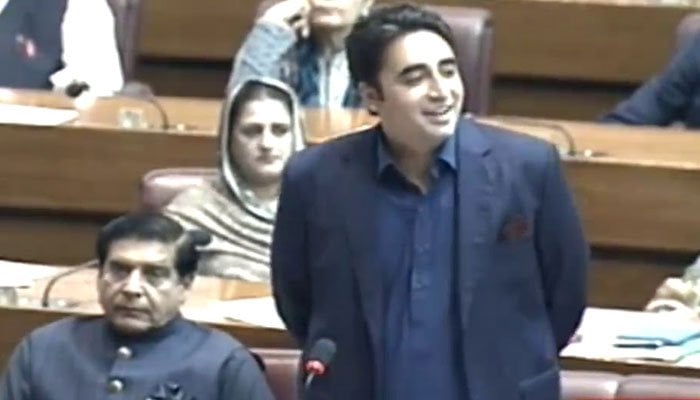
We won’t sit quite due to pressure, Bilawal said in the National Assembly session. He said they faced dictators like Ziaul Haq and Musharraf in the past and they are not afraid of this “puppet government”.
The PPP chairperson alleged that the federal ministers had contacts with proscribed organizations and that their videos and pictures are available as proof of it.
Bilawal took a dig at Prime Minister Imran Khan during his speech and said he can’t hide his incompetence by scapegoating the ministers.

Bilawal calls PM Imran 'incompetent and unskilled'

Pakistan Peoples Party Chairman Bilawal Bhutto Zardari called Prime Minister Imran Khan 'incompetent and unskilled' while speaking in a national assembly session on Monday.
"The selected prime minister should be the one who should be relieved from his position," the PPP leader said in reference to the sacking of former finance minister Asad Umar.
Bilawal once again accused a federal minister of having close associations with terrorists.
"If the government is serious about action against terrorists they have to sack the minister," he said. "The anti-democracy minister considers us a threat. If they think we will remain silent over their abuses then let me them it's not possible."
Bilawal said that the PPP was not scared of dictators like Ayub and Musharraf, and will remain steadfast against the puppet government.
"We will continue to expose their anti-poor policies," he said. "You have to be accountable that's what happens in a democracy."

’وزیروں کو نکالنے سے سلیکٹڈ وزیراعظم کی نااہلی نہیں چھپے گی‘

پیپلز پارٹی کے چیئرمین بلاول بھٹو زرداری نے کہا کہ وزیروں کو نکالنے سے سلیکٹڈ وزیراعظم کی نااہلی نہیں چھپے گی، نالائق اور نااہل وزیراعظم کو خود گھر جانا ہوگا۔
قومی اسمبلی میں تقریر کرتے ہوئے بلاول زرداری نے کہا کہ بتائیں تو سہی کہ وزیر خزانہ کو کیوں نکالا؟
انہوں نے کہا کہ بات اسد عمر پر ختم نہیں ہوگی، ہمارے فواد بھائی کو کیوں نکالا؟
بلاول بھٹو زرداری نے کہا کہ کیا انہیں اس بات پر تو نہیں نکالا کہ انہوں نے کالعدم تنظیم سے مل کر الیکشن لڑا ہے۔
اس دوران حکومتی اراکین نے شورشرابہ کیا تو چیئرمین پی پی نے کہا کہ اگر مجھے بات کرنے نہیں دی گئی تو وزیراعظم بھی نہیں کرسکے گا، اسے ایوان میں گھسنے بھی نہیں دیں گے۔
چیئرمین پی پی نے کہا کہ ہماری ایئرفورس نے بہادری سے بھارتی جہازوں کو گرایا۔
بلاول زرداری کا اسد عمر کو پڑھا لکھا جاہل کہنے پر اسپیکر نے بلاول کی تقریر میں مداخلت کری۔
اسپیکر قومی اسمبلی نے کہا کہ جاہل کا لفظ کارروائی سے حذف کر رہا ہوں ،اسپیکر قومی اسمبلی نے بلاول کی تقریر سے’’سلیکٹڈ ‘‘ کا لفظ بھی حذف کردیا ۔
بلاول زرداری نے کہا کہ جب ایوب، ضیا اور مشرف جیسے آمروں سے نہیں ڈرے تو کٹھ پتلی سے کیوں ڈریں گے۔
انہوں نے کہا کہ ان کی گالم گلوچ اور نیب گردی کی وجہ سے خاموش نہیں ہوں گے۔
پی پی چیئرمین نے کہا کہ آپ کا وزیر داخلہ ڈینیئل پرل کے قتل میں ملوث ہے، دنیا کو کیا پیغام دے رہے ہیں؟
بلاول بھٹو زرداری نےکہا کہ دنیا کو یہ پیغام دیا جارہا ہے کہ کابینہ میں دہشتگرد بیٹھے ہیں، حکومت کو ان وزیروں کو کابینہ سے نکالنا ہوگا جن کا ماضی میں دہشتگردوں سے تعلق رہا ہے۔ 
بلاول بھٹو زرداری کےو زیراعظم سے متعلق الفاظ پر حکومتی ارکان نے شدید احتجاج کیا، حکومتی ارکان کے شور شرابے کے بعد پیپلزپارٹی کے ارکان واک آؤٹ کر گئے۔

’حفیظ شیخ عمران کا نہیں کسی اور کا انتخاب ہیں‘

پاکستان کے سابق وزیر خزانہ اسد عمر نے گذشتہ ہفتے جب وزارت سے سبکدوشی کا اعلان کیا تو تمام
لوگوں کے ذہنوں میں ایک ہی سوال تھا کہ اس مشکل وقت میں کابینہ کے اس سب سے اہم رکن کے طور پر وزیراعظم پاکستان کا انتخاب کون ہو گا۔
ذرائع ابلاغ میں اس حوالے سے قیاس آرائیاں اسد عمر کی ٹویٹ کے بعد سے شروع ہو گئی تھیں اور کبھی عمر ایوب کو یہ عہدہ دیے جانے کی خبریں گردش کرتی رہیں تو کبھی شوکت ترین کی جانب سے یہ عہدہ سنبھالنے سے انکار کی باتیں ہوئیں۔
لیکن ان سب ناموں کے برعکس قرعۂ فال عبدالحفیظ شیخ کے نام نکلا اور وہ وزیراعظم کے مشیر برائے مالیاتی امور بنا دیے گئے۔ حفیظ شیخ پیپلز پارٹی کے گذشتہ دورِ حکومت میں وفاقی وزیر خزانہ تھے جبکہ اس سے قبل مشرف دور میں سندھ کے وزیر خزانہ اور بعد میں نجکاری کے وزیر بھی رہ چکے ہیں۔

حفیظ شیخ کس کا انتخاب؟

حفیظ شیخ کی تعیناتی کے ساتھ ہی میڈیا اور سوشل میڈیا پر اس بحث کا آغاز بھی ہو گیا ہے کہ اس اہم عہدے کے لیے ایک ایسی شخصیت کا انتخاب کیوں کیا گیا جو عوامی ووٹ سے منتخب ہو کر نہیں آئی اور آیا وہ وزیراعظم عمران خان کا انتخاب ہیں یا معاملہ کچھ اور ہے۔
اس بارے میں بی بی سی سے بات کرتے ہوئے مالیاتی امور پر نظر رکھنے والے صحافی شہباز رانا کا کہنا ہے کہ ’مسلم لیگ نواز کے سوا پاکستان کی سیاسی جماعتوں میں یہ ایک بڑا مسئلہ پایا جاتا ہے کہ ان کے پاس صف اول کے معاشی ماہرین نہیں ہوتے۔‘
ان کے مطابق ’اسی کمزوری کی وجہ سے ماضی کی حکومتوں کو بھی ’بریف کیس‘ وزیر خزانہ کی طرف دیکھنا پڑا اور اس دفعہ پھر وہی ہوا۔‘
انھوں نے دعویٰ کیا کہ نئے مشیرِ خزانہ کے نام کا انتخاب وزیر اعظم عمران خان کا نہیں تھا اور خیال یہی ہے کہ ’حفیظ شیخ وزیراعظم سے زیادہ عسکری اسٹیبلشمنٹ کی پسند تھے۔‘
سینیئر صحافی محمد ضیا الدین بھی اس خیال سے اتفاق کرتے ہیں کہ حفیظ شیخ عمران خان کا نہیں بلکہ ’کسی اور‘ کا انتخاب ہیں۔
انھوں نے کہا کہ ’وہ دور دور تک عمران خان کے ریڈار پر نہیں تھے‘ اور ان کے خیال میں ان کے آپس میں کسی قسم کے تعلقات بھی نہیں رہے۔
صحافی اور تجزیہ نگار ندیم ملک کا بھی کہنا ہے کہ ’جب معیشت پر مشکل وقت آتا ہے تو پاکستان سے باہر ایسے پاکستانیوں سے مدد مانگی جاتی ہے جو کسی بین الاقوامی مالیاتی ادارے یا کسی بڑے بینک کے ساتھ وابستہ ہوتے ہیں۔‘
بی بی سی سے بات کرتے ہوئے انھوں نے کہا کہ ’پیپلز پارٹی کے دور حکومت میں کرپشن اور بدانتظامی کی وجہ سے اسٹیبلشمنٹ کے کافی تحفظات تھے جس کو دیکھتے ہوئے حفیظ شیخ کو وزیر خزانہ بنایا گیا کہ وہ بگڑے ہوئے معاملات کو بہتر کر سکیں۔‘
ان کا کہنا تھا کہ ’گزشتہ سات، آٹھ ماہ میں کافی بدانتظامی ہوئی ہے۔ قوی امکان ہے کہ حفیظ شیخ صاحب کا نام کسی دوسرے کونے سے آیا ہو۔‘

ماضی کی کار کردگی

حفیظ شیخ کی ماضی کی کارکردگی کی بات کی جائے تو تجزیہ نگار انھیں کمزور قوتِ فیصلہ کا مالک قرار دیتے ہیں۔
شہباز رانا کہتے ہیں کہ حفیظ شیخ صاحب کی وزارت کے دوران ان کے بارے میں یہ عام تاثر تھا کہ وہ ایسے معاملات پر فیصلے کرنے میں احتیاط اور کچھ معاملات میں تاخیر سے کام لیتے ہیں جن پر فوری فیصلے چاہیے ہوتے ہیں۔
ندیم ملک کا کہنا تھا کہ بطور وزیر خزانہ ان کی قوت فیصلہ کمزور تھی جس کی وجہ سے معاملات بگڑ گئے تھے۔
ایم ضیا الدین کے مطابق ’بطور وزیرِ نجکاری ان کی سب سے بڑی ناکامی اتیصلات کی پی ٹی سی ایل کے ساتھ ڈیل تھی جس کے مطابق اتیصلات نے ہمیں آٹھ سو ملین ڈالر دینے تھے۔ ابھی بھی ہم اس کا دعویٰ کرتے ہیں لیکن وہ دیتے نہیں ہیں۔‘
تاہم ان کا یہ بھی کہنا تھا کہ حفیظ شیخ چونکہ مختلف وزارتوں پر رہے ہیں اس لیے اسد عمر کے مقابلے میں انھیں زیادہ بہتر پتا ہے کہ نظام کس طرح چلتا ہے اور بیوروکریسی سے کام کس طرح کروانا ہے۔

تجربہ اور سیاسی حمایت

پاکستان مسلم لیگ نواز کے رہنما اور سابق وزیر خزانہ مفتاح اسماعیل نے حفیظ شیخ کے بارے میں کہا کہ وہ ماہر معاشیات ہیں اور انھیں اس کام کا تجربہ بھی ہے لیکن انھیں بہت برے حالات میں یہ ذمہ داری دی گئی ہے۔
انھوں نے کہا کہ ’حفیظ شیخ کو اس معیشت کو بحال کرنے کا ایک مشکل کام دیا گیا ہے جسے اسد عمر نے بریک لگا دی۔‘
شہباز رانا کے نزدیک مشیر خزانہ سیاسی طور پر کمزور ہیں جو کہ حکومت کے لیے مسئلہ بن سکتا ہے۔
ان کا کہنا تھا کہ ’وزیرِ خزانہ کے لیے یہ بات بہت اہم ہوتی ہے کہ وہ اپنی پالیسیوں کے لیے سیاسی حمایت حاصل کرے تاکہ آئی ایم ایف کی طرف سے دیے گئے مشکل معاشی فیصلوں پر عمل درآمد ہو سکے۔‘
انھوں نے کہا کہ حفیظ شیخ کو ’ابھی پارٹی کا مفلر بھی نہیں پہنایا گیا اور بغیر پارٹی کی شمولیت کے انھیں مشیر بنا دیا گیا ہے، ان کے لیے کافی مشکل حالات ہوں گے۔‘
معاشی حالات کا مستقبل
پاکستان کے موجودہ حالات پر تبصرہ کرتے ہوئے ماہر معاشیات قیصر بنگالی نے کہا کہ پاکستان کی معیشت کے چار بڑے مسئلے ہیں جن پر حکومت کی فوری توجہ درکار ہے اور وہ کرنٹ اکاؤنٹ خسارہ، درآمدات کی زیاتی، برآمدات میں کمی اور محصولات کم اور خرچ زیادہ ہے۔
ان کا کہنا تھا کہ بجٹ سے ایک مہینے پہلے وزارت خزانہ میں ایسی تبدیلی حکومت کے حالات کے بارے میں مثبت عندیہ نہیں دیتی۔
انھوں نے مزید کہا کہ ’اگر بنیادی پالیسی یہی رہی جو پچھلی دو، تین دہائیوں سے رہی ہے تو خدشہ ہے کہ ڈالر دو سو روپے کا ہو جائے گا اور افراط زر 20 فیصد کے قریب ہو سکتا ہے چلا جائے۔‘
ماہر معاشیات اکبر زیدی نے بی بی سی سے بات کرتے ہوئے کہا کہ موجودہ معیشت کا حال اچھا نہیں ہے مگر منصب پر کون بیٹھا ہے اس سے فرق پڑ سکتا ہے۔
’وہ کس طرح کیا بات کر رہا ہے اور کس طرف لے کر جا رہا ہے اس کی بہت اہمیت ہے۔‘
تاہم انھوں نے کہا کہ ’میرا نہیں خیال کہ حفیظ شیخ کچھ کر پائیں گے۔ میرے خیال سے پاکستان میں اس وقت ایسے لوگ ہیں جو ان سے زیادہ بہتر کارکردگی دکھا سکتے ہیں اور اُن کا ماضی کا ریکارڈ بھی اتنا برا نہیں ہے۔‘
تاہم ندیم ملک کا کہنا ہے کہ آنے والے دنوں میں حکومت کے اصلی دو بڑے امتحان بجٹ اور آئی ایم ایف کا معاہدہ ہے اور اگر وہ ان میں کامیاب ہو گئے تو ان کے لیے راستے کھل جائیں گے ورنہ مزید بند ہو جائیں گے۔
اس سلسلے میں شہباز رانا کا کہنا ہے کہ ’شاید وہ (حفیظ شیخ) واشنگٹن میں اپنے تعلقات کو مثبت طریقے سے استعمال کر کے پاکستان کے لیے کچھ مراعات حاصل کر سکیں لیکن (آئی ایم ایف کے) پروگرام کے خدوخال جو سامنے ابھی تک آ رہے ہیں وہ اتنے شاندار نہیں ہیں۔‘
ان کے مطابق ’ان خدوخال کو دیکھنے کے بعد یہ کہا جاسکتا ہے کہ آنے والا وقت حکومت کے لیے بھی اور مشیر خزانہ صاحب کے لیے بھی بہت چیلنجنگ ہو گا۔‘

Sunday, April 21, 2019

Video Report - CNN Fareed Zakaria GPS 4/21/19 |

Video Report - Journalist on #SriLanka bombings as country to mark 10 years since end of civil war

#srilanka #srilankablasts #srilankaterrorattack #SriLankaBlast #EasterSundayAttacksLK - Sri Lanka police arrest suspects in Easter bomb attacks

Video Report - #SriLanka 🇱🇰 What's behind Sri Lanka Easter attacks #srilanka #srilankablasts #srilankaterrorattack #SriLankaBlast #EasterSundayAttacksLK

207 killed, 450 injured in Sri Lanka Easter day bomb attacks

At least 207 people have been killed and over 450 are injured in a series of coordinated
bomb blasts at churches and luxury hotels in the country, police sources said today.
A series of bomb blasts ripped through three churches in Colombo, Negombo and Batticaloa and three luxury hotels in Colombo early Sunday morning.

Bombs exploded at the St. Anthony's Church in Kochchikade, St. Sebastian's Church in Katuwapitiya, Katana, and Zion Church in Batticaloa while hotels Kingsbury, Shangri-La and Cinnamon Grands came under attack.
According to police sources, 27 foreign nationals are among the dead. According to Hospital sources British, Dutch and American citizens had been killed, while British and Japanese nationals are among the injured.
A seventh bomb explosion has been reported at a hotel near the National zoo in Dehiwala this afternoon with police reporting two deaths.
An eighth explosion was reported in a house in Dematagoda. Reports say it was suicide bomber and thatthree people, believed to be security personnel, were killed during a police raid.
The government has imposed a 12-hour curfew from 6 pm Sunday. Schools and universities have been closed and security has been tightened with deployment of Army and Navy troops.
No group has yet claimed responsibility for the attacks.

Pakistan blames Iran-based separatists for deadly Baluchistan attack

By Shamil Shams
Earlier this week, gunmen ambushed a passenger bus in Pakistan's restive Baluchistan province, killing 14 people. It's not the first time Pakistan has blamed Iran-based militants for launching attacks on its soil.
Pakistan's Foreign Minister Shah Mahmood Qureshi told reporters on Saturday that "terrorist outfits" that carried out a deadly attack against armed forces on Thursday had crossed the border from neighboring Iran.
The gunmen reportedly entered the bus, demanded to see everyone's IDs, and then commenced their attack on specific passengers. Those killed included 10 serving the navy, three working with the air force and one with the coastguard. The killings took place when they were traveling in buses on the Makran coastal highway between the southern city of Karachi and Gwadar in the southwest, a key port in China's multi-billion dollar China-Pakistan Economic Corridor (CPEC) project.
"We have shared this actionable evidence with Iran after due authentication, and have identified [the] location of the camps," Qureshi said, adding that the attackers' training and logistic camps were based "inside Iranian areas bordering Pakistan."
Pakistan's foreign ministry urged Tehran to act against the attackers from "a newly founded Raji Aajoi Sangar" separatist group.
The ministry said the "killing of 14 innocent Pakistanis by terrorist groups based in Iran is a very serious incident that Pakistan protests strongly."
The announcement comes a day before Prime Minister Imran Khan starts his two-day visit to Tehran. Foreign Minister Qureshi said that PM Khan would take up the matter with Iranian authorities.
The Baluchistan conflict
Pakistan's Baluch separatists claimed responsibility for the Thursday attack. The insurgents seek Baluchistan's "independence" from Islamabad and are known to target the security services and people from Punjab province, as they tend to make up the bulk of soldiers stationed in their province.
Baluchistan remains Pakistan's poorest and least populous province despite a number of development projects Islamabad initiated there in the past. Rebel groups have waged a separatist insurgency in the province for decades, complaining that the central government in Islamabad and the richer Punjab province unfairly exploit their resources. Islamabad reacted to the insurgency by launching a military operation in the province in 2005.
Separatist groups active in Pakistan's and Iran's Baluchistan provinces, which share a long border, seek independence from both countries.
Baluchistan is also host to a number of projects under the China-Pakistan Economic Corridor project.
In an 2015 interview with DW, Brahamdagh Bugti, leader of the Baloch Republican Party living in exile in Switzerland, and grandson of slain nationalist leader Nawab Akbar Bugti, said that Chinese economic projects in Baluchistan were aimed at "colonizing" the province, and must be resisted.
China Pakistan Economic Corridor
Friction between Iran and Pakistan
Pakistan has generally tried to maintain close ties with both Saudi Arabia and Iran – bitter regional foes – but has drifted away from Tehran in the past few years.
Ties between the two neighbors have been tense for many years. The two countries have border conflicts, and Tehran is also not very pleased with Islamabad's alleged support to various Sunni militant groups, which have been involved in launching attacks in Iran's eastern areas, and massacring Shiite citizens inside Pakistan.
Pakistan is a key part of a Saudi Arabia-led military alliance, which is at war with Iran-backed Houthi rebels in Yemen.
Security analysts say that Pakistan's support to Saudi Arabia has increased the Sunni-Shiite rift in the South Asian country. They also say that Sunni militant groups feel further emboldened by the fact that Raheel Sharif, Pakistan's ex-army chief, now heads the Saudi-led alliance.
The sectarian strife in Pakistan has been ongoing for some time now, with militant Islamist groups unleashing terror on the minority Shiite groups in many parts of the country. Most of these outfits, including the Taliban, take inspiration from the hard-line Saudi-Wahabi Islamic ideology.
On April 12, militants killed at least 16 people in a powerful blast targeting the Shiite Hazara ethnic minority Baluchistan's capital city Quetta.
Experts say that ties between Iran and Pakistan are likely to deteriorate further with both countries blaming each other for not acting against militants that perpetrate attacks across the border.

Who wants an ‘Islamic President’ in Pakistan and where does Imran Khan fit in?


By Gul Bukhari

Imran Khan’s PTI colleagues are campaigning for a so-called Islamic Presidential System where the Supreme Leader will have absolute power.

Merely eight months into its term, a few members of Imran Khan’s party, PTI, and some ruling establishment-related social media accounts have suddenly started a campaign for “Islamic Presidential System” in Pakistan. This is a curious turn of events for the supporters of Prime Minister Imran Khan, who was feted with high praise as the embodiment of Naya Pakistan just a few months ago.
Now, they are even claiming that Imran Khan is not succeeding and the corrupt politicians remain at large. They say that the present system of parliamentary democracy is fundamentally flawed. They cite the examples of recent pre-arrest bails granted to former Punjab chief minister Shehbaz Sharif and his son Hamza Shehbaz by the Lahore High Court on 8 April, a day before the two were indicted by an accountability court in a corruption case.
As if courts of law do not exist under a presidential system. Or maybe in the utopian system they are putting forth, the President has the absolute power to imprison whomsoever he imagines guilty of corruption. They point towards the US, which gained strength under a presidential system while powers of the Great Britain, which shrunk from an empire to a small country, waned under the parliamentary form of government.
The presidential, or rather the so-called Islamic Presidential System (yet undefined), is being portrayed as one that would allow the Supreme Leader to be all in all, unencumbered by sold-out members of parliament and purchasable senators, who keep a Prime Minister blackmailed with changing loyalties (which is actually a factually incorrect assertion – Pakistani constitution now forbids floor crossing, and a member of the House has to give up his seat and contest election again to join another party). 
Two of these are the PTI loyalist tweeps Hanzala Tayyab and Farhan Virk who are notorious for trending hashtags for the military/intelligence agencies. 
And their hashtags even entered mainstream electronic media debates and the clueless governor of Khyber Pakhtunkhwa, Shah Farman, endorsed a public referendum on the subject, for which there is no room in the Constitution of Pakistan.
Information Minister Fawad Chaudhry was even forced to dismiss the debate. 
A star genius, who goes by the title of ‘economist’, and whose solution to every economic problem of Pakistan was Imran Khan bringing back $200m black money stashed abroad, is even tweeting a slide of made-up numbers to demonstrate how Pakistan’s GDP growth was always far superior under Presidents Ayub Khan, Muhammad Zia-ul-Haq, and Pervez Musharraf. Farrukh Saleem is the one who used to keep attacking the previous government with corruption allegations and advices Imran Khan’s Pakistan Tehreek-e-Insaf (PTI) and the ruling establishment now.
As if for each one of Generals Zia and Ayub’s 11-year stints, the economy grew at exactly 7 per cent. Notwithstanding the fact that the growth rates shown in the chart are fictitious, the gent ‘economist’ ignores the fact that Ayub benefited from entering the SEATO-CENTO alliance and the aid it consequently brought, whereas the other two benefited from war economies with aid dollars flowing in from the US. Fascinatingly, his chart stops at 2012, and doesn’t bother to show the five years of Nawaz Sharif government’s period of growth under the same parliamentary system that he was putting down through incorrect figures.
These actors created widespread confusion in Pakistan with their posts because as they have represented both the PTI and the establishment in the past. But their new campaign for presidential government have not been endorsed either by Imran Khan or any other important member of his party or cabinet. They haven’t even used the current parliamentary system as an excuse for their failures. More significantly, if by some magic, such a presidential system is imposed on Pakistan, it will not be designed to make Imran Khan the Khalifa President with absolute powers. Instead Gen (retd) Raheel Sharif’s name is being bandied about. Hence it has rightly provoked a reaction from the government’s spokesperson Fawad Chaudhry.
Senior political analysts see this as institutional memory and the undying wish, of the establishment to rule Pakistan as one unit with an iron fist. However, not only has this dream met with stiff resistance from mainstream political parties and the country’s intelligentsia, it is unlikely to find favour with the PTI as well. 
PMLN member of the National Assembly Shaista Pervaiz said, “After attempting to paint a donkey as a zebra by painting white lines on it, shenanigans of presidential system have been started”. Senior journalist Murtaza Solangi’s reaction was, “you might as well just impose martial law”.
I reminded Hamza Ali Abbasi of Pakistan’s history thus, “Dear genius, shall I tell you a secret? Bangladesh came into existence in the period of “President” Yahya’s Presidential System.”
Bilawal Bhutto Zardari, leader of the People’s party, has repeatedly rejected the notion outright, saying it’s a formula for further breakup of the country.
In final analysis, it appears that this particular adventure neither has any constitutional way forward, nor a majority in Parliament to support it. Nor has it found any supporters even in the establishment’s own puppet setup in power, except a few trolls who will create and trend any fake trend they are ordered to.

Genocide Of Hazara community in Pakistan - Hazara community


Despite some internal political divisions, the sit-in by the Hazara community after the recent attack in Quetta forced many political actors in the country to sit up and take notice, proving the community’s resolve.
On Friday April 12, a convoy of vehicles left from Hazara town, Quetta for the Hazar Gunji vegetable market. It was early in the morning. Escorted by security forces, the convoy was transporting Hazara vegetable vendors to the Hazar Gunji Bazaar. Hazara shopkeepers regularly stock vegetables and fruit from the Hazar Gunji Bazaar to then sell in their own shops in Hazara Town. For the last few years, they have been escorted by police and FC to and from the Hazar Gunji due to incessant attacks on the Hazara community.
Moments after they reached the market, a loud bang was heard from a green grocer’s shop. Initially, the police claimed that it was an Improvised Explosive Device (IED) that was planted in a gunnysack filled with potatoes. Later on, however, Home Minister of Balochistan, Zia Langove, confirmed that it was a suicide attack.
This was yet another targeted attack on the Hazara community. The blast claimed the lives of 20 people and left at least 48 injured. Eight of the deceased belonged to the beleaguered Hazara community — vegetable vendors who were there just to earn a livelihood for their families — the remaining 12 were bystanders, shopkeepers and pedestrians. The responsibility of the attack was claimed by the Qari Husain faction of the Tehreek-e-Taliban Pakistan (TTP) as well as the militant Islamic State (IS) group.
According to a report released by the National Commission for Human Rights (NCHR), Understanding the Agonies of Ethnic Hazaraz, a total of 509 Hazara were killed in Quetta from January 2012 to December 2017. In April 2018 alone, Hazaras were targeted in four different attacks. On April 28, 2018, two Hazara shopkeepers were gunned down, after which the very first woman lawyer from the Hazara community, Advocate Jalila Haider, went on a hunger strike. Her protest gained considerable attention on social media, resulting in the then Army Chief travelling to Quetta to assure the Hazara community of an increase in security measures. Friday’s blast was the first attack since.
This attack was widely condemned by different sections of the society while exposing the environment of fear that still engulfs the daily lives of the Hazara community. Human Rights Commission of Pakistan (HRCP) stated in a press release that this attack reflects a deeper sectarian problem that will not be resolved until the state makes a concerted effort to eliminate militancy and religious extremism.
Hours after the latest attack and before bodies of the slain Hazara vegetable vendors were buried in the native Hazara town graveyard, the Hazara community began a sit-in on one end of the Western Bypass road of Quetta — the road that connects Hazara Town with Hazar Gunji. Led by Tahir Khan Hazara, the leader of Hazara Siyasi Karkunan (HSK), the sit-in was joined by many members of the Hazara community, including Jalila Haider.
On the very first day of protest, three cabinet members of the Balochistan government visited the camp and asked Tahir Khan Hazara to end the protest. In return, Tahir Hazara chastised the cabinet members for their failure and powerlessness and refused to end the protest. His response to the cabinet members, recorded on video, went viral on social media and increased interest in the sit-in, that continued for a further four days.
In the past Balochistan government has been in a state of denial about the existence of the IS in Balochistan even when this group claimed responsibility for the July 13, 2018 attack in Dreengarh, which killed over 200 people.
Leaders from many political parties of Balochistan visited the camp in a show of solidarity. At the same time, the speeches of Tahir Hazara and other activists were streamed live via social media. This resulted in putting immense pressure on the government. On April 15, Balochistan Chief Minister Jam Kamal and Interior Minister Shehryar Afridi visited the camp to assure Tahir Hazara of increased measures by the government to protect the Hazara community. The talks were successful and as a result, the sit-in was called off by the leader of HSK.
The next day, President of Pakistan Arif Alvi and Pakistan People’s Party (PPP) Chairman Bilawal Bhutto-Zardari also reached Quetta to condole with the families of slain Hazaras.
This protest was a significant one as it not only proved the resolve of the Hazara community but also highlighted the apparent internal divisions within the community. Led by Tahir Khan Hazara, the sit-in was disowned by two other major Hazara political parties: Hazara Democratic Party (HDP) and Majlis-e-Wahdat-e-Muslimeen (MWM). It was obvious why HDP distanced themselves from this protest as they are currently a part of CM Jam Kamal’s cabinet.
However, some people within the Hazara community questioned the protest and termed it a publicity stunt. Hassan Raza Changezai, an author and cultural critic, believes that it was “Tahir Khan’s right to stage a protest” but is critical of the way it was carried out. About the political ramifications of this protest, Changezai says, “HSK will not get any political mileage from this sit-in protest despite its success”.
Shahzada Zulfiqar, a senior journalist based in Quetta, shares similar views. He believes that as a result of this protest, Tahir Khan Hazara will gain prominence as a leader of the Hazara community but it will not automatically translate into political support. However, he agrees with the assertion that despite the internal divisions within the Hazara community the sit-in protest was successful in giving a loud message: the community will protest if it’s attacked.
The Hazar Gunji attack is a grim reminder about the deterioration of the security situation in Balochistan. In recent months terror attacks have increased in the Pashtun belt of Balochistan; with the recent attack on Hazaras and a few days later the attack on select passengers in a bus going down the Karachi-Gawadar route, is a continuation of that trend. As per analysts, what is more worrying is the fact that the responsibility for this attack was claimed by IS. In past the Balochistan government has been in a state of denial about the existence of IS in Balochistan even when this group claimed responsibility for the July 13, 2018 attack in Dreengarh, which killed over 200 people including the Balochistan Awami Party (BAP) leader Siraj Raisani. CM Balochistan termed the recent attack on Hazaras as a reaction to the fencing of the Afghan border. He claimed that steps taken by the government to protect the Afghan border from infiltration would control terrorism in the province.
Syed Fakhar KaKaKhel, a senior journalist who covers the conflict in Pakistan, says that the entire Muslim world is facing the menace of sectarian conflict in one form or the other. “Ethnic and sectarian fault lines in Balochistan make it easy for hostile spying agencies to exploit the situation in Balochistan”. He believes that attacks on the Hazara community are a continuation of regional hostilities. “In the Hazar Gunji attack people from all sects died but it was made a sectarian issue deliberately,” he claims.
Changezai believes that attacks on Hazaras will not end until the government does not change its policies. “Pakistan has to review its policy in terms of dealing with certain foreign countries in order to put an end to attacks on Hazaras in Quetta,” he claims. However, the Hazar Gunji attack and the subsequent protest proves that if violent attacks continue to be inflicted on Hazaras, they will be met with strong protests. Not only will the community protest but it will also get the support of all other communities dwelling in Quetta.
“This protest has put huge pressure on both federal and provincial governments to take action to protect Hazaras,” says Zulfiqar. He adds, “Now the government will be compelled to prevent attacks on the Hazara community to avoid dealing with protests by them in the future.”
The protest staged by Tahir Khan Hazara achieved a remarkable feat, among other things: it united the citizens of Quetta from all ethnic and sectarian denominations.

Chairman PPP Bilawal Bhutto Zardari felicitates Christian Community on the occasion of Easter

Pakistan People’s Party (PPP) Chairman Bilawal Bhutto Zardari has on the occasion of Easter felicitated the Christian Community.


In his message, the PPP Chairman said, “I felicitate the Christians on the occasion of their highly esteemed rituals of the Easter from the core of my heart.”

Pakistan is a country like Rainbow where different colours of religion, races and ethnic groups live peacefully together, said Bilawal Bhutto Zardari and adding, the role of the Christian community in Pakistan’s progress and development is thousand fold of their numbers.
He said that the founder of Pakistan Muhammad Ali Jinnah had declared that the religious minorities in Pakistan would have and enjoy equal rights with complete religious freedom.
Pakistan’s unanimously passed constitution under Shaheed Zulfikar Ali Bhutto’s fully guarantees the protection of rights of the minorities in Pakistan, the PPP Chairman said.

Bilawal Bhutto Zardari assured the Christian and other religious minorities that the PPP would never compromise on laws based on religious discriminations and would always defend the religious minorities.

Need of inter-religious and inter-faith harmony stands on top today more than ever, PPP Chairman added.

He said that the presence of weapons of mass destruction, intolerance and a tendency to enforce the military powers in the world are a direct and serious threat to human race.
He appealed to the Christian community to pray for Pakistan’s integrity, peace, progress and prosperity today.

https://mediacellppp.wordpress.com/2019/04/21/chairman-ppp-bilawal-bhutto-zardari-felicitates-christian-community-on-the-occasion-of-easter/

Beg, borrow, repeat: Pakistan’s IMF addiction continues even as its finance minister leaves


Pakistan’s military-driven economic decision-making is based on ‘Jazba’ and 'Chanda'.

As Pakistan’s finance minister, Asad Umar, stepped down within a couple of days of announcing that Pakistan will soon get its 13th IMF bailout in 30 years, it is safe to speculate that the discussions with the IMF are not going as well as Pakistanis would like. Umar’s departure from Imran Khan’s cabinet has come in a virtual coup that has brought military favourites from previous regimes into office.
The Pakistani military has a view on everything, including management of the economy, although military officers are not trained in economic matters. The generals who really rule Pakistan cannot accept that the country’s resources cannot sustain an over-sized military and the periodic wars it initiates. Nor do they see the connection between their preferred policies, such as support for Jihadi terrorism, and declining investment or foreign trade.
Under the generals’ influence, Pakistan prides itself as a warrior nation. Investors and traders are looked down upon although in prosperous countries they are seen as drivers of economic growth and prosperity. Politicians and civil servants are frequently sent to prison for signing projects with foreign investors, along with cancellation of those contracts.
Tax collection remains low because land-owning politicians, often beholden to the military, do not agree to paying taxes. Loss-making public sector corporations, which provide lucrative post-retirement jobs to military officers, are neither shut down nor sold off even though their privatisation has been part of the promised reforms offered each time Pakistan borrows from the International Monetary Fund (IMF).
Economies grow amid stability, rule of law, enforceability of contracts, and security for both capital and the capitalists. None of those are available in Pakistan. Instead, policies are often driven by myths, such as the notion that billions of dollars of ‘ill-gotten money’ belonging to Pakistanis is lying in foreign banks that can be confiscated and repatriated by an ‘honest’ (read pro-army) leadership. Or, the fantasy that multi-billion-dollar projects like huge dams can be built by raising donations from well-meaning Pakistanis.
Pakistan’s military-driven economic decision-making is based on ‘Jazba’ (passion, spirit, and strong feeling or emotion) and Chanda (donations). In economic matters, Prime Minister Imran Khan has been a civilian advocate of the Pakistan military’s simplistic paradigm. His assurances to Pakistanis that they should not worry – “Aap nay Ghabrana Nahin hai”— have become a joke or a legend, depending on which side of Pakistan’s political divide one stands.
But economists look at hard numbers and are seldom swayed by the belief that God makes special provision for nations led by honest patriots. That is why Khan had to beg for $10 billionfrom Saudi Arabia, China, and the UAE to stave off a balance of payments crunch soon after coming to office in the hope that this would preclude his government from having to go to the IMF. That money is now running out.
Turning to the IMF is the economic equivalent of a sick individual being in intensive care. Considering that Pakistan has spent 22 years in the last three decades in the IMF’s intensive care, the country’s economy obviously suffers from some serious ailment. This might be the time to reflect on the source of the disease rather than focusing on the symptoms of the latest bout of illness.
Pakistan has battled budget and trade deficits for years. Its exports and tax revenues have failed to increase sufficiently, and its foreign currency reserves have never risen beyond the value of a few months’ imports. Pakistan has often borrowed heavily to make up for insufficient revenues and exports, increasing sovereign debt. In recent years, that has led to onerous external debt payments and a weak rupee.
Pakistan’s repeated knocks on the IMF’s door come whenever the country faces a balance of payments crisis. Pakistan has borrowed from the IMF 18 times since 1972. Compare that with only 10 IMF loans for Bangladesh in the same period. Pakistan’s IMF borrowings ran to an estimated $19 billion, while Bangladesh’s dealings with the IMF were a modest $2.7 billion. With rising exports, Bangladesh has not sought help from the IMF since 2015.
The comparison with Bangladesh is important because Pakistan’s Punjabi elite looked down on what was their country’s Eastern wing from 1947 until the Bengalis successfully fought for independence in 1971. On the eve of its independence, Bangladesh was more populous, more illiterate, and much poorer than Pakistan. It now has a smaller and more literate population and its GDP, which stood at $6 billion in 1972, has grown to over $249 billion.
While Pakistan invested in its army and nuclear weapons, Bangladesh invested in its people. Its literacy rate rose from 17 per cent in 1971 to 72 per cent in 2016, putting Pakistan’s 58 per cent literacy rate in 2018 (up from 22 per cent in 1971) to shame. The more literate Bangladeshis create a better human capital pool, which in turn allows their country to produce value-added goods.
While Pakistan still sells cotton yarn to the world, Bangladesh exports garments that fetch higher prices. Literate Bangladeshi tailors produce garments that meet foreign buyers’ specifications; as a result, cotton textile exports of Bangladesh, which does not produce cotton, exceed in value against those from Pakistan, which is one of the world’s major cotton producers.
Instead of addressing these fundamental issues, Pakistan’s generals constantly search for a well-connected international banker, multi-national corporation executive, or a former World Bank official who would straighten Pakistan’s balance sheet with a few more loans or donations. That keeps the Jazba and Chanda cycle going but does not create a healthy economy.
Just before he was forced to quit, finance minister Umar had been quoted in the magazine Euromoney, promising to end Pakistan’s addiction to the IMF. Ironically, the same magazine had cited General Pervez Musharraf’s finance minister, Shaukat Aziz, making the same promise while anointing him as ‘Finance Minister of the Year’ in 2001.
Euromoney, which has sometimes been accused of “surviving on soft advertorial” and whose “various annual awards seemed weighted towards clients that had bought the most advertising” also saw “encouraging signs of a sustainable period of growth” in Pakistan’s economy in April 2017, just before General Qamar Bajwa pulled the rug from under former Prime Minister Nawaz Sharif’s feet.
If the army’s meddling did not allow previous IMF programmes to pave the way for sustainable economic growth in the past, it is unlikely that their latest efforts at engineering will result in anything better.
A new finance minister might be able to borrow money from the IMF on different terms than the outgoing one. But at the end of the day, Pakistan will have to address its huge military burden, poor social indicators, and unreliable investment climate or remain on life support.