Sunday, April 14, 2019

Militants & Military: Pakistan’s Unholy Alliance


By Ahmed Rashid
Pakistan has largely escaped the ghastly destruction of the civil wars in the Middle East—despite its continuing struggle with homegrown Islamist extremism and terrorism. Since September 11, 2001, Pakistani governments have tried to fly under the radar, attracting minimal international pressure even though its territory has been used as a sanctuary by the Afghan Taliban, al-Qaeda, Kashmiri militants, and other extremists from the region. But the US and NATO have now begun to express their concerns.
The international community is worried because there is a growing domestic political crisis in this nuclear-armed nation that is fueled by extremists at home and by a foreign policy that involves harboring insurgent groups, which has become unacceptable to the world as well as to Pakistan’s neighbors in South Asia. President Donald Trump and NATO have clearly signaled they will no longer tolerate the Pakistani army’s alleged duplicity—that while it fights those terrorists who threaten the state of Pakistan, it shelters outside groups like the Afghan Taliban, which does its fighting elsewhere. Pakistan’s response is to accuse the Americans of looking for scapegoats, having lost the war in Afghanistan.
The Pakistani “miltablishment”—a name coined by the weekly Friday Times that describes the alliance between the army, its all-powerful Inter-Services Intelligence agency (ISI), the senior judiciary, the government bureaucracy, and some politicians—is now deeply at odds with itself. A power vacuum has developed into which has stepped a bewildering array of Islamist extremists. The future of Pakistan itself is at risk.
During a harrowing three weeks in November, a small, almost unknown fringe group of well-armed Sunni militants blocked the capital Islamabad’s main highway and demanded the resignation of the justice minister and other officials for trying to change the stringent blasphemy law and for being sympathetic to the Ahmadis, a Muslim sect controversially proscribed by the state. The group, which calls itself Tehreek-e-Labaik (TEL), or the Movement in Service to the Finality of the Prophet, then ordered its followers to block major roads all over the country. For several days, traffic across Pakistan ground to a halt. Six or seven people were killed and more than two hundred were injured.
As public speculation grew about which part of the “miltablishment” was allowing food, water, and blankets to reach the militants, the government seemed paralyzed—unwilling to act decisively or to send in the 8,000 police officers at its disposal to arrest those mounting the blockades, who never numbered more than 3,000 in Islamabad. At long last, the government called in the army to clear the barricades. But none of the militants was arrested, and when the army arrived, it was to broker a deal, which the militants quickly accepted—and to which the government, too, was obliged to accede.
The entire episode had the air of a well-rehearsed drama. The army and the government gave in to all the militants’ demands, including the resignation of the justice minister, the release of all the group’s prisoners, compensation to the protesters, and further entrenchment of the harsh blasphemy law. An ISI general signed the agreement as its “guarantor.”
The BBC World Service subsequently broadcast a video that showed a senior army officer giving 1,000 Rupee ($10) banknotes to the protesters to pay for their fare home. “This is a gift from us to you,” the major-general is heard telling one bearded militant. The clip went viral. Meanwhile, the High Court in Islamabad asked how the army could act as a mediator between the government and a party the court had already declared a terrorist group.
Islamabad has seen unrest many times before. In 2007, the assassination of the democratic icon Benazir Bhutto led to widespread rioting. The same year, heavily armed militants took over the Red Mosque and fought a pitched battle with security forces. In 2014, supporters of Imran Khan, the cricketer turned politician, laid siege to the city for months to press Khan’s demand that Prime Minister Nawaz Sharif resign. This time around, there was a new pitch to the public’s anger and despair as the state surrendered to mob rule.
“There has hardly been an instance where the state capitulated so humiliatingly to a group of extremists holding the nation’s capital hostage,” said Zahid Hussain, a leading newspaper columnist. Still, no politician spoke up—but for the courageous Bilawal Bhutto, son and young political heir to his mother Benazir’s legacy. “It was demoralizing for my entire generation in the last few days to see the writ of the state erode… to see the rule of law made a mockery of… but now I want to give a message to all the forces that enough is enough and let the country move ahead,” Bhutto said, in a clear jibe at the army. Moving ahead is difficult, though, when Pakistanis are still at odds over who is holding back the country and allowing extremists to run riot in the capital.
The latest round of crises began in July when the thrice-elected prime minister, Nawaz Sharif, was forced to resign after a controversial Supreme Court ruling disqualified him from holding office because of corruption charges. Sharif’s term was plagued by allegations of corruption against ministers, by incompetence, and by maladministration—all exacerbated by a permanent state of conflict with the army, which has always detested Sharif. Sharif wanted to assert civilian rule, while the army wanted to assert its influence, especially over foreign policy. Only the army, the officer class maintains, can define and protect the national interest. Sharif’s replacement as prime minister, Shahid Khaqan Abbasi, has governed better than Sharif, but it is the ousted Sharif who still runs the Pakistan Muslim League party and calls the political shots.
There has been enough discreet signaling through the media for every Pakistani to know that the military wants Sharif and several other leading politicians to go quietly or face prosecution. But the army miscalculated when they expected Sharif to heed such signals and his popularity to plummet once he left office. That never happened. After holding a series of political rallies, Sharif bounced back, and may still emerge as the major contender in critical elections next summer. As a result, there is endless speculation about what the army’s plan is now. Nobody believes that the military will intervene or take power, but will elections be held on time, or will the judiciary come up with rulings that delay, postpone, or even cancel them?
The Islamabad fiasco brought to the surface another deep concern: the growing sectarianism among the Islamist groups. For two decades, Sunni extremists have been killing Shia Muslims in both Pakistan and Afghanistan. These Sunni militants usually belong to the Wahabbi or Deobandi sects, or offshoots of them, and these include al-Qaeda, the Taliban, and the Islamic State. Their interpretations of Islam are severe, and they reject Shi’ism and Sufism (the mystical side of Islam). The largest Sunni sect in Pakistan is the Barelvis, who have a moderate and more gentle interpretation of Islam partly inspired by Sufism. Until now, they have been largely peaceful and tolerant, and not inclined to religious violence.
That is changing. The Tehreek-e-Labaik are Barelvis who have become extremist in response to what they claim is a lack of respect for the Prophet Muhammad. Barelvi militancy remains a fringe phenomena, but its spread could endanger stability in Punjab, Pakistan’s most populous and prosperous province, where it is a majority belief. It could also lead to future Deobandi-Barelvi rivalries and conflicts.
At the same time, the military is helping resurrect extremist groups that were used by General Zia ul-Haq back in the 1980s, or by General Pervez Musharraf after 2001. Hafiz Saeed, the leader of the extremist anti-India group Lashkar-e-Taiba (LT), was freed from house arrest in Lahore in late November after terrorism charges against him could not be proven. LT carried out the deadly 2008 Mumbai attack that left 166 people dead, including many foreigners, as well as attacks on Indian outposts in Kashmir. The US government imposed a $10 million bounty on Saeed and LT was declared a terrorist group by the United Nations, yet the Lahore court saw fit to release him. In the interim, the group had turned itself into a charitable organization and got permission to form a new political party, the Milli Muslim League, which will take part in elections next year under Saeed’s leadership. Indian officials are apoplectic about this legitimization of Saeed—the White House called the release of Hafiz Saeed a step that “belies Pakistani claims that it will not provide sanctuary for terrorists on its soil.”
Another cause for concern is the revival of the Muttahida Majlis-e-Amal (MMA), an alliance of half a dozen Islamist parliamentary parties that are not necessarily extremist but are certainly pro-Taliban. President Musharraf created the alliance in 2002 to give political cover to retreating Taliban fighters coming over the Afghan border and provide them a sanctuary in Pakistan. The MMA won the 2002 elections in two provinces on the frontier with Afghanistan and it hosted thousands of defeated Taliban arriving from Afghanistan. None of this would have been possible without the army’s assent. At times, the military claims this is part of the process of reconciling former terrorists with the state, but Pakistan has no national program of deradicalization; there is no mechanism for militants to surrender their arms or seek amnesty. A twenty-point charter to counter extremism that was signed by the military and all the political parties two years ago has largely been abandoned.
The paradox is that even as extremist groups are being rehabilitated, Pakistan faces unrelenting terrorist attacks. On November 29, nine people were killed and thirty-seven injured when at least three terrorists dressed in burkas stormed a student hostel in Peshawar. The attack was claimed by the Pakistani Taliban, which is partly based in Afghanistan and carries out cross-border raids. Pakistan said the attackers had received support from both Indian and Afghan intelligence agencies. A week earlier, Peshawar’s second-highest ranking police officer was killed in a suicide attack. Meanwhile, hundreds of police and civilians have died in Balochistan province, where there is also a separatist insurgency. Pakistan blames India and Afghanistan for what is largely home-grown terrorism.
Despite the ire of the US, NATO, and neighboring states over Pakistan’s refusal to reign in the terrorist groups on its soil, the government in Islamabad either says nothing or parrots the army’s claim that it’s all the Taliban and an Afghan problem. But the US under President Trump is ratcheting up the pressure, including by slashing military aid to Pakistan. On November 30, a US drone strike hit a militant compound inside Pakistan close to the Afghan border, killing three militants. The attack clearly signaled that the US was prepared to carry out more like it, but a more aggressive approach from Washington carries risks; the Pakistani army could respond by shutting down the US supply route for its troops from Karachi port to Afghanistan. A reckless tweet from Trump himself could even prompt an anti-American backlash from a broad cross-section of Islamists—as happened in 1979, when President Zia sat on his hands while a mob burned down the US embassy. It is not only the US, though, that has been urging Pakistan to stop nurturing the Taliban; Pakistan’s ally China, as well as Iran and the Central Asian republics, have joined the chorus. According to Western diplomats, the Chinese were deeply worried by the recent siege. They have reason to be, since their investment in Pakistan as part of the One Belt, One Road project is worth some $56 billion. Tens of thousands of Chinese technicians are now working in Pakistan; for Beijing, their security is paramount.
Pakistan’s strategic reason for maintaining its support for the Taliban is to prevent Indian involvement in Afghanistan and to assert its influence in any future political settlement there. But there is no sign that Islamabad is taking any initiative of its own, let alone holding peace talks. Instead, it blames Washington for the stasis.
On Pakistan’s eastern border with India, frequent shelling by both armies in the disputed territory of Kashmir reflects increased tension between the two countries. India remains the Pakistani military’s central obsession, and this is the underlying cause of a permanent strife between the army and civilian governments, which would prefer peace and trade with both India and Afghanistan rather than perpetual war.
Even as the Pakistani public is questioning the purpose of the army’s efforts at geopolitical engineering, the parliamentary Islamist parties are being revived to form an electoral bloc that will counter mainstream democratic parties like Sharif’s Pakistan Muslim League and Bilawal Bhutto’s Pakistan Peoples Party—neither of which the “miltablishment” likes. And for the first time, extremist groups like LT are being integrated into the political system, a dangerous and provocative move. Their purpose is also to take votes from the larger parties and help to create a fragmented parliament in which no party has a governing majority—and which the army can more easily control.
Admitting extremist Islamists into the electoral process—groups that have not reconciled with the state and do not subscribe to the constitution or to democracy itself—will pave the way for an even more deadly cycle of violence. If a small fringe group can force the resignation of the justice minister for not being religious enough, the future looks grim. A genuine opposition that could be a counterweight to these machinations—a strong middle class, modern democratic political parties, a vibrant civil society, robust human rights groups, and free media—barely exists. What little there is has been cowed.
Pakistan could have so much going for it—if it dedicated itself to bringing peace to the region and denied militant groups a base. The choices it makes today will determine the future of the region.
December 12, 2017

#Pakistan #PPP - Bilawal warns of consequences if 18th Amendment is ‘touched’


* PPP chief says PTI wants to split country by bringing back ‘One Unit’ system
* Tax amnesty scheme a slap in the face of taxpayers: Bilawal
Pakistan People’s Party (PPP) chairman Bilawal Bhutto Zardari Friday warned the government of consequences if the 18th Amendment is ‘touched’ or efforts are made to bring One Unit system in the country, a private TV channel reported.
Addressing the participants of a rally in Ghotki, Bilawal accused the government of intending to amend a consensus constitution given by late former prime minister Zulfikar Ali Bhutto. “They want to do away with the 18th Amendment slowly and gradually, and want to usurp the rights of Sindh, Punjab, Balochistan and Khyber Pakhtunkhwa,” he alleged. “They want to bring One Unit system. Do they want to split the country?” he added.
The PPP chairman said because of One Unit system, the country was split in the past as well. “We have rendered sacrifices of our lives and we will not let the constitution to be harmed,” he asserted.
Bilawal said they know that stronger provinces result in a strong federation, adding, “But this ‘benami’ prime minister wants to deprive you of your rights. They say the federation is going to be bankrupted. Listen you puppet! The federation is pushed towards bankruptcy due to your economic policies.” The PPP chairman warned that if efforts are made to roll back the 18th Amendment, then there was going to be ‘Dama Dam Mast Qalandar’ in the country.
Bilawal criticised the prime minister for not having reached Quetta despite a tragic loss of lives there in a suicide blast earlier in the day. “Today, people have been longing for food. Load shedding and inflation have made life difficult for the masses,” he lamented. “This is a bunch of incompetent individuals, who have been unable to govern the country,” he added.
The PPP chief reminded the participants of the prime minister’s claims in which Imran Khan had vowed not to take loans, maintaining that doing so impawned the security of the country. “[He] had said he would commit suicide but won’t take loan nor would go to the IMF,” the PPP chairman recounted, and lamented that the dollar, which was once traded at Rs 100, is now being exchanged for Rs 142. “The puppet had claimed to provide 10 million jobs, but today the youngsters are complaining about unemployment,” he said. “They deprived the people of shelters in the name of anti-encroachment drive, let alone providing the masses with houses they had promised.”
The PPP chairman also criticised the new tax amnesty scheme announced by the government describing it as a ‘slap in the face of taxpayers’. “Whose black money you want to turn white through this amnesty scheme? Is it of Jahangir Tareen’s, yours or Aleema Baji’s?” he asked. “Imran Khan, do you want to whiten the black money of your properties converted into offshore firm? Do you want to whiten the black money of the properties built by earning through Aleema Baji’s sewing machines?” he questioned.

Sindh Govt moving forward to the ‘vision’ of Shaheed Benazir Bhutto: Bilawal

Speaking to an inaugural ceremony of Engro Powergen Thar Limited (EPTL) 660 MW Power plant in Thar Block-II, on Wednesday, Pakistan Peoples Party (PPP) Chairman, Bilawal Bhutto Zardari expressed pleasure that following the PPP policies, Sindh Govt moving forward to the vision of Shaheed ZB and Shaheed Benazir Bhutto by inaugurating the 660 megawatts (MW) power plant in Thar.
Adding he said that Shaheed Benazir Bhutto had dreamed it in 1994 and now Sindh Govt offered the real interpretation of the dream in 2019, by inaugurating the 660 megawatts (MW) Power plant in Thar adding that “Thar ne Badla Pakistan”.
Chairman PPP said that 10th April was remain glorious to Pakistan People Party mentioning that Shaheed ZB had given us legal constitution of 1973 in same date of month of April.He said that PPP provincial Govt was delivering nice, the power plant of Thar was the evidence which was adding 660 MW to National gird adding that it was his mother who had first introduced the concept of public-private partnership in her 1993 manifesto. “I am happy that the fruit of your blood sweat and tears was being added to the national grid,” he said while also announcing that the Sindh government will provide free electricity to the residents of Islamkot and the general Thar area once the project starts running.
He said that according to report of “Economist Publication of Britain” that Sindh was on the number of six on its list for best development under scheme of Private Public Partnership (PPP) in South Asia subcontinent.
PPP Chairman said that he was happy that 70pc local people of Thar were provided the employment through the project adding that all basic facilities would also be provided by Sindh Govt to the people of Thar.
Adding, he expressed that royalty of this mega project would be given to Thar foundation, (an NGO) for the welfare and development of the local residents of Thar Desert.He termed a project “Engro Powergen Thar Limited (EPTL) 660 MW Power plant in Thar Block-II” as successful project of Sindh Govt under Private Public Partnership in Pakistan.Bilawal also pledged the establishment of a campus of NED University of Engineering and Technology in Thar. “The engineering disciplines that will be taught in the university will benefit the dwellers of Thar greatly,” he said adding that Sindh Govt would also start is working on “Multi-Disciplinary University” in Thar.“I visited the housing society that has been created to rehabilitate the people who were affected by the coal power project. I have to say, there have been many projects created all over the country but I have not seen the people affected by those projects rehabilitated in such a manner” he added.
He said that as we have no provincial mechanism to distribute the power at local level, hence Sindh Govt was adding this generated power to national gird at Faisal Abad which according to him was injustice with people of Thar. He also announced to provide electricity free of cost to the people of Thar amid to pay compensation of their resource.
Bilawal earlier announced on Twitter that he had inaugurated the power plant, describing it as the “highest man-made structure in Pakistan”.
On the occasion, Sayed Murad Ali Shah, Chief Minister Sindh, Sayed Qaim Ali Shah, former Chief Minister Sindh, Imtiaz Shaikh, provincial Minister, Sindh, Khurshid Anwar Jamali, Chairman, Sindh Engro Coal Mining Company, Samand Daud and others also addressed the participants of the inaugural ceremony.
The power plant has the capacity to generate 660 megawatts (MW) of electricity. It consists of two power generation units of 330MW each. The project was completed under a public-private partnership in 10 years’ time. It is part of a portfolio of China-Pakistan Economic Corridor projects.
The Sindh government has provided a sovereign guarantee of $700 million for the project.
Earlier, Sindh Chief Minister Murad Ali Shah had welcomed Bilawal at the Thar Coal Field Block-II, after which the two had inspected newly-built houses for people who were affected by the coal power plant.

http://www.thesindhtimes.com/pak/sindh-govt-moving-forward-vision-shaheed-benazir-bhutto-bilawal/

Saturday, April 13, 2019

#Pakistan - Attack on Hazara community three days after the release of LeJ Baluchistan leader.

Seerat Shehzad

 At least 16 people were killed and over 30 were injured in a blast in Quetta’s Hzaraganji market. Later the reports confirmed that the attack was aimed at the Quetta’s Shia Hazara community. Half of the people who lost their lives were Hazara people.

This fact can’t be ignored that this incident happened just three days after the release of Ramzan Mengal, the leader of Lashkar-e-Jhangvi  (LeJ) Baluchistan.  LeJ claimed responsibility for killing 26 Shia pilgrims on 20 September 2011. Furthermore, LeJ have also killed 13 people in a brutal attack on Shia pilgrims.
In the past, LeJ also admitted Quetta bombings in February 2013 which killed 81 and wounded 178 and mostly were Shia people. Another Shia from Hazara community, Syed Muhammad Waseem Naqvi was attacked four times by LeJ but he managed to save his life.
There is a pattern that shows that Shia Hazara community has been attacked by LeJ time and again and they have also claimed the responsibility of attacking them. The release of the leader and today’s attack shows a strong connection. No one has yet taken responsibility for this attack.

#ShiaHazaraGenocide #ShiaGenocide - #Balochistan Demands Attention


There has been a wave of silence after the Quetta attack, unheard of in the aftermath of a tragedy of such scale. The Shia Hazara community in Pakistan has been the target of several attacks, however, no such attack has been identified as one of a sectarian nature and is perhaps one of the reasons why the security situation in Balochistan remains shabby. The last suicide attack was before the elections and the amount of time that has surpassed since then should have culminated into a strong response from the government and mainstream media. However, the mainstream media did not vehemently pursue the news story. This has resulted in a lack of debate over the sensitivity of the matter and further marginalisation of an already persecuted minority.
At the same time, such reporting is a disservice to the cause of security. Our security establishment has been able to take control of the situation in other provinces quite diligently but the matter of Balochistan is almost always brushed under the rug. This attack, in fact, resulted when a group of Hazara community was being escorted to the market place along with a security entourage. The fact that people of the community have to be accompanied by security personnel for their day to day matters shows that there is a lapse in the security situation and perhaps it is time that a special focus is granted to Balochistan. The people of the community stage sit-ins because the situation for them has not improved while living in their own country.
Another area for concern is the report which the Senate sought on the attack. Targeted killings against the Hazara community have been a known fact in the country for quite some time now. Another report will only acknowledge the fact rather than mobilising the intelligentsia and the armed forces to work out a plan of action specifically for the region of Balochistan, especially due to the sensitive state of matters in the province. Senator Rehman Malik also pointed out the possibility of external influences at the Senate meeting. In such a scenario, the efforts to take control of the situation should be doubled along with a concentrated effort from the federal and provincial governments to implement the National Action Plan (NAP). This incident will leave the FATF team with a lot of questions regarding Pakistan’s security situation. If those are to be removed, Balochistan demands attention.

#ShiaHazaraGenocide #ShiaGenocide - 509 Hazaras killed in terror-related incidents during last five years in Quetta: NCHR report

A report released by National Commission for Human Rights (NCHR) on Monday stated that 509 members of Hazara community were killed and 627 injured in various incidents of terrorism in Quetta during the last five years.
The NCHR report titled "Understanding the Agonies of Ethnic Hazaraz" lists the incidents of attacks on Hazara community from January 2012 to Dec 2017, based on the data shared by the Balochistan home department.
Narrating heartbreaking details about the plight of Hazara community, NCHR official Fazeela Alyani said, "All these precious lives were lost only in Quetta city."
However, the regional head of Hazara Democratic Party (HDP) places the figure much higher than what was being quoted by NCHR.
"More than 200 Hazaras were killed only in two suicide attacks in this period," Bostan Ali Kishmand said.
Targeted killings, suicide attacks, and bomb blasts have inflicted harm to daily life, education, and business activities of ethnic Hazara community members in Quetta, read the NCHR report.
“Fear and intimidation forced them [Hazaras] to migrate to foreign countries,” Fazeela Alyani said.
The report, however, mentions that 19 platoons of Frontier Corps were deployed at Marri Abad and Hazara Town for the protection of Hazara community.
Moreover, law enforcement officials continue to provide security to thousands of Shia pilgrims travelling from Quetta to Taftan in the aftermath of repeated acts of terrorism, read the NCHR report.
"There has been no issue of Balochs or Pashtuns with Hazaras in Balochistan," the commission quoted Senator Kabir Muhammad Shahi of National Party as saying in its report.
Similarly, the commission also quoted Senator Usman Kakar of Pakhtunkhwa Milli Awami Party (PkMAP), who said, "We [as Pashtuns] have always helped the Hazara community and would do so in future as well."
The commission also sought the opinion of media with regard to targeted killings of Hazaras. The respondents from Hazara community said that international media is more supportive rather than national media, the report said.
The report highlights the plight of students from Hazara community and their troubles in getting education.
"Target killings forced Hazara students to abandon their education," Alyani said. She said law and order situation severely affected the education of youth.
By Syed Ali Shah Updated March 20, 2018

Editorial: #QuettaAttack #Hazarganji blast is proof of #Pakistan's failure to protect the #Hazara community

ONCE again, the streets of Quetta have witnessed a bloodbath, shattering the illusion that a semblance of peace had returned to the Balochistan capital.
At least 20 people were reportedly killed in the blast in the city’s Hazarganji area at a vegetable market on Friday.
Nearly half of the victims belong to the embattled Shia Hazara community, and the attack has raised concerns whether it signals a return to the bloodletting of old targeting this group.
While a senior Quetta police official said the Hazara were, indeed, the target of the attack, the Balochistan home minister contradicted the claim, saying the atrocity did not target ‘a specific community’.
Of course, the Hazara have faced intense violence in Balochistan, with targeted killings being a regular feature in the past, while in January and February 2013, over 200 community members were massacred in two massive blasts in Quetta.
While the frequency of attacks against the Hazara had come down considerably over the past few months, Friday’s attack shows just how vulnerable the community in particular and the population in general in Quetta is.
The fact that the community’s traders have to be accompanied by an armed FC escort to the Hazarganji vegetable market to ward off potential attacks reflects the level of anxiety and tension that the Hazara people face; an FC trooper was amongst those killed in Friday’s blast.
All this points to an abnormal, surreal existence for the Hazara, and more importantly, indicates that the forces responsible for sectarian violence in Balochistan are still very much capable of wreaking havoc.
While the Lashkar-i-Jhangvi was responsible for earlier attacks, it needs to be investigated which outfits are behind the latest violence.
Last month, a number of Levies personnel were killed by TTP militias in Ziarat; does this point to new players in the game of sectarian militancy in Balochistan?
The BAP-led Balochistan government, and the federal administration must take solid steps to root out the infrastructure of violence in Quetta and the rest of Balochistan.
Cosmetic steps may bring temporary respite, but what the administration and security establishment must do is attack the core of the problem: militant and sectarian groups active in the province.
The Quetta ‘Safe City’ project has reportedly run into delays; this bureaucratic lethargy needs to be addressed as it is costing valuable lives.
With better policing and intelligence-based operations, the elements responsible for acts of terrorism in Balochistan can be neutralised, provided the civil and military leadership give the issue the importance it deserves.

PPP Chairman Bilawal Bhutto Zardari addresses the press in Khalidabad, District Ghotki

Pakistani senate panel seeks report from govt on action taken after Balochistan attacks

The committee took notice of the two attacks in Balochistan on Friday that killed 23 people.

A Pakistani Senate panel Saturday sought a report from the interior ministry on the action taken against terrorists and banned outfits involved in the killing of Hazaras, a day after a suicide blast targeting the minority Shia community killed 21 people in restive Balochistan province.
A meeting of the Senate Standing Committee on Interior took serious notice of the two deadly terror attacks in Balochistan on Friday.
In the first attack, a suicide bomber blew himself in the Hazarganj fruits and vegetable market in provincial capital Quetta killing around 21 people and injuring 60 others, mostly Hazaras.
Those killed included 10 members of the Hazara Shia community, two children and security personnel.
In the second attack in the evening in Chaman city, two civilians were killed and 10 others injured when militants planted an Improvised Explosive Device (IED) on a motorcycle parked on Mall Road. The blast occurred when a Frontier Corps (FC) vehicle carrying troops was passing through.
The Tehreek-e-Taliban Pakistan later claimed responsibility for the Hazarganj blast. It said the blast was carried out in collaboration with the banned Lashkar-e-Jhagvi outfit but there was no confirmation from the latter.
The LeJ is a Sunni militant group, which has claimed responsibility for several deadly attacks against the Shia community in Pakistan, including the 2013 blasts in Quetta that killed over 200 Hazara Shias.
The Senate panel also sought a report about the release of activists of the banned outfits in the near past in Balochistan.
Senator Rehman Malik, who heads the committee, said the involvement of the “hostile neighbour and other external forces” could not be ruled out as such blasts appeared to be a conspiracy to incite sectarian clashes and destabilise Pakistan.
Meanwhile, the Hazara community members are continuing a sit-on the main Western Bypass road in Quetta to protest against what they term as the persistent failure of law enforcement agencies to provide them security.
The sit-in started soon after the suicide blast ripped through the Hazarganj market early Friday morning. Women and children are among those who have been staging the sit-in.
The protesters demand that the government implements an effective security plan and ensure protection of the Hazara community.
Hazaras make up a significant minority group in Pakistan and most of them live in Quetta.
Qadir Nayil, a Hazara leader, asked the government to ensure better protection.
“Once again our people were the target and once again we will have to bury our dear ones,” he said.
There have been similar terror attacks in the Hazarganj area of Quetta in the past. The market serves as a wholesale market for fruits and vegetables.
Nearly half-a-million Hazaras have settled in Balochistan, many of them after fleeing war-torn Afghanistan.
The National Commission for Human Rights (NCHR) last year stated that 509 members of the Hazara community were killed and 627 injured in various incidents of terrorism in Quetta from January 2012 to December 2017.
According to the NCHR, targeted killings, suicide attacks and bomb blasts have inflicted harm to daily life, education, and business activities of ethnic Hazara community members in Balochistan’s largest city Quetta.
Balochistan, which borders Afghanistan and Iran, is Pakistan’s largest and poorest province, rife with ethnic, sectarian and separatist insurgencies.

کٹھ پتلی کے فلسفے کو عوام نے مسترد کردیا، بلاول

پاکستان پیپلز پارٹی کے چیئرمین بلاول بھٹو زرداری نے کہا ہے کہ کٹھ پتلی کے فلسفے کو گھوٹکی اور پاکستان کے عوام نے مسترد کردیا، مہنگائی کے سونامی نے عوام کی زندگی اجیرن کردی، عوام ریلیف چاہتے ہیں۔ گھوٹکی میں پریس کانفرنس کرتے ہوئے بلاول بھٹو کا کہنا تھا کہ خوش ہوں عمران خان سندھ کو اتنا وقت دے رہے ہیں، یہاں آکر جلسے کررہے ہیں، عمران خان سندھ آئیں اور بار بار آئیں لیکن یہاں آکر عوام کو دھوکا نہ دیں، یہاں آکر سندھ کے عوام کے حقوق چھیننے کی کوشش نہ کریں۔
بلاول بھٹو کا مزید کہنا تھا کہ عوام چاہتے ہیں کہ ایک کروڑ نوکریوں اور 50لاکھ گھروں کے وعدے پورے ہوں۔

https://jang.com.pk/news/628508-people-rejected-puppets-philosophy-bilawal-bhutto

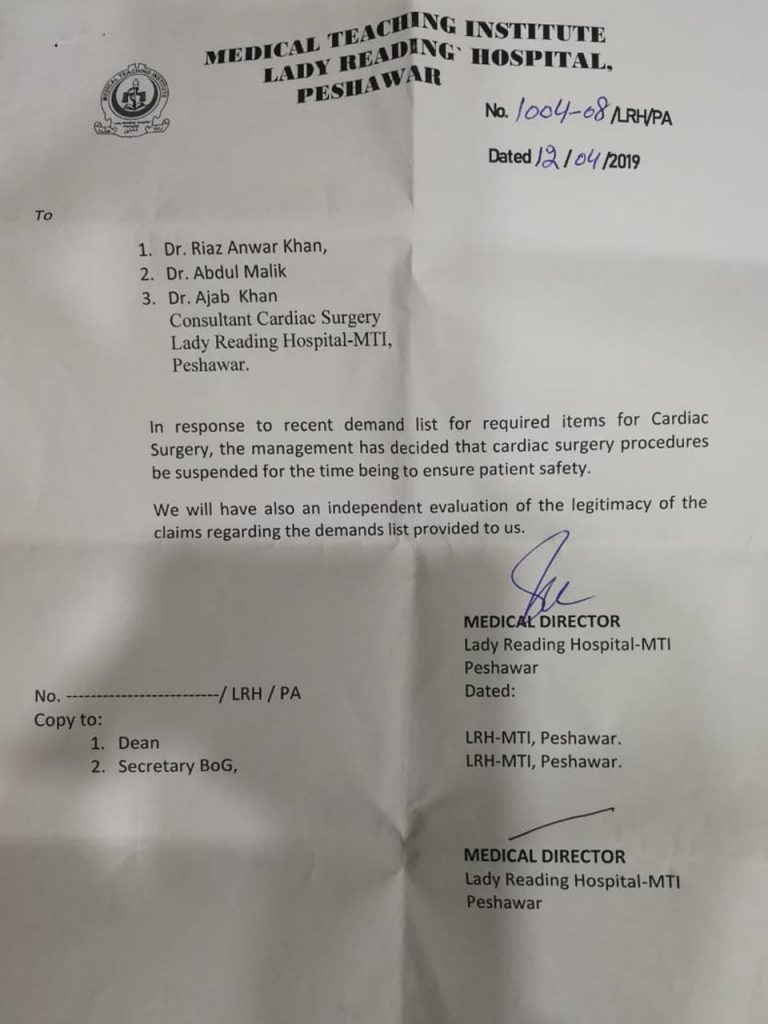
پشاور، لیڈی ریڈنگ ہسپتال میں آلات نہ ہونے پر انتظامیہ نے دل کے آپریشن روک دیئے

اسلام ٹائمز۔ خیبر پختونخوا کے سب سے بڑے سرکاری ہسپتال لیڈی ریڈنگ ہسپتال (ایل آر ایچ) میں مشینیں خراب ہونے کے باعث دل کے آپریشنز کو بند کردیا گیا۔ لیڈی ریڈنگ کو خیبر پختونخوا (کے پی) کا بہترین ہسپتال کہنے والوں کے دعوے ایک ہی دن میں ہوا ہوگئے۔ کے پی میں اوپن ہارٹ سرجری کے مریضوں کیلئے اُمید کی واحد شمع بھی بجھ گئی۔ واضح رہے کہ گذشتہ روز وزیر صحت خیبر پختونخوا ڈاکٹر ہشام انعام اللہ خان نے ایل آر ایچ کو صوبے کا بہترین ہسپتال قرار دیا تھا۔ ایل آر ایچ کے میڈیکل ڈائریکٹر نے کارڈیک سرجری کے ڈاکٹرز کو خط لکھا کہ ایل آر ایچ میں سہولیات کے فقدان کے باعث دلوں کے آپریشنز بند کردیئے گئے ہیں اور مریضوں کی بھلائی کیلئے فی الوقت آپریشن بند ہونا ہی بہتر ہے۔

ایل آر ایچ کے ڈاکٹرز کا کہنا تھا کہ ہسپتال میں مشینیں خراب ہیں اور بار بار درخواست کے باوجود کچھ نہ ہو سکا، بنیادی سہولیات بھی نہ ہونے کی وجہ سے مریضوں کی شرح اموات میں بھی اضافہ ہو گیا۔ اس سے قبل ایل آر ایچ کارڈیالوجی وارڈ کے پروفیسر ڈاکٹر ریاض انور نے ہسپتال کے میڈیکل ڈائریکٹر کو گذشتہ سال مراسلہ کے ذریعے مسائل سے بھی آگاہ کیا تھا۔ ڈاکٹر ریاض نے لکھا تھا کہ ہسپتال میں آنے والے عارضہ قلب کے مریضوں کے آپریشنز سہولیات نہ ہونے کے باعث اکثر ملتوی کردیئے جاتے ہیں، اور گذشتہ روز بھی آکسیجنیٹر نہ ہونے سے وجہ سے دو مریضوں کے آپریشنز نہیں ہو سکتے تھے۔ انہوں نے مراسلہ میں یہ بھی لکھا تھا کہ اوپن ہارٹ سرجری کیلئے متعلقہ شعبہ میں آئی سی یو اور بیڈز کی کمی کا بھی سامنا ہے، جس کے بارے میں ہسپتال انتظامیہ کو متعدد بار پہلے بھی آگاہ کیا گیا ہے۔

IMF asks Pakistan to share details of loans from China

(IMF), who is currently considering a package for Pakistan, has asked the latter to share details of loans that it has received from 
According to the Express Tribune, IMF, during a recent meeting, voiced concern about Beijing's financial assistance to 
However, assured the IMF that there is no overlapping between the two programmes (IMF and CPEC), reported Dawn.
Minister has said that and the IMF will reach a full agreement in the coming days.
"During the last two days, we have, more or less, reached an understanding. In the next day or two, we hope to reach a full agreement and then we will share the details with you," the minister said after a meeting with Bank Group and senior officials of IMF.
In the past few years, Pakistan and have signed about half a dozen projects of worth USD 6.2 billion under CPEC. Besides this, it has also granted commercial loans worth USD 6.5 billion. has also deposited USD 2 billion in 
In October last year, Pakistan had formally requested the IMF for yet another economic assistance package.
The South-Asian nation is going through an economic crisis after the decided to cut off the financial aid to the country in the view of terrorist attacks. The US views Pakistan as a safe haven for terrorists and insurgents, responsible for the 17-year-old war going on in neighbouring 
Pentagon, in September, had reportedly cut off aid worth USD 300 million due to growing concerns regarding Islamabad's failure to tackle the militants.
In August, the US had also slashed security-oriented financial aid to Pakistan.
Pakistan, however, has sought help from several countries including and China as its has been in limbo for a long time. It secured loans up to USD 6 billion from on the sidelines of the Future Investment Initiative conference in in October.
has been seeking commercial loans of USD 2 billion from  China has already refused to provide balance of payment (BoP) support to Pakistan.

Pakistan's statements of ending support to terror groups a facade: Former envoy to US

Pakistan Prime Minister Imran Khan's recent statement promising an end of support to terror groups does not reflect a change of policy and is motivated by the fear of getting blacklisted by the global terror-financing watchdog FATF, the country's former envoy to the US Husain Haqqani has said. Amidst intense global pressure to rein in terror outfits, Khan last month said his government will not allow Pakistan's land to be used for any kind of terror activities and promised actions against militant groups operating from the country's soil.
Haqqani, Pakistan's former Ambassador to the US, told a Washington audience on Friday that so far, there is no evidence that the Khan government or the military is dismantling Pakistan's terrorist support infrastructure. "There is little change in Pakistan's attitude towards militancy, particularly the one directed against Afghanistan and India," he said in his address to the third 'India Ideas Conference' organised by India Initiative of the prestigious Georgetown University.
Haqqani pointed out that Pakistan has failed to initiate any action against the Jaish-e-Mohammed (JeM) terror group or its leader Masood Azhar after the Pulwama terrorist attack in Jammu and Kashmir. "Islamabad's close ties with Beijing were invoked to ensure that Azhar's designation as a terrorist by the United Nations was blocked by China at Pakistan's behest," he said, adding that such moves are consistent with Islamabad's policies of the last 30 years.
Haqqani, who has authored several books, is currently the Director for South and Central Asia at the Hudson Institute think-tank. He is considered as an outspoken critic of the Pakistan Army's domestic and foreign policies, especially its support of terrorism. "Although the FATF sanctions are not imminent, Pakistan is trying to thwart them with public relations moves such as Imran Khan's latest statement. There will be more PR moves as FATF pressures increase," he said. The former ambassador said that the desire to reassure the world once again that Pakistan wants to act against terrorist groups is motivated by economic considerations. "Pakistan's economy is not doing too well. FATF sanctions would only make Khan's only economic option more borrowing and financial bailouts by other countries and IMF-- more difficult," he said. Haqqani stressed that "Pakistan's support for militancy is a strategic choice, motivated by the desire to provide a force multiplier for a relatively poor country trying to act as a major regional power without resources comparable to its perceived rival". Pakistan is under intense global pressure to rein in terrorist outfits operating from its soil after the Pulwama attack.
Tensions between India and Pakistan escalated after a suicide bomber of Pakistan-based terror group JeM killed 40 CRPF personnel in Jammu and Kashmir's Pulwama district on February 14. India launched a counter-terror operation in Balakot. The next day, Pakistan Air Force retaliated and downed a MiG-21 in aerial combat and captured its pilot, who was handed over to India on March 1. Paris-headquartered Financial Action Task Force (FATF) on February 22 condemned the Pulwama terror attack and decided to continue the 'Grey' listing of Pakistan for its failure to stop funding of terrorist groups such as JeM, Lashkar-e-Taiba and Jamat-ud-Dawa. The FATF continuing Pakistan with the 'Gray' listing means downgrading of the country by multilateral lenders like the International Monetary Fund, World Bank, Asian Development Bank, European Union and also a reduction in risk rating by Moody's, S&P and Fitch, according to experts.
https://www.thehansindia.com/news/international/pakistans-statements-of-ending-support-to-terror-groups-a-facade-former-envoy-to-us-520718

Friday, April 12, 2019

Kuchi nomads, women - Afghanistan’s Most Vulnerable Women


#Pakistan is under the military jackboot

By Gurmeet Kanwal
The army has effectively ensured that Pakistan’s fledgling democracy is not allowed to take root.
After India’s counter-terrorism air strikes at Balakot in February 2019 and the reactions that these evoked in the National Assembly, Pakistan appears to be headed towards an unpredictable denouement. Accused by India, Iran and Afghanistan of using terrorism as an instrument of State policy,Pakistan has been isolated in the region. With a seemingly uncontrollable insurgency in Khyber-Pakhtunkhwa (KPK, erstwhile North West Frontier Province), a simmering freedom movement in Balochistan, growing unrest in Gilgit-Baltistan and rampant urban terrorism, the internal security environment is precariously unstable.
Pakistan’s economy is in a shambles: the funds are low, the debts are high, exports have dwindled to a trickle and the Pakistani currency has fallen to an all-time low of 140 rupees to a dollar. Pakistan has for long been dependent on the United States’ largesse to meet its obligations for the repayment of its burgeoning debt. However, due to its intransigence in extending its cooperation in the war against the Afghan Taliban, that source has dried up and Imran Khan, the beleaguered Prime Minister and chairman of the ruling Pakistan Tehreek-e-Insaf party, has had to run to China, Saudi Arabia and the United Arab Emirates for help.
Pakistan’s deep state — the army and the Inter-Services Intelligence (ISI) — has also been facing insurmountable challenges. The army’s counter-insurgency operations in KPK and the Federally Administered Tribal Areas (FATA) have been floundering; its military camps have been repeatedly attacked with some attackers coming from within the rank and file; its relations with the US and its North Atlantic Treaty Organization (NATO) allies have plummeted to an all-time low; defence preparedness is sub-optimal; and, the morale of the rank and file is low. The only saving grace is that a pliable prime minister, with whom the army’s senior leadership is not at loggerheads, is now holding office. The military jackboot has ridden roughshod over Pakistan’s polity for most of the country’s history since its independence. While Generals Ayub Khan, Yahya Khan, Zia ul Haq and Pervez Musharraf ruled directly as Presidents or Chief Martial Law administrators, the other army chiefs achieved perfection in the fine art of backseat driving. The army repeatedly took over the reins of administration under the guise of the “doctrine of necessity” and, in complete disregard of international norms of jurisprudence, Pakistan’s Supreme Court mostly played along. The army has effectively ensured that Pakistan’s fledgling democracy is not allowed to take deep root. The origins of authoritarianism can be traced back to General Ayub Khan, who promoted the idea of “guided” or “controlled” democracy. The concept of the Troika emerged later as a power sharing arrangement between the president, the prime minister and the chief of the army staff (COAS). The “political militarism” of the Pakistan army imposed severe constraints on the institutionalisation of democratic norms in the civil society.
Some key national policies have always been dictated by the army. The army determines Pakistan’s national security threats and challenges and decides how to deal with them. Pakistan’s policies on Afghanistan and Jammu and Kashmir (J&K) are guided by the army and the rapprochement process with India cannot proceed without its concurrence. The army controls Pakistan’s nuclear weapons programme and the related research and development. The civilian government has no role to play in formulating the doctrine for nuclear deterrence, the force structures, the targeting policies and the command and control. The army chief decides the annual defence expenditure and all defence procurements. He also controls all senior-level promotions and appointments; the government merely rubber stamps the decisions.
In order to weaken India, as also to further China’s agenda to reduce India’s influence in Asia, the Pakistan army has adopted a carefully calculated strategy to bleed India through a thousand cuts. This has been given effect overtly through irregular warfare manifested in the Razakar and Mujahid invasion of Kashmir in 1947-48 and Operation Gibraltar in 1965; and, the Kargil intrusions of 1999. A proxy war has been waged through ISI-sponsored militancy and terrorism in J&K since 1989-90 and in other parts of India. In the 1980s, Pakistan had encouraged and supported Sikh terrorist organisations in their misplaced venture to seek the creation of an independent state of Khalistan.
The ISI provides operational, intelligence, communication, training, financial and material support to fundamentalist terrorist organisations like the Lashkar-e-Taiba (LeT) and the Jaish-e-Mohammed (JeM) to wage war against India. Similarly, it provides substantial intelligence and material support to various Taliban factions like the North Waziristan-based Haqqani Network to operate in Afghanistan against the elected regime and against NATO forces. The ISI plays the destabilisation card despite the fact that Pakistan is a major non-NATO ally, as evidenced in the killing of Osama bin Laden in the army cantonment of Abbottabad, where he had been housed by the ISI for almost five years.
Realisation must dawn on the army that it has let down the country. Pakistan cannot survive as a coherent nation state unless the army gives up four things: driving the country’s national security and foreign policies from the backseat; seeking strategic depth in Afghanistan; attempting to destabilise India through its proxy war; and meddling in politics. The army must pull itself up by the bootstraps and substantively enhance its capacity to conduct effective counter-insurgency and counter-terrorism operations. In the national interest, the army must give up being a State within a State and accept civilian control, even if it does so with bad grace.
https://www.hindustantimes.com/analysis/pakistan-is-under-the-military-jackboot/story-X401tmG9jYBMlIitjHJ6AJ.html

Christian girl sold to Muslim man in Pakistan to return home

A 14-year-old Christian girl who was kidnapped, sold to a Muslim and forced to marry him is to be handed back to her parents in Pakistan.
The underage girl also had to endure a forced conversion to Islam before the illegal marriage to Zafar Iqbal in February.
Police brought the girl into Lahore High Court on 10 April and Justice Tariq Saleem Shaikh ordered she be reunited with her parents.
She was snatched in nearby Faisalabad and having purchased her, Iqbal renamed her “Ayesha”, and married her despite the girl being two years under the legal age, which is 16 for women in Pakistan.
Non-Muslim girls and young women in Pakistan are very vulnerable to kidnap, forced conversion and marriage to Muslims, and authorities rarely intervene. A report compiled by a Pakistani NGO in 2014 estimated that every year about 700 Christian and 300 Hindu girls and young women in Pakistan suffer similar abuse.