Sunday, February 24, 2019

#Iran's Gen. Soleimani Cautions #Pakistan to Stop Terrorists along Borders with #Iran - Saudi Arabia wants to ‘destroy’ Pakistan

TEHRAN (FNA)- Commander of the Quds Force of the Islamic Revolution Guards Corps (IRGC) Major General Qassem Soleimani warned the Islamabad government to stop cross-border attacks by the terrorists based in neighboring Pakistan."We have always offered Pakistan help in the region, but I have this question from the Pakistani government: where are you heading to? You have caused unrest along borders with all your neighbors and do you have any other neighbor left that you want to stir insecurity for," General Soleimani said on Thursday, addressing a ceremony in the Northern Iranian city of Babol in Mazandaran province.  
His remarks came a week after an explosives-laden truck rammed into a bus carrying the personnel of the Islamic Revolution Guardian Corps (IRGC), killing 27 and injuring 13.

Addressing the Pakistani government, General Soleimani asked, "Are you, who have atomic bombs, unable to destroy a terrorist group with several hundred members in the region? How many of your own people have been killed in different terrorist operations? We do not want your condolences, how could your condolence help the people of Iran?"

General Soleimani went on to say, "I tell the Pakistani people that the Saudi cash has influenced Pakistan and they want to destroy Pakistan with such measures."

He warned that the Pakistani Army should not let several billion dollars of "a Saudi criminal" burn alive Muslims on a bus and finance other terrorist operations in the region, and said, "I ask the Pakistani government what has been left for Pakistan?"

"I warn you not to test Iran and anyone who has tested Iran has received firm response. We are speaking to Pakistan with a friendly tone and we are telling that country not to allow their borders to become a source of insecurity for the neighboring countries; anyone who has made this plot for Pakistan is seeking to disintegrate that country, the Islamic Republic of Iran will take revenge of its martyrs from those mercenaries who have committed this crime no matter where they are in the world," General Soleimani added. "We will punish this wicked group in any part of the world and we will not allow the blood of our youth to be shed in the country and cleaned (and forgotten) easily."

General Soleimani said Iran enjoys independent power and honor. "Some countries have wealth, but no prowess, (US President Donald) Trump tells the Al-Saud that if it hadn't been for the US support, Saudi Arabia would not have survived and Saudi Arabia's monetary coalitions in the region have all ended in failure."

The IRGC bus was carrying personnel on a road from the city of Khash to Zahedan, the capital of Iran's Southeastern province of Sistan and Balouchestan on Wednesday evening, when a truck loaded with explosives and moving alongside the bus detonated.

A statement released by the Quds Base of the IRGC's Ground Force the same night said the bus was carrying a group of IRGC personnel "coming back from a border guarding mission when it came under a suicide car attack by Takfiri terrorists", but did not mention the number of passengers."27 IRGC members have been martyred and 13 others wounded in the terrorist attack so far," the statement said, and further blamed "the intelligence services of hegemonic system - a phrase used normally to refer to the United States and its allies - and Zionism for supporting the attack".

Meantime, Jeish Al-Adl, a Pakistan-based radical Wahhabi terrorist group staging cross border attacks into Southeastern Iran from South-West Pakistan, has claimed responsibility for the attack in a statement.
The group has bases in Southwestern Pakistan and started operations nearly 6 years ago after recruiting the remnants of Jundullah notorious terrorist group and reorganizing them. Iran had captured leaders of Jundullah notorious Wahhabi terrorist group and dismantled the terrorist organization years earlier.
The terror attack has stirred fury among Iranian officials, specially the military brass. On Tuesday, Military Aide to the Iranian Supreme Leader Major General Yahya Rahim Safavi lashed out at Pakistani Intelligence service’s backing for terrorists, advising Islamabad and its intelligence apparatuses that Saudi Arabia is not a reliable partner.

Speaking in Iranian central city of Isfahan, General Safavi said that the Pakistani government and its intelligence service have to respond to the Iranian nation and government, holding Islamabad responsible for the recent terrorist attack in Sistan and Baluchistan.

Referring to Saudi Crown Prince Mohammed bin Salman’s recent visit to Pakistan, General Safavi said Pakistan is a neighbor of Iran, and it should know that Saudi government is not reliable because it will not last for long.The senior official added, 16 research organizations in Europe have announced in a document named ‘World in 2030’ that Saudis will not be existing in 2030 while Iran will be the strongest country of the region.

His comments came as Saudis are using aid packages and investment promises to buy the economically embattled Pakistani government's loyalty and convince it to turn a blind eye to their destructive actions within Pakistan's borders, including the Saudi-funded seminaries that have become breeding ground for extremism and terrorism.

In earlier remarks, Safavi had also slammed Saudi Arabia for supporting the terrorist groups acting against Iran, and said Pakistan and its Inter-Services Intelligence (ISI) should account for the recent suicide attack on IRGC.

"These criminal outlaws were from one of the tribes of Balouchestan who had been trained on suicide operations in the neighboring country, and the neighboring country and the ISI should account to the Iranian government and nation and the IRGC for (the question) how they have crossed the borders of that country and why this neighboring country has turned into a safe haven and a place for the training and dispatch of these infidel terrorist grouplets (to Iran)," he said on Saturday.

He referred to insecurities at common borders of Iran and Pakistan in the past, and said, "The Pakistani government should account for this issue."

General Safavi further pointed to the main backers and sponsors of the terrorist groups operating against Iran from Southwestern Pakistan, and said, "Proof and evidence shows that these terrorist groups are financially sponsored by a number of Persian Gulf Arab states, including one whose crown prince is in Pakistan at present, alluding to Saudi Arabia."

He added that the same states sponsoring the Wednesday attack also planned to launch several similar terror attacks on Iran during the ceremonies commemorating the 40th anniversary of the Islamic Revolution in mid February, which were all defused thanks to the vigilance of the IRGC and other security and intelligence bodies.

Meantime, General Safavi reiterated that Iran wants to have good relations with its neighbors as it believes that insecurity in the region only serves the interests of the United States and Zionists who had gathered in Warsaw conference earlier this week, but vowed that Iran and the IRGC will give a "crushing and proper response in due time to the provocateurs and puppet perpetrators of the terrorist attack against the IRGC".

Earlier on Saturday, Commander of the Islamic Revolution Guards Corps Major General Mohammad Ali Jafari warned Riyadh and Abu Dhabi of Iran's revenge for the Wednesday terrorist attack, and blasted Pakistan for supporting the terrorist groups which act against Tehran.

"The traitor governments of Saudi Arabia and the UAE should know that the Islamic Republic of Iran's patience has run out and the Islamic Republic will not tolerate your secret supports for the Takfiri grouplets. We will take revenge for our martyrs from the UAE and Saudi governments and want the president to give us more free hands than the past for retaliatory operations," General Jafari said in the Central city of Isfahan, addressing the burial ceremony of the IRGC personnel killed in the Wednesday terrorist attack.

He said that the Saudi and UAE intelligence agencies are clearly hatching different plots to foment insecurity in Southeastern Iran in addition to the US and Israeli plots to create insecurity and conduct assassination operations, noting that Iran has reliable intel in this regard.

General Jafari also asked the Pakistani army and intelligence body why their country is sheltering Takfiri groups, including Jeish al-Adl which has claimed responsibility for the Wednesday terrorist attack, and noted, "We believe this silence is kind of support for this grouplet and the Pakistani intelligence organization should account for it."

"Pakistan should also know that it should pay the cost for the Pakistani intelligence organization's support for Jeish al-Zolm (as Jeish al-Adl is called in Iran) from now on and this price will not doubt be very heavy for them," he added.

"Undoubtedly, the Pakistani security organization knows the hideout of the grouplets but it has kept mum," General Jafari said.

Earlier, General Jafari had also underlined harsh revenge from the culprits and masterminds of the Wednesday terrorist attack against the IRGC personnel, warning that Iran would act against the terrorists itself if Pakistan does not tighten security at the borders.

"The recent crime has caused the IRGC and other Armed Forces to boost determination to continue the path of martyrs and confront threats and they will protect security of the country's borders with more strength and power and will take revenge of the blood of our oppressed martyrs," General Jafari said, addressing a ceremony in Isfahan on Saturday.

He said that Pakistan which is aware of the hideouts of the terrorists who conducted the Wednesday suicide attack against the IRGC should account for their crimes too and act upon its responsibilities to establish security at common borders and should not allow the terrorists to use its bordering areas to carry out acts against the Iranian nation's security.

"If Pakistan does not comply with its responsibilities, the Islamic Republic of Iran reserves the right of confrontation against these peripheral threats at the borders with the neighboring country, based on international law and rules, and will adopt compensatory measures to punish the terrorists who are mercenaries of the regional and trans-regional states' spy agencies," General Jafari warned.
The US officials have repeatedly stressed that they would take every possible measure to pressure Tehran, including support for groups operating against Iran. The incident came hours before the start of a US-sponsored security conference against Iran in Warsaw, Poland.

US Secretary of State Mike Pompeo told Fox News last month that Washington would jointly host a global summit focused on Iran and the Middle East in Poland in February, but senior US diplomats later softened tone to shift the conference title to security in the Middle-East, denying that Iran will top or be the main agenda. The gathering took place in Warsaw from February 13 to 14, the US State Department said in a statement.

In mid October, Jeish al-Adl group abducted 14 Iranian Basijis (volunteer forces) and border guards at Mirjaveh border in Southeastern Sistan-Balouchestan province. Five were released a month later on November 15.The IRGC Ground Force then blamed foreign intelligence services for supporting and assisting the terrorist group.Jeish al-Adl also abducted five Iranian border guards in Jakigour region of Sistan and Balouchestan Province and took them to Pakistan in 2014. After two months of abduction, four of them were released and the fifth one was killed. His body was returned to Iran months later.
Then early in March, 2015, Pakistani sources told the country's media that authorities in Southwestern Pakistan had arrested the ringleader of Jeish al-Adl terrorist group as he was traveling on a bus from the lawless border area.

Salam Rigi, cousin of the Jundollah terrorist group's ringleader Abdolmalek Rigi, was seized by Pakistani authorities who were tipped off to his movements and intercepted the bus some 50 km from Quetta, the capital of Pakistan's Baluchistan, a security official said on the condition of anonymity.Salam Rigi was accused of involvement in suicide bombings in Iran and Pakistan, as well as sending terrorists to the conflicts in Iraq and Syria.

Other sources said the terrorist arrested was Abdo-Sattar Rigi (Abdolmalek's brother), explaining that he was carrying his cousin's ID card at the time of arrest, but further investigations revealed his true identity.
Later reports proved that the captured terrorist was Abdo-Sattar Rigi.

Abdo-Sattar (the third of the notorious Rigi brothers) headed the Jeish al-Nasr terrorist group, but his cousin Salam leads Jeish al-Adl.

Abdo-Sattar's two older brothers, Abdolmalek and Abdolhamid Rigi, who led the more powerful terrorist group, Jundollah, were both captured and condemned to death by Iran earlier.

In early 2009, Abdolhamid Rigi, the Jundullah terrorist group's number two man and brother of its ringleader Abdolmalek Rigi, was arrested by Iranian security forces.

Abdolhamid had conducted a number of bombing operations and other violent attacks in Iran resulting in many casualties and was sentenced to death by the court in 2009, but his execution was delayed on several occasions. Officials did not mention any specific reason for the delayed execution of Abdolhamid at the time.

Iran arrested Abdolmalek Rigi, the number one man of the Jundollah terrorist group in late February 2011. Abdolmalek was executed in June 2011.

Iranian military and police officials voice concern over the presence of terrorist groups in Pakistan's territories, criticizing the Pakistani army and border police's lax control over shared borders.
The two sides' state and military officials have exchanged frequent visits to enhance anti-terrorism cooperation specially in border regions. In early December, top security officials from Iran and Pakistan met in Iran’s Southeastern city of Zahedan to hold the 22nd joint meeting on border cooperation between the two countries.

Late in October, Commander of the IRGC Ground Force Brigadier General Mohammad Pakpour announced his forces' preparedness to launch joint operations against the terrorists who abducted the Iranian border guards in Southeastern Iran.

"We have had different contacts with the Pakistani army and urged them to guarantee extradition of the outlaws and healthiness of the abductees and they should show more responsibility," General Pakpour said, referring to the fate of the 9 border guards that are still kept by Jeish Al-Adl.

"These terrorists have a stronghold and a base on Pakistan's soil and we are prepared for any joint operations with the Pakistani army against the outlaws to release the hostages," he added.

http://en.farsnews.com/newstext.aspx?nn=13971202000751

Masood Azhar, founder of militant group that killed Indian troops in Kashmir, was freed from jail as part of hijackers’ demands


Indian Airlines flight was hijacked on Christmas Eve in 1999,Azhar was set free and founded Jaish-e-Mohammad shortly after.
For eight days in 1999 the world watched in horror as hijackers diverted an Indian Airlines flight to Afghanistan and held the passengers hostage, the drama ending only when Delhi agreed to release three Kashmiri militants.Nearly 20 years later, India is still paying the price for that decision.
One of the militants freed was Masood Azhar, who went on to found Jaish-e-Mohammad (JeM), the militant group which claimed responsibility this month for the deadliest attack in three decades in Indian-held Kashmir.More than 40 Indian paramilitaries were killed in the suicide blast on February 14, kindling a fresh diplomatic crisis between nuclear-armed arch-rivals India and Pakistan.JeM is based in Pakistan, one of several anti-Indian militant groups fighting in Kashmir which are officially banned in the country, but which are alleged to be used by Islamabad as proxies in India.Azhar, also, is believed to be in Pakistan – but his exact whereabouts remain shrouded in mystery.He was born the son of an elementary school teacher in Punjab province in 1968, according to Amir Rana, a security analyst who has carried out extensive research on Pakistani militant groups.
The US Treasury Department website still gives Azhar’s home address as a location in the province’s Bahawalpur district.
Azhar entered Indian-held Kashmir on a Portuguese passport, security officials there said, and established contact with numerous militant groups. At the peak of the insurgency in the early 1990s, one retired official said, he had not yet picked up arms. A common figure in the streets of Srinagar, he was known for his fiery speeches, and for mediating between the many groups flocking to the insurgency.
“His greatest value for the militant groups was as a motivator and recruiter, but more significantly he displayed a good capacity to reconcile their differences,” the official said.
Azhar was detained by Indian authorities on terrorism charges in 1994. He reportedly bragged to his jailers that they would not be able to keep him in custody. At one point, another security official said, he and other militants dug an escape tunnel. When the moment came, Azhar insisted on going first.“But he got stuck in the narrow tunnel because of his bulky physique and the whole attempt was thwarted,” the official said.He remained in prison until the Indian Airlines flight from Kathmandu to New Delhi was hijacked on Christmas Eve in 1999 and eventually landed in the southern Afghan city of Kandahar, at the time under Taliban rule. One of the hijackers, Ibrahim Athar, was reported to be Azhar’s younger brother.Azhar reportedly met with al-Qaeda chief Osama bin Laden and Taliban founder Mullah Mohammed Omar in Afghanistan after he was freed, Rana said. He formed JeM in 2000, Rana said. Just a year later, JeM was blamed for a brazen attack on the Indian parliament in which militants killed 10 people, and which brought India and Pakistan to the brink of war.Azhar was detained and placed under house arrest. But a court in the Punjab provincial capital of Lahore ordered his release in 2002, citing “lack of evidence”.
As home-grown Pakistani militant groups turned their guns on the state after 9/11, Rana said Azhar was one of the few who kept a low profile. The group struck again in 2016, with Delhi blaming them for an infamous attack on a military base in Indian-held Kashmir that left seven soldiers dead and once more sent tensions spiralling.
Azhar was again taken in to “protective custody” but never formally charged. His whereabouts remained a mystery for months, with speculation he was being kept under house arrest in Bahawalpur.Last July he addressed supporters in Muzaffarabad, the capital of Pakistani-held Kashmir, by telephone from an undisclosed location, claiming he had hundreds of militants ready to fight to the death.The speech prompted Indian authorities to tighten security at airports in anticipation of another hijacking. Azhar, meanwhile, has not been directly heard from since.Azhar’s JeM is banned by the United Nations, India and Pakistan, and listed by the US State Department as a terrorist organisation. But the man himself has never been declared a terrorist.Delhi and others have tried multiple times to get the UN Security Council to declare Azhar a global terrorist, including in 2016 and 2017.The move has been blocked each time by Pakistan’s ally China, however – despite its own fears of domestic Islamist militancy.Diplomats said this week that, in response to the rising tensions, France, Britain and the United States were considering a new push at the Security Council to place Azhar on the UN terror list – but once more face opposition by China.

#Pakistan Just Became #Saudi Arabia's Client State, and Turned Its Back on Tehran


Mohammed bin Salman got a sycophantic welcome in Islamabad this week, as Saudi Arabia threw Pakistan an economic lifeline. But that aid came at a steep price: Pakistan has now formally joined the Sunni Muslim axis against Iran.


Saudi Crown Prince Mohammed bin Salman may have got the cold shoulder from protesting crowds in Tunisia and been publicly sidelined at the G20 conference last November, but he was treated to a hero’s welcome in Pakistan this week.
It was more of a savior’s welcome, bearing in mind the financial lifeline he threw to Prime Minister Imran Khan. And that aid was part of a significant bargain struck between Islamabad and Riyadh.Khan has acquiesced to MBS’ pointed demand: to join the Sunni Muslim axis against Iran. That formalization of an anti-Tehran alliance that Pakistan has previously hesitated to endorse will have ripple effects both within Pakistan, and across the region.
The first leg of Saudi Crown Prince Mohammad bin Salman’s Asia tour saw him strike $20 billion worth of deals in Pakistan. The financing comes as much needed relief for Islamabad, which is looking to dodge a thirteenth International Monetary Fund bailout amid a balance of payment crisis that is crippling the economy.
During the two day trip that culminated on Monday, MBS further provided diplomatic support to Islamabad at a tense period of relations with India due to last week’s bombing in Indian-administered Kashmir, which killed over 40 Indian security officials.
Just as India threatens war in retaliation, assurances Pakistan received from both Saudi Arabia and China bolstered its decision that there was no need to go after Jaish-e-Mohammad, the terror group that took responsibility, and whose leadership is still living openly inside Pakistan.
Where China has reiterated it has no plans to reconsider its veto on the move to designate JeM Chief Masood Azhar a terrorist by the United Nations, Saudi Arabia’s joint statement with Pakistan following MBS’s visit highlighted the need to "avoid politicization of the UN listing regime."
MBS’s financial and diplomatic support comes in exchange for Pakistan’s increased involvement in the so-called Islamic Counter Terrorism Military Coalition (IMCTC). Islamabad was informed about its new role by former Army Chief General (retired) Raheel Sharif – who now commands the IMCTC – in the lead up to the MBS visit.
The IMCTC was formed in December 2015, nine months into Saudi military campaign in Yemen. At the time Riyadh was planning the execution of influential Shia cleric Sheikh Nimr al-Nimr, which brought Saudi Arabia and Iran to a standoff, leading to a severing of diplomatic ties.It also coincided with the peak of the Islamic State (ISIS)’s powers in Iraq and Syria, confident enough even to launch attacks in Saudi Arabia. That synchronicity gave the IMCTC cover as a military alliance designed to counter ISIS, disguising its counter-Iran aims, with the obvious feel-good factor of an unprecedented formation of Muslim states uniting to fight a group orchestrating Islamist terrorism across the world.
Three years later, however, ISIS has been largely eliminated in the Middle East, even before the IMCTC could become operational. And so the coalition, with a predominantly Sunni membership making it a mere extension of the "Arab NATO," needs a new cover for its actual goals of countering Iranian influence in the region.The window of opportunity is narrow: Saudi Arabia must exploit the remaining lifetime of the Trump administration and its staunch anti-Iran posture, embodied by the U.S. pullout from the Iran nuclear deal, and the economic benefits of US-backed sanctions on Iranian oil.
Pakistan holds a key position in the Saudi plan. Not only is Pakistan’s military expertise critical for the sustenance of IMCTC, its location as Iran’s neighbor has geostrategic significance.Where Saudi Arabia’s $10 billion oil refinery in the port city of Gwadar will provide the finance and energy lifeline to Pakistan, its location in Balochistan, bordering Iran, sparks obvious military apprehensions in Tehran.
To make Pakistan an integral part of its case against Tehran, MBS is also looking to paint as a potential victim of "Iranian terrorism." This was evident is Saudi State Minister for Foreign Affairs Adel bin Ahmed Al-Jubeir calling Iran the "world’s chief sponsor of terrorism" sitting next to the Pakistani Foreign Minister Shah Mehmood Qureshi in Islamabad on Monday.
That explicitly anti-Iran rhetoric is being voiced in Pakistan in the presence of the most senior Pakistani ministers and with their tacit sanction underlines that Islamabad has now formally aligned itself against Tehran.
Practically, however, this has been the case since Pakistan decided to join the IMCTC in 2016, and gave the green light for its former army chief to command it.
Tehran has already reacted to the newly hostile tone. On Saturday, Tehran said Islamabad would "pay a high price" for last week’s attack on its Revolutionary Guards alleging that Pakistan provides safe havens to Jaish-al-Adl, the group which has regularly orchestrated attacks in Iran. Tehran has threatened retaliatory action in the past for what it considers deliberately lax border security.
Just as Islamabad gave MBS an anti-Iran podium, Tehran is echoing claims often made by India: that Pakistan provides a safe haven for to jihadists and fails to take action against militants crossing the border to launch attacks on neighboring territories. That identification with its arch-enemy naturally makes Pakistan’s alignment against Iran easier.
Popular opinion in Pakistan has not been overly enthusiastic to signing up the Saudi side in its Middle East conflicts. Three years ago, the National Assembly even adopted a resolution against the country’s military involvement in Yemen.
The fact that Pakistan is home to the second largest Shia population in the world has also been a concern for its rulers every time they’ve been asked to become party to Saudi foreign policy priorities.
There are more ramifications for the ruling party, Pakistan Tehrik-e-Insaf (PTI), which has a significant vote bank among the Shia community. The leadership of its main rival, the Pakistan Muslim League-Nawaz (PML-N) are widely considered to be Saudi shills, since Riyadh provided former Prime Minister Nawaz Sharif refuge in the aftermath of the 1999 military coup.
But the tide is turning. None of this discomfort was visible in the almost hagiographic coverage of MBS’s Pakistan trip, with the local media churning out panegyric supplements dedicated to the Saudi Crown Prince. Even the opposition leadership wholeheartedly welcomed MBS; there was a scramble to take credit for the deals signed with Saudi Arabia.
And unlike in Tunisia or the G20, neither the global outrage over the killing of journalist Jamal Khashoggi nor Saudi war crimes in Yemen were even whispered as concerns.
That’s less surprising. Given the country’s own disregard for them, there usually isn’t much outrage in Pakistan over human rights violations – unless Muslims are at the receiving end from a non-Muslim regime. Of course, there’s an exception for superpower allies: Pakistan has not commented on China’s persecution of Uighur Muslims in the Xinjiang region bordering Pakistan.Indeed, Islamabad might be entering a prolonged era of enforced silence on the human rights abuses exercised by China and Saudi Arabia, with the two countries looking set to protect their investments in Pakistan by providing diplomatic support on the international stage.
On the Saudi side, that back up won’t be entirely watertight. While China already considers India a major rival, Saudi Arabia won’t feel any compulsion to compromise its growing trade relations with India for the sake of pacifying Pakistan, and might even issue vague statements against cross-border terrorism for New Delhi’s consumption.
Pakistan is clearly relinquishing not inconsiderable control over its foreign policy and military resources, and reaffirming its diminished status as a client state of both superpowers. But Imran Khan’s government clearly assesses that’s a small price to pay for economic salvation and the gift of solid cover to continue to nourish jihadists as key geostrategic assets.
Pakistan has made itself significant enough to be bailed out by China and Saudi Arabia, both financially and diplomatically. Now Islamabad will be hoping it can play both powers to its advantage, and that Riyadh and Beijing cooperate for influence over Pakistan, rather than fighting a zero sum contest for exclusivity.

Drop your mask of innocence: Asaduddin Owaisi tells Pakistan PM Imran Khan

AIMIM chief Asaduddin Owaisi came down heavily on Pakistan Prime Minister Imran Khan over the Pulwama terror attack and said he "should drop his mask of innocence".
"We would like to tell Pakistan PM [Imran Khan] don't give that message to India which you want to by sitting before a TV camera. You started this, it wasn't a first attack. There was Pathankot, Uri and now Pulwama. We would like to tell Pakistan PM to drop his mask of innocence," Owaisi said at a rally in Mumbai, news agency ANI reported.
Owaisi said the Pulwama terror attack, where 40 CRPF jawans were killed on February 14, was "hatched" by Pakistan. He said the Pakistan government, Army and intelligence agency--ISI--were involved in the attack.
"This attack has links to Pakistan. It was done as per plan of Pakistan govt, Pakistan Army and ISI," Owaisi said.
Owaisi also hit out at the Pakistan-based terror outfit Jaish-e-Mohammed (JeM) for its role in the dastardly terror attack in Pulwama. He said that a disciple of Prophet Muhammad, the founder of Islam, would never kill a person.
"I would like to tell the outfit that killed our 40 men and claimed its responsibility, you're not Jaish-e-Mohammed, you are Jaish-e-Shaitan. A soldier of Mohammed [Muhammad] does not kill a person, he is merciful towards humanity. You are Jaish-e-Shaitan, Jaish-e-Iblis. Mazsod Azhar, you are not a Maulana, you are a disciple of the devil. It is not Laskhar-e-Taiba, it is Lashkar-e-Shaitan," Owaisi said.
He also said that Pakistan should not worry about Indian Muslims as they are here by choice after refusing Jinnah's proposition in 1947.
He also outlined the country's diversity and said that the neighbouring country is jealous by the unity of Indian citizens.
"One of the ministers from Pakistan had said that they will stop the prayer bells from ringing in temples of India but I want to tell him that he doesn't know India. Till Muslims of this country are alive, Azaan will sound from mosques and bells will ring in temples. This is the beauty of our country which the neighbouring country sees because of jealousy. People in this country live as one and when it will come to the country we all will be together," Owaisi said.
https://www.indiatoday.in/india/story/drop-your-mask-of-innocence-asaduddin-owaisi-tells-pakistan-pm-imran-khan-1463544-2019-02-24

چنیوٹ کے گاؤں کی پہلی پولیس کانسٹیبل ’’ثمینہ نورین‘‘ #Pakistan -


پاکستانی خواتین کا ترقی کی جانب بڑھتا ہر قدم، ان کی ذاتی کامیابی کے 
بجائےوطن عزیز کی کامیابی وکامرانی محسوس ہوتاہے۔ اور اس حوالے سے جب کوئی مثبت خبر دیہات یا پسماندہ علاقوں کی خواتین کی جانب سے آتی ہے تو اس خوشی کا کوئی ٹھکانا نہیں رہتا۔
پاکستان کا شمار ان ممالک میں ہوتا ہے، جہاں خواتین کو بااختیار بننےکے لیے طرح طرح کے مسائل کا سامنا کرنا پڑتا ہے،خاص طور پر دیہی اور پسماندہ علاقوں کی خواتین کو۔ تاہم خواتین پر جب کچھ کرنے یابننے کی دُھن سوار ہوجائے اور ایسے میں اپنوں کا اعتماد و بھروسہ ان کے ساتھ ہو تو وہ تمام مسائل اور رکاوٹوں کو عبور کرتی چلی جاتی ہیں۔ چنیوٹ کی19سالہ ثمینہ نورین بھی ان خوش قسمت خواتین میں سے ہیں، جن کی آگے بڑھنے اور کچھ بننے کی لگن کو ان کے والدین اور بہن بھائیوں نے بڑھاوا دیا اور ان کے بھروسے اور اعتمادکے باعث آج وہ چینیو ٹ کے گاؤںموزا کوٹ خیر شاہ کی پہلی اور واحدپولیس کانسٹیبل ہیں۔ آج کی تحریر میں چنیوٹ کی اس بہادر اور منفرد لڑکی کی زندگی کا احوال بیان کر رہے ہیں۔
ثمینہ نورین کی تین بہنیں اور بھی ہیں، جنھیں گاؤں کی دیگر لڑکیوں کے برعکس ایک بہتر اور منفرد زندگی جینے کا موقع ملا۔ بین الاقوامی میڈیا کو دیے گئے ایک انٹرویو میں ثمینہ کا کہنا تھا کہ وہ گاؤں کی پہلی لڑکی ہے، جسےشہر کے اسکول جاکر پڑھنے کی اجازت ملی۔ ثمینہ اور ان کی بہنوں نے اپنے گاؤں کی لڑکیوں میں سب سے پہلے میٹرک کا امتحان پاس کیا۔ ثمینہ کے مطابق ایک عام اور نچلے طبقے کی لڑکی کا پولیس کانسٹیبل تک کا سفر آسان نہ تھا۔ رشتہ داروں حتیٰ کہ گاؤں کے دیگر افراد نے بھی گاؤں سے دور اسکول جانے پر طرح طرح کے خدشات کا اظہار کیا لیکن والدین کی سپورٹ کے باعث ثمینہ نے ہمت نہ ہاری، وہ روزانہ 11کلو میٹر کا فاصلہ طے کرکے چنیوٹ کے اسکول پہنچا کرتی تھی۔ گھر سے اسکول تک کا طویل راستہ طے کرنے کے لیے وہ ایک گھنٹہ پہلے نکلا کرتی تھی اور اسکول کی چھٹی کے بعد گھر پہنچنے کے لیے مزید ایک گھنٹہ کا سفر بس یا پبلک وین سےطے کرتی تھی۔ بارہ سال تک ثمینہ کی یہی روٹین رہی۔ ان کے والد دوست محمد مزدوری کرکے یومیہ اجرت کمانے والے شخص ہیں۔ کم وسائل کے سبب دوست محمد کے لیے اولاد کو تعلیم دلوانا خاصا مشکل کام تھا، تاہم اس کے باوجود انھوں نے ہمت نہ ہاری اور تمام بچوں کو تعلیم دلوائی۔ ثمینہ بتاتی ہے کہ انھیں سب سے زیادہ حوصلہ ان کے والد کی جانب سے ملا کیونکہ وہ اس بات پر یقین رکھتے ہیں کہ ترقی کرتے اس دور میںلڑکوں کی طرح لڑکیوں کا تعلیم حاصل کرنا بھی بے حد ضروری ہے۔

زندگی کا سب سے اہم دن
ثمینہ نورین نےانٹرمیڈیٹ کی تعلیم 18سال کی عمر میںمکمل کی، اس کے بعداس نے پولیس فورس جوائن کرلی۔ ثمینہ اپنی زندگی کا سب سے اہم لمحہ اس وقت کو تسلیم کرتی ہیں، جب ان کے بڑے بھائی ہاتھ میں اخبار تھامے گھر آئے اور اسے مشورہ دیا کہ پولیس کانسٹیبل کی جاب کا اشتہار آیا ہے، جس کے لیےثمینہ کو بھی اپلائی کرنا چاہیے۔ اس کے بعد ثمینہ نے نہ صرف اپلائی کیا بلکہ ٹیسٹ کلیئر کرنے کے بعد ٹریننگ بھی کامیابی کے ساتھ مکمل کی۔ آگے بڑھنے کی لگن لیےثمینہ مستقبل میں گریجویشن مکمل کرنے کے ساتھ ساتھ فارمیسی لرننگ کورسز کرنے کا بھی ارادہ رکھتی ہے۔ ثمینہ کہتی ہے،’’پولیس کانسٹیبل بننا پولیس فورس میں انٹری کے لیے پہلا قدم ہے۔ میرا اور میرے والدین کا اصل خواب اس دن پورا ہوگا جب میں پنجاب پبلک سروس کمیشن کا امتحان پاس کرکے بطور آفیسر تعینات ہوجاؤں گی‘‘۔
ثمینہ نورین کے مطابق خواتین کے لیے اس ملازمت میں سب سے مشکل کام کسی بھی واقعہ کی تحقیقات ہوسکتا ہے لیکن اس مشکل کے باوجود اس شعبہ سے منسلک تمام تر خواتین اپنے فرائض نہایت خوش اسلوبی کے ساتھ انجام دے رہی ہیں۔
گاؤں کی لڑکیوں کیلئے رول ماڈل
ثمینہ نورین اپنے گاؤں کی لڑکیوں کے لیے ایک رول ماڈل ثابت ہوئی ہیں، جس کے پیش نظر گاؤں کے دیگر افراد بھی اپنی بچیوں کو تعلیم دلوانے پر رضامند ہوگئے ہیں۔ گاؤں کی مائیں ثمینہ نورین کو وردی میں دیکھ کر اپنی بیٹیوں کا مستقبل بھی کچھ ایسا ہی دیکھنے کی خواہشمند ہیں۔ امید ہے کہ جو ٹرینڈ ثمینہ نورین نے اپن انتھک محنت اور جدوجہد سے سیٹ کیا ہے وہ اب تھمے گا نہیں۔ چنیوٹ کے اس چھوٹے سے گاؤں میں تبدیلی لانے والی ثمینہ نورین بہت جلد اپنے گاؤں کی لڑکیوں کی قسمت بدلنے کا سبب بن جائے گی۔ اور یہ تبدیلی صرف ایک گاؤں نہیں بلکہ مستقبل میں پاکستان کے تمام صوبوں کے پسماندہ علاقوں میں دیکھی جائے گی۔

Saturday, February 23, 2019

Music Video - Rayan & Rima - Dana Dana الشاب ريان و ريما - دانا دانا

Music Video - Ariana Grande - 7 rings

Music Video - DaBaby - Walker Texas Ranger

Music Video - Dave - Black

Music Video - Doja Cat - Tia Tamera - ft. Rico Nasty

Music Video - Jasirah - saidi dance - gala of Keda Aho Festival 2019

Video Report - 'Abused' #Saudi sisters trapped in Hong Kong risk deportation

Video Report - #France #YellowVest protesters march for 15th consecutive weekend

Video - Van Jones to comic: Why are you still messing with the Saudis?

Video Report - Will voters go for Bernie Sanders in 2020? | Planet America

Music Video - Noor Jehan - Jaddun holi jeyi laina mera

#Pakistani #Christian woman beaten and forced to convert to #Islam


A Pakistani Christian mother of eight, Shazia Bibi, was beaten and forced to convert to Islam. Shazia Bibi used to work as a domestic servant at Mian Imran’s house, in Chanan Village District Gujrat, where she lived with four of her children.

 After a few months Mian Imran, who has links with extremist groups, started pushing Bibi to convert to Islam.

 He offered her Rs 200,000 to convert as well as a home. But she declined his offer, not knowing how dangerous it would be for her.

 Imran kept trying to convince her to convert to Islam and when he realised Bibi was not going to change her religion, he started claiming that she owed him Rs 200,000 saying that if she wanted to leave, she would have to pay him.

Bibi shared the whole matter with her husband, Bashir, who took her and the children away without Mian Imran‘s knowledge. But when Mian came to know, he went to their house and abused and beat them before forcefully taking their kids with him.

 He threatened that if they do not return the Rs 200,000 he would kill them and convert all their children to Islam.

He further told the family that going to the police would not make any difference because of how powerful he is.

 Our partners, who were involved in the case told us that when they approached Mian Imran he didn’t allow them to see Shaiza Bibi who with her children had moved to a Madrassah run by the extremist group.

They were told that Bibi and her children had converted to Islam therefore she could not be allowed to live with her Christian family. After several meeting Mian Imran agreed to release her on two conditions – that she will not change her religion and she will be allowed to practice Islam, and she has to pay him the money owed.

There was no other way and keeping in view the family safety, Rs. 200,000 was paid to Mian Imran for the release of Shazia Bibi.

The world is watching: continued solidarity for jailed comrade in Pakistan


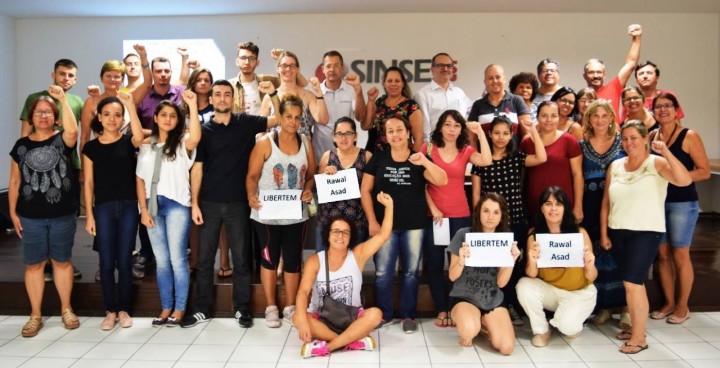
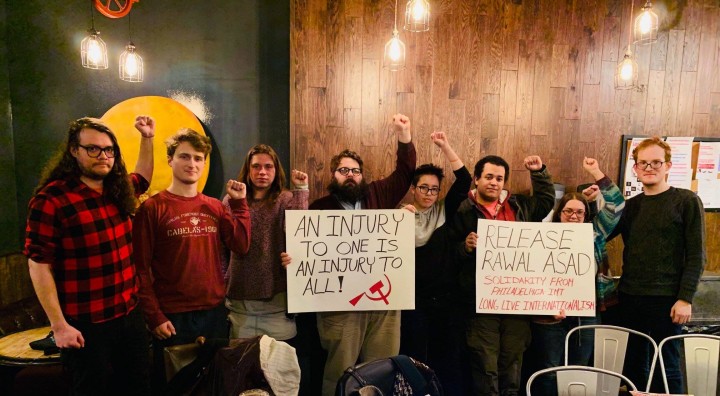
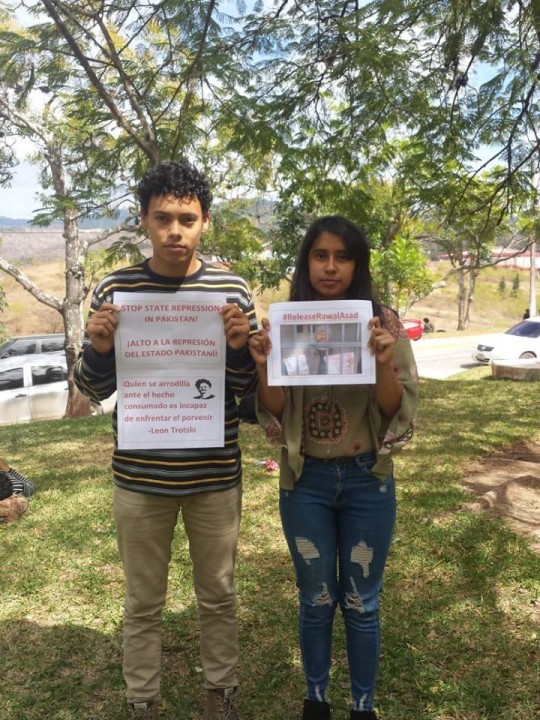
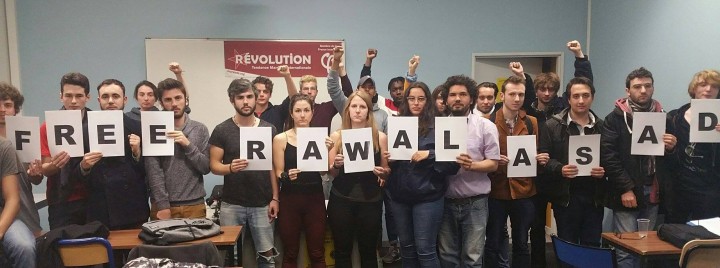
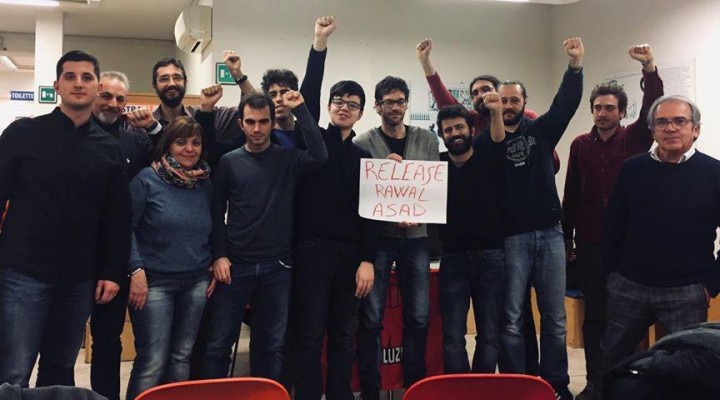
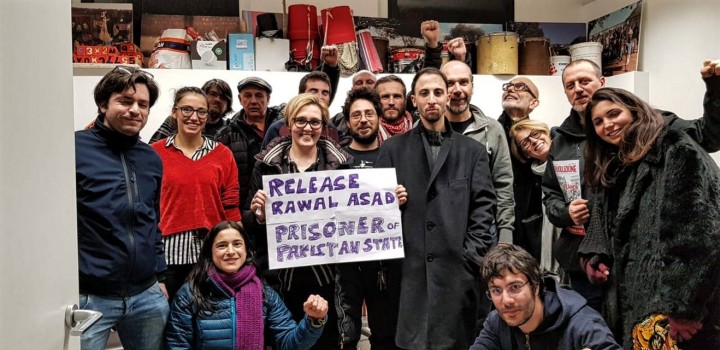
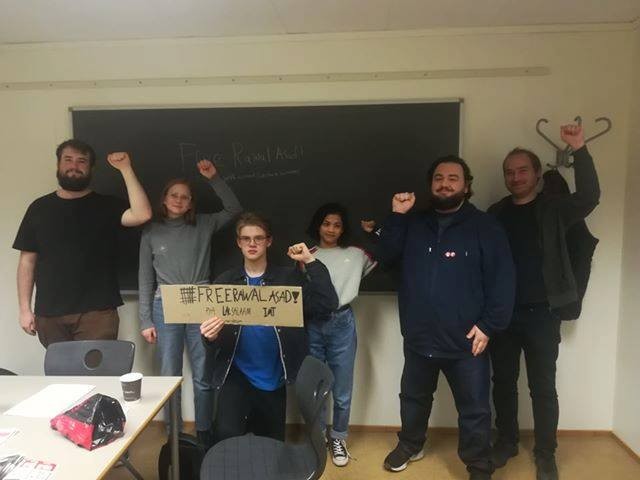
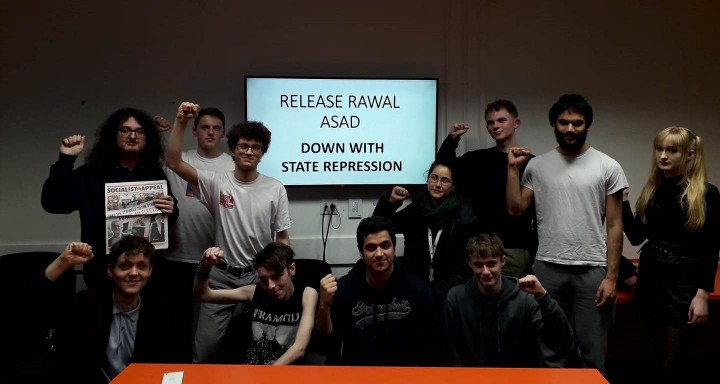
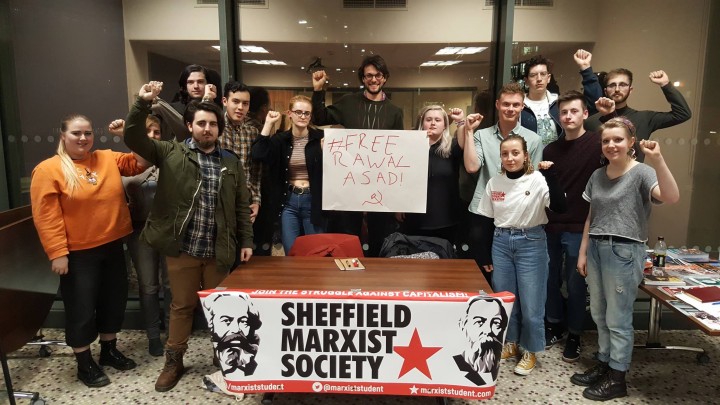
A Marxist student comrade of the Progressive Youth Alliance, Rawal Asad, remains in jail on the charge of sedition, having had his bail hearing rejected. In addition to continued protest in Pakistan against this injustice, messages and photographs have been pouring in all week from all over the world demanding our comrade's release.
There were two major protests in Pakistan today, the first in front of Emerson College Multan, led by the PYA. Despite enduring harassment, threats and abuse from the college management, the comrades were not cowed and there are more demonstrations planned until Rawal is freed:
Another protest took place today in Bahawalpur, which was attended by students and also workers of Gulistan Textile Mills (Bahawalpur):
The International Marxist Tendency's solidarity campaign has continued to gather steam. We will not allow the Pakistani state to get away with this blatant attempt to silence and make an example of a revolutionary student, who has been arrested for no greater crime than exercising his constitutional right to attend a protest and organise workers and students in defence of their interests.

Joinville, Brazil

Free Rawal Liberdade e Luta Joinville Brazil

Philadelphia, USA

Free Rawal Philly

Honduras

Free Rawal Honduras

Toulouse, France

Free Rawal Toulouse France

Reggio Emilia, Italy

Free Rawal Reggio Emilia Italy

Modena, Italy

Free Rawal Modena Italy

Norway

Free Rawal Norway

Leeds University, Britain

Free Rawal Leeds MarxSoc

Sheffield Marxist Society, Britain

Release Rawal Sheffield

#IRAN ALERTS #PAKISTAN TO BEWARE OF THE #SAUDI PLOTS

Iran’s Major General Qassem Soleimani has cautioned Pakistan on the true intentions behind Saudi Arabia's investment, saying that the Riyadh regime wants pitting Pakistan against its neighbours.
"Saudi-sponsored terrorists on Pakistani soil are causing trouble for all neighbours, and Pakistan must fully realize this matter,” he said, making it clear that ‘it worries Iran that the Saudi money end up in the hands of these Takfiri terrorists.

"We tell the people of Pakistan that they should not permit Saudi Arabia to destroy their country with its money," said Major General Soleimani, adding that the (South) Asian country must not turn into a place for activities that disturb regional states.

Last week, a bomber -- identified by the IRGC as Pakistani national Hafiz Mohammad Ali -- slammed his explosives-laden vehicle into a bus carrying off-duty members of the elite Iranian force in Sistan and Baluchestan Province bordering Pakistan, killing 27 of them.
Iran says the Pakistan-based Jaish ul-Adl Takfiri terrorist group that claimed responsibility has ties to al-Qaeda and the Saudi regime.

In the wake of the fatal terror attack, the IRGC warned Saudi Arabia and its vassal state, the United Arab Emirates (UAE), of retaliatory measures for backing the terrorists on behalf of the US and the Israeli regime. It also urged Pakistan to change its policy towards Jaish ul-Adl.

Soleimani further said Iran does not want mere condolences, but concrete action from neighboring Pakistan, asking, "Can't you, as a nuclear-armed state, deal with a terrorist group comprises of hundreds of people?"

"Iran is a safe neighbor for Pakistan and we will not threaten this country, but we will exact revenge against the Takfiri mercenaries, who have the blood of our youths on their hands" no matter where in the world they are," Soleimani said in reaction to the terror attack on IRGC in Zahedan prior to a controversial visit by Saudi Crown Prince Mohammed bin Salman to cash-strapped Pakistan, where he received a lavish welcome.
"Saudi-sponsored terrorists on Pakistani soil are causing trouble for all neighbours, and Pakistan must fully realize this matter,” he said, making it clear that ‘it worries Iran that the Saudi money end up in the hands of these Takfiri terrorists.

"We tell the people of Pakistan that they should not permit Saudi Arabia to destroy their country with its money," said Major General Soleimani, adding that the (South) Asian country must not turn into a place for activities that disturb regional states.

Last week, a bomber -- identified by the IRGC as Pakistani national Hafiz Mohammad Ali -- slammed his explosives-laden vehicle into a bus carrying off-duty members of the elite Iranian force in Sistan and Baluchestan Province bordering Pakistan, killing 27 of them.

Iran says the Pakistan-based Jaish ul-Adl Takfiri terrorist group that claimed responsibility has ties to al-Qaeda and the Saudi regime.In the wake of the fatal terror attack, the IRGC warned Saudi Arabia and its vassal state, the United Arab Emirates (UAE), of retaliatory measures for backing the terrorists on behalf of the US and the Israeli regime. It also urged Pakistan to change its policy towards Jaish ul-Adl.
Soleimani further said Iran does not want mere condolences, but concrete action from neighboring Pakistan, asking, "Can't you, as a nuclear-armed state, deal with a terrorist group comprises of hundreds of people?"
http://www.shiitenews.org/index.php/pakistan/item/36705-quds-force-chief-alerts-pakistan-to-beware-of-the-saudi-plots

Editorial: #Pakistan - Making an announcement about JuD's proscription is not enough - Ban on JuD


THE decision by the country’s civilian and military leadership to take action against Jamaatud Dawa and its charity wing, Falah-i-Insaniat Foundation, is significant.
On Thursday, the National Security Committee, with the prime minister in the chair, took the decision, with the Prime Minister’s Office later saying that the state cannot be allowed to “become hostage to extremism”.
The JuD is of course an avatar of Lashkar-i-Taiba, one of the many jihadi groups that dot this country’s landscape. However, making an announcement about the group’s proscription is not enough; if the state has evidence of the outfit’s involvement in militancy it should present the facts and pursue the legal course so that JuD’s leadership can face justice.
As has been witnessed for nearly two decades now, the state moves to ban militant outfits, but, in very little time they are back, up and running, with new names and the entire structure of violence intact. For example, in 2002 the Musharraf regime banned a host of jihadi and sectarian groups, yet this effort had little practical effect because with a mere change of nomenclature, the groups continued to peddle hate and violence, making a mockery of the proscription.
Moreover, the establishment’s attempts to ‘mainstream’ violent actors — eg presenting them as legitimate religious scholars or relaunching the jihadi lashkars as political parties — have also failed to steer these groups away from violence and hate. For example, a sectarian party has been repeatedly allowed to take part in general elections, but its senior leaders have failed to cease spewing venom.
History has shown that while low-level jihadi and sectarian party cadres perhaps can be deradicalised and mainstreamed, their leadership is committed to the ideology of violence and can only be silenced through the legal path. These parties’ fundraising, communications and organisational systems must be targeted to put them out of business; imposing mere ‘bans’ is futile.
In the delicate post-Pulwama period, Prime Minister Imran Khan must be praised for saying that those who use this country’s soil to attack others are enemies of Pakistan. The government has now started to take action. For instance, reports emerged on Friday that a key madressah associated with Jaish-e-Mohammad in Bahawalpur — another militant outfit accused of orchestrating cross-border attacks — was taken over by the Punjab government.
These moves indicate that the leadership has perhaps realised that taking half-baked steps against violent actors is dangerous for Pakistan’s internal security, as well as its external relations. Now the elected leadership and the military establishment must take this campaign — as envisaged under NAP — to its logical conclusion by ensuring that non-state actors are not able to raise armed militias, and that those spewing hatred against other countries or spreading sectarian views are prosecuted.
It was unwise to allow these outfits to operate in the past, and efforts are needed to shut them down permanently.

Terrorism Watchdog Castigates #Pakistan Over Aid to Militants

By Maria Abi-Habib

Pakistan is not doing enough to curb terrorism financing and money laundering, a global financial watchdog said Friday in a stern warning that reflects renewed scrutiny of the country’s links to militant groups.
The Financial Action Task Force, a watchdog based in Paris, hinted that Pakistan could face consequences — like being placed on the group’s blacklist — if it had not taken specific steps by May.Even remaining on the watchdog’s gray list would have consequences, complicating Pakistan’s ability to raise money on international markets at a time when its economy is sputtering and it is in dire need of loans. A blacklisting could lead to sanctions by Western countries, including the United States.
The warning comes a week after India threatened to retaliate against Pakistan for a bombing that killed at least 40 Indian soldiers in Kashmir. The militant group that claimed responsibility, Jaish-e-Muhammad, or Army of Muhammad, operates in Pakistan, where it raises money under aliases, according to American and Indian officials.Khurram Hussain, a columnist with Dawn, Pakistan’s leading English-language newspaper, said the statement by the Financial Action Task Force was its “most strident one” in 10 years.
“It seems like somebody somewhere has run out of patience with Pakistan, and FATF is channeling it,” he said. “Previous governments have tried to take the same actions to list these groups as terrorist entities and limit their activity but have failed to do so.”
The watchdog’s statement named Jaish-e-Muhammad specifically — a rare callout for the group — as well as the Islamic State, Al Qaeda, the Taliban and Lashkar-e-Taiba, which India and the United States accuse of orchestrating the 2008 Mumbai attacks that killed over 160 people.
The statement provided a list of actions that it sought from Pakistan by May, accusing local law enforcement of failing to investigate or crack down on terrorists.
Pakistan has not shown a “proper understanding” of the risks that terrorist groups pose and needs to undertake “remedial actions and sanctions” against them, the statement added.
It went on to demand that the Pakistani authorities identify cash couriers and prevent them from moving illicit money out of the country; that effective action is taken against groups that are prosecuted for financing terrorists; and that suspect groups are denied resources to launder or raise money for terrorist activities.
Pakistan was put on the watchdog’s gray list last year for failing to act against Lashkar-e-Taiba and its suspected political front, Jamaat-ud-Dawa. This week, fearing its status on the gray list would be renewed, Pakistan renewed its bans on Jamaat-ud-Dawa and another affiliate, which had lapsed earlier. But the task force went ahead with its rebuke hours later, signaling that the move was too little, too late.
Although last year Pakistan initially seized some assets of the groups believed to be fronts for Lashkar-e-Taiba, officials’ efforts waned, and the groups remain active.
Pakistan’s finance minister responded Friday on Twitter to the unusually harsh statement by the Financial Action Task Force, saying that the group’s board had kept Pakistan on the gray list “despite hectic efforts and lobbying to get us black listed.”
But the post by the finance minister, Asad Umar, may make matters worse by failing to express any commitment to the watchdog’s targets.
The United Nations and the United States Treasury Department consider Jaish-e-Muhammad a terrorist organization. Several moves by the United Nations Security Council to impose sanctions on the group’s leader, Masood Azhar, have failed because of vetoes by China, an ally of Pakistan. But on Thursday night the Security Council, including China, condemned the Jaish-e-Muhammad attack on Indian soldiers in a forceful statement. Sensing growing pressure over Jaish-e-Muhammad’s activities in Pakistan, the Interior Ministry said on Friday evening that the government had taken control of the group’s headquarters in Punjab Province.But if past actions are any guide, new steps like this one are likely to be temporary and cosmetic. Pakistan’s military denies accusations by the United States that it protects certain terrorist groups, using them as tools to achieve foreign and domestic policy objectives.
The United Nations is expected in coming weeks to advance a resolution to blacklist Mr. Azhar, the Jaish-e-Muhammad leader, though last week China ignored Indian demands to renew efforts to penalize him. Targeting Mr. Azhar specifically would make it harder for the group to raise funds in Pakistan.
The financial task force will make a final decision this year on whether to remove Pakistan from its gray list, place it on its blacklist or remove it altogether.

Pakistani journalist launches #AntiHateChallenge condemning #Pulwama attack

Mirza expressed anguish over the terror attack and asked fellow citizens to join in the social media campaign.

Amid the hate and tensions, an independent Pakistani journalist, Sehyr Mirza, has begun an #AntiHateChallenge on Facebook, condemning the Pulwama suicide bombing in Jammu and Kashmir which killed 40 CRPF troopers.
Mirza expressed anguish over the terror attack and asked fellow citizens to join in the social media campaign.
"We're deeply disturbed over the tragic terror attack that claimed innocent lives in Kashmir," Mirza posted on a Facebook group named "Aman ki Asha" on Tuesday.
In a tweet late on Wednesday, Mirza, also a peace activist, said: "I thought it was very important to break the silence to create a healing space and the best way to do that was through giving out a message of love and warmth.
"So, I initiated the #AntiHateChallenge to express solidarity."
Mirza also shared her photograph along with several other Pakistanis holding a poster, saying "I am a Pakistani and I condemn Pulwama terrorist attack".
"In such testing times, we need more sane voices to speak out against war and terrorism," she said in the Facebook post.
"We have initiated this #AntiHateChallenge to not only condemn the attack but also express solidarity with our Indian friends. Requesting Pakistani fellows, who share our feelings to please, join in??"
She also quoted Indian poet Sahir Ludhianvi's famous lines: "Whether blood be ours or theirs, Its the blood of humankind. Whether wars be waged in the east or west, It is the murder of world-peace. Whether houses be bombed or borders, The temple of the Soul is wounded. War is a problem itself. How will war resolve problems? Today it will rain fire and blood, Tomorrow, hunger and scarcity".
https://www.khaleejtimes.com/international/pakistan/pakistani-journalist-launches-antihatechallenge-condemning-pulwama-attack

#Pakistan - #PPP - #Bhutto and Pakistan’s nuclear programme


By Tariq Osman Hyder
In assessing the contribution to Pakistan by former prime minister Zulfikar Ali Bhutto, it cannot be disputed that nuclear deterrence is the key strategic factor safeguarding Pakistan’s national security and that Mr Bhutto was the architect and prime mover towards the attainment of this capability.
Pakistan was faced by a paucity of scientists, facilities and, most of all, poverty of vision, compared to India. The Pakistan Atomic Energy Council, the forerunner of the Pakistan Atomic Energy Commission (PAEC), predated Mr Bhutto’s induction as minister of energy in 1958, after which the development of the nuclear infrastructure became a key focus. The PAEC could rely on his support for funding. The establishment of the Pakistan Institute of Nuclear Science and Technology, the Pakistan Atomic Research Reactor under the US Atoms for Peace programme, and the contract for Pakistan’s first power reactor KANUPP owed much to his support.
In his 1967 book, The Myth of Independence, Mr Bhutto correctly assessed that India appeared determined to proceed with its plans to detonate a nuclear bomb, and that Pakistan must therefore embark on a similar programme. The 1971 war reinforced Bhutto’s conviction that Pakistan must have nuclear capability. He chose Dr Munir Ahmad Khan to take over the PAEC and, a few years later, Dr AQ Khan to set up a centrifuge plant, the cutting-edge technology of which was assessed by the West as beyond implementation by any developing country. Meanwhile, Dr Abdus Salaam continued as scientific adviser.With trained manpower available, Dr Munir Ahmad indigenised capacity building and also started a number of infrastructural (nuclear fuel cycle-related) projects as well. These complemented the centrifuge programme and also helped run KANUPP. The latter became necessary following India’s testing of its nuclear weapons in 1974, because that led to Canada stopping fuel supplies altogether.
The centrifuge programme provided the enriched uranium which, by the early 80s, gave Pakistan nuclear capability. Of course, leaders depend on reliable professional advice. There were some blind spots. The safeguards on KANUPP depended on an agreement between Pakistan and supplier Canada and this would have lapsed within six months of the agreement’s abrogation. Pakistan had every right to do this when Canada stopped its fuel supplies. Had that been done, an early start to the plutonium route could have been taken. In the absence of such a move, the PAEC should have started work on an indigenous dedicated reactor earlier, rather than waiting 15 years.
Mr Bhutto’s main achievement in the nuclear field was to set the scientific community the specific task of making Pakistan a nuclear power and to appoint managers and allocate resources to proceed in that direction. The centrality of his vision has been substantiated by the fact that every successive government has further developed Pakistan’s nuclear programme and resisted efforts by foreign powers to restrict this capability. The recognition that our nuclear deterrent capability is vital for Pakistan’s defence and place in the world has become a unifying consensus in the country.
Published in The Express Tribune, April 19th, 2011.

Trump says India, Pakistan facing a 'very dangerous situation'


United States President Donald Trump, while voicing alarm at a “very dangerous” standoff between India and Pakistan, indicated that the US and others are trying to defuse tensions between South Asia’s two nuclear-armed states.
"Right now between Pakistan and India, there is a very, very bad situation. A very dangerous situation,” Trump told reporters in the Oval Office on Friday afternoon.“We would like to see it [hostilities] stop. A lot of people were just killed. We want to see it just stop. We are very much involved in that [process]," he added.At least 40 Indian soldiers were killed in occupied Kashmir's Pulwama district on Feb 14 when a suicide bomber drove an explosive-laden car into their convoy. According to media reports, Jaish-e-Muhammad claimed responsibility for the attack but New Delhi immediately blamed Islamabad and threatened a retaliatory attack. It also announced that it would launch a diplomatic offensive to isolate Pakistan in the international community. Furthermore, India scrapped the Most Favoured Nation status granted to Pakistan and imposed a 200 per cent customs duty on its goods.
In response to India's allegations, Prime Minister Imran Khan promised to conduct an investigation if New Delhi provided “actionable evidence” but also warned that Pakistan will "retaliate" if attacked. On Friday, the Pakistan army also warned India to avoid "any misadventure", as it could have dangerous consequences.
The exchange alarmed world capitals, who — as President Trump hinted in his news briefing on Friday — immediately got in touch with both New Delhi and Islamabad to defuse the situation.
“We're talking and a lot of people are talking [...] but it is a very, very delicate balance going on. Right now, there is (sic) a lot of problems between India and Pakistan because of what just happened," Trump said.
Trump assured India that the US understood its feelings. "India is looking at something very strong. India just lost almost 50 people in the attack. I can understand that too," he said, adding that his administration was talking to "authorities in both countries". He, however, did not specify what measures the US and other nations had so far taken to avoid further escalation between the neighbouring countries.
On Thursday, the United Nations Security Council urged all states to “cooperate actively” with New Delhi for bringing to justice all those who were responsible for last week’s attack.
The same day, Pakistan’s National Security Committee decided to proscribe the Jamaatud Dawa and its charity wing, Falah-i-Insaniyat Foundation, as part of measures to tighten the noose around extremist and militant groups in the country.
India rejects third-party negotiations in its disputes with Pakistan, saying that it prefers bilateral talks. But so far, New Delhi has refused to hold direct talks insisting that it wants Islamabad to tackle with militancy. India's stance creates a difficult situation for mediators who cannot publicly declare their efforts for improving ties between the two neighbours, lest it annoys India.
President Trump, in response to a question during Friday's news briefing, pointed out that the US had last year suspended military aid to Pakistan "because they weren't helping us in the way that they should have".
“I stopped paying Pakistan the $1.3 billion that we used to pay them. In the meantime, we may set up some meetings with Pakistan,” he said, but did not explain the nature, level or timings of those meetings.
He, however, added that ties between the two countries had improved.
"We have developed a much better relationship with Pakistan [in a] short period of time than we had [before]," Trump said. Bilateral ties between Washington and Islamabad have grown warmer since Pakistan agreed to broker peace talks between the Afghan Taliban and the US. The US is looking to achieve a lasting solution to Afghanistan's crisis before withdrawing its troops from Afghan soil.

ذوالفقار علی بھٹو سے بلاول تک!


معروف سندھی دانشور اور میرے کولیگ کالم نگار جی این مغل نے اپنے اور قومی انگریزی معاصر کے ایڈیٹر علی احمد خان کے حوالے سے ایک واقعہ بیان کیا ہے، لکھتے ہیں ’’بھٹو کی شخصیت میں عجیب مقناطیسیت تھی کہ بھٹو کے کمرے سے باہر نکلتے ہی 60,50لوگ وہاں جمع ہو گئے جن میں نوجوان ڈاکٹر بھی تھے دیگر عملہ بھی تھا، شاید کچھ مریض اور ان کے تیمار دار بھی تھے۔ بھٹو پر نظر پڑتے ہی سب کے سب زور زور سے جئے بھٹو کے نعرے لگانے لگے، جیسے ہی بھٹو لفٹ کے نزدیک پہنچے تو لفٹ کا دروازہ کھلا ہوا تھا، بھٹو کے ساتھ ہم دونوں بھی لفٹ میں داخل ہو گئے۔ بھٹو نے تعجب سے ہماری طرف دیکھا اور انگریزی میں کہا:۔
"You Gentlemen from press here?"اتنے میں مَیں نے اور خان صاحب نے ایک آدھ سوال کر دیا۔ ہم نے پوچھا کہ افواہیں گرم ہیں کہ آپ آج کسی وقت بھی گرفتار ہو سکتے ہیں۔ کیا آپ اپنی گرفتاری کے لئے ذہنی طور پر تیار ہیں۔ بھٹو نے منہ سے سگار ہٹاتے ہوئے جواب میں کہا کہ
"You mean I am mentally prepared to face my arrest?
Look I am mentally prepared to face each and every eventuality.
سچی بات یہ ہے کہ بھٹو نے اس جملے کے ذریعے سب کچھ کہہ دیا تھا، انگریزی لفظ "Eventuality"کا دائرہ اتنا وسیع ہے کہ انہوں نے یہ لفظ استعمال کر کے بین السطور اپنی گرفتاری اور پھانسی تک کی پیش گوئی کر دی تھی!‘‘
اور بلاول بھٹو زرداری پاکستانی قوم کے اسی ذوالفقار علی بھٹو کے نواسہ ہیں جس نے بالآخر 4؍ اپریل 1979ء کی شب تختہ دار کو سرفراز کیا تھا۔‘‘ ان کے سامنے، ’’ہے دلیری دستِ اربابِ سیاست کا عصا‘‘ کے سوا کوئی آپشن نہیں، یہ دلیری اُن کے خون میں بھی گردش کر رہی ہے، یہی دلیری ان کی خاندانی تاریخ کی پیشانی پر جھومر کی طرح چمک رہی ہے۔
پاکستان پیپلز پارٹی ہی نے فرد کی بات کی ہے، پیپلز پارٹی ہی نے نارمل طرز حیات کا فلسفہ دیا ہے، پیپلز پارٹی ہی نے ریاست میں انسانی حقوق کی قانون سازی کی ہے، پیپلز پارٹی نے ہی آئینی بالادستی کے تحت قومی اداروں کی بنیادیں رکھی ہیں، پیپلز پارٹی نے ہی ’’بھول جائو، درگزر کرو اور آگے بڑھو‘‘ کے عمرانی معاہدے کے ’’نیلسن ڈاکٹرائن‘‘ کا انتخاب کیا، چنانچہ اندرونِ ملک اور بیرونِ ملک لوگ صرف اور صرف اسی لئے اس جماعت سے متفق یا اس کے حامی ہیں، اس کی نظریاتی تشکیل اور روح میں انہیں حب الوطنی، عوام دوستی، اقتصادی عدل، قانونی مساوات اور احترامِ انسانیت کے لافانی نغمے ہر لمحے سنائی دیتے ہیں۔
پاکستان پیپلز پارٹی نظریاتی دنیا میں انسانی عظمت و رفعت کے منشور کی علمبردار ہے، اپنے منشور کی تکمیل کے لئے جس نے پھانسی کے رسے کو بوسہ دیا ہو، دیس سے باہر زہر کا پیالہ پیا ہو، دیس کے اندر اپنے گھر کی دہلیز پر موت کا استقبال کیا ہو، عوام کے سرعام دربار میں شہادت قبول کی ہو۔ اس پیپلز پارٹی کی نظریاتی بنیادیں مخلص بیوقوفوں، لالچی چوہوں، مفاد پرست دیہاڑی بازوں، سیاسی چانس گروں، عوام دشمن اقتدار پرستوں اور متوقع اقتدار کی کمین گاہوں میں گھاتیں لگا کر پہرہ دینے والے ذہنی منصوبہ سازوں کے ہاتھوں مسمار نہیں کروائی جا سکتیں، آپ کو سچ کے کم از کم ناگزیر تقاضوں کا بلا کم و کاست اظہار کرنا چاہئے، عوام کو بتائو ذوالفقار علی بھٹو، بے نظیر بھٹو، شاہنواز بھٹو، مرتضیٰ بھٹو، بیگم نصرت بھٹو، بی بی بے نظیر شہید، آصف علی زرداری، فریال تالپور اور بلاول بھٹو زرداری پاکستان کی قومی سیاسی تاریخ کے باوقار لیکن آبلہ پا مسافر ہیں، یہ جان لیوا آبلہ پائی انہوں نے صرف عوام کی درگاہ میں پیش ہونے کے لئے اختیار کی۔
پاکستان میں آج بھی ایسے افراد کی نسل موجود ہے جو پیپلز پارٹی کی نہیں عوام کی ایجنٹ ہے۔ وہ اپنی غربت اور جدوجہد کی سنگینیوں سے ابھی زمیں بوس نہیں ہوئی، اسے ذوالفقار علی بھٹو کے نظریات سے وابستگی ہے۔ بھٹو کی اولاد نے ان کے نظریات کی آبیاری میں اپنی جانیں نثار کی ہیں، یہ اہل قلم پارٹی کی شخصیات یا افراد کے ترجمان اور کاسہ لیس نہیں ہیں، ان کا اوڑھنا بچھونا پارٹی کے افکار ہیں، یہ قلمکاروں کی وہ نسل ہے جسے آج بھی بختیار خان جیسے جیالوں کی قدر اور تلاش ہے جس نے محترمہ شہید کو ’’تم‘‘ کہہ کر مخاطب کیا، انہیں قانونی بنیاد پر اجلاس سے باہر جانے کو کہا اور بی بی شہید نے سب سے زیادہ بختیار خان کی بات ہی سنی، میرے ایک اور کولیگ کالم نگار شاہد جتوئی نے اپنی یادداشتوں میں یہ وقوعہ تحریر کیا تھا۔
بلاول بھٹو زرداری قومی سیاست کے عہد نو کی علامت ہیں۔ قیام پاکستان کے بعد پہلی اور دوسری نسل کے سیاستدانوں میں سے پہلی نسل تو قریب قریب معدوم ہو چکی، دوسری عمر رفتہ کے ریٹائرڈ اور اختتام پذیر دائروں میں داخل ہونے کو ہے۔
سیاست میں نوواردوں کا عہد شروع ہو چکا ہے۔ پاکستان کے سیاسی عمل میں شاید سب سے طاقتور سیاسی علامت بلاول بھٹو زرداری ہیں۔ بلاول بھٹو زرداری اس عظیم ماں اور پُر عزم والد کا فرزند ارجمند ہے جن میں سے ایک نے اپنے قومی سیاسی سفر کو شہادت کی ابدیت سے سرفراز کیا، دوسرے نے ’’درگزر کرو ، بھول جائو اور آگے بڑھو‘‘ کے نصب العین کی راہ میں اپنی جان ہتھیلی پر رکھی، جوانی بندی خانے کی نذر کر دی اور شب و روز اس منزل کے حصول میں لگا دیئے جسے آئینی بالادستی کا قیام کہا جاتا ہے۔
ذوالفقار علی بھٹو اور بی بی شہید کے بعد محترمہ فریال تالپور بھی پاکستان پیپلز پارٹی کے قومی سیاسی سفر کے اس عمل میں ایک اہم سنگ میل کی حیثیت اختیار کر چکی ہے، انہیں یہ حیثیت آصف زرداری مخالف ان مہربان، قوتوں نے دی ہے جنہوں نے گزرے دو تین برسوں سے ہی نہیں، آصف زرداری کو پاکستان کا صدر منتخب ہو جانے کے بعد ہی ٹارگٹ کر لیا تھا، ’’فریال تالپور نے پارٹی کے اندر اپنی آمریت قائم رکھی ہے‘‘ کا سلوگن بھی ان بے اصول سیاسی انانیت کے قیدی کرداروں کی فتنہ گری کے مفسدانہ شرارے تھے، فریال تالپور کا سیاسی آشیانہ ان شراروں سے جلنا تو درکنار ایک رتی بھر جھلسا بھی نہیں مگر ان بے اصولوں کا آج سندھ کی سیاسی دھرتی پر وجود ہی دکھائی نہیں دیتا۔
اب چیئرمین پیپلز پارٹی بلاول زرداری بھٹو کے حوالے سے تھوڑا سا ذاتی احوال۔
گزشتہ ماہ سلیقہ شعار پارلیمنٹرین اور مستند دانشور نفسیہ شاہ سندھ سے خاکسار کی تیمار داری کے لئے تشریف لائیں، پھر چیئرمین پیپلز پارٹی بلاول بھٹو زرداری نے پی پی کے منور انجم کے ہاتھ مع دعائوں کے گلدستہ بھجوایا۔ بعد ازاں لاہور سے ہی پنجاب پیپلز پارٹی کے فعال دانشور ڈپٹی سیکرٹری اطلاعات بیرسٹر عامر حسن کے ذریعہ اپنے ذاتی خط میں نہ صرف میرے لئے نیک تمنائوں اور سعادتمندی کا اظہار کیا بلکہ میرے علاج معالجے کے حوالے سے بھی میرے تمام حالات و معاملات میں عملی تعاون کیا جس کے لئے خاکسار ہمیشہ دعا گو رہے گا۔
پس منظر اس داستان کا یہ ہے کہ گزشتہ تقریباً پانچ چھ ماہ سے میں اسپتالوں میں رہا، ایک بڑے اور دو چھوٹے آپریشنوں کے مراحل سے گزرا، بالآخر سروسز اسپتال کے سلیم الفطرت مسیحا اور سرجن یورالوجی ڈیپارٹمنٹ ڈاکٹر ایوب مرزا کو مولا کریم نے میرے لئے دست شفا عطا فرمایا، اس دورانئے میںکالم نگاری بھی جاری رہی جو صرف اور صرف مالک کل کے کرم و رحم کی عطا تھی اور عطا ہے۔ احباب کی دعائیں بھی مقبول ہو ئیں۔ میں معمولات زندگی شروع کرنے کے قابل ہوا، یہ کالم پیپلز پارٹی جیسی ترقی پسند اور عوام دوست جماعتوں اور افراد کے لئے ہمیشہ سعی و جہد کا آئینہ دار ہو گا۔ ان شاء اللہ۔