Saturday, February 16, 2019

#yemenchildren - Humanitarian crisis in #Yemen remains the worst in the world

An estimated 24 million people – close to 80 per cent of the population – need assistance and protection in Yemen, the UN warned on Thursday. With famine threatening hundreds of thousands of lives, humanitarian aid is increasingly becoming the only lifeline for millions across the country.
According to the Office for the Coordination of Humanitarian Affairs (OCHA) the “severity of needs is deepening”, with the number of people in acute need, a staggering 27 per cent higher than last year, when it was already the most acute crisis on the globe.
Thursday’s 2019 Humanitarian Needs Overview for Yemen report, shows that 14.3 million people are classified as being in acute need, with around 3.2 million requiring treatment for acute malnutrition; that includes two million children under-five, and more than one million pregnant and lactating women.
Highlighting that more than 20 million people across the country are food insecure, half of them suffering extreme levels of hunger, the report focuses on some key humanitarian issues: basic survival needs, protection of civilians and livelihoods and essential basic services.
“The escalation of the conflict since March 2015 has dramatically aggravated the protection crisis in which millions face risks to their safety and basic rights”, OCHA reports.
The UN agency data shows that a total of 17.8 million people lack access to safe water and sanitation, and 19.7 million lack access to adequate healthcare. Poor sanitation and waterborne diseases, including cholera, left hundreds of thousands of people ill last year.
Meanwhile, grain which could help feed millions, is still at risk of rotting in a key Red Sea storage facility because conditions are too unsafe to reach it, UN Special Envoy Martin Griffiths and UN Emergency relief chief Mark Lowcock said earlier this week.

Death toll and displaced people

During the past four years of intense conflict between Government forces and Houthi rebels have left tens of thousands dead or injured including at least 17,700 civilians as verified by the UN.
The agency adds that an estimated 3.3 million people remain displaced, up from 2.2 million last year, including 685,000 people who fled fighting in Hudaydah and on the west coast, from June onwards. According to the UN Refugee Agency (UNHCR), the number of sites hosting displaced people has increased by almost half over the past 12 months.

Pledging conference

In a bid to respond to the urgent humanitarian needs, the United Nations and the Governments of Sweden and Switzerland will convene the third High-Level Pledging Event for the Humanitarian Crisis in Yemen, later this month.
The event is scheduled for 26 February in Geneva and seeks to garner support for the humanitarian response and alleviate the suffering of the Yemeni people. At the beginning of this month, UN Emergency relief chief Mark Lowcock said that $4 billion would be needed.
https://moderndiplomacy.eu/2019/02/16/humanitarian-crisis-in-yemen-remains-the-worst-in-the-world/

#yemenchildren - Starving girl shows impact of #Yemen war, economic collapse

Displaced by war, starving and living under a tree, 12-year-old Fatima Qoba weighed just 10kg when she was carried into a Yemeni malnutrition clinic.

“All the fat reserves in her body have been used up, she is left only with bones,” Makiah al-Aslami, a doctor and head of the clinic in northwest Yemen. “She has the most extreme form of malnutrition.”Qoba’s slide into starvation is typical of what is happening in much of Yemen, where war and economic collapse have driven around 10 million people to the brink of famine, according to the United Nations.
Aslami said she is expecting more and more malnutrition cases to come through her door. This month she is treating more than 40 pregnant women with severe malnutrition.
“So in the coming months I expect I will have 43 underweight children,” she said.
She said that since the end of 2018, 14 deaths from malnutrition had occurred at her clinic alone.
Qoba, her 10 siblings and father were forced from their home near the border with Saudi Arabia and forced to live under a tree, Qoba’s older sister, also called Fatima, told Reuters.She said they were fleeing bombardment from the Saudi-led coalition, which intervened in Yemen in 2015 to restore the internationally recognized government of Yemeni President Abd-Rabbu Mansour Hadi after the Houthi-movement ousted it from power in the capital Sanaa in 2014.“We don’t have money to get food. All we have is what our neighbors and relatives give us,” the sister said. Their father, in his 60s, is unemployed. “He sits under the tree and doesn’t move.”
“If we stayed here and starved no one would know about us. We don’t have a future,” she said.
After trying two other hospitals which could not help, a relative found the money to transport Qoba to the clinic in Houthi-controlled Aslam, one of Yemen’s poorest districts with high malnutrition levels.Lying on green hospital sheets, Qoba’s skin is papery, her eyes huge and her skeletal frame encased in a loose orange dress. A health worker feeds her a pale mush from a bowl.
Aslami said the girl needed a month of treatment to build up her body and mind.
The United Nations is trying to implement a ceasefire and troop withdrawal from Yemen’s main port of Hodeidah, where most of Yemen’s imports come from. But violence continues to displace people in other parts of the country, and cut access routes for food, fuel and aid.
There is food in Yemen, but severe inflation has eroded people’s ability to buy it, and the non-payment of government worker salaries has left many households without incomes.
“It’s a disaster on the edge of famine ... Yemeni society and families are exhausted,” Aslami said. “The only solution is to stop the war.”

Divorce, Islam and me: 'I will for ever be the woman who left two husbands'


Saima Mir
When my arranged marriage ended, my parents decided to set me up again. But finding love isn’t that easy...
I was 19 the first time marriage was mentioned. My mother told me about a young man whose family had expressed an interest in me, and then she promptly left the house. The realisation that I was of marriageable age was clearly as difficult for her as it was surprising to me. I was a geeky young woman who had never even shaken hands with a man, let alone had a boyfriend. I’d attended an all-girls Catholic school before opting to study science at university. My life was Malcolm X and Maya Angelou, X-Men and Spider-Man; summers were spent at my nani’s house in Karachi, and winters trudging through Yorkshire snow. Bespectacled before it was cool, I was short-sighted in more ways than one, young enough to believe that good things happened to good people.
My first husband was 11 years older than me. We met only once before the wedding, but spent the year leading up to the big day talking on the phone. I was in my final year at university. He was a doctor – the ideal profession for a son-in-law – and the eldest of two sons, who had moved to the US from Pakistan after finishing medical school. We married on 6 September 1996, and flew to Mississippi, where we were to live in a pretty white doll’s house of an American home.
The living room had a single brown leather sofa and a large TV with huge free-standing speakers on either side. These speakers were my first husband’s passion. He would take out a tape measure to check the distance between them, the TV and the sofa. Other than that, he was quiet, reserved. His mother, who lived with us, was not. Much of what happened during that time has faded, but a few things stay with me. The way she would make him sit on her lap, his embarrassment at her kisses, her coming into the bedroom while we slept, her odd questions about whether he used soap in the shower. I spent all day at home with her. I had no money of my own, and no way of going anywhere. He would come home from work and the three of us would sit side by side watching that enormous TV. When it got late, his mother would say, “Now go straight to bed and don’t talk.” She put a red sock in with the white wash and blamed me for ruining his lab coats. She put a hair scrunchie in the pressure cooker and told me it was God teaching me a lesson for asking her to move her hairbrush from the kitchen work surface. Was I losing my mind? Slowly I began to feel afraid for no reason; I lost weight – it seemed I had married a man and his mother.
I was in Mississippi on a three-month visitor visa. Immigration rules meant that if I applied for a green card I would be unable to return to England for at least two years. The thought of that was unbearable and my mother advised me to come home first. From that point, the demise of the marriage was fast. I never got back on the plane to the US. My first marriage had lasted a mere three months.
At the time, divorce was uncommon in my culture. I was lucky to have parents who trusted my judgment and didn’t care what other people had to say. And people did have a lot to say. Divorce may be perfectly allowable according to Islam (the Prophet’s first wife was a divorcee), but that didn’t stop the gossip. In a society that prizes virginity, my “value” had fallen.
The easiest way for a woman to regain her status after a divorce is to say her husband was impotent. It would have been easy to say I was still a virgin, but that would have been a lie. The truth was simple. I had been married and I was now divorced. And though I knew there was nothing wrong with my decision, my relatives’ condolences left me feeling dirty, as if I had been the victim of a sex crime. I remember scrubbing myself in the shower until I almost bled, trying to clean away my shame.
My family felt that the best way to repair the situation was to marry me off again, as soon as possible. Once I was happy, they told me, I’d forget all about the past.
I was 23 the second time I got married. My second husband was only a little older than me and was full of liveliness and excitement. He had the kind of energy that comes with youth, success and arrogance. I remember looking at his trainers the first time we met, and rejoicing. My last husband had worn Hush Puppies.“What’s stopping you saying yes?” he asked the second time we met. He promised me that if his family interfered he would stand up for me; he promised me it would be different. I think back to that time and wonder why I didn’t say no. I can only say that I thought my elders knew better. I was raised as a people-pleaser; I was also raised to see the best in people, even if that meant disregarding my own instincts.
But once again, I found myself living in an extended family. We lived with his mum, dad and little sister, and had frequent visits from his second sister, her husband and their two small children. There was also a third sister who lived with her extended family and who was held up by them as someone I should aspire to be like.
The day after the wedding, we visited his parents before boarding a flight for our honeymoon. On arrival I could sense something was amiss. My father-in-law raised an eyebrow and asked me what I was wearing. I was dressed in a ghagara, a kind of heavily gathered skirt that skims the ground. “A skirt,” I said. His grimace displayed his displeasure. My husband told me later that his father had an aversion to skirts and saw my wearing one as a personal affront. He had an aversion to many things, it would turn out.
I had decided to double-barrel my surname, but when my father-in-law saw my mail, his rage knew no bounds. The strife that followed was unending, and one of my sisters-in-law was called in to give me a “talk”. She told me that only actors double-barrelled their names. Cowed, I gave in.
I now understand that the psychological manipulation that followed was gaslighting: my in-laws began slowly eroding my confidence. A few months in, I was cooking all the meals and cleaning the house. It is difficult to explain to someone who has never experienced emotional abuse how words can destroy a person. A few more months in, my eldest sister-in-law sat me down for a formal talk. She said I was neglecting my duties and needed to start doing her parents’ washing and ironing. I had little say in the matter.
My husband’s role in all this was strange. I have no doubt that he loved me, that he wanted to spend time with me. We watched Ally McBeal every Thursday in our bedroom – the one time in the week we’d head upstairs before 9pm (all other evenings were spent with his parents) – and we spent weekend afternoons wandering aimlessly around London only to end up in Pizza Hut. We went on beautiful holidays and he bought me lavish gifts, as well as small thoughtful trinkets. I would go so far as to say he adored me. But there was another side to him, the side his parents would rile into a rage, and I would bear the brunt of it.
Once he left me sobbing on the bathroom floor because I wasn’t wearing the clothes his mother had picked out for me. We were on the way to a wedding and his parents didn’t approve of the blue silk salwar kameez and pearl choker I had on. They had a word with him just before leaving, following which he raged and spewed venom at me. I remember dropping down the wall of the bathroom, unable to breathe, my foundation washing off into my hands. His sister came to get me and I had to clean myself up and go to the wedding, where he was suddenly apologetic and loving. Exhausted and empty, I accepted his apology.His parents would wind him up like a clockwork toy with great regularity. It was usually just before we took a trip away, and I would spend the first couple of days “detoxing” him. I remember sitting by a pool in Morocco, watching helplessly as he sobbed. “They tell me I’m under my wife’s thumb,” he said. “But maybe I want to be!”
Their list of petty issues grew. I had not been raised properly, there was a dead fly on the steps I had failed to pick up, I had got my hair cut short without asking their permission, I’d met a friend in a coffee shop.
In the winter of 2000, I visited my parents for Eid. My husband rang and something in his tone told me all was not well. He said he wanted me to apologise to his youngest sister, the sister to whom I had given a Christian Dior compact before I left, the sister I had hugged, whom I treated as my own. But she needed an apology. She was upset about the way I had spoken to her in front of my cousin. I refused, telling him it was none of his business. He shouted. I refused again. Maybe it was because I was home, safe with my parents, or maybe I had taken all I could bear. Whatever it was, I was done.
And so I applied for khula, the Islamic form of divorce that is granted when a woman wishes to leave her husband. Seated in a small room in the mosque, my parents beside me, and my husband and his father in front, I asked for a divorce. “But I don’t want to give it,” my husband said to the qadi. There is a misconception that Islam does not allow a woman the right to divorce her husband. This lie is spread and made powerful by the halting of the education of girls and women by men, by cultural stigma, and by the mullahs who want to maintain power. But a woman who can read the Qur’an soon learns that her subjugation and oppression is a man-made construct.
“I don’t need your permission,” I said coldly. It was the first time I had felt such resolve.
“She’s right,” the qadi said. “She doesn’t need your permission.”
“I don’t want to have anything more to do with these people,” I said, looking into my father-in-law’s eyes. A stunned expression spread across his face. He had assumed me to be weak, that a woman who was divorced once would be oppressed and beaten into submission, that I would do anything to avoid the shame again. They had taken my kindness for weakness. But I knew what it meant to be happy, and I knew I deserved better.
After my second divorce my father told my mother: “You will never stop my daughters doing what they want again.” After this, we stopped pandering to the community. Outwardly, I merged my eastern and western wardrobes, mixing kurtas with jeans and shawls. Inwardly, I stopped giving a damn about gossip. The worst had happened.
With my personal life dead, my professional life flourished. I was 27 when I landed a traineeship at my local paper. The paper gave me a job and sent me to journalism school. A few years later I was working for the BBC. My father was impossibly proud, recording every news item I was in and boring visitors half to death. When I moved into my own place, the mosque tongues wagged that I’d fallen out with my folks. They didn’t know it was my father who had found the cottage in Bradford, and arranged for me to see a mortgage broker. My father understood the importance of freedom.
It was a Saturday when my sister texted me to tell me Mum had given yet another guy my number. “Don’t shoot the messenger,” her text read. Several dead messengers were already strewn across the paths to my house and work, but this time I put down my gun. I took a deep breath and waited.
He texted on the Sunday night. He sounded normal when we talked, but he also wasn’t the guy Mum had given my number to. It turned out he had been given my number six months earlier by one of my aunts, but shortly afterwards his father had passed away. Going for a walk one cold October day, he’d found the little piece of paper in a coat he hadn’t worn since.
We gave each other the relationship résumé. “Serves me right for putting all my eggs in one bastard,” I said. He laughed loudly and unapologetically. Something clicked in my head and I relaxed. Two weeks later he came to meet me in Leeds. We ate lunch, walked, talked. He bought me three books: The Reluctant Fundamentalist, by Hamid Mohsin; What The Dog Saw, by Malcolm Gladwell; and a book of love poems. I felt heard.
Over the following months, we continued talking every night, boarding trains between London and Bradford. And after much hard work on his part, I eventually agreed to marry him. Something told me if I said no, I would regret it. I had learned that, contrary to cultural expectations, good relationships are good from the start and not something you achieve through effort.My husband isn’t religious, but he proved how much he wanted to marry me by visiting the mosque every day for two weeks to get our nikah papers signed. The experience put him off future visits. “Saima Mir, BBC?” the imam said, on hearing who his intended was. “Are you sure you want to marry her?” And there it was. Despite my husband’s lack of belief, the fact he had no connection to the mosque, and his having previously married (and then divorced) someone of another sect, patriarchal culture considered him too good to marry me. My husband was furious. The imam turned a good man off Islam.
More than eight years on, I can tell you I made a wise choice. I am still married to a good and kind man. I am the mother of two young boys, and I feel the privilege and pressure of raising them as good Muslim men.
At some point they will read my story. I hope by then they will have a deep understanding of my faith. They will know that Islam gives a woman the right to choose her partner, and to leave him.I will for ever be the woman who left two husbands, and although writing this has been like standing naked in a room full of mirrors, it has been cathartic: I am proud of my fight. I dared break free of patriarchy. I refused to conform. I refused to give up my religion, and Islam backed me all the way.
I am an emancipated Muslim woman. There is no contradiction in this.

#Pakistan - #Memogate disposed

Chief Justice of Pakistan Justice Asif Saeed Khosa during a hearing of the so-called memogate case disposed the petition that had been pending for years. The CJP remarked: “are the state of Pakistan, armed forces and our Constitution so weak that they can be frightened by a memo?” While disposing the case, the CJP added that the Supreme Court had nothing to do with this matter anymore and it was upto the government authorities if they wanted to pursue the matter further.
The seven-year old case was originally about the provenance of a memo sent by a U.S. citizen, Mansoor Ijaz, to the head of U.S. armed forces. Ijaz claimed he had sent the memo at the behest of the then civilian government. The then opposition took a petition to the Supreme Court, claiming the memo had compromised national security. A commission created to ascertain the provenance of the memo pointed the finger at former ambassador to the U.S, Husain Haqqani.
Haqqani refused to appear before the Commission and subsequently the court on asked the government to bring Haqqani back by any means. The Interpol refused to act and later new charges were filed to make this issue into a case of criminal liability.
Both Ijaz and Haqqani were respondents in the original petition. Former prime minister, the main petitioner later regretted his decision. There were many other respondents, too. Even if the government restarts the process, it is unlikely that Interpol will force Haqqani to return and extradition by the US on charges filed seven years late.
The memogate case sadly is just another example of the favourite pastime of executive authorities in Pakistan, i.e. deflecting public attention from the serious issues faced by the country.
The SCP should be commended for a clear position on this matter. We hope that the government will follow suit and stop pursuing issues that lead to a waste of time and resources. There are far more pressing issues that need immediate attention. For instance, the huge backlog of cases in the courts and the misconduct of police that in recent months has spurred public outcry, to name a few. It is time that reforming the criminal justice system becomes a priority for all concerned.

#Pakistan - EDITORIAL - Social media under the radar

Last weekend, a Lahore-based journalist was picked up from his home in what appeared like a kidnapping attempt. Later in the day, it transpired that he was taken away by the Federal Investigation Agency on charges that he had posted defamatory content against state institutions. A few days later, two youngsters were arrested in Multan on charges of sedition after they attended a protest against the extrajudicial killing of an academic in Loralai, Balochistan. Then came the bombshell, delivered by Information Minister Fawad Chaudhry, that a crackdown against extremism within online spaces was on the cards. Ostensibly, the minister’s statement should have been a welcome news, since a crackdown on those inciting hate and violence in the name of religion would make online spaces more secure for civil discourse. However, given the prevailing environment of media controls, and highhandedness against dissenters, Chaudhry’s words have raised questions about whether the authorities would end up targeting dissenting voices of intellectuals, activists, and academics in the name of a crackdown against extremism. If the past offers any lessons, such an abuse of authority cannot be ruled out. Besides, executive agencies like the FIA are already misusing the legal framework and curtailing freedom of speech and expression at online spaces. The case of Lahore-based journalist and Multan youngsters are two most recent examples.
If the government is sincere in its efforts to curb online extremist narratives, and if it does not plan on using the opportunity as a ruse against dissenting voices, we urge the Information Minister to initiate a wide-ranging dialogue on the issue, through engagement with digital rights activists so that fundamental rights enshrined in the country’s constitution are not violated in any manner.
It is important for the authorities to realise that state actions under the controversial Prevention of Electronic Crimes Act have so far been directed only at the so-called defamation of its own institutions or figure heads. The problem with this is that critical remarks of citizens, which are the lifeblood of a democratic order, frequently get categorised as defamation or hate speech. Thus, the effect has been muzzling of critical voices, and with that a weakening of democratic credentials. On the contrary, the focus of the law and actions initiated under it to curb hate speech should have been the safety of citizens. This emphasis on the protection of citizens’ rights has so far been completely ignored, which is ironic since during his opposition years, PM Khan and his party had thrived on the constitutionally guaranteed right to speech in their criticisms, which weren’t always civil, of the then ruling party and its leader Nawaz Sharif.
https://dailytimes.com.pk/354699/social-media-under-the-radar/

#Pakistan - Parliament and #PTI

  • Infantile politics is rendering parliament dysfunctional
A number of parliamentarians belonging to the PTI and its allies continue to act like a bull in the China shop, taking recourse to un-parliamentary language, resorting to aggressive postures and making demands that  violate  parliamentary practices. The prime minister and important cabinet members continue to dodge the National Assembly  and Senate proceedings  on flimsy excuses.

  In November Information Minister Fawad Chaudhry entered into an argument with a Senator and took recourse to unsavory language. The Senate chairman directed the minister to tender an apology to the House which he refused, forcing  the chair to bar him  from attending the ongoing session. In National Assembly Murad Saeed remains a permanent source of incitement. Last year he climbed over the benches to pick up a fight with  a PML-N minister. But for the restraint displayed by the opposition  Murad Saeed’s provocative harangues could have led to unfortunate incidents.

Sh Rashid, the only member of his Awami Muslim League in Parliament, got elected because of the support extended by Imran Khan.  Now that he is an MNA and minister for railways he demands that the PTI nominate him as a member of the PAC in violation of the rules that disallow a minister to become a member of a standing committee. Rashid also demands that Shahbaz Sharif resign from the chair of the PAC which he got through a consensus between the PTI and the opposition. Sheikh Rashid has even tried to browbeat the Speaker, a veteran PTI leader.
An unending confrontation between the government and the opposition does not suit the administration. 

 Whatever policies a ruling party has devised for the welfare of the people and the good of the country require legislation. The PTI does not have the numerical strength in the Senate to get the laws passed without the support of the opposition. Unless there are working relations between the ruling party and the opposition, the government cannot implement its  programme and fulfill the promises made to the voters. Some of the more mature PTI leaders are gradually realising that there a need to strengthen the parliament  instead of undermining it through irresponsible behaviour. Can they persuade Imran Khan of the importance of bolstering the system?

Why Pakistan should not take Saudi money


By


Pakistan needs to rethink its decades-old transactional relationship with Saudi Arabia.
This weekend, Saudi Crown Prince Mohammed bin Salman is visiting Pakistan with his entourage of over 1,000 people, including investors, government officials and security personnel. It is expected that the trip will result in investments in Pakistan worth up to $20bn.
According to Haroon Sharif, who chairs Pakistan's Board of Investment, the Saudis will be investing mainly in the energy sector and opening up an oil refinery in the southwestern coastal city of Gwadar.This comes less than four months after the Saudis announced a $6bn aid package following Pakistani Prime Minister Imran Khan's October trip to to the country. Significantly, Khan chose to visit at a time when Prince Mohammed was embroiled in the fallout of Saudi journalist Jamal Khashoggi's murder and the boycott by many Western investors of the Future Investment Initiative, a high-profile investment conference.
The Pakistani prime minister attended the conference and was duly rewarded for standing with Saudi Arabia. But even that billion-dollar aid package was not enough to end Pakistan's debt crisis.
The Saudis are now promising another multi-billion investment, which may just bail out the country from the financial crisis it is in, but these funds are unlikely to be granted unconditionally.Saudi Arabia has strategic interests in Pakistan given its proximity to Iran, Riyadh's archrival in the region. The Saudis are using aid packages and investment promises to buy the economically embattled Pakistani government's loyalty and convince it to turn a blind eye to their destructive actions within Pakistan's borders.Saudi financial promises are not a new feature of Pakistani-Saudi relations. For decades, Islamabad has kept close to Riyadh, encouraged by both Saudi money and the US regional policy.
This special relation emerged shortly after General Muhammad Zia-ul-Haq overthrew the left-leaning Prime Minister Zulfikar Ali Bhutto in 1977 and sought closer ties with the US. Two major events dramatically increased the importance of Pakistan to the US foreign policy in the region: the Iranian Revolution of February 1979 and the Soviet invasion of Afghanistan of December the same year.
As the US sought to establish a united front of countries in West Asia willing to fight Iranian and Soviet influence, Islamabad became a key US and - by extension - Saudi ally. By then Riyadh was enjoying massive oil revenue (in part due to the spike in prices following the 1973 oil embargo) and was actively practising chequebook diplomacy in the Arab and Muslim worlds.
Saudi financial flows to Pakistan started with the US-approved scheme to arm and train fighters of anti-Soviet armed groups in Afghanistan. Riyadh and Islamabad also cooperated closely to curb expanding Iranian influence in the region which, they saw, sought to incite the Shia minorities in both the countries to rebel.
Saudi financial help to Pakistan assumed many forms, including military and civilian, but also religious. Zia-ul-Haq's government allowed Saudi charities to fund seminaries and mosques, which inevitably came with more conservative interpretations of Islam and anti-Shia ideology. Riyadh has also been accused of supporting certain "extremist" Sunni groups.
Some of these seminaries and groups are alleged to be responsible for radicalising the local youth and turning many of them against Shia Muslims. Some of them have also carried out cross-border attacks in Iran.
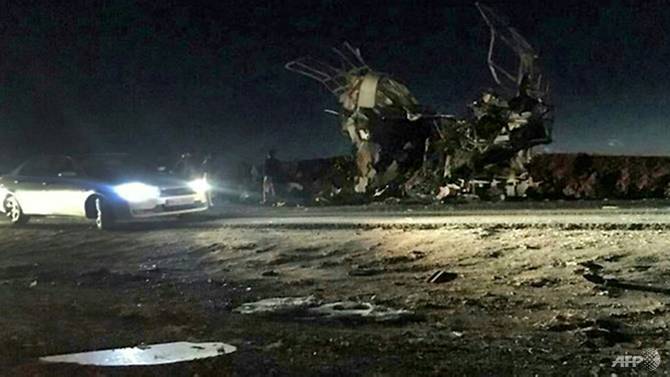
Only three days ago, an armed group called Jaish al-Adl (Army of Justice), which ,Iran believes, has direct links to Saudi Arabia, claimed responsibility for a suicide bombing attack in Iran's Sistan-Baluchestan province which killed 27 members of the elite Islamic Revolutionary Guard Corps. Such groups also target Pakistani Shia Muslims, especially those living in Balochistan province bordering Iran. The province has seen a spike in sectarian killings in the last few years. Shia Muslims, who make up 15 to 20 percent of Pakistan's population, are also under attack in other parts of the country. They are being kidnapped, killed and violently attacked even in large cities. Many Shia Muslims have been forced to leave Pakistan and take refuge abroad due to such threats.While many see Saudi support for ultraconservative groups as empowering "extremism", the Pakistani state itself is also to blame for the increasing persecution of Pakistani Shia Muslims. The Pakistani security agencies have repeatedly failed to protect the Shia Muslims, and have not taken any serious action against such anti-Shia groups. International human rights organisations say such lack of action points towards complicity by the state.
That Saudi Arabia is playing a subversive role with its financing of certain extremist groups is not an accusation that has been levelled only in Pakistan. Just this week, the European Commission added the country (alongside Pakistan) to its blacklist of nations that pose a threat because of lax controls on "terror financing and money laundering".
Pakistan's reliance on Saudi money to keep its failing economy afloat has kept Pakistani politician silent on the issues of problematic financing. Prime Minister Khan has previously admitted that the country cannot afford to turn down Saudi Arabia's investment and aid offers because it is "desperate for money". But what cost are we willing to pay for Saudi money?
While any economic investment is most welcome, Khan must tell Prince Mohammed that it cannot come at the price of its internal stability. It is time that Islamabad reconsiders its decades-old transactional relationship with Riyadh.
Pakistan cannot afford to be a battleground where Saudi Arabia and Iran settle their scores. It cannot be complicit in the rise of anti-Shia violence or destabilisation of neighbouring countries any longer.
What Pakistan needs even more than money is religious harmony and stability. If the Pakistani government does not put an end to Saudi Arabia's harmful actions within its borders, peace in the country and in the region will be at great risk. And no aid package is worth that.

A lesson from the #Kashmir bombing: America needs to get tougher on #Pakistan


By Alyssa Ayres
A suicide bomber drove a vehicle filled with explosives into an Indian paramilitary convoy in Pulwama, in the Indian state of Jammu and Kashmir, on February 14. The death toll is at least 40, making it the largest attack in Kashmir in three decades. A Pakistan-based terrorist group, Jaish-e-Muhammad, claimed responsibility through a video released shortly after.
That this terrorist group, nominally banned, remains at large in Pakistan illustrates the limitations on US foreign policy tools. It also means the US should put even more pressure on Pakistan, after President Trump began his time in office taking a harder line.A year ago, the Trump administration suspended security assistance to Pakistan as punishment for the country's hosting of terrorist groups that attack Afghanistan. But Pakistan still allows internationally designated terrorists to operate openly and plot attacks on its neighbors, according to the US, India and independent experts. This spells bad news not only for India-Pakistan relations, already at a low and about to sink further, but also for security in South Asia more generally—especially with a negotiation process underway on the US presence in Afghanistan.
The resurgence of the nearly two-decade-old Jaish-e-Muhammad (JeM) is frightening. The United States and the UN Security Council designated it as a terrorist organization in 2001. In December 2001 JeM attacked the Indian parliament and raised fears of a full-scale war between India and Pakistan. Its Pakistani leader, Maulana Masood Azhar, founded the group in 2000 after his release from Indian prison in a deal that included around 150 hostages in an Indian Airlines plane hijacked to Taliban-controlled Kandahar the previous year. (One of Mr. Azhar's fellow releasees, Ahmed Omar Saeed Shaikh, lured Wall Street Journal reporter Daniel Pearl to his murder in 2002.) Pakistani authorities over the years have "cracked down" on Jaish-e-Muhammad by holding Azhar under house arrest at various times, only to release him later—revealing Pakistan's dubious commitment to seriously addressing extremist groups. The group has grown more active in recent years. India holds it responsible for attacking an air force base in Pathankot, India, in January 2016, and Pakistan arrested Azhar over the incident, though he was later released. Then, in September 2016, the group attacked an Indian Army base in Uri, in a remote part of Jammu and Kashmir, killing 19 soldiers.
The Uri attack culminated a series of terrorist incidents and raised tensions significantly. It led Indian forces to mount a "surgical strike" across the Line of Control, the cease-fire line between India and Pakistan in Kashmir, to preempt yet another cross-border attack from Pakistan. India has suspended dialogue with Pakistan without clear action against these terrorist groups. What's more, with national elections looming in India, Prime Minister Narendra Modi faces enormous pressure to at minimum respond as he did with Uri. He has already tweeted that a "befitting reply will be given" to the attackers.It has been hard for the United States to identify the right combination of policies that would compel Pakistan to act further against terrorists. The Obama administration, by the end of its time in office, began restricting security assistance and designated more terrorist entities and individuals in an effort to get Pakistan to step up against the variety of terrorists operating on its soil. In 2016, after the Uri attack, US National Security Advisor Susan Rice condemned the violence and singled out Pakistan's responsibility to "take effective action" against JeM and other terrorist groups there.The Trump administration has taken a harder line on Pakistan—but the strategy has yet to pan out, and the administration would do well to go further.
Within a year of taking office the Trump administration cut off security aid to Pakistan. On January 1, 2018, the president tweeted that Pakistan had given nothing but "lies and deceit" and was harboring terrorists despite receiving billions in US assistance. Days later, the administration suspended all security assistance to Pakistan, pending the country's "decisive action" against terrorist groups. Last June, an international group formed to coordinate on counter-terrorist financing and money laundering, the Financial Action Task Force (FATF), placed Pakistan on a "gray list" and ordered it to "address its strategic counter-terrorist financing-related deficiencies" if it wanted to remain part of international financial networks.
Yet a year on, it's hard to argue that cutting off the security funding has been enough. Hafiz Saeed, a terrorist on numerous US and UN designation lists, continues to hold large public ralliesabout Kashmir in Pakistan, and even tried to register a political party last year. Terrorist-linked and other militant candidates ran for office in the country's national elections of July 2018. An investigative report from India last summer found that Jaish had vastly expanded its headquarters facility. To put it mildly, none of this looks like decisive steps to rein in terror, as Pakistan claims.
The Trump administration has further policy tools it could employ. Options include revoking Pakistan's Major Non-NATO Ally status, banning specific individuals from travel to the US, refusing to support an International Monetary Fund bailout, blacklisting (not just graylisting) on the FATF or attempting once again to secure the individual designation of Jaish-e-Muhammad head Masood Azhar on UN Security Council sanctions lists. (China has blocked Security Council efforts in the past.) The Trump administration will also undoubtedly weigh the effect of applying greater pressure on Pakistan at a time it is trying to negotiate—with Pakistan's help—an end to the US presence in Afghanistan. But increasing pressure on Pakistan is the right thing to do now. Pakistan has refused to take responsible action against terrorists within its borders, failing its obligations under UN Security Council sanctions. Its refusal to do so is singularly damaging to regional security. Terrorist attacks have disrupted every attempt at peace between India and Pakistan, and Pakistan-based terrorists remain a threat to peace in Afghanistan. (Remember, it's the Taliban who negotiated the release of JeM founder Azhar back in 1999.)
In this context, an exit from Afghanistan that doesn't risk decline into instability has to include sustained, verifiable action from Pakistan against terrorism. This is precisely why further pressure from Washington and other capitals on Pakistan is so important: The provocation originates there. To maintain peace in this crucial region, it should be stopped there.

After Pulwama Attack, Iran Warns Pakistan Of Retaliation For Terrorist Attack That Killed 27 Revolutionary Guards

  • Iran's Revolutionary Guards accused "Pakistan's security forces" of supporting the perpetrators of a suicide bombing that killed 27 troops on Wednesday
  • Iran's warning following the attack will further put pressure on Pakistan, who are under severe international pressure following the terrorist attack in Pulwama district
Iran's Revolutionary Guards accused "Pakistan's security forces" of supporting the perpetrators of a suicide bombing that killed 27 troops on Wednesday, in remarks state TV aired on Saturday.
"Pakistan's government, who has housed these anti-revolutionaries and threats to Islam, knows where they are and they are supported by Pakistan's security forces," said Revolutionary Commander Major General Mohammad Ali Jafari, referring to jihadist group Jaish al-Adl ("Army of Justice").
"If (the Pakistan government) does not punish them, we will retaliate against this anti-revolutionary force, and whatever Pakistan sees will be the consequence of its support for them," he warned.
The general made the remarks in Isfahan City on Friday evening during a farewell ceremony held for those killed. Funerals are expected to follow on Saturday.
Jaish al-Adl was formed in 2012 as a successor to the Sunni extremist group Jundallah (Soldiers of God), which waged a deadly insurgency for a decade before it was severely weakened by the capture and execution of its leader Abdolmalek Rigi by Tehran in 2010.
The Wednesday bombing targeted a busload of Revolutionary Guards in the volatile southeastern province of Sistan-Baluchistan, which straddles the border with Pakistan.
Iran's warning following the attack will further put pressure on Pakistan, who are under severe international pressure following the terrorist attack in Pulwama district along the Jammu-Srinagar highway in India, which resulted in 40 CRFP jawans attaining martyrdom. Pakistan-backed terror outfit Jaish-e-Mohammad claimed responsibility for the IED blast on Thursday.

The Indian government, as a response to the attack, immediately took action against Pakistan by withdrawing the Most Favoured Nation (MFN) status accorded to them. It meant that the customs duty on basic goods exported from the neighboring country to India was raised to 200%.
A number of countries also took cognizance of the blast in India, and condemned the attack. The United States of America went a step further, and asked the Pakistan government to freeze accounts and assets of the JeM, which is a designated terror outfit in the eyes of U.S. since 2001.
https://www.republicworld.com/world-news/pakistan-news/after-pulwama-attack-iran-warns-pakistan-of-retaliation-for-terrorist-attack-that-killed-27-revolutionary-guards

#Iran says #Pakistan to 'pay high price' over attack, warns #Saudi

Iran warned neighboring Pakistan on Saturday it would “pay a heavy price” for allegedly harboring militants who killed 27 of its elite Revolutionary Guards in a suicide bombing near the border earlier this week, state television reported. Pakistan, Saudi Arabia and the UAE deny backing such militants.
“Why do Pakistan’s army and security body ... give refuge to these anti-revolutionary groups? Pakistan will no doubt pay a high price,” Jafari said in remarks live on state television.
Jafari was addressing a large crowd gathered for the funeral of the victims of Wednesday’s suicide bombing, which took place in a southeastern region where security forces are facing a rise in attacks by militants from the country’s Sunni Muslim minority.
“Just in the past year, six or seven suicide attacks were neutralized but they were able to carry out this one,” Jafari told the mourners, who packed a square in the central city of Isfahan and roads leading to it.
The Sunni group Jaish al Adl (Army of Justice), which says it seeks greater rights and better living conditions for the ethnic minority Baluchis, claimed responsibility for the attack.“The treacherous Saudi and UAE governments should know that Iran’s patience has ended and we will no longer stand your secret support for these anti-Islam criminals,” Jafari said.“We will avenge the blood of our martyrs from the Saudi and UAE governments and ask the President (Hassan Rouhani) ... to leave our hands free more than ever for reprisal operations,” Jafari told the crowd, drawing chants of “Allahu Akbar” (God is Greatest).
Iran’s Shi’ite Muslim authorities say militant groups operate from safe havens in Pakistan and have repeatedly called on the neighboring country to crack down on them.
Jafari’s remarks came amid heightening regional tensions after Israel and the Gulf Arab states attended a summit in the Polish capital Warsaw this week where the United States hoped to ratchet up pressure against Iran.
https://www.reuters.com/article/us-iran-pakistan/iran-says-pakistan-to-pay-high-price-over-attack-warns-saudi-idUSKCN1Q507R

Iran Guards Commander Ties Pakistan, Saudi, UAE to Deadly Attack

The commander of Iran’s Islamic Revolutionary Guards criticized Pakistan for providing support to terrorists who killed 27 personnel in a suicide bomb attack in southeast Iran this week.
Major General Mohammad Ali Jafari said Pakistan’s government was sheltering groups behind the Wednesday attack and “had to be held accountable for the crime,” the semi-official Tasnim News Agency reported. The attack coincided with a U.S.-led summit in Warsaw focused on rallying support against Iran.
The general also singled out the United Arab Emirates and regional rival Saudi Arabia in connection with the incident, warning that Iran’s “patience” with them “will be different.” Jafari accused them of acting on behalf of the U.S. and Israel.
The attack, in Iran’s southeast Sistan-Baluchistan region bordering Pakistan, was the single deadliest assault on the IRGC since the Iran-Iraq war of the 1980s.
https://www.bloomberg.com/news/articles/2019-02-16/iran-guards-commander-ties-pakistan-saudi-uae-to-deadly-attack

Iran asks Pakistan to move against militants who killed 27 Guards

Iran urged neighboring Pakistan on Saturday (Feb 16) to crack down on militants who killed 27 of its Revolutionary Guards in an attack near the border or expect military action by Tehran "to punish the terrorists", state media reported.
"If Pakistan does not carry out its responsibilities, Iran reserves the right to confront threats on its borders ... based on international law and will retaliate to punish the terrorists," Revolutionary Guards commander Major General Mohammad Ali Jafari was quoted as saying by state news agency IRNA.
A suicide bomber killed 27 members of Iran’s elite Revolutionary Guards on Wednesday in a southeastern region where security forces are facing a rise in attacks by militants from the country’s Sunni Muslim minority.
The Sunni group Jaish al Adl (Army of Justice), which says it seeks greater rights and better living conditions for the ethnic minority Baluchis, claimed responsibility for the attack.Iran’s Shi’ite Muslim authorities say militant groups operate from safe havens in Pakistan and have repeatedly called on the neighbouring country to crack down on them.
In the past Iran has accused its regional rival, Sunni Arab Saudi Arabia, of supporting militant Sunni groups which have attacked its security forces. Riyadh has denied the charges.
Read more at https://www.channelnewsasia.com/news/world/iran-asks-pakistan-to-move-against-militants-who-killed-27-guards-11249740

Friday, February 15, 2019

Music Video - Indila - Tourner Dans Le Vide

Video - Pelosi Warns Of The Consequences Of A National Emergency - Stephen Colbert

Video Report - Why is Saudi Arabia sending oil tanker to Venezuela now?

Video Report - Turkey, Russia and Iran discuss Syria’s future

Video Report - #bombing #Kashmir #Jammu Protest breaks out in Kashmir after suicide bombing takes lives of 44

Video Report - #PulwamaAttack #KashmirAttack #India #Pakistan - Bomb attack in Kashmir: What will be Modi's 'befitting reply?'

Here are #Pakistan’s new strategies behind the #Pulwama terror attack


Pulwama suicide attack, use of a Kashmiri attacker, and a pre-attack video is an attempt by Pakistan to reassert its equities over Kashmir dispute.


on 14 February, Adil Ahmad Dar—a 20-year-old from Gundibagh village in Pulwama and former sawmill worker—mounted a vehicle-borne suicide attack on a CRPF convoy killing at least 38 jawans. Broadly speaking, Pakistan perpetrates these attacks in Kashmir and elsewhere in India because they help demonstrate that Islamabad has not been coerced into accepting the status quo.
However, this general expectation of Pakistani behaviour does not explain the particularly unique features of this attack. What are Pakistan’s strategic aims with this attack?

Calibrate the violence

The Pulwama attack reflects an interesting calibration of violence. There are three ways that Pakistan can escalate violence and the salience thereof. The first is the choice of geography. The least provocative venue is within Kashmir while the most provocative locations are the high-value urban targets like Delhi and Mumbai. In between are middle-tier cities beyond Kashmir such as Gurdaspur.
Second, is the choice of target. In India, the attacking of security forces seems to draw out more political ire and demands for revenge than when civilians are targeted. Third, is the kind of attack — suicide attacks perpetrated by Jaish-e-Mohammed (JeM), special operations preferred by LeT or the more quotidian uses of explosives against convoys and other acts of sabotage.
This attack, in Kashmir, against security forces using an extremely violent attack measure is specifically calibrated to test Prime Minister Narendra Modi’s will with a fraught election in the background.

Suicide attacks and the videotape

The use of a suicide car bomb has not been used by JeM in some 19 years. And usually, Jaish-e-Mohammed suicide bombers are of Pakistani and Punjabi origin. But Adil Ahmad Dar was a youth from southern Kashmir. Politically, this is a major score given that few believe Jaish-e-Mohammed is a Kashmiri organisation.
However, this fact is likely tied to the video that he recorded before the attack. In the Palestinian suicide attacks, these videos served as a mechanism to ensure that the bomber will carry out the attack. In the event that he fails to do so, the organisation releases the video and the security forces capture the fellow or the organisation kills him—whichever happens first. This is the first time that such a video has been used, and I suspect that it likely reflects doubt that Dar would carry it out without this commitment video. However, having carried it out, the video will have enormous payback in terms of recruitment, fund raising and propaganda.

Islamic State and Al Qaeda

For some years, both the Islamic State (IS) and Al Qaeda (AQ) have taunted Muslims in Kashmir and elsewhere in India for not defending themselves against cow lynchings, the political standing of Hindutva organisations, failure to insist upon the rebuilding of the Babri Masjid while discussion of rebuilding the Ram Mandir is ascendant. Both AQ and IS have chided Kashmiri Muslims for being parochial and restricting their vision to the Kashmir battlespace. Both have sought to cast Kashmir as a part of a larger civilisational battle in which India and other countries are waging war on Muslims. Their goal is to establish a caliphate through jihad. While both AQ and IS are competing with each other, they are also competitors for Pakistan’s deep state. Both AQ and IS mock the Pakistan-based and Pakistan-backed militant groups as lackeys of Islamabad.
I view this suicide attack, the use of a Kashmiri attacker, and the use of the pre-attack video as an attempt by Pakistan to reassert its equities over the Kashmir dispute specifically and the India problem more generally. This interpretation is buttressed by the statements that Adil Ahmad Dar made in the video. Like AQ and IS, he chided Muslims for their docility and challenged them to rise up. He also had a message for northern Kashmiri Muslims that they need to put skin in the game and stop free-riding off of the sacrifices of Muslims in Southern Kashmir.

Jaish-e-Mohammed to the front

With Lashkar-e-Taiba involved in Pakistan’s internal battles against ISIS and other groups that engage in takfiri violence (such as the Deobandi Pakistani Taliban and sectarian groups), Jaish-e-Mohammed is likely to be the most common Pakistani group active in India for the time being. The reason for this is strategic. When Pakistan waged war against the Pakistani Taliban, the ISI and the army offered two routes by which Pakistani Taliban could rehabilitate themselves: they could go back to Afghanistan and fight for the Taliban or rejoin Jaish-e-Mohammed and go fight India. Those who demurred would be killed.
Both theatres are important for Pakistan today. With the United States withdrawing troops and handing Afghanistan back to Islamabad, there will be great interest in Pakistani Deobandi militants returning to Afghanistan to help the Taliban make more gains. At the same time, Jaish-e-Mohammed is a highly potent and loyal proxy with which to put pressure on India, even as India’s economy continues to grow and invests in the rebuilding of its security forces.

India’s options

India should consider a range of punitive measures ranging from sub-conventional operations against Pakistan’s terror-producing infrastructure as well as political measures such as backing away from the folly of the Kartarpur Corridor even though that is a difficult decision to undertake for domestic political reasons. Denuding Pakistan of its “most-favoured nation” status is way overdue. India can consider downgrading diplomatic ties, ousting the defence attache who is almost always the ISI station chief as well as others in the embassy suspected of facilitating terrorism. India should also immediately declare Pakistan a “state sponsor of terror”, while providing a path to rehabilitation should Pakistan ever bother. It is difficult to ask Washington DC to undertake a designation that India itself has not done.

US created this beast on the border

For the United States, President Donald Trump has used strong words against Pakistan and has even denied them monies that they have taken for granted. While Pakistan isn’t getting the cash, it got the prize — Afghanistan. It would be wishful thinking to expect this attack to educate Trump about the dangers of his policy preferences. However, one would like to think that Washington would consider declaring Pakistan to be a state sponsor of terror, applying sanctions to Pakistani military and civilians for whom there is enough intelligence of aiding terror. It should also press China to stop derailing efforts to list Jaish-e-Mohammed chief, Masood Azhar. Since the United States bares so much responsibility for creating the beast on the border, more than any other state, it has an obligation to slay the very beast it has nurtured.

#Pakistan - Social Media ‘Crackdown’


In the wake of a strong Supreme Court verdict on the Faizabad dharna, one would have expected governmental initiatives to curb religious extremism to be met with general praise. After all; the government was berated for allowing these groups to fester unchecked and the apex court had ordered the state and its law enforcement agencies to be more vigilant and proactive. Moreover, the civil society and the vast majority of the population had been asking for groups like Tehreek-e-Labbaik Pakistan (TLP) to be dismantled for years now, only for our demands to fall on deaf ears.
However, as the Information Minister Fawad Chaudhry on Wednesday announced that the government is gearing up to launch a crackdown against extremist narratives on social media in the next few weeks, the mood surrounding the statement was one of caution and dread. For while the focus of this new crackdown was ostensibly extremist narratives, this government’s past record of curbing media freedoms makes any regulation of social media platforms a dangerous proposition.
The government can still prove its detractors wrong and exclusively go after religious fundamentalists and banned groups who use social media to spread their message of intolerance, violence and sectarianism. It can shut down their communication channels and ensure that their armies on online trolls – who threaten individuals and inundate civil debates with blind hate – are made inoperative. It is sincerely hoped that the government sticks to the narrow definition of “religious extremists” and carries out the task diligently, and if it does it will certainly have the gratitude of the nation.
Yet, it is the multitude of loose terms used by Information Minister which cause alarm. Along with extremism the Information Minister has said the crackdown will prosecute those who commit “hate speech” and those who “break the law”. One only has to look at how civil society protesters are being treated by this government to understand how broadly these terms are defined. Criticism of the government could land you in jail for “defaming institutions” or “inciting violence”, while unwanted protests are often dubbed ‘disturbance of public peace”. The abuse of the law to clamp down on criticism is a common practice on the street – there is no reason to think this would be different on social media .
In fact it has the potential to be all the more problematic. Years of work behind legitimate online news services could be deleted with a press of a button – and with Fawad Chaudhry relishing the idea of “controlling” this new medium in every speech that he makes, this fear could become a reality soon.

OP-ED - Pushtuns in the land of Quaid

Asif Mahsud

 Being a tribal Pushtun myself, I can sense the disenfranchisement among Pushtuns in general and the youngsters in particular. The reason is obvious as they demand equal rights. They want peace in their region. And discontinuation of proxy wars in their areas. To put it in simple words, Pushtuns want to live a dignified and prosperous life. Factually, this is the least that citizens can demand from the state.
Now there should be no hurdle in meeting this demand, until the state has other aims to achieve in Pushtun dominated areas. As per Pushtun Tahaffuz Movement, peace is a prerequisite for human existence. And it’s justified too. Because war-like situation in the US states of Massachusetts would nullify the existence of Harvard. Same is the case in Pushtun belt, where hundreds of schools, hospitals and markets would be of no use in the absence of peace. For a teacher, doctor or businessman would be reluctant to teach, serve and invest respectively in a hostile region.
Under the unanimously agreed upon constitution, every citizen has equal rights. There is no concept of superior or inferior as per the law of the land. Every citizen has the right to live a dignified life. This constitution binds the various federating units having different cultures altogether. Ergo in such a diversified population the rights enshrined in state’s constitution should be given to all and sundry. There shouldn’t be any double standards.
Currently, the Pushtun community reckons that their land is intentionally used by the state to advance its strategic goals. To achieve this end, the powers-that-be always remain busy in keeping the region rife with conflict. This approach on the part of state has caused immense damage to the unity among Pakistanis. For misunderstandings occur because of the inequality prevalent in the land of pure.
Being a tribal Pushtun myself, I can sense the disenfranchisement among Pushtuns in general and the youngsters in particular. The reason is obvious as they demand equal rights
To add to it, since the inception of the country till date, Pushtuns have given innumerable sacrifices for the well-being of the state. They have sacrificed their lives and left their abodes for ensuring peace in the entire country. Despite all these sacrifices, it surprises them that their belt is not at par with other regions of the state. It doesn’t enjoy the same facilities which are available in rest of the country.
The state should learn from its past mistakes. As its wrong policies have fired back. Now a new policy should be formulated that should be based on ameliorating the state of affairs of the Pushtun belt. Moreover, restoring peace should be the central idea of this new approach. Given the present situation there is no alternative of peace. It would greatly help the government in triumphing the hearts and minds of disgruntled Pushtun youngsters.
The policy makers should take cognizance of the fact that this country belongs to 220 million people. It can’t be run by preferring one region over the other. Instead, all the communities should be viewed as integral part of the state. The current unrest in Pushtun areas shouldn’t be there as for years operations were conducted in the name of eradicating terrorists. Now the fact that these forces are again rearing heads is surprising. The Pushtun community can’t afford another war in their region. Therefore, issues should be resolved by taking them into confidence.