Wednesday, February 13, 2019

#Pakistan - #Valentine's Day in the land of the arranged marriage


The first time I fell in love, it was from a distance. I was a teenager, and Pakistan, where I lived at the time, had only just emerged from nearly a decade and a half of martial law and Islamization, in which the general in charge had imposed rules based on his definition of Islam.
I had recently and very fleetingly heard of a thing called Valentine's Day and its associations with romantic love. Regardless, I hoped on February 14, 1990, like many still do today, for a miracle. In the particular case, I wanted the boy I was in love with, a gangly character (whom I had never seen any closer than from across the street) to call me on the telephone.
Not surprisingly, that boy I longed for from across the way never reciprocated. He had probably never heard of Valentine's Day or more likely of me, despite all my doleful staring. As a middle-class Pakistani girl from a conservative family, I was not allowed to speak to boys, let alone fall in love with them. I didn't let this keep me from either, pursuing both love and forbidden conversations with boys with great resourcefulness and assiduity.
I fell in love with the boy who dropped his telephone number in my lap through the open car window while my mother was not looking. I fell in love with a boy whom I beat in a debate competition and the boy who called several evenings in a row demanding to speak to a different Bollywood character each time. Some reciprocated my feelings; most had little clue about Valentine's Day unless I told them.
    Of course, they also did not really know me. Falling in love in those pre-Instagram, pre-cell phone days was understood as a mysterious matter, where facts and the onerous "getting to know each other" played little part. Some of this was understandable. Where marriage was a matter of careful arrangement, love had to be left wild and chaotic, without being hemmed in by the constraints of data or some similar bubble-bursting encumbrance.
    Things have changed in Pakistan. Not only is Valentine's Day a pretty big deal now -- there are specials at florists and displays at stationery shops and tinsel-wrapped candy everywhere -- the encroachment of the "semi-arranged" marriage, on the realm between love and arranged marriage, seems to have altered the path and pattern of both. These semi-arranged marriages, particularly popular among the growing urban middle class, seek to add a little of love's mystery to the once standard arranged marriage, whose closely chaperoned interactions leave little room for romance and where the two being wed do not know each other at all.
    In the semi-arranged marriage, there may be room for a few solo coffee dates. And the newly paired duo can announce to their friends that they are "in love," while their parents can insist that the match was entirely arranged. In other words, parents can find possible spouses who meet a certain combined checklist of qualities identified by both the bride or groom-to-be and the parents. Veto power, however, lies with the young couple.
    Added volume to the Valentine's Day business comes from the virtual realm that has made most everything including love and/or marriage a competitive sport. Cheaply available cell phones are everywhere in Pakistan, and nearly all are equipped with social media, such that everyone can see the presents that those in love are bestowing on one another.
    In addition, celebrating Valentine's Day gives the upwardly mobile urban couple's love the legitimacy of individual choice -- with roses, chocolates and jewelry adding a bit of luster to the worn and antiquated patina of an arranged marriage. If the celebration is attended to with some gusto, even an entirely arranged match can be passed off as one in which the parties fell in love without any machinations of their aunt or uncle or the neighbor lady-turned-matchmaker who lives three doors down.
    Even in rural Pakistan, where marriages are still generally arranged and love is a separate realm, Valentine's Day is now a known, if not openly, celebrated quantity. Where trysts between lovers can be arranged via the ubiquitous cell phone, any excuse to meet in the sugarcane field -- including Valentine's Day -- is used. Men and women who may have to endure spouses chosen by mothers, fathers and the village council, one theory goes, are especially entitled to a bit of fun on the side.
    Love in Pakistan may seem like a tale from a very distant elsewhere, but one could argue that the slightly waning popularity of Valentine's Day here (or at least the cynicism that hangs over some) is for reasons remarkably similar, if reverse, from those seen in Pakistan.
    While Pakistanis may have moved from the arranged to the semi-arranged sort of marriage, Americans have moved from the love by accidental chance or serendipity to a more calculated -- if not algorithmic-driven -- sort of love. In the data-driven, virtually-infused and forever-impatient realm of finding a partner, social media and the internet provide a ton of information faster than the spark of attraction.
    For those actively and intentionally looking for love, a dizzying array of apps, many with the ability to match a staggering set of data points -- looks, income, language, location -- can help with pairing with far greater precision than the most enterprising set of Pakistani parents. In some, bucket lists and credit reports can be exchanged even before the trouble of a first meeting. Why waste a couple of hours when artificial intelligence can tally up the possibility of true love using hundreds of variables? Mystery is the enemy here and data is the friend; love is made (like Valentine's Day) utterly predictable.
      In Pakistan, the United States and likely anywhere on our data-driven globe, the role of Valentine's Day is changing. In the West, marketing departments of dating apps can rely on the fact that many more will sign up for their love-on-demand services on or around that day. In Pakistan, even those betrothed who have spoken barely a sentence to each other will send cards, flowers and chocolates.
      In different ways, love is a status symbol, a badge of desirability. And Valentine's Day is a perfect showcase to make sure that everyone in the virtual audience knows it.

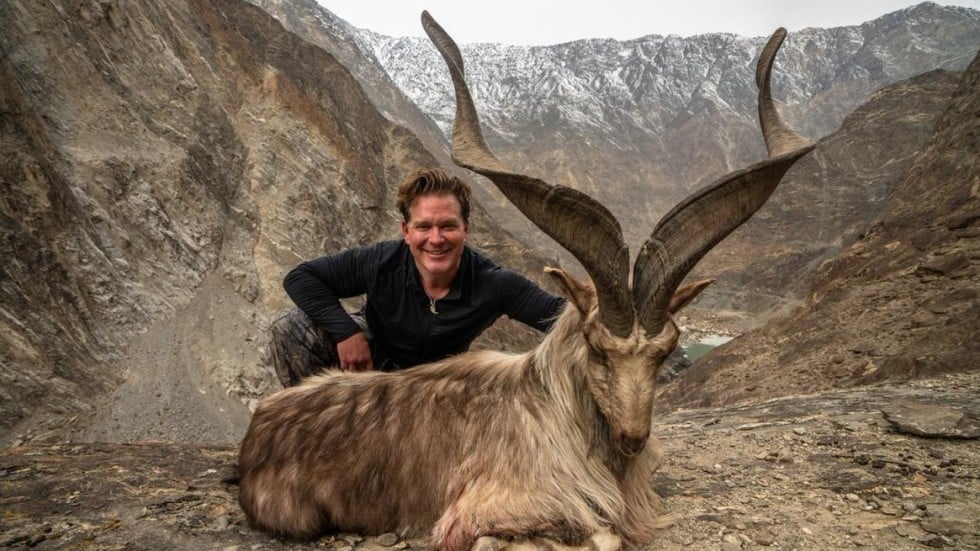
      US trophy hunter Bryan Kinsel Harlan pays US$110,000 to kill rare Astore markhor mountain goat in Pakistan. Is he helping save the species?


      It took a few seconds to realise that the animal, a rare, wild Astore markhor, was dead. The caption described the man as an American hunter who had paid a record US$110,000 to shoot it on a tourist expedition to Pakistan’s northern Himalayan region of Gilgit-Baltistan.
      “It was an easy and close shot. I am pleased to take this trophy,” the hunter, identified as Bryan Kinsel Harlan, was quoted as saying.
      His home state or city was not identified, but his Pakistani guides said he is from Texas, and a man by the same name and appearance who features with kills on internet hunting sites is a Dallas mortgage banker.
      The story drew immediate expressions of sorrow and indignation on social media here.
      Some Pakistani commentators asked why there was no legal ban on hunting the markhor (Capra falconeri), which is the official national animal. Others suggested that foreign tourists be taken to photograph the exotic goats, not shoot them.
      But there is another, more benign, rationale behind allowing Harlan, along with two other Americans, to pay enormous sums to kill three long-horned markhors in northern Pakistan in the past month.
      According to Pakistani officials and conservation groups, the practice has actually helped save a rare and endangered species from potential extinction.
      For decades, the population of markhors, which are native to the Himalayan ranges of Pakistan, India and Afghanistan, has been dwindling, the result of local poaching for meat, deforestation and logging, military activities, competition with livestock and uncontrolled domestic trophy hunting for their splendid horns. By 2011, there were only an estimated 2,500 markhors left.
      Several years ago, regional officials and conservationists began taking action to save them. India designated five sanctuaries for markhors in the mountainous border state of Jammu and Kashmir.
      Pakistan banned all local hunting but started allowing a small number of foreign hunters to shoot 12 male goats per season in “community conservation areas” in Gilgit and elsewhere.
      Most of the funds are supposed to be distributed to the impoverished, isolated residents in the goats’ mountainous habitat areas, which get 80 per cent of the fee as well as income as hunting guides and hosts – all extra incentive not to poach the markhors. Government wildlife agencies get 20 per cent.

      The US Fish and Wildlife Service, in an effort to encourage US trophy hunting of markhors as a conservation method, also reclassified the animal as “threatened”, rather than endangered, which allowed hunters to bring back trophies such as their horns, which can grow as long as five feet (1.5 metres).
      As a result, the markhor populace had rebounded enough by 2015 that the International Union for the Conservation of Nature upgraded the species from endangered to “near-threatened.”
      According to the conservationist website Green Global Travel, the comeback of the markhor is “one of the world’s great but little known conservation success stories.”
      Pakistan has a mixed track record on protecting rare and endangered animals.
      Officials routinely allow parties of royals from Qatar and Saudi Arabia to shoot internationally protected birds called houbara bustards (Chlamydotis undulata), which Pakistanis are banned from hunting.
      In 2014, a Saudi prince reportedly shot more than 2,000 bustards despite having a permit to kill just 100, creating an international uproar.
      In Pakistan’s public zoos, neglect and disease have periodically led to the deaths of exotic animals. In the past four years, the main zoo in Islamabad has lost several zebras, lion cubs, an ostrich and deer.
      In the past month, four antelopes called nilgais have died of cold or infections. There are numerous private zoos in Pakistan, where wealthy people keep wild cats and other animals without supervision.
      In some other countries, promoting trophy hunting as a conservation tactic has backfired, with some programmes charging high fees but failing to regulate the hunts.
      But in Pakistan, the tactic seems to have been unusually successful. Tabarak Ullah, a professional hunter from Gilgit who has guided Harlan and other Americans, said the high-priced permit funds are used for local health and education as well as preserving species.
      “This is not just about hunting,” Ullah said in a telephone interview. “The number of animals is increasing, and these foreign hunters are millionaires who go back and tell the world that Pakistan is safe.”
      He noted that after the attacks of September 11, 2001, foreign visits to Pakistan fell sharply. “Now, more and more tourists are coming.”
      Harlan, for one, appears to see himself as participating in a conservation effort as well as an exotic escapade.
      In a video recorded on his recent visit to Gilgit, Harlan was shown climbing a cliff, shooting a male markhor that was sitting next to a young goat, and then high-fiving his local guides.
      In another, wearing a feathered local cap and robe, Harlan said he had been “welcomed with open arms” and encouraged other Americans to follow him, calling Pakistan a safe place for tourists.
      “This is a perfect example of hunters and villagers coming together for a common goal of game conservation,” he said.

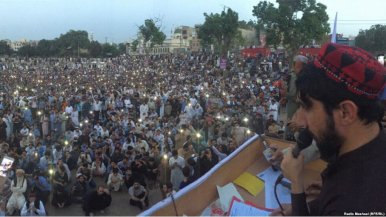
      #PashtunRejectStateTerrorism - #Pakistan Must Embrace, Not Collide With, #PTM

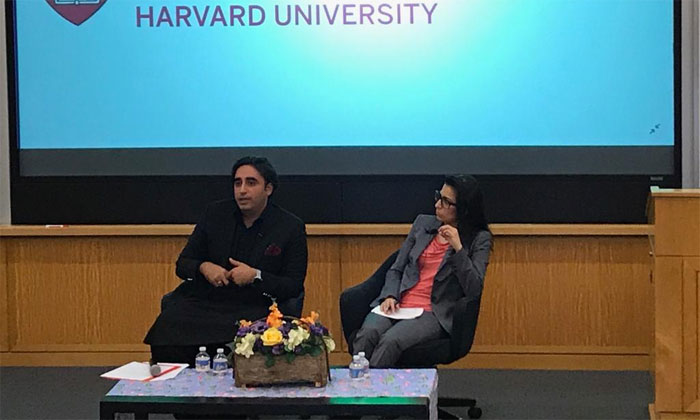
      Video - Bilawal Bhutto Speaking at Harvard University College

      Tuesday, February 12, 2019

      Persian Music Video - Mozhdah - Sia Moo Jan | مژده جمالزاده - سیا مو

      #Pakistan - #PTI - Marriage of inconvenience


      Smooth working relationship between PTI and its coalition partners has not been achieved so far. BNM Menagal law makers have gone to the opposition benches. Awami Muslim League President and Railway Minister is unhappy over the refusal of National Assembly Speaker Asad  Qaisar’s to grant him membership of Public accounts Committee. He has also contended that Speaker National Assembly cannot issue productions for a member of lower house when he is under remand for investigation. He is of the view that Speaker National Assembly has illegally appointed leader of the opposition Shabaz Shabaz Sharif Chairman Public Accounts Committee.
      The Railway Minister has prevailed on PTI leadership and made it to the Public accounts Committee about which he minced no words and categorically said that the Speaker of the Lower House has no role in his appointment as member of this important parliamentary committee. Keeping in view the dignity of the office of Speaker National Assembly and razor thin majority of PTI, Asad Qaisr should have ignored the critique of Railway Minster. But he decided to pay in the same coin. While talking to electronic media in his home town Sawabi he sarcastically said that he does not know what problem Sheikh Rashid Ahmad has with him. He will take decisions according to rules and will not accept dictation.
      A cursory look at the statements of the Prime Minister Imran Khan and Information Minister Fawad Chaudhry reveal that the government may go far parliamentary and legal means for the removal of Chairman Public accounts Committee. The incumbent of National Assembly Speaker’s office is regarded to be non-partisan and one should not express reservations if he issues production orders for a law maker to attend the session of the ;lower house or preside over a meeting of parliamentary committee. But ironically, the National Assembly Speaker in the previous PML-N government Ayaz Safdiq who openly supported former Prime Minister Nawaz Sharif after his disqualification in Panama Papers case. It is also not justified to compare the incumbent speaker with the former articulate but discrete former speakers of the National Assembly like Syed Fakhar Imam, Hamid Nasir Chatta, Gauhar Ayub Khan and Chaudhry Amir Hussain.

      #PPP will serve people despite hurdles: Zardari

      Former president and Pakistan People’s Party (PPP) Co-chairman Asif Ali Zardari Monday said despite hurdles, his party will continue to serve the people. Speaking to party workers during his visit to village Shah Baig, some 25 kilometers from Moro town, to offer condolences with local party leader Shah Baig Sabki on the death of his father, Zardari said PPP was a party of the people who always supported it and voted for it in every election. He said PPP always served the people and gave jobs to the people during their tenure. He said country was facing huge economic crises at present.
      Zardari was accompanied by local party leaders Zia Hussain Lanjar and Mumtaz Chandio. Imdad Ali Khushik
      https://dailytimes.com.pk/353727/ppp-will-serve-people-despite-hurdles-zardari/

      Video - Bilawal Bhutto speaking at #Harvard University's College

      The Afghan Government Is Missing From Afghanistan's Peace Process


      KRISHNADEV CALAMUR
      Two sets of negotiations with the Taliban are under way in Afghanistan. Neither includes the country’s democratically elected, internationally recognized administration.Can a peace process work if it excludes the government of the country in conflict? We may be finding out.At present, there are two distinct efforts under way to bring peace in Afghanistan: In one, Zalmay Khalilzad, the State Department’s special representative for Afghanistan reconciliation, has held several discussions with Taliban leaders. In the other, a meeting in Moscow this month brought together influential Afghans, including former President Hamid Karzai, and Taliban leaders. Conspicuously missing from both? The Afghan government.
      The absence of President Ashraf Ghani’s democratically elected, internationally recognized administration in a process that could decide the future of his country raises questions about who is deciding what about Afghanistan’s fate; whether the United States’ policy of maintaining troops in Afghanistan until the conditions are right for withdrawal can outlive the wishes of President Donald Trump, who wants to pull out; and whether the Taliban can be trusted to keep any promises it makes. (Patrick Shanahan, the acting defense secretary, was in Afghanistan on Monday on a surprise visit and met with Ghani. He denied he had orders to “step down our forces in Afghanistan.”)
      For now, these peace negotiations’ prospects of success are far from clear: American forces are still carrying out targeted strikes and aerial bombardmentof Taliban positions; key regional players (notably Pakistan) will have a role to play in any final settlement; and while the Taliban, in an effort to secure the withdrawal of American troops, has reportedly pledged to ensure that Afghanistan will not be a base for international terrorist groups, how the United States will enforce that agreement is an open question.Still, efforts to resolve similar conflicts typically involve both the government and the main rebel group—even if, at first, the two sides are talking through an intermediary. That is not happening in this case. Kabul’s absence in this process is remarkable. It would be akin to George Mitchell negotiating directly with Irish republicans while cutting the British government out of the process that resulted in peace in Northern Ireland.
      And whatever its final result, Ghani is worried that the U.S.-led effort, especially, is being rushed; that Washington is cutting him out; and that the end result will be a premature withdrawal of American troops. There is good reason for his concern. The Taliban might be making assurances to Khalilzad and to its interlocutors in Moscow, but it is unclear whether those guarantees are acceptable to the Afghan government. “We sense a lot of anxiety in the [presidential] palace,” Borhan Osman, an Afghanistan-based senior analyst for the International Crisis Group, a think tank, said in an email.President Trump told CBS this month that he wanted “to bring our great troops home” after more than 18 years of fighting, but in both Kabul and Washington, there is concern that a precipitous withdrawal will send Afghanistan into a tailspin.
      The president’s State of the Union speech last week—in which he left open the possibility that a small portion of the 11,000 American soldiers currently in Afghanistan would remain there to focus on counterterrorism—should assuage that concern somewhat, but it won’t do much for Ghani’s feeling of being cut out. In his speech, Trump specifically named the Taliban as a group the United States was talking with, while referring to Washington’s other interlocutors, presumably including the government, as “a number of Afghan groups.” (Roya Rahmani, the Afghan envoy to the United States, said at an event at the Center for Strategic and International Studies in Washington last week that Kabul wasn’t interpreting the speech as official U.S. policy, but as a platform for Trump to discuss his plans.)
      There are other reasons for concern on the part of Afghanistan: The U.S. State Department’s own language about talks with the Taliban has undergone a subtle shift in the period since Khalilzad assumed his position. During the Obama years and until at least November 2018, it referred to an “Afghan-led, Afghan-owned” peace process. Those words no longer appear in briefings or statements. When asked at an event at the U.S. Institute of Peace, a Washington think tank, why the Afghan government wasn’t a part of the process, Khalilzad said that the dialogue was not at the stage where the government could talk directly with the Taliban, and that “a formula” was still needed for the vaunted “Afghan-owned, Afghan-led [process] to really take place.” (On Sunday, Khalilzad began a two-week trip to Europe, Turkey, Qatar, Afghanistan, and Pakistan to meet his counterparts in the peace process. A State Department statement said that he will “consult with the Afghan government throughout the trip.”) Part of the challenge is that Washington and Kabul are disclosing different aspects of their conversations with each other. A U.S. statement describing a phone call last week between Secretary of State Mike Pompeo and Ghani said that the chief U.S. diplomat told the Afghan leader about the American commitment to facilitating an inclusive peace process. It added that Pompeo emphasized the importance of intra-Afghan dialogue that leads to a political settlement, as well as the “U.S. desire for a long-term partnership with Afghanistan.”
      By contrast, Ghani said on Twitter that Pompeo had stressed that the two countries’ military partnership “will remain until a lasting and inclusive peace is achieved.” The Afghan president added that Pompeo “underscored the central importance of ensuring the centrality of the Afghan government in the peace process [and] reiterated the U.S. commitment and support to holding the upcoming presidential elections in July.” Those elections, which were supposed to be conducted in April, have already been delayed once; Ghani does not want to postpone them again. He wants to be seen as the man who can deliver peace and stability to his country. But Afghanistan’s gains, though demonstrable, are tenuous and reversible: The government survives because of Western aid and military support; it controls a little more than half of the country’s districts; and corruption and ethnic divisions are widespread. The absence of the Afghan government in a peace process could send a message to the Afghan public about who is—and who isn’t—in charge.
      When talks began in July between the United States and the Taliban in Qatar, they were expected to pave the way quickly for direct negotiations between the Afghan government and the Taliban. That second step hasn’t yet materialized. The Taliban insists it won’t negotiate with the government in Kabul until, among other preconditions, Washington announces a timetable for the withdrawal of its troops. Those talks, accompanied by the process in Moscow, will serve as confirmation for some Afghans that the Afghan government is either weak or a proxy for a foreign power. (Attempts by the Obama administration to talk with the Taliban during the Karzai era enraged the then–Afghan leader.)
      There is also a bigger question surrounding talks with the Taliban: Will their words be matched by their actions after the American withdrawal?
      The Taliban knows Trump’s goal is to withdraw U.S. forces. Washington, on the other hand, has little idea of what the militants ultimately want: To be part of the Afghan political structure? For the insurgency to continue? Will they allow women to continue to participate in public life? The militants say they want friendly relations with the West in order to keep the flow of foreign aid going, and spokespeople have said women will be allowed to work and go to school if they were in charge.
      “The Taliban’s seriousness about these claims,” Osman, the International Crisis Group analyst, said, “remains to be tested.”

      Pakistan censors New York Times article by activist critical of military

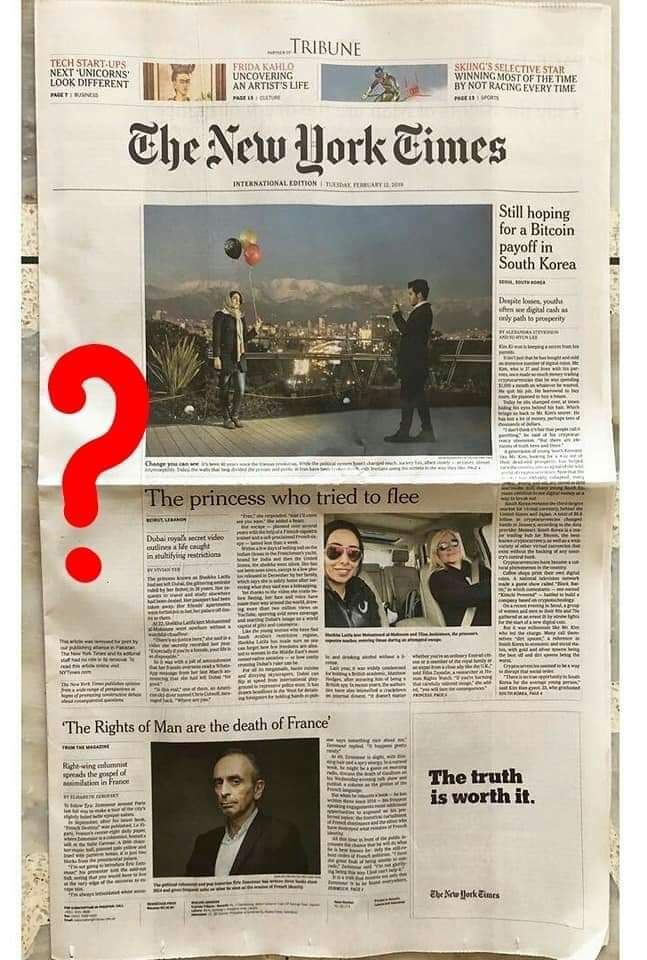
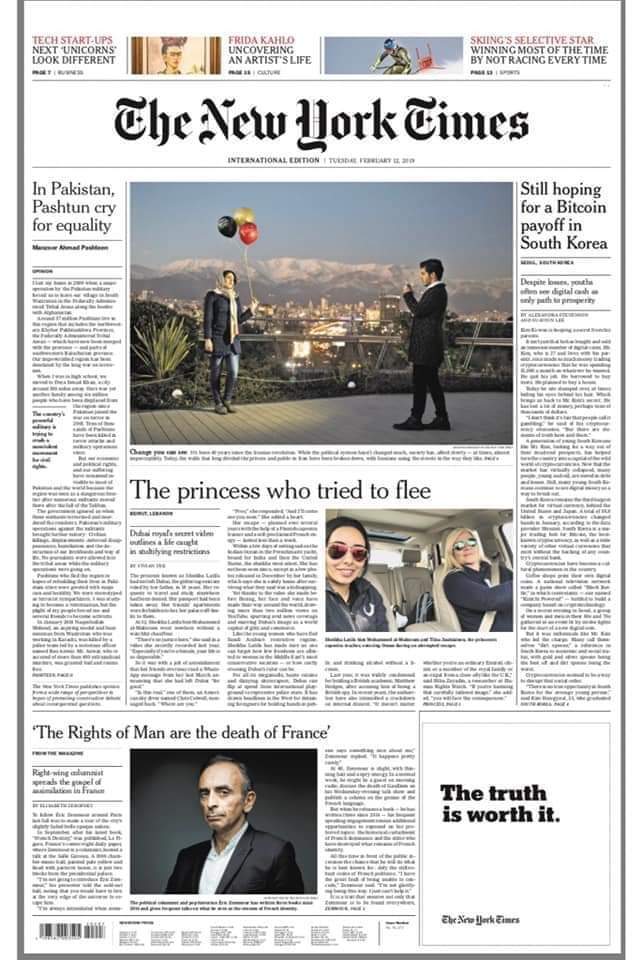
      An opinion piece in the International New York Times criticising Pakistan's powerful army was censored by its local publisher on Tuesday (Feb 12), replaced by a blank space in a country where it can be dangerous to reprimand the military.
      The article by Mr Manzoor Pashteen, the leader of a movement which calls for an end what it says are enforced disappearances and extrajudicial murders of ethnic Pashtuns by security officials, was widely available online, however.
      It was headlined, "The Military Says Pashtuns Are Traitors. We Just Want Our Rights".
      In it, the former veterinary student detailed how the impoverished north-west, along the Afghan border, has been "desolated" in Pakistan's long fight with militancy.
      He described his group, the Pashtun Protection Movement (PTM), as "peaceful".
      "We held numerous sit-ins and protests and continued to hope that Pakistan's leaders would try to address our concerns. Instead, they responded with intimidation and violence," he wrote.
      "After every major protest, police arrests and charges PTM activists and supporters with rioting, treason or terrorism," he continued.
      He also accused the security establishment of ensuring that "almost nothing is reported about our movement in the mainstream Pakistani newspapers and television networks".
      The piece was "removed for print by our publishing alliance in Pakistan. The New York Times and its editorial staff had no role in its removal," a note at the bottom of the empty-single column on the front page said.
      The New York Times did not immediately respond to a request for comment from AFP.
      The paper is printed in Pakistan by the local English-language Express Tribune, which regularly censors New York Times articles, including a 2017 piece on an anti-gay crackdown in Chechnya and a piece from 2016 entitled, "Sex Talk for Muslim Women".
      The Committee to Protect Journalists said in a report last year that the army had "quietly but effectively, set restrictions on reporting" in Pakistani media.
      Last week, the country's top court warned the military and intelligence agencies to stop manipulating the media.
      The PTM has rattled the military since it burst onto the scene early last year, unleashing festering anger over the alleged abuses against Pashtuns, who account for roughly 15 per cent of Pakistan's population.
      The movement remains peaceful, but has been notable for its direct verbal attacks on the armed forces in a country where such criticism is largely seen as a red line.
      The military warned the PTM last year that its patience is wearing thin.
      "We realise their grief, their hardships, but (they) should not cross those lines, where the state has to use its force to control the situation," spokesman Major General Asif Ghafoor said in December.
      Last week, over a dozen PTM protesters were detained, including prominent rights activist Gulalai Ismail.
      She was released a day later, but several others remain in detention.
      https://www.straitstimes.com/asia/south-asia/pakistan-censors-new-york-times-article-by-activist-critical-of-military

      پاکستانی عوام جمہوریت پر پختہ یقین رکھتے ہیں، بلاول

      پیپلز پارٹی کے چیرمین بلاول بھٹو زرداری کا کہنا ہے کہ پاکستانی عوام جمہوریت پر پختہ یقین رکھتے ہیں ، ملک میں مسلسل تیسری بار انتخابی عمل کے ذریعے حکومت کی تبدیلی عمل میں آئی ہے۔
      ہارورڈ اور بوسٹن یونیورسٹیز کے کالجز میں اظہار خیال کرتے ہوئے بلاول زرداری نے کہا کہ جمہوری عمل کو ریورس گیئر لگانا اب انتہائی مشکل ہوگیا ہے۔
      چیر مین پی پی نے کہا کہ کئی چیلنجز کے باوجود وہ ملک کے روشن مستقبل کے بارے میں پُرامید ہیں ۔
      بلاول بھٹو نے پاکستان کے حالیہ انتخابات، امریکا، بھارت اور افغانستان سے متعلق خارجہ پالیسی، سول ملٹری تعلقات، نوجوانوں کے کردار، انتہا پسندی کی روک تھام، بیوروکریٹک ریفارم اور ملک میں غربت کے موضوعات پر بھی بات کی۔
      https://jang.com.pk/news/608317-bilawal-addressed-at-hardwood-university

      #Pakistan - #PPP - Policy Leaders Forum: Bilawal Bhutto Zardari

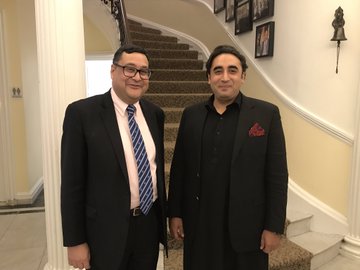
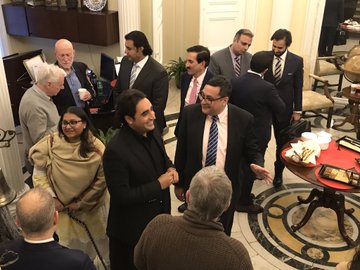
      Bilawal Bhutto Zardari, Chairman of Pakistan People’s Party (PPP) and son of Pakistan’s former Prime Minister Benazir Bhutto, visited the Frederick S. Pardee School of Global Studies at Boston University on February 11, 2019 for a conversation with Pardee School faculty and students on a range of topics including Pakistan’s most recent national elections, foreign policy, and investment in youth in Pakistan.
      The event was part of the Policy Leaders Forum series at the Pardee School that brings senior international policymakers to Boston University for important policy conversations with guests including faculty, students and experts from across Boston University. 
      Bilawal Bhutto Zardari’s mother and grandfather both served as Prime Minister of Pakistan, his father served as President of Pakistan, and the 30-year old Oxford graduate now leads one of Pakistan’s historically most important political parties and is a member of the National Assembly of Pakistan. The discussion was moderated by Adil Najam, the inaugural Dean of the Pardee School.
      Bilawal Bhutto Zardari spoke with Pardee School faculty and Dean’s Ambassadors on a range of topics including the most recent national elections in Pakistan; Pakistan’s foreign policy including relations with the United States, India and Afghanistan; civil-military relations in Pakistan; the role of Pakistan’s youth in determining the country’s future; investment in education; the prevention of violent extremism; the importance of bureaucratic reform; and the need to address poverty in Pakistan.
      He stressed that despite the many challenges that Pakistan faces, he was hopeful for the country and its future, mostly because of its youth. He believed that even though Pakistan’s democracy was far from perfect and the 2018 elections were clouded by many irregularities, “the sensibility of the Pakistani people is fundamentally democratic.” He added, that this was the third consecutive change of government done through elections and it will now be very difficult to “put the democratic momentum into reverse gear.”
      He also discussed the current state of the Pakistan People’s Party, the future he sees for his party, and the fulfillment and drive he gets from carrying on the political legacy of his family.
      http://www.bu.edu/pardeeschool/2019/02/11/policy-leaders-forum-bilawal-bhutto-zardari/

      Bilawal Bhutto hopeful for Pakistan’s future because of its youth


      Pakistan Peoples Party Chairperson Bilawal Bhutto Zardari attended an interactive session at the South Asia Institute at Harvard University on February 11.
      Bilawal had a conversation on the topic, ‘Pakistan’s Youth and the Welfare State’.
      The talk was moderated by Mariam Chughtai from LUMS and Babar Ali of the Mittal Institute, Syed Ahsan Ali,  an Assistant Professor at LUMS and Syed Maratib Ali of the School of Education, Pakistan were the panellists.
      The late Asma Jahangir was paid homage at the start of the session.
      This event was a collaboration between the Mittal Institute and the Harvard Pakistan Student Group.
      On the same day, Bilawal also visited Boston University’s Pardee School for a conversation with faculty and students on a range of topics including Pakistan’s most recent general elections, foreign policy, and investment in the youth of Pakistan.
      View image on TwitterView image on TwitterView image on TwitterView image on Twitter
      We are so excited to be hosting @BBhuttoZardari, Chairman of Pakistan’s People’s Party and son of former Prime Minister Benazir Bhutto, for a conversation with our faculty and students!
      321 people are talking about this
      The discussion was moderated by Prof Adil Najam, the inaugural Dean of the Pardee School of Global Studies at Boston University.
      Bilawal said that despite the many challenges that Pakistan faces, he was hopeful about the country’s future, mostly because of its youth. He believed that even though Pakistan’s democracy was far from perfect and the 2018 elections were clouded by many irregularities, “the sensibility of the Pakistani people is fundamentally democratic.” He added, that this was the third consecutive change of government done through elections and it will now be very difficult to “put the democratic momentum into reverse gear.”

      He also discussed the current state of the Pakistan People’s Party, the future he sees for the party and the fulfillment and drive he gets from carrying on the political legacy of his family.
      https://www.samaa.tv/news/2019/02/bilawal-bhutto-zardari-addresses-students-at-harvard/

      #Pakistan - The agreement with #IMF - #PTI’s hush-hush deal

      What the opposition had been claiming  about the PTI  having already reached a secret deal with the International Monetary Fund (IMF) has turned out to be true. Finance Minister Asad Umar told a gathering the deal was brokered at a meeting between the IMF  head Christine Lagarde and Prime Minister Imran Khan  in Dubai on Sunday. Umar also claimed that IMF did not demand a rise in gas and power charges as was being speculated.  But it is difficult to believe the finance minister when a deal with the Fund has been brokered in total secrecy, something unheard of before.
      During the last four months when the government was implementing key IMF demands it was pretending that no understanding had yet been reached with the Fund. The PTI administration devalued  national currency, hiked power-cum-gas charges, announced a mini budget with  a new set of tax reforms and increased the interest rate. It was a totally opaque and highly questionable way of brokering a deal with an international body that is bound  to affect the entire population of the country. The idea of a government conducting  deals of the sort in a cagey way simply scares one.  What role was played by the US in the deal and what the government agreed to as  quid pro quo  also remain a secret.
      There is an urgent need to present the full details of the agreement before Parliament for debate and discussion. This is what the PTI too had been demanding in the past despite the details of the deals were generally made public before these were signed. The government was desperately looking for a bailout to address the mounting balance of payments crisis. Many would like to know  what the government has given in return for the facility. After meeting Imran Khan the IMF chief called for “decisive policies  and a  strong package of economic reforms.” It is the right of the public to be told  whether their interests have not been compromised and what awaits them in months and years to follow.