
Tuesday, February 5, 2019

#PigYear - CHINESE NEW YEAR 2019 ANIMAL: YEAR OF THE PIG ZODIAC SIGN, MEANING EXPLAINED


BY  

Midnight on February 5 will mark the beginning of the Lunar New Year, also known as the Chinese New Year of the Spring Festival. Midnight will mark only the beginning of the 15-day long event, which will be filled with traditional rituals and celebrations.
The 12-year Chinese zodiac calendar will enter the final portion of its circuit on February 5, rolling into the year of the pig. According to CNN, the year of the pig is considered a positive one, generally indicating wealth and fortune for those born in the upcoming 12 months.
Chinesenewyear.net explains that pigs are a symbol of wealth and their chubby faces and big ears denote good fortune. The website also lauds the pig’s “beautiful personality.” Recent years of the pig include 1935, 1947, 1959, 1971, 1983, 1995 and 2007.
“Pigs might not stand out in a crowd. But they are very realistic,” the website adds, explaining some characteristics associated with people born in those years. “Others may be all talk and no action. Pigs are the opposite.”
“Though not wasteful spenders, they will let themselves enjoy life. They love entertainment and will occasionally treat themselves. They are a bit materialistic, but this is motivation for them to work hard. Being able to hold solid objects in their hands gives them security.”
The graphic below was provided by Statista, highlighting the biggest temporary migrations of people on Earth.
20190205_Biggest_Migrations_NewsweekThe biggest temporary migrations of people on Earth.STATISTA
Pigs are generally thought to be “energetic and are always enthusiastic, even for boring jobs.” But they are far from faceless drones happy to clock in and clock out. “If given the chance, they will take positions of power and status. They believe that only those people have the right to speak, and that’s what they want.”
Men born in the year of the pig are thought to be “optimistic and gentle. They are very focused. Once they decide on a goal, they’ll put everything into it.”
However, they are not so financially responsible. “Though cool-headed, they are also gullible. They trust others easily and are often scammed. This can cause them to lose a fortune.”
They may be quiet, but male pigs enjoy close social bonds. “They’re not conversationalists, but treat everyone warmly. This results in a large social circle. Whenever they run into difficulties, there are always people who stand up to help. Though people will lie to them, more will love them.”
Women born in the year of the pig are thought to be high socialible and genuine. “ Combined with their easy-going personality, they gain everyone’s trust,” Chinesenewyear.net says.
Sometimes they go a little too far, and can “forget to give others personal space.” Like their male pigs, females are predisposed to wealth. “As long as they keep at it, the efforts will not go to waste. Though they don’t start with an advantage, their hard work will keep money flowing in.”
It should be noted that the Chinese calendar has more complexity than just 12 zodiac animals. Each animal—which refers to a so-called “earthly branch”—combines with one of 10 “heavenly stems” to create a sexagenary cycle.
For 2019, the earthly branch is “hai,” meaning the symbol that stands for pig. This will combine with “ji” which is the heavenly stem for yin and earth. As such, 2019 will be the year of “ji hai,” or earth pig.

The last earth pig year was in 1959. “These pigs are social butterflies with friends from all walks of life,” Chinesenewyear.net explains. “They have a lot of support in both work and life. They have fortunate lives and can find happiness. They are successful later in life. However, they aren’t the most romantic people and might need to work on that.”

According to the Travel China Guide, famous pigs include Hillary Clinton, Mark Wahlberg, Mila Kunis and Arnold Schwarzenegger. The list of pig alumni also includes influential historical figures, including 16th-century English King Henry VIII and 20th-century Chinese nationalist leader Chiang Kai-shek.
Video Report - #French protesters clash with police in rally over minimum wage & 'anti-hooligan' law

Video Report - "Yellow Vest" protesters march against French government in Nantes

Video Report - Virginia medical school apologizes to black community over yearbook photos

Video Report - #Trump's mispronunciation in intel briefing stuns Brooke Baldwin

Pashto Music Video - larsha pekhawar

Music Video - Zar Zari Shaloona - Sarah Sahar - Lemar Aw Story / زر زری شالونه - ساره سحر - لمر او ستوری

Pashto Music - Da Sharaabo Arzaani | Sardar Ali Takkar | د شرابو ارزاني | عبدالهادي ملا | سردارعلي ټکر

Pashto Music - Saqi | Ajmal Khattak | Sardar Ali Takkar | ساقي | اجمل خټک | سردارعلي ټکر

Jannat Aw Dunya | Ghani Khan | Sardar Ali Takkar | جنت او دنيا | غني خان | سردارعلي ټکر

#Pakistan - Has Buyer’s Remorse Set in for the selected #PTI Government?

This is the question that is foremost in the minds of any sane Pakistani. By buyer’s remorse, the indication is towards those who “selected” Imran Khan. And before him Nawaz Sharif. Two successive self righteous, gaslighting, right wing governments have left Pakistan’s economy in the toilet ever since a Left PPP Government was repeatedly derailed between 2008-2013.By 2013, Pakistan’s exports stood at a healthy $26 Bn – at par with Bangladesh then. Today Pakistan’s exports stand closer to $18bn while Bangladeshi exports are at $40 bn! Since 2013, the Pakistani ruppee has lost close to 50% of its value.
The trade deficit stands at a whopping $18 bn; up from $2 bn in 2013!Meanwhile, oil prices that’s were hovering between $90-$140 between 2008-2013 have stabilised between $40-60 for most of 2013-2018.Clearly, the numbers support PPP while serving as a damning indictment of both PML N and now PTI!Both PML N and PTI faced far fewer hurdles from the Right wing and Jamaat e Islami dominated Judiciary. Both General Raheel Sharif and General Bajwa were more supportive of PML N and PTI respectively while General Kiyani spent his entire tenure plotting against the PPP government and using Nawaz Sharif, Imran Khan, the judiciary and the media as his proxies.General Kiyani did nothing to combat Takfiri terrorism and allowed it to grow while General Raheel and General Bajwa took some steps (far from sufficient) to curtail it.
(Note to the dishonest and the stupid whose petty opportunist careers are built on distorting posts here: this is a statement of fact and not an absolution).Even under more favorable situations, both PML N And PTI have failed.At what stage will buyer’s remorse set in regarding those who managed the selection of the PTI government?In a confused and mumbling speech in Turkey today, Imran Khan cheered on the Congress Party-backed Khilafat movement that was opposed by both Jinnah and even the Turks who wanted freedom from the decaying Ottoman Regime. In the same breath, Imran Khan praised the socialist policies of China while condemning the socialist government of Bhutto. Ironically, it was Bhutto who set in place the regional alliances with both China and Turkey.“Let me not forget that when the Taa… Turkey was finding I mean fighting for it’s independence, when the Greeks had invaded the mainland, ppl…. What is now in Pakistan that was in India, but from what is now in Pakistan, ppl were collecting money to support the Turkish movement for independence under Karam… Kamal Ata Turk”(PM Imran Khan’s exact speech in Turkey today)Clearly, intelligence is not the strong suite of PM Khan.
https://lubpak.net/has-buyers-remorse-set-in-for-the-selected-pti-government/
January 7, 2019

#Pakistan - #Balochistan: Bullet-ridden dead body found in Kharan, three abducted from Khuzdar

 Pakistani forces have abducted three people from district Khuzdar while a bullet-ridden dead body was found in district Kharan on Monday.

According to details, the bullet-riddled dead body was found in Zahrozai area of Kharan which was identified as that of Adreshan Ahmad Qambrani son of Dr Ayoub Qambrani.
Meanwhile, Pakistani forces have abducted three people from Ornach area of district Khuzdar Balochistan.
The victims have been named as Abdullah Jan, Obaid and Mullah Khan Mohammad. They’ve been shifted to an undisclosed location and their whereabouts remained unknown at the time of filing this report.
http://balochwarna.com/2019/02/04/balochistan-bullet-ridden-dead-body-found-in-kharan-three-abducted-from-khuzdar/

Bilawal Bhutto holds meeting with Kashmir Council, delegation

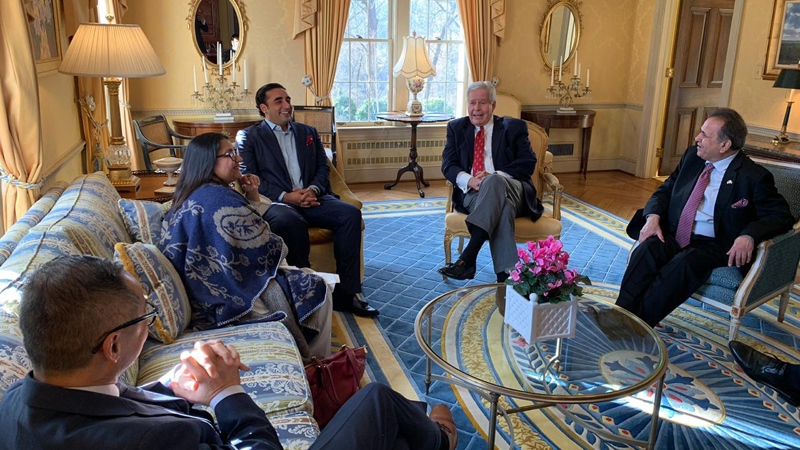
Pakistan People’s Party (PPP) Chairman Bilawal Bhutto Zardari met with Kashmir Council on Tuesday to express solidarity with Kashmiri people in Washington DC.
The Kashmir Council delegation comprised Patron-in-Chief Irshad Kiyani, President Zulfiqar, General Secretary Zareef Khan and others.
PPP Chairman Bilawal Bhutto Zardari assured the delegation that he would continue to raise voice against the brutalities of Indian forces against innocent and unarmed Kashmiri people at every available forum both nationally and internationally. He said that loyalty to the cause of Kashmir was in his blood and he would stand with the people of Indian-Held Kashmir in their just struggle for right to self determination and freedom from illegal and immoral Indian occupation.
Meanwhile, the PPP chairman met Council of National Policy Chairman Bob McEwen on Tuesday to discuss matters of mutual interests. Senator Anny Marri accompanied the party chairman.

Pakistani premier, president back rebels in Indian Kashmir


By Munir Ahmed


Pakistan’s prime minister and president on Tuesday offered support for rebels in the Indian part of the disputed Himalayan territory of Kashmir as the country staged rallies marking the annual Day of Solidarity with Kashmir.
Rallies were also held in the Pakistani-controlled sector of the territory while a Pakistani minister declared the struggle of the rebels in Kashmir a jihad, or Muslim holy war, saying it would go on until Kashmir becomes part of Pakistan.
India and Pakistan each administer a part of Kashmir, but both claim the territory in its entirety. Rebels have been fighting Indian rule since 1989, demanding Indian-controlled Kashmir be united either under Pakistani rule or established as an independent country.
Pakistani Prime Minister Imran Khan and President Arif Alvi in their statements condemned India for what they said were violations of human rights in the Indian section of Kashmir. They said Pakistan would continue its “diplomatic and moral” support for people living in Kashmir.
“The wish of Kashmiri people for freedom cannot be suppressed,” Alvi told lawmakers in the Pakistani-controlled part of Kashmir. In Islamabad, Ali Amin Gundapur, a minister in charge of Kashmir affairs, told a rally that “one day, Kashmir will become part of Pakistan.”
Army spokesman Maj. Gen. Asif Ghafoor tweeted that decades of “atrocities by Indian occupied forces have failed to suppress ever strengthening freedom struggle” of the Kashmiris.At a rally in Peshawar, protesters burned and stomped on the Indian fag as Pakistani girls in traditional Kashmiri dress chanted anti-Indian slogans.
And at a pro-Kashmir rally in the eastern city of Lahore, Pakistani radical cleric Hafiz Saeed, suspected in the 2008 Mumbai terror attacks that killed 166 people and also wanted by the U.S., urged followers to stand up against India’s crackdown on “unarmed civilians in Kashmir.”
There was no immediate comment from New Delhi on the statements from Islamabad.
On Sunday, India’s Prime Minister Narendra Modi paid a day-long visit to the Indian section of Kashmir as separatists there called for a shutdown — shops and businesses closed while thousands of armed government forces and commandos spread out and closed off roads with razor wire and iron barricades to prevent protests and rebel attacks during Modi’s visit.
https://www.washingtonpost.com/world/asia_pacific/pakistani-premier-president-back-rebels-in-indian-kashmir/2019/02/05/854356f8-2915-11e9-906e-9d55b6451eb4_story.html?utm_term=.46a6e85d2325

Will Imran Khan’s government recognise Israel? - Husain Haqqani


With Pakistan’s status as an ideological state fully consolidated, pragmatic ties with Israel and India have become less likely.
A tweet by Fishel Benkhald‏, a Pakistani Jew, announcing that the country’s ministry of foreign affairs had allowed him to visit Israel on his Pakistani passport, resulted in a fresh round of speculation about Israel-Pakistan ties. But as with earlier rounds of similar rumours, the Pakistani Foreign Office denied that Pakistan was on the verge of changing its policy towards the Jewish state.
Pakistani passports explicitly say that they are not valid for travel to Israel – an avowal of non-recognition and unwillingness to engage that has remained consistent for over 70 years.
Periodic rumours of secret engagement notwithstanding, it is unlikely that the world’s first Sunni Islamic republic will abandon its traditional hostility towards the Jewish State any time soon. Only a change in the collective position of the Arab-Islamic world, possibly with the emergence of a sovereign Palestinian state, might make it possible for Pakistani leaders to normalise relations with Israel.
At the same time, without a demonstrable change in Islamabad’s position on Jihadi terrorism, Israel also might not want to risk its deepening partnership with India. If various terrorist groups promising to ‘punish Israel’ or ‘kill the Jews’ –like Lashkar-e-Taiba (LeT) and Jaish-e-Muhammad (JeM) – operate freely in Pakistan, it would be difficult for Israel to trust promises of friendly engagement.
The desire for a covert relationship with Israel has been periodically voiced by some Pakistanis, notably those concerned about Pakistan’s global position in relation to India. Ironically, it stems from anti-Semitic conspiracy theories about Jewish influence over global affairs rather than a genuine recognition of the right of Jews to a national homeland in historic Palestine.

Musharraf’s ‘justified’ outreach

As a military dictator in 2003, General Pervez Musharraf spoke about the need for an open debate in Pakistan about the merits of recognising Israel. Amid worries about India’s “military, economic and intelligence ties” with Tel Aviv, Musharraf wondered aloud, “What is our dispute with Israel?”
Two years later, Musharraf’s foreign minister met his Israeli counterpart in Istanbul. With characteristic bravado, Musharraf claimed that his initiative “enjoyed widespread support.” According to him, “When we are talking to the Israelis and the Israeli foreign minister, or I address the Jewish congress, I am very clear that this is the strategic direction that Pakistan needs to take.”
Some secret contacts between Pakistan’s Inter-Services Intelligence (ISI) and Israel’s intelligence services followed but the initiative withered soon, and so did Musharraf’s control over power.
To his military colleagues, Musharraf had justified his outreach to Israel as an attempt to prevent Israeli-Indian collusion against Pakistan.
As president and chief of army staff, Musharraf felt he could take risks in external affairs. Even Pakistan’s raucous media and anger-prone religious parties could not accuse an army chief of acting against the country’s ideology or national interest.
Musharraf’s civilian successors could not take such risks. They left the Israel account to the ISI and the military, fearful that any attempt on their part to build upon Musharraf’s initiative would be exploited by the country’s establishment with help from the fanatical crowd.

Imran Khan and the supposed thaw

The selection of Imran Khan as prime minister has reportedly ended the civil-military divide, and the military’s concerns are once again centre-stage. Khan also has the reassurance that the military and intelligence services will take care of any domestic constituency he annoys while trying to end Pakistan’s international isolation.
Soon after Khan took office in 2018, the rumours of a Pakistan-Israel thaw resurfaced. Jack Rosen, an American Jewish personality who had previously hosted Musharraf, broke years of silence on Pakistani affairs by writing an article praising Imran Khan and arguing why Pakistan deserved US support.
Rosen’s critics immediately listed the numerous anti-Semitic and pro-Jihad statements by Khan and other officials of his party Pakistan Tehrik-e-Insaaf (PTI) and wondered aloud why Rosen was lobbying for the new Pakistani prime minister.
In the subsequent back and forth, Khan’s previous marriage to Jemima Goldsmith was cited as evidence of his tolerance of Jews. Ironically, Jemima has always insisted that she is a Catholic even though her father Sir James Goldsmith was Jewish by birth. Jemima has herself faced allegations of anti-Semitism, which she strongly denies.
In October last year, the editor of the Israeli newspaper Haaretz’s English edition, Ami Scharf, fuelled gossip when he tweeted about a private jet possibly carrying Israeli officials to Islamabad from Tel Aviv. That claim was based on following the plane on one of the several flight path tracking sites and was strongly denied by the Pakistan government as well as Pakistan’s aviation regulators.
Soon after, retired military officers close to Musharraf revived the arguments on Pakistani television channels in favour of recognising Israel as a means of depriving India of exclusive Israeli friendship. A PTI legislator advanced the case in a speech in parliament. But the government officially denied the likelihood of normalisation of ties with Israel vehemently.
Haaretz described “the outraged reaction to the very idea that an Israeli jet could enter Pakistani airspace” as “a prominent indicator” of Pakistan’s hostility towards the Jewish state. It noted that “the government of Pakistan not only categorically dismissed the very idea that an Israeli jet could land in Islamabad (“No Israeli plane can land in Pakistan”), it has claimed that the report itself is a part of the old-new “Zionist-Hindu conspiracy” against Pakistan.

Roots of Pakistan’s antipathy

The belief about Pakistan being the target of conspiracies by enemies of Islam has over the years become an integral part of Pakistan’s national DNA. Tactical suggestions of normalising relations with Israel to drive a wedge between Tel Aviv and Delhi cannot overcome the view that Pakistan is a citadel of Islam and that several non-Muslim powers (Israel and India foremost among them) seek its destruction.
Antipathy towards Israel goes all the way to Pakistan’s founding. In March 1947, Pakistan’s founder Muhammad Ali Jinnah told one of the first American diplomats to meet him that “most Indian Muslims felt Americans were against them.” Jinnah cited two reasons for this view: first, he said, “because most Americans seemed opposed to Pakistan,” and second, because the “US government and people backed Jews against Arabs in Palestine.”
Margaret Bourke-White, who covered Pakistan’s birth as a correspondent for Life magazine, observed that soon after independence, “Pakistan was occupied with her own grave internal problems, but she still found time to talk fervently, though vaguely, of sending a liberation army to Palestine to help the Arabs free the Holy Land from the Jews.” She reported calls by religious leaders “advocating that trained ex-servicemen be dispatched” in the “holy cause” of Palestine.
Bourke-White also noticed in early 1948 that Dawn, then the official government newspaper, condemned the “Jewish state” and “urged a united front of Muslim countries in the military as well as the spiritual sense,” with one editorial asserting, “That way lies the salvation of Islam.’’
That was 1947-48, when Pakistan was new and the ‘ideology of Pakistan’ taught at all levels of schooling had not even covered. Now, with Pakistan’s status as an ideological state fully consolidated, pursuit of pragmatic foreign policy initiatives such as normalisation of relations with Israel (and India) has become less likely.
For the foreseeable future, the powers that be in Pakistan will continue their ‘one step forward, one step back’ approach to Israel. Being the pragmatists that they are, Israelis are also unlikely to risk their relationship with India – a lucrative arms market, tourist destination, and reliable counter-terrorism partner –in pursuit of half-hearted recognition by Pakistan. 

Monday, February 4, 2019

Music Video - Miley Cyrus - Party In The U.S.A. (

Video - #Scotland's Sturgeon on why failure to reach a Brexit deal would be 'catastrophic'

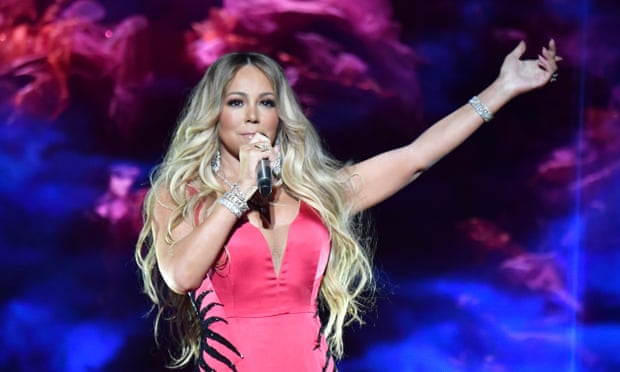
Why Mariah Carey was wrong to play Saudi Arabia


By Owen Jones
When pop stars are duped into performing in the Arab country, they merely help the regime’s propaganda machine.

All I want for 2019 is for much-loved pop stars to stop being inadvertent propagandists for mass-murdering dictatorships. Mariah Carey is the latest musician to perform in Saudi Arabia, following in the ignominious footsteps of Enrique Iglesias and the Black Eyed Peas in December. This is bad on a number of levels. Carey has famously always had a devoted gay fanbase: in Saudi Arabia, homosexuality is punishable by death.
Women are deprived of fundamental rights, and despite Saudi propaganda claims that social progress is being made, scores of women’s rights activistswere detained and incarcerated last year. One of them is Loujain Alhathloul, whose brother has denounced Carey’s concert as a “pathetic attempt to show that the country is becoming more tolerant toward women”, appealing for the singer to at least call for her release on stage.
In neighbouring Yemen, Saudi-led forces – with the critical backing of the US and British governments – have plunged the country into the worst humanitarian crisis on Earth, with civilians – including small children on school buses – butchered. Saudi Arabia has exported murderous extremism across the Middle East and beyond. Just months ago, the regime brutally murdered Washington Post columnist Jamal Khashoggi in Turkey. I could go on.
Carey has claimed that her appearance will further the cause of gender desegregation. This is painfully naive. She is being used. The Saudi regime is trying to present a false image of inclusiveness, “modernity” and social progress to the world. Cultural icons with huge fan bases are invaluable to their propaganda efforts.
The Saudi tyrant Mohammed bin Salman already duped numerous gullible western politicians and commentators with claims he was a reformer, even as Khashoggi’s murder took place and women’s rights activists were being locked up. It is in the interests of his regime for the world to see Saudi Arabia as adoring young crowds singing along to much-loved pop icons, rather than as subjugated women, kneeling prisoners on the cusp of execution, or charred children’s corpses in burned-out school buses.
It underscores why cultural boycotts directed at human rights-abusing regimes are so important. Pop stars such as Shakira and Lorde have cancelled gigs in Israel after campaigns led by pro-Palestinian activists. But there are other regimes armed and supported by the west – such as Turkey, whose government is destroying democracy and waging war on the Kurds – which are surely deserving of boycotts, too.
Pop stars such as Mariah Carey may well be fooled by publicists into thinking that, by performing in countries ruled by abhorrent regimes, they will advance progressive causes. They do no such thing: they simply help legitimise tyranny. They became pop stars because of their love of music. They must surely ask themselves if they really ever aspired to become the propaganda devices of one of the worst regimes on Earth.

Video Report - 🇺🇸 🇷🇺 Is the world facing the threat of a new arms race? l Inside Story

Video Report - How US weapons ended up in the wrong hands

PAKISTAN ALLOWS BAHRAIN KING, UAE PRESIDENT, OTHERS TO HUNT INTERNATIONALLY PROTECTED BIRD

The federal government has issued at least 13 special permits to members of the royal families of Gulf states to hunt internationally protected bird houbara bustard in Sindh during the 2018-19 hunting season. The Bahrain monarch, UAE president and GCC crown princes, their uncles and cousins, and armed forces chiefs belonging to the ruling families of Saudi Arabia, the United Arab Emirates, Bahrain and Qatar are allowed said hunting.
At least one member of the elite group has a dubious distinction, as he is being pursued by a Pakistani investigation agency for his alleged role in a money laundering scam being investigated in the country.
The ruling Pakistan Tehreek-e-Insaf had criticised the-then federal government when it had issued hunting permits to members of the Arab royal families last year and announced that it would not allow them to hunt in Khyber Pakhtunkhwa, where the PTI had its own government.

A king and a president among the elite group


So, although the hunting permits were issued for Khyber Pakhtunkhwa as well, hunting could not be carried out in the province owing to its government’s tough stance on animal conservation. But this year the federal government, which is led by the PTI, has issued hunting permits for Sindh, according to the sources.


The sources said that Malik Amin Aslam — the president for South East Asia of the International Union for Conservation of Nature, who is also adviser to the federal government on climate change — looked the other way when the permits for hunting houbara bustard were being issued to members of the Gulf royal families.
An inhabitant of the colder Central Asian regions, the houbara bustard migrates southwards in winter to avoid the harsh weather conditions in its habitat.


Earlier, the bird used to migrate right up to the Arabian peninsula, but owing to ruthless hunting there over the years by Arab hunters, who considered it to be an aphrodisiac, it has stopped going there and rests in Pakistan instead during winter.


Owing to the bird’s special status and its dwindling population, the houbara bustard is protected globally. But the Pakistan government, keeping in view the royal hunters’ interest in it, issues special permits to hunt the bird, which is also protected under Pakistani laws. (Pakistanis are not allowed to hunt it.)
However, this is not the first time that such permits have been issued as previous governments have also issued these permits.


As per the permits signed by M. Adeel Pervaiz, the foreign ministry’s deputy chief of protocol, the names of the permit holders and the areas allocated to them are as follows:


King of Bahrain Sheikh Hamad bin Issa bin Salman Al-Khalifa has been allocated Jamshoro district, including Thano Bula Khan, Kotri, Manjhand and Sehwan tehsils. President of the United Arab Emirates and Ruler of Abu Dhabi Sheikh Khalifa bin Zayed Al-Nahyan and Crown Prince of Abu Dhabi and Deputy Supreme Commander of the UAE Armed Forces Gen Sheikh Mohammad bin Zayed Al-Nahyan have been allocated Sukkur and Nawabshah districts. Prince Mansour bin Mohammad S. Abdul Rahman Al-Saud of Saudi Arabia has been given Kashmore district.


Uncle of Bahrain’s king Sheikh Ebrahim bin Hamad bin Abdullah Al-Khalifa has been allocated Shah Bunder tehsil in Sujawal district. The king’s defence adviser Sheikh Abdullah bin Salman Al-Khalifa has been granted Jati tehsil in Sujawal district. The king’s first cousin and Bahrain’s Interior Minister Lt Gen Sheikh Rashid bin Abdullah Al-Khalifa has been given Naushahro Feroz district.


Hyderabad and Malir districts, excluding Malir Cantonment and Dhabeji, have been reserved for Sheikh Ahmed bin Ali Al-Khalifa, who is a first cousin of Bahrain’s king. The deputy prime minister of the UAE, Sheikh Sultan bin Zayed Al-Nahyan, has been given Khairpur district, excluding Kotdiji and not across Nara canal. A representative of Abu Dhabi’s rulers, Sheikh Hamdan bin Zayed Al-Nahyan, has been allocated Khairpur Nathan Shah tehsil, Juhi tehsil and union council Fareedabad in Dadu district, Gaibi Dero in Larkana district, Shahdadkot district and Khairpur district (across Nara canal).


Deputy chief for police and general security of Dubai and a member of the ruling family Lt Gen Sheikh Ahmed bin Rashid Al-Maktoum has been allocated Tharparkar district, including Mithi and Nagarparkar (minus protected area), and Umerkot district. A member of the ruling family of Dubai, Shaikh Rashid bin Khalifa Al-Maktoum, has been allocated Badin district, Jungshahi in Thatta district and Dhabeji in Malir district. Mirpurkhas district has been reserved for a member of the Qatar’s ruling family, Sheikh Abdul Rehman bin Hamad Al-Thani.


Nasir Abdullah Lootah, a UAE citizen and chief of the Summit Bank, has been given Thatta district, excluding Shah Bunder and Jungshahi. He is being pursued by the Federal Investigation Agency for his alleged role in a money laundering scam.

http://www.shiitenews.org/index.php/pakistan/item/36579-pakistan-allows-bahrain-king-uae-president-others-to-hunt-internationally-protected-bird

د ارمان لوڼي وژنې ضد په بلوچستان کې کاربندیز او احتجاجونه #ArmanLoni

د پښتون ژغورنې غورځنګ او پښتونخوا ملي عوامي ګوند غړي محمد ابراهیم ارمان لوڼي وژنې ضد د بلوچستان په زیاتره لویو ښارونو کې کاربندیز دی. د فبرورۍ پر څلورمه د کاربندیز غږ پښتونخوا ملي عوامي ګوند کړی چې یو شمېر ګوندونو، کاروباري سازمانونو او د وکیلانو ټولنې یې ملاتړ کړی. ارمان لوڼی د فبرورۍ پر دویمه په بوري کې وژل شوی وو. عیني شاهدان وايي، نوموړی پولیسو وژلی خو د کورنیو چارو صوبايي وزیر وايي، د وژنې لامل یې د زړه حمله وه. ارمان لوڼی د سیاسي او بشري حقونو فعال، د پوهنځي استاد او لیکوال وو. ویډیويي رپورټ وګورئ.

Pakistan’s Pashtun Rights Movement Suffers First Casualty

#ArmanLoni - #Pakistan rights group to protest killing of activist

Friends and family of Arman Loni accuse the police of intentionally targeting and killing him in Balochistan.
A Pakistani civil rights group has called for nationwide demonstrations after the alleged murder of a Pashtun leader who advocated for the rights of his community. Mohsin Dawar, a leader of the Pashtun Tahafuz Movement (PTM), said on Tuesday, the group's supporters would protest the murder of Arman Loni of Balochistan.The Pashtun leader was killed on Saturday in Loralai district of Balochistan as police tried to break up a four-day demonstration against forced evictions.
Balochistan's chief minister has ordered an inquiry into the killing.
"[The police] have not even registered a case," Dawar told the dpa news agency.
'Targeted attack'
Dawar said the police had singled Loni out and deliberately beat him to death because of his role as a leader of the group.
"It was a targeted attack on him by police, I think his neck was broken and this was confirmed in the postmortem," Dawar told the Reuters news agency, adding that he was killed for his "association with PTM".A police spokesman said Loni had died of a heart attack following clashes between protesters and police.The PTM emerged last year after the extrajudicial murder of an ethnic Pashtun in the port city of Karachi.The police accused him of having links with armed groups. An inquiry later found him to be innocent, with the incident sparking a public movement to defend the community.The PTM blames the Pakistani military and other state organs for what it says are forced disappearances resulting in thousands of unresolved missing person cases, primarily from the ethnic Pashtun region bordering Afghanistan.
The group draws large crowds at rallies against violence and disappearances allegedly carried out by the state.
Pashtuns make up about 15 percent of Pakistan's population of 220 million and live mainly in the Federally Administered Tribal Areas (FATA) in north-western Pakistan, a semi-autonomous region bordering Afghanistan.
https://www.aljazeera.com/news/2019/02/pakistan-rights-group-protest-killing-activist-190204163252858.html

Pakistan police culture of impunity faces trial by social media

Five policemen raise their guns and fire dozens of times into a parked car at point-blank range in Pakistan. Then they reach inside, around the bodies of the dead, to pull out three crying children.
The footage filmed by shocked witnesses to the killing went viral, sending Prime Minister Imran Khan scrambling to quell anger over a police culture of impunity that is now being threatened by social media.
Thousands have been gunned down in recent years across Pakistan in so-called "encounter killings" -- incidents where suspects allegedly resist arrest, are slain, then later identified as terrorists to boost statistics.This latest "encounter" saw a family gunned down in broad daylight in the eastern city of Sahiwal last month, leaving four people dead including two parents and their teenage daughter.Three children survived the incident, including nine-year-old Umair Khalil who later told journalists that police shot at the family as their father offered the cops a bribe, pleading to let them go."My father told them to take our money and not to shoot their guns. But they started firing," Umair said in the video broadcast widely across Pakistan news outlets and social media.Police initially defended their response saying terrorists with links to Daesh were in the car using the family as a human shield.But this "encounter" was fundamentally different to others -- it was filmed on phones and the videos posted online.
Authorities have since backtracked as furore grew with the prime minister vowing to mete out "exemplary punishment" to the guilty. Five officers were hit with murder charges and protests erupted in nearby Lahore.
"People... know that a video they make from their cell phone can have far more impact than the camera of a news channel," said Pakistani digital rights activist Haroon Baloch."Had the nearby people not filmed the Sahiwal incident, nobody would have noticed the extrajudicial killing," he added.The incident is the latest instance of how phones are radically changing Pakistanis’ relationship with power. During elections over the summer, a host of videos went viral, showing angry voters hounding elected representatives over their failure to serve their constituents.
And it’s not just in Pakistan.
In the US, the Black Lives Matter movement coalesced as outrage exploded following a series of viral videos allegedly showing police killing black Americans, bringing greater scruity to racial profiling and pushing some police departments to outfit patrol officers with body cams.
- Killing with impunity -
The Sahiwal incident comes almost exactly a year after a similar killing of a young social media star in Karachi ignited a rights movement.
The movement it spawned has been largely sustained by social media and videos captured on mobiles, piling even more pressure on authorities.
But the killings continue, with analysts saying reforms are needed to challenge impunity in the police ranks."It’s a culture of the police in Pakistan to kill people and make it look it like an encounter," Mehdi Hasan -- chairperson of the independent Human Rights Commission of Pakistan (HRCP) -- told AFP.Data compiled by HRCP showed that 4,803 people were killed in these "encounters" in Pakistan within the past three years alone."The police need to be properly trained if such incidents are to be avoided in the future," Hasan added.Security analyst Amir Rana however argued that increased police accountability and judicial reform were key to cementing lasting change.
"This culture has existed in the police force for decades," Rana explained, saying Pakistan’s mammoth backlog of legal cases overloading its judiciary was part of the problem.
"(Police) want quick results and they try to avoid... lengthy legal procedures which leads to staging encounters."
https://www.thenews.com.pk/latest/427714-pakistan-police-culture-of-impunity-faces-trial-by-social-media

Sunday, February 3, 2019

Music Video - Ariana Grande - no tears left to cry

Video - Guillermo at Super Bowl Opening Night 2019

Video Report - #NFL #Football #AmericanFootball The 100-Year Game | SBLIII

Video Report - Bible literacy classes in schools: 'Great' idea or blurring of secular lines? (DEBATE)

Video - #CNN - Fareed Zakaria GPS Sunday February 3, 2019

Pashto Music Video - Dira Khayber - Nan Pah De Hujra Ke Khushali

Pashto Music Video - speeni spoogmai wa ya Ashna ba charta we na

Video Report - #Russia #Taliban #Afghanistan Russia invites Taliban for Afghan peace talks

Senate advances bill warning against 'precipitous withdrawal' from Syria and #Afghanistan


The Senate delivered a rare rebuke to President Donald Trump's foreign policy Thursday, opposing his plans to withdraw U.S. troops from Syria and shrink American forces in Afghanistan.
In a bipartisan voteof 68-to-23, lawmakers advanced a measure sponsored by Senate Majority Leader Mitch McConnell, R-Ky., warning against a "precipitous withdrawal" of American forces from Syria and Afghanistan. It was a particularly notable move coming from McConnell, who has been reluctant to criticize or cross Trump.Forty-three Republicans and 25 Democrats voted in favor of the resolution.
"The United States is engaged in Syria and Afghanistan for one simple reason: because our enemies are engaged there," McConnell said from the Senate on Wednesday. "Dangers to us and to our allies still remain in both these nations, so we must continue to confront them there."
McConnell's resolution is nonbinding, but it showcased a public rift between hawkish congressional Republicans and Trump, who campaigned on a promise to bring American troops home from far-flung conflicts. Trump announced his decision to withdraw all U.S. forces from Syria in December, declaring on Twitter that the Islamic State had been defeated.
GOP critics say Trump has minimized the ongoing threat from the Islamic State in Syria and is plotting a hasty withdrawal from Afghanistan that could allow extremist elements to re-emerge in a country that once served as a base for al-Qaida leader Osama bin Laden.
"This policy directly undermines one of the two pillars of our strategy in this region, and that is counter-terrorism." Sen. Marco Rubio, R-Fla., said during the Senate debate Thursday. Rubio said it would also represent a "win" for Iran's efforts to spread its influence across the Middle East, the second pillar and a top Trump administration priority.
In his speech Wednesday, McConnell invoked the Sept. 11 terrorist attacks and suggested a premature withdrawal from Afghanistan could lead to more attacks on U.S. soil.
"It's understandable that as we get farther from Sept. 11, many would grow tired of our military efforts a long way from home," he said, but leaving "too abruptly carries its own grave risk."
Several senators who opposed the measure, including a bevy of liberal Democrats, echoed Trump's argument that the U.S. has been involved in these two conflicts for far too long.
"American troops have been in Afghanistan for nearly 18 years, the longest war in American history. Our troops have been in Syria since 2015 under what I believe are very questionable legal authorities," said Sen. Bernie Sanders, an independent socialist from Vermont. "The American people do not want endless war." McConnell may have gotten fresh fuel for his proposal from a watchdog report on Afghanistan released Thursday. The U.S. inspector general overseeing Afghanistan reconstruction found insurgent forces increased their control over swaths of Afghanistan and the ranks of U.S.-backed government security forces have thinned to a new low.McConnell's provision is an amendment to a broader Middle East foreign policy bill. The legislation would authorize new sanctions against the regime of Syrian dictator Bashar Assad and extend a security cooperation agreement between the United States and Jordan, among other things.
The Senate vote on Thursday comes amid increasing tensions among Republicans over the president's foreign policy decisions.
In testimony before Congress earlier this week, Trump's top intelligence officials contradicted the president on a broad range of issues. CIA Director Gina Haspel and Director of National Intelligence Dan Coats told lawmakers that the Islamic State remains a threat, that North Korea is unlikely to ever give up its nuclear weapons, and that the Iran nuclear deal is working. Republicans in Congress have also sharply split with Trump over his handling of the murder of Washington Post columnist Jamal Khashoggi by Saudi Arabian operatives.
The Senate is expected to pass the underlying Middle East policy bill next week, although its fate in the House remains uncertain. The bill also includes a controversial provision, sponsored by Rubio, that would shield Israel from state and local boycotts that have pressured businesses to divest from Israel over its treatment of Palestinians.
Rubio's bill would allow cities and states to penalize businesses or individuals who participate in such boycotts. The Florida lawmaker has said the boycotts amount to "economic warfare" against America's closest ally.
But some Democrats strongly oppose the measure, saying it would infringe on free speech.
"The First Amendment protects the right of the people to participate in boycotts," said Brian Hauss, a staff attorney with the ACLU’s speech, privacy, and technology project. "The government does not have a First Amendment right to boycott the boycotters," he said.

#Afghanistan - Is This the Right Way to End a War?


Afghanistan long ago took from Vietnam the title of America’s longest war, when it passed the 13-year mark in 2014.
Five years later, with the recent possibility of a peace deal that would bring another American withdrawal from an unpopular war, comparisons of the two conflicts are once again rife — even among many of the leaders America has sent to Afghanistan in recent years.
Ryan Crocker, who was twice America’s top diplomat in Kabul, led the chorus of people sensing déjà vu. “It just reminds me of the Paris peace talks on Vietnam,” Mr. Crocker, now diplomat-in-residence at Princeton, said. “By going to the table, we basically were telling the North Vietnamese and Viet Cong, ‘We surrender, we’re here just to work out the terms.’”
He was comparing the Paris negotiations that led to America’s withdrawal from Vietnam with six days of talks between the American envoy Zalmay Khalilzad and the Taliban in Doha, Qatar. The talks ended Jan. 26 in a preliminary agreement that American troops would be withdrawn in exchange for Taliban guarantees not to allow terrorists to attack America again. “I just cannot see this getting to any better place,” Mr. Crocker said. “We don’t have a whole lot of leverage here. I can’t see this as anything more than putting lipstick on what will be a U.S. withdrawal.”
A comparison of the two wars has not been fashionable for many years now, with scholars pointing out that superficial similarities were greatly outweighed by the differences. Vietnam took place at the height of the Cold War, with the superpowers on opposite sides. Vietnam and Afghanistan are dramatically different in culture, geography and history. Even the scale of the two wars was vastly different: Half a million American troops went to Vietnam at its height, compared with a maximum of 100,000 to Afghanistan, now whittled down to 14,000; more than 58,000 Americans died in Vietnam, fewer than 3,000 in Afghanistan.
Yet a significant number of the American ambassadors and military leaders who served in Afghanistan are worried about the similarities. Karl Eikenberry, the American military commander in Afghanistan from 2005 to 2007, and then the American ambassador from 2009 to 2011, said that in both countries it was a challenge to develop a national force committed to protecting the weak and corrupt central government. And in both places, the host country’s forces, many of them trained by the United States, “were further undermined because they constantly doubted the long-term support of the U.S.,” said Mr. Eikenberry, who is now a professor at Stanford.
Mr. Crocker is among those who worry that the Trump administration just wants out of Afghanistan and is willing to sacrifice gains that have been made, particularly on behalf of women. A rushed deal could put the Taliban in a position to eventually take over, as happened in Vietnam when the United States withdrew its troops even though the North Vietnamese did not keep their promise to do the same.
“I imagine we and the Afghans have killed most of the slow and stupid” Taliban fighters, Mr. Crocker said. “The ones who are still in the Taliban after 18 years are now tough, committed, and I can’t imagine them signing on to any meaningful compromise. They’ll just talk compromise.”
Not all recent ambassadors are prone to drawing parallels to Vietnam. James Cunningham, who was ambassador from 2012 through 2014 and is now a senior fellow at the Atlantic Council in Washington, said fear that the United States will cut and run is “definitely a concern for a lot of people back here, and for the Afghans I know. And there may be some people who want that to happen.” But he said the analogy wasn’t accurate. In America, he said, “there’s a lot of sympathy for the Afghans and what they’re trying to do. This doesn’t have to be a recipe for rushing to the exits and I hope it won’t be.” Mr. Cunningham is not convinced that the Trump administration will pull out, even though many of the president’s supporters in Washington want it to. “It’s no secret the president would like to leave, as did his predecessor and presumably his predecessor, but reality and conditions have a way of intruding,” he said.
Many experts also see lessons from Vietnam for the American experience in Afghanistan, often in terms of “you’ve learned so well from your mistakes that you can repeat them exactly,” as a diplomat in Afghanistan put it.
Anthony Cordesman, an official in the Defense Department during the final years of the Vietnam War, recently wrote a paper detailing the parallels between the two wars. In an interview, Mr. Cordesman, now a scholar at the Center for Strategic and International Studies, recalled how late in the Vietnam War “we concealed the casualty rates, the absentee rates, the ghost soldier rates,” just as the American military and the government of President Ashraf Ghani are doing now.
“Just as in Vietnam, under the shell of top leadership there were many deep divisions,” Mr. Cordesman said. In Afghanistan, “you have a country of power brokers. A lot of the underlying economy is extremely weak, buoyed up by war and aid. And as that’s reduced, you find less and less reason for the economy and political structure to hold together.”
In some ways, Afghanistan is actually in worse shape than South Vietnam was when the American military left in 1973; the country fell to the Communists in 1975. In Afghanistan, “the only major hard currency earner is the narcotics sector, other than war and aid,” Mr. Cordesman said. Vietnam, in contrast, had a more diverse economy. Even the Afghan military units are weaker. “There were some very good units in Vietnam,” he said.
The British historian Max Hastings, author of the recent book “Vietnam, an Epic Tragedy 1945-1975,” said he sees many similarities between Vietnam and Afghanistan. “Western governments and commanders still don’t seem to have got the message that winning firefights is meaningless unless we can also achieve a real cultural, social and political engagement with local societies,” he said.“For most people in Afghanistan, as in Vietnam, daily life represents an endless series of accommodations, compromises and judgments about who is likely to win,” Mr. Hastings said. “Most of them today put their money on the Taliban not necessarily because they like them, but because they seem likely to be around longer than us.”Mr. Eikenberry said that an even better comparison than Vietnam might be to the Soviet Union’s withdrawal from Afghanistan in 1989. Like the United States, the Soviets no longer wanted to shoulder the responsibility and expense of Afghanistan at a time of declining power and prestige. “Both Vietnam and Afghanistan were, ultimately, wars of choice,” Mr. Eikenberry said. “And because of the incredible wealth and power of the U.S., we were able to make the choices — which both proved bad ones.”