Friday, February 1, 2019

Opposition parties in Senate reject 63pc hike in Haj expenses, demand subsidy


The opposition parties in the Senate rejected the 63 per cent increase in Haj expenses and tabled a calling attention notice on Friday.
Senator Mushtaq Ahmed of Jamaat-i-Islami (JI) submitted the notice. He expressed disappointment over the Haj policy and reminded the government that it had claimed to transform the country into a Madina-like state.
The senator said that the entire nation was worried about the policy. He added that the government should have provided some relief to people in the Haj cost. He said that the recent increase in Haj expenditure has pushed the religious obligation out of the people's reach.
The federal cabinet on Thursday announced the Haj Policy 2019 under which the cost of performing the ritual under the government scheme has been fixed at Rs456,426 (with Qurbani), against last year’s expense of Rs280,000 per person. Now, every individual will have to pay an additional Rs176,426.
Under the Haj Policy 2018, the cost of Haj for individuals in the north of the country was Rs280,000 and for the south, it was Rs270,000. However, in the new policy, the cost of Haj for individuals in the north has been fixed at Rs456,426 (with Qurbani) and Rs436,975 (without Qurbani), while for those in the south it is Rs446,426 (with Qurbani) and Rs426, 975 (without Qurbani).
Ahmed, on Friday, termed the move a "drone attack" and said that Haj has become a target of 'tsunami'. He regretted that the government didn't seek recommendation from the Council of Islamic Ideology (CII) before deciding on the matter pertaining to a religious obligation.
He said that introducing the new policy was tantamount to refraining people from performing Haj, adding that the government "should not invite ill wishes" of pilgrims.
"The government claiming to be a Madina state is refraining people from visiting Makkah and Madina," he said, claiming that the same government had announced to spend billions for restoration of cinemas.
He suggested that instead of spending billions of rupees for restoration of cinemas, the government should subsidise Haj.
PPP leader Raza Rabbani pointed out the absence of Minister for Religious Affairs Noorul Haq Qadri in the ongoing session. He asked the treasury benches if the minister was angry. "Neither did he address the press conference on Haj policy [yesterday], nor has he responded in the Senate to the notice."
In yesterday's cabinet meeting, Qadri had reportedly walked out after his proposal for a subsidy of Rs45,000 per pilgrim was rejected by his fellow members of the federal cabinet. Sources said that Qadri was due to accompany the information minister at the press briefing.
The information minister, however, denied reports that Qadri was to be present at the presser.
Senator Shibli Faraz of the PTI told the Senate on Friday that the minister was not angry.
State Minister Ali Mohammad Khan responded to the notice, saying the government was standing by its stance of establishing a Madina-like state.
The minister clarified that 70 per cent of expenditures are made in Saudi Arabia and the government has no control over expenditures there. He further elaborated that expenses for accommodation, meals and other services have drastically been increased in the Kingdom of Saudi Arabia.
"The government has been trying to provide some relief," he said.
Chairman Senate Sadiq Sanjarani suggested that provision of further subsidy to Haj pilgrims would be a better move.

Madinah model does not mean provision of free Hajj, says religious affairs minister

Federal Minister of Religious Affairs Noorul Haq Qadri also spoke to the media regarding the matter on Friday that "the Riyasat-i-Madinahmodel that the government keeps talking about is [a model that should] bring well-being to the people, the abolition of poverty, the [creation of] an educated society, development of infrastructure and the turning Pakistan into a welfare state."
"The Riyasat-i-Madinah [model] certainly does not mean sending people to Hajj for free and throw the nation's subsidy at it. [It does not mean] that those on whom [the pilgrimage is] mandated upon, do it using the peoples' money."
The minister did, however, say "yes, had it [a subsidy] been given, it would have been great."

Walkout over ministers' absence

Raza Rabbani recorded his protest over the absence of ministers from the session. He said that the opposition had demanded to ensure presence of the relevant minister over the issue of Pakistan Medical and Dental Council. He accused the government of deliberately ensuring that the PMDC chairman doesn't appear before the Senate.
"[We] raised the issue of dialogue between the United States and [Afghan] Taliban but didn't receive any response," he said, adding that the Senate was being kept in the dark.
He added that Maj Gen Asif Ghafoor, the director general of the Inter Services Public Relations (ISPR), held a detailed interview on Jan 27, in which it appeared that he was well aware of all details [pertaining to the dialogues].
"Will you inform us about the details after culmination of the talks?" he asked.
Later, the opposition parties staged a walkout in protest against the absence of ministers. Following the walkout, the session was adjourned as the quorum was pointed out.
On Jan 25, the Senate chairman had shared same concerns and sought a reply from Prime Minister Imran Khan over the continuous absence of PTI ministers from Senate proceedings.
While Senate proceedings were underway, the chairman had instructed the Senate Secretariat to write a letter to the premier, informing him of the ministers' absence and inquiring as to why these lawmakers had not been attending the house's proceedings.
"The ministers have made a habit of not attending the Senate session," the chairman had said, adding that his dissatisfaction at the ministers' absence should be conveyed to the premier.
Earlier today, the Senate approved budget recommendations by the Senate Standing Committee on Finance. Senator Farooq Naek presented the recommendations.

Pashtun Tahaffuz Movement - A Year Later, a Civil Rights Movement Soldiers on in Pakistan


Pakistani Catholics : Officials Prevent Pilgrims From Traveling To World Youth Day

By Kamran Chaudhry
A group of Pakistani Catholics were twice stopped from traveling to the World Youth Day event recently held in Panama after being accused of human trafficking and drug smuggling.
The ten pilgrims denied the unsubstantiated allegations and church officials have backed them up.
Officials from the Federal Investigation Agency stopped them from boarding a Turkish airlines flight bound for Panama at Lahore international airport first on Jan. 21.
The young Catholics tried again three days later but were again blocked and verbally harassed by officials.
Asghar Nazir, a Catholic teacher in Lahore, said officials told them that the World Youth Day was only an excuse for human trafficking and marijuana smuggling.
“We were asked questions about Pope Francis and humiliated despite producing travel verifications and supporting documents,” said Nazir.
“After making us wait for three hours, they tore the boarding passes up right in front of our eyes,” said the 33-year-old.
“My dreams of meeting the Pope have been crushed,” he said. “I only wanted to grow more in gospel and spirituality and share my experience with local religious minorities.”
Nazir took out a bank loan to fund the pilgrimage and he said the non-refundable expenses have now jeopardized his marriage plans for next month.
Catholic Church officials condemned the harassment by the immigration authorities.
Father Yaqoob Yousaf from the Catholic Youth Ministry in Lahore Archdiocese said what the pilgrims experienced was blatant discrimination.
“The pilgrims had valid visas and Church approval. Catholic youth in Pakistan already faces challenges of getting into higher education and obtaining jobs. This adds to their disappointment,” Father Yousaf said.
“A small percentage of oversees Pakistanis are Christians. Foreign visas are already a challenge for our people,” he said.
“Immigration officials often take money from Christian tourism groups. Strong lobbying with foreign ambassadors is needed.”
Last year the Irish embassy denied visas to about 10,000 families who applied from all over the country to attend the World Meeting of Families in Dublin.
According to Henley Passport Index, which periodically measures the access each country’s travel document affords, the Pakistani passport remains the fifth-worst passport globally, offering its holders visa-free access to just 33 countries.
The Constitution of Pakistan guarantees equal rights for all citizen irrespective of their religion or belief. Christians, however, insist that they have long faced both deep-seated prejudice and institutionalized discrimination because of their faith.
World Youth Day was held from Jan. 22-27 with the theme of “I’m the servant of the Lord. May it be done to me according to your word (Lk. 1,38).”

No more sunny-side up: How Pakistan army taking journalists to conflict areas has backfired


By 

It may be easy for the Pakistan military to manage traditional mainstream media, but social media plays by its own rules.
The Pakistan army’s media wing, the ISPR, flew journalists to North Waziristan, a tribal zone close to the Afghanistan border in the last week of January. It is normally a no-go area for journalists from outside the region. But this time, the ritualistic dog-and-pony show between the army and journalists has backfired.
پاکستانی میڈیا چینلز کے لوگ میرانشاہ شمالی وزیرستان لے جائے گئے ہیں اچھی بات ہے.. لیکن سوال یہ ہے کہ کیا رپورٹ کریں گے؟ بدقسمتی سے پاکستانی میڈیا دہشت گردی کے خلاف پوری جنگ میں ہمارے خلاف ایسے استعمال ہوئی ہے جیسے کسی ملک دشمن کے خلاف جنگ کے دوران پروپیگنڈہ کے لیے استعمال ہوتی
See Pashtun Tahafuz Movement's other Tweets
The Pakistan army media wing has been conducting controlled trips for many years now, with journalists embedded with the military to travel to such conflict zones. The goal is to manage the narrative of the local and international media.
Considered at one point as the headquarters of the Pakistani and Afghan Taliban, the Pakistani military now claims that it has been able to clear the tribal belt. In a bid to show its “success”, it flew in a delegation of local and foreign journalists.
But the visit couldn’t have come at a more inconvenient moment. There is an ongoing controversy of a Waziristan woman coming forward days before the trip claiming sexual harassment and abuse by the Pakistani army soldiers. In a video statement that went viral on social media, the woman says that Pakistani soldiers threatened to rape her, after abducting her husband and her son. Such testimony is the first of its kind and was shared by members from the grassroots movement ongoing in Pakistan right now called the Pashtun Tahaffuz Movement (PTM), which was launched in the wake of an extra-judicial killing of a man from North Waziristan last year. Once PTM members shared the video, it went viral. This rattled the Pakistan Army’s media wing so much that in an attempt to diffuse the situation, it flew in its selected team of journalists to counter the woman’s statement with an alternative discourse.
But it may be easier to manage traditional mainstream media, but social media plays by its own rules.
The attempt to manage the narrative this time through controlled PR exercise has received severe backlash on social media, and a number of social media users from Pakistan are for the first time questioning the very purpose of such reporting trips. It appears that the PTM has given them the courage to speak up, just like it encouraged the woman to make that video statement, which is also a rare occurrence.
What has further added fuel to this fiery criticism of the Pakistani military on social media is the subsequent attempts by some prominent journalists from traditional media to spin the statement of the abused woman.
One of Pakistan’s most well-known television show host Hamid Mir who was also a part of this trip to Waziristan uploaded a video on Twitter Monday in which he is seen interviewing the Director General of ISPR – General Asif Ghafoor. But his line of questioning gives away his attempt to spin the story: He asks about the “propaganda on social media about the incident in Waziristan regarding dishonouring of women”. In response, the general rejects the accusations and cites a jirga (a tribal council of sorts) ruling to say that the woman is lying. But jirgas, which are male-dominated judicial councils consisting of elders from the area, have been deemed illegal by the Pakistani courts, especially due to their anti-women verdicts.
Many are now questioning Hamid Mir’s intent in uploading such a problematic response from the general when he should have been interviewing the woman instead.
But given that Mir was embedded with the military, it appears that the famous television show host went a step ahead in ensuring the broadcasting of ISPR’s propaganda.
The practice of embedded journalism was intended to humanise soldiers fighting in conflict areas, but the military media managers make it difficult for a journalist to break the bond that builds up and report critically about the very soldiers that he or she has spent days with on the field.Second, the Pakistani military ensures that if a journalist is not okay about reporting only with what he or she is being fed, it may become his or her last trip as an embed and access is blocked in future.
Such pressure tactics end up putting journalists in a tight spot with their own editorial management.
I have witnessed this first-hand when I travelled to South Waziristan in 2013 with the Pakistan Army. The army had widely claimed that it had brought peace to the region and once we reached the tribal zone, we were taken on a tightly controlled visit to pre-decided locations. When we insisted on being allowed to go independently in a local village, the military media personnel accompanying us refused and when we showed our dismay at this, they told us that this was the last time we were being allowed.
Despite my repeated requests to be embedded in the next few years, it never invited me, while taking many other journalists to Balochistan and Kashmir. But I have now realised that these trips are useless anyway.
Another issue with such embedded trips is that the military men act very differently when there are no journalists observing them. A soldier spoke about this during the Iraq/Afghanistan Winter Soldier hearings in 2008. One of the participants of the hearing – a young US Iraq veteran John Michael Turner stated: “Any time we did have embedded reporters with us, our actions would change drastically. We never acted the same. We were always on key with everything, did everything by the books.”
What should journalists do if they want to report independently? A reasonable option is to collaborate with local stringers in the region like the BBC did after an ISPR-arranged trip to Pakistan’s Kashmir (that the military undertook to dispel claims of a surgical strike that India said it had carried out across the Line of Control in 2016).
Subsequent to this trip, the BBC had sent its own team and investigated how the incursion did occur, but it was only possible to report this without the prying eyes of the military.

Pakistan is considered a conflict zone by international media especially in areas like the tribal belt, Balochistan and disputed territories like Kashmir and Gilgit Baltistan. It is, therefore, important that journalists report the truth from this region, especially in times of war, instead of becoming party to the conflict by embedding with the very forces that have an agenda in presenting a certain kind of positive image of themselves to the public.

Unemployment has risen since the PTI government came into power, says Bilawal Bhutto

The PTI-led government, which had promised to create many jobs, has taken away people’s employment after coming into power, said PPP Chairperson Bilawal Bhutto Zardari. 
“Unemployment has been rising in every sector since the new government took over,” he told the media in Kandhkot on Friday.
When asked about the ‘downsizing’ in the media industry, he called it an attack on the freedom of the press and media. “The federal government is a part of this conspiracy,” he remarked.
He was flanked by other PPP leaders including Sindh Chief Minister Murad Ali Shah. “Selected governments don’t respect people’s mandate,” said the MNA.
He said that Sindh has yet to be given its Rs90 billion for development funds. “They [the federal government] are doing it on purpose. They know they can’t defeat us in the elections so they have even made fake JIT reports,” he added.
We are only concerned with serving the people of Pakistan, he remarked.
Bilawal accused the federal government of not implementing the 18th Amendment, which concerns the devolution of powers to the provinces. “Whatever PM Imran Khan has said has been a lie. His ministers are seen criticising the 18th Amendment,” he said.
The PPP scion said that Sindh’s ‘world class’ institutions, such as the NICVD, NICH, and Jinnah hospital, are being taken away from the province.
He had made the same remarks at a rally earlier in the day. “Young people have the responsibility to protect the 18th Amendment,” he said. “The clause is in danger and being attacked from all sides.”
The PPP is committed to fighting all these forces, he remarked. “We are not willing to compromise on our democratic and human rights.”
https://www.samaa.tv/news/2019/02/unemployment-has-risen-since-the-pti-government-came-into-power-says-bilawal-bhutto-zardari/

Thursday, January 31, 2019

Stephen Colbert - Trump Says One Thing, U.S. Intel Says Another

Video Report - It’s 2019, and the U.S. President Still Thinks a Cold Snap Disproves Global Warming | The Daily Show

Video Report - #Venezuela - Why Venezuela doesn't arrest Juan Guaidó

Video Report - Can the US force Maduro to step down?

Video Report - EU to bypass US sanctions on Iran | DW News

Video - How Many U.S. Wars Equal the One in #Afghanistan? By David Botti

WHITE HOUSE MEMO: Why Did Soviets Invade Afghanistan? Documents Offer History Lesson for Trump


By Peter Baker
One day in October 1979, an American diplomat named Archer K. Blood arrived at Afghanistan’s government headquarters, summoned by the new president, whose ousted predecessor had just been smothered to death with a pillow.
While the Kabul government was a client of the Soviet Union, the new president, Hafizullah Amin, had something else in mind. “I think he wants an improvement in U.S.-Afghan relations,” Mr. Blood wrote in a cable back to Washington. It was possible, he added, that Mr. Amin wanted “a long-range hedge against over-dependence on the Soviet Union.”Mr. Blood’s newly published cable sheds light on what really drove the Soviet Union to invade Afghanistan only two months after his meeting with Mr. Amin. Spoiler alert: It was not because of terrorism, as claimed this month by President Trump, who said the Soviets were right to invade. Among the real motivations, the cable and other documents suggest, was a fear that Afghanistan might switch loyalties to the West.
“This was a key moment that raised the Soviet sense of threat,” said Thomas S. Blanton, the director of the National Security Archive, a research organization at George Washington University that recently obtained the cable through the Freedom of Information Act and posted it online on Tuesday. “It’s a fascinating case study of the necessity in all of these international affairs of putting yourself in the other guy’s place — what does it look like over there?”
The origins of the Soviet invasion offer lessons for a history-challenged Mr. Trump as he negotiates an end to the United States’ own war in Afghanistan, now 17 years old. An American envoy reported Monday that he has reached a draft framework for peace with the Taliban.A hardscrabble land of breathtaking beauty and unimaginable brutality, torn by religious, ethnic and tribal divisions and stuck in a virtually medieval reality, Afghanistan has been at the center of geopolitical contests for centuries — and high on the American priority list since the Soviet invasion of December 1979.
That intervention ruptured relations between the superpowers as President Jimmy Carter suspended grain sales to the Soviet Union and boycotted the 1980 Olympic Games in Moscow. He also began a military buildup later accelerated by President Ronald Reagan, and American support for the mujahedeen rebels helped drive the bloodied Soviets out in 1989.
Some of the United States’ allies in that war, however, later switched sides, and Afghanistan became a haven for Osama bin Laden’s Al Qaeda. After the Sept. 11, 2001, attacks in New York, Washington and Pennsylvania, President George W. Bush sent forces to topple the Taliban government. His successor, President Barack Obama, temporarily sent even more troops.
But Mr. Trump argues that it is time to leave. During a cabinet meeting in early January where he discussed plans to withdraw half of the 14,000 American troops in Afghanistan, Mr. Trump said other countries should pick up the slack, including Russia.
“The reason Russia was in Afghanistan was because terrorists were going into Russia,” he said of the 1979 invasion. “They were right to be there. The problem is it was a tough fight.”
No other American president has endorsed the Soviet aggression, and Mr. Trump’s fanciful version of history drew widespread mockery. But Mr. Blanton, who researched the issue with Svetlana Savranskaya, a senior analyst at the archive, said initial American interpretations of Soviet motivations were wrong, as well.In a memo to Mr. Carter two days after the invasion, his national security adviser, Zbigniew Brzezinski, suggested it stemmed from “the age-long dream of Moscow to have direct access to the Indian Ocean” — although it would require further territorial claims by Moscow even if it did conquer landlocked Afghanistan.
The more conventional understanding was the desire by the Kremlin to prop up a fellow Communist state.
“If they lost Afghanistan to the West, they would be losing more than a strategically placed country on their borders,” said Michael Dobbs, whose book “Down With Big Brother” chronicled the last years of the Soviet Union. “They would effectively be acknowledging that history can be reversed, setting the stage for the disintegration of the entire empire.”
Mr. Blood’s cable suggests that Mr. Amin was open to a realignment that stirred fears in Moscow of another Egypt, which broke from the Soviet orbit in 1972. During their 40-minute meeting on Oct. 27, 1979, Mr. Amin, speaking English, said he wanted to draw closer to the United States, where he once studied.
“He then went on, with considerable eloquence, to stress his personal commitment to improving U.S.-Afghan relations, expressing his affection for the U.S. acquired during his residence in our country,” Mr. Blood wrote.
Mr. Amin denied that the Soviets called the shots. “He was declaiming how he could never sacrifice Afghan independence to any foreign demands, including from the Soviets,” Mr. Blood wrote.
The American diplomat came away with a positive view of Mr. Amin. “The man is impressive,” Mr. Blood wrote. “His survival to date is by itself impressive, as is the air of quiet self-confidence he exudes. Clearly, he is aware of the mortality rate of Afghan leaders; several times he said ‘even if I am killed tomorrow.’ He masks his ruthlessness and toughness quite well by his soft-spoken manner.” Still, Mr. Blood was cautious, recommending no seismic shift immediately while the United States assessed Mr. Amin’s staying power. In Moscow, however, the meeting was noticed with alarm.
“We have been receiving information about Amin’s behind-the-scenes activities which might mean his political reorientation to the West,” Yuri V. Andropov, the K.G.B. chief, told the Soviet leader Leonid I. Brezhnev in a handwritten memo in December 1979. “He keeps his contacts with the American chargé d’affaires secret from us.”
The Andropov memo was made public in 1995 when Anatoly F. Dobrynin, the longtime ambassador to the United States, went to the Russian archives and transcribed documents for a project by the Norwegian Nobel Institute. At a meeting on Dec. 8, 1979 — also transcribed by Mr. Dobrynin — Mr. Andropov and Dmitri F. Ustinov, the defense minister, cited the dangers of American missiles being deployed in Afghanistan.“The picture Andropov is painting in early December is that if Amin did a flip, it would totally change the geopolitical balance in South Asia,” Mr. Blanton said. “It would be as if Mexico became a base for Soviet short-range missiles. How would we feel?”Mr. Blood’s cable has been mentioned publicly before. Henry S. Bradsher, a longtime foreign correspondent who wrote the book “Afghanistan and the Soviet Union,” published in 1983, obtained a copy of a version that had been sent to the United States Embassy in Iran, was shredded during the hostage crisis and was later pieced back together. But the United States government finally released an official copy to the National Security Archive and in a new State Department history of the era published last month.
In a 1989 oral history, Mr. Blood kept quiet about the possible change in the relationship. Instead, he focused on an episode earlier in the year when the United States ambassador to Afghanistan, Adolph “Spike” Dubs, was kidnapped in Kabul and killed during a rescue attempt.
“Washington asked me to seek an appointment with Hafizullah Amin who was the president and the leader,” Mr. Blood, who died in 2004, said in the oral history. “About the only thing they wanted to tell him was that he couldn’t expect any resumption of aid until he could satisfy us about their role in Spike’s death.”Rodric Braithwaite, the last British ambassador to the Soviet Union and the author of “Afgantsy: The Russians in Afghanistan, 1979-89,” said on Monday that it had long been known that the Kremlin worried that Mr. Amin was turning to the United States, but said Soviet leaders had multiple motives for the invasion.“It’s difficult to weight all the considerations,” he said, “but the Russians’ main concern was to ensure that a country on their vulnerable southern border, which they had cultivated for decades, didn’t become hostile.”
The Kremlin was also angered that Mr. Amin had not only toppled President Noor Muhammad Taraki, who had its backing, but had him killed. On Dec. 12, 1979, the Politburo approved a miliary intervention with no debate as Mr. Brezhnev and the others signed a handwritten decision memo titled “On the Situation in ‘A.’”
The Soviets tried to kill Mr. Amin only to botch it. The day after the “A” memo was signed, a K.G.B. operative slipped poison into his Coca-Cola, but the carbonation diluted the toxic agent. A couple of weeks later, the K.G.B. poisoned his food, but the Soviet Embassy in Afghanistan, unaware of the plot, sent doctors to save him. Only when thousands of Soviet troops poured into Afghanistan did they finally dispatch the troublesome leader, this time during crossfire.
The invasion was intended to be a quick operation, as in Hungary in 1956 and Czechoslovakia in 1968. But resistance to the Soviets was fierce and unrelenting. The realignment Mr. Blood broached took place as a result, with the United States coming to the aid of the Afghan rebels. It was, however, a realignment that would not last.

Justin Trudeau Offers Asylum To Asia Bibi, Pakistani Christian ...Pakistani Christian Tried For Blasphemy, Headed To Canada: Family Friend


By Amardeep Bassey
She spent years in solitary confinement.
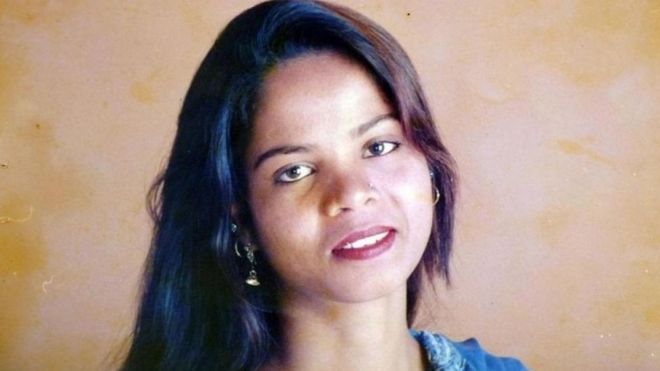
Asia Bibi, a Christian woman who spent eight years on death row in Pakistan for blasphemy, is expected to soon arrive in Canada after accepting an offer of asylum, says a source close to her family.The news comes as Pakistan's top court rejected a challenge to the acquittal of the mother-of-five on blasphemy charges, after she was accused of insulting the Prophet Muhammad.On Tuesday, the Supreme Court upheld its decision to overturn Asia Bibi's conviction and death sentence sparking fears of civil unrest which plagued her release last year.Wilson Chowdhry of the British Pakistani Association told HuffPost UK: "I can confirm that Asia Bibi will be flown out to Canada very, very soon and be joined in Canada by the rest of her family in due time."
He said Canadian diplomats are making the necessary arrangements and that Bibi "is looking forward to her new life in a new country."
It is hoped Bibi will join two of her daughters, who have already been secretly transported to Canada, Chowdhry said.
Security concerns are still paramount. Even in Canada, Asia's life is in potential danger.
Wilson Chowdhry, British Pakistani Association Canada's Global Affairs department would not confirm Chowdhry's update, but said that Bibi's case is a "priority" for the Canadian government.
"Canada is prepared to do everything we can to ensure the safety of Asia Bibi," Global Affairs Canada spokeswoman Brittany Fletcher said on Tuesday. "We urge the Government of Pakistan to take all necessary steps to keep her safe. Freedom of religion is a fundamental human right, and must be fully respected."
Speaking on background, officials told HuffPost Canada they are actively working to secure her release but won't confirm details due to safety concerns for Bibi and diplomats.
Chowdhry, a close friend of the Bibi family who travelled the world trying to secure her asylum, said Bibi was moving to a secret and "relatively remote" part of Canada.
"Security concerns are still paramount. Even in Canada, Asia's life is in potential danger."

'Canada is a welcoming country': Trudeau

Bibi, a farm labourer, was released from prison two months ago after Pakistan's highest court acquitted her in a landmark decision.
Last month, a delegation from the British Pakistani Christian Association visited Canada and garnered support from MPs there, who said they would welcome Asia and her family to the country.
The Trudeau government has the support of the opposition Conservatives, who have urged him to "use every mechanism at his disposal to offer the Bibi family asylum."
Last November, Trudeau told reporters in Paris: "There is a delicate domestic context that we respect which is why I don't want to say any more about that, but I will remind people Canada is a welcoming country."
Bibi spent years in solitary confinement after an argument with a group of Muslim women in June 2009, who accused her of insulting the Prophet Muhammad. But last fall, Pakistan's Supreme Court overturned her conviction, saying the case against her was based on flimsy evidence.
Her acquittal sparked violent protests across the country, led by Islamic religious hardliners from the extremist group Tehreek-e-Labbaik, whose leaders were later arrested and detained on terrorism and sedition charges.

'Safe and secret location'

Days after her release, Bibi's husband Ashiq Masih made an impassioned video plea to British Prime Minister Theresa May asking for asylum in the UK.
But her appeal for sanctuary was denied by the UK's home office because of fears British embassies and diplomatic staff would be targeted by Islamic extremists.
Several countries have reportedly offered Bibi asylum, including: France, Spain, Holland, Germany, Italy and Australia.
Chowdhry told HuffPost that Bibi and her family spent Christmas together in a "safe and secret location" with a core of "international diplomats" guarding her.

Asia Bibi victory draws praise, caution from advocates

    By Diana Chandler

    The acquittal of Asia Bibi, a Christian mother who escaped death from a disputed blasphemy conviction in Pakistan, has stirred optimism as a legal victory and caution over her safety.

    The Pakistan Supreme Court upheld Bibi’s acquittal Jan. 29. The three-judge panel ruled against Islamic extremists who challenged the court’s October decision to free Bibi.

“The verdict is a way forward, and it is positive,” NPR quoted Bibi’s attorney Saiful Malook as saying. “The judges raised pertinent legal questions, focusing on law and evidence, expressing displeasure over the perjury that was committed by the complainant against Asia and other witnesses.”
Bibi, who had lived in hiding in Islamabad since November, planned to travel to Canada to join family members already in Pakistan, a friend who requested anonymity told the Associated Press. She was convicted of blasphemy in 2010 and would have been the first woman executed under Pakistan’s blasphemy laws.
“I am really grateful to everybody,” the friend quoted Bibi as saying, the AP reported. “Now after nine years it is confirmed that I am free and I will be going to hug my daughters.”
As Muslim extremists continue to threaten Bibi’s life, her attorney and others are calling for the prosecution of those who falsely accused the 53-year-old mother of five in 2009. Other advocates urge protection of the 3.9 million Christians who live as minorities in Pakistan and for the protection of the Supreme Court justices who upheld Bibi’s freedom.
In advance of the verdict, hundreds to perhaps thousands of Muslim extremists who threatened Bibi and her supporters were jailed, according to varying reports, and remain in custody. Few protested after the latest ruling, according to reports. “The Supreme Court judges have given very clear observations on punishment for perjury,” Malook told Morning Star News. “Although there’s already a law against recording concocted testimonies, it’s important that the state implement it in letter and spirit to discourage people from leveling false allegations against others.”
Joseph Francis, a Christian politician and religious liberty advocate in Pakistan, voiced similar sentiment.
“This is a very good decision, but I think those who falsely implicated Bibi, wasting precious years of her life, should be prosecuted and sent to jail,” Francis, leader of the Pakistan Christian National Party, told AP. “Such a sentence will prevent others from falsely implicating innocent people in blasphemy cases.”
Bibi’s accusers should be jailed for life, were it not for the sensitivity of the case, Pakistan Supreme Court Chief Justice Asif Saeed Khan Khosa told AP. Two government leaders who advocated for Bibi’s release during her ordeal, federal minister for minority affairs Shabbaz Bhatti and Punjab governor Salmaan Taseer, were murdered in 2011 for supporting her.
“The image of Islam we are showing to the world gives me much grief and sorrow,” AP quoted Khosa as saying. More than 50 people accused of blasphemy have been killed by angry mobs and others in Pakistan, according to official counts.
Religious liberty advocate Amnesty International called for the court to be protected and urged the repeal of Pakistan’s blasphemy laws.
“This shameful delay in enforcing Asia Bibi’s rights only reinforces the need for the Pakistani government to repeal the blasphemy laws as soon as possible,” Amnesty’s South Asia representative Rimmel Mohydin said, “as well as other laws that discriminate against religious minorities and put their lives in danger.”
Pakistan has “a duty to protect against threats of violence to harm religious minorities or the lives of judges or other government officials,” Mohydin said in a Jan. 29 press statement.
While the verdict is good news, said International Christian Concern (ICC), Christians in Pakistan now suffer a heightened threat. “Our prayers now are with Asia and her family as they are in extreme danger until they are safely out of Pakistan,” ICC Regional Manager William Stark said in a press statement. “We are also very concerned for the safety of Pakistan’s Christian community at large. Asia’s case remains highly sensitive and the ignition point for many acts of religious hatred.”
Open Doors, which ranks Pakistan as the fifth most dangerous nation in the world for Christians, praised the verdict as a powerful message and upheld Bibi as a respected citizen among Christians.
“Bibi is a much loved and prayed for woman,” Open Doors quoted a partner in Pakistan as saying. “What happens to her impacts the whole Christian community.”
Bibi was sentenced to death by hanging in 2010 on charges of insulting the prophet Mohammad while working in a field as a day laborer in 2009. When Bibi offered a coworker a cup of water, the woman said Bibi’s Christianity made the water ceremonially unclean. This set off a chain of false accusations related to Bibi’s beliefs and backed by Muslim clerics. Bibi refused to convert to Islam. Since 1986 when Pakistan updated its blasphemy laws, at least 150 Christians, 564 Muslims, 459 Ahmadis and 21 Hindus have been jailed on blasphemy charges, according to Open Doors.
More than 40 people convicted of blasphemy are currently on death row or serving life sentences in Pakistan, according to the American Center for Law and Justice, which had advocated for Bibi’s release. Hundreds are serving or have served prison terms ranging from three years to 10 years.

https://www.brnow.org/News/January-2019/Asia-Bibi-victory-draws-praise-caution-from-advoc

#Pakistani school on lowest, Indian on top ranking in Dubai

Pakistani curriculum schools in Dubai are on the lowest categories while Indian curriculum schools are shining with top ranking in the latest report of schools’ inspection conducted by the government of Dubai.
One of the two Pakistani curriculum schools in Dubai has upgraded its ranking while the others’ standing declined in 2018-19, according to the schools’ inspection body of Dubai, Knowledge and Human Development Authority (KHDA).
Pakistan’s Shaikh Rashid Al Maktoum School in Dubai slightly improved its ranking from “weak” to “acceptable” after eight years, a report by the schools’ inspection regulator Knowledge and Human Development Authority (KHDA) revealed.Shaikh Rashid Al Maktoum School is the only Pakistani school in Dubai that is run by the government of Pakistan through its consulate in Dubai. While the ranking of another Pakistani-curriculum school Pakistan Education Academy went down from “acceptable” to “weak”. The ‘Pakistan Education Academy’ runs under private governing body.
The performance of the schools is divided in five categories (1) Outstanding (2) Very Good (3) Good (4) Acceptable and (5) Weak. Unfortunately, both Pakistani curriculum schools are in the last two categories, although, Shaikh Rashid Al Maktoum School has finally showed some upward trend after eight years of inspection.
On the other hand, total of 73 per cent students attending Indian-curriculum schools in Dubai are receiving 'good' quality of education or even better, according to the KHDA report.The 2018-2019 'Indian Curriculum Schools' report showed that 31 out of 35 Indian-curriculum schools were inspected by the KHDA. This year, 21 schools were rated 'good' or better, compared to 18 schools last year.
One school was rated 'outstanding', 15 were rated 'good', five were 'very good', nine were 'acceptable', and one was 'weak'. The KHDA report suggested the Pakistani curriculum schools to improve teaching standards provide a wider skill-base of governors and make them more accountable for the improvement in learning resources and school standards.

https://www.thenews.com.pk/print/425753-pakistani-school-on-lowest-indian-on-top-ranking-in-dubai

Wednesday, January 30, 2019

Video - What The Hell Is Going On With 'Global Waming?'

Video Report - Bernie Sanders' 'Medicare-for-all' plan may have a $1 trillion problem

Video Report - US lawmakers seek end to Washington involvement in Yemen war

Lawmakers look to block US support for Saudi-UAE war on Yemen


William Roberts
Legislators say the war was never approved by US Congress, argue US should halt its support for Saudi-UAE offensive.
A bipartisan group of US politicians pledged to advance legislation in Congress that would block further support by the American military for the Saudi-UAE war against Houthi rebels in Yemen.
The measure enjoys broad support among Democrats and a number of key Republicans, but would face a likely veto by President Donald Trump suggesting delays and high-level negotiations with the White House ahead.Public opinion in the US has turned against the war because of the humanitarian crisis in Yemen as well as the murder of Saudi writer Jamal Khashoggi.Politicians supporting the measure believe they can generate enough support in Congress to overturn a presidential veto which would force Trump to apply pressure on Riyadh.
"When Yemenis see 'Made in USA' on the bombs that are killing them, it tells them the United States of America is responsible for this war," Senator Bernie Sanders, a Vermont independent, told reporters at a Capitol Hill press conference.
"This is not a message the United States should be sending to the world. The United States should not be supporting a catastrophic war led by a despotic Saudi regime with a dangerous and irresponsible military policy."
A similar anti-war measure passed the Senate by a 56-41 margin in December as the prior session of Congress was winding down.
Advocates now plan to push the bill in the Democrat-controlled US House of Representatives to generate momentum for action in the Senate, where it must be approved again over likely opposition from Republican leaders."The preference is to start this in the House, get a big vote in the House and then bring it over to the Senate," Senator Chris Murphy, a Connecticut Democrat who has been a critic of the US role in Yemen, told Al Jazeera.
Unauthorised war
US military had provided crucial aerial refueling for Saudi-UAE jets that were also using US-made weapons to inflict devastating attacks on Yemen.On November 10, the US Defense Department said it was suspending aerial refueling and the US pressed Saudi Arabia to agree to a UN-brokered ceasefire.A US-based humanitarian group, International Rescue Committee, warned on January 30 that the ceasefire is breaking down as clashes between Houthi rebels and government forces increase.