Saturday, January 12, 2019

@rahaf84427714 - '#Rahaf al-Qunun is going to start a revolution': Teen's plight highlights #Saudi male guardianship

By Tyron Butson
Opposition to Saudi Arabia's male guardianship system has been highlighted by an 18-year-old Saudi woman's flight from her allegedly abusive family.
An 18-year-old Saudi woman's flight from her allegedly abusive family has rallied opposition to the kingdom's male guardianship system - with some activists predicting her story could inspire a "revolution" for women in the Muslim country.
Rahaf al-Qunun has now been granted asylum in Canada after fleeing her homeland, alleging she faced persecution and harm from her own family after renouncing Islam.
Some freedoms have been granted under Crown Prince Mohammed bin Salman, who ended a ban on women driving, eased restrictions on gender mixing, and championed firsts such as allowing women to serve in the armed forces.
But those changes have been accompanied by a crackdown on dissent, including the arrest and alleged torture of some of the activists who campaigned for decades to improve women's rights - as well as Muslim preachers who opposed them.
Many activists are calling for an end to the guardianship system, which has been chipped away at slowly over the years but remains in force.
Under the system, every Saudi women is assigned a male relative - often a father or husband but sometimes an uncle, brother or even a son - whose approval is needed if she is to marry, obtain a passport and travel abroad.
The plight of Ms Qunun, who slipped away from her family last weekend during a holiday in Kuwait, recalls the cases of other Saudi women who fled mistreatment only to be forcibly returned to the kingdom and never heard from again.
Amid global outrage at Saudi Arabia over last year's murder of journalist Jamal Khashoggi, Ms Qanun's tweets from Bangkok airport sparked an online campaign. She barricaded herself inside a hotel room for hours until the Thai government reversed its decision to send her home.

In some countries, her adult age would have prevented the authorities from telling her family anything about her.
In Saudi Arabia, her gender meant she was her father's ward.
"Remove guardianship and we won't all migrate" trended this week on Twitter in Saudi Arabia and across the globe, women have called for an end to the practice, using the #EndMaleGuardianship to share their stories.
Mai, who identified as a 36-year-old physician, said she was embarrassed to have two children and a degree from Harvard University but still be viewed as a minor.

"I am trusted to make life and death decisions for patients, trusted to raise kids ... but not trusted to make my own decisions regarding MY life. The irony! #EndMaleGuardianship," she tweeted.
Egyptian feminist activist and journalist Mona Eltahawy posted a video on Twitter declaring the incident would trigger change.
"Rahaf Mohammed al-Qanun – mark my words – is going to start a revolution in Saudi Arabia,” she said in the video.
"Go on social media now and watch accounts of so many young Saudis saying 'Rahaf, you’ve shown us that we can do this. Rahaf, you have shown us, that we deserve to be free'."
She said there were more than a dozen Saudi women in jail, imprisoned for challenging the guardianship laws.
"The 15-17 Saudi feminists in prison, being tortured, are the ones who will bring equal rights – it’s not a crown prince who has fooled the world," she said in an interview with DW News.
"And sadly, the world has bought his lies that he’s an emancipator of women."
Social media user Jawhrah said the message resonated with her. "Just hearing this breaks my heart," she wrote in a message posted on Twitter.
At the same time supporters of Ms Qunun take to Twitter to wish her well in her new life in Canada, trolls and supporters of the Saudi government have been using the #revealrahaf hashtag to discredit her as sexually promiscuous. However, #revealrahaf has become a virtual battlefield as supporters of the Saudi teen attempt to use the hashtag to drown out trolls.
The status of the guardianship system in law and custom makes it a thorny issue for Prince Mohammed bin Salman, who indicated last year he favoured ending the system but stopped short of endorsing its annulment. "If I say yes to this question, that means I'm creating problems for the families that don't want to give freedom for their daughters," he told US magazine The Atlantic. Without a codified system of law to go with the texts making up sharia, or Islamic law, the Saudi police and judiciary have long cited social customs in enforcing certain prohibitions on women. Many aspects of guardianship stem from informal practice rather than specific laws.
Saudi Arabia, one of the world's most gender-segregated nations, is ranked 138 of 144 states in the 2017 Global Gender Gap, a World Economic Forum study on how women fare in economic and political participation, health and education.
Activists launched the "I Am My Own Guardian" campaign in 2016 demanding legal representation. King Salman issued an order the following year allowing women to benefit from services such as education and healthcare without the consent of a male guardian, though rights groups say this is being implemented only on a limited basis.Other challenges remain. There is no formal bar on women buying or renting property but it can be difficult for them to do so without a male relative, according to rights groups. Authorities have removed restrictions on women in the labour code and ended formal requirements for them to obtain a guardian's permission to work, but some employers still demand this and are not penalised for doing so.
Mohammed al-Issa, a former justice minister who sits on the kingdom's top clerical body, told Reuters last year there was no reason why women should be barred from obtaining a passport or travelling without the consent of a male guardian, but it may take time for society to accept that. Some Saudi women do not want to wait. "We have the right (to) be treated as adults since we're above 18 years," a woman named Fatin wrote online. "This guardianship is no more than modern enslavement system!"
 https://www.sbs.com.au/news/rahaf-al-qunun-is-going-to-start-a-revolution-teen-s-plight-highlights-saudi-male-guardianship

Music Video - Laila Khan - Naina Naina

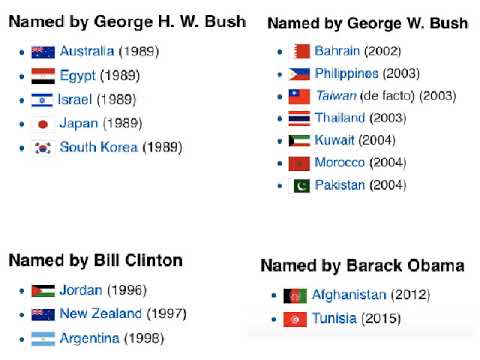
Bill to terminate Pakistan designation as major non-NATO ally introduced in Congress


Introduced by Republican Congressman Andy Briggs, the resolution 73, introduced in the House of Representatives, seeks termination of Pakistan as a major non-NATO ally and also sets conditions for its re-designation if any.

An influential U.S. lawmaker has introduced a legislation in Congress to terminate the designation of Pakistan as a major non-NATO ally.
Introduced by Republican Congressman Andy Briggs, the resolution 73, introduced in the House of Representatives, seeks termination of Pakistan as a major non-NATO ally and also sets conditions for its re-designation if any.
The resolution has been sent to the House Foreign Affairs Committee for necessary action.
It states, for future redesignation, the U.S. President need to certify to the Congress that Pakistan continues to conduct military operations that are contributing to significantly disrupting the safe haven and freedom of movement of the Haqqani Network in that country.
It also seeks certification from the Congress that Pakistan has taken steps to demonstrate its commitment to prevent the Haqqani Network from using any Pakistani territory as a safe haven and that the Government of Pakistan actively coordinates with the Government of Afghanistan to restrict the movement of militants, such as the Haqqani Network, along the Afghanistan-Pakistan border.
The resolution asks the President to certify that Pakistan has shown progress in arresting and prosecuting Haqqani Network senior leaders and mid-level operatives.

Pakistan journalist in exile fears he’ll meet Khashoggi’s fate if he returns home


Taha Siddiqui narrowly escaped an abduction attempt last year. Living in Paris in self-imposed exile, he now fears assassination if he returns to Pakistan.
New Delhi: Pakistani journalist Taha Siddiqui who fled the country last year after narrowly escaping an abduction attempt by unidentified armed men now fears that he will be assassinated if he returns to his country.
Speaking to ThePrint, Siddiqui, the journalist and activist who lives with his wife and son in Paris in a self-imposed exile, said that “journalists are being silenced by repressive regimes like that in Pakistan”.
In a piece he wrote for The Washington Post Tuesday, Siddiqui revealed that US intelligence officials informed him about an assassination attempt against him if he returned to Pakistan.
He has been asked to refrain from visiting any Pakistan embassies across the world and even avoid going to “Pakistani-friendly countries”.
Asked about why he wrote the piece and if he feared he’ll end up in a situation similar to slain Saudi journalist Jamal Khashoggi, Siddiqui said, “I’m afraid. But it is not just about me anymore. This is about how journalists are being silenced by repressive regimes like that in Pakistan.
“I am just one of the many who live in such constant threats and we need to highlight this more, given that it seems (Saudi Arabia Crown Prince) Mohammed Bin Salman, who is behind the murder of Khashoggi, may just get away with it and others may feel emboldened to do the same, following his path,” he added.
Khashoggi, a critic of the Saudi regime, was killed in Istanbul on 2 October 2018. The Central Intelligence Agency of the US believes that Salman oversaw the 15-member hit team that awaited Khashoggi at the Saudi Consulate in Istanbul where he was killed.

Threat from Pakistani Army

Siddiqui, who has often criticised the Pakistan military and accused it of playing a role in silencing journalists in the country, told ThePrint that the army has threatened him directly for many years.
He said the men who tried to abduct him in January last year were shouting phrases such as “What do you think of yourself?”
“It’s not just the ISI (Pakistan’s Inter-Services Intelligence). It is the Pakistan Army, which is known to abduct, torture and kill those who challenge it,” said Siddiqui.
Asked if he would return to Pakistan, Siddqui said he won’t. He mentioned the fact that the current spokesperson of the Pakistani Army’ Asif Ghafoor had “publicly tweeted inviting me back home”.
Siddiqui asserted now that he has the US intelligence report, he knows that the Pakistani Army was “setting a trap” for him.
“So I’m better off abroad from where I will continue to raise the voice for those Pakistanis who cannot do the same back home,” he added.

Work at the moment

Currently working on a book on Pakistan, Siddiqui said that despite taking up several freelancing projects, “things are difficult” monetarily.
After founding a digital platform called Safe Newsrooms, Siddiqui now plans to launch a crowd-funding initiative this year to support him in managing the agency and sustain himself.
Siddiqui has also started work in consultancy, and began teaching journalism this month at Paris’s Sciences Po, a leading university in France.

بلاول بھٹو کا عمران خان کو سیاست سیکھنے کا مشورہ

پیپلز پارٹی کے چیئرمین بلاول بھٹو زرداری نے وزیراعظم
عمران خان کو سیاست کے اصول سیکھنے کا مشورہ دے دیا اور کہا کہ خان صاحب نے جتنے دعویٰ کئے وہ سب فراڈ نکلے،افلاطونی حکومت کو آج تک پتہ نہیں چلا کہ ڈالر کی قیمت کیوں بڑھی۔
کوٹری میں جلسے سے خطاب میں بلاول بھٹو نے کہا کہ کرکٹ میں امپائر کی انگلی اور سیاست میں عوام کی مرضی چلتی ہے، خان صاحب اصولوں کی سیاست سے پہلے سیاست کے اصول تو سیکھیں
ان کا کہنا تھا کہ ہم جعلی جھوٹی جے آئی ٹی رپورٹ کو نہیں مانتے، انتقامی سیاست کا مقابلہ کریں گے،ای سی ایل، نیب اور جیل کی دھمکیوں سے نہیں ڈرتے،تم تو کٹھ پتلی ہو، بے نامی وزیراعظم ہو۔
بلاول بھٹو نے مزید کہا کہ سندھ کی بجلی،پانی اور گیس تک بند ہے،صرف اس لئے کہ یہاں کے عوام کٹھ پتلیوں کو ووٹ نہیں دیا، حکومت کے سبز باغ عوام کےلئے کانٹوں کا ہار بن گئے۔
ان کا کہنا تھا کہ حکومت کوپگڑیاں اچھالنے کے علاوہ کچھ نہیں آتا، ہمارے صبر کا امتحان نہیں لیں،انتقامی سیاست کا مقابلہ کریں گے۔
پی پی چیئرمین نے کہا کہ پی ٹی آئی کو حکومت صرف دھاندلی کی وجہ سے ملی ہے،ایک نااہل وفاقی حکومت سندھ اور عوام سے سوتیلا سلوک کرنے پر ڈٹی ہوئی ہے، عوام کو پیپلز پارٹی کو ووٹ دینے کی سزا دی جارہی ہے۔
انہوں نے یہ بھی کہاکہ آپ نے اصولوں کی سیاست کا دھوکا دے کر عوام کے ووٹ چوری کرلیے،آپ نے اقتدار تو حاصل کرلیا، لیکن قوم کا وقار قائم نہ رکھ سکے۔
پی پی چیئرمین کا کہنا تھا کہ آپ اور آپ کے لاڈلوں نے حکومت تو حاصل کی لیکن وعدوں کی پاسداری نہ کرسکے، عوام مہنگائی کی سونامی میں ڈوب رہے ہیں،50 لاکھ گھر دینے والوں نے لوگوں کے سروں سے چھت بھی چھین لی۔
بلاول بھٹو نے کہا کہ مہنگائی کا طوفان پورے ملک کو اپنی لپیٹ میں لے چکا ہے، حکومتی وزیروں کی دیدہ دلیری دیکھیں، وہ کہہ رہے ہيں مہنگائی کم ہوئی ہے،آپ کی آنکھوں پر غرور کی پٹی ہے، دماغ طاقت کے نشے میں ہے،آپ کا دل بے حسی سے پتھر ہوچکا ہے۔
انہوں نے مزید کہا کہ سندھ کے عوام کو دیوار سے کیوں لگایا جارہا ہے،سندھ کےعوام کو صرف اس لیے سزا دی جارہی ہے کہ وہ بھٹو شہید سے وفاداری کرتےہیں ۔
پی پی چیئرمین نے کہا کہ اگر عوام نے اسلام آباد پر چڑھائی کا فیصلہ کرلیا تو تمہاری جعلی حکومت کے تابوت میں آخری کیل ٹھونک دیں گے،تم ہمارے صبر کا امتحان مت لو، تم سے پہلے بھی بہت فرعون آئے، ان کے انجام سے سبق سیکھو۔
پیپلز پارٹی کےجیالوں کو مت للکارو،زہریلی زبان سے عوام کے زخموں پر مرہم نہیں رکھا جاسکتا،افلاطونی حکومت کو آج تک پتہ نہیں چلا کہ ڈالر کی قیمت کیوں بڑھی،انڈوں اور مرغیوں سے فارن ایکس چینج ریزرو بنانے والی حکومت کو پتہ نہیں چل سکا کہ ایک دن میں 500 ارب کا قرضہ کیسے بڑھا۔
https://jang.com.pk/news/597356-bilawal-bhutto-advises-to-pm-imran-khan-first-learn-politics

Video - #PPP Chairman Bilawal Bhutto Zardari's Speech in Kotri - 12 Jan 2019

Video - #Canada - 'This is a brave new Canadian': Canada welcomes Rahaf Alqunun

Rahaf Alqunun, the 18-year-old Saudi woman who fled her family saying she feared for her life, has landed in Canada, after being granted asylum in the North American country.
Alqunun was welcomed by Canada's Foreign Minister Chrystia Freeland at Toronto's airport on Saturday.
"This is a very brave new Canadian," Freeland told reporters, with Alqunun standing by her side.

Bill to terminate Pakistan's designation as major non-NATO ally introduced in Congress

An influential US lawmaker has introduced a legislation in Congress to terminate the designation of Pakistan as a major non-NATO ally. 

Introduced by Republican Congressman Andy Briggs, the resolution 73, introduced in the House of Representatives, seeks termination of Pakistan as a major non-NATO ally and also sets conditions for its re-designation if any. 

The resolution has been sent to the House Foreign Affairs Committee for necessary action. 

https://economictimes.indiatimes.com/news/defence/bill-to-terminate-pakistans-designation-as-major-non-nato-ally-introduced-in-congress/articleshow/67498052.cms

US report speaks of drug-resistant typhoid cases in Pakistan


There has been an outbreak of an extensively drug-resistant Salmonella Typhi in Pakistan where 5,372 cases of this typhoid fever were reported between 2016 and 2018, says an official US report.
Most of the cases were reported from Karachi and Hyderabad, warned the US Centre for Disease Control and Prevention (CDC) in its “Morbidity and Mortality” report.
The CDC researchers warn that the outbreak in Pakistan involves a Salmonella enterica serotype Typhi strain that is resistant to most antibiotics commonly used to treat the illness.
The report notes that 29 patients were diagnosed in the US with typhoid fever and all of them had travelled to or from Pakistan from 2016 to 2018.


The patients include five children with extensively drug-resistant infections. At least one travel-associated case was reported from the United Kingdom.
Comparing this to the 2006-15 period, the report points out that 79 per cent of US travellers to Pakistan who returned with typhoid fever during that period responded to therapeutic antibiotics.The report — “Emergence of Extensively Drug-Resistant Salmonella Typhi Infections Among Travellers to or from Pakistan” — that between November 2016 and September 2017, 339 cases of this extensively drug-resistant Typhi strain were reported in Pakistan, mostly in Karachi and Hyderabad. But the number of cases rapidly increased to 5,372 by the end of 2018.The disease is resistant to most therapeutic antibiotics, such as chloramphenicol, ampicillin, trimethoprim-sulfamethoxazole, fluoroquinolones, and third-generation cephalosporins.
But it can be cured with azithromycin and carbapenems. Carbapenems are a class of highly effective antibiotic agents commonly used for the treatment of severe or high-risk bacterial infections.
Researchers say that vaccination can help prevent typhoid fever but warn that common therapeutic antibiotics, such as fluoroquinolones, should not be used for empiric treatment of typhoid fever patients.Instead, Azithromycin should be used to treat patients with suspected uncomplicated typhoid fever and carbapenems for patients with suspected severe or complicated typhoid fever.The signs of complications include encephalopathy, which impacts the functioning of the brain, intestinal perforation, peritonitis, intestinal hemorrhage, or bacteremia with sepsis or shock.The report also warns against the spread of the drug-resistant Typhi strain to neighbouring countries such as India. It notes that returning travellers from India typically account for 57 per cent to 69 per cent of typhoid fever cases reported to CDC.
Since a large number of people travel between the United States and South Asia, the US Department of Health regularly monitors outbreaks of various diseases in the region. Air travel monitors reported an estimated 2.4 million trips from the United States to India and 250,000 trips to Pakistan in 2017.

Managing Minefields: Saudi/UAE Aid Puts Pakistan-Iran Relations On The Spot – Analysis


By James M. Dorsey
 Pakistan is traversing minefields as it concludes agreements on investment, balance of payments support and delayed payment oil deliveries with Saudi Arabia and the United Arab Emirates worth USD$13 billion that are likely to fawn growing distrust in its relations with neighbouring Iran.
Pakistani prime minister Imran Khan expects to next month sign a memorandum of understanding with Saudi Arabia on a framework for US$ 10 billion in Saudi investments, primarily in oil refining, petrochemicals, renewable energy and mining. The signing would take place during a planned visit to Pakistan by Saudi crown prince Mohammed bin Salman.
The memorandum follows the kingdom’s rewarding of Mr. Khan for his attendance of a foreign investors summit in Riyadh in October that was shunned by numerous CEOs of Western financial institutions, tech entrepreneurs and media moguls as well as senior Western government officials because of the killing of journalist Jamal Khashoggi in the Saudi consulate in Istanbul.
The United Arab Emirates is expected to conclude similar agreements with Pakistan in the coming weeks.
Perhaps the most sensitive investment is likely to be a plan by Saudi national oil company Aramco to build a refinery in the Chinese-backed Baloch port of Gwadar close to both Pakistan’s border with Iran and the Indian-backed Iranian 486-hectar port of Chabahar. Both Pakistan and Saudi Arabia are monitoring progress in Chabahar with Argus eyes.
A potential Saudi investment in troubled Balochistan’s Reko Diq copper and gold mine would further enhance the kingdom’s foothold in the strategic province.
As always, the devil could be in the details of the Pakistani-Saudi investment agreement. Haroon Sharif, the chairman of Pakistan’s Board of Investment, cautioned that foreign investment would require a “better law and order situation and ease-of-doing-business opportunities.”
Pakistan’s security situation has somewhat improved in the last year, but the country continues to risk blacklisting by the Financial Action Task Force (FATF), an international anti-money laundering and terrorism finance watchdog because of the Pakistani military’s selective support of militants and close ties between militants and political parties, including Mr. Khan’s Pakistan Tehreek-e-Insaf (PTI).
Adding an additional layer of complexity is the fact that funds from the kingdom have been flowing into the coffers of ultra-conservative anti-Shiite, anti-Iranian Sunni Muslim madrassahs or religious seminars in Balochistan. It was unclear whether the funds originated with the Saudi government or Saudi nationals of Baloch descent and members of the two million-strong Pakistani Diaspora in the kingdom. 
Saudi Arabia sees the Pakistani region as a launching pad of a potential effort by the kingdom and/or the United States to destabilize the Islamic republic by stirring unrest among its ethnic minorities, including the Baluch. While Saudi Arabia has put the building blocks in place for possible covert action, it has to date given no indication that it intends to act on proposals to support irredentist action.
The flow of funds coincided with the publication in November 2017 of a study by the International Institute for Iranian Studies, formerly known as the Arabian Gulf Centre for Iranian Studies, a Saudi government-backed think tank, that argued that Chabahar posed “a direct threat to the Arab Gulf states” that called for “immediate counter measures.”
Iran’s Revolutionary Guards were the target of a rare suicide bombing in December in the port city that killed two people and wounded 40 others.
Iranian officials, including Foreign Minister Mohammad Javad Zarif and Revolutionary Guards spokesman Brigadier General Ramadan Sharif suggested without providing evidence that Saudi Arabia was complicit in the attack.
The attack “underscores the anti-regime sentiment boiling under the surface in provinces such as Sistan and Baluchestan and Khuzestan, as well as security vulnerabilities in Chabahar and beyond,” said Brian M. Perkins, a risk management consultant and former US Navy signals intelligence analyst.
Khuzestan is Iran’s impoverished, oil-rich province that is home to the country’s ethnic Arab community while Chabahar is located in the Iranian province of Sistan and Baluchistan that boasts the country’s highest unemployment rate.
Saudi thinking about stoking unrest strokes with that of President Donald J. Trump’s national security advisor John Bolton, who before assuming office, publicly advocated destabilization of Iran.
Mr. Bolton, in a policy speech in Cairo, asserted this week that the United States had “joined the Iranian people in calling for freedom and accountability… America’s economic sanctions against the (Iranian) regime are the strongest in history, and will keep getting tougher until Iran starts behaving like a normal country.”
Mr. Bolton was referring to harsh US sanctions imposed after Mr. Trump last year withdrew the United States from a 2015 international agreement that curbed Iran’s nuclear program.
Desperately in need of financial support and investment, Pakistan’s agreements with Saudi Arabia and the UAE come at a moment that “Pakistan-Iran relations are at a crossroads, according to Muhammad Akbar Notezai, Dawn newspaper’s plugged in Balochistan correspondent.
A far cry from four years ago when the Pakistani parliament refused a Saudi request that Pakistani troops join the kingdom’s ill-fated military intervention in Yemen, Iran now sees Pakistan as a Saudi ally in the kingdom’s rivalry with Iran.
Similarly, Pakistan fears that Chabahar will allow India to bypass Pakistan in forging closer economic and political ties with Iran as well as Afghanistan and Central Asian nations. Pakistani analysts expect an estimated US$ 5 billion in Afghan trade to flow through Chabahar after India last month started handling the port’s operations.
Pakistan is further concerned that Iran, in response to the Saudi funding that its sees as part of an anti-Iranian US-Saudi plot, could step up support for Baloch nationalists in a bid to raise the stakes for the South Asian nation.
Pakistan is also worried that deteriorating Pakistani-Iranian relations offers India an opportunity to subvert the US$45 billion plus China Pakistan Economic Corridor (CPEC), a crown jewel of the People’s Republic’s Belt and Road initiative.
In November, the nationalist Baloch Liberation Army claimed responsibility for an attack on the Chinese consulate in Karachi, Pakistan’s commercial and industrial heartland.
Writing in the Pakistan Security Report 2018, published by the Islamabad-based Pak Institute for Peace Studies (PIPS), Mr. Notezai noted that “to many in Pakistan, such concerns were materialized with the arrest of Kulbushan Jadhav, an Indian spy in Balochistan who had come through Iran. Ever since, Pakistani intelligence agencies have been on extra-alert on its border with Iran.”
The journalist warned that “the more Pakistan slips into the Saudi orbit, the more its relations with Iran will worsen… If their borders remain troubled, anyone can fish in the troubled water. This is what is (already) happening in the border region.”

Why Is China Vulnerable to Terrorism in Pakistan?
