Saturday, December 15, 2018

#Bangladesh - The end of the Liberation War '71: Road to Dhaka


The misty days of winter 1971 were full of surprises and excitement for me. I was a young lieutenant in the Bangladesh Army, and was asked to work as adjutant of the 2nd East Bengal Regiment which I rejected, saying, “I have left the medical profession to fight and drive out the invaders; sitting behind a table is not the job I want.”
I was then posted as company officer of the regiment, and to my surprise, was selected to receive the operation order for my brigade from the Eastern Command Headquarters at Agartala.
I received the order on November 27 from representatives of the Indian GOC (General Officer Commanding) at their headquarters in Agartala. Around 8 pm that night, officers were sitting around a big dinner table. They had just finished their dinner, and were welcoming me with great enthusiasm. They said, “Young man, you are the lucky chap who will receive something valuable from us. Have dinner, we have just finished.”
I was offered chapatis and dal with ghee. I felt overwhelmed to have received such warm welcome from the topmost officers of the Indian Headquarters. The attentiveness and enthusiasm of Brigadier Mishra was extraordinary. The words that were spoken there decided my future.
Me and my company were selected to enter Bangladesh first, on the night of November 29. But as there were severe casualties—deaths and injuries of a number of soldiers—before we launched the attack, we had to abandon the original plan.
I was thrown into a ditch by an airburst shell along with branches of a mango tree. Luckily, I was not killed nor injured. We had to postpone the plan for several hours to muster our courage and organise the shattered company.
I assumed the full responsibility of leading the Vanguard Company across a six-mile minefield. The final attack took place on the night of November 30. It was a foggy night. Dense mist was clinging to the ground, parts of the sky and the full moon. We started creeping forward through paddy fields using metal items to search, detect and deactivate any mines. It was a real test of our nerves. I had to replace soldiers who showed any sign of weakness or shakiness with those who were bold and full of raw courage. Subedar Sultan of Bashkhali was helping me.
It was my CO (Commanding Officer) who trusted me to take command and carry out the Operation “Nut Crack” (General Moinul Hossain Chowdhury, Ek General Er Nirob Smriti Kahini).
It was a unique opportunity for me to prove my courage and authority. I was supposed to get to Azimpur Railway Station and dig fox holes to ensure frontline position and order artillery attack by giving the code “Dhamaka”.
Once I assured my flank position, including the deployment of fellow companies and enemy position, I was ready to attack. The “H” hour was at 01:00 hr. Once preparations were complete, I ordered my boys and gunners, as well as the artillery unit of the 57 Mountain Division and our Mujib Battery, to shell all fortified bunkers and tank positions of the Pakistani Army. As soon as I uttered “Dhamaka”, the artillery barrage of 80-pound shells started.
The shelling was supposed to continue for an hour, but sensing hard resistance and the towering defence of the enemy army, I ordered it to continue for hours. When I was sure it was a success, I again uttered “Dhamaka” at 4 am, signalling our forces to stop the barrage and allow us to advance and charge the enemy in their bunkers.
We did intensify our attack at 5 am when darkness faded away. Unfortunately, some concrete bunkers at remote corners which we had missed and our reconnaissance team hadn't noticed were becoming a threat—the enemy was trying to target us with heavy machine guns and rocket launchers.
We were failing to quell and silence them as our approach to the road were heavily mined. Meanwhile, a few of our brave soldiers led by Subedar Sultan started to engage the enemy in hand-to-hand combat in their crushed bunkers.
The intense battle in built-up areas reminded me of the fierce assault on French soil recapitulated by Van Romel in his famous book, The Attack.
It lasted for nearly two hours. We had to withdraw from the frontline bunkers as the mist grew denser, worsening visibility.
I was adamant to continue the assault, ignoring my loyal subedar's advice to stop.
At last, an airburst shell which missed my head by a few inches stopped me from firing. By then, some of my soldiers and the flank led by Captain Matiur Rahman had retreated to safer locations. But that did not deter me, neither was I daunted.
But when my Subedar warned me saying, “our first line led by company commander Lieutenant Ibrahim has withdrawn”, I was at a loss. We had to withdraw a bit and wait for the sun to clear away the mist.
We intensified our attack near Azimpur with the help of the Indian Army and also secured our back with support from Captain Matin leading the Mujahid.
Meanwhile, the PAF sabor started strapping and bombing the Pakistani tanks that were moving towards our front—but a counter-attack by the Indian Air Force and RR shots halted their advance for good.
The air attack of the enemy forces continued till December 4 when Lieutenant Badi commanding “B” company was martyred in his bunker. He, and a few of his soldiers, including one Subedar (Sub. Ashraf 32) lost their facial bones and parts of their chests.
That did not stop our attack and waves of offences. Lieutenant Selim, my brother, took over Badi's position. He played a vital role in our attack leading to our victory. He kept the blood-soaked watch of Badi near his heart and vowed to take revenge for his death.
On the evening of December 5, a temporary “lull” set in the Eastern Front, especially when Brigadier Sadullah—the leader of the opposition—retreated to Brahmanbaria.
On the 6th, it was all quiet on the Eastern Front—we could hear the voice of migrant eagles piercing the blue sky.
That morning, we packed up and ran fast to reach Brahmanbaria and Ashuganj. On our way back to Dhaka, Brigadier Shafiullah (later General), CO of the 11th Bengal, came under attack by the retreating Baluch and FF forces from Sylhet.
We had some exchange of fire with them before we reached Ashuganj. We carefully bypassed the Pakistani deployment at Ashuganj near the end of Bhairab Bridge which was being guarded by the 10th Bihar of the Indian Army.
At the end, we (2nd E. Bengal) reached Demra on December 13. Again it was my luck that I was allowed by my CO to lead an attack on Gulshan via Badda. One person called Anis and two other workers of Kowloon restaurant residing in Badda helped me as guides to cross the unknown wet land. One hour after midnight on the 14th, I reached Gulshan firing mortars and machineguns. I had to withdraw as Brigadier Mishra asked my CO to call me back. My adamant CO again sent me  to quell the enemy on the night of the 15th and to make for us an alternative pathway via Gulshan.
When we reached Dhaka crossing Demra, Pagla and Shanir Akhra, it was almost evening—darkness crept into the grasses and ceramic gardens. The sky was illuminated with tracers and Berry lights.
Some untoward incidents happened because of the trigger happiness of some fighters—including the death of an eleven-year-old boy called Iqbal in an officer's quarter in Eskaton.
Our soldiers took refuge in Dhaka stadium that night. Some of our boys slept in the alleys of the stadium market and I had my position at the first floor of the tailor's shop “The Rajjak”. Me and my CO Captain Matiur Rahman slept on the floor having put down some dark coloured suit pieces.
Next morning, we woke up hearing volleys of fire from a few Pakistani soldiers taking position at the top of the gallery. My brave brother Shaheed Lieutenant Selim silenced them with admirable marksmanship.
My mother was longing to see us—so my brother tried to locate my wandering family haunted by threats of the Pakistan Army.
But I did not have that chance as the heavy responsibility of looking after my soldiers circumvented my emotional drive. We moved to Gymkhana club at Racecourse to mark it as the first Rendezvous of 2nd Bengal in a free land.
We were welcomed by the waving green-and-red flag of a newly independent country, along with the chilling breeze of mid-December.

Video - Asif Ali Zardari Speech at PPP jalsa in Hyderabad | 15 December 2018

#AsifAliZardari - ‘Those with three-year tenures’ cannot decide for the nation, says Zardari

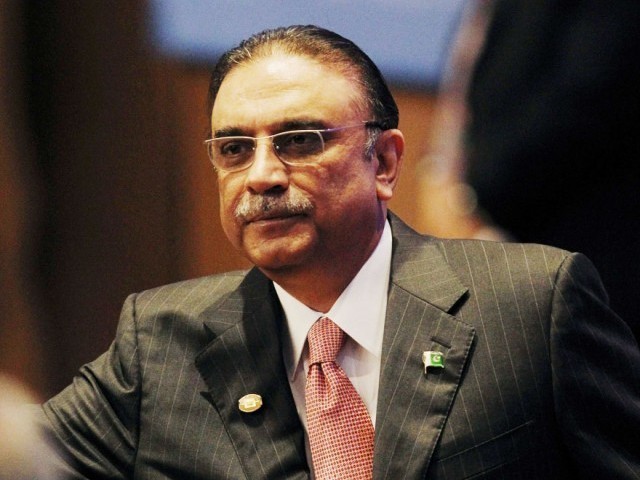
Pakistan People’s Party (PPP) co-chairman Asif Ali Zardari on Saturday said only parliament can take decisions for the nation, and that “individuals with three-year terms” have no right to do so.

“What right does an individual, who has a tenure of three years, to make decisions about my nation?” the PPP-co-chairman questioned, while addressing a public gathering here.

“Only parliament has this right and no one else.”
Without naming anyone, he said they keep visiting different places, questioning, “What do you have to do [with them]?
“There have been 900,000 case pending in courts, you should look into those,” Zardari said.
“You have no future, why do you decide about the future of things? I say it even today that one should act remaining with legal and constitutional bounds.”
He said only parliament has the right to make decisions about the nation. “It was better that transparent elections were allowed to be held and political parties could have formed a government through consensus.”
Criticising the government, he said that government functionaries say 100 days were less for them and what could they do such a short period.
“We got rid of Musharraf in 100 days, we got Swat freed in 100 days,” the PPP co-chairman noted, recalling his party’s tenure in the centre.
He said only a party of the masses could understand their needs and problems, not the “parties that are made.”
Zardari said if he could run a government in a good way then it did not imply he could also play good cricket.
“I don’t know how to play cricket. I know politics and I can do that,” he said. “Politics is when Musharraf reached home and said ‘I don’t know what happened and how it happened’.”
He suggested the government to provide opportunities to local businessmen and facilitate stock exchange, adding, “Only technology and experts should be invited from abroad.”
http://www.thesindhtimes.com/sindh/three-year-tenures-cannot-decide-nation-says-zardari/

#APSPeshawar - #APS murderer is state guest while victims await justice, says Asfandyar


Awami National Party (ANP) president Asfandyar Wali Khan has said the wounds of the Army Public School (APS) tragedy were not healed despite the passage of four years and the nation was still mourning the loss of precious lives.
“The murderer of innocent children is now a state guest while the victims still await justice,” he said referring to Ehsanullah Ehsan, the former spokesperson of Tehreek-e-Taliban Pakistan (TTP) who is currently in custody of law enforcers.
“The real motives behind the tragedy are yet to be brought to fore,” he said in a message on the eve of fourth anniversary of the APS attack that killed around 150 people, mostly schoolchildren. The former TTP spokesperson, who was also a top leader of its Jamaat-ul-Ahrar faction, surrendered to the security forces in April, 2017. Later, a petition was filed by Fazal Khan, father of an APS student through Barrister Amirullah Chamkani, highlighting that Ehsan had been under custody for a long time but not presented before any trial court. In April this year, the Peshawar High Court (PHC) had directed the federal government not to grant clemency to Ehsan. PHC orders govt not to grant clemency to TTP man In his statement today, the ANP chief said that the APS attackers were not even worthy of being called humans. He said that until and unless the terrorist sanctuaries are eliminated, peace and progress cannot be ensured in the country. Asfandyar also urged the authorities to address the issue of terrorism and extremism with honesty and sincerity and protect the future of the country from being ruined.
“Had the criminals been traced and punished, attacks like the ones in Mardan, Charsadda, Quetta and Peshawar Agriculture University would have been prevented,” said the ANP leader. He maintained that hearts and minds of those who devised the National Action Plan (NAP) did not feel pity for wailing parents of the APS victims.Despite the formation of a judicial commission after a lapse of four years, he expressed the hope that the commission’s findings will serve to heal wounds of the martyrs’ families. He called for the state to address all reservations of the heirs of the victims and accept their demands.
The ANP chief claimed that the banned outfits were active in the federal capital while the facilitators and helpers of the terrorists were not only roaming across the country armed with weapons but also taking part in national politics. “Until the policies of good and bad are shunned and maintaining peace becomes the top priority, incidents such as the APS tragedy will keep occurring,” he remarked.
Asfandyar, the son of Wali Khan and grandson of Bacha Khan, maintained that the entire world was in need of applying the philosophy of his grandfather for restoring peace. He claimed that top terrorists were still present in Punjab province, where they collect funds from the platform of banned sectarian outfits to commit acts of terrorism.
“Only a few points of the NAP were implemented while majority of these remained untouched,” he said while holding the federal and provincial governments responsible for the plan’s failure.
“An atmosphere of confidence is building up and if advantage is not taken of the situation then even a larger threat than al Qaeda in the shape of Daesh will confront us. The Islamic State is being funded by 40 countries,” he said.
Asfandyar said that questions on the Haqqani network are yet to be answered and the rulers will have to clarify their position on the issue.

#APSPeshawar - Homage to the martyrs of APS Peshawar: #AsifAliZardari - Former President deplores non implementation of National Action Plan

“On this day four years ago the young students, the teachers and staff of the Army Public School Peshawar bore the brunt of the tyrants and religious fanatics and shed their blood that brought the entire nation together to resolve to fight the extremists to the finish. All those who were martyred in the gruesome attack on APS that day are national heroes and heroines and while we salute them we also pledge that their sacrifices will not go in vain”.
In a message on the fourth anniversary of the attack on APS the former President also deplored that the National Action Plan (NAP) devised to root out terrorism to avenge the blood of the martyrs had not been implemented in letter and spirit.
Failure in implementing the NAP amounts to rejecting the sacrifices of countless shuhada of the armed forces, the para-military forces, the police and the civilians in the fight against militancy and extremism, he said.
On this day we also call for bringing all perpetrators of the heinous crime to justice and accountability of those who have failed in implementation of the NAP, he said.
The former President lamented that banned militant organizations had resurrected under different names behind the façade of charity work. FATA reforms promised in the NAP was thrown to the wind as the proposed Bill was mysteriously withdrawn from the Agenda of the National Assembly without any reason a few days ago.
Zardari demanded the government to bring up immediately before the Parliament the FATA Reforms Bill that paves way for merger of tribal areas with t

https://mediacellppp.wordpress.com/2018/12/15/homage-to-the-martyrs-of-aps-peshawar-former-president-deplores-non-implementation-of-national-action-plan-2/

#APSPeshawar - Bilawal Bhutto’s message on the occasion of 4th martyrdom day anniversary of APS Peshawar students and teachers

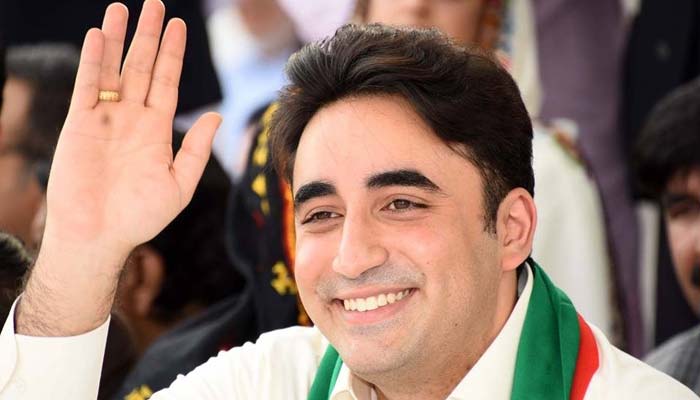
Chairman Pakistan Peoples Party Bilawal Bhutto Zardari has said that blood of innocent children of APS Peshawar shall continue to shake conscience of entire nation until the monster terrorism together with sponsors and facilitators are completely wiped out from the country.
In his message on the occasion of 4th martyrdom day anniversary of APS Peshawar students and teachers, the PPP Chairman said that the terrorists had made the whole country as well as the world to weep on this day four years ago through their ghastly attack on the innocent children. “Pakistan and its people continue to grieve and we stand by the bereaved parents and families in solidarity even today,” he added.
Bilawal Bhutto Zardari further said that extremism and terrorism are worst enemies of the state and the people of Pakistan and any overt or covert leniency to them by any individual or groups won’t be tolerated by the nation.
PPP Chairman pledged that his Party would continue to lead the resistance against terrorism despite being the worst victim and target of the terrorists adding that his stance against the blood-thirsty beasts have finally been adopted by everyone in the country.
Bilawal Bhutto Zardari paid tributes to the victims of APS Peshawar school and urged Party leaders to visit their families to express complete solidarity with them.
https://mediacellppp.wordpress.com/2018/12/15/bilawal-bhutto-zardaris-message-on-the-occasion-of-4th-martyrdom-day-anniversary-of-aps-peshawar-students-and-teachers/

Friday, December 14, 2018

Video Report - #Yemen #PeaceTalks Thousands of starving children's lives at stake in Yemen peace talks

Video Report - 🇺🇸🇾🇪Will president Trump veto measure to end US support for Yemen war?

Video Report - Who's laughing now: Censorship in comedy (DEBATE)

Video Report - #Yellow vests protests: How long will it last?

Video Report - 'Yellow Vests' protests hit #Israel

Music Video - Nodir majhi bole-----RUNA LAILA

Video Report - Stability, Democracy, and Islamism in Bangladesh

The Last Secret of the 1971 India-Pakistan War

Sherry raises questions on devaluation of rupee in Senate


PPP Parliamentary leader in Senate Sherry Rehman, speaking in the Senate raised five key questions pertaining to the recent rupee devaluation and Pakistan’s spiralling economy in her calling attention notice.
The combined opposition then staged a walkout after the senator’s questions were not adequately answered in the absence of the finance minister.
Sherry Rehman pointed out, “It is rather troubling that the finance minister is readily available for media appearances and has answered more questions in talks shows and press conferences than he ever has in parliament”.
The senator then questioned the government on who is calling the shots on Pakistan’s economy, “If the prime minister did not know about such a huge devaluation and yet the Finance Minister did, then who is in charge and who will take responsibility? Entire livelihoods were wiped out in the crash while they were celebrating their first 100 days in government,” she said.
“If the precipitous devaluation was not part of any IMF precondition to bring the rupee down to non-artificial rate, then why was it done in such a disastrous freefall in two crashes? Either way why was the managed float not graduated down slowly?” asked the former senate opposition leader.
Rehman added, “If the current account deficit will be fixed by this adjustment via a more robust export sector why are all the exporters saying that the crash is too steep and the comparative impact on imports is too high to help our exports?”
The senator also reiterated the importance of transparency. She said, “When a country’s currency crashes so fast in one or two days, then there has to be an inquiry into who traded on the inside and made a fortune, while others lost their businesses and savings. The FIA should share its findings with parliament on which money changer or syndicate profited from the devaluation”.
“We are told the external account is under immense pressure but tell us if billions won’t be added to foreign debt as a result of the whopping exchange rate adjustment? It is the finance minister’s job to answer these five questions in parliament”, she concluded.

How Benazir Bhutto and personal tragedy influenced Theresa May's early years


Promising strong and stable leadership, the UK PM is now warning of chaos if she is removed.
Theresa May’s political career stands at the brink but what is driving her on is a strong sense of duty forged in her childhood
The anarchy engulfing her leadership, even before the confidence vote in her Conservative party, lies in stark contrast to her early years in the seaside town of Eastbourne.
She led a relatively quiet upbringing as the only child of a Church of England clergyman. In comparison to many of her Conservative colleagues Mrs May attended state schools rather than the expensive private institutions steeped in history many of her predecessors went to.
Gaining a degree from Oxford fitted more into the tradition of UK leaders, but her subject choice of geography was not the typical breeding grounds for a prime minister even if she then spent six years working for the Bank of England.The early 80’s were marked by tragedy when her father died in a car accident and her mother from multiple sclerosis. Aged 25 and finding her place in the world, she was now an orphan. Mrs May has previously commented she was sorry her parents never saw her elected as a Member of Parliament – but they didn’t even witness her role tenure as a Conservative councillor for the London borough of Merton from 1986 to 1994.
Helping her through the tragedy was her husband Phillip, who she married in 1980 at the age of 23 after meeting at Oxford University, and is often described as her “rock.” Mrs May had an eclectic group of friends whilst studying, including Sir Alan Duncan and Damien Green, who would later become ministers and close allies.
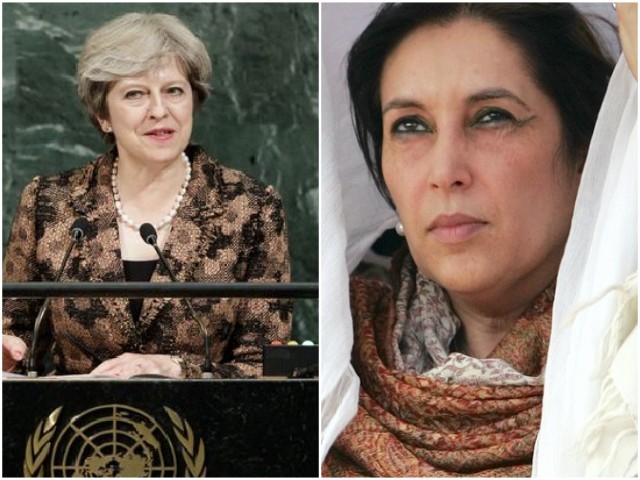
However, it was Benazir Bhutto, the future Pakistani prime minister, who was particularly influential when she introduced Mrs May to Phillip.
In her early parliamentary career, after being elected for the new constituency of Maidenhead in 1997, one her most notable roles was as the first female chairman of the Conservative’s. She famously urged the party to change, uttering the words: “You know what people call us? The Nasty Party.”
When David Cameron became prime minister in 2010, he immediately made Mrs May home secretary become the fourth women to hold one of the British great offices of state. Arguably her biggest test was the 2011 summer riots, when a London man was shot dead by police, sparking country-wide chaos that mirror the state of UK politics.
Comparisons are being made between Mrs May’s predicament and Malcom Turnbull, former Australian prime minister, who faced a leadership crisis earlier this year in his Liberal party. He survived the initial vote, but amid further pressure only ten days later he handed in his resignation. What will happen with Mrs May remains to be seen.
https://www.blogger.com/blogger.g?blogID=6906155786122195046#editor/target=post;postID=121421118326680383

Music Video - BENAZIR BHUTTO

Benazir Bhutto: The ‘Iron Lady’ of Pakistan


Muhammad Ziauddin

The people of Pakistan had rejected bigotry and prejudice in electing a woman Prime Minister. It was an enormous honor and an equally enormous responsibility... I had not asked for this role; I had not asked for this mantle. But the forces of destiny and the forces of history had thrust me forward, and I felt privileged and awed.
Eleven years is a long time. But it is still very difficult to accept that Benazir Bhutto is no more. She is missed, she is mourned and she is remembered with fond memories by many, including scribes like me who had the good fortune of observing her from very close quarters while covering her as she began her tumultuous political career that spanned over 30 eventful years and then also having had the misfortune of writing her obituary.
But much has happened since her assassination to turn her, at the national level, into a fading memory because the national party that she had left behind has in the intervening period turned into a provincial one in size and reach and today it is confined to the rural part of Sindh. Second, the uplifting political narrative that she and her father had used to rally political support of the downtrodden has meanwhile been assumed by other mainstream parties including PML-N and PTI, with the latter employing it more effectively. Third, General Zia’s legacy of Islamisation and Jihad has shrunk the political space for parties anchored to progressive ideologies.
The left-oriented slogan, “Land to the Landless”, proved irresistible to the peasants. The working class and labour movement quickly flocked to the party.
She challenged a ruthless military dictator, suffered for her daring, managed to revive a political party which had gone into doldrums, and made history by becoming the first woman to win the coveted office of Prime Minister of a Muslim country and that too, twice. But all this has turned into an intangible legacy; unlike that of the General Ayub era, which is remembered for the fast-paced industrialization, the military pacts he had entered into with the US and the Indus Basin Treaty that he signed with India. Her father is remembered for giving the nation the 1973 constitution and his legacy of nationalization.
Zia is remembered for Islamisation and Jihad. Nawaz would perhaps be remembered for the motorways he built. And Musharraf would probably be remembered for letting terrorism take a deadly hold on the nation. At 29, Benazir was locked in an acrimonious confrontation with a military dictator who had a rubber-stamp Supreme Court send her father to gallows on trumped-up murder charges; suffered a couple of years of solitary incarceration in Sukkur which sizzles in summer and a five-year long exile. Zulfikhar Ali Bhutto (ZAB) at 29 was already a government insider.
t was perhaps the ruthless persecution of PPP by General Zia ul Haq that sucked Benazir into Pakistan’s political cauldron. Still, she was 26 when she became co-chairperson of the Party. And by the time she eased Begum Nusrat Bhutto out of the Party office, Benazir was a mature lady of 34. Benazir did not automatically inherit her father’s political mantle. First, she was not the first of ZAB’s children. Second, she was a woman in an overly man’s world soaked in an obscurantist version of Islam.
When Zulfiqar Bhutto launched the PPP, he was more mature and experienced at 34, as he had already for a couple of years held the office of Secretary General of the ruling Convention Muslim League besides having held a number of portfolios in Ayub’s cabinet including that of the country’s foreign ministry. When ZAB returned home after attending Berkley, Oxford and Lincoln’s Inn, he was 27 and one of the most highly educated young barristers in the country. By the time Benazir went to Harvard and Oxford studying governance, philosophy, politics, and economics, she was not an exception.
Benazir had also needed, in view of the fact that it was now a unipolar world with the U.S. at the helm, to amend PPP’s anti-American stance.
There were many girls in the country with a similar upbringing. ZAB launched the PPP as the Vietnam War was winding down in the late 1960s and the world was being swept by left of- center winds. Western Europe and even the U.S. to some extent, had become social welfare states with public sector catering for the nations’ education, health, transport, communication, housing, energy, and water. Bhutto’s program directly targeted the country’s poverty-stricken masses. The left-oriented slogan, “Land to the Landless”, proved irresistible to the peasants. The working class and labour movement quickly flocked to the party.
Many other members of society who had felt stifled and repressed by the authoritarian regime also joined the new party. The party’s manifesto attracted the country’s numerous sectarian minorities. Eventually, the socialist-oriented catchphrase ‘Roti, Kapra aur Makan’ became a nationwide rallying-call for the Party. However, by the time Benazir returned home in 1986 to a memorable welcome, the world had undergone a qualitative change on the ideological front. Soviet Communism was breathing its last gasps. Europe and the U.S. were on their way to the era of less government. British Prime Minister Mrs.
Thatcher of the Conservative Party had forced the opposition to morph into New Labour, which ideologically seemed similar to the Conservatives if not identical. In Reagan’s U.S. social infrastructure carried a price tag. In Pakistan, nobody knew what had happened to the unencumbered billions that had come in by way of rent for our assistance to the U.S. in its war of attrition against the Soviets in Afghanistan. And by the time Zia died in an air crash in August 1988, our kitty had bottomed off forcing the then finance minister, late Mehbubul Haq to run to the IMF, for a paltry standby loan, which the fund agreed to provide but only to the winner of the 1988 elections.
So, the winner, Benazir led PPP, walked straight into the Washington Consensus that was opposed to the social welfare agenda of ZAB’s PPP. Benazir had also needed, in view of the fact that it was now a unipolar world with the U.S. at the helm, to amend PPP’s anti-American stance. She also needed to establish working relations with the country’s establishment that had bitterly persecuted the PPP all through Zia’s 11-year rule. The establishment suspected her credentials. Some even branded her as a security risk.
The former was roughly estimated to be about 33 percent and the rest was anti-Bhutto. But most of these anti-Bhutto votes were scattered over a number of right-wing political parties.
Here let me digress a little. The return of Benazir in 1986 from exile, had happened at about the time when the U.S. administration was distancing itself from President General Zia ul Haq because the latter was opposing the Geneva Accord talks, which had begun in 1985 between the U.S. and the Soviet Union. These Accords were finally signed in early 1989 between Benazir Bhutto’s Pakistan and Soviet-backed Najibullah’s Afghanistan with the U.S. and the Soviet Union standing in as guarantors.
Zia was perhaps opposed to Benazir’s return as well but the then Prime Minister Mohammad Khan Junejo who had started asserting his independence had facilitated her return, presumably on the advice of the U.S. Of course, there is no tangible evidence of money having been used in the 1988 elections. But the then ISI Chief General Hamid Gul according to his own public admission did put together the Islami Jamhoori Ittehad (or IJI), a conglomerate of almost all the right-wing parties of the country in September 1988 to stop Benazir Bhutto led PPP from winning the forthcoming November elections.
However, the PPP still managed to win the 1988 elections. But in the next elections called in October 1990, the establishment did not take any chances. According to another former ISI chief Asad Durrani’s admission, he had distributed millions of rupees among Pakistani politicians including many of those belonging to the PML and Jamaat-i-Islami in 1990 “on the instructions of the then army chief General Mirza Aslam Beg and late President Ghulam Ishaq Khan”.
Here one needs to remember that Benazir did not actually inherit the Party that ZAB had founded. It had been completely decimated by General Zia and his cronies by the time Benazir came of age and took over the chairperson’s office from Begum Nusrat Bhutto, who despite the destruction of the Party at the hands of Zia had succeeded in keeping its vote bank intact. ZAB had founded a left-of-center party which was more left than center. Benazir, on the other hand, when she died left behind a party which was more center than left.
It was Benazir who had selected the candidates and issued them tickets to contest the 2008 elections. Zardari was not even remotely connected with this selection process. 
Throughout the three decades leading up to the turn of the century, the electorate in Pakistan was divided into a pro and anti-Bhutto vote. The former was roughly estimated to be about 33 percent and the rest was anti-Bhutto. But most of these anti-Bhutto votes were scattered over a number of right-wing political parties. Over the last two decades or so, the anti-Bhutto vote seems to have disappeared gradually. That is why no political party, even staunchly opposed to the PPP, tries to mobilize political support with anti- Bhutto rhetoric anymore. Most avoid criticizing the Bhuttos in public. It is not considered good politics.
That is another reason why perhaps the PPP is finding it increasingly difficult to attract voters using the name of Bhuttos. ZAB had subscribed to the Fabian philosophy that had fostered the idea of advancing the principles of democratic socialism via gradualist and reformist effort rather than by revolutionary overthrow. And Benazir, on the other hand, was inspired first by British Prime Minister Margaret Thatcher’s politics and later seems to have persuaded herself to subscribe to what was called the New Labour when the British Labour Party morphed into a caricature of Conservatives.
While trying to adjust their respective political aspirations to the ground realities in Pakistan both ZAB and BB had gradually become centrists attracting a large nation-wide crowd encompassing people belonging to right-of-center and left-of-center, as well as pure centrists. Most of these voters now seem to have gone over to the PML-N and the PTI because of the quality of governance of the PPP during the last ten years, five of which were at the center and an entire decade in the province of Sindh.
It was Benazir who had selected the candidates and issued them tickets to contest the 2008 elections. Zardari was not even remotely connected with this selection process. Had she been alive and led the election campaign perhaps she would have swept the polls hands down. However, her tragic assassination did not seem to have attracted enough sympathy votes. In fact, it lost many, because of the uncertainty that had engulfed the Party when Asif Ali Zardari took over after her assassination.
Benazir’s return from self-exile in 2007, like in 1986, was facilitated by the U.S. as like then differences had presumably cropped up between the U.S. administration and the then Pakistani military dictator, General Pervez Musharraf over how to go about restoring peace in Afghanistan. Benazir’s condition for returning home was removal of the constitutional bar against contesting for the third time for the office of the PM. The demand was rejected by Musharraf but he accepted her alternate demand that had asked for withdrawal of all cases of corruption instituted against her and her party leaders including her husband.
A National Reconciliation Ordinance (NRO) was promulgated by the President making way for return of both Benazir and Nawaz. An attempt was made to assassinate Benazir in Karachi on the very day that she returned from her self-exile which she escaped. But she could not survive the second attempt made in Rawalpindi on December 27, 2007. Like most high profile assassinations in this country, hers too seems likely to join the list of Pakistan’s blind murders like that of Liaquat Ali Khan and Murtaza Bhutto. Indeed, a decade is too long a period for leads, both hard and circumstantial, to have remained alive. Still, the hunt must continue.

پاکستان کو ’’خان کی جاگیر‘‘ کے طور پر نہیں چلایا جا سکتا،بلاول

بلاول بھٹو نے کہا ہے کہ عمران خان کو سمجھنا چاہئے کہ پاکستان کو ’’خان
کی جاگیر‘‘ کے طور پر نہیں چلایا جا سکتا۔شہباز کو چیئرمین پی اے سی بنانا خوش آئند ہے، ترجمان پی پی نے کہا کہ اپنے نفع نقصان کیلئے نہیں، جمہوریت کیلئےفیصلہ کیا،حکومت کےاپوزیشن لیڈر کوپبلک اکاؤنٹس کمیٹی کا چیئرمین مقرر کرنے پرآمادہ ہونےپر اپنے ردعمل میں چیئرمین پی پی پی بلاول بھٹو نے سماجی رابطوں کی ویب سائٹ پر جاری کردہ ایک پیغام میں کہا ہے کہ سمجھداری کا مظاہرہ خوش آئند ہے، بالآخر 4 ماہ بعد حکومت قائد حزب اختلاف کو پبلک اکاؤنٹس کمیٹی کا سربراہ نامزد کرنے پر آمادہ ہو گئی۔ انہوں نے کہا کہ یہ نامزدگی شفافیت اور احتساب کیلئے ضروری ہے اور اپوزیشن کو حکومت کو جوابدہ بناناچاہئے۔ بلاول نے یہ بھی کہا کہ حکومت نے کسی قانون سازی کے بغیر کئی ماہ ضائع کر دیئے ہیں۔ دوسری جانب، چیئرمین پاکستان پیپلز پارٹی بلاول بھٹو کے ترجمان سینیٹر مصطفیٰ نواز کھوکھر نے حکومت کی طرف سے قائد حزبِ اختلاف شہباز شریف
کو چیئرمین پبلک اکاؤنٹس کمیٹی بنانے پر آمادگی کا خیرمقدم کرتے ہوئے کہا ہے کہ آج ایک بار پھر چیئرمین پاکستان پیپلز پارٹی بلاول بھٹو کے اصولی مؤقف کی وجہ سے پارلیمنٹ سرخرو ہوئی، ہم اپنے سیاسی نفع نقصان کے لئے نہیں بلکہ جمہوریت اور اداروں کی بہتری کے لئے فیصلے کرتے ہیں۔
https://jang.com.pk/news/586881-topstory

The rich Balochistan and unfortunate Baloch

By: Abid Shaizad
Reko Diq is a less populated village of district Chaghe; which is a remote area of the rich province, Balochistan. According to the 1998 census the population of Chaghe District was 202,562, along with approximately 53,000 Afghan refugees. The population of Chagai District was estimated to be over 250,000 in 2005.
Reko Diq is famous because of its vast Gold, Copper and shell gas reserves and it is believed to be the world’s 5th largest gold deposit as 20 million tons and the copper, 12-13 million ton, which is estimated to be more than 3 trillion dollar of cost.  Reko diq has got 50 kinds of minerals that are considered the high quality in the world. The mountain range of these reserves is spread on approximately 100 kilometers. The gold reserve is estimated to be 1276 ton. Acceding to experts’ estimation, if gold is extracted from Reko Diq as per day, it will be sufficient to do this for 50 years.
Misfortunately, the treasures of Reko Diq have been looting by the national and international muggers. This rich area of Reko Diq was given in lease to an Australian company which looted it and then handed over to other company for same reason. It is humiliating to know that the companies which are give this land on lease to extract gold, copper and other mineral that too without any accountability. They have been granted immunity from audit and check and balance in return of a little share to government of Pakistan in which Balochistan gets only 2 percent of its minerals, which reflects incapability of our leaders.
There are 9 mineral zones in Pakistan and 5 of them are found in Balochistan. So generous and tolerant is our Balochistan that it fulfills almost 90 percent of minerals of Pakistan; be it gold, gas, gypsum, chromites, marbles, coal, copper or the deep warm water sea port of Gwadar while its inhabitants are still silent on this regard; bearing hunger and thirst, accepting starvation and injustice, deprivation of basic facilities!
In addition, that, the district where reserves of Reko Diq are found, their people are suffering from different diseases and other health and fundamental rights. The federal and the helpless Balochistan governments have nothing to do with the people, their prosperity and the progress of Balochistan, but its minerals.
The federal and the provincial governments must take just measures to provide due rights of Balochistan in order to maintain peace and order and stability in the province and the country.
Published in The Balochistan Point on October 24, 2018

Dhaka & Pakistan’s psychological defeat: How Indian military commanders won 1971


Before 1971, our political and military leadership was inexperienced in waging a war at this scale to achieve absolute victory.
India’s absolute victory in 1971 to create Bangladesh was a result of some of our brilliant military commanders following a bold operational strategy to bring about the psychological collapse of the Pakistan army. This strategy was different from the rather conservative strategy originally conceived by the Army Headquarters.
Before 1971, our political and military leadership was relatively inexperienced in waging a war at this scale to achieve absolute victory. While the desirable political aim was to liberate East Pakistan and create Bangladesh, politically and militarily we were not very confident that this aim could be fully achieved.

The significance of Dhaka

There were two centres of gravity of East Pakistan – the Pakistan army and its critical vulnerability — Dacca (now Dhaka).  So long as the Pakistan army remained a cohesive fighting force, and held on to Dhaka, the political aim could not be achieved. The new nation state would lack legitimacy and international or American intervention remained a possibility.
Our armed forces were not too sure of their capabilities as we had no experience of operations on this scale. The initial operational plan was a compromise. Dhaka was never formally defined as an objective. The directive given to the Eastern Command focused on capture of maximum territory, including the major towns and the port cities of Chittagong and Khulna, but shied away from declaring Dhaka as the military objective of the campaign.

Manoeuvre style of warfare

Culturally, our Army followed the attrition style of warfare, which relies on “force on force” to capture terrain objectives. This style literally seeks the enemy to attack. It was the influence of this culture that led us to consider that Dhaka was an “objective too far”. As per this approach, unless all other areas/towns, which were held by the enemy, were physically attacked and captured, we could not have reached Dhaka.
The manoeuvre style of warfare, instead, focuses on ‘defeat’, which lies in the psychological realm. It is empirical wisdom that barring exceptions, ‘defeat’ is a state of mind, a factor of ‘will’. When the conditions are created to bring about a psychological collapse, the enemy accepts defeat even if s/he has adequate resources to continue the fight.
Consequently, in this style, an all-out effort is made to threaten/capture/destroy the critical vulnerability of the enemy with sufficient residual combat potential. Only selected positions or ‘surfaces’ are attacked to create logistics corridors, and ‘gaps’ are exploited to reach the critical vulnerability. Once the critical vulnerability is threatened or captured, the forces, regardless of their strength, are rendered ineffective.
This was the reason why Dhaka had to be the operational-level objective. Without it, the psychological collapse of the enemy forces would not take place and victory would never be complete.
This was well understood by a handful of brilliant commanders and staff officers. Notable among them were the Chief of Staff Eastern Command Major General J.F. R. Jacob, Director General of Military Operations Major General Inderjit Singh Gill, GOC 4 Corps Lt. Gen. Sagat Singh, and Commander of 95 Mountain Brigade  Brigadier H.S. Kler, operating under 101 Communication Zone.
These brilliant commanders never lost sight of Dhaka as the critical operational objective. When the seemingly insurmountable problems were pointed out to Lt. Gen. Sagat Singh by Lt. Gen J.S. Aurora, Singh said: “Leave it to me, I will take you to Dhaka”. Brigadier Kler used to give the example of the agile David striking at Goliath’s critical vulnerability – his forehead. On the eve of the war, he told his subordinates, “Do not take counsel of your fears, we will take this under-equipped brigade to Dhaka.”

Pakistan’s strategy

Pakistan’s Eastern Command also faced a dilemma due to paucity of resources. It correctly identified that Dhaka had to be defended. It was desirable that it was held in strength. Yet the vast territory ahead of Dhaka could not be given up.
The defensive strategy adopted by Pakistan Army was a compromise. Cantonments and major towns were to be developed as fortresses guarding the approaches to Dhaka. These fortresses were to push forward light forces right up to the international boundary (IB) to deny loss of territory. Depending upon the progress of the Indian offensive and the tactical situation, the formations were to conduct an orderly fighting withdrawal to wage a final battle around Dhaka.

India’s strategy

The “default strategy” that was adopted by the maverick commanders and the staff officers was perfect to a fault and ended up being adopted by the Army Headquarters midway through the war.
The political aim was to dismember Pakistan and create the new nation state of Bangladesh. The victory had to be absolute, leaving the international community with no option but to recognise the new state.
The operational strategy was to launch a land, air and sea campaign on multiple thrust lines from the west with 2 Corps, northwest with 33 Corps, north with 101 Communication Zone, east with 4 Corps and south with the Indian Navy. The aim was to threaten/capture the geostrategic and geopolitical centre of gravity – Dhaka – to bring about the psychological collapse of Pakistan’s Eastern Command, and in so doing establish tactical control over the entire territory of  East Pakistan.
The preliminary operations, conducted all along the IB in November, “sucked” the enemy forces forward from Dhaka and the fortress towns. Once the war broke out, from 3 to 10 December, the Indian Army formations across the entire front left the ‘highways and took the byways’ to exploit the gaps and relentlessly attack selected positions from the rear to open logistics corridors. Risks were taken, opportunities were created and river obstacles were surmounted by 4 Corps using helicopter-borne forces and local resources. It was a Blitzkrieg on foot.
The enemy’s planned withdrawal to Dhaka became a disorderly retreat. The paradrop at Tangail on 11 December and link up by Brigadier H.S. Kler’s 95 Mountain Brigade from the north and the simultaneous “vertical envelopment” across the Meghna by Lt. Gen. Sagat Singh from the East opened the way to Dhaka. The leading elements, 2 Para and 95 Mountain Brigade, entered Dhaka early in the morning of 16 December, later followed by 57 Mountain Division of 4 Corps.
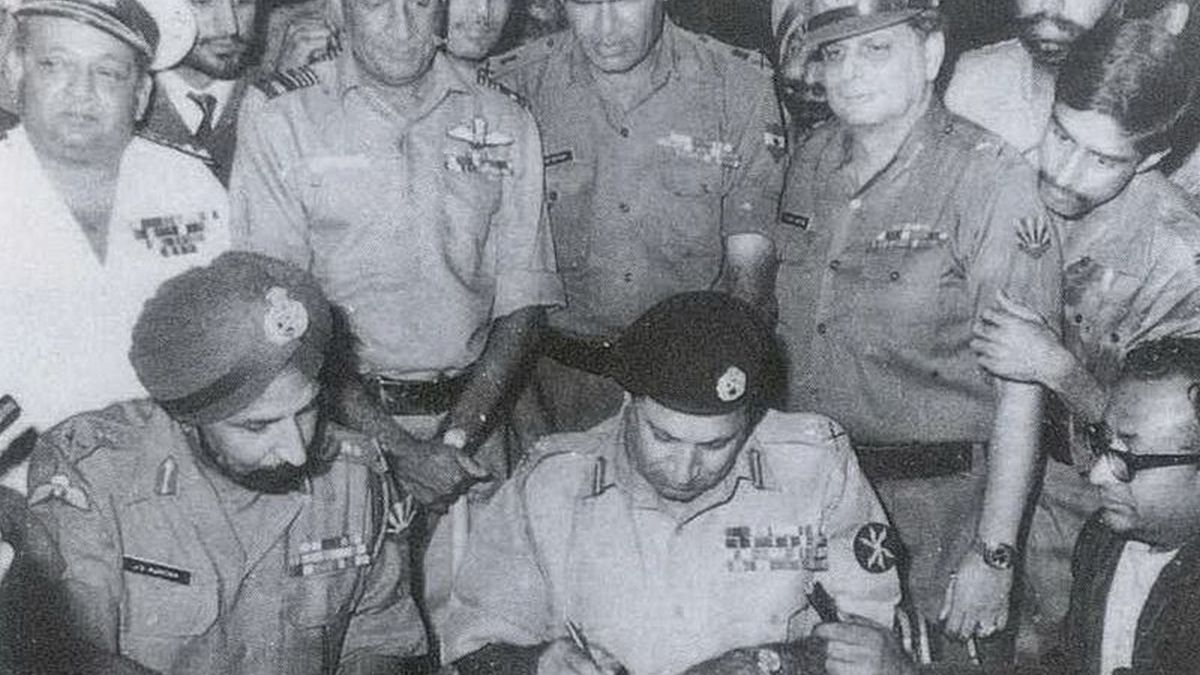
Bulk of the Pakistan army was still intact. The garrison at Dhaka far outnumbered the leading elements of 101 Communication Zone and 4 Corps threatening it. But such was the impact of the geostrategic and geopolitical centre of gravity being threatened that Pakistan’s Eastern Command psychologically collapsed. By the afternoon of 16 December, the surrender had taken place and history had been created!