Tuesday, November 27, 2018

#100Days100Uturns #100daysofPTI #Pakistan - Aseefa, Bakhtawar flay PM Imran's government over 100-day performance


Bakhtawar Bhutto and Aseefa Bhutto Zardari have flayed Prime Minister Imran Khan's government over its performance and taking several U-turns during its first 100 days.
Aseefa took to Twitter saying "From IMF to South Punjab; from protocol to living in official residences; from awarding contracts after due process to posting bureaucrats on merit; from no misuse of power to no corrupt ministers. There is nothing this govt hasn’t made a U-turn on!"
Aseefa tweeted with #100Days100Uturns hashtag.
Bakhtawar said, "Poor homes bulldozed, livelihoods destroyed, thousands out of jobs all under anti encroachment but Bani Gala still stands. Notices to oblige or an alternative should have been provided. Photos of shop remains are heartbroken. No new 10 million jobs just more unemployment #100Days100UTurns."

The silencing of #Pakistan

 By Ammar Ali Jan


The state is trying to decimate dissent in hopes of resuscitating a political order that has lost all vitality.
Pakistan is silencing discussion on a growing number of topics, causing concern among human rights activists, journalists and political dissidents in the country. A Committee to Protect Journalistsreport published in September this year concludedthat the country's powerful military establishment is using fear, intimidation and even violence to pressure the media to self-censor. In October, journalists and media workers held rallies across the country to protest against measures aimed at curbing newspapers' circulation and TV channels' transmission in certain areas. A number of high-profile TV anchors who were critical of the security establishment's interference in Pakistani politics were fired from their positions.
Recently, I myself was targeted by this ongoing silencing campaign. Earlier this month, along with three other rights activists, I was barred from speaking at the 4th Faiz International Festival - a three-day music, art, debate and literature event named after renowned socialist poet Faiz Ahmad Faiz whose work and life exemplified defiance and resistance against authoritarianism. The irony could not be starker.
We were told that there was "external" pressure for our removal, including threats of cancelling the entire event if the organisers did not remove us from the schedule. It was clear that we were not welcomed there because of our past criticisms of the country's military establishment.
The festival went forward as planned, without our participation, but the organisers placed an empty chair on the stage during the sessions that we were supposed to attend. This was their way of silently registering their protest against censorship.

 A 'fifth-generation warfare'

The current crackdown on free speech in Pakistan stems from the security establishment's belief that a pervasive "fifth-generation warfare" is being waged against the country. The "fifth-generation warfare" is an awkwardly woven narrative that suggests that the country is besieged by enemies who are using their proxies to control the minds of Pakistan's "vulnerable" youth. It is a form of paternalism, one which is seen in one form or another in all paranoid, authoritarian states throughout history, and it is employed to target the usual suspects in Pakistan: human rights activists, progressive intellectuals, critical journalists and the political opposition.
The Pakistani state has never been confident of its own viability as a political entity because it views the country's ethnic faultlines and geostrategic position as perpetual threats to national cohesion. Yet, the "silent martial law" that is clouding political debate in the country is entangled with a formally democratic set-up. This unstable intersection between a civilian government and military control is propelling a new type of political practice that has both comical and tragic dimensions.
The comedy stems from the tragic fact that people are too scared to directly name the military establishment in their criticisms. This fear has led to the creation of a large set of euphemisms that are commonly used in critiques. For example, writers often use terms such as "the boys", "angels", "unknown individuals" or even "extra-terrestrial creatures" (a term popularised by former Prime Minister Nawaz Sharif) when referring to the country's secret agencies.
During the election campaign earlier this year, Iqbal Siraj, a candidate from Sharif's party PML-N, alleged publicly that his warehouse was raided, his men were harassed and he was personally threatened by the personnel of a secret agency who wanted him to switch loyalties. After two days, presumably under intensified pressure from the same forces, he backtracked from his earlier statement, claiming this time that it was the "agriculture department" that raided his warehouse over "tax concerns". Since then, the term "agriculture department" is often used satirically when discussing issues involving the security apparatus, including the contentious issues ranging from forcefully disappeared persons to electoral rigging.
But sometimes, the euphemisms are simpler and more traditional. When I was informed of my removal from the panel at the Faiz Festival, the organisers used the ubiquitous "they" - the meaning, with all the implied and latent threats, understood by all parties. "They" did not want my participation.

Blurred lines

The biggest tragedy of Pakistan's double system of oppressive military control and seemingly democratic civilian rule is the fact that, unlike direct military rule with a firmly regimented list of do's and don'ts - or indeed a well-functioning democracy where free speech is fully protected - the lines between acceptable and unacceptable speech remain blurred.
Officially, there are few restrictions on free speech in the country and many journalists, intellectuals and political activists get away with scathing critiques of the establishment. But then many others run into trouble with the same forces over much politer versions of the same critiques. For example, I was barred from the Faiz Festival while many others who had often presented harsher critiques of the security establishment than myself were permitted to speak.
The excessive contingency of the situation makes all the actors involved more anxious about the precise place of the red lines that ought not to be crossed. It also leads to the impression that there is little method to this madness, and that the fates of many are decided by the whims of anonymous local intelligence operatives.
The chaos of the situation raises larger questions about the contemporary era, particularly in light of the melting away of political certainties on a global scale. Not only is the international financial system and the neoliberal ideology undergirding it incredibly unstable, but the nation-state form, the arena par excellence for political claim-making, is itself threatened by the accelerating flows of resources, ideas and people. In other words, the framework that structured postwar politics is now falling apart, exposing the rigidity of our political forms to the openness of the unknown, with all the anxiety such an encounter entails.
It is then not surprising that fear of "foreign elements" is propelling political thought and action around the globe, displacing debates over resource distribution and other social justice issues. For theTrump administration in the US, it is the immigrants; for Europe, it is the refugees; and for India's Modi, it is Muslims and "secularists" who threaten the homogeneity of the nation-state. These communities become the internally excluded part of the nation, acting as phantoms against whom an imaginary identity is cemented. And since they are the displaced focal point for the anxieties generated by rapidly collapsing political, economic and material certainties, they become targets for the vilest forms of abuse that they must repeatedly endure to sustain a fragile nationalism.
What we are witnessing is the nation-state's struggle to understand, or even define, the threats it currently confronts. Terms such as "fifth-generation warfare", "hybrid warfare" or accusations of "foreign agents" are imprecise attempts to define any phenomenon that appears to exceed the normative language available to the state, turning our political chaos into a properly linguistic crisis. This state of affairs betrays an anxiety that a gap has opened up in the status quo, which can no longer be sutured using conventional methods of control. And it is here that censorship fails most spectacularly. The very act of suppression and removal only widens this anxiety, since prohibited content often takes on a life of its own as a symptom of the widening cracks, further haunting the present through its very absence.
The difficulty of the situation is that the gaze of the state deployed to judge the proliferating threats in society is unable to turn inwards to interrogate its own role in perpetuating the chaos that it so fears. In Pakistan, this lack of introspection is compelling the state to decimate all forms of dissent in hopes of resuscitating a political order that has lost all vitality. The challenge, today, then is not only one of resisting the worst excesses of a paranoid establishment, but also of intensifying the search for new ideological and institutional coordinates for constructing political communities. This means that we have to open ourselves to the challenges presented by the foreignness of the new, with all the patience and creativity it demands, if we are to move beyond the endless violence and haunting silences that mark our present.

Monday, November 26, 2018

Ustad Awalimir - Afghan Da Zamong Zeba Watan

#Pakistan - 300 Deaths Don’t Warrant Attention


In less than three months another accident in one of the coal mines of Pakistan claimed the lives of three miners. This time the place of accident was Balochistan. It is sad to notice that hundreds and thousands of lives are put into jeopardy on routines basis as the miners work under no safety measures in these mines. It is about time that the government reconsider the labour laws and ensure safety standards and practices in the mining industry in general and coal mining in particular. According to one report, more than 300 labourers died in different kinds of accidents in coal mines since 2010. How many more miners need to perish to catch the government’s gaze? The increased frequency in coal mines accidents shows in the incompetence of the government in ensuring a safe working environment for the labour force of the country. What is the Mines and Mineral Development Department of Balochistan is doing? Clearly, the department is neither regulating the “death wells”, which these mines are, nor is it interested in implementing safety measures in these mines to cut the fatalities.
So far not a single arrest of an owner of any the coal mines suggest two possibilities. Either all mines possess adequate safety systems and measures, or the department does not even bother to inspect what safety measures the owners of all these mines have adopted. The frequent accidents that claim the lives of poor labourers propose the latter proposition to be true.
The website of the Mines department claims that the Inspectorate of Mines ensures the enforcement of the safety laws applicable to mines for the safety of workers. The official website also mentions the existence of a “Mines Rescue and Training Wing” as a quick response force to any such occurrence.
However, the case at hand mocks all such lofty claims as other labourers retrieved the bodies of the deceased. Deaths from poisonous gas that was solved ages ago with simple precautions show that our coal mines have terrible safety protocols.

Opinion Trump's Crude Hostility Is Pushing Pakistan Towards America's Foes: China, Russia - Even Iran


The tweets attacking Pakistan came thick and fast from the White House: "We no longer pay Pakistan the $Billions because they would take our money and do nothing for us, Bin Laden being a prime example, Afghanistan being another. They were just one of many countries that take from the United States without giving anything in return. That’s ENDING!"
Donald J. Trump ✔ @realDonaldTrump Of course we should have captured Osama Bin Laden long before we did. I pointed him out in my book just BEFORE the attack on the World Trade Center. President Clinton famously missed his shot. We paid Pakistan Billions of Dollars & they never told us he was living there. Fools!.. 149K 10:26 AM - Nov 19, 2018 Twitter Ads info and privacy 77.9K people are talking about this Twitter Ads info and privacy
Donald J. Trump ✔ @realDonaldTrump ....We no longer pay Pakistan the $Billions because they would take our money and do nothing for us, Bin Laden being a prime example, Afghanistan being another. They were just one of many countries that take from the United States without giving anything in return. That’s ENDING! 174K 10:41 AM - Nov 19, 2018 Twitter Ads info and privacy 69.8K people are talking about this Twitter Ads info and privacy
President Trump doubled down in an TV interview later that day: "...We're supporting Pakistan, we're giving them $1.3 billion a year - which we don't give them anymore, by the way. I ended it because they don't do anything for us, they don't do a damn thing for us."
It didn't take long for Pakistan's Prime Minister Imran Khan to unleash a barrage of tweeted rebuttals against U.S. President Donald Trump. In his tweets, Khan rubbished Trump’s assertions that Pakistan does "nothing" for the U.S., pointing out the injuries that "Pakistan has suffered in the US War on Terror in terms of lives lost and economic costs."
Imran Khan ✔ @ImranKhanPTI Record needs to be put straight on Mr Trump's tirade against Pakistan: 1. No Pakistani was involved in 9/11 but Pak decided to participate in US War on Terror. 2. Pakistan suffered 75,000 casualties in this war & over $123 bn was lost to economy. US "aid" was a miniscule $20 bn. 54K 6:37 AM - Nov 19, 2018 Twitter Ads info and privacy 24.1K people are talking about this Twitter Ads info and privacy
Khan’s tweets were followed by Pakistan's Army Chief issuing a statement via the military spokesperson, pointing out that Pakistan has done more for peace in the region "than any other country."
Pakistan Chief of Staff tweet
Maj Gen Asif Ghafoor ✔ @OfficialDGISPR “Pakistan has successfully fought against terrorism while also contributing to regional peace. Pakistan has done much more for peace in Afghanistan than any other country”, COAS. (1 of 2). 15.4K 7:18 AM - Nov 20, 2018 Twitter Ads info and privacy 4,651 people are talking about this Twitter Ads info and privacy skip - Pakistan CoS tweet2
Maj Gen Asif Ghafoor ✔ @OfficialDGISPR “We have paid the highest military, economic, political and social cost and the world should acknowledge that. We shall continue to contribute towards peace in Afghanistan but Pakistan’s honour and Pakistan’s security shall always stay premier” COAS. (2 of 2). 25.3K 7:18 AM - Nov 20, 2018 Twitter Ads info and privacy 7,459 people are talking about this Twitter Ads info and privacy
Even the Prime Minister’s most vocal political opponents quickly rallied behind Khan’s response to Trump. There was fueled by righteous indignation – but also because anti-Americanism sells across the country, and every political stakeholder wants a slice of the potential political benefits.
In the past, the Pakistani leadership has had to balance its explicitly anti-U.S. rhetoric at home with a clear policy of safeguarding shared interests with Washington. But Khan’s direct confrontation with Trump on Twitter is a clear departure from that.The first is Khan’s own loud-mouthed and undiplomatic nature, which has seen him being compared to Trump, even before either of them was elected as the state leader. The second is the U.S. decision to cut financial aid to Pakistan, which affects the coffers of both the civil and military leadership.
With American aid increasingly shrinking, Pakistan no longer feels obliged to even pretend to toe U.S. policies.
What is important to highlight here, despite the drama, is that neither Trump nor Khan said anything that their predecessors hadn’t. President Barack Obama had repeatedly called out Pakistan for providing "safe havens" for terror groups, while previous Pakistani governments have reiterated the country’s sacrifices in the War on Terror, to deflect pointing fingers.So despite both Trump and Khan reiterating what their respective states have long maintained, this online duel has brought the two states to a confrontation not seen in recent years.
This is because both Trump and Khan put forward their state’s positions in the most undiplomatic of manners, even if completely consistent with the populist drums that they’ve beaten at home.Khan’s completely contrasting diplomatic overtures towards other states like Saudi Arabia and China are further evidence that the Pakistani state now believes that its ties with U.S. are no longer as critical.Islamabad also feels that its financial needs would be covered by these two states, with Saudi Arabia recently giving Pakistan a $6 billion bailout package in exchange for diplomatic support amidst the crisis triggered by the killing of journalist Jamal Khashoggi.Similarly, Beijing has made its largest ever foreign investment in the shape of the economic corridor running through Pakistan, which has prompted Islamabad to put all its eggs in the China basket, even if that has meant compromising on state sovereignty.
Even so, despite the transformation in regional realities a common goal – its varied interpretations for either state notwithstanding – for both U.S. and Pakistan remains unfulfilled in Afghanistan. The most critical, and yet to be answered, question regarding the Afghanistan peace process is the future of the Taliban, over which Pakistan still exercises considerable influence.
Earlier this month, a key figure in this process was removed when the "Father of the Taliban" Sami-ul-Haq was found dead under mysterious circumstances at his home. Ul-Haq – who founded and ran Dar-ul-Uloom Haqqania, the madrassa that has been the alma mater of various prominent jihadists in the region – had been approached by the Afghanistan government last month to mediate peace talks with the Taliban.
Since then, Taliban officials have participated in talks in Moscow, hinting at a greater role for Russia in the Afghan mediation process, which clashes with the historical U.S. position in the region. Pakistan is already signing military deals with Russia to fill the void left by its increasing differences with the U.S.
Trump’s South Asia policy, and singling out of Islamabad as the problem in the region, has played its part in bringing the trio of China, Russia and Pakistan together over a wide array of mutual interests in the region, including Afghanistan.And now as this trio seeks a formalized role for the Taliban in Afghanistan, it would allow Islamabad to pursue its duplicitous policy of nurturing specific jihadist groups who serve its strategic interests in Afghanistan and India, as long as the state can exercise its control over them to keep them away from Chinese investments.
In accordance with this strategy, Pakistan has recently taken UN designated terrorist Hafiz Saeed – a mastermind of the 26/11 Mumbai attacks in 2018 – off its list of terrorists where he had been placed earlier this year to avoid the country being blacklisted by the terror watchdog Financial Action Task Force.
There is another potential upside for Pakistan to distancing itself from the U.S.: Pakistan can draw closer to Iran.
This would be particularly true in the trade and energy realms, with projects like the Iran-Pakistan gas pipeline long stalled owing to U.S. sanctions on Iran, now reimposed by Washington this month. Pakistan would still have to jockey between Tehran's increasingly open arms and major resistance by Saudi Arabia, which is providing essential cashflow right now.With Russia and China orchestrating the Afghan peace process, jihadist groups continuing to function in the region, and Iran finding economic alternatives to ease the pressure of sanctions, the geopolitical picture in South Asia is diverging starkly from U.S. interests and policy.
And while Trump, like Obama, is absolutely right to accuse Pakistan of providing sanctuary to UN designated terrorists – Osama bin Laden, of course, being the most prominent example – the U.S. president’s continued stick without nary a carrot in sight might just have pushed Islamabad away for good.
Frustrations over that, and the backtalk spearheaded by Imran Khan, means bubbling tension only needs another trigger, tweeted or not, to plunge U.S. and Pakistan into to a full-blown crisis.

Why is Pakistan reluctant to bring Lashkar-e-Taiba to justice?


By

Ten years on, the group suspected to be behind the deadly Mumbai attacks is still operating freely in Pakistan.
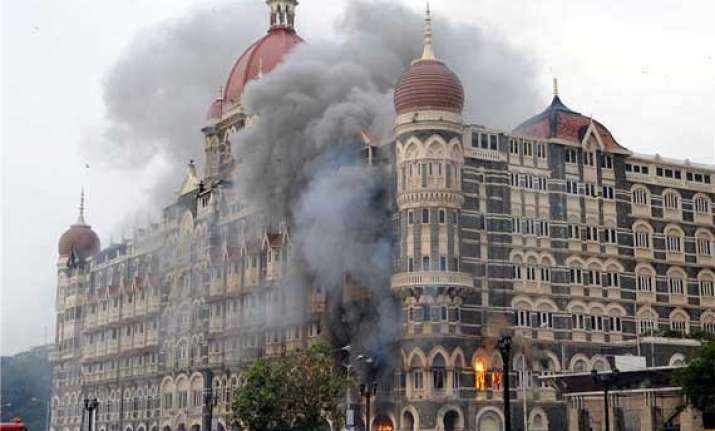
Ten years ago today, India's financial capital Mumbai was rocked by gunfire and explosions. The attack lasted four days and left over 160 people dead. In the subsequent investigations, Zaki ur Rehman Lakhvi and Hafiz Saeed, two leaders of Pakistan-based armed group Lashkar-e-Taiba (LeT), were named as the suspected masterminds of the attack.
In December 2008, the Pakistani authorities arrested Lakhvi and kept him behind bars until 2015, when a local court released him on bail due to "insufficient evidence" provided against him.
Saeed was put under house arrest following the Mumbai attacks but was set free in 2009. In 2012, the United States announced a $10m reward for any information that leads to his capture. 
Over the past decade and a half, LeT has gone through various transformations as it came under international and domestic pressure. Organisations affiliated with LeT include Jamat-ud-Dawa, Falah-e-Insaniat Foundation and Tehreek-e-Azadi Jammu and Kashmir - all led by Saeed.
Despite all these name changes, the core of the LeT is very much alive and its activities extend across the country. So 10 years after the Mumbai attacks, why is Pakistan still unable to contain the movement?

Secret ties

Many believe the secret relationship between the Pakistani intelligence and the LeT - which was exposed during the subsequent investigations in India and the US - is the main reason behind Pakistan's reluctance to stamp out the movement. It is alleged that because of the support of the security apparatus for the group, no solid action has been taken against LeT. And there is very little the civilian authorities can do, even if they want to take action against the group.
The former head of the Federal Investigation Authority of Pakistan, Tariq Khosa, wrote in 2015 that even though his agency had uncovered enough evidence to prove the LeT was behind the Mumbai attacks, the courts had failed to convict anyone for the crime.
Politicians who have tried to push for the organisation to be held accountable have gotten in trouble. After Pakistan's former Prime Minister Nawaz Sharif implied that the LeT was behind the Mumbai attacks in an interview with local newspaper Dawn earlier this year, a Pakistani court initiated a treason case against him and the journalist who published the interview for defaming national institutions.
While those who question the group's actions and ability to operate with impunity are being harassed, the LeT continues to expand its footprint in the country under different guises, using charity organisations as fronts. 
One such front, Jamat-ud-Dawa recently launched a political party called Milli Muslim League, allegedly as part of a military plan to push such groups into mainstream politics. 
The party has not secured official registration with the Election Commission of Pakistan, but it openly backed candidates that contested the July general elections and performed much better than traditional political parties in some areas of the country - such as in Lahore where Sheikh Muhammad Yaqoub secured more votes than the Pakistan People's Party candidate Zubair Kardar. So how did the LeT manage to gain the trust of so many Pakistani citizens?

LeT recruitment among Pakistan's poor

The tacit support LeT receives from the powerful military, which in many ways runs a "parallel government" in Pakistan, allows the organisation to operate freely in all corners of the country. The group focuses its efforts on areas where vulnerable Pakistanis are looking for help with subsistence. 
I have followed the group closely during my reporting missions in the country, and have seen how they run an expansive network of charity organisations. While this is a front that they use to justify their continued presence, it is also a way to win hearts and minds of Pakistanis, who they recruit for their political causes.
I saw this happening multiple times, especially in the aftermath of natural disasters. The Pakistani state lacks the infrastructure to help its population in the aftermath of such disasters and it appears to have outsourced this role to such "charity" groups. 
During a reporting trip to south of Punjab province following a flood in 2014, I witnessed members of the  Falah-e-Insaniyat Foundation helping out the affected population by bringing them food and providing them with shelter. When I asked one of them about their motives, he told me that their primary aim was "to find new recruits for their movement". 
It is unlikely that the Pakistani authorities, and particularly the military, are unaware of LeT's recruitment activities among the poor. But the group is perceived to be focused on "external enemies" - i.e. to be practising its militancy elsewhere - and hence to pose no immediate threat to Pakistan.
This is why the LeT is allowed to operate freely to this day. And this is why we are yet to see any concrete action taken against those who are known to be masterminds of the Mumbai attack.
But this policy of allowing "outward-looking" militancy to continue to exist might soon backfire. In recent times, many former LeT operatives have joined other armed groups, such as the Islamic State of Iraq and the Levant (ISIL), that consider Pakistan an enemy and carry out attacks on Pakistani soil against the Pakistani population.
Furthermore, we cannot possibly expect that instability and militancy in neighbouring countries will not eventually cross back into our territory and affect us as well.
A decade after the Mumbai attacks, it really is time for Pakistan to change its policies and stop allowing hate groups to prosper within its borders. If it fails to take action, the likes of the LeT will continue to radicalise the Pakistani youth, push them towards violence and eventually harm the Pakistani society itself. 
https://www.aljazeera.com/indepth/opinion/pakistan-reluctant-bring-lashkar-taiba-justice-181121143620490.html

LeT commander behind 26/11 Mumbai attacks close to acquittal in Pakistan court


As India Monday marked the 10th anniversary of the 26/11 carnage, the mastermind of the attack LeT operations commander Zaki-ur Rehman Lakhvi has virtually secured his acquittal and his six accomplices are expecting their exoneration anytime in the near future.
The Mumbai attack case in which seven Lashkar-e-Taiba members are facing charges of planning and executing the deadly strike since 2009 is still being dragged on in a Pakistani anti-terror court though the Islamabad High Court in 2015 directed that the case should be wrapped up in two months.
Lakhvi walked free from jail in April 2015 after securing a bail from the trial court, while the six others are in jail. After his release, Lakhvi went underground. He has virtually secured his acquittal with the Pakistan government indicating no plan to challenge his bail.
The six others – Abdul Wajid, Mazhar Iqbal, Hamad Amin Sadiq, Shahid Jamil Riaz, Jamil Ahmed and Younis Anjum – have also “bright chances” of acquittal with their trial witnessing bizarre twists and turns like frequent change of judges and murder of a prosecutor.
On November 26, 2008, ten Pakistan-based LeT terrorists carried out a series of 12 coordinated shooting and bombing attacks lasting four days across Mumbai. A total of 166 people died and over 300 were wounded in the strikes.
Nine of the attackers were killed by police, while lone survivor Ajmal Kasab was captured and hanged after a trial in India.
In a fresh development, the US Monday announced a USD 5 million reward for information leading to the arrest or conviction in any country of any individual who committed, conspired, aided or abetted the 26/11 attack.
Apart from the US, other countries have also asked Pakistan to bring the 26/11 attack perpetrators to justice.
There has been a realisation in Pakistan, especially among politicians, that the attacks had demolished all the past efforts to build friendly ties with India.
However, there are divergent views on whether punishing the culprits in Pakistan will help restore ties between them.
But like ousted premier Nawaz Sharif, questions are being asked in Pakistan “why trial is not being completed?”
When PTI sought a reaction from the Foreign Office on the status of the 26/11 trial, its spokesman Mohammad Faisal just said, “It is sub judice.”
Pakistani prosecutors are, however, quick to blame India for the delay.
Chief prosecutor Chaudhry Azhar told PTI the case can be concluded in a week if India sends 24 witnesses to Pakistan for recording of their statements and other evidence.
“The Mumbai case will take not more than a week to conclude if India allows Pakistan to examine the boat on which the terrorists travelled to reach Mumbai and also send its witnesses here for recording of their statements,” he said.
Azhar, who is also Federal Investigation Agency (FIA) special prosecutor, further said India will have to cooperate with Pakistan if it wants logical conclusion of the case.
“Crime had taken place in Mumbai and onus is on India to provide full evidence to Pakistan. The Indian government has not yet either clearly refused to send its witnesses to Pakistan or allow us to examine the boat there. If it refuses, the benefit will go to the suspects and the case will be over,” he said.
When asked why the government has not challenged the bail granted to Lakhvi, he said there was no strong evidence against his involvement.
Abuzar Peerzada, another prosecutor in the case, said the hearing of the case in the Anti-Terrorism Court (ATC) is being held on regular basis and the next hearing is on November 28.
When asked about any possible time frame for conclusion of the trial, he said: “No…it is very difficult to give any time frame…as it is not an ordinary trial (involving two countries).”
A lawyer associated with the case, requesting anonymity, said: “Since both Pakistan and India’s interests are involved in this case…this is more of a political case than a legal one. And a ‘political case’ has no time limit (for conclusion).”
Raja Rizwan Abbasi, a counsel for Lakhvi and six others, was reluctant to talk to PTI when contacted.
However, a lawyer close to him said the defence is not filing a bail petition of the six suspects as it is hoping that since enough time has passed they have “bright chances” to secure acquittal.
“The defence lawyers are optimistic about acquittal of their clients. Therefore, they are not moving their bail plea,” he said.
Azhar, however, is of the view that they may get benefit only if India does not send its witnesses and other evidence.
The case is being tried in the ATC since 2009. There has hardly been any case in any ATC in Pakistan that is pending for over nine years.
“It appears that the state is not in hurry to decide this case since the matter is related to its arch-rival India,” a senior lawyer said.
Interestingly, former FIA chief Tariq Khosa too pointed out lingering on the case “far too long”.
“Dilatory tactics by the defendants, frequent change of trial judges (at least nine times), assassination of the case prosecutor and retracting from original testimony by some key witnesses have been serious setbacks for the prosecutors,” he said.
Like many others in Pakistan, Khosa too believes the case “will not be over soon”.
Earlier in an interview to Dawn, ex-premier Sharif had questioned, “Should Pakistan allow militants/non-state actors to cross the border and kill 150 people in Mumbai?…Why can’t we complete the trial?”, remarks that got him into trouble.-PTI