M WAQAR.....
"A man's ethical behavior should be based effectually on sympathy, education, and social ties; no religious basis is necessary.Man would indeed be in a poor way if he had to be restrained by fear of punishment and hope of reward after death."
--Albert Einstein !!!
NEWS,ARTICLES,EDITORIALS,MUSIC... Ze chi pe mayeen yum da agha pukhtunistan de.....(Liberal,Progressive,Secular World.)''Secularism is not against religion; it is the message of humanity.''
تل ده وی پثتونستآن
The Saudi-led coalition has deliberately targeted civilians. The UK must press for answers – not be complicit in a cover-up.
Today the UN security council will debate a UK-drafted resolution containing a rather gentle entreaty to the warring parties in Yemen. It will ask them to take “constant care to spare civilian objects, including those necessary for food production, distribution, processing and storage”.
If that sounds like the safety instructions for a new vacuum cleaner, then welcome to the world of UN resolutions. But what it actually reveals is a far darker, more shameful truth. The truth of a Saudi-led coalition, armed by Britain and the United States, which from the very start of the conflict in 2015 has sought to use starvation as a weapon of war.
Most obviously, their on-off blockades of any ports and airports controlled by the Houthi rebels have drastically cut supplies of food to a Yemeni population that relies on imports to eat. But far more insidiously, and in the absence of imports, the Saudi air force has systematically and deliberately destroyed the domestic means of producing and distributing food inside Yemen. Their bombs have constantly targeted agricultural land, dairy farms, food processing factories, and the markets where food is sold.
And when I’ve asked even the most craven apologists for the Saudi regime what possible reason there would be for targeting these sites – fields of crops and village wells – they just shrug their shoulders and say: “Sometimes mistakes are made.”
But these are no mistakes. These are medieval tactics with modern weapons deliberately employed by the architect of the Yemen war – Crown Prince Mohammed bin Salman – in an attempt to bring the rebel-held areas of the country to their knees. He could not care less about the impact on Yemen’s civilian population, any more than he cared about what happened to Jamal Khashoggi.
But we have a responsibility to care, not least because Britain is one of the leading exporters of the planes and weapons with which Saudi Arabia has enforced its blockades, and destroyed Yemen’s food infrastructure.
So now is the time to act. It may be too late for the minimum of85,000 children who are estimated to have died from malnutrition and disease since the war in Yemen began, in addition to the several hundred killed by Saudi air strikes. But it is not too late for the five million Yemeni children whom the United Nations has warned are on the brink of starvation, thanks to the man-made, and Saudi-induced famine that is currently gripping the country.
We must secure an immediate cessation of hostilities in Yemen, particularly around the key port and battleground of Hodeidah, and the full, unhindered opening of access for humanitarian relief for the Yemeni civilians who desperately need it.
That must be the priority, but I also believe we need accountability for the states and individuals that have caused this crisis, brought us to the brink of a famine that the UN says would be the worst in the past 100 years, and – by using starvation as a weapon of war – are in clear breach of international humanitarian law.
There is one man above all who bears that responsibility, and one man who must be held to account: the crown prince of Saudi Arabia. And yet, when I asked Jeremy Hunt yesterday in parliament why the resolution that will go before the security council today did not mention the need for an investigation of all alleged war crimes, and full accountability for those responsible, and whether the crown prince had insisted on the removal of that demand, he did not answer.
If that is what happened, it should be a national disgrace, because it does not just make our country complicit in protecting the reputation of the crown prince, but in covering up the terrible toll of starvation that he has inflicted on the children of Yemen.
Human rights activists and family members of Baloch missing persons have been protesting for the safe release of their loved ones outside the press club Quetta.
On Thursday along with family members of Baloch missing persons, a huge number of human rights activists, members of the civil society and lawyers carried out a protest outside the Press Club demanding safe release of forcefully abducted Baloch political activists, students’ leaders and people from different walks of life.
The campaigners, mainly, women, and children have been on hunger strike for almost a week. The Voice for Baloch Missing Persons (VBMP) is leading the campaign for more than ten years, under the leadership of chairman of VBMP Nasrullah Baloch and Vice Chairman Mama Qadeer Baloch.
Currently, family members of Shabir Baloch, a Baloch student activist, have been protesting for the safe release of their family member. Shabir Baloch was whisked away by unidentified armed men from Gwarkup area on October 4, 2016 and is still missing. Sister of Shabir Baloch pleads Pakistani judiciary to help them recover Shabir Baloch.
Lashkari Raisani, a Baloch nationalist and leader of Balochistan National Party, in his recent visit to the camp questioned higher authorities and seconded the campaigners for their legal rights for demanding fair trial for the enforced disappeared Baloch under Pakistan’s constitution.
The Free Balochistan Movement has announced to hold protests and awareness campaigns on 10 December ‘International Human Rights Day’ in Europe and other countries across the globe.
The aim of the protests and awareness campaign, according to the FBM press statement, is to expose Pakistan’s war crimes in Balochistan including enforced-disappearances, the discovery of mutilated dead bodies and other human rights violations.
The FBM said that the issue of enforced-disappearances ‘missing persons’ is of grave concern and a serious issue. ‘At present Baloch mothers, sisters along with children are sitting on …
Asia Bibi's daughter, Eisham Ashiq, has thanked her mother's supporters after she was acquitted of blasphemy by a Pakistani court. Eisham was speaking from a safe house in the country for the first time since her mother's acquittal.
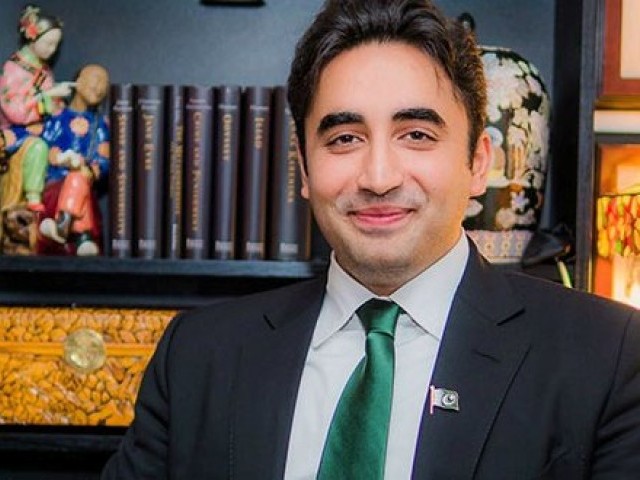
Criticizing Prime Minister Imran Khan for allegedly ‘insulting his political opponents on foreign visits’, Pakistan Peoples Party (PPP) Chairman Bilawal Bhutto has said that the premier is ‘weak and insecure’.https://www.brecorder.com/2018/11/22/453985/bilawal-bhutto-calls-pm-imran-khan-weak-and-insecure/
Addressing the media on Thursday in Gilgit, the PPP leader said that PM Khan’s behavior is unprofessional as instead of representing the government, he criticizes his political opponents. He further said that PM Khan was weak and insecure. Bhutto also alleged that the premier formed his government by stealing votes.
He contended that the prime minister wanted to pressurize his opponents by taking revenge so that they do not oppose him. He further said that the government should implement the same law for everyone and hold people accountable without discrimination, local media reported.
The PPP chairman added that his party had countered dictators generals Ziaul Haq and Pervez Musharraf. He added that his party will counter this ‘puppet government’ as well.
Addressing a rally during his visit in Gilgit, Bhutto said that PPP had a relationship with Gilgit for three generations. He said PPP will continue to struggle for the rights, development and welfare of Gilgit-Baltistan.
He said that the ruling government’s slogan of change started with a Rs41 billion cut in G-B development budget. “Roti is being sold for Rs10 and naan for Rs15. This is Naya Pakistan.” He said in Naya Pakistan nobody’s life and property were safe.
Chairman Pakistan Peoples Party appreciated the decision to open Kartarpur border corridor by Pakistani and Indian governments for Sikh pilgrims, and welcomed the Sikh pilgrims who had travelled to Pakistan to visit the Gurdwara Darbar Sahib.
Recognising the decision as the fulfillment of the dream of former Prime Minister Shaheed Mohtarma Benazir Bhutto after a quarter century, he recalled that Prime Minister Shaheed Mohtarma Benazir Bhutto had first proposed to grant a visa-less free corridor to Kartarpur shrine from the Indian border. Since then Sikh devotees had been impressing upon the Government of India to accept Pakistan’s proposal and facilitate Sikh pilgrims visiting their holy shrine.
Bilawal Bhutto Zardari said that PPP always stood for people to people contact between the two neighbouring countries and every government led by PPP had taken significant steps to facilitate the Sikh, Hindu and Buddhist pilgrims from India and the world over, to visit their sacred places.
He pledged that PPP would continue to initiate and support more facilities for non-Muslim pilgrims to visit their holy places in Pakistan.
New Twitter spat between Donald Trump and Imran Khan is actually an old argument.
The exchange of tough messages over the last few days on Twitter between American president Donald Trump and Pakistani Prime Minister Imran Khan created news but was nothing new. Trump accused Pakistan of not doing “a damn thing for us” and Khan replied with a list of costs incurred by Pakistan on behalf of the United States.
Leaders of the two countries have been having similar arguments since 1965, when the US suspended military supplies to Pakistan during its war with India.
Three American presidents — Dwight D. Eisenhower, John F. Kennedy, and Lyndon B. Johnson — have asked the question: What do we get from aiding Pakistan? Five — Jimmy Carter, George H.W. Bush, Bill Clinton, George W. Bush, and Barack Obama — have wondered aloud about whether Pakistan’s leaders can be trusted to keep their word.
Pakistan had retorted then that the ungrateful Americans had hurt Pakistan in the middle of a war even though Pakistan took risks in helping the Americans spy on the Soviet Union. Americans argued that they had paid Pakistan for its services with good money and Pakistan had violated the terms under which it acquired US weapons by initiating war with India.
The argument about who wronged whom has taken many twists and turns but its nature has changed little. The bottom line is that the US-Pakistan relationship has been transactional and both sides periodically disagree on the terms of their transaction.
Over the last two decades, US-Pakistan relations have often been described as America’s most difficult external relationship. Although the two countries have been nominal allies dating back to Pakistan’s independence in 1947, their relationship has never been free of friction.
Even in its heyday in the 1950s and 1960s – when Pakistan was described as America’s “most allied ally in Asia”– the US-Pakistan partnership was far from an alliance based on shared values and interests; instead, each of the two partners was always preoccupied with confronting different enemies and pinning different expectations to their association.
Pakistan’s motive in pursuing an alliance with the United States was its quest for security against its much larger neighbour, India. Pakistan has repeatedly turned to the United States as its most significant source of expensive weapons and economic aid.
Although, in the hope of winning US support for Pakistan’s regional aims, Pakistani leaders have assured US officials that they share the United States’ global security concerns. Pakistan has been repeatedly disappointed because the United States does not share Pakistan’s fears of Indian hegemony in South Asia.
For its part, the United States has also chased a mirage when it has assumed that, over time, its assistance to Pakistan would engender a sense of security among Pakistanis, thereby leading to a change in Pakistan’s priorities and objectives.
The United States initially poured money and arms into Pakistan in the hope of building a major fighting force, which could assist in defending Asia against Communism. Pakistan repeatedly failed to live up to its promises to provide troops for any of the wars the United States fought against Communist forces, instead using American weapons in its conflict with India.
Furthermore, the US hopes of persuading Pakistan to give up or curtail its nuclear weapons programme or to stop using Jihadi militants as proxies in regional conflicts have similarly proved futile.
Meanwhile, in Pakistan, successive governments have spent a lot of time trying to figure out how to maintain Pakistan’s freedom of action while depending on American aid. But neither country has changed its core policies nor have they given up the hope that the other will change.
Both sides have their own narrative, making it a tale of exaggerated expectations, broken promises, and disastrous misunderstandings.
President Trump might be incorrect in saying that Pakistan has not done anything for the US because over the decades, Pakistan has helped the United States with some of its policy objectives. He is right in noting that Pakistan has offered tactical cooperation in return for aid, while at the same time undermining strategic objectives of the US.
As I have already told PTI, Pakistani leaders, too, are being disingenuous in describing the US as ‘ungrateful’. Americans have provided over $43 billion in military and economic assistance since 1954, helped build Pakistan’s conventional military capability, and bailed Pakistan out of several economic and political crises.
The U.S. has also ignored or treaded lightly with Pakistan over actions that have resulted in strenuous sanctions for other countries. Pakistan’s open support for Jihadi terrorist groups has not resulted in it being labelled a “state sponsor of terrorism” and its pursuit and acquisition of nuclear weapons has been treated differently than, say, Iran or North Korea.
In the process of seeking transactional advantages, both countries have incurred strategic costs. The Americans have been mired in the long-drawn conflict in Afghanistan because of the unrealistic assumption that economic and military assistance would somehow help Pakistan root out its proxies in Afghanistan – the Afghan Taliban.
Pakistan, on the other hand, has had to pretend to be a US ally even in Afghanistan even though its self-defined national interest there did not coincide with the American objectives. This led to the “deceit and lies” that Trump complains about as well as the “costs to Pakistan” that are at the heart of Imran Khan’s grievance.
Trump and many Americans now recognise that an alliance cannot endure amidst a fundamental divergence of interests. Khan’s assertion that “Pak[istan] has suffered enough fighting US’s war. Now we will do what is best for our people and our interests,” reflects Pakistani sentiment. Although it begs the question why successive Pakistani governments have agreed to be an American ally if the alliance did not serve Pakistan’s interests?
It is difficult to recall another country that says that it acted against its own interests for the sake of an ally like Pakistan does or one that demands recompense for losses it incurred. In any case, few outside Pakistan buy into the mantra of “We did it for the US even though it resulted in the killing of our own people and huge losses to our economy”.
Pakistan’s narrative is said to be about national honour, which gets hurt by any negative remark by an American leader, but Pakistan’s policy has always been pragmatic.
Pakistan’s perennial need for aid and loans, as well as military material, was the basis of its elite’s pursuit of an alliance relationship with the United States. As long as that need persists, Islamabad would continue to be tempted to go back to old transactional patterns.
It is the Americans who are less likely to return to what I describe in my book as ‘magnificent delusions’. Not only do Pakistan’s ambitions in Afghanistan conflict with US plans, but the two countries strongly disagree about China’s expanding influence in Asia.
Only a strategic rethink on the part of Pakistan can lead to a reset in US-Pakistan ties. Until then, occasional Twitter spats and “we paid a heavy price for being your ally” statements will continue to characterise this unusual relationship.
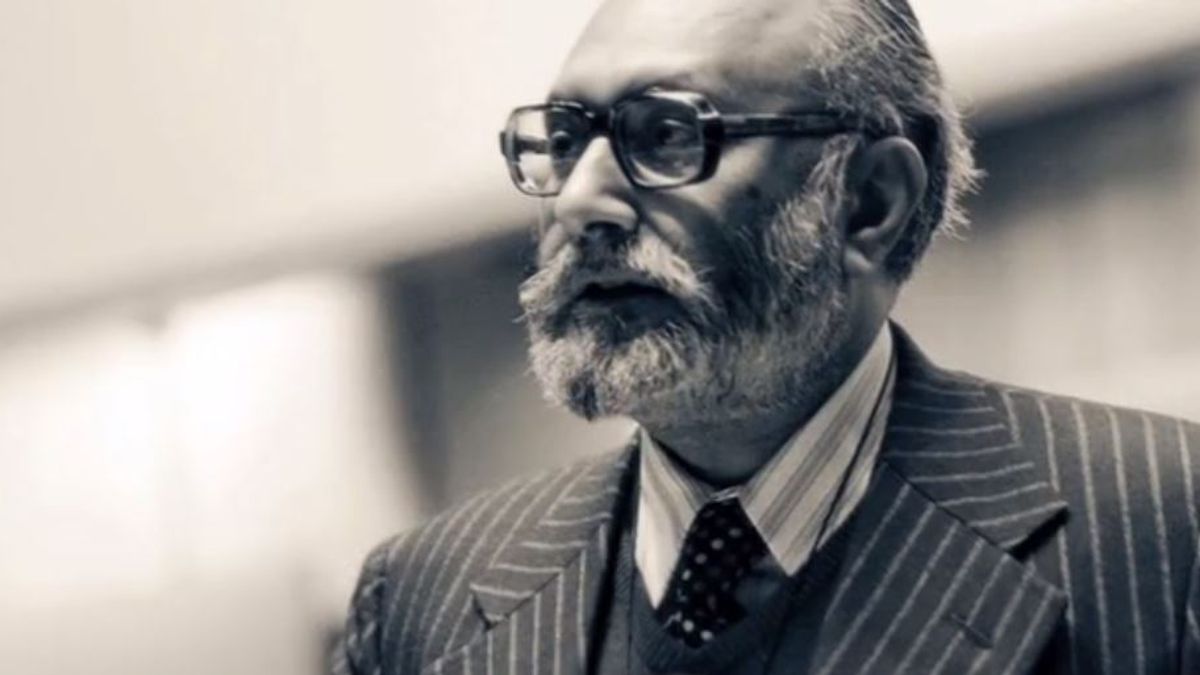
Dr Abdus Salam won the 1979 Nobel Prize for physics. But in his home country Pakistan, he is all but forgotten because of his religious affiliation.
Exactly 22 years ago, on 21 November 1996, one of Pakistan’s greatest scientists passed away, largely unsung.
It hardly seemed to matter to his countrymen that he was the first Pakistani, and only the second Muslim after Egyptian President Anwar al-Sadat, to be awarded a Nobel Prize. What seemed to matter more was the fact that he was an Ahmadi, and thus, not a ‘Muslim’ according to Pakistani law.
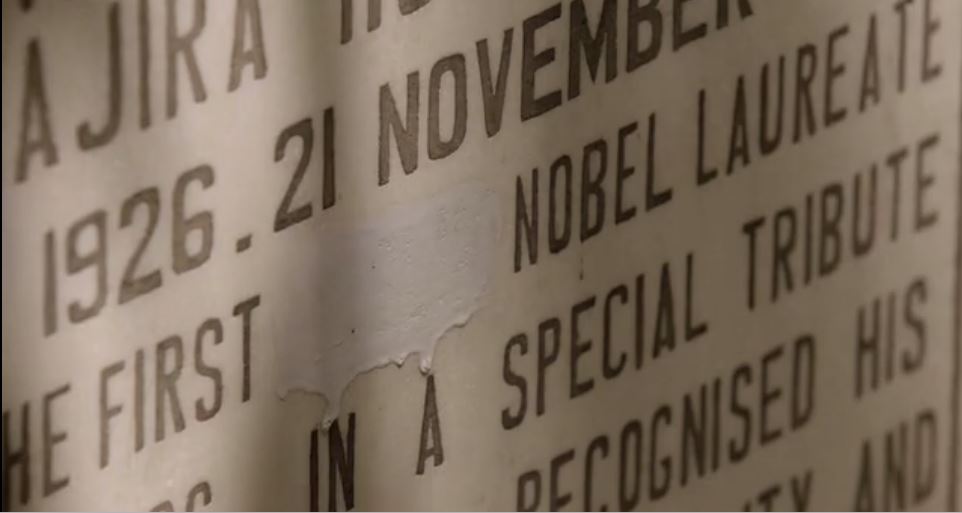
Then, at the beginning of 2018, came a documentary, which begins with the shot of a tomb in Rabwah, home of the Ahmadiyya community. The camera zooms in to identify it as the resting place of Prof. Muhammad Abdus Salam, who in 1979 became the first ______ Nobel Laureate for his work in physics. The blank is created by the word ‘Muslim’ being painted over.
A close-up shot of Dr. Abdus Salam’s tomb where the word ‘Muslim’ has been wiped out with white paint | Screengrab from the documentary
The documentary, titled Salam: The First Muslim Nobel Laureate, has been produced after 14 years of arduous research. While the producers, Omar Vandal and Zakir Thaver, are from Pakistan, the director is New York-based Indian-origin documentary filmmaker Anand Kamalakar.
The film captures Salam’s life, death and disappearance from public memory, and attempts to reintroduce him to the modern audience. None other than former army chief, president of Pakistan and the architect of the Kargil invasion, Pervez Musharraf, has donated money for making the film, along with 378 others.
In an email interview, Kamalakar told ThePrint that he was inspired to join this project in 2015 because Salam was a curious mix of ‘man of science’ and ‘man of religion’.
“I wanted to investigate this contradiction, where on one hand he is working at the highest levels of science, by default trying to make the idea of god obsolete, but at the same time is deeply religious and steadfast in his beliefs,” Kamalakar said.
Tragically, there seems to be no direct way for Salam’s own countrymen to learn about his achievements. It is risky to publicly exhibit the film in Pakistan in the current climate, as many extremist Muslims believe that Ahmadis violate the fundamental prescription of Islam: The uncompromising belief in the finality of the Prophet Mohammad. In recent years, violence against the Ahmadi community has grown significantly and several have even been killed for holding on to their faith.
Who was Salam?
Salam was born on 29 January 1926 in Jhang, undivided Punjab, to parents who were part of the Ahmadiyya movement.
A child prodigy, he topped Panjab University’s matriculation examination at the age of 14. He was greatly inspired by Indian mathematician Srinivasa Ramanujan, and based his final year undergraduate thesis on the latter’s work.
Salam’s brilliance earned him laurels at the University of Cambridge, including the prestigious Smith’s Prize. In 1949, he completed his doctoral studies from Cambridge in electrodynamics, only to return in 1954 as professor.
He went on to leave an indelible impact on the scientific infrastructure of Pakistan, helping set up some of its most prominent scientific institutions, such as the Pakistan Atomic Energy Commission, the Space and Upper Atmosphere Research Commission and the Karachi Nuclear Power Plant.
Salam’s stint as scientific adviser to the President of Pakistan from 1961 to 1974 was an elaborate effort to help restructure the country’s scientific landscape and encourage people to purse their careers and life goals in the field of science. However, in 1974, prime minister Zulfikar Ali Bhutto led the Pakistani parliament to pass a bill declaring Ahmadis as non-Muslims, leading Salam to first oppose the law and then leave the country.
At the international level, Salam’s gift to science was his proposal to form the International Centre for Theoretical Physics, which he wanted to dedicate to researchers from developing countries. It was ultimately set up in Trieste, Italy, in 1964, facilitating research in “physical and mathematical sciences”. The ICTP was renamed the Abdus Salam International Centre for Theoretical Physics in 1997 in his honour.
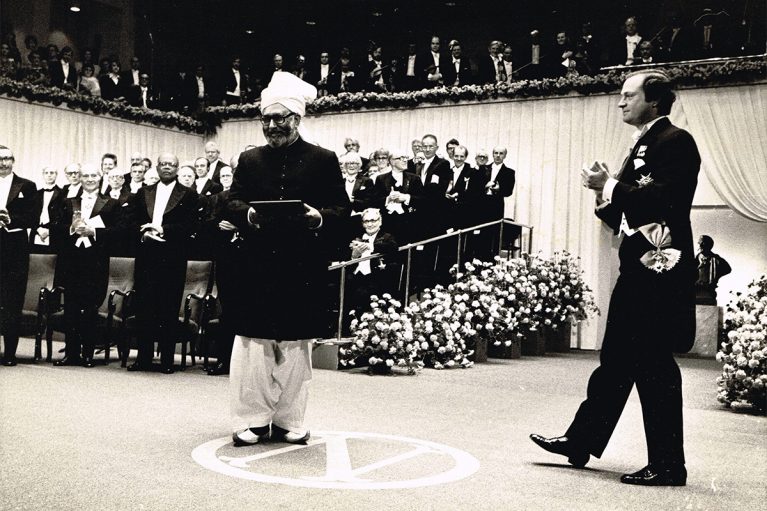
His greatest achievement, though, was the 1979 Nobel Prize in physics, which he shared with Harvard physicists Steven Weinberg and Sheldon Glashow. The prize was awarded “for their contributions to the theory of the unified weak and electromagnetic interaction between elementary particles, including, inter alia, the prediction of the weak neutral current”, as per the Nobel Prize Foundation website. Only one other Pakistani has been awarded a Nobel Prize since — Malala Yousafzai in 2014.
Dr. Abdus Salam after receiving his Nobel Prize for physics from King Carl XVI Gustaf of Sweden on 10 December 1979 | Screengrab from documentary
Salam worked and collaborated with several scientists, not limited to Americans or Britons. In collaboration with Indian-American physicist Jogesh Pati, Salam postulated a model which was an integral part of the grand unification theories — an attempt to explain the universe by looking at different forces of nature.
Salam died of a rare disease called progressive supranuclear palsy, a brain disorder that causes serious balance related problems.
A tale of two documentaries
Salam: The First Muslim Nobel Laureate has bagged awards at the Chicago, Washington and Seattle South Asian Film Festivals, and has been screened at several international festivals, including India’s Mumbai International Film Festival. It will be next screened in December at New York’s South Asian International Film Festival.
Kamalakar told ThePrint that the producers were “aspiring scientists” who “had always had to look to the West to be inspired, in spite of having an accomplished person who was born in their own nation. So they decided to make a film about him to spread his story and inspire the generations to come”.
“I am of Indian origin and the producers are Pakistani. We were all inspired by the story and legacy of Abdus Salam. Salam in turn was inspired by the great mathematician Srinivasa Ramanujan to pursue a career in Mathematics and Physics. The camaraderie we as filmmakers developed during the process of making this film showed how similar we are in so many ways and share some of the same issues. We sincerely hope that this poses as an example for all to work towards a better relationship between the peoples of the two nations, in intellectual spheres and others,” Kamalakar told ThePrint.
This is actually the second major attempt to document Salam’s life, the first having been in 1996 by Dr Pervez Hoodbhoy, Pakistan’s noted nuclear physicist and a former student and admirer of Salam.
Hoodbhoy’s documentary, though, was drastically altered by a producer with the state-run Pakistan Television (PTV). Hoodbhoy told ThePrint in an email interview that the producer, an “Ahmadi-hater”, had deleted all the materials gathered over the course of a full year, and labelled it “plain sabotage”.
The altered documentary was aired a day after Salam’s death.
Asked why he had called Salam a “tragic figure” in the documentary, Hoodbhoy said, “Abdus Salam loved Pakistan. It badly mistreated him but he chose to blame it on a clique of mullahs and fanatics rather than the whole country. His greater disappointment was that he proved powerless in bringing science to Islam. Like the tragic figure Sisyphus who kept pushing a boulder up the hill only to have it roll back again and again, he kept trying and trying. It broke his heart that Muslim governments would not listen to him.”
How Pakistan treated Salam after 1974
Pakistan did award Salam its highest civilian honour, Nishan-e-Imtiaz, in 1979. Journalist and public intellectual Tariq Ali in his 2018 documentary, however, pointed out that military ruler Zia-ul-Haq could have done this mainly for “opportunism”, which “gave him a liberal image in the West”.
The documentary is a reminder that Salam’s achievements are largely unknown to his own compatriots. His name has been virtually erased from school and college curriculums and students at his own alma mater, Lahore’s Government College, admit they don’t know much about the scale of his accomplishments.
Pakistan rejected the proposal to name him UNESCO’s director general, the proposal to name Quaid-i-Azam University’s physics department after him was opposed and although his funeral was attended by many of his devout supporters and well-wishers, no official from the government came to offer condolences.
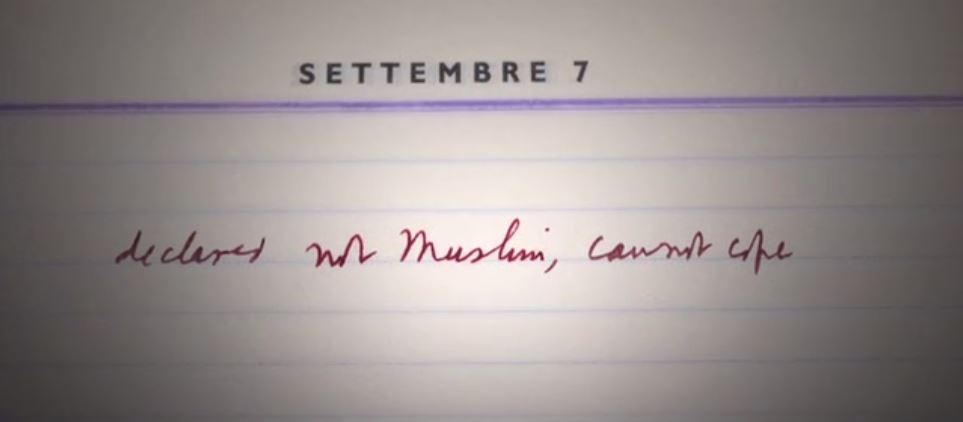
When Salam quit as scientific adviser to the president of Pakistan in 1974, he made an entry in his diary that read: “Declared non-Muslim, cannot cope.”
Dr. Abdus Salam’s diary entry | Screengrab from documentary
His countrymen have proven his pessimism was justified.
The situation in Afghanistan stagnated and may even have deteriorated during the second half of 2018, despite U.S. military leaders and diplomats insisting that progress is being made.
That’s the assessment not of some international critics of the U.S., but of watchdog offices from the Pentagon, State Department and the U.S. Agency for International Development.
In its quarterly report of the U.S.-led war against terrorism in Afghanistan, the Pentagon’s independent inspector general said few gains were made between July 1 and Sept. 30, 2018 despite the U.S. increasing strikes against the Taliban, expanding training for Afghan forces and pressuring Pakistan to act against terrorist safe havens.
“In public statements, diplomatic and military leaders emphasized that progress towards the goals of the South Asia strategy is being made,” the report stated. “However, available measures of security in Afghanistan, including total security incidents, population control, and civilian casualties, showed little change.”
Civilian casualties and casualties among Afghan security forces were higher than they were during the same time last year, the report pointed out.
Furthermore, ISIS-K — the Islamic State’s Khorasan Province branch, active in Afghanistan and Pakistan — has continued to mount deadly attacks.
These findings contrast with assertions by some U.S. officials that President Donald Trump’s Afghan war strategy — which was announced more than a year ago — is working.
On the other hand, the findings are in line with comments made last weekend by Gen. Joseph Dunford, chairman of the Joint Chiefs of Staff, who said the battle against the Taliban is still in a stalemate.
The Taliban “are not losing” in Afghanistan, Gen. Dunford, the top U.S. military officer, told a security forum last week.
“We used the term stalemate a year ago and, relatively speaking, it has not changed much,” he said.
On Monday, the Taliban said that a three-day meeting with the U.S. special envoy to Afghanistan had ended without an agreement for a peace deal.
Envoy Zalmay Khalilzad declared a deadline of April 2019 to end the 17-year-long war, but Taliban leaders said they hadn’t accepted any deadline.
A senior member of the Taliban said Khalilzad’s move to declare a deadline showed that the U.S. was desperate to withdraw troops from the country.
The Taliban have strengthened their grip over the past three years, with the government in Kabul controlling just 56 per cent of Afghanistan, down from 72 per cent in 2015, a U.S. government report showed this month.
The Pentagon inspector general’s report pointed out that only 65 per cent of the Afghan population lived in government-controlled and government-influenced areas, “a figure that has not changed in the past year.”
Indeed, the number of civilians killed in Afghanistan in 2018 is on track to rank among the highest since 2001.
Over 36 people were killed in various attacks last month as Afghans went to the polls for the country’s first parliamentary elections in eight years.
ISIS-K claimed responsibility for a suicide attack that left four people dead last week. A few days later, Taliban insurgents slaughtered at least 30 Afghan forces.
Meanwhile, the U.S., which has some 14,000 troops in Afghanistan, continues to seek an exit strategy.
America’s top general admits the war is at an impasse.
Another devastating suicide attack in Kabul on Tuesday and an independent report on the situation in Afghanistan serve to underscore what is now a growing consensus in Washington: that the United States is making no progress toward ending the 17-year-old war there.
More than 50 people were killed and at least 80 others injured when a suicide bomber blew himself up inside a wedding hall in the Afghan capital, according to reports. This comes as a blow to the Trump administration’s strategy in Afghanistan, as American military officials had made defending major urban centers such as Kabul from the Taliban a linchpin of the effort.
Just days before the bombing, America’s top general admitted the war is at an impasse. The Taliban is “not losing right now, I think that is fair to say,” Gen. Joseph Dunford, the chairman of the Joint Chiefs of Staff, said during the Halifax International Security Forum on Nov. 17.
“We used the term stalemate a year ago, and, relatively speaking, it has not changed much.”
Meanwhile, the U.S. Defense Department’s Office of Inspector General on Nov. 19 released a gloomy report on the fight in Afghanistan for the second quarter in a row, citing little progress toward reconciliation. Operations in the country drew particular scrutiny over the past month after a high-profile Taliban attack in the southern province of Kandahar killedan influential Afghan police general and the local intelligence chief, narrowly missing U.S. Gen. Scott Miller, the new commander of U.S. and NATO forces in Afghanistan.
In the midst of increasing violence, the U.S. envoy to Afghanistan, Zalmay Khalilzad, reportedly held three days of talks with the Taliban in Qatar over the weekend. At a news conference in Kabul on Sunday, Khalilzad struck a decidedly more optimistic tone than his military counterparts on peace efforts—though he did not mention the talks in Qatar.
“I think there is an opportunity for reconciliation and peace,” Khalilzad said. “The Taliban are saying they do not believe they can succeed militarily, that they would like to see the problems that remain, resolved by peaceful means, by political negotiations.”
But the peace talks have sputtered and stalled in the past. While military leaders over the summer lauded a brief cease-fire between the Afghan government and the Taliban over the Muslim holiday of Eid al-Fitr in June, the Taliban did not reply to Afghan President Ashraf Ghani’s offer to implement a second cease-fire. Instead, the Taliban focused on disrupting preparations for the October parliamentary elections, according to the Inspector General report.
James Dobbins, a former senior U.S. diplomat who served as special envoy for Afghanistan and Pakistan from 2013 to 2014, said there has been little progress in the past decade on bringing peace to Afghanistan. “Particularly for the last decade, we face a basic dilemma, which is that the best we can do is sustain the status quo—and that’s not a very satisfactory goal,” he said.
Meanwhile, the picture on the ground is increasingly dismal. For the past year diplomatic and military leaders have insisted that they are making headway toward the goals of the South Asia strategy, which in addition to defending population centers also includes airstrikes on Taliban narcotics labs and other revenue sources. The end goal is to pressure the Taliban into engaging in peace talks. In July, U.S. Secretary of State Mike Pompeo said“the president’s strategy is indeed working,” and Gen. Joseph Votel, the commander of U.S. Central Command, later expressed cautious optimism. Speaking to reporters in August, outgoing commander of U.S. Forces-Afghanistan Gen. John Nicholson also said he believed the strategy is working.
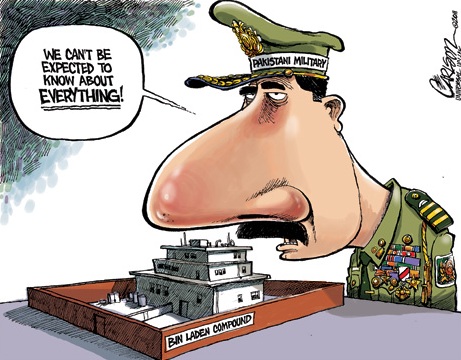
The Pentagon's statement came days after President Trump said that Pakistan does not do "a damn thing" for the US, alleging that its government had helped al-Qaeda chief Osama bin Laden hide near its garrison city of Abbottabad.
The US has suspended $1.66 billion in security assistance to Pakistan after President Donald Trump's directive, the Pentagon has said, in what experts believe is a strong signal of American frustration. The Pentagon's statement came days after President Trump said that Pakistan does not do "a damn thing" for the US, alleging that its government had helped al-Qaeda chief Osama bin Laden hide near its garrison city of Abbottabad.
"$1.66 billion of security assistance to Pakistan is suspended," Col Rob Manning, spokesman of the Department of Defence, told reporters in an e-mail response to questions on Tuesday. No further breakdown of the suspended security assistance to Pakistan was provided.
According to David Sedney, who served as Deputy Assistant Secretary Defence for Afghanistan, Pakistan and Central Asia during the previous Obama administration, the blocking of military assistance to Pakistan, which began in January this year, is a strong signal of American frustration. "But, so far Pakistan has taken no serious steps to address the core US concern - that Pakistan tolerates and often encourages groups which use violence against Pakistan's neighbours," Sedney told PTI.
"Pakistan's leaders have promised cooperation, but beyond words, serious cooperation has not happened, therefore President Trump is frustrated and so are most Americans," he said in response to a question.
"This frustration does not ignore the suffering that Pakistani people have undergone. It just asks Pakistan to recognise that it should act to help stop the suffering of others," said the Senior Associate at the Center for Strategic and International Studies think-tank.
Previously, Sedney was at the Department of State and the National Security Council, as well as Acting President of American University of Afghanistan. He was part of the Pentagon when Laden was killed in a raid by US commandoes in Pakistan's Abbottabad. Over the last few days, Trump has said that people in Pakistan knew about the presence of Laden.
"I agree with the views of Carlotta Gall of the New York Times who reported in her book 'The Wrong Enemy' that a very small group of very senior Pakistani military leaders knew about Laden's presence in Pakistan. I have not seen any evidence that his presence in Abbottabad was widely known by many in Pakistan," Sedney told PTI in an interview.
While Pakistan has suffered terribly from terrorism by Islamic extremists, Islamabad has also enabled extremist groups that attack its neighbours, he observed. After years of dithering, in recent years, Pakistan's security forces have moved strongly against the extremists that threaten the Pakistani state, Sedney said.
"What the US seeks, what President Trump is asking for, is for Pakistan to take the same kind of measures against the Taliban, Lashkhar-e-Taiba and against all groups in Pakistan that threaten Pakistan's neighbours," he said.
"But, we still see the Taliban moving weapons, fighters and money through Pakistan. We still see Taliban commanders taking refuge in Pakistan, keeping their families in Pakistan, holding meetings and conducting training in Pakistan and shipping explosives from Pakistan into Afghanistan," Sedney alleged, adding that leaders of sanctioned organisations acting freely in Pakistan and speaking publicly in favour of violence.
If Pakistan took some strong measures against the Taliban, peace would come to Afghanistan quickly, he said.
US Secretary of State Mike Pompeo has roped in former top American diplomat Zalmay Khalilzad for peace talks with the Taliban. Both Afghanistan and Pakistan would benefit from a huge "peace dividend", he asserted.
"Similarly, if Pakistan took strong measures against groups which act against India, Pakistan would harvest huge economic benefits from better economic ties with India," Sedney added.
Ties between the US and Pakistan strained after Trump, while announcing his Afghanistan and South Asia policy in August last year, hit out at Pakistan for providing safe havens to "agents of chaos" that kill Americans in Afghanistan and warned Islamabad that it has "much to lose" by harbouring terrorists.
In September, the Trump administration cancelled $300 million in military aid to Islamabad for not doing enough against terror groups like the Haqqani Network and the Taliban active on its soil.
Supporters appeal for family to be given asylum in Europe or north America. The family of Asia Bibi, the Christian woman who spent eight years on death row in Pakistanfor blasphemy before being acquitted three weeks ago, claim they are being hunted by extremists going house to house with their photographs to try to track them down.
Bibi’s family have been in hiding since her acquittal by the country’s supreme court. She is in protective custody as part of a deal between the government and a hardline Islamic party, under which violent protests were called off while a review of the court ruling was undertaken.
Bibi’s lawyer, relatives and supporters have appealed for the family to be given asylum in a European or north American country. Several countries have indicated their willingness to offer a home, but nothing concrete has emerged.
John Pontifex, of Aid to the Church in Need UK (ACN), which has campaigned on Bibi’s behalf since she was convicted and sentenced to death in 2010, said he had been in almost daily contact with her family over the past three weeks and they were very frightened.
“They have told me that mullahs had been reported in their neighbourhood going from house to house showing photos of family members on their phones, trying to hunt them down,” he told the Guardian.
“The family have had to move from place to place to avoid detection. Sometimes they can only operate after sundown. They have had to cover their faces when they go out in public. They have had to remove the rosary that hangs from their car rear-view mirror for fear of attack.”
Pontifex said the family’s faith was “sustaining them in this time of acute danger”. He added: “They say that if they are not allowed to find a future outside Pakistan, the fear is that sooner or later something terrible might happen to them.”
Bibi’s lawyer, who fled Pakistan shortly after the court ruling saying his life was in danger, said this week that talks on asylum were under way with several European countries. “I hope the western world is trying to help her,” Saiful Malook told reporters in Frankfurt.
Canada, Spain and France are thought to have offered asylum to Bibi. Germany and Italy have reportedly held talks with Pakistan on the issue.
The UK government has declined to answer questions about whether it is considering an offer of asylum, saying it does not want to further endanger Bibi and her family.
The former foreign secretary Boris Johnson and many other MPs and peers have called for the UK government to act. Some reports have suggested that the government fears a backlash among British Muslims of Pakistani heritage if it offers Bibi asylum.
On Tuesday, Sayeeda Warsi told the House of Lords: “There have been press reports that Asia Bibi, if granted asylum in the United Kingdom, would potentially not be safe from some communities here … As someone who is deeply connected to British Muslim communities, I assure her that they are fully supportive of any asylum claim that Asia Bibi may have and that our country may afford her, and that she would be supported as she would be by all other communities in this country.”
The Muslim Council of Britain said in a tweet: “There are unfounded media reports that Pakistani national Asia Bibi is being denied asylum into the UK because of concerns from British Muslims. We find such insinuations to be as nonsensical as they are divisive. We see no reason why Asia Bibi should be denied asylum into the UK.”
After Bibi’s acquittal, Islamic hardliners called for her and the judges in the case to be killed, and they mounted protests that brought cities to a standstill. Pakistan’s prime minister, Imran Khan, has been accused of capitulating to their demands.
Bibi, a farm labourer, was accused by Muslim villagers of insulting the prophet Muhammad in a row over a cup of water. The supreme court judgment said there was no evidence to support the charge.
پاکستان پیپلز پارٹی کے چیئرمین بلاول بھٹو زرداری نے شہید شاہنواز بھٹو کی 60 ویں سالگراہ کے موقعے پر انہیں شاندار الفاظ میں خراج عقیدت پیش کیا ہے۔ اپنے پیغام میں پی پی پی چیئرمین نے کہا کہ شہید شاہنواز بھٹو انقلابی اور بے خوف شخصیت کے مالک تھے، ظالموں نے انہیں جواں عمری میں ہی بے دردی سے قتل کردیا۔ انہوں نے مزید کہا کہ شہید ذوالفقار علی بھٹو کے عدالتی قتل کے بعد جمہوریت کے لیئے سرگرم عمل بھٹو خاندان کو مزید دکھ دینے اور حوصلے پست کرنے کی خاطر آمریتی عناصر نے سب سے پہلے شہید شاہنواز بھٹو کو نشانہ بنایا، کیونکہ وہ خاندن میں سب سے چھوٹے اور سب کو عزیز تھے۔ پی پی پی چیئرمین نے کہا کہ شہید شاہنواز بھٹو ہمیشہ جیالوں اور عوام کی دلوں میں زندہ رہیں گے۔ بلاول بھٹو زرداری نے کارکنان و عوام سے اپیل کی https://mediacellppp.wordpress.com/2018/11/20/%D9%BE%D8%A7%DA%A9%D8%B3%D8%AA%D8%A7%D9%86-%D9%BE%DB%8C%D9%BE%D9%84%D8%B2-%D9%BE%D8%A7%D8%B1%D9%B9%DB%8C-%DA%86%DB%8C%D8%A6%D8%B1%D9%85%DB%8C%D9%86-%D8%A8%D9%84%D8%A7%D9%88%D9%84-%D8%A8%DA%BE%D9%B9-2/