Friday, November 2, 2018

Trouble at the Pakistan-Iran Border


It is increasingly apparent that all is not well between Pakistan and Iran, despite the fact that the two countries officially use every chance to deny that there is friction.
In mid-October, it was reported that around a dozen Iranian security personnel were kidnapped along the border with Pakistan’s Balochistan province. After that, Iran not only sought help from Pakistan’s Chief of Army Staff General Qamar Javed Bajwa to recover the kidnapped guards, but also fired mortar shells into a bordering town in Chaghi district called Talaap. Thankfully, there were no causalities.
It is worth mentioning that this is not the first time Iranian security personnel have been kidnapped along the border, or mortar shells have been fired into bordering towns in Balochistan province. There have been such incidents in the past, and it’s reasonable to expect more occurrences in the future.
What has gone wrong between Pakistan and Iran? Among myriad reasons, there are ethnic tensions related to the Balochs, the namesake of both Pakistan’s Balochistan and Iran’s neighboring Sistan and Baluchestan province. In a nutshell, Balochs live on both sides of the Pakistan-Iran border, and maintain cultural, political, and economic ties to each other. The Baloch factor occupies a crucial space in the overall affairs of the two countries, yet the sensitive issue is rarely discussed.
In the past, Baloch politics was largely left-oriented. In 1967, during the Cold War, Baloch nationalists founded their first leftist organization, the Baloch Students Organization (BSO). When international communism became divided due to the Sino-Soviet split, the Baloch nationalists joined the pro-Soviet camp. Under the platform of the National Awami Party (NAP), Baloch and Pakhtun progressive leaders of Pakistan formed their first democratically elected governments in Balochistan and the former North-West Frontier Province (NWFP), now Khyber Pakhtunkhwa, in the early 1970s.
More than Pakistan’s prime minister at the time, Zulfiqar Ali Bhutto, it was Mohammad Reza Shah Pahlavi, the Shah of Iran, who was severely irked by the secular nationalist government in Balochistan. There were two reasons for this.
First, Iran’s Shah was anti-communist. He feared that the Baloch secular nationalists, who had formed the provincial government in Balochistan after the general elections of 1970, were being supported by the Soviet Union. In addition, it was also the Afghan government’s policy to support Baloch nationalist groups, along with Pakhtun nationalists in Pakistan. A case in point was the Afghan government under Mohammed Daoud Khan (1973-78), who even talked of a Greater Balochistan.
Second, the Shah of Iran also feared that Baloch nationalism would spill over into Iran’s Sistan-Baluchestan province. In the 1970s, just like the Balochs in Pakistan’s Balochistan province, Balochs in Iran were also secular nationalists. As the Shah of Iran was afraid of Baloch nationalism, Islamabad and Tehran together looked at the Baloch question as a common challenge — albeit only in military and security terms. That is why they, to a great extent, succeeded in crushing Baloch nationalism militarily throughout the 1970s. Zulfiqar Ali Bhutto, for example, ousted the provincial government of the NAP in Balochistan in 1973.
But more broadly, Iran has been dubiously eyeing Balochistan province in Pakistan from the very beginning. During the reign of military dictator Ayub Khan, several bordering areas of Pakistan were handed over to Iran. Mirjaveh, which is now a town in Iran that sits on the border with Pakistan, was one of those areas. The issue still causes anger in Balochistan today. In 2000, when I was a student in Dalbandin, a town along the Pakistan-Iran border in Balochistan’s Chaghi district, I had a teacher who used to regularly lash out at Pakistan’s leadership for giving Mirjaveh to Iran (interestingly, whether out of fear of reprisal or misinformation, my teacher blamed at Zulfiqar Ali Bhutto, not Ayub Khan).
On the other hand, Iran has also had territorial claims over parts of Balochistan. In this regard, when East Pakistan (now Bangladesh) separated from Pakistan, there were rumors that Iran hoped to occupy parts of Balochistan in case of Pakistan’s further disintegration.
Despite these issues, under the Shah of Iran, Pakistan and Iran were close although there were several ups and downs in the relationship.
In the 1970s, when Bhutto visited Iran, he also invited Balochistan’s then-governor, Mir Ghaus Bakhsh Bizenjo, to join the trip. The governor ended up being better received than Bhutto himself – a clear sign that Iran saw the benefits to be gained from friendly ties with Balochistan. Good ties with Iran would benefit the Pakistani province as well — unfortunately, that is not happening.
Today Pakistan-Iran cooperation is being replaced by competition. One of the most conspicuous points of competition is over their twin ports in the two Baloch territories: Gwadar in Pakistan and Chabahar in Iran. Although officially Pakistan and Iran call these ports “sisters” that can together change the fate of the whole region, in reality, there is a cut-throat competition between these two ports. Pakistan and Iran are eagerly developing their separate ports with the involvement of China and India, respectively.
Adding to the tensions, the long-standing rivalry between Saudi Arabia and Iran has currently taken an uglier turn. Pakistan in general and Balochs in particular have been victims of the Iran-Saudi tensions. In this context, Iran has accused Pakistan of giving refuge to Saudi-sponsored jihadi Baloch militants, who allegedly carry out attacks on both Iranian security forces in the border region and state installations inside Iran. Pakistan has vehemently denied these charges time and again.
In response to these new development, Iran has now become soft on its old adversaries: Baloch nationalists. In recent years, although Iran and Baloch nationalists do not trust each other, they have allied themselves temporarily — so much so that Iran now thinks of Baloch nationalists as its best hope against a joint Gulf-Pakistan alliance. As for Baloch nationalists, they are desperate, and have also stretched out their hand to Iran. For instance, in the recent past, news circulated on social media that a Baloch separatist organization in the border area of Makran division had handed over to Iran three members of the Jaish ul-Adl (Army of Justice) group, a Sunni Baloch militant group fighting against Iran.
Balochistan can either be a source of tension or (preferably) a reason for Pakistan and Iran to agree to work together toward peace in this troubled region. As Balochs live on both sides of the border, in reality there cannot be an “Iranian solution” or a “Pakistani solution” to the Baloch question. Even if one side of the border is stabilized, instability from the other side will invariably spill over. So, in this context, Islamabad and Tehran need to look at the Baloch issue as a common challenge.
But in doing so, both governments need to look beyond the military and security facet of the Baloch problem. Economic development and better political representation in both Islamabad and Tehran for Baloch from both sides of the border have to be part of the process.
The other alternative is what we are seeing to date: the two countries can use the Baloch region to engage in a tit-for-tat, zero sum geopolitical competition by letting other actors (such as India and the Gulf States) get involved. This has only made matters worse.
It is in the best interest of the two countries to mutually resolve their issues, so that peace may return to region. Otherwise, instability on the border region will soon reach a boiling point.

#AasiaBibiVerdict - In Asia Bibi blasphemy violence, Imran Khan faces the Frankenstein’s monster


By GUL BUKHARI

 Not too long ago, Imran Khan had actively supported the violent protests against the Nawaz Sharif government.
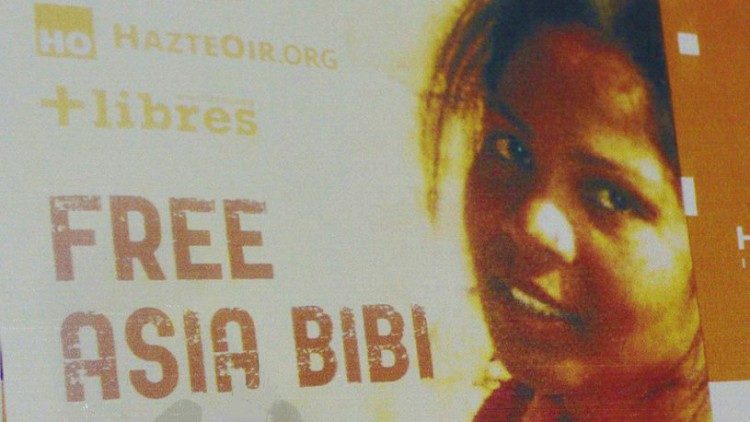
Blasphemy accused Asia Bibi’s acquittal and final release, after more than nine years in prison, by the Supreme Court has plunged Pakistan into chaos.
The Tehreek-e-Labbaik Pakistan, a Barelvi group led by cleric Khadim Hussain Rizvi who is known for his extremely profane language and the 22-day long Faizabad Dharna of 2017, mounted protests in every major city to oppose the verdict. In video messages, the TLP leaders called for murder of the three judges on the bench that acquitted Asia Bibi, and urged Muslim generals to rebel against the ‘Qadiani’ Bajwa, a derogatory term for Ahmadis, and oust the ‘Jew’ Imran Khan.
It has been a long wait for Asia Bibi, a poor Christian woman who worked as a farm picker in Nankana, Punjab. She was accused of blasphemy and swiftly imprisoned in June 2009. In 2010, a trial court convicted her and handed out death sentence for disrespecting Prophet Muhammad. Mother of five young children, she has languished in prison since then. Her appeal was rejected by the Lahore High Court in 2014, but she finally got justice from the Supreme Court Wednesday.


Asia’s case gained international spotlight because of Pakistan’s human rights record. Just this year, the European Union tied trade access to her case.
The protests turned into grotesque rioting and arson. Schools had to shut down and many children in different cities were stuck because half of the roads were blocked by the TLP and the other half by local police.
In Karachi and two other cities in Sindh, the violence snowballed into Shia-Sunni fight with two dead in Karachi by night. Government ministers and Pakistan Prime Minister Imran Khan remained conspicuous by their absence the entire day.
Clerics of other religious parties joined the chorus with all the Deobandi, Ahle Hadees, and Barelvi groups denouncing the judgment and announcing that they will join the protests Friday onwards. These groups were joined by two major religio-political parties, the Jamiat Ulema-e-Islam (F) and the Jamaat-e-Islami.
There was no statement from the military or its Twitter-happy spokesman either. Media had been given instructions the previous night on ‘no coverage’ of any protests – and it complied. There was a complete media blackout in Pakistan for the last 48 hours. However, social media was flooded with details.
At nightfall, finally, PM Imran Khan addressed the nation. Within two months of coming to power, his five years of politics of dharna, incitement to violence, blasphemy campaigns, civil disobedience, disruption to traffic and closing down of different cities had come to bite him back. He first appealed and then threatened the TLP for its actions. Not too long ago, Imran had actively supported the TLP’s violent protests against the Nawaz Sharif government.
Social media reacted immediately, putting out clips of Imran and his ministers’ past videos of violent speeches, incitement to violence, and their supporters rampaging the Pakistan Television building and Parliament.


They asked: Has all this dawned on you only now because you are PM? Next came the video of President of Pakistan Arif Alvi. A year ago, he too was on the roads of Karachi saying, “sara karachi band hoga, koi gari nahi chalaygi”.
Ironically, Imran Khan in his seven-minute address to nation Wednesday said exactly what his government was trying to hide from the Pakistani public. In the video, the PM ended up saying what the TLP leaders had been saying all day, the things that the media had blacked out: that General Bajwa was a ‘Qadiani’ and the army should rebel, and that protesters had called for the murder of the judges. But interestingly, Imran Khan skipped any mention of him being called a ‘Jew’ and demands for his ouster.
After going MIA the whole day, Imran Khan was now threatening use of force and promised protection of life and property. But even after his speech, violence, loss of life, mayhem in schools, colleges, and markets continued all night and well into Thursday. At the time of writing this piece, the situation remains volatile with one more death reported on the Lahore-Islamabad motorway.
The politics around the issue of blasphemy that Imran Khan used incessantly during his days in the opposition has now turned into the proverbial Frankenstein’s monster. His opposition politics was clearly supported by the establishment then – clear from the way the army chief refused to come to the aid of government to control the TLP in 2017, and how a military general distributed money among the goons at the end of the ‘protest’. Imran’s opposition politics inevitably emboldened these radical voices. At that time, all the sane voices had warned against this fire of dangerous politics – but none heeded. But the fact that it would come back to haunt the nation so soon was entirely unexpected.
A reading of the historic judgment by the Supreme Court vindicates everything that human rights campaigners have asserted for years: that she was falsely accused and it was a malicious suit arising out of a dispute between a Muslim farm picker and her. The fight was over the Muslim woman refusing to drink water brought by her because she was a Christian.


None of the earlier judgments had focused on the dispute itself, overlooking the countless holes and contradictions in the prosecution’s case. Justice Asif Saeed Khosa went far enough to say that the Muslim women committed blasphemy by disparaging Asia Bibi’s religion, book and God. For the first time any member of the legal community, no less a judge, has not only focused on this point, but also made it a part of his judgment – a point I had made in my article in 2011.
While we heave a sigh of relief over the verdict, Pakistan risks burning in the fire of religious hatred, use of religion for politics, and the clear prospect of sectarian wars.

Brother says Asia won’t be safe in Pakistan

Asia Bibi, the Christian woman acquitted after eight years on death row for blasphemy, plans to leave Pakistan, her family said on Thursday.
The development followed a landmark move by the Supreme Court on Wednesday that overturned the 2010 conviction against her.
Asia remained at an undisclosed location on Thursday where the 54-year-old mother of five was being held for security reasons, awaiting her formal release, her brother, James Masih said.
Anyone can kill me, fears her lawyer
He said Asia simply would not be safe in Pakistan. “She has no other option and she will leave the country soon,” he said. Masih would not disclose the country of her destination but both France and Spain have offered asylum.
Asia’s husband, Ashiq Masih, had returned from Britain with their children in mid-October and was waiting for her to join them, the brother added.
The family is in hiding for fear of attacks by those angry at the court’s ruling, and still waiting to be reunited with Asia.
“You know my two youngest daughters were below the age of 10 when their mother went away ... They don’t remember spending much time with her,” Ashiq said.
The family has four daughters and one son, he said. “We are thankful to the court that it decided the case considering us human beings instead of any discrimination on the base of faith or religion.” He said Asia, who is about 50, has not been released from prison pending arrangements for her safety.
“She can’t be safe here,” brother-in-law Nadeem said. “You know what’s going on outside. We want things to settle down before we go ahead for her release.”
With Asia soon to be free, her family is struggling to make plans. They would prefer to leave the country to be safe, but there are plans in place.
“We haven’t got any contact yet either from Pakistani authorities or anyone from outside,” Nadeem said.
Yet, Ashiq Masih said he would be sad to be forced to leave his homeland. “We’re also part of Pakistan,” he said. “This is our country. We love it.”

Lawyer Saiful Mulook

After saving condemned Christian Asia Bibi from the gallows, her lawyer says he is facing the wrath of extremists — and wonders who will save him.
But despite the threats against him, Saiful Mulook says he regrets nothing, and will continue his legal fight against intolerance.
“The verdict has shown that the poor, the minorities and the lowest segments of society can get justice in this country despite its shortcomings,” he said after the verdict. “This is the biggest and happiest day of my life.”
Mulook said he feels he is now a sitting duck with no security or escape plan. “I think I have absolutely no safety. No security and I am the easiest target... anybody can kill me,” he said.
The defence of Asia was just the latest in a long line of controversial cases taken up by the barrister.
In 2011, Mulook was the lead prosecutor against Mumtaz Qadri over the assassination of Punjab governor Salman Taseer.
Qadri — one of Taseer’s bodyguards — gunned down his boss in broad daylight, citing the governor’s calls for reform of the blasphemy laws as his motive.
Mulook said he took on the case as others cowered, fearing reprisals from extremists. His prosecution resulted in the conviction and subsequent execution of Qadri.
Mulook says his life has not been the same since; he rarely socialises, lives in a constant state of hyper-vigilance and has been inundated with threats.
“If you conduct such cases you should be ready for the results and the consequences,” the greying 62-year-old explains.
But Mulook said the risks have been worth the reward.
“I think it’s better to die as a brave and strong man than to die as a mouse and fearful person,” he said.
“I extend my legal help to all people.”
https://www.dawn.com/news/1443017/brother-says-aasia-wont-be-safe-in-pakistan

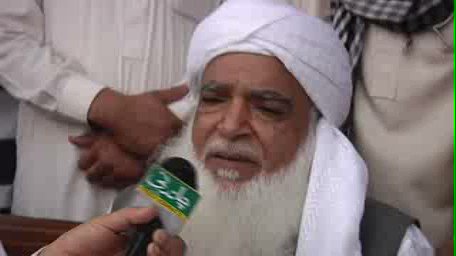
#MaulanaSamiulHaq - خس کم جہاں پاک - Pukhtunkhwa Times Celebrates the death of a Pig, named SAMI HAQ - Nan Pah De Hujra Ke Khushali

Bilawal Bhutto's message on the International Day to End Impunity for Crimes Against Journalists

Chairman Pakistan People’s Party (PPP) Bilawal Bhutto Zardari has said that impunity for crimes against journalists was an international issue as undemocratic regimes, extremist and anti-people forces are bent upon to wipe out press freedom from the globe.
In his message on the International Day to End Impunity for Crimes Against Journalists being observed on Friday, the PPP Chairman said that no single nation can eliminate this cruel injustice and solution in this regard is linked in serious, coordinated and practical steps by the international community.
He said, on the one hand, previous government of the rightists promoted paid journalism while current selected government has squeezed the space for bona fide and independent journalists on the other.
Bilawal Bhutto Zardari expressed concern over the perception that professional bodies of journalists were declaring Pakistan as dangerous country for media persons but rulers and corporate media was portraying everything alright.
The PPP Chairman pointed out that all the PPP governments had been burying the dark laws imposed by dictatorial regimes against press and media but rightist forces installed as rulers always start gagging them.
Bilawal Bhutto Zardari said journalists and media persons were still facing insecurity and media institutions are fighting the war of survival.
“Democracy and press are deeply interlinked. PPP considers struggle for freedom of press as key part for the movement of strengthening of democracy,” he asserted.

https://mediacellppp.wordpress.com/2018/11/01/bilawal-bhutto-zardaris-message-on-the-international-day-to-end-impunity-for-crimes-against-journalists/