Thursday, September 27, 2018

SAUDI MONARCHY CONTINUES ATTACKS ON SHIA MUSLIMS IN QATIF

At least seven people have sustained injuries when Saudi regime forces carried out an operation in the kingdom’s oil-rich Eastern Province as the Riyadh regime presses ahead with its brutal clampdown against pro-democracy campaigners and political dissidents.

The Arabic-language Ahrar television network, in a post published on its official Twitter page on Wednesday, reported that Saudi troopers raided a house behind Fatah Mosque in the Kawkab neighborhood of Qatif region, located more than 420 kilometers (260 miles) east of the capital Riyadh, leaving a number of people injured.
There were reportedly elderly people among those injured.

Saudi Arabia has recently stepped up politically-motivated arrests, prosecution, and conviction of peaceful dissident writers and human rights campaigners.

Saudi officials have also intensified security measures in the kingdom’s Shia-populated Eastern Province.
Eastern Province has been the scene of peaceful demonstrations since February 2011. Protesters have been demanding reforms, freedom of expression, the release of political prisoners, and an end to economic and religious discrimination against the oil-rich region.

The protests have been met with a heavy-handed crackdown by the regime. Regime forces have increased security measures across the province.

Over the past years, Riyadh has also redefined its anti-terrorism laws to also target activism.
In January 2016, Saudi authorities executed Shia cleric Sheikh Nimr Baqir al-Nimr, who was an outspoken critic of the policies of the Riyadh regime. Nimr had been arrested in Qatif in 2012.

http://www.shiitenews.org/index.php/saudi-arab/item/35710-saudi-monarchy-continues-attacks-on-shia-muslims-in-qatif

Yemen war crimes probe 'must continue' despite Saudi resistance, says UN

War crimes investigators called for the UN's top rights body to allow them to continue probing the "extremely alarming" situation in Yemen, amid resistance from Saudi Arabia and others, reports said on Wednesday.

The investigators, appointed by the UN Human Rights Council a year ago, presented a report to the body that concluded all sides in Yemen's conflict may have committed "war crimes". 
The resolution that first set up the inquiry last year after a long diplomatic fight gave investigators a year to conduct their probe.
But Kamel Jendoubi, who heads the so-called Group of Independent Eminent International and Regional Experts, insisted that "in light of the gravity of the situation and the limited time given to the mandate, additional investigations are needed". 

"The situation in Yemen continues to be extremely alarming," he told the council.
"We call upon you to keep the situation in Yemen at the top of the priorities of the council," he said, urging diplomats to "unanimously" adopt a resolution led by a group of European countries and Canada calling for a one-year extension. 
This, he said, was necessary "to ensure that truth is revealed and accountability is attained."

'Politicised and biased'

But while a long line of diplomats voiced support on Wednesday for prolonging the probe, it remains unclear if the council will give the investigators a green light to continue when it votes on the resolution at the end of this week.

A competing text on the table, led by Tunisia on behalf of the group of Arab states, makes no mention of extending the probe but calls for Yemen's often-criticised National Commission of Inquiry to continue studying the conflict. 

Observers say Saudi Arabia, which leads a coalition that intervened in the conflict in March 2015 on behalf of President Abd Rabbo Mansour Hadi's government in the fight against Houthi rebels, is actively working to quash the international probe.
Yemeni Human Rights Minister Mohammed Asker slammed the group's report as "politicised and biased", accusing the investigators of ignoring "terrible crimes committed by the Houthis", who seized the capital Sanaa in 2014.

Saudi Arabia's ambassador to the UN, Abdulaziz Alwasil, charged that investigators had based their findings on "conjectures and guesswork". 

Last week, Human Rights Watch criticised Riyadh's "campaign to discredit and undermine a UN investigation into abuses by all Yemen's warring parties", calling it "yet another blatant attempt to avoid scrutiny of the coalition's own actions in Yemen".
While investigators described violations by all sides, they concluded in their report that "coalition airstrikes have caused most of the documented civilian casualties". 
Yemen's conflict has left more than 10,000 people dead since March 2015, sparking the world's worst humanitarian crisis, with three quarters of the population -or 22 million people - in need of humanitarian aid, according to UN figures.

https://www.alaraby.co.uk/english/news/2018/9/26/yemen-war-crimes-probe-must-continue-despite-saudi-resistance

Tortured, raped and penniless: migrant women return from the hell of Saudi Arabia

By Sumon Corraya


In the last three years about 5,000 migrant women have returned from the Saudi kingdom. Between 1991 and 2018, at least 700,000 Bangladeshi women sought employment abroad, including 250,000 in Arabia. An NGO, BRAC, helps women who escape reintegrate into society.

Thousands of Bangladeshi women who went to Saudi Arabia in search of fortune have gone home penniless after enduring torture and sexual abuse.
The numbers are staggering. According to Building Resources Across Communities (BRAC), an NGO that helps migrants escape from places of torture, about 5,000 have done so in the last three years.
Officially, at least nine million Bangladeshis work in 160 countries around the world. Those who are lucky enough to travel to the United States or Europe lead difficult but dignified lives. But those who go to the Middle East often find themselves in hell, especially female migrants.
Fatama Akter was one of them. She had to emigrate and leave her sick husband and children in Barisal (central-southern Bangladesh).
"I went to Saudi Arabia to work even though my husband did not want me to,” she told AsiaNews, “but he is sick and I wanted to earn some money for medical treatment and to send our children to school. "
After three months working for a heavy-handed employer she “had had enough. I couldn’t take it anymore. I got sick and he denied me medicines. Moreover, my workload was huge and if I dared to speak out, he would beat me."
Fatama managed to escape and return to Bangladesh. Like her, many other Bangladeshi women work as domestic help. All report incidents of physical and psychological torture and irregularities over wages.
“Three men regularly raped me. If I wouldn’t agree, they beat me,” said another migrant worker, Kobita Bagum. “One day I escaped and visited the local police station and this is how I returned to Bangladesh”.
In her view, the government should not allow women to go to Saudi Arabia to work “because that country is not safe for women”.
BRAC estimates that, between 1991 and 2018, about 700,000 Bangladeshi women went abroad seeking employment, 250,000 in Saudi Arabia alone.

http://www.asianews.it/news-en/Tortured,-raped-and-penniless:-migrant-women-return-from-the-hell-of-Saudi-Arabia-45060.html

Music Video - Afshan Zebi | Sara Jag Bewafa

#Pakistan - Govt fails to provide people's access to information: study

By Asma Ghani
The government has failed in dispensing citizens with their right to access of information which is leading to eroding transparency and accountability in Pakistan.
The was the crux of a study focusing on the breach of Article 19-A of the Constitution that guarantees access to information by the state to its citizens, as well as, the Federal Right of Access to Information Act, 2017.
It was found that all federal ministries had performed poorly in complying with the act, resulting in impeding transparency, accountability and access to information.
Seventeen of the total 46 federal ministries functional between the last day of the Pakistan Muslim League-Nawaz (PML-N) government and start of the Pakistan Tehreek-e-Insaf (PTI) led regime did not even have websites in this regard.
Moreover, the remaining 27 that did, most failed at complying with Section 5 of the Act which deals with the proactive disclosure requiring all federal public bodies, including federal ministries, to provide a set of a minimum of 39 categories of information.
“This also represents a failure to comply with its commitments made under Sustainable Development Goal (SDG) relating to transparency, good governance, as well as, the development related to implementation of policy and statutory guarantees on access to information,” a passage of the study reads.
The study, conducted by the Islamabad-based Institute of Research, Advocacy and Development (IRADA), has been released on the eve of International Day for Universal Access to Information (IUDAI), which is globally commemorated every year on September 28.
https://tribune.com.pk/story/1813002/1-govt-fails-provide-peoples-access-information-study/

Pakistan: Journalists should not be harassed or intimidated through criminal justice system

Pakistan’s authorities must ensure that the criminal justice system is not used to harass or intimidate journalists, Amnesty International said today.

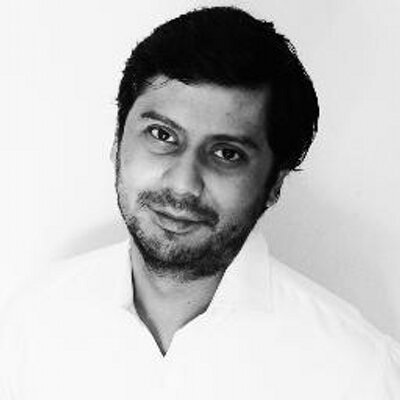
The human rights organization raised its concern after the Lahore High Court’s decision to issue non-bailable arrest warrants for prominent Pakistani journalist Cyril Almeida and impose a ban on his traveling outside the country.

Cyril Almeida, Assistant Editor at Dawn newspaper, has been summoned by the court for conducting an interview in May 2018 with former Pakistani Prime Minister Nawaz Sharif, who is facing charges of treason for comments he made in the interview alleging a link between the Pakistani military and armed groups.

“Cyril Almeida has simply been doing his job as a journalist. He conducted an interview with a former prime minister and reported what he was told. While the Lahore High Court is entitled to demand his appearance, the authorities must be careful not to use the criminal justice system to harass or intimidate journalists. Journalism is not a crime and journalists doing their work should not be treated as criminals,” said Omar Waraich, Deputy South Asia Director at Amnesty International.

The Lahore High Court says that it is compelling Cyril Almeida to appear before it after issuing repeated notices. The Dawn newspaper, however, says that the first two notices were never delivered and the third only arrived last week.

Journalism is not a crime and journalists doing their work should not be treated as criminals.

Omar Waraich
SHARE THIS Twitter Facebook Email
Cyril Almeida and Dawn newspaper have both said that they are willing to fully cooperate with the courts.

This is not the first time a travel ban has been imposed on Cyril Almeida. In October 2016, his name was put on Pakistan’s Exit Control List amid a furore over an article he published on tensions between the then civilian government and the military over alleged links to armed groups.

In 2016, Cyril Almeida and Zaffar Abbas, the editor of Dawn, appeared before a high-level inquiry tribunal that asked them questions about the newspaper article.

Over recent months, since Cyril Almeida’s interview with Nawaz Sharif was published, Dawn has seen its circulation heavily disrupted in the country while the newspaper has come under intense pressure for its independent editorial policy. News agents have been warned against stocking the newspaper and street vendors have been harassed and intimidated for selling it.

On 7 June 2018, speaking at a meeting of the All Pakistan Newspaper Society in Islamabad, Hameed Haroon, the CEO of the Dawn Media Group warned that Pakistan is “encountering the most dangerous attack” on the right to freedom of expression.

“The new government of Prime Minister Imran Khan has made a number of very positive pledges when it comes to human rights. We expect his government will also commit to the protection of freedom of expression, and ensure a safe and enabling environment for journalists and other human rights defenders, so that they can do their work freely and without fear of reprisals,” said Omar Waraich.

https://www.amnesty.org/en/latest/news/2018/09/pakistan-journalists-should-not-be-harassed-or-intimidated-through-criminal-justice-system/

#Pakistan - PM Imran Khan should have attended UN session: Bilawal Bhutto

Prime Minister Imran Khan should have attended the United Nations General Assembly session to highlight the Kashmir issue, said Pakistan People’s Party chairperson Bilawal Bhutto Zardari on Wednesday.

“You should tell the nation why you did not attend the session by yourself and did not highlight the Kashmir issue at the international forum,” Bilawal said.
He was addressing an event organised to mark the death anniversary of late politician Nawabzada Nasrullah Khan in Islamabad.
Bilawal Bhutto criticised the PTI-led federal government for ‘politicking on non-issues’. “The government wants to divert the attention from real issues.”
“Important issues have been made a joke. Even the foreign policy is announced on the social media,” he said.
The government has not broken the begging bowl, contrary to its claims. It is running the entire country with donations, said the PPP leader.
“Inflation is making the situation worse for the masses. The mini budget has broken the backbone of the poor.”
Bilawal Bhutto opposed the government’s plan to construct new dams on the River Indus, saying that thousands of acres of Sindh’s coastal land have gone into the sea. He was referring to sea intrusion.
“Dams should be built but where the water will come from? The real cause of the water crisis is the unjust distribution of water,” he said.

https://www.samaa.tv/news/2018/09/pm-imran-khan-should-have-attended-un-session-bilawal-bhutto/

Govt’s wrong decision taking country towards destruction: Bilawal Bhutto

Pakistan Peoples Party (PPP) Chairman Bilawal Bhutto Zardari on Wednesday said that Pakistan Tehreek-e-Insaf (PTI) government’s wrong decisions were taking the country towards destructions.
He stated this while attending the death anniversary of veteran politician Nawabzada Nasrullah Khan in Islamabad.
Bilawal Bhutto said that wrong decision of government have increased the problems of the people, adding that country was passing through a major political era.
The PPP chairman said that those who promised to break the begging bowl were now running the country on donations.
He further said that PPP at first had decided to wait for the 100 days before criticizing the government’s policies, but had to speak because selected government is making life of the poor worse.
Bilawal also criticized the decision of prime minister to send Foreign Minister Shah Mehmood Qureshi to attend the United Nations General Assembly (UNGA) meeting and said that Imran Khan himself should have to attend the session to raise the Kashmir issue at an international forum.
He said that false cases were being made against his father and PPP co-chairman Asif Ali Zardari.
“The courts were used in undemocratic tenure for political intentions and today old cases were reopened against Asif Ali Zardari,” he added. He uncovered that for the last 30 years, former president is facing courts and the process of reopening old cases must come to an end, he concluded.
https://dailytimes.com.pk/303018/govts-wrong-decision-taking-country-towards-destruction-bilawal-bhutto/

Wednesday, September 26, 2018

Video - DJ Khaled - No Brainer (Official Video) ft. Justin Bieber, Chance the Rapper, Quavo

Video Report - What are the dangers of self-deleting messaging apps? | The Stream

Video Report - EU hits back at ‘offensive’ press coverage of Brexit in UK tabloids

Video Report - Lemon draws parallels between Cosby, Kavanaugh

Video - Stephen Colbert - The World Unites In Laughing At Trump

Music Video - Chale to kat hi jaye ga safar - Mussarat Nazeer

Surrender of “Naya Pakistan”

By Aamer Intsar Mohar


” You are free; you are free to go to your temples, you are free to go to your mosques or to any other place or worship in this State of Pakistan. You may belong to any religion or caste or creed that has nothing to do with the business of the State”. This was the vision of Pakistan that our beloved Quaid-e-Azam Muhammad Ali Jinnah expressed in his historic speech of August 11, 1947 to the first Constituent Assembly of Pakistan in Karachi. We all know that over the past 70 years, Pakistan has not followed this vision of its founding father and the results have been disastrous. During the past few years, the nation as a whole has desperately been searching for a leader that can change the disastrous course this country is headed towards and can bring about a real change for the better future of Pakistan. 
Imran Khan entered the political arena in 1996 by forming his political party Pakistan Tehreek e Insaf. He has led a heroic 22 years long struggle for bringing real change in Pakistan and many Pakistanis including me have been his supporters during this epic struggle which culminated when his party emerged as the leading party in 2018 general elections and he became the Prime Minister. He is my childhood hero and one person I have always admired due to his leadership qualities that he displayed during his cricketing years and specially his daring feats as the Captain of our cricket team. His never say die attitude has been his special hall mark both during his cricketing and political years.
I am extremely disappointed by the way his government surrendered before the extremists by taking back the nomination of Mr. Atif Mian from the Economic Advisory Council. It was highly unlike the Imran Khan that I have known and observed and idealized over the years. This act is totally against the ideology of Mr. Jinnah the founder of Pakistan as well as the much publicized “Medina State” that Mr. Imran Khan wants to follow in building a “New Pakistan “.
As mentioned above the Quaid had clearly stated that Religion was a personal matter of every citizen and the State of Pakistan would have nothing to do with it and would not discriminate among its citizens on the basis of cast, creed or Religion, but unfortunately Mr. Atif Mian a word renown economist was removed on the pressure of extremist forces only because he belongs to the Ahmadiya community. The two days when Mr. Fawad Ch the Information Minister defended his nomination really made me believe that perhaps the much anticipated change has really come and Quaid’s dream of all inclusive state is finally taking shape but  the joy was shortlived and the next morning we were back to square one.
I personally know that people belonging to Ahmadiya community have rendered invaluable services for Pakistan. The first foreign minister of Pakistan Sir Zafarullah Khan was an Ahmadi and a very trusted colleague of Mr. Jinnah and he also played a pivotal role in Pakistan movement as he was the one who had drafted the Lahore resolution that was passed on March 23 1940 at Lahore and later on came to be known as the Pakistan Resolution. He also played an important role in securing the geographical boundaries of Pakistan as he was appointed by Mr. Jinnah to represent the Muslim League in the boundary commission. He was the one who played his due rule in passing of the Kashmir Resolution of 1948 through the United Nations which has been the cornerstone of our basis for supporting the Kasmiris struggle for their right of self determination.
During the Ayub Khan era another prominent economist was the financial advisor to the then Government of Pakistan and his name was Mirza Muzaffar Ahmad and he was also an Ahmadi. He played a very important role in securing finances for building of Tarbela and Mangla dam projects from international financial institutions and Ayub Khan is known to have said that the nation would always remain indebted to MM Ahmad for his tremendous services in making Tarbela and Mangla possible. Everyone is familiar with the name of Dr. Abdussalam the Nobel laureate from Pakistan. He was instrumental in the launch of SUPARCO and the launch of our nuclear program. Many Ahmadis have rendered meritorious services in the Armed forces. My late father was a proud officer of Pakistan Army and rendered his services for the defense of our motherland when and wherever required. By doing away with the services of a brilliant economist merely on the basis of his religious beliefs has sent a message that perhaps Ahmadis are not patriotic Pakistanis. The extremists have mentioned that they cannot and will not allow any Ahmadi to be appointed to any prominent position in government.
I belong to the Ahmadiya community and this act of the government to cede to the pressure of the extremists has caused me great pain because my loyalty to my country has been doubted. Times will move on and implications of this decision will become evident in due course of time.
I certainly do not doubt the good intentions of Imran Khan for bringing positive change to Pakistan but a few years down the lane whenever the history will be written, the historian will not take into account the good intentions but the practical steps that were taken for bringing about the desired change and unfortunately it will be written that he had an excellent opportunity to change the history and course of history but Imran Khan was not up to the challenge. Imran is still my hero because of all his services for Pakistan. I sincerely hope and pray that he is able to live up to the challenge and take prudent decisions for bringing true change in Pakistan. 
https://www.rabwah.net/surrender-of-naya-pakistan/

Pakistan: Deen Aaya – OpEd

By Vice Admiral (Retd) Vijay Shankar
The impact of organised religion on nations has historically been a sense of contrived significance, but in essence has neither refined society nor elevated power status. The case of civilizational encounters is curious. The vanquished wontedly looked backwards for spiritual succour while succumbing to the influences of the aggressor; in the process, dogmas and rituals replaced inventiveness as the spirit that propelled development calcified (Toynbee, 1957). This state is symptomatic of a society in the throes of derangement. A failed response to the challenges of plurality and vigour of competing belief systems is thus marked by religious masquerade and a despairing choice inspired by fundamental ideologies. In the past, the Egyptiac world, Judaism and Christianity have succumbed to this fanatic impulse. Ironically, primitive Islam was spiritually tolerant of civilisations that it considered allied to as ‘People of the Book’. It is no coincidence that this very period saw Islamic civilisation flourish. Contemporary political Islamic movements are, however, marked by failed responses; the more radical, the more savage towards the idea of plurality and renewal.
In the recently concluded elections to the Pakistan National Assembly, the Tehreek-i-Labbaik (TLP) polled nearly two and a quarter million votes (Election Commission of Pakistan), making it the fifth largest political party in that country. While this may not have readily translated to seats in the National Assembly, what it stands for is ‘street power’ of the radical Islam variety. Regaling the event, their chief, Allama Khadim Husain Rizvi narrated a grisly electoral episode from Nawabshah, a district in Sindh. “We were singing our anthem Deen Aaya, when the Peoples Party (PPP) camp started playing their electioneering jingles; we asked them to stop because our hymn was in veneration of Allah, but their leader spurned our entreaty.” Imagine ‘Allah’s wrath’, for that very night the PPP leader breathed his last. The next morning it was God’s will that all of the PPP followers switched their loyalty to the TLP!
TLP shot to prominence when it opposed the 2016 hanging of Mumtaz Qadri, convicted in 2011of assassinating the governor of Pakistan’s Punjab province. Born in 1966 in Attock, Punjab, Rizvi, a self-acclaimed Barelvi cleric, was in government in the department of religious affairs, the auqaf. He was soon removed for radical activism. A paraplegic, he became deeply involved in organising public support for harsher and more invasive blasphemy laws. In November 2017, his siege of Islamabad for this cause paralysed the capital for over three weeks. The government and its law enforcement agencies made an abortive attempt to curb the mayhem but only succeeded in spreading protests to all the major cities. It was the army chief’s personal intervention that defused the situation with the offer of unconditional capitulation of the state to more severe blasphemy laws, sacking of the Federal Minister for Law Zahid Hamid, and the release of all prisoners taken. The siege of Islamabad was lifted. Allama Khadim Husain Rizvi had arrived; it is reported with a ‘little’ help from the army.
Karachi was a distant frontier for the TLP whose home grounds were the radical madrassas of South Punjab (Bhawalpur, Multan, Mianwali, Dera Ghazi Khan etc.) Their electoral gains in Karachi owed largely to pulpit intimidation, violence and menacing politics. The city, latterly dominated by the Muttahida Qaumi Movement (MQM), represents Pakistan’s Urdu-speaking mohajirimmigrant community. The odious ‘mohajir’ moniker was dropped from its name and replaced by the less unpalatable muttahida (united). The MQM is known for its muscular methods in Karachi; it had in the past controlled the vote in the inner city and its immediate urban enclaves through a grid that organised the city’s underworld. Aided by the army, the TLP broke up these networks. The mosque became the platform from where the message of redemption was hammered home, in a manner and scale not seen since the call for jihad to fight the US invasion of Afghanistan. The argument now was that since the people of Karachi had committed crimes and violence for mortal reasons, atonement in the eyes of God was only possible if these same people took up Allah’s cause by volunteering their time and labour for the TLP. An irreverent ‘Anschluss’ between the deep state, piety and politics now paved the way for the electoral success of the Army’s willing protégé, Imran and his Pakistan Tehreek-i-Insaf (PTI).
Central to the strategy was infusing politics with ritual, a messianic propagation of the Barelvi belief system, and of the TLP’s near prophet-like paraplegic leader and his ‘mystical’ powers over followers.  The irony is that of the two Sunni sects, the Barelvi was seen as the more reticent and less prone to militancy than the orthodox Salafist-driven Deobandis. Meanwhile, the legend of how deen has managed to purify and chasten non-believers flourishes despite being in mortal conflict with what makes for a democratic state. The question at the core is, what makes Pakistan more susceptible to ideological blackmail from such extreme shades of the religious right?
Ideological blackmail is potentially congenital to the Islamic state particularly when a myth of Islam-in-danger becomes the testament. To fully appreciate this phenomenon, one goes back in recent history to Partition. The disproportionate security apparatus that Pakistan inherited and the communal basis of award (33 per cent of the military as opposed to 18 per cent demography, 23 per cent landmass and 18 per cent of financial assets) fuelled the idea that Islam, communal hatred and perpetual hostility towards India were innate to the separation of the Muslim nation. Also, an army under the banner of Islam was an imperative to forge unity and guard both ideological and geographic frontiers of the fledgling state. That the concept not only gained salience but is also an abiding characteristic of the strategic culture that the army has carefully nurtured is today the idea of Pakistan.
And, in August 2018, when the Dutch politician Geert Wilders comes along and announces that he would hold a Prophet Mohammed cartoon contest that was a thinly veiled attempt to attack and provoke one of Wilders’ favourite whipping-boys, Islam; the TLP seized the opportunity to once again show its strength. On cue, lakhs of TLP supporters made their way to Islamabad to demand Pakistan sever diplomatic ties with the Netherlands or face a repeat of the siege of the capital. Why did Wilders call off the contest? It could not have been for economic reasons since the Netherlands’ GDP at US$ 830 billion is almost threefold of Pakistan’s, while bilateral trade is less than US$ 1.2 billion, nor could it be any influence that Islamabad wields for they have little of that (there was of course the threat of jihadi violence).The probable cause for cancellation was perhaps the fragile situation in Afghanistan which James Mattis explained as “co-existence of violence and progress” against a backdrop of stability. President Ashraf Ghani was less cryptic when he offered an unconditional peace proposal to the Taliban; a ceasefire, recognition of the Taliban, elections afresh, and a constitutional review. Any disruption of this process, in US’ perspective, may have provided space for exceptionable Chinese and Russian interference. So it could be that it was the US that reined in Wilders. At any rate, the cancellation served to enhance Khadim Rizvi’s notional power across continents and the reality that his ideas found resonance with leaders and elites in mainstream political parties. That this has happened raises the question, how close to being an extremist state is Pakistan?
As this question is pondered, comes Deen and the news that the Pakistan Supreme Court has sacked Atif Mian, a Princeton economist from the PM’s Economic Advisory Council for being an Ahmadi, and in quick succession lifted the international ban on the terror proscribed Hafeez Sayeed’s outfit the Jamaat-ud-Dawa.

Islamic State: The Torment of #Afghanistan’s Shiites

#Pakistan - PARLIAMENT NOT TAKEN INTO CONFIDENCE ON PRIME MINISTER IMRAN’S SAUDI VISIT

Members of Pakistan’s bicameral Parliament’s lower house (National Assembly) and of upper house (Senate) are curious to know details of Prime Minister Imran Khan’s visit to Saudi Arabia and United Arab Emirates.
"An impression is being felt that Imran Khan will extend begging bowl during his maiden visit to Saudi Arabia and he should not do so," Shah said, adding that because he has been opposing to begging.
However, Imran’s visit vindicated the stance of Shah.
In particular, Pakistan Peoples Party’s members have expressed their feelings in both houses. MNA Nafisa Shah asked the PTI government on the floor of the house why they don’t share details of the Saudi visit of Imran Khan with the Parliament.
Senator Mian Raza Rabbani already criticized the government’s dubious policy. Former opposition leader in National Assembly Syed Khursheed Shah had said prior to the Prime Minister Imran Khan's visit to Saudi Arabia that the visit seemed to vague.
Shah advised Imran Khan must not extend begging bowl to Saudi Arabia in his maiden visit In an informal chat with the media in Islamabad, Shah said, "PM Imran Khan should only pay respect to holy places during his first visit to Saudi Arabia. But this visit to Saudi Arabia seems to be ambiguous."
"An impression is being felt that Imran Khan will extend begging bowl during his maiden visit to Saudi Arabia and he should not do so," Shah said, adding that because he has been opposing to begging.
However, Imran’s visit vindicated the stance of Shah.

http://www.shiitenews.org/index.php/pakistan/item/35707-parliament-not-taken-into-confidence-on-prime-minister-imran-s-saudi-visit

#Pakistan - OP-ED - Why this government won’t stand with the people


The Pakistan Tehreek-e-Insaf (PTI) led government isn’t just a coalition government at the political level. It has many other partners who have invested in varied degrees in the party and its leadership. These investors range from crony capitalists to members of the judiciary and the deep state. Obviously, the PTI will not formulate any policy or reform which could hurt the core interests of these stakeholders. However, the masses are destined to pay a terrible price.
For instance — even though people witnessed this with their jaws on the floor — but the PTI government, among firsts of its economic actions, lifted the ban that barred non-filers of the tax returns from buying property or new cars. Instead of widening the tax net, thereby bringing more and more people into the taxation regime, the government has decided to appease notorious tax evaders and punish those who are already paying taxes. The whole idea behind lifting the ban is to benefit the property barons within the party and those who invested in PTI with funds and aviation services. With the ban gone, black money will flow freely into the property sector, which in turn will push the prices higher, making things more costly for genuine buyers.
Although mainstream media fell in line with the narrative and de facto bounds set by the deep state long ago, we still see politically motivated FIRs being launched against journalists. While all this may all be propelled by elements within the state, the elected government appears to be no more than a pawn against the free media and right of expression.In view of the glaring risk that the Financial Action Task Force (FATF) might further downgrade Pakistan from the grey to black list, what we are seeing is deplorable. While radical organisations and their leadership, who the world recognises as entities and persons abetting terrorism, have been allowed to keep operating overtly and covertly, the journalists, rights activists, and members of nationalist organisations have been subjected to harassment, abduction, torture, and fatalities. Having itself been stoking religious sentiments to muster support from fringe religious groups, the PTI government will never be able to stem the sectarian hatred and intolerance in Pakistan.
It didn’t take this government months, but weeks to launch investigations into the two metro bus projects launched by the previous government. It is ironic that it conveniently ignored a similar project in Peshawar
It didn’t take this government months but weeks to launch investigations into the two metro bus projects launched by the previous government. It is ironic that it conveniently ignored a similar project in Peshawar the PTI led provincial government undertook in its previous tenure. The PTI’s project is still in tatters, mired in corruption stories and without any hopes of completion any time soon. The whole idea is to find something against the Pakistan Muslim League-Nawaz (PML-N) and then make a mountain out of a molehill. The world over, governments pay huge subsidies in public transport systems so that common people get affordable transportation and cities remain free of avoidable road congestion and air pollution. The PTI government, however, doesn’t seem keen on continuing with the subsidized projects of urban transportation. Ironically, it’s not so concerned about subsidizing the Pakistan International Airlines (PIA), with the billions of rupees that it needs every year.
The funniest development is the opening of a donation account for the dam fund. Initially, it was a Supreme Court Dam Fund, then the Prime Minister (PM) also jumped on the Diamer-Bhasha bandwagon; he also declared that the collection of funds is the government’s job and not of other institutions. However, the populist Chief Justice of Pakistan (CJP) was already riding the crest on this issue and was in no mood to concede. So, now we have a joint donation account in the name of the PM and CJP. What could be a better proof of the joint stakes between executive and judiciary? Not only does this expose the collusion between them, it also violates the principle of the separation of powers between two pillars of the state.
A few months back, we all came across the ‘Bajwa doctrine’, the essence of which was that national security has become more expensive and that in the current arrangement of national finance commission the country’s security needs will be compromised. What’s in store here is that provinces will soon see their share in resources reduced so that defence needs could be met. It should not be forgotten that the passing of the 18th Amendment to the Constitution is primarily responsible for development and welfare of people within their provinces.

‘Space for religious minorities in Pakistan shrinking’


Asma Kundi


The National Interfaith Working Group established by the Human Rights Commission of Pakistan (HRCP) held its inaugural meeting on Tuesday where it discussed the facilitation of interfaith dialogue and collective advocacy, awareness and action to protect the fundamental rights of religious minorities.
During the meeting, members of civil society, the media, government and political parties discussed the group’s future strategy and plan of action.
Former senator Farhatullah Babar said the rights of minorities have been shrinking, and intolerance toward them by the state and by society increasing, despite constitutional guarantees, religious injunctions and international covenants that Pakistan has signed in this regard. HRCP’s National Interfaith Working Group holds inaugural meeting
“I would suggest that the HRCP engage bodies like the National Commission on Human Rights, the Ministry of Human Rights, the human rights committees of the Senate and National Assembly and other bodies as force multipliers to carry forward this task,” he said.
Mr Babar said attention should be given on setting up caucuses in parliament and in provincial assemblies to take up the causes of religious minorities, similar to the women’s caucus in parliament.
Former senator Afrasiab Khattak also emphasised the importance of democratic struggle in this regard.
“There is a need to establish an interfaith committee to address the issues confronted by our religious minorities. They are people of this soil, no matter which religious they follow, as Pakistan is the homeland of people belonging to different religious beliefs,” he said.
For the last 70 years, we have only said that religion is a personal matter and the state’s only role is of a facilitator, former MNA Bushra Gohar said.
She also criticised the government for removing renowned economist Mian Atif from the Economic Advisory Council because of his religion.
“The role of political parties is very crucial in this regard. Unfortunately, whenever we face pressure from extremist groups parties that claimed to be moderate, like the Pakistan Peoples Party, take a back-foot position and play a defensive role,” she said. Fatima Atif, a representative of the Hazara community, said their community has not officially been declared a minority but is still suffering because of their faith.
“Our right to life is being violated because we are a Hazara community. I am sorry to say that the roles of commissions or caucuses are not satisfactory in absence of political willingness,” she said.
Romana, a Christian, also criticised organisations that believed Christians were there to work as cleaners and sweepers.
She said the space for minorities was shrinking in Pakistan.
A circular was issued at the end of the meeting that stated: “Apart from regular interaction with local and provincial stakeholders, including political representatives, the group will also carry out fact-finding exercises to monitor and promote freedom of religion and belief across the country, based on local realities and needs.”
It added that given the wave of religiously motivated violence this year alone, the HRCP believes it is critical that policymakers and civil society be prepared to take bolder and more consistent stances of freedom of religion and belief.

سلیکٹڈ وزیراعظم نے مشکل حالات پیدا کردیے ، بلاول

پیپلز پارٹی کے چیئرمین بلاول بھٹو زرداری نے کہا ہے کہ ملک ایک من پسند
حکومت کے حوالے کر دیا گیا، سلیکٹڈ وزیراعظم نے ایسے حالات پیدا کر دیے کہ ہر گزرتے دن کے ساتھ مشکلات پیدااور مزید بڑھتی جارہی ہیں اور عوام سوال کر رہے ہیں کہ نئے پاکستان میں بھی کنٹرولڈ جمہوریت تو نہیں؟
اسلام آباد میں نوابزادہ نصراللہ خان کی برسی کی تقریب سے خطاب میں بلاول بھٹو کا کہنا تھا کہ کشکول توڑنے کے دعوے کرنے والوں نے کشکول اٹھا کر اپنے دور کا آغاز کیا لیکن یہ ملک چندے سے نہیں چل سکتا۔
ان کا کہنا تھا کہ نواب صاحب نے ساری زندگی جمہوریت کے لیے ہر حکومت کے خلاف اپوزیشن کی، ان کی زندگی جمہوریت پسندوں کے لیے سبق ہے۔
پی پی چیئرمین نے کہا کہ پاکستان ایک اہم سیاسی دور سے گزر رہا ہےاور پیپلز پارٹی جلاؤ گھیراو کی سیاست کر کے ملک کو خطرے میں نہیں ڈال سکتی۔
انہوں نےمزید کہا کہ خان صاحب نے خود جانےکے کے بجائے اپنے وزیر خارجہ کو اقوام متحدہ بھیجا، بتانا ہو گا کہ کشمیر کا مسئلہ اٹھانے کے لیے وزیراعظم خود اقوام متحدہ کیوں نہیں گئے، صرف سوشل میڈیا پر خارجہ پالیسی کے بیان جاری ہو رہے ہیں، خدارا خارجہ پالیسی جیسے اہم شعبے کو مذاق نہ بنایا جائے۔
بلاول بھٹو کا کہنا تھا کہ الیکشن کے بعد پہلی تقریر میں دہشت گردی کے واقعات کی تحقیقات کا مطالبہ کیا لیکن آج بھی دہشت گردی کے متاثرین انصاف کے منتظر ہیں، شکوہ ہے کہ نہ شہید بھٹو کو انصاف ملا اور نہ بے نظیر بھٹو کو۔
انہوں نے بتایا کہ سابق صدر آصف زرداری نے تمام کیسز میں اپنی بے گناہی ثابت کی لیکن آج بھی سابق صدر کے خلاف مقدمات بنائے جا رہے ہیں۔
https://jang.com.pk/news/555962#_

Video - Bilawal Bhutto Addressing Ceremony in Islamabad

#Pakistan - #PPP - Have to tell ‘selected govt’ public needs democracy: Bilawal

Pakistan People’s Party Chairman Bilawal Bhutto said that the country has been handed over to the ‘selected government’, who needs to be told that the general public wants real democracy.

The PPP chairman was addressing a ceremony held on the death anniversary of Nawabzada Nasrullah.

Bilawal said that the PPP will continue to fight against the non-democratic forces, while continuing with its vision as foreseen by ZA Bhutto and Benazir Bhutto.
While criticising the Pakistan Tehreek-e-Insaf led government, he said the ruling party is governing through social media platforms even on serious issues such as the foreign policy.
“For God’s sake, do not turn these crucial issues into a joke,” said the PPP chairman.
Bilawal said the PTI government does politics on non-issues instead of focusing of real problems.
He said that the United Nations has finally produced a report on the atrocitiesbeing faced by innocent Kashmiris and Prime Minister instead of attending the session himself, sent his foreign minister.
Bilawal further said that national consensus is needed on important issues such as water crises and foreign affairs through the parliament, something which the ‘selected government’ cannot achieve.