Saturday, September 8, 2018

Naya Pakistan govt receives a harsh criticism over asking Atif Mian to step down from EAC

Pakistan Tehreek-e-Insaf government asked the well-known economist Atif Mian to step down from the Economic Advisory Council after allegedly receiving back lash from the religious groups and few of the political opponents.

Atif Mian was appointed a member of economic advisory council by Prime Minister Imran Khan. He is among IMF’s top 25 economist. Khan is receiving a lot of criticism.
PTI senior leader Faisal Javed Khan early in the morning announced the recent development over the appointment of the economist Atif Mian on twitter
Atif Mian was asked to step down from the Advisory Council and he has agreed. A replacement would be announced later.
After which, twitter is erupted with the condemnation of the step taken against the decision to remove famed economist Atif Mian succumbing to the demands of few extremists alleging Atif Mian for his religious beliefs rather considering heavyweight for his merit, experience and education. #AtifMian, #NayaPakistan, #EconomicAdvisoryCouncil, #Fawad #KhadimRizvi start trending on top on different social media sites.
Politicians, journalists, civil society, educationists not only from Pakistan but from all over the world take social media by storm while expressing their disappointment took to twitter with infuriated and reprimanding comments against the decision taken.
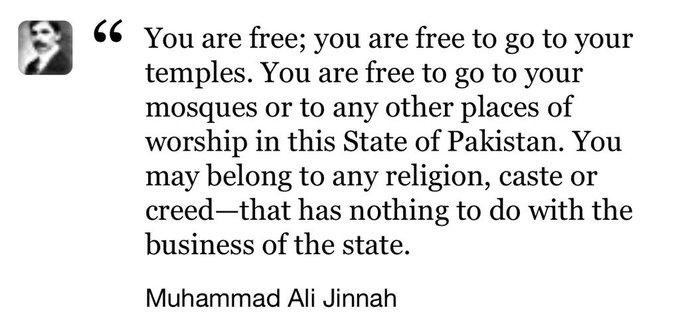
بہت ہی افسوس ناک دن ہے آج قائداعظم محمد علی جناح کے پاکستان نے اقلیتوں کے لئے اپنے دروازے بند کردئیے اور اس کے ساتھ ہی قائداعظم کا عظیم وعدہ بھی چکنا چور ہو گیا
‘نئے پاکستان’ کی ریڑھ کی ہڈی وہی پرانی والی نکلی ۔۔
The state of Madina, the social welfare states of Scandinavia, the rule of law of England, the military prowess of Germany and USA, the technological progress of US, the development of China and the bigotry of religious extremists... good luck!
the government has chosen 7 September to announce its decision to remove Atif Mian from his position. On this day in 1974, second constitutional amendment was passed to declare Ahmadis as non-Muslims. If nothing else, PTI should at least have avoided making a symbolic gesture
Remember this: Pakistan can never go anywhere good if its state, governments and polity continue to surrender to bigotry. It can only go in circles, until the circle becomes so narrow that all three begin to tear each other apart.
Bowing to prejudice, Imran Khan's new government unseats a prestigious international economist because of his Ahmadi faith. The ideal state, a spokesman said, should be modeled on Medina in Saudi Arabia — 1400 years ago.
https://www.dawn.com/news/1431495 
A truly disappointing decision. Makes me wonder what space do I have in my own country if my religious background, not my education, work or good intentions define me as a person. @AtifRMian could not have saved this country, but the country could have saved the idea of
اس تمام نام نہاد ہنگامے میں مجھے @betterpakistan احسن اقبال صاحب سب سے بہتر لگے جنہوں نے میرٹ کی بات کی تھی۔ کل تک عاطف میاں ن لیگ کے لیے ناقابل قبول تھا آج اس کو ہٹانے پر حکومت کو پسپائی کے طعنے ۔ ہم صرف مخالفت برائے مخالفت کرتے ہیں۔
At a time when you have no political challengers, no issues with judiciary or military and have wide public support and are still basking in Victory you can't take a stand on an appointment that you yourself made knowing it would have consequences. Doesn't augur well. For you.
There is nothing naya about this Pakistan. Same old bigotry, exclusion and religious intolerance. This is our loss.
The development was also confirmed by Minister of Information Fawad Chaudhary afterwards. He maintained that the government has decided to withdraw the nomination of Atif as it wants to move forward alongside all Ulemas and social groups while avoiding conflict.
حکومت نے فیصلہ کیا ہے کہ عاطف میاں کی اقتصادی مشاورتی کمیٹی سے نامزدگی واپس لے لی جائے،حکومت علماء اور تمام معاشرتی طبقات کو ساتھ لے کر ہی آگے بڑھنا چاہتی ہے اور اگر ایک نامزدگی سے مختلف تاثر پیدا ہوتا ہے تو یہ مناسب نہیں۔
عمران خان کا آئیڈیل ریاست مدینہ ہے، اور وزیر اعظم اور ان کی کابینہ کے اراکین عاشقان رسول کریم صلی اللہ علیہ وآلہ وسلم ہیں۔ ختم نبوت ہمارے ایمان کا حصہ ہے اور حال ہی میں گستاخانہ خاکوں کے معاملے پر حکومت نے جو کامیابی حاصل کی وہ بھی اسی نسبت کا اظہار ہے۔
Earlier, on different occasions Information Minister Fawad Chaudhary categorically rejected such extremist demands. Just days after the federal information minister publicly defended Princeton professor Atif Mian’s appointment, a PTI senator tweets that he has been asked by the govt to step down from the Prime Minister’s Economic Advisory Council.
حضرت عُمر(رض) نے تو شام میں اپنا ریونیو افسر (اقتصادی اُمور) باقاعدہ حُکم جاری کر کے ایک یونانی غیر مسلم تعینات کیا محض قابلیت کی بنیاد پر۔ کیا حضرت عُمر (رض) سے بڑھ کر آئیڈیل ریاستِِ مدینہ کی تقلید کرنیوالا کوئی ہو سکتا ہے؟ تاریخ پڑھ لیجئیے۔
For all those who got all excited about Fawad Chaudhry’s initial response on I hate to say this but told you it doesn’t mean much and that position won’t last long.
For a brief moment, many of us thought we might be proven wrong about the PTI. How how wrong we were!
Atif Mian is a prominent and distinguished economist Dr Atif Mian is a Professor of Economics in the University of Princeton. He is ranked among top 25 economists in the world. He has taught in reputable universities like the University of Chicago, University of California, Berkeley and now is proudly teaching in the Princeton University.

Atif Mian is also the author of the economic opus ‘House of Debt’, and dozens of research publications. His research has been published in various prestigious research journals like American Economic Review, Econometrica, Quarterly Journal of Economics etc. Furthermore, Dr Atif Mian has about 18 fellowships, and is the Director and co-founder of the ‘Centre of Economic Research Pakistan’ (CCEP).
https://dunyanews.tv/en/Pakistan/455905-Economic-Advisory-Council-Atif-Mian-Imran-khan-PTI-Naya-Pakistan

Friday, September 7, 2018

Video - The New York Times Drops Shocking Anonymous Op-Ed | The Daily Show

Video - So You Think You Can Judge - The Battle Over Brett Kavanaugh's Confirmation | The Daily Show

Video Report - John Kasich calls Trump the 'commander of the chaos'

Video - Elizabeth Warren: Time to use 25th Amendment on Trump

Video - Former President Obama unleashes on Trump, GOP

Bangladeshi domestic workers face physical and sexual abuse in Saudi Arabia

Hundreds of Bangladeshi women working as domestic helps in Saudi households have accused their employers of committing severe physical, mental and sexual abuses. DW spoke to some of the women about their plight.
"Once I returned to my country, I had to get admitted into a hospital for 20 days. I could not even walk," said 25-year-old Shefali Begum, a Bangladeshi domestic worker who spoke with DW about the terrible suffering at the hands of her employer in Saudi Arabia.
She is just one of the thousands of Bangladeshi domestic workers who have migrated to the Middle Eastern nation over the past several years in search of higher wages and a better life.  
"They used to beat me with wires and canes. My thighs are full of marks of torture," Shefali said. Her employers also provided her food only once a day, she complained. "Whenever I asked for food, they beat me."
Shefali hails from a small village in Manikganj district, located in central Bangladesh. Her travel to Saudi Arabia was arranged by a middleman back in her village. After arriving in the country, however, it was not long before her hopes of a better life were shattered. She said she managed to endure her employer's torture for just three months.
"The day before the recruiting agency sent me back to Bangladesh, my Saudi employer severely beat me. The daughter of the house's owner even broke my finger. I was sick," Shefali said.
"My employer's family threatened to cut out my tongue and kill me if I exposed their wrongdoings to anyone. They did not allow me to even talk to my family on phone," she said, adding that the family did not pay her full wages.
An insidious issue
Shefali is one of the at least 6,500 Bangladeshi domestic workers who have returned from Saudi Arabia since 2015, said BRAC, an NGO supporting women like Shefali. According to BRAC, between 1991 and 2015, only 32,317 female workers from Bangladesh relocated to Saudi Arabia for work.
But that figure has risen exponentially since the governments of the two nations signed a memorandum of understanding in 2015. About 218,131 Bangladeshi women have left for Saudi Arabia over the past three and a half years. 
Shariful Hasan, an expert on migration at BRAC, told DW that Bangladeshi domestic workers face an array of problems in Saudi Arabia. They face food and wage deprivation, physical torture and sexual exploitation, among other abuses, he said.
"We know cases where these girls came back pregnant after suffering serious sexual abuse at the hands of their male employers. Others have faced severe physical torture, including broken hands and other body parts. Some report of not receiving wages for months or even proper food," Hasan said.
Activists say many of these girls and women are kept isolated from the outside world by their Saudi employers. "Many of them have no means of communication with outsiders. The only way out is to flee and surrender to the police or seek help from fellow Bangladeshi workers," Hasan said.
The expert pointed out that their suffering doesn't even end there. "At times, these people are again placed in other homes via middlemen. There they again face torture and abuse, until they flee or are put in safe shelters in either Riyadh or Jeddah. Then with the help of the Bangladeshi embassy, they return home," he underlined.
Women don't receive support
Local media outlets in Bangladesh report that even after their terrible experiences, these women don't usually receive much support form the government.
Officials working for the Wage Earners' Welfare Board, a government body responsible for the welfare of expatriate workers, told local newspaper New Age that although the numbers of returnees are increasing, they have yet to put in place a program to ensure support for the returning women.
Still, government officials deny the accusation that they aren't addressing the problem.
Nomita Halder, secretary of Bangladesh's Ministry of Expatriates' Welfare and Overseas Employment, told DW that they have had several meetings with their Saudi counterparts to tackle the issue.
"Because of Saudi Arabian regulations, our embassy or the recruiting agencies have no access to the houses where our women are working. Only the recruiting agency from their side has that access. So they have to take more responsibility. We have told them several times," Halder told DW.
She also blamed the language barrier as one of the reasons behind the woes of these women. Halder said, "We are now focusing more on language and other training before sending these women so that they can at least communicate properly." 
While some say the percentage of women workers abused in Saudi Arabia is not that high when compared to the total number of women migrants to the country, Hasan disagrees. "Even if one woman is beaten, sexually abused or tortured, it is shameful for us," he said.
Despite returning to safety in Bangladesh, Shefali is looking at an uncertain and difficult future.
"My son has a brain tumor and my husband's shop was burned to the ground, leaving us penniless. It prompted me to move to Saudi Arabia to find a way for my family's livelihood. But it ended up as a disaster for my family," Shefali regretted.

Video Report - #Syria Standoff: No Compromise on Idlib at #UN Security Council Meeting

Video Report - CrossTalk: Syria's Best Chance?

Video report - #Putin, #Erdogan and #Rouhani address media following trilateral meeting on #Syria

Video Report - Fate of #Idlib: #Russia, #Turkey & #Iran meet at crucial #Syria summit

Video Report - School attacks & militancy in #Gilgit Baltistan

Pakistan tribal leader says militants bombing schools are ‘fed’ by the State

 and 

Tribal leader and ex-speaker of Gilgit Baltistan assembly Malik Mohammad Miskeen Tuesday, in an interview with journalist Shahzeb Jillani, said that there was a link between the torching of schools — over half of them all-girls — in Gilgit Baltistan last month and ‘jihadi’ training camps in that region. Miskeen said people were being trained in these camps, which were being allowed to function by the “State”. These men had carried out the attacks, he added.
He said that after the decision was made to shut down the training camps, the militants responded by burning down these 12 schools.
Miskeen said the militants were “people nourished by the State” but had now become a threat to this very establishment that had first encouraged them.
In his tweet, Jillani, the interviewer, mentioned that the specific part of the clip when Miskeen said these words were not considered ‘worthy’ of going on air by his TV channel.

@JungjooGernail, who doesn’t give his real name on Twitter, but makes satirical and perceptive comments, shared Jillani’s 1-minute interview clip, although the entire interview was of 10 minutes. In Punjabi English, @JungjooGernail took a dig at the Pakistan military’s strategic role in training and providing safe havens to militants who travel to Afghanistan and India to carry out attacks. Specifically, he reserved his pickled humour for Asif Ghafoor, the director general of Inter-Services Public Relations (media wing of the Pakistani army).

Ex-speaker Gilgit Balitistan Assembly, Malik Miskeen says school torching is product of jihad factories

Oye Ghafoor! Is he praising us or cursing us??

Ghafoor: huzoor I think he’s saying ye jo deshtgardi hai isky peechy wardi hai :/


https://theprint.in/go-to-pakistan/pak-tribal-leader-says-militants-bombing-schools-are-fed-by-the-state/112279/

#Pakistan #AtifMian - Another economist resigns from EAC in protest against Atif Mian's removal


Protesting the government’s decision to withdraw the nomination of Dr Atif Mian on the Economic Advisory Council (EAC), another celebrated economist resigned from the newly-formed body, saying “being a Muslim I can’t justify this”.
Dr Asim Ijaz Khwaja – who was one of the 18-member EAC Atif Mian was part of – announced his decision on the popular microblogging site Twitter shortly after the government asked Dr Atif Mian to step down from his position.
“Have resigned from EAC. Painful, deeply sad decision. Grateful for chance to aid analytical reasoning but not when such values compromised. Personally as a Muslim I can’t justify this. May Allah forgive/guide me&us all. Ever ready to help. Pakistan Paindabad,” Dr Khwaja wrote on his official Twitter handle.

Have resigned from EAC. Painful, deeply sad decision. Grateful for chance to aid analytical reasoning but not when such values compromised. Personally as a Muslim I can't justify this. May Allah forgive/guide me&us all.Ever ready to help.Pakistan Paindabad.

Dr Khwaja is the Sumitomo-Foundation for Advanced Studies on International Development Professor of International Finance and Development at the Harvard Kennedy School, co-director of Evidence for Policy Design (EPoD), and co-founder of the Centre for Economic Research in Pakistan (CERP).

The appointment of Dr Mian of Princeton University (Department of Economics and Woodrow Wilson School of Public Policy) to the 18-member EAC set up to advise the government on economic policy was opposed by some religious groups, including Tehreek-e-Labbaik Pakistan (TLP) because he belongs to the minority Ahmadiyya community.
The news of Dr Mian’s removal from the EAC came as a surprise as a day earlier Information Minister Fawad Chaudhry had defended his nomination, saying the government would “not bow to extremists”. The TLP reacted strongly to Chaudhry’s statement and called for his resignation.
However, on Friday morning the government apparently gave in to pressure and asked Dr Mian to step down from the council.
“The government has decided to withdraw Atif Mian’s nomination. We aspire to forge ahead with the cooperation of all stakeholders. This includes people from all socio-economic backgrounds and religious scholars. A single appointment cannot be allowed to hold this hostage,” the information minister wrote on his Twitter handle while announcing the government’s decision.
“[Prime Minister] Imran Khan draws inspiration from the first Islamic state of Madina. His cabinet members are lovers of Prophet Muhammad (PBUH). Belief in the finality of Prophethood constitutes an integral part of their confession. The government’s recent diplomatic victory over the Netherlands caricature contest is representative of this,” he said in another tweet.
Dr Mian’s appointment triggered a smear campaign on the social media, with many calling for his removal.
A call-to-attention notice had also been submitted in the Senate by opposition parties against Dr Mian’s nomination on the EAC. The notice was signed by lawmakers from the PML-N, Muttahida Majlis-e-Amal and Pakhtunkhwa Milli Awami Party.
Dr Mian has served as a professor of economics, public policy and finance at Princeton University and as director of The Julis-Rabinowitz Centre for Public Policy and Finance at Woodrow Wilson School. He is the only Pakistani to be considered among International Monetary Fund’s ‘top 25 brightest young economists’.
Dr Mian also took to Twitter to announce that he has resigned from the EAC “for the sake of the stability of the government of Pakistan … as the government was facing a lot of adverse pressure regarding my appointment…”

1/ For the sake of the stability of the Government of Pakistan, I have resigned from the Economic Advisory Council, as the Government was facing a lot of adverse pressure regarding my appointment from the Mullahs (Muslim clerics) and their supporters.

OP-ED - #Pakistan’s shame exposed

Wajid Shamsul Hasan
Like the original Kasur sex video mega scandal of 2015 was allowed to be pushed under the carpet, Zainab’s case too seems to be moving in a similar direction—to exhaust the patience of the masses.
Kasur was all over international media in August 2015 when the case of massive commercialisation of illicit videos of child abuse hit the headlines. Al-Jazeera (English) interviewed me for that. Though I was not too well that day I got into it when its contact person said that the scandal was so massive that the government was trying to cover it up. It seemed to be a call to duty to defend one’s motherland when in a tight corner.
A number of accused had been arrested but since some very influential politicians in power were involved in it, the indications were that it would be shoved under the carpet. The important names mentioned at that time were of the provincial law minister, local members of provincial assembly and others well-linked with the underworld and the party in power. Initial reports had already said that the powerful gang of paedophiles had been in the business of child sexual abuse for more than ten years. As a matter of fact, countless cases of extreme child sexual abuse in Ganda Singh Wala area of Kasur were pending investigation at that time.
Preliminary investigations had revealed that around 400 videos were made of 280 child/minor victims of sex abuse by the gang of over 25 criminals. Several parents of victims were consistently blackmailed and coerced to pay hundreds of thousands of rupees as they were threatened that the gang would release the videos in public. Media reports said families in the locality were helpless as officials all along remained apathetic to the incident. Rather, it seemed clear that the police higher ups and other district authorities were in the know of it and were in cahoots with the gang.

It is now nearly three years when the sex scandal rocked the Punjab Administration and blackened the face of the federal government under Prime Minister Nawaz Sharif. Since there was much public hullabaloo, the Chief Minister had appointed a joint investigation team and had promised draconian punishment.  It was more of hot air full of sound and fury signifying nothing. Apprehensions were there that since those involved in the racket were extremely influential and money made too was in billions in foreign exchange — every effort that seemed to be made apparently to get to the bottom of it was nothing but a subtle move to cover it up, provide coercive time and opportunity to buy or silence the families of the victims.
According to figures available in Punjab alone, over the past four years, 12,000 such cases of child rape were reported, only 100 of the perpetrators were convicted
A time came when a well-organised campaign found itself in between the headlines lines that the scandal was not that big nor were so many children involved in it. It was alleged to be a well-oiled exercise in converting a mountain into a mole hill. All those voices that described the incident as a wakeup call to avert something bigger- fell like seeds on the stony ground. Provincial Law Ministry’s became so obviously tainted in it by its partisan role that the then Punjab Home Minister, late Shuja Khanzada, contradicted various statements by police officials in Kasur and confirmed that the incidents had in fact taken place albeit not in the numbers being portrayed in the media.
A better person that he was as compared to his colleague in the Law Ministry, he came on record to confess that the case — whether small or big — was indeed terrible and most outrageously shameful, promising that no stone will be left unturned in its investigation. Unfortunately, those involved in it managed to buy a cover to shroud their misdeeds by having it converted into a rivalry over land dispute between two groups. Obviously, police and law ministry got into the act to defend themselves and to downplay the sickening child abuse pornography mega exposure.
Instead of becoming part of big cover up exercise then, if Chief Minister Shahbaz Sharif who masquerades himself in different hats as Khadim-e-Ala had acted in the right earnest the hair raising incident of child sexual abuse and most dreadful murder of 7-year old Zainab could have been avoided as well as such cases — 108 of them since then — would not have piled up to collect dust to be forgotten.
Like the original Kasur sex video mega scandal of 2015 was allowed to be pushed under the carpet, Zainab’s case too seems to be moving in a similar direction — to exhaust the patience of the masses. Same procedure has been adopted, joint investigation team appointed and not the least Khadim-e-Ala himself is at the back and call for speedy investigation — that so far is neither here nor there. However, it is good to know that CJP and Chief Justice of Lahore High Court also consider Zainab’s sexually abused murder fit enough for suo motto action, it is hoped that the Punjab government’s sinister efforts and Law Ministry’s machinations not to trace the culprits or to cover it up — are not allowed to succeed.
The very fact that Punjab police is already working on the premise that Zainab’s murder was committed by a “serial” killer with some connections with the Kasur mega sex scandal of 2015 shows that the cover up is on. Ever since Army chief General Qamar Javed Bajwa has been invoked by the parents of the girl to join investigations and to help civil law enforcing agencies in finding the culprits — it would not be that easy to carry on the cover up operation, it seems. However, time is the essence.
Kasur sex scandals of 2015 followed by Zainab’s murder are merely samples of a malaise that is fast over taking Pakistani society as an epidemic. No doubt in Punjab things have gone out of control; in other provinces too the menace is growing alarmingly. Notwithstanding indigenous culture in KP where boys are boys, sexual abuse for revenge and pleasure has become order of the day in many parts of the country especially in the north where cases of child abuse are swept under the carpet as a normal exercise to save families from shame.
In most of the cases such crimes remain un-noticed and ignored leaving the victim carry a life time scar. According to figure available in Punjab alone, over the past four years, 12,000 such cases of child rape were reported, only 100 of the perpetrators convicted.
In the wider sense this is a total failure of the society, its moral and religious values especially when seminaries most prominently figure as haven for sexual abuse. Yes, there are laws, more laws are being passed but not many too follow them or execute them as a result you get what you have today — life being rendered short, brutish and nasty.

Pakistan removes ''AHMADI MUSLIM'' economist from key role following Islamist backlash

Pakistan’s new government canceled the appointment of a renowned Princeton economist to its Economic Advisory Council, an official said on Friday, after a strong backlash against the choice of a member of the Ahmadi religious minority.
The failure of Prime Minister Imran Khan’s government to resist pressure to drop economist Atif Mian reflects the increasing clout of hardline Islamists, whose parties won around 10 percent of the vote at the last election in July.
Faced with a looming balance of payments crisis that may force the country to seek a fresh bailout from the International Monetary Fund (IMF), or other lenders, the government had picked Mian to join an 18-member council to advise prime minister Khan.
Aged 43, and a scholar in the field of finance and macroeconomics, Mian is regarded as one of the world’s top young economists.
The prime minister’s adviser on media, Iftikhar Durrani, confirmed that Mian’s appointment had been revoked, while the government’s main spokesman alluded to the pressure the government had come under from religious quarters.
“The government wants to move forward with the religious leaders and all segments of society, and if one nomination gives a different impression, then it’s not appropriate,” Information Minister Fawad Chaudhry said on Twitter.
Chaudhry had previously defended Mian’s appointment saying: “Pakistan belongs as much to minorities as it does to the majority.”
https://www.reuters.com/article/us-pakistan-politics/pakistan-removes-economist-from-key-role-following-islamist-backlash-idUSKCN1LN0UT

Thursday, September 6, 2018

Pashto Music Video - Za che pe mayan ym da hagha pakhtonistan de

#Pakistan - EDITORIAL #ANP targeted

Daily Times:
The targeting of both the Awami National Party (ANP) and young Pashtun leaders continues. This week saw the assassination of Ibrar Khalil. He was gunned down along with his nephew. Khalil was the party candidate for the Peshawar PK-74 by-poll scheduled for next month.<br />
<br />
Thus far, no group has claimed responsibility for the twin-murders. Though in the run-up to the July elections, militants engaged in a murderous campaign against the ANP. Indeed, senior party leader Haroon Bilour was killed in a suicide blast that left 21 dead just two weeks before voting. His father, Bashir Ahmed Bilour, met the same fate some six years earlier. The Tehreek-e-Taliban Pakistan (TTP) owned both attacks. In fact, the ANP lost hundreds of party workers and supporters ahead of the 2013 polls as the TTP targeted its rallies as well as those of the PPP and MQM. The militants waged a bloody war of retribution against those insufficiently insubordinate to go ahead and participate in what the group denounced as western-style democracy. Which is, of course, is another way of terming the system of parliamentary representation ‘un-Islamic’.<br />
<br />
It now falls to the PTI government in Khyber Pakhtunkhwa to beef up security ahead of the October 14 by-election. It must similarly spearhead the necessary calls for justice. Just as it did in the Mashal Khan murder case. And when it came to standing with the Pashtun Tahafuz Movement (PTM) as the latter protested the ongoing killing of their community at the hands of militants and law enforcement agents alike. The provincial set-up should therefore as a matter of urgency consult the ANP as well as others parties and the military establishment to provide a security roadmap for next month’s polls and beyond. Tackling the home-grown militant threat must also top the agenda.<br />
<br />
This is no time for political point-scoring.

#Pakistan - Child sexual abuse


By Leena Nishtar

A recently launched report by the NGO Sahil reveals that a shocking number of 2,322 child abuse cases were reported in the first six months of 2018 with more than 12 children abused per day, during the same period. The report further depicts a 32% increase in child abuse in the first six months of 2018 as compared to the reported 1,764 cases in the first half of 2017.
These figures don’t represent the true scale of the problem. Only the tip of the iceberg is being reported, and unreported cases are exponentially higher. There is no way to track all the unreported cases as the subject is shrouded in the silence of stigma. The taboo nature allows perpetrators to continue abuse with impunity, without fear of legal repercussions.
Sexual violence against women and children is endemic around the world. It is estimated that one in three women globally have experienced physical or sexual violence in their lifetime. The 2018 “End of Childhood Index” ranks Pakistan at 149 out of 174 countries, the major cause being discrimination against girls. Street children are the most vulnerable in this regard. Evidences from various reports show that up to 90% of street children in the country are victims of sexual assault. They are exposed to violence and abuse on a daily basis and young girls are often forced into prostitution. This coupled with disease and substance abuse, forces them towards a life of crime. A documentary titled ‘Pakistan’s Hidden Shame’ reveals the sad reality of sexual abuse faced by homeless boys in the Northern Areas of Pakistan. It alleges that nine out of 10 street children in Peshawar have been victims of paedophilia. These children warrant special attention from the government, development agencies and civil society.
Furthermore, child marriage makes a significant contribution to girls’ abuse, exacerbating the already-dismal situation of child rights in Pakistan. The limited data available on the subject show that around 30% of the marriages in Pakistan fall under the child marriage category, with the highest occurrence in Sindh. Under the Child Marriage Restraint Act of 1929, the minimum age for marriage is 18 years for boys and 16 years for girls. This inherent discrimination against young girls must be immediately removed and the punishment for anyone contracting such a marriage should be made more severe.
Legislation related to child sexual abuse remains poorly implemented and there is a lack of adequate measures to protect victims. The authorities’ ineptitude and failure to take proper action coupled with lengthy judicial process makes acquiring justice next to impossible. Additionally, victims have little to no legal representation.
There must be effective monitoring and accountability of law- enforcement agencies and setting up of preventive mechanisms for child protection at the district level. There is little or no emphasis on victim support. Often victims of such abuse are not even taken for a medical exam unless they are in a severe life-threatening state. It is also important to bear in mind that in most cases, the abuser is a person of trust, known to the victim and his/her family. Moreover, we must believe our children when they report such abuse, instead of quieting them up due to misconstrued notions of honour or resorting to victim shaming.
Furthermore, Urdu does not have any words for terms like abuse or paedophilia which makes reporting of these crimes even harder. It is imperative that we bring this subject into the mainstream. Surveys should be adequately funded in order to ascertain the true scale of the problem.
Pakistan currently has the largest percentage of young people in its history. The effects of such abuse are deep and completely life altering. We cannot turn a blind eye to the deprivations and hardships affecting our poor and vulnerable children. We must ensure that our children have a proper childhood by bolstering our ability to protect them. Prime Minister Imran Khan’s mention of child abuse in his opening address gives us hope in this regard. We must fight this menace as a society to make sure no more children fall prey to such abuse. The heavy burden of small coffins must end.

#DefenceAndMartyrsDay - India and Pakistan both know that 1965 was a War of Mutual Incompetence


If there is anything this war proved, it is that nothing can be achieved through war. Certainly, no war leads to permanent or lasting peace.
Both India and Pakistan are now engaging in their mutual juvenility of celebrating their “victory” in the 1965 war.
The very fact that even 50 years after the war, both sides can continue claiming victory underlines the reality that this war was a stalemate, a dull draw, though it cost a lot in lives and national resources.
If there is anything this war proved, it is that nothing can be achieved through war. Certainly, no war leads to permanent or lasting peace. Even if one side wins, the other nurses its wounds and strikes back at what it sees to be the right time. In 1967, in the Six Day War, Israel achieved total victory over the Arabs. It also captured vast territories on the West Bank, Golan Heights and the Sinai Desert.
But within six years, in what is known as the Yom Kippur War, the Arabs were back at its throat, this time better regrouped, war-gamed and equipped. The result this time was also different. Israel survived, but barely. There were days when it looked like the small nation would be run over, and it’s been widely debated by historians that it thought about using its undeclared nuclear weapons, in desperation.
It was the Camp David Peace Accords, reached later, that produced lasting peace between Israel and Egypt, its most powerful Arab neighbour.
In the Subcontinent, we have fought three major wars (1947-48, 1965 and 1971) and yet our basic issues remain unresolved, and both countries live in distrust and fear of each other.
The inconclusive war of 1965 showed both sides the inadequacy of their military power in taking the issue to a conclusion even when it had the advantage. This applies to Pakistan in Chhamb-Jaurian so early on in the war, then in Khem Karan, and to India in the Lahore and Sialkot sectors, where initial surprise and local superiority did not translate into decisive gains.
Both sides, instead of accepting the reality that their economies would never support an armament build-up that could do any more than defend their borders adequately, started building up for the next, more “decisive” war.
As a result, India turned to the Soviet Union, which replaced Britain and France as our main weapons supplier. Disillusioned with America, Pakistan walked firmly into the Chinese camp.
The unfinished business of 1965 led to the Bangladesh War of 1971. Sure enough, it was decisive and there is no debate as to who won. It did tilt the strategic balance in the Subcontinent and gave us more than four decades without a major war. But it hasn’t given us permanent peace. Pakistan and India continue to be hostile to each other. The bulk of our forces are still arrayed and war-gamed to fight what remains of Pakistan.
At the same time, low intensity conflict of some sort or the other has now carried on, we can say, from 1982, since Pakistan started dabbling in our Punjab situation, and then in Kashmir.
The golden jubilee of the 1965 war, therefore, should be a moment of reflection rather than celebration and mythologising. In their heart of hearts, both sides know that this was a War of Mutual Incompetence. Neither achieved anything. A fortnight into the war, both were tired in body and mind, short of ammunition or tactical ideas. This has been documented on both sides by honourable soldiers who fought each other. They are enormously more honest and certainly better informed than rival propagandists on both sides now building Goebbelsian mythologies.
Wiser nations will move on. Pay homage to those who fought and sacrificed. Draw military-diplomatic-academic lessons from studying that war like any other. But don’t delude yourselves into fighting it all over again, in your twisted heads, and arriving at a conclusion that you wish it did. Because it ended 50 years ago, and it ended without any conclusion, except that wars do not solve anything.
https://theprint.in/opinion/have-you-noticed-how-baba-ramdev-went-silent-on-section-377/112824/

#DefenceAndMartyrsDay - Why Pakistan is so desperate to claim 1965 war a ‘victory’ with annual 6 Sept parades


Because it’s the only war it didn’t lose to India. It was a stalemate, with both tired sides short of firepower, ideas and nerve.
Some lines are so smart and so durable that even their authorship becomes contested. One such is: In war, truth is the first casualty. When The Guardian asked this question, readers gave credit for this to many over the centuries, going backwards, from isolationist American Senator Hiram Warren Johnson (1918) to Rudyard Kipling to Sun Tzu and, inevitably, Ernest Hemingway was thrown in as well.
Some of us non-literary types were exposed to this brilliant truism by Phillip Knightley’s fine book ‘The First Casualty‘. But the copyright on this should belong to Greek dramatist Aeschylus (525-456 BC), well before even Alexander the Great.
Other rules follow. History, by and large, is written from the point of view of the victor. The loser, over time, invents alibis. But it gets complicated when the war ends in a stalemate. Now both sides can massacre the truth in years to follow. Most likely, both can claim victory, as Pakistan and now India do on their first, nearly full-fledged war (nearly because the navies were hardly involved) in 1965. Pakistan always claimed victory in the 22-day war and observed 6 September as Defence of Pakistan Day, as it is doing today, apparently because that was when it “broke” the Indian Army and Air Force’s backs.
India has been more grown up and circumspect, generally accepting the idea of a stalemate. Even India’s official history of that war is remarkably underhyped.
In the first flush of the war, India did give the main plaza on Raisina Hill the name Vijay (victory) Chowk, but has mostly forgotten this war since. But the euphoria returned briefly in India, in its 50th year (2015), with a month-long celebration beginning 28 August, when the army captured Haji Pir Pass in Kashmir’s Uri sector, a brilliant military achievement four days before the full-fledged war began.
But this fervour didn’t sustain in subsequent years. Because, unlike Pakistan’s army, which is desperate to cling on to the one war that it did not lose, India has the undisputed victory of 1971, followed by smaller successes in Siachen and Kargil.
Interestingly, despite being older, this is a better-recorded war by both sides than 1971. Probably because this war was still led on both sides by officers trained in the British tradition, which put a premium on military literature.
Senior Pakistani commanders’ accounts, in fact, have been less mythical than the folklore in their country, which consists of three falsehoods. One, India started the war. Two, despite its vast superiority in numbers and firepower, it lost so badly it sued for peace. Three, “Hindu” armies proved again that they couldn’t fight Muslims.
On the Indian side, there is no doubt that Pakistan launched the war, that India had no real objective but to protect Kashmir and, as days passed, to inflict as much damage on the Pakistani military as possible, and there is the usual exaggeration on how much superior Pakistan’s American-supplied equipment was. A stalemated end is widely accepted in India. It will be totally unnecessary now to reimagine this into a victory.
Three and a half of the four Indian conclusions on that war are accurate. Half, because Pakistan had some important superiority in equipment but there wasn’t a staggering mismatch. That Pakistan started the war has been very well documented by international scholars as well as Pakistani writers. The miscalculation was based on India’s rout in 1962, and its hesitant response to the Pakistani probe in Kutch in early 1965. Plus, Kashmiris were seen as ripe for revolt, particularly as the Valley simmered since the Hazratbal incident of late 1963.
The war began with Operation Gibraltar, which shoved thousands of trained infiltrators (regulars in mufti) into the Valley, with attempts to incite a rebellion at the same time. When this failed — particularly as Kashmiris didn’t revolt and the Indian Army responded with unexpected severity, finally taking the Haji Pir Pass in a classic mountain assault on a rainy night — part two of the Pakistani plan, Operation Grand Slam, was launched.
This was an all-out armour-and-infantry assault across the “international frontier” (not LoC) at Chhamb (in the Jammu sector) aimed to take Akhnoor and cut off the Kashmir Valley from the rest of India. It worked well for a couple of days as the lone Indian brigade crumbled, even the frantic induction of air power failed badly (all four old Vampires sent for first strafing runs were lost), and Kashmir seemed in the bag.
It was at this moment that India opened up two new fronts in Punjab across the Lahore and Sialkot sectors.
There was no strategic objective except to force Pakistan to pull back its forces in defence of the mainland and ease the pressure on Kashmir. This was achieved overnight. But beyond that, the 15 Infantry Division that crossed Wagah and reached the outskirts of Lahore found itself short of ideas and nerve, stunned by the rapidity of their own advance and absence of central, strategic thought or local, tactical dash.
In the other sector, Sialkot, where India committed its sword-arm, the 1 Armoured Division, fighting was intense but really a thoughtless “slogging match”. By far the finest account on the Indian side has been written by late Lt. Gen Harbaksh Singh who, as GOC-in-C of the Western Command, led almost the entire war. It is also the most searingly honest. He says in the conclusion of his book War Despatches (page 214) that “we did a lot of mutual back-thumping as an objective assessment would have been frowned upon as unpatriotic”. But “when dust settled…and stripped of the aura of sensation”, he said, particularly of his main assault forces, “exaltation gave way to disillusionment”.
We haven’t seen much similar realism from the Pakistani side. They were very well-prepared and had clear, ambitious objectives, the massive Patton tank assault in Khem Karan being the centrepiece of their strategy, and tactical audacity that’s always been their hallmark. It was meant to outflank Indian forces in the Lahore sector, cross the Beas and, who knows, reach Delhi, and after initial breakthroughs Ayub Khan (Pakistan’s then president) boasted about this. But it was broken soon enough by a resolute 4 Division (rebuilt after annihilation in 1962) and the destruction of Pakistani 1 Armoured Division in the Battle of Asal Uttar became India’s main achievement in the war. Pakistani failure lay in offence.
In the entire war, Pakistan made two truly bold moves, in Chhamb and Khem Karan. One was a limited but short-lived success, the second a disaster of historic proportions. More important, however, was the thought behind Chhamb, that India wouldn’t escalate a war for Kashmir to the mainland. That the misconception persists became evident again in Kargil 1999.
My favourite line on war was spoken to me by Atal Bihari Vajpayee, and it is one I have quoted in the past too. When a war-like situation was developing in the winter of 2001-02 (after the Parliament attack), he had said, the problem with a war is, how you start it, when and where, is in your hands. But when it will end, how and where, you can never say. He had also asked his furious generals a question: We can go to war for sure, but when the history of this war is written, what will this war be called, what is our objective? Will it merely be called a war of anger?
We know how and why the 1965 war ended: When both sides got tired, bored, ran short of military ideas and, most importantly, ammunition. Both sides failed to achieve any objectives and began preparing for the next round. After 1971, India has no military objectives left vis-a-vis Pakistan except deterrence and has therefore been able to build its economy, calm its society to formidable coherence and rise as a status quo power. Unachieved military objectives are all on the Pakistani army’s side, these haven’t changed since 1965. So, leave it to them to rue or celebrate what I have always called our War of Mutual Incompetence since, as Vajpayee had said, a war must have a name. We should just move on, or rather, keep moving on.
https://theprint.in/opinion/why-pakistan-is-so-desperate-to-claim-1965-war-a-victory-with-annual-6-sept-parades/113095/