Sunday, August 19, 2018

#Pakistan - Child Marriage: How the childhood of girls is robbed in #Balochistan


The month of March in Balochistan’s winter zones comes with some interests for school going children when their schools open after winter vacation. The new classes, new reading writing materials, new school backpacks increase curiosity of students for going school. However, for Sankina, 13, in the village of Iskalkoo, district Kalat , the school going month came with surprise when she was asked for not going to school as her marriage was scheduled on 15th of March.
Rather than having school materials for new school year she was dressed bridal and remained unable to refuse. Shockingly, she was married to 50 years old Abdul Ghani, the man whose daughter had already married to Sakina’s elder brother and Sakina’s marriage was cause of exchange relationship.       
Though one of the brothers of Sakina resisted this wedding but he was asked to be silent for the sake of family honor. 
Sakina is not the first prey to early child marriage in Balochistan but there are hundreds of unreported stories which take place in far-flung areas of Balochistan.  Since Pakistan’s Child Marriage Restraint Act (CMRA) 1929 sets the legal age for marriage to 16 for women and 18 for men.
According to Pakistan Social and Living Standards Measurement (PSLM) survey 2014-15 by Pakistan Bureau of statistics, literacy rate of Balochistan is 43% out of that 55% males and 25% are females. The reasons behind this are obvious but early marriage is being considered one of the major causes of girl’s dropout from schools. In Balochistan more than 50% marriages are solemnized before the age of 18.
Early marriages, early and unintended pregnancies, lack of awareness dearth of basic facilities in area increase high Maternal mortality rate(MMR ratio) indicating MMR 785 per 100,000 live births in province; however, figure is very low 272 per 100,000 live births across Pakistan.
The Plan International’s report October 2017 indicates that 15 million girls are married before 18 years age annually across the world. It is on the record that major obstacle in girl’s education is the child marriage. The report further alarms that 130 million girls’ across the world are out of school.
Under the umbrella of Action Aid Pakistan, Blue Veins, Citizen Rights and Sustainable Development CRSD organizations in 2013 claimed that out of 60 million under 18 marriages of girls in world, Pakistan had share of 42% early marriages as 24% from rural and 18% from urban areas of the country. This is the main reason behind the low literacy among female population in Pakistan where the female literacy drops rather than growing up.
Human rights campaigners consider child marriage an alarming social issue in Balochistan. Unfortunately, no legislation related to the issue has increased early child marriage. Therefore, human rights activists, civil society members have launched a campaign to get tabled for enactment of Balochistan Child Marriage Prohibition laws.
Child Marriage Prohibition law in Balochistan has ever been required to control child marriage and its impacts in the province but the bill met challenges in past and existing times.   Dr. Shama Ishaq, a well-known women activist and member of Balochistan Assembly is enthusiastically working for enactment of the pending child marriage bill in Balochistan. She is leading the formed Steering Committee for the enactment of bill.
 Dr. Shama Ishaq says that some religious and tribal parliamentarians are rejecting the Child Marriage Prohibition law repeatedly from 2014 in Balochistan provincial assembly.
Talking to the Balochistan Point Dr. said: “Recently, in May 2018, we tabled bill for enactment in the assembly, however, that was again objected. The objection is stated that the bill is contrary to Islamic injunctions and it should be sent to Islamic Ideology for further review thus it went in pending.”
Health and Rural Development (HARD), a Balochistan based non-governmental organization in collaboration with Mundo Cooperante and some other local organizations have launched the advocacy and lobbying campaign in Balochistan for enactment of Child Marriage Prohibition laws in Balochistan. They have been conducting advocacy consultations with Policy Makers from Social Welfare Department, Ministry of Human rights, CSOs and other stake holders for approval of Child Marriage Prohibition Law. 
Talking to the Balochistan Point executive director HARD Faraz Mengal said that   In Balochistan, children mostly forced marriages of girls were on increased rates in rural and urban areas.
“Tribal leaders and community heads have power to disrupt peace and normalcy of indebted families, taking away young daughters and giving them to older men of rival families. This problem of child marriage is further exacerbated by the fact that 85% births in rural areas are also unregistered, making it hard to determine the age of a child at the time of marriage.” Faraz added. 
“Surprisingly, the people are blind followers of myths and adopt harmful practices justifying their tradition by practicing ‘before birth marriages’ of girl’s as excuse against any sin / illegal action occurred by any family member. The before birth engagement/marriage is extremely a harmful and an inhuman practice in Balochistan” Faraz told the Balochistan Point.
Mis Haleema Chairperson Health and Rural Development (HARD),  says that illiteracy and lack of awareness among people is a major cause of increased early marriages in Balochistan. “The less awareness has made them strong follower of religious, cultural, male-controlled norms and values where girls are married early at 12 to 16. The practice of early marriages is common everywhere in Balochistan due to strong tribal, religious and cultural influence.” Said Mis Haleema. 
Mis Haleema admired the role of civil society for advocating to protect girls and their rights in the province and would suggested that  such organizations should continue their advocacy to develop pressure for enactment of Child Marriage Prohibition Law so that children mainly girls get rid of this harmful practice.
Director ministry of Human Rights Balochistan, Jahanara Tabassum is also of the view for protection and promotion of human rights in collaboration with social organizations, particularly for children and women rights. Talking to the Balochistan Point she emphasized on rising awareness against child marriage in communities and termed Child Marriage Prohibition Law crucial for defending human rights.
Poverty is marked a chief factor contributing in child marriages and practice of bride price is still widespread in Balochistan. Furthermore, custom of before birth and compensation marriage is prevalent and girls continue to be offered in marriage in exchange of debts to resolve tribal or family disputes and rivalries.
Protection of girls and boys from child marriage is responsibility of the State.  So far the laws that have been passed on national or provincial level still look for remarkable implementation. Pakistan was the sixth country in the world to sign and ratify the United Nations Convention on the Rights of the Child (UNCRC) in 1990 following its adoption by the UN General Assembly on November 20, 1989. 
Pakistan is also a member of the South Asia Initiative to End Violence against Children (SAIEVAC), an inter-governmental body which has adopted a regional action plan to target child marriage.
In discussions of the Open Working Group on the Sustainable Development Goals, Pakistan was among the first countries to suggest a target to end child marriage by 2030. Now it is also feared that Pakistan may fail to contribute to  SDGs,  as the target 5.3 of the Sustainable Development Goals (SDGs) commits all UN Member States to “Eliminate all harmful practices, such as child, early and forced marriage” by 2030.  Prior to SDGs Pakistan failed to achieve Millennium Development Goals (MDG); essentially, the Goals related to children rights.
There is great need of some committees on national level for follow-up on the above mentioned commitments to ensure their effective implementation. So there is dire need to effectively build pressure on the federal and provincial governments for implementation of international obligations but for the successful results the civil society, media, stakeholders, religious leadership and children should be involved. (The names have been changed to protect the innocent.)
#PakistanElections2018 - Sindh’s cabinet takes oath

The new Sindh cabinet has been sworn in on Sunday, with eight ministers and two advisers taking oath of their office in the first phase of the cabinet formation.
The oath-taking ceremony was scheduled to be held at Governor House in the evening.
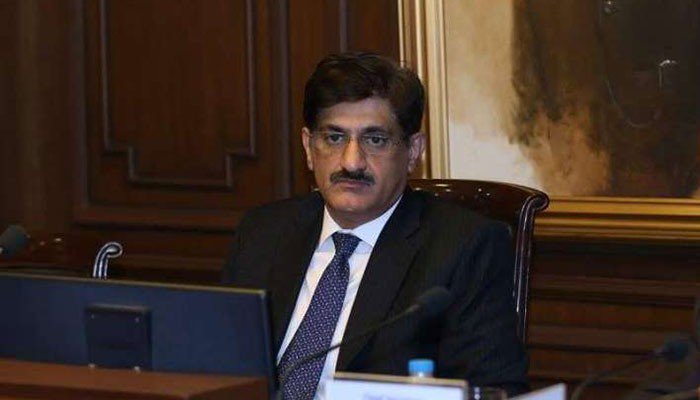
Sindh Chief Minister Murad Ali Shah witnessed the ceremony. 
Acting Governor Agha Siraj Durrani administered oath to the 10-member cabinet which was approved by Chairman Pakistan Peoples Party Bilawal Bhutto Zardari on the advice of Chief Minister Syed Murad Ali Shah.
https://www.thenews.com.pk/latest/357385-sindhs-cabinet-takes-oath

Sindh Chief Minister Syed Murad Ali Shah order operation against street criminals, drug mafia and beggars racket

Sindh Chief Minister Syed Murad Ali Shah in his first meeting which he chaired here at CM House on Sunday after assuming the office has directed the Inspector General of Police to launch crack down against street criminals, “this should not only be controlled but eliminated.”
He said that in his speech on the floor of the house he had spelt out that maintenance of law & order would his top priority, “this is why on Sunday I am holding this meeting,” he said and added “the street crime was undoing all the government efforts he had taken to restore law and order in the city, therefore a decisive action is required to eliminate this [social] evil,” he said.
The Inspector General of Police told the chief minister that a targeted operation was in progress and it would definitely produce good results. At this the chief minister said that the targeted operation must be made more strict and focused. He directed him to make the SHOs responsible for controlling street crime, otherwise take strict action against them.
Additional IG Karachi Dr Ameer Shaikh said that there was a drug mafia and other mafias behind the street crimes. He added that those who are running the racket of beggars in the city are also involved in street crimes. The chief minister directed the IG police to launch operation against drug mafia, including the peddlers and edicts. “Just after Eid necessary measures would be taken to send the edicts to the rehabilitation centers or to the welfare organisations,” he said added he did not want to see the beggars standing on all the round about. “There should be an operation against them,” he said.
IG Police briefing the chief minister on law & order said that there were six police Ranges in the province with a strength of 123,983 policemen. He added that there were 30 police districts, and 623 police stations all over Sindh. A this the chief minister said that if the population of the province is divided with the total strength of the police there would a ratio of 1 policeman for 410 people. “This is not bad ratio but we have to make the police more responsive, hardworking and dedicated to control the crime,” he said and added this would be possible with capacity building of the police.
The IG police told the chief minister that 10,269 policemen were receiving different trainings. 8300 policemen are on In-service courses, 1237 are receiving training army training centers, 432 are receiving special training by Pakistan Army and 300 are doing specialized commando courses. The capacity building process as launched by the chief minister during his last tenure was in progress.
Giving details of general law and order situation, the IG told the chief minister that 621 miscreants have been bound down under heavy securities while there was strict vigilance on 761 persons included in the 4rth Schedule. Campaign to arrest all proclaimed offenders was in progress and the police station record was also being updated.
https://www.thenews.com.pk/latest/357395-murad-order-operation-against-street-criminals-drug-mafia-and-beggars-racket

#PPP nominates Aitzaz Ahsan as its presidential candidate: sources

Pakistan Peoples Party has nominated Aitzaz Ahsan as its presidential candidate, sources said Sunday.
The party chairperson and co-chairperson, Bilawal Bhutto-Zardari and Asif Ali Zardari, nominated Ahsan for the president’s slot, the sources said. 
A day earlier, Prime Minister Imran Khan nominated Pakistan Tehreek-e-Insaf leader Arif Alvi as the party's presidential candidate.
The Election Commission of Pakistan announced on Thursday that the presidential election will be held on September 4. Voting for the presidential election will be held in the National Assembly and the four provincial assemblies from 10am to 4pm.
According to the schedule issued by the electoral body, nomination papers for the presidential polls can be filed with the presiding officers in Islamabad and the four provinces by 12pm on August 27.
Scrutiny of the nomination papers will be conducted on August 29.The list of validated candidates will be published the same day at 1pm.
Candidature can be withdrawn by noon on August 30
https://www.geo.tv/latest/208003-ppp-nominates-aitzaz-ahsan-as-its-presidential-candidate-sources

Saturday, August 18, 2018

Music Video - Guns N' Roses - Paradise City

Video Report - Who issues a security clearance and who gets one?

Video Report - Brennan: President Trump is "drunk on power"

China President State Visit to DPRK Planned for September - Reports


Chinese President Xi Jinping is expected to visit Pyongyang next month as relations between China and North Korea continue to improve, Singapore-based The Straits Times reported Saturday.
The newspaper — which did not cite a source — asserted that Xi had been invited by North Korean leader Kim Jong un to celebrate the 70th anniversary of the country's founding. However, China's foreign ministry did not respond to a Reuter's request to confirm the Chinese president's visit. 
If the Saturday report is confirmed, the visit would mark the first trip by a top Chinese leader to the hermit country since 2005, when Xi predecessor Hu Jintao made the trip.
Kim has visited China three times this year, twice to Beijing and once to Dalian. During each of the three meetings, Xi met with the North Korean leader, signaling an improvement in the relations between the countries.
According to Sun Xingjie, a Korean peninsula expert at Jilin University, Xi's attendance at the DPRK anniversary would align bilateral ties established between the two leaders earlier this year.
"They have agreed to step up high-level exchanges, including mutual visits by state leaders and their special envoys," Sun told Reuters on Saturday. 
The relationship between China and North Korea worsened after Kim took power in 2011 following the death of his father, Kim Jong-il, as Pyongyang's weapons program gained momentum. China has grudgingly supported sanctions by the United Nation against North Korea.
Tensions between Washington and Beijing have been running high, with a full-scale trade war looming, as the administration of US President Donald Trump recently threatened to target some $200 billion in Chinese goods. In response, Beijing has vowed to implement severe countermeasures against US agricultural products.

Belly Dance by Elissar - رقص شرقي مع إليسار

Arabic Music - Dj Kantik Arabian Night (Original) Club Music Mix EDM 2

The Saudi school bus bombing in Yemen reportedly used an American-made weapon


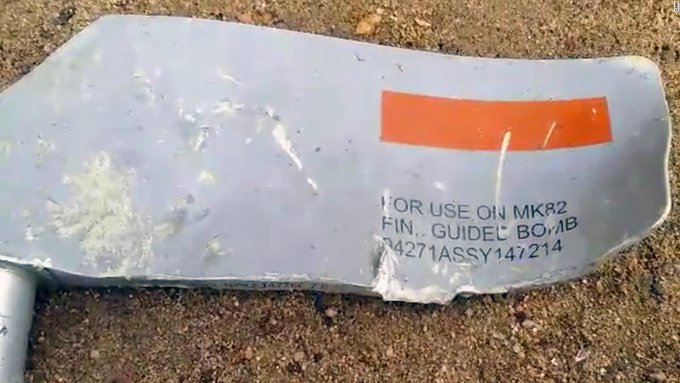
The weapon used in the Saudi-led coalition airstrike on a school bus in Yemen earlier this month that killed 51 people, 40 of them children, and wounded over 100 more was manufactured in the United States, CNN reported Friday night.
The bomb in question was reportedly a 500-pound laser-guided MK 82 bomb produced by Lockheed Martin, an American defense contractor. It was identified from numbers on the shrapnel.
The Saudi coalition, which has been credibly accused of war crimes in Yemen, is supported and enabled by the United States. The coalition promised toinvestigate itself for this attack.
A coalition representative declined to comment on the airstrike while the self-investigation is underway, and a Pentagon representative would not confirm the bomb's origin, instead providing CNN a generic condemnation of civilian casualties. 
https://www.businessinsider.com/saudi-arabia-crucified-man-in-mecca-while-calling-out-canada-human-rights-2018-8

Video Report - #Yemen: the world looks away | DW Documentary

Video Report - Aleppo: Still in ruins, but slowly getting back on track as Syria rebuilds cities

Video Report - Putin meets Merkel: What’s cooking?

Pashto Music - Ya Gulab Mei Wala - Sardar Ali Takkar -

#Pakistan - Bilawal Bhutto VS Imran - Power of speech


Imran’s speech was an echo of his usual container speeches as it did not sound like an articulation of a prime minister.
17th August, 2018 was a big day following the general elections as the National Assembly elected Pakistan Tehreek-e-Insaf (PTI) Chairman Imran Khan, as the 22nd prime minister of Pakistan.
Imran Khan’s first speech on 26th July as a victor of the elections amazed every other person to an extent that even his opponents showed reverence towards him. It was because his speech differed from his usual speeches as an opposition leader addressing casually to the public whatsoever. He not only summed up his plans for the country but also claimed to not target any specific personality nor any party but to leave all the personal and political grievances behind in order to proceed forward without any resentment.
However, his inaugural address in the National Assembly placed him back to where he was before, especially after Bilawal Bhutto’s maiden speech.
Imran Khan’s speech was an echo of his usual container speeches as it did not sound like an articulation of a prime minister but more of an ordinary politician.
He once more talked about the accountability of the corrupt and also made his way back into 2013 election rigging when he wanted four constituencies to be investigated.
The issues surrounding the accountability of the corrupt and the previous elections were unnecessarily dragged. And because of that, other core issues were missed out. For instance, economic and security problems that we faced. His statements, one way or the other, were attacks on other parties. And once more, the words turned into more of a blame game.
While on the other hand, Bilawal Bhutto’s speech trampled over the rest, winning the hearts of many which was even evident on social media. It was Bilawal Bhutto who remembered the people who lost their lives before and during the elections.
He referred to extremism, economic crises and foreign policy challenges. He said that it is “hurtful that Pakistan, which has sacrificed so much in the fight against violent extremism, is seen as a part of the problem and not as part of the solution.”
He further stated that Imran Khan is not only the prime minister of any political party but the prime minister of every citizen of Pakistan including all those people that he referred to as ‘donkeys’ and ‘living corpses’.
“If the prime minister persists in spreading intolerance, fanning the flames of bigotry, if he undermines the dignity of this house or the supremacy of the constitution of Pakistan, he will find us opposing in every step of the way”
However, he added that he will support the elected PM if the constitutional and parliamentary supremacy, along with public interests, are prioritized.
One can say that Imran Khan’s speech was an emotional reaction to the protest that took place in the National Assembly by the opposition. Yet, its resemblance to his past speeches made it slightly a dispirited one, taking away the charm that was expected from a newly elected prime minister.
Nevertheless, no matter how inspiring or disappointing a speech may be, at the end of the day, all of it is just a long trail of words. And words are words till they are put into action and that is what the real challenge is. The parliament is a paramount that has the power to understand and succour the matters of the common man because the duty of every member is to serve the people, not rule them. It is beyond the grudges that exists between the political parties. It is the performance and the fulfillment of promises that can really win the hearts of the citizens.

''#China’s “debt trap diplomacy” - Pakistan’s Economic Turmoil Threatens China’s Ambitions


The balance-of-payments crisis and likely IMF talks could undermine Beijing’s investments.


“There’s no rationale for IMF tax dollars—and associated with that, American dollars that are part of the IMF funding—for those to go to bail out Chinese bondholders or China itself” warned U.S. Secretary of State Mike Pompeo about a potential IMF bailout of Pakistan, which Islamabad has contemplated requesting as it stares down another balance of payments crisis. Pompeo’s brash remarks on July 30 captured the concerns of Americans across the political spectrum about China’s increasingly assertive behavior throughout Asia. They also reflected the United States’ exhaustion with Pakistan.

As Pakistan’s new government, led by legendary cricketer-turned-rookie Prime Minister Imran Khan, is seated on Saturday, the first items on its docket will not reflect Washington’s priorities in the region—stabilizing Afghanistan, restraining and dismantling the network of proxies maintained by Pakistan’s army, and restraining the rapid expansion of Pakistan’s nuclear arsenal—all of which fall primarily under the writ of the country’s powerful army. Rather, Khan and his team must grapple with Pakistan’s third balance of payments crisis in 10 years. And here, Pompeo’s warning misses the broader geopolitical implications of Pakistan returning to the IMF.

China’s surging investment in Pakistan, known as the China-Pakistan Economic Corridor (CPEC), is the fastest-moving and largest portion of Chinese President Xi Jinping’s Belt and Road Initiative. CPEC is a 15-year investment program that aims to address energy shortages, build out Pakistan’s transportation network, develop a deep-water port at Gwadar, and eventually support Pakistan’s industrial development as a manufacturing hub within China’s growing sphere of influence. Since CPEC launched in 2013, Chinese firms have finalized $19 billion in investments in Pakistan, a significant injection of capital that has already served to improve the country’s electrical system and stimulate growth.

As with all things related to Pakistan, the response in Washington has been complicated. On one hand, the U.S. government quietly promoted U.S. commercial participation in the venture, including in three large gas-fired power plants constructed by Chinese firms that use state-of-the-art turbines designed, assembled, and tested by General Electric in South Carolina. And U.S. and multilateral observers have assessed many of CPEC’s energy and transportation projects as worthwhile contributions to Pakistan’s peace and stability.

On the other hand, Washington has also been skeptical of China’s role in Pakistan. The close military relationship between China and Pakistan stretches back decades and remains the bedrock of their “all-weather friendship,” as leaders from Beijing and Islamabad have referred to their relationship over the years. CPEC marked a dramatic upgrade in China’s economic position in Pakistan, but the United States’ concerns focus on China’s strategic intentions. First, China and Pakistan have each, over decades, tended to view their relationship as a means of countering India, an increasingly important strategic partner in what the Trump administration refers to as the Indo-Pacific region. Second, Washington is concerned that Beijing is not sufficiently focused on the destabilizing risks posed by Pakistan’s use of militant proxies in the region, particularly toward India and Afghanistan.

As the contours of CPEC started to become clear, two specific components also drew skeptical looks: the potential use of Pakistani military bases to extend the operational range of the People’s Liberation Army Navy and the expansion of Pakistan’s nuclear capabilities, in particular the construction of a new nuclear power complex near Karachi, which Washington views as in violation of China’s commitments as a member of the Nuclear Suppliers Group. China’s counterterrorism record in Pakistan is also suspect. Although China appears to have encouraged Pakistan Army operations into North Waziristan in 2014 out of a desire to crack down on Uighur militants it alleged were present there, Beijing did not appear to take seriously concerns that some militants were forewarned of the operation and relocated beforehand. And although China did support subjecting Pakistan to enhanced monitoring in the Financial Action Task Force—an international group founded by the G-7 to combat money laundering—earlier this year, it continues to use its status as a permanent member of the U.N. Security Council to block sanctions against Pakistan-based terrorists.

It is also clear that Pakistan views China as a foil to U.S. pressure. Indeed, China’s investment has only ramped up as Pakistan has flouted Washington’s core concerns related to its militant proxies and nuclear weapons program. When U.S. President Donald Trump started his new year with a tweet denouncing Pakistan’s “lies & deceit” and subsequently ordered the cancellation of U.S. security assistance, Pakistan’s then-prime minister, Shahid Khaqan Abbasi, took the stage at the World Economic Forum to highlight all the good things that would come from Chinese investment, even as “cooperation with U.S. companies continues on a secondary level.”
With Chinese intentions already suspect in Washington, it is no wonder that, last week, 18 U.S. senators sent Pompeo and U.S. Treasury Secretary Steven Mnuchin a letter expressing concern about China’s “debt trap diplomacy.”

With Chinese intentions already suspect in Washington, it is no wonder that, last week, 18 U.S. senators sent Pompeo and U.S. Treasury Secretary Steven Mnuchin a letterexpressing concern about China’s “debt trap diplomacy.”
 The fear, highlighted in a Center for Global Development study, is that China is using its growing economic strength coercively to drive weaker states into its strategic orbit.

But there is little evidence that the current crisis in Pakistan was spurred by its debt obligations to China. Chinese and Pakistani officials have claimed that the bulk of the borrowing related to CPEC was structured with long-term schedules for repayment (20 to 30 years) and a five-year grace period built in. While these deals do not reflect the full extent of Pakistan’s debt to China, scapegoating China for Pakistan’s current economic problems is wrong.

Instead, the latest crisis was caused by the same set of factors that spurred previous ones: serial fiscal irresponsibility by successive civilian and military governments; persistent overvaluation of the rupee, which is a drain on foreign reserves; growing trade deficits caused in part by declining export competitiveness and in part by Pakistan’s dependence on fuel imports; and a narrow tax base that habitually excludes most of Pakistan’s governing elite. Meanwhile, persistent electricity shortages, an unpredictable regulatory and legal system, and investor perceptions that Pakistan is too high of a security risk sap competitiveness. In its constant state of economic deterioration, Pakistan has repeatedly sought support from the IMF; it has been subject to 21 IMF programs over the last seven decades and it failed to complete 18 of them.

The situation does not have to be this bad. During his victory remarks on July 26, Khan oriented his government’s agenda around human development, saying that “no country can prosper when there is a small island of rich people, and a sea of poor.” He’s right. After a huge population boom, 64 percent of Pakistanis are under the age of 29. To keep up with the growth, Pakistan’s economy must deliver an estimated 1 million jobs each year for the next 30 years. That requires an estimated GDP growth rate of at least 7 percent per year. Last year, Pakistan grew at 5.7 percent, its best year in over a decade. Even with China’s stimulus, in other words, Pakistan has been unable to grow enough to provide jobs for new workers or make progress alleviating poverty.

The new government’s finance minister designee, a seasoned business executive named Asad Umar, has in the days since the election openly deliberated about how the government should address the economic crisis. His preference seems to be finding an easy way out—a quick injection of additional foreign exchange from China, which has already extended around $4 billion in loans to the State Bank of Pakistan over the last year, or Saudi Arabia, which recently pushed for a $4 billion credit facility through the Jeddah-based Islamic Development Bank to support oil purchases. These kind of capital injections buy time, but they don’t represent a solution to what ails Pakistan. Ultimately, Pakistan will have to return to what Umar has said is the “fallback option”—the IMF.

Some in Pakistan have speculated that China may oppose an IMF program out of concerns that it would compel China to release the financing terms of many CPEC projects. But outside of situations where external debt restructuring is required, it would be exceedingly unusual for the IMF to make such a demand. Instead, the IMF would likely require confidential data on debt payment schedules and other financial information necessary to understand Pakistan’s full balance of payments situation. Such an exchange of data is routine across IMF programs, because as a lending institution the IMF demands assurance that it will be repaid. It seems unlikely that China would oppose a new IMF program for Pakistan on those grounds.

That does not mean that China should not be worried. Pakistan’s recent election and the country’s potential return to the IMF will create three obstacles to China’s ventures in Pakistan: domestic political demands for anti-corruption investigations into the previous government; IMF restrictions on Pakistan’s ability to authorize new sovereign guarantees, which are typically critical to underwriting large projects; and IMF fiscal austerity requirements, particularly related to Pakistan’s derelict state-owned enterprises.

Anti-corruption and accountability investigations could come quickly. Khan focused his campaign on allegations that the previous government had made crooked bargains with China and other countries.
Khan focused his campaign on allegations that the previous government had made crooked bargains with China and other countries.
 The concern comes from the opaque terms of many of the public infrastructure projects that the previous government advanced, including CPEC projects. Nawaz Sharif, the former prime minister, and his team had argued that the standard processes were too slow and unwieldy. Rather than reform and modernize that system, though, they chose to pursue executive agreements aimed at resolving Pakistan’s energy crisis, improving urban transportation, and building new highways more quickly. Their sense of urgency was understandable, but their refusal to disclose basic contractual details rightly stoked worry. Public concern was heightened when Sharif’s foreign properties were revealed in the Panama Papers leak. The combination of factors fed tension between Sharif and the Army, and ultimately contributed to his disqualification from office.


In line with Chinese President Xi Jinping’s high-profile anti-corruption drive, Chinese officials have pledged to make CPEC a “clean corridor.” China has already shown sensitivity to allegations of public corruption in CPEC projects. In December 2017, Beijing paused three road projects due to allegations that the Pakistani construction firm involved in the projects, which was a state-owned entity, had corrupt business dealings. But the exposure of additional details about CPEC projects may focus public attention on the dependence of many of the projects on Chinese imports, which local business groups allege are flooding the market and crowding out local firms. While China might not fear corruption investigations, in other words, it may well loathe any media attention that such investigations drum up.

IMF restrictions on Pakistan’s ability to originate new sovereign guarantees are likely to be a second source of trouble. Sovereign guarantees are demanded by lenders facing heightened economic, security, or political risks in a project that serves a public good or has a government entity as a counterparty. A sovereign guarantee is a contingent liability; that is, it is calculated as part of a country’s overall debt picture but does not involve direct debt service payments. Most projects eligible for a sovereign guarantee are designed to ensure that project costs can be covered by tariffs, tolls, or other revenue collection schemes. But in Pakistan, such cost-recovery plans for state infrastructure projects have a sketchy record. It makes sense, then, that the IMF would pursue one of its standard methods for ensuring discipline in countries that get loans: restricting the promulgation of new sovereign guarantees.

That is bad news for China, which has required sovereign guarantees to backstop its Belt and Road Initiative investments throughout Asia, including in Pakistan and even while demanding that Chinese firms lead most efforts. On its face, this is a questionable, almost predatory, practice. If an IMF program restricts Pakistan from issuing additional sovereign guarantees, it would delay China’s ability to start new projects and achieve its broader ambitions in Pakistan.

The third disruption is likely to come from the IMF’s austerity requirements, and in particular how these requirements affect Pakistan’s state-owned enterprises. Most Pakistani estimates indicate that somewhere in the range of 20 percent of the total cost of CPEC projects come from Pakistan’s budget, though these estimates appear conservative. Although the bulk of China’s investments in Pakistan, including electricity projects and investments related to Gwadar Port, involve Chinese banks financing construction by Chinese firms, the transportation projects involve decrepit Pakistani state-owned entities.

Consider, for example, the efforts to better link China and Pakistan via new highways and railways. For now, only a narrow road, known as the Karakoram highway, winds through the Hindu Kush mountains on its way between Pakistan with Xinjiang across the highest-altitude border crossing in the world. Pakistani and Chinese authorities have discussed a new rail line, known as the ML-1, to make direct transit commercially viable. The hypothetical ML-1 would involve an $8 billion loan to Pakistan Railways, Pakistan’s decrepit national champion. Under an IMF program, not only would Pakistan be prevented from issuing a sovereign guarantee to back such a loan, but Pakistan Railways would most likely be subject to restructuring or privatization as well. The IMF program would therefore be a direct impediment to China’s ambition for a land corridor through the Hindu Kush.
Although China has not caused Pakistan’s current economic turmoil, it seems likely that CPEC could spur the next crisis unless conditions change. According to a 2017 IMF assessment, debt service obligations to the Chinese state, banks, and firms are projected to grow gradually, peaking in 2025 at between about $3.4 billion and $4.5 billion. These estimates likely undervalue the full repayment obligations Pakistan will have under CPEC, as they do not seem to include tariffs for power generated by Chinese firms, toll fees for Chinese built roads, or maintenance and operation expenses.
Without reforms to improve Pakistan’s competitiveness, the country could well fall into a debt trap that it can’t escape. That, too, is a matter for Pakistani-Chinese discussion. China, already Pakistan’s largest trading partner, is indeed the primary cause of Pakistan’s growing trade deficit, accounting for 29 percent of imports. Pakistan only exports $1.62 billion in goods to China, less than it exports to either the European Union or the United States.

Khan’s ascent to the prime minister’s office represents a historic moment to improve governance, expand economic opportunities, alleviate poverty, strengthen civilian institutions, and improve relations with Pakistan’s neighbors. Progress on any of these agendas will be hard fought. Despite the risks, the infrastructure installed under CPEC could be a boon to these goals.

But CPEC’s excesses—including its opaque terms, its reliance on sovereign guarantees, and the long-term debt burden these projects could impose on Pakistan—actually put the whole Chinese project at risk. The discipline imposed by an IMF loan could help Pakistan avoid these risks and give cover to an effort on the part of the new government to negotiate a better deal with China, on terms more favorable to Pakistan. Watching China’s behavior toward Pakistan will be a revealing test of Beijing’s global intent through the Belt and Road Initiative. If it wants Pakistan to succeed, it will purchase more Pakistani goods, reduce the trade imbalance, and work with the government and international institutions like the IMF to promote meaningful reform. If its intention is somehow to leverage Pakistan to acquire assets or to build a new military platform, it could continue walking Pakistan right into a debt trap.

The political influence of Pakistan's powerful army

Bilawal Bhutto strongly condemns brutal murder of senior PPP worker and former Information Secretary Tharparker Chander Sharma

Chairman Pakistan Peoples Party Bilawal Bhutto Zardari has strongly condemned brutal murder of senior PPP worker and former Information Secretary Tharparker Chander Sharma in broad daylight in Mithi town on Saturday.

In a statement issued here, the PPP Chairman said that he was grieved to hear the sad news and asked Sindh government to bring the killers to book at the earliest.


Bilawal Bhutto Zardari eulogised the hard-work and conviction of Chander Sharma and expressed sympathy and solidarity with his bereaved family members.


https://mediacellppp.wordpress.com/

Friday, August 17, 2018

Music Video - Madonna - La Isla Bonita

Video - #Yemen: the world looks away | DW Documentary

Video Report - Ret. Lt. Col: President Trump Is A 'Potent Destructive Force' | The Beat With Ari Melber | MSNBC

Omarosa on Her Secret Tapes & Trump’s Biggest Weakness | The Daily Show

Video Report - #NYT: #OMAROSA BELIEVED TO HAVE AS MANY AS 200 TAPES OF TRUMP WHITE HOUSE

Pashto Music - MEHJABEEN QAZALBASH - MASTA MALANGA DI KRUM

Return to Kabul - Afghan deportees one year on | DW Documentary

IS deadly new front in Pakistan's decades-old terror war

By KATHY GANNON 

Hafeez Nawaz was 20 years old when he left his religious school in southern Karachi to join the Islamic State group in Afghanistan. Three years later he was back in Pakistan to carry out a deadly mission: with explosives strapped to his body, he blew himself up in the middle of an election rally last month, killing 149 people and wounding 300 others.
The attack in southwestern Baluchistan province near the Afghan border just days before Pakistan's July 25 parliamentary elections has cast an unwelcome spotlight on Nawaz's tiny village of Dhabeji, where the presence of an IS cell in their midst has brought the full weight of Pakistan's security apparatus down on its residents.
"Now we are all under suspicion," said Nawaz's neighbor, who gave only his first name, Nadeem, for fear of the local police. "The security agencies now consider Dhabeji a security threat area."
Nawaz's trajectory from religiously devout student to jihadi and suicide bomber is an all too familiar one in Pakistan.
Since battlefield successes routed the Islamic State group from its strongholds in Syria and Iraq, hundreds of Pakistanis who traveled to join the extremists' so-called "caliphate" are unaccounted for and Pakistan's security personnel worry that they, like Nawaz, have gone underground waiting to strike.
Sitting in his office in a compound surrounded by high walls and heavily armed guards, Karachi's counterterrorism department chief, Pervez Ahmed Chandio, said IS is the newest and deadliest front in Pakistan's decades-old war on terror.
"It is one of the most dangerous threats facing Pakistan and we are ready to fight this war," he said.
It's the amorphous nature of IS that has counterterrorism officials like Chandio most worried. When one cell is disrupted another emerges, sometimes within weeks and often in an unrelated part of the country.
"It's what they don't know that is the most worrying for counterterrorism departments around the country," said Mohammad Amir Rana, executive director of the Islamabad-based Pakistan Institute of Peace Studies, which tracks militant movements in the region. "Its hideouts, its structure, its strategy are all unknown. They are an invisible enemy who is defeated in one area, only to resurface in another."
A U.N. Security Council report earlier this year warned of the changing face of IS, saying the extremist group was "entering a new phase, with more focus on less visible networks of individuals and cells acting with a degree of autonomy."
Hafeez Nawaz was just such a case.
Three years ago, he joined his older brother, Aziz, to study at Saddiquia Madrassa in Karachi's Shah Faisal Colony neighborhood, an area where the level of sectarian violence at the time was so brutal that even police could not enter. A crackdown by paramilitary Rangers has since led to the arrest and killing of hundreds of militants and criminals.
Today, the religious school is among 94 madrassas under surveillance in Karachi and elsewhere in southern Sindh province, Chandio said. They have been identified as breeding grounds for radicalism, schools where jihadis have emerged and that perpetrators of attacks attended. Many are financed by oil-rich Saudi Arabia to promote the rigid Wahabi sect of Islam practiced in the kingdom, Chandio said. The origin of the money, whether from the Saudi government or Saudi philanthropists, is not clear but the teachings at these schools espouse a rigid interpretation of Islam and the superiority of Sunni Islam.
It was at Saddiquia Mosque that Nawaz's brother, Aziz, fell in with a crowd of would-be jihadis and was persuaded to travel to Afghanistan's Spinboldak region on the border with Pakistan in 2014 to join the Taliban. But his allegiance was short-lived as commanders squabbled and Aziz returned to Pakistan. Once back home, he inducted his younger brother, Hafeez, into the jihadi circle but this time, it was the Islamic State group that held sway, said Chandio, who was part of the counterterrorism squad that, using little more than body parts and grainy cell phone pictures, identified Hafeez Nawaz as the suicide bomber behind the July 13 election rally attack.
Chandio learned from the brothers' father that Nawaz and Aziz packed up their three sisters and their mother and moved them to Afghanistan in 2016 to live among an Islamic State affiliate there. Two of the sisters have since married IS operatives. Their youngest brother, Shakoor, who was sent by their father a year later to plead with them to return, remains in Afghanistan, as does Aziz.
Chandio suspects 19-year-old Shakoor is now an IS operative and could be the next suicide bomber. He said Shakoor fits the criteria: a young man in his late teens or early 20s, religiously devout and susceptible to radicalization.
Hafeez Nawaz was just 23 when he walked into the middle of the election rally in Baluchistan's Mustang area and detonated the suicide vest that sprayed shrapnel throughout the tent packed with local tribesmen.
Nawaz's father and his oldest brother, Haq Nawaz, are now in custody, caught trying to flee to Afghanistan, Chandio said.
Some analysts say the threat posed by the Islamic State group in Pakistan is, at least in part, the result of the country's bewildering attitude toward the toxic mix of militant groups that operate in the country.
Since 2004, the Pakistani military has killed or driven thousands of militants from their mountain redoubts in the tribal regions that border Afghanistan, suffering thousands of casualties in those battles. Yet Pakistan allows banned groups, some with a long history of sectarian violence, to re-emerge and operate under new names, and known militants to move about freely.
"This is a sad reality of Pakistan: if militant leaders are useful to the state's interests, then they're free to do as they wish," said Michael Kugelman, deputy director of the Asia Program at the Washington-based Wilson Center. "So long as terrorist leaders roam free, there's still a very big terrorism problem."
A case in point is the outlawed Lashkar-e-Taiba, a global terrorist organization that has been resurrected as Jamaat-ud-Dawa, a group known to have sent scores of fighters to Syria and Iraq to bolster the Islamic State group, according to Pakistani intelligence officials, who spoke on condition of anonymity to discuss the sensitive issue.
Hafiz Saeed, the co-founder of Lashkar-e-Taiba, who has a $10 million U.S.-imposed bounty on his head, lives unrestricted in Lahore, the capital of Pakistan's Punjab province, where 60 per cent of the country's 200 million people live.
Just last month the U.S. State Department declared another of the group's senior commanders, Abdul Rehman al-Dakhil, a global terrorist, who poses "a significant risk of committing acts of terrorism that threaten the security of U.S. nationals or the national security, foreign policy, or economy of the United States."
Dakhil, who also now lives freely in Lahore, was arrested in Iraq in 2004 and held in U.S. custody in Iraq and Afghanistan until 2014, when he was returned to Pakistan, where he spent a brief stint in prison before being released.
"ISIS is cut from the same basic ideological cloth as the other Islamist terror groups in Pakistan," said Kugelman, using an alternate acronym for the Islamic State group. "Marriages of convenience can never be ruled out, whether in terms of operational partnerships or cost-sharing. ... We've seen a model of Afghanistan-focused ISIS members linking up with local facilitators in Pakistan to stage attacks."