Saturday, March 3, 2018

#SenateElections2018 #Pakistan - Senate polls: PML-N, #PPP win most seats


The ruling PML-N and opposition PPP have won the maximum number of seats in the Senate's elections held on Saturday, unofficial results show. 

Polling for 52 vacant seats was held in the National Assembly and four provincial assemblies.

According to the results received from National Assembly and four provincial assemblies, PML-N has become the majority party in the Upper House of the Parliament followed by PPP. PTI is now the third largest party in the Senate.

Who Won Where

PML-N 

Unofficial results show that PML-N has won as many as 15 Senate seats from Punjab, Khyber Pakhtunkhwa and Islamabad.

PPP

PPP has won 12 seats from Sindh and Khyber Pakhtunkhwa respectively.

PTI

Imran Khan's Tehreek-e-Insaf has has won six seats - five Senate seats from Khyber Pakhtunkhwa and one from Punjab.

JUI-F

The JUI-F has managed one seat each in Khyber Pakhtunkhwa and Balochistan.

JI

The Jamaat-e-Islami has managed to elect one Senator from Khyber Pakhtunhwa

MQM-P

Muttahida Qaumi Movement Pakistan must be disappointing with the results as the party has only got one seat in Sindh.

PML-F 

Pakistan Muslim League-Function won one Seat seat from Sindh.

FATA

In FATA, four independent candidates emerged as victorious by securing seven votes each.

National Party

The National Party got two candidates elected in the Senate from Balochistan Assembly.

PkMAP 

Pakhtukhwa Milli Awami Party of Mahmood Khan Achakzai bagged two Senate seats from Balochistan Assembly.

Independents

Six seats were won by independent candidates in Balochistan Assembly.

FATA – There were 24 candidates in the run for four FATA seats.

Four independent candidates have won four Senate seats by securing seven votes each.

According to unofficial results, Senator designate Hidayatullah, Hilal-ur-Rehman, Shamim Muhammad Afridi and Mirza Muhammad Afridi would represent FATA in Senate for next six years term.

Islamabad 

According to unofficial and provisional results, PML (N) supported candidates have won both the Senate seats from the Federal Capital Territory.

Former Minister for Information and Broadcasting Mushahid Hussain Syed and son of former Prime Minister Muhammad Khan Junejo, Asad Ali Khan Junejo have been elected as Senators for Islamabad.

According to unofficial results, the candidates backed by Pakistan Muslim League Nawaz (PML-N) won the elections with clear majority on one technocrat and one general seat.

According to details, Mushahid Hussain Syed secured 223 votes on technocrat seat while PPPP Candidate Raja Shakil Abbasi remained runner up by securing 64 votes.

Thirteen votes were rejected by the officials.

Asad Ali Khan Junejo was declared successful on general seat of Islamabad by securing 214 votes.

Raja Imran Ashraf of PPP got only 45 votes while Kanwal Shozef who got 32 votes. Nine votes were termed rejected on this contest.

As many as 300 MNAs cast their votes on one each seat of General and technocrat from Islamabad.

Punjab 

Independent candidates backed by PML-N won 11 out of 12 senate seats in Punjab Assembly. Seven candidates contested for general seats, one for minority , two for technocrat and two for women seats.

Out of seven senate general seats in Punjab, independent candidates backed by PML-N won six general seats, whereas PTI
candidate Chaudhry Sarwar won one seat.

According to official results, PML-N backed candidates Dr Asif Kirmani secured 42 votes, Dr Musadik Malik 42 votes,
Rana Maqbool 43 votes, Zubair Gul 38 votes, Haroon Akhtar 42 votes and Shaheen Khalid Butt 41 votes, whereas PTI candidate Chaudhary Muhammad Sarwar got 44 votes.

Kamran Michael, an Independent candidate backed by PML-N, was elected on the minority seat by securing 321 votes.

While former finance minister Ishaq Dar and Hafiz Abdul Karim were elected on technocrat seats by securing 155 votes and 160 votes, respectively.

PML-N backed independent candidates Saadia Abbasi and Nuzhat Sadiq were also elected on two women Senate seats by securing 160 votes and 152 votes, respectively.

Sindh 

Pakistan Peoples Party (PPP) won 10 out of  total 12 Senate seats in Sindh Assembly and emerged as the leading party in the province.

Muttahida Qaumi Movement-Pakistan and Pakistan Muslim League-F won seat each. Out of total 166 eligible votes, 161 votes were polled. Five MPAs could not participate because of being out of country.

The total strength of Sindh Assembly is 168 members. Two MPAs from PPP had died recently.

ECP's Provincial Commissioner M.Yousuf Khattak informed the media that of 161 polled votes, 25 were rejected in different categories.

He said the winners on seven general seats of the Senate includedPPP's Moula Bakhsh Chandio, Imamuddin Shauqeen, Raza Rabbani, Mustafa Nawaz Khokhar, Muhammad Ali Jamote, Syed Muzaffar Hussain Shah from PML-F and Firogh Naseem Advocate from MQM-P. On the two technocrats seats, PPP's Dr. Sikandar Ali Mandhro and Rukhsana Zuberi were declared successful.

PPP's Qurat-ul-Ain and Kesu Bai (Kirshna Kolhi) bagged two seats for women while Anwar Laluddin of PPP succeeded on the minority seat.

He said ECP would share detailed results with the Media on Sunday.

Khyber Pakhtunkhwa

Five out of eleven Senate seats in Khyber Pakhtunkhwa Assembly were won by Pakistan Tehreek-e-Insaf (PTI), while Pakistan Peoples Party(PPP) and Pakistan Muslim League backed independent candidates won two seats each and Jamiat Ulema-e-Islam (JUIF) and Jamaat-e-Islami (JI) also got one seat each.

According to unofficial results, out of the seven general seats PTI obtained three while PML-N backed independent candidate, PPP, JUI-F and JI clinched one each.

The wining candidates on General seats included Pir Sabir Shah (Independent/PML-N) Faisal Javed (PTI), Talha Mahmood (JUI-F), Bahramand Khan Tangi (PPP), Mohammad Ayub (PTI), Fida Mohammad (PTI) and Mushtaq Ahmad Khan (JI).

Dr. Meher Taj Roghani of PTI and Robina Khalid of PPP were elected on women seats.

Azam Sawati of PTI and Dilawar Khan PML-N backed independent candidate were elected on the Technocrats seats.

Balochsitan

Eleven new senators including, six independent candidates were elected in Balochistan Assembly on Saturday, according to unofficial results.

The wining candidates are Anwar ul Haq Kakar (independent supported by PML-N), Ahmed Khan (independent), Kuda Babar (independent), Muhammad Sadiq Sanjrani (independent), Sardar Muhammad Shafiq Tareen (Pakhtunkhwa Milli Awami Party), Muhammad Akram ( National Party) and Molvi Faiz Muhammad (JUI-F) were elected on general seats.

While Muhammad Tahir Bizenjo (National Party) and Naseeb Ullah Bazai (independent supported by PML-N) were elected on Technocrats seats.

Abida Umar (Pakhtunkhwa Milli Awami Party) and Sana Jamali (independent) won the elections on women reserved seats.


LIVE UPDATES


  • 16.00 -- The voting for the 2018 Senate elections ended.

  • 15.52 -- Provincial minister Manzoor Kakar could not exercise his right to vote as he was deseated.

  • 15.52 -- All 64 members of Balochistan Assembly have voted in the Senate elections.

  • 15.37 -- Less than half an hour to go till voting for Senate elections end.

  • 15.27 -- He confirmed that he has defected to PTI.

  • 15.27 -- PML-N's Tahir Iqbal Chaudhry joined the ranks of PTI.

  • 14.51 -- "Imran Khan should vote otherwise people will realize how much he trusts the system," Shah said.

  • 14.51 -- Opposition Leader Khursheed Shah urged PTI Chairman to vote in the Senate elections.

  • 14.26 -- MQM parliamentarians Iqbal Mohammad Ali and Rasheed Godel cast their votes.

  • 14.47 -- He said voting is going smoothly in all provinces and no complaint has so far been received from any party or candidate.

  • 14.47 -- He said that parliamentarians were satisfied as no one has complained about the voting.

  • 14.47 -- Secretary Election Commission of Pakistan Babar Yaqoob Fateh Muhammad
    said no complaint or anomaly has been pointed out so far.

  • 14.39: I am satisfied that the elections are being conducted in a peaceful manner, Khattak said.

  • 14.37 -- Chief Minister KP Pervez Khattak said that his party did not approach any parliament nor do they have money for horse-trading.

Need prayers

I am going to be voting independently for the senate Election today

Allah mujhay sach ka sath dainay Ke Taufeeq ata karay
Ameen


  • 14.31 -- Chief Minister of Punjab Shahbaz Sharif reached Punjab Assembly to vote in the Senate elections.

  • 14.20 -- Orakzai said that Khattak should not threaten parliamentarians from home.

  • 14.20 -- PPP's Nighat Orakzai said that CM KP Pervez Khattak is trying to "buy" lawmakers in the Senate elections.

  • 14.02 -- Chairperson PPP Bilawal Bhutto Zardari said that there are complaints of rigging in every elections.

  • 14.02 -- Chaudhry Nisar Ali Khan stated that PM Abbasi did not ask if he voted nor he give any kind of reply to him.

  • 14.00 -- I had an informal meeting with Prime Minister Shahid Khaqan Abbasi, Nisar said.

  • 14.00 -- PML-N leader Chaudhry Nisar Ali Khan said that institutions should take notice if horse-trading is taking place in Senate elections.

Congratulations to all democrats. Another step forward for Pakistan’s young democracy, Senate elections taking place despite conspiracy theories. has put forward the best candidates. Wishing them best of luck.


  • 13.49 -- PTI's Qaisar Jamal boycotted the Senate elections, citing issues in the system.

  • 13.41 -- We will hold those agencies accountable who tried to disassemble parties, Abid Sher Ali said.

  • 13.39 -- Abid Sher Ali said that only former prime minister Nawaz Sharif is being targeted.

  • 13.37 -- Even the election symbol was taken away from PML-N, Abid Sher Ali said.

  • 13.37 -- State Minister for Water and Power Abid Sher Ali said that a conspiracy was hatched to keep a major party out of Senate elections.

  • 13.25 -- Rana Mashood stated that PML-N's rivals will lose the elections.

  • 13.25 -- PML-N leader Rana Mashhood claimed that the next prime minister will be from his party.

  • 13.11 -- PTI leader Shah Mehmood Qureshi said that the parliamentarians are playing with their self-respect through horse-trading.

  • 13.07 -- He said that the Rs. 3.20 million was the final rate of the seats.

  • 13.07 -- PTI leader Hamid-ul-Haq claimed that a "market" was setup in parliament lodges which FATA seats were "sold".

  • 12.51 -- Forty-two members of Khyber Pakhtunkhwa (KP) Assembly have voted in Senate election. Twelve Balochistan Assembly have cast their votes.

  • 12.51 -- Seventy parliamentarians have voted in Sindh Assembly while 250 lawmakers have exercised their right to vote in Punjab.

  • 12.43-- "PML-N has been filing cases against them before," Elahi said.

  • 12.43 -- Elahi also said that bureaucrats used to respect the parliamentarians in their tenure.

  • 12.43 --PML-Q leader Chaudhry Pervez Elahi said that they supported PTI in every situation.

  • 12.42 -- He said that Nawaz Sharif's bond with the people cannot not be damaged.

  • 12.41 -- Sanaullah hoped that his party will win the elections on all general seats as well.

  • 12.40 -- PML-N leader Rana Sanaullah Khan Saturday said that his would win all the 12 Senate seats from Punjab.

  • 12.35 -- Sharmila Farooqui said that they had dinner and breakfast with MQM leaders

  • 12.35 -- Pakistan People's Party leader Sharmila Farooqui said that her party will surprise Muttahida Qaumi Movement in the Senate elections.

  • 12.18 -- Everyone should accept the nation's decision, Ahsan Iqbal said.

  • 12.13 -- Throwing PML-N out of the Senate elections is a violation of the constitution, says Interior Minister Ahsan Iqbal.

  • 12:09 -- Prime Minister Shahid Khaqan Abbasi cast his vote.
  • 12.00 -- Agha Siraj Durrani said that no one knows what is happening inside the assembly.

  • 12.00 -- Pakistan People's Party leader Agha Siraj Durrani said that he "cannot be bought".

    • 12:00--MNAs Bilal Rahman, Jamal and Nasir Afridi have voted for FATA candidates

    • 12:00--Three more votes cast in FATA senate election

    • 11:40--Pre-poll rigging was committed when PML-N candidates were deprived of their election symbol

    • 11:30--He who does not understand the concept of sanctity of vote should not come to the parliament: Zaeem Qadri

    • 11:22--We will solve problems relating to MQM-P's party structure: Farooq Sattar

    • 11:20--Every man has his own conscience--if any MQM MPA trades his loyalty, party will take action: Farooq Sattar

    • 11:20--MQM candidates belong to middle class unlike others: Farooq Sattar

    • 11:17--We will not disappoint our votebank: Farooq Sattar

    • 11:17--Farooq Sattar addresses media

    • 11:14--Not even a single vote has been cast in Balochistan Assembly owing to the absence of a large number of MPAs

    • 11:09--A couple of PTI MPAs have deflected but the party has managed to secure some from the opposing camp

    • 11:09--19 votes have been polled so far in Khyber Pakhtunkhwa assembly

    • 10:52--Parliamentarians take to the polling booth without suits and waist coats on account of suspicion of hidden cameras

    • 10:50--ECP decides to call in Rangers at Punjab Assembly

    • 10:30--PML-N candidates have arrived here after sacrificing their prime minister, party president and election symbol: Khurram Dastagir

    • 10:30--Critics were saying that this day would never come, Minister of Defence Khurram Dastagir

    • 10:26--PTI steps up efforts to woo dissidents

    • 10:25--MQM-P candidates will hopefully win all seats they are contesting from: Kamran Tessori
    • 10:10--Opposition members had objected to PTV's coverage of senate elections

    • 10:10--PTV stopped from covering senate elections at Punjab Assmelby

    • 10:00--Big setback for PML-N as MNA Tahir Iqbal Chaudhry refuses to cast vote

    • 09:56--Election symbol was stolen from PML-N candidates, says Rana Sanaullah

    • 09:54--PML-N will clean sweep elections in Punjab by winning all 12 seats, says Rana Sanaullah

    • Polling will continue uninterrupted till 4pm

    • 09:52 The first vote has been cast by Maulana Jamal-ud-Din

    • 09:52--FATA parliamentarians arrive to cast their votes

    • 09:36--Rumours concerning delay in senate elections have been put to rest this day: Khursheed Shah

    • 09:36--Will miss parliamentarians such as Aitzaz Ahsan whose tenures have been completed: Khursheed Shah


    • [iframe width="425" height="350" frameborder="0" scrolling="no" marginheight="0" marginwidth="0" src="https://www.youtube.com/embed/T5HmUR_nGXo"]


        • 09:36--It is a day to be proud as a transition is taking place via a democratic process, says Khursheed Shah

        • 09:35--Leader of the Opposition Khursheed Shah arrives at National Assembly

        • 09:20--National Assembly Speaker and Secretary Legislation inspect the FATA polling station

        • 09:17--Mushahid Hussain arrives at the National Assembly to vote, says 'fortune favours the brave'

      [iframe width="425" height="350" frameborder="0" scrolling="no" marginheight="0" marginwidth="0" src="https://www.youtube.com/embed/HVRAU3275mg"]

      • 09:17--24 candidates are contesting for 4 FATA seats


          • 09:17--Polling underway for FATA seats that number four in total

          • 09:15--As per our correspondent Abbas Shabbir, returning officers have been granted the status of First Class Magistrate

          • 09:05--National Assembly Speaker Ayaz Sadiq arrives at the National Assembly

        [iframe width="425" height="350" frameborder="0" scrolling="no" marginheight="0" marginwidth="0" src="https://www.youtube.com/embed/8qgPVWNXaCI"]


      • 09:00--Polling underway for senate elections

      • 08:50--If any MNA or MPA violates code of conduct, we will cancel his/her vote or postpone polling: RO Ghulam Israr Khan

      [iframe width="425" height="350" frameborder="0" scrolling="no" marginheight="0" marginwidth="0" src="https://www.youtube.com/embed/TagLr1UNECU"]

      • 08:50--We will ensure secrecy of vote at all cost, says RO Ghulam Israr Khan

      • 08:50--Election commission staff has arrived at the National Assembly and provincial assemblies

      All arrangements have been finalized for the conduct of the Senate elections.

      Polling will begin at 9:00am and continue till 4pm.

      Halls of the National Assembly and the provincial assemblies have been declared polling stations.

      The Commission has delegated powers of First Class Magistrate to all Returning Officers to ensure secrecy of the voting and to cope with any emergent situation.

      During the polling process, members of the National Assembly will not be allowed to carry their cell phones inside the polling stations or take their ballot papers out of the assembly halls.

      Returning Officers will announce unofficial results in the evening.

      There are five candidates for two Senate seats from Islamabad, 20 candidates from Punjab, and 33 from Sindh against 12 seats each.

      There are 24 candidates in the run for four FATA seats.

      There are 26 candidates in Khyber Pakhtunkhwa and 23 in Balochistan for eleven seats each.

      Ballot papers have been handed over to the Returning Officers for election.

Christian Persecution in Pakistan - Suspect in Lahore blasphemy case fighting for his life


By


A Christian resident of Lahore says he attempted suicide as interrogators forced him to perform oral sex on cousin.
Sajid Masih lies in a hospital bed, struggling to breathe, as a watchful police guard keeps a close eye on him at the Mayo Hospital, in the eastern Pakistani city of Lahore.
Both of Masih's legs are in casts, and he is covered in bruises. His left eye is bloodshot, and the other appears to have sunken in, where his skull was fractured.
Hospital officials at the intensive care unit say he is still too critical to operate on, and that he will need multiple surgeries on his neck, face and legs if he is ever to recover.
Cut off from the outside world since he attempted to commit suicide by jumping from a fourth-floor window during a police interrogation in a blasphemy case, he looks around fearfully, asking if the guard is there to arrest him.
Speaking is a struggle, through his oxygen mask, but Sajid manages a few more words.
"Is Patras free yet?" he asks.
'We are terrified'
On February 19, a mob of dozens of enraged protesters stormed a Christian neighbourhood just outside Lahore, accusing Patras Masih, Sajid's cousin, of committing blasphemy.
They raised chants calling for Patras, a 21-year-old sweeper, to be produced before them so that he could be lynched, community members told Al Jazeera.
When it became clear that Patras had already fled the area, they produced cans of petrol, threatening to burn down the entire neighbourhood.
More than a week after the attack, the streets of the village of Baba Bandook Saeen remain largely deserted, with many of the area's more than 800 Christian residents too afraid to return.
"Our whole village is still afraid, we are terrified that another mob attack might happen," says Waris Masih, 54, a labourer.
Patras Masih is accused of having shared an allegedly blasphemous image on a Facebook messenger group, depicting a man standing with his foot placed on the dome of a mosque resembling the Masjid-e-Nabvi, an Islamic holy site. Pakistan's blasphemy laws prescribe a mandatory death penalty for anyone found guilty of "defiling the sacred name of the Holy Prophet Muhammad".
Recent years have seen increasing violence associated with the laws, with at least 74 people killed in attacks motivated by blasphemy accusations since 1990, according to an Al Jazeera tally. Christians and other minorities, who make up about two percent of Pakistan's 207 million population, are disproportionately targeted by the laws, prosecution data shows. Patras, a sweeper at a local bank branch, surrendered himself voluntarily to authorities on the night of February 19, hours after the mob attacked, his father Inderias Masih told Al Jazeera. Days later, Federal Investigation Agency (FIA) officials summoned Sajid to their headquarters in Lahore, demanding access to his mobile phone, his lawyer and FIA officials said.
Sajid went to the headquarters and handed over his phone upon arrival, his lawyer Aneeqa Maria told Al Jazeera. Hours later, still in FIA custody, Sajid Masih threw himself out of a fourth-floor window during a forensic examination of his phone, in an attempt to commit suicide.
'They took off Patras' pants'
Sajid survived, however, and the circumstances that led to his attempt to take his own life remain heavily disputed.
Hours after the incident, Sajid recorded a video statement testifying that he had been heavily beaten during his interrogation, with police officials accusing him of having committed blasphemy.
He alleges that FIA officials attempted to force him to perform oral sex on Patras, his cousin.
"They took off Patras' pants, and […] that's when he jumped out of the window," Aneeqa Maria, lawyer for both men, told Al Jazeera.
"To escape all that humiliation and all that torture. He thought that it is better if I die, rather than do this."
In her first meeting with her client, Maria says, Patras corroborated this account, without being prompted with details. FIA officials deny the allegations, saying that Sajid jumped out of the window out of fear that he, too, was about to be accused of blasphemy. "Sajid was sitting at the desk watching his phone being looked at in the forensic lab for two hours, and was growing increasingly agitated," says Khalid Saeed, an FIA investigator who was present at the time. "[During the examination] he got up and ran for the window and then jumped out, out of fear." Sajid jumped onto the window sill, sat there for a few seconds, and then jumped, according to Saeed, who is facing disciplinary action for allowing a suspect to come into harm's way while in his custody.
Masih's lawyer says she will pursue further legal action against Saeed, whom Sajid accuses of torturing him. From an examination of the window from which Sajid defenestrated himself, it is clear that survival from any fall would be highly unlikely. While the narratives diverge on the cause, the FIA and Sajid's family and lawyer do agree on one thing: Sajid Masih did not expect to survive the fall.
Empowering accusers
Muhammad Siddiq, Patras Masih's initial accuser, lives nearby and was a member of the Facebook Messenger group to which the image was allegedly sent, FIA officials say.
His case, however, has been championed by Muhammad Owais, a local worker of the Tehreek-e-Labbaik Ya Rasool Allah (TLYRA), a newly emergent religious organisation that has sprung to national prominence in Pakistan after a string of strong electoral performances and a protest that paralysed the capital, Islamabad, in November. Khadim Hussain Rizvi, TLRYA's leader and a religious figure who has made his name on the issue of blasphemy, led a protest of thousands that blocked a major highway into Islamabad in protest against a minor change in the wording of an oath parliamentarians must take affirming their rejection of the Ahmadi sect of Islam.
Rizvi's protest resulted in the resignation of a federal minister, the reversal of the change in the oath and complete amnesty for the considerable damage done to infrastructure by the protesters.
The mob that threatened to burn down the village was primarily made up of TLRYA activists, residents allege. TLYRA denied the accusation, although leaders continue to threaten violence against anyone who commits blasphemy.
"That man in Shahdara has gone beyond all limits," says Ejaz Ashrafi, TLYRA's information secretary.
"Why did he do so? When one crosses the limit, then you have to face the consequences," he adds.
"Anyone who disrespects the Prophet, his home is not safe."
Ashrafi says that while TLYRA had been gaining popularity in recent months, the success of the Islamabad protest has driven far more people towards it.
"There has definitely been an increase [after the protest]. Our audience now has a greater awareness of our message." 'Systematic delays' Hearings in Patras Masih's case are yet to begin, but it is likely to take years before a final verdict is reached.
"There is a systematic delay in these cases," says Lahore-based rights lawyer Asad Jamal, who has represented several people accused of blasphemy.
Jamal currently represents Junaid Hafeez, 31, a university lecturer in the central town of Multan, who has been in custody for five years while his trial has been conducted.
The judge in the case, Jamal says, has been changed multiple times.
Other lawyers corroborated to Al Jazeera that judges often do not appear to want to hear blasphemy cases, which are considered controversial. At least one judge has been killed in Pakistan in connection with a blasphemy verdict.
Given the security threat associated with the allegations, Hafeez has remained in solitary confinement for four years. "When I meet Junaid in the barracks, all the convicts there who are in [the same] ward as him, say that he is losing his mind," says Jamal. Hafeez is accused of being the administrator of a Facebook group where a blasphemous image was shared by a different user. For Patras, however, the concerns are more immediate. His family remains in hiding, fearful of being attacked if they return to their home. His brother Jamshed was fired from his job following the accusations, his father Inderias told Al Jazeera. At the hospital, Abid Masih, Sajid's father, spends another sleepless night on a stone bench outside the emergency ward. "We have done whatever [the FIA] asked. They asked us to go somewhere, we went there. They asked for the mobile phone, we gave the mobile phone. What else can we do?" he asks.
"We have seen the extent to which they can go, from what Sajid has told us. "Patras is still with them."

Turkey is turning into another Pakistan


By Eli Lake

There isn’t much that Turkey’s president can do these days to further debase his reputation in the West. Recep Tayyip Erdogan has crushed peaceful protests at home and abroad, closed newspapers, threatened American soldiers and collectively scapegoated Kurds. But over the weekend, Erdogan managed to go even lower.
At a rally at Kahramanmaras, the Turkish leader brought a trembling 6-year-old girl on stage dressed in military garb and told her she would be honored if she died as a martyr. He sounded like a terrorist. We expect this kind of child abuse from the fanatics in Hamas or Hezbollah. Erdogan though is the leader of an important NATO ally.
Turkey is beginning to resemble Pakistan, a perpetually failing state whose military leadership has tolerated and advanced a vision of political Islam deeply hostile to US and Western interests.
To be sure, Turkey is not quite there yet. There is still a majority of Turks who want to eventually join the European Union. The Turkish economy is stronger than Pakistan’s, and its banks are more trusted.
And unlike in Pakistan, the driving force to further Islamize society has come from Erdogan, an elected leader, not the military.
That said, Erdogan is following the Pakistani model in disturbing ways, according to Husain Haq­qani, the former Pakistani ambassador to Washington. Haqqani, a former journalist, is in a unique position to evaluate this trend because he wrote the best history of how the Pakistani military embraced Islamic fundamentalism.
In an interview Haqqani said Erdogan’s approach was reminiscent of Pakistan’s military dictator between 1978 and 1988, Zia ul-Haq. Like Zia, Erdogan has instituted legal and societal reforms to further Islamize society.
“Erdogan has taken the Pakistani formula of mixing hard-line nationalism with religiosity,” Haqqani said. “Zia imposed Islamic laws by decree, amended the constitution, marginalized secular scholars and leaders, and created institutions for Islamization that have outlasted him. Erdogan is trying to do the same in Turkey.”
The clearest parallel with Pakistan is Turkey’s current approach to the war in Syria. In January, Erdogan launched a new offensive against America’s Kurdish allies in Afrin. Even though the Turks have worked against the regime in Damascus, during the first weeks of that offensive they actually coordinated with their erstwhile adversaries in Syria. This is a less toxic version of Pakistan’s broader approach to the US-led war in Afghanistan. There, the Pakistani military and intelligence services have tolerated and at times encouraged the Haqqani Network (no relation to the ambassador) to become a lifeline for the Afghan Taliban and other terrorists attacking US forces and the elected government in Kabul. At the same time, the Pakistanis have been important allies for the United States. Of course, when the US finally tracked down Osama bin Laden, it found him living in the same town as Pakistan’s prestigious military academy, Abbottabad.
Again, Turkey has not yet sunk to this level. But it’s heading down this path. In the first years of the Syrian civil war after 2011, Turkey’s border with that country was a sieve for new Islamic State recruits joining the short-lived caliphate in Raqqa. To this day, Turkey remains a friendly outpost for Hamas, the terror group that has run Gaza since 2007.
As a former US ambassador to Turkey, Eric Edelman, told me this week: “Turkey is not Pakistan yet, but if it continues on the trajectory that Erdogan has put it on, there is a prospect it could become like Pakistan.”
This is the deep challenge today for Washington. So far however the US government has not shown Ankara the tough love necessary to stop Turkey’s slide. The latest high-level visit for example, from Secretary of State Rex Tillerson last month, sought to paper over Turkey’s campaign in Afrin and Erdogan’s recent threat to deliver an “Ottoman slap” to the US.
This kind of short-term thinking is understandable, but it doesn’t address the slow-motion disaster happening now in Turkey. Here it’s important, at the very least, to draw some boundaries for Erdogan and convey that he cannot maintain the current relationship with the US if he crosses them.
A good starting point would be to demand Erdogan stop threatening US soldiers.

Text of Speech of Chairman Pakistan Peoples Party Bilawal Bhutto at a Reference organized by All Pakistan Minorities Alliance (APMA) on the 7th Martyrdom Anniversary of Shahbaz Bhatti

Bismilah ir Rahman ir Rahim
In the Name of God, the Lord of the Universe.
Ladies and Gentlemen
Compliments to the organizers of this memorial reference in honor of Shahbaz Bhatti. Thank you indeed for inviting me.
Seven years ago on this day Shahbaz Bhatti, the man who wanted to make this world tolerant, was assassinated in Islamabad.
He was assassinated in broad daylight just when he came out of his mother’s house.
He was 42 and a Federal Minister then.
A man of great promise was brutally cut down in the prime of his life.
We mourn his death.
But with the passage of time the mourning of death should give way to celebrating his life.
So, Ladies and Gentlemen I am here to celebrate the life that Shahbaz Bhatti lived, the values he cherished and fought for.
Who was Shahbaz Bhatti?
In his own words Shabaz was a man who wanted to “make this world beautiful by delivering a message of peace, togetherness, unity and tolerance”.
To make Pakistan and this world more beautiful and more tolerant, Shahbaz Bhatti launched interfaith initiatives.
He sought to demolish walls that divide, and replace them with bridges that unite and connect. He was an integral part of our struggle for restoration of democracy.
He preached tolerance, love and togetherness.
He pleaded harmony between faiths.
Prayer leaders invited him to speak in mosques.
He did much more than speaking.
He launched, for the first time a network of “interfaith harmony committees” at district level.
Today we have a broad based national consensus against on terrorism and extremism.
But a decade ago there was no consensus.
As a member of the Pakistan Peoples Party and the first minister of Minorities Shahbaz Bhatti strove to build a national consensus and finally in July 2010 religious leaders issued a joint statement denouncing terrorism. Shabaz Bhatti played a critical role in it.
Ladies and Gentlemen
Shahbaz Bhatti wore several hats.
In 1985 he founded the Christian Liberation Front (CLF).
Its aim was to restore rights of religious minorities and to promote tolerance.
The country then was under a bigoted dictatorship.
It did not favor religious freedoms to the non-Muslims.
Freedoms as promised by the Quaid-e- Azam.
The dictatorship went far too far.
It even deleted the word ‘freely’ from the preamble of the Constitution in relation to the right to worship of non-Muslims.
That fraud on the Constitution was reversed only in the 18th Amendment spear headed by the PPP.
The word ‘freely’ in relation to professing religion by every citizen has been restored.
The Christian Liberation Front of Shahbaz Bhatti was a bold initiative.
The Front launched the first national campaign against misuse of blasphemy laws.
No wonder that it was violently opposed.
But he was not deterred.
In 2002 he co-founded the All Pakistan Minorities Alliance (APMA).
The APMA served as a megaphone and a platform for the rights of minorities and promoting interfaith harmony.
Bhatti was the elected head of the organization.
He joined the PPP, under my mother Shaheed Benazir Bhutto who held him in high esteem.
Bhatti was pained by the misuse of blasphemy law to settle personal scores.
In keeping with the vision of his leadership, he valiantly fought for fair investigations in the case of Aasia Noreen, the Christian woman sentenced to death for blasphemy, a charge she always denied.
We pay homage to the courage of Shahbaz Bhatti.
PPP made Bhatti the first Minister for Minorities in Pakistan.
At the time he said that he was accepting the position to help the marginalized and also to send a message of hope to the hopeless.
The message of the PPP, which has been struggling for the rights of the disenfranchised for five decades.
Bhatti once said: “Jesus is the nucleus of my life, and I want to be his true follower through my actions by sharing the love of God with poor, needy and suffering people of Pakistan.”
The mission Shahbaz had undertaken was not an easy one.
The path he had chosen to tread was embedded with thorns.
He knew the dangers.
He had received death threats not once, but many times over.
But he was not deterred.
He knew the way and was not afraid to lead.
A few weeks before his assassination Bhatti told the media that threats and warnings will not force him to back down.
Ladies and Gentlemen
May I take this opportunity to say that we share the concerns over the misuse of blasphemy laws.
This is the concern of not only the Christian community but of all of us.
It is my concern too.
These laws have been used as a tool by extremists to settle personal scores.
They have been used to grab properties of Christians and other non-Muslims.
The blasphemy laws carry mandatory death penalty.
We must prevent their misuse. We will.
Ladies and Gentlemen,
The PPP believes in defending the rights of all minorities.
For the first time it provided for four seats in the Senate for non Muslim Pakistanis.
Senate elections are due tomorrow.
The PPP has nominated Mr. Anwar Lal Dean, a Christian to the one reserved seat from Sindh.
In addition we have nominated Ms. Krishna Kohli, to a general seat for women.
During the last PPP government it was decided that August 11 will be observed as the “Minorities Day” every year.
It was done to imbibe the true meaning of the Quaid’s speech on August 11, 1947 before the Constituent Assembly.
In that historic speech the Quaid laid down the state policy in the following words.
“You may belong to any religion or caste or creed that has nothing to do with business of the state”. If we want a stable and prosperous Pakistan we must revert to this foundational principle enunciated by the Quaid.
A great disservice done by dictatorship is the drift away from the path envisioned by the Quaid.
It was a great disservice to privatize Jehad.
The project “private jehad” has brought the state and society face to face with existential threat.
We must dismantle the project “private jehad”.
We must drive out from our midst the militants, extremists and religious fanatics. We will.
We will fight sectarianism, militancy and extremism.
We will fight it for peace and security.
We will fight it and restore the confidence of the people, Muslims and Non-Muslims alike.
I also wish to pay tribute to those courageous individuals who have suffered for the cause of interfaith harmony.
Those who have suffered for upholding the right of the non Muslims freely to profess and practice their religion.
They are the heroes and heroines of the nation.
The bigots and extremists continue to exploit religion based laws.
They want to impose on the people their own version of religious edicts.
The PPP rejects their narrow and bigoted narrative of Islamic tenets.
We will continue to oppose and resist them.
Ladies and Gentlemen
Shahbaz Bhatti’s assassination at the hands of bigots was not just a loss of a political party; it was a loss of the nation.
May the soul of Shahbaz Bhatti rest in eternal peace.
Thank you.
https://mediacellppp.wordpress.com/2018/03/02/text-of-speech-of-chairman-pakistan-peoples-party-bilawal-bhutto-zardari-at-a-reference-organized-by-all-pakistan-minorities-alliance-apma-on-the-7th-martyrdom-anniversary-of-shahbaz-bhatti-at-an-is/

#MediaCellPPP - Kal Bhi Bhutto Zinda Tha,Ajj

Video - #Karachi Will Defeat Imran Khan Says Bilawal Bhutto

#Pakistan - Shahbaz Bhatti’s murder a national loss: Bilawal


Pakistan People’s Party chief Bilawal Bhutto Zardari said on Friday that former federal minister Shahbaz Bhatti 's assassination was not just a loss of a political party but a loss of the nation.
Addressing a memorial gathering here, he said that seven years ago on this day, Shahbaz Bhatti , the man who wanted to make this world tolerant, was assassinated in Islamabad. “He was assassinated in broad daylight just when he came out of his mother’s house,” Bilawal said.

“He was 42 and a federal minister then. A man of great promise was brutally cut down in the prime of his life. We mourn his death. But with the passage of time, the mourning of the death should give way to celebrating his life. So, ladies and gentlemen, I am here to celebrate the life that Shahbaz Bhatti lived, the values he cherished and fought for,” Bilawal said.

Bilawal said that Shahbaz Bhatti was a man who wanted to “make this world beautiful by delivering a message of peace, togetherness, unity and tolerance.”
To make Pakistan and this world more beautiful and more tolerant, Bhatti launched interfaith initiatives, he said.

Bilawal said that Bhatti sought to demolish walls that divide and to replace them with bridges that unite and connect.

“He was an integral part of our struggle for the restoration of democracy. He preached tolerance, love and togetherness. He pleaded harmony between faiths. Prayer leaders invited him to speak in mosques. He did much more than speaking. He launched, for the first time, a network of interfaith harmony committees at the district level,” Bilawal said.

Today, he said: “We have a broad-based national consensus against terrorism and extremism. But a decade ago, there was no consensus. As a member of the Pakistan People’s Party and the first minister of minorities, Bhatti strove to build a national consensus and finally in July 2010, religious leaders issued a joint statement denouncing terrorism. Shahbaz Bhatti played a critical role in it.”

Bilawal said that Bhatti joined the PPP, under the late Benazir Bhutto who held him in high esteem. “Bhatti was pained by the misuse of the blasphemy law to settle personal scores. In keeping with the vision of his leadership, he valiantly fought for fair investigations in the case of Aasia Noreen, the Christian woman sentenced to death for blasphemy, a charge she always denied,” he said.

He said that the PPP believed in defending the rights of all minorities. “For the first time, it allocated four seats in the Senate for non-Muslim Pakistanis. Senate elections are due tomorrow, the PPP has nominated Anwar Lal Dean, a Christian, on a reserved seat from Sindh. In addition, we have nominated Krishna Kohli, to a general seat for women,” he said.

PPP believes in protecting rights of minorities, says Bilawal Bhutto

Pakistan People’s Party (PPP) Chairman Bilawal Bhutto Zardari Friday said that the PPP believes in defending rights of all minorities. Addressing a memorial held on the 7th death anniversary of former Federal Minister for Interfaith Harmony and PPP leader Shahbaz Bhatti, Bilawal said that in his historic speech on August 11, 1947 before the Constituent Assembly, Quaid-e-Azam Muhammad Ali Jinnah laid down the state policy in the following words. "You may belong to any religion or caste or creed that has nothing to do with business of the state.” He said, “If we want a stable and prosperous Pakistan, we must revert to this foundational principle enunciated by the Quaid.”
He said a great disservice done by dictatorship is the drift from the path of the Quaid. He said it was a great disservice to privatise Jehad and the project "private jehad" has brought the state and society face to face with existential threat.

https://www.thenews.com.pk/print/287806-ppp-believes-in-protecting-rights-of-minorities-says-bilawal-bhutto

Video - Bilawal Bhutto addressing workers during his visit to the PPP membership drive camp in Islamabad

Friday, March 2, 2018

Video - Bilawal Bhutto addressing at memorial reference for Shahbaz Bhatti organized by APMA

The Spring Of Pashtun Awakening In Pakistan


Mohsin Dawar

Earlier this month, I sat next to the Pakistani general leading tens of thousands of troops in a northwestern region once considered the epicenter of global terrorism.
Major General Azhar Iqbal Abassi, an infantryman, was cordial, and our meeting was frank and candid. With the help of PowerPoint, he gave us a detailed briefing about the achievements of his forces since they launched the Zarb-e Azab offensive. In June 2014, Islamabad unleashed all its military might on North Waziristan, where myriad Islamist militant groups had run a de facto jihadist state for more than a decade.
His upbeat assessment was, however, in contrast with the reality of life outside the tightly guarded sprawling garrison in Miran Shah, the administrative capital of North Waziristan.
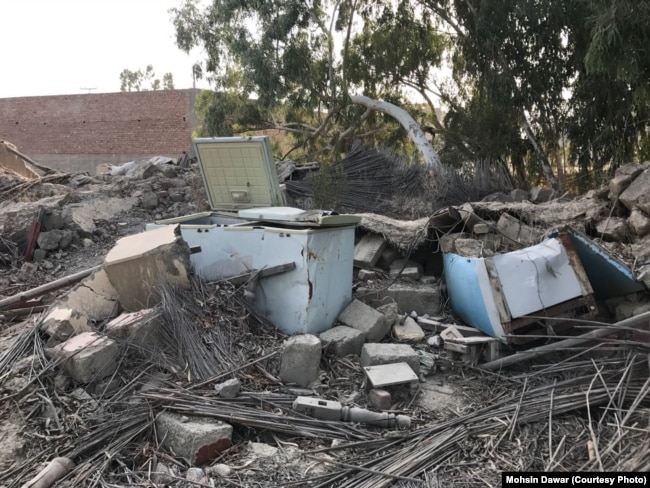
It’s true that most militants fled Zarb-e Arab, and they no longer control territories in North Waziristan. But more than 1 million of its civilian residents braved death, injury, and displacement and have only recently returned to destroyed homes and ruined businesses in demolished bazaars.
On top of that, they had to put up with long waits and harassment at security check posts, deal with violence after the occasional militant attacks, and live without key rights and civic services taken for granted in the rest of Pakistan.
I know this because North Waziristan is my home. I grew up in Darpakhel, a village north of Miran Shah, and our February 15 meeting with military officials was aimed at finding a solution to some very basic problems that North Waziristan residents face. While security, the rule of law, and access to basic services are a given in most societies, we are fighting hard to get them.
Everyone in the delegation I led was proud of our achievements. In hours of deliberations, we demanded that civilians should not be harassed or tortured or a curfew imposed in their communities following a militant attack. They agreed to streamline the cumbersome checks on numerous checkpoints across the region’s roads. They promised to look into the issue of disappeared people and some people have been reunited with their families since.
In a major concession for civic freedom, all political parties will be able to campaign freely in the run-up to this year’s parliamentary elections. They also accepted our demands for letting North Waziristan residents rebuild their markets and promised to reopen the Ghulam Khan border crossing with neighboring Afghanistan so that the local economy, mainly based on trade and transport, can recover.
FILE: Many houses in Dande Darpakhel and across North Waziristan were destroyed.
In a sign of how difficult it is to live in North Waziristan today, we were also promised that the government would implement development projects, reopen major roads connecting parts of the region, and restore mobile telephones and Internet and help reopen branches of a local bank.
I do not think that these small concessions will turn Waziristan into a haven, but it might make it barely habitable.
The road to get the authorities to agree to very basic demands was, however, not easy. The meeting in Miran Shah was a follow-up to our numerous meetings with civilian officials and military generals in Islamabad and neighboring Rawalpindi earlier this month. We prompted them to take notice after we braved 10 cold nights in the open while protesting outside the National press club in Islamabad from February 1.
Popularly dubbed as the Pashtun Long March, our sit-in protest galvanized years of grievances in Waziristan, other districts in the Federally Administered Tribal Areas (FATA) and the neighboring provinces of Khyber Pakhtunkhwa and Balochistan. The Pashtun heartland in these regions turned into a frontline on the war against terrorism after 9/11.
Closed to outside observers, millions of Pashtuns in FATA paid a particularly heavy toll. They were first terrorized by militants and then affected by the military’s counterterrorism sweeps. They constitute a majority of the 50,000-plus civilians Pakistani officials estimate have died in more than 15 years of unrest. More than 6 million Pashtuns were displaced by fighting. Thousands are still unaccounted for. Pashtun laborers, traders, students, and professionals face harassment, stereotyping, and racial profiling across Pakistan.
The January murder of one such Pashtun victim spurred our movement for reclaiming our lost dignity, rights, and privileges. Naqeebullah Mehsud, an aspiring model and shopkeeper, was killed in what a government probe declared to be a staged shootout with the police in the southern seaport city of Karachi. Like thousands of Pashtun victims, his suspected murderer still remains at large.
My generation grew up in a world defined by intolerance, hatred, and fear. But the one we want to build now for future generations must be defined by love, tolerance, and emancipation.
This awakening heralds a tectonic shift in northwestern Pakistan that the world needs to pay close attention to.

FATF setback: Pakistan is a victim of its own inaction


Pakistan currently resembles the biblical Goliath; big and armed to teeth but stymied by a myriad of factors such as inaction, inefficiency, institutional paralysis, inter-institutional tug of war, ill-preparedness, insufficient vision on top and behavioral intransigence on issues that are virtually existential threats to the country.
The embarrassment suffered at the Paris meeting of the Financial Action Task Force (FATF), which decided to put Pakistan back in the ‘grey’ watch list from June for insufficient compliance with the globally practiced counter-terror financing framework, was the latest manifestation of all the aforementioned factors.
Both the civilians and the military establishment knew this was coming, but no credible measures for compliance were taken until a presidential decree allowed authorities to symbolically seize all of Jamaatud Dawa related assets, only a few days before the Paris meeting.
None on the top expected China to blink. But it did. And that was pretty logical. If key state institutions refuse to understand and admit Chinese global aspirations and the reasons behind its meteoric economic rise, then issues such as grey-listing would keep embarrassing the country, and no country would stand by us. So far, the civil-military establishments have been in denial. Now they shall have to work out a plan of action in consultation with the FATF to begin ‘compliance to FATF protocols’. This also includes the primary driver of the ‘grey-listing’ – the Indian concerns. New Delhi has convinced Washington and even Beijing that Pakistan’s compliance to FATF requirements will be credible only if it conclusively acts against the ‘terrorist infrastructure’ (Jamaatud Dawa, Jaishe Mohammad etc). All this is related to our infatuation with Kashmir.
And withdrawal of support at FATF must also make the civil-military elites realise that the policy of using non-state actors for foreign policy objectives (be it the lashkar, the jaish or appeasement of Haqqanis) enjoys zero tolerance among the international community.
In retrospect, there is little doubt that the romance with the word K (read Kashmir) has bled Pakistan profusely. It has generated a dynamic that has become a financial noose around the country’s neck. For sure, this policy has outlived its utility and it is about time to bury it before it hurts us like t has never before. For too long has the core of decision-makers dragged its feet in drawing lessons from the UN Security Council Resolutions No1,333 (sanctions on Taliban), and No1,267 (sanctions on individuals and entities associated with Al-Qaeda).
Quite tragic that as politicians and the military establishment slug it out on the domestic front, they have blatantly ignored the battering that the country’s image has taken abroad – primarily because of their short-term institutional or personal interests. Issues such as at least nine closures of the Torkham border within 12 months has also fed into this image as well as into the Indo-US narrative on Pakistan’s ‘mindless actions’ that keep hurting Indian and Afghan interests.
These border closures have not only hurt individual Pakistani and Afghan businessmen but also jeopardised tens of thousands of jobs, directly caused decline in Pakistani exports to Afghanistan, and retaliatory measures by President Ghani (barring Pakistani trucks from entering Afghanistan).
Even on normal days, the chaos on Pakistan’s Torkham and Chamman borders presents a view that reminds you of a border of an under-developed country suffering perpetual bouts of conflicts. The tug of war of interests among security institutions, customs authorities, and other bureaucracies have all combined to prevent big progress on these critical choke points.
Resultantly, the bilateral trade has diminished from the high of $2.7 billion in 2013 to $1.2 in 2017. Afghan traders have also shifted their trade to Iran and Uzbekistan and China via Iran to avoid losses arising out of frequent border closures. Similarly, despite hosting Afghan refugees, Pakistan has yet to devise an honourable policy for those born here to Afghan families; expecting these Pakistan-born youth to return to a country totally alien to them. All these years, officials – both military and civilian – have parroted a stereotypical narrative on refugees, linking them all to crime and terrorism, to make a case for their return. But recently, General Qadir Baloch, the federal minister for SAFRON, told a visiting Afghan delegation that not a single refugee was found involved in terrorism. Why bracket all of them all with terrorism then, and make a case for their repatriation?
Gawadar town represents another example of the cumulative institutional paralysis; while all top-notches are singing the CPEC song, the town itself is struggling with acute electricity and water shortages. Construction of the new airport, for which the Chinese made $259 million available over a year ago, has not started yet. Both provincial and federal authorities are trading allegations and shifting blames for the multiple crises that Gawadar’s residents and businesses are facing. It is an alarming situation that requires all institutions to sit together for a coordinated, smarter and visionary way forward to beat the odds that increasing by the day.

Pakistan's blasphemy laws persecute the weakest of the weak


By Farahnaz Ispahani
On Saturday, Rome's Colosseum was lit in red in support of persecuted Christians, including Asia Bibi, who was sentenced to death under Pakistan's blasphemy laws. At the Rome gathering, Pope Francis described Bibi, alongside a Nigerian woman who was captured by Boko Haram, as "martyrs."
Bibi, an illiterate berry picker, was convicted of defiling the name of the Prophet Mohammed. She was accused by her Muslim neighbors who objected to her drinking water from the same glass as them because she was Christian. Under Pakistan's blasphemy law, her alleged comment is punishable by death. In 2010, Bibi, at age 45, was sentenced to hang, but her case is still pending.
Pakistan's blasphemy laws date back to the military dictatorship of Gen. Muhammad Zia ul Haq. In 1980, making a derogatory remark against any Islamic personage was defined as a crime under Pakistan's Penal Code Section 295, punishable by three years in prison. In 1982, another clause was added that prescribed life imprisonment for "willful desecration of the Quran" and, in 1986, a separate clause was added to punish blasphemy against Prophet Mohammed with "death, or imprisonment for life."
Bibi's case illustrates how blasphemy laws are used to persecute the weakest of the weak among Pakistan's religious minorities. As a poor Christian from a low caste, Bibi was among the most vulnerable and susceptible to discrimination. And the legal system -- which, in theory, should be designed to protect the innocent -- failed her in every way.
However, Bibi's case isn't the first case in which Pakistan's blasphemy laws have been used to punish minority groups. Since Zia ul Haq imposed the laws, their application has unleashed extremist religious frenzy.
Procedures for investigation and prosecution lend themselves to widespread abuse. Assertion by a Muslim witness that blasphemy was committed is sufficient for filing of charges and arrest of a suspect -- even without corroborating evidence. Furthermore, the testimony of non-Muslim witnesses in defense carries less weight, and, in most cases, the filing of charges is tantamount to punishment, because bail is denied. Worse still, once blasphemy is alleged, mob violence or targeted killing becomes a possibility. According to researcher Mohammed Nafees, from 1990-2011, there were over 50 cases "wherein blasphemy suspects were either extrajudicially murdered or died in jail." To quote a 2016 Amnesty International report, "As Good as Dead: The impact of blasphemy laws in Pakistan," once an individual is accused of blasphemy, "they become ensnared in a system that offers them few protections, presumes them guilty, and fails to safeguard them against people willing to use violence."
Lawyers who dare to represent someone accused of blasphemy have also been killed. In 2014, Rashid Rehman, a distinguished human rights lawyer brave enough to represent those most vulnerable to blasphemy charges -- women and children of religious minorities, people with mental disabilities, and the weak and impoverished -- was shot dead in his office by two unidentified gunmen. Meanwhile, judges who have dared to acquit an alleged blasphemer or convict the killer of an alleged blasphemer have either had to flee the country or face death.
Nonetheless, until now, Western governments, which viewed Pakistan as a strategic ally in the war on terrorism, did little to protect Pakistan's religious minorities. However, that might now be changing -- albeit slowly. The Pope's attention to Bibi's case parallels efforts by the European Union's Special Envoy for Freedom of Religion or Belief to secure her release by making it a condition for continued European market access for Pakistani products. More specifically, Jan Figel, part of the special envoy, informed the Pakistani government that the future of Generalized System of Preferences, or GSP, status to Pakistan, which allows Pakistan duty-free access to the EU markets, would be directly linked to the peaceful resolution of Asia Bibi's blasphemy case.
An EU news release further stated, "Pakistan's Supreme Court, appeasing certain political and fundamental forces of Pakistan, is intentionally delaying the hearing of Asia Bibi." If the European Union can hold firm in linking the renewal of Pakistan's GSP trading status to the outcome of her case, it would signal to Pakistani authorities that this is not a matter they can ignore. But the European Union isn't the only body exerting pressure. The US State Department also has placed Pakistan on a watch list for "severe violations" of religious freedom on the recommendation of the United States Commission on International religious Freedom, after several waivers on grounds of the country's importance to US foreign policy. The injustice of Pakistan's blasphemy laws, used frequently to persecute religious minorities, has been criticized by human rights advocates for decades. But it is only recently that the persecution of religious minorities has become a critical issue to the international community at large. Let's hope the European Union and the United States can hold their ground long enough to see Pakistan address the injustice of their laws.

Balochi Culture is a beautiful flower in the cultural bouquet of Pakistan: Bilawal Bhutto

Chairman Pakistan Peoples Party Bilawal Bhutto Zardari has extended felicitations on the occasion of Baloch Culture Day being observed on Friday, March 2 all over the country.

In his message on Baloch Culture Day, the PPP Chairman said that Baloch people are brave and inheritors of a rich and historic culture.

Bilawal Bhutto Zardari further said that Baloch Culture was a beautiful flower in the cultural bouquet of Pakistan and stressed that Baloch Culture should be preserved, promoted and celebrated at larger level.

http://www.thesindhtimes.com/blog/2018/03/02/balochi-culture-beautiful-flower-cultural-bouquet-pakistan-bilawal-bhutto/