Thursday, February 15, 2018

Remembering Pakistan's Empowering Human Rights Activist Asma Jahangir


On February 11, 2018, the sudden and untimely demise of Asma Jahangir, Pakistani human rights champion and a United Nations (UN) Special Rapporteur on the situation of Islamic Republic of Iran left the world in shock and grief.
Jahangir, who turned 66 in January, was a cancer survivor and one heart attack before passing away from cardiac arrest. Thousands from around the world sent condolence messages and paid tribute to the woman often dubbed as the ‘voice of the voiceless.’ Also known as the ‘iron lady,’ Jahangir was known to take to the streets against military dictators and regimes and for standing up for social justice.
UN Human Rights mourned:
Jahangir was laid to rest in her hometown Lahore, Pakistan, where her funeral was attended by thousands of people regardless of gender, religion and social status. In Pakistan, a predominately a Muslim society, women are barred from attending funerals, particularly the act of funeral prayer. The burial in a graveyard is considered a man's job.
Independent journalist Rabia Mehmood dubbed Jahangir's funeral ‘the last subversive act':
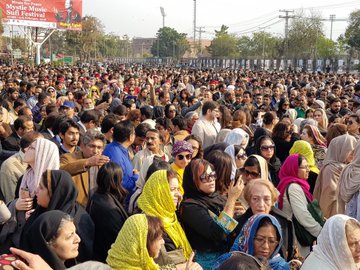


View image on TwitterView image on TwitterView image on TwitterView image on Twitter

- Women & men all gathered to say her funeral prayer. Last subversive act. May she rest in power.
In a Facebook post, Mehmood writes that “even in her death she empowered us”:
Last subversive act – women, and men stood together for Asma Jahangir's funeral prayer. This was the first funeral prayer I have participated in. Even in her death, she empowered us. Salam. Rest in power AJ and thank you.
Sabahat Zakariya, a Lahore-based journalist who attended the funeral tweeted her experience:
First time my friend and I were part of a namaaz-e-janaaza. Fitting that it was Asma Jahangir’s funeral that allowed us this glimpse into a male universe.
Human rights activist Marvi Sirmed writes:
Even in her death, she did not conform to the established code. Resistance, thy name is Asma.
If one word can describe the funeral procession, it is pluralism. That’s what Asma Jahangir lived for as well. Her funeral looked like Pakistan. A truly federal Pakistan with all communities represented.

Asma Jahangir's activist roots

Asma Jahangir was born in 1952 in Lahore, Pakistan and was introduced to politics as a teenager through her father, Malik Ghula Jilani, who was seen as a thorn in the eyes of the establishment and arrested several times as an active critic of the then military dictators Ayub Khan and Yahya Khan. Jilani supported Sheikh Mujibur Rahman‘s Awami League (Shiekh Mujib led the liberation of Bangladesh movement, causing East Pakistan to separate in 1971). Jilani was arrested in December 1971 after his resignation from the National Assembly to protest the Pakistan Government’s military action in Bangladesh.
In 1972, Jahangir challenged her father's arrest and secured a landmark judgment which became known as Ms. Asma Jilani versus the government of Punjab.
Muhammad Taqi, a political activist, and columnist explains:
The Asma Jilani case was the basis for the framers of the 1973 constitution to draft not only Article 6 – dealing with high treason – but also making a specific exception to the constitutional principle of non-retrospectivity of offences and punishments in the case of high treason and desecration of the constitution.
Jahangir earned a law degree and started practicing law under military dictator Zia ul Haq. Along with her sister Hina Jilani and two friends, she co-founded an all-women legal aid practice in 1980 to provide legal aid to women.
Jahangir actively participated in the resistance against ul Haq and images of women being lathhi-charged (beaten by batons by police) have become a symbol of resistance. The government of Pakistan declared this day of resistance as Pakistan Women's Day a few years ago, as described by the Women's Action Forum in Pakistan:
On 12th February 1983, 250 women took out a peaceful protest in Lahore to petition against the discriminatory Law of Evidence that General Zia ul Haq's regime attempted to promulgate. These protesters were lathhi chargedbrutally, tear-gassed and some 50 were arrested.
The second wave of the women's movement has not retreated since. In tribute and memory of that historic challenge to a dictatorial regime and discriminatory state, 12th February is marked as Pakistan Women's Day. 

An activist who lived and died for the resistance

A firebrand activist and extremely outspoken advocate for oppressed, Jahangir was a trailblazer in Pakistan who went on to co-found the Human Rights Commission  of Pakistan in 1987. She was an integral part of the lawyers’ movement that led to ousted military dictator Pervez Musharaf in 2007, ushering in democracy's return in Pakistan.
Jahangir remained a staunch member of the Pakistan's political resistance. Her last speech was in support of the Pakthun Long March in which marginalised Pakhtuns demanded equal rights and justice from the center.

Bushra Gohar, a Pakistani politician thanks Jahangir for her solidarity with the Pakhtuns:
She stood with the in their struggle for justice & right to life...She showed solidarity with when others were playing safe. She was glad the youth had woken up. Will treasure your powerful words of support. Thank you .
Jahangir did not constrain her activism to geographical boundaries, speaking for the rights of oppressed people such as the Rohingya, Kashmiri, Palestinians, and Baloch. In January, she gave statements against BBC Persian journalists on trial in Iran. David Kaye, UN Special Rapporteur on Freedom of Opinion and Expression tweeted:
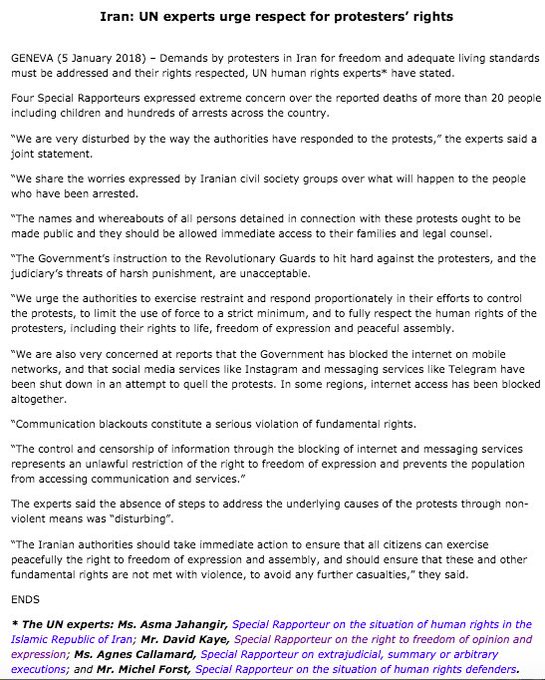


was an extraordinary person. eg: in just past month she engaged in several public stmts on . she initiated this in january, urging to respect protesters’ rights. such a loss for so many. http://www.ohchr.org/EN/NewsEvents/Pages/DisplayNews.aspx?NewsID=22574&LangID=E …
Jahangir received Pakistan's highest civilian awards such as the Hilal-e-Imtiaz (second highest civilian award) and Sitara-e-Imtiaz (the third highest honour and civilian award in Pakistan) in 2010. She also received several international awards including the 2014 Right Livelihood Award (along with Edward Snowden), the 2010 Freedom Award, Ramon Magsaysay Award, the 1995 Martin Ennals Award for Human Rights Defenders, and the UNESCO/Bilbao Prize for the Promotion of a Culture of Human Rights. France awarded her the Officier de la Légion d'honneur.
Jahangir also wrote two books: The Hudood Ordinance: A Divine Sanction and Children of a Lesser God: Child Prisoners of Pakistan. 


Her 2014 Right Livelihood Award speech is making rounds on social media:


Many struggling for empowerment and justice will miss her dearly, including civil society activists, prisoners waiting for a fair trial and women on the frontlines of activist movements. Pakistani journalist Taha Siddiqui, who narrowly escaped abduction in January 2018 and openly complained about being harassed and intimidated by the Pakistani military, shared his grief, honoring Jahangir as his legal counsel through the ordeal:
Met Asma saahiba just few weeks back. She told me going silent is not an option. And it gave me the courage i needed. Who will now I look up to? Without her, I feel like an orphan... https://twitter.com/TahaSSiddiqui/status/951470070328430593 …
Salman Hyder, a blogger and independent journalist who was among the four bloggers abducted and later released in January last year grieved:
محل سڑا میں خوشیاں ہوں گی
سڑکوں پر ماتم ہو گا
چھاونیوں میں رونق ہو گی
بستی بستی غم ہو گا۔۔۔سلمان

Palace will celebrate
streets will mourn
military cantonments will be lively
every small town will be in grief
Salman
#RIPAsmaJahangir

Pakistan - The Quetta problem

It has, sadly, become routine. Every few weeks there’s a terrorist attack in Quetta – injuring/killing religious minorities or Punjabi labourers or police/army/FC personnel – and then the government vows to capture and hold accountable all cowards responsible. But since the proof of the pudding lies in the eating – more so in matters of security, arguably, than other arms of government – the official ‘capture and hold accountable’ strategy is now clearly in need of an overhaul. Quetta is hardly a large city by modern standards. And it has had a sizeable security presence for decades. Why, then, is it impossible to put a plug on terrorist activity in the city?
Of late security agencies have traced terrorist activities in Pakistan, not just in Quetta, to the TTP lair on the other side of the Durand Line. And this trend, too, has gone unaddressed far too long. Our government, just like Afghanistan’s, has long realised that there is no practical chance of an end to this terrorism until Islamabad and Kabul truly join hands and sandwich the bad guys from both sides. Yet despite the military frustration in both capitals, they are still unable to translate the realisation into a workable, mutually beneficial arrangement.
The military has, not dobut, done an outstanding job in dismantling the terrorist infrastructure with Zarb-e-Azb and following up with the combing operations of Rudd-ul-Fasaad. But, as the example of Quetta clearly shows, a far broader approach will be needed to completely wipe out the threat as the fight now reaches settled urban centres. To nip the evil in the bud, Pakistan and Afghanistan will eventually have to work together. That the governments are talking, at least, is encouraging. Now they must realise that their political stalemate is allowing the death toll to mount. And since leadership carries immense burden of responsibility they, too, will have blood on their hands if they don’t hammer out a solution sooner rather than later.

#Pakistan - Post #PashtunLongMarch


Talimand Khan
For the first time, the Pakhtun opened the lid on the can of FATA and other militancy affected areas which were made as-no go areas with the media feeding the state’s narrative to the rest of the people in the country and the world.
The #PashtunLongMarch started from D I Khan on January 26, 2018 by the Pakhtun youth which culminated into ten days long sit in in front of Islamabad press club. The march and sit in were ignited by the murder of young Naqeeb Mahsud in a fake police encounter in Karachi. The sit in was called off on February 10, 2018 by its organisers after a written assurance by the federal government to solve their issues presented in the form of four demands. But they vowed to come out again after a month if the government failed to solve their problems.
Keeping in mind the nature of our state and institutional imbalances, one is not sure to what extend the federal government can meet their problems and assuage their miseries. Nonetheless, they announced to postponed the sit in for a month to give time to the government for action on their demands. However, the march and sit in by the young Pakhtun left its deep marks and shattered many myths.
For the first time the Pakhtun opened the lid on the can of FATA and other militancy affected areas which were made as no go areas with the media feeding the official narrative to the rest of the people in the country and the world. Through the march and sit in the youth blew that cover and gave first hand information to the world about their plight and miseries caused by the so called war on terror.
The march also systematically shattered the stereotypes and an engineered image of the Pakhtun as unruly, religiously extremist, intolerant and intrinsically prone to violence and militancy. They proved to the world that they were the victims of the geo-strategic game of their own state as well as of the world powers. In this regard the peaceful uprising also shattered the state’s unilateral narrative woven around the war on terror project and gave an alternate narrative that put question marks on this high risk geo-strategic drama. Their entire narrative revolved around the oppression, suppression and atrocities borne by them from the military. Such high handedness by the state towards the entire population in the region depicts a gloomy and dangerous picture.
Any state using violence on its own soil against some elements would adopt utmost care and precision not to antagonise the entire population and would strive to win hearts and minds. But here the boot is on the other leg. First-hand account of the protesters showed that the state’s primary focus was on physical and political control of the entire population. One of the four demands presented by the protesters to the government, and a focal point of speeches during the sit in that also constantly circulated on social media, was the ubiquitous check posts and the humiliating behaviour of the army manning the posts and collective punishment in the aftermath of any terrorist incident. This is not only happening in FATA but in Swat too. After the military operation in Swat in 2009 and return of the displaced people to the Valley, a wave of target killing started. After a few protests in the wake of target killings, the army resorted to impose curfew and conducted search operation in the area that would suppress any mobilisation and protest by the local. After the blast of February 3, 2018, the existing check posts, along with more snap check posts, the mobility was further choked due to long queues on every check post. By citing security as a reason, the youth of Swat was not allowed to take out a rally in support of Islamabad sit in.
It is an internationally acknowledged fact that such sporadic terrorist acts cannot be controlled with curfew, check posts and suppressing the local population but can be preempted with intelligence operation. The state claimed it preempted numerous terrorist plots and bust its mastermind and perpetrators through thousand successful intelligence operations in Punjab without curfew, check posts and special powers like ‘Action in Aid of Civilian Power Regulation’. Why could similar good practices not be applied in FATA and Malakand Swat?
Instead of putting energies to torpedo the movement, the state should revisit its geo-strategic and foreign policy and refrain from using its own people as gun powder at the altar of myopic national interests. The perpetuation of the status quo can backfire in an extremely destructive way The youth uprising defeated the narrative of war on terror and exposed it as a war of terror for Pakhtun. It posed many tough questions for the state with no easy answer. If the people of Swat and FATA left their homes and provided every opportunity and cooperation to the army to clear the area from terrorists, why were they treated like hostile population on their returned? Why were the people of FATA made to pledge fresh allegiance to the state with their national identity cards replaced by the ‘Watan Cards’? Why does the state suppress any peaceful protest in the so called militancy affected areas? Why is the issue of the missing persons made untouchable?
The march and sit in in Islamabad put the media, traditional political parties, parliament, our so called nation and international community in the dock.
It transpired that the media was feeding unilateral and manufactured narrative to the nation about the so called war on terror. The black out of the march and sit in for 15 consecutive days by the media, particularly the electronic media, further destroyed its credibility and proved to be a unilateral propaganda tool instead of a source of information.
The political parties never dared to surface the miseries and suffering of the Pakhtun by debating it critically on forums, particularly in the parliament. It also put into question the role of the parliament and its haplessness. The parliament authorised the use of violence in the form of ‘Action in Aid of Civilian Powers Regulation’ but failed to devise a monitoring mechanism and forgot to revisit it after about 10 years of its promulgation. When the military claimed the Swat operation and Zarb-e-Azb successful, the parliament should have revisited the power given to the military for that purpose. In the heat of emotion whipped up by the media to create a smokescreen, perhaps, we as a nation celebrated what we should have been mourned. The same is the case with the international community.
The uprising and sit in also provided a platform for the Pakhtun youth from Khyber to Karachi to exchange notes regarding their plight and for the first time the critical mass of Pakhtun population came to know what was happening outside their own hometowns.
The sit in also garnered international solidarity for their cause. By giving it the name of Pakhtun Tahafuz (protection), it is quite evident. The movement’s leading figure, Manzoor Mehsud replaced his surname with Pakhtun. Instead of numerous tribal denominations, by doing that he meant to bring all the Pakhtun within the fold of single ethnicity. The message was loud and clear.
In the given circumstance, perhaps the state will not want the transformation of march into an organised movement. Instead of putting energies to torpedo the movement, the state should revisit its geo-strategic and foreign policy and refrain from using its own people as gun powder at the altar of myopic national interests. The perpetuation of the status quo can backfire in an extremely destructive way.

#FloridaSchoolShooting - Bilawal Bhutto grieved at horrific massacre of #Florida school children

Chairman Pakistan People’s Party Bilawal Bhutto Zardari has expressed deep grief and sorrow over the horrific slaughter of school children in a Florida school yesterday.
“Our hearts go out for the little victims and their deeply bereaved families,” the PPP Chairman said.


Bilawal Bhutto Zardari further said that such cowardly attacks in schools in the developed states of America have sent shockwaves across the world. “There seems strong need for the United States and it administration to search for the undetected reasons in advance, which lead to such heartbreaking massacres,” he stressed.


PPP Chairman said the people of Pakistan equally share the pain and grief of our American brothers and sisters praying for the innocent victims of Florida school.


https://mediacellppp.wordpress.com/

Wednesday, February 14, 2018

Music Video -Ed Sheeran - Thinking Out Loud

Video Report - Barack Obama thanks portrait artist for capturing Michelle's 'hotness'

Video Report - Elizabeth Warren's BRILLIANT "Pocahontas" Speech

Video Report - Mass shooting in #Florida school leaves 17 dead

Video Report - At least 17 dead in #Florida school shooting

#ValentinesDay - Ghani Khan Sad Kalam "Che Nasha Shama Da Khpala Zana Ozum" Sadar Ali Takkar

#ValentinesDay - Sharab Cheez He Aisi Hai

#ValentinesDay - Log Kehte Hain Main Sharabi Hoon Sharabi

#ValentinesDay - Chaar Botal Vodka -

#ValentinesDay - Mere Sapno Ki Rani

#Pakistan - #ValentinesDay - Ahmed Rushdi - Koko Korina

#ValentinesDay - ‘You Can’t Ban Love’: Pakistanis Defy a Valentine’s Day Prohibition


By 

When a friend told Hussain Liaquat that police officers in the Pakistani capital might be checking cars for anything red or heart-shaped the night before Valentine’s Day, he decided to get creative.
Mr. Liaquat, 22, went to the giant Saeed Book Bank in Islamabad and found a poster from “House of Cards,” his girlfriend’s favorite television show. Then he went in search of the perfect romance novel.
“I decided not to buy her balloons and chocolates, to avoid police confiscating them,” the mathematics student said, leafing through a copy of Erich Segal’s “Love Story.”
“Someone told me this is like the ‘Romeo and Juliet’ of the 20th century,” he said. “I think I’ll get it.”
Like many other couples in this city of two million, Mr. Liaquat and his girlfriend celebrated Valentine’s Day below the radar. Last year, the Islamabad High Court banned Valentine’s celebrations across Pakistan, deeming them “against the teachings of Islam” and a sign of growing Western influence.
So, for the second year in a row, red “I Love You” balloons and heart-shape boxes of chocolates were essentially contraband. Police officers in Islamabad searched through streets and shops in recent days looking for Valentine’s Day sales. A concert by Atif Aslam, a popular heartthrob singer, that had been scheduled for Wednesday was postponed.
Some restaurant managers reported receiving calls from unknown numbers asking whether boys and girls had exchanged gifts on their premises, and whether they knew of other establishments that might be observing the holiday. A number of florists and gift shops in Islamabad complained that they had lost significant business as customers stayed away.
But there were also many in Islamabad who did not mind taking a risk for love — or to make some money — in defiance of the ban.
In the affluent neighborhood F-7, where Obaid Malik, a young businessman, was parked outside a strip of flower shops, sellers elbowed one another to show him the long-stemmed roses he had asked for. Before the ban, the street had typically been jammed the night before Valentine’s Day, but now the shops stood quiet and sellers seemed more desperate than usual to make a sale.
“What does Valentine’s Day have to do with the government? Why are they bothering people?” Mr. Malik said as the florists showed him different types of roses. Three defiantly red helium balloons hovered in the back of his car.
“Three balloons because, you know, ‘I love you’ is three words,” he said.
Mr. Malik said that he would not take his wife out for Valentine’s Day lunch or dinner this year, but that he planned to surprise her by cooking her breakfast.
“People are still going to go out and do their thing and have fun — maybe just in different ways,” he said. “You can’t ban love.”
Another customer, Shakeel Khan, a banker who was buying white lilies for his mother, said he had taken his fiancée out for a Valentine’s Day dinner over the weekend.
“I had heard of the ban and didn’t know what to expect, so we thought, let’s just get it out of the way,” Mr. Khan said. He stood in front of a flower shop filled with white roses, multicolor gladioli and purple chrysanthemums — but not a red rose in sight. The shop’s owner, Muhammad Imran, said the police had warned him not to sell red flowers on Valentine’s Day. So the red roses, he said, were hidden in the back of the shop, where he would lead loyal customers who asked for them.
“My workers have also been calling customers to let them know that home delivery is available this year for the first time,” Mr. Imran said, asking that the location of his shop not be disclosed. “Delivery is just safer,” he said with a shrug.
At the Baramda cafe, the manager, Tariq Sohail, glanced at a table on the pavement outside, where a young man and a woman sat smoking and laughing.
“You can ban a day, but you can’t stop people from being together or from falling in love,” he said, breaking into a laugh.
Some restaurants decided online promotions would be safest. “We’ve got a 15 percent discount today, but we only advertised it on Facebook and Instagram,” said a waiter at Nocciola Chocolaterie.
Similarly, a few customers said they had opted for “virtual dates” to avoid possible harassment by the authorities at restaurants.
“My girlfriend can’t get out tonight, so I’ll be Skyping with her,” a university student said over coffee at the upscale Kohsar Market. His friend, a curly-haired young woman, suggested changing Valentine’s Day to Friend’s Day. “That might work better in Pakistan,” she said. A third friend, wearing a bright red hoodie, disagreed: “No. We need a Valentine’s Day revolution here. That’s what we need.”
In another part of town, police officers shooed away a man who had set up a stall to sell single roses. “We are just doing our job,” one said when asked why they had intervened. Balloon sellers were also on the lookout for the police. Most had chosen not to sell heart-shape or red balloons, instead opting for stars, circles and bird- and animal-shape ones.
But one vendor, Muhammad Akhar, was boldly selling red balloons that read “You Are Mine.” “If the people who are coming to buy them are not scared,” he said, “then why should I be?”
He was not the only balloon seller taking a stand. Next to a boy offering giant, animal-shape balloons, another young vendor held some small heart-shape ones, red and white.
“I didn’t blow them up to their full size,” said the boy, Sarfaraz Ali, looking over his shoulder with an impish smile. “I’ll do it for you if you want one.” But when he spotted a couple of police officers approaching, he started to back away.
“Madam, please wait for me here,” he said as he bolted, the tiny hearts trailing behind him. “Don’t go away, I’ll be right back!”