Thursday, November 30, 2017

سابق صدرِ پاکستان اور پاکستان پیپلز پارٹی پارلیمنٹیرینز کے صدر آصف علی زرداری کا پاکستان پیپلزپارٹی کے 50ویں یوم تاسیس (گولڈن جوبلی) 30نومبر کے موقع پر پیغام


سابق صدرِ پاکستان اور پاکستان پیپلز پارٹی پارلیمنٹیرینز کے صدر آصف علی زرداری نے پاکستان پیپلزپارٹی کے 50ویں یوم تاسیس (گولڈن جوبلی) 30نومبر کے موقع پر اپنے پیغام میں کہا کہ وہ اس شاندار موقع پر ملک کے اندر اور بیرون ملک مقیم تمام پارٹی کارکنوں اور تمام جمہوریت پسند عوام کو مبارکباد پیش کرتے ہیں۔ یہ خوشیاں منانے کا موقع ہے اور اس کے ساتھ ساتھ ہمیں اپنی غلطیوں کا تجزیہ، پارٹی کی تنظیم نو اور اپنے اندر جھانک کر دیکھنا چاہیے۔ عوام کی خدمات کے حوالے سے پارٹی اپنےریکارڈ پر فخر کرتی ہے۔ 
پارٹی نے نعرے “طاقت کا سرچشمہ عوام ہیں” نے گزشتہ 50سالوں میں پاکستان کا سیاسی نقشہ ترتیب دیا ہے۔ حقیقت میں یہ عوام کے ضمیر پر نقش ہو چکی اور کبھی بھی مٹائی نہیں جا سکتی۔ پارٹی نے تسلسل کے ساتھ ایک کے بعد دوسری ڈکٹیٹرشپ کا مقابلہ کرنے کے ساتھ ساتھ ملک کو متفقہ آئین دیا، نیوکلیئر اور میزائل ٹیکنالوجی دے کر ملک کے دفاع کو مضبوط کیا، مشترکہ مفادات کونسل بنا کر صوبوں کو آواز دی ہے، مسلم ممالک کو اجتماعی آواز دی، 1971ء میں گنوائی جانے والی اراضی واگزار کروائی اور خواتین، محنت کشوں، کسانوں اور کچلے ہوئے طبقات کو بااختیار بنایا اور انہیں جبر سے آزاد کرایا۔ یہ پاکستان پیپلزپارٹی ہی ہے
 جس نے شملہ سمجھوتے کے ذریعے پاکستان اور بھارت کے درمیان جنگوں کو رکوایا۔ یہ پیپلزپارٹی ہی ہے جس نے پاکستان میں پہلی مرتبہ حبس بے جا کو قانون میں متعارف کروا کر تمام شہریوں کے انسانی حقوق کا تحفظ کیا۔ اپنے اصولوں اور آئیڈیلز کے لئے پارٹی کے دو سربراہوں اور لاتعداد کارکنوں نے اپنی جانوں کا نذرانہ پیش کیا۔ پارٹی کے ریکارڈ اور جمہوریت کے لئے جدوجہد کا کوئی ثانی نہیں اورملک میں کوئی سیاسی جماعت پیپلزپارٹی کی خدمات کے پاسنگ بھی نہیں۔ پارٹی اس بات پر یقین رکھتی ہے کہ سیاسی تبدیلی آزادانہ اور منصفانہ انتخابات کے ذریعہ آنی چاہیے۔
 پیپلزپارٹی نے ہمیشہ جوڑ توڑ کے ذریعہ سیاسی تبدیلی کی مخالفت کی ہے اور کرتی رہے گی۔ پارٹی سیاسی انجینئرنگ کرنے کی اور ملک میں مذہبی نسل پرستی تھوپنے کی ہر کوشش کی مخالفت کرتی رہے گی۔ پارٹی یہ عہد کرتی ہے کہ غیر منتخب افراد اور اداروں کو عوام کے اختیارات غصب کرنے کی مزاحمت کرے گی۔ سابق صدر نے پارٹی کارکنوں کو ہدایت کی کہ وہ پارٹی کا امید اور ظلم وجبر سے نجات کا پیغام پھیلائیں۔ خاموش اور مایوس عوام کو روشن صبح کی نوید دیں۔ انہیں بتائیں کہ وہ آگے آکر پارٹی کی حمایت کریں تاکہ ان کے خواب شرمندہ تعبیر ہو سکیں۔ آگے آنے والے چیلنجز کا سامنا کرنے کے لئے خود کو تیار کریں۔ کارکنوں کی کامیابی قسمت میں لکھ دی گئی ہے۔ آج اس موقع پر ہم پارٹی لیڈروں اور کارکنوں کے ساتھ ساتھ تمام سیاسی کارکنوں جنہوں نے جمہوریت کی تاریخی جدوجہد میں حصہ لیا ہے اور قربانیاں دی ہیں کو خراج عقیدت اور خراجِ تحسین پیش کرتے ہیں۔ جس وقت جمہوری کارکن ڈکٹیٹرشپ کے خلاف جدوجہد کر رہے تھے تو ریاستی اداروں میں ایسے لوگ بھی تھے جو ڈکٹیٹروں کے سامنے سر تسلیم خم کر رہے تھے، ان سے وفاداری کا حلف لے رہے تھے اور ڈکٹیٹروں کو جواز فراہم کر رہے تھے۔ یہ بات ہمارے کارکنوں کو ممتاز کرتی ہے اور ان کی قربانیاں مزید نمایاں ہو جاتی ہیں۔ پارٹی ان تمام جری اور بہادر کارکنوں کو ان کے عزم و ہمت اور قربانیوں پر سلام پیش کرتی ہے۔ ان کی قربانیوں کے بغیر پارٹی آج ممتاز مقام نہیں حاصل کر سکتی تھی۔
https://mediacellppp.wordpress.com/2017/11/29

پاکستان پیپلز پارٹی کے50سالہ ایک منفرد جدوجہد

پاکستان کی ہر سیاسی جماعت نے اتارچڑھاو اورعروج وزوال دیکھے ہیں،لیکن جو چیز پاکستان پیپلز پارٹی کو دوسروں سے ممتاز کرتی ہے وہ گزشتہ 50برسوں میں اس کی لیڈرشپ اور کارکنوں کی جانب سے دی جانے والی قربانیاں ہیں، اب یہ اپنی گولڈن جوبلی منا رہی ہے، ‘(30نومبر 1967 سے 2017)۔ یہ جمہوریت، آئین اور پارلیمنٹ کی برتری کیلئےایک منفرد جدوجہد ہے۔ یہ اُن لوگوں کیلئے ایک سبق بھی ہے جنھوں نے یہ سوچا اور ابھی تک سوچتے ہیں کہ لیڈرشپ کو ختم کرنے سے پارٹی ختم ہوجاتی ہے ۔ بھٹو پھانسی کے بعد مزید خطرناک ہوگیا۔
 پی پی پی پر زوال اس وقت آیا جب اس نے حکومت میں اپنی مدت پوری کی اور کچھ بھی ڈلیور نہ کرسکی۔ آج پی پی پی اور اس کے نوجوان رہنما بلاول بھٹوزرداری کیلئے سب سے بڑا چیلنج پارٹی کی ’تجدید‘ہے، جو ذوالفقارعلی بھٹو اور بے نظیر بھٹوجیسے رہنماوں کے بعد اپنی شان کھوچکی ہے۔ اگر موجودہ لیڈرشپ اپنی غلطیوں سے سیکھنے کے قابل ہوگئی اورسندھ میں گُڈ گورننس کا ریکارڈ قائم کرلیا جہاں یہ کئی سالوں سے اقتدار میں ہے تو پیپلز پارٹی آنے والےوقت میں قومی سطح پر جگہ بنانے میں کامیاب ہوجائےگی۔ سیاسی چالوں سے حکومت سازی کرنا ایک الگ چیز ہے اور مخصوص اصولوں پرپارٹی کو منظم کرنا ایک الگ بات ہے۔ معلق پارلیمنٹ کی صورت میں سابق صدر آصف علی زرداری اپنا کردار ادا کرسکتے ہیں لیکن کیا وہ پی پی پی کے ہزاروں کارکنوں کا دل جیت سکتے ہیں خاص کر پنجاب اور خیبر پختونخوا میں جو اب پارٹی کے ساتھ نہیں ہیں۔ جس چیز پر اب عمل کیاجارہاہے 70اور80 کی دہائی میں اس سے پارٹی کے نظریات مختلف تھے، اور زوال کی وجہ ’بنیادی دستاویز‘ سے ہٹنا تھی۔ یہ سچ ہے کہ کوئی بھی شخص ہروقت شاندار ماضی سے جڑا نہیں رہ سکتا، لیکن اس سے کچھ سبق تو سیکھ سکتاہے۔ 
آج پی پی پی اس پرہچکچاہٹ کا شکار نظر آتی ہے کہ ترقی پسند، آزادخیال اور جمہوری نظریات کو لے کرچلے یا قدامت پسندانہ خیالات کے ساتھ آگے بڑھے اور خود کو دائیں بازوں کے رجحانات کے ساتھ ڈھال لے۔ مصلحت کے نام پر سمجھوتا کرے یا بنیادی اصولوں کے ساتھ کھڑی رہے۔ آصف زرداری نے 2007 میں بلاول کو چیئرمین بنا کر ان کے ساتھ ناانصافی کی ، جب وہ اتنے سمجھدار نہیں تھے۔ اب وقت ہے کہ پی پی پی- پارلیمنٹیرین کی قیادت کیلئے سینئررہنمائوں کےبارے میں غورکیاجائے۔ اس سے پارٹی کے ورثے کو جمہوری خطوط پر استوار کرنے میں مدد ملے گی۔ پی پی پی نے گزشتہ 50سال میں چند شاندار سیاسی ذہن اور پارل یمنٹیرینزپیدا کیے ان میں فرحت اللہ بابر، رضا ربانی، آفتاب شعبان میرانی، اعتزاز احسن، قمرزمان کائرہ اور کئی دیگرشامل ہیں۔ بلاول کے لیے ایک اور چیلنج یہ ہوگا کہ ہرمعیار کے مطابق پاکستان کے مقبول ترین رہنما اپنے نانا ذوالفقارعلی بھٹوکےورثے کوکیسے جاری رکھیں گے، ملک کے بدترین فوجی ڈکٹیٹرجنرل ضیاءالحق کے خلاف ان کی جدوجہد مثالی تھی۔ پی پی پی کی طاقت ہمیشہ سے اس کے پُرعزم اور مضبوط کارکن ‘جیالے’ ہیں، ان میں ہزاروں نے پارٹی اور بھٹوسے محبت میں اپنی جانیں بھی قربان کی ہیں۔ آج بلاول پارٹی میں نہ اس طرح کا جذبہ اور نہ ہی اس طرح کے جیالے پیدا کرسکتے ہیں، جو ‘جیئےبھٹو’ کے نعرے لگاتے ہوئے سولی چڑھ جائیں، کوڑے برداشت کریں اور لاہور قلعے میں بدترین تشدد برداشت کریں۔ ان کیلئے پی پی پی اور بھٹو ایک ’ رومانس‘ تھا۔ بھٹوکی پھانسی کے بعد انھوں نے خود سوزی بھی کی، کچھ نے خودکشی بھی کرلی تھی۔ یہ ایک طرح سے ‘منفرد جدوجہد’ تھی کہ اس کے رہنمائوں اور کارکنوں نے بد ترین تشدد، پھانسیاں، کوڑے اورقید بردا شت کی اور حتیٰ کہ کارکنوں نے اپنے رہنما کی محبت میں خود سوزی کرلی تھی۔ پاکستان کی سیاست میں صرف ایک جماعت جو فخرسےدعویٰ کرسکتی ہے کہ اس کے کارکنوں سے لے کر رہنمائوں تک سب نے ملک میں آئین اور جمہوریت کی بالادستی کیلئےقربانیاں دیں، یہ پاکستان پیپلز پارٹی ہے

 جس نے 30نومبر2017کو اپنے پچاس سال مکمل کیے۔ پی پی پی کے بانی ذوالفقار علی بھٹونےخود ٹرائل کا سامنا کیا اور انھیں پھانسی دے دی گئی جسے ان کے بدترین نقاد بھی ‘عدالتی قتل’ قرار دیتے ہیں۔ ان کی بیٹی بے نظیربھٹو نےٹرائل، قید، جلاوطنی کاسامنا کیااور بالآخر قتل کردی گئیں۔ بیگم نصرت بھٹو جنھوں اپنے خاوندکی گرفتاری کے بعد خود قیادت سنبھالی اور ایک بیگم اور ماں کے طور پرصدمہ برداشت کیا۔ مرتضیٰ بھٹو کوایک پُراسرار ‘مقابلے’ میں ماردیاگیا۔ پی پی پی 1973 کےآئین کے اور پاکستان کے ‘نیوکلئیر پروگرام’ کی بانی ہونے کا فخر سے دعویٰ کرسکتی ہے۔ بھٹو کی چند اندرونی پالیسیوں پر تنقید کی جاسکتی ہے لیکن حقیقت یہ ہے کہ دوتہائی اکثریت حاصل کرنے کے باوجود اہم معاملات میں وہ اپوزیشن کو ہمیشہ ساتھ لے کرچلے، ان میں ایک آئین سازی اور دوسرا شملہ معاہدہ شامل ہیں۔ اگربھٹو بلوچستان اورخیبر پختونخوا(سابق صوبہ سرحد) میں نیشنل عوامی پارٹی کی حکومتیں ختم کرنےکےجال میں نہ پھنستے تو آج سیاست مختلف ہوتی۔ پارٹی کا زوال اتنا ہی المناک ہےجتنی اس کی قربانیاں۔ بے نظیرکے بعد کی پی پی پی کی لیڈرشپ کو کچھ نہ کرنے پر اپنی ذمہ داری قبول کرنی چاہیئے۔ جس پارٹی پراپنی تشکیل کے پہلے20سال کے دوران کبھی کرپشن کا الزام نہیں لگا تھا، کئی سمجھوتے کرنے پر اس پر زوال آگیا، ان میں این آر او بدترین تھا۔ پی پی پی کے خلاف مبینہ طور پر اسٹیبلشمنٹ کی جانب سے کئی بڑی سازشیں بھی کی گئیں۔ پی این اے سے آئی جے آئی تک، مڈنائٹ جیکال سے مہران بینک تک ، پی پی پی کو 1970کےبعد کبھی دوتہائی اکثریت نہیں لینے دی گئی۔ حتیٰ کہ سازش کرنےوالوں نے تسلیم کیا اوراور بہادری سے اپنے موقف کا دفاع بھی کیا کہ 1988 میں انھوں نے پی پی پی کو مکمل فتح حاصل کرنےنہیں دی اور 1990کے انتخابات میں دھاندلی کیلئے اپوزیشن میں رقم تقسیم کی۔ کبھی بھی آئین اور اپنے حلف کی خلاف ورزی کرنے پرکسی سازشی کاٹرائل نہیں کیاگیا۔ 30نومبر کو لاہور میں ڈاکٹرمبشرحسن کی رہائش گاہ پر بننے والی جماعت نے اپنی گولڈن جوبلی راولپنڈی میں منانے کا فیصلہ کیاہے کیونکہ ذوالفقار علی بھٹواور بے نظیربھٹو اسی شہر میں شہید ہوئےتھے۔ پی پی پی انقلابیوں اور جاگیر داروں کا حقیقی امتزاج تھی۔ بھٹو خود ایک جاگیردارتھے لیکن ان کا سارا سیاسی طرزِ عمل قومی اور بین الاقوامی سیاست پرمکمل کنٹرول کےساتھ ترقی پسندانہ تھا۔ انھیں عوام میں تقریرکرنے اور بین الاقوامی اجلاسوں میں خطاب کرنےمیں ملکہ حاصل تھا۔ اگر ایک طرف پی پی پی میں مرحوم جےاےرحیم، مرحوم شیخ رشید، ڈاکٹر مبشرحسن، مرحوم معراج محمد خان، مرحوم شیخ رفیق، مرحوم معراج خالد جیسے لوگ شامل رہے، تو دوسری جانب اس میں مخدوم طالب الإمحلہ، مرحوم غلام مصفطیٰ جتوئی، ممتاز علی بھٹو، غلام مصطفیٰ کھرجیسے جاگیردار بھی شامل رہے۔ پی پی پی کی جدوجہد کو پانچ ادوار میں تقسیم کیاجاسکتاہے۔ (1) 1967 سے1970تک (2) 1972سے 1977تک (3) 1978سے 1988تک (4) 1988سے2007تک (5) 2008سے2017 تک۔ پی پی پی کا پہلا دور اس وقت مکمل ہوا جب شیخ مجیب الرحمان کی عوامی لیگ کے بعد دوسری بڑی جماعت بن کر ابھری۔ 1970کےانتخابات کےنتائیج نے ملک کو تقسیم کردیاتھا کیونکہ نہ عوامی لیگ مغربی پاکستان سے کوئی سیٹ جیت سکی اور نہ ہی مشرقی پاکستان سے کسی جماعت نے سیٹیں حاصل کیں۔ اس سے پی پی پی کےتین سال کاپہلا دور ختم ہوگیااور دوسرادور اس وقت شروع ہواجب جنرل یحیٰ خان نے اقتدار بھٹوکےحوالےکیا، ایک سنجیدہ آئینی خلا میں اور ان کے پاس 1972 میں پہلےسویلین مارشل لاء ایڈمنسٹریٹر بننے کے سواان کےپاس کوئی اور راستہ نہیں تھا۔ پی پی پی کا دوسرادور سازشوں، بدانتظامی، میڈیا پر اور پارٹی کے اندراور باہر مخالفین پر دبائو ڈالنے کے گرد گھومتاہے۔

https://jang.com.pk/print/411874-todays-print

Wednesday, November 29, 2017

#50YearsOfPPP 🎂 - Aitizaz Ahsan Remembering Bhutto

#50YearsOfPPP 🎂 - Bhutto Benazir Song

#50YearsOfPPP 🎂 kitne maqbool hain Hamri Bhutto

#PPPGoldenJubilee - Main Teer Bija - Long Live Bhuttoism!

#PPPGoldenJubilee - Kal be Bhutto Zinda tha Ajj bi Bhutto Zinda hai

#PPPGoldenJubilee - Har Ghar se Bhutto Nikle Ga - Long Live Bhuttoism!

Music - kitne maqbool hain Bhutto

PPP 50 — years on — II - Long Live Bhuttoism!


In 1972 with Jinnah’s truncated Pakistan, its once powerful army writhing in pain and shame of humiliating defeat,  it would have been easier than done for the leaders of smaller provinces where nationalist forces had already raised their head of defiance, to declare independence encouraged by the establishment of Bangladesh.
They would have been at once given recognition by the erstwhile Soviet Union, India and Bangladesh followed by many others including dozens of ‘brotherly’ Muslim countries. Bhutto Sahib appealed to the collective wisdom of the elected leaders of Balochistan, KP and Sindh to remain united for commonality of interest for survival in a region which shall always remain a bone of contention for super and regional powers either for its warm waters or for sitting at the mouth of the Gulf.
We were lucky to have leaders who could understand the gravity of the situation and in the spirit of collective weal the 1973 constitution was passed unanimously. It resolved the most-thorny issue of provincial autonomy. Despite Article 6 General Ziaul Haq committed act of treason, judicially murdered ZAB and held in abeyance transference of concurrent list to the provinces by1983 as enshrined in the Constitution.
Himalayan credit must be given to the PPP jiyalas for keeping alighted the flame of democracy in the darkest period of our history. When her husband had been murdered by Zia, Begum Nusrat Bhutto aided by her daughter Benazir garnered an opposition parties alliance — the Movement for the Restoration of Democracy (MRD), burying their egos, to confront Zia’s dictatorship. Since Bhutto’s province — Sindh had taken upon itself the lead role, PPP and its supporters suffered most deaths and injuries, its people were singled out for genocide by Ziaist troops, his scotch earth policy destroyed one village after another.
On this, its 50th birthday — the PPP must re-enforce its commitment to secular democracy, constitutionalism, rule of law and a more vigorous reiteration for the socio-political and economic empowerment of the people irrespective of caste, creed, colour or gender
Whatever, Zia had to surrender. First he held party-less elections, appointed Muhammad Khan Junejo as Prime Minister who cleverly nibbled his powers and brought about a crack in his constituency by appointing General Aslam Beg as Vice Army Chief without Zia knowing it. And Junejo would have sealed his fate and that of his coterie by exposing the mega corruption by President Zia and his generals by publishing the highly explosive findings of Federal Interior Minister Aslam Khattak Commission’s in the Ohjiri Arms Depot disaster of 1988 — much similar to that of Nuclear Supermarket under General Pervez Musharraf. General Zia dismissed Junejo fearing his impeachment.
In his most recent statement that he was proud of PPP for its correct conduct in the challenges circumstances and mysteriously engineered dharnas by the clerical brigade, ongoing tussle between convicted prime minister and the Supreme Court, PPP Chairman Bilawal Bhutto has definite reasons to feel pride that his party has remained unaffected by the temptations of the ‘Chamak’ master who was known for staging a judicial coup in 1997. It has done well to be cautious of the ‘engineers’ too. Though his party and its leaders have been at the receiving end of the highest judiciary yet they had not defied its decisions-howsoever biased. PPP’s Prime Minister Yousuf Raza Gilani created history and not Nawaz Sharif, by resigning when he was convicted for contempt.
Pholan Devi and her ‘hum-nawa’ are projecting PML-N as an anti-establishment party despite being two-in-one — both in opposition and government. They cry hoarse in decrying PPP and accusing it of being switched over on the side of Establishment. No party has as strong and credible anti-establishment credentials as PPP.
If he were to get another chance to live in Saroor Palace, he should take with him his party and have a dip in the scented swimming pool to give a strong veneer of perfumery to cover up their stink as well. I feel PPP did right in not bailing out Nawaz again since his and Pholan Devi’s diatribe against judiciary is not for saving democracy but his and his family’s vested interests. He got trapped in the cobweb of his lies with no way out accept the current suicidal course to destroy the edifice of democracy painfully raised brick by brick by PPP.
I could go on regarding his anti-democratic role since his Zia-engineered advent in politics in the early eighties to this day, how he was funded and propped up by ISI under Gen Hameed Gul in 1988 to stem Benazir Bhutto’s landslide, under General Aslam Beg and his ISI chief General Asad Durrani — again to stop PPP in 1990. And the story continues. In 2013 too PPP was denied its rightful vote though PPP questioned the poll result but did not reject it to sustain continuity.
On 50th year of its foundation PPP must re-enforce its commitment to secular democracy, constitutionalism, rule of law and more vigorous reiteration for the socio-political and economic empowerment of the people including less privileged irrespective of caste, creed, colour or gender. I was shocked and hurt on the failure of political parties — excluding PTI and those whose collaborative views are well known — to raise their voice against blackmail. The clerical dharna, the abuses and hate language used by their leaders in their speeches needed to be widely telecast live 24/7 so that the nation knows who the real enemy of Pakistan is. By muting their x-rated ‘galam-galooch’ and blocking their vitriolic telecasting — the government has not done any service to democracy as a matter of fact TV channels have done a great disservice.
Whoever engineered nearly three-week long dharna paralysing the Federal Capital with the motive of pressurising the judiciary to let Nawaz & Co go off the hook or to create such a law and order condition that the army would be forced to intervene — has been well-commented upon by the Islamabad High Court Judge Mr Justice Shaukat Aziz Siddiqui who questioned the legal authority for army’s intervention to broker a deal between PML-N government and the dharna parties.
It is regretted that both the PML-N government and military establishment were either conniving with them or were afraid of a violent reaction. On the surface of the matter both the Interior ministry and the Defence allowed the clerics to mock at the writ of the state. I would share the view that since army was involved in combating terrorism, it should have treated the miscreants who blocked the roads as terrorists and should have punished them accordingly.

#PPPGoldenJubilee - Bhutto’s most outstanding achievement — Part-1


By - Wajid Shamsul Hasan


Once I was asked what was Shaheed Zulfikar Ali Bhutto’s most outstanding achievement. No doubt he left indelible imprints on the sands of time. As an admirer of Bhutto Sahib since my college days I could have easily said — his charismatic personality was too fascinating for the youth of the day — his dare, his swashbuckling style, his love and commitment for Quaid’s Pakistan and his courage and defiance against odds made him our hero.
Later in the years the more I came to know of him, the more enamouring his multi-faceted personality dawned on me. He was a statesman par excellence, his oratory held his contemporaries in awe in the United Nations defending Pakistan or speaking his populist language he moved millions of shirtless, down trodden masses in Karachi’s Nishtar Park or Lahore’s Moochi Gate into hitherto unknown ecstasy.
I was with him in Simla in 1972. It was significant for me on two counts. I was introduced by him to his ‘Dearest Daughter’ who would be leader of Pakistan, to live and die like him. Secondly, it was historically land mark event to witness an upright leader of a vanquished nation with 93,000 generals and soldiers rotting in Indian PoW camps, with over 12000 kilometres of its territory under the Indian occupation lost on the battle front — negotiate with honour with the victor — Indian Prime Minister Indira Gandhi riding high on the crest of popularity.

Negotiations with Mrs Gandhi were as difficult as any war could be yet the two great leaders — as equals — came out with an agreement that has given peace to our region for over 45 years. It was his masterly stroke of statesmanship and diplomatic skill that convinced Mrs Gandhi that it would be in the interest of peace to end being hostage to communal history, acrimonies of the past to seek peaceful co-existence. Infinite wisdom and burying of distrust by the two leaders needs to be emulated even now to bring to an end snake and ladder relationship. We should get onto a trajectory crossing uncertainties to usher in peace and harmony for the good of 1.5 billion half starved, shirtless and shelter-less masses of the two-nuclear powers.
Negotiations with Mrs Gandhi were as difficult as any war could be yet the two great leaders — as equals — came out with an agreement that has given peace to our region for over 45 years. It was his masterly stroke of statesmanship and diplomatic skill that convinced Mrs Gandhi that it would be in the interest of peace to end being hostage to communalism and other acrimonies of the past and to seek peaceful co-existence instead
I believe whether it was astounding success of diplomacy at Simla or Bhutto Sahib’s defiance of the Americans despite being threatened to be made ‘horrible example’ in pursuit of nuclear technology for Pakistan — each one was his great achievement second to none. However, as a student of history and politics, I had a different view of his unparalleled contribution in the form of his gigantic struggle for the empowerment of the masses and socio-economic change for seminal developments for the greatest good of the largest number.
His establishment of Pakistan Peoples Party in association with like-minded Left-of-the-Centre friends at a time when country was straight-jacketed in the stranglehold of a powerful rightist establishment representing forces of status quo including the well-entrenched feudal class and the bigoted mullahs -would no doubt be recorded as his singular achievement in the archaic politics of Pakistan.
Bhutto Sahib, being of sharp mind, an admirer and follower of the Quaid from his students days, having keenly studied his politics and raison d’être for Pakistan knew what direction to take. From the outset he sought answer to the fact as to why a pure Indian nationalist Jinnah having resisted for long, opted finally for Pakistan.
ZAB traced the plight of Indian Muslims in the roots of 1857 revolt that changed the power and socio-economic structure rendering Muslim ruling class and others into “hewers of wood, drawers of water”. He found that tug-of-war between Hindus and Muslims was not related to religion. It pertained to economic causes, Muslims outnumbered by Hindus in every field, no jobs, not much of education, in matter of wealth too poor to match. They could not compete even if they were the best.
Bhutto , A thorough-bred nationalist, known as Ambassador of Hindu Muslim Unity — Jinnah Sahib tried his best to bring around Nehrus (father and son) to an equitable formula for peaceful co-existence. His 14-points sought maximum autonomy for the Muslims in their majority areas and reserved quotas for jobs, education etc. where in minority. His proposal for keeping India united was rejected by Indian Congress.
Bhutto sahib knew that it was over the issue of autonomy and economic disparities that India was divided. And when Sheikh Mujib raised his 6 points, he wanted to resolve the issue through debate but Ayub with Altaf Gauhar has been the master planner — he would not let Bhutto Sahib go to East Pakistan. Once battle had been lost by the generals and Bhutto handed over power as legitimate representative of West Pakistan, he got to resolve the autonomy issue that had seeds for future implosion. And indeed, to this date Constitution of 1973 has proved to be stronger unifying and binding force than religion itself.
General Zia believed in strong centre, divide and rule. In order to counter PPP and Benazir Bhutto, he ‘engineered’ ethnic and sectarian parties. Thousands of PPP workers and leaders starting from Bhutto Sahib, Begum Bhutto, Benazir Sahiba, her two brothers — theirs was a struggle strewn in blood, toil and tears confronted by General Zia by raising brigades of ethnic and sectarian forces to counter PPP’s democratic march. Zia engineered much like today ethnic groups to divide PPP’s power of the people and to push back to burner issue of provincial autonomy in context of Pakistan with five provinces and resource sharing between centre and the federating units. Either General Zia did not deliberately or inadvertently understand the gravity of issue that had led to the partition of India in 1947 and later break up of Pakistan in 1971.

#PPPGoldenJubilee - Zulfikar Ali Bhutto!!!! - (January 5, 1928-April 4, 1979) - Bhutto still rules hearts and minds

By: M Waqar 
.....................


The possibility of the secular, democratic Pakistan that he had in mind, like Pakistan 's founder, Jinnah has earned ZAB the title of Quaid-i-Awam . Z. A. Bhutto has still more charisma than any politician in Pakistan. Mr Bhutto was inducted into office as the President of Pakistan in 1971 and was removed in 1977, both events took place around midnight; one in the wake of a war and the other in the shadow of a civil war. In between he gave the country what even his sympathizers and admirers would concede was a 'strong' government, he mobilized his country's first mass-based political party around a socialist ideology and highly independent foreign policy. Pakistan's modernizer Zulfikar Ali Bhutto left deep footprints in the sands of history. 
To his lasting credit remains the 1973 Constitution of the country, the Shimla Accord of 1972 which brought the longest peace between India and Pakistan, the social reforms to build an egalitarian society, the non-aligned foreign policy, the nuclear programme and the building of the social, economic and military infrastructure of the country. He was a thinker, author and orator. He was deliberate, discreet, and competent; honest, upright and keeper of his covenants. He was a friend of the poor, downtrodden and oppressed. Fearless in his beliefs he refused to bow before any man or power other than the Almighty. His courage was such that he preferred to face death for his beliefs and embraced martyrdom. He had profound faith in freedom and the liberation of humanity. Under his government, Pakistan gave overt and covert support to the African nations than under apartheid and minority rule. He rejected fanaticism. He gave pride to the poor.

He gave voice to the voiceless and power to the powerless of the country. He helped them shape their own destiny and the destiny of their country. He was a man of honour who gave honour and raised the honour of his country and his people. He was able to do this because the people of the country from Khyber to the shores of the Arabian sea in Karachi loved him and supported him. Bhutto brought back 90,000 prisoners of war, prevented their war crime trials and also restored the territory lost on the battlefield. As leader of the Third World he spoke boldly against racism, colonialism and imperialism. He fearlessly defended the right of nations to independence. When the 1973 Ramazan war broke out, he sent Pakistan's military to defend the borders of the Muslim countries, including the Golan Heights of Syria. ZAB's short life of 50 years was spent in the service of many international, regional and national causes. The most important and the most enduring legacy of the Quaid-i-Awam was raising the consciousness of the people for democracy. He awakened the masses, making them realise they were the legitimate fountainhead of political power. He enlightened the farmer, the industrial worker, the student, the woman and the rest of the common people of their importance and of their right of franchise, which is the definite means of bringing changes for the betterment of the lives of the common people. Z. A. Bhutto's rule brought a transformation of Pakistan's rules of the game, a new populist style of governance, a new governmentality, he favoured a much more active role of the state in relation to society, he reshaped the economic and political landscape of Pakistan. He reached out to masses, aroused their feelings and disciplined their minds. The role of Bhutto family in the uplifting of the poor is unforgettable. 
Z A Bhutto is the first person in Pakistan who has given voice to the common people. Z. A. Bhutto remains alive in hearts of millions of Pakistanis. It was a miracle that in less than half a decade a defeated nation had become a significant entity in the comity of nations. Pakistan had friends all around the globe from Africa to the far corner of Asia and from Europe to South America. We were regarded as a nation which had proved itself. Pakistani manpower was exported in the Middle East and the statesmanship of Shaheed Zulfikar Ali Bhutto had started bearing fruit. Under Z A Bhutto's rule, a new vision of Pakistan was born. Within a few years of the defeat in 1971, Pakistan began to see itself not as some beleaguered non-entity in South Asia, as the Indian establishment was prone to see it, but as a strategically located middle-sized power straddling the two worlds of South and West Asia, uniquely poised to take advantage of a host of geopolitical possibilities and enjoying widespread support among the Islamic states. He is one of the few Pakistani leaders that energized the nation and gave it a sense of optimism. Z A Bhutto, saw the future of Pakistan. 
Like Jinnah he outwitted Indira Gandhi at Shimla and formed alliances with various world leaders, from Sadaat, to Boumediene to Qaddafi to Faisal. Pakistan survives today because of those alliances that enabled him to build the Nuclear bomb. Zulfikar Ali Bhutto understood the geo-political realities of the region. Zulfikar Ali Bhutto has earned a place in the pantheon of leaders from the Third World who earned everlasting fame in the struggle against colonialism and imperialism. He had the privilege of interacting with many of those leaders who played a great role in the epic struggle for national independence in the 20th century, including Mao Tse Tung, Ahmed Soekarno, Chou-en Lai, Gamal Abdel Nasser and Salvador Allende. During the period between the end of the Second World War and the end of the Cold War, the world was divided into two blocs: The Capitalist West and the Socialist East. All these leaders aspired to aspects of a socialist pattern of economy. Bhutto shared their faith in a leading role for the public sector as an instrument of self-reliance. Bhutto's foundation of the PPP was a setback for the reactionary forces in a country long dominated by the Right. The slogan of "Food, Shelter and Clothing" shifted the focus of Pakistan politics from theological to economic issues. Zulfikar Ali Bhutto had the courage of his conviction to decide to lay down his life rather than compromise or seek appeasement. 
The last chapter of his life is a glorious example of martyrdom for the cause of resurrection of democracy. At the time of his overthrow, Bhutto was emerging as a spokesman of the World of Islam and the leader of the Third World. The age of Bhutto was an Age of Revolution, he was the architect of the China Policy, Pakistan Steel Mill, Agriculture Reforms. Although his life and career were cruelly terminated, Zulfikar Ali Bhutto will forever shine in history as one of the Great leaders who took part in the liberation of the Third World from the yoke of Imperialism and Neo Colonialism during the Twentieth Century. He could have easily entered into a deal, as others did, at the cost of principles, to save his life and move out. How cruel it strikes to bring down such a sincere leader like Bhutto with rare caliber, competence and integrity, Bhutto never colluded with generals, he confronted them. Mr. Bhutto remains a memorable figure . He commanded the allegiance of millions of people inside Pakistan, across the Muslim world and in the Third World as a hero of the people. His leadership gave pride to his followers, to his Nation and to oppressed people everywhere. He conquered the hearts of a Nation through supreme qualities of leadership, vision, intellectual breadth, charisma, dauntlessness, bravery, boldness and a programme for political redemption of an exploited people, he built the foundations of education and industrialization in the country. He liberated the small farmers and peasants from the repression and cruelty of big landlords and banished the jagirdari and sardari system declaring that all citizens are born equal and must live with equal rights. The Taliban, the terrorist groups and the new war against terror are the direct result of the overthrow of the modernizing government of Z. A. Bhutto and its replacement by a clique of military officers that cynically used the name of religion to promote their own illegal stay in power. Quaid e Awam was murdered but his memory lives on in the monuments he built. It lives on in his ideas. And it lives on in the hearts of all men and women who believe that humanity can only progress when there is tolerance, freedom, dignity and equal opportunity for all. Pakistan survived due to the leadership of a bold and courageous leader, a people's leader, who had the vision to break the shackles of poverty to emancipate his people and lead them into a new decade of glory, strength and achievement. Quaid e Awam built the most modern schools, colleges, universities, professional colleges, vocational training institutes, including Quaid-e-Azam University, Allama Iqbal Open University, Chandka Medical College and many others. He built hospitals to take care of the sick and poor. He opened the way for the middle classes to develop and prosper in the fields of medicine, engineering , law and other specialist studies. He introduced peaceful nuclear energy to help treat cancer setting up the first cancer treating institutes in the four provinces of Pakistan. He built roads in the tribal areas and the Northern areas knowing how poor and oppressed people in the distant areas of Pakistan were. Internationally, using his experience as Foreign Minister, he hosted the Islamic Summit Conference in Lahore. It was at this conference that the Palestinian Liberation Organization was recognized as the authentic voice of the Muslims. He advocated closer relations with the Muslim countries arguing for a common economic bloc with banking and other financial institutions long before regional blocs became identified as the economic way forward. Bhutto pushed politics out of the posh drawing rooms into real Pakistan - into the muddy lanes and villages of the poor. Bhutto's inspiring leadership filled Pakistanis with hope, energy and strength. 
There was a sense of purpose and direction in the country in pursuit of peace and prosperity. The economic growth rate increased and money poured in from expatriates who got the universal right to passport. The Muslim countries donated roughly $500 million annually to Pakistan, freeing it of international financial institutions. The people got jobs and opportunities. Women of the country were emancipated entering the police force, Foreign, Civil Service and subordinate judiciary for the first time in the country's history. There is a story that the American President John F. Kennedy was much impressed with the then Foreign Minister Zulfikar Ali Bhutto. When they met, Kennedy walked with him in the Rose Garden and said, "Bhutto, if you were an American, you would be in my Cabinet". To which Zulfikar Ali Bhutto smilingly replied, "No, Mr. President. If I were an American, you would be in my cabinet". Z A Bhutto, was highly skilled negotiator and an international statesman, he secured the agreement between USSR and Pakistan, he signed an agreement with China on demarcation of the Sino-Pak boundary. When he became President, Pakistan had innumerable problems, but he was not a man to be cowed down by knotty problems, he was in fact, a dynamo of inexhaustible and boundless creative energy, he was born to solve problems , he had to tackle the problems of shattered country by a methodical system of fixing priorities. Bhutto the adroit politician and statesman tackled the difficult problems of his country one by one with devotion, determination and patriotic zeal and solved them successfully. Since his assumption of power this great man of vision and destiny, equipped with resolute will, extraordinary intelligence and seething patriotic zeal fought successfully against the landlords, capitalists, industrialists, religious fanatics, corrupt bureaucrats, saboteurs, foreign intriguers and spies, he stood like a rock against all odds and achieved national unity, he worked hard for the emancipation of the exploited working class and illiterate masses. His cruel and barbaric murder by military despots caused revulsion across the globe, Z A Bhutto dedicated his life to remove the sorrows from the hearts of the poor and the oppressed, to remove the tears from the children of his poor nation. He lived consciously to make history and to leave a legacy in the form of the development of his nation, his fight was a fight against the policies of IMF, which serve to perpetuate the backwardness of the developing nations. 

Bhutto is rightfully credited with saving Pakistan at this dark moment in its history, as French President Giscard d'Estaing said, "he was the man who incarnated Pakistan at a dramatic hour of its history. Tolstoy in the last volume of his War and Peace expressed that history is a movement of ideas in which political leaders play a minor role. Sometimes the movement of ideas is indeed rapid. Yet, at times, the movement of ideas is slower than the melting of the glaciers. The movement of ideas is facilitated in a vibrant political and democratic culture, which gives room for dissent and disagreement. In dictatorial societies, history remains static in a cold freeze. And so it was in Pakistan before Quaid-i-Awam. He was the one who converted that static and decayed dictatorial polity into a vibrant and dynamic democratic society; the cost of which he paid with his own life. He who gave his blood, and the blood of his sons and daughter, 
Shaheed Mohtarma Benazir Bhutto, knew that there can be no sacrifice greater than the sacrifice for the people whose respect, honour and dignity is the respect and dignity of the Nation. Quaid e Awam made the people proud of themselves and of their Nation. The 20th century has seen many great leaders, Zulfikar Ali Bhutto is one of them. Due to his glorious achievements, Mr. Bhutto rules the hearts of the Pakistani people from his grave. He was not only the leader of Pakistan, he was the leader of an Islamic world, the leader of Third World. He will forever be remembered by his countrymen as Quaid-e-Awam. As his followers say, "Zinda Hai Bhutto, Zinda Hai"--Bhutto lives, he lives. Indeed he does, in the hearts of all those who dream of a better tomorrow.

Long Live Bhuttoism….

Pakistan - PPP made history for democratic, invincible Pakistan: Bilawal


Chairman Pakistan Peoples Party Bilawal Bhutto has called upon the PPP workers to renew their commitment and carry forward the founding mission of the party to the next generations and decades with same vigor.
In his message on the golden jubilee celebrations of the PPP’s Foundation Day being commemorated across the country on Thursday, the PPP Chairman said he is proud of the Party, its history, sacrifices and the accomplishments in the last fifty years life.
“We lost our two Chairpersons Shaheed Zulfikar Ali Bhutto, Shaheed Mohtarma Benazir Bhutto and thousands of workers during the five decades long struggle for the democratic rights of the down-trodden people,” he added.
Bilawal pointed out the PPP suffered more than any struggle for democracy in the contemporary world. From gallows to torture sales and public flogging, the PPP leaders and workers underwent every kind of misery and ruthlessness.
“During 50 years, several individuals and groups were pumped into political bubbles but the parties so created primarily to harm PPP, eventually vanished or littered.”
He said that PPP gifted the first-ever unanimous Constitution to the nation and laid foundations for an invincible, economically-stronger and egalitarian Pakistan.
Golden Jubilee of the PPP is being celebrated at more than one hundred district headquarters all over Pakistan on Thursday, November 30.
Party’s district organizations have chalked out elaborate programmes to celebrate the day and pay tributes to the founders and comrades of struggle.
PPP workers will unfurl Party flags on their houses to commemorate the history day.
A grand Jalsa has been scheduled at Parade Ground, Islamabad on December 5 where workers from all over the country will congregate to hear their young Chairman unfolding Party’s roadmap to next fifty years and beyond.

Haqqani Network Remains Primary Source of Pakistan-US Tensions

Just days before U.S. Defense Secretary Jim Mattis is scheduled to visit Pakistan for crucial talks, the top American general in Afghanistan has alleged the Pakistani spy agency continues to maintain ties with the Haqqani terrorist network and allows Taliban leaders to operate out of havens in the country.
Pakistani officials have promptly rejected as "nothing new" the charges made by General John Nicholson, who commands U.S. troops and NATO's Resolute Support Afghan mission.
Speaking via video phone Tuesday from his Kabul base, the general told Pentagon reporters while "tactical-level" leadership of the Taliban is in the field in Afghanistan, "senior leadership" of the insurgency still resides in Pakistan. It is believed the leadership is in Quetta and Peshawar.
"They [Pakistanis] identified certain steps that they were going to take. We have not yet seen those steps play out ... we have not seen those changes implemented yet," Nicholson said. He was referring to talks U.S. officials have held with Pakistani counterparts since President Donald Trump announced his strategy for Afghanistan and South Asia.
Trump denounced Pakistan for what he said was its support of terrorist groups and urged the country to enhance cooperation with U.S. efforts to stabilize Afghanistan.
A senior Pakistani military official, when contacted by VOA for his reaction, said Pakistan "has been rejecting such allegations and some have been leveled again." The official requested anonymity, saying an official government response is being formulated.
A spokesman for the provincial government in Quetta, capital of southwestern Baluchistan province, while responding to the U.S. general's allegations asserted they are based on "conjectures" and are not helpful in achieving regional peace.
"Any actionable intelligence if shared with authorities on Pakistan side, our security forces will promptly act, as it is primarily in our interest to fight menace of terrorism," Anwar-ul Haq Kakar told VOA.
Nicholson replied Tuesday, when asked whether Pakistan's Inter-Services Intelligence (ISI) has ended its support for the Haqqani network.
"The chairman of the joint chiefs and the secretary of defense were asked these questions on the Hill recently. I think they affirmed that those relationships still exist. So, I would leave at that and I concur with their assessment," the general said.
The assertions, analysts say, show Washington is not "satisfied" with Islamabad's claims of dismantling terrorist infrastructure linked to Afghan war on Pakistani soil, and Haqqani network's activities are expected to dominate discussions Mattis will hold with Pakistani leaders.
U.S. officials have not yet announced dates for his visit, but Foreign Minister Khawaja Asif said last week Mattis will be in Islamabad on December 3.
The United States designated the Pakistan-based Haqqani network as a terrorist organization in 2012 after the then-top U.S. military officer, Navy Admiral Mike Mullen, told Congress the network was a "veritable arm" of the ISI directorate.
Pakistan military and civilian officials maintain the country has no links to insurgent groups in Afghanistan, saying "neither Haqqanis nor Taliban need sanctuaries" on Pakistani soil when more than 40 percent of Afghan territory has been "rendered ungoverned" after militant advances in recent years.
Nicholson noted on Tuesday the Afghan government controls about 64 percent of the population, the Taliban controls about 12 percent of the population and the other 24 percent live in contested areas.
https://www.voanews.com/a/haqqani-network-primary-source-pakistan-us-tensions/4141810.html

SAUDI MILITARY ALLIANCE FORMED TO DIVIDE MUSLIMS, SAYS FORMER PAKISTANI GENERAL ASLAM BEG

Former Army Chief General (retd) Mirza Aslam Beg has lambasted the Saudi-led military alliance saying that it was formed to disseminate hatred and differences among Muslims.

Speaking to a private news channel, he said, Saudi Arabia wants to get its own interests served through this alliance although US and Zionist regime of Israel also pressured Saudis to divide Muslims.
He said that Saudi Arabia has imposed war on Yemen and massacred thousands of innocent women, children and elderly Arab Muslims and millions were rendered homeless due to Saudi bombardment.
“Had the Saudi Arabia wanted to form a counterterrorism coalition, that would have included Syria, Iraq and Iran because they successfully fought against Daesh terrorists,” he said.

http://www.shiitenews.org/index.php/pakistan/item/31796-saudi-military-alliance-formed-to-divide-muslims-says-general-aslam-beg

The Crisis in Pakistan Continues

Tariq Ali
Yet another manufactured crisis in Pakistan with a hard-line religious group at its core; the country’s political capital, Islamabad, cut off for over a fortnight from its twin military capital, Rawalpindi. The people laying siege are not too far from military GHQ. A whiff of grapeshot and they would have dispersed like rabbits. But the demonstrators were confident. The leaders were actually hoping for a few martyrs. The government did not oblige. Yesterday it capitulated in toto to the demands of the TLY, the Tehreek-i-Labaik Ya Rasool Allah (Movement to Obey the Prophet), a group set up two years ago in Karachi.
They wanted the immediate resignation of the law minister, Zahid Hamid, accusing him of ‘weakening’ the oath taken by Muslim members of parliament (virtually all of them) whereby each swears that the Prophet Muhammad is the last prophet and no Muslim can say otherwise. Hamid had pushed through an amendment changing the word ‘oath’ to ‘declaration’. This semantic shift was the supposed cause of the crisis, even though the government had unilaterally restored the word ‘oath’. This did not stop TLY militants from attacking the police and government ministers’ homes, and threatening Hamid with death unless he resigned.
Ever since Pakistan was formed in 1947, religious parties have tried to deny the Ahmadiyya sect the right to call themselves Muslims because one faction claimed that the sect’s founder, Mirza Ghulam Ahmad, was the last prophet. This was denounced as heresy, which it was in a literal sense, though some of the finest Islamic scholars, diplomats, teachers were members of the sect, and fellow-travellers included the poet Iqbal. A few years after the country was founded, the Jamaat-i-Islami organised a campaign to have the Ahmadiyyas declared non-Muslims. Their shops and houses were burnt (I witnessed one such attack in Lahore) and the army declared martial law in a few cities. The riots ceased. The leader of the Jamaat, Maulana Maududi, was sentenced to death by a military court, but later released. The issue appeared to have died.
In 1977, under siege by a united opposition that included the Jamaat and other religious parties, the Pakistan People’s Party government led by Zulfiqar Ali Bhutto tried to outflank the religious right by accepting all their demands. It was a secular government that declared the Ahmadiyyas to be non-Muslims, banned alcohol, and made Sunday a working day and Friday the day of rest and prayer. All these measures were passed unanimously by parliament. Bhutto was soon replaced by a military dictator and hanged. That was the thanks he got from the right. One bizarre result of all this involves the country’s only Nobel Prize Winner (in Physics), the late Professor Abdus Salam, who was an Ahmadiyya. In most parts of the world you can say that a Muslim won a Nobel for science. In Pakistan, Saudi Arabia and the Gulf states, Abdus Salam is not a Muslim.
The law minister resigned and in return the TLY promised that no fatwa would be issued against him. An agreement was signed between the interior minister and the TLY leader, Khadim Hussain Rizvi, thanking the chief of army staff for ‘saving the nation from a catastrophe’. The agreement was mediated by Major General Faiz Hameed, an ISI functionary. His presence appeared to confirm a widespread suspicion that the intelligence agency was involved in greenlighting the episode to further weaken a beleaguered government. When the agreement came before the Islamabad High Court for approval on Monday, Justice Shaukat Aziz Siddiqui raised a serious objection regarding the ‘role of the armed forces as an arbitrator’. He considers the military presence unconstitutional and demeaning, and is insisting that he will not accept such a document even if ‘they threaten to and do kill me.’ And so the show goes on. The only power capable of bringing the curtain down on the military-linked fundamentalism is China, but a behind-the-scenes threat by Beijing to withdraw is unlikely unless some group targets Chinese workers and technicians. If that happens, the military will step in to safeguard its ‘all-weather friend’.
One more thing. Liberal Pakistanis sometimes describe modern day atrocities by small groups of Muslims as ‘medieval’. This is a slander. Medieval Islam produced a civilisation that flowed into the European Renaissance; the quality of its philosophical debates was unrivalled. And a number of early caliphs in Baghdad, belonging to the Mutazalite sect, openly questioned the Koran’s status as a divine document. They insisted it was ‘man-made’. Islam survived all that and to suggest it’s threatened by the Ahmadiyyas is grotesque. Its so-called defenders seem to suggest that were it not for their efforts the religion would crumble. The opposite is more likely.
https://www.lrb.co.uk/blog/2017/11/29/tariq-ali/the-crisis-in-pakistan-continues/

Bilawal Bhutto condemns terror attack outside Imam Bargah in Islamabad


Pakistan People’s Party (PPP) Chairman Bilawal Bhutto Zardari has vehemently condemned the terror attack outside an Imam Bargah in Islamabad.

PPP Chairman said that he has been shocked and saddened on loss of precious lives in the indiscriminate firing on peaceful citizens outside the Imam Bargah.

He said that, “Terror attacks in Islamabad are a serious challenge to government.” “It is the prime responsibility of the state and the government to ensure complete security, safety and protection of the citizens.”

Bilawal Bhutto Zardari stressed that the perpetrators of attack outside the Imam Bargah should immediately be apprehended and taken to task.


https://mediacellppp.wordpress.com/2017/11/29/bilawal-bhutto-condemns-terror-attack-outside-imam-bargah-in-islamabad/

Tuesday, November 28, 2017

Persian Music Video - Ahmad Zahir - "Khuda Bowad Yaret"

God May Help You! خدا بود یارت God may help you God may help you Koran may protect you The Generous may assist you, the Generous may assist you, O my dear sweetheart, separation is hazardrous Separation is a fruitless sapling, Let's come together you and me Because separation is like an unexpected death, My heart and desire are depressed of your frown My desire for your love has made me powerless, If you go away, what will be my fate You will see my life lamp is off, O my sweetheart friend, you are witty and cheri Why do you keep your distance from me? I'm afraid if you come to see me one day You won't see any trace of me but the grasses on my graveyard!

Rising depression in Pakistan


Syed Hammad Ahmad
Anxiety and depressive disorders are common in all regions of the world. But unfortunately, Pakistan is one of those vulnerable countries where stress, anxiety and depression are at highest level. Its victims are alarmingly more in urban areas than rural districts. These patients don’t belong to any specific age or class.

According to medical experts, depression is a common and serious illness that negatively affects how one feels, thinks and acts. It is a state of low mood when one avoids participating in social activities. It affects a person’s thoughts, behavior, feelings and sense of well-being. It causes feelings of sadness or a loss of interest in activities one enjoyed once and leads to a variety of emotional and physical problems and ultimately decreases a person’s ability to function at work and at home. In short, it is a common mental disorder that is reflected by one’s behavior. If not treated at time, these problems can become chronic and lead to substantial impairments in an individual’s ability to take care of his or her everyday responsibilities. A depressed person doesn’t enjoy even the good events such as starting a new job, or getting married. At its worst, depression can lead to suicide.
There are many reasons that cause depression or anxiety. Its symptoms could vary from mild to severe. One of the most common reasons is a family history, social environment and state of upbringing. It may result from personal conflicts or disputes with family members. In addition there are multitudes of other factors which intensify the situation. These include poverty, unemployment, illiteracy, lack of health and education facilities, economic issues, stressful working conditions, poor housing or living conditions, bad justice system etc. Depressive disorders often start at a young age and imbalance people’s personality miserably and reduce their functioning. Because of these factors depression has become the leading cause of disability worldwide in terms of total years lost due to disability. Research suggests that maternal depression may be a risk factor for poor growth in young children which affects not only this generation but also the next.
What is the need of the hour is to spread awareness about depression among common masses and should make them realize that its treatment is essential. We should tell people that investment in mental health makes financial and social sense, and failure to act is costly. Its effective treatment is available through talking therapies and antidepressant medications, or a combination of both. It is unfortunate that people in our country think consulting a psychiatrist means they are abnormal and others will treat them as a mental case. They do not realize that consulting psychiatrists are very much normal because their basic responsibility is bringing people back into their normal lives. There is nothing of being mental if one takes therapies. In developed countries people are not ashamed of discussing their problems with psychologist because they take it so normal. That is why the level of anxiety is less among them as compared to us as most people do consult therapists. If we do not change this trend then we will not able to flourish as a successful society.
In this regard, the governments should step forward to improve mental health services. It can involve NGOs to create awareness among the people about the symptoms of depression and its solutions. Due to lack of awareness people don’t know what exactly depression is, even if they know they don’t accept because of fear of being rejected by the society. Many of them believe that they will cope up on their own. The government should raise the standard of infrastructure and manage the budget each year for mental health of the people. There should be short term and long term goal to improve the worsening situation.
Currently, mental health is the most neglected field in Pakistan. When people with depression go untreated, they often find other means of coping; this can lead to addictions or suicidal thoughts. We should understand that people suffering from mental conditions are normal people just like others. But their only problem is that they failed to cope well with their issues due to which they suffer and need help of a professional. Such people need our help and support in order to live healthy and normal lives. The more we will be prosper as individual and as nations when we will live the more fulfilling, self-satisfying and less stressful lives. Depression awareness among the general public as well as people affected will help to decrease the stigma around the disease, making help and treatment a more viable option.

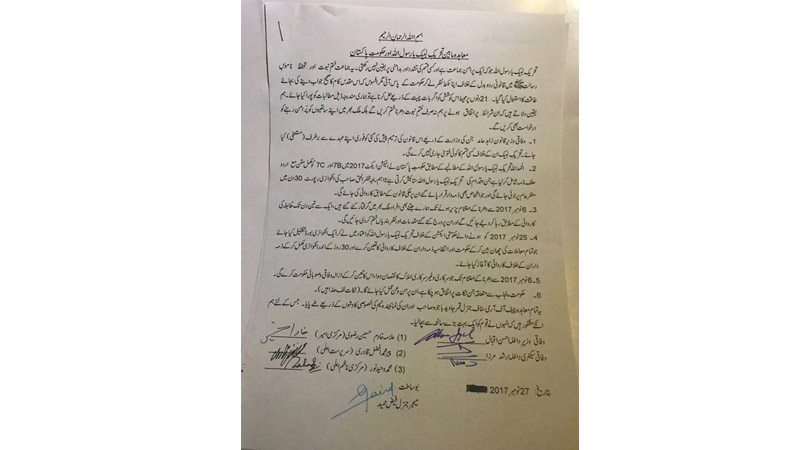
#Pakistan - Dharna deal: state willingly ‘mortgages’ its writ


Marvi Sirmed
The state of Pakistan mortgaged its writ willingly yesterday by signing an agreement with religious protesters camped at Faizabad, which at best is an embarrassing blot on its face and at worst resembles the humiliation Pakistan had to endure in 1971 when the saviours of the nation signed off the dismemberment document. True that the agreement with these few hundred religious protesters lead by a cleric is not comparable to the surrender document with Indian army. But it is also a fact that the state voluntarily surrendered all its authority and powers to ensure people’s safety and right to penalize the violators of its writ. In the times to come, this shortsighted move by all organs of the state would haunt us in innumerable ways.
Whereas the government demonstrated its utter disregard for the parliament, it also showed how easy it is to blackmail political parties on religious grounds when the patronized violent clerics are out for blood of politicians. Opposition parties showed absolute lack of moral courage to own their actions in the parliament. This necessitates that all the parliamentary record must be made public for scrutiny by the masses.


In the face of this agreement, sheer failure of the security apparatus including the intelligence, law enforcement, defence and the executive was demonstrated. It was demonstrated that a few hundred ‘miscreants’ chanting slogans against parliament, government, judiciary and army can put the capital under siege and the maximum solution available with the organs of the state is to let them go scot-free and pay money as well. This happened despite claims from the military establishment (through WhatsApp messages and an audio message by an unnamed, self-proclaimed army officer) that this violent crowd was there on the behest of India’s RAW and America’s CIA.
Government invoking Article 245 and calling army to assist in law enforcement established that it has no strategy to deal with aggressive mobs committing violence against citizens, media, government functionaries and vandalizing public and private property, especially when it is armed with religious slogans. This is like providing a very easy route to the enemy for any future excursions if they want to hurt Pakistan.
The agreement signed by a serving Major General as broker, sets a dangerous precedent. It potentially puts our wide-ranging operation Rudd-ul-Fasaad in jeopardy and accepts the extremists’ narrative.
One wonders where is the ‘alternative narrative’? Once again, it’s an easy recipe for the enemies of Pakistan to follow if they ever decide to hurt Pakistan from inside. Rather, money was distributed among the miscreants with pats on the back. Last time when law enforcement officials gave pat on the back of a miscreant, it was Gullu Butt in Lahore.
The way this agreement has been reached has put a big question mark on Pakistan’s law enforcement as well as judicial process. Without resorting to legal procedure, the cases registered against protesters under the Anti-Terrorism Act have been quashed vide this agreement.
Our security establishment must keep this blunder in mind when the next time it reminds the world that Pakistan’s judiciary is free to handle the terrorism cases against LeT terrorists.
The state has proven beyond any doubt that that not only the loss of life during such acts of terrorism would go unpunished but also the destruction of property would be paid for by the government from the taxpayers’ hard-earned money.
The state, in fact, has rewarded the ‘lowlife scoundrels’ who played havoc with civic life for over 20 days in the capital and three days in the rest of the country.
The reward, needless to say, came from the money the citizens pay the state for providing security. This has badly defeated the narrative built by the Supreme Court’s five-member bench in the Panama scandal against Sharif family: the law is certainly not equal for everyone.
Finally, the clash of ego within the state organs is out in open. To the extent that the aggressive and more powerful party to this conflict is ready to pay any price, be it peace in cities or the life of citizens in order to mutilate the other side.

Editorial: #Faizabad surrender is a blow to the legitimacy of government and all state institutions

Capitulation


IT is a surrender so abject that the mind is numb and the heart sinks.

The deal negotiated between the state, both civilian and military facets of it, and the Faizabad protesters is a devastating blow to the legitimacy and moral standing of the government and all state institutions.
In one brief page and six gut-wrenching points, the state of Pakistan has surrendered its authority to a mob that threatened to engulf the country in flames. The federal law minister has been sacked — in return for a promise by the protesters to not issue a fatwa against him.
Whether a decision made out of desperation or fear, the upshot is that the state has accepted that mobs and zealots have a right to issue religious edicts that can endanger lives and upend public order.
The decision to compensate the protesters and use public funds to pay for the damage to property caused by the protesters turns on its head the fundamental responsibility of the state to ensure law and order. The pledge to prosecute whoever has been held responsible by a government inquiry committee for abortive legislative changes is to invite further protests and violence.
Something profound changed in the country yesterday and the reverberations will be felt for a long time. How has such catastrophe befallen the nation? Devastating incompetence and craven leadership by three sets of actors appear to be the reason.
The PML-N government helped create the crisis and then managed to exacerbate it at every step. Until the very end, when the government used the veneer of a court order to try and forcibly evict the protesters from Faizabad, there were gargantuan failures of planning and shockingly poor tactics. The political opposition also played a miserable role, fanning a crisis for the most myopic of political reasons and searching for a pyrrhic victory.
Finally, the military leadership appears to have to let rancour towards the government in an ongoing power struggle affect its role in bringing this phase of the crisis to an end.
The government has been humiliated and the military leadership has further improved its standing with sections of the public for helping end the protests — but at what cost to the country and its people? A menacing precedent has been set by the protesters that will surely embolden others and invite copycats. It is no exaggeration to suggest that no one is safe.
Zealots had already demonstrated the power of mob violence and the strength of the politics of intolerance and hate. Now, a blueprint has been created for holding state and society hostage. Despair is not an option for a nation state, but neither can there be a pretence that a significant setback has not occurred. Is there anyone, in state or society, to help repair the damage?