Friday, November 24, 2017

Social media crackdown stifles dissent in Pakistan


By


When Zafar Achakzai, a journalist in the restive Pakistani province of Balochistan, heard a loud, insistent knocking on his door just before sunrise on June 25, he did not quite know what to expect.
When he answered, he was met by about a dozen armed men, some in Pakistani paramilitary uniforms.

"They ordered me to come with them," the 21-year-old reporter told Al Jazeera by telephone. "When we were some distance from my home, they blindfolded me, and then I was held at some unknown place."
For hours, he remained in the dark. Eventually, men came to ask him questions, to confirm his identity and take down details about his work. It was then that he asked them why he had been taken.
"I was told that I use Facebook quite a lot. That is all that they said."
Achakzai was held without charge and interrogated repeatedly over the next three days. His interrogators, who refused to identify themselves, only said that they were concerned about several Facebook posts he had made that were critical of Pakistan's powerful military.
They specifically identified three posts that were critical of the Frontier Corps paramilitary force, which controls much of the law and order in Balochistan, where an armed separatist movement and increasing Taliban-linked violence has raged for over a decade.
"I responded by saying that the posts you are talking about come under my right to freedom of expression," he told Al Jazeera.
"They said, 'don't talk about rights here'."
He was released shortly after he was informed that an official case under the cybercrime act had been filed against him.
Achakzai's abduction came soon after the Federal Investigation Agency (FIA) issued dozens of summons to people across Pakistan asking them to explain their social media activity and charging them with posting material that was against the national interest.
Those targeted included political and social activists, as well as at least one other journalist.

Achakzai and dozen others were accused of maligning state institutions under the Pakistan Electronic Crimes Act (PECA), a law passed in August 2016.
PECA allows the government to issue takedown notices for any material deemed to be "in the interest of the glory of Islam or the integrity, security or defence of Pakistan … or public order, decency or morality".
The law was passed despite opposition from rights activists, who say the new legislation created overly broad categories for those who could be acted against, was against the principles of free speech, and left major definitions and rules vague or undeclared.
At the time, the government dismissed their concerns, saying the law was necessary to regulate a digital space that was not under any specific regulations or legislation until that point.
Activists now say that everything they were arguing is coming to pass.

Targeting dissent

Since the law came into effect, at least 147 people have been arrested and 194 cases registered under the law for various offences, including online sexual harassment, according to the interior ministry.
"When the law was passed, all the concerns we raised when the law was in the making - those all came true after enactment," said Nighat Dad, a lawyer and executive director of the Digital Rights Foundation (DRF). "All the provisions we said were vague that could be interpreted any way [the authorities] wanted, they have actually have done so."
Dad's organisation, based in the eastern city of Lahore, runs a cyber-harassment hotline, which helps women who are harassed online to file complaints under the law. The government's priority, however, appears to be to act against those expressing dissent, she says.
"I am seeing that the priority is not being given to those cases [of sexual harassment]; they are being given to cases that have to do with criticising the state."
Farieha Aziz, director at digital rights advocacy group Bolo Bhi, concurred, saying that the FIA and others appear to be targeting dissent.
"There is a fixed mindset regarding national security and 'national interest', and that is deeply embedded in our entire system," she said.
"The FIA says that people are being paid to say the most vile things about the army, and while that might be true, the line that has been blurred between raising questions and criticising, is very worrying."
International rights groups such as Amnesty International also say the crackdown has resulted in a shrinking of space for political and public expression.
"The crackdown on freedom of expression in Pakistan is extremely worrying, as it is elsewhere in South Asia. One of the hopes of a return to civilian rule in Pakistan was a restoration of people's rights. However, what we are seeing is a shrinking of civic space that is even worse than under [military rule]," said Omar Warraich, the deputy South Asia director at Amnesty.
"People are being arbitrarily detained and even disappeared for peacefully expressing their views, creating a climate of fear that runs counter to the promises of greater political freedoms that the PML-N government made."

Abducted, tortured, forced into exile

One of the first of those to disappear was Aasim Saeed, an IT manager based in Singapore who was visiting his home in the eastern Pakistani city of Lahore last winter.
He was forcibly picked up from his home on the afternoon of January 6, and thrown into an unmarked pick-up truck by men in plain clothes.
"They put handcuffs on me and a hood over my head," he said.
After a few minutes, during which Saeed says he was slapped and his mobile and other belongings were taken from him, they arrived at an undisclosed location.
"They stripped me naked and made me change into a prisoner's uniform. There were other people in the cells there as well," he said. "I asked if I could keep my underwear on, and they said no."
After he had changed, he was once again handcuffed, with additional cuffs attached to his legs. He was blindfolded and taken to a basement, sat down at a desk and handed a blank sheet of paper.
"I was told to write the story of my life. Everything about myself, when I was born, where I went to school, everything."
It took a few hours, he said: "In that building, you lose sense of time."
What followed was three weeks of daily interrogation and torture, Saeed says.
"They would keep me blindfolded and tie my hands above my head," he said. "And then they would hit me on my back and legs … with a leather strap. Once, I fell unconscious, I fell off the contraption."
Every day, they would ask him about his political beliefs and accuse him of running a Facebook page that posted content critical of the Pakistani military, which has ruled the country for roughly half of its 70-year history.
"No matter what answer I gave, I was slapped for every answer."
Saeed was one of five social media activists to be picked up within days of each other in early January. The men would later be accused of posting blasphemous material online, a charge that can carry both a judicial death sentence and the threat of murder by a mob in Pakistan.
The Pakistani government has repeatedly denied having any role in their disappearances. All of them were released by the end of January.
Saeed says he was held by members of an intelligence agency alongside at least two of those who were abducted during that time. During his three weeks of incarceration, he says he suffered a fracture in his right hand, a burst eardrum and bruises all over his body.
"After you are tortured, you realise there is nothing else that can be done to you - so you become a bit brave," he said. "I asked why are you doing this; put us in front of a court if we have committed a crime."
But there was no answer.
Saeed and several others were released from custody on January 27, after signing a confession and promising never to criticise Pakistan's intelligence agencies again, or to speak to the media.
The next day, he fled back to Singapore, fearful that a mob may kill him over the blasphemy accusations that spread during the time he was in custody. At the time of Saeed's incarceration, his family told Al Jazeera they had received multiple death threats by phone and over SMS.

Government defends policy

The disappearances in January, and the subsequent crackdown by the FIA, has had a chilling effect on freedom of expression in Pakistan, say rights activists.
"I absolutely believe that the disappearances were aimed at silencing critiques," said Dad, of the DRF.
"We clearly have seen self-censorship. We see people who were very vocal and who have bold opinions about the state machinery and the things they are doing, they have tamed down their voices. There is a lot of self-censorship. Lots of people reached out to us, especially political bloggers and activists, asking us if they say something, whether it comes under PECA."
The government, however, disagrees with that assessment, claiming that authorities have been ordered to show restraint when taking on cases of dissent using the law.
"We have a policy, that despite the law, that until there is not a post that is at a very extreme level, then we neither allow an inquiry nor authorise any arrests," Talal Chaudhry, minister of state for the interior, told Al Jazeera.

Article 19 of Pakistan's Constitution

"Every citizen shall have the right to freedom of speech and expression, and there shall be freedom of the press, subject to any reasonable restrictions imposed by law in the interest of the glory of Islam or the integrity, security or defence of Pakistan or any part thereof, friendly relations with foreign States, public order, decency or morality, or in relation to contempt of court, [commission of] or incitement to an offence."
Asked to define what that "extreme level" would be, Chaudhry said it would entail harsh criticism of the state's institutions, including the military, or material deemed to be blasphemous.
"As a policy and as a political party, we believe that there should be freedom of expression. But we have to look at this very carefully. First [there are] our religious beliefs … and second, if a military force is fighting against terrorism, and people are then [criticising] the martyrs of that force and you do not tackle it, then I think the force will be disheartened."
Asked if the law and its application have an effect on free speech, the government is clear in its stance.
"It is very important to understand that in Pakistan … it is very clearly mentioned in Article 19 of the 1973 [constitution] that freedom of expression is conditional. It is conditional upon four or five things, including [not criticising] state institutions, friendly countries and some religious beliefs."
For activists who are facing the full force of the law, however, the implications are clear.
"After all of this happened, of course I have been forced to change my online behaviour," said Achakzai, the journalist. "Anything to do with raising questions about the government or law enforcement agencies, I have stopped doing that."
Saeed, who has applied for asylum in the United Kingdom over fears for his family's safety, says he, too, has started to self-censor, despite being in a foreign country.
"I could only stay [in Singapore] as long as the job existed. If it ended, even after five years, I would have to go back to Pakistan, and these allegations will be with me my whole life.
"I would have to go back to Pakistan, but I cannot do that. Killing me is a ticket to heaven for some people."
http://www.aljazeera.com/news/2017/11/social-media-crackdown-stifles-dissent-pakistan-171124083629362.html

The borders of freedom: Blasphemy and the press in Pakistan


By Rafia Zakaria


On August 13, a day before Pakistan turned 70, I received a Facebook message from a Pakistan-based journalist and colleague.
"Please help me report this," he said, linking to the Facebook page of a religious leader in Pakistan. In the post, written in Urdu, the leader accuses him of insulting a renowned 11th Century Sunni Muslim saint during an appearance on a privately owned Pakistani television channel.
In response, the leader demanded action from the Pakistani state and made a number of insults directed at the journalist, many of which were seconded by comments from some of the page's 180,000 odd followers. The post, along with its accusation and incitement to punish, has never been removed.
The journalist at whom the message was directed was right to worry. Journalists, constantly in the public eye, are easy targets for Pakistan's vague and lethal blasphemy laws, which criminalize any statement that is "defamatory" to Islam, religious texts, the holy prophet or anyone associated with him. The laws are a relic of the colonial era, their bite made dramatically worse by military rulers and others seeking to woo the religious right and silence any potential opposition.
Pakistan is ranked seven out of the 12 most dangerous countries in the world by the Committee to Protect Journalists' "2017 Impunity Index." Together, these 12 countries account for 80% of the unsolved murders of journalists occurring in the last 10 years.
None of this is news in Pakistan, where journalists have long been subject to high levels of violence when dissenting against state policies or draconian and orthodox interpretations of Islam espoused by extremist elements. As Americans well know, a free and impartial media is essential to democracy and a bulwark against extremism of all kinds. The dire situation of Pakistani journalists is the canary in the mine for the world's fight against terror of all kinds. Pakistan's constitution does establish freedom of the press, but it is a frail freedom, circumscribed by laws that protect Islam and the security and defense of the country.
There are official curbs on speech and unofficial ones. Officially, the press is free in Pakistan, but the individuals who constitute it are not. Pakistan's blasphemy laws dangle like the sword of Damocles over journalists who report on issues that can irk religious conservatives, the military or the powerful strongmen who regularly rob the country's coffers, any one of whom can orchestrate an accusation that can put an end to talk of those issues -- or to lives.
But the blasphemy laws are not the only tool in the government's persecution kit. In early October, Shabbir Siham, an Islamabad-based journalist with the Daily Times, was indicted on terrorism charges by the Anti-Terrorism Court in the Pakistani province of Gilgit-Baltistan. Days prior to receiving the summons from the court, Siham had written a newspaper column critical of members serving in the regional assembly. Like the blasphemy statute, Pakistan's Anti-Terrorism Act defines terrorism very broadly and includes "creating a sense of fear and insecurity in society" and can thus be applied to actual terrorists but also journalists like Siham who criticize government officials. Others, like Taha Siddiqui, Pakistan bureau chief for the Delhi-based World is One News, have been investigated under Pakistan's cybercrime crackdown law: Prevention of Electronic Crimes Bill 2015.
While Siddiqui, whose harassment began in May of this year, is not yet charged, another journalist, Zafarullah Achakzai, was arrested and charged in July of this year under the same law. He had posted a Facebook comment questioning whether a particular military deployment was adequately doing its job after a suicide bombing had occurred in the area. Like the anti-terror laws, the Electronic Crimes Bill creates broad categories of crimes related to "cyberterrorism," hence allowing the government and military unchecked powers to threaten, intimidate and charge online speech and make it the basis for prosecutions, including those of journalists like Achakzai.
But persecution is not limited to lone journalists. In 2014, blasphemy charges were leveled at Pakistan's right of center television channel Geo TV, after a morning program re-enacted the wedding of its female host during which they played a religious hymn recounting the wedding of the prophet's daughter. This upset some people who felt the host was in fact pretending to be the prophet's daughter, a re-enactment not viewed as permissible by many Sunni Muslims.
The ensuing outcry led to blasphemy charges against the owner of Geo TV and the show's male and female hosts. Later that year, the owner was sentenced in absentia to 26 years in prison, a sentence bound, in the words of Amnesty International, to have "a chilling effect" on media freedom in Pakistan.
The case involving Geo TV is instructive because commentators alleged that the real reason for going after the channel was not the show's use of the hymn, but rather an opportunity for members of Pakistan's military intelligentsia to send a message. Not long before the allegations, Geo TV had courted their ire when a top anchor and journalist openly accused military intelligence of being the masterminds behind an attack perpetrated on him. Not long after, PEMRA, Pakistan's broadcast regulatory body, announced it would be pursuing legal measures against the channel for "bringing Inter-Services Intelligence into disrepute and harming the national interest." The blasphemy allegation was simply a means of reminding the station of the power of Pakistan's deep state and the consequences of infuriating the very powerful men who control it.
As Americans can see within their own context of tolerance and permissibility, unofficial curbs on speech define the normal boundaries within which dissent can take place. In Pakistan, a blasphemy accusation is a public instance of being tossed beyond that boundary; if one escapes alive, one is still likely to lose one's voice. For a journalist, life without a voice equals death itself.

Bilawal Bhutto extends support to UN initiative ‘UNITE to End Violence against women’ on International Day for the Elimination of Violence against Women #OrangeTheWorld

Chairman Pakistan Peoples Party Bilawal Bhutto Zardari has said that torture and violence against women and girls won’t be accepted and pledged that his Party will always be in the forefront for protection of our mothers and sisters across the country.
The United Nations is observing ‘International Day for the Elimination of Violence against Women’ all over the world on Saturday. UN has found that Violence against women and girls is one of the most widespread, persistent and devastating human rights violations in our world today.
In his message on the eve of the Day, Bilawal Bhutto Zardari said that PPP has always brought, encouraged and passed legislation aimed at strengthening protection of women and girls. “PPP is the only Party where women feel more protected, respected and rewarded without any gender discrimination,” he pointed out.
With the support of masses, the PPP elected women as Prime Minister, Speaker, Ministers, Judges, Police Officers etc. First Women Bank was launched by Prime Minister Shaheed Mohtarma Benazir Bhutto and she also established separate police stations manned by the women for women, the PPP Chairman stated.
Bilawal Bhutto Zardari also extended support to the worldwide campaign led by UN Secretary General’s initiative UNiTE to End Violence against Women.

https://mediacellppp.wordpress.com/2017/11/24/bilawal-bhutto-extends-support-to-un-initiative-unite-to-end-violence-against-women-on-international-day-for-the-elimination-of-violence-against-women-orangetheworld/

Thursday, November 23, 2017

Music Video - Europe - Open Your Heart

Music Video - Europe - Let the Good Times Rock

Istanbul: Violence in poor neighbourhoods | DW English

Video Report - 'Celebrities are hypocrites when it comes to abuse by friends' – political activist

Video Report - US: Hurricane Harvey victims homeless on Thanksgiving

Music Video - Katy Perry - Bon Appétit

Video - Harassment on the Hill: How to Avoid Being a Congressional Predator: The Daily Show

Sandbranch - 'America's dirty little secret': the Texas town that has been without running water for decades


A bottle of Sandbranch well water with sediment at the bottom. Photograph: Stewart F House
Sandbranch is a small, poor, largely African American community just outside Dallas but its residents have to rely on charitable donations of bottled water.
It’s a sweltering Saturday in October and Pastor Eugene Keahey is becoming agitated. His flock live in a Texas town that hasn’t had running water in 30 years and the donated bottled water they rely upon is in short supply.
“We got six cases of water from a donor but two have already gone in the last hour,” said Keahey, eyeing the line of people waiting for their weekly handout of food and water from the Mount Zion Baptist church in Sandbranch, a largely African American community that lies 20 minutes and a world away from Dallas.
Recent hurricanes in Texas and Florida have diverted the attention of non-profits away from the sisyphean struggle endured in Sandbranch. “I’m going to have to come up with a plan, get on Facebook and beg or borrow water from somewhere,” said Keahey.
“People come for donations from outside the town and it’s difficult to say, ‘No you can’t get water because you’ve got running water at home.’ My test is to say ‘What do you do with the bottled water?’ If they just say they drink it, I have to say no because people here shower, brush their teeth with it, everything.”
Keahey, a stout man with a greying beard and half-moon glasses, rubbed his face. “This is a full-time job. It’s not part time. Water is like gold here.”
Sandbranch has no water pipes, sewerage, trash collection or street lights. In an added dash of irony, the sprawling Dallas Southside water treatment plant is situated about 10 yards from Sandbranch, its rusting barbed wire fence running along the northern boundary of the town. The slow, dry decay of Sandbranch is startling but little known even among the Dallasites who neighbor this crumbling enclave that extends off a quiet stretch of looping highway to the south of the metropolis. The population once stood at more than 500, dwindled to less than 100 by 2010 but has anecdotally rebounded with some newcomers attracted by the cheap land. “Everyone around us has water but not here,” said Detra Newhouse, a 46-year-old who grew up in Sandbranch with her grandparents. “For a while people didn’t even bathe. Some still don’t. There’s a man who lives nearby and I don’t think he’s had a proper bath in 20 years. “We are a dirty little secret no one wants to talk about. I was listening to MSNBC talk about Flint, Michigan, the other day and what is happening there is unconscionable. But I thought, ‘Yeah, and what about us? What about us?’”
Many residents are at a loss as to why they have been forgotten. Officially, Sandbranch’s woes stem from being small, unincorporated and situated on a floodplain area that restricts new development. But the fact that low-income minority areas in the US are often blighted by environmental problems, whether it’s tainted water or toxic air from nearby industrial plants, is well understood here. Sandbranch is a jarring example of environmental injustices that have pockmarked the US for decades.
“We don’t have water here and you know why?” asked Ivory Hall, a spry 83-year-old black man who deftly slaps my arm as he makes his point. “The pigment of my skin. If I were white like you I bet they’d have water down here.” Newhouse easily draws upon fonder Sandbranch memories; of collecting eggs from the chickens at the back of the house, hanging upside down in trees, getting penny candies from the corner store, playing in the then unpaved streets with other children until the dark finally forced them indoors.
There was a well at her grandparent’s house and the children would press their mouths to the nozzle of the pump and gleefully guzzle the water. “It was so refreshing and it was so cool,” Newhouse said. “I had the best childhood ever.”
By the mid-1980s, Newhouse had moved in with her parents in Dallas and noticed a difference in the well water when she visited Sandbranch. The liquid was brown, laced with sand. It emitted a nauseating smell. “I got used to being able to fill up a cup of water and drink it but then I’d go to Sandbranch and have to stop and think, ‘I can’t do that – I could die,’” she said. Later, as an adult, Newhouse’s job required trips to India, where it became clear she had diverged from the American norm. “Places like Mumbai, Hyderabad, Bangalore – you wouldn’t dare drink the water there,” she said. “I thought, ‘Dang, we are living like India. I’m living like an Indian woman.’”
Sandbranch is an unincorporated town - an area not serviced by a municipality - that Dallas County dates back to 1940, although in previous decades properties were established by African Americans lured by cheap land and the opportunity to elude the various indignities inflicted by the white bastion of Dallas.Water pipes were never installed and, like some other unincorporated places, the lack of trash collection means residents have to surreptitiously burn their garbage or take it to relatives in the city. These were tolerable quirks when Sandbranch had a supply of clean groundwater but the wells are now tainted and now either rot or are sparingly used for washing a car or, for those prepared to risk it, a bracing shower. Testing in the 1980s and early 1990s confirmed bacterial contamination of the water. The Sandbranch populace points the finger at gravel mining that has scarred the fringes of the town. Dallas County can’t be sure of the culprit but suggests the widespread keeping of hogs, now banned, created rivers of waste that poisoned the water table.
Whatever the cause, the pollution forced residents to trek several miles to buy bottled water or fill up jugs at relatives’ houses. As poverty has tightened its grip on Sandbranch – the average monthly income is now $720 – most people cannot afford to buy an endless supply of bottled water and now lean heavily on the church’s donations.
Richard Shivers, a white 59-year-old man who walks with a slight limp, bought a parcel of land last year for a few thousand dollars and moved his trailer to live there with his wife Rachel Garcia and a menagerie of animals, including at least a dozen dogs and cats, a couple of pigs, five donkeys and a brood of chickens. Shivers pays a neighbor $50 a month to use his pump to fill five barrels with water, which he transports back in a sagging van, found next to two other dilapidated vehicles on the land, a former hog farm. He said he not only showers in the water, but also drinks it.
“Some people don’t understand how we do it, but I know how to survive,” he said, scooping fetid water from one of the barrels with a grimy hand and offering it to me. “It’s clean. Taste it. I’m serious – taste it.” The Guardian declines the offer. Mount Zion Baptist church is a modest but tidy place of worship with a pitched roof and one of the few functional toilets in Sandbranch. It has a 325-gallon water tank outside for donated water and on Saturdays is transformed into a sort of community triage center, distributing foodstuffs while volunteer nurses from the Texas Woman’s University gather around a fold-out table to offer free blood pressure checks.
“It’s a unique environment,” said Keahey, who gave up a rather more comfortable pastorship in Dallas to grapple with Sandbranch’s stubborn maladies. His wife was raised in Flint. “We are the water crisis family,” he said with a chuckle. “You don’t really expect to see these living conditions next to one of America’s wealthiest cities.” Sandbranch has never been financially viable enough for the city of Dallas to subsume and provide water and, in any case, the town sits on a floodplain which, since the 1970s, has pinioned it with federal rules that limit development.
The oldest houses have been grandfathered but no new properties are allowed unless they can be elevated on stilts above the flood risk level, to around 10ft. Sandbranch doesn’t have the heft of city services, and the freewheeling nature of being unincorporated is nullified by the federal floodplain rules that limit its growth and therefore tax base. It’s a bind that acted as a slowly tightening ligature around the town for decades. “We looked at it and thought something could be done but it’s a Rubik’s cube and we haven’t been able to line up all the colors on one side,” said Rick Loessberg, who has been planning director at Dallas County for the past 20 years. The county provides roads, signage and law enforcement but doesn’t provide water infrastructure. Loessberg said the county looked at creating a new water utility for Sandbranch the 1990s but no one in the town wanted to run it. The well water can’t be cleansed of its pollution. And the county doesn’t see its role as paying for bottled water. Sandbranch’s decline may now be irreversible. “We tried to get them water but with the cost involved and a declining population was it good policy to spend millions of public dollars for 88 people?” Loessberg said. “With the community in the floodplain it’s unlikely there will be new development so there will be no new houses to share the cost of it.
“Whenever you see poverty in a country as prosperous as ours, it’s disconcerting. We like to think we are better than that. I wish we could wave a magic wand, but it’s tricky. It’s complicated.” Wandering around Sandbranch feels a little like stepping into a historical re-enactment with a few modern flourishes. About half of the town’s houses have been torn down or left to ruin, either due to the intervention of Fema, the federal disaster agency, or a Dallas County initiative where residents were offered a small amount of money to leave.
The former five and dime store, once a mobile home, has tilted on to an angle with a gaping maw on one side where the rot has set in. The corner store has also gone, as well as the community center, now wreathed in weeds. The lost properties have left behind vacant spaces filled with knots of weeds, grass and trash next to the remaining structures, which are mainly ageing wood-framed houses daubed in white that can only be patched up, not materially improved, under the Fema floodplain rules. The verdant vegetation is slowly enveloping the town, adding a bucolic feel to the decay. There is little noise apart from the continual crackle of gunshots from a firing range that was placed right next to Sandbranch. Keahey has provided an injection of optimism since becoming Sandbranch’s pastor in 2013. He has spearheaded a group that has pulled together the US Environmental Protection Agency and the US Department of Agriculture, with a view to obtaining grants to put in pipes and then buying water from the city of Dallas. Should the byzantine bureaucracy work in his favor, Keahey believes Sandbranch’s long drought could end as early as next year. In total it may cost $6m, perhaps more. “It’s realistic, it’s a real thing, we are excited,” he said. “If we get the permits and all that, it could happen next year. Once people get water to the lots, they will come back.”
Others are more skeptical. “We wish them the best but it’s a very complicated process,” said Loessberg. “It might even end up cheaper buying bottled water than paying a monthly water bill to the city. It’ll be difficult. You see where the long-term population trend is. You can see which way it’s going.” It may be practical for the county for Sandbranch simply to cease, for its remaining residents to find somewhere else to live where there are jobs and running water and a Tuesday night garbage collection on illuminated streets. But communities put down hardy roots that often weather the most extreme adversity. If we get water I’ll be down here like a shot because why should I pay a mortgage where I am in Dallas when I have a house here?” said Newhouse. “I think the county is waiting for everyone to die out here so they can redevelop all of this, so they can dig for their precious gravel. I don’t think that will happen. All we are asking for is a water bill.”
It’s Sunday and the good people of Sandbranch are neatly dressed and ambling into the church. Two dozen souls fan themselves in the pews as the gospel choir finds its voice and Keahey provides some spiritual perspective. “We don’t have creature comforts and amenities here but we have your love, God,” he bellows into a microphone, prompting several people to stand and shout, “Say it pastor!” The choir launches into I Will Trust in the Lord and does a job that wouldn’t disgrace Aretha Franklin. There’s no shortage of takers for the precious liquid. The two gallons go to Alvin Wayne, who escorts me and the water to his weatherboard house, shuffling on his cane. “Is that all you got?” Wayne, who has completely run out of water, asked.
The latest scheme to lay water pipes leaves Wayne naturally skeptical. He has lived in Sandbranch since 1963 and he’s heard it all before. But cynicism doesn’t seem to be able to flourish here, in this friendly forgotten corner of Texas where everyone waves at you as you pass by.
“I’ve heard about that plan,” Wayne said. “I hope I live long enough to see it happen.”

What Obama, an Oscar winner and astronauts are thankful for on Thanksgiving


  • What do President Barack Obama, an Oscar winner, a rock legend and even astronauts have in common? They are all thankful for friends, family and health on Thanksgiving!

    Obama and others took to social media Thursday to share sweet photos with the family and praise others making this world a better place each and every day.
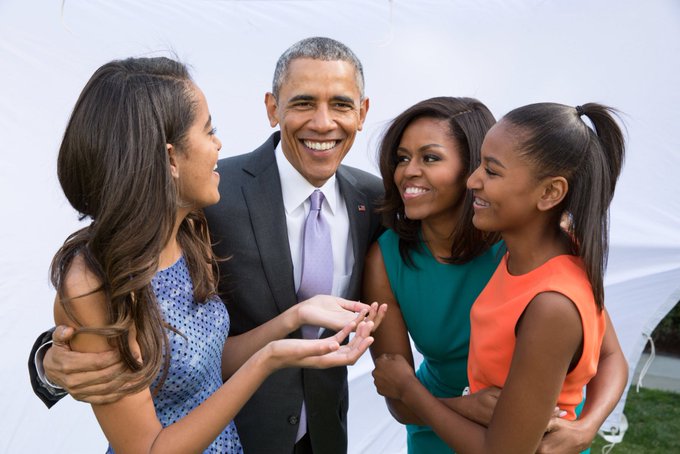
    "From the Obama family to yours, we wish you a Happy Thanksgiving full of joy and gratitude," the 44th President of the United States wrote, sharing a picture of his family.
    Just because astronauts are in space doesn't mean they don't want to share a message of thanks!
    http://abcnews.go.com/Entertainment/obama-oscar-winner-astronauts-thankful-thanksgiving/story?id=51347925

    A Split From Trump Indicates That Flynn Is Moving to Cooperate With Mueller


    By MICHAEL S. SCHMIDT, MATT APUZZO and MAGGIE HABERMAN
    Lawyers for Michael T. Flynn, President Trump’s former national security adviser, notified the president’s legal team in recent days that they could no longer discuss the special counsel’s investigation, according to four people involved in the case — an indication that Mr. Flynn is cooperating with prosecutors or negotiating a deal.
    Mr. Flynn’s lawyers had been sharing information with Mr. Trump’s lawyers about the investigation by the special counsel, Robert S. Mueller III, who is examining whether anyone around Mr. Trump was involved in Russian efforts to undermine Hillary Clinton’s presidential campaign.
    That agreement has been terminated, the four people said. Defense lawyers frequently share information during investigations, but they must stop when doing so would pose a conflict of interest. It is unethical for lawyers to work together when one client is cooperating with prosecutors and another is still under investigation.
    The notification alone does not prove that Mr. Flynn is cooperating with Mr. Mueller. Some lawyers withdraw from information-sharing arrangements as soon as they begin negotiating with prosecutors. And such negotiations sometimes fall apart.
    Still, the notification led Mr. Trump’s lawyers to believe that Mr. Flynn — who, along with his son, is seen as having significant criminal exposure — has, at the least, begun discussions with Mr. Mueller about cooperating.
    Lawyers for Mr. Flynn and Mr. Trump declined to comment. The four people briefed on the matter spoke on the condition of anonymity because they were not authorized to discuss it publicly.
    A deal with Mr. Flynn would give Mr. Mueller a behind-the-scenes look at the Trump campaign and the early tumultuous weeks of the administration. Mr. Flynn was an early and important adviser to Mr. Trump, an architect of Mr. Trump’s populist “America first” platform and an advocate of closer ties with Russia.
    His ties to Russia predated the campaign — he sat with President Vladimir V. Putin at a 2015 event in Moscow — and he was a point person on the transition team for dealing with Russia.
    The White House had been bracing for charges against Mr. Flynn in recent weeks, particularly after charges were filed against three other former Trump associates: Paul Manafort, his campaign chairman; Rick Gates, a campaign aide; and George Papadopoulos, a foreign policy adviser.
    But none of those men match Mr. Flynn in stature, or in his significance to Mr. Trump. A retired three-star general, Mr. Flynn was an early supporter of Mr. Trump’s and a valued surrogate for a candidate who had no foreign policy experience. Mr. Trump named him national security adviser, he said, to help “restore America’s leadership position in the world.”
    Among the interactions that Mr. Mueller is investigating is a private meeting that Mr. Flynn had with the Russian ambassador and Jared Kushner, the president’s son-in-law, during the presidential transition. In the past year, it has been revealed that people with ties to Russia repeatedly sought to meet with Trump campaign officials, sometimes dangling the promise of compromising information on Mrs. Clinton.
    Mr. Flynn is regarded as loyal to Mr. Trump, but he has in recent weeks expressed serious concerns to friends that prosecutors will bring charges against his son, Michael Flynn Jr., who served as his father’s chief of staff and was a part of several financial deals involving the elder Mr. Flynn that Mr. Mueller is scrutinizing. The White House has said that neither Mr. Flynn nor other former aides have incriminating information to provide about Mr. Trump. “He likes General Flynn personally, but understands that they have their own path with the special counsel,” a White House lawyer, Ty Cobb, said in an interview last month with The New York Times. “I think he would be sad for them, as a friend and a former colleague, if the process results in punishment or indictments. But to the extent that that happens, that’s beyond his control.”
    Mr. Flynn was supposed to have been the cornerstone of Mr. Trump’s national security team. Instead, he was forced out after a month in office over his conversations with the Russian ambassador, Sergey I. Kislyak. Mr. Flynn’s handling of those conversations fueled suspicion that people around Mr. Trump had concealed their dealings with Russians, worsening a controversy that has hung over the president’s first year in office.
    Four days after Mr. Trump was sworn in, the F.B.I. interviewed Mr. Flynn at the White House about his calls with the ambassador. American intelligence and law enforcement agencies became so concerned about Mr. Flynn’s conversations and false statements about them to Vice President Mike Pence that the acting attorney general, Sally Q. Yates, warned the White House that Mr. Flynn might be compromised.
    The conversations with the Russian ambassador that led to Mr. Flynn’s undoing took place during the presidential transition. When questions about them surfaced, Mr. Flynn told Mr. Pence that they had exchanged only holiday greetings — the conversations happened in late December, around the time that the Obama administration was announcing sanctions against Russia.
    While Mr. Pence and White House press officers repeated the holiday-greetings claim publicly, Mr. Flynn and the ambassador had in fact discussed the sanctions. That invited the idea that the incoming administration was trying to undermine the departing president and curry favor with Moscow.
    Mr. Trump sought Mr. Flynn’s resignation only after news broke that Mr. Flynn had been interviewed by F.B.I. agents and that Ms. Yates had warned the White House that his false statements could make him vulnerable to Russian blackmail.
    Since then, Mr. Flynn’s legal problems have grown. It was revealed that he failed to list payments from Russia-linked entities on financial disclosure forms. He did not mention a paid speech he gave in Moscow, as well as other payments from companies linked to Russia.
    The former F.B.I. director, James B. Comey, has testified before Congress that Mr. Trump asked him to end the government’s investigation into Mr. Flynn in a one-on-one meeting in the Oval Office the day after Mr. Flynn was fired. Mr. Trump’s request caused great concern for Mr. Comey, who immediately wrote a memo about his meeting with the president. And investigators working for Mr. Mueller have questioned witnesses about whether Mr. Flynn was secretly paid by the Turkish government during the presidential campaign. Mr. Flynn belatedly disclosed, after leaving the White House, that the Turkish government had paid him more than $500,000.
    Mr. Flynn’s firing was, in some ways, the first domino that set off a cascade of problems for Mr. Trump. After the president ousted Mr. Comey, news surfaced that the president had requested an end to the Flynn inquiry, a revelation that led to Mr. Mueller’s appointment. That, in turn, raised the profile of an investigation that the president had tried mightily to contain.

    Music Video - INNA - Yalla

    MORE EVIDENCE SAUDI ARABIA IS WARMING TO ISRAEL


    BY  


    There have been many signs that Saudi official attitudes toward Israel are changing, and today brought one of the strongest. As a headline in the Jerusalem Post put it, "In Possible Nod to Israel, Two Top Saudi Officials Visit Paris Synagogue." The article continues:
    In a historic first and possible nod to Israel, two top officials from Saudi Arabia – both former government ministers – visited a synagogue in Paris this week, The Jerusalem Post has learned.
    The officials were Secretary General of the Muslim World League Dr. Muhammad Abdul-Kareem al-Issa, a former Saudi justice minister, and Khalid bin Mohammed Al Angari, a former Saudi education minister who currently serves as Riyadh’s ambassador to France.
    Needless to say, neither man would conceivably have made this visit without official approval from Riyadh.
    This is a small step, of course; this is not Sadat visiting Jerusalem to speak to the Knesset, an event that happened almost exactly forty years ago (November 19, 1977). But it is not exactly nothing, either. It fits within a recent pattern that should be recognized and encouraged. As I've written before, it seems to me the Trump administration believes this will go further than I think it will. I think the Saudis are getting most of what they want from Israel in secret military and intelligence channels. I doubt they will take big risks by doing things in public that might bring significant attacks on them.
    But they will do some things, and this is a potentially important one. The late King Abdullah of Saudi Arabia started a center on interfaith dialogue, announcing it at a United Nations session on religious tolerance in November 2008 that he and President Bush attended. This gives the current Saudi king and crown prince something to build on (and hide behind). Given the growth of anti-Semitism in Europe and globally in recent years, having the Saudis publicly demonstrate respect for Judaism is a helpful and useful step--for Israel and for Jews. Let's hope it is followed by more. If the Saudi ambassador to France can visit a synagogue, can the Saudi ambassador to Washington--who happens to be the King's son? Can the head of the World Muslim League issue a strong and clear denunciation of anti-Semitism and all religious hatred? Can the Saudis cleanse their textbooks of anti-Semitic material? Such steps seemed ridiculous not so long ago, but these are questions that may seriously be asked today--with at least some hope that in future years the answer might be yes.
    https://www.cfr.org/blog/saudis-and-israel-again

    British risk complicity in Yemen 'famine crime', says Alex de Waal


    Africa analyst believes UN inaction makes security council members accessories to crisis in Arab nation gripped by cholera, hunger and violence.
    Britain is in danger of becoming complicit in the use of starvation as a weapon of war in Yemen, academic and author Alex de Waal has said.
    “The UK and the US, and others on the security council risk becoming accessories to the worst famine crime of this decade,” said De Waal.
    Yemen has been crippled by fighting between a Saudi-led coalition and Houthi rebels, which has brought the country to the brink of famine and left it in the grip of the world’s worst cholera outbreak.
    Earlier this month, the coalition closed all Yemen’s borders, preventing humanitarian aid from arriving in the country. The UN called for the blockade to be lifted to prevent the deaths of thousands of people and, while Saudi Arabia announced on Thursday that some key air and seaports would be reopened to allow the delivery of food and medicine, agencies have warned only unrestricted access will avert famine.
    “If you see someone starving, it’s not just that they’ve got a disease. Somebody has done it to that person. Yemen is really the most shocking case of our generation of a famine crime because the lines of culpability are so clear and there’s no denying them,” said the longtime Africa analyst, in London to promote his latest book.
    Twenty years after publishing his influential Famine Crimes, De Waal, executive director of the World Peace Foundation, has returned to the subject with Mass Starvation: The History and Future of Famine, published on Friday. Cataloguing the famines that have killed 100,000 or more people since the 1870s, De Waal’s research showed that famine killed 10 million people every decade until the 1980s, but had almost disappeared by the early 2000s.
    This positive trend has been disrupted recently by war, blockades, hostility to humanitarian principles, and a volatile global economy.
    De Waal concedes that Yemen was food insecure, mismanaged and in economic crisis. But he argues that people have reached starvation point due to the military campaign on both sides. Air attacks, he said, are destroying roads, markets, hospitals – all crucial for civilians to survive – and, critically, the main port of Hodeidah.
    “Repeated attempts by the United Nations to get expedited clearance for humanitarian access for reconstructing the port have been blocked,” said De Waal.
    “Yes, the UN security council has tried to find ways around it, but frankly they have not cared enough really to force the hand of those who are inflicting famine on Yemen in order to get them to stop.” The problem with prosecuting starvation is “that we don’t care enough to do it”, he said. “We should be saying to our political leaders and to the judges at the international criminal court, ‘You ought to be looking for who is responsible politically and criminally for the starvation in Yemen and bringing them to court’.
    “And if it embarrasses not only our allies in Saudi Arabia and the United Arab Emirates but our own governments here [UK] and in Washington as well … Well, so be it.”
    In Famine Crimes, De Waal argued that the global relief industry had substituted itself for the political action needed to prevent famine. Twenty years on, he attributes relatively low famine mortality, despite ongoing conflict in places such as South Sudan and Somalia, to the fact that action by the UN and NGOs has become “more informed, more professionally effective than it ever was before”.
    De Waal said he still believes famine can be abolished, but that we need “a more humane capitalism” to avoid food price spikes and to address climate change.
    He called for wars that “trample on humanitarian values” to stop.
    The “humanitarian imperative” has to be above all else, “including above restrictions imposed on humanitarian action by the war on terror by this country [UK] and by the United States.
    “If we go down the path of a deal-making, transactional politics where every international engagement is run on the basis of ‘what’s in it for us’, then I’m afraid we’re going to have another era of famines in the world.”

    Video Report - Diphtheria in Yemen: More than 100 infected, 14 deaths

    By Bernard Smith
    With Yemen's hospitals close to collapse, and famine imminent, aid agencies are pleading for a complete lifting of the Saudi-led coalition's blockade.
    Yemen is suffering the world's worst cholera epidemic - and now doctors are warning of an outbreak of the potentially fatal diphtheria virus.
    The WHO says the disease is spreading quickly, and doctors in Yemen are warning that the blockade is preventing essential medical supplies from entering the country.
    Al Jazeera's Bernard Smith reports.

    Starving Yemen ...Is this the face of this age of progress: our 21st century?


    By 


    Why did the world tolerate the Saudi bombing and blockade of its neighbor?
    Dear All,
    As far as wars and ‘interventions’ go, the conflict in Yemen has received relatively little media attention over the past three years.
    A civil war and power struggle between different sectarian groups has meant the conflict has turned into another proxy war involving Saudi Arabia and Iran.
    But the level of cruelty and destruction enacted by Saudi Arabia upon this country has perhaps never been witnessed in this region in modern times. Even Saddam Hussain’s much publicised Halabja gassing of the Kurds in 1988 pales in comparison to what the Saudis have done to Yemen.
    After three years of this cruelty, the US congress finally discussed the matter last week and came up with a naive ‘nobody told me’ sort of statement saying that it “had not authorised war in Yemen”.
    The country’s population is now mostly starving and no aid has been able to get in because of a Saudi blockade. Skeletal children are being kept (marginally) alive in specially designated ‘feeding centres’, and families have to choose which of their many starving children to take to the centre. And a cholera epidemic is sweeping through the land while the blockade keeps medicines and supplies from reaching the sick and vulnerable.
    But now slightly more attention is being paid to Yemen’s plight after the recent UN warning that the country faced massive famine if the blockade was not lifted (UN humanitarian flights were cancelled earlier this month). Since then, the UN has been urging the ‘Saudi coalition’ to reopen Yemen ports. The coalition’s bombing of Sanaa airport was not terribly helpful either.
    Whether or not the Saudis succumb to international pressures and partially lift the blockade, the fact remains that they have already destroyed and starved their neighbour — and the world has stood by and watched.
    Apparently, this sort of behaviour is perfectly in line with western democratic norms and no Arab Spring was needed in KSA. Otherwise, why has this been tolerated by the champions of democracy in the West?
    After three years of this cruelty, the US congress finally discussed the matter last week and came up with a naive ‘nobody told me’ sort of statement saying that it “had not authorised war in Yemen”.
    Meanwhile, the British government has so far not paid any attention to the criticisms being voiced of its arms dealings with Saudi Arabia, and the accusations that British bombs were used by the Saudis on their neighbour. These criticisms of the defence relationship between KSA and the UK are nothing new; yet somehow the lack of attention to these criticisms indicate that the government considers it perfectly okay   to supply and tolerate a completely undemocratic and despotic monarchy that treats its women like property, and bombs and starves its neighbours. It’s likely that the UK, like the USA and the UN, will have many more discussions and issue more statements about the siege and the famine over the next few days. It will probably say a great deal but do nothing much to actually force the Saudis to end the siege or the bombing.
    Many brave correspondents have travelled to this war zone; their dispatches describe a horrific situation. Their reports are harrowing and heartbreaking. Yet despite these reports, countries in the western bloc have been strangely cowed down by the Saudis and have failed to stop the fighting.
    What I find truly mindboggling is that this barbaric situation exists in the 21st century. A country is being systematically starved, yet the level of outrage has not been proportionate to the level of destruction. Plus, it’s not been considered worth giving it the ‘band aid’ treatment yet by doing a fundraising concert at an international level.
    Yemen, home to an ancient civilisation and many architectural splendours, has been forgotten by the world. Occasional statements by human rights organisations have done nothing to relieve the hunger, starvation and misery of Yemenis. Instead, we simply watch as this drama of death and destruction unfolds before our eyes.
    Is this the face of this age of progress: our 21st century?
    Best wishes,
    http://tns.thenews.com.pk/starving-yemen/#.WhdTObQ-dp8

    Pashto Music - By Hidayat Ullah -

    Pashto Music - Khayal Mohammad - Hamza Khan Shinwari: kala ba yaar kala aghyar usama

    Pashto Music - TRIBUTE TO KHYAL MUHAMAD | S A TAKKAR

    Pashto Song - Haroon Bacha - Wakht Ba Razi

    Pashto Music Video - Da Kurme Gula - Gul Khoban

    #Afghanistan - International Day Of The Girl: 121 Districts Have No Intermediate Pass Girl

    Afghanistan: Attaullah Wesa, an office bearer of Pen Path Civil Society (PPCS) has said at least 121 districts in the country have zero intermediate pass girl which is a national tragedy, needs war-footed efforts.
    According to him, in the past 16 years, the government with the close support and collaboration of international community has been gained a number of achievements in educational sector which are not enough to meet the public demands.
    He said educationa is the fundamental right of every male and female and it is the key to peace and development in Afghanistan. He added many districts and villages have been deprived of education where no government schools are available for male and female children.
    “80 districts have no female teacher and the government must overcome this human tragedy.”
    He urged the National Unity Government to appoint female staff in all girls’ schools in the country, as male teachers for girls are contradicting to the norms and traditions which creates hurdles for educating them. He slammed the role of education ministry for not chasing its goals to provide educational facilities to our sisters in remote areas.
    On the occasion of international day of girls, he called on the government, international community and donor organizations to help Afghanistan in education sector to provide it to all male and female children in the country.
    He said establishing proper schools buildings and caring local customs and norms are the foundations to reach our goal. “Less care for education and cold-shouldered response to public demands questions the legitimacy of the government, he furthered.
    https://thepashtunexpress.com/en/2017/10/12/international-day-of-the-girl-121-districts-have-no-intermediate-pass-girl/