Thursday, September 7, 2017

Will the BRICS declaration prompt a rethink in Pakistan's corridors of power?


By Khurram Husain

 IF you hide from reality for long enough, you can land up in a place from where it is next to impossible to find your way back. Something like that may be happening to Pakistan, where for more than a quarter century, our state has come to be virtually held hostage by a reality that we have been denying in almost every forum around the world. This reality is that within Pakistan, as a matter of official policy, violent militant groups have been nurtured, trained, supported and nestled within the general population for use as assets in an underground geopolitical game that we have tried to play in the region.
This history has been told so often, within and outside Pakistan, and evidence of the official patronage that these groups and their larger milieu enjoys has now mounted to such levels, that it has become an act of wilful schizophrenia to actually deny it now. Where exactly does one even begin to explain this to those who remain unaware of this fact even today, and resistant to really internalising its import?
For years, we have found different rationales to either justify or explain this away. Most recently, when the BRICS countries pointed to three specific groups in Pakistan and labelled them as terrorist entities, they were only echoing what the UN Security Council had done more than a decade and a half ago. Still the line came up that ‘these groups are already proscribed in Pakistan’, as a rationale or soft justification for the fact that the groups not only exist, but operate freely and openly, propagate their literature in society, operate giant administrative operations, and in some cases, are actually being mainstreamed into society as bona fide political parties.

What does proscription actually mean in Pakistan when the same members of the group in question need only start another organisation under a different name?

What does proscription actually mean in Pakistan when the same members of the group in question need only start another organisation under a different name and carry on business as usual? One need only take a close look at what happened to the case against the Lal Masjid cleric who less than a decade ago had taken up arms against the state, and triggered a confrontation that actually resulted in the deaths of scores of military personnel. The case fell apart (take a look sometime at how this happened), and the cleric in question continues to live and preach openly in the same mosque. How did this come about if some form of official support was not available to him?
Another line told us that we need not worry. The countries that are crying foul over this situation are biased against us, and need to be perceived more as enemies than allies. Now we have China, we were told, which will stand by us and has no intention of similarly wagging a finger at us on this point. And with China we have CPEC, which is our road to future prosperity, something we have believed for generations now is given by a big brother, not earned through one’s own smarts and hard work.
Well now China has added its voice to the list of those countries pointing out that the presence of militant groups in Pakistan is a problem. To add meat to the proposition, they point to a “comprehensive approach in combating terrorism”, to include countering radical ideologies, halting the movement of terrorist fighters as well as their recruitment, interdicting their finances and much more. This is a heavy menu, and notice that all of what the BRICS declaration is committing to is within the framework of the United Nations, and an extension of what other leading powers in the world have already been saying for many years.
If anybody out there thought that somehow the emergence of China on the global stage, and its growing stakes in our neighborhood as well as others, along with its creed to not interfere in the ‘internal affairs’ of other countries, meant that finally we would have a free pass to engage our great game fantasies without let or hindrance, they ought to be in for a rude shock. The person who is still spinning the words to mean something other than what they say is like that person who has lived so long with his or her lies that they are unable to find their way back to reality.
Everything in the declaration shows that the BRICS countries, that include Russia and China, will not advance an alternative set of norms to those around which the Euro-American world order is constructed. To combat terror financing, for example, they seek to work with the UN resolutions and the Financial Action Task Force that has for years been pointing out the vulnerability of the Pakistan financial system to being used by designated terrorist groups because the latter operate with impunity in Pakistan.
Yes there have been huge successes in our own war against terror. Groups like the TTP have been pushed out of Swat and North and South Waziristan, and the sacrifices made by Pakistan’s soldiers in the course of this fighting have been admirable and deserve commendation. Yes, the security situation has improved from a decade ago, although much ground remains to be covered.
And yes, let’s also add that much of the finger-wagging from the West, particularly America, is in bad faith. America is not losing the war in Afghanistan because of Pakistan. America is losing the war for the simple reason that no sooner had the fighting commenced in earnest in Afghanistan, it lost its focus and went barrelling into Iraq instead. All else is detail.
But there is a reason why Pakistan has had such a difficult time getting the world to recognise this simple reality: because we have been lying to ourselves and our allies about the nature of our involvement in this war all along. If Abbottabad didn’t establish this, surely the death of Mullah Mansour on Pakistani soil, with Pakistani credentials in his pocket, did.

Pakistan's ''Educated Militants''


In recent times, we are observing an increasing trend of militants that hail not from war zones or the troubled tribal regions, but from the middle class of our society.
What is even more problematic is that they are not graduates from religious institutions – which we usually consider to be the prime source of militant’s recruitment - they are the products of public sector varsities. The emergence of this new educated, urban faction of militant mind is debunking the argument that terrorism finds room only in in the lower income class.
The recent attack on Khawaja Izhar-ul-Hasan of Mutthida Qaumi Movement – Pakistan (MQM-P), the Opposition Leader of the Sindh Provincial Assembly, is a testimony to this new trend. The brazen daylight attack on the first day of Eid-ul-Azha was soon followed by a police raid in Karachi’s Kanez Fatima Society, where police claimed to have captured the mastermind of the attack after a fierceg gun-battle.
The detainee – Dr Abdullah Hashmi - is the head of newly-emerged outfit Ansar-ul-Sharia Pakistan (ASP), and according to police officials he is an IT (Information technology) expert and was employed in computer department of NED University. He has received Master’s degree in Applied Physics from the University of Karachi
His case is not first of its kind; Allah Nazar Baloch was once president of the Baloch Students Organization, Saad Aziz, a student of Institute of Business Administration, and Noreen Laghari, an MBBS student. Nor is it limited to Pakistan, Daesh has increasingly targeted and successfully recruited university students across Europe. Considering that effort is already underway to secure our tribal region; and initial steps on seminary oversight and curriculum reform have been taken, albeit not taken properly, we must also focus on the new facet of the extremist threat.
It is unreasonable to assume that the kind of “Daesh inspired” attacks that have taken place in Europe and elsewhere will not take place in Pakistan, as is the belief that these groups can’t penetrate into educational institutes. The state must be vigilant, as must be the educational institutes themselves.
The top faculty of NED University of Engineering and Technology and Karachi University – the two varsities connected with Abdullah Hashimi – met separately on Tuesday to discuss this issue and agreed to come up with detailed proposals on how to tackle extremism in our campuses. These kind of initiatives must be encouraged and supported by the state, as this new face of terror will not disappear on its own.

Pakistan - A true trail of Benazir’s assassination


By - Senator Rehman Malik


Mohtarma Benazir Bhutto fell victim to deep-rooted animosity of conservative right-wing forces in and outside the country against liberal PPP and its leadership.
The coup d’état by Gen Zia put him at the helm of affairs and through his dictatorial regime he had the sole agenda of destroying the party and its leadership and his attempt of introduction of Islamic reforms in the country was basically to win over the support of religious parties against the PPP.
The patronage of military dictator Gen Ziaul Haq helped the conservative right wing religious groups nourished, taste flavour of money and power thus penetrating in the society with a clear agenda of enforcing their brand of Islam.
Gen Zia, through these religious groups demonised and discredited the leadership of the party by building and propagating a narrative that the PPP leadership is anti-Islam by describing its slogan “Roti, Kapra & Makan” as un-Islamic and pro-Western based on its ideology of empowerment of every citizen of Pakistan especially women.
The religious fanatics were instigated against Benazir Bhutto with propagandas at all levels. I remember having investigated a murder attempt on Benazir when I was FIA director and during the course of investigation I found that one of the conspirators in his first attempt, on the life of Benazir in Karachi stated that the leadership of al-Qaeda was against Benazir Bhutto because; “she was a woman and she had no right to rule an Islamic country; she was a Shia and that she was pro-West”. Lately, one of the accused of October 27, 2007 incident had, once interviewed/interrogated him inside the jail by one of the members of the JIT, reiterated the same ideology vis-à-vis Benazir Bhutto justifying her assassination.
This speaks voluminously as to how much the religious militants had been against the personality of Benazir Bhutto. I along with my team interrogated Yousaf Ramzi, who reinforced his statement and proudly stated that it is true that we wanted to eliminate BB. He made a bomb to blow her up in a flat near a lighthouse. It would be pertinent to mention that Benazir Bhutto Shaheed had been the continuous target of the terrorists prior to the last fateful incident. The series of attempts on her life are indicative of the fact that vested interests /al-Qaeda were bent upon eliminating her since her emergence on the horizon of politics of Pakistan. The summary of the earlier attempts is mentioned below to understand the mindset of the hostile elements and al-Qaeda and its associates.
The first assassination attempt was carried out near Bilawal House in 1995. Fazlullah Hamdi at Abu Talha resident of Panjgur, Balochistan, was arrested by the then Frontier Police (now Khyber Pakhtunkhwa) for links with terrorists had disclosed that Yousaf Ramzi, Capt Abdul Hakim alias Majid and others had planned assassination of Benazir prior to 1993 elections. The planning to murder Benazir included planting a bomb in a gutter near Bilawal House. However, this could not be carried out as Yousaf Ramzi got injured at his flat in Karachi while making the bomb. Ramzi, consequently, remained under treatment in a hospital under fake name and got discharged before police could reach him.
The second assassination attempt was in 1993. Subsequently, Abdul Shakoor, a staunch affiliate of Sipah-e-Sahaba, and a close associate of Yousaf Ramzi was arrested by Peshawar Police for carrying ammunition to Karachi by train confirmed about two assassination attempts conspired and planned by Yousaf Ramzi, Capt Abdul Hakim alias Majid and Munir Ibrahim including himself. According to Abdul Shakoor, Osama bin Laden had pumped a lot of money to religious parties in Pakistan for this purpose. Munir Ibrahim whereby was the paymaster on behalf of Osama bin Laden.
Third assassination attempt was carried out on October 18, 2007 when Benazir arrived in Karachi from Dubai to lead the party in the coming general elections and was heading towards Mazar-e-Quaid, when two powerful bombs exploded in close proximity of her truck where I was present and barely survived but that burnt her hair and she also sustained burn injuries. It was another fresh attempt on her life but fortunately she remained safe but hundreds of her supporters gave their lives on October 18. The crime scene washed and FIR hardily registered not by the victim but the state. Basic right of registration of FIR was denied to Benazir.
This attempt was in furtherance of a threat by Baitullah Mehsud, when he had warned that she would be welcomed with garland of bombs. It is a matter of public record. A senator from Fata from Mehsud tribe is a witness to this statement of Baitullah Mehsud. Having been able to penetrate in the procession of October 18, 2007, the terrorists became encouraged to undertake another assassination attempt on Benazir. On December 12, 2007, one of the terrorists was able to touch the vehicle of BB after a PPP workers’ gathering at Pabbi. They noted that the security after public meetings becomes lax and Benazir always came out of the sunroof of the vehicle to wave to the workers. Subsequent tracking of the movements of the terrorist groups through call record data analysis indicated the presence of Ibad-ur-Rehman, a hardcore militant, in Nowshera, on that day who had later been found involved in the planning and execution of plan of assassination of Benazir on December 27, 2007 at Liaqat Bagh, Rawalpindi.
The same terrorist group kept on chasing Benazir and conspired and planned assassination attempt on her at Arbab Niaz Stadium, Peshawar, after public meeting on December 26, 2007. I was present with Mohtarma when we were told by the police that a bomber with a jacket was spotted, who wanted to explode on Benazir.
I demanded the report on it from the NWFP police but they gave no response. We pursued and found out during our own government that Abdullah Saeed (long-necked), Bilal and Ikramullah were the suicide bombers; Nasarullah, a student of Darul Aloom Haqqania, along with two others were the handlers. The plan could not be executed because of the strict security arrangements. In Peshawar, a SP and four DSPs were deputed for the close cordon protection of Benazir as compared to only one ASP at Rawalpindi on 27.12.07.
After various failed attempts the terrorists /anti-MBB finally managed to target Benazir on December 27, 2007 in Rawalpindi after a well-coordinated and organised attack through three successive gunshots followed by suicide bomb blast in close proximity of her vehicle. As a result, she succumbed to her head injuries besides killing of 23 party workers and 70 people sustaining injuries. It happened that the same terrorist group headed by Ibadur Rehman with Bilal Shah (who exploded himself) and Ikram bomber were the key players to kill her.
The investigation by FIA had revealed that the conspiracy was hatched by five former students of Madrassa Haqqania, Akora Khattak, namely Nadir Qari Ismail, Nasarullah, Abdullah Saddam and Faiz Muhammad Kiskat at their hostel room. Their credentials were later confirmed through the record of the madrassa. It is also part of the investigation that Baitullah Mehsud had provided the suicide bombers money to carry out the plot to assassinate Benazir. Baitullah Mehsud fulfilled his claim to kill her with his men with the local support of anti-PPP elements. The police had arrested accused Hasnain Gul and Muhammad Rafaqat on January 5, 2008. They subsequently made confessional statement under Section 164 CrPC before a magistrate, disclosing having picked up accused Nasarullah and two suicide bombers namely Bilal and Ikramullah from Daewoo terminal Rawalpindi on December 26, 2007; providing shelter to them at the house of accused Rafaqat Hussain; having carrying out reconnaissance of Liaqat Bagh on December 27, 2007 and bringing both the suicide bombers to the crime scene for suicide attack on Benazir. Graphic forensic mobile phone confirms the interconnection and presence on the scene. The subsequent call record and RBS locations analysis had corroborated the confessional statements of both the accused Hasnain Gul and Rafaqat Hussain.
The police had also arrested Aitzaz Shah, Saifullah, Sher Zaman and Rashid Ahmed and Abdul Rahim Turabi for being privy to and having the knowledge of the conspiracy. The police had also declared six planners and conspirators as proclaimed offenders who were later found killed either by drone attacks or by the security forces in different areas of Fata.
Ibadur Rehman, an ex-student of Madrassa Haqqania, who had allegedly provided suicide bombers to accused Hasnain Gul and Rafaqat Hussain through accused Nasarullah, was reportedly killed in Tirah, Khyber Agency, in a drone attack on 13.5.10 when FIA was chasing to arrest him including 14 other militants including foreigners. Interestingly, it was the only drone attack in Khyber Agency.
Abdullah Saddam, the ex-student of Madrassa Haqqania, Akora Khattak, allegedly involved in the planning, taking suicide bombers from Baitullah along Nadir Qari Ismail and transportation of suicide vests, were killed in Mamad Gatt, Mohmand Agency in an explosion on 31.5.08 and in Mohmand Agency on 15.1.08, respectively.
Similarly, Nasrullah Ahmed r/o Madrassa Haqqania, Akora Khattak, who had been focal person in Rawalpindi, took two suicide bombers Saeed Bilal and Ikramullah from Baitullah Mehsud, carried out reconnaissance of the place of occurrence, and was also killed in Mohmand Agency on 15.1.08. The other two proclaimed offenders namely Faiz Muhammad Kiskat, ex-student Madrassa Haqqania, and Ikramullah, the second suicide bomber had, however, vanished from the face of the earth. The above chronological events are clear manifestation of the persistence chase by al-Qaeda, its affiliated groups and other extremist groups of the country for Benazir. These groups also had the patronage of the protégés of Gen Zia. Mian Nawaz Sharif, one of the ideological disciples, had been one of the fiercest enemy - not political but personal – of Benazir Bhutto.
The washing of the crime scene just after one hour and forty minutes without any logical and rationale justification resulted in the loss of opportunity to collect vital forensic evidence from the crime scene. The washing of crime scene and earlier withdrawing of security contingent from the place of public meeting is clearly indicative of local and internal support to the terrorists.
The avoidance of former president Pervez Musharraf to face BB murder trial is leaving a big question mark? Again the murder of a prosecutor Ch Zulfiqar was another attempt to thwart the trial and it is confirmed he was killed by al-Qaeda related family where Khalid Shaikh 2nd in command of al-Qaeda was recovered by IB and now undergoing imprisonment with his nephew Yousaf Ramzi, who tried the first murder attempt on Benazir with the assistance of Capt Abdul Hakeem from Karachi.
In 1989, a no-confidence move was hatched against the Benazir government at the behest of the Establishment and out of his hatred and aspirations to become the prime minister, Nawaz Sharif had joined hands with it. Reportedly, he had earlier been able to establish his contacts with Osama bin Laden, who financed the first no confidence move against the BB government through late Khalid Khawaja through an undertaking that he would like to see the introduction of Islamic system in Pakistan.
In 1988, Gen Hameed Gul, the then DG/ISI had played a major role in forging a right-wing conservative alliance against the government of Benazir. Initially Maulana Samiul Haq was announced the president of IJI but later the leadership of IJI was handed over to Nawaz, who was representing the PML and was vying to control the religious and other parties against Benazir. In the background, Nawaz was fully helped by then Establishment, which is matter of record and this is how he was favoured by the Establishment to contest 1990 elections against Benazir. In the background of Soviet war, the militant group like LeJ and SSP remained against Benazir. SSP and al-Qaeda became very close and both al-Qaeda and LeJ started terrorist acts throughout the country.
The assassination of Benazir Bhutto is a culmination of animosity of al-Qaeda aligned terrorists against a woman and Shi’ites and power hungry conservative right wing elements in the country. The above failed attempts are strong indicators as to how inimical and determined al-Qaeda was against Benazir. The attack on Benazir was organised/conspired at Miramshah by Baitullah Mehsud and Al-Misri from al-Qaeda and here are the details how it was executed through these five confirmed al- Qaeda members duly and their affiliation and links with al-Qaeda was further confirmed when Mullah Mansoor demanded the release of these accused terrorists through Taliban -government dialogue in Murree.
The history will never allow condoning these five terrorists with such irrefutable evidence. Scraping the investigation/evidence based on purely technical grounds shall neither be accepted by the party and nor the people of Pakistan. This case was almost closed by the Punjab government and it was the PPP government, which further investigated it by transferring the case from Punjab to FIA. Further investigation was conducted under the supervision of highly credible officer DIG Tariq Khosa and subsequently by additional DIG Khalid Qureshi assisted by a team of FIA officers and representatives from intelligence agencies.
The team of abovementioned officers is known for their integrity. They recorded my statement under Section 161 CrPC besides others namely Naheed Khan, Safdar Abbasi, Farhatullah Babar, Gen Tauqir, driver of the vehicle and Abdul Razzaq; examined the blackberry of Benazir Bhutto; examined Gen Musharraf, police officer on duty, Punjab JIT members, in-laws of accused Ibadur Rehman; carried out forensic analysis of call record data; got DNA of head of suicide bomber Bilal with the joggers and clothes recovered from the house of Rafaqat, who, in fact, had brought Bilal the second suicide bomber, from Daewoo Adda from Akora Khattak to Rawalpindi.
It is thus clear that finally al-Qaeda had managed to kill Benazir with local support and she lost her struggle against the terrorists/extremists/dictators. We, PPP workers, will continue our struggle till her murderers are hanged. No doubt these elements are still powerful and had links in the corridors of power and can manage their way using terror as weapon but how long? The evidence on record not only will continue to haunt them but the law of nature will bring them to justice.

https://www.geo.tv/latest/156965-a-true-trail-of-benazirs-assassination

Asif Zardari will file appeal against ATC verdict in Shaheed Mohtarma Benazir Bhutto assassination case

Former President Asif Zardari will file appeal against the ATC verdict in Shaheed Mohtarma Benazir Bhutto assassination case. The decision was taken at a high level party meeting in Bilawal House Karachi today. Spokesperson senator Farhatullah Babar said that Zardari will file appeal as legal heir of the victim aggrieved by the verdict. Zardari also signed vakalatnama in favour of his counsel Sardar Latif Khosa who will represent Zardari in the case. Those who attended the meeting included besides Asif Zardari, chairman Bilawal, Faryal Talpur, Khurshid Shah, Yousuf Raza Gillani, Qaim Ali Shah, Nayyer Bokhari, CM Murad Ali Shah, Latif Khosa, Farooq Naek, Aitzaz Ahsan, Rahman Malik, Sherry Rehman, Qamar Kaira. Salin Mandviwalla, Nisar Khuro, Ch Manzoor, Navid Qamar, Nisar Khuro, Moula Bakhsh Chandio and Farhatullah Babar.
The party today also decided that Chairman Bilalwal Bhutto Zardari will become an intervener in the Presidential Reference filed by the President Asif Ali Zardari in the Supreme Court to revisit the Shaheed Zulfiqar Ali Bhutto case. Advocate Senator Farooq Naek will represent Bilalwal Bhutto in pursuing the Presidential Reference on behalf of Bilawal Bhutto as intervener.

https://mediacellppp.wordpress.com/

Asif Ali Zardari aware of issues concerning Balochistan

Member Central Executive Committee Pakistan Peoples Party Mir Baz Khan Khetran has said that only political leader who understands issues of Balochistan is President Pakistan Peoples Party Parliamentarians Asif Ali Zardari.
Talking to a group of journalists at the PPP Media Office Islamabad Mir Baz Khan Khetran said that it was former President who granted Aghaz-e-Huqooq-e-Balochistan and thus gave relief to the people of the province. Economic Corridor is also the vision of Asif Ali Zardari. Nawaz Sharif had no clue whatsoever about this corridor. Former President gave Gawadar Port to China thus facilitated Economic Corridor.
Mr. Khetran said that PPP Chairman Bilawal Bhutto Zardari and PPPP President Asif Ali Zardari realize that Balochistan has very little representation in the National Assembly whereas Balochistan is well represented in the Senate of Pakistan. He said that PPP is the only representative party of all four provinces. He claimed that this time around PPP will win more seats in Balochistan.
https://mediacellppp.wordpress.com/

International Literacy Day: Many of our problems deeply rooted in illiteracy: Bilawal Bhutto

Chairman Pakistan Peoples Party Bilawal Bhutto Zardari has said that drastic improvement in the nation’s literacy rate was necessary to meet aspirations of people and goals of our founding fathers.
On the 50th International Literacy Day being observed under the aegis of UNESCO worldwide, the PPP Chairman said illiteracy was one of the main hurdles in the development and progress of the country therefore every girl and boy should have equal access to education facilities.
Bilawal Bhutto Zardari said this was the time to seriously think about the causes for slow improvement in literacy and steps should be taken to achieve the required maximum level of literacy level. “Many of our perennial problems like poverty, law and order, intolerance and unemployment are deeply rooted in illiteracy,” he pointed out.
PPP Chairman appreciated the worldwide initiatives by UNESCO to fight illiteracy and urged Federal and Provincial governments to replicate these efforts in our country to save our generations from falling into illiteracy slough.
Bilawal Bhutto Zardari vowed to give top priority, in Party Manifesto, to measures for improving literacy rate and bringing millions of out-of-school children into the basic education system.

https://mediacellppp.wordpress.com/

Pakistan's anti-corruption agency starts criminal investigation into ex-PM, finance minister


Pakistan’s anti-corruption agency will open a criminal investigation into former prime minister Nawaz Sharif and current finance minister Ishaq Dar, it said on Thursday.
Sharif was ousted in July after the Supreme Court deemed him unfit to hold office for not declaring a small source of income, and ordered the agency, the National Accountability Bureau (NAB), to instigate a criminal investigation into him, his family and Dar.
The agency said its investigation would rely on the evidence collected by a Supreme Court-appointed six-man panel that was investigating the Sharif family’s wealth and included officers from powerful military intelligence agencies.
“The chairman (of) NAB directed that the prosecution of the cases will be followed up vigorously in the concerned Accountability Courts,” the agency said in a statement.
Sharif, his family, and Dar have denied any wrongdoing.
The three-time premier said he never received the income that investigators said he did not declare.
Sharif has said there was a conspiracy against him but did not identify anyone. Instead, he named long-time loyalist Shahid Khaqan Abbasi as his replacement as prime minister until the next election, expected in mid-2018.
Pakistan has for decades been plagued by pervasive graft, as well as by rivalry between the military and civilian politicians.
The NAB’s conviction rates are notoriously low and Sharif has multiple investigations by the agency pending against him, including one dating back to 1999.

Wednesday, September 6, 2017

Video Report - Thousands march in Chicago after DACA decision

Video Report - House Democrats Protest Trump's DACA Decision On House Floor

Video Report - Elizabeth Warren EXCORIATES Trump's Racism And DACA Decision

Video Report - Bernie Sanders SLAMS Trump For Ending DACA

Video Report - Putin: North Koreans Would Rather Eat Grass Than Give Up Nukes, If They Don't Feel Safe

India, Pakistan nearly agreed on Siachen three times: Shyam Saran

By Suhasini Haidar
His book details ‘missed opportunity’ to solve Sir Creek dispute.
India and Pakistan nearly came to an agreement on demilitarising the Siachen Glacier at least three times: in 1989, 1992 and 2006, says former Foreign Secretary Shyam Saran in a book that was launched here on Wednesday by former Prime Minister Dr. Manmohan Singh and discussed by former National Security Advisor Shiv Shankar Menon. In a lively discussion on the reasons for the failure of the two sides to come to an agreement in the most recent attempt in 2006, between the Manmohan Singh UPA government and the Musharraf regime in Pakistan, Mr. Saran said the two sides had even agreed on authenticating ground positions of the troops before the deal fell through.
In the book, “How India Sees the World: Kautilya to the 21st Century”, Mr. Saran records the crucial meeting of the CCS (Cabinet Committee on Security) on the eve of India-Pakistan Defence Secretary-level talks in May 2006, where the draft agreement, that had been approved by the Army and other stakeholders, was to be discussed. However, he said two crucial players, the-then NSA MK Narayanan and then Army Chief General J.J. Singh made last minute interventions to cancel the proposal. “When the CCS meeting was held on the eve of the defence secretary–level talks, [Mr.] Narayanan launched into a bitter offensive against the proposal, saying that Pakistan could not be trusted, that there would be political and public opposition to any such initiative and that India’s military position in the northern sector vis- à-vis both Pakistan and China would be compromised. [Gen] J.J. Singh, who had happily gone along with the proposal in its earlier iterations, now decided to join Narayanan in rubbishing it,” Mr. Saran writes.
According to Mr. Saran both Indian and Pakistani armies had agreed to authenticate the Actual Ground Position Line (AGPL), and sign an annexure with maps marking exactly where Indian and Pakistani troops held positions. As a result, Mr. Saran says, Indian troops, who occupy the heights of Siachen would be able to mutually withdraw and be spared “extreme cold and unpredictable weather in inhospitable areas, [where] their psychological isolation was just as bad as their physical hardship.” Mr. Saran’s revelations are significant as it is the first time that an Indian official of the time has accepted that agreements on Siachen and Sir Creek, often called the “low-hanging fruit” of the Comprehensive bilateral dialogue between both countries, was a reality. In 2015, former Pakistan Foreign Minister Khurshid Mahmud Kasuri has written about the agreements in his memoirs “Neither a Hawk nor a Dove”, with an account of the Pakistani side of those negotiations.
During the book launch on Wednesday, General (Retd) J.J.Singh, who was also in the audience, asked Mr. Saran whether it would have been possible, in fact, to “trust Pakistan”, and ensure Pakistani troops wouldn’t return to occupy positions in Siachen. “In matters of international diplomacy, it is a convergence of interests rather than trust that counts,” Mr. Saran replied. The book also records what Mr. Saran calls a “missed opportunity” to solve the Sir Creek dispute in Kutch, with the solution crafted by the Navy to divide the creek between India and Pakistan according to the “equidistance” principle. When asked by Mr. Menon whether the opportunities to resolve the long-standing issues with Pakistan still existed, Mr. Saran said, “Opportunities are perishable. When they aren’t seized, they don’t return.”
The book launch was attended by a number of diplomats and politicians including Minister of Law and Justice, and Information Technology Ravishankar Prasad and former Vice-President Hamid Ansari.
http://www.thehindu.com/news/national/india-pakistan-nearly-agreed-on-siachen-three-times-shyam-saran/article19631457.ece?homepage=true

BRICS Potentially Strengthens Trumps Hand In Tackling Pakistani Support Of Militants – Analysis

Pakistan, already furious and reeling from US President Donald J. Trump’s threat to sanction it for supporting militants, has been dealt a potential body blow out of left field. Five major emerging powers, including China and Russia, have for the first time identified Pakistan-backed militant groups as a regional security threat in a statement at the end of a summit in Xiamen.
The statement by the BRICS countries, which also include India, Brazil and South Africa, called into question the degree to which Pakistan will be able to resist US pressure by aligning itself closer with China and Russia. It also strengthened India’s position that had already been boosted by Mr. Trump urging Delhi to step up its engagement in Afghanistan.
The statement could trap Pakistan in a pincer movement in which the very fundament of its national security policy would be challenged. Pakistan has long seen various militant groups, many of which have been designated as terrorists by the United Nations and/or the United States, as useful proxies in its zero-sum-game-approach towards India.
Pakistan has also supported the Taliban in part to counter India, which it says uses Afghanistan as a launching pad for covert operations inside Pakistan. A former senior Indian military commander recently acknowledged that Afghanistan was important to India because its security services had over the years moved away from gathering human intelligence in Pakistan.
Defense Minister Khurram Dastagir Khan rejected the statement within hours of its publication. “We reject this thing categorically, no terrorist organization has any complete safe havens,” Mr. Khan told a Pakistani tv station.
In an Afghanistan-focused speech on US policy in South Asia, Mr. Trump last month insisted that Pakistan’s partnership with the United States would not survive if it continued to harbour and support groups that target the United States.
In response, Pakistan asked US Assistant Secretary of State Alice Wells to indefinitely postpone a planned visit to Pakistan. Similarly, Pakistani foreign minister Khawaja Muhammad Asif cancelled a visit to Washington and said he would be visiting China, Russia and Turkey instead.
The BRICS statement threatens however to pull the rug from under what Mr. Asif hoped to achieve on his travels. The statement was in stark contrast to China and Russia’s response to Mr. Trump’s threat. Chinese Foreign Ministry spokeswoman Hua Chunying at the time insisted that Pakistan was on the front line in the struggle against terrorism and had made “great sacrifices” and “important contributions” in the fight. Russia responded similarly to Mr. Trump.
The BRICS statement, however, sang a very different tone even if it did not identify Pakistan by name. It noted that Chinese President Xi Jingping, Indian Prime Minister Narendra Modi, Russian President Vladimir Putin, Brazilian President Michel Temer and South African President Jacob Zuma “express concern on the security situation in the region and violence caused by the Taliban, ISIL/DAISH, Al-Qaida and its affiliates including Eastern Turkistan Islamic Movement, Islamic Movement of Uzbekistan, the Haqqani network, Lashkar-e-Taiba, Jaish-e-Mohammad, TTP and Hizb ut-Tahrir.”
Pakistan stands accused of supporting several of these groups, including the Taliban, the Haqqani network and Lashkar-e-Taiba (LeT). Pakistan put Muhammed Hafez Saeed, one of the world’s most wanted men and the UN and US-designated leader of Jama’at-ud-Dawa (JuD), widely viewed as a LeT front, under house arrest earlier this year. LeT itself has been designated by both the UN and Pakistan. JuD recently announced that it was forming a political party that would compete in elections.
Mr. Saeed is believed to be among others responsible for the 2008 attacks on 12 targets in Mumbai, including the Taj Mahal Hotel, a train station, a café and a Jewish centre. Some 164 people were killed and more than 300 wounded. The US government has a bounty of $10 million on Mr. Saeed who was once a LeT leader. He has since disassociated himself from the group and denied any link between JuD and LeT.
Jaish-e-Mohammed (JeM), a group proscribed by both the UN and Pakistan, poses a more difficult challenge and its naming in the BRICS statement puts not only Pakistan but also China on the spot. China, at the behest of Pakistan, twice this year prevented the United Nations from listing the group’s leader, Masood Azhar, as a globally designated terrorist.
Mr. Azhar, a fighter in the anti-Soviet jihad in Afghanistan and an Islamic scholar who graduated from a Deobandi madrassah, Darul Uloom Islamia Binori Town in Karachi, the alma mater of numerous Pakistani militants, is believed to have been responsible for an attack last year on India’s Pathankot Air Force Station. The militants, dressed in Indian military uniforms fought a 14-hour battle against Indian security forces that only ended when the last attacker was killed.
Mr. Azhar, a portly bespectacled son of a Bahawalpur religious studies teacher and author of a four-volume treatise on jihad as well as books with titles like Forty Diseases of the Jews, was briefly detained after the attack and has since gone underground.
Freed from Indian prison in 1999 in exchange for the release of passengers of a hijacked Indian Airlines flight, Mr. Azhar is also believed to be responsible for an attack in 2001 on the Indian parliament in New Delhi that brought Pakistan and India to the brink of war. JeM despite being banned continues to publicly raise funds and recruit fighters in Pakistani mosques.
“You cannot have good and bad terrorists, and it is a collective action. Members of the BRICS countries have themselves been victims of terrorism, and I would say that what has come of today acknowledges the fact that we must work collectively in handling this,” Indian foreign ministry spokeswoman Preeti Saran told reporters immediately after BRICS issued its statement.
The Xiamen statement is certain to have caught Pakistan off balance. Mr. Asif is likely to find out what the statement means when he visits Beijing and Moscow. Ultimately, the proof will be in the pudding when the UN Security Council in early 2018 again looks at designating Mr. Azhar and China will have to take a stand.
Already, China’s more than $50 billion investment in Pakistani infrastructure and energy has been threatened by attacks by militant groups that are the target of Pakistani crackdowns. The BRICS statement suggests that Chinese patience with Pakistan’s selective support of militancy may be wearing thin.
That could be good news for Mr. Trump. To turn it to his advantage, Mr. Trump would have to find common ground with China and Russia in forging a negotiated exit from America’s Afghan quagmire. Sixteen years into the war, Mr. Trump is increasing the US military presence in Afghanistan. The silver lining is that he hopes that will force the Taliban to come to the negotiating table.

China's 'betrayal' - BRICS leaders slam Pakistan-based jihadi groups


The BRICS nations have expressed concern about Pakistan-based militant groups like LeT and the Haqqani Network. It is a diplomatic defeat for Islamabad, which heavily depends on Beijing's support amid a global isolation.
Pakistan's foreign policy in a nutshell: As long as China is backing us, we don't have to worry about the United States or the rest of the world. And that was exactly the official reaction after US President Donald Trump announced his Afghanistan policy last month, criticizing safe havens for Islamist terrorists on Pakistani soil.
While the Islamic country's politicians and government officials refuted Trump's claims that Pakistan was supporting militant groups near its border with Afghanistan, they heaved a sigh of relief when Chinese officials came to their support against Trump.
Therefore, it was quite natural for Islamabad to expect that the BRICS nations – Brazil, Russia, India, China and South Africa – would not criticize Pakistan-based militant groups during their recently held summit in the Chinese city of Xiamen.
But after Trump's censure, Xi Jinping's China, too, expressed its worry about the jihadi groups that many experts say are Pakistan's proxies in the region.
"We, in this regard, express concern about the security situation in the region and violence caused by the Taliban, 'Islamic State'(IS)..., al Qaeda and its affiliates, including the Eastern Turkistan Islamic Movement, the Islamic Movement of Uzbekistan, the Haqqani Network, Lashkar-e-Taiba, Jaish-e-Mohammad, TTP and Hizb ut-Tahrir," the BRICS leaders said in a joint declaration.
A 'message to Pakistan'
Islamabad thus faces a diplomatic dilemma. The BRICS declaration is a victory for the  Indian and Afghan stance that Pakistan-based terror outfits pose a serious threat to regional security.
Pakistan's Foreign Minister Khawaja Asif is planning to visit China and Russia in the coming days to garner support for his country in the wake of Trump's criticism. The BRICS statement makes his task more difficult.
"The declaration is a clear message to Pakistan that the international community, including China and Russia, are not ready to tolerate Pakistan's jihadi proxies. We must not forget that Islamist groups also pose a threat to China, which is battling a religiously motivated insurgency in its western Xinjiang province," Dr. Aman Memon, an international relations expert at the Islamabad-based Preston University, told DW.
"The situation is equally alarming for Russia, which is wary of Islamists in Central Asian states," Memon said, adding that it was high time that Pakistan reviewed its policies regarding jihadi groups.
Close allies
New Delhi accuses Pakistan of using jihadi proxies to mount attacks inside India, including India-administered Kashmir. Islamabad denies these allegations.
In February, China blocked a proposal by the US to designate Jaish-e-Muhammad (JeM) chief Masood Azhar a global terrorist. New Delhi accuses JeM and Azhar of masterminding several terrorist attacks on Indian soil, including a deadly assault on an Indian airbase in Pathankot in January 2016. Pakistani investigators say Azhar and his associates had no links to the attack.
Lashkar-e-Taiba (LeT) is another militant group based in Pakistan which New Delhi blames for cross-border attacks including the 2008 Mumbai terrorist attacks that killed 166 people.
Washington has long been demanding that Islamabad relinquishes support for the Haqqani Network, a Taliban ally based in Pakistan's northwestern Waziristan region near Afghanistan.
Now that China has officially expressed its concern about JeM and LeT, the pressure on Pakistan to act against these groups is likely to build.
"The influence of India in Afghanistan is a reason behind Islamabad's support for these militant groups, but after the BRICS declaration Pakistan will come under tremendous pressure to review its policy," Memon said.
BRICS statement not detrimental
Experts, however, say that China will keep its leverage over Pakistan, and that it won't isolate Islamabad completely.
Ye Hailin, an expert at the Beijing-based Chinese Academy of Social Sciences, believes hostility between the regional powers could be counterproductive in defeating terrorists.
"As a mediator between Pakistan and Afghanistan, China has always tried to do its best. China's strategic interest in the region is to defeat terrorism," Ye told DW.
China is already part of a Quadrilateral Coordination Group - comprising Afghanistan, China, Pakistan and the United States - that was established to end the protracted Afghan crisis. The grouping has not achieved a significant breakthrough so far, with Islamabad and Kabul at loggerheads over the militancy issue, and the Beijing and Washington relationship lacking in trust.
Experts say that China has invested heavily in Pakistan, and that is why it wants peace in at least those areas where its "Belt and Road Initiative" project is being implemented. China has built a port in the southwestern Pakistani province of Baluchistan as part of its nearly $60-billion CPEC project to establish overland and sea trade routes to reach Middle Eastern, European and African markets.
China also wants to minimize India's influence in the region by supporting Pakistan, a policy that experts don't think will drastically change in the near future.
"I think China took Pakistan into confidence over the BRICS declaration. The LeT and JeM have been banned by Pakistan. The Haqqani Network no longer has any presence in Pakistan. We have been cooperating with the US over the Haqqani threat," Amjad Shoaib, a retired army general and defense analyst, told DW.
"People should not read too much into the BRICS declaration and Sino-Pakistani ties," Shoaib added.
Engagement with international community
Nonetheless, the BRICS declaration could force Pakistan not to take a collision course with the US.
Pakistanis are confident the international community will continue to rely on its "assistance" in the war in Afghanistan. Washington has so far cooperated with Pakistan, knowing the sanctions or unilateral aerial attacks on the militants' hideouts in the country could further destabilize the nuclear-armed nation with strong anti-West sentiments.
During his tenure, former US President Barack Obama increased drone attacks in Pakistan's northwestern tribal areas bordering Afghanistan, but he continued to engage with Pakistani authorities in order to retain leverage within the country. The flipside to it, analysts say, is that Islamabad has continued with its own strategy for Afghanistan: minimizing New Delhi's influence in Kabul and waiting for complete US withdrawal from the country.
At the same time, some Pakistani analysts say it is in the interest of Islamabad to also keep the Trump administration on its side.
"I think there is no point in getting excited over Trump's Afghanistan policy speech. Pakistan should engage with him [Trump]. He is sending more soldiers to Afghanistan and for that America will need Islamabad's help," Pakistani researcher and defense analyst Aisha Siddiqa, told DW.
At the same time, Indian and Pakistani peace activists urge their countries to tread cautiously and not become party to either the US-Chinese rivalry or the global powers' strategic interests  in Afghanistan and Central Asia.

She’s a Nobel winner heading to Oxford. But ‘Malala hate’ is still real in Pakistan.


By Pamela Constable
It’s safe to say that most people in Pakistan were glad that Malala Yousafzai, then a 15-year-old student, did not die from the bullet wounds a squad of Taliban militants left in her face and neck when they ambushed her school bus in Pakistan’s scenic Swat Valley in 2012.
It’s probably also safe to say that two years later, most Pakistanis were proud — even if that pride was mingled with other, more complicated emotions — when Yousafzai, an activist for girls’ education, became at 17 the youngest person ever to win a Nobel Prize and her country’s second Nobelist since the Muslim-majority country was founded in 1947.
Beyond that, the young woman’s story has become so distorted by a bewildering list of honors and accomplishments, and a parallel litany of accusations and suspicions, that it is almost impossible to generalize about how she is viewed by her fellow citizens — except that they seem exhausted of hearing about her.
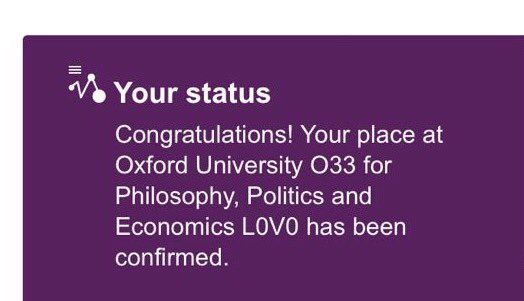
Two weeks ago, Yousafzai, who now lives in England, announced that she had been accepted to study at Oxford University (her tweet was politely couched in praise for her fellow winning candidates). The British press loved the story, but there were few mentions in Pakistan’s media. Reaction from Pakistanis on social media ranged from sincere and congratulatory to snide and envious.


So excited to go to Oxford!! Well done to all A-level students - the hardest year. Best wishes for life ahead!
“Well done, Malala,” one man posted on Facebook, praising her humanitarian efforts and success abroad but noting wistfully that many Pakistanis are unable to get ahead except by bribery and connections. “Time to shoot myself in the head for my next degree,” sneered another on Twitter, using an expletive to suggest she had done little to deserve it. Some called her a hypocrite and a fake. Some said her father, a rural school principal, was an agent for Israel and the CIA.
On Tuesday, police officials in Karachi reported that they had killed several suspected Taliban and Islamic State militants in a raid and shootout, including one who they said had been involved in the attack on Yousafzai. The news made headlines but drew little public interest. News reports seemed skeptical of the police claims. They included scant detail of the long-ago incident and no photos of Yousafzai. The coverage had a perfunctory, “old news” tone.
In a way, it is understandable that this young woman — who appears to have remained a gracious and modest individual despite her global celebrity — has nevertheless become a permanent lightning rod for the muddled grievances, conspiracy theories and thwarted ambitions of a struggling society where many people look to “foreign hands” to blame for their problems and may resent the limelight that comes to some, but only a few, of those who have suffered.
By some estimates, more than 30,000 Pakistanis have been killed in a decade of terrorism and conflict. Yousafzai survived and then went on to become a best-selling author, a winner of numerous international prizes and a U.N. Messenger of Peace. Time magazine named her three years running as one of the most influential people in the world, and in July she was listed as one of its most “influential teens” alongside Kylie and Kendall Jenner. She even had an asteroid named after her. Now she is going to Oxford to study philosophy and politics.
In an Aug. 18 essay in Pakistan Today, titled, “Why are Pakistanis upset at Malala getting into Oxford?” Syed M. Murtaza described an “umbrella” of “Malala hate,” an emotional phenomenon in which the outspoken young crusader has become a stand-in for everything many Pakistanis fear and resent — from drone strikes to Western freedoms. “It is commonplace in Pakistan to attribute everything Malala has accomplished … to a grand scheme by international powers that only seek to defame the country,” he wrote.
Actually, public opinion polls have shown that many Pakistanis admire and respect her, according to a 2014 report by Maham Javaid, a Pakistani-American journalist, published by Al Jazeera America. When Yousafzai was nominated for the Nobel Peace Prize, one poll showed 44 percent of people were pleased, 44 percent ambivalent, and 11 percent unhappy. But later, when her autobiography was published in 2013, some Pakistanis, especially religious clerics and conservative TV anchors, charged that she had defamed Pakistan and Islam. The book was banned in thousands of private schools.
The main problem, Javaid wrote, is that while many Pakistanis “stand behind her” and cheer her crusade, others “appear unable to distinguish between Malala’s brave resolve to fight for what she believes in and the Western accolades she has received for displaying this courage.” If Pakistan shuns Yousafzai, she added, “we Pakistanis will be the ones who lose yet another hero … Malala is a true champion, and Pakistan should hold on to her.”

Bilawal Bhutto Zardari for 1965-spirit, unity to defeat terrorism

Chairman Pakistan Peoples Party Bilawal Bhutto Zardari has said that the nation needs the same spirit and unity we displayed in 1965 war to defeat the current threats to the country in the form of extremism and terrorism.
In his message on the eve of Defence Day, the PPP Chairman said that a strong and invincible defence can only be ensured through national unity and cohesion.
Bilawal Bhutto Zardari said that Prime Minister Shaheed Zulfikar Ali Bhutto gifted the nuclear programme and his daughter Prime Minister Shaheed Mohtarma Benazir Bhutto gave missile technology programme.
PPP Chairman said that all those soldiers who laid down their lives for the defence of Pakistan would remain unforgettable heroes in the history.
Bilawal Bhutto Zardari pledged to follow the ideology of the country in the light of philosophy of Quaid-e-Azam Mohammad Ali Jinnah with an impregnable defence.
“On our Defence Day, we offer homage to our martyrs and assure their families our sincere support and sympathies,” he added.

https://mediacellppp.wordpress.com/2017/09/05/defence-day-of-pakistan-bilawal-bhutto-zardari-for-1965-spirit-unity-to-defeat-terrorism/