Wednesday, August 9, 2017

Abuse in Pakistan: 'I’m more scared of harassment online than offline'


Sabrina Toppa
The country’s first cyber harassment helpline is providing legal and psychological support to women facing threats on social media platforms.
In January 2016, Suman was on her way to take her university exams when she was approached by a motorbike. The man grabbed her, took her to an isolated location and poured acid on her face. Despite her shrieks for help, the area was deserted and no one came to her aid. Suman’s face burned, stinging and swelling to the point where her lips and eyes were no longer visible.
The assailant – Suman’s brother-in-law – had a long history of harassing her. In the years before the attack, he had initiated unwanted sexual advances and implored her to marry him. In 2014, her brother-in-law had even pinned her down, taking compromising photos that he stored on a USB drive.
Despite threats of physical violence, Suman was undaunted by her brother-in-law’s intimidation, filing a legal case against him. He used the illicit photos as leverage, threatening to circulate them via mobile phone to his friends if she did not drop the battle, and carrying through on his threat when she continued to push her case.
Suman’s story reveals a dark side of South Asia’s telecom boom. Today, there are more than 136 million mobile phone users and 34 million internet users in Pakistan, making online spaces new crucibles for women’s safety. In Pakistan, there are few avenues for women like Suman to seek support. Alarmingly high rates of violence against women persist: since 2004, the Human Rights Commission of Pakistan has recorded more than 6,000 cases of sexual violence and over 2,200 domestic violence cases against women. Worryingly, the offline violence is increasingly connected to online forms of abuse, harassment and blackmail. Last winter, the Lahore-based Digital Rights Foundation (DRF) recognised the scale of the problem and unveiled Pakistan’s first cyber harassment helpline, a nationwide initiative to provide legal and psychological support to women facing threats online. The majority of cases involve blackmail, revenge porn and cyber stalking and harassment.
Since its launch, the helpline has received more than 700 calls [pdf] from women seeking help. On average, the helpline fields more than 80 calls a month, more than 60% of which are from women. It’s proven difficult to get some women to call of their own accord. “A lot of the calls have been from male members of the family calling on behalf of women, which means we have to build more trust,” says Shmyla Khan, the head of the helpline at DRF.
“This helpline has been a dream of mine for years,” says Nighat Dad, the founder of DRF, who notes that last year’s death of the Pakistani social media icon Qandeel Baloch paved the way to creating the confidential helpline. “After Baloch’s murder and the victim-blaming that followed, I became convinced that there was an urgent need to empower women and other vulnerable groups in the online space,” Dad says. “I envisioned creating a helpline that reached out to women all over Pakistan – including where the Federal Investigation Agency (FIA) has no offices – to provide them with assistance and support to reclaim online spaces.”
Baloch’s murder was one of the first times that people discussed online threats and abuse in Pakistan, says Khan. “It’s still quite revolutionary to name this violence,” she says, noting that not everyone recognises the legitimacy of threats in a digital space. “For some people, violence needs to be tangible.” In Pakistan – where women are already burdened by legal and social challenges that make it difficult to contend with violence – reporting online harassment is daunting. For example, registering a cybercrime with the FIA – the law enforcement agency that monitors and investigates cybercrime nationwide, along with corruption, trafficking and terrorism – requires disclosing one’s national identity card number, phone number and father’s name. Even a trip to the local police station often involves revealing one’s name. Some families will not permit their daughters to leave the house unaccompanied – a restriction that is particularly harrowing when abuse comes from a relative.
However, Pakistan’s Cybercrime Act [pdf] criminalises the sharing of pictures without consent and levies heavy penalties if illicit photos are for blackmailing purposes. “If someone transmits or posts photos that are sexually explicit, they are punishable by up to seven years in jail and may be ordered to pay a five million Pakistani rupee (around £37,200) fine at the discretion of a judge,” says Syed Shahid Hassan from the Lahore branch of the FIA’s cybercrime unit.
On social media platforms such as Facebook and Twitter, abuse and blackmail continue to proliferate. “As soon as you have your data online, or a considerable cyber presence, you’re unsafe,” says Rameesha Fatima, a student in Lahore.
Moreover, while women feel the brunt of such aggression, they are not the only group singled out as targets. “While the friend requests and incessant texts may be harmless, there have been various incidents where people use online platforms to bully their victims over religious, social or other biases,” says Fatima.
“Everyone who is using the cyber platform is vulnerable. Cyber stalkers lash out at victims when they don’t reciprocate their affection. Most cyber predators seek attention from their victims and when they don’t get it they take it out by looking for ways to harm them.”
Another Lahore-based student, Eman Suleman, knows the problems associated with cyberbullying first-hand. At university, she started a “period protest”, scribbling messages on sanitary napkins to expose the stigmatisation around menstruation. Images of the protest soon went viral, catapulting Suleman’s social media accounts to the top of online harassers’ list. Her inbox was inundated with messages from legions of Pakistani men describing in lurid detail what they would do to her as punishment, forcing her to temporarily go offline.
“I’m more scared of online harassment than offline harassment,” Suleman says. “When there are three to four people harassing you in a public space, it’s easier to handle them. When there are thousands of people harassing you online – people you can’t see – you don’t know what they’re like, you don’t know if their threats are empty or real, and it becomes really frightening.”
For women in Pakistan, online harassment is unlikely to dissipate without challenges to patriarchal norms. This month, Suman was undergoing reconstructive surgery at a Lahore hospital, when she found out her attacker had been sentenced to prison. “I can’t explain in words how happy I was at that time, she says. “After the surgery, I couldn’t speak – I just wanted to shout with happiness.
“The online world has given women the space to voice their opinion freely, including the freedom to seek help and find solidarity. However, my perpetrator used this space to violate my rights and abuse women.”
Suman believes the courts still offer hope for acid attack survivors. “More enforcement of laws for both offline and online harassment can save the lives of women who are suffering,” she says. “We have to struggle for justice.”

Former Pakistan PM risks wrath of the army as he plans to install his wife in his old seat


By Memphis Barker
The ex-Prime Minister of Pakistan has raised fears of instability in the country by planning to install his politically inexperienced wife in the parliamentary seat he was recently disqualified from.
Nawaz Sharif is set to nominate Kulsoom Nawaz, his spouse of 47 years, as the ruling party’s candidate to fill the vacant NA-120 seat in Lahore, according to local media reports.
The provocative move comes as Mr Sharif plans to take to the streets to protest his ousting by the Supreme Court at the end of last month.
Mr Sharif’s attempt to retain control of the country via his wife is unlikely to please Pakistan’s military, which has long objected to his desire to improve relations with India.
“They,” wrote columnist Cyril Almeida, using a common code-word for the army, “came all this way, shook up the system, only to see Nawaz quickly find a way to stay in control?... It doesn’t look sustainable”
"Kulsoom's nomination is desperate," a spokesman for the opposition party, Pakistan Tehreek-e-Insaf, told The Telegraph. "It will be foiled by voters in the constituency," which Mr Sharif won with a hefty majority of 40,000 votes in 2013.
Kulsoom Nawaz has not previously held political office. Although she led a campaign against the imprisonment of Mr Sharif in 1999, following a military coup, as first lady she has largely kept silent. Officials in the Pakistan Muslim League-Nawaz (PML-N) say that Mr Sharif is also considering his daughter as a candidate.
Previously seen as Mr Sharif’s political heir, Maryam, 43, has gained exposure handling communications in the prime minister’s office, and through bolshy use of her personal Twitter account, which has 3.4m followers.
However, she faces a forthcoming trial over allegations she assisted her father in laundering money to purchase four flats in Park Lane. Both she and her father deny the allegations.
Mr Sharif’s reported plan would rip up a previous agreement designed to keep peace in the PML-N, whereby his brother would have shuffled into the vacant seat, and from there swiftly into the role of Prime Minister. Shahbaz Sharif, a notorious workaholic who sleeps four hours-a-night, represented a popular choice within the party after transforming infrastructure in Punjab province during several stints as chief minister. “Choosing his wife over his brother will deepen the crisis of credibility for Nawaz Sharif,” said Mosharraf Zaidi, a columnist. “How many metros has Mrs Nawaz Sharif built?”
On Wednesday Mr Sharif is set to drive in a ‘cavalcade’ from Islamabad, the capital, to his home town of Lahore, where the 67-year-old will address a large rally of supporters.
The ex-PM is expected to develop his claim that a “conspiracy”, led by the army, was behind his disqualification following a trial linked to revelations in the Panama Papers.
On Monday night, a bomb exploded along Mr Sharif’s planned route, injuring 24 people and prompting the former premier’s team to announce he would not leave the confines of his bullet-proof vehicle on the journey south.

Taliban Leader Feared Pakistan Before He Was Killed


By CARLOTTA GALL and RUHULLAH KHAPALWAKAUG
In the hours before he was killed in an American drone strike, Mullah Akhtar Muhammad Mansour, then the Taliban leader, knew something was wrong.
He was on his way home from a secret visit to Iran in May 2016, driving across a remote stretch of southwestern Pakistan, when he called his brother and relatives to prepare them for his death.
“He knew something was happening,” a former Taliban commander, who is close to Mullah Mansour’s inner circle, said in an interview. “That’s why he was telling his family members what to do and to stay united.”
It is rare for a Taliban commander to sit for an interview, but this one spoke on the condition that his name or location not be made public, because he had recently defected from the insurgents’ ranks and his life was under threat.
His account offered previously unreported insights into the final hours of Mullah Mansour’s life, and why and how he was killed, revealing a dangerously widening rift with his Pakistani sponsors. The account was complemented and supported in interviews with two senior Afghan officials who have conducted their own investigations into the Taliban leader’s death — Haji Agha Lalai, presidential adviser and deputy governor of Kandahar; and Gen. Abdul Raziq, the police chief of Kandahar Province.
More than a year after the event, Afghans on both sides of the war and a growing number of Western security analysts say that Pakistan most likely engineered Mullah Mansour’s death to remove a Taliban leader it no longer trusted.
“Pakistan was making very strong demands,” the former commander said. “Mansour was saying you cannot force me on everything. I am running the insurgency, doing the fighting and taking casualties and you cannot force us.”
After Mullah Mansour’s death, Mawlawi Haibatullah Akhundzada, an Islamic cleric with no military experience, was selected as leader of the Taliban. Yet Afghanistan has seen little reprieve with his death, as hard-liners within the movement took over and redoubled their offensive to take power. There is little chance of anyone speaking out, the former commander said. “Ninety percent of the Taliban blame the Pakistanis,” he said. “But they cannot say anything. They are scared.” Mullah Mansour had been intent on expanding his sources of support as he prepared an ambitious offensive across eight provinces in Afghanistan last year, they said.
He relied on Pakistan’s Intelligence Service and donors from Arab gulf states, as well as Afghan drug lords, for the main financing of the Taliban, but he was also seeking weapons and other support from Iran, and even Russia. He met officials from both countries on his last visit to Iran.
Mullah Mansour’s outreach to Iran was also aimed at getting the Taliban out from under Pakistan’s thumb, according to his former associate and Afghan officials, so he could maneuver to run the war, but also negotiate peace, on his own terms. That was where his differences with Pakistan had grown sharpest.
Mullah Mansour had resisted orders from Pakistan’s intelligence agency, the ISI, to destroy infrastructure — schools, bridges and roads — to increase the cost of the war for the Afghan government. He opposed the promotion of Pakistan’s hard-line protégé Sirajuddin Haqqani to be his deputy, and he had dodged Pakistan’s demands to push its agenda in negotiations. Critically, he wanted to devolve more power to regional Taliban commanders, allowing them to raise their own funds and make their own decisions, in order to own the Afghan nationalist cause and loosen Pakistan’s control over the insurgency.
Others with close knowledge of the Taliban, including the former Taliban finance minister and peace mediator Agha Jan Motasim, said that Mullah Mansour was ready to negotiate and had sent top representatives to successive meetings in Pakistan.
While on his way to Iran, Mullah Mansour had stopped in the Girdi Jungle refugee camp, a hub of Taliban activity in Pakistan, where he called on Taliban commanders and elders to gather for a meeting.
“Ten days before he was killed he sent messages to villages and to commanders asking them to share their views on peace talks,” said General Raziq, the police chief of Kandahar Province, a fierce opponent of the Taliban, who knows the movement well.
He says that Mullah Mansour was looking for new protectors as his disagreements with Pakistan were growing.

Pakistan's Terror Alert - Beware JuD’s electoral ambitions

The Jamaat-ud-Dawa (JuD), in a press conference, has announced its entry into mainstream Pakistani politics. That’s right. Ten years on from the Mumbai attacks this group, in its latest reincarnation, will be contesting the 2018 elections under the banner of the Milli Muslim League (MML). Let us hope that the Election Commission of Pakistan puts paid to this misadventure and quick smart.
Failure to do so will spell bad news for all: Afghanistan, its occupying power America and especially for Pakistan. Hafiz Saeed, the man who has at one time or another led the JuD and its armed wing Lashkhar-e-Taiba has long had a $10-million bounty slapped on his head by the US. Which may or may not suggest that he will remain under house arrest here in Pakistan until the general elections are over and done with. This may go beyond the state simply wanting to keep him ‘safe’.
This week’s press conference was significant for other reasons. Namely, the group’s apparent breaking away from its traditional civilian patrons. MML President Saifullah Khalid couldn’t have been clearer about from whom his party was seeking to wrest power. Inevitably, there was the usual anti-western rhetoric. But amid the cheap shots was the pointed tough talking against those corrupt politicians whose sole priority was the “politics of minting money”. And then came the sharpest blow of all: the MML is against dynasty politics. This is because, in the party’s own words, those leaders who wish to bring in their sons or daughters after they relinquish power are vulnerable to external pressures.
It appears that the MML may be readying to contest on the anti-corruption platform while vowing to transform Pakistan into a true Islamic welfare state. It may well find a not so fragile vote bank, especially given its intention to join hands with like-minded parties. And it is the ruling set-up that has inadvertently thus empowered this group.
The possibility of such an outfit going mainstream and legit is alarming. Not least because there is the small matter of whether or not it was, in its past reinventions, created by Pakistan’s security establishment. At a time when we should be fostering peace with our neighbours this proves a dangerous gamble. For Hafiz Saeed is disdained both in India and Afghanistan. Thus the implications of him being one day free to take up the political mantle is wrought with catastrophe.
While there is some value in keeping certain groups in the mainstream to better keep an eye on their machinations — we would warn that allowing militias to turn into legitimate political actors gives a wrong signal to the world — especially the neighbours — and will have grave implications for the future of politics in the country.
We should not be fooled by the MML seemingly taking on board Donald Trump’s calls for Pakistan to put to bed once and for all its ‘paradoxical’ policy of (selectively) taking on militants operating within its borders. And none of us should be taken by surprise at the rapid reaction force on this front.
http://dailytimes.com.pk/editorial/09-Aug-17/beware-juds-electoral-ambitions

Video Report - Bilawal Bhutto announced jalsa on August 12 in Chiniot

Pakistan - Non implementation of NAB root cause of terrorism: Bilawal Bhutto

Pakistan People’s Party Chairman Bilawal Bhutto Zardari has said that terrorism was further rooting in the country owing to non-implementation of the National Action Plan In his message delivered on the occasion of first anniversary of Quetta massacre, he said those who had played with the lives of innocent lawyers had not been apprehended so far. 

“It is our promise with the bereaved families of Quetta martyrs that the PPP will equally share their grief. The PPP stands with all the martyrs of the country. We are your real custodians. The attack on lawyers by terrorists is in fact an attack on the country and its constitution,” Bilawal said. “Terrorism in real is an attack on Quaid-e-Azam and the nation, and we as a nation have to work together to stop it in all forms.”

http://paktribune.com/news/Non-implementation-of-NAB-root-cause-of-terrorism-Bilawal-Bhutto-279250.html

ایمنسٹی انٹرنیشنل کا گلالئی اور عائشہ احد کی تفصیل اقوام متحدہ بھیجنے کا فیصلہ


 لندن /اسلام آباد (نیوز ایجنسیاں) انسانی حقوق کی عالمی تنظیم ایمنسٹی انٹرنیشنل نے عائشہ گلالئی اور عائشہ احد کے ساتھ ہونیوالی زیادتی پر حکومت پاکستان سے فوری نوٹس لینے اور تحقیقات کرنے کا مطالبہ کردیا ٗ پاکستان میں خواتین کو ہراساں ، تشد د ، قتل ، ونی ، کاروکاری جیسے واقعات میں تیزی سے اضافہ ہورہا ہے جو کہ تشویشناک صورت ِ حال اختیار کرگیا ہے جبکہ تحریک انصاف کی جانب سے عائشہ گلالئی کو ہراساں کرنے جبکہ وزیر اعلیٰ پنجاب کے صاحبزادہ حمزہ شریف کی سابقہ بی بی عائشہ احد کو انصاف نہ ملنا جمہوریت کے منہ پر زوردار طمانچہ ہے ، حکومت ِ پاکستان عائشہ گلالئی اور عائشہ احد کو فوری طور پر انصاف دے کر انسانی حقوق کے فارمولے پر عملدرآمد کریں ، ایمنسٹی انٹرنیشنل نے دونوں متاثرہ خواتین کی مکمل تفصیل اقوام ِ متحدہ کو ارسال کرنے کا فیصلہ کرلیاہے۔

Tuesday, August 8, 2017

Urdu Music Video - Noor Jehan - Jo bacha tha woh lutane ke liye aaye hain

Pashto Music - KHYAL MUHAMMAD - ZMA DE ZRA QARARA RASHA

Pashto Music Video - speeni spoogmai wa ya Ashna ba charta we na

Video - Ayesha Gulalai complete speech in National assembly

What Ayesha Gulalai’s past tells us about her?


Rahimullah Yusufzai
Ayesha Gulalai always knew how to draw attention.
As a young student in Peshawar, she would actively look for opportunities to deliver passionate speeches in English. Gulalai was articulate and confident, even at times when grammatical errors hindered her speech in a language that was not her mother tongue. To argue her case, Gulalai would use examples from the history of Islam and that of the Pakhtuns.
Every now and then, she would arrive at the Peshawar Press Club, with her parents, and find ways to be added to the list of speakers that day. Always smartly dressed, in shalwar kameez with a duppatta [head scarf] over her head, Gulalai could not be ignored.
In the conservative Khyber Pakhtunkhwa where she lived, and in the even more traditionalist Federally Administered Tribal Areas to which she belonged, it was rare to find a young woman moving in gatherings dominated by men. Even more surprising is that a girl from the Wazir tribe, who generally keep women behind close-doors, has made it to a different world beyond the harsh terrain of the tribal borderland.
After Gulalai graduated, she first tried her hand in the media. For a brief period, she worked as a Pashto newscaster at the Pakistan Television Centre in Peshawar. Later, she joined the Peshawar bureau of The News International, the English daily, as a trainee reporter. As I was heading the bureau, I remember her vividly. She was ambitious, with a burning desire to succeed. Nothing it seemed could hold her back.
Gulalai, then, was the first budding female journalist from the tribal areas. The Tribal Union of Journalists (TUJ) gave her an honorary membership, as she wasn’t formally employed by any established media house. Yet, she made her presence felt. Often she would volunteer to act as the stage secretary at the TUJ events occasionally attended by the Governor and other important dignitaries.
Maybe the media trajectory was slow in helping her career, so she soon turned towards politics. Thereafter, she began actively taking part in youth activities around town. Benazir Bhutto was her ideal. Hence, her first political platform was the Pakistan People’s Party. She was appointed as chief coordinator for the women’s wing of Fata and could have sought election as a member of parliament on the PPP ticket in the 2008 elections, if only she wasn’t under-age.
Next, she joined General Pervez Musharraf’s All Pakistan Muslim League. She soon realized the party had no future and began looking for an opening elsewhere. The opportunity arose in the form of the Pakistan Tehreek-e-Insaf, after Imran Khan emerged as a serious contender for power.
Addressing a press conference in Peshawar, in the presence of PTI leader Asad Qaiser, she praised Imran Khan’s bold stance on social issues and his ‘long march’ to South Waziristan to voice his opposition to the US drone strikes in Pakistan.
Finally with the PTI, Gulalai lucked out. The party did well in the 2013 polls, particularly in Khyber Pakhtunkhwa, where she was a leading candidate for the National Assembly reserved seats for women. She was elected as the first-ever female Member of Parliament from Fata and one of the youngest lawmakers.
Gulalai is a fighter, just like her sister, Maria Torpakai, a professional Pakistani squash player. Both girls were raised by parents who were educationalists. Maybe this brief look at her past can tell us all about the young woman making headlines today.

IRAN URGES PAKISTAN TO PROTECT BORDER AREAS MORE SERIOUSLY

After reporting that a drug trafficking group was dismantled by Iranian forces when it penetrated into Iran's soil from Pakistan, the Commander of Sistan-Baluchestan Province border guards Brigadier Saeed Komeili said on Tuesday that Iran expects Pakistan to protect its borders more seriously.

'We expect Pakistani security and law enforcement forces to confront drug smuggling groups and terrorist cells in addition to protect their borders more seriously,' Commander of Sistan-Baluchestan Province board guards Brigadier Saeed Komeili said, according to the IRNA.
Border guards in the Iranian eastern province have managed to annihilate a major drug smuggling group and seize some 1.7 tons of various illegal drugs through a recent operation, he announced.
The smugglers' large convey was stopped by Iranian border guards before entering security zone in the Iran-Pakistan border.
The smugglers who had tried to enter border's security zone ignoring the border guards warnings, opened fire to the Iranian forces but finally fled into the Pakistan's territories after they failed to confront an hour-long fire exchange, said the commander stressing that the smugglers also left behind drugs consignment before escaping into the Pakistan's soil.
Sistan-Baluchestan is the vastest Province of Iran which shares its borders with Pakistan and Afghanistan.

http://www.shiitenews.org/index.php/pakistan/item/29945-iran-urges-pakistan-to-protect-border-areas-more-seriously

DAESH-ALLIED PAKISTANI SIPAH-E-SAHABA TERRORIST ARRESTED IN AFGHANISTAN

A relatively young Pakistani Deobandi terrorist of banned terror outfit Sipah-e-Sahaba aka ASWJ was arrested on the charges of terrorism in Afghanistan. He revealed Sipah-e-Sahaba (ASWJ) was working for Daesh (ISIS) in Pakistan.

The terrorist hails from Muzaffar Garh district of Punjab province. He said he was brainwashed for fighting in Afghanistan under Daesh terrorist group.
Daesh is a Wahhabi terror group and many Pakistani Deobandi takfiri terrorist groups such as proscribed ASWJ (Sipah-e-Sahaba), its sister-wing Lashkar-e-Jhangvi and others have joined hands with it to perpetrate terrorism in Afghanistan and Pakistan.
Security officials of the two countries need to join hands to crush the notorious terrorist networks in their respective countries and help each other in this sacred mission.


http://www.shiitenews.org/index.php/pakistan/item/29951-daesh-allied-pakistani-sipah-e-sahaba-terrorist-arrested-in-afghanistan

Pakistan - Sharif and the family feud


Zahid Hussain
FOR Nawaz Sharif the battle is far from over. The former prime minister now returns to the masses before the start of the second and more critical phase of the impending legal and political battles. And for that he has chosen the heartland of Punjab, along GT Road, described as the bastion of political power.
It is, indeed, a calculated move intended to galvanise popular support in his political stronghold by playing the victim card. His tenor is becoming increasingly strident as the battle lines are redrawn. There is no more mincing of words about those he thinks plotted his ouster — the deep state. Nawaz Sharif is not willing to go down without a fight. It is a completely different situation than what Sharif had confronted in his two previous ousters. He may be out, but his party still holds sway in both the centre and Punjab, giving him the political advantage he did not have in the past. It is not like an ousted leader braving a hostile state power. Of course, Sharif knows that he may not be reinstated as prime minister, but he wants to defend his legacy and maintain his family’s dynastic hold over power. And for the latter, the area along GT Road is absolutely critical. What gives the former prime minister hope is a divided and squabbling opposition unable to capitalise on his disqualification. His main nemesis Imran Khan now seems to be trapped in a texting scandal affecting the PTI’s campaign against the House of Sharif. The PPP appears marginalised in this war for the GT Road area. Moreover, there is a limit to the perceived powers of the security establishment to manipulate the entire range of emerging political dynamics. The Tahirul Qadri card has long been exposed and that spent force cannot deliver. The former PM’s tenor is becoming increasingly strident as the battle lines are redrawn. Indeed, as of now there is no serious challenge to the ruling party from the opposition forces within parliament and outside. But there are some serious fault lines that may threaten the unity of the party and, most importantly, put at stake the political future of the House of Sharif.
Surely it has been a smooth transition to a new government headed by Prime Minister Shahid Khaqan Abbasi, a long-time Sharif loyalist. A six-time member of the National Assembly and a suave politician, Abbasi was seen as the perfect choice for the interim period till Shahbaz Sharif took over.
Never considered a frontrunner, he was picked for a temporary job as he was acceptable to all factions within the party. Now it is almost certain that he is going to stay on till the elections following the decision to keep the younger Sharif in the province. The change of plan, in fact, underscores the growing chasm within the party and the inner power struggle within the Sharif family. The formation of a huge cabinet, much bigger than the previous one, also seems to be a move to satisfy all pressure blocs particularly the backbenchers who had started raising their voice following the unfolding of the Panamagate scandal. Interestingly, some of those who in the past were associated with the PML-Q and had returned to the fold before the last elections have also been accommodated in the new cabinet. Unsurprisingly, most of the new entrants belong to south Punjab where the ruling party appears more vulnerable. The huge size of the cabinet also seem indicative of the weakening hold of the top leadership on the party in the aftermath of the damning Supreme Court ruling indicting the entire Sharif family. Predictably, Chaudhry Nisar Ali Khan has not joined the cabinet as he had publicly articulated his grievances.
But his differences with the former prime minister have much deeper causes and also have a lot to do with the Sharif family feud. One of the major sources of tension is the Maryam factor in the party. Her growing influence and her father’s desire to groom her as his heir apparent has widened the divide in the family over the succession issue.
Although Maryam Nawaz Sharif did not hold any formal position, her increasing involvement in the affairs of the government and the party worried many senior cabinet members including Chaudhry Nisar. She virtually took charge in the absence of her father when he went to London for weeks for medical treatment last year. According to party sources, Nawaz Sharif even considered appointing her as foreign affairs minister when he came under increasing criticism for not having anyone in charge fulltime of the country’s foreign policy despite the fact that she has no experience in the field.
Many senior party members even blame her, and the cell she had formed for the media war was sometimes described as her ‘attack dogs’ responsible for heightening political tension and further straining the government’s relations with the security establishment and the judiciary. She upped her public profile in recent months during the Panamagate investigations and the move caused eyebrows to rise.
Although Maryam’s political future too is under a cloud along with other members of the family because of the references against them in the accountability court, there is no indication of her pulling back. Many believe that her insistence that the NA-120 seat vacated by her father should either be taken by her or her mother Kulsum Nawaz is a major factor in the change of plans to get Shahbaz Sharif elected prime minister.
A major concern of Nawaz Sharif’s family appeared to be that had Shahbaz Sharif come to the centre, the chief ministership of Punjab would have gone to his son Hamza resulting in the transition of dynastic political power to the other branch of the family. This power tussle within the family, if not resolved, could seriously affect the unity of the party. It may be politically important for the ousted prime minister to go to the masses to boost the morale of his party members, but it is the family feud that could prove to be his Achilles heel.

Bilawal Bhutto pays tribute to martyred Quetta lawyers

Pakistan Peoples Party (PPP) Chairman Bilawal Bhutto Zardari Tuesday paid tribute to the lawyers massacred by terrorists in Quetta on this day last year.
In a message on the first anniversary of Quetta massacre of lawyers, the PPP Chairman said the government should implement National Action Plan (NAP) in letter and spirit.
He said that bombing of lawyers in Quetta was an attack on the country and its constitution as those upholding the ideology of  Father of the Nation and “our Constitution gifted by Shaheed Zufilkar Ali Bhutto are the key target of terrorists”, said a press release.
Bilawal Bhutto was of the view that culprits involved in Quetta attack have not been caught even after one year adding that entire nation and the PPP are the heir of our martyrs including Shaheed Mohtarma Benazir Bhutto who were physically silenced by terrorism.
He said that Shaheed Mohtarma Benazir Bhutto challenged the monster of terrorism, embraced martyrdom and showed the nation the path to defend and protect the country and the Constitution.
“Brothers, sisters, sons and daughters of Shaheed Mohtarma Benazir Bhutto would continue this fight,” he pledged.
Bilawal Bhutto said that Quetta martyrs wound continue to be revered and remembered for their sacrifices and whole nation share the pain and grief of their families.

PPP will create opportunities for youth and laborers: Bilawal Bhutto Zardari

Pakistan Peoples Party will continue to raise its voice for labor rights and will follow the footsteps of Shaheed Zulfikar Ali Bhutto and Shaheed Mohtarma Benazir Bhutto who had kept laborers’ interests close to their hearts and took umpteen measures for their welfare.
This was stated by Chairman PPP Bilawal Bhutto Zardari while meeting a delegation of labor leaders of district Attock and adjoining areas led by former federal Minister Sardar Salim Haider at Zardari House Islamabad.
Chairman PPP said that labor force is the backbone of country’s economy. PPP desires that laborers of private sector should also get the same status as government servants and for achieving this party had included private employees in Workers Welfare Fund. Party will take more measures to provide better working condition and facilities after coming to power, he said. Bilawal Bhutto Zardari said that PPP has a strong and viable program for better future of laborers and their children. PPP is an ideological force and desires equal opportunities for youth so that they can further their aspiration for personal future as well as our beloved country Pakistan, he said. Political parties have the responsibility for their training so that they can become better citizens. In this regard PPP is the only party which has the vision for a better future of our youth, Bilawal Bhutto said.
Chairman Bilawal said that PPP is the only political force which provides equal opportunity to every individual irrespective of cast, color, creed gender and religion. PPP after coming to power will create job opportunities for the youth of country and will provide equal job opportunities to them all, Chairman PPP concluded. https://mediacellppp.wordpress.com/2017/08/08/ppp-will-create-opportunities-for-youth-and-laborers-bilawal-bhutto-zardari/

Monday, August 7, 2017

Video Music - AYA AYA BILAWAL...

Runa Laila - Mera Babu Chail Chabila

Pakistan - Psychological ailments on rise among Parachinar people


Ashfaq Yusufzai
Psychiatrists have expressed concerns over increasing depression, post traumatic stress disorder and anxiety among the residents of Parachinar owing to acts of terrorism.
They urged the government to set up a foundation to provide assistance to the orphans and rehabilitate the people, who lost their limbs and other organs in acts of terrorism.
“The residents of Parachinar have suffered immensely. On an average, one person died in violent acts in every household during the past few years. There are widows, orphans and disabilities all around,” renowned psychiatrist Prof Syed Mohammad Sultan told Dawn.
He said that it was common in Parachinar to see young people walking with the help of on crutches. He said that the victims happened to be poor. He added that of the 250,000 population of the area, 2,500 people were killed in acts of terrorism.
“The inhabitants have paid heavy price for the decade-long insurgency, which caused depression among them,” said Prof Sultan, the chairman of psychiatry department at Khyber Teaching Hospital.
He said that foundations for the families of killed people were set up to provide education to the children and assist them in getting other needs of life. “Otherwise, the burden of psychiatric ailment would take heavy toll on the population because their lives have become hard,” he added.
Ajmal Shah, who lost his both lower limbs in the latest twin bomb blasts on Eidul Fitr, said that all the victims were daily wagers or shopkeepers, whose families were destined to look for alms and charity as there was no assistance for them. He said that Eidul Fitr was not celebrated in Panachinar as people mourned their dead.
Mr Shah, who was treated at Lady Reading Hospital, said that every graveyard in his hometown had at least a dozen graves of the victims of terrorism with red flags hoisted on them. He said that the children, who were supposed to be in schools, were sitting in homes because they had lost their bread earners.
“The recent attack killed a child, his father and a grandfather. A mother of five children lost her husband. Who will bear the cost of their upbringing,” he questioned.
Another psychiatrist said that he had been receiving the members of bereaved families from Parachinar. They needed medication, rehabilitation and socio-economic support to be able to come out of the quagmire, he added.
Parachinar, the headquarters of Kurram Agency, has been neglected by government to the extent that people had got a complete sense of deprivation.
“A terrorism attack in Lahore, Karachi and Islamabad get extensive media coverage while attacks in Fata are reported for a brief period. Compared to other parts of the country, terrorism incidence get five per cent coverage on media,” he said.
He said that the attitude would create distance between Fata and rest of the country. “The latest example is the deaths of the people, who were collecting petrol from oil tanker in Punjab.
The victims’ families were given Rs2 million as compensation but the people of Fata people get Rs300, 000 for losing their family members in acts of terrorism,” said the psychiatrist.
He said that government announced Rs1 million per person for victims of Parachinar only after a weeklong sit-in and countrywide protest but that compensation was not going to help them on durable basis. Mian Iftikhar Hussain, another psychiatrist, said that not only terrorism but natural calamities affected people due to which they got exposed to host of ailments. The government should extend support to them on permanent basis, he added.
“Post traumatic stress disorders, phobic disorders, anxiety and depression are definite outcome of bereavement that can be overcome through continuous medical and economic support by the government. We need to give them continuous medication and put brakes on relapses among the affected people,” said the psychiatrist.

Pakistan - Khadija Siddiqi: Justice Delayed, Not Denied

Pakistan - ONE KILLED, 34 INJURED IN A BLAST IN LAHORE'S OUTSKIRTS

An explosion occurred in Lahore's western suburbs on Monday evening which left at least one person dead and more than 34 injured. Lahore too has fallen victim to the Deobandi takfiri terrorism perpetrated by Lashkar-e-Jhangvi, Taliban and their other groups.

DIG Operations Dr Haider Ashraf confirmed that the explosion happened in a fruit laden truck which was parked at a parking lot on Out Fall Road in Islampura area. He said that explosives were hidden in the truck which accidentally triggered around 9pm, causing damage to scores of vehicles parked in the area.
The injured were rushed to nearby Mayo Hospital, Services Hospital and Mian Munshi Hospital where an emergency has been imposed. At least four injured are said to be in critical condition in Mayo Hospital.
Due to a power breakdown following the blast, hospital authorities are facing problems in carrying out emergency operations.
Police and other law enforcement personnel (LEAs), including forensic experts, reached the blast site soon after the incident and cordoned it off.
The authorities have launched an investigation to determine how and when the truck arrived in the area.
The roof of a nearby house had collapsed due to the intensity of the explosion, while the windowpanes of nearby buildings had shattered from the shock waves. A number of automobiles were also damaged in the incident.
Rai Ijaz, a senior police officer at the site, told reporters that the explosion created a big crater.
String of bombing incidents
There have been several high-profile terrorism incidents in Punjab's capital city this year.
Last month, 26 people, including nine policemen, were killed and 58 others were injured in a bombing attack near the Arfa Karim IT Tower on Lahore's Ferozepur Road.
Another blast, targeting a census team in April, had resulted in the deaths of six people, including five forces personnel.
Similarly, a suicide blast on February 13 had ripped through a camp of protesting chemists in front of the Punjab Assembly, leaving 13 people dead and 70 others wounded.

http://www.shiitenews.org/index.php/pakistan/item/29943-one-killed-34-injured-in-a-blast-in-lahore-s-outskirts

Pakistan's ISI new Drama - Pakistani 'terrorist' charity launches political party


By Asad Hashim
Milli Muslim League launched by Jamaat-ud-Dawa, whose chief is under US and UN 'terrorist' sanctions.
A Pakistani charity designated by the United Nations as a front for armed group Lashkar-e-Tayyaba (LeT) launched a political party on Monday, in a move that could see the anti-India group accused of carrying out the 2008 Mumbai attacks, enter mainstream national politics.
Hafiz Muhammad Saeed, the chief of the Jamaat-ud-Dawa (JuD) organisation that launched the party, has been designated by the UN as a "terrorist", and the United States has had a $10m bounty on his head since 2012 for his alleged role as the leader of LeT armed group.
Pakistani police have held Saeed under house arrest in the eastern Pakistani city of Lahore since January under local anti-terrorism laws. His detention was extended for a further two months on August 1.
The UN sanctions include the freezing of all assets, a ban on international travel, and an arms embargo.
At the formal launch of the Milli Muslim League (MML) party in the Pakistani capital of Islamabad on Monday, party chief Saifullah Khalid was clear that he held Saeed in high regard, although the question of what role he would play in the party remained an unanswered one.
"What role he will play in the Milli Muslim League or in Pakistan's ongoing politics will be seen after Allah ensures his release," said Akhtar, adding that the issue of Saeed's release was high on the MML's agenda. "[Once he is released] we will meet him and ask him what role he would like to play [in the party]. He is the leader of Pakistan."
Link to Mumbai attack
Saeed has repeatedly denied any role in planning the coordinated attacks on the Indian city of Mumbai in 2008, which killed more than 160 people.
He also said that his JuD charity is distinct from LeT and has no connection with it.
The US, as well as several international governments and security analysts, however, disagree with that assertion, listing JuD as one of a number of charitable front organisations for LeT, with Saeed listed as the group's leader.
The UN listed LeT on an international sanctions list in 2005 for "participating in the financing, planning, facilitating, preparing or perpetrating of acts or activities by, in conjunction with, under the name of, on behalf or in support of […] supplying, selling or transferring arms and related material to […] or otherwise supporting acts or activities of" al-Qaeda, Osama bin Laden and the Afghan Taliban.
'Cooperation'
The Pakistani government lists JuD as "under observation" on a list of banned "terrorist organisations", rather than banning the group outright.
In 2015, Pakistan's media regulator banned all coverage of the group's humanitarian activities by the country's news media. LeT has been listed as a "terrorist organisation" by Pakistan since 2002.
The MML party has submitted registration documents to Pakistan's Election Commission, said Akhtar, but it was unclear if the party's links to JuD would prevent its official registration, which is required to put up candidates for elections. Khalid said that the MML will work in close conjunction with JuD, which has a network of thousands of volunteers across Pakistan who work mainly in the education and disaster and medical relief sectors.
"We will maintain coordination with Jamaat-ud-Dawa and all other like-minded organisations that hold the ideology of Pakistan … we will offer them our cooperation, and accept theirs."
India's reaction
Monday's developments are likely to draw a sharp reaction from India, Pakistan's neighbour to the east with whom it has fought three wars. India has sharply criticised what it terms Pakistan's "tolerance" of LeT and apparent unwillingness to prosecute those it deems responsible for the attack in Mumbai and numerous other attacks on the Indian military in the disputed region of Kashmir.
Khalid has long been a member of the JuD's central leadership.
In June, he led funeral prayers in absentia for those killed by Indian security forces in Kashmir, Indian media reported. Ayesha Siddiqa, a security analyst, told the Reuters news agency that the new party was designed to cloak the group amid heightening pressure from the international community on Pakistan to crack down on LeT and JuD. "The making of a party indicates the need of JuD to hide itself further so to avoid criticism," Siddiqa told the news agency.
While Saeed was unable to attend the MML's launch event in Islamabad owing to his arrest, Yahya Mujahid, a close aide and also subject to UN terrorism sanctions, was present at the news conference.
He confirmed to Al Jazeera that Saeed was challenging his detention in Pakistani courts.
"He is in high spirits," said Mujahid.

ANP demands immediate merger of FATA with K-P


Rejecting the Frontier Crimes Regulations (FCR) in the Federally Administered Tribal Areas (Fata), the Awami National Party (ANP) has demanded the government immediately merge the tribal region with Khyber-Pakhtunkhwa (K-P).
“Prime Minister Shahid Khaqan Abbasi should avoid doing politics on petty issues and instead divert his attention towards the actual problems being faced by the country, including implementation of Fata reforms,” said ANP chief Asfandyar Wali Khan while addressing the launch of Haroonur Rasheed’s book on the life and struggle of late ANP leader from Swat, Muhammad Afzal Khan Lala, at the Bacha Khan Markaz on Sunday.

https://tribune.com.pk/story/1475454/anp-demands-immediate-merger-fata-k-p/

Pakistan - Women and workplace harassment


By Quratulain Fatima
“Given how our patriarchal understanding dictates that only prostitutes are to be found outside the safe space of the home — we thus cannot understand any other kind of suitable work for women outside these confines”.
Imagine this. An official government Whatsapp group sees a supposedly respectable senior male officer pass a lewd comment. This was appreciated by a rather young and modern male contemporary. And in this virtual space sat many women. As if this were not enough, insult was added to injury when it transpired that the former was none other than the chief of the inquiry committee constituted under the famous Protection Against Harassment of Women at the Workplace Act 2010. Maybe this gentleman should be reminded of the fact that within a formal organisation any incident of harassment represents a major abuse of power. And though misplaced perceptions would tell us otherwise — harassment is never about morality. It is about demonstrating in whose hands power lies and how easily this can be abused.

Women refusing to give into sexual demands of male colleagues in positions of power find themselves routinely sidelined when it comes to promotions or bonuses... As for those who manage to break the glass ceiling — disgruntled male colleagues often accuse them of sleeping their way to the top. 


Women in the workplace endure all kinds of ordeals, both emotional and physical, as they go about their daily business. More and more women from the middle-class and upper middle-class have started joining the urban workforce here in Pakistan. All of which as begun to challenge the longstanding cultural norms of Chaadar and Chaar-dewari, meaning that the place for virtuous women is in the home. Which brings to mind a quote from Urdu literature that is, sadly, still relevant today: “given how our patriarchal understanding dictates that only prostitutes are to be found outside the safe space of the home — we thus cannot understand any other kind of suitable work for women outside these confines.”
Workplace harassment comes in many forms. This may range from verbal abuse, subtle sexual advances, after work invitations as well as explicit attempts to extract sexual favours from women. Moreover, it is a myth that women in positions of power in so-called elitists sectors escape such untoward attention. If this were the case, the following would not have happened. In a much respected military organisation that was the first to induct women into service — an overwhelming amount of harassment cases were reported during the initial years. The number was said to have gone down when intra-organisational marriages began to take place, once more lending credence to cultural notions of respect for women being intertwined with supplementary identities of wife, mother, sister or daughter.
It has been seven years since the aforementioned Act was promulgated. Section 2(h) defines harassment as: “any unwelcome sexual advance, request for sexual favours or other verbal or written communication or physical conduct of a sexual nature, or sexually demeaning attitudes, causing interference with work performance or creating an intimidating, hostile or offensive work environment, or the attempt to punish the complainant for refusal to comply with such a request or is made a condition for employment”. Whereas section-III provides that an inquiry committee shall look into matter and has the authority to impose penalties ranging from censure to removal from service.
At the time, this legislation was welcomed as a giant leap forward towards countering the rampant harassment of women in the workplace. And in fact, it represents a comprehensive document. Committee members are required to regularly monitor working environments and act on a priority basis upon all incidents of harassment brought to their notice. The Act also establishes powers to lodge complaints with an ombudsman at both the provincial and federal level. It is, additionally, mandatory for the Act to be displayed at prominent places throughout.
Yet here on the ground not much has changed, not in real terms. Consider this. The head of a particular government agency was removed following an inquiry into allegations of harassment filed by a woman employee. Yet the response of the majority of the men was that the complaint was nothing more than the sham actions of a typical feminist-minded (read evil-minded) woman intent upon seeking recourse in the law with the sole purpose of blackmailing men to advance her interests.
International and development organisations have traditionally been considered safer environments for women. Yet inevitably the reality has proved rather different. Women refusing to give into the sexual demands of men in power find themselves routinely sidelined when it comes to promotions or bonuses. This is to say nothing of the humiliation itself. As for those women who manage to break the glass ceiling — disgruntled male colleagues often accuse them of sleeping their way to the top.
Although The Protection Against Harassment of Women at the Workplace Act has provided a mechanism through which women can report harassment — the ratio of formal complaints still remains very low. The reasons are profoundly simple: our societal and cultural norms place a high value on the honour of women and therefore demand silence from women whose honour is violated. This is because society prefers to hold a woman responsible for any sort of provocation received. Old adages such as, she must have been asking for it; she was leading the man on; look at what she was wearing — suddenly become common currency. Meaning that she would do herself a favour if she just kept quiet. Again. Why risk being fired or losing out on promotions?
Sadly, the patriarchy cannot be smashed by legislation alone. But it is a good place to start to affect much needed social change. What is required is a concrete commitment on the part of organisations, government or otherwise, to ensure implementation of comprehensive frameworks geared towards securing workplaces as safe spaces for women. Crucial to this is the taking seriously all complaints of harassment, however subtle they may be, and taking punitive measures where appropriate.
The onus is on organisations to create an enabling environment that is also self-corrective in nature. One in which is sufficiently empowering to itself detect harassment while simultaneously preventing aggressors from further climbing the career ladder. It cannot be so hard.

Will not resign from seat, says Gulalai amid ruckus during NA address


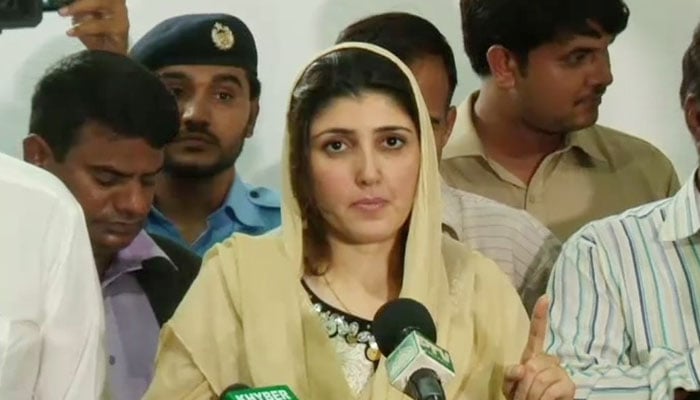
Former Pakistan Tehreek-e-Insaf (PTI) MNA Ayesha Gulalai addressed a session of the National Assembly on Monday and said she will not resign from her seat in the assembly, amid ruckus created from PTI benches. 
Gulalai, addressing the assembly after taking permission from the deputy speaker, said that she was elected on merit and would continue her duties as a lawmaker. 
She added that she gave voice to weak women and added that she never compromised over integrity.
“Imran is not a deity that he cannot be criticised, character is important,” said Gulalai over noise created by PTI lawmakers. 
She further said that allegations were hurled at her family and she received death and acid attack threats.
Gulalai said that she wanted to tell PTI's members that they too can face the same treatment in the future. 
"The trend of using abusive language should change," said the former PTI lawmaker. 
The former PTI MNA said that her sister, Maria Toorpakai, is apolitical but PTI supporters did not spare her.
The deputy speaker requested the lawmakers to maintain discipline during her address, while asking PTI leader Shireen Mazari to remain seated.

"Proud of myself"

Gulalai, speaking to the media outside the assembly, said she always spoke in favour of weak and vulnerable women.
“I am proud of myself, I fulfilled my constitutional duty,” she said.
She added that her measures strengthened the women of Pakistan.
“One PTI minister along with an armed squad attacked my sister’s hospital and broke the windows,” she alleged.
Gulalai's allegations
Gulalai, earlier had claimed that Imran Khan had sent inappropriate messages to her and hinted at tying the knot in the texts.
She claimed to have informed her father that Khan had asked her to meet him alone and took her father and brother along with her to meet the PTI chief which irked him.
Gulalai also said her father asked Khan about his intentions but he dodged the question.
"I am ready to sit in front of Imran and can confront him on the obnoxious messages that he sent. He put me through mental torture and pain," said Gulalai.
As per Gulalai, Khan first sent inappropriate messages to her in 2013.