Friday, May 12, 2017

Observing May Day

Ensuring workers' rights a far cry


May 1 remains a day of particular significance since it was the first time in history when 200,000 workers organised a nationwide strike in the United States in 1886 demanding an eight hour work day. We have to thank them for this and many of the other rights that we now take for granted – the right to minimum wage, safe working environment, leisure time, and the right to organise as a collective to demand to be treated with dignity. While most of these have been achieved in the more advanced economies of the world, our workers' hopes to those very rights remain unrealised.
Unfortunately, workers in the biggest segment of our economy, the readymade garments are still struggling for the right to unionise so that they may press home their right to work in a safe environment free of harassment and unlawful termination, and the right to due wage and festival bonuses. We look at the millions of our expatriate workers who brave seemingly insurmountable odds to reach foreign labour markets, only to find that they have been cheated out of a fair wage and face terrible human rights violations. Closer to home, the Domestic Workers Protection Welfare Policy 2015 was supposed to end domestic violence against household help but that has not happened.  This is more or less representative of other sectors, both formal and informal.
Until we learn to respect workers as human beings who toil in our factories and our homes, there can be no meaningful change. We are a nation of laws and we have ratified conventions internationally, yet we remain averse to giving workers the rights that are theirs by law. The observation of May Day carries little meaning if we cannot make workers' rights a priority in the national context.

http://www.thedailystar.net/editorial/observing-may-day-1398904

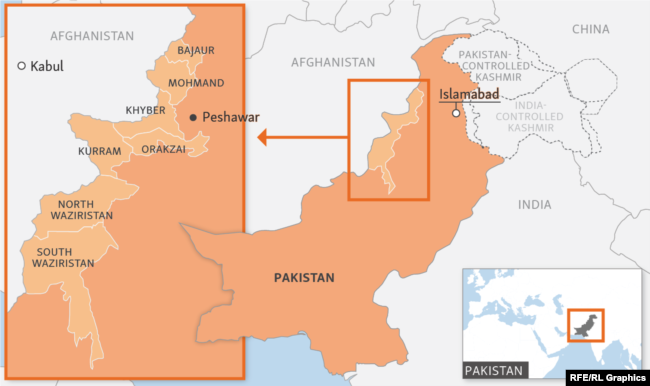
FATA - Reform Of Colonial-Era Laws Aims To Bring Pakistan's 'Black Hole' Into The Light


By Frud Bezhan
It's a place where a toddler can be thrown in jail for crimes committed by a tribe member; where people can spend years behind bars without ever being charged; and where the authorities can oust entire communities from their homes without explanation.
Justice in Pakistan's Federally Administered Tribal Areas (FATA) is a throwback to another era -- a colonial one. For more than a century, human and legal rights have taken a back seat under a set of laws introduced by the British Raj in 1901 in an effort to bring resistant Pashtun tribes on a contested frontier to heel.
But now plans are in motion to bring residents of the restive region along Pakistan's western border with Afghanistan under the umbrella of the central government by ending the old legal system, offering voting rights and greater government representation, and raising living standards. The inclusive approach, in theory, will end FATA's isolation and help lure locals away from joining the various militant groups that thrive there.
Legal 'Black Hole'
A number of tribes voluntarily agreed to the laws, known as the Frontier Crimes Regulations (FCR) when they were introduced. But the system did not die with the end of British colonial rule -- it was incorporated into Pakistan's legal system upon its founding in 1947, and remains more or less intact today.
Residents of the seven tribal areas that make up FATA have suffered immensely under the system, and have seen few of the benefits of being part of a state. They were granted only minimal political representation; were not allowed to vote in national elections; infrastructure modernization such as electrification largely passed them by; unemployment rates jumped to as high as 80 percent; and millions have been displaced by fighting and natural disasters.
The FCR was originally intended to quell fierce Pashtun opposition to the British Indian empire in the late 19th century. The system gave unchecked power to tribal leaders, who were given partial autonomy in exchange for quelling rebellion and protecting British interests. The FCR suppressed the locals while keeping the area extremely isolated.
The British created FATA and the neighboring Northwest Frontier Province (known today as Khyber Pakhtunkhwa Province) as a buffer zone following the creation of a 2,400-kilometer border with Afghanistan known as the Durand Line in 1893. The border, which Kabul does not recognize to this day, divided the Pashtun tribes who lived in the region.
The draconian laws allowed the British Raj -- and later presidentially appointed bureaucrats known as "political agents" -- to punish an entire tribe for the crime of an individual, jail residents for up to three years without cause, and forcibly relocate people and have their property searched and seized.
In one notorious case, a 2-year-old was jailed in 2004 along with her mother and two siblings for a crime committed by the girl's father.
In another, the entire Mehsud tribe was subjected to collective punishment in 2009 after the government moved against the Pakistani Taliban, which was led by 35-year-old tribesman Baitullah Mehsud. The political agent in FATA's South Waziristan tribal agency ordered the detention of tribe members and the seizure of their property.
The lack of formal law and writ of the state in FATA has led many activists to label the area a "black hole." For residents of FATA, the proposed reforms are essential to establishing law and order, and ridding their homeland of the moniker.
Nation-Destroying
Sayid Kabir has been incarcerated numerous times in FATA without charge or explanation.
"I was put in jail seven times under the FCR," says the 37-year-old, who now lives in Peshawar, the capital of Khyber Pakhtunkhwa Province, under which FATA would be subsumed under the reforms. "I did not commit any crime. I only protested for more provisions of water and electricity in my community."
It's a common story in FATA. Former resident Qayum Afridi says he was jailed for years in dismal conditions. The FCR, he says, "destroyed us" and must be abolished. If and when the reforms go into effect, he may get his wish.
Supporters of the proposed changes have staged several protests calling for the government to adopt the reforms immediately.
The reforms, recommended by the government-appointed FATA Reforms Committee, were approved by Prime Minister Nawaz Sharif and his cabinet on March 2. Pakistan's president also endorsed the reforms.
For the reforms to take effect, the plan approved by the government on March 2 must now be codified as a draft constitutional amendment that requires approval by two-thirds of the lawmakers in both chambers of Pakistan's bicameral legislature. There are 104 members of the upper chamber of Pakistan's parliament, the Senate, and 342 lawmakers in the lower chamber, the National Assembly. In 2016, both chambers of Pakistan's legislature approved a draft version of the plan.
Under the plans, FATA would be merged into Khyber Pakhtunkhwa Province within five years. The jurisdiction of Pakistan's national courts would be extended to FATA, and tribal law enforcement would be incorporated into the national security forces. The merger with Khyber Pakhtunkhwa would also give FATA access to Pakistan's main parliamentary body, the National Assembly, something it was denied under the FCR.
Afrasiab Khattak, a senator and the president of the secular Awami National Party (ANP) in Khyber Pakhtunkhwa Province, says the reforms would bring about significant change.
"If properly implemented the reform package for mainstreaming FATA can not only empower the local population by providing them with the fundamental rights enshrined in the constitution but can also bring the area under full state control and deprive the terrorists from enjoying the safe heavens in the area," he said.
Only Closer To Fine
Others say the planned changes, collectively known as the Riwaj Act, do not go far enough.
Mustafa Qadri, a Pakistani human rights activist, says the proposed reforms are "far from perfect," but can be an "important step toward a new, positive phase in FATA's history."
"There are other concerns with the proposed legal setup in FATA: enshrining so-called 'tribal laws' into legislation is a recipe for further abuse of rights," Qadri notes.
He refers to the "jirga" legal system in which unelected tribal councils dominated by elders mete out justice. Qadri says this system is "dominated by political interests" and fails to meet "even elementary aspects of international fair-trial standards."
Under the reforms, the jirga system would work in tandem with Pakistani courts, which would have jurisdiction in the area, thereby creating an opening for disputes.
Qadri also says that women are excluded from defending themselves under the patriarchal system in which tradition-bound village elders decide their fates. This, he says, has made them particularly vulnerable to rulings that allow sexual and other forms of abuse to be perpetrated with impunity.
He also laments that under the changes the country's powerful military -- which has been accused of carrying out extrajudicial killings, arbitrary arrests, and torture during recent campaigns in the region -- is still above the law and will retain sweeping powers. FATA is a heavily militarized area where around 100,000 Pakistani troops are stationed.
Mohammad Taqi, a U.S.-based Pakistan political analyst, says there are major constitutional, political, and administrative challenges that must be addressed before the changes go into effect, but that the plan is doable.
"All tribal agencies and frontier regions are contiguous to Khyber Pakhtunkhwa," he says. "Expanding the administrative machinery will be a major task but not an insurmountable one."
Divided Over Reforms
FATA residents appear to be divided over the proposed reforms, although a majority want to eradicate the FCR and merge with Khyber Pakhtunkhwa.
The FATA Research Center, an Islamabad-based nonprofit organization, conducted a poll in February that found that 68 percent of respondents approved of abolishing the FCR; 74 percent of respondents (54 percent fully; 20 percent partially) endorsed merging FATA with Khyber Pakhtunkhwa.
However, 26 percent of residents wanted FATA restructured into separate province. This is in keeping with the positions of some religious and nationalist political groups that have voiced opposition to the reforms, saying the changes could undermine local tribal traditions and Islamic law that is dominant in FATA.
In March, five tribal leaders challenged the proposed reforms in the Supreme Court, saying they were "illegal and unconstitutional." The tribal leaders noted that only the president, and not the prime minister, can decide a merger of the tribal areas even though the president has already backed the reforms. They said a jirga should decide on the merger.
One of the most prominent critics of the proposed reforms is Maulana Fazlur Rehman, a hard-line Islamist who leads the largest faction of the Jamiat-e Ulema Islam (Society of Muslim Clerics, JUI). Mainly led by traditional Sunni clerics, the JUI wants to turn Pakistan into a Shari'a state. Rehman has accused Islamabad of "bulldozing their wishes" upon FATA's residents.
Another critic is Mahmood Achakzai, the head of the Pakhtunkhwa Milli Awami Party, who has also alleged that Islamabad is enforcing changes in FATA without the consent of residents.
Both men have been accused of opposing the reforms for personal and political gain.

US intelligence: Afghanistan will 'almost certainly' deteriorate

Even if NATO deploys more troops, the political and security situation in Afghanistan will likely get worse, US spy chiefs said. Australia said it was "open" to sending more soldiers after Berlin signaled reservations.
US top intelligence officers offered a grim assessment of Afghanistan's future, saying that the Taliban were set to "continue to make gains."
"Afghan security forces' performance will probably worsen due to a combination of Taliban operations, combat casualties, desertions, poor logistics support and weak leadership," the director of National Intelligence, Dan Coats, told the US Senate Intelligence Committee.
The US and its NATO allies ended their combat mission against the Taliban in 2014, leaving the field to Kabul troops. Ever since, the US-backed government has been losing ground to the insurgents. Kabul now controls or influences only 57 percent of the country's territory, according to the US estimates.
"Unless we change something... the situation will continue to deteriorate and we'll lose all the gains that we've invested in over the last several years," said General Vincent Stewart of the Defense Intelligence Agency on Thursday.
Kabul still dependent on West
NATO still has about 13,450 troops in Afghanistan, including 6,900 US personnel that provide training and advice to local anti-Taliban forces. Additionally, Washington deployed 1,500 troops to fight the so-called "Islamic State" group and the remaining al-Qaida militants in the country.
US General John Nicholson, the commander of foreign troops in Afghanistan, asked Washington in February for several thousand more soldiers to push back against the Taliban insurgency. NATO has since asked its members to consider sending in more troops.
However, Afghanistan will "almost certainly deteriorate through 2018, even with a modest increase in the military assistance by the US and its partners," US spy chief Dan Coats said. Kabul would continue to struggle with "its dependence on external support" until it either defeated the Taliban or reached a peace deal with them, he added.
Australia mulls over additional deployment
On Friday, Australian Prime Minister Malcom Turnbull said his country was mulling over additional deployment in Afghanistan.
"We are certainly open to increasing our work there, but we've obviously got to look at the commitments of the Australian Defense Force in other parts of the region, and indeed in other parts of the world," Turnbull told reporters in Sydney.
"It is very important that we continue to work together - we and our other allies in the effort in Afghanistan," he said.
Canberra currently has around 300 soldiers in the central Asian country.
Germany not 'first in line'
NATO Secretary-General Jens Stoltenberg also discussed the issue with German Chancellor Angela Merkel in Berlin on Thursday, ahead of a large NATO summit later in May. Stoltenberg said that increasing NATO's presence would not necessarily mean putting soldiers on the front lines.
Germany's army maintains a contingent of around 1,000 soldiers in Afghanistan. Merkel said there were no concrete plans to send in more German soldiers and added that the Bundeswehr is already playing a key role in safeguarding security.
"I don't believe that we are the first in line to increase our capabilities," she said.

Pakistan - Christian lawyer raising voice against forced conversions receives death threats


Pakistani Christian lawyer Advocate Jacqueline Sultan received death threats. She has been advocating for rights of minorities and raising voice against forced conversions of girls hailing from minorities’ communities. Details emerged that the Christian lawyer received a letter, in which she was warned not to pursue struggle for the rights of minorities or else she would be killed.
Jacqueline Sultan,is a high court advocate as well as member of the Karachi Bar Council. After she received the threatening letter, she informed the incident to Naeem Qureshi President of Karachi Bar Association. Moreover, the incident was also reported to the South SSP, and the Rangers DG , South SSP and the Risala Police Station.
Advocate Jacqueline found the letter in her chamber. Consequently, Karachi Bar Association has urged the authorities to take serious action regarding the matter and provide the Christian lawyer with foolproof security.
Karachi Bar Association also urged the authorities for an inquiry into the matter so as to determine the perpetrators of the act. The lawyers’ body demanded for immediate action and arrest of the people who had threatened the Christian lawyer.
The incident was also condemned by various Human Rights activists, NGO’s and political activists. They expressed serious concerns for the security of Advocate Jacqueline Sultan, demanding efficacious efforts from the concerns authorities.

Pakistan: Millions receive government generated blasphemy warning texts


Millions of Pakistanis have been receiving text messages from the government warning them against sharing “blasphemous” content online.

“Uploading & sharing of blasphemous content on Internet is a punishable offense under the law. Such content should be reported on info@pta.gov.pk for legal action,” read the SMS sent by the Pakistan Telecommunication Authority (PTA) to all mobile phone subscribers.

A similar note was posted on the agency’s website in Urdu. A PTA spokesperson said the agency was acting on a court order.

Blasphemy is a sensitive issue in the country, with allegations leading to dozens of mob attacks or murders.

Last week a 10-year old boy was killed and five others were wounded when a mob attacked a police station in an attempt to lynch a Hindu man charged with blasphemy for allegedly posting an incendiary image on social media.


http://timesofahmad.blogspot.com/2017/05/pakistan-millions-receive-government.html

Pakistan’s diplomatic malfunction


By Kunwar Khuldune Shahid

In two separate statements yesterday, officials from Pakistan’s neighbouring states respectively called out Islamabad’s ‘lies’ over cross-border death toll, and threatened to strike inside the territory to take out jihadists’ safe havens. Neither of these statements came from India.
That Islamabad is currently engaged in a dispute over the number of Afghan soldiers killed by the Army, and that the Iranian Army chief is accusing Pakistan of shielding ‘Sunni militants’ and threatening action, is but a corollary of Islamabad’s diplomatic masochism – an anthology of abysmal failures that is fast approaching its golden jubilee.
This consistent diplomatic malfunction isn’t a multi-variable policymaking calculus that needs layered deconstruction. The self-mutilating equation is perfectly unraveled on the supremacism-bigotry axis, by the ensuing graph’s glaringly positive correlation. The calculation can be alphabetised into the three magic words: Sunni Muslim supremacy. This sense of supremacy has damaged Pakistan’s ties with India, Afghanistan and Iran after being formally conceived by Zulfikar Ali Bhutto in Lahore, during the second summit of the Organisation of Islamic Cooperation in 1974. That’s when the newly oil-rich Arab states and newly amputated – but nuclear ambitious – Pakistan found one another to be a match made in jannah. What started off as Muslim supremacism –academically known as Pan-Islamism – eventually added Sunnism to itself under Zia-ul-Haq. For, all supremacist movements are inherently self-aggrandising. The latest tide of the Pan-Islamist juggernaut has had pit-stops at Deobandi and Wahabbi Islam, alienating Shia Iran through – among other numerous proxy ventures – Pakistan’s participation in the recent Saudi-led ‘Islamic military coalition’.
This ideological diplomacy in 70s and 80s was primarily fabricated keeping ‘Hindu’ India in mind, with the pre-Partition Two-Nation Theory providing invaluable fodder to paint the archenemy in accordance with the religion of the majority of its inhabitants. Bigoted curricula were, in turn, churned out for generations to consume in madrassas and private schools alike.
The propagation of a ‘Muslim Pakistan’ and ‘Hindu India’ not only created a perpetual nemesis in the east, it also transformed the indigenous nationalist movement for self-recognition in Kashmir to Islamist separatism. While this naturally helped breed eastbound jihadists, it also paved the way – or so Islamabad ensured – for mujahideen to be pumped towards the west to provide strategic depth to the military in Kabul.
These mujahideen were to be strategic assets, helping Pakistan avoid being flanked by India from both sides, at least a decade before their production was upped following American demands to curtail the then Soviet Union’s southward expansion. It was the Benazir Bhutto government in the 90s, spearheaded by the 'architect' Naseerullah Babar, that facilitated Taliban government in Afghanistan to finally formalise Pakistan's ambitions in the western neighbourhood. Blinded by mistaking pan-Islamism as a ‘natural order’ between Muslim states, Pakistan failed to even remotely consider the possibility that the neighbouring sovereign state mightn’t formulate its relations with regional states based on religious affinity. This laid the foundation of Pakistan’s racist foreign policy vis-à-vis Afghanistan wherein the Pashtun stereotype of an Islam-obsessed war junkie was disseminated.
The stereotype, which continues to flourish to this day, asserts in no uncertain terms that the Pashtuns intrinsically uphold militant Islamist tendencies, and hence not only are they ready-to-use diplomatic pawns against ‘Hindu India’, they’re also ‘racially suited’ to uphold armed jihad wherever Islamabad might deem best.
This blend of racism and Pan-Islamist supremacism was palpable in Frontier Corps Inspector General Nadeem Ahmad’s claims of killing ‘50 Afghan soldiers’ on Sunday. He claimed that ‘Pakistan military will reply more sternly next time’ even though ‘we are not happy to kill our Muslim brothers’ following the cross-firing that was a ‘result of Delhi-Kabul nexus’ – the condescension here his own.
There are few diplomatic exclamations more racist than the frequent utterance of a New Delhi-Kabul nexus – a decades-old self-fulfilling prophesy – echoed by Islamabad after every unpleasant confrontation with Afghanistan. Because of course the Afghans can’t think for themselves, can they?
This is not at all to deny the reality of the India-Afghanistan bond, which continues to strengthen on multiple fronts. But to reduce that alliance to a hypnotic act on the part of New Delhi, and not Kabul’s independently thought out policy, perfectly epitomises Islamabad’s depiction of the Afghans as intellectually inferior, or worse as Pakistan’s geopolitical stepney.
If this religio-racial supremacism were an actual ideology, Pakistan would have long pulled the plug on its ties with China – incidentally the only bordering neighbour that it gets along with – considering the anti-Muslim bigotry perpetuated by Beijing in its Muslim majority Xinjiang. In fact the very raison d’etre for Beijing’s record overseas investment in the China Pakistan Economic Corridor (CPEC) is to further its neoliberal stranglehold over its largest province where a separatist Uighur Muslim movement has been brewing for decades.
And so while Afghan and Kashmiris are Muslims first before their ethnic identities, the Turkic struggling for an independent East Turkestan do not fall into Islamabad’s Pan-Islamic lens.
With the Pan-Islamist diplomacy clearly a façade to control sovereign states and regions, it shouldn’t come as a surprise that both Afghanistan and Iran are gravitating towards India, despite the Hindutva surge.
If Pakistan’s vociferous rallying cries of ‘Muslim brotherhood’ have continuously failed to woo the Muslim neighbours, and an anti-Muslim Hindutva regime hasn’t managed to ward them away from India, it shows that Islamabad’s diplomatic pagans remain the only ancient species to believe in religion as a factor in foreign policy.
Islamabad should absolutely take up all its claims against Kabul, including the cross-border firing incident in Chaman and the assertion that the Pakistani Taliban have found hideouts in Afghanistan. But as long as these claims are insultingly attributed to an imaginary Indian voodoo and painted as ‘backstabbing of a Muslim brother’, this racist and supremacist foreign policy would ensure that Islamabad remains a part of the problem in Kabul and Srinagar – not the solution.

Video Report - #Mashal’s father demands arrest of facilitators

Followers of murdered Pakistani activist say they will not be silenced


The followers of a Pakistani rights activist murdered for his daring campaigns against extremists say they are determined to continue risking open confrontation with some of the country’s most feared Islamist and sectarian groups.
Khurram Zaki was shot dead by unknown gunmen on a motorbike on 7 May while eating with fellow activists at a restaurant in Karachi.
Even some of his admirers thought he had been reckless for trying to lodge criminal charges against feared clerics, including Abdul Aziz, the leader of Islamabad’s infamous Red Mosque, an extremist base in the capital.
A Pakistani Taliban faction later said it killed Zaki because of his efforts to lodge a criminal case against Aziz, which Islamabad’s police had refused to do.
Jazib Qamar, a Karachi student who was also shot and seriously injured in the attack, said he had not been deterred by the death of his friend.
“We have no choice but to keep fighting,” Qamar said. “The army or the state can’t save us. Until the common man stands up against terrorism nothing will change.”
Khalid Rao, another Zaki ally who was injured during the shooting, has fallen into a deep depression. Friends say he spends days sitting at the Karachi market where Zaki was killed.
The activist’s murder triggered international condemnation but, at least among some of Zaki’s associates, little surprise. They had long feared it might happen.
In the past they had joked about registering a criminal case against the country’s most infamous sectarian clerics when Zaki was killed – which they did, lodging a police first investigation report against both Aziz and Aurangzeb Farooqi, the head of Ahle Sunnat Wal Jamaat (ASWJ), a banned Sunni supremacist group.
Zaki made a habit of not just challenging Islamist extremists online through the website he co-edited but also physically confronting extremist groups, even bringing his young children to one vigil outside an ASWJ gathering in Karachi.
“People used to say he was suicidal because he was openly condemning banned outfits,” said Syed Talib Abbas Raza, a university lecturer. “No one else was prepared to protest in these places.”
Raza and other friends of Zaki have continued to try to force the police to take action against preachers who flout the country’s anti-extremism laws, including those brought in after the December 2014 Taliban massacre of more than 130 schoolboys in Peshawar.
“It’s our job to put pressure on law enforcers to enforce law in their jurisdiction,” said Musaiyab Ghazi, who was among a small group of activists who last month forced police to prevent Farooqi from addressing ASWJ rallies.
“The rest of the human rights community in Pakistan don’t disagree with us but they don’t come out on the ground to confront these people,” Ghazi said. “You need to take risks in order to expose these people.”
But they all admit there are perhaps just a few dozen people in the country prepared to run the risks they are taking.
In Bangladesh, more than a dozen liberal bloggers and activists have been killed in recent years, but Pakistan has not experienced a similar number of attacks.
For one thing Pakistan, unlike Bangladesh, does not have any outspoken atheists prepared to campaign for their opinions in public.
But those who challenge the country’s drift toward radicalisation do appear to be at risk. In April 2015, Sabeen Mahmud, a Karachi-based liberal campaigner, was killed outside her arts venue.
Saad Aziz, one of the men arrested, reportedly told police he had targeted her for protesting against efforts to ban Valentine’s Day, a western tradition particularly hated by the religious right.
In 2014, Raza Rumi, a journalist who had been outspoken in his criticism of militant groups, was forced to flee the country after gunmen attacked his car in Lahore, sparing him but killing his driver.
In a video released in May the leader of al-Qaida’s South Asian franchise claimed the organisation was targeting its ideological enemies in both Bangladesh and Pakistan.
Zaki was a particularly controversial character for many on Pakistan’s religious right because he and several of his followers had been brought up within the Deobandi movement, the school of Sunni Islam which the Taliban and the majority of the country’s militant groups adhere to.
Not only did he reject the Deobandi teachings, he also converted to Shi’ism, the Islamic sect especially despised by many of the country’s most virulent Sunni groups.
Zaki and his supporters never missed a chance to lambast what they called “takfiri Deobandi militants”, a sharp criticism of the extremist practice of terming opponents “takfir” or unbeliever.
“Zaki’s tragic martyrdom has been an incalculable loss to all progressive and peace-loving Pakistanis,” said Ali Taj, the US-based editor of Let Us Build Pakistan, the spiky website Zaki helped run.
“He not only challenged terrorists, he also called on senior Deobandi clergy to either clearly and unconditionally disown and condemn them or be ready to face criticism.”

Pakistan - REHMAN MALIK DEMANDS JIT TO PROBE TTP TERRORIST EHSANULLAH EHSAN

Senator Rehman Malik, Chairman, standing committee on interior affairs of the Senate of Pakistan, has issued notice to the relevant officials to form a joint interrogation team (JIT) to interrogate Ehsanullah Ehsan, notorious Deobandi Taliban terrorist who confessed to have attacked Malala Yousafzai.

He asked the federal interior ministry and Khyber Pakhtunkhwa government to ensure his inclusion in the FIR of the Malala Yousafzai attack case since Ehsanullah Ehsan confessed to have attacked her.
Rehman Malik further said that Taliban terrorist must be interrogated so that facts could be ascertained as how many innocent people he and his team of terrorists has murdered. He said the report of interrogation should be referred to the standing committee on interior affairs.

http://www.shiitenews.org/index.php/pakistan/item/28577-rehman-malik-demands-jit-to-probe-ttp-terrorist-ehsanullah-ehsan

25 killed in Pakistan blast targeting Islamist lawmaker

By Zulfiqar Ali
A roadside bomb struck a convoy carrying the deputy leader of Pakistan’s Senate on Friday, killing 25 people and wounding more than 30 others, hospital sources said.
Maulana Abdul Ghafoor Haideri, leader of an Islamist political party, was wounded and his driver and private secretary were killed instantly in the attack in restive Baluchistan province . “Allah has saved my life,” Haideri told the Samaa television channel.
The Islamic State group claimed responsibility for the attack on its Aamaq news agency, according to the Associated Press.
The blast occurred in the Mastong district, about 30 miles southeast of the provincial capital, Quetta, in southwestern Pakistan. Haideri’s vehicle, designed to be bullet-resistant, was badly damaged along with several other vehicles in the convoy.
Sources said Haideri, general-secretary of the Jamiat Ulema-i-Islam, had attended a graduation ceremony at which he conferred degrees on graduates of a seminary affiliated with his party.
Saleem Shahid, a senior journalist in Quetta, said the blast occurred when Haideri’s motorcade was heading from the seminary to another location.
Dr. Sher Ahmad, head of Mastong Hospital, said 25 bodies had been brought to the hospital after the attack. More than 30 people were wounded, many seriously, he said.
Haideri was being treated at Combined Military Hospital, a Pakistani army facility in Quetta.
“It was all very sudden,” Haideri said. “Broken pieces of the windshield hit me. I am injured but safe.”
Haideri’s party, led by Maulana Fazlur Rehman, has significant support in Baluchistan. The party was a staunch ally of the Taliban-led Islamist government in Afghanistan that was toppled by the 2001 U.S.-led military invasion.
Rehman has survived at least three assassination attempts, including in Quetta in 2014. His party is part of Pakistan’s governing coalition, in an alliance with Prime Minister Nawaz Sharif.
Baluchistan, along the border with Afghanistan, has long been beset by militant violence, including by ethnic Baluch groups agitating for self-government. Earlier this month, Pakistan closed its Chaman border crossing in Baluchistan after clashes between security forces from the two countries.
The Pakistani army said that nine civilians were killed and more than 40 wounded when Afghan forces fired on government teams carrying out a population census in border villages. In response the Pakistani army said it killed dozens of Afghan soldiers, a claim that Kabul has denied.

Tuesday, May 9, 2017

Pashto Music - TOR ORBAL RA KHOR KA JOR DA BANGRO SHOR KA

Pashto Music - RAZA RAZA

US Bill Could Cut Lifeline Funding For Pakistan’s Military – OpEd


By 

Six years after the world’s public enemy No 1 Osama bin Laden was killed in a Navy Seals raid on the Pakistani town of Abbottabad, there is enough evidence in the eyes of world that Pakistan continues to pursue the same policy of hunting with the hounds and running with the hares. The world, especially Washington, believes that the military in Islamabad is still aiding and abetting the terrorists and that makes Pakistan “a state sponsor of terrorism.”
Quietly, but surely, a bill introduced by House Sub-committee chairman Ted Poe is moving towards voting which would require presidential waiver to release the Coalition Support Fund, the major lifeline for the military in Pakistan. The bill also asks the question why has Pakistan so far not been declared a state sponsoring terrorism.
Standing on the sidelines and waiting for the outcome of this legislation, the Pakistani establishment is wondering aloud that why no matter what they say and how forcefully they put is the world in general and the US and India in particularly refuse to believe Pakistan. All those black-suit and tie visits to DoD and State Department by the Pakistani generals with civilian diplomats in tow, come to nothing when they painfully present Pakistan as a country at the forefront of war against terrorism.
It leaves the generals baffled and bewildered. They have seen General Musharraf masterfully doing it for seven long years ,but the old trick now is becoming boring. The world watches. The Haqqani network continues to be a problem. The Taliban who are overwhelmingly Pashtuns keep the pot of insurgency boiling while their Pakistani friends look the other way. On top of that the most recent media reports, though unconfirmed, speak about Al Qaeda’s No 2 Ayman Al Zawahiri’s alleged presence on Pakistani soil and that too in its largest city of Karachi. Pakistan is not an information black-hole like Syria or Afghanistan where one is never sure till the last minute about the presence of a HVT.
The former Taliban leader Mullah Akhtar Mansoor, after all, was killed by a DoD drone strike in Balochistan far from the lawless lands of tribal areas. He was returning from Iran and was carrying Pakistani passport. The US is looking for a faster but certain way out of Afghanistan under the Trump administration.
Washington has clearly signaled that the only bilateral interest it has left for Pakistan is to seek Islamabad’s cooperation in pinpointing the HVTs.
The imminent departure of the US and ISAF forces, barring special operation units, would leave Pakistan desperate and isolated. The military is accustomed to its annual budget running into billions of dollars. Though China has made its intentions clear that it would come to the help of military by pumping in more than 55 billion dollars in the name of a road which already exists.
Moreover, China’s record of early engagement and earlier withdrawal also shows that China may not invest what it said it would. Its record in Sri Lanka and south America tells the story of abandoned projects and hollowed promises. Pakistan has already announced that its strategic port of Gwadar right at the mouth of oil lines would be given to China. And if Chinese military or navy decided to lay anchor in Gwadar that would attract all sorts of regional and global enemies to Pakistan and Pakistan would find itself devastated amidst a plethora of proxy wars.
Meanwhile inside Pakistan, military-sponsored media, which includes almost all the TV channels and newspapers, continues to play victim. The US bashing has touched its peak and now everything associated with the US and the West is bad. — much on the lines of ISIS propaganda. There is no space left for civil society and independent media. The military is continuously drumming the narrative that India and US are out to get Pakistan, while China and Saudi Arabia are the saviors. In a country where more than 65 percent of population is illiterate, the propaganda gets currency, but sooner or later it will expire its shelf date.

Blasphemy allegations – the new way of muzzling free speech in South Asia


Freedom of expression in South Asia's Muslim-majority countries has never been under a bigger threat than today. And it comes in the form of blasphemy allegations, forcing journalists and bloggers to self-censor.
Government critics and secular writers in Pakistan and Bangladesh have never been more vulnerable. They fear religious extremists and their governments alike when it comes to blasphemy allegations, which are enough to put them in prison or get vigilante mobs to lynch them.
After Bangladesh witnessed a spate of killings of secular activists, Pakistan is experiencing a government crackdown on liberal bloggers, journalists, academics and activists. At the same time, religious fanatics are targeting secular social media activists, who have to go into hiding or self-censor to save their lives.
The "abduction" of liberal bloggers in January – allegedly by Pakistan's security forces – and the recent lynching of a secular journalism student in the northwestern city of Mardan by a mob have shocked activists and the journalist community in Pakistan. There has been increased social media vigilantism, which is forcing critics of the government and military as well as human rights activists to censor their thoughts and words.
Pakistan is already one of the most dangerous countries for journalists, but the blasphemy issue has made it even more dangerous for them.
Pakistan Proteste nach Mord an Mashal Khan (Getty Images/AFP/B. Khan)
In April, a 23-year-old journalism student in Pakistan was killed by a vigilante mob over allegations of blasphemy
Blasphemy is a sensitive topic in the Islamic Republic of Pakistan, where around 97 percent of its 180 million inhabitants are Muslim. Rights advocates have long been demanding a reform of the controversial blasphemy laws, which were introduced by the Islamic military dictator General Zia-ul-Haq in the 1980s. Activists have said the laws have little to do with blasphemy and are often used to settle petty disputes and personal vendettas.
'Political witch hunt'
Rights group say the government is using the "blasphemy tool" to intimidate critics and dissidents.
In January, renowned Pakistani rights activist and university professor Salman Haider disappeared from the capital Islamabad. Three other secular activists - Waqas Goraya, Asim Saeed and Ahmed Raza - also went missing. After weeks, all these bloggers returned to their homes, with Goraya claiming that he was "abducted" by Pakistan's law enforcement agencies.
On January 16, the missing bloggers' issue took a new turn when a resident of the capital Islamabad filed a complaint with the police accusing the missing activists of committing blasphemy. The complaint was followed by a media campaign against bloggers portraying them as "anti-Islam."
Pakistan's conservative sections started sharing images and quotes from a number of secular Facebook pages that they claimed were administered by activists like Haider and Goraya. Although there was no proof that these people were running those pages, the South Asian country's anti-liberal TV commentators criticized them for engaging in "anti-national" and "anti-religious" activities.
But why has the government suddenly intensified its crackdown on academics, writers and intellectuals?
While these activists work in different fields, they all have one thing in common: their consistent and sharp criticism of Pakistan's security establishment and conservative groups. Rights groups say the authorities want to stifle dissenting voices as an increasing number of people are criticizing their policies and actions through social media and other cyber platforms. And that is also the reason why the Pakistani government has introduced stricter measures to control social media and the Internet.
"The crackdown on dissidents is actually a political witch hunt," Arshad Mahmood, a Pakistani writer and social media activist, told DW.  "Those who are critical of the state, the military and the China-Pakistan Economic Corridor project are being picked up by the government agencies. I wish the authorities had shown the same enthusiasm in targeting Islamist militants," Mahmood added.
Intimidation and self-censorship
The situation in Bangladesh is quite similar to Pakistan. A series of ghastly attacks on bloggers in the past few years has showcased the deteriorating state of freedom of expression in the Muslim-majority country. People are now feeling more threatened to express their views online.
Local media have reported scores of attacks in the past few years that have killed at least 35 people and injured over 130.
While radical groups claimed responsibility for those killings, the Bangladeshi government has so far denied any presence of international terror outfits on its soil.
As attacks on secular bloggers and activists have intensified, Bangladesh has slipped in international press freedom rankings.
Benjamin Ismail, head of Paris-based Reporters without Borders' Asia-Pacific desk, told DW the situation of press freedom in the country is extremely concerning. "The many attacks of the last few years have provoked a sharp increase of self-censorship among journalists and bloggers. If the government continues to refuse to react firmly and significantly, what were already sensitive subjects to cover will become irreversible taboos," he underlined.
Faheem Hossain, a researcher of social media and assistant professor at the State University of New York in Korea, believes Bangladeshis, in general, are feeling less secure to express themselves either online or, to some extent, offline due to the recent gruesome killings. "This sense of insecurity is transcending from individual level towards online and offline media as well," he told DW.
Pakistan P.E.N. Inhaftierter pakistanischer Journalist (picture alliance/dpa)
Pakistan is one of the most dangerous countries for journalists
A battle between secularism and extremism
Activist Bonya Ahmed lambasted Bangladesh's Information and Telecommunication (ICT) Act, arguing that it was being used to muzzle free speech in the country.
"The newly amended ICT act has made the criticism of religion on the Internet punishable with up to 14 years of imprisonment," she told DW. "The ICT act is being widely used to persecute and harass critical writers, bloggers and journalists. Police have arrested numerous bloggers, writers, journalists and publishers under this law," she added.
This view is shared by analyst Hossain. He believes liberals in the country are facing threats from both the government as well as the extremists. "As a result, people in Bangladesh are now feeling threatened to express themselves, particularly online."
Ahmed said the real issue is not only about fanatics reacting violently to criticism of Islam; it is also a battle between secularism and extremism.
"Historically, fundamentalists have always felt threatened by scientific facts and secularist ideas," she added. "It is easily understandable why they perceive us as their prime enemy."
The killing spree has led a number of bloggers to flee the country, atheist blogger Asif Mohiuddin relates. "At least 28 bloggers have fled Bangladesh over the past years, and another 40 are seeking ways to do so due to the constant fear of being attacked," he told DW.
Mohiuddin has been living in Germany since 2013 after being attacked by religious fundamentalists in Dhaka and jailed by the government for criticizing Islam. His blog was banned, which ultimately led him to leave the country.
"A number of international organizations are now helping Bangladeshi bloggers who are in desperate need of help," said Mohiuddin.
Optimism
Despite threats to their lives, journalists and activists in both Pakistan and Bangladesh refuse to give up the fight. They say they would continue to strive to report and express their views independently.
"Civil society needs more unity now to protect freedom of speech. In the age of social media, independent thinkers have a platform to voice their concerns against certain actions of the government, and it is their right," Nahyan Mirza, an Islamabad-based development professional, told DW.
"Pakistani society, unfortunately, is being controlled to a large extent by the right wing," Mirza added. "These groups will never tolerate social, cultural and intellectual change that poses a challenge to their power. But I am hopeful the change will come soon."

Pakistan - Curbing Illegal Organ Trade


The Federal Investigation Agency (FIA) has busted an illegal organ transplant ring on Saturday in Lahore, lodging its first-ever case under the Human Organ Transplant Act (HOTA) against two doctors, two foreigners and two organ donors. The raids and arrests continued through the week as two more foreigners were arrested from a Gulberg hotel, and another illegal “clinic” was targeted in the posh EME society on the outskirts of Lahore.
The FIA must be commended for its action in making prompt arrests, several of whom were made when the operations were under process so the case against the culprits could be stronger. What is troubling in the whole episode is the doctors arrested in connection to the criminal ring were respected and affluent individuals working in prominent public hospitals and holding high positions in doctor’s associations. The illegal organ trade is only the province of doctors on the fringes of the medical profession, but involves individuals at the heart of it. The FIA must work towards uncovering the other abettors of this illegal ring – those who set up the deals with foreign receivers, those who entrapped the poor donors, and those who allowed their premises to be used for such purposes.
This includes conviction of the foreigners who came to Pakistan seeking illegal organs; only when these individuals are given hefty sentences the influx of these ‘medical tourists’ will decline, cutting of the impetus for this trade.
While new figures are unclear, before Pakistan tightened laws and enforcement in 2010, the country was one of the top destinations for individuals seeking illegal organ transplants. While that number has gone down in recent years, there still exists several gangs carrying out such activities – as the busting of another ring in Rawalpindi earlier this year demonstrated.