Tuesday, December 27, 2016
عوام تیار ہو جائیں، جاتی امراء کی بادشاہت ختم کرنے کیلئے نکل رہا ہوں: بلاول بھٹو


خوب پردہ ہے کہ چلمن سے لگے بیٹھے ہیں

#SALAMBENAZIR - Remembering Benazir Bhutto

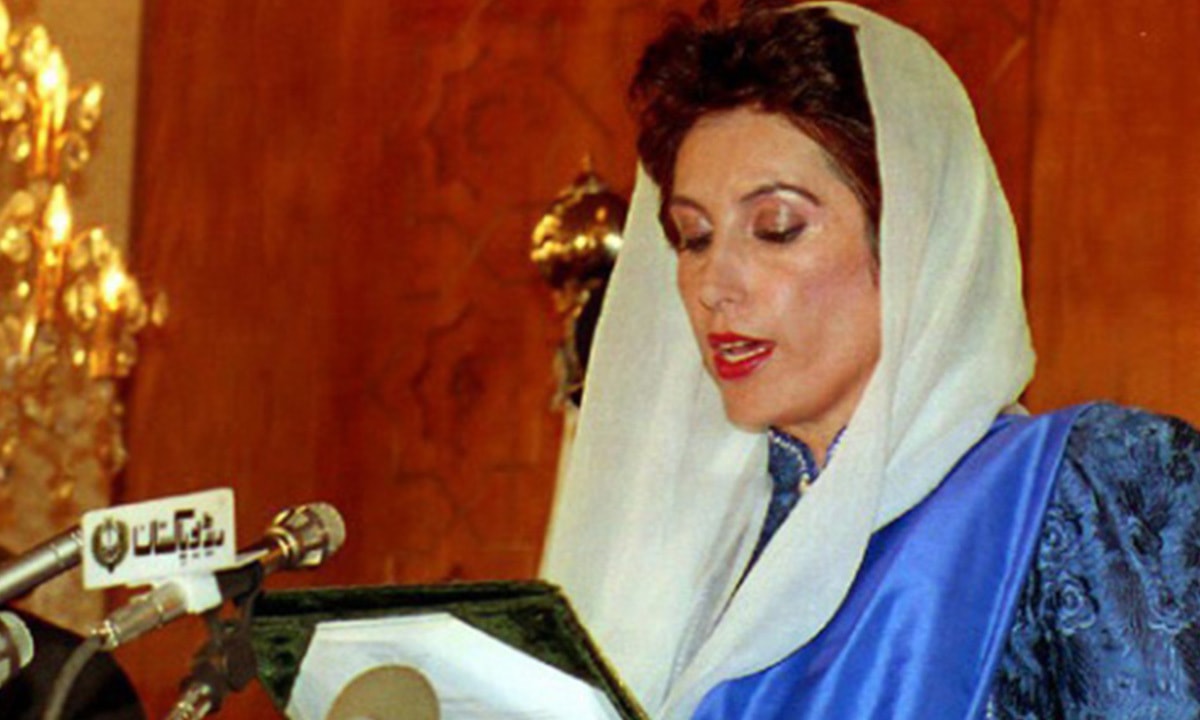
She would have been 63 this year if her glorious life was not put to an abrupt end. We lost her nine years ago.
As my country floats in the historical arena like a ship lost in high waters, without a compass or a captain, we think of how Benazir Bhutto would have led us today as the leader she was — the stateswoman, mother, wife, sister and human being.
I bumped into her for the first time at a diplomatic reception in Karachi in 1991 when I was a young diplomatic correspondent. She was the darling of the media. All eyes and ears were drawn towards her when she attended events.
One day in 1992, as I entered the reporters’ room at the daily The News International, a letter from her awaited me. It was about a suicide wave in Sindh, a cover story for the WE magazine of The News, edited by Najma Sadique. The story was about a dozen educated young men from Sindh who had committed suicide due to joblessness. BB had waved the magazine on the National Assembly floor, urging the government to look into the problem. The letter thanked me for bringing up the issue to the fore and telling me that Nisar Khuhro would be in touch with me about the story. This was my first formal introduction to the first female prime minister of Pakistan.
She was the darling of the media. All eyes and ears were drawn towards her when she attended events.
The following year, she became prime minister again .
I met her after many years in Washington DC when Pervez Musharraf was in government in Pakistan and when she was in exile again. She visited the US every year, met people at the Hill, think tanks, journalists, visited media houses, and her party supporters. We met at Voice of America News (VOA) as I worked there.
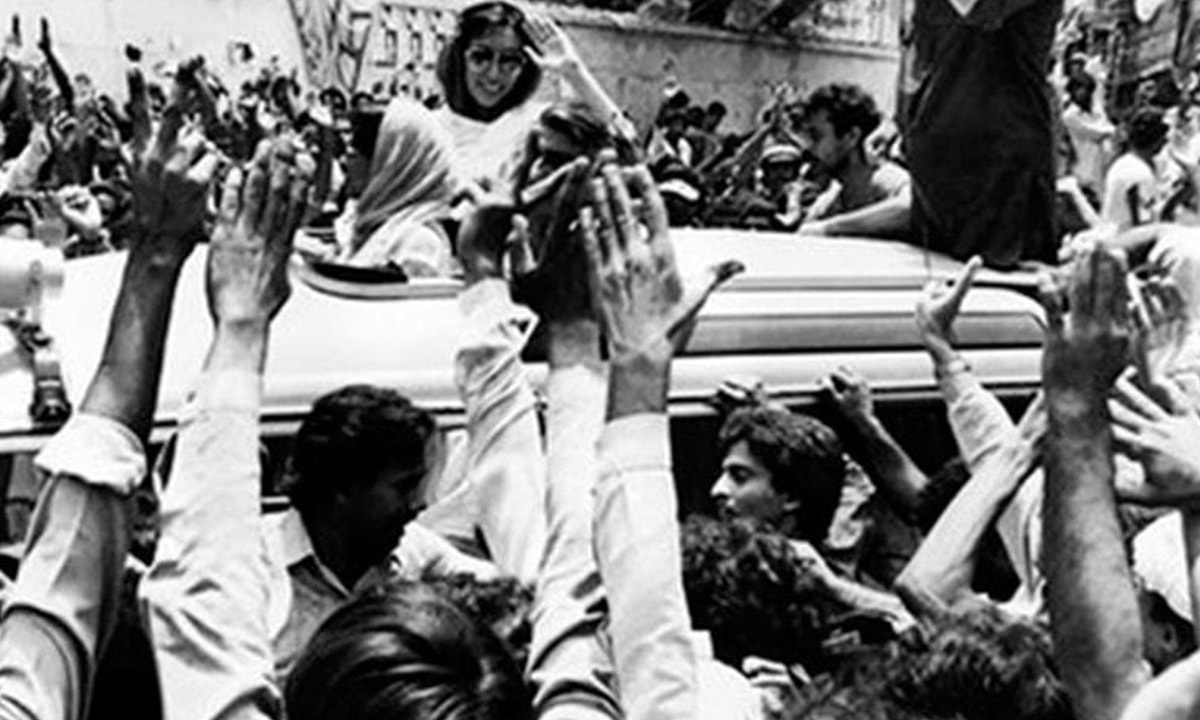
After 9/11, security was tightened across the United States. One day, as I entered the Cohen Building where VOA is housed, I saw her going through security checks at the gate. She was asked to put her things including her handbag in the tray. Finally she had to take her shoes off and put them in the tray as well. She walked barefooted through the gate. Watching the scene, I was hit by a storm of conflicting feelings. Till today, I can’t figure out what went through me. However, I did convey to VOA authorities not to treat her so in future.
She would keep me posted about her major engagements, as I would interview her more often, just like Nawaz Sharif who was living in Jeddah then. She informed me in early January of 2006 that she would be in DC by the end of the month. Farah Ispahani, who used to head VOA Urdu TV, and I suggested that BB should hold a press conference at VOA and invite the major US and international media outlets to cover it.

The date was fixed. Thursday, January 26, 2006. David Jackson, the then VOA director was in the loop and everybody was excited.
Then, out of the blue, Shaukat Aziz, then prime minister, visited the US and met President Bush on January 24. And all hell broke loose.
The State Department put tremendous pressure on VOA to cancel the event. The rationale was that it would send conflicting signals to the Pakistan government when two days after the prime minister’s White House visit, VOA was providing Benazir Bhutto with a forum to blast the Pakistan government on more than one issue, including harbouring terrorism and getting paid for it by Washington.
The Pakistani Embassy too was putting pressure via the State Department. Jackson stood his ground and didn’t cancel the media conference, much to Benazir Bhutto’s surprise as she later told me in an email. The compromise at VOA happened to be that she would not be received by the VOA director but instead by the head of the Urdu Service, Dr Brian Silver.
A few days prior to the event we organized, a story was doing rounds that her marriage was on the rocks and she and Asif Zardari were living separate lives.
Interpol was pressured by Musharraf’s government to issue Red Notices to her and husband Asif Zardari. Washington was rife with rumours that she might be arrested as she lands for the press conference. Journalists kept calling me asking if she would show up. She is more familiar with handcuffs than the bangles she wears, I told an anxious journo the day before the event.
On the afternoon of January 26, the Cohen Building opened its Independence Avenue gates after a long time, a practice reserved only for the heads of states and high-profile visitors. As BB’s car pulled up and the doors were opened, she and Zardari alighted from the car. Holding hands, they walked into the building.
We had placed just one chair on the podium for her but she insisted upon a second chair for Zardari. There was a scramble to pull up another chair for him at the last minute. Only then did she address the presser. And she blasted Musharraf’s regime about the Interpol notices.
She visited the US every year, met people at the Hill, think tanks, journalists, visited media houses, and her party supporters.
“Show me the court that wants me in Pakistan, I will catch the next flight and be there”, she roared from the podium, while taking questions from the mediapersons. The way she brought Zardari into the limelight, rejecting all rumours about their split, was novel and powerful.
Zardari and I hail from the same area of Sindh but we had not met each other until that day. I used to call him on his New York cell number or he would call me. We barely talked politics; mostly we talked about poetry and music, especially Sindhi poetry and music. It is said that he would be disrespectful towards BB but in my observation he was quite the opposite. When BB would be in New York, he would always say, “Boss is in town!” Who commanded whom too has been talked about, more on that later.
In the summer of 2006, I went to BB's New York apartment where Zardari resided. It was a hot afternoon. The lights were on and the interview progressed. In the middle of the interview as she finished answering one of my questions, she said, “ Can you please turn off the camera?” I thought she was annoyed by my questions but she said she would be right back.

She just moved to a side, pulled out her cell phone and called a doctor, giving the doctor the details about her daughter Aseefa, who needed some treatment. After a few minutes, she was back in interview mode. “ I had told the doctor that I will call him at 3:30 pm, so I had to,” she said. On my way back, on the Acela Express train going back to Washington, DC, I kept thinking how she smoothly switched from her role as a politician to a mother.
On August, 9, 2007, I had come back to my office after doing my show. At around 11:30 am my work phone rang. The caller ID showed a 212 area code telling me the call was from New York. It was her on the line.
“This is BB calling”, she said. When did you get here, I asked as I had no prior information about this visit. I am here, she said. How can I help you, I asked. “Come over tomorrow. Amaranth Restaurant in Manhattan, 5 pm. I will be waiting”, she almost summoned me. I said it was a working day for me, but she just repeated herself. I said, OK, I will be there.
Next day, I was back on the Acela Express to New York. As I entered the restaurant, I saw Zardari sitting right by the entrance. I met him and asked him where BB was. He pointed me to the back of the restaurant: she was busy talking to somebody while having ice cream. Many who knew her will confirm that she had a sweet tooth.
She smoothly switched from her role as a politician to a mother.
In a little while, Bilawal, Bakhtawar and Aseefa too came in, carrying shopping bags. That was the day when she told me about her plans to return to Pakistan on October 18.
“I am going back. Asif will look after my mom, kids and his business and stay in Dubai. Tell me if you want to go with me. I will ask FB [Farhatullah Babar] to book your seat on the plane. My party needs me for elections. We will win. I will be prime minister. You have to return and help us”, she said.
Zardari asked me to persuade her not to go as there were serious threats to her life. I said I agreed on the threats but the void was too big to be filled by anybody other than her. At that point, BB intervened and said Murtaza is right about it and added by saying, You had gone back to Lahore with much fanfare. What happened?
Zardari was silenced after this. She signed a copy of the second edition of her book Daughter of the East and that was it.
My last meeting with her was exactly three months before her assassination. On September 27, 2007, she sent a text asking me to meet her at the Ritz Carlton Hotel at 2 pm. When I got there, Senator Akbar Khawaja, Shuja Nawaz, Zardari and a few others were there, discussing the details of her return. Refusal by Musharraf to get international security did figure in the conversation and so did the conversation with Condoleezza Rice. She did mention the obstructions created by Musharraf who did not want her to travel to Pakistan on October 18. But BB was adamant. With everything announced, I can’t renege on my commitment, already announced, and it is vital for my party to be there, she stressed. The environment was a bit tense.
Little did I know that she had a rough conversation with Musharraf on the phone. All those details came out after the assassination.
During the discussion, she asked me a question. As I started to answer, a phone rang —Zardari’s small Motorolla flip phone. He picked up the call and started talking. I had never seen BB so angry. “Pinky” she was called but, when angry, she turned red.
"My party needs me for elections. We will win. I will be prime minister. You have to return and help us”, she said.
“Do you know that I asked Murtaza a question? It is important for me to listen to his answer. If you have to take care of your personal business, please go outside, finish your call and come back”, said BB. Zardari got up, went out and came back. That showed me who called the shots in their marriage.
She remained in contact with me by phone and email till the last weeks of her life. One day, Ahmed Rashid, a mutual friend and one of the top Afghanistan experts, said she was busy talking to several people including himself when I called her and she took the call. Rashid later cracked the joke with her that it might be a Sindhi connection from Washington. She was always very kind and accommodating.
Once, she was in town but didn’t meet me, so I shot her an email about it. Her confidante Senator Akbar Khawaja called me and gave me the time to see her at 6.30 am for breakfast. I was shocked but that is the time she had and she did come to have breakfast with me while apologizing at the same time.
That day too there was barely any traffic on I-395 and, in 20 minutes, I was in my office.
As I passed the red-eyed security guards, I went straight to the studio. In the studio I had small TV monitors with the audio on mute. We had Geo TV on one of the monitors, to keep us updated on what was happening in the country where our broadcasts were beaming to.
The first call was of course to Ayaz Gul whose numbers I had memorized. So what is new Ayaz, I asked. He gave me a rundown of the major stories and events taking place that day. He told me about Benazir Bhutto’s rally in Liaquat Bagh Rawalpindi .
Political heat was on as both former prime ministers Benazir Bhutto and Nawaz Sharif were back. Both were supposed to address rallies in Rawalpindi that day. Sharif was coming to town via GT Road to mobilise the city to support his party's candidates Javed Hashmi and Hanif Abbasi who were contesting against Sheikh Rasheed (leader of Awami Muslim League).
Over the phone, Zardari said, “She has been hit. Pray for her life”.
I started calling different politicians and analysts to record short interviews that I would later use during my show. Then I called Wajid Shamsul Hasan, BB's close confidante in London. As I started recording him, I also kept an eye on the TV monitors to see what was going on.
As I was recording the interview, I saw a ticker on Geo reporting a blast outside Liaquat Bagh after the rally but it said Benazir was safe. Later I saw a news ticker quoting her chief of security Rehman Malik saying she was alright. As I was talking to Wajid Bhai, as we used to call him, I saw a missed call on my cell phone that I would always take inside the studio but would keep it on vibrating mode. It was Zardari’s UAE cell number ending on*** 835.
I apologized to Wajid Shamsul Hasan and told him that I missed a call from Asif Zardari. Let me call him back and then I will call you, I said.
Over the phone, Zardari said, “She has been hit. Pray for her life”. I told him that Malik had said she was OK and so did the media. He used some profanity and told me in Sindhi if I would believe them or him. I kept quiet. After a little while, the news was out. She was no more.
I still remember that day prominent op-ed writer Ayaz Amir left me a voice message on my work phone. “My heart is torn apart. Please call me and take me online”, the message said. For days we cried. People in Washington would stop and ask if we were Pakistanis and then would say that they were sorry for our loss.
One wonders how BB would have dealt with the issues that Pakistan, the region and the world face today. I can say with a fair bit of confidence that she would have provided much better alternatives than those provided by others, her political party's government included.
#SALAMBENAZIR - Benazir: A force that only death could stop


Today marks the 9th anniversary of the assassination of Benazir Bhutto by forces and political machinators who were fearful of the storm that she was gathering against them. Her death, though one that shocked and horrified the world at large, in retrospect seems more logical given that her opponents and detractors could not go toe to toe with her on the political battlefield; her achievements and capabilities put her in a league of her own and they knew it.
Benazir Bhutto was born on 21 June 1953, the eldest daughter of Pakistan People’s Party Founder Zulfiqar Ali Bhutto. Educated at some of the best schools in her hometown in Karachi, she was still very much brought up as a woman of the people by her family, who could see her brilliance and potential as a vital member of the family’s political dynasty. This can be seen by the fact that despite being primarily an English speaker as well as being fluent in Urdu, she was also fluent in Sindhi, using it in her interactions with her servants as well as other native Sindhi speakers.
Her efforts in school led her to gaining admission into arguably the two most prestigious universities in the world namely, Harvard University and the University of Oxford. At Harvard, where she studied comparative government, gaining a foothold in the science of politics by studying other democracies and administrative systems. Her time at Harvard as well as her subsequent achievements led her classmates to create the Benazir Bhutto Leadership Programme at her alma mater, which was aimed at training future leaders in Muslim countries who shared Benazir’s principles.
Her subsequent time at Oxford had a similarly superlative record. Not only did she shine in her studies on a wide breath of subjects which included philosophy, economics, politics, international law and democracy. She was also elected as president of the Oxford Union, due to her brilliant oratory skills, becoming the first Asian women to be chosen as the leader of the prestigious society.
These efforts were simply a precursor, an indicator of her future career as one of the most eminent, verbose, charismatic and astute politicians that Pakistan has ever had. This was made evident when she became Prime Minister for the first time in 1988, the first women to be elected head of a Muslim majority nation; an unprecedented achievement that she later repeated. Though her time in power was relatively short, due in part to the intrigues and plots of her opponents of whom only some were part of the legislative establishment, she nonetheless created and achieved a remarkable record both in her time in office and outside it as well. It were these triumphs, these successes in the face of immense adversity, that convinced her enemies that no obstacle could stop her from the goal she had set for herself and her party. Left with no choice when faced with a character against whom they paled in comparison, they chose the only way they could, to halt the force of nature that was Benazir Bhutto.
#SALAMBENAZIR - The daughter of the East

Bashir Riaz
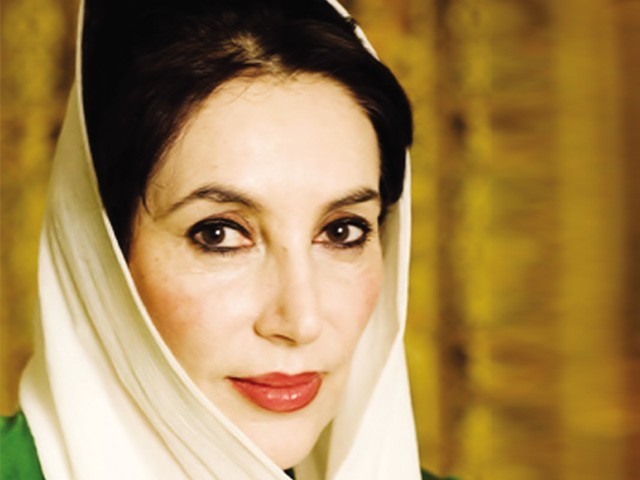
Mohtarma Benazir Bhutto was the glorious face of Pakistan and was a source for a bright future for our country. She was not only one of the youngest head of states in the world but she was the first woman to serve as the head of state in any Muslim country in the world. She was brutally martyred on 27th December, 2007 in Liaqat Bagh Rawalpindi. Although 9 years have gone by since this tragic event, yet the memories of BB Shaheed are quite vivid and still alive in the minds and hearts of people of Pakistan. Due to this reason, 27th December is remembered throughout the world and great homage is paid to her political and national services. She was a national and International leader of great repute and laid down lasting and effective impressions on the national politics of Pakistan and irrespective of political affiliations every one shed tears on her Shahdat.
If we look at the life of SMBB, we see that soon after Chairman Z. A Bhutto’s elected Government was overthrown through martial law, she started facing tough and difficult times. Her life became a tale of struggle and she became the youngest political prisoner of our country. The song of her bravery and courage became a melody and spread throughout the world.
An unarmed young girl faced all sorts of cruelties and tyrannies of Zia ul Haq’s draconian regime. She faced difficulties including arrests and forced exiles. She also had to go through the pain of losing her brothers and most importantly of losing her father. As a daughter she wasn’t allowed to even wish her father farewell. However, she faced all these difficulties with great courage and never compromised on the dignity and honour of Pakistan. She did not waver on her commitment towards democracy in her beloved homeland. Thanks to the wisdom and memories of the people seminars are arranged and being held throughout the world in the educational and political institutions to pay homage to SMBB.
Recently, Benazir Bhutto Leadership Programme was launched at Harvard University, of which she had been a student as well, keeping in view her vision, political struggle and contributions. The Programme is aimed to support students from Muslim countries around the world. This is a great honour for Shaheed BB and Pakistanis are proud of this.
A great deal has been written on her political struggle and further more would be recorded by historians. But in her long journey, besides those problems and difficulties which she faced, was her role as a wife and a mother. Mohtarma BB was a trustworthy and loving personality. During the period her husband was in prison, she organised massive movements and raised her voice on international forums. BB was a soft spoken and kind hearted lady.
She used to feel the pain of others, who were suffering. When the agencies leveled allegations of corruption against Asif Ali Zardari, she was advised to get a divorce from him, but she rejected these suggestions. A government envoy also advised her do the same and she replied to him, “Do you want to ruinmy life? Do you want that I should destroy my life and the future of my children”. She was deeply hurt by this.
As a matter of fact SMBB was fighting on every front. Her own family life was in danger and her political career was also at stake. She was being made to believe that all the allegations of corruption and the consequence thereof in the form of difficulties are due to Asif Zardari.
But she faced all these allegations with great courage and fortitude. She appeared twice in the courts in Switzerland and exposed the fabricated story of necklace and the jeweler appeared personally in the court and admitted and he had never met or seen her. SMBB used to say that all the cases were falsely framed against her. A drug case was framed against Asif Ali Zardari. The then, interior Minister Chaudhry Shujat Hussain confirmed this and said that it was totally false.
Being a mother, she looked after her children in the capacity of a father as well, as her husband was in prison for 11 years and she was praying throughout this period for her children and husband and this was the most difficult period of her life. She remained calm, cool and was patient and was hopeful and confident. This shows her strong and finest character of a humble, faithful wife and caring mother. This is the reason that her children have achieved social and political understanding.
BB Shaheed was not in favor of Bilawal taking part in politics without the completion of his education. Her first priority for Bilawal was to complete his education. After completing his studies from Oxford, Bilawal has started taking active part in the politics of Pakistan and now he is holding the responsibility of Chairman of the party. By his entering into politics a storm has started in Pakistan and he is now busy in re-organising the party throughout Pakistan.
It is true that people who were with BB, will not be with Bilawal. But he has a prerogative of being a son of Shaheed BB and now people have lot of expectations from him, as they had great trust in the leadership of SMBB. Similarly, he will enjoy the trust of the people as he carries the legacy and inheritance of his mother. This is the same trust which was transferred to BB after the martyrdom of SZAB. Some people may regard this as political inheritance. But in fact, it is a matter of political understanding and love of the people, which is the continuation of the same trust and confidence given to the people of Pakistan by SZAB.
Now, Bilawal has appeared on the horizon as a symbol of political hope and People’s rule. Surely he will be the future political successor of BB, as he has studied the ideology, political wisdom and views of SMBB. Bilawal has paid great tributes to SMBB in which he said, “I’m the son of Shaheed BB. I believe in the politics of truth and I do not go back on my word. ”
It would be worthwhile to mention here that no government could have been formed in 2002 elections without the participation of PPP. Unfortunately some members of the party joined Musharraf’s Government to enjoy power. Shaheed BB was shocked due to this. SMBB had reservations and doubts that if PPP won the elections of 2007, the same scenario of 2002,elections could be repeated. Thus, using her experience and political acumen and sagacity she decided to come back and take part in the elections. She didn’t care about dangers to her life and proved that she was the true and real successor of her father and ultimately sacrificed her life for the sake of people and Pakistan.
She lived for the people of Pakistan, with the people of Pakistan, and died with the people of Pakistan. Zindahaibibizindahai!
Pakistan - Benazir Bhutto; a fight against extremism
By Naheed Khan

The month of December brings sadness.
Emotions run high and flashbacks to the tragedy of December 27 along with the intrusive memories which traumatised the people of Pakistan as a whole, regardless of their political affiliation. The one leader who united us, who taught us the meaning of dignity and courage, who was a symbol of federation and a visionary to lead the nation in a respectful manner on the international horizon is missing today.
The people always look towards a leader who can solve their problems, give them relief, lift their spirits and reinvigorate the masses. During the eleven long years of martial law, PPP workers were lashed, tortured and confined in Shahi Qila and their struggle for democracy led to party-based elections in 1988. She was a moderate person, richly embedded in Pakistani culture and Islamic heritage. On November 16, the public participated in party-based elections and voted for her to become the first woman Prime Minister of an Islamic country.
Immediately after taking oath in 1988, she released all political prisoners held by the dictatorial regime of Zia-ul-Haq, commuted all death sentences, lifted the ban on labour and student unions and gave greater freedom to the press. She was clear in her thoughts to protect the women, minorities, children and under privileged from the rich and the mighty and to build a just society where every Pakistani child has access to education, basic health facilities and a better social structure. Her government was dismissed twice and she was dragged from court to court and city to city but she remained resilient and faced all odds with the utmost bravery and courage.
After withdrawal of the Soviet Union from Afghanistan in 1989-1990, Pakistan’s relationship with the US was fragile due to the US government’s suspicions about Pakistan’s nuclear-programme, but she didn’t compromise on Pakistan’s national security interests. Today, Pakistan holds a central strategic position in the global world, particularly in South Asia. On the other hand, terrorism, extremism, growing corruption and protecting our nuclear assets are major concerns of an average Pakistani. In these circumstances, Pakistan’s stability is important.
There was a need for Pakistan to have a visionary and an outstanding leader like Mohtarma Benazir Bhutto whose first priority was Pakistan.
Apart from terrorism and poor governance, political instability and an economic mess, massive corruption by the top political leaders has led to despondency amongst the public. Our society is clearly divided between the moderate and radical elements and between different ethnic and sectarian beliefs. Growing militancy on both sides of the border of Pakistan and Afghanistan has created a trust deficit and developed suspicions and doubts at both ends.
A glaring example is Afghan President Ashraf Ghani’s recent speech about Pakistan during the Heart of Asia conference on Indian soil. The relationship with Afghanistan was cordial during Mohtarma Benazir Bhutto’s government as her policy on Afghanistan was very clear. She always wanted that Afghanistan should be stable, free of foreign interference and the Afghan people should have a political system of their own choice.
Today, the absence of Shaheed Mohtarma Benazir Bhutto is felt even more when Indian atrocities are at the maximum against Kashmiri freedom fighters. There was a need for the PM to protect and highlight the Kashmir cause at the international for a, but since there is no Foreign Minister nor any clear foreign policy, Mian sahib’s government is taking advantage of building personal relationship with the Indian leadership.
Although Ms Bhutto herself paid a very heavy price for democracy, but all these difficulties strengthened her resolve and commitment to build up a just society to look after the economic interests of the poor people of Pakistan and to uplift their living standards. She was a ray of hope for the people for a better future. She was a vocal advocate of the democratic system in Pakistan to protect her countrymen from human rights abuses and to give them political freedom so that they can freely choose their government.
She is no more in the world, but millions of people in Pakistan and around the world consider her an iconic figure as far as her struggle for democracy is concerned. She had deep faith and trust in the people’s power. She knew that dictatorial forces may kill her but cannot eliminate her from the political landscape of Pakistan nor can they erase her name from the pages of history.
She would remain a living factor in democratic politics for all times to come. Bibi you will always be remembered.
Monday, December 26, 2016
Dem lawmaker: Israel's accusations start of 'war on the American government'
BY REBECCA KHEEL
A retiring Democratic lawmaker warned Monday that Israel’s accusations that the United States was behind a United Nations Security Council resolution critical of Israel are “the beginning of a war on the American government" that President-elect Donald Trump will carry out.
“What we’re seeing is the beginning of a war on the American government,” Rep. Jim McDermott (D-Wash.) said Monday on MSNBC.
“We’re seeing the air war right now, and we’re seeing all these tweets and all this kind of innuendo and all these half-stories, and all this stuff to create tremendous tension so that when the president comes in on the 20th, he can begin the ground war, which will be when his appointees begin to carry out his actions in the departments across the government.”
The Security Council voted 14-0 on a resolution Friday that condemns Israelis settlements in Palestinian territory. The United States abstained from the vote, allowing the resolution to pass and breaking longstanding U.S. policy.
Israeli Prime Minister Benjamin Netanyahu and Israeli ambassador to the U.S. Ron Dermer have both accused the Obama administration of being secretly behind the resolution.
Dermer said Monday that Israel has evidence of that it will present to Trump, though he did not produce it when pressed in an interview with CNN. He said it would be up to Trump administration to decide whether to make it public.
Obama and Netanyahu have had a rocky relationship, and Obama’s decision to abstain from the vote has been seen as a final conflict after years of clashes.
In the MSNBC interview, McDermott said Israel is attacking Obama as a pretext for pushing Trump to adopt more friendly policies than Obama had.
“They never could get 100 percent out of Barack Obama, so they decided to attack him and use him as the reason for why Trump should come in and give them everything they want,” he said.
He also said Americans are being “subjected to a campaign of anxiety production” as Israel works to get it wants.
"And it really is very, very disturbing to watch,” he added.
He also blasted Dermer for not making the evidence he claims to have public.
“That is unacceptable in a democracy where the people are entitled to know what’s going on,” he said. “You can’t have people coming here and saying we’re going to hide the ball from you and we’re going do something or we’re going to accuse you of something and not tell you.”
http://thehill.com/policy/defense/311845-dem-lawmaker-israels-accusations-start-of-war-on-the-american-government
Goodbye Modern and Secular Turkey
Nozhan Etezadosaltaneh

Welcome to Istanbul, said a veiled, smiling hostesses in the Ataturk Airport. The first advertisement I saw in the airport lounge displayed a brand of cloth over a veiled woman. Three men from Saudi Arabia with traditional Arabic clothes and long beards like Muslim religious preachers were entering the gate.
These were the first images I had on a trip to Turkey about two months before the July 15th attempted coup. My impressions were very different from my mother’s description of Turkey in the 1980s during the period of a military, secular rule when there were no signs of religious symbols.
After the Justice and Development Party (AKP) came to power in 2003, many of American liberal think tanks, namely Brookings and Carnegie, saw Turkey under the AKP as a model for the entire Middle East because it combined democracy, secularism and Islam. At the time, I had written a book in which I asserted that Erdogan did not believe in democracy but used it as a tram to reach his goals. I referred to his speeches when he was the mayor of Istanbul, and suggested that he was willing to introduce religion into politics.
More than a decade has passed since that time, and Erdogan’s opposition to, arresting and deportation of hundreds of thousands of military members, teachers, and journalists implies that the optimistic analysis about the Muslim conservative model in Turkey was wrong.
Unfortunately, what is published in newspapers and the media relating to the AKP has largely been neglected by analysts who are advocates of the AKP model. During recent weeks, tensions between the US, the EU and Turkey have accelerated. Headlines and the subject of the articles written by journalists supporting the government, especially after the attempted coup, had common themes: anti-secularism, anti-modernity, and belief in religious and social conservatism.
One of the main recent attacks of AKP supporters is against the essential component of the Republic of Turkey: secularism.
For example, Ergün Yıldırım wrote a note entitled “Islam should speak for the new constitution” in the newspaper Yeni Safak on January 31, 2016: “The relationship between Islam and the constitution still conserves its timeliness. How can Islam contribute to the founding of a constitution with its legacy, resources and spirit? What kind of a constitution can we ask for from an Islamic perspective? We are going through a time in which Turkey is trying to found a new constitution. Muslims with an Islamic worldview have to ask these questions. They have to offer new concepts, perspectives and realities that contain Islamic thought during the making of a new constitution. Islam has passed a mute period. Therefore, Muslims need to speak up as a new constitution is being made and offer their ideas and proposals.”
Considering Yıldırım’s suggestion regarding using Islam to develop a new constitution for Turkey is an important issue as Ismail Kahraman, the President of the National Assembly of Turkey, had previously stated that there should be no sign of secularism in the new constitution of Turkey.
Yıldırım is not the only one writing against secularism in Yeni Safak. Yusuf Kaplan is another journalist who wrote on October 28th in this newspaper that secularism has enslaved the Middle East, and Islam must liberate it again. Kaplan’s “Secularism enslaved the Middle East, Islam will free it once again,” is especially erroneous.
Besides opposition of the media affiliated to the Turkish government concerning secularism, their anti-Western statements can also be worrying, especially since Turkey is a NATO member. For example, Tamer Korkmaz wrote in September in Yeni Safak “the American flag is [a] symbol of terrorism.”
The example he cited was the America flag flying in Manbij, Syria by the Democratic Union Party as proof that America supports terrorism in northern Syria.
Turkey accuses America of terrorism, while the Turkish state arrests journalists.
In the final analysis, Turkey is bordering on a failed state. Despite almost daily terrorist attacks, the government has decided that the true enemy is anyone who espouses a counter-narrative.
https://intpolicydigest.org/2016/12/24/goodbye-modern-secular-turkey/
FASCIST SAUDI REGIME USED BRAZILIAN BOMBS IN YEMEN, HRW SAYS
An international rights group said it found evidence that a Saudi-led coalition used Brazilian-made rockets carrying cluster bombs when it targeted schools in northern Yemen earlier this month.
Human Rights Watch said Friday that the Dec. 6 airstrikes on Sa’ada killed two people. The attack came a day after Brazil, Saudi Arabia, Yemen and the United States abstained from a UN vote to ban the use of cluster munitions, AP reported.
Earlier this week, the coalition said it would stop using British-made cluster bombs after Amnesty International and other groups raised concerns about civilian casualties.
HRW said it has documented the use of seven types of cluster munitions in Yemen, made in the US, Britain and Brazil.
The Saudi-led coalition has been conducting airstrikes against Yemen since March 2015 in an attempt to crush the Houthis and reinstate the former Yemeni administration. The war has left at least 11,400 civilians dead, according to a latest tally by a Yemeni monitoring group.
The US has also been providing logistic and surveillance support to the kingdom in the bloody military aggression against Yemen.
http://www.shiitenews.org/index.php/saudi-arab/item/26361-saudi-regime-used-brazilian-bombs-in-yemen-hrw-says
SAUDI ARABIA ADMITS USING BANNED BRITISH-MADE CLUSTER BOMBS IN YEMEN

BY CONOR GAFFEY
Saudi Arabia has confirmed that it has used British-made cluster bombs, which are widely condemned as causing unnecessary civilian casualties, in its bombing campaign on Iranian-backed rebels in Yemen.
Amnesty International had accused a Saudi-led coalition in May of using U.K.-manufactured BL-755 cluster bombs when bombing a village in northern Yemen. The BL-755 contains 147 smaller bomblets, which scatter upon impact and can have a delayed detonation, posing a particular risk to civilians who may pick up the bomblets.
Saudi Arabia has led a coalition of mainly Arab countries bombing the Houthi rebels in Yemen since March 2015. The Houthis, who are backed by Iran, launched an insurgency against the Yemeni government and forced President Abd-Rabbu Mansour Hadi into exile in March 2015. In a statement reported by Saudi-owned broadcaster Al Arabiya, a spokesman for the Saudi-led coalition, Ahmed Asiri, confirmed that there had been “limited use by the coalition” of BL-755 bombs. “This munition was used against legitimate military targets to defend Saudi towns and villages against continuous attacks by Houthi militia, which resulted in Saudi civilian casualties,” said Asiri.
The use of cluster munitions is banned by an international convention signed in 2008. The U.K. and 99 other states have signed and ratified the convention, but neither Saudi Arabia nor the United States—which, along with the U.K., is supporting the Saudi-led campaign in Yemen—has signed up.
Asiri confirmed that Saudi Arabia had decided to cease using the cluster bombs and had informed the U.K. government of its decision. British defense minister Michael Fallon told the House of Commons on Monday that a limited number of BL-755 bombs had been used by the Saudi-led coalition and welcomed the decision to stop using them, The Guardian reported.
Responding to Fallon’s comments, Amnesty International U.K. Director Kate Allen called for a total suspension of all British weapons sales to Saudi Arabia. The Islamic kingdom is one of the biggest buyers of British arms.
“This is a very simple issue. If the Saudi-led coalition can use British-made cluster munitions against Yemeni villages, then we shouldn’t be surprised that it can also bomb homes, hospitals, schools and factories in Yemen,” said Allen.
China urges U.S. president-elect to adhere to one-China policy

"The one-China policy is the political foundation of China-U.S. ties," said Geng Shuang, Foreign Ministry spokesperson, at a daily press briefing.
He said the stable and healthy development of China-U.S. ties and cooperation in major areas will be severely affected if this foundation was undermined.
On "Fox News Sunday," Trump said that that he does not feel "bound by a one-China policy unless we make a deal with China having to do with other things, including trade."
The Taiwan issue, concerning China's sovereignty and territorial integrity, involves China's core interest, Geng said.
"We urge the new U.S. leader and the government to fully recognize the high sensitivity of the Taiwan issue, continue to stick to the one-China policy and the three Joint Communiques between China and the United States, and discreetly deal with Taiwan-related issues so as to prevent China-U.S. relations from being severely disturbed and damaged," the spokesperson said.
China - News Analysis: Abe's duplicitous visit to Pearl Harbor more about forgetting than reconciling
Japanese Prime Minister Shinzo Abe's visit to Pearl Harbor which will culminate with a final summit with outgoing U.S. President Barack Obama on Tuesday will see the Japanese leader take part in a remembrance ceremony at the USS Arizona monument where thousands of U.S. sailors and marines were killed in a surprise attack by Japan on Dec. 7, 1941.
It was this sneak attack that was a catalyst for the United States to join World War II and emerge victors with the eventual nuclear bombings of Hiroshima and Nagasaki in Japan that forced Japan's unconditional surrender, a historical fact that to this day does not sit well with some rightist factions with significant political sway here and wholesale revisionist intentions.
The visit to Pear Harbor by Abe, which was previously hailed by the foreign ministry here as being the first by a Japanese prime minister, is in fact not, according to latest government saying. Some political observers thus question the ministry's own understanding, or at least, publicization of its own history, as Japan is, under Abe's leadership, aggressively trying to have its historical wrongdoings rewritten, or, better yet, forgotten.
"When Japanese Prime Minister Shinzo Abe makes his visit to Pearl Harbor, just after Christmas, it will be a dovish act that masks a hawkish intent," said political watcher Joji Sakurai, in a recent article on the matter.
"Pragmatism appears to be tempering Mr. Abe's rightwing instincts, which include an alarming penchant for historical revisionism regarding wartime Imperial army depredations. Yet it may be argued that this very pragmatism is driven by a conservative agenda," Sakurai continued.
"Mr. Abe's dream is to revise Japan's pacifist constitution, drawn up by the U.S. under postwar occupation, so allowing the country to have a real army. The thumping majority in parliament's upper house that the prime minister won in July has allowed him to test the waters on achieving that goal," added Sakurai.
Sakurai and other experts on the matter have been quick to point out that Abe's Pearl Harbor trip will come with no apology for Japan's savage attack in 1941 and is, shrewdly, a duplicitous move by the hawkish leader to earn bonus points at home from the electorate, particularly following the disappointing outcome for Japan following Abe's recent meeting with Russian President Vladimir Putin.
Abe will also be able to appease his ultra-rightwing backers by sticking to a revisionist agenda and not apologizing for Japan's wartime atrocities, not just regarding Pearl Harbor, but all the countries before, during and after WWII, who were brutalized by the Imperial Japanese Army, while simultaneously showing Japan's renewed commitment to its alliance with the U.S. as future ties remain equivocal under the incoming administration led by President-elect Donald Trump.
This multi-faceted strategy, in fact, has not been denied by Abe, who will also be looking to up his support rate ahead of an imminent lower house election, after which the rightist leader will further his plans to remilitarize Japan with a "clean historical slate" by way of a referendum on revising the nation's pacifist constitution.
"Part of the reason for his comments about history directed to the United States and other nations lies in the view held abroad of Abe as a historical revisionist. Although his main support base within Japan consists of conservative elements, those in the prime minister's office feel Abe can gain support among the more liberal side of Japan by visiting Pearl Harbor along with Obama, who has voiced the goal of seeking a nuclear-free world," the Asahi Shimbun newspaper said in a recent editorial on the matter.
"At the same time, Abe made clear that the visit to Pearl Harbor was an effort at strategic diplomacy' rather than one involving apology," the popular daily newspaper said.
And criticism for Abe's inauthenticity has come from all sides, including the United States. The Japan Times in a recent article on the matter quoted U.S. Navy veteran Louis Conter, who survived the Pearl Harbor attack, as saying that Abe should indeed offer an apology for Japan's furtive attack that propelled the U.S. into the war.
"I have no bad feeling toward the Japanese. But Abe should face up to history and apologize, Conter, 95, said in a recent interview at the site of the USS Arizona, which was sunk in the Imperial Japanese Navy's raid.
But as with all of Japan's wartime wrongdoings, Abe's "no apology" stance remains unrelenting. The attack on the Pearl Harbor naval base on the island of Oahu in Hawaii in 1941 killed some 2,400 U.S. military personnel and civilians, and Abe's "theatrics" to honor those who died may well be nauseating for some U.S. military veterans, but it will be doubly so for other countries and victims that Japan brutalized in the past and has since completely ignored as per its revisionist agenda.
Nippon Kaigi, to which Abe himself and the majority of his Cabinet and a number of influential members of the ruling Liberal Democratic Party-led bloc are unabashed members of, describes itself as existing to: "Change the postwar national consciousness based on the Tokyo Tribunal's view of history as a fundamental problem" and to "revise the current Constitution," and sees its mission as to "promote patriotic education, the revision of the Constitution of Japan, and support for prime ministers' official visits to Yasukuni Shrine".
Based on this, political pundits here attest that not only are Abe's gestures to "mourn" or "pacify" those it abused and persecuted in the past, as is the case in Pearl Harbor, and was with the "comfort women" issue in South Korea recently, disingenuous. His modus operandi is one that sees "reconciliation" as tantamount to simply "forgetting" and making sure that generations to come in Japan and the world forget as well.
Yujin Yaguchi, a professor of American studies at the University of Tokyo, explicated how the current Abe-led administration adheres to a warped principle of denying and not facing history squarely, while setting about institutionally revising it, so that the true facts may one day be forgotten once and for all.
"By commemorating Pearl Harbor, if the whole society marginalizes the whole process that led to Pearl Harbor, that commemoration becomes an act of forgetting as well," explained Yaguchi.
New Delhi overreaches to meddle in China’s core interests

By Wen Dao
New Delhi has long held the Dalai Lama issue as leverage that it can use against China. Indian President Pranab Mukherjee met with the Tibetan separatist in exile in India this month, probably as moral support to Mongolia, which mired itself in diplomatic trouble after receiving the Dalai Lama in November. According to Indian media, the Dalai Lama was invited to Rashtrapati Bhavan, the Indian Presidential Palace, on December 11, and participated in an event with the Indian President.
Mongolian Foreign Minister Tsend Munkh-Orgil said Tuesday that Mongolia will not allow the Dalai Lama to visit the country, even in the name of religion, thus settling a one-month standoff between Mongolia and China. But a long lingering issue behind it all is how India should handle its relationship with the Dalai Lama.
After China initiated countermeasures, including canceling investment talks and imposing additional tolls on Mongolian cargo passing through Chinese territory, the Mongolians later tried to seek support from India, hoping that by allying with China's competitor, Beijing would be forced to give in. New Delhi expressed its concerns about Mongolia's well-being, and vaguely pledged to put into effect a credit line of $1 billion it promised to Mongolia in 2015. However, before India's bureaucrats could start, Ulaanbaatar caved in to the reality.
India's way of dealing with the issue shows, once again, the gap between its ambition and its strength. It is way beyond India's capability to acquire leverage against China by employing a proxy or challenging China's bottom line. India has used the Dalai Lama card from time to time in a retaliatory move against China.
India should draw some lessons from the recent interactions between Beijing and US President-elect Donald Trump over Taiwan. After putting out feelers to test China's determination to protect its essential interests, Trump has met China's restrained but pertinent countermeasures, and must have understood that China's bottom line - sovereign integrity and national unity - is untouchable. Even the US would have to think twice before it messes with China on such sensitive problems, so what makes India so confident that it could manage?
Sometimes, India behaves like a spoiled kid, carried away by the lofty crown of being "the biggest democracy in the world." India has the potential to be a great nation, but the country's vision is shortsighted.
India wants to disturb China's pace of development by taking advantage of China's national and international problems, most of which have nothing to do with India's national interests.
Subscribe to:
Posts (Atom)