Saturday, December 24, 2016

BILAWAL BHUTTO EXTENDS GREETINGS TO CHRISTIANS LIVING IN PAKISTAN AND ACROSS THE WORLD

“PPP is the political home for every Pakistani irrespective to their religion. We celebrate and mourn together as an integrated nation. Like Eid and Diwali, we will celebrate Christmas also together and share each other’s festivities,”: Chairman PPP
Bilawal
KARACHI, December 24: Chairman Pakistan Peoples Party Bilawal Bhutto Zardari has extended greetings to the Christians living in Pakistan and across the world on the eve of holy annual festival of Christmas being celebrated tomorrow to commemorate the birth of Jesus Christ.
“PPP is the political home for every Pakistani irrespective to their religion. We celebrate and mourn together as an integrated nation. Like Eid and Diwali, we will celebrate Christmas also together and share each other’s festivities,” he added.
PPP Chairman said his Party is true the torch-bearer of the vision of the founding fathers of Pakistan and founders of democracy in the country. “An egalitarian society with equal opportunities and justice for all is our dream,” he said and assured every Pakistani, including the Christian community that Party’s struggle to make this dream come true will continue unabated.
Bilawal Bhutto Zardari appealed the Christian brothers and sisters to pray for peace, tranquility and progress of Pakistan and its people on this holy festival.
https://ppppunjab.wordpress.com/2016/12/24/bilawal-bhutto-zardari-extends-greetings-to-christians-living-in-pakistan-and-across-the-world/

Music Video - INNA - Yalla

Feinstein defends Obama over UN settlement vote

President Barack Obama won some rare support from a prominent US Jewish Democrat, with Sen. Dianne Feinstein calling the decision not to veto the UN Security Council condemnation of Israeli settlements an “absolute necessity.”
Obama’s actions “sends a strong message that the United States still supports a two-state solution,” Feinstein (D-Calif.) said in a statement.
“I’ve watched with growing concern the increase in Israeli settlements over the years, where approximately 400,0000 individuals now live,” she said. “I believe the expansion of settlements has but one goal: to undermine the viability of a two-state solution.” Feinstein’s voice was a rare statement of support for the outgoing president, with most US Jewish leaders condemning the move.
Sen. Charles Schumer (D-NY) said it was “extremely frustrating, disappointing and confounding that the Administration has failed to veto this resolution. Whatever one’s views are on settlements, the UN is the wrong forum to settle these issues. The UN has been a fervently anti-Israel body since the days of ‘Zionism is racism’ and, unfortunately, that fervor has never diminished. Knowing this, past Administrations – both Democrat and Republican – have protected Israel from the vagaries of this biased institution. Unfortunately, this Administration has not followed in that path and its actions will move us further from peace in the Middle East.”
While most Democrats hesitated to call out the Obama administration for its decision to abstain rather than veto the resolution, the American Israel Public Affairs Committee (AIPAC) was clear in assigning blame. In a statement issued quickly after the vote, AIPAC wrote that it was “deeply disturbed by the failure of the Obama Administration to exercise its veto to prevent a destructive, one-sided, anti-Israel resolution from being enacted by the United Nations Security Council (UNSC). In the past, this administration and past administrations have rejected this type of biased resolution since it undermines prospects for peace.”
“It is particularly regrettable, in his last month in office, that the president has taken an action at odds with the bipartisan consensus in Congress and America’s long history of standing with Israel at the United Nations,” the organization, which had sent out an action call to its members shortly before the vote, continued. “AIPAC expresses its appreciation to President-elect Trump and the many Democratic and Republican Members of Congress who urged a veto of this resolution.”
Democrats who had called on Obama to veto the resolution expressed their disappointment Friday afternoon, as did pro-Israel groups.
http://www.timesofisrael.com/feinstein-defends-obama-over-un-settlement-vote/

Protests in Tunisia over return of jihadis like Amri

Tunisia's parliament has been surrounded by hundreds of people, angry at the return of extremists who have fought abroad. The protest was prompted by the Berlin truck attack by Tunisian Anis Amri.
Tunesien
Demo
Protest
Rückkehr
Dschihadisten (Getty Images/F.Belaid)
Organizers said 1,500 people had attended Saturday's rally in the capital Tunis, many carrying banners reading "Close the doors to terrorism" and "No tolerance, no return." Protesters also waved Tunisian flags and sang the national anthem.
Activists said they were angry at the lack of government action to prevent jihadists who fought overseas from returning to the country without facing punishment.
The demonstration was held less than a day after Tunisian police said they had arrested three alleged Islamist extremists connected to Tunisian-born Anis Amri, the main suspect in Monday's Berlin Christmas market attack.
Jihadis head home
More than 5,000 Tunisians are fighting for jihadist groups abroad, mainly in Iraq, Syria or neighboring Libya, according to a UN working group on mercenaries.
Tunisian protest
Hundreds of people gathered outside Tunisia's parliament
Authorities say they have put more than 800 Tunisians under surveillance since returning home.
But protesters said the government was not doing enough to round up ex-fighters upon return to face trial.
One demonstration Faten Mejri said "for us, they are not Tunisians. They are awful people."
Protestors also hit out at the head of the Islamist Ennahda party, who has in the past supported the idea of allowing Tunisian jihadists who "repent" and renounce violence to return home.
President Beji Caid Essebsi said earlier this month that Tunisia would refuse to pardon Tunisians who fight for jihadist organizations. But he told the Agence France-Presse news agency that authorities "can't prevent a Tunisian from returning to his country."
His comments were denounced on social media and in the press.
Since its 2011 revolution, Tunisia has faced repeated jihadist attacks, killing more than 100 soldiers and policemen, as well as about 20 civilians and 59 foreign tourists, according to official figures.
Amri was due to be returned
Intelligence agencies have warned several times that jihadists from the Middle East and North Africa may ply the migrant trail to Europe to carry out attacks.
Twenty-four-year-old Anis Amri, who had claimed asylum in Germany but who had his case rejected, ploughed a truck into revelers at a Christmas market in an upscale Berlin neighborhood on Monday, killing 12 people and wounded nearly 50 others.
On the run from German authorities, he was shot dead by police in Milan four days later.
His deportation from Germany was never enforced because of delays by Tunisia in confirming he was one of their nationals.
Amri's nephew was among three people, aged between 18 and 27, detained on Friday by Tunisian authorities, accused of being members of a "terrorist cell" connected to Amri.
The country's interior ministry said in a statement that Amri had sent money to his nephew so he could join him in Germany, and had allegedly urged him "to pledge allegiance to Daesh," referring to the Arabic name for the "Islamic State" (IS) armed group.
The unnamed nephew also claimed his uncle was the leader of a jihadist group based in Germany, known as the Abu al-Walaa brigade, it added.
http://www.dw.com/en/protests-in-tunisia-over-return-of-jihadis-like-amri/a-36904638

Video Report - Frexit: Le Pen promises to take France out of EU & NATO

Saudi Arabia-led coalition used banned cluster bombs on school attacks in Yemen: HRW


The Saudi-led coalition battling rebels in Yemen used banned cluster bombs in attacks near two schools this month, Human Rights Watch said. The watchdog said that the alliance fired Brazilian-made rockets containing the outlawed munitions on December 6, near two schools in the Houthi rebel stronghold province of Saada, killing two civilians and wounding six including a child.
That incident came a day after Saudi Arabia joined the US and Brazil in abstaining from a UN General Assembly vote that overwhelmingly endorsed an international ban on cluster bomb use.
“Brazil should be on notice that its rockets are being used in unlawful attacks in the Yemeni war,” said HRW arms director Steve Goose.
“Cluster munitions are prohibited weapons that should never be used under any circumstances due to the harm inflicted on civilians. Brazil should make an immediate commitment to ending production and export of cluster munitions.”
The weapons can contain dozens of smaller bomblets that disperse over large areas, often continuing to kill and maim civilians long after they are dropped.
The Saudi-led coalition this week said it had made “limited use” of British-made cluster bombs, a type of weapon which 100 countries have already pledged not to use.
The alliance, which intervened in support of Yemen’s government in March 2015 after the Houthis overran much of the country’s northern and central regions, has come under repeated criticism over civilian casualties.
Since then, the war has killed more than 7,000 people and wounded nearly 37,000, the United Nations says.

SAUDI AIRSTRIKES KILL NINE YEMENI KIDS, WOMEN

Nine Yemeni civilians, all of them women and children, have been killed and several others injured in a Saudi airstrike on a residential area in Yemen’s southwestern province of Ibb.
The Saudi attack was carried out against the Far Al Udayn District of Ibb early on Saturday, claiming the lives of seven children and two women.
Saudi jets also bombarded the Ninth District of the capital, Sanaa, several times, but no reports on possible casualties were available.
Earlier on Friday, Yemeni army soldiers, backed by fighters from allied Popular Committees, had shot dead three Saudi troops in Saudi Arabia’s southwestern province of Jizan.
They had also killed over a dozen Saudi mercenaries inside Yemen.

http://www.shiitenews.org/index.php/yemen/item/26387-saudi-airstrikes-kill-nine-yemeni-kids-women

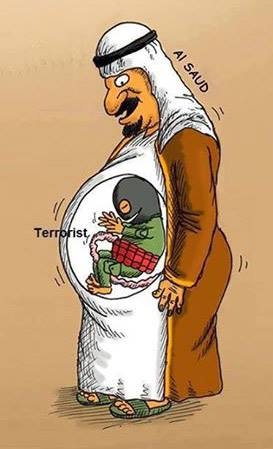
Lawmakers Ringing Alarm Over Possible Saudi Influence on European Muslims

Swiss lawmakers have expressed growing concerns regarding lack of transparency over the country's mosques and Muslim organizations' funding. The parliamentarians fear foreign influence, citing the problem of Islamic radicalization in Europe.

Swiss parliamentarians have raised the alarm over possible foreign influence on the country's mosques and called attention to lack of transparency over their funding. Speaking to swissinfo.ch, Doris Fiala, member of the National Council and Vice-Chairperson of the Swiss delegation to the PACE, pointed out that it would be "naïve to say there is no problem with the financing of Swiss mosques." "We have no clue who is financing what. We don't know what money is coming in. There is no transparency," she underscored.For her part, Saida Keller-Messahli, the president of the Forum for a Progressive Islam, told the Neue Zürcher Zeitung that "huge sums of money" flow to Switzerland from Saudi Arabia, the United Arab Emirates, Qatar, Kuwait and Turkey.


Keller-Messahli claimed that one of those sponsors, the Saudi-based Muslim World League is spreading Wahhabi or Salafist views among European Muslims. According to swissinfo.ch, the concerns were prompted by incidents in Winterthur and Geneva mosques. The media outlet noted that in early November the umbrella association of Islamic organizations in Zurich (VIOZ) suspended the An'Nur mosque in Winterthur, after its imam was reportedly inciting violence. Following the Paris attack in November 2015 the Tribune de Geneve wrote that French police searched the homes of two French imams who worked at the Geneva mosque. The mosque is managed by the Islamic Cultural Foundation of Geneva, reportedly sponsored by Saudi donors. In his March interview with Sputnik French journalist and founder of Agora Erasmus political organization Karel Vereycken underscored that Europeans fear that Saudi preachers are spreading Wahhabi teaching and inciting violence in EU mosques. "Increasingly, voices have been raised against Saudi Arabia and the spreading of Wahhabi fundamentalism through the Saudi-run Great mosque of Brussels and the Centre Islamique de Belgique (CIB) of Molenbeek, where many young criminals were recruited for making the trip to Syria," Vereycken told Sputnik.The French journalist insisted that the European leadership should take certain measures to mitigate the threat of radicalization of Muslim youths in the EU.

"First of all, the decades long evil role of Saudi Arabia and Qatar in spreading the Wahhabi and Salafist ideologies and the financing of terrorist organizations, on which the Belgian, as well as the US, the British, and the French governments have closed eyes, should be unveiled and 'uprooted,'" he noted. Swissinfo.ch quoted Andreas Tunger-Zanetti, coordinator of the Center for Research on Religion at Lucerne University, who believes that the problem is largely exaggerated. Tunger-Zanetti pointed out that an "average Swiss mosque" has a list at the entrance with the names of its sponsors and the amount of money they donated. "When I look at how these mosques are working… I don't see Arab money," he told the media outlet adding that the incidents in Geneva and Winterthur mosques deserve attention and it is important to find out what went wrong.However, the media outlet highlighted that there is virtually no statistics on Swiss mosques' funding.

The Swiss government has no data on Muslims organizations' sources of funding and it prompts growing concerns among Swiss lawmakers. "In Switzerland the freedoms of association, conscience and religion are held up as fundamental rights. Small associations with no economic goals are not required to be listed in the commercial register and declare their financial status," the media outlet explained. Swiss lawmakers' concerns are not completely unfounded. A 2009 secret US diplomatic cable, published by Wikileaks, revealed that Saudi donors have been repeatedly spotted funding various Sunni extremist organization and terrorists worldwide. "Still, donors in Saudi Arabia constitute the most significant source of funding to Sunni terrorist groups worldwide… Saudi Arabia remains a critical financial support base for al-Qaeda, the Taliban, LeT [Lashkar-e-Taiba], and other terrorist groups, including Hamas, which probably raise millions of dollars annually from Saudi sources, often during Hajj and Ramadan," the cable reads.

Read more: https://sputniknews.com/politics/201612241048963497-europe-saudi-muslims/

Victory in Aleppo opens door for political work in Syria ― Assad


The liberation of Aleppo "has opened the door for political work in Syria," Syrian President Bashar Assad said in a telephone conversation with his Russia counterpart Vladimir Putin on Friday,
SANA news agency reported that Assad thanked Putin for the efforts that Russia had made to liberate the city of Aleppo. This success "will encourage many, who earlier hampered the political settlement in Syria, to join the process and work on national reconciliation," the Syrian president said.
The Kremlin press service earlier reported Putin held a telephone conversation with Assad and congratulated him on the end of the operation on liberating Aleppo from militants.


More:
http://tass.com/world/922144

Russian FM - US ‘protects’ Nusra terrorists, ‘punishes’ Moscow for Assad support


Washington has Jabhat al-Nusra’s back and is ready to help “any destructive forces” to achieve regime change in Syria, while Moscow is being punished for helping the country’s legitimate government, the Russian Foreign Ministry said in a statement.

“It has been observed for a long time that the current administration in Washington is ready to help any destructive forces in its bid for a regime change in Syria,” the statement published on Saturday 
Moscow says that the US effectively “protects the Jabhat al-Nusra terrorist group [now Jabhat Fatah al-Sham], which is nothing else but a branch of Al-Qaeda, which carried out the most gruesome terrorist acts in US history.”
The Russian Foreign Ministry said that the White House “apparently forgot that according to American law, support for terrorists is a severe, criminally liable offense.”
The statement was issued as part of Russia’s reaction to the latest batch of US sanctions on Moscow over the crisis in Ukraine. The Foreign Ministry said that instead of focusing on the common terror threat, Washington has “lost a feeling of reality.” It also said that the sanctions were an attempt to “punish” Russia for supporting the Syrian government in its fight against terrorism, which threatens the entire world.
On December 8, US lawmakers introduced a Stop Arming Terrorists Act, aimed at preventing any government support to terrorist groups through covert operations and third states.
“If you or I gave money, weapons or support to Al-Qaeda or ISIS, we would be thrown in jail. Yet the US government has been violating this law for years, quietly supporting allies and partners of Al-Qaeda, ISIL, Jabhat Fateh al Sham and other terrorist groups,” the Democrat Tulsi Gabbard (who introduced the bill) argued.
During her statement in the House of Representatives, Gabbard said the CIA provided weapons and financial help to terrorist groups via Saudi Arabia, Turkey and Qatar among others. 
In September, an al-Nusra commander  Germany's Koelner Stadt-Anzeiger newspaper, that the group received US arms via states like Saudi Arabia and that the militants also received training. 
“This is a game everybody knows. It’s very clear that the Americans know that their weapons will in the end be in the hands of terrorists,” German journalist Jurgen Todenhofer who spoke with the al-Nusra commander, told RT back then. 

https://www.rt.com/news/371608-us-protects-nusra-punishes-moscow/

Video Report - 'We had 4 years of pain, of war & blood' Aleppo celebrates Christmas, shares stories of joy & loss

Music Video - Jennifer Lopez ft Fabolous - Get Right

Music Video - Destiny's Child - Bootylicious

Music Video - Ariana Grande - Side To Side ft. Nicki Minaj

Dj Snake - Let Me Love You ft Justin Bieber

Music Video - Rihanna - Work (Explicit) ft. Drake

Music Video - Machine Gun Kelly, Camila Cabello - Bad Things

US ambassador to UN: Israel treated differently than compared other members

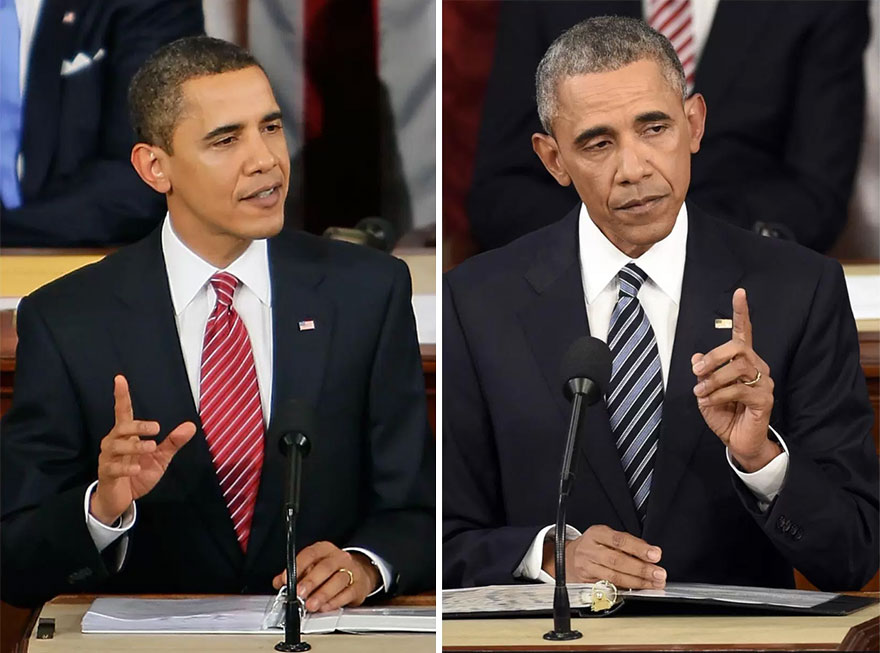
Becoming Citizen Obama: The Outgoing President’s Next Job


Zeke J Miller


Excerpted from TIME’s “Barack Obama: Eight Years,” a definitive, one-of-kind 96-page, fully illustrated commemorative edition. Available at retailers and at Amazon.com.
Over a late-night martini in the White House’s second-floor residence, President Barack Obama has been known to prod his dinner guests with a simple question: What should he do next?
After nearly eight years in the confining bubble of the Oval Office, where a president’s most precious asset is time, Obama will soon have an abundance of hours, days and months to forge what he will. So in private dinner parties, often with Silicon Valley executives, Hollywood stars and public intellectuals, the president has kept turning over his guests’ ideas: Marshal the cure to a disease. Promote peace abroad. Foster understanding among a diverse society at home.
Obama, at 55, will become one of the youngest ex-presidents in the nation’s his­tory, eclipsed by a handful that includes Theodore Roosevelt, Ulysses S. Grant and Bill Clinton. As his time as the leader of the free world comes to a close, Obama is preparing for reentry. The modern post-presidency has been de­fined by extremes. Bill Clinton launched a high-profile foundation that has had significant impact and has grown exponentially, while also earning many millions of dollars on the speaking circuit. George W. Bush had far fewer appearances and took up water­ color painting. Obama appears ready to chart a course somewhere in between, toggling be­ tween the limelight and a return to the social­ justice issues that sparked his interest in pub­lic service back in the 1980s.
In a notable departure from precedent, Obama and his family will stay in Washington after his term is up so that his daughter Sasha can graduate from her high school, which she is scheduled to do in 2019. The Obamas will live in the Kalorama neighborhood and will become the first First Family to remain in the capital since Woodrow Wilson was president. While the 44th president will surely do his best to give the 45th a free lane to govern, the mere fact that Obama will be in Washington means his comings and goings will very likely be closely chronicled, whether he is out walk­ing the family’s dogs, Bo and Sunny, or ad­dressing a policy group.
Given his huge popularity—Obama is exit­ing with ratings that fall just shy of those of Bill Clinton, who left office in the midst of an economic boom-the ex-president will be a “get” on the speaking circuit, where, if his immediate predecessors are any guide, he has the potential to earn tens of mil­lions of dollars. Already a three-time author, Obama is expected to write a memoir, which could fetch an advance rivaling Bill Clinton’s reported $15 million. And despite persistent rumors that the former law professor was open to a Supreme Court nomination, aides say Obama stands by a 2014 statement ruling out the “monastic” lifestyle associated with a seat on the high court.
The return to civilian life will also be a time for Obama to burnish his legacy, as is standard for ex-presidents. George W. Bush launched an institute focused on veterans outreach, ex­panding health care in Africa and empowering female leaders across the globe. The Clinton Foundation has morphed into a billion-dollar behemoth with health-care, education, cli­mate and global-development arms.
Obama has already kick-started the Obama Foundation, which will take the lead in con­structing Obama’s presidential library in Chi­cago as well as the programs that will ema­nate from it. Longtime Obama friend Marty Nesbitt is overseeing the organization, whose board includes top donors and political ad­visers. Obama aides are reluctant to discuss initial plans for the organization, arguing that they don’t want to distract from his final days in office. But they say tentative ideas include sections devoted to continuing advocacy for Obama’s Affordable Care Act and climate­ change efforts, both signature items of his presidency. The foundation will also seek to defend Obama’s foreign-policy record, in­cluding a rapprochement with Cuba and the Iran nuclear deal.
Another topic that America is likely to hear more about from citizen Obama is the com­plex interaction between racial tension, gun control and criminal-justice reform. Although he made history as the first black president, and racial identity was the basis of his best­ selling autobiography Dreams from My Father, Obama was wary of discussing race during much of his tenure in the White House.
That attitude began to change with the 2013 acquittal of George Zimmerman, the neighborhood-watch guard who killed the unarmed black teen Trayvon Martin. The epi­sode struck a chord with Obama, prompting him to open up about the state of the coun­try’s race relations. In a televised press con­ference following Zimmerman’s acquittal, the president described the experiences of being followed while shopping in a department store and of hearing the locks engage on car doors as he walked down the street. “Tray­von Martin could have been me 35 years ago,” Obama told America. During the remainder of his second ad­ministration, as shootings of black men by police received more attention, Obama began speaking out more frequently about systemic racism and the tension between police and the communities they serve. He is likely to be even more vocal once he leaves office. “These are issues that in a lot of ways have defined his presidency and are unfinished,” says one White House official.
Already, Obama has close ties to two non­profits that could help. In 2014, in the after­ math of the Martin killing, Obama kicked off My Brother’s Keeper, a White House initia­tive advocating mentorship for young men of color that became a stand-alone organization. Obama took on his own group of mentees, mostly black and Hispanic high school stu­dents from the Washington area. The presi­dent is planning to assume a substantial role in the organization once he is freed from the fundraising restraints and general responsi­bilities of the White House.
There’s also Organizing for Action, a grass­ roots effort formed from the president’s 2012 re-election team to support his legisla­tive agenda. The president has held a steady stream of fundraising events for the nonprofit, which focuses on such matters as climate change and immigration reform. Obama is ex­pected to take on a more formal role with the group after he leaves the White House. The two organizations help bring Obama full circle to what got him started in public service. “I’ll go back to doing the kinds of work that I was doing before, just trying to find ways to help people-help young people get educations, and help people get jobs, and try to bring businesses into neighborhoods that don’t have enough businesses,” Obama told a group of students in Washington in 2015. “That’s the kind of work that I really love to do.”
From “Barack Obama: Eight Years.” In his historic Presidency, Barack Obama led the United States through eight tumultuous and remarkably active years. And in this definitive, one-of-kind Special Edition, TIME’s experts assess the impact his Presidency had on the U.S. economy, foreign policy, health care and so much more Along with spectacular and often moving images, TIME’s unmatched writers and reporters give this Presidency a clear-eyed context through issues of race, inclusion and military approach. This edition delivers sharp, fresh stories and an extra bonus: TIME’s foray into augmented reality, in which the cover and several inside pages spring to life via curated audio and video pieces accessed easily through the free TIME Special Edition app.

Masterstroke by outgoing President Obama, signs bill authorizing $611 billion defence budget for 2017


U.S. President Barack Obama has signed the National Defence Authorisation Act (NDAA) 2017 – the annual defense policy bill into law - which enhances security cooperation with India. The act calls for the U.S. defense secretary and secretary of state to take the required steps to recognise India as America's "major defense partner.”
The law, which authorizes a $618 billion defence budget for 2017, also conditions significant funding to Pakistan on a certification that it is taking attestable steps against the Haqqani network. U.S. Defense Secretary Ashton Carter must certify to the Congress that Pakistan is carrying out military operations that are significantly disrupting the safe haven and freedom of movement of the Haqqani network in Pakistan. Carter must also confirm that Islamabad has undertaken measures to demonstrate its commitment to prevent the Haqqani network from its territory as a safe haven.
However, there were some aspects of the act that that the outgoing president was unhappy with. “Congress again failed to enact meaningful reforms to divest unneeded force structure, reduce wasteful overhead and modernize military healthcare,” he said. “Instead, the Congress redirects funding needed to support the warfighter to fund additional end-strength that our military leaders have not requested at a time when our troops are engaged overseas supporting the fight against the Islamic State of Iraq and the Levant and against al-Qaida."
He said he had signed it because it "authorizes fiscal year 2017 appropriations principally for the Department of Defense and for Department of Energy national security programs, provides vital benefits for military personnel and their families, and includes authorities to facilitate ongoing operations around the globe."
The legislation provides a 2.1 percent pay hike for the military and sets spending priorities and guidance for the current fiscal year.
Funding for the programs is delivered through a separate spending bill. Obama was also severely critical of Congress’s insistence on keeping open the military prison at Guantanamo Bay, Cuba. According to Obama, spending hundreds of millions of dollars to keep just some 60 men in isolation undermined U.S. standing in the world and emboldened violent extremists.
This bill ensures Obama will not be able to close the prison before he leaves office.
“In February, my administration submitted a comprehensive plan to safely and responsibly close the detention facility,” Obama said. “Rather than answer that call and work with my administration to finally bring this chapter of our history to a close, this bill aims to make the facility a permanent fixture of our struggle against terrorism.”
Unless Congress changes course on Guantanamo, "it will be judged harshly by history," Obama declared. Rep. Mac Thornberry (R-Texas), chairman of the House Armed Services Committee said it was reassuring the outgoing president had signed the bill. “After overwhelming votes of bipartisan support in both the House and the Senate, it is reassuring to see the President sign this year’s defense bill to further reform and rebuild our military,” he said on Friday. “This is a significant step for our troops, our allies and America’s national security, but there is still much work ahead to repair the damage done to our military over the past several years."

President Obama's Weekly Address: Merry Christmas from the President and the First Lady

Friday, December 23, 2016

Video Report - Putin holds annual Q&A marathon

China, Russia And Pakistan New Superpower Triangle in 2025

Video - A look into liberated #Aleppo

White House: Netanyahu not a factor in UN vote

Video Report - Generational Experiences of Asian Americans

Music - Afshan Zebi - Lokan do do yaar banaye

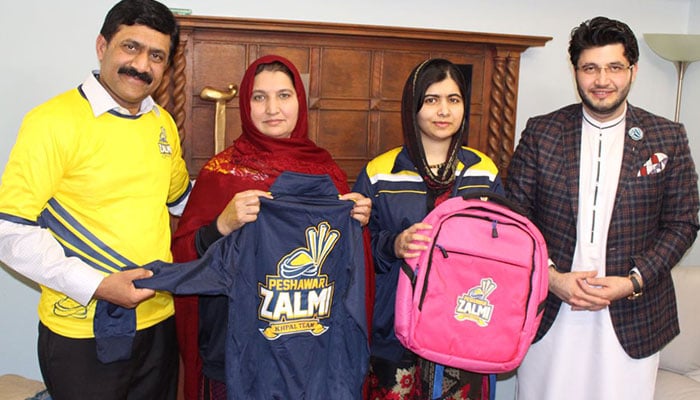
Peshawar Zalmi nominate Malala as ambassador


The Pakistan Super League team Peshawar Zalmi on Friday nominated the Nobel Laureate Malala Yousuf Zai as team’s face and ambassador ahead of the next season of the league.
Team’s owner Javed Afridi, after meeting Malala Yousufzai and her family in the UK, said that Malala will be the face of Peshawar Zalmi in the upcoming season and will also be cheering for the team during the tournament in Dubai.
“It is an honour for us to be associated with Malala Yousafzai who has made Pakistan proud by winning the Nobel Prize. PZ Foundation will also support Malala’s cause for girls’ education in Pakistan and in other countries,” said Javed Afridi after meeting Malala and her family.
Afridi also presented Peshawar Zalmi’s official jacket to the 19-year-old Malala, the youngest ever Nobel Prize Laureate, and the only second Pakistani to win the prestigious award.
“Malala has always been a great supporter of Peshawar Zalmi, and this year she will be the face of our team, an ambassador of our team,” Afridi said.
Malala has also recorded a video in support of Peshawar Zalmi, saying that she’s one of the big Peshawar Zalmi fans.
“To all the Peshawar Zalmi fans, I am also one of you,” she said in the video message received by Geo.tv.
“We are all supporting this team because we are proud of our Pashtun culture, Pashtun tradition and Pashtun nationality. We stand for peace and unity in the region. Please come forward and support the team,” she said.
The second edition of Pakistan Super League will be played from February 9th to March 7th.

Mike Flynn’s Pakistan Problem


BY MICHAEL KUGELMAN
The incoming national security advisor allegedly shared classified intel with Pakistan’s notoriously compromised security services. What does that mean for Trump's "AfPak" policy? The Washington Post recently broke a major story: In 2010, a U.S. military investigation concluded that Michael Flynn — then a top intelligence official in Afghanistan, now President-elect Donald Trump’s choice for national security advisor — “improperly shared” intelligence with foreign military officers in Afghanistan.
The Post’s revelation raises questions about a soon-to-be top security official’s ability to protect classified information (not to mention, one who has railed publicly against this very thing). Ultimately, however, the alleged transgression caused little damage: According to the Army’s investigation, Flynn didn’t act knowingly and caused no harm to U.S. national security. Additionally, he reportedly disclosed the classified information, which related to CIA activities in Afghanistan, to Australians and Britons — not to Pakistanis, Iranians, or any other regional player with policies in Afghanistan that often work against U.S. interests.
Yet the Post may have buried the lede.
Sixteen paragraphs down, last week’s story noted another case in which the general may have mishandled classified material: “Former U.S. officials said that Flynn had disclosed sensitive information to Pakistan in late 2009 or early 2010 about secret U.S. intelligence capabilities being used to monitor the Haqqani network, an insurgent group accused of repeated attacks on U.S. forces in Afghanistan.”
This allegation, if true, is far more concerning than the more recent one, given the links known to exist between the Haqqani network and Pakistani intelligence. In 2011, Mike Mullin, then the U.S. chairman of the Joint Chiefs of Staff, described the Haqqani network as a “veritable arm” of Inter-Services Intelligence, Pakistan’s main intelligence agency.
Several months after Flynn’s alleged disclosures to Pakistan about the Haqqani network, U.S. military officials blamed the group for an attack in Kabul that killed two American soldiers and a colonel.
Herein lies a great and dangerous irony of U.S. foreign policy: One of Washington’s key security partners in Asia harbors ties to terrorists that target Americans. Islamabad has cooperated closely with Washington on security — from helping apprehend al Qaeda figures to allowing U.S. forces to use Pakistani roads to ship NATO supplies to and from Afghanistan. Yet Pakistan, which views certain terror groups as useful assets to keep its rival India at bay, also provides sanctuary to the Haqqani network. The United States and Pakistan violently disagree on many things, but several perceived shared interests — from Islamabad’s need for U.S. security assistance to Washington’s desire to stay on the good side of a restive, nuclear-armed, strategically located nation of some 200 million people — keep the partnership in place. There is trust (enough of it, apparently, to compel Flynn to allegedly share sensitive information with his Pakistani interlocutors) but plenty of mistrust as well. Little wonder, then, that the U.S.-Pakistan relationship is so often described as a bad marriage.
The dysfunctional U.S.-Pakistan relationship is just one of several policy conundrums that will confront the Trump administration in the Afghanistan-Pakistan region. Take U.S. troop levels: Keeping American soldiers in Afghanistan helps beleaguered Afghan forces, but also gives the Taliban, which vows to fight until every foreign soldier leaves Afghanistan, an excuse not to join peace talks — the outcome that U.S. government has sought fervently. Or consider counterterrorism: In June, President Barack Obama announced measures that give U.S. troops in Afghanistan more flexibility to go after the Taliban, a move that could bring counterinsurgency successes — yet also strengthen the Islamic State, which is slowly developing a foothold in the region. By weakening the Taliban, the United States weakens an unlikely anti-Islamic State ally.
Since his election triumph, Trump has generally maintained radio silence about “AfPak” — even though it’s the backdrop for the longest foreign war in U.S. history and familiar terrain for Flynn and presumptive Defense Secretary James Mattis, both of whom spent long periods of time there while in the military.
One might reasonably conclude that Trump won’t pay much mind to this part of the world. Trump’s “Make America Great Again” mantra suggests a lighter U.S. footprint abroad, and he’s indicated a preference to focus on building America, not Afghanistan. He’s also tweeted that “Pakistan is not our friend.”
This isn’t to say the Trump administration will disengage altogether. We can expect a U.S.-Pakistan relationship that is scaled back, yet collegial. “I want to get along, fellows. I love you,” Trump said of Pakistan back in 2011. “Let’s go have a drink. But you’re not getting any money.” Trump’s invitation to imbibe is curious given that neither Trump nor many in Pakistan, a country with many pious Muslims, consume alcohol.
Trump’s strikingly convivial phone call with Pakistani Prime Minister Nawaz Sharif last month may have been bizarre, but it also telegraphed Trump’s desire to be amicable. Gen. Mattis was a vocal supporter of Pakistan when he headed Central Command between 2010 and 2013: He lavished praise on the Pakistani military in several congressional hearings. Trump, meanwhile, has endorsed Obama’s Afghanistan troop plan, which presently calls for 8,500 soldiers to remain through year’s end. Furthermore, ExxonMobil CEO Rex Tillerson, if confirmed as secretary of state, is likely to take a strong interest in the energy-focused connectivity projects proliferating across the region — from the China-Pakistan Economic Corridor to the Turkmenistan-Afghanistan-Pakistan-India gas pipeline. This isn’t just because of his energy background, but also because the envisioned outcomes of these projects — more energy security, better infrastructure and regional integration, increased employment, and above all, greater stability — align with Washington’s strategic interests in the region.
However, the chief reason to expect the Trump administration to engage in Afghanistan and Pakistan is terrorism. Keep in mind that Trump attempts to project a tough-as-nails stance on jihad. Attacks are down in Pakistan thanks to a major counterterrorism offensive in its North Waziristan region, but the country continues to suffer from mass-casualty assaults. In Afghanistan this year alone, Taliban forces have attacked all 34 Afghan provinces and staged an average of 68 daily attacks, according to Mark Kryzer, a former State Department official who designs development projects in Afghanistan.
More broadly, about one-fifth of the world’s 98 U.S.-designated terror groups are based in the AfPak region. And despite devastating blows to al Qaeda’s leadership, the group is alive and well there. In 2015, the U.S. military destroyed a large al Qaeda training camp in southern Afghanistan. This year, American officials increased their estimated number of Afghanistan-based al Qaeda operatives from around 50 to as many as 300.
Meanwhile, the Islamic State is quietly developing a profile in Afghanistan and Pakistan. The group has claimed several major attacks in both countries in recent months, and in the eastern part of the country, Afghan officials warn, it has converted several dozen mosques into military training centers. True, the relationship between Islamic State militants in the region — most of them former Pakistani Taliban members — and the Middle East-based Islamic State central leadership is unclear. And the Islamic State will struggle to carve out a major presence in a region rife with militants aligned with its al Qaeda rival. Still, fears of the Islamic State are sufficiently strong as to have compelled Moscow and likely Tehran to intensify their outreach to the Taliban. According to one recent report, several Taliban leaders are even considering pitching a cease-fire to Kabul, to allow both sides to turn their full attention to the Islamic State.
Trump, a bottom-line guy, should be advised that his administration’s policy challenges in Afghanistan and Pakistan boil down to two critical questions: How to promote stability, the chief U.S. interest in the region, with a lighter footprint? And how much diplomatic, security, and financial capital to expend in pursuit of stability that’s long been elusive, despite ample U.S. largesse?
Trump’s foreign policy is likely to be guided by a firm “what’s-in-it-for-America” mindset. Accordingly, expect him to seek stepped-up cooperation with Pakistan in efforts to combat al Qaeda and the Islamic State — groups that directly threaten the United States. Expect him to demand major crackdowns against Pakistani groups, like the Haqqani network and Lashkar-e-Taiba, that kill Americans, and to demand dramatic aid cutbacks in the absence of results. Trump may have made a fortune through financial transactions, but he’s unlikely to embrace checkbook diplomacy — much less blank checks — as president.
Trump would be wise to keep providing security and civilian assistance to Afghanistan, even if in more modest amounts. If he gets impatient, his advisors might remind him that a full U.S. withdrawal from Afghanistan could usher in all kinds of nastiness. This includes a total breakdown in security that could allow al Qaeda to reconstitute itself in rapidly proliferating Taliban sanctuaries (the group controls more territory now than at any time since 2001), and enable it to plot new attacks on American soil. History could repeat itself in terrifying ways. Finally, if Trump wants to showcase his deal-making skills, he should try to broker an accord to ease tensions between Islamabad and Kabul. Better ties would help reduce cross-border violence and terrorism, and would bolster stability along their porous border. It’s a hard sell, given the enmity between the two neighbors, but far more realistic than mediating a deal between India and Pakistan, which Trump has offered to do.
The Washington Post’s reporting on Flynn’s alleged misuse of classified information in Afghanistan has already faded from the headlines, but ultimately it still served an important purpose: For a short period, it brought Afghanistan and Pakistan back into the U.S. news cycle, where it is often given short shrift, and reoriented attention to an important part of the world that the Trump team has said little about. America’s next president should give the Afghanistan-Pakistan region, home to a forgotten 15-year-and-counting war that continues to claim American lives, the attention it deserves.

Why Pakistan’s decision to lift Bollywood ban isn’t surprising

By Lata Jha


Last weekend, Pakistani newspaper Dawn, among others, reported that the country’s cinema houses that had suspended the screening of Indian films, will resume the same this week. The Pakistan government had banned all television and radio content from India and stopped screening Indian films after an escalation in tensions between the two countries this September.
The move was also seen as a response to the Indian Motion Picture Producers Association (IMPPA) banning all Pakistani actors, singers and technicians from working in India till normalcy was restored.
To be sure, while the Film Exhibitors’ Association in Pakistan has announced its intentions to lift the ban, the government is yet to formally grant a no-objection certificate, said film producer and chairman of the Central Board of Film Certification, Pahlaj Nihalani. There have been efforts to first take Amitabh Bachchan-starrer Pink that has already been censored for viewing in the country, besides Aamir Khan’s Dangal which released in India this week and for which Pakistani television channel Geo TV has bought the country’s theatrical distribution rights for.
The move hardly comes as a surprise though, said industry experts. Firstly, the film exhibition business in Pakistan comprising 100 theatres is mainly dependent on Bollywood and Hollywood fare. The country saw about 40-50 Bollywood releases a year and another 50 Hollywood offerings until the ban.
A medium-budget Bollywood film is able to collect Rs5-6 crore in Pakistan. Big-ticket movies, featuring popular faces like Salman, Aamir or Shah Rukh Khan have a track record of managing even more. For instance, Aamir Khan’s PK collected over Rs22 crore at the Pakistani box-office, beating the country’s own blockbuster Waar (2013). Yash Raj Films’ action franchise instalment Dhoom 3 (2013) did even better than PK, with Rs24 crore and more recently, despite apprehensions about how it would be received in Pakistan, while Salman Khan’s Bajrangi Bhaijaan brought in about Rs15-16 crore.
“The local Pakistani productions are hardly up to the mark,” said Atul Mohan, editor of trade magazine Complete Cinema. “And how much of foreign fare can you serve? You need something closer home.”
Secondly, the audience in Pakistan has greater demands.
“There has been a spurt in multiplexes in Pakistan lately and that audience is hardly interested in the local Punjabi and Urdu cinema,” Nihalani said. “Those remain popular only in single screens, if at all.”
And finally, while Indian movies only formally returned to Pakistan in 2008 after the country lifted the ban imposed after the 1965 dispute, pirated DVDs had flooded the latter’s markets all along. Trade experts say that Indian film piracy has continued and flourished in the neighbouring country all these years with the DVDs re-routed mainly through the Middle East.
There is no final word on whether such moves can help de-escalate age-old tensions between the two countries, but the general consensus is that cultural exchange is best left outside the purview of political conflict.
Political concerns are indeed genuine, but they should not come at the cost of cultural exchanges that bring benefits to both sides of the border, an editorial in the Dawn had said earlier this year, adding that “in terms of being crowd-pullers on a large scale, nothing beats the content being generated by the mammoth industry next door”.
As Mohan said, “Cultural exchange has always had the ability to unite India and Pakistan. The two countries already trade in so many things. Then why target sports and cinema? Why can’t cinema just be seen as a business? If you see, Pakistan is as a big a box office territory as say, Delhi, for the industry.”

http://www.livemint.com/Consumer/vRJfuHa2qhj0wiePh7KWPI/Why-Pakistans-decision-to-lift-Bollywood-ban-isnt-surprisi.html

Will new law stop Pakistan's women living in fear?


By Pamela Boykoff, Sophia Saifi and Alexandra Field


On the night of her sister's wedding, Zuberah ran for her life.
Her parents had taken to chaining her to the house by her feet, but tonight was different. The house was full of guests, and she was free to move around.
While her parents were distracted, she ran into town and found a lawyer. She told him that after fleeing one abusive marriage arranged by her parents, they were forcing her to marry again.
If she refused, she believed they would kill her.

Zuberah is one of 14 women living in the Dastak women's shelter in Lahore, Pakistan. The women here say they're being hunted by their own families.
They live in fear of becoming the next victims of an epidemic that last year claimed more than 1,000 livesso-called honor killings.
The Pakistan government has finally done something about these brutal crimes, which originate from tribal and cultural practices and are often meted out as punishment for behavior viewed as bringing dishonor to a family or village.
A new law will see killers face a minimum sentence of 25 years in jail.
Previously, many murderers got off without punishment, because they were officially forgiven by the victims' families.
Sometimes mothers forgave their sons for killing their daughters. Sometimes killers paid compensation to the victims.
Activists say it was a legal loophole that encouraged, even fed, the practice of honor killings.

I pardoned my son's killers

Azmat Bibi pardoned her neighbors after they killed her 22-year-old son Ghulam Abbas.
According to police documents, a neighboring family accused her son of having a relationship with their teenage daughter Kiran.
They shot Ghulam while Azmat and her other son looked on. They also killed their own daughter Kiran.
A widow, Azmat says she did not accept blood money but made the difficult choice to pardon the accused after the case against them spent two years in Pakistan's courts.
"I have placed a rock on my heart. I have to live for my other son who is alive," she said.
She believes her justice will come not from the legal system, but from God.
The three men accused of the crime included Kiran's father and brother. They were all released after receiving pardons from members of both families, including Kiran's implicated father.

A deterrent?

Activists welcome the new law as a positive step, but warn much work remains to end the practice of so-called honor killings, and change the patriarchal culture that feeds it.
Saba Sheikh is the head of Dastak women's shelter. She says she hopes the law will act as a deterrent for families who are considering killing their daughters.
However, she worries that killers could still escape punishment, as the loophole is only closed for killings that are specifically classified as honor-related. Forgiveness can still be granted in other murder cases.
Sheikh also believes legal reforms must be paired with a concerted and coordinated effort to change, firstly, deeply held patriarchal beliefs in Pakistan, and secondly, a misinterpretation of the country's religion -- Islam. 
"This is not what the religion prescribes, this is not what the constitution of the country prescribes and this is something which is also against the law," she says.

Nowhere to go

Some 7,500 women have passed through the doors of the Dastak shelter over 26 years. Dastak provides job training, childcare, and counseling, as well as a safe home for the women.
Armed guards are posted outside. Family members are encouraged to visit, both for support and mediation to try and resolve the conflicts that led the women to seek protection in the first place.  
Counselor Taslim Hasan works with the women one-on-one, trying to instill in them the confidence that they can make it on their own in this male-dominated society.
Her message: "You should be your own master. You should be able to do things your own. That is the only way you will survive."
The message doesn't always sink in. Three quarters of the women here return to their families. Some women are killed after leaving the shelter.
For those who want to start a new life, Dastak tries to find jobs, but it's a challenge in a country not accustomed to the idea of single working women.

'My daughters will marry of their own will'

Zeba, a 25-year-old victim of domestic abuse, says there's "no way for a woman to exist" by herself in Pakistan.
She married her husband for love and her family abandoned her. Then he became abusive and she had no one to turn to. Divorce and dishonor can be deeply intertwined in Pakistan.
"If you have someone by your side, then only can you survive," she says.
Zeba fled to Dastak with her son, still a baby, but her husband has her two young daughters. When they grow up, she doesn't want them to face the same predicament she is in.
"When my daughters become women I will not live their lives," said Zeba. "They will marry out of their own will."
It's a view born out of wanting her daughters to have a better life. If it spreads, they could also have a better country.

Pushto Song - A Tribute To Benazir Bhutto

#PPP Song - Kal Bhi Bhutto Zinda Tha,Ajj

#PPP Song - '' Welcome Zardari ''

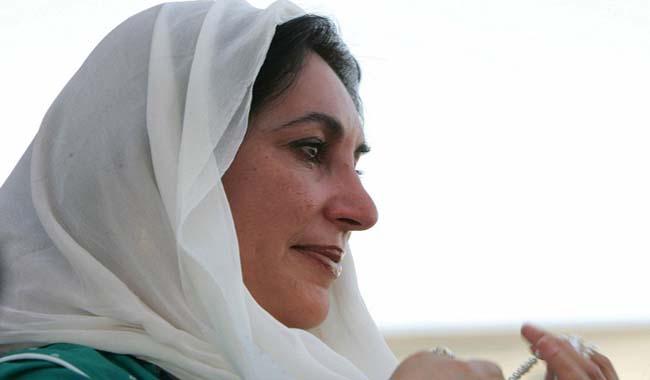
Sindh govt announces holiday on BB's death anniversary

The Sindh government on Friday announced a public holiday on December 27 which is the death anniversary of former prime minister Benazir Bhutto.
All departments, schools and academic institutions that come under the domain of the Sindh government will remain closed on Tuesday. Benazir Bhutto was killed in an attack in Rawalpindi on December 27 in 2007.
Her husband Asif Ali Zardari, who is the co-chairman of the PPP, on Friday returned to Pakistan after spending 18 months in self-imposed exiled. He had left the country after making a controversial speech in Peshawar.  
The PPP holds a public rally in Garhi Khuda Baksh in Larkana District of Sindh, the burial place and hometown of Zulfiqar Ali Bhutto and his daughter Benazir Bhutto, on the death anniversary.
PPP chairman Bilawal Bhutto Zardari is expected to announce his future course of action in the rally as he had set December 27 deadline for the government to accept his demands which include appointment of a foreign minister, implementation of decisions taken at a multi-party conference on China Pakistan Economic Corridor last year, formation of parliamentary committee of national security and passage of opposition's bill with regard to inquiry into revelations made in Panama Papers.
The young PPP chairman threatened to launch a protest movement against the government if his demands were not met.

https://www.thenews.com.pk/latest/173983-Sindh-govt-announces-holiday-on-BBs-death-anniversary

Video - Full Speech - ASIF ALI ZARDARI - I HAVE COME HERE WITH A MESSAGE OF HOPE #WELCOMEASIFALIZARDARI