Saturday, November 26, 2016

‘Symbol of an era’: World leaders pay tribute to father of Cuban revolution


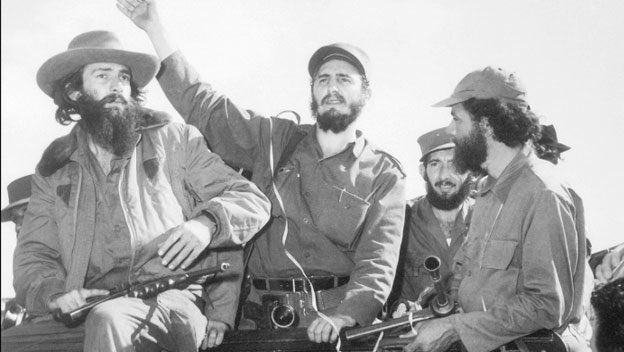
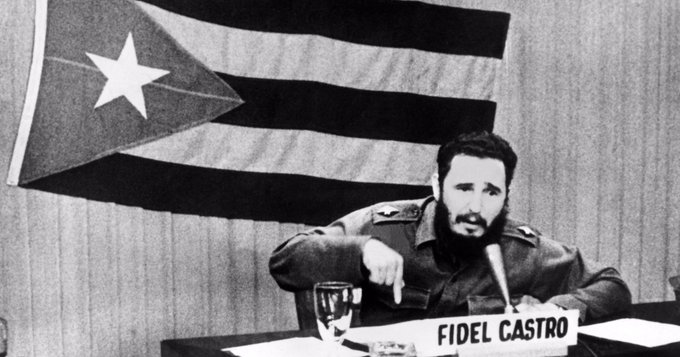
World leaders pay tribute to the longtime Cuban revolutionary leader Fidel Castro, describing the comandante as an iconic figure of his time who fiercely resisted colonialism, the US blockade, and the country’s hardships.


Russian President Vladimir Putin delivered his condolences to the Cuban government and people on Saturday. The Kremlin statement said Castro’s name “is a symbol of an entire era in modern history.”
“The free and independent Cuba built by him and his associates has become an influential member of the international community, and an inspiring example for many countries and peoples,” the statement said. It also underlined Castro’s personal determination to develop lasting relationships between Moscow and Havana.
“This man of strength and wisdom always looked straight into the future,” it stressed. “He represented the highest ideals of a politician, citizen, and patriot who firmly believed in his cause.”
Mikhail Gorbachev, the last Soviet leader who met Castro in person, told Interfax on Saturday he is “truly saddened that Fidel’s time is now over,” adding that “he will remain in our memories as an outstanding politician, a great personality, and a friend.”
He added that throughout the Castro era, Cuba became a developed country which “makes a gigantic contribution to world affairs and strengthening cooperation across the globe.” Gorbachev refused to elaborate on the period of strained relations between the USSR and Cuba, saying instead that Fidel was largely upset with the failures of perestroika.
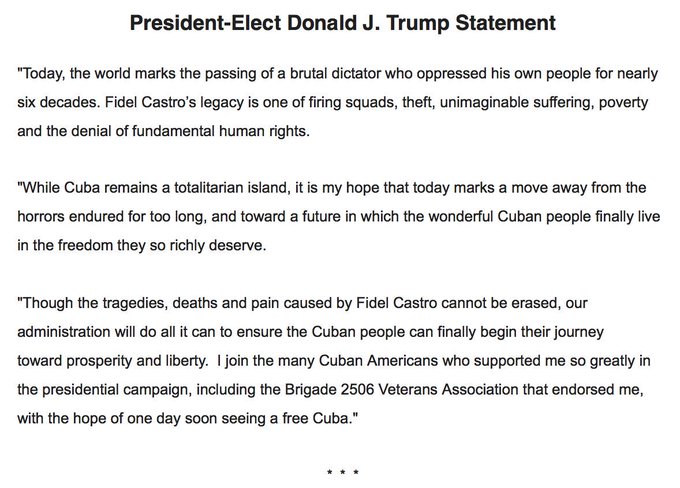
US President-elect Donald Trump has called Castro “a brutal dictator who oppressed his own people for nearly six decades.”
“Fidel Castro’s legacy is of firing squads, theft, unimaginable suffering, poverty, and the denial of fundamental human rights,” he said in a statement.
With Castro gone, Trump promised that his “administration will do all it can to ensure the Cuban people can finally begin their journey towards prosperity and liberty.”
During his campaign, Trump warned that if elected, he will reverse President Barack Obama's historic rapprochement between Havana and Washington.
Obama, on his part, said that “history will record and judge the enormous impact” of Fidel Castro “on the people and world around him.”
“At this time of Fidel Castro’s passing, we extend a hand of friendship to the Cuban people. We know that this moment fills Cubans – in Cuba and in the United States – with powerful emotions, recalling the countless ways in which Fidel Castro altered the course of individual lives, families, and of the Cuban nation,” a statement released by the White House said.
“Today, we offer condolences to Fidel Castro’s family, and our thoughts and prayers are with the Cuban people,” the outgoing president stressed, adding that Cubans should remember that “they have a friend and partner in the United States of America.”
Indian Premier Narendra Modi conveyed his condolences on the passing of Castro, writing on Twitter that the Cuban leader has been “one of the most iconic personalities of the 20th century” and “a great friend.”
Chinese leader Xi Jinping issued a statement read out on television late Saturday, following the death of Castro.
“The Chinese people have lost a good and true friend,” said the Chinese premier, cited by state TV. “Comrade Castro will live forever.”
In turn, Japanese Prime Minister Shinzo Abe praised Castro's efforts to modernize Cuba despite Washington's pressure. He contributed to the creation of a nation that focused on healthcare and education amid the unfair economic blockade from the US, Abe said.
Latin American leaders have been among the first to mourn the death of the comandante. Nicolas Maduro, president of Venezuela, a country with close and lasting ties to Cuba, said that “all the revolutionaries of the world” must carry on with Fidel’s legacy.
“To all the revolutionaries of the world, we have to continue his legacy and his flag of independence, of socialism, of homeland,” he tweeted. “Sixty years after the departure of ‘Granma’ from Mexico, Fidel is now going to immortality of those who struggle throughout their lifetime.”
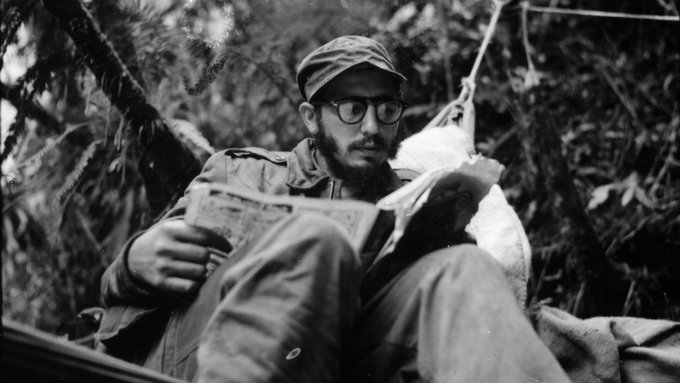
Enrique Pena Nieto, president of Mexico, said he laments “the passing of Fidel Castro Ruz, leader of the Cuban revolution and emblem of the 20th century.” The Cuban statesman “was a friend of Mexico, promoter of a bilateral relationship based on respect, dialogue and solidarity,” he said.
European leaders have issued more measured statements on the death of Castro.
“A figure of great historic importance has gone, a man who brought about a turning point in the country’s evolution and whose great influence was felt across the region,” said the Spanish Foreign Ministry, adding he was linked to Spain “by ties of blood and culture.”
President of the European Commission Jean-Claude Juncker said with the passing of Castro “the world has lost a man who was a hero for many,” who “changed the course of his country and his influence reached far beyond.” The statement released later on Saturday added that “his legacy will be judged by history.”
Meanwhile, British Foreign Secretary Boris Johnson said on Twitter that Castro’s passing “marks the end of an era for Cuba and the start of a new one for Cuba's people.” 
French President Francois Hollande said Castro embodied the Cuban revolution and hope for the future, but also “the frustration that came afterwards.” Hollande’s statement asserted that he “gave the Cubans an opportunity to be proud of resisting the foreign hegemony,” adding that Paris has always criticized the US economic blockade.
Meanwhile, South African President Jacob Zuma has hailed Castro for his help and support in the struggle against the apartheid regime.
“President Castro identified with our struggle against apartheid. He inspired the Cuban people to join us in our own struggle against apartheid,” Zuma said.
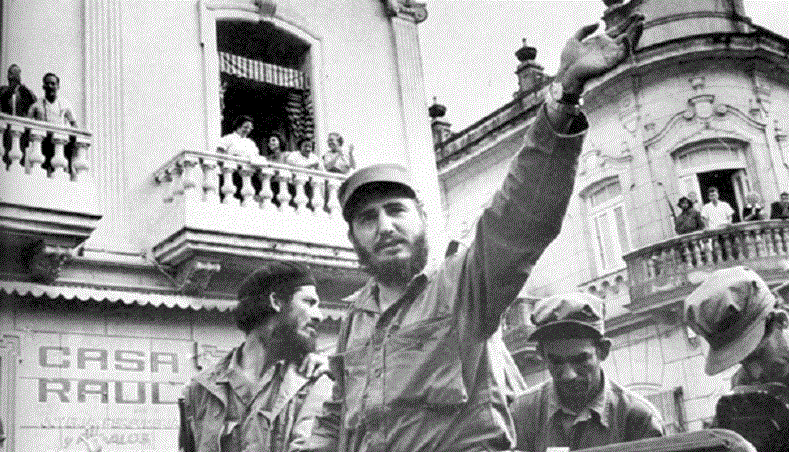
Fidel Castro, Cuba’s longtime leader, dies at 90


After years of dealing with failing health, Fidel Castro, leader of the Cuban revolution who steered the country through decades of a US economic blockade, has died, state media report.


Castro died in Havana on Friday at 10:29pm local time, Cuban television said. His death was announced by his brother Raul, who took the reins after Fidel stepped down.
“According to the will expressed by comrade Fidel, his body will be cremated", Raul said.
Castro led the country from 1959 to 2006, when an intestinal condition nearly led to his death. He ceded power to his brother first provisionally, and then formally in 2008. In his last years, he mostly stayed out of the public eye, only occasionally providing commentary on events in Cuba.

His passing marks the end of an era for many. Castro was the last remaining leader from the group of old school communist leaders including Chinese Mao Zedong, Korean Kim Il-sung and Soviets Nikita Khrushchev and Leonid Brezhnev.
Dictator or national hero, Castro was called many things along the way, as he rose from being a student activist protesting against oppressive regimes to becoming the president of Cuba.
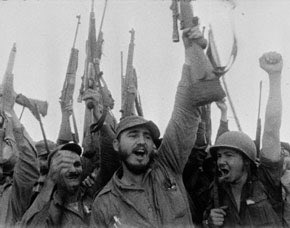
In February 1959, the Cuban Revolution brought Castro to power as the prime minister. He was backed by the so-called 26th of July Movement, and Latin American revolutionary Che Guevara. Together, they managed to oust US-backed President Batista.
After failing to maintain ties with Washington, Cuba became isolated from its neighbor as the US chose to cut all trade links with the Caribbean state. In 1961, the island nation fended off a CIA-backed invasion known as the Bay of Pigs.
Upon taking office, Castro quickly found a new ally, as the Soviet Union supplied Cuba with arms, cars, and industrial equipment to keep it running.
But the nations’ alliance brought more than mutual benefits. Cuba and Russia became key players in the Cuban Missile Crisis – arguably the most dangerous confrontation of the Cold War, which almost ended in a nuclear show-down.
In October 1962, Castro agreed to house Soviet nuclear missiles on Cuban territory, a move that followed the deployment of US missiles in Turkey. Washington was furious over the development, and pledged to use force if necessary to prevent it. The countries’ leaders, Kennedy and Khrushchev, eventually agreed to a compromise.
The US government has always been open about its feelings toward communist Cuba. It remains unknown how many times the CIA tried to assassinate Castro, but some Cuban officials set the number as high as 600. This figure includes the notorious incident when Castro’s cigarettes were found to be stuffed with explosives.
After passing power to his brother Raul, Fidel was still considered the main moral authority in Cuba. Occasionally, he also met with foreign dignitaries like Pope Francis in 2015 and Russian Orthodox Patriarch Kirill in February.
Under Raul’s leadership, Cuba has experienced a slow transformation as he has introduced some market-style economic reforms in the largely socialist country. He also agreed to restore diplomatic ties with the United States in December, taking a step away from decades of rivalry. Fidel was skeptical about the rapprochement, but did not oppose it.

Music Video - Lokan Do Do Yar Banaye ► Afshan Zebi 2016

Friday, November 25, 2016

Tears For Turkish Teachers Facing Deportation From Pakistan

Pakistan - TV series tackles taboo topic

By Esther Felden, Beenish Javed 
Sentimental stories, love, passion, intrigue and heartache - these are typical ingredients of TV series produced to entertain Pakistan's TV audience. But now, a new TV drama program is entering unchartered territory.
Khuda Mera Bhi Hai (A. Nabeel)
A young couple is expecting a child. But soon, the parents, who have been looking forward to having the baby, are deeply shocked because their child is intersexual, something that doesn't play well in Pakistan's extremely conservative society. In real life, children who cannot clearly be recognized as a boy or a girl, are often shamefully hidden by their families and raised in secrecy. Nobody is supposed to know that there is something amiss. That's the setting of the new TV series "Khuda Mera Bhi Hai," which has been broadcast by ARY digital since late October once a week. It is the first time that a television program in Pakistan is bold enough to pick such a taboo topic and put it on the air. For Pakistani standards, the title is also bold: "God created me too" - it roughly translates into English.
The program shows the day-to-day situation of intersexual people and their families in a brutally open way. What does such a fate mean for a family? How differently do fathers and mothers deal with the situation? How do relatives react? Yet, the title suggests that the program is pleading for more openness and tolerance.
Khuda Mera Bhi Hai (A. Nabeel)
Asma Nabeel: 'I wanted to write about something that has a real effect on the lives of the audience'
Asma Nabeel wrote the screenplay of "Khuda Mera Bhi Hai."  It was her first piece for television. "This is my first TV series," she told DW. "I wanted to write about something that has a real effect on the lives of the audience. According to her, the media should take the lead when it comes to addressing topics like that. With her TV project, she wants to play an active part in eliminating the taboos surrounding intersexuality. But today, she admits, her country is a long way from achieving that. "Parents with an intersexual child often don't even speak about it." The protagonists in the series do speak, but they also show how difficult it is to deal with the topic. And that family members react in so many different ways.
A boy who doesn't want to be one
The mother is the focal point of the program. She loves her child and wants to fight for her child's rights, to the dismay of even her husband and closest relatives. "Her familiy and her husband put a lot of pressure on her," Nabeel explains. After giving birth in the hospital, the doctors tell her that her baby is intersexual; that is it is born with a reproductive or sexual anatomy that doesn't seem to fit the typical definitions of female or male. Her mother-in-law persuades her son to give the baby away. After they have left the hospital, the parents take the newborn to a house where transgender women live - women, who were born as men but could never identify themselves with their biological sex. They leave the newborn at this house. The mother, who is in a state of shock, lets it happen.
Asma Nabeel Drama Serie ARY Transgender (Six sigma plus/next level productions)
The series started broadcasting in late October
But that's not the end of the story, as the audience can tell from watching the opening titles. They show pictures of the child growing up with its parents. The child is dressed and raised as a boy. But it is clear that he isn't happy with the decision of his parents and that deep down he intends to be a girl. One sequence shows the child in front of a mirror, putting lipstick on and posing with a scarf which is briskly taken away by the mother.
By showing scenes like that, "Khuda Mera Bhi Hai" takes up the transgender issue, which rights groups say is quite common in Pakistan, but mostly kept under wraps. "There are no official statistics. The Pakistani government estimates that there are a million transgender people in the country. However, we think there are more than two million," says human rights activist Qamar Naseem who works for the transgender organization Trans Action Alliance (TAA).
Celebrated on stage, despised in daily life
Transgender people are welcome as dancers at wedding parties. But in daily life, they live on the margins of society - despite the fact that the supreme court of Pakistan officially acknowledged them as a third sex. "In our society life is extremely hard for them," said Asma Nabeel. "It is even taboo to talk about them."
Pakistan Rawalpindi Transgender Männer (picture-alliance/AP/Muhammed Muheisen)
Hundreds of thousands of transgender people live in Pakistan - mostly on the margins of society
She thinks this is the major reason many people don't know anything about the issue and the problems these people have to face every day. Again and again, transgender people in Pakistan are victims of violent crimes. They are humiliated, get beaten up or they are raped. And sometimes they are killed. "From January 2015 to May 2016, 46 transgender people were killed in Khyber Pakhtunkhwa province alone," said Qamar Naseem. On top of this, there were more than 300 assaults or rapes.
A victim's story
In November, one incident made headlines even outside Pakistan. A video was posted on the internet, showing the ordeal of a transgender woman. The video shows how she was tortured and lashed with a leather belt. The main perpetrator puts his foot on her neck, twists her arm and lashes at her exposed buttocks.
Pakistan Transgender Protest in Islamabad (Urooj Raza)
Shaniya and other protesters demand protection from the abuse of transgender people
The abusers are members of a criminal gang. None of them was disguised and could be identified and arrested by the police. The victim, Shaniya, survived and talked about her ordeal. "I came to Punjab province to perform at several weddings," she told DW. When she came home after her dance performance one evening, there was a knock on her door. A group of men stormed into her room. "I was beaten and forced to drink urine. Then they stole my jewelry." The men spared her life, but Shaniya is scared for life. "I am glad the police arrested them. But I am scared that they will be released soon and that they will come after me."
According to the initiative "Forum of dignity," her concerns are not that unrealistic. In a year's time something like that happened twice, says Uzma Yaqoob, the spokesperson for the NGO. "The offenders were arrested, but released shortly after. The system obviously has flaws." She demands the Pakistani government to put in place measures to protect transgender people like Shaniya.
Can a TV series change public opinion?
Khuda Mera Bhi Hai (A. Nabeel)
After the initial shock, the mother starts to fight for her transgender child
Qamar Naseem, from the Trans Action Alliance NGO, says that Pakistan's society needs to change its attitude toward intersexual and transgender people. A TV series like "Khuda Mera Bhi Hai" will not be able to entirely change public opinion. However, said Naseem, "the TV series is a good initiative to raise awareness on intersexuality and transgender issues in society."
The audience does not know yet, which way the child's story in "Khuda Mera Bhi Hai" will develop. Five episodes have been broadcast so far. In the latest part, the mother is plagued by her conscience. She realizes that her decision to give away her child was terribly wrong and she now wants to have it back. In the preview of the next episode she meets a mother with a disabled child. She asks her if it was difficult to raise such a kid and love it. The woman answers: "No, not for a mother. God always gives a mother the power to love and raise her child."
The protagonist also feels that she is capable of offering this love and wants to have her baby back as soon as possible. But when she arrives at the house, where her baby is supposed to live with the transgender women, she is told that the children who were accepted in this house won't be easily given back to their parents. The horror in the eyes of the mother is the emotional cliffhanger for episode 6.

Powerless Local Government System in Balochistan

By: Javed Siddique

The local government in Balochistan is deprived of its rights. After the passage of three and half years, yet the provincial government is not delegated power to the grass-root level. If the government was not sincere to share powers why it conducted local bodies’ elections in the province?
Dr Malik’s government loudly claimed to be the first to conduct local government elections in the province, when other provinces were waiting to go for it but at the same time, he forgot to take steps to empower the third tier of democracy and enable it to contribute its role in an effective way. In some districts of Balochistan, local representatives recently announced to lock down their offices and pause to deliver their services for indefinite time namely in districts Kech, Gwadar and Naal, respectively.
If the government is not ready to give the local government administrative, financial and political powers then how this institution can work competently? Asking for their rights and protesting to get its due share, is the political right of every citizen and in the democratic system it has significant value to raise voice before the people who are having access to the power corridors.

The provincial government of Balochistan should take initiatives to delegate local government its due rights and shares without any delay to bring the dawn the new political epoch. Strong and empowered local government would contribute much to hike the pace of development all over the province; the provincial government must realize the indispensability of local bodies and end the tussle of power between the provincial and the local government institutions. For the sake of good governance and real democracy, the role of local government is pivotal and undeniable.
http://thebalochistanpoint.com/powerless-local-government-system-in-balochistan/

Video Report -Modi deceiving his people, Bilawal Bhutto

Bilawal Bhutto hits back at Modi

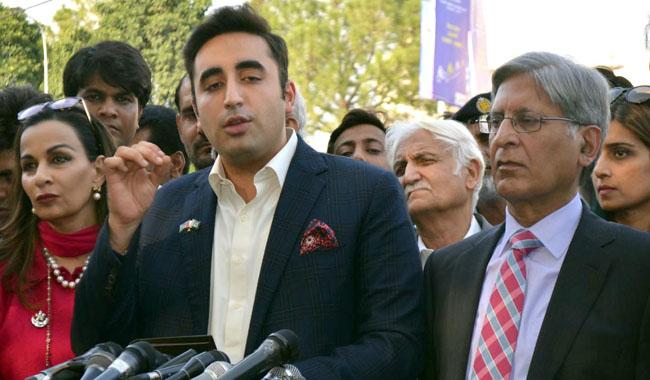
Pakistan Peoples Party (PPP) Chairman Bilawal Bhutto Zardari on Friday castigated Indian Prime Minister Narendra Modi for the threats he hurled at Pakistan and pledged that Islamabad would fight for every single drop of its water share from acknowledged joint water resources of the sub-continent.

According to a statement issued by the PPP, Mr Bhutto said, “Modi can deceive his own people through staking claim to what is not India’s, but Indus Water Treaty is clear. He cannot divert world’s attention from his brutal atrocities in held Kashmir by taking the already settled issues,”. 
Bilawal Bhutto Zardari asked Modi to take care of the world’s stark poverty in his own country and stop throwing gimmicks and threats.
Earlier in the day, Modi said the water from Ravi, Beas and Sutlej rivers was India's by right and that it was not being used by the Indian farmers.
"India's water is flowing into Pakistan," he said. "This water is not reaching to the fields of Indian farmers," the Indian prime minister said.
He said the water that was flowing into Pakistan would be provided to Jammu and Kashmir, Punjab and Indian farmers.
"Water from all three rivers flows into the Pakistani sea," he said. Modi stated that Pakistan was still in shock after India's alleged surgical strikes and said that Islamabad knew now what the Indian army was capable of. 
https://www.thenews.com.pk/latest/167615-Bilawal-Bhutto-hits-back-at-Modi#

Pakistan's Christian couple lynching - A Measure Of Atonement

The Kot Radha Krishan lynching in 2014 left a mark on the nation’s psyche – as it should have. The horrific incident of torture and murder against a Christian couple was made worse by the fact that it was instigated by a local prayer leader over the mosque loudspeaker and carried out by a mob in hundreds while the police and bystanders stood powerless. No amount of retroactive action can undo the damage done, nor can it truly atone for the loss of the young couple’s life, but at least the court can hand out retributive justice, and they have done so.
An antiterrorism court on Wednesday awarded the death penalty to five convicts, including the prayer leader, for their involvement in the lynching. The court also sentenced eight other suspects to two years in jail – presumably those who aided in the act. In very rare cases does the death penalty seem like a suitable punishment, but here it was well and truly merited. The court has given a strong conviction and the collateral message should be clear; misusing the blasphemy law to justify violence will be severely punished.
While we appreciate the conviction handed down by the court it must also be remembered that 93 other suspects – including Yousaf Gujjar, the owner of the kiln – were acquitted as charges were not established against them. Some of this must surely be down to the difficulty of gathering sufficient evidence in a case of such magnitude and complexity, but in a case of such significance, an exemplary judgement that punishes all involved would have set a stronger precedent.
This judgement closes a shameful chapter in Pakistan’s history, but the struggle against injustice and minority discrimination continues. The police officers who shirked their duty to protect the common man to better protect their own skins and join the spectacle still need to be held accountable; this act would not have been possible without the negligence of the authorities.
Avenging Samah and Shehzad Maish isn’t enough, we must prevent future deaths. The root cause of the problem, the blasphemy laws, are still in place in their nefarious form, as is a politico-religious complex designed to protect them. Prayer leaders like Kot Radha Krishan’s are not born in isolation but are created by years of exposure to a toxic, hateful narrative, and encouraged by political parties and legal groups whose sole purpose is to seek out and punish incidents of alleged ‘blasphemy’. Until they are dismantled, we can expect more incidents like Kot Radha Krishan.

http://nation.com.pk/editorials/25-Nov-2016/a-measure-of-atonement

BILAWAL BHUTTO ASKS OTHER PROVINCES TO ADOPT SINDH LEGISLATION ABOUT MINORITIES PROTECTION


The protection of non-Muslim fellow citizens will be a true tribute to the founders of the nation: Chairman PPP 
cybzuxyxaaacvqe

KARACHI, November 25: Chairman Pakistan Peoples Party has said that Sindh has chartered the path towards the fulfilment of the mission of founding fathers of Pakistan and urged other three provinces to follow Sindh government and Assembly, who passed a landmark legislation against forced conversion of non-Muslim citizens of the country yesterday.
It may be recalled that the Sindh Assembly unanimously passed into a law the Sindh Criminal Law (Protection of Minorities) Bill 2015 on Thursday in a bid to prevent and criminalise forced religious conversions and subsequent forced marriages. Under this law, anyone found involved in a forced conversion could face a minimum of five years and a maximum of life in prison along with a fine.
“Islam is world’s fastest growing religion in the history and reports and incidents of forced conversion have been granting pretexts to malign its peaceful and universal teachings,” he said adding that the protection of non-Muslim fellow citizens will be a true tribute to the founders of the nation.
Bilawal Bhutto Zardari said that a strong and democratic Pakistan has no room for any perpetual fear to stay among any part of its society. The law passed by the PPP-dominated Sindh Assembly will address some of the genuine grievances from non-Muslim Pakistanis reaching us through media and the masses.
PPP Chairman appreciated the Sindh government, Sindh Assembly, its members and all those involved in the drafting and passage of the Bill and pledged that PPP will also replicate the same legislation in other three provinces whenever comes to power there.
He further said that the passage of Sindh Criminal Law (Protection of Minorities) Bill and Sindh Minorities Rights Commission Bill was a monumental piece of legislation also undoing the negative image of our country. “Founders of Pakistan and Founders of PPP had the vision of equality and we are moving towards that vision with the support of masses,” he added.
https://ppppunjab.wordpress.com/2016/11/25/ppp4minorities-bilawal-bhutto-asks-other-provinces-to-adopt-sindh-legislation-about-minorities-protection/

BILAWAL BHUTTO CASTIGATES NARENDRA MODI’S BLUFFING OVER PAKISTAN’S SHARE IN INDUS WATER TREATY

Pakistan will fight for every single drop of its water share from acknowledged joint water resources of the sub-continent: Chairman PPP
cyhigvnwiaqnjbn
Karachi, November 25: Chairman Pakistan Peoples Party Bilawal Bhutto Zardari castigated Indian Prime Minister Narendra Modi’s bluffing over Pakistan’s share in Indus Water Treaty and pledged that Pakistan will fight for every single drop of its water share from acknowledged joint water resources of the sub-continent.
“Modi can deceive his own people through staking claim to what is not India’s but Indus Water Treaty is clear. He cannot divert world’s attention from his brutal atrocities in held Kashmir by taking the already settled issues,” PPP Chairman stated.
Bilawal Bhutto Zardari asked Modi to take care of the world’s stark poverty in his own country and stop throwing gimmicks and threats if he has not imagined a nuclear war to eliminate poverty.
https://ppppunjab.wordpress.com/2016/11/25/bilawal-bhutto-castigates-narendra-modis-bluffing-over-pakistans-share-in-indus-water-treaty/