Tuesday, February 16, 2016

We Investigated, Donald Trump is Named in at Least 169 Federal Lawsuits


By 

Donald Trump has been named in at least 169 federal lawsuits, according to a LawNewz.com investigation. They read like a history of  Trump’s business failures, successes, and bombastic personality. With Trump threatening a lawsuit against Ted Cruz, his surge in the polls, and his big win in New Hampshire, we thought now was as good a time as any to review of some of the Donald’s legal skirmishes. The federal lawsuits that we reviewed date back to 1983 and involve everything from business disputes, antitrust claims and, more recently, accusations that Trump’s campaign statements are discriminatory against minorities. Some of the cases have been resolved, some were dismissed as frivolous, and others were privately settled. He’s been sued by celebrities, personal assistants, prisoners, people in mental hospitals, unions, and wealthy businessmen. Of course, Donald Trump has also done his fair share of suing as well.  The lawsuits on both sides provide a unique glimpse into some of the biggest battles involving the presidential candidate.  Just a note, the cases listed below only include those filed in U.S. federal court. Who knows how many others were filed in state courts around the country.
Here are some highlights in chronological order:
  • The U.S. Department of Justice sued Trump for an antitrust violation in 1988 and won. Trump was forced to pay $750,000. The real-estate magnate agreed to pay the penalty stemming from his attempted takeovers of two companies. The feds said that his stock purchases in the companies violated the FTC’s notification requirements.
  • 1990 was a big legal year for Donald Trump. He was named as a defendant in 21 lawsuits filed by different businesses and individuals. Several sued him for securities fraud and breach of contract. Most of the complaints stem from the Trump’s corporation filing for Chapter 11 bankruptcy from creditors following the building of the Taj Mahal Casino in Atlantic City, New Jersey. By 1991, the resort was nearly $3 billion in debt, according to the New York Times.
  • It’s not just Trump being sued. He has sued Palm Beach, where he has a home, at least three different times. In 1992, he filed a $100 million lawsuit over the membership club Mar-a-Lago, the council eventually “acquiesced” and allowed him to make some of his property into a private club. He then sued the Palm Beach Airport for noise violations, and tried to prevent them from expandingnear his private club. Palm Beach County estimates that legal fights with Trump related to the airport have cost taxpayers at least $600,000. The most entertaining is probably the $25 million lawsuit he filed against the town, who cited him for displaying an American flag on his property. “The town council of Palm Beach should be ashamed of itself,” Trump said, according to Politico. “They’re fining me for putting up the American flag. This is probably a first in United States history.”
  • In 1995, the personal assistant to Donald Trump’s ex-wife Marlafiled a federal lawsuit against them that went on for years. It readslike an article in the National Inquirer, with accusations of nude pictures being sent to tabloids, and panty stealing. In 2003, a judge finally dismissed the case, calling the plaintiff’s case full of “ramblings.”
  • New Hampshire man, upset he didn’t appear on Trump’s reality show The Apprentice, sued for allegedly discriminating against an older contestant. The 51-year-old withdrew his lawsuit after entering into a settlement agreement, according to Law 360.
  • A college student filed a lawsuit against Trump’s profit seeking college, Trump University, and a federal judge eventually ordered the school pay $798,000 in legal fees, according to Courthouse News. The student claimed the university and Trump engaged in deceptive practices, and that the seminars were nothing more than infomercials. Trump’s name was eventually dropped from the suit.
  • Rafel Oliveras and Lopez De Victoria who live in Puerto Rico filed a lawsuit last year.  The duo claim “Candidate Donald Trump publicly disgraced and discriminated against Hispanics by wholesale comparing them with murderers, rapists and known gang members.” The couple wants him barred him from seeking the office of President of the United States all together. Good luck, with that one.
  • The most recent lawsuit was filed in December by Federick Banks — who says he is an American Indian Witch. He also sued the CIA director.

From inmates to millionaires, Donald Trump has become a familiar name on courtroom dockets and his legal battles will almost certainly continue so LawNewz will review any new lawsuits filed, or missed, and dutifully add them to our list.
http://lawnewz.com/high-profile/we-investigated-donald-trump-is-named-in-at-least-169-federal-lawsuits/

Op-Ed: In Court Fight, History Backs Obama

By TIMOTHY S. HUEBNER
“THE American people should have a voice in the selection of their next Supreme Court justice,” Senator Mitch McConnell of Kentucky, the Republican majority leader, announced after news of Justice Antonin Scalia’s death. “Therefore, this vacancy should not be filled until we have a new president.” Many of the Republican presidential contenders have heartily endorsed this argument.
Contrary to those claims, however, President Obama has constitutional and historical precedent on his side and should announce a nominee.
Article II of the Constitution directs the president to nominate and, “by and with the Advice and Consent of the Senate,” appoint judges of the Supreme Court. (“He shall,” it says.) Nothing in the Constitution stipulates that this power does not apply in an election year.
In fact, history supports Mr. Obama. On 13 occasions, a vacancy on the nation’s highest court has occurred — through death, retirement or resignation — during a presidential election year. This does not include the most recent and frequently cited example, Justice Anthony Kennedy, who was nominated by Ronald Reagan in November 1987 to fill a vacancy and won confirmation from a Democratic-controlled Senate in February 1988.
In 11 of these instances, the Senate took action on the president’s nomination. In all five cases in which a vacancy occurred during the first quarter of the year the president successfully nominated a replacement.
In the first of these instances, in January 1804, Justice Alfred Moore resigned from the court, and President Thomas Jefferson, who was running for a second term, successfully nominated a successor. In January 1892, the death of Justice Joseph Bradley prompted President Benjamin Harrison to nominate George Shiras Jr. to take his place. Although Mr. Harrison was locked in a race for re-election against Grover Cleveland, the Senate confirmed Mr. Shiras at the end of July. Mr. Harrison lost, but Justice Shiras remained on the court for the next decade.
In January 1916, as President Woodrow Wilson ran for re-election, the death of Justice Joseph Rucker Lamar created one vacancy on the court, and that summer the resignation of Justice Charles Evans Hughes created another. Mr. Wilson filled both seats: the January opening with Louis D. Brandeis, and the July vacancy with John H. Clarke. Mr. Wilson won a second term.
In January 1932, when few expected Herbert Hoover to win a second term, Justice Oliver W. Holmes retired from the court. Rather than wait until after the election, President Hoover nominated and the Senate confirmed Benjamin N. Cardozo, a great justice. Even the Great Depression did not prevent the president and the Senate from fulfilling their constitutional duties.
In March 1888, when Chief Justice Morrison Waite died suddenly and unexpectedly — not unlike Justice Scalia — just as President Grover Cleveland was running for a second term, the president nominated a new chief justice, Melville W. Fuller, to replace him. The Senate confirmed the nomination at the end of July.
Of course, none of these represents an exact parallel to today’s situation. In all but one of these instances, the president and Senate majority were of the same political party, unlike today. Only Mr. Cleveland (a Democrat) faced a Senate controlled by the opposition party, while President Hoover’s Republican Party held only a one-vote majority in the Senate. Still, in both of these instances, the nominees were confirmed by wide margins. In fact, the 1932 confirmation of Justice Cardozo was unanimous.
Three times presidents who were on their way out of office — “lame ducks” in the truest sense — appointed justices to the court. In December 1800, the resignation of Chief Justice Oliver Ellsworth allowed John Adams, who had already lost to Thomas Jefferson, the chance to select the justice’s successor. Mr. Adams chose John Marshall, who went on to serve 34 years as the nation’s fourth and greatest chief justice. In February 1845, a month before he left office, John Tyler nominated Samuel Nelson, who won Senate confirmation and served for the next 27 years.
And when the resignation of Justice William Strong occurred after the 1880 election, the departing president, Rutherford B. Hayes — not his successor, James A. Garfield — nominated Justice Strong’s successor, Justice William B. Woods. In the Adams and Tyler examples, two unpopular departing executives carried out their constitutional duties and overcame political factionalism from inside and outside of their own parties.
To be sure, the Senate has rejected nominees for political reasons, increased the size of the court (for instance, during the Civil War) or reduced it (immediately after the Civil War). But in cases when vacancies have arisen during election years, the weight of history is clearly on the side of the president naming a successor and the Senate acting on that nomination.
The Republicans, who frequently cite the Constitution and look to historical precedent, have an opportunity to be true to their principles. They should ignore Donald Trump’s urging to “delay, delay, delay,” and help ensure our Constitution functions as it should — and as it has in the past.

Video - Hillary Clinton Ready To Make Her Case In Nevada

Video - Hillary Clinton's historic meeting with Rev. Al Sharpton and other African-American leaders

President Obama's Remarks at the Opening Session of the U.S.-ASEAN Summit

Pashto song - Gulnar Begum -- wakht maspakheen de

Profiting off of chaos: How the U.S. privatized its war in Afghanistan — Antony Loewenstein on “Disaster Capitalism”


By Ben Norton


Journalist Antony Loewenstein tells Salon how corporations exploit violent conflicts in Afghanistan and beyond.

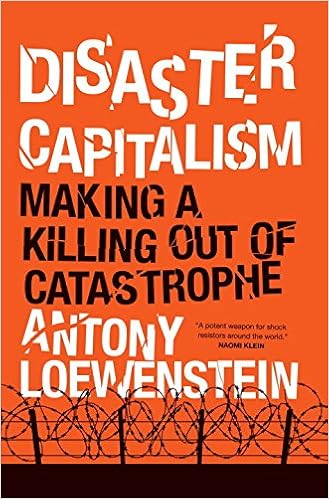
“The corporation is now fundamentally more powerful than the nation-state,” writes journalist Antony Loewenstein in his new book “Disaster Capitalism: Making a Killing out of Catastrophe.”

“Many ongoing crises seem to have been sustained by businesses to fuel industries in which they have a financial stake,” he explains. “Companies that entrench a crisis and then sell themselves as the only ones who can resolve it.”
Loewenstein, a columnist for the Guardian, traveled the world in order to understand just how multinational corporations profit off of such chaos. The Australian-born yet decidedly cosmopolitan journalist devotes the meticulous and daring tome to reporting on the foreign exploitation he witnessed in Haiti after the 2010 earthquake and the destructive mining boom in Papua New Guinea, along with seemingly dystopian prison privatization in the U.S., predatory for-profit detention centers for refugees in Australia and ruthless austerity in Greece.

In the book, Loewenstein expertly shows how corporate control of not just the domestic, but also the global political system has led to a drastic “erosion of democracy.”
A quote he chooses as the overture sets the tone for the ensuing pages. “It is profitable to let the world go to hell,” warns scholar Jørgen Randers, a professor of climate strategy at Norwegian Business School, while railing against “the tyranny of the short term.” This quote succinctly summarizes exactly how disaster capitalism operates.
The concept of disaster capitalism is derived from a similar work, “The Shock Doctrine: The Rise of Disaster Capitalism,” an influential 2007 book by journalist Naomi Klein. In some ways, “Disaster Capitalism” can be seen as a sequel to Klein’s book, yet Loewenstein’s formidable work stands out in its own right.
Salon sat down with the journalist to discuss one of the more explosive controversies he uncovers in his book: how the U.S. war in Afghanistan was privatized.
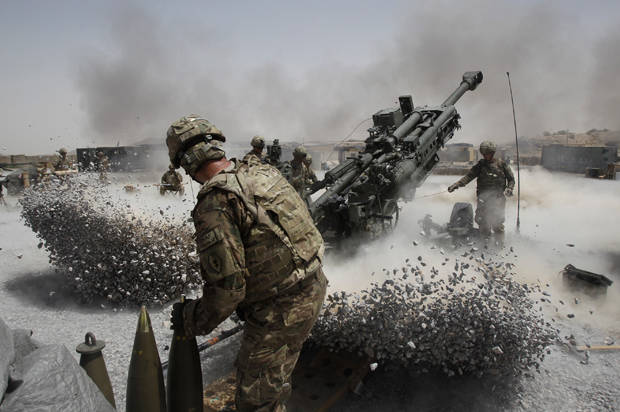
Loewenstein spent time in war-torn Afghanistan, as well as neighboring Pakistan, researching for “Disaster Capitalism.” His compelling recounting of his experiences paints a picture of a crisis-stricken world in which virtually everything has been privatized, in which private military companies, or PMCs — 21st-century warlords — exercise more control over countries than their own inhabitants.
A slew of Western multinational corporations quite familiar to Americans appear throughout the chapter, including Northrop Grumman, DynCorp, Halliburton and more.
The personal interactions Loewenstein has with military contractors on the ground are some of the most fascinating. A British PMC managing director the journalist met in Kabul, whom he refers to simply as Jack, bluntly admits his corporation “survives off chaos.”
Predicting future U.S. wars in Africa, Iran and Korea, the corporate military executive tells Loewenstein, “If we can make money, we’ll go there.”
“I’m my own government,” Jack boldly declares.
“Disaster Capitalism” bolsters Loewenstein’s growing body of important work. Among his other books are “Profits of Doom: How Vulture Capitalism Is Swallowing the World,” a kind of 2013 prequel to “Disaster Capitalism”; “The Blogging Revolution,” a 2008 investigation of how bloggers around the world challenge their oppressive governments; and the best-selling “My Israel Question,” an exhaustive 2007 account of Israel’s crimes against the Palestinians, and a profound and intimate exploration of the author’s Jewish identity.
For his previous books, Loewenstein traveled widely, from Palestine to Iran, from Saudi Arabia to China, from Cuba to Egypt and beyond. For “Disaster Capitalism,” Loewenstein went even further. When Salon contacted him to schedule an interview, the intrepid journalist seemed every time to not only be in a different country, but even on a different continent.
This is the first in a two-part review of Loewenstein’s reporting in “Disaster Capitalism.” Another piece will be devoted to Loewenstein’s findings in Haiti, a small country that has been virtually taken over by Western NGOs. Loewenstein spoke with Salon about both little-discussed yet tremendously important issues.
Jack, the British PMC managing director you met in Kabul, said “we don’t call ourselves mercenaries.” Are they mercenaries? Should they be called that?
Not all private security interests in Afghanistan are mercenaries; many men are just security guards protecting embassies or Western interests. But mercenaries are a little-reported aspect of the war, either directly engaged in killing or capturing suspected insurgents (a key failing of the Western war in the country has been its insistence on designating any opponent of the conflict as “Taliban” and therefore “terrorist”) or training Afghan forces to do the same thing, often inflaming conflicts in local villages.
You call imperialism “the dirtiest word in modern English” and note, “There is not a country I visited for this book in which the legacy of imperialism does not scar the landscape and people.” You also point out that “there were often more contractors than soldiers in Afghanistan.” Jack said it is cheaper for countries to use PMCs than it is to put their own boots on the ground.
Do you see this as an outsourcing of imperialism and neo-colonialism, if you will? Is this how war will work in the future?
The U.S. government, along with its many allies, likes using private assets to further geo-political interests. The initial motivation when invading Afghanistan was revenge for 9/11, but this quickly morphed into a messy project to control the nation and partner with a corrupt central government and warlords across the country.
The reason I use the term “imperialism” to describe the wars in Afghanistan, Iraq, Libya and beyond — along with U.S.-backed autocratic partners in the Middle East, South America, Asia and Africa — is that there’s no other way to describe attempts to secure energy reserves and economic influence in the modern age.
War has always worked this way, but the inclusion of globalized private entities removes one more level of accountability. Today in Afghanistan there are around30,000 contractors working for the Pentagon alongside the U.S. military and Special Forces. And the Pentagon won’t acknowledge how many soldiers are truly fighting ISIS in Iraq.
Can you talk more about Afghanistan’s enormous natural resources, the TAPI pipeline, drugs, etc.? This is little discussed. Why do you think that is?
During both the Soviet and American occupations of Afghanistan, huge discoveries of natural resources occurred. There is an estimated U.S. $1-4 trillion of untapped minerals, oil and gas and yet most of it is unreachable due to security concerns and corruption.
I have been investigating these issues for my book, and also the documentary in progress, “Disaster Capitalism,” with New York filmmaker Thor Neureiter.
Natural resources will not sustain Afghanistan after most of the Western aid dries up, and neither the U.S. government nor Afghan authorities have any answers for long-term sustainability (the proposed TAPI pipeline crossing Pakistan, Afghanistan, India and Turkmenistan is ambitious but prone to problems).
Drug cultivation has soared during the U.S. occupation. Too many Western reporters have framed the Afghan war as simply between U.S. forces and the Taliban when in reality Afghanistan has a complex history that never tolerates long-term occupation.

You write about the “military-enforced bubble,” in which the foreign occupying army is completely out of touch with the locals. An Afghan translator told you the U.S. “only understood force.” Can you expand?
A constant refrain I heard in Afghanistan, during my visits there in 2012 and 2015, was the inability and unwillingness of U.S. and foreign forces to listen to the Afghan people. It’s one reason the U.S. relied on faulty intelligence to understand what Afghans were thinking about their presence.
As the security situation deteriorated after 2004-2005, and U.S. forces falsely framed any Afghan who opposed the occupation as Taliban, the U.S. used a failedcounterinsurgency program (designed by David Petraeus and Australian David Kilcullen) that inflamed Afghans.
There has never been accountability for this plan, including by the countless Western journalists seduced by U.S. military talking points.
You talk about the relationships between the U.S. military, USAID and private companies, and say “military and humanitarian work were all too often fused in the post-9/11 world.” Can you comment?
A key component of USAID in the post 9/11 world is using the military to deliver its goals. This fundamentally misunderstands the importance of maintaining neutrality when delivering aid.
The U.S. government’s SIGAR (Special Inspector General for Afghanistan Reconstruction) regularly reports on the U.S. $110 billion spent in Afghanistan on so-called nation building since October 2001, and how USAID was regularly used as a mask for a corporate and military agenda across the country.
Where else is the private security industry growing?
The definition of private security is expanding to include the growth of private armies in often unregulated and chaotic places (from Iraq to Afghanistan and Libya to Syria). South African mercenaries were working in Nigeria against Boko Haram and Colombian forces operated in Yemen thanks to the United Arab Emirates.
You write “the Bush administration saw its ‘war on terror’ as a boon for the private sector.” Has the Obama administration has done the same?
Post 9/11, the Bush administration saw an opportunity to implement an extreme neoconservative agenda with the support of its friends in the private sector. They claimed it would save money and be more efficient but the reality was uncontrolled mercenaries and private security in countless war zones.
When Barack Obama was a candidate for President in 2007, he pledged to change this out-of-control contracting since 9/11. However, nothing has improved since he took office due to a number of factors including failing campaign finance laws and Congressional inertia to punish corporations breaking the law.
You conclude the chapter saying, “we created chaos.” What do you think the legacy is of the now 15-year U.S. occupation, especially now, with the rise of ISIS and the resurgence of the Taliban?
The Taliban now control more of Afghanistan than at any time since October 2001. President Obama has now pledged to maintain an indefinite occupation and the U.S. military claims U.S. forces will need to stay in the country for decades to support a failing Afghan state.
The presence of ISIS only complicates the picture, especially for Afghan civilians.
The longest war in U.S. history has not achieved any of its stated goals and the Afghan people, often forced to choose between the Taliban and a U.S.-backed warlord, often pick the former. That’s the legacy of the U.S. war.

Pakistan - ‏چیرمین پی پی پی بلاول بھٹو زرداری کا ’’ہندو میریج بل‘‘ کی منظوری پر مبارکباد


Proud of  Govt &  4 being 1st in the nation 2 pass Hindu marriage bill.Leading the way towards 4 all.Jinnah's Pakistan.


 پاکستان پیپلزپارٹی کے چیئرمین بلاول بھٹو زرداری نے آج سندھ اسیمبلی کی جانب سے اقلیت ہندوبرادری کی شادیوں کے متعلق قانون سازی کے حوالے سے ’’ہندو میریج بل‘‘ منظور کرنے پرسندہ اسیمبلی ممبران کو خراج تحسین پیش کرتے ہوئے تمام ہندو برادری کو مبارکباد دی ہے، سندہ اسیمبلی پاکستان کی پہلی اسیمبلی ہے جس نے ہندو برادری کی شادیوں کے متعلق قانونسازی کا بل منظور کیا ہے، بلاول بھٹو زرداری نے کہا کہ پاکستان پیپلزپارٹی ، اس کے بانی شہید ذوالفقار علی بھٹو اور شہید محترمہ بینظیر بھٹو کے ویژن کے تحت پارٹی کی صوبائی حکومت نے سندھ اسیمبلی سے یہ بل منظور کرکے ایک بار پھر یہ ثابت کیا ہے کہ پاکستان پیپلزپارٹی ہی ملک کی اقلیتی آبادی کے بنیادی حقوق کا تحفظ اور برابری کے بنیاد پر شہری حقوق میسر کرسکتی ہے،بلاول بھٹو زرداری نے کہا کہ پاکستان کے وجود کے بعد پہلی بار پیپلزپارٹی نے ہندو برادری کے اس بنیادی مسئلے کو حل کرکے انہیں ملک کے تمام شہریوں کے برابر قانونسازی کا حق میسر کیا ہے کیونکہ شادی کی رجسٹریشن کے حوالے سے کوئی قانون نہ ہونے کی وجہ سے ملک میں بسنے والی اقلیت ہندو برادری متعدد حوالوں سے مسائل سے دوچار رہتی تھی، چیئرمین پیپلزپارٹی نے کہا کہ پارٹی ہندو برادری سمیت تمام اقلیتوں کے بنیادی حقوق کے تحفظ لیے اپنی جدوجہد جاری رکھے گی۔

Pakistan - The Hindu Marriage Bill - Guilt-Edged Success


It is inconceivable in most countries that a legal and traditional institution as strong as the marriage cannot be given constitutional recognition.
The minorities of Pakistan, specifically the Hindu community, since the creation of the state could not register their marriages. They had no proof, and for 68 years wherever these communities had to face officialdom or any activity that required documentation they ran into trouble.
On Monday, the Sindh Assembly passed the Hindu Marriage Bill 2016, becoming the first assembly in Pakistan to pass the respective bill. The bill corrects this legal loophole and provides methods of enforcement of registration. While the Sindh assembly must be praised for paying attention to an area that required legislation and using their powers to fix it, any congratulations must be tinged with the knowledge that it took so long to give religious minorities this right, and that the other provinces are yet to do so.
However they are not far behind. A similar resolution is under discussion in the Punjab Assembly, meanwhile Balochistan and Khyber Pakhtunkhawa have ceded the authority to legislate on this matter to the National Assembly - where the standing committee on law and justice has already approved the draft. If the political parties stay on course, soon Pakistan may have nationwide protection for religious minorities. One hopes that this will to reform outdated and insufficient laws continues, and other glaring lacunas as this one can be mopped up - for a beginning.
Keeping with the prevalent fashion in Pakistan, the Hindu Marriage Bill - the version being debated in the CA - does protect religious minorities, but one clause threatens to undo it all. Under the insistence of - you guessed it, the infamous Maulana Mohammad Khan Sheerani, the JUI-F MNA and chairman of the Council of Islamic Ideology (CII) - a clause has been included that annuls a marriage if any one spouse changes their religion. Even if we forget the fact that minority leaders and civil rights activists are in clamour - since they are direct stakeholders, that in itself should be enough - equating legal sanctions with religious conversions is breach of the right to religious freedom. The bill would be useless if it adds to the oppression of minorities.

Pakistan's Sindh province allows Hindu marriages to be registered

A province in Pakistan has become the first in the largely Muslim country to give Hindus the right to register their marriage officially.
The bill was passed on Monday by lawmakers in Sindh - home to many of Pakistan's three million Hindus.
Activists say that without such a law, Hindu women are targets for forced conversions, abduction and rape, and there is a lack of rights for widows.
The national assembly is considering a wider law recognising Hindu marriages.
Pakistan's other main religious minority, Christians, have a colonial-era law recognising their marriages. However, Hindus have never had any legal framework to register their unions until now.
Many Hindu couples say this has given them logistical problems with basic activities such as opening bank accounts, applying for visas, getting national identity cards and getting shares of property, because they lacked proof of marriage.

Controversial clause

Under the new law, Hindus above the age of 18 in Sindh can register their marriages. It can be applied retroactively to existing unions.
However, the legislation also contains a controversial clause that allows the marriage to be annulled if any spouse converts.

Analysis: Shahzeb Jillani, BBC News, Karachi
A Hindu bride and her party prepare as they wait for their wedding to start during a mass marriage ceremony in Karachi in Pakistan's Sindh province on 24 January 2016Image copyrightReuters
Image captionHindus are said to make up more than 2% of Pakistan's population
For decades, Pakistan's Hindus have faced discrimination and religious persecution.
In rural Sindh, young Hindu girls have been a regular target for abductions, forced religious conversions and underage marriages. The perpetrators of these crimes are often protected by local influential figures linked to Islamic seminaries.
The provincial government says the new law will help discourage many of these crimes. Rights activists have described it as a progressive measure and a step in the right direction.
"Passing the law is one thing, the real test will be how the authorities will go about enforcing it," said Zohra Yusuf, of the Human Rights Commission of Pakistan.
But the head of the Pakistan Hindu Council, Dr Ramesh Kumar Vankwani, told the BBC the law did not go far enough to protect Hindu women from forced conversions.
He said the provincial legislation was passed in haste at a time when the Pakistani parliament was debating some of the more controversial sections of the proposed national law.

Meanwhile, the National Assembly is considering a wider bill on recognising Hindu marriage rights, including issues such as inheritance, divorce, and child maintenance.
The bill comes at a time of increased violence against Pakistan's minorities. Some Hindus have fled to India in recent years citing discrimination and religious persecution.
Pakistan was created in 1947 after India was partitioned at the end of British rule. Today, Hindus are said to make up more than 2% of Pakistan's population.