Saturday, February 6, 2016

Pakistan: A Paradoxical Divinity

By Ayesha Malik

The 4 January 2016 marked five years since the Punjab governor Salman Taseer was killed by a member of his own security detail in a popular market in Pakistan’s capital city. His self-confessed assassin, 26-year-old Mumtaz Qadri, told interrogators he had killed the governor for his calls to reform Pakistan’s blasphemy law and for his support of the Christian woman, Asia Bibi, who was accused of — and ultimately sentenced to death for — blaspheming the Prophet Muhammed. Mr Qadri looked revoltingly surreal in a photograph taken as he was driven away after the shooting: unrepentant and claiming to be proud to have killed a blasphemer.
Inasmuch as the assassination was shocking, even more sickening was the response from the country’s lawyers. As Mr Qadri appeared in court the day after gunning down the man he was meant to protect, hundreds of lawyers gathered to shower petals on the assassin, some in the crowd slapping his back and others even kissing his cheek. In a country where 42% of the population is illiterate and over 6.7 million children remain out of school, the nauseating reactions to Mr Taseer’s assassination drove home a profound sense of intellectual and moral decay ravaging Pakistan’s socio-legal fabric. Mainstream religious parties applauded the killing and supporters held rallies holdingplacards saluting him as a hero.
Five years on and Pakistan’s draconian blasphemy law continues to inspire the same virulence that motivated Mr Qadri to take Mr Taseer’s life. In November 2014, a Christian couple was tortured by a thousand-strong mob and forced into a brick kiln for allegedly having desecrated pages of the Quran. In Jhelum last November, a similar mob — fanned by local clerics — set ablaze a chipboard factory owned by members of the Ahmadiyya Muslim Community on allegations of desecrating the Quran. Paradoxically, Pakistan’s notorious blasphemy law was originally enacted in 1860 by the British colonial state in order to protect the multi-religious fabric of sub-continental society. Crucially, this version of the law was to apply across denominations. Yet, mounting pressure from Pakistan’s religious right resulted in a law that now metes out the death penalty to blasphemers, regardless of whether the blasphemy is willful or not. All this notwithstanding that there exists no textual evidence in the Quran to support the contention that the punishment for blasphemy is death. In fact, no physical punishment has been prescribed at all — thecommandment simply being to “turn away”.
What dawns with the New Year seems to be a series of paradoxes capturing the heart of Pakistani society. As Mr Qadri sits on death row, so does Asia Bibi, a woman potentially facing the death penalty for having drunk water out of the same vessel as other village women while picking berries in a field. The Supreme Court has only last summer temporarily stayed Ms Bibi’s death sentence granting her leave to appeal after being on death row for five years. Whatever the merits of the Court’s decision, vigilante justice abounds. A day following the fifth anniversary of Mr. Taseer’s death, Barelvi clerics were demanding the immediate release of Mr Qadri, threatening to topple the government if it proceeded with his execution.
As January brings with it another heart-wrenching attack, this time on a university in Charsadda killing at least 20 people, we must ask whether Pakistan has assumed the mantle of becoming “God’s faithful executioner” on earth? Radical clerics and their protégés populate their sermons with fatwas and ultimatums in order to silence dissent. The irony is profound when we study the life of the man whose reputational and reverential status they claim to protect. The Prophet routinely faced allegations of blasphemy himself, often being referred to as a “madman” a “forger” and “a man bewitched”. Yet, he remained exemplary in his decorum and tolerance towards those who derided him, on one occasion stating that, in line with “the general thrust of his revelation and message”, he had been “charged with the obligation to forgive”. Hence, in the grand finale of paradoxes, Pakistan takes the cake for creating a hero out of a villain and for patronising and humiliating the victim. And here, the ultimate paradox: all this being orchestrated in the name of seeking divine succour, with the history pages of divinity ironically imploring: “not in my name”.


https://www.rabwah.net/pakistan-a-paradoxical-divinity/

Pakistan - TERRORISTS STRENGTHENING THEIR NETWORK BY MARRYING GIRLS OF SAUDI FUNDED MAD-RASSAS

A private television channel has revealed in a report the way banned organizations have adopted to strengthen their network. According to the report, men and women of Jihadi groups are marrying each other to strengthen their network, girls studying in extremist madaris are also the target of Jihadi groups because such girls easily get influenced towards terrorism carried out in the name of religion. The report told that terrorists involved in Safoora incident have been using this scheme and terrorist groups had strengthen their network by performing more than 100 marriages last year. 

http://www.shiitenews.org/index.php/pakistan/item/20999-terrorists-strengthening-their-network-by-marrying-girls-of-madaris

Pakistan - On mother tongues


By Afrasiab Khattak

One of the first major political controversies faced by Pakistan after its creation in 1947 rose on the question of national language. Bengalis in the then East Pakistan, who not only constituted majority of the new country’s population but had also played the role of a vanguard in its creation, naturally expected that Bengali would be adopted as the national language of Pakistan. But that was not to be. The Urdu speaking intelligentsia coming from central and northern India, also supported by Punjabi elites decided to choose Urdu as the national language, a language that was not the mother tongue of any ethnic or cultural community living in Pakistan. They not only vehemently rejected the Bengali demand but also used brute force of the state to suppress it. On February 21, 1952 law enforcement agencies opened fire on Bengali students in Dhaka who were agitating in favor of their language killing a number of them. According to some political observers the seeds of future Bangladesh were sown that very day. The monument built in memory of the martyrs of that day subsequently became a national monument of the independent Bangladesh. But not many Pakistani have noticed the fact that it was on the basis of this incident that UNESCO started celebrating February 21 as International Day of Mother tongues. Interestingly there hasn’t been any major discussion in the country on this issue or our history in this regard to draw some lessons for the future. Apart of some brilliant books written by Dr. Tariq Rehman and a few others there is no quality research work on the subject. 
The aforementioned historical context is significant for understanding the evolution of state policy towards major and minor languages spoken in different parts of Pakistan. Because language is not just the backbone of cultural identity of individuals and communities but it also has its own significance for political power and socio cultural domination. It is not only significant ingredient of the predominant socio political discourse in a society but is very often its conveyer belt so to say. Relations between the languages of different communities represent the parity or disparity prevalent in that society at a given point in time. That is why correct handling of this sensitive question is crucial in multi ethnic and multi cultural societies in the project of nation building and state building.
Muhajir intelligentsia, coming from other parts of India, had little idea about the tremendous cultural diversity and richness of the areas that now constitute Pakistan. Claiming a monopoly over the definition of the cultural personality of the new state they failed to appreciate the fact that they were dealing with cultures that had their origin in some of the classic civilizations of the world like Meher Garh, Indus Valley and Gandahara Civilizations. In the deep wave of hatred in the aftermath of bloody communal riots in the Punjab during the partition, “common” language or culture with non-Muslims was regarded unthinkable. There were non-communal voices among progressive circles, but they were a tiny minority. 
It was in this context that mother tongues in Pakistan got quite a raw deal. Except Sindhi, which had a long history of development in journalism and education, other languages including Punjabi, Siraiki, Pashto, Balochi and many others were completely ignored. The term regional language was coined and used in journalistic parlance even for some of the most ancient and rich languages of the Indo Aryan Family of languages. In the 1973 Constitution which is a federal constitution there are only two important references to the language question. In the Chapter on Fundamental Rights article 28 recognizes the right of citizens to preserve and promote a language and a script. But this right is subject to Article 251 which declares Urdu as national language of the country and talks of arrangements for its use for official and other purposes. English was supposed to be used for 15 years in transition period but it is for all practical purposes the official language. Urdu is dominating official and private media both print and electronic. However, without prejudice to national language Article 251 recognizes the right of the provincial assemblies to legislate for the development of provincial languages, but provincial assemblies and governments have a dismal record in this regard.
The principle of primary education in mother tongue is now recognized world wide as the most efficient way for learning. Promoting it is one of the aims of celebrating February 21 as International Day of Mother Tongues. In Pakistan only Sindhi language has achieved this status. In Pakhtunkhwa a law was passed to develop Pashto,Hindko, Siraiki, Kohistani and Khowar (Chitrali) as medium of instruction during the previous government but unfortunately it is not being implemented after the change of the government. Attitude towards Punjabi is changing in positive sense in recent years although it is still short of getting recognized as medium of instruction. Balochi, Brahvi and Pashto in Balochistan have yet to receive attention for promotion as languages of the province. The general decline of film industry in Pakistan has also been a set back for films in Pakistani languages that were quite popular and were doing roaring business at one stage. 
During the discussion on 18th Constitutional Amendment there was a proposal to include major languages spoken in the country as Pakistani languages but due to lack of consensus among political parties this proposed amendment could not be implemented. Although many of the political parties agreed with the idea, the back log to be cleared by the 18th Amendment was too big to provide space to so many things. In India Hindi is formally the official language (with English practically running the show) but the Indian Constitution recognizes 22 major languages as Indian languages. This is something that we also need to do in Pakistan to give recognition to the languages of the land (the mother tongues). Literary festivals are becoming a popular phenomena in urban centers of the country. But they are also mostly confined to Urdu and English. Provincial legislatures and governments need to promote languages spoken by a great majority of the people. Diversity is our strength and recognizing it will promote unity. Denying or negatively provoking will create discord and division.


Suicide bomber kills nine, injures dozens, in Pakistan city of Quetta

At least nine people were killed and 35 wounded when a suicide bomber blew himself up near a military convoy in Pakistan's western city of Quetta on Saturday, police and hospital officials said.
Pakistani Taliban spokesman Muhammad Khurasani told Reuters that the group, also known as the TTP, was responsible for the attack in the capital of the province of Baluchistan.
The bombing was the latest in a region which is home to the planned route of a $46 billion China-Pakistan economic corridor.
"The suicide bomber was riding a bicycle close to a Frontier Corps vehicle," said senior police official Imtiaz Shah, referring to the branch of Pakistan's paramilitary forces targeted in the attack.
    At least three Frontier Corps personnel were killed and 15 were injured in the attack that occurred in the city center in the late afternoon, Frontier Corps spokesman Khan Wasey said.
A 12-year-old girl was also among the dead, said Ajab Khan, a doctor at the city's Civil Hospital, where the casualties were taken.
Rich in resources, Baluchistan is at the heart of the multi-billion-dollar energy and infrastructure projects which China and Pakistan are planning along a corridor stretching from the Arabian Sea to China's Xinjiang region.
The province, the poorest and least developed in Pakistan, has seen nearly a decade of separatist violence against the government and non-Baluch ethnic groups.
Baluch activists and human rights groups claim the military has carried out a campaign of kidnapping, torture and extrajudicial killing of suspected separatists, and a security crackdown has severely limited freedom of movement.

In January, five Pakistani soldiers and two coast guard members were killed in separate attacks in the province, and a suicide bomber killed at least 15 people outside a polio eradication center in Quetta.

BILAWAL BHUTTO STRONGLY CONDEMNS BLAST ATTACK IN QUETTA

Bilawal Bhutto Zardari Chairman Pakistan Peoples Party has strongly condemned blast attack in Quetta, in which 9 persons were reported martyred this evening.
In a Press Statement, PPP Chairman said that terrorists continue to target the innocent citizens. Bilawal Bhutto Zardari said that terrorism is monster and it can only be eliminated through a greater national unity and strengthening of democracy
Bilawal Bhutto expressed sympathies with families who near and dear ones were martyred in this incident and prayed for early recovery of injured.

https://ppppunjab.wordpress.com/

Pashto Music - Sardar Ali Takkar - ژوند ته اوګوره - حمزه بابا

Friday, February 5, 2016

Video - Female Senators Rally for Clinton in N.H.

Video - Hillary Clinton: 'I will be in Flint, Michigan on Sunday'

Video - Hillary Clinton dances to Rachel Platten's 'Fight Song' in Mancheste

Video - Hillary Clinton to Bernie Sanders supporters: 'I am for you'

As Yemen Bleeds, British Profits from Weapons Sales “Bury Human Rights”


It is more than possible to speculate why Prime Minister David Cameron has declared it his mission to scrap the Human Rights Act – which is incorporated into the European Convention on Human Rights – it appears he simply does not believe in human rights.
For example, the fact that Saudi Arabia executed – including beheadings – forty seven people in one day last month, displaying their bodies from gibbets, failed to deter him from having British military experts to work with their Saudi counterparts, advising on which targets – and which people, it seems – to bomb in Yemen. Parliament has not been consulted, thus, without a chance to debate and vote, democracy too has been suspended.
 The fact that in May 2013 Saudi also beheaded five Yemenis, then used cranes to display their headless bodies against the skyline (Al-Akhbar, 21st May 2013) also did not trouble him. Neither did that by 10thNovember 2015, the year’s total of executions had already reached one hundred and fifty one, the highest for twenty years, in what Amnesty International called “a bloody executions spree.”
 But why care about human rights or outright savagery when there are arms to be sold? As written previously, in one three month period last year UK arms sales to Saudi soared by 11,000%. From a mere nine million pounds the preceding three months: “The exact figure for British arms export licences from July to September 2015 was £1,066,216,510 in so-called ‘ML4’ export licences, which relate to bombs, missiles, rockets, and components of those items.”
Cameron’s government treats such barbarism with astonishing sanguinity. For instance it has come to light that in 2011 the UK drew up a list of thirty: “ ‘priority countries’ where British diplomats would be ‘encouraged’ to ‘proactively drive forward’ and make progress towards abolishing the death penalty over five years.’ “
Saudi Arabia was not on the list, an omission which Amnesty International’s Head of Policy, Alan Hogarth called “astonishing.” (Independent, 5th January 2016.) However, a Foreign Office spokeswoman told the Independent that: “A full list of countries of concern was published in March 2015 in the (UK) Annual Human Rights Report and that includes Saudi Arabia and its use of the death penalty.”
Wrong. In the Report (1) under “Abolition of the Death Penalty”, there is much concentration on countries in the (UK) “Commonwealth Caribbean” and a casual, subservient nod at the US, but no mention of Saudi.
Under “The Death Penalty”, Jordan and Pakistan, were mentioned, as was the: “particular focus on two … regions, Asia and the Commonwealth Caribbean.” Singapore, Malaysia, China and Taiwan, Japan (the latter, three executions in 2014) Suriname and Vietnam are cited. Saudi Arabia is nowhere to be found.
Under the heading Torture Prevention, there is a quote by David Cameron: “Torture is always wrong”, (9thDecember, 2014.) Paragraph one includes: “The impact on victims, their families and their communities is devastating. It can never be justified in any circumstance.” A number of countries are listed. No prizes for guessing, in spite of mediaeval torture practices, which is not.
However, under “Criminal Justice and the Rule of Law” there is:
“The Foreign & Commonwealth Office (FCO) issued revised guidance on the human rights aspects of OSJA (Overseas Security and Justice Guidance) in February 2014. The guidance ensures that officials do their utmost to identify risks of UK actions causing unintended human rights consequences.”
What an irony as David Cameron is currently moving heaven and earth to halt legal action against British soldiers accused of acts of extreme human rights abuses in Iraq. As Lesley Docksey has written (2):
“The said ‘brave servicemen’ are in danger of being taken to Court over their abusive treatment, and in some cases murder, of Iraqi detainees during the invasion of Iraq.  Hundreds of complaints have been lodged with the Iraq Historic Allegations Team (IHAT), which was investigating between 1,300 -1,500 cases.  Many are simple complaints of ill treatment during detention, but some are far more serious:
        * Death(s) while detained by the British Army
        * Deaths outside British Army base or after contact with British Army
        * Many deaths following ‘shooting incidents.’ “
Worse, the British government is considering taking action against one of the law firms dealing with some of the cases, Leigh Day, with another, Public Interest Lawyers, in their sights. When it comes to hypocrisy, David Cameron is hard to beat.
Worth noting is that in the UK government’s own list of “countries of humanitarian concern”, according to the Campaign Against the Arms Trade (CAAT), the UK has sold weapons to twenty four out of twenty seven of them, with Saudi Arabia in a deal to purchase seventy two Eurofighter Typhoon aircraft in a deal worth an eventual £4.5 Billion. (3)
“Aside from the purchase of the Typhoon jets, major deals between Saudi Arabia and British companies include a £1.6bn agreement for Hawk fighter jets and bulk sales of machine guns, bombs and tear gas.
“In fact, Saudi Arabia have access to twice as many British-made warplanes as the RAF does, while bombs originally stockpiled by Britain’s Armed Forces are being sent to Saudi Arabia” – to currently decimate Yemen.
“The overriding message is that human rights are playing second fiddle to company profits,” said CAAT spokesperson Andrew Smith, adding: “The Government and local authorities up and down the country are profiting directly from the bombing of Yemen. Challenging them to divest from Saudi Arabia … is something people can do directly.”
In the light of a fifty one page UN Report on the bombing of Yemen obtained by various parties on 27thJanuary, Labour Leader Jeremy Corbyn called for an immediate suspension of arms sales to Saudi, pending the outcome of an independent Inquiry. David Cameron stated, farcically, that: “Britain had the strictest rules governing arms sales of almost any country, anywhere in the world.”
However, in one of the key findings, the UN Report (4) says:
“The panel documented that the coalition had conducted airstrikes targeting civilians and civilian objects, in violation of international humanitarian law, including camps for internally displaced persons and refugees; civilian gatherings, including weddings; civilian vehicles, including buses; civilian residential areas; medical facilities; schools; mosques; markets, factories and food storage warehouses; and other essential civilian infrastructure, such as the airport in Sana’a, the port in Hudaydah and domestic transit routes.”
It adds: “The panel documented 119 coalition sorties relating to violations of international humanitarian law.”
It also reported cases of civilians fleeing and being chased and shot at by helicopters.
Moreover it stated that the humanitarian crisis was compounded by the Saudi blockade of ships carrying fuel, food and other essentials that are trying to reach Yemen.
The panel said that: “civilians are disproportionately affected” and deplored tactics that: “constitute the prohibited use of starvation as a method of warfare.” (Emphasis added.)
David Mepham, UK Director of Human Rights Watch commented: “For almost a year, (Foreign Secretary Philip) Hammond has made the false and misleading claim that there is no evidence of laws of war violations by the UK’s Saudi ally and other members of the coalition.”
The UK Ministry of Defence, declining to say how many UK military advisers were in Saudi Command and Control Centres, said that the UK was: “ … offering Saudi Arabia advice and training on best practice targeting techniques to help ensure continued compliance with International Humanitarian Law.” (Guardian, 27th January 2016.) Yet another quote from the ‘You could not make this up’ files.
It has to be wondered whether the Ministry’s “best practice targeting techniques” includes the near one hundred attacks on medical facilities between March and October 2015, a practice which compelled the International Committee of the Red Cross, in November, to declare the organization: “appalled by the continuing attacks on health care facilities in Yemen …” (5)
They issued their statement after: “Al-Thawra hospital, one of the main health care facilities in Taiz which is providing treatment for about fifty injured people every day was reportedly shelled several times …)
“It is not the first time health facilities have been attacked … Close to a hundred similar incidents have been reported since March 2015. (Emphases added.)
“Deliberate attacks on health facilities represent a flagrant violation of international humanitarian law (IHL).”
An earlier attempt to have the UN Human rights Council to establish an Inquiry failed due to objections from Saudi Arabia, who, with help from Britain, currently Chairs an influential panel on the same Human Rights Council. Farce is alive and well in the corridors of the UN.
The repeated attacks on a targeted medical facility and other IHL protected buildings and places of sanctuary is a testimony to the total disregard for International Humanitarian Law, by the British, US and their allies and those they “advise”, from the Balkans to Afghanistan, Iraq, Syria, Libya and now Yemen.
However, in spite of the horrors under which Yemenis suffering and dying, and Saudi’s appalling human rights deficit, UK Foreign Office Minister Tobias Ellwood, an American-born former soldier, in a visit to Saudi Arabia last month was quoted in the country’s Al Watan newspaper as revealing: “ the ignorance of the British to the notable progress in Saudi Arabia in the field of human rights, confirming throughout the visit of a British FCO delegation… that he had expressed his opinion regarding the human rights situation in Saudi Arabia before the British Parliament, and that the notable progress in this area has been obscured.” (See 6: “Saudi Arabia urged to make more of its human rights successes by Foreign Office minster Tobias Ellwood.”)
The Foreign Office strongly denied that Ellwood had expressed such a view.
The Saudi led, British advised and US ”intelligence” provided coalition is reported to have formed “an independent team of experts” to assess “incidents” (which should be described as outrages and war crimes) in order to reach “conclusions, lessons learned …” etc. (7) Thus, as ever, the arsonist is to investigate the cause of the fire.
Amnesty, Human rights Watch, Médecins Sans Frontières (who have had three medical facilities bombed) and The Campaign to Stop Bombing in Yemen have all called for an independent Inquiry with the power to hold those responsible for atrocities to account. None of which, however, would bring back the dead, restore the disabled, disfigured, limbless, or beautiful, ruined, ancient Yemen – another historical Paradise lost.

Video - President Obama Speaks on the Economy

Saudi Arabia women councillors segregated from men at meetings

Will Worley

Female council members in Saudi Arabia have been ordered to sit in separate rooms to their male counterparts and only communicate with them electronically.
Women will be heard but not seen by male council members, according to the Wall Street Journal.  
The move did receive some resistance from two female councillors in Jeddah, The Times reports.  However, they were quickly overruled by government ministers.  
The decision has been criticised by women's rights activists.  
"I am really upset," women’s rights activist Samar Fatany told the Wall Street Journal. "You don’t put them out there for show and then marginalize them."
"I believe they didn’t really want women to win," Hatoon al-Fassi, founder of women’s rights group Baladi, said to The Times. "They did not prepare for it." 
Elections in December 2015 were the first time women were allowed to vote or stand for political positions.  
However, only 17 women gained an elected seat out of 978 candidates, according to the Guardian. The overwhelming majority of candidates elected were men.  

Saudi Arabia sentences Palestinian poet to torture instead of death

Ryan Rodrick Beiler


A Saudi court ruled this week that instead of beheading Palestinian poet Ashraf Fayadh, he will now face flogging and eight years in prison as punishment for what state religious authorities consider to be crimes against Islam.
According to The Guardian, the change in sentencing came after an appeal filed by Fayadh’s lawyer. The appeal argued that Fayadh had been denied a fair trial, was convicted based on questionable testimony and that he shows evidence of mental illness.
Despite the change in sentence, the court maintains Fayadh’s guilt. In addition to 800 lashes administered 50 times each on 16 separate occasions during his imprisonment, the court has ruled that he must publicly repent on Saudi state media.

Persecution

Fayadh was first arrested in the Saudi city of Abha in August 2013 following a dispute in a local cafe. According to a review of court documents by Human Rights Watch, members of Saudi Arabia’s Committee on the Promotion of Virtue and Prevention of Vice, or religious police, responded to an accusation that Fayadh “had made obscene comments about God, the Prophet Muhammad and the Saudi state.”
The accuser also alleged that Fayadh’s book of poetry, Instructions Within, “promoted atheism and unbelief.”
He was released after one day, but Fayadh’s friends told The Guardian that after the religious police failed to demonstrate that his poetry was atheist propaganda, they berated him for smoking and having long hair.
Fayadh was then re-arrested in January 2014 and accused of a range of religious offenses.
He was also accused of having illicit relationships with women whose photos were discovered on his phone.

Maintaining innocence

During six hearings between February and May 2014, Fayadh maintained his innocence. Defense witnesses, including the uncle of his initial accuser, testified that the accuser was lying.
Fayadh’s recent appeal asserted that the “judiciary cannot rely on [the accuser’s evidence] due to the possibility that it is malicious.”
Regarding his book Instructions Within, Fayadh told The Guardian last year that it was “just about me being [a] Palestinian refugee … about cultural and philosophical issues. But the religious extremists explained it as destructive ideas against God.”
Fayadh also explained that the photos of women found on his phone were of fellow artists, some of them posted on Instagram during Jeddah Art Week, a contemporary art event in Saudi Arabia.
At the conclusion of his first trial, Fayadh expressed repentance for anything that religious authorities may have considered insulting in his writings and was sentenced to four years in prison and 800 lashes.
But following an appeal by the prosecution, Fayadh was sentenced to death for apostasy in November last year.
According to The Guardian, Fayadh’s father suffered a stroke after hearing of his son’s death sentence and died last month as a result.
Authorities prevented Fayadh from visiting his father before his death and barred him from attending the funeral.
Saudi courts have become notorious for issuing harsh sentences on religious grounds. In 2014, blogger Raif Badawi was sentenced to 10 years in prison and 1,000 lashes for his criticism of the state’s political and religious leaders.
The first of his public floggings last year was met with international outcry. He has not been publicly beaten since, but remains in prison.
Saudi Arabia, a close ally of the United States and other Western governments, has one of the highest execution rates in the world, with more than 150 in 2015, and often administers the punishment through public beheadings.
According to Human Rights Watch, the vast majority are for murder and drug crimes, but Saudi courts occasionally hand down death sentences for religiously defined “crimes” such as “apostasy” and “sorcery.”
Article 32 of the Arab Charter on Human Rights, which Saudi Arabia has ratified, guarantees the right to freedom of opinion and expression.

Further appeals

While Fayadh’s lawyer welcomed this latest revocation of the death sentence, he told The Guardian that his client remains innocent and that he would seek to be released on bail while further appeals are filed.
Now aged 35, Fayadh was a rising star in the budding Saudi arts scene. A member of the UK-Saudi artists group Edge of Arabia, he has curated shows in Jeddah and at the 2013 Venice Biennale, showcasing new generations of Saudi artists.
Many prominent writers, poets, actors and other artists have appealed for Fayadh’s release.
Notable supporters include Chris Dercon, the director of the Tate Modern museum in London, British poet laureate Carol Ann Duffy and actor Helen Mirren.
Following Fayadh’s death sentence in November, dozens of artists issued a letter challenging Saudi authorities and calling on other governments to apply pressure on his behalf.
While relieved that his life has been spared, Fayadh’s supporters remain outraged at his treatment by Saudi authorities and continue to demand his freedom.
“The Saudi courts have simply prolonged this injustice by imposing a lengthy prison sentence and abhorrent physical punishment,” reads a statement by Carles Torner, executive director of leading writers’ association PEN International.
“Ashraf Fayadh has already served time in prison simply for exercising his legitimate right to freedom of expression,” Torner adds.
https://electronicintifada.net/blogs/ryan-rodrick-beiler/saudi-arabia-sentences-palestinian-poet-torture-instead-death

Saudi Arabia and the ‘Crime’ of Poetry


Instead of beheading Ashraf Fayadh, a poet convicted of apostasy, a court in Saudi Arabia has reduced his sentence to eight years in prison, 800 lashes and a public declaration of repentance.


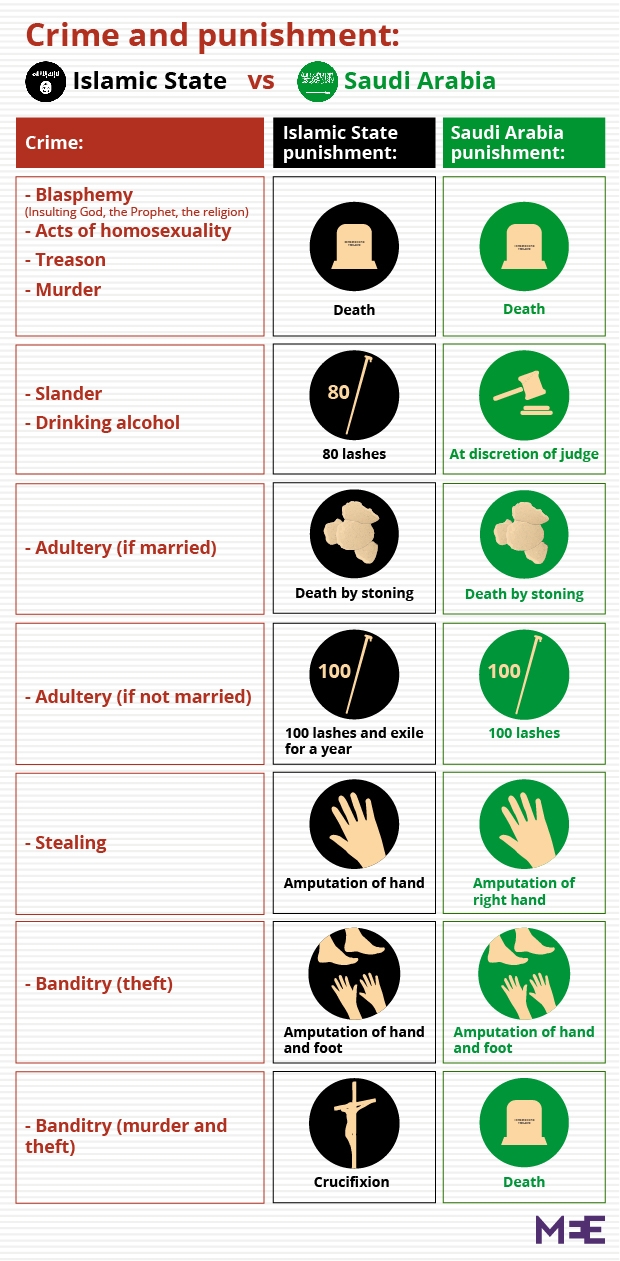
So is this enough to absolve Saudi Arabia of comparisons with the lslamic State, which is known for its extreme religious ideology and cruel summary judgments? No. Mr. Fayadh’s crime, in essence, was committing poetry and art.
The new sentence, made public on Tuesday, reversed the one handed down in November when Mr. Fayadh was convicted of blasphemy and illicit relationships with women. The charges were based on photographs and a book of his poetry that was published abroad years before.
Mr. Fayadh, 35, was born in Saudi Arabia to a stateless family of Palestinian origin and was not known as a dissident, according to Ben Hubbard of The Times. He was active in Saudi Arabia’s small art scene, curating shows at home and abroad.
In 2013, he was arrested after an argument in a cafe. Although Mr. Fayadh was released without charge, he was arrested again later and hit with the blasphemy charges. He was convicted and sentenced to four years in prison and 800 lashes. He appealed and, after a retrial, got the death penalty.
This week’s sentence modification was the result of another appeal. It followed widespread condemnation by artists and human rights groups around the world. Who knows what would have happened if they hadn’t spoken out.
Saudi Arabia has come under a lot of fire lately and for good reason. The country follows an extremist version of Islam called Wahhabism that has inspired the Islamic State and other jihadis, and the judiciary is controlled by conservative clerics who are allowed a wide berth to apply Shariah law.
Last year, the Saudi government carried out its highest number of executions in two decades. The Saudis’ bloody record has brought unfavorable comparisons to the Islamic State.
It is time for Saudi authorities to end their unjust campaign to punish the poet for what PEN America, a press freedom advocacy group, describes as “the simple human act of artistic expression.”

Senate Democrat Says It's Time To Cut Off Support For Saudi Arabia's War In Yemen

By Jessica Schulberg


Sen. Chris Murphy (D-Conn.) called for the U.S. to cease military involvement in the Saudi-led war in Yemen, doubling down on his critique last week of America's relationship with Saudi Arabia. 
Murphy, a member of the Senate Foreign Relations Committee, told HuffPost's Friday podcast of "So That Happened" that he hasn't yet heard a legitimate defense of the Obama administration's policy of providing military assistance to the Saudis in their aerial war in Yemen. That war has killed thousands of civilians and deteriorated conditions in an already unstable country.
"We're sort of still grounded in this world in which we just back our friends' play, no matter the consequences to the United States. The Saudis are in a fight, then we're going to be in a fight with them," said Murphy of what seems to be the prevailing logic behind U.S. support.
As Murphy sees it, the consequences of backing Saudi Arabia in this particular fight are devastating: collateral damage and chaos that has allowed extremist groups to expand their presence in Yemen.
"I just don't see any evidence right now that the Saudis are conducting that military exercise in a way that's responsible. It's just feeding the humanitarian crisis inside Yemen," the senator said.
He argued that Congress should block future sales to Saudi Arabia of weapons that likely would be used offensively in Yemen.
Saudi Arabia began airstrikes on Yemen last March at the request of Yemeni President Abd-Rabbu Mansour Hadi, who had been driven out of the capital city of Sanaa by a separatist rebel group called the Houthis. The U.S. immediately confirmed its support for the Saudi-led bombing campaign.
Because the Shiite Houthis receive some support from Iran, the Saudi government has managed to frame the war in Yemen as an effort to curb the spread of Iranian influence -- an idea that is popular with some congressional lawmakers. White House and intelligence officials dispute the notion that the Houthis are an Iranian proxy, and HuffPost previously reported that the Iranians actually warned the Houthis against an aggressive takeover of Sanaa.
By Murphy's calculus, the potential to curb Iran's influence in Yemen doesn't outweigh the catastrophic reality of the Saudi war. "Even if we do forestall the growing Iranian influence in the region ... the growing footprint of al-Qaeda and ISIS inside Yemen is much more damaging to U.S. interests," he said, using one of several names for the Islamic State group. The Houthis fight against both al-Qaeda and the Islamic State.
HANI MOHAMMED/ASSOCIATED PRESS
Men inspect a house destroyed by a Saudi-led airstrike in Sanaa, Yemen, on Jan. 25, 2016. The missile also killed eight people, security officials said.
Murphy's call for the U.S. to exit the war in Yemen is one of the first to come from Capitol Hill. Whereas lawmakers regularly slam the Obama administration for its failure to elucidate a plan to defeat the Islamic State, few publicly question the absence of a coherent strategy in Yemen.
"This has largely gone under the radar screen," Murphy said. "For all the attention on the U.S. campaign against ISIL and whether or not we put troops or resources into that fight ... the United States is, in many respects, at war against certain forces inside Yemen funded by the Iranians."
Since raising questions about the U.S.-Saudi relationship last week, Murphy said colleagues from both sides of the aisle have privately expressed support. He said he expects some will eventually join him in speaking out.
The White House has defended its support of Saudi Arabia, saying American logistical and intelligence support helps the Saudis target militants more accurately and minimize civilian deaths. At the same time, administration officials told HuffPost that they don't make the final call when it comes to targeting decisions -- which could explain why the Saudi-led coalition has been accused of regularly bombing hospitals and schools.
When asked about the White House's line of logic, Murphy flatly rejected it.
"The defense that your involvement is simply limiting the casualties is really no defense at all," he said. "That would be an argument for the United States to get involved in virtually every conflict on every side, if our argument was simply that U.S. targeting can more precisely kill the other side while limiting civilian casualty. You actually have to have a little bit higher bar for U.S. involvement."

Video - 'Murderer!' Female protesters interrupt Erdogan's speech in Ecuador

Ecuador has summoned the Turkish ambassador in Quito to formally protest the treatment of three of its citizens who were forcibly removed after demonstrating against Turkish President Recep Tayyip Erdogan when he was speaking at an event. The three women were removed from Quito's Centre for Higher National Studies on Thursday by Erdogan's security personnel when they interrupted his speech. Local media were also prevented from filming the altercation

Video Report - ‘Turkey plays uncertain role in migrant chaos’: French MEPs object refugee aid to Ankara

Video - CrossTalk: Costs of War

Russian MP says Syria should appeal to UN in case of Saudi’s land operation


A land operation requires consent of the Syrian government to have other armed forces be deployed in Syria’s territory, Viktor Ozerov says.
Damascus will have to appeal to the United Nations in case Saudi Arabia stages a land operation in Syria, a Russian lawmaker said on Friday."It should be an appeal to the United Nations," Viktor Ozerov, the chairman of the defense and security committee at Russia’s Federation Council upper parliament house, told TASS when asked about consequences of such operation. He said that as far as he knew, Saudi and Turkish warplanes were already taking part in combat operations in Syria.
A land operation requires "consent of the Syrian government to have other armed forces be deployed in its [Syria’s] territory," he said. "On the other hand, Russia has always called to form a board anti-terrorist coalition and this call is still on the agenda. We are ready for cooperation with other countries."
"But if this anti-terrorist coalition sets a political goal — impossibility of Bashar Assad’s staying on his post, then how it can conduct an anti-terrorist operation on a territory of a state where its leader is not recognized," Ozerov noted. "This contradiction gives grounds for doubts, at least I think so, in the sincerity of the operation Saudi Arabia is speaking about."

Russia’s Daesh-Crushing Su-35 Fighter Jets at Hmeymim Airbase

In its fight against Daesh, also known as IS/Islamic State, Moscow has deployed its newest Su-35 fighter jets to Syria, where they remain on constant standby at Hmeymim airbase.

Since its Syrian air campaign began last September, Russia has carried out thousands of sorties against terrorist targets, crippling Daesh’s infrastructure. Those operations have been carried out by Moscow’s state-of-the-art Su-24s, Su-34s, and Tu-22M bombers.
Now Russia has its fleet of new Su-35s on 24/7 standby at Hmeymim airbase.
"The planes will be kept in a state of constant readiness, with a pair of Su-35 ready to take off at a moment’s notice to provide assistance to other aircraft," a representative of the Russian Aerospace Forces battlegroup in Syria told reporters.


"A pair of Su-35 jets is capable of increasing other planes’ 360-degree detection radius up to 400 kilometers."
A multirole aircraft, the Su-35 can be used for both escort and bombing runs.
"At present, we have a task to use these jets as effectively as possible. These jets can carry all kinds of bombs," the representative said.
The Russian Aerospace Forces are operating at the behest of the legitimate government of Syrian President Bashar Assad. Syria has been mired in a bloody civil war since 2011.


Read more: http://sputniknews.com/middleeast/20160205/1034312344/russian-su-35.html#ixzz3zKWjsAKQ

Music Video - ZAYN - PILLOWTALK

Video - Legendary Super Bowl rivals reunite