Tuesday, January 19, 2016

I revealed the truth about President Erdogan and Syria. For that, he had me jailed


By  Can Dunder
In Turkey, a debate as old as government itself is on the agenda again. This time, it is the Turkish government’s secret arms transfer to Syria that has revitalised the subject.
Early in 2014, a truck understood to belong to the Turkish intelligence service (MIT) was stopped near the Syrian border. The gendarmerie and the intelligence officials in control of the convoy pulled guns on each other. This was the moment the two blocks vying to rule the state came face to face. The truck was searched. Beneath the camouflage composed of medicines boxes, weapons and ammunition were found. The truck was held for a while, but following the intervention of government officials a safe passage into Syria was granted.
The government immediately discharged the prosecutor and gendarmerie who stopped the convoy and had them arrested. It was declared that the trucks contained humanitarian aid. This incident, which fuelled allegations that President Recep Tayyip Erdoğan’s government was intervening in the Syrian civil war, was rapidly covered up.
In May 2015, however, Cumhuriyet Daily, the newspaper I serve as the editor-in-chief, acquired the footage of this incident. It was clearly visible that the truck was loaded with arms. It was thus documented that the intelligence service was illegally carrying arms into the civil war raging in a neighbouring country. This was big news. We published details of the operation with photos, and uploaded the video to our website.
Erdoğan was in a fix. He couldn’t refute the story, so instead chose to censor the publication and threaten the journalist responsible, who was me. In a live broadcast on a state TV channel, he said: “The person who wrote this story will pay a heavy price for it; I won’t let him go unpunished.” He added that the footage was a “state secret”, and that publishing it was an act of “espionage”. Furthermore, as if to confirm that this was not the state’s secret but his secret, he filed a personal complaint to the prosecutor’s office.
The punishment he demanded for me was two life sentences – for “treason” and for “acquiring and publishing classified information for the purpose of espionage”. This signalled the arrest of those of us who were well aware that the president of the republic’s wishes are received as orders by the judges of the criminal court. Thus, on 26 November I was arrested along with Erdem Gül, our Ankara bureau chief, who published the gendarmerie’s “Yes, the trucks had guns” report. Just 10 days before my arrest, I received a Reporters Without Borders press freedom award on behalf of Cumhuriyet.
Following criticism of the arrests from domestic and international press and human rights organisations, the minister of justice declared that “every country is sensitive on security” and cited Julian Assange and Edward Snowden as examples. The US ambassador to Turkey responded: “We chased after those that leaked the information, not those that published it.”
This was yet another blow for the oppressive Erdoğan regime, which has plummeted in the press freedom rankings. It also sparked questions that have surfaced time and time again in many scandals, from Iran-Contra to Watergate, from the Pentagon Papers to the Clive Ponting affair. When the state’s need for security contradicts the public’s right to information, which carries a higher priority? Can the threat to security be an excuse for government attempts to muzzle the media? When the stamp of “state secret” has turned into a veil concealing the dirty dealings of administrations, is it not the duty of a journalist to tear it away? Who determines what is in the best interests of the society?
As a journalist detained in solitary confinement in a prison in İstanbul, faced with accusations of “espionage”, I have been seeking answers to these questions. My conclusion is that no label of “state secret” and no rationale for “state security” permits a state crime. Thus I defend myself with Winston Churchill’s words: “The Official Secrets Act was devised to protect the national defence … and ought not to be used to shield ministers who have a strong personal interest in concealing the truth.”

Largest LGBT Human Rights Campaign endorses Hillary


"She has stood with us, and now it’s our turn. Her fight is our fight," the LGBT rights group said in a statement.
The HRC cast its endorsement of Clinton as an effort to lock in "all the progress we've made" under President Obama, mentioning the repeal of the military's "don't ask, don't tell" policy and the push to legalize gay marriage across the country.
Clinton addressed HRC during a speech in October after it was reported that she turned down an evening keynote opportunity to appear on "Saturday Night Live."
During her fall address, Clinton pitched herself as a longtime ally of the group and promised "from one HRC to another" to fight alongside the group.
She also called on Congress to pass a federal Equality Act and focus on international gay rights concerns.
Clinton has made gay rights advocacy a major part of her 2016 bid, starting by showing a gay couple in her campaign launch video last year.
HRC endorsed Barack Obama two days after news emerged that Clinton would end her 2008 Democratic presidential bid. Clinton came out in support of same-sex marriage in 2013 after previously opposing it.

Leonardo DiCaprio Explains Why He’d “Love” to Play Vladimir Putin

Many of Leonardo DiCaprio’s most defining roles—Frank Abagnale Jr., Howard Hughes, Hugo Glass, Jim Carroll, Jordan Belfort, and more—have been portraits of real-life divisive men. And it looks like DiCaprio is in no rush to leave the world of biopics anytime soon. When asked about the controversial Russian president Vladimir Putin, DiCaprio spoke enthusiastically about tackling the role.
“Putin would be very, very, very interesting. I would love to play him,” DiCaprio told the German paperWelt am Sonntag. But Putin isn’t the only famous Russian DiCaprio has his eye on. “I think there should be more films about Russian history because it has many stories worthy of Shakespeare,” DiCaprio said, according to a translation in The Guardian. “That is fascinating for an actor. Lenin also would be an interesting role. I would like also to star as Rasputin.”
DiCaprio recently had a chance to show off his Russian accent while relating the story of an emergency plane landing on Ellen earlier this month. That plane, it turns out, was actually taking DiCaprio to meet Putin back in 2010 for a conference on the endangered Siberian tiger in St. Petersburg. You can judge the accent for yourself right around the three-minute mark.
DiCaprio encountered not one, but two serious plane issues on his way to meet with Putin, and his determination to make the journey to St. Petersburg anyway prompted then Prime Minister Putin to interrupt his speech on tigers to praise DiCaprio. “I would like to thank you for coming despite all the obstacles . . . A person with less stable nerves could have decided against coming, could have read it as a sign—that it was not worth going,” Putin said to DiCaprio in front of a crowd, before calling him a “muzhik,” which translates to “real man” in Russian. We can only imagine what the adventurous, outdoorsy Putin thought of DiCaprio after The Revenant.
For his part, DiCaprio said he enjoyed meeting Putin and that the two men talked mostly of environmental issues rather than politics. “My foundation has provided financial support for several projects for the protection of these big cats,” DiCaprio told Welt am Sonntag. “Putin and I talked only about the protection of these magnificent animals, not politics.”

According to the BBC, when he met Putin, DiCaprio told the prime minister that two of his late grandparents were Russian and that he had always wanted to take his grandmother to St. Petersburg, so a grand Russian role for DiCaprio does seem somewhat inevitable. Putin feels like a pretty solid fit, but if DiCaprio decides to go the Rasputin route instead, he’s going to have to re-grow that Revenant beard . . . and then some.

Russia: Putin calls on European Jews to move to Russia

Russian President Vladimir Putin invited Jews to come to Russia after listening to the President of the European Jewish Congress Vyacheslav Kantor complain about attacks against Jews in Europe, during a meeting with the European Jewish Congress in Moscow, Tuesday.

Combat cam: Russian Air Force kills 60 militants in Deir ez-Zor

Russian attack aicraft hit IS camp in Syria using opposition-provided data — official

Russia’s Sukhoi-25 fighter-bomber has hit a field camp of the Islamic State in Syria’s Homs province using data provided from the oppositional forces, Russian Defense Ministry spokesman Igor Konashenkov has told the media.

"Several days ago a patriotically-minded opposition group shared information about the location of a field camp of Islamic State militants near Kissin, Homs Province," Konashenkov said. 

After extra reconnaissance conducted with the use of drones and more checks through the Baghdad information center a Sukhoi-25 plane attacked the target, Konashenkov said. "The command of Russia’s air group is continuing interaction with patriotic opposition groups in Syria, fighting against such terrorist groups as the Islamic State and Jabhat al-Nusra," he added. Russia’s combat planes have been attacking targets of the Islamic State and Jabhat al-Nusra groups (both outlawed in Syria) since September 30, 2015 at the request of President Bashar Assad. Last week, the chief of the General Staff’s operations directorate, Sergey Rudskoy, said that Russian military were getting information about one in five targets they eventually attacked from opposition groups. More than 10,500 opposition militias were fighting against terrorists in Syria.

More:
http://tass.ru/en/defense/850618

Palin Endorsement Widens Trump’s Lead Among Idiots


Andy Borowitz

An endorsement from former Alaska Governor Sarah Palin is expected to widen Donald J. Trump’s already impressive lead among so-called “idiot voters,” an aide to the billionaire said on Tuesday. While Trump was previously thought to have a lock on the idiot vote heading into the Iowa caucuses, a recent surge by Senator Ted Cruz, of Texas, has put the idiots back in play.
Cruz has worked tirelessly in recent weeks to tailor his message to undecided idiots, even revamping his stump speech to rid it of two-syllable words.“That’s why Palin supporting Trump and not Cruz is such a win for us,” the Trump aide said. “She’s been out of politics for awhile, but she still has idiot cred.”
The aide said that no one should be surprised by the bond between Palin and Trump. “They’re both reality-show hosts,” he said. “And by lowering the bar in 2008, Palin singlehandedly made Trump’s candidacy possible.”
But even as the Trump campaign staffers celebrate the Palin endorsement, they recognize that they still have their work cut out for them to secure victory in Iowa. “Getting the idiots to support Trump is only half the battle,” the aide said. “Now we have to make sure that they make it to the caucuses without getting lost on the way.”
http://www.newyorker.com/humor/borowitz-report/palin-endorsement-widens-trumps-lead-among-idiots?intcid=mod-latest

Video Reprort - New York - Dozens of LaGuardia Airport workers arrested during wage hike demo for MLK Day

Dozens of New York LaGuardia Airport workers were arrested during a protest outside one of the site’s terminals, Monday, as hundreds of employees rallied on Martin Luther King Day to call for an increase in minimum wage.

Video Report - Calls Grow for Oscars Boycott

President Obama's Detroit auto-show visit highlights industry's turnaround after bailout

By Paula Gardner

Michigan's auto industry will put more on display than cool cars and new technology when President Barack Obama tours the North American International Auto Show in Detroit on Wednesday.
The visit closes the narrative arc of the automotive industry during President Obama's time in office, which began with the U.S. bailout of General Motors and Chrysler and will end with what forecasters agree will be a second consecutive record-setting sales year.
At the same time, it positions Michigan to wonder what is next for its signature industry as globalization and technological advances pressure automakers.
"He's really seen the complete span of the auto industry cycle, (going) from near-collapse to what's expected to be great sales in 2016," said Robert Dye, chief economist at Comerica Bank.
The economy wobbled during the 2008 presidential election campaign, before heading into a freefall that September.
President Obama took office as General Motors — a symbol of Michigan's automotive heritage and one of the state's biggest employers — warned that it was running out of money. Its losses spiraled along with the economy, leaving the state fearful of the future and the U.S. wondering whether its auto industry could survive.
But between 2009 and 2015, the nation pursued the auto industry's salvation through financial bolstering, wholesale restructuring and meeting demand for innovation.
Michigan stood on the front lines of every battle, emerging at the end of 2015 proving that, as a state, its fortunes — and most notably, those of the Detroit metro area — rise and fall alongside vehicle sales.
"The industry as a whole has obviously had a phenomenal comeback in the last five years," said Michael Finney, former head of the Michigan Economic Development Corporation and now president and CEO of Community Ventures Resources Inc.
In 2009, Detroit's unemployment rate was north of 16 percent as U.S. auto sales plummeted to a 27-year low of 10.4 million units.
It dropped to about 10 percent by April 2013, as sales climbed to 15 million units.
And in August 2015, as the industry headed toward a record 17.47 million vehicles sold last year, Detroit unemployment was down to 5.6 percent — just ahead of the nation's average 5.1 percent.
Data for Michigan auto production shows the transition: In just three years, from 2009 to 2012, the state produced nearly 1 million more units per year, or 2.1 million vehicles.
The Center For Automotive Research in Ann Arbor defines the impact of the auto industry on Michigan employment:
• 943,619 of the nation's 7.25 million auto jobs are in Michigan
• 13 percent of all U.S. auto jobs are in Michigan
• 19.9 percent of Michigan workers are tied to the industry
Nationally, auto-related payroll tops $500 billion, according to CAR. And the industry generated $205 billion in tax revenue, with $3.4 billion coming to Michigan. The state's auto employers include 1,128 suppliers; 3,920 dealerships; and 14,151 aftermarket repair and service facilities.
Yet even amid the success of recent years, the U.S. auto industry remains in a period of transition. Hiring is not expected to grow. Sales are expected to peak this year. And Michigan still has to confront a talent gap that could affect its dominance as an automotive innovation leader.
"We're hopeful that 2016 will be another strong year, but that won't pass 2015 (by much)," Dye said. If the auto sector peaks in 2016, "we may see softening after that.
"The auto sector is a very strong sector, but its capacity and potential and ability to expand at this point is much less than it was a few years ago."
Sales have doubled since 2009, but that isn't a rate that can be replicated.
"We won't have doubling of sales again," Dye said.
Just a year ago
In the days before his 2015 State of the Union address, President Obama visited the Michigan Assembly Plant in Wayne, in western Wayne County, about 25 miles west of Detroit.
The message at the time, delivered to a crowd that included Ford Chairman Bill Ford Jr.: "After a decade of decline, American manufacturing is in its best stretch of job growth since the 1990s."
President Obama contrasted the activity at the factory with the dark days when the nation wondered about the future of the automotive industry. He took office less than a month after then-President George W. Bush agreed to a $17.4 billion emergency automotive bailout. Within weeks, financial data clarified that the scale of losses at General Motors Corp. and Chrysler would push both into bankruptcy later in 2009.
"There was a lot of skepticism that the domestic auto industry would even survive," said Sandy Baruah, president and CEO of the Detroit Regional Chamberand former head of Small Business Administration under former President George W. Bush.
"It's important to really acknowledge the important role the federal government under both presidents Bush and Obama in protecting Michigan's auto presence," Baruah said, noting the successful turnaround. "It didn't have to turn out this way."
That's what President Obama highlighted in his 2015 speech, after joking that he was at the Ford plant to see the new Mustang. He noted that the U.S. auto industry was "flat-lining" as he took office. That the choice to bail out the industry wasn't popular, even in Michigan.
"And, look," he told the crowd, " ... it wasn't on my to-do list when I ran for President. I wasn't expecting to have to do this.
"...Saving the American auto industry was the right thing to do."
He continued: "These six years have been tough, demanded hard work, demanded sacrifice on everybody's part," the President said at Michigan Assembly in 2015. "You guys know that more than most."
The Ford workers in that crowd learned it since that 2015 visit, too, after a wave of news affecting the plant's future and that of its staff broke later that year.
The plant produces Focus and C-Max lines for Ford. In April, 700 people received layoff notices as the automaker cut a production shift due to declining sales for small vehicles amid low gas prices. In July, word came that Ford could move production of those vehicles in 2018 as it invests $2.5 billion in building two plants in Mexico.
By late summer, industry experts were speculating that truck production could move into the plant, which Ford said will get a new product line in 2018. And then after UAW contract ratification in November, it appeared that the factory would keep its small cars through their "product life cycle," according to reports, along with a $700 million retooling investment.
The auto industry still faces intense competition, but today has the ability to pivot quickly to meet market demands.
"Ford has the money ... to move to Mexico and replace (the car production) with a smaller volume of trucks," said Sean McAlinden, economist at CAR.
However, the key to that transition for Michigan, McAlinden said, is that the truck production volume would be comparatively lower. Building fewer cars in Michigan will mean fewer manufacturing jobs for the state even as automotive remains its signature industry and retains its R&D strength.
Manufacturing jobs
"We already know that both GM and Ford will not be making small cars in Michigan," Dye noted. "The auto industry is a dynamic industry. It's going to keep changing, and one change going forward is going to be pushing the production of smaller, less profitable cars outside the U.S. and primarily toward Mexico."
The most recent automotive rebound is responsible for adding about 60,000 manufacturing jobs in Michigan since 2009, McAlinden said, bringing the total to about 174,000.
It's a dramatic increase, but that compares to about 320,000 manufacturing jobs in Michigan in 2000.
The difference between those numbers — and how it shapes the state's hold on the industry — is what Michigan needs to recognize in the rebound, he said.
"We're not going to get back to 1999 or 2000 (levels)," McAlinden said. "... We might get to 190,000, but that's a long way short."
Payroll for manufacturing jobs is changing, too. According to the Bureau of Labor Statistics, average pay for motor production employees was $28.14 in October 2009, and $27.53 in October 2015.
More dramatic is a look at pay for the Detroit Three automakers: Ford, General Motors and Chrysler, which employ a collective 130,000 people in Michigan.
Among their UAW members, the typical wage was $40 per hour in 2008. By 2015, after contract restructuring to a tiered system for skilled and unskilled plant jobs, the new lower wage was approved at $17 per hour. Reports indicate about 30 percent of the Detroit Three manufacturing workers are the lower-paid Tier 2.
McAlinden said he and his colleagues at CAR are actively watching dynamics at three Metro Detroit plants that could face changes in product lines that affect the number of employees. Beyond the 5,143 jobs at Michigan Assembly, he's concerned about the Connor Avenue Assembly Plant in Detroit, where 103 people work for Fiat Chrysler, and General Motors' Warren Truck Assembly, which employs 4,285.
Another issue facing Michigan's auto industry is the aging of the labor force. Many production workers are close to retirement age, and many of them have specific skills.
"We expect a lot of retirements and a lot of openings for apprentices," McAlinden said. "For the first time, they're going to have to seriously launch apprentice programs."
Staff at GM plants in Michigan, for example, are about 18 percent skilled trades, and they'll need to be replaced to keep the factories operating.
While openings for unskilled labor may be rare in automotive plants, some skilled jobs are in demand. Finney mentioned machinists, and people with training in robotics, CNC, precision grinding and welding.
White collar automotive changes
Among Michigan's auto industry transitions, McAlinden said, is its shift to auto development: "Last year, there were more salaried workers in Michigan than hourly."
The result is that hiring by auto companies in Michigan will target highly skilled and highly education applicants.
"Michigan is becoming less and less of a manufacturing state and more and more a design and engineering state," McAlinden said. "It's going to be really tough to get an hourly job. But we are looking for engineers."
That puts the pressure on Michigan's educational system.
There are 91 auto-specific programs at colleges and post-secondary training facilities. And The University Research Corridor — comprising the University of Michigan, Michigan State University and Wayne State University — sends 3,600 graduates per year into auto industry careers, according to the Detroit Regional Chamber.
Driving the industry today are technological advances that are changing everything from fuel economy to safety to luxury options. The industry also is investing heavily in driverless technology, with the tech giants of Silicon Valley wedging themselves into traditional R&D.
The result, said Baruah, is that Michigan must be ready to defend its place in automotive innovation against other tech-centered regions.
"The challenge we face in Michigan right now is that we are the leaders of the transformation to autonomous and connected vehicles," he said.
More testing takes place in Michigan — like at the Mcity complex at the University of Michigan in Ann Arbor — than any other place in the county.
"There is no way that a move to a connected vehicle or an autonomous vehicle can happen without the testing that we're able to do in Michigan," Baruah said.
But, he added, "we need to be the place with the technical skills (and) the engineering skills to be able to capitalize on this transformation."
Baruah said of Silicon Valley: "It is going to be a part of the puzzle, but we don't want them to own the puzzle."
To accomplish that, the Detroit Regional Chamber is focusing its efforts on encouraging two aspects of education: increasing university funding by the state and urging more Michigan residents to pursue STEM-related degrees or certificates.
"Those things are hugely important," he said.
Talent development was a focus of the MEDC under Finney, and he continues to address what he calls the "talent gap" from his role as head of Community Ventures, which helps structurally unemployed individuals in four Michigan cities find work.
Michigan's Advanced Technical Training Program addresses it, Finney said. He also said that getting private employers involved is important.
"Government programs alone won't get us there," Finney said.
"Having a commitment to robust training makes a lot of sense," he added.
Meanwhile, the wave of engineering jobs is prompting a corresponding change in southeast Michigan's commercial real estate.
"Auto engineering is back with a vengeance and expanded beyond the pre-Recession levels," said Neal Warling, senior vice president at Jones Lang LaSalle.
Michigan is home to 370 automotive R&D centers, according to the state. Those centers attract more than 70 percent of all U.S. auto R&D spending, which is estimated at $18 billion by the American Automotive Policy Council.
Recent office deals in Plymouth, Northville and Troy typically can be tied to the auto industry, including many of the larger deals. Warling mentioned Kirchoff Van-Rob as an example; the chassis supplier opened a plant near Lansing and an engineering center in Troy.
Perspective
As the nation watches President Obama at Detroit's auto show, Michigan can take pride in the recognition coming its way for how its most influential industry survived the Great Recession, experts said. Obama has a role in that.
"The president is justifiably proud of his role and his administration's role in supporting the U.S. auto industry," Baruah said.
Politics may also enter the message. Baruah notes, "He vastly underplays the role President Bush played in setting the stage. The U.S. auto industry would not have been saveable in 2009 if George W. Bush had not taken the action that he did."
Amid the auto recovery came Detroit's bankruptcy, which also challenged and shook the state.
The era was tumultuous. Today, as Detroit Three employees await profit sharing checks and manufacturers proudly announce their product innovations, 2009 may seem light years away.
The degree of the automotive industry's crisis could not have been predicted, Finney said. That the recovery reached record-setting sales amid profitable years for manufacturers is important for Michigan, he added.
"Back then," he said, "all indications are this recovery would not have happened as swiftly as it did. ... Michigan has been a tremendous beneficiary in that."

Video Report - President Obama Holds a Bilateral Meeting with the Prime Minister of Australia

A Horrific Attack On A Young Woman In Afghanistan Highlights Widespread Domestic Violence


A young woman in a remote northern region of Afghanistan had her nose cut off by her husband, officials in the region said on Tuesday.
Fawzia Salimi, a hospital director in Maymana, capital of Faryab province, said 22-year-old Reza Gul was brought in early Monday having lost a great deal of blood.
Gul's husband, 25-year-old Mohammad Khan, has since fled their village. Salimi said the Afghan-Turk Hospital in Maymana was trying to arrange transport for Gul to Turkey for further treatment.
Domestic violence is widespread in Afghanistan, where women are often denied constitutional rights designed to protect them.
Violence has also become somewhat entrenched in Afghan society after 40 years of war, with nearly non-existent mental health care and few options or outlets for a traumatized population.
Hafizullah Fetrat, the head of Fayrab's provincial human rights commission, said violence in the area had risen by at least 30 percent in the past year.
"It's not just in Faryab, it is across the entire north of the country — poverty, high unemployment, ignorance about marriage," he said.
Faryab borders Turkmenistan and is among the poorest regions of Afghanistan, with many people relying on government food handouts. Corruption is also rife, and many residents complaining that officials pilfer the aid.
Over the past year, the Taliban's presence in the region has grown. The militant group has intensified its campaign following the drawdown of the international combat mission in 2014.
The district where Gul's family lives is under Taliban control, said Rahmatullah Turkistani, a member of Fayab's provincial council.
Salimi said Khan had returned from Iran three months ago, and since then had repeatedly beaten and tortured his wife. He had also taken another wife who is just seven years old, she said.
Community elders and Taliban representatives in their village had tried mediating with the family to help sort out their problems, a traditional method of dealing with marital issues, Salimi said.
Khan had disappeared from the village, and local security forces including the intelligence agency and police were searching for him, said the provincial governor's spokesman Ahmad Jawed Dedar.
The Taliban is also looking for him. Taliban spokesman Zabiullah Mujahid said that the group's gunmen were "seriously searching the area to find" Khan. If and when he was found, "then he will be dealt with according to Shariah law," Mujahid said, referring to the Islamic legal system.
Before cutting off his wife's nose, Khan had promised Taliban leaders in the village that he would stop harming Gul. As the village was under their control, the Taliban would likely find him first, Dedar said.
Severing women's noses is not unheard of in Afghanistan and like most abuse probably happens more often than is publicly acknowledged.
The case of Aisha Mohammadzai shocked the world in 2010 when she appeared on the cover of Time magazine with her nose cut off.

Pakistan - Friday sermons

IN any Muslim society, the Friday sermon is a powerful platform from which to disseminate views. Most mosques are filled to capacity and preachers use the pulpit to communicate various concerns.
Sadly, in Pakistan, as well as other Muslim states, some clerics have used the pulpit — particularly during Friday prayers — to promote obscurantism and militancy.
There are cases on record in Pakistan where the mosque loudspeaker has been misused to stir up sectarian hatred, demonise other religions and communities, and promote extremism. In view of these concerns, the Sindh government has reportedly decided to table a bill in the provincial assembly designed to regulate Friday sermons.
On Monday, the adviser to the Sindh chief minister on religious affairs said the move was aimed at promoting “sectarian harmony” and bringing an “end to hatred and extremism”.
There can be little argument with the need to counter the poison of sectarianism and extremism in society. However, we must ask if government-issued sermons are the best way to approach the problem.
First, this method has been tried in other Muslim countries, with less than commendable results. For example, in Egypt, Saudi Arabia and the UAE, the state gives ‘themes’ and ‘guidelines’ to preachers to incorporate in Friday sermons.
This is primarily designed to exercise political control and ensure clerics toe the official line. Further, for the military in Egypt and the royal family in Saudi Arabia, these measures are designed to stamp out criticism.
Yet despite the strict controls over religious activity in these states, they have failed to snuff out militancy. Second, we must ask whether the action suggested by Sindh would not breach the principle of freedom of expression — although the state must ensure that preachers do not egg on the people to break the law.
Monitoring what preachers have to say in these tense times and punishing them for attempting to incite violence may be acceptable, but to assume that all of them will actually do so is unreasonable.
Finally, there is the issue of practicality. There are hundreds, if not thousands, of mosques in Sindh where the Friday sermon is delivered. Does the state have the wherewithal to bring all these under its control and issue them uniform sermons?
Rather than dictating the content of sermons, the state needs to keep an eye on what is being said by preachers. There must be simple guidelines: promotion of militancy and hate speech, rebellion against the state etc must be strictly off limits.
The state has a relatively effective intelligence apparatus at its disposal. This — together with the involvement of communities and ulema — must be employed to keep an eye on rabble-rousing clerics who misuse the pulpit to encourage militancy and fan hatred.
Citizens also have a responsibility to stop frequenting mosques which host hate-mongering clerics.

Pakistan - #Punjab - Swine flu

The dark shadow of swine flu is hovering across Punjab as the disease has started taking its toll on citizens. So far the death toll has swelled to 13 while a total of 54 cases have been detected from all over Punjab. The number of patients affected by the disease has reached 14 in Lahore. Overall, five deaths have been reported in Rawalpindi, four in Multan while one person each died in the cities of Lahore, Chakwal, Gujranwala and Sahiwal. Swine flu, also known as H1N1 in medical terms, is a disease that spreads through contact with a sufferer, while shaking hands, aerially, or using a utensil that had earlier been in contact with a patient of the disease.

The grim situation is worsening in different cities of Punjab due to the lack of virology laboratories and delayed diagnosis. While the government officials and the Punjab health department are claiming that adequate arrangements have been put in place to tackle the menace, the reality looks bleak, with the number of swine flu cases increasing. There are clear indications that delayed diagnosis resulted in fatalities that could have been avoided. The overwhelming majority of those who get swine flu are those who never bother about visiting a doctor after catching the virus. Symptoms of H1N1 are just like any other flu symptoms: sudden fever and cough, headache, muscle aches, fatigue, sore throat, decreased appetite, and runny nose. Sometimes there is nausea, vomiting, or diarrhea also.

In order to contain deaths due to this disease, the government needs to take preventive measures. A countrywide awareness campaign needs to be launched on an immediate basis that could educate the masses about the symptoms of the disease and inform them about curative measures. As most cases are being reported from Punjab due to the winter spell, the provincial government needs to take all necessary measures to protect citizens from this deadly disease. There is a need to put all hospitals on high alert to tackle the situation. The government needs to arrange vaccines and other necessary medicines and diagnosis facilities at public hospitals for early detection and treatment of the disease. Preventive measures also need to be put in place to stop the spread of the disease. Due to the world becoming a global village, citizens are catching diseases that break out in faraway lands. There is a need to enforce an international health regime to check the spread of diseases like swine flu. 

Pakistan - 54 cases of Swine flu confirmed in Punjab

Swine flu is sweeping through Punjab as one more person fell prey to the disease on Sunday, taking the death toll to 13 in the province.

At least 54 cases have been confirmed throughout the province by the illness until now, while 100 cases have been reported to different medical centres.

A woman named Yasmeen died on Sunday due to the disease. The number of patients affected by the disease has reached 14 in the provincial metropolis. Overall, five deaths have been reported in Rawalpindi, four in Multan while one person died each in cities of Lahore, Chakwal, Gujranwala and Sahiwal. Advisor on Health Khawaja Salman Rafique has stated that every effort is being put in to contain the disease. He said necessary arrangements to stop the spread of the disease have been completed. 

http://www.dailytimes.com.pk/punjab/18-Jan-2016/54-cases-of-swine-flu-confirmed-in-punjab

Pakistan - ‘Discrimination, violence against minorities poses grave threat to society’

 Pakistan People’s Party (PPP) leader Senator Sherry Rehman has said that discrimination and violence against minorities and vulnerable communities in Pakistan poses a grave threat to society, and a change in mindset is needed to ensure that the life.

Speaking in a ceremony here, Sherry Rehman noted that while discrimination against minorities is part of a larger regional trend across South Asia, this was no justification for the distressing state of religious freedom in Pakistan.

She called on all stakeholders to recognise the real and present danger posed by prejudice, bigotry and exclusionary practices towards the state’s vulnerable citizens.

She emphasised the need of incorporating Quaid-e-Azam’s August 11 speech in curriculum to ensure that future generations uphold the principles of a tolerant and plural Pakistan.

http://www.dailytimes.com.pk/national/19-Jan-2016/discrimination-violence-against-minorities-poses-grave-threat-to-society

Pakistan has no industrial safety law, government admits

Pakistan has no independent industrial safety law and no timeframe for developing one, the government admitted this week, despite the country’s grim history of accidents that have claimed hundreds of lives in recent years.
“At present, there is no independent legislation on occupational safety and health issues in Pakistan,” Human Resource Development Minister Pir Syed Sadaruddin Shah Rashidi told lawmakers at the National Assembly on Monday.
Rashidi said two years ago the Supreme Court had directed that a draft bill be submitted to provincial and federal governments to evolve a consensus, but that the court had given no timeframe for the exercise.
In November last year, 45 workers were killed and more than 100 were pulled alive from the rubble after the four-story Rajput Polyester polythene bag factory came crashing down in the eastern city of Lahore.
Officials said the facility may have suffered structural damage when a 7.5 magnitude earthquake hit Pakistan and Afghanistan in October, but workers blamed poor construction work for the collapse.
In 2012, at least 255 workers were killed when a fire tore through a clothing factory in Karachi, one of the deadliest industrial accidents in Pakistani history.
A judicial probe into the blaze was damning, pointing to a lack of emergency exits, poor safety training for workers, the packing in of machinery and the failure of government inspectors to spot any of these faults.
Before its devastating fire, the Ali Enterprises factory was given a safety certificate, but the document was fake, issued by a company suspected of fraudulently “inspecting” around 100 Pakistani factories.
Many foreign companies are reluctant to send their own staff to inspect factories in a country beset by near-daily Islamist attacks.
Inspections are often farmed out to local contractors and it is difficult to get a clear picture of safety conditions in the factories, particularly as government inspectors are notoriously susceptible to bribery.
With workers paid around $100 a month, textiles make up more than half of Pakistan’s exports, mainly bound for Europe.
Pakistan won the prized “GSP+” status in 2013 from the European Union (EU), a highly favourable tariff exemption regime that is a boon to textile exporters.
After GSP+, Pakistan’s exports to EU increased from $6.21 billion in 2013 to $7.54 billion in 2014, and increase of 21 percent, according to commerce ministry statistics.
After the Karachi fire, the European Parliament told big brands to re-examine their supply chains in Pakistan and demanded the creation of a new effective and independent system to monitor factories.

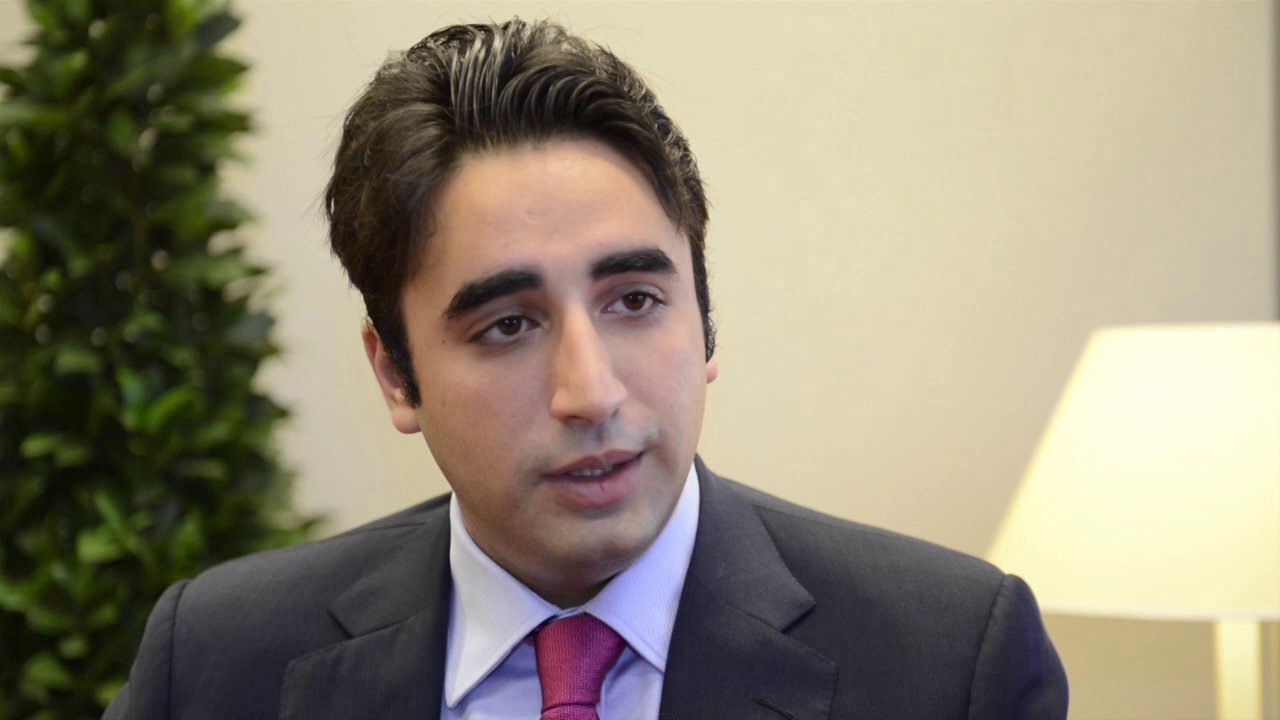
Bilawal Bhutto for balance of power

PPP Chairman Bilawal Bhutto Sunday said correcting the imbalance of power between the elected representatives of the people and the unelected but powerful organs of the state was a huge challenge before the democracy.

“Wielding real state power without accountability by some while holding powerless elected people responsible for the nation’s multiple failures is a crisis of our democracy that must be addressed,” he told the party workers and office-bearers from Peshawar, Mardan, Bannu and Karak divisions on the third day of his ‘meet the workers’ programme at Zardari House in Islamabad.

Bilawal said that the PPP manifesto clearly stated that power belonged to the people and the people alone. All other institutions of the state are subservient to the will of the people, he said.

“However, we have witnessed over the past decades that un-elected elements have systematically encroached upon state powers. What is worse is that while the elected representatives have been held responsible for all the ills and misfortunes on one pretext or the other, the real wielders of state power have not been held accountable even for the worst crimes committed against the state and the society,” he added.

“This is a challenge before all democratic forces in the country. However, the PPP, as the party of anti-status quo, has a greater responsibility and must take lead in correcting this imbalance.”


http://paktribune.com/news/Bilawal-Bhutto-for-balance-of-power-275511.html

BILAWAL BHUTTO STRONGLY CONDEMNS THE TERRORIST ATTACK NEAR SECURITY FORCES CHECK POST AT PESHAWAR

Bilawal Bhutto Zardari Chairman Pakistan Peoples Party has strongly condemned the terrorist attack near security forces check post at Peshawar today resulting in martyrdom of 6 persons.

In a press statement, Bilawal Bhutto Zardari said that terrorism is monster and it can only be eliminated through a greater national unity and strengthening of democracy.

PPP chairman sympathized and condoled with the members of bereaved families and prayed to Almighty Allah to rest their departed souls in eternal peace and grant courage and fortitude to their family members to bear this loss for equanimity.

https://ppppunjab.wordpress.com/2016/01/19/bilawal-bhutto-strongly-condemns-the-terrorist-attack-near-security-forces-check-post-at-peshawar/

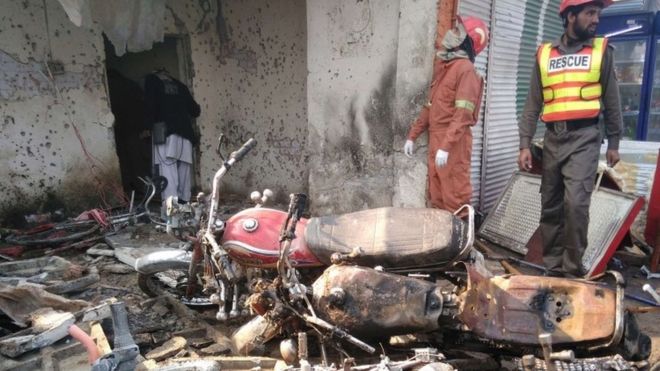
Pakistan suicide bombing 'kills 10' in Peshawar


At least 10 people have been killed by a suicide bomber riding a motorbike close to a police checkpoint in north-western Pakistan, police say.
About 20 people were also wounded in the blast, which took place in the Federally Administered Tribal Areas (Fata) on the outskirts of Peshawar.
There has been fierce fighting in the region between security forces and the Pakistani Taliban.
No-one has yet said they carried out the attack.
TV footage of the latest attack showed vehicles parked near the blast site on fire after the explosion.
At least five policemen are among the dead. Their vehicle was targeted by the bomber, officials said. Several civilians were also killed, including a child and a local journalist.
The bomb went off near Peshawar's Karkhano Market, The Express Tribunereported.
A suspected suicide attack at a government office in north-western Pakistan killed at least 26 people last month.
That bomb went off outside the National Database and Registration Authority (Nadra) office in the town of Mardan.
The attack was one of the deadliest since the December 2014 massacre by the Taliban of 150 pupils and teachers in Peshawar.

Pashto Music - Sardar Ali Takkar بادشاهانو ـ عبدالرحمان بابا