Wednesday, December 30, 2015

SF Bay Area Fil-Ams to meet Hillary Clinton Jan. 7


San Francisco Bay Area Filipino American supporters of Hillary Clinton are preparing to ride the “HillaryBus” from Daly City to San Gabriel Valley in Southern California, to meet their candidate at the official launch of the Asian Americans & Pacific Islanders for Hillary on January 7, 2016 at 10 a.m.

Fil-Ams for Hillary organizers have chartered a US Coachways bus to take supporters from the Bay Area to the venue in San Gabriel Valley and drive them back to the Bay Area.

The group plans to gather at 9 p.m. on Wednesday, January 6, at the Pilipino Bayanihan Resource Center at 2121 Junipero Serra Blvd. (near Duggan’s) in Daly City to leave for San Gabriel Valley by 10 p.m. The same “HillaryBus” will return its riders to the pick up point the next day by 10 p.m.

The “HillaryBus” ride to and from the launching venue in San Gabriel Valley promises to provide its riders with opportunities to meet and be acquainted with others who share the same passionate commitment to the election of their candidate.

A number of Hillary supporters explained that they were completely offended by the demeaning remarks of Republican front-runner billionaire Donald Trump who has denigrated women, immigrants, Asian-Americans, Muslims, the disabled and hard-working Americans who want a decent living wage.

Trump has also come under fire from Filipinos concerned about the fate of approximately 400,000 Filipino “TNTs” or those who are out of status even though they have lived and worked in the U.S. for decades. They are among the 12 million “illegals” Trump plans to deport from the U.S. if he is elected president.

But Trump is not the only Republican presidential candidate who has offended Asian Americans. Former Florida Gov. Jeb Bush also did it when he clarified in August that his reference to “anchor babies” was not intended to offend Latinos.
“What I was talking about was the specific case of fraud being committed where there’s organized efforts, and frankly its more related to Asian people, coming into our country, having children in that organized efforts, taking advantage of a noble concept with this birthright citizenship,” said Bush.
We need Hillary Clinton in the White House,” said Rep. Judy Chu, chair of the Congressional Asian Pacific American Caucus. “But how are we going to make this happen? We can only make it happen if the grassroots is activated, if the grassroots works hard in every sphere, in every corner of the United States.”

Chu, the first Chinese American woman elected to Congress, expressed confidence that the Asian American Pacific Islander community, which includes Filipino Americans, is the fastest growing population in the country, and will make a critical difference in battleground states.

“Asian Americans have gone from being marginalized to being the margin of victory,” she said.
At San Gabriel Valley, Bay Area Fil-Ams will connect with Filipino Americans from all over California and Nevada and personally meet Hillary Clinton. Among those who will be there to welcome them will be Artesia Mayor Pro Tem Victor Manalo, who believes Hillary’s victory will be beneficial for all ethnic communities, including Filipinos.

“I think we need to realize that in many instances, we all want the same things. We all want good educations, good jobs, and we want to be a part of the economic, social, political system in this country,” Manalo said.

“And I think having Hillary as president, having a woman a president will give government a point of view that people need to be included and not be excluded and will help in seeing where the inequities are in our society,” he added. “So we, as Filipinos, will benefit from that.”

The round trip “HillaryBus” fare to San Gabriel Valley from Daly City will be $30. Interested HillaryBus riders can contact Rodel Rodis at 415.334.7800 or email him at Rodel50@aol.com.


Read more: http://globalnation.inquirer.net/134349/sf-bay-area-fil-ams-to-meet-hillary-clinton-jan-7#ixzz3vqPtPAom
Follow us: @inquirerdotnet on Twitter | inquirerdotnet on Facebook

Video - Life Lessons from POTUS: President Obama - On Being a Parent

From Iran to Cuba, 2015 Was a Year of Diplomacy for Obama

For an American president wrapping up his time in office, Barack Obama has spent 2015 focused on foreign policy initiatives aimed at reshaping the U.S. role in key regions of the world. VOA White House correspondent Aru Pande looks at what analysts say are Obama’s achievements thus far and his remaining challenges around the globe.

With European trade deal unfinished, Obama to head to Germany in the spring


By Juliet Eilperin


President Obama will head to Hanover, Germany in late April to attend a trade fair, the White House announced Wednesday, part of the administration's push to secure a European trade deal before he leaves office.
Obama will participate in the Hannover Messe, the world’s largest trade show for industrial technology, and will meet with German Chancellor Angela Merkel during his visit. Administration officials are hoping to make progress on the Transatlantic Trade and Investment Partnership (TTIP), negotiations between the United States and the European Union that have taken a back seat to the recently-forged Trans Pacific Partnership (TPP). That trade deal encompasses a dozen Pacific Rim countries, including the United States, and it remains unclear whether negotiators can conclude TTIP talks during Obama's final year in office.
The goal of the ongoing talks is to eliminate tariffs completely between the United States and the European Union, which together generate more than a third of the world's GDP, and harmonize regulations on a range of goods and services,
Obama's visit to the Hannover Messe, which was founded nearly 70 years ago and draws nearly 6,500 exhibitors and 200,000 visitors from across the world, is the first for a sitting American president. It will mark his fifth trip to Germany.
In a statement, White House press secretary Josh Earnest said the event "presents an unique opportunity to showcase American innovation and ingenuity and to highlight the United States as a prime investment destination."
Even as Obama consults with European leaders, however, he is stepping up his outreach to key Asian nations early next year. The president is hosting the first-ever U.S. summit with the Association of Southeast Asian Nations (ASEAN) at Sunnylands in Rancho Mirage, Calif. on Feb. 15 and 16.
In a statement Wednesday, Earnest said the upcoming Sunnylands summit "will provide leaders a forum to strengthen cooperation under the new U.S.-ASEAN strategic partnership, launched in November 2015 in Kuala Lumpur, on political, security, and economic issues."

The year of fear: Republicans and media stoked bigotry and anxiety in 2015


By Chris McGreal 
This was the year the threads came together.
Spectres of mass shootings, jihadis and immigrant hordes have grown to haunt parts of 21st century America as communists and the atom bomb once did. But each fear, rational or not, generally held its own as a distinct threat.
If your children’s school went into lockdown, chances are you had visions of a gun-obsessed loner blasting his way through the classrooms. When airport security rummaged through your underwear while you were still in it, it was al-Qaida or Isis you cursed. And if you were worried about immigrants, other than because of skin colour, it may well have been because you believed the deceit that they were going to steal your job. Each fear in its place.
Then came 2015, the year of blended anxieties.
Donald Trump started by shifting the debate from policy about undocumented immigrants to the smearing of Mexicans in general as rapists, drug traffickers and all around criminals.
The Republican frontrunner then seized on the heartrending scenes of refugees, particularly Syrians, arriving in Europe on flimsy boats and tramping en masse across the continent in search of sanctuary, to add terrorism to the list of immigrant dangers.
The rest of the Republican field waded in after the Paris attacks with the complicity of cable news. Isis is in Syria. Syrians refugees are arriving in Europe. Paris is in Europe. Therefore the murderers at the Bataclan were Syrian refugees.
More than half the nation’s governors, all but one of them Republican, dutifully stepped up by barring Syrian refugees from within the borders of their states. No matter that they lacked the authority to do any such thing or any way of enforcing the ban. Nor that almost all the killers in Paris were French or Belgian citizens, and of Algerian or Moroccan descent, with the exception of two men travelling on fake Syrian passports whose real identities are still a mystery.
Trump, standing sentinel on the border, was not deterred. He latched on to a report by the rightwing Brietbart that eight Syrian “illegal aliens” had been “caught” by federal agents attempting to cross into Texas. Trump tweeted: “Eight Syrians were just caught on the southern border trying to get into the U.S. ISIS maybe? I told you so. WE NEED A BIG & BEAUTIFUL WALL!”
As it turned out, the Syrians were two families, including four children, who were neither “illegal immigrants” nor “caught”. They had declared themselves openly at an immigration post after crossing from Mexico.
The threads came together in November in San Bernardino, California, as a married couple, Syed Rizwan Farook and Tashfeen Malik,shot 14 people dead in an attack that FBI investigators say was jihadi-inspired. The killings tied the knot of fear of immigrants, terrorism and gun rampages.
It didn’t seem to matter that Farook was born in the US and that the only person to get into the US and kill anyone in an act of alleged terrorism in 2015 was his wife who was neither Syrian nor a refugee. She was a Pakistani on a fiancée visa.
Congress leapt into action, voting to require foreigners who do not normally need a visa to enter the US, such as most Europeans, to get one if they have visited Syria or Iraq.
Funnily enough, Republicans were a little less enthusiastic about addressing the third strand of the knot – how these terrorists got their weapons. Even when it came to keeping weapons out of the hands of people Homeland Security regards as too much of a threat to permit to fly in the US, gun rights won out.
Yet it was the ease with which Farook was able to get weapons, through a friend who bought them in a gun shop, that made the whole attack possible or at least so deadly.
The Brady Campaign to Prevent Gun Violence calculates that seven children and teenagers are shot dead in the US each day. That means more die in a week than all the Americans killed by jihadi terrorism in their own country in all of 2015.
It was of course the mass shootings that got the attention. There were more than 300 in 2015, only two of which were carried out by alleged Muslim terrorists. The response to the killingswas often more guns.
In the days following Chris Harper Mercer’s murder of 10 people at Umpqua community college in Roseburg, Oregon sales at the local gun shop surged.
After the Roseburg killings, President Obama challenged news organisations to “tally up the number of Americans who have been killed through terrorist attacks over the last decade, and the number of Americans who have been killed by gun violence”. Politifact did just that in early October, before the San Bernardino shootings, and came up with 24 vs 280,024. Those who have died from gun violence over the decade is now somewhere past 300,000, which dwarfs even the 9/11 attacks.
Fortunately cable news was there to keep everyone’s eye firmly on the ball. Wolf Blitzer’s first question of the CNN Republican debate in Las Vegas this month was about protecting Americans from jihadis. That issue took up the first hour of the debate. He did not pose a single question about mass shootings or gun control.
The exaggerated fears of jihadis on the doorstep tend to be of less concern among people, mostly African Americans, who have good reason to be more afraid of those ostensibly protecting them. The Guardian recorded 1,125 people killed by the police this year as the body of video evidence of trigger-happy officers and a taste for excessive force grew.
There were other things to be alarmed by, if not afraid of, which did not get the wider discussion they deserved. Among them was research showing a rising death rate among middle-aged white Americans.
African Americans remain at greater risk from premature death in large part because of the consequences of systemic poverty and lack of opportunity, not least restricted access to decent healthcare, as well as violence.
But the shock in the study of middle-aged white people lay in the reversal of a longstanding trend of falling death rates in contrast to every other group, including African Americans, and unique in the developed world. Many died prematurely of drugs or drink. Suicide now kills almost as many middle-aged white Americans as cancer used to when it was the primary cause of death in that group.
Because those worst affected tended to have the lowest incomes, it appeared to have a lot to do with desperation and despair rooted in growing economic inequality and financial struggles.
That is its own kind of violence with implications beyond the middle-aged or white Americans that should alarm everyone and have politicians reaching for answers. But the year of living anxiously meant the Republicans and cable news kept us afraid of what is least likely to kill us.

Farsi music video - Aashiqi

Afghan Emigration to Europe Seen as Setback


Fed up with the worsening security and dwindling economic opportunities in their country, Afghans are fleeing to Europe in numbers not seen even under the repressive Taliban regime.
About 200,000 Afghan asylum-seekers were registered in 27 European member states from January to December of 2015, according to the International Organization for Migration.
The exodus comes in the aftermath of a rapid withdrawal from Afghanistan of tens of thousands of U.S.-NATO forces, which has left the war-ravaged country of about 30 million people with harsh security and economic challenges.
An increase in violence by Taliban insurgents and the Islamic State has taken civilian casualties to the highest level since a U.S.-led coalition ousted the Taliban regime in October 2001, the United Nations has said.
Ranked least developed in Asia in a recent U.N. report, Afghanistan is already one of the poorest countries on Earth with an estimated annual GDP of $20.84 billion in 2014 and a per capita income of less than $700.
FILE - An Afghan refuge
While no official tracking of the financial consequences of irregular emigration is available, it appears that in 2015 more than $1 billion was exchanged between human traffickers and Afghans trying to reach Europe.
High price to pay
Landlocked Afghanistan is nearly 4,000 kilometers from Greece, and many emigrants pay traffickers handsomely to get there.
"On average, a migrant pays smugglers about $7,500 to be taken to a European destination," Islamuddin Jurat, a spokesman for the Ministry of Refugees and Repatriations, told VOA.
Often, there is more money exchanged before settlement.
"I’ve spent $6,500 to make it to Hungary and my destination is Belgium," Dawajan Sahil, a young Afghan, told VOA in Budapest in August. "I'll pay more to get to Belgium."
Another young man, Bahram Ghafoori, said he paid a smuggler $10,000 to take him to Germany, where more than 80,000 Afghans sought asylum in 2015.
The immediate economic impact of the Afghan irregular emigration is unclear.
In the eyes of Afghans, however, the exodus is a major setback.
"We lose young men who can be very helpful in developing the country and they [emigrants] waste millions of dollars which could be vital in rejuvenating the economy," said Khan Jan Alekozai, who serves on the Afghan Chamber of Commerce in Kabul.
Servitude, prostitution, death
Many emigrants gamble their hard-earned savings, sell off their properties or borrow money to pay human traffickers, according to Thomas Ruttig, a senior researcher at Kabul-based research institution Afghanistan Analysts Network.
While most emigrants pay traffickers in cash or installments until they reach a final destination, some resort to loans, credits and even modern forms of slavery, often plunging into debt bondage, servitude and prostitution, according to U.S. State Department human trafficking reports.
Irregular emigration is also extremely dangerous. The government of Afghanistan does not officially tally the number of its citizens who die on risky routes to Europe, but the rate is reportedly high.
Overwhelmed by the influx of too many asylum-seekers, some European countries have launched public awareness campaigns inside Afghanistan to warn potential emigrants of the serious risks on the way to Europe and the uncertainty in getting residence approvals.
Stopping Afghan emigrants from entering Germany was a point of discussion between Afghan President Mohammad Ashraf Ghani and German Chancellor Angela Merkel in December. After the meeting, Ghani told Deutsche Welle that Afghans leaving their country were opting to become "dishwashers" in Europe — a derogatory remark which many on social media called insulting.
"The high number of Afghans becoming refugees is definitely worrying and represents a brain drain, but also reflects a drain of confidence in the current government and its ability to successfully tackle the multiple crises Afghanistan is facing," Ruttig said.

Top U.S. general may seek more troops for Afghanistan


Afghanistan's security situation is so tenuous that the top U.S. commander there wants to keep as many U.S. troops there as possible through 2016 to boost beleaguered Afghan soldiers and may seek additional American forces to assist them.
Army Gen. John Campbell said in an interview with USA TODAY that maintaining the current force of 9,800 U.S. troops to train Afghan forces and conduct counter-terrorism raids is vital, and that the scheduled reduction to 5,500 by Jan. 1, 2017, should be put off as long as possible.
"My intent would be to keep as much as I could for as long as I could," Campbell said by telephone from Kabul. "At some point it becomes physics. I'm going to have to get them out."
News from Afghanistan in 2015, when American troops ended their daily combat mission after 14 years, has been grim. Taliban insurgents stormed the northern provincial capital of Kunduz in October and were pushed out after fierce fighting that included an inadvertent attack by a U.S. warplane on hospital that killed 42 civilians. In the south, Taliban insurgents have battered Afghan troops in Helmand province; an al-Qaeda training camp was also discovered there and destroyed. Islamic State fighters have set up outposts in the east. Last week, six U.S. airmen were killed by a suicide bomber outside Bagram Air Base.
The Pentagon's own quarterly assessment of security in Afghanistan this month noted that in "the second half of 2015, the overall security situation in Afghanistan deteriorated with an increase in effective insurgent attacks and higher (Afghan security force) and Taliban casualties."
Campbell will be Washington soon to brief senior leaders on the security situation in Afghanistan and troop levels required for their missions. He declined to offer specifics on his recommendations, saying they were classified.
"Some of them will not go over well with people," Campbell said. "Some of them will get approved."
In October, President Obama announced that he was reversing his decision to withdraw all but embassy personnel by the end of 2016. Instead, 9,800 U.S. troops will remain through most of 2016. After that, the residual force of 5,500, Obama said, will be a key part of a counter-terrorism network stretching west into Africa.
The long-term U.S. commitment by Obama encouraged Afghan leaders, troops and neighboring Pakistan, Campbell said. Still, Campbell said he won't hesitate to ask for more troops for Afghanistan if necessary. He has commanded all NATO forces there since Aug. 2014.
"My job as commander on the ground is to continually make assessments," Campbell said. "Every time I've gone to the president and said, 'I need X,' I've been very, very fortunate that he's provided that. So he's been very flexible. It's actually been conditions based as we've gone forward.
"If I don't believe that we can accomplish the train, advise and assist and the (counter-terrorism) missions, then I owe it to the senior leadership to come back and say, 'Here's what I need.' If that's more people, it's more people."
Campbell is a highly regarded officer and former vice chief of staff for the Army. If he does ask for more troops, he'll have high-profile allies on Capitol Hill, including Rep.Mac Thornberry, the Texas Republican and chairman of the House Armed Services Committee.
Thornberry called the troop level of 9,800 "a political number to make sure we were under 10,000." If more U.S. troops are needed, and if they need greater leeway in prosecuting the war, Campbell should have them, Thornberry said in an interview.
"The sheer lack of numbers as well as the restrictions our folks are put under handicap our efforts," Thornberry said.
Earlier this year, U.S. troops were stretched so thin that they advised their Afghan partners by video conference, Thornberry said. He said he'd rely on commanders for a recommendation on troop levels, adding that they had sought as many as 20,000.
"Nobody is looking to re-insert 100,000 combat troops," he said.
Michael O'Hanlon, a military analyst at the Brookings Institution who recently traveled to Afghanistan, said a contingent of 12,000 U.S. troops would be able to advise Afghan forces involved in the toughest fights and to battle terrorists. At that level, in teams ranging from dozens to hundreds, U.S. troops could provide the sort of expertise they offered Iraqi forces in retaking Ramadi this week from Islamic State fighters, he said.
In any event, O'Hanlon doesn't expect decisions so soon after Obama agreed to the October commitment of troops that will extend into the next administration.
"The next president is still going to be in Afghanistan," O'Hanlon said. "We should think of it as shoring up the eastern flank in the fight against extremists."
The news from Afghanistan is not all dire, Campbell said. He cited some signs of progress: the number of high-profile suicide bombings that killed or wounded people dropped 36% from 262 in 2014 to 168 in 2015.
"When I drive around Kabul, it's busy," he said. "Traffic is almost as bad as Washington, D.C. All the stores are open. It's still a vibrant city."
For 2016, Campbell has issued four challenges to Afghan troops, he said. First, they need to drive down attrition by creating a system that allows troops to train, fight and rest to drive down rates. The Afghan military also needs to move from manning checkpoints to taking the fight to the Taliban. Finally, military brass needs to root out bad commanders and do a better job recruiting.
"I think this will drive the Taliban to the peace table," Campbell said. "If they don't do those things, it's going to be a tough fighting season."
The stakes for the Afghans and the United States couldn't be higher, he said.
"If we don't stay engaged here to build their capacity to fight this, keep sanctuary down, it's coming back to the homeland," Campbell said. "So it's pay a little bit now, build the capability, and keep this an away game as opposed to a home game."

U.S. Charges Afghan Businessman With Bribing For Contracts

An Afghan businessman has been charged with bribing U.S. soldiers to obtain millions of dollars in U.S. supply contracts in a major U.S. court case targeting corruption during the war in Afghanistan.
A criminal complaint filed December 23 in a North Carolina federal court charges trucking company owner Hikmatullah Shadman with conspiracy and bribery in connection with payments he made to two soldiers in 2009.
The charges follow a move by the Justice Department in 2013 to freeze more than $63 million in bank accounts controlled by Shadman, owner of Hikmat Shadman Logistics Services Co. 
It was the first asset freeze of its kind involving Afghan contractors. Authorities alleged that more than $77 million was fraudulently obtained from the government through Shadman's inflated trucking contracts.
The criminal complaint said law enforcement agencies are investigating corruption in the contracting process in Afghanistan, particularly between 2009 and 2012, and have uncovered evidence that Shadman's company and others paid bribes to receive contracts despite charging more than their competitors.
The investigating agencies include the FBI, U.S. Army Criminal Investigation Command, the Defense Criminal Investigative Service, and the Special Inspector General for Afghanistan Reconstruction.
An American attorney who previously represented Shadman in the asset-freezing case didn't immediately return a message seeking comment from the Associated Press on December 29. Shadman's current whereabouts were not known.
The complaint said Shadman paid approximately $140,000 to Robert W. Green, then an Army staff sergeant. Green was able to hire specific Afghan trucking companies rather than open up contracts to a competitive bidding process because of his role managing supply requests at Kandahar Air Field, authorities said.
Green told investigators that he asked for money after hearing Shadman had paid other soldiers, according to the complaint.
A few days later, Green received a phone call asking him to visit the businessman's nearby compound where Shadman gave him a plastic bag containing a bundle of $100 bills, investigators said. The complaint said Green received several such payments of between $30,000 and $50,000.
Prosecutors said Green steered at least 40 contracts worth $3 million to the Afghan businessman.
David A. Kline, at the time a first lieutenant and Green's superior, received about $50,000 in cash with the understanding that he would give work to Shadman's companies, the complaint said.
Green and Kline have both pleaded guilty to accepting bribes. Green was sentenced in September to 10 months in prison and one year of supervised release, according to court documents. 
Kline reached a plea agreement with prosecutors last month that included cooperating in the case against Shadman. His sentencing hearing is scheduled for January.
Afghan trucking companies in 2009 commonly transported fuel, food, water, and other items for the U.S. military. Units would ask for supplies through military logistics groups such as the Movement Control Team that included Kline and Green, and the requests would then be assigned to local companies.
The requests were supposed to be subject to a competitive bidding process, but that could be circumvented if contracting officers designated a specific company.

Pakistan ‘could not complete’ Iran project

A Pakistan minister appears to have put the kibosh on expectations that a pipeline intended to take Iranian gas to the country could ever be completed. 
Pakistani officials have made contradictory statements about the project, with Minister for Petroleum and Natural Resources Shahid Khaqan Abbasi casting further doubt on the plan on Wednesday.
“It could not be completed due to international sanctions on Iran,” Pakistani media quoted him as saying in Islamabad when asked about the gas pipeline.
The remarks come as Iran looks on course to emerge from sanctions under a July nuclear deal.
However, Islamabad was dragging its feet even before the West imposed new sanctions on Tehran in 2012.
The US has long pressed Pakistani officials against going for the pipeline, promoting Turkmen over Iranian natural gas even though the route requires the extra mile of more than 700 km across volatile regions in Afghanistan.
Earlier this month, Turkmenistan started building its part of the $10 billion pipeline which is expected to finally stretch to India.
On Wednesday, Abbasi said work has been started in phases to lay the Turkmen gas pipeline, without explanation.
The minister also cited import of liquefied natural gas (LNG) as helping resolve the gas crisis in Pakistan. Abbasi had earlier said this month that import of gas from Iran through a pipeline was the best option.
The energy crisis in Pakistan which suffers about 12 hours of power cuts a day has worsened in recent years amid 4,000 megawatts of electricity shortfall.
Iran has completed its part of the gas pipeline project with more than $2 billion of investment but Pakistan has fallen behind the target to take gas deliveries in the winter of 2014.
Contractually, Pakistan has to pay steep fines to Iran for failing to build and operate its section of the pipeline by the winter of 2014.

http://www.presstv.ir/Detail/2015/12/30/443809/Iran-Pakistan-gas-pipeline-sanctions-Abbasi/

Pakistan: Another year of suffering for minority communities

The year 2015 was not much different from the preceding years for the Christian and Ahmadiyya communities of the province. Community members complain that persecution and misuse of blasphemy laws continued without any concerted action by state functionaries against those responsible. They say in some cases the police had resorted to harassing the aggrieved instead of tracking down the perpetrators.

Youhanabad church attacks

Speaking to The Express Tribune, Christian community members recall suicide attacks at two churches in Youhanabad as the most gruesome to date against the country’s Christian community.

At least 15 people had lost their lives and 70 others were injured in the attacks that took place on March 17. Hundreds of residents of the neighbourhood had taken to the streets in protest and blocked Ferozepur Road for traffic following the attacks. A mob had started ransacking property including the Metro Bus station. Two men accused of being accomplices of the attackers were caught and lynched by the mob. The deceased were residents of nearby villages and not related to the attacks.  Dozens of Youhanabad residents were detained by the police for interrogation as others fled the area fearing arrests. As many as 47 of them are in jail, facing a trial on charges of killing the two men.

“My family is not celebrating Christmas this year,” says Aman Sahotra, daughter of Aslam Parvez Sahotra, one of the suspects. She laments that the police had yet to make progress in investigation of the suicide attacks. However, she says prompt action had been taken against Christian citizens who protested over the attack. “My father is 60 years old and suffers from chronic pain in the back,” she says.

After the denial of Sahotra’s application for release on bail by a lower court, his family is now pinning hopes on Lahore High Court where a petition is pending hearing.

Aftab Gill’s application for release on bail has been granted by a court. He had been held on charges of damaging public property. Speaking to The Tribune, Gill says based on the police’s response to the Youhanabad attacks it appears that Christians’ right to life in Pakistan exists only on paper. He says the state should be impartial in its dealings with various religious communities.

Iqbal Shah, the DSP concerned, says only those identified through a Closed Circuit Television (CCTV) footage were arrested following the riot.

He says progress had been made in the investigation of the suicide attacks but refuses to release details.

Arson attack at Ahmadiyya owned factory and worship place

On November 20, a charged mob attacked and burnt an Ahmadiyya-owned chipboard factory and 11 houses of community members in Jehlum. The mob also ransacked an Ahmadiyya worship place in the area. Dozens of people fled the area following the incident. As many as 35 suspects are facing a trial over the incident.

An Ahmadiyya man, a security officer at the factory, was also held in connection with the incident on blasphemy charges.

Speaking to the Tribune, Amir Ahmed, an official of Jamat-i-Ahmadiyya, says extremist outfits attack and kill members of his community with impunity. The state acts as a silent spectator in most such cases, he says.

Ahmed says an Ahmadiyya man held in a blasphemy case over which three Ahmadiyya women were burnt by a mob in Gujranwala had been recently acquitted by the court. “The women were innocent. We want justice for them,” he says. He says the families of the deceased had left the area fearing for their lives. “There has been no action under the National Action Plan (NAP) against those perpetrating hate against the Ahmadiyya community,” he says.

Other incidents

In other incidents this year, the Supreme Court of Pakistan (SC) denied bail to a manager of Al-Fazl, a 102-year-old Ahmadiyya daily publication and a Lahore High Court (LHC) division bench dismissed blasphemy convict Aasia Bibi’s appeal against her death sentence.

Timely action by police averted a mob attack on a Christian couple’s house in Sheikhupura in July.

A Christian headmaster in was reportedly beaten up by his colleagues over an argument. An inquiry was initiated against a Christian physical education instructor accused of preaching his beliefs to the students.

A shopkeeper held by Gulberg police for displaying a sticker containing hate speech against Ahmadiyya community at the entrance of his shop at Hafeez Centre was released on bail a day after the arrest.

http://ahmadiyyatimes.blogspot.com/2015/12/pakistan-another-year-of-suffering-for.html

DAESH’S HEAD STAYED IN PAKISTAN FOR FIVE TO SIX MONTHS: REHMAN MALIK

Pakistan Peoples Party’s leader and former federal interior minister Senator Rehman Malik told that Daesh has been giving threats to Pakistan. He said that he was criticized for no reason when he revealed that Daesh’s meeting had taken place in a mosque of Gujranwala. He further said “there are proofs that Daesh’s head had stayed in Pakistan for five to six months”.
Senator Rehman Malik was talking to media outside the Parliament House. He said “it will be difficult to stop Daesh if it starts moving from mountainous areas towards other areas”.
He asked PM Nawaz Sharif to immediately call a meeting of all parties and stake holders to prepare a plan for resolving all issues, including Daesh. While talking about Rangers’ powers Rehaman Malik said “there is no conflict between the centre and Sindh rather only a difference of opinion that will soon resolve. We want Rangers to continue the operation in Karachi and we will support Pakistan army and Ranger sin every step they will take against terrorism”.
http://www.shiitenews.org/index.php/pakistan/item/20385-daesh-s-head-stayed-in-pakistan-for-five-to-six-months-rehman-malik

Pakistan - AFTER LEJ JAMAT UD DAWA’S MEMBERS ALSO JOINING DAESH

Geo’s anchor Shahzaib Khanzada while presenting the analysis in his program ‘Aaj Shahzaib Khanzada Kay Sath’ said that Daesh’s influence in Pakistan was increasing. He said “after LeJ members of Jamat ud Dawa are also being impressed by Daesh and joining the terrorist group. Both civilian and military leadership of Pakistan have been denying Daesh’s presence in Pakistan but the government should now open its eyes after the arrest of 9 terrorists from Sialkot who were Jamat ud Dawa’s members but had joined Daesh”.
He further said “Interior Minister Chaudhry Nisar have several times denied Daesh’s presence in Pakistan and the question was also raised when Daesh’s name was included in the list of banned groups. If Daesh is not present in Pakistan then why its name was included in the list? On one hand, Daesh’s presence in Sialkot has been revealed while on the other hand, two Pakistanis have also been arrested in Turkey allegedly for having links with Daesh”.
According to Punjab police, some families of Lahore have also left Pakistan after being impressed by Daesh’s literature. Not onlu Daesh’s supporters but its members are also present in Pakistan who have taken oath of allegiance to Abu Bakar al Baghdadi.
http://www.shiitenews.org/index.php/pakistan/item/20384-after-lej-jamat-ud-dawa-s-members-also-joining-daesh-khanzada

Crime and terrorism in K-P: Let the numbers do the talking

The year 2015 was a mixed bag in terms of security and crime for Khyber-Pakhtunkhwa. Although the number of terrorist attacks saw a decline, durable peace remained a distant dream for the province.
Here is K-P’s crime and terror story in numbers. The data, copies of which are available with The Express Tribune, is collated from police records and NAP.


Pakistan - Suicide attack in Mardan

A YEAR in which significant progress has been made in the fight against militancy is nearing its end with a grim reminder that the war is far from over — and is far from being conclusively won. The suicide attack in Mardan yesterday on a Nadra office has claimed over 20 lives and injured some 60 people. It is hoped that the injured will be given the best possible medical care and the needs of the families of all victims will be addressed humanely and promptly. The casualties should not become yet more forgotten victims in the fight to save Pakistan. For the state and those whose responsibility it is to keep the country safe, there are some urgent reminders about what is at stake here. Taking the fight to the militants in Fata and ramping up counterterrorism efforts in the major cities through so-called intelligence-based operations was going to leave second-tier targets more vulnerable: smaller cities, soft targets — areas the security and intelligence apparatus may not have prioritised. Therein lies the next great challenge for the state — developing counterterrorism capabilities that are adequate to deal with the evolving terrorist threat.
Unhappily, developing counterterrorism capabilities appears to be the one area that the state — both the military and civilian sides of it — does not consider a priority. While the military leadership does seemingly agitate the issue, there is a basic problem: the perception that the military wants to dominate and lead the effort rather than help the civilian side of the state develop its capabilities and leadership role. But the political government must shoulder a great deal of the blame too. There is a complacency and inertia discernible that is simply unacceptable. The activation of Nacta is a fabled myth; police reforms remain a distant dream; centre-province coordination is mired in politics; and there is a distinct lack of interest in the scientific method when it comes to assembling the tools and personnel to fight terrorism. The arc of insurgencies and terrorism is a well-known one. In the face of overwhelming state power it is initially diminished, only for a gradual regrouping to usually manifest itself and for the threats to evolve and adapt to the state’s responses. To win against terrorism and militancy, the state will need to be ahead of that curve.
There also remains the wider problem: the incubators of hate and extremism where terrorists and militants continue to find sanctuary. The trail of most terrorist incidents like in Mardan yesterday usually leads to financiers, aiders and abettors and sanctuaries that run into a very long, though familiar chain. It is not enough to demand outside action against sanctuaries that are beyond Pakistan’s borders — there must be a sustained effort to ensure that no stripe of militant or terrorist can find aid or safe haven within.

Pakistan - Attack In Mardan

Like many towns in KP, Mardan has suffered its fair share of wounds in Pakistan’s fight against terrorism. Earlier in December, a search and strike operation was launched in Mardan, resulting in the arrest of about 327 suspected persons, including 16 illegally staying Afghan nationals, and persons involved in various crimes. Tuesday’s heinous attack, where twenty-one people were killed and at least 56 injured, could be backlash due to the operation in Mardan, or could be due to the Zarb-e-Azb, or any other reason… we have lost track now. The blast occurred near a National Database and Registration Authority (Nadra) office; a clear attack on the state.
The attack was claimed by Tehreek-i-Taliban Pakistan (TTP) splinter group Jamaat ul Ahrar, which was also behind last year’s blast at Wagah Border. Strange, that after such high profile attacks, the army and the government has not vowed the elimination of Jamaat ul Ahrar. In November 2014, Jamaat-ul-Ahrar claimed responsibility for twin bombings that killed at least six people in Mohmand Agency. The bombs targeted peace committee volunteers and vowed to continue attacking tribal peace committees. During the same month, they claimed responsibility for a grenade attack on the membership camp of Muttahida Qaumi Movement (MQM) in Karachi. Three members of the Sindh Assembly and 50 workers were injured. In March 2015, Jamaat-ul-Ahrar claimed responsibility for twin bombings at a Roman Catholic church and Christ Church during Sunday service at Youhanabad town in Lahore. At least 15 people were killed and seventy were wounded.
The concessions these groups get from the state after blasts and attacks are negligible now. It seems the strategy is just to cause havoc, rather than have any demands met, and hope that by force of fire, people accept an extremist’s version of Islam. There seems to be no pattern in their attacks, except for going after soft targets like churches and peace workers.
In March this year, leaders of Taliban splinter group Jamaat-ul-Ahrar and militants belonging to Lashkar-e-Islam pledged allegiance to the TTP (which claimed responsibility for the APS shooting). The Taliban will always be dangerous. If you try to negotiate with, or mainstream it, its ultra right will splinter will still be the stuff of nightmares. The TTP was a splinter of the Afghan Taliban, and the Afghan Taliban now seem tame in comparison to the TTP.
With regards to the army operation against them, there is no point in talks, or a cautious approach. The eradication of this scourge has to be taken up until the militants are arrested and dead- force must be used to the extent that all their links, their ideologies, their thoughts and all linkages with society and supporters are exterminated.

Pakistan - Punjab - ''Extreme brutality''

An act of extreme brutality in Sheikhupura has made us ashamed to be called human beings. An influential landlord chopped off both hands of a youth over his refusal to work at his farmlands. Earlier, the ill-fated worker was chained for almost three months and was forced to do labour to pay off his debt amounting to Rs 15,000. The sad incident took place when the labourer tried to escape the torture. He was attacked by the landlord and his cronies, who cut off his hands with a cleaver. Cases highlighting the abuse of workers’ rights are common in Pakistan. There is no mechanism to check these violations while the police have been notorious for accepting bribes to hush up such cases. More important, the culprits have not been arrested by the police so far while the aggrieved family is seeking justice but there is little chance they would be provided it. Punjab Chief Minister Shahbaz Sharif has satisfied himself by taking notice of the incident, seeking a report and ordering the arrest of the culprit without ensuring the implementation of his directions.

It is absolutely barbaric that feudal lords are still ruling the land of the pure in this 21st century and treat workers like slaves. Despite assertions to the contrary from many quarters, especially the landlord lobby, feudal culture still prevails and is a major cause of poor law enforcement. The situation is grim in the rural areas where workers are maltreated and paid a meagre wage. They are victimised at the hands of powerful landlords who torture them with impunity for even the slightest infringement, let alone, as in the case under discussion, daring to withdraw their labour. They cannot protect themselves against the highhandedness of landlords, who have connections with local politicians and sufficient wealth to buy influence. It is high time the Punjab government and all authorities through the length and breadth of the country paid attention to this social injustice. The perpetrator of this heinous offence must be awarded exemplary punishment. It is very unfortunate that no one took notice of the boy who was chained by the employer for three months. Tragically, there are numerous incidents involving violence against workers, but no one gets convicted that is why such heinous incidents are repeated again and again. The elimination of this social evil needs long term measures. The prevention of abuse of workers’ rights is the responsibility of both the government and society. The government should introduce detailed laws and policies to address the issue. If we do not eliminate this crime from society, it will go on bleeding our hearts and souls after every such incident. In the said case, the perpetrator must be made an example of as a warning to others of the same ilk.

Pakistan's ISI targeting IAF, Army officials; using pretty women, social media to extract info

Dismissed Air Force official Ranjith, who has been arrested for allegedly sharing secret documents with intelligence operatives backed by Pakistan’s ISI, believed that he was working as a 'defence analyst' with a reputed UK-based magazine.
Till his arrest, Ranjith KK, the Leading Air Craftsmen (LAC), had no idea that he was honey-trapped into a deadlier spying network having roots in Pakistan and was passing sensitive information to various intelligence agencies of India's hostile neighbor.
Unaware that he has become part of Pakistan ISI's pan-India spy network, the Air Force official continued to do the job for over a year in exchange for money.
He was finally arrested from Bhatinda Air Force Station in a joint operation by the Special Cell of the Delhi Police, IAF LU and Military Intelligence on Tuesday.
According to a report by the Hindustan Times, Ranjith was lured by a woman named 'Damini McNaught', whom he met on Facebook. Ranjith had received a Facebook friend request from the lady soon after he posted his profile picture in uniform on the social networking website.
The two regularly conversed through Facebook Messenger and exchanged emails. The two even had a telephonic conversation. McNaught posed as an editor with a leading magazine in the UK and urged Ranjith to work for them as a defence analyst, promising handsome remuneration in lieu of his work.
As per the report, McNaught started assigning “weekly tasks” to Ranjith after that. She reportedly gave him Google satellite maps of Bhatinda and asked him to specificity mark vital installations, including high rises from where the entire Air Force base is visible and other important buildings around the base.
In one such tasks, McNaught provided another map to Ranjith and asked him to pinpoint the exact location of the air traffic control, air force base and the parking space of the fighter planes.
Ranjith was also reportedly asked to mark the entire length and breadth of the runaway from where all fighters planes take off.
Interestingly, McNaught used to give Ranjith only specific queries. She never asked him to leak any sensitive document or plans but sought specific information.
As a ‘defence analyst’ he was asked to mark entry exit points of the air base, distance of the base from high rises, recent air force exercise, movements of aircrafts and deployment of various units .
For the said information he was paid between Rs 30,000 to Rs 35,000, as per report. The Special Cell, which is now looking into the case, believes several other defence officials may have also been fooled by the ISI module.
Elaborating on their modus operandi, they claim that these Pakistani agents select profiles of these defence personnel from Facebook and then send them friends request to start a conversation.
The Pakistani spy agencies have even hired educated women with British accent whom they use to honey-trap these defence personnel in order to get sensitive information out of them, the investigators believe.

Pakistan Ends Another Year With A Horrifying Attack - NPR

Dozens were killed in a suicide attack on Tuesday. In 2014, gunmen stormed a school and killed more than 140 people.Renee Montagne talks to author Mohsin Hamid about what the country is going through.

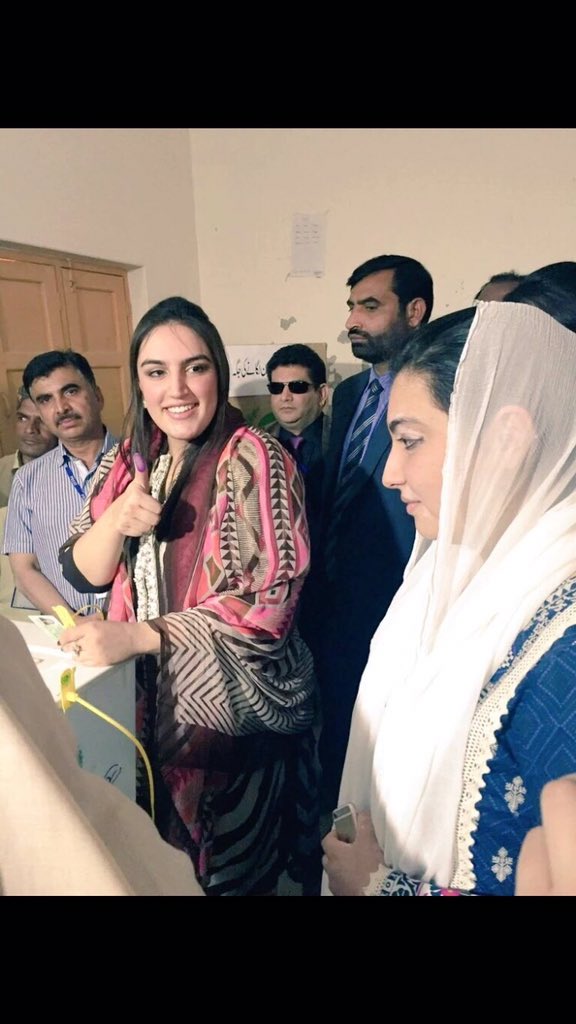
Pakistan - BAKHTAWAR BHUTTO ZARDARI CASTS HER VOTE FOR FIRST TIME

Bakhtawar Bhutto Zardari head social media Pakistan Peoples Party for the first time cast her vote on Wednesday in postponed local bodies elections being held in NawabShah, BenazirAbad, Sindh.
She has Tweeted: “It’s a great matter of pride for me today to be able to cast my very first vote! #JeayDemocracy”

https://ppppunjab.wordpress.com/2015/12/30/bakhtawar-bhutto-zardari-casts-her-vote-for-first-time/