Wednesday, December 2, 2015

Russia’s Defense Ministry exposes three routes of illegal oil transportation to Turkey

The western route reaches Turkish ports on the Mediterranean coast, the northern route - the Batman oil refinery in Turkey, the eastern one - a large transshipment base in the town of Cizre.
Russia’s Defense Ministry has exposed three key routes of oil transportation from Syria and Iraq to Turkey, Russian General Staff Main Operations Directorate chief Sergey Rudskoy said Wednesday.
"Three key routes of oil transportation to the territory of Turkey from ISIL gangs-controlled regions of Syria and Iraq have been exposed," Rudskoy said.
ISIL is the former name of the Islamic State terrorist group, which is banned in Russia.
The western route, the general said, reaches Turkish ports on the Mediterranean coast, the northern route - the Batman oil refinery in Turkey, the eastern one - a large transshipment base in the town of Cizre.
The Defense Ministry’s information was supported by numerous photo and video materials demonstrating that oil tanks were moving from Syria to Turkey.
Western route
"Along the Western route, hydrocarbons produced at the oil fields near the city of Rakka, are transported by motor transport, mainly at night, to Syria’s northwest. Then they go via the border inhabited localities Azaz (Syria) and Reyhanli (Turkey) to the Turkish ports of Dortyol and Iskenderun," Rudskoy said, showing a satellite photograph made near Azaz on November 13.
"Part of oil is reloaded to ships and sent to be processed beyond Turkey, and part is sold on the domestic market. One oil tanker is loaded on the average in these ports daily," the General Staff official said. He showed space photographs of the ports of Dortyol and Iskenderun, dated November 25, where many gasoline tankers awaiting shipment can be seen.
Northern route
The Northern route, Rudskoy said, leads to Turkey from the area of oilfields on the right bank of the Euphrates. The area of the locality of Deir-ez-Zor is one of the large oil production and processing centers controlled by the Islamic State terrorist organization.
"There is a great amount of oil refineries here, one of which you see on the screen," Rudskoy said showing relevant shots. "Many gasoline tankers awaiting shipment have constantly been registered in this area. You are shown photographs of motorcades at a small distance from each other."
Eastern route
The third route of oil transportation to Turkey leads from oil deposits in Syria’s northeast and Iraq’s northwest, via the border inhabited localities of Kara-Chokh and Cham-Khanik in Syria and Tavan and Zakho in Iraq.
"The photographs show many gasoline tankers and trucks near these inhabited localities. On November 28, a total of 50 gasoline tankers were exposed near Kara-Chokh at an oil pumping station," Rudskoy showed at a photo.
He said photographing conducted November 14 near Tavan and Zakho made it possible to discover over 1,100 gasoline tankers and trucks.
All shots shown at the briefing have been posted on the official website of the Russian Defense Ministry.


Russia’s operation in Syria
Russia’s Aerospace Forces started delivering pinpoint strikes in Syria at facilities of the Islamic State and Jabhat al-Nusra terrorist organizations, which are banned in Russia, on September 30, 2015, on a request from Syrian President Bashar Assad.
The air group initially comprised over 50 aircraft and helicopters, including Sukhoi Su-24M, Su-25SM and state-of-the-art Su-34 aircraft. They were redeployed to the Khmeimim airbase in the province of Latakia.
On October 7, four missile ships of the Russian Navy’s Caspian Flotilla fired 26 Kalibr cruise missiles (NATO codename Sizzler) at militants’ facilities in Syria. On October 8, the Syrian army passed to a large-scale offensive.
In mid-November, Russia increased the number of aircraft taking part in the operation in Syria to 69 and involved strategic bombers in strikes at militants.
Targets of the Russian aircraft include terrorists’ gasoline tankers and oil refineries.

http://tass.ru/en/world/841022

Ben Carson fades and Hillary Clinton rises in latest presidential poll


Support for Ben Carson’s bid to be the Republican presidential nominee has faded, according to a poll released Wednesday by Quinnipiac University.
The poll, which was conducted after the terror attacks on Paris, from 23-30 November, showed Carson tied in third place with Texas senator Ted Cruz, both attracting 16% of Republican voters. A poll by the same company last month had Carson in second place on 23%.
Donald Trump, meanwhile, solidified his frontrunner status with 27% of voters, while Florida senator Marco Rubio attracted 17%. However, Trump remains the more divisive candidate: when respondents were asked if there were any candidates they definitely would not vote for, 26% of respondents selected Trump but only 5% ruled out Rubio.
Hillary Clinton also widened her lead in the Democrat race by a further 12 percentage points. A total of 60% of respondents who identified as Democrat or Democratic leaning said that if the primary were to be held today, they would vote for Clinton, while 30% said the same about Vermont senator Bernie Sanders. Last month in a poll by the same university, Clinton had 53% of support and Sanders was at 35%.
The 72-question telephone survey, conducted among registered voters by one of the more accurate political pollsters, also asked about specific voting concerns and uncovers a revealing shift in priorities. Republican voters showed more interest in foreign policy and terrorism compared to a month ago. Given that Carson has struggled to grasp foreign policy, changing voter concerns might well explain the candidate’s fall in support.
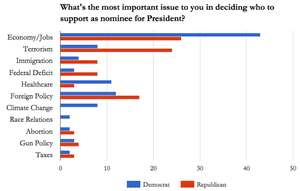
When asked to name the issue they considered most important in determining their vote for the Republican nomination, 26% said the economy and jobs (35% said the same last month), 24% said terrorism (previously 11%) and 17% said foreign policy (also previously 11%).
The poll showed a clear difference between the stated priorities of Republican and Democratic voters. Less than 1% of Republicans said climate change was a key concern, compared to 8% of Democrats. The No 1 concern among Democrats was also the economy and jobs – but by a clearer margin, well ahead of foreign policy and terrorism. Neither Democrats nor Republicans expressed a strong concern about gun policy or abortion when choosing a candidate – both topics were chosen by less than 5% of respondents.
Democrat and Republican voting concerns
 Democrat and Republican voting concerns. Photograph: Quinnipiac University national poll
Responses about current voter concerns provide more accurate numbers than responses about voting intention at the general election in 11 months’ time. An Ipsos analysis of 300 polls showed that there is an eight-point margin of error on average when polls are conducted a year before an election.
Even less reliable are responses about hypothetical scenarios about the presidential election which the interviewers described to respondents. Those numbers suggest that a race fought between Clinton and Rubio would be closer than one fought between Clinton and Trump. Below are the responses based on the various scenarios they suggested to respondents:
In a race that is ...
  • Clinton v Carson: 46% to 43%
  • Clinton v Trump: 47% to 41%
  • Clinton v Rubio: 45% to 44%
  • Clinton v Cruz: 47% to 42%
  • Sanders v Carson: 47% to 41%
  • Sanders v Trump: 49% to 41%
  • Sanders v Rubio: 44% to 43%
  • Sanders v Cruz: 49% to 39%
The Quinnipiac University survey of 1,453 registered voters nationwide has a margin of error of +/- 2.6 percentage points. The poll included 672 Republican or Republican-leaning voters and 573 Democratic or Democratic-leaning voters.

Video - John Kerry speech on Ukraine, ISIL & climate change

Video - Lady Michelle Obama Welcomes Military Families to Celebrate the Holidays at the White House

#CaliforniaShooting - PRESIDENT OBAMA RESPONDS TO SAN BERNARDINO SHOOTINGS

At least 14 killed, 14 injured in mass shooting at California facility

As many as three gunmen believed to be wearing military-style gear opened fire Wednesday at a Southern California social services center, killing at least 14 people and wounding more than a dozen others, authorities said.
FBI agents and other law enforcement authorities converged on the center and were searching room-to-room for the shooter or shooters, San Bernardino Police Chief Jarrod Burguan said. The suspects might have fled in dark SUV, he said.
"They came prepared to do what they did, as if they were on a mission," Burguan said, noting the shooters carried long guns, not handguns. Police shed no light on a motive.
"Is this a terrorist incident? We do not know," said David Bowdich, the assistant director of the FBI's Los Angeles field office.
Witnesses said several people locked themselves in their offices, desperately waiting to be rescued by police, after gunfire erupted at the Inland Regional Center, which serves people with developmental disabilities.
The attack took place in a conference area where the San Bernardino County Department of Public Health was holding a banquet, said Maybeth Field, president and CEO of the social services center. She said the building houses at least 25 employees as well as a library and conference center.
A person who was inside the building also told The Los Angeles Times that the shooting may have happened during a holiday party, but declined to be identified or comment further.
No weapons were recovered at the center, though authorities were investigating unidentified items in the building and have brought in bomb squads, Burguan said at a news conference.
He noted the number of people killed and wounded were preliminary estimates that could change. He said the wounded have significant injuries that might be related to gunshots.
San Bernardino police spokesman Sgt. Vicki Cervantes told The Associated Press there were reports from witnesses of between one and three shooters.
As the manhunt went on, stores, office buildings and at least one school were locked down in the city of 214,000 people about 60 miles east of Los Angeles, and roads were blocked off.
President Barack Obama was briefed on the attack by his homeland security adviser.
Triage units were set up outside the center, and people were seen being wheeled away on stretchers. Others walked quickly from a building with their hands up. They were searched by police before being reunited with loved ones.
Terry Petit said his daughter works at the center, and he got a text from her saying she was hiding in the building after hearing gunshots. Petit choked back tears as he read the texts for reporters outside the center. He said she wrote: "People shot. In the office waiting for cops. Pray for us. I am locked in an office."
Marcos Aguilera's wife was in the building when the gunfire erupted. He said a shooter entered the building next to his wife's office and opened fire.
"They locked themselves in her office. They seen bodies on the floor," Aguilera told KABC-TV, adding that his wife was able to get out of the building unharmed.
Loma Linda University Medical Center received four patients in its trauma center and expected three more, spokeswoman Briana Pastorino said. She did not know their conditions. 

Pashto Music - Sardar Ali Takkar دَ احساس تاو دَ ارمان دشتے ـ محترم حکیم محمد رفیق عاصي

NATO Troop Extension Comes at Perilous Time for Afghanistan

که نوې جګړه پیلېږي، ټول پښتانه افغان باید ورته یوموټي یو. محمود خان اڅکزی

په کوټه کې نن د چارشنبې په ورځ د خان شهيد عبدالصمدخان اڅکزي دوڅلوېښتم تلين ولمانځل شو. په دې لړ کې د کوټې په صادق شهيد لوبغالي کې د پښتونخوا ملي عوامي ګوند لخوا د يوه لویه ولسي غونډه شوې، چې پکې د ګوند مشر محمود خان اڅکزي او د دغه ګوند صوبايي او مرکزي مشرانو ویناوې وکړې. محمودخان اڅکزي په خپله وینا کې وویل؛ له تېرو څلورو لسیزو راهیسې د پښتنو افغانانو وينې تويېږي، خو هېچا يې نه غم کړی او نه يې هم چا حساب کړی دی. نوموړي د افغانستان له طالبانو او د پاکستان له پښتنو سیاستوالو خواست وکړ، چې که چېري په سیمه کې نوې جګړه پېلېږي، نو باید ټول سره يو مټی شي. زموږ همکار خدای نور ناصر يې وډيو جوړه کړې ده.

Video - Pakistan Israel Secret Relation - Visited Israel in Musharraf era: Khurshid Kasuri

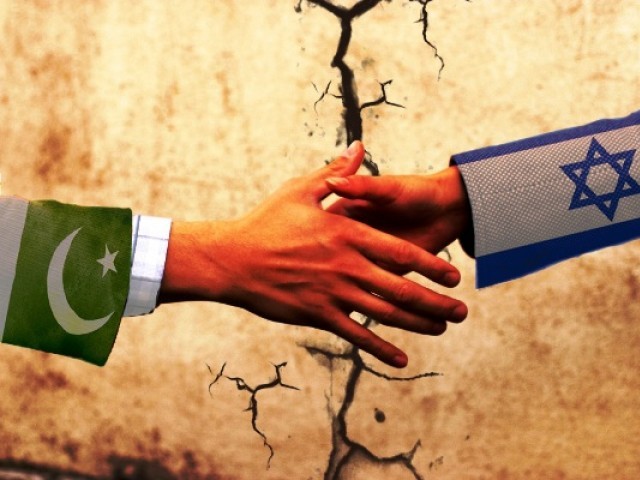
Opinion: Why Pakistan should recognize Israel

By NOMAN SAJJAD


Sometimes it becomes inexorable and practical to change the paradigms, let the past stay in the past and forget about historical incidents in order to open doors that lead to peace, prosperity and harmony.
History documents that Pakistan and Israel are never directly involved in hostility or disputes with each other. However, in showing solidarity with Arab countries and in support of Palestine, Pakistan has categorically refused to recognize Israel as an independent state since its inception. Our history books and widespread stereotypes have played a major role in filling our hearts and minds with hatred against Israel.

Considering the cost-benefit analysis and without abandoning support for the Palestinians here are some of the reasons to accord recognition to Israel: 

1. To promote regional peace, foster inter-ethnic and interfaith harmony with understanding.

2. The strategic location of Pakistan and geographical location of Israel can definitely complement one another well.

3. To lessen the pressure of difficult neighbors. Such an increase in the list of allies can do wonders.

4. To better Pakistan’s image as a friendly and moderate Islamic state.

5. To boost the economy by building trade relations, importing foodstuffs, cotton, etc., since Israel offers a huge market, and benefiting with the Israeli export of military and agricultural technology.

6. To put an end to hypocrisy, because after devastating wars with India and with the Kashmir issue still unsettled even after scores of years, India was not only accepted as a state but voted a “most favored nation.” On the other side, Pakistan buys ammunition from Israel, lets Israeli products dominate its market and yet is hesitant to accept Israel as free state. (Robert Fisk highlights the arm deals in between Pakistan and Israel in his book The Great War for Civilization.) 7. Pakistan-Israel ties could be an advantageous move as Israel has great influence with the United States and India.

8. Opening academic and cultural exchange opportunities for students.

9. Allowing Muslim and Christian Pakistanis to visit their holy places in Israel.

10. Jews, Muslims and Christians share some commonalities in their faith, which can definitely promote interfaith harmony.

11. By establishing ties Pakistan can influence Israel with regard to resolving the Kashmir issue and can possibly play a part in normalizing relations between Palestine and Israel.

12. Lastly, policies are not decoration pieces. They are meant to change with the growing needs and for the protection of national interests and national security.

Pakistan has not accorded Israel recognition since its inception due to the Palestine issue, and fears that India-Israel connections are working against its security, ultimately affecting the sub-continental balance of power. However, there is dire need to wash out all the stereotypes which have existed in our belief system since our inception.

Firstly, we need to realize that it is not about Jews vs Muslims. It is more Israel vs Palestine, mainly over land disputes. There are nearly 400,000 Palestinian Christians among the sufferers in disputed lands.

Secondly, we can no longer blame the US, India and Israel for anything and everything that happens in our country.

Thirdly, Arab countries enjoy good relations with Israel. Even Turkey – one of our supporters – has good diplomatic relations with Israel. Furthermore, Pakistan extended its full support to some of the Arab countries against Israel, but Pakistan was hardly backed by Saddam Hussein, Yasser Arafat and many other Muslim leaders when Pakistan was in need of support.

Rationally, is there any reason not to have diplomatic relations with Israel? The need of the hour is to realize that Israel didn’t vanish from the map because Pakistan decided not to recognize it. On the other hand, Pakistan is getting nothing out of this rigid stance.

Our own country is riddled with humongous problems and disputes that need to be addressed before we point fingers at Israel’s intrusion into Palestinian land.

Pakistan must not only reassess the realities on the ground, but needs to readjust its diplomatic stance. Logical reasoning, a rational attitude and political maturity need to replace the emotional stance, aggressive slogans and baseless rhetoric. Making such changes democratically will be an uphill task, because foreign policy cannot be formed without consideration for public opinion. Education and balanced media can play major role in deeper understanding of such sensitive issues, issues that should be discussed in parliament, not in roadside restaurants and streets corners.

#WazeerEAzamBenazir - 27 years ago today, Pakistan elected 1st woman PM in Muslim world

The social media scene in Pakistan is abuzz with tributes to the slain former Prime Minister Benazir Bhutto on the day she was elected as first woman prime minister in the Muslim world 27 years ago today.
The hashtag #WazeerEAzamBenazir is trending as of publishing of this post with most people posting rich tributes for the former PM.

Whither Pakistan?

Wajid Shamsul Hasan

Not long ago—Pakistan was branded as epicentre of global terrorism. Quite a large number of terrorists arrested outside Pakistan in different countries—were either of Pakistani origin foreign nationals or their links some how could be traced to Pakistan. Either they had flown into Pakistan to “get indoctrinated into Taliban ideology” or receive specialised training in terrorism.
Thanks to Army Chief General Raheel Sharif this perception of Pakistan being an exporter of terrorism is slowly getting diluted especially after the initiation of “Operation Zarbe Azb” -an all out war on terrorists in Pakistan since June 15, 2014.
After having lost over 50,000 civilians and sacrificing lives of nearly 10,000 security personnel of all rank and file—perception about Pakistan has slightly improved. Having been through bloody travails of a never ending violence imposed on us following military dictator General Ziaul Haq’s pyrrhic decision to be American Knight Templar against Soviet occupation of Afghanistan and subsequently General Musharra’s mindless kow-towing to the dictates of American General Colin Powell to be with Washington specifically on the terms of “ either you are with us or with them—in President George Bush’s post 9-11 crusade, Pakistan had been sinking in the quagmire of uncertainties and instability.
Despite our successes since June last year, it is still far from over. General Raheel shall have to take the cognizance of elements like Maulana Aziz of the Red Mosque once again blowing hot with his religious venom as well as likes of Hafiz Saeeds who continue to masquerade as divinities with devil’s agenda hidden up their sleeves.
In the back ground of the successes—big or small- achieved by Pakistan in war against terror not adequately recognised by our so-called friends in the west for whose sins we have been paying for, it is heartening to see Pakistani leaders like Prime Minister Nawaz Sharif and Army Chief General Raheel Sharif offering the expertise acquired through blood, toil and tears to those countries that are now gradually finding themselves confronting terrorism of their own making.
It was music to the ears to hear Prime Minister Nawaz Sharif offering Pakistan’s anti-terrorist expertise to French President Francois Hollande when he called on him in Maltese capital to offer his condolences on the recent Paris terrorist attacks. He extended to France Pakistan’s cooperation in counter-terrorism and the field of intelligence sharing. After all we have now come to be some sort of experts on terrorism having come of age fighting terrorists of all sorts for so long.
Change in command in the Army hierarchy in November 2013 brought in a new thinking and a fresh approach for an effective counter narrative. Though late yet a little later would have been too late. Army Chief Chief General Raheel Sharif launched the over due Operation Zarbe Azb in June 2014 in keeping with the countrywide consensus to root out terrorism of all sorts as well to eliminate violent sectarianism.
However, despite our unaccountable sufferings, one is deeply hurt to hear oft-repeated demand of us to do more from those who are responsible for our traumatic plight as well. And it seems that despite our painstaking efforts to dispel the perception that we are the villain of the piece, we have still to go a long way in getting rid of the albatross of being accused as harbourers of terrorists.
This perception will not go unless we put our own house in order. Orchestrating of civil-military on one page mantra, divergent statements by the ministers, contradictions on almost every issue between words and actions—whether it has to do with the presence of IS/Daesh in Pakistan or to play cricket with India or not—are a manifestation of a state of mind worst confounded.
In the dismal atmosphere it was is to know that Pakistan's Prime Minister Nawaz Sharif and his Indian counterpart Narendra Modi had a very cordial meeting in Paris. The one-hour long meeting was more than an exchange of views. Although not much is known what transpired between them away from their officials--the body language of the two appeared healthy.
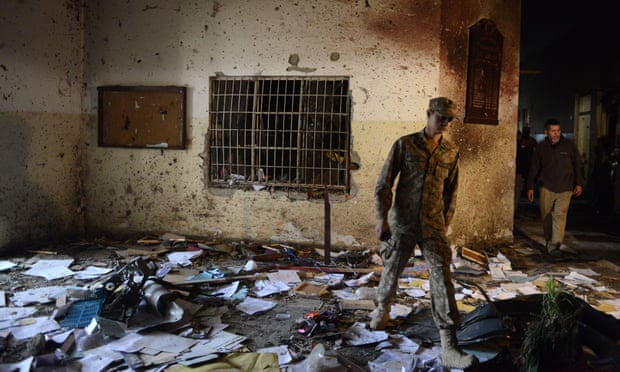
No doubt government marketed National Action Plan as a panacea to all our terrorist ills following massacre at Army Public School in Peshawar. Its stake holders seem to be at loggerheads on its performance. Here one would not like to comment on the indictment of the civilians by the Corps Commanders recent meeting—a cause for generating so many controversies and unending rumours. However, not withstanding the fact that the praetorian outburst was a natural reaction in a grave situation, it was surely a transgression of the constitutional parameters.
Pakistan is in a state worst confounded. No one knows whether who is going and who is coming. It is neither here nor there. Foreign visits abroad, so-called red-carpet welcomes, awards and honours are just icing over the cake loaded with a powdered-keg inside. The need of the hour is to convene the Committee of the Whole House of the Parliament-if need be in camera, to discuss threadbare where we stand and in which direction we are drifting. Let collective wisdom prevail as the final arbiter.

http://www.ibnlive.com/blogs/india/wajid-shamsul-hasan/whither-pakistan-12638-1171614.html

Russia offers to build pipeline for gas exports to Pakistan: Report

Russia has offered to lay a pipeline for gas exports to energy-starved Pakistan that will run parallel to the TAPI pipeline, a proposal that stems from fears that Moscow may lose the European Union market due to political tensions, according to a media report.

Russia, the second largest producer of natural gas, is looking for alternatives and has already signed a multi-billion-dollar energy deal with China.

Pakistan could also prove to be a huge market as it faces annual gas shortage of over 2 billion cubic feet per day, the Express Tribune reported.

"A Russian delegation during a visit to Pakistan last month discussed plans for building a gas pipeline in a meeting of the Pakistan-Russia Inter-governmental Commission," an official aware of the development was quoted as saying.

They expressed keen interest in laying the pipeline for gas exports to Pakistan, which would snake through Turkmenistan and Afghanistan, he said.

According to officials, the Russian pipeline will run parallel to another regional pipeline called TAPI, which will be built by Turkmenistan, Afghanistan, Pakistan and India.

Russia has also offered liquefied natural gas (LNG) supplies to Pakistan over the next two years to meet its growing energy requirements.


They have signed a government-to-government deal for building a pipeline for transporting LNG from Karachi to Lahore. Russia will provide USD 2 billion for the project.
Pakistan will provide 15 per cent of equity whereas 85 per cent of funding will come from the Russian company.


First phase of the project is expected to be completed by the end of December 2017.


Analysts say Russia's proposal stems from fears that it may lose the EU market because of its tensions with the West over Syria and Ukraine.
https://www.google.com/search?q=timesofindia.indiatimes.com+logo&oq=timesofindia.indiatimes.com+logo&aqs=chrome..69i57j69i58j69i60.3807j0j4&sourceid=chrome&es_sm=122&ie=UTF-8

Pakistan executes four militants over massacre of 134 children


Four militants involved in the massacre of 134 schoolchildren in Pakistan last year have been executed, weeks before the anniversary of one of country’s worst ever terrorist attacks.
The men were hanged in a prison in the city of Kohat early on Wednesday for their involvement in the attack on the Army Public school in Peshawar, in which a team of nine suicide fighters used assault weapons and suicide bombs to kill 151 pupils and staff. 
One of those killed was Maulvi Abdus Salam, whose house the gunmen stayed in before the attack was launched. The other three – Hazrat Ali, Mujeeb ur Rehman and Sabeel, also known as “Yahya” – were said to have facilitated the attack.
After a trial held behind closed doors in August, the army announced the men were members of the Toheedwal Jihad Group, a little-known faction of the Pakistani Taliban.
All four admitted their involvement in the school attack and other plots, including attacks on Peshawar’s airbase, terrorism fundraising and killing soldiers.
Two other men were also sentenced to death while a seventh man was given a life sentence.
Although Pakistan had long been wracked by jihadi militancy, the scale of the school attack prompted a concerted campaign against extremism.
Among the measures introduced was a change to Pakistan’s constitution enabling the establishment of special military courts to fast-track terror cases, including the school attackers.
The military’s role meant Pakistan’s army chief, Raheel Sharif, signed the “black warrant” to order the men’s execution on Monday.
Although a national campaign against terrorism has led to a sharp fall in violence, the country is still hit by sporadic attacks, including on Tuesday when two 

CHAIRMAN PPP BILAWAL BHUTTO’S MESSAGE ON INTERNATIONAL DAY OF PERSON WITH DISABILITIES

Bilawal Bhutto Zardari Chairman Pakistan Peoples Party has stressed upon the Pakistani society to focus on the abilities instead of disabilities in the ‘differently-abled persons’ as the world is going to observe “International Day of Persons with Disabilities” under the United Nations’ them of “Inclusion matters: access and empowerment for people of all abilities” on Thursday December 03.In his message on the International Day of Persons with Disabilities, Bilawal Bhutto Zardari said that an estimated one billion people on the planet living with different disabilities need an inclusive policy of human kind to assimilate them into society as equal partners in human development.
PPP Chairman said that treatment to the special persons reflects the moral and social values of a nation hence governments and society in the country should redouble their efforts to provide them fair and equal access to education, employment, transportation and in every aspect of human development.
Bilawal Bhutto Zardari urged the Federal government, Provincial Governments, Azad Jammu & Kashmir and Gilgit-Baltistan government to implement the 2% job quota for the ‘Disabled persons’ in both government and private sector.

کراچی(2دسمبر) پاکستان پیپلزپارٹی کے چیئرمین بلاول بھٹو زرداری نے آج اقوام متحدہ کی جانب سے پوری دنیا میں منائے جانے والے خصوصی افراد کے عالمی دن کے موقع پر اپنے پیغام میں زور دیا ہے کہ خصوصی افراد میں معذوری نہ بلکہ قابلیت کو تلاش کیا جائے، انہوں نے کہا کہ ایک اندازے کے مطابق اس دنیا میں ایک ارب خصوصی افراد رہتے ہیں ، ضرورت اس بات کی ہے کہ انسان ذات کی حیثیت سے انہیں انسانی ترقی میں برابر کا حصیدار بنانے کے لیے معاشرے کے تمام شعبوں کے ساتھ منسلک کیا جائے،پیپلزپارٹی کے چیئرمین نے مزید کہا کہ خصوصی افراد سے ہونے والے سلوک سے ہی قوم کے اخلاقی اور معاشرتی اقدار کی عکاسی ہوتی ہے اس لیے ہمارے معاشرے اور حکومتوں کو چاہیے کہ انہیں انسانی ترقی کے تمام شعبوں تعلیم، روزگار، آمدرفت اور دیگر میں مناسب اور برابر رسائی کے لیے کوششیں دگنی کریں، بلاول بھٹو زرداری نے وفاقی حکومت، صوبائی حکومتوں اور آزاد کشمیر اور گلگت بلتستان حکومتوں پر زور دیا کہ سرکاری اور خانگی شعبوں میں خصوصی افراد کی ملازمت کے

https://ppppunjab.wordpress.com/2015/12/02/chairman-ppp-bilawal-bhutto-zardaris-message-on-international-day-of-person-with-disabilities/

Tuesday, December 1, 2015

Video - A Conversation With Black Women on Race

Video - The Fable of Rosa Parks


Hillary Clinton Calls for Overhaul of Justice System

By 

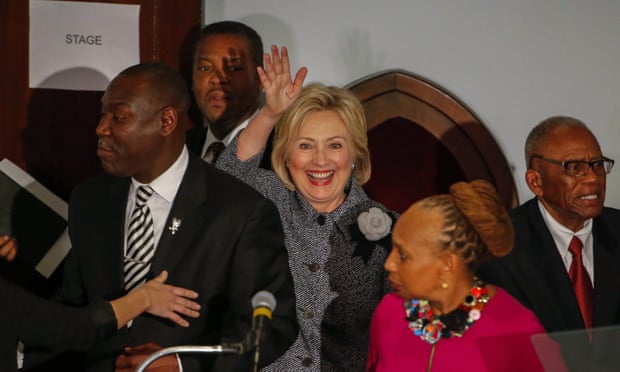
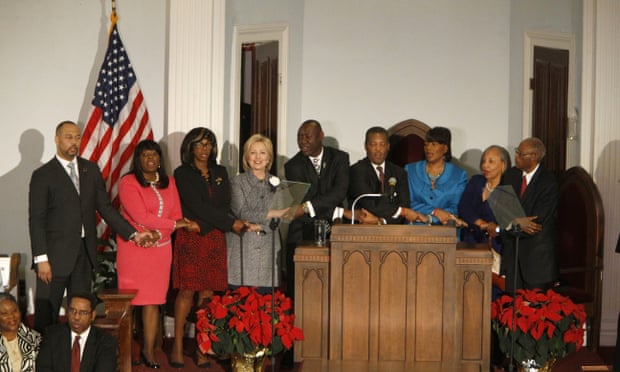
In the church here where, 60 years ago, the Rev. Dr. Martin Luther King Jr. inspired residents to boycott the local bus network, Hillary Clinton on Tuesday called for overhauling the criminal justice system, saying there is something “profoundly wrong” when black men are disproportionately stopped and searched by the police, arrested or killed.


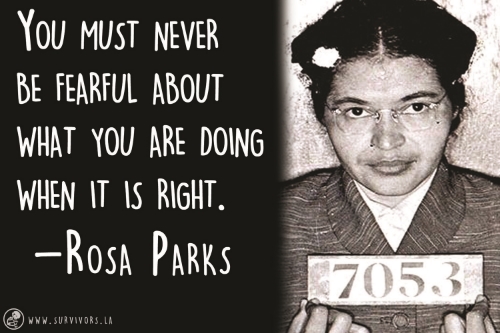
She made her remarks to pews packed with civil rights lawyers who descended on the Alabama capital to commemorate the day Rosa Parks refused to give up her seat on a Montgomery bus to a white man, a moment that became pivotal in the fight for civil rights. Six decades have passed since Ms. Parks’s arrest on Dec. 1, 1955, and yet as Mrs. Clinton addressed the crowd the country was reeling from another shooting of an unarmed black man by a white police officer in Chicago, and grappling with civil rights and racial justice issues that have become central to the 2016 presidential campaign.
In the stained-glass sanctuary of Dexter Avenue King Memorial Church, Mrs. Clinton recalled sitting next to Ms. Parks in 1999 as President Bill Clinton delivered the State of the Union address. “Rosa hadn’t changed much,” she said. “She was the same lovely, dignified, determined person she always was, but America had changed.”
But in an address that began with a verse from the Book of Psalms — “This is the day the Lord has made; let us rejoice and be glad in it” — Mrs. Clinton said there was still much work to be done, noting setbacks in access to voting and in the widespread incarceration of young black men.
The event, organized by the National Bar Association, the country’s largest organization of African-American lawyers and judges, emphasized the role lawyers played in the Montgomery bus boycott, which disrupted this city’s public transportation for more than a year and led to a Supreme Court decision that struck down Alabama laws requiring segregated buses.
The two-day event was one of only a handful of times since Mrs. Clinton announced her candidacy in April that she addressed organizations that were unaffiliated with her campaign and had not endorsed her. She was joined by a lineup of lawyers, elected officials and ministers who have been central in civil rights struggles, past and present. The civil rights lawyers Fred. D. Gray and Benjamin L. Crump — the president of the National Bar Association, who has represented the families of Trayvon Martin and Michael Brown — and the Rev. Bernice King, the youngest child of Dr. King, also spoke at the event, which concluded with a rendition of “We Shall Overcome.”
Mr. Gray, who represented Ms. Parks and Dr. King, received a standing ovation when he called Mrs. Clinton “the next president of the United States.” He talked about the first official planning meeting for the Montgomery bus boycott, a meeting that “took place in the basement of this church” in 1955, and said, “The struggle for equal justice continues.”
Since the earliest stages of her presidential campaign, Mrs. Clinton has tried to solidify her bond with black voters. She devoted her campaign’s first major policy speech last spring to presenting her plan to reform the criminal justice system and help stem the practice of incarcerating nonviolent offenders, citing how it was hurting black communities.
“It’s time to change our approach and end the era of mass incarceration in America,” Mrs. Clinton said. “And we must do more to address the epidemic of gun violence that is plaguing our country.”
Mrs. Clinton has met with the mothers and families of several black Americans killed by white police officers or by gun violence, including Mr. Brown, Mr. Martin, Tamir Rice and others. “My heart breaks for them,” she said Tuesday. Mrs. Clinton’s efforts have not yet broken through to many of the young activists involved in the Black Lives Matter movement who have protested several of her campaign rallies. “I appreciate their passion, but I am sorry they didn’t listen,” a seemingly frustrated Mrs. Clinton said last month. “Because some of what they have been demanding I am offering and intend to fight for as president.” Anika H. Patterson, a lawyer in Washington who was visiting Alabama for the two-day event, said she hoped Mrs. Clinton could put the current Black Lives Matter movement in the context of the larger civil rights movement. “There’s a real leadership role needed there,” Ms. Patterson said.

'Let us rejoice': Alabama church cheers Hillary Clinton at Rosa Parks celebration


Hillary Clinton staked a claim to the southern black vote Tuesday, receiving a warm welcome at one of the country’s most important black churches just a day after Donald Trump failed to win public approval from another group of black church leaders.
“This is the day that the Lord has made,” Clinton said at the start of her speech in Montgomery, Alabama, and by the second half of the sentence the congregation had joined in: “Let us rejoice and be glad in it.”
Elsewhere, Clinton has received criticism from new civil rights activists, like the leaders of the Black Lives Matter movement, who say she isn’t doing enough to address modern concerns. But her deft turn in Alabama showed the depth of Clintonian influence in an area where even other Democratic candidates have faltered. Her leading party challenger, Bernie Sanders, has struggled to win basic name recognition in the south.
Clinton spoke on the 60th anniversary of Rosa Parks’s bus protest in Montgomery, Alabama, which sparked the civil rights movement in America. Hundreds of people packed Dexter Avenue Baptist church – the church Martin Luther King Jr pastored – to hear Clinton speak. She delivered the keynote address at the gathering, which was convened by the National Bar Association, the country’s largest organization of black attorneys.
Mary Hunter, 75, dressed in her finest clothes, drove to the capital from Pike Road, Alabama, and stood in line for four hours to enter the church. She said she remembers hitching rides into Montgomery as a teenager during the bus boycotts, and ten years later she marched into the city with King. She was determined to hear Clinton’s speech, she said, because a woman’s campaign for the presidency of the United States seemed like a civic bookend to Rosa Parks’s action 60 years earlier.
“Women have always played an important role. It’s just now coming to the fore,” she said.
Before Clinton spoke, 85-year-old Fred Gray stepped to the pulpit. He served as the attorney to Parks and King, and helped orchestrate the bus boycotts. He was on a mission, he said, “to find everything segregated and destroy it”.
Clinton then spoke about the evolution of civil rights in more recent years. “There is something profoundly wrong when African American men are far more likely to be stopped and searched by police, charged with crimes, and sentenced to longer prison terms for doing the same thing as a white man,” she said.
Mary Hunter stood up from her pew. “Amen,” she said.
Clinton said: “We must strengthen the bonds of trust between law enforcement and the communities they serve.” To accomplish that, she said, means “we must end the era of mass incarceration”.
She added: “We must do more to address the epidemic of gun violence that is plaguing our country.”
She offered few specific solutions, though, that might appease activists. Afterward, the president of the National Bar Association, Benjamin Crump, said such differences are a natural shift from one generation to the next. “I welcome Black Lives Matter,” he said. Crump worked on the seminal cases of Trayvon Martin and Michael Brown, both prominent instances of violent deaths of young, unarmed black men in recent years. “It’s just an evolution.”
Asked whether Clinton, as a presidential candidate, should call for a legal change requiring local police departments to report deaths during confrontations with police, Crump told the Guardian: “Absolutely. In this day, with all the technology we have, it’s ridiculous for them not to report that. Absolutely.”

Video - -President Obama on World AIDS Day 2015

President Obama Meets with the Prime Minister of India in Paris

Video - President Obama Holds a Bilateral Meeting with the President of China in Paris

Video Report - President Obama holds a Multilateral Meeting with Heads of State

Video - President Obama holds a Press Conference in Paris

Video Report - Disrupted oil routes push ISIS towards heroin trade, already 1 $bn a year

Video - Russia: Putin crowns comedian Gennadi Khazanov for his bday