Friday, November 27, 2015

UK could be prosecuted for war crimes over missiles sold to Saudi Arabia that were used to kill civilians in Yemen

By James Cusick 

Britain is at risk of being prosecuted for war crimes because of growing evidence that missiles sold to Saudi Arabia have been used against civilian targets in Yemen’s brutal civil war, Foreign Office lawyers and diplomats have warned.
Advisers to Philip Hammond, the Foreign Secretary, have stepped up legal warnings that the sale of specialist missiles to the Saudis, deployed throughout nine months of almost daily bombing raids in west Yemen against Houthi rebels, may breach international humanitarian law.
Since March this year, bombing raids and a blockade of ports imposed by the Saudi-led coalition of Sunni Gulf states have crippled much of Yemen. Although the political aim is to dislodge Houthi Shia rebels and restore the exiled President, Abed-Rabbo Mansour Hadi, thousands of Yemeni civilians have been killed, with schools, hospitals and non-military infrastructure hit. Fuel and food shortages, according to the United Nations, have brought near famine to many parts of the country.
Amnesty International, Human Rights Watch (HRW) and other NGOs, claim there is no doubt that weapons supplied by the UK and the United States have hit Yemeni civilian targets. One senior Foreign and Commonwealth Office (FCO) legal adviser told The Independent: “The Foreign Secretary has acknowledged that some weapons supplied by the UK have been used by the Saudis in Yemen. Are our reassurances correct – that such sales are within international arms treaty rules? The answer is, sadly, not at all clear.”
Yemen.jpg
The aftermath of an air strike by the Saudi-led coalition on Sanaa on 13 July; 1.5 million people have been displaced
Although the Department for International Development recently received assurances from the Saudi government that it did not want a famine to develop on its doorstep, there is concern within the FCO that the Saudi military’s attitude to humanitarian law is careless. Officials fear that the combination of British arms sales and technical expertise used to assist bombing raids on Yemen could result in the UK being hauled before the International Criminal Court on charges relating to direct attacks on civilians. 
Another government lawyer warned: “With Britain now expected to join the United States and France in the war on Isis in Syria, there will be renewed interest in the legality of the assault in Yemen. It may not be enough for the Foreign Secretary to simply restate that we have yet to carry out any detailed evaluation [of UK arms used in the bombing of Yemen].”
The legal adviser said: “Yemen could be described as a forgotten conflict. Inside the Foreign Office a course-correction is seen as crucial.  It is a proxy war, with the Saudis believing Iran is behind the Houthi rebellion.”
Oliver Sprague, Amnesty International’s arms trade director, told The Independent: “There is a blatant rewriting of the rules inside the FCO. We are not supposed to supply weapons if there is a risk they could be used to violate humanitarian laws and the international arms trade treaty – which we championed. It is illogical for Philip Hammond to say there is no evidence of weapons supplied by the UK being misused, so we’ll keep selling them to the point where we learn they are being used.”
Map.jpg

Most of Saudi’s weapons are supplied by the United States. With help from the UK, the US is also offering logistical support, airborne refuelling, with a specialist Pentagon-approved team providing intelligence on targeting. This month the Obama administration authorised a $1.29bn (£858m) Saudi request to replenish stocks of specialist missiles, a move seen by critics as an effort to assuage Saudi anger over the US-brokered nuclear deal with Iran, the kingdom’s key regional rival.
In July, Britain authorised the transfer of Paveway IV missiles from the RAF to Saudi Arabia. The MoD approved a switch in positions on an order book from the arms manufacturer, Raytheon UK.
The contract, worth close to £200m, secured the supply of hundreds of the air-launched missiles to the Saudi air force over the next two years. The Raytheon precision weapons are used by both the RAF and its Saudi counterparts on Typhoon and Tornado fighter jets, supplied by BAE Systems.  The order switch ensured that the Saudi arsenal, depleted through multiple daily bombing raids on Yemen over the past nine months, would not be exhausted.
This week both Amnesty and Human Rights Watch issued new evidence, based on their own field research, which they said showed that a factory in the Sanaa governate that was not involved in any military production, was destroyed by a UK-made cruise missile.
David Mepham, the UK director of HRW, said a GM-500 air-launched missile made by the UK firm Marconi had destroyed the factory and left a civilian worker dead. He said this was only the latest “multiple well-documented case of violations of the laws of war by the Gulf coalition in Yemen. UK ministers have consistently refused to acknowledge this”.
Doubts within the FCO over the legality of the British contribution to the Saudi war in Yemen have echoes of the debate in the run-up to the Iraq war. In 2003 Elizabeth Wilmshurst, an FCO deputy legal adviser, resigned after questioning the legality of joining in the invasion of Iraq without a defined resolution from the UN.
A Government spokeswoman said:
"We do not recognise those comments but HMG takes its arms export responsibilities very seriously and operates one of the most robust arms export control regimes in the world. We rigorously examine every application on a case-by-case basis against the Consolidated EU and National Arms Export Licensing Criteria. Risks around human rights abuses are a key part of our assessment.
"The MoD monitors alleged International Humanitarian Law (IHL) violations, using available information, which in turn informs our overall assessment of IHL compliance in Yemen. We regularly raise our concerns with the Saudis, and have repeatedly received assurances of compliance with IHL. It is important that transparent investigations are conducted into all incidents where it is alleged that IHL has been breached, and we are offering advice and training to the Saudis to demonstrate best practice and to help ensure continued compliance with International Humanitarian Law."
Asked by The Independent whether the UK government regarded relations with the Saudis as too important to risk by asking awkward questions about the bombing of Yemeni civilian targets, another FCO adviser responded: “There are many Elizabeth Wilmshursts around here at the moment. Not all are being listened to.”
The full extent of suffering inflicted on Yemen’s population by the war has been laid bare by a series of independent assessments. The aid charity Médecins Sans Frontières  describes Yemen as a “country under siege” in a new report. The UN’s next humanitarian assessment of Yemen is expected to state that close to 5,000 civilians have been killed and almost 25,000 wounded since the beginning of the bombing campaign against the Houthi rebels.
The UN estimates that 21 million people now lack basic, life-sustaining services, and more than 1.5 million of them have been displaced from their homes. Unicef estimates that as many as 10 children a day are being killed, with six million people facing food insecurity. The World Food Programme says most Yemeni provinces are now classified as only one level below a full famine crisis.
Frances Guy, a former British ambassador to Yemen, described the famine and the humanitarian situation as “tragic”. She added: “We should also be talking about Yemen in the context of security, asking where is the next place that Isis will go? The answer is Yemen. Because of the instability caused by the bombing, we have helped created the next space for Isis after Syria. This is where they will retire to.”
There are fears that both Isis and al-Qaeda’s Yemeni franchise, Aqap, are taking advantage of the instability caused by the bombing campaign to expand their influence within the country.

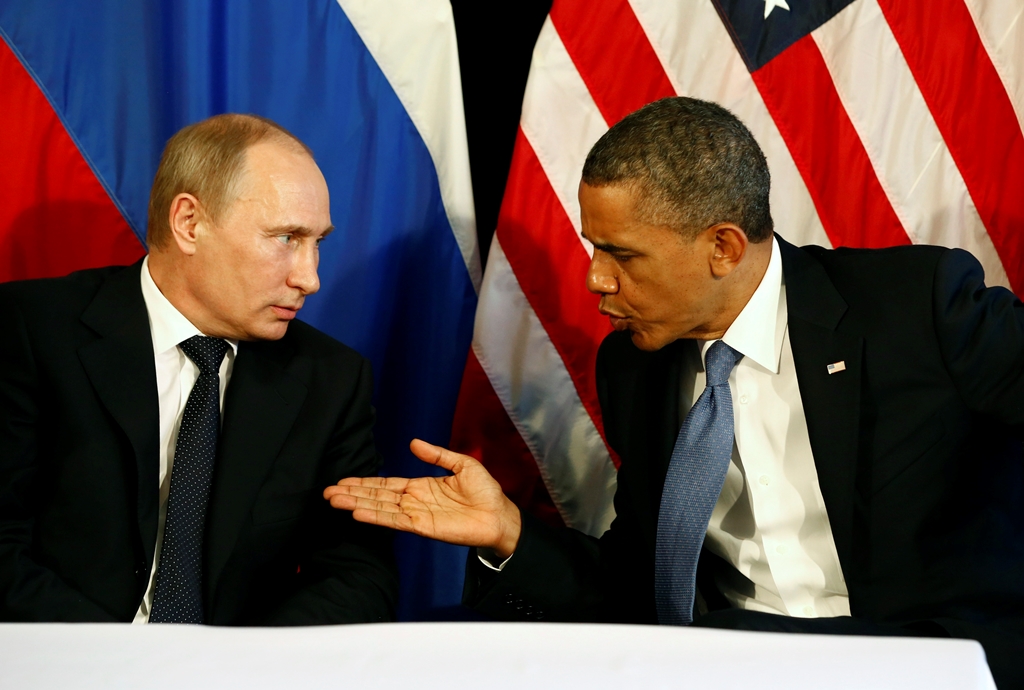
Erdogan's manoeuvre backfires

Why is Turkey clashing with countries it calls its ‘friends’


By Dr. Savaş Genç

First there was “my friend Assad” and then “my second home Iran,” followed by “my friend Ahmedinejad” and of course “my ally Putin.”
One by one, clashes have been witnessed between Ankara and all these “friends,” the latest case involving the Russian leader. Through the entire course of the history of the Turkish Republic, it is possible that relations between Turkey and Russia were never as good as they had been with Recep Tayyip Erdoğan and Vladimir Putin in power. The two leaders have had -- until now -- a relationship based on mutual trust, with clear red lines and “gentlemen's agreements” shaping things. Even the fact that Turkey and Russia were supporting different sides in Syria didn't seem to affect the Putin-Erdoğan relations. The common denomiNATOr that has bound Erdoğan and his “friend” Putin until today has been their mutual tendency to resist political values such as Western style democracy, pluralism, transparency and accountability. They have also both been interested in cooperating when it comes to arenas of easy profit, notably energy. Under the Justice and Development Party (AKP) rule, Turkey has maintained a lower profile and less of an assertive foreign policy presence in Central Asia than during any other republic government. Ankara has been careful not to make an entrance into Putin's energy basin in any way that would openly compete with Russia. In fact, under the AKP, Ankara went as far as declaring some of the Turkistan opposition in China “terrorists” so as to maintain good relations with Beijing; while making it clear it stood on the side of land unity for China, Ankara also appealed to the Shanghai Cooperation Organisation (SCO) to take it on as a member, saying “save us from the gates of the EU.”
So the question needs to be asked: how is it that the same Turkey, who was enjoying such strong and good relations with Russia, decided to solve a minor air space violation not with diplomacy but rather by bringing down a jet, thereby causing a military clash and many firsts on the NATO front? Although Turkey has had a few incidents in the past where it has brought down aircraft belonging to other countries -- though always within the framework of engagement rules -- announcements about these incidents have always been made to the public by the military's General Staff headquarters. This time, why did the Turkish public hear about it from President Erdoğan directly? Also, which of the two leaders was the first to break the gentlemen's agreement that helped shaped the relations between them?


Did Turkey try to reclaim its esteem?


Is what we are seeing an attempt by Ankara to regain some lost esteem, by firing on a Russian jet and then looking Moscow straight in the eye? After all, this is the same Turkey whose own planes have been brought down in the past, whose ship was hit on international waters by both Israel and Libya, and whose consuls have been kidnapped. But if, perchance, this is the case, then why only a few minutes after the plane came down did NATO call an emergency meeting?
It seems quite odd that the same politicians who have relied until now on tired Middle Eastern style clichés about “foreign powers allied on a crusade,” or “this and that lobby” and a whole host of other conspiracy theories go knocking on NATO's doors the moment that there was gunfire exchanged. If in fact Turkey fired on that Russian jet believing that NATO would come to its rescue, then we need to hang a big padlock on the front gates of our Foreign Ministry and tell someone -- a son in law, a cousin, anyone -- to come and watch the business while we hide in the corner.
From the very first days of the Syrian crisis, the attitude of the West has been something akin to “I'm staying out of this one; if Turkey really wants to get in, though, it should get on its rain boots and head over.” Just as NATO has never squared off against Russia in the wake of the latter's presence in both Ossetia and the Ukraine, it is going to react accordingly in this situation as well. And in this vein, the first reactions after the jet came down to come in from our strategic partner, the US, were also notable. Pentagon spokesperson Steve Warren said: “It is an incident between the governments of Russia and Turkey. It is not something which concerns the US.” This statement alone appears to be a clear and concise summation of some of the problems we're about to face in the near future.
What sort of retaliation can we expect?
The Russian public is not accustomed to these sorts of situations. Nor is the Turkish public accustomed to their country firing on a superpower's military jets. The most recent situation we have to look to is when Turkey bombed the Russian ports in Sivastopol and Odessa -- a participatory act that was part of World War I -- and I think we can all recall how that film ended. There is now very serious pressure being placed on Putin to retaliate somehow against Turkey. Moscow now perceives Ankara as a backstabbing enemy whose real aim herein is to protect the terrorists. Putin, who believes strongly that Erdoğan has trampled the red lines between them, has declared “They betrayed me.” There is little doubt that Moscow is already preparing to release documents that will damage Turkey's reputation and standing on the global level. It is also likely that Moscow will now fiddle with both energy and foreign trade faucets, trying to trigger economic imbalance in Turkey. What's more, in its aim to overcome its dependence on Moscow's natural gas, Ankara had awarded a bidding tender for new nuclear energy facilities to a Russian firm.
The fact that we have arrived so quickly at a flashpoint with Moscow, despite what appeared to be such strong relations, is cause for us to question our foreign policy choices.
It appears likely that Turkey, in favoring short-term interest choices over long-term planning, is going to be seen by the rest of the world as a typical Middle East-style country in its choices.


Why is Turkey always wrong?


With Ankara choosing a set of foreign policies based not on principles and values, but rather on its interests alone, it is now destined to experience in relations with Moscow something similar to what it had not long ago with both Damascus and Tehran: intense and close ties, followed by clashes.
Our archives are open and clear; many times in the past, we have asserted that when forming foreign policy relations with countries whose values we do not share, there are going to be limitations as to how close we get and that we need to operate on this reality. When Turkey was busy holding joint cabinet meetings with the Assad government, those who gave warnings were scorned as not being able to understand the “new Turkey.” It appears that those at the helm of Turkey were blind to the concrete borders that define relations with neighbors, no matter how wonderful it may be to foster closer relations.
After all, if your security fears are legitimate and you act within the framework of engagement rules, you can bring down any plane you wish, whether it be Russian or American. But where was this bravado when just yesterday Ankara was appealing to the SCO to take it, or handing over its presence in the lands of Central Asia to Moscow on a silver platter? When you do not share decision-making process styles or values with the same countries you champion as being your “friends,” it is inevitable that you will experience clashes with them sooner or later. Last week, for the first time ever, a NATO member brought down a Russian plane. Though this might make Ankara a “hero” for some on the domestic front in the short term, it will be seen in the outside world as proving that Turkey is an unpredictable actor. Don't misread me though; the Syrian problem is just one of the AKP's historic mistakes. And Ankara's failure to read the situation correctly on both domestic and foreign fronts is something for which we may well pay even more heavily in the near future.

Video - Cameron 'deceitful' in Syria Statement – Peter Ford

Video - Turkish police use pepper spray to disperse protesters in Ankara

Video Report - Fmr Lebanon president: Erdogan backs extremist fundamentalists; Turkish attack was premeditated

Putin Right to Accuse Erdogan of Duplicity – British Historian

Turkey only pretends to be fighting against ISIL, British historian Michael Burleigh wrote, stressing that the country’s president Erdogan acts like if wanted to weaken the forces that actually combat Islamists.

It may seem only at first sight that the Turkish leader Recep Tayyip Erdogan is involved in the fight against ISIL militants, Michael Burleigh claimed in his article written for Daily Mail.

In reality, Turkish forces are conducting airstrikes mainly on positions of only “one army which poses a real threat to ISIS, and has won countless battlefield victories against them,” and it is the Kurdish PKK forces in Syria. In fact, ISIL could be destroyed in a relatively short period of time, if Kurds acted freely without being attacked by the Turkish Air Force.

“[W]hile Turkey may be a member of NATO — and of the alliance taking on the jihadists — Erdogan seems to be doing almost everything he can to cripple the forces actually fighting ISIS[ISIL],” Burleigh argued.

Burleigh went on by explaining that Erdogan treats Kurds as a threat of greater proportions than ISIL due to their objective of founding their own state. Kurds account for roughly one fifth of the population in Turkey and there are also big communities in Iraq and Syria.


Moreover, the Turkish leader “loathes” Syrian president Bashar al-Assad, whose positions would strengthen should ISIL military might decrease.  So Erdogan turned a blind eye on ISIL militants infiltrating into small Turkish towns with a further goal of transfering foreign militants through those settlements to Syria. He also “ignored” that Turkish smugglers were purchasing oil from ISIL, Burleigh pointed out.

The historian also mentioned what he called the “worrying aspect of Erdogan’s consolidation of power,” meaning the continuing transformation of Turkey from a secular to Islamist state. Sitting in the Istanbul mayor’s chair, Erdogan was imprisoned in 1997 for his links to radical circles. And as Burleigh pointed out, he never forgot that experience. While serving as the country’s Prime Minister, Erdogan got his “revenge” in 2012, putting in jail 324 officers. He has also cut funding to the only force that could get in the way of spreading Islamization across Turkey – the army – by 30 percent.

The alarming fact, according to Burleigh, is that a younger generation of Turks, including members of Erdogan’s party, tends to be more sympathetic with ISIL. And there are some fresh instances of this turnaround: in the aftermath of the Paris attacks, Turkish football fans during the match between Turkey and Greece disturbed the minute of silence devoted to the extremists’ victims, chanting “Allahu Akbar.” Statistical data shows that seven percent of Turks don’t think that ISIL militants are terrorists and some 15 percent claim that the radical group doesn’t pose a threat to Turkey.

“That’s why, too, Vladimir Putin is at least partly right to accuse him [president Erdogan] of duplicity in his fight against ISIS [ISIL]. Erdogan may want to join the EU, but he’s only a fair-weather friend of the West,” Burleigh concluded.

Syria FM says US should study rumors Erdogan’s son is involved in oil trade with IS

 US Secretary of State John Kerry should check out reports on the involvement of Turkish President Recep Tayyip Erdogan’s son in illegal oil trade with the Islamic State (IS) terrorist group, Syrian Foreign Minister Walid Muallem said on Friday.
"I’d like to mention rumors that Erdogan’s son could be involved in illegal oil trade with the IS, although there are no proofs. If I was in Kerry’s place, I’d make an attempt to shed light on these reports," Muallem said commenting on Kerry’s statements that Damascus was buying oil from terrorists.
Muallem repeated that Kerry had no proofs that Syria bought oil from the IS. "We are still waiting to see them," the minister said.
Russian Foreign Minister Sergey Lavrov also touched upon the topic.
According to the Russian minister, the United States could not have been unaware of the scale of the Islamic States’ oil industry but preferred to spare it.
"Everything is a matter of practice. Let us operate with facts. There have been many reports that god knows who is living off the oil wells illegally seized by the Islamic State," Lavrov said.
"When our aviation started flying in the Syrian airspace at the request of (Syrian president) Bashar al-Assad, we saw the whole picture of that illegal business from above. Russian President Vladimir Putin spoke about that on several occasions, including yesterday’s news conference and the G20 summit in Antalya where he had shown space and aerial images - very eloquent and very convincing - to his colleagues," the Russian foreign minister went on to say.
"The US-led coalition started flying over Iraq and Syria, without the Syrian government’s consent by the way, more than a year before the Russian military operation. I am convinced that they saw all that but did not do anything for some unknown reason. Russian warplanes started bombing that criminal industry when they began operation in that area," Lavrov said.
"Of course, it’s certainly not a coincidence that our Turkish neighbours grew more and more nervous after that," the Russian foreign minister said.
According to Lavrov, the arrest of two Russian journalists for a story about illegal arms supplies from the Turkish territory to the Islamic State speaks of how carefully they (Turkey) protect information about their underground oil deals.
"So my answer is very simple: if the United States is so much concerned with the fact that god knows who is benefiting from the illegal oil business, the illegal oil field should stop functioning.
Lavrov believes that the US-led coalition ought to have started destroying that business straight from start.
"The US coalition and the Americans themselves started doing that after Russia had actively intervened with air strikes. I would say that then the US partners were forced to do that, so to speak, in order not to lag behind us in the struggle against terrorist infrastructure," Lavrov said.
He noted that the United Nations Security Council passed resolution 2199 that bans any trade with oil from terrorist-seized territories at Moscow’s request.
"Now we have submitted a concrete proposal to the United Nations Security Council to ask the United Nations Secretary General to prepare a report in the next two weeks to sum up all the existing information on who is supporting the IS illegal oil industry. We hope the UN Security Council members will have a chance to see this information. We constantly include this theme in the agenda. It is we who need full clarity," Lavrov said.
"I hope that the United States, given that US Secretary of State John Kerry is so much concerned with various aspects of this problem, is going to support us and this information will be presented to the world public," the Russian foreign minister concluded.
http://tass.ru/en/world/840009

Video - Hong Kong film-makers aim to be first in 3D porn

Video - The 2015 White House Christmas Tree Arrival

Police arrest gunman who opened fire in Colorado abortion clinic


Police arrested a gunman who stormed a Planned Parenthood abortion clinic in Colorado Springs on Friday and opened fire with a rifle in a burst of violence that left at least 11 people injured, including five officers, authorities said.
Five hours after the siege began, the suspect was taken into custody, the city of Colorado Springs confirmed in a message posted on the municipal Twitter account.
A Reuters photographer at the scene saw a man in a white T-shirt, with his hands cuffed behind his back, being taken out of an armored police vehicle and placed in an unmarked squad car.

An hour earlier, police said that progress in securing the building was slowed by the fact that the gunman brought "some bags" with him into the clinic and left several items outside, all of which needed to be checked for possible boobytraps or explosives.
No fatalities were reported by authorities. Five police officers were among those injured in the gunfire, said police spokeswoman Lieutenant Catherine Buckley.
There was no information provided on the nature of the injuries, or the condition of any of the victims.
Police swarmed the area around the building after an emergency call reporting shots fired at about 11:30 a.m. Mountain Time (1830 GMT), and officers ultimately confronted the suspect inside the building, Buckley said.
(Reporting by Daniel Wallis in Denver; Additional reporting by Dan Wallis in Denver, Dan Whitcomb in Los Angeles, Eric M. Johnson in Chicago, Laila Kearney in New York, Eric M. Johnson in Seattle and Andy Sullivan in Washington.; Writing by Steve Gorman; Editing by Steve Orlofsky and Tom Brown)

#Fightfor15: Walmart workers protest, fast for living wage on Black Friday

On the most notorious retail shopping day of the year, Black Friday, Walmart workers and allied groups have been calling on the retail giant to raise pay to $15 per hour and offer more full-time work to millions of its employees.
For the fourth year running, thousands of Walmart employees and others are attending demonstrations at more than a dozen Walmart stores across the nation, including in New York City, Los Angeles, Oakland, and Detroit. Prior to Black Friday, the beginning of the Christmas shopping season in the US, more than 1,000 people, including hundreds of Walmart workers, fasted for more than two weeks.
The demonstrations are led by the Organization United for Respect (OUR) at Walmart, an organization made up of employees at Walmart, the second-largest retailer in the world. Dozens of allied groups, including the United Food and Commercial Workers (UFCW), are joining OUR Walmart in their appeal for higher wages and less erratic work schedules.
"We, the hourly Associates, are the life-blood of Walmart," OUR Walmart said. "Our company is stronger because of the values we embrace – a strong work ethic, compassion for one another and honesty. Yet we are not treated with the respect we deserve. The fundamental desire to be shown respect is what led us to join together as OUR Walmart."
The group is calling for Walmart to boost salaries to $15 per hour for full-time employees (known as "associates"), more full-time opportunities for workers, "more predictable and dependable" schedules, an expansion of employee health care coverage, a less-hostile environment when employees speak out about issues at work, a clearer protocol for enforcement of employee policies, better work standards within Walmart's global operations, and equal treatment for all employees"regardless of gender identity, race, disability, sexual orientation, or age."
"Far too many of us have to rely on government assistance for our basic needs," the group added. "Walmart should publicly commit to providing  wages and benefits that ensure that no Associate has to rely on government assistance."
Part of treating employees with respect, the group said, means curbing employee intimidation, especially when a grievance is aired or when employees attempt at organizing.
"Associates who assert their freedom of association frequently face retribution from the company," OUR Walmart said."Walmart should allow Associates to freely join OUR Walmart without fear of negative company action."
Some Walmart employees are taking the Fight for 15 to the home of Walmart heiress Alice Walton's condo in New York City.
For its part, UFCW, through its Making Change at Walmart campaign, is holding as many as 1,000 food drives this week in an attempt to "feed 100,000 Walmart workers and families this holiday season."
“This Black Friday, the message we are broadcasting through our TV ads and food drives is that Walmart employees are struggling,” said Jess Levin, communications director at Making Change at Walmart.
“They work for one of the richest companies in the country and so many of them have to rely on assistance from food banks and food stamps to avoid going hungry. We are setting the goal of feeding 100,000 Walmart workers but that is not a long term solution to that problem. The only solution is for Walmart to change.”
UFCW operates one of two OUR Walmart groups after some members of the coalition split from UFCW in September. The splinter group has the support of several activist groups, including the National People’s Action, Demos, and the National Domestic Workers Alliance.
OUR Walmart and UFCW said they aim to help Walmart employees "in their dealings with Walmart over labor rights and standards and their efforts to have Walmart publicly commit to adhere to labor rights and standards" but "have no intent to have Walmart recognize or bargain with UFCW or OUR Walmart as the representative of its employees."
In April, Walmart bumped up its base employee pay to $9 per hour and has pledged to raise that amount to $10 per hour by February 2016.
Walmart spokesman Brian Nick defended the company's actions, claiming the average full-time Walmart employee makes more than $13 an hour, and has opportunities for quarterly bonuses, a matching 401K program, and health care benefits.
“We know it takes quality [employees] to give our customers a great shopping experience,” he told Fortune. "We’re proud of the wages and benefits package we offer.”
The biggest private employer in the world, with 2.2 million workers, Walmart is the global leader in revenue, according to the 2014 Fortune Global 500.

Video - Walmart workers protest outside heiress Walton's New York penthouse

Ghazal - ABI TU MEIN JAWAN HOON - MALIKA PUKHRAJ,TAHIRA SYED