Afghan investigators have blamed poor leadership, misuse of resources, and lack of coordination between Afghan security forces for the Taliban’s capture of Kunduz city in September.
"On the day of the crisis, nobody knew who was in charge," said Amrullah Saleh, a former chief of the national intelligence agency, at a news conference in Kabul on November 21.
Saleh was named by Afghan President Ashraf Ghani to head the investigation. He did not single out any military or government officials but proposed reform of the National Security Council.
Taliban militants took control of the city on September 28 and held it for three days before government forces, backed by U.S. troops and aircraft, helped them drive the militants out of the city.
Around 200 residents, police, and soldiers were killed in the fighting in Kunduz.
http://www.rferl.org/content/afghanistan-kunduz-weak-leadership/27379207.html
Sunday, November 22, 2015
Afghanistan Ghor Girl Dies After 'Public Lashing'

A 26-year-old girl died following an alleged public lashing by armed groups in western Ghor province after being accused of running away from home.
Ghor is where the recent stoning to death of 19-year-old Rokhshana occurred.
Shirin Gul, who was from Herat province, had reportedly gone to Shahrak district of Ghor to visit her uncle's family, her immediate family said.
Footage of the incident, which has gone viral, shows a man lashing a girl with a whip in public.
According to her family and some locals, Gul died after she was meted out the lashing.
But local officials only confirmed the lashing but denied claims the girl died as a result of her injuries.
"When we contacted Shirin Gul's father, he confirmed his daughter died from the lashing," said Mohammad Hassan Hakimi, a social activist in Ghor.
Meanwhile, governor of Ghor Sima Joyenda said an investigation has been launched into the incident.
"Although the police chief of Shahrak district denies this, the victim's father says his daughter died of the lashing. Although it is not impossible, it should be investigated," she urged.
In addition, the interior ministry said investigations have been launched in this respect.
"This incident and the incident of Rokhshana should be seriously investigated," Interior Ministry spokesman Sediq Sediqqi said. "Investigations are underway by the assigned fact-finding team."
This comes only three weeks after 19-year-old Rokhshana was stoned to death by the Taliban after having been accused of eloping with a man.
http://www.tolonews.com/en/afghanistan/22428-ghor-girl-dies-after-public-lashing
Afghanistan risks chaos as political divisions produce power vacuum

Before dawn, crowds form outside the passport office in Kabul as Afghans wait for the chance to take another step towards fleeing their homeland.
Near the entrance are rudimentary adverts offering visas to Turkey and Iran. Having received their passports and paid thousands of dollars to human traffickers, many of those queuing up in the cold will travel via these countries to Europe. Others will go through Russia and on into Norway.
More than a year after the US brokered a deal to form a national unity government and avert a potential civil war, Afghanistan’s problems are mounting. Districts are falling to the Taliban, armed militias are gaining strength, unemployment is rife and the joint administration is struggling to deliver even basic services.
The situation is not as catastrophic as that in Syria, but young people in particular are losing hope. There is now a widespread feeling that Washington’s short-term fix after the disputed 2014 presidential election may end up causing a long-term crisis.
Among the Afghans trying to leave the country is Ali Yawer Janan, an engineering graduate who is 25 years old, married and has a baby daughter. An employee at a government ministry, he already has a passport and is now prepared to pay a trafficker US$5,000 or $6,000 (Dh18,000 to 22,000) per adult to get to Turkey. From there he hopes to seek asylum in Germany or Austria.
“I am aware of the threats and dangers on the way, but it is better to die once than die a little bit every moment,” he said.
After two rounds of voting, last year’s election was mired in allegations of fraud that threatened to spill over into open conflict. The compromise deal struck by US secretary of state John Kerry saw the US-educated technocrat Ashraf Ghani sworn in as president and a new post of chief executive created for his main rival, Abdullah Abdullah, a former member of the anti-Taliban Northern Alliance.
The government subsequently spent months struggling to agree on a cabinet and appoint senior provincial officials. As it did so, new rifts opened up as both sides within the administration competed for greater influence.
The Taliban exploited the power vacuum and in late September they seized the northern city of Kunduz, holding it for two weeks. It was the first time a major population centre had fallen from government control in 14 years of war.
Officials were shocked at the city’s collapse, but many ordinary people have been fearing the worst for some time. Ever since the new regime took power it has become increasingly easy to find young men and women actively planning for what they hope will be a better life in Europe.
According to the UN, Afghans have accounted for 19 per cent of refugees and migrants arriving in the continent after crossing the Mediterranean by sea in 2015. They are second in number only to Syrians, who make up 52 per cent of the total.
The demand for passports is so high it now takes two months for the Afghan government to issue them, rather than one. Speaking in the Kot-e Sangi neighbourhood of Kabul, Mr Janan said the main reason he wants to leave the country with his family is the very government for which he works.
“The president and chief executive promised the nation a lot during their campaigns, but they haven’t acted on one of those promises,” he said.
Mr Abdullah has acknowledged this widespread disappointment and asked for more time. However, a large anti-government protest recently took place in Kabul and officials continue to be split and confused over key decisions.
Divisions within the administration could come to a head in 2016, when as part of the US-brokered deal the position of chief executive is to be turned into that of prime minister. Some powerful politicians inside and outside the regime are already rumoured to be against the plan.
Further evidence of internal discord came this month when it was announced that a businessman meant to be in jail for his role in a massive banking scandal had signed a multimillion-dollar property deal with the government. Outrage ensued and Mr Ghani cancelled the contract with no explanation.
The national currency has also dropped in value this year, with one dollar worth approximately 67 Afghanis compared to less than 50 at the height of the US-led occupation. Unemployment has risen and the prices of basic goods including cooking gas, petrol and flour have increased significantly.
All of this has only added to the anger caused by the growing insecurity. The government initially sought to reach out to the Taliban by improving relations with Pakistan, but is again now edging closer to India because of Islamabad’s failure to reign in the militants. Meanwhile, there are clear signs that warlords from the past are determined to exert greater influence over the situation on the ground.
They include one of the vice presidents, Abdul Rashid Dostum, who is fighting the Taliban with his own militia, who are not part of the conventional security forces.
Khushal Rohi, a civil society activist, told The National the use of militias would further undermine public confidence in the army and police. He described the current government as unconstitutional and said the country’s problems would escalate unless officials started to act in Afghanistan’s interests.
“Instead of thinking about programmes, policies and progress, they are only thinking about their positions, sharing power and fighting among themselves,” he said.
Afghanistan Kidnappings Rekindle Ethnic Fears
  |
| Afghans carry a banner bearing a picture of one of the seven from the Hazara minority, beheaded allegedly by a group claiming affiliation to Islamic State, during a protest in Herat, Afghanistan, earlier this month. A group of Hazaras was kidnapped in Zabul province on Saturday, the same area where the beheadings took place. PHOTO: EUROPEAN PRESSPHOTO AGENCY |
Fears of ethnic strife were rekindled in Afghanistan on Sunday, the day after a group of ethnic minority Hazaras were kidnapped while traveling a major highway in the latest attack targeting the Shiite Muslim group.The attacks have centered on the southern Afghan highway from which the group of Hazaras, which local officials said numbered between 14 and 30, were taken at gunpoint on Saturday.At least five other Hazaras traveling on a bus bound for Kabul were saved by other travelers who helped hide their identities, after it was stopped by militants armed with AK-47s and machine guns, said a local activist, who spoke to witnesses.Until now, majority Sunni-Muslim Afghanistan has been largely spared the sectarian tension that has plagued a number of other Muslim countries.But a string of attacks targeting Hazaras over the past year—including some linked to Sunni extremist group Islamic State—are fueling concerns that the group, which suffered under the Taliban, is again being targeted.
“These kidnappings have been occurring for months. This is now a national problem for Afghanistan,” said Zaki Daryabi, a Hazara activist, who helped organize the large protest that took place after the decapitated bodies of his compatriots were discovered earlier this month.Afghanistan has no reliable population data, but Hazaras are considered the country’s third-largest ethnic group and the only one that is predominantly Shiite.“Hazaras are very concerned about these waves of kidnappings. They don’t feel safe,” said Mohammad Ali Alizada, a Hazara lawmaker from Ghazni. “We have raised the issue with central government.”
Local officials blamed the Taliban for Saturday’s kidnappings and said a rescue operation was under way.
“We are aware of the hostage situation and we are gathering information,” said Sayed Zafar Hashemi, a spokesman for Afghan President Ashraf Ghani. “Our forces are doing everything to ensure the safety and security of all citizens.”
Saturday’s kidnappings come weeks after the Hazaras were rattled when seven of their members, including a child, were found decapitated in southern Zabul province, where many in the group live.
The beheaded bodies were delivered to provincial elders, sparking a large protest in Kabul that was led by Hazara activists and widely supported by a wider Afghan population frustrated with the steep decline in security since foreign forces mostly withdrew from the country last year.Uzbek militants, a number of whom are allied to the Islamic State, are also active in Zabul. They have previously targeted Hazaras, including the seven who were decapitated earlier this month.The Taliban follow Sunni Islam and someconsider Shiites to have rejected the Muslim faith and target them for their religious beliefs. The militant group, which is fighting to overthrow the government in Kabul, denied any involvement in Saturday’s attacks and officially says it respects ethnic groups.
“Our Mujahideen are not involved in the kidnapping,” Taliban spokesman Zabihullah Mujahideen said Sunday. “We are investigating the incident and trying to rescue the abductees.”
In recent months, rival Taliban groups have been battling each other in lawless parts of Zabul province, where many of the attacks have taken place, adding to security concerns.Militants loyal to the group’s recently-appointed head, Mullah Akhtar Mansour, are fighting others who reject his leadership.Afghan forces have struggled to hold ground in the country since the withdrawal of most foreign forces in 2014. A small U.S.-led coalition remains to support its Afghan counterparts.
In September, Kunduz became the first major city to briefly fall under Taliban control since the start of the war, collapsing in hours and almost without a fight.
A report released by a government-appointed commission on Saturday said corruption and poor leadership among Afghanistan’s government and military institutions were to blame, and that U.S. airstrikes had prevented a worse disaster.
http://www.wsj.com/articles/afghanistan-kidnappings-rekindle-ethnic-fears-1448206499
جنوبي وزيرستان او باجوړ بمي چاؤدنو کې يو عسکر وژل شوی، څلور ژوبل
د پاکستان په قبائيلي سيمو جنوبي وزيرستان او باجوړ ايجنسۍ کې نن د اتوار په ورځ د پوځ او ملېشې په سرتېرو دوه بمي چاؤدنې شوي چې په نتيجه کې يې يو پوځي عسکر وژل شوی او د پوځ او ملېشې څلور سرتيري ژوبل شوي دي .
راپورونه د امنيتي چارواکو د قوله وايي چې د جنوبي وزيرستان په سروکۍ سيمه کې پوځي کاروان د معمول په ډيوټۍ ؤ چې د ريموټ کنټرول بمي چاؤدنه پرې شوې ده .
امنيتي چارواکو وئيلي د چاؤدنې په نتيجه کې يو عسکر وژل شوی او دوه نور ژوبل شوي دي .
په قبائيلي سيمه جنوبي وزيرستان کې د وسله والو جنګيالو په ضد په کال ۲۰۰۹م کې پوځي اپرېشن شوی ؤ ، خو په سيمه کې اوس هم په امنيتي ځواکونو د حملو پېښې رامنځته کيږي .
بل لور ته نن د اتوار په ورځ د افغانستان سره په پوله پرته د پاکستان قبائيلي سيمه باجوړ ايجنسۍ کې د ملېشې په ځواک د سړک غاړې ته ښځ يو بم په چاؤدنه کې دوه سرتيري ژوبل شوي دي .
د باجوړ ايجنسۍ د چارواکو په وينا د ملېشې په عسکرو د ناوګۍ تحصيل په کمانګرا علاقه کې په داسې مهال بمي چاؤدنه شوې ، چې سرتيري په علاقه کې د ګشت په ډيوټۍ مامور وو .
د ميډيا راپورونو ترمخه د دغه چاؤدنې زمه واري د تحريک طالبان پاکستان جماعت الاحرار ډلې قبوله کړې ده .
http://www.voadeewaradio.com/content/article/3068900.html
Bangladesh - War crimes trials: The lobbyists are at work again
Mozammel H. Khan

The much-awaited verdict on the review petition against convicted war criminals Ali Ahsan Mohammed Mojaheed (incidentally, my classmate in my hometown college) and Salauddin Quader Chowdhury, was given by a bench of the Appellate division of the Bangladesh Supreme Court last Wednesday upholding their death penalty awarded by the International Crimes Tribunal (ICT) and subsequently upheld by the apex court itself. Neither of them is unknown to the people. However, either prior to or following any verdict, some lobbyists in the guise of Human Rights Organisations (HROs) come up with statements finding fault with the trial process and lecturing the Bangladesh government on what it has to do to carry out 'proper' justice to the condemned war criminals. In many cases, these so-called HROs have overstepped their limit by impinging upon the domain of a sovereign country whose laws are enacted by its own sovereign parliament.
This time around, too, there was no exception. A few weeks ago, it was Amnesty International (AI) which came out with a statement that triggered condemnation from Bengalis all around the globe. Following the uproar, the AI held a press conference that did nothing to dispel the aspersions on its integrity. The much-known Human Rights Watch (HRW) also came out with a statement, as it did following the prior convictions of other war criminals. HRW has called upon the government to halt the execution of death row war criminals Mojaheed and Salauddin. “Justice and accountability for the terrible crimes committed during Bangladesh's 1971 war of independence are crucial, but trials need to meet international fair trial standards,” said Brad Adams, Asia director at HRW. “Unfair trials can't provide real justice, especially when the death penalty is imposed,” lectured HRW.
The HRW has made it a routine exercise for it to issue statements that convey more or less identical messages. Following the conviction of war crimes mastermind Ghulam Azam, it issued a statement saying, “The trial of former Jamaat-e-Islami chief Ghulam Azam at the International Crimes Tribunal was deeply flawed and did not meet international fair trial standards.” It even went further: “Judges improperly conducted an investigation on behalf of the prosecution and collusion and biasness among prosecutors and judges.” At this point, the ICT took the HRW statement in serious cognizance and observed, “The Human Rights Watch has committed the 'worst kind of contempt' by making comments without having adequate knowledge of facts,” ruled ICT-1 issuing a warning against the HRW. The tribunal was lenient on the global rights watchdog as it was its first offence and asked it to be more 'circumspect' in making comments about Bangladesh's judiciary.
Salauddin Quader Chowdhury, the son of a former top ranking Muslim League leader, and a BNP lawmaker since 1991, was found guilty in 9 of the 23 charges brought against him. The International Crimes Tribunal-1 awarded him death penalty on four charges — foremost of which was his involvement in two acts of genocide. Pronouncing the verdict, ICT-1 Chairman Justice A.T.M. Fazle Kabir said: “We are of the unanimous view that the accused deserves the highest punishment as provided under law for committing such gravest crimes that tremble the collective conscience of mankind.”
He was confident of getting released with the change of government and he threatened to bring the prosecutors to book.” On January 1, 2013, he threatened the state counsels, saying if he got out of jail they would understand the consequences of their actions. “Let me get out of jail. You will see.”
His last ditch attempt to prove through the review petition that he was not in Bangladesh during the nine months of genocide through some documents from Pakistan was equivalent to attempting to prove a hypothesis that the sun does not really rise in the East. The apex court, however, disbelieved the documents submitted in support of Salauddin's claim. The court termed false the certificate issued reportedly by Punjab University of Pakistan, which says he was studying political science there in 1971. The bench said there were many anomalies in the document and concluded them to be fraudulent.
To prove his presence in Bangladesh during the liberation war, the prosecution, on the other hand, submitted a daily newspaper headline narrating how Salauddin Quader Chowdhury son of a former Speaker of Pakistan parliament got wounded through 'miscreant's (read: freedom fighter) bullet and was admitted to a hospital. The prosecution even submitted a certificate from the hospital providing detailed information about his admission, treatments and release from hospital. Even the freedom fighter through whose bullet he was wounded testified as a prosecution witness.
In my limited research I have not come across any war crimes tribunal whose proceedings are so transparent and where the defendants are given VIP treatment. Does the HRW know how a 17-year old by the name of Omar Khadr, a Canadian citizen, has been tried in Guantanamo Bay for his alleged killing of a US soldier in the battlefield (war crime!) in Afghanistan? The US military used bone-chilling torture techniques. He was not even allowed to hire a Canadian lawyer while he was at Guantanamo Bay. Which judicial tribunal killed Bin Laden and Anwar al-Awlaki (a US citizen), both of them unarmed civilians?
It seems that the HRW is selective, for reasons known only to itself, in expressing their concerns about death penalty and fairness of the trails. A few days ago, a Dhaka court awarded death penalty to an 18-year-old girl Oishee for killing her parents. No, she did not commit a 'crime against humanity.' However, the HRW did not have time to express any concerns for Oishee, a minor at the time, who killed 'only' two people while their concerns were categorical and vociferous for convicts who, in addition to other offenses, participated in cold-blooded mass killings.
In the US, the seat of HRW, 32 states still uphold the death penalty and 26 executions have already been carried in 2015 alone. In fact, the US ranks fourth in the world in terms of executing the death penalty. The critics will be doing themselves a favour if they go through the recently published, much-acclaimed book, 'Blood Telegram: Nixon, Kissinger and A Forgotten Genocide,' by the Harvard-educated Prof. Gary Bass of Princeton University. They could thus know a bit more about the genocide in Bangladesh which included the participation of these convicts or alleged convicts, who unhesitatingly committed cold-blooded murder of an unarmed and innocent populace.
Bangladesh - Pakistan envoy summoned
The government has summoned Pakistan high commissioner to Bangladesh for the country’s statements on Bangladesh war criminals’ execution, said a senior diplomat.
The official who spoke on condition of anonymity told the Dhaka Tribune on Sunday that Pakistan High Commissioner to Bangladesh Shuja Alam has been summoned by acting foreign secretary Mizanur Rahaman.
The Pakistan envoy has been directed to meet Ministry of Foreign Affairs at 2:30pm on Monday, the diplomat said.
Earlier, Pakistan’s Ministry of Foreign Affairs reacted over war criminals and BNP leader Salauddin Quader Chowdhury and Jamaat-e-Islami secretary general Ali Ahsan Muhammad Mojaheed’s execution.
“Pakistan is deeply disturbed at this development,” said the spokesperson of the Pakistan Ministry of Foreign Affairs in a statement on the execution published on Sunday.
It said there is a need for reconciliation in Bangladesh in accordance with the spirit of Bangladesh, India and Pakistan Agreement of 9th April 1974.
“The Agreement calls for a forward looking approach in matters relating to 1971. This would foster goodwill and harmony,” the statement mentioned.
- See more at: http://www.dhakatribune.com/bangladesh/2015/nov/22/pakistan-envoy-summoned#sthash.NLHsnGPJ.dpuf
Pakistan - #MakhdoomAminFaheem - Makhdoom Amin Fahim — a dedicated leader and poet


MAKHDOOM Amin Fahim, spiritual leader of the Sarwari Jamaat and an eminent leader of the Peoples Party who passed away in the early hours of Saturday, was also a distinguished poet of the Sindhi language.
He left two widows. He also married Dina Laila, sister of famous singer Roona Laila. He had six sons, two of them twins Makhdoom Naimat and Makhdoom Habibullah. One of his daughters, Maliha Makhdoom, was given a diplomatic position in Ireland in 2008 soon after the PPP formed its government in the centre.

The eldest son of Makhdoom Mohammad Zaman Talibul Maula, an illustrious politician and a revered figure in the world of Sindhi literature, Makhdoom Amin was born on Aug 6, 1939, in Hala, Sindh, the ancestral town of the Makhdoom family. He received his early schooling at the Ghulam Haider High School, Hala, and later attended the Sarwari Islamia College, Hala.
Subsequently, he earned a post-graduation degree in law and a master’s from the University of Sindh. In January 1993, he took over the spiritual leadership of the shrine of Makhdoom Nooh Sarwari.

Mr Fahim grew up in a fascinating atmosphere where literature, politics and learning existed side by side. He joined politics in 1970 when his father joined the PPP and formed a lasting association with Zulfikar Ali Bhutto and the party. After the death of Z.A. Bhutto, Mr Fahim remained an unfaltering supporter of the party.

When in 1977 Gen Ziaul Haq wanted political parties to be registered, the PPP created a new faction called the Pakistan Peoples’ Party Parliamentarians to evade any action by Gen Zia. Mr Fahim was appointed its chairman. Unlike Maulana Kausar Niazi and Ghulam Mustafa Jatoi who were prepared to reconcile with Gen Zia, Mr Fahim refused to even consider it.

He won his first National Assembly seat in 1970 and in all was elected to the National Assembly eight times. After the death of Z.A. Bhutto and the exile of Benazir Bhutto, the party felt the pinch of being leaderless and it was feared that splinter groups may arise.
It was Mr Fahim who blocked the scheme and stood as an unwavering supporter of the party.
During the tenure of the PPP government formed in 1988, he was appointed the federal minister for commerce. In later years, when the demand for leadership grew louder, Gen Pervez Musharraf was believed to offer him the office of the prime minister; Mr Fahim refused flatly.

On the literary side, when he was young, Mr Fahim was influenced by the literary organisation Bazm-i-Talibul Maula, branches of which had been established all over Sindh for the promotion of literature. The Sarwari Jamaat also published a number of books and anthologies (and continues to do so). The young Amin began composing poetry at the age of 14, initially using the pen-name Amin and later adding Fahim. He composed ghazals and kafi, and also worked in other poetic genres. His poetry shows him to be overwhelmed by mixed feelings of personal joy, fear and loneliness. He used very fluent and popular diction, and his work has been sung by many vocalists.
In recent years, Mr Fahim was accused of graft, and the investigation was still under way when he fell ill. He went to London for medical treatment and then stayed in Dubai for a few weeks. On Oct 26, he flew back to Pakistan and was staying at his Karachi residence till his demise.
An example of Mr Fahim’s poetry, composed in 1970:
Ajj nethh vyas gulshan mein halio kahin jazba-i-dil khan bekhud thi, Chho moonkhe disi the runo shabnam kujh yad atham kujh visri viyo, Aye Fahim toon moonkhe budhai khanni ta haqiqat keaan aghaz mein huee, Moon khanyo ya nathe khaniyo pahinjo qadam, kujh yaad atham kujh visri viyo.
[Today I went to the beloved’s dwelling becoming so desperate, why did the dew weep, I remember some and forgot some; Fahim, you tell me what was the reality in the beginning; did I take steps or not; I remember some and forgot some.]
Pakistan - Mob Justice - Minorities Under Attack

The police had responded to these blasphemy allegations by detaining four men who were accused of having desecrated the Quran. These men were released by the police, after which people urged local mosques to announce their release, resulting in a mob setting fire to a factory. Hundreds of people surrounded the chipboard factory in Jhelum and set the facility ablaze, having no remorse or regret as to whether these allegations were even true. After the arrival of the army contingent, the situation calmed down, with the protesters chanting slogans in favour of the army.
Blasphemy is a hugely sensitive issue in Pakistan, with unproven allegations often prompting mob violence and killings. With Ahmadis being declared non-Muslims by the Pakistani government in 1974, there is no stopping the public in trying to make them feel like they do not belong in this country. Eleven members of the sect were murdered for their faith in 2014 and authorities failed to apprehend any of the killers.
According to reports, the Federal Interior Minister Chaudry Nisar, has stated that no one is allowed to take law in their hand, as the whole saga of blasphemy was over the Ahmadi factory owner who owned prime real estate. “Severe action will be taken against the culprits,” Nisar added. But these words mean nothing as such attacks against Ahmadis have become a norm. No official account has ever been given about the perpetrators, backers, financers or masterminds of these heinous crimes.
A number of attacks have been carried out against the Christians and the Ahmedis by the same mindset that targets Shias. Do we have any right or moral ground to criticize those in the west when we have failed our own country when it comes to protecting minorities? Such incidents show that people in Pakistan, in general, can be excited into extremist mobs. This is ripe ground for jihadi recruitment. This factory was providing livelihood to dozens of locals since the early seventies. Such communities, sadly widespread, are their own worst enemies. The mullah at the pulpit cannot generate jobs and wages, but the Ahmadi, Christian, or Shia businessman can. Less industry, less job opportunities and empty minds are what we have to look forward to… and of course, accusing the west of “selective justice” while we burn our own minorities.
Pakistan - End impunity for blasphemy mobs
By Gul Bukhari
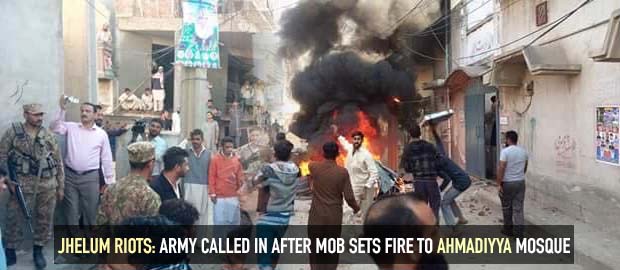
Once again, from the horrifying incidence of mob violence in Jehlum on Friday, it is crystal clear the state and government of Pakistan is not serious about taking any meaningful measures to end loss of lives and property of innocent Pakistanis, especially not those of religious minorities of the country. Many a blasphemy accusation has had many an innocent Muslim in its vicious web. But the majority of victims remain those from other religions or declared as ‘other’ like the Ahmadis. Friday’s attack too was targeted at Ahmadis.
The problem has several reasons, two of which are legal. First, blasphemy law inherited by Pakistan from the colonial era law was altered by General Zia-ul-Haq. The original law did not differentiate between religions and was aimed at preventing provocations between different religious groups that lead to communal violence in a multicultural, multi-religious India. The law did not discriminate between classes or religions, and held all equal before the law – as any law should, however, flawed. And the punishments for committing such provocations were relatively light. The original Section 295 from 1860 prescribed 2 years in prison, and pertained mainly to defilement of places or objects of worship that might be construed as insult. Later in 1929 after religious riots rocked India, Section 295-A was added increasing punishment to 10 years for any spoken, written, or visually represented insults or affronts to another’s religion, with the proviso of malicious intent and acts behind said insult. Though, by today’s international standards of free speech, the original British law was still flawed, punishing speech instead of the violent actions.
However, what General Zia did was to, first, differentiate and discriminate between religions and elevate Islam over all others, and secondly, to make the difference so stark as intentionally ignite a war on religious minorities in Pakistan.
In 1982, General Zia introduced Section 295-B, prescribing life imprisonment for the willful defilement of the Quran, thereby ripping asunder the first principle of law: that it be blind to class, creed, status, wealth, religion etc of all. With this he opened up all minorities to attack by the majority. In 1986, he added Section 295-C to include insult of Prophet Mohammed to carry life imprisonment or the death sentence – but this section introduced the most vile aspect of dropping the preconditions of the insults being either ‘wilful’ or ‘intentional’. In 1991, the Federal Shariat Court, another fiendish introduction of Zia, struck down the option of life imprisonment, making the death penalty mandatory. How a court can change the law is another question – no matter that it was passed by the rubber stamp Shura (parliament) fronting a military dictator.
The impact of Zia’s mischief in bringing death and division to this country is amply demonstrated by the fact that only 14 cases of blasphemy were reported prior to 1986, and 1,247 between 1986 and 2010. The second legal travesty was the declaration of Ahmadis as non Muslims by ex-Prime Minister Zulfiqar Ali Bhutto in 1974, opening them up to victimization and making them easy prey to religious persecution, including the blasphemy law of 1986.
Apart from the legal root causes of murder and mayhem in the name of religion arising from these fundamentally flawed laws, there are two other issues: one of extra-judicial killings of victims by mobs, and two of the utter impunity for the mobs or mob instigators. Dozens of blasphemy accused have been killed before even the registration of a report of the ‘crime’. In cases that reach courts, victims remain incarcerated in prison while their cases drag on for years in courts, victims’ and their families’ lives destroyed in the process.
Unfortunately, none of the governments whether civilian or military since after Zia have addressed a single aspect of the issues outlined above. The flawed laws have neither been repealed nor amended out of the visceral fear of being killed by fanatics. But the most inexcusable apathy of the state is manifested by the failure to end the impunity with which false accusations are made followed by extra judicial killings of the excused. Nor has any effort been made to expedite the trials of the accused, to spare them living deaths in the prisons of Pakistan. Emboldened by state fear and apathy, officers of the law have taken to murdering blasphemy accused in their custody. All this while the state looks away while making noises about bringing the ‘perpetrators to justice’. Not once has an inciter or perpetrator been punished. Nor has any political party advanced tighter, more specific laws to deal with either of them.
Today Pakistan is making tall claims of fighting religious terrorism and waving the National Action Plan formulated after 130 school children were gunned down in December 2014. Blasphemy killings are as much religious terrorism as the Tehreek-e-Taliban killing innocents. Why is the blasphemy issue not part of the NAP?
All political parties in parliament are urged to frame and table laws targeted specifically at the impunity side of the blasphemy killings at least, and to do so on a war footing, given they find it hard to change or repeal the blasphemy laws at this time. A few simple recommendations include: The introduction of capital punishment for anyone, including the mosque clerics like in Jehlum’s case this Friday, who call for punishment/killing of blasphemy accused by people; charging members of the attacking mob with nothing short of murder or attempted murder, as the case may be; reform of procedure before anyone can be booked for blasphemy.
Pakistan fails to protect Ahmadiyya Muslim community: Worship Place and factory burnt
The government of Pakistan fails to protect Ahmadiyya community worship place and one factory owned by member of this minority community when Muslim mob set it on fire in presence of law enforcement personals on pretext to blasphemy law.

The Islamists have announced Protest and March for release of one Muslim Mumtaz Qadri on death row on killing of Governor Salman Taseer after Friday prayers while government of Punjab to give them free hand not adopted security measures of worship places of religious minorities nor deployed police contingents to stop protestors from taking law in hand to please them.
The Interior Minister Ch. Nisar have ordered to take charge of city by armed forces after burning of Worship place but not took note on announcement of Islamists protest to release a killer while it was feared that situation can be worsen.
According to reports, an infuriated mob set ablaze a factory belonging to members of the Ahmadi community in Punjab's Jhelum district on Friday following blasphemy allegations on the factory's owner and its workers.
According to police, hundreds of people surrounded the chipboard factory in Jhelum and set it on fire after reports that an employee, named Qamar Ahmad Tahir, had allegedly burnt the holy Quran. "The incident took place after we arrested the head of security at the factory, Qamar Ahmad Tahir, for complaints that he ordered burning of the copies of the holy Quran," Adnan Malik, a senior police official told a news agency. "We registered a blasphemy case against Tahir, who is Ahmadi by faith, and arrested him after confiscating the burnt material, which also included copies of the Holy Quran," Malik added.
When the reports of alleged blasphemy surfaced, some people in the area made announcements through loudspeakers in mosques after which people from the area and nearby villages gathered as a mob and set ablaze the chipboard factory. Many workers fled the factory complex, which contained a residential area, with their families, sources said. The owner's residence, adjoining the factory, was also set on fire.
.The mob later blocked the Grand Trunk Road for nearly six hours while chanting slogans against the police and minority Ahmadi community. The mob also clashed with police personnel when they tried to disperse the crowd. Police fired rubber bullets and tear gas shells at the mob, injuring three persons. Saleemuddin, a spokesman for the local Ahmadi community, said three of their members were arrested in the wake of the fire.
"Three members of our community have been arrested by police under the charges of blasphemy," he claimed. Police, however, said that it released the persons arrested on suspicion of blasphemy.
- See more at: http://www.pakistanchristianpost.com/detail.php?hnewsid=5705#sthash.hny0VtEe.dpuf

The Islamists have announced Protest and March for release of one Muslim Mumtaz Qadri on death row on killing of Governor Salman Taseer after Friday prayers while government of Punjab to give them free hand not adopted security measures of worship places of religious minorities nor deployed police contingents to stop protestors from taking law in hand to please them.
The Interior Minister Ch. Nisar have ordered to take charge of city by armed forces after burning of Worship place but not took note on announcement of Islamists protest to release a killer while it was feared that situation can be worsen.
According to reports, an infuriated mob set ablaze a factory belonging to members of the Ahmadi community in Punjab's Jhelum district on Friday following blasphemy allegations on the factory's owner and its workers.
According to police, hundreds of people surrounded the chipboard factory in Jhelum and set it on fire after reports that an employee, named Qamar Ahmad Tahir, had allegedly burnt the holy Quran. "The incident took place after we arrested the head of security at the factory, Qamar Ahmad Tahir, for complaints that he ordered burning of the copies of the holy Quran," Adnan Malik, a senior police official told a news agency. "We registered a blasphemy case against Tahir, who is Ahmadi by faith, and arrested him after confiscating the burnt material, which also included copies of the Holy Quran," Malik added.
When the reports of alleged blasphemy surfaced, some people in the area made announcements through loudspeakers in mosques after which people from the area and nearby villages gathered as a mob and set ablaze the chipboard factory. Many workers fled the factory complex, which contained a residential area, with their families, sources said. The owner's residence, adjoining the factory, was also set on fire.
.The mob later blocked the Grand Trunk Road for nearly six hours while chanting slogans against the police and minority Ahmadi community. The mob also clashed with police personnel when they tried to disperse the crowd. Police fired rubber bullets and tear gas shells at the mob, injuring three persons. Saleemuddin, a spokesman for the local Ahmadi community, said three of their members were arrested in the wake of the fire.
"Three members of our community have been arrested by police under the charges of blasphemy," he claimed. Police, however, said that it released the persons arrested on suspicion of blasphemy.
- See more at: http://www.pakistanchristianpost.com/detail.php?hnewsid=5705#sthash.hny0VtEe.dpuf
دیوبندی مولوی کی نفرت انگیز تقریر پر ہجوم جہلم میں احمدیوں کی فیکڑی پر ٹوٹ پڑا
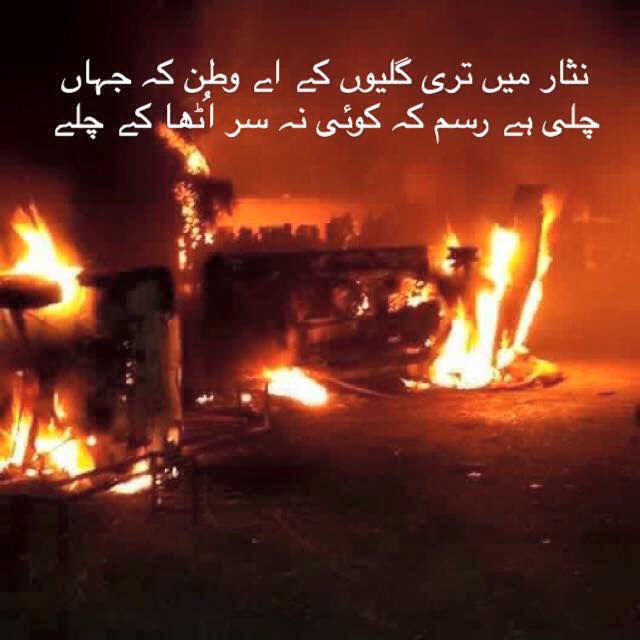
یہ دہرا معیار شاید اس لئے ہے کہ اس فیکڑی کے مالک احمدی ہیں ۔ مگر یہ بھی یاد رہے کہ وہاں درجنوں دوسرے فرقوں سے تعلق رکھنے والے بھی ملازم تھے ۔ کتنے ہی گھر وں کا چولہا احمدیوں کے خلاف دیوبندی علما کونسل اور ختم نبوت تنظیم کی جانب سے کیے جانے والے بے بنیاد پروپیگنڈے کی وجہ سے ٹھنڈا ہوگیا ۔ اس فیکٹری کی دیانت داری اور میعاری کام کی وجہ سے ہمیشہ ایک ساکھ رہی ہے۔ ان شدت پسندوں اور مذہبی جنونیوں کو وہ فیکٹریاں اور کارخانے کیون نظرنہیں آتے جہاں دن رات ملاوٹ اور ناقص اشیاء فروخت ہوتی ہیں جہاں کتے گدھے اور سور کا گوشت بھی حلال سمجھا جاتا ہے ۔ مذہبی تعصب کی اس سے زیادہ بدترین مثال اور کیا ہوگی ۔
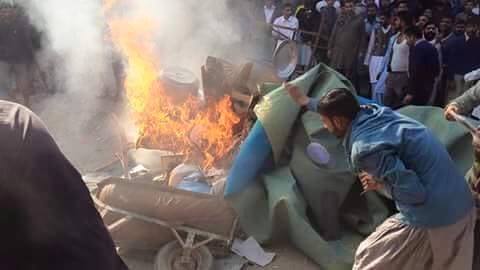
یاد درہے کہ گزشتہ ایک ماہ سے فرقہ وارانہ تنظیم پاکستان دیوبندی علما کونسل کے مولوی طاہر اشرفی نے احمدیہ فرقہ کی کمپنیوں کے خلاف نفرت انگیز مہم چلا رکھی تھی جس میں شیزان کے مالکان اور دیگر احمدی پروفیشنلز پر توہین رسالت کا جھوٹا الزام لگایا گیا تھا – جہلم میں ہونے والے سانحہ کی ذمہ داری طاہر اشرفی پر عائد ہوتی ہے اور ان ضمیر فروش نام نہاد لبرلز پر بھی عائد ہوتی ہے جو اس فرقہ پرست تکفیری دہشت گرد کو ترقی پسند کہتے ہیں
جہلم میں ایک احمدی کی فیکٹری کو آگ لگانے کے وحشیانہ واقعے کے بعد درندگی, ننگِ انسانیت اور الباکستانیت کا دوسرا مظاہرہ… اسی جہلم شہر میں احمدیوں کی عبادت گاہ کی املاک کو باہر نکال کے جلایا گیا اور اس کے بعد اس عبادت گاہ کو دھو کے انہی حملہ آور ملّوں نے اپنی عبادت ادا کی…
ہم اس درندگی کی کھل کے سخت ترین الفاظ میں مذمت کرتے ہیں ہمارے نزدیک اہم یہ نہیں کہ ان کا مزہب کیا ہے اہم یہ ہے کہ جو مظلوم ہے ہم ہمیشہ اس کا ساتھ دیں گے..
https://lubpak.com/archives/343932
Is Pakistan’s Islamic Council trying to incite genocide of Ahmadiyya Muslims?
Sitara was a special kid from the start. Questioning everything around her, she was a difficult student to be satisfied. At the young age of 9, she passed her O Levels exams to become the youngest child in the world to achieve the feat. In an ideal world, she would have been praised and supported by the government of Pakistan and civil society alike. But Sitara Brooj Akbar belongs to the Ahmadiyya Muslim Community. She wouldn’t go out of her house unless surrounded by two armed guards.
She had to leave Pakistan due to the continuous threat to her life for being an Ahmadi Muslim. Hence, a brilliant student and a great human being was chased out of the country. Sitara is not the only child, and her family is not the only one that had to leave the country. There are thousands of such families belonging to the Ahmadiyya Islamic sect who were either chased out or voluntarily chose to settle abroad due to depleting tolerance and growing hatred towards the community.
The contempt and loathing for Ahmadis in modern day Pakistan dates back to ’53 when violent protests erupted in Lahore against them. Led by famous religious scholars of that time, rioters demanded removal of Sir Zafarullah Khan – an Ahmadi foreign minister and a close associate of Jinnah – and the removal of Ahmadis from all top government posts, along with the formal excommunication of the community. Their demands were finally met in 1974 when all religious parties combined and passed the 2nd amendment through National Assembly unanimously – declaring Ahmadis non-Muslims. There was no stopping these parties after that. Zia added the misery of Ahmadis by promulgating Ordinance XX – under which Ahmadis were barred from using Islamic terms and titles, using Islamic texts for prayers, calling their worship place ‘Masjid’ or even greeting others in the Islamic way. Ahmadis today are the most persecuted religious minority of Pakistan.
Adding to the suppression, Maulana Sheerani, Chairman Council of Islamic Ideology, in his latest statement to the press announced that he intended to discuss three important issues in the meetings. 1. Deciding whether Ahmadis are non-Muslims or murtids (apostates) 2. Imposing jizya on non-Muslims 3. Determining which sects fall under Islam At a time when Pakistan is said to be fighting a final war against terror, extremism and radicalization, when our forces and civilians are sacrificing their lives, the Chairman CII has decided to reopen what the state is said to have been trying to close. Ahmadis have faced persecution and oppression of the worst magnitude. And with statements like these, what is Maulana trying to imply? Everyone knows the punishment of an apostate is death in Islam. Does he want all Ahmadis hanged? Although the position of Council is just a ceremonial one and has nothing to do with the law, even passing such remarks can provoke the religious zealots to kill people. Is Maulana Sheerani trying to incite genocide of Ahmadis? Now that the NAP has been implemented to some extent, hate speech by sectarian organizations has stopped. Before the National Action Plan, sectarian organizations would roam around freely – apostatizing and killing the opposite sects and their followers. These organizations, often patronized by state for proxy wars, were given a free hand until now. Under these circumstances, CII Chairman wants to debate which sects fall under the umbrella of Islam. Any sane person with a bit of concern about the country’s prevailing situation would know how vile the statement sounds. Lastly, he desires to impose jizya on non-Muslims. They are already considered third-rate citizens here. With such despicable demands, Maulana Sheerani doesn’t help but make things worse for them. Pakistan is a democratic state and a democratic state treats all its citizens equally, irrespective of their cast, creed, religion or ethnicity. Pakistan has been wrecked by religious intolerance, jihadism and religious terrorism. Instead of finding a way forward, Council of Islamic Ideology wants to impose medieval laws that have nothing to do with modern statecraft. The recent statements by Chairman CII are deplorable and must be condemned by all. Maulana Sheerani also needs to realize if he wants to stay relevant, he needs to stop passing such controversial remarks on a regular basis
Read more at: https://www.rabwah.net/is-pakistans-islamic-council-trying-to-incite-genocide-of-ahmadiyya-muslims/
She had to leave Pakistan due to the continuous threat to her life for being an Ahmadi Muslim. Hence, a brilliant student and a great human being was chased out of the country. Sitara is not the only child, and her family is not the only one that had to leave the country. There are thousands of such families belonging to the Ahmadiyya Islamic sect who were either chased out or voluntarily chose to settle abroad due to depleting tolerance and growing hatred towards the community.
The contempt and loathing for Ahmadis in modern day Pakistan dates back to ’53 when violent protests erupted in Lahore against them. Led by famous religious scholars of that time, rioters demanded removal of Sir Zafarullah Khan – an Ahmadi foreign minister and a close associate of Jinnah – and the removal of Ahmadis from all top government posts, along with the formal excommunication of the community. Their demands were finally met in 1974 when all religious parties combined and passed the 2nd amendment through National Assembly unanimously – declaring Ahmadis non-Muslims. There was no stopping these parties after that. Zia added the misery of Ahmadis by promulgating Ordinance XX – under which Ahmadis were barred from using Islamic terms and titles, using Islamic texts for prayers, calling their worship place ‘Masjid’ or even greeting others in the Islamic way. Ahmadis today are the most persecuted religious minority of Pakistan.
Adding to the suppression, Maulana Sheerani, Chairman Council of Islamic Ideology, in his latest statement to the press announced that he intended to discuss three important issues in the meetings. 1. Deciding whether Ahmadis are non-Muslims or murtids (apostates) 2. Imposing jizya on non-Muslims 3. Determining which sects fall under Islam At a time when Pakistan is said to be fighting a final war against terror, extremism and radicalization, when our forces and civilians are sacrificing their lives, the Chairman CII has decided to reopen what the state is said to have been trying to close. Ahmadis have faced persecution and oppression of the worst magnitude. And with statements like these, what is Maulana trying to imply? Everyone knows the punishment of an apostate is death in Islam. Does he want all Ahmadis hanged? Although the position of Council is just a ceremonial one and has nothing to do with the law, even passing such remarks can provoke the religious zealots to kill people. Is Maulana Sheerani trying to incite genocide of Ahmadis? Now that the NAP has been implemented to some extent, hate speech by sectarian organizations has stopped. Before the National Action Plan, sectarian organizations would roam around freely – apostatizing and killing the opposite sects and their followers. These organizations, often patronized by state for proxy wars, were given a free hand until now. Under these circumstances, CII Chairman wants to debate which sects fall under the umbrella of Islam. Any sane person with a bit of concern about the country’s prevailing situation would know how vile the statement sounds. Lastly, he desires to impose jizya on non-Muslims. They are already considered third-rate citizens here. With such despicable demands, Maulana Sheerani doesn’t help but make things worse for them. Pakistan is a democratic state and a democratic state treats all its citizens equally, irrespective of their cast, creed, religion or ethnicity. Pakistan has been wrecked by religious intolerance, jihadism and religious terrorism. Instead of finding a way forward, Council of Islamic Ideology wants to impose medieval laws that have nothing to do with modern statecraft. The recent statements by Chairman CII are deplorable and must be condemned by all. Maulana Sheerani also needs to realize if he wants to stay relevant, he needs to stop passing such controversial remarks on a regular basis
Read more at: https://www.rabwah.net/is-pakistans-islamic-council-trying-to-incite-genocide-of-ahmadiyya-muslims/
Pakistan: Attempt to burn innocent Ahmadi Muslims alive in Jehlum
Yesterday, under a monstrous plan, an attempt was made to burn Ahmadis alive after accusing them of defiling the Holy Quran. According to details a chip board factory, functioning in Jhelum since long, owned by an Ahmadi, was set on fire. Chip board was being manufactured in the factory when some miscreant reportedly informed the local mullas that copies of Holy Quran had been delivered to the furnace. Thereafter, without any further enquiry, announcements were made on loudspeakers in mosques that Holy Quran had been desecrated in Ahmadis’ chip board factory. A violent mob was formed through these provocative announcements, which surrounded the factory, pelted stones, caused damage and then set the factory on fire by the use of inflammable material. Law enforcement personnel arrived at the scene and rescued the people trapped in the factory. The fire has destroyed 70% of the factory while 8 vehicles parked inside were also severely damaged.
The spokesperson of the Ahmadiyya community expressed great anguish over this incident and said that a deliberate attempt had been made to burn Ahmadis alive by torching the factory under a plan. Someone pushed the vicious allegation of blasphemy for personal vendetta and animosity. Last year on July 27, 2014 during Ramzan in Gujranwala three Ahmadi females were burnt alive by an enraged mob over baseless allegation of blasphemy of the Holy Ka‘ba. Subsequent investigations proved the allegation entirely false and a result of personal animosity. He said, “Every Ahmadi is mindful of the Sha‘air of Allah more than his life as they are part of his faith. We have been taught that, ‘those who honour the Quran are honoured in the heavens’.” According to the National Action Plan a ban on hateful speeches is little more than paperwork, as extremist elements are free to implement their hateful anti-Ahmadiyya agenda, he said. He demanded transparent investigation of the incident and swift action to bring the perpetrators to justice.
http://ahmadiyyatimes.blogspot.com/2015/11/pakistan-attempt-to-burn-innocent.html
The spokesperson of the Ahmadiyya community expressed great anguish over this incident and said that a deliberate attempt had been made to burn Ahmadis alive by torching the factory under a plan. Someone pushed the vicious allegation of blasphemy for personal vendetta and animosity. Last year on July 27, 2014 during Ramzan in Gujranwala three Ahmadi females were burnt alive by an enraged mob over baseless allegation of blasphemy of the Holy Ka‘ba. Subsequent investigations proved the allegation entirely false and a result of personal animosity. He said, “Every Ahmadi is mindful of the Sha‘air of Allah more than his life as they are part of his faith. We have been taught that, ‘those who honour the Quran are honoured in the heavens’.” According to the National Action Plan a ban on hateful speeches is little more than paperwork, as extremist elements are free to implement their hateful anti-Ahmadiyya agenda, he said. He demanded transparent investigation of the incident and swift action to bring the perpetrators to justice.
http://ahmadiyyatimes.blogspot.com/2015/11/pakistan-attempt-to-burn-innocent.html

Condolences pour in from national leaders on #MakhdoomAminFaheem’s death


Bilawal Bhutto Zardari, Chairman Pakistan Peoples Party, has expressed deep grief and sorrow over the death of President PPPP and former Federal Minister Makhdoom Amin Fahim who passed away early morning in Karachi after protracted illness. In his condolence message, Bilawal Bhutto Zardari said that Makhdoom Sahib was an icon of loyalty to the Party, its workers and people. His commitment to three generations of PPP leadership, illuminating political career and political foresightedness made him an unmatched shining character in Pakistan’s history.
“From Shaheed Zulfikar Ali Bhutto, Shaheed Mohtarma Benazir Bhutto and myself, Makhdoom Mohammad Amin Fahim was like a right-hand. I had thought to learn a lot from him and his guidance but Almighty God snatched him from all of us,” he added. The PPP Chairman paid rich tributes to the party’s heavyweight leader, who always fought against three dictatorships by remaining in the forefront of PPP’s struggle for the restoration of democracy and never looked back. “Today, we are undergoing a heartfelt mourning for the loss of our Party leader and reiterate that this mutual commitment and loyalty shall continue for future generations also, he said.
He further said the death of Makhdoom Mohammad Amin Fahim was not only a loss of Makhdoom family, PPP but the entire country and its people including Party workers, supporters, Sarwari Jamaat and well-wishers is feeling the pain upon his death. Bilawal Bhutto Zardari prayed to Almight Allah to grant courage and fortitude to Makhdoom family, Party workers, Sarwari Jamaat, supporters and all those in grief. He also prayed for heavenly abode and peace to the great departed soul. The PPP Chairman also announced Day of Mourning on Party level on Sunday (today) all over the country.
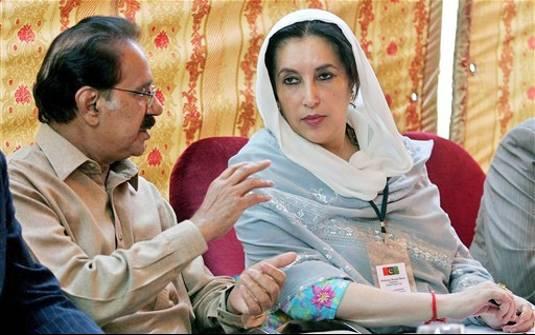
Former President Asif Ali Zardari has paid glowing tributes to the late Makhdoom Amin Fahim president of the PPP Parliamentarian and senior party leader as ‘a great pillar of strength of the party, a steadfast political loyalist and a person of great dignity and grace whom adversities failed to shake”. The death of Makhdoom Amin Fahim has created a void that will be hard to fill for a long time, he said. Gifted with innumerable qualities of head and heart and possessing pleasing mannerism late Makhdoom Amin Fahim commanded the respect of people not only in his home town in Hala and his followers in the Sawari jamaat but also throughout the country among people of all shades of political persuasion, the former President said.
Ever since Makhdoom Talibul Mola, the late father of Makhdoom Amin Fahim hosted the first PPP convention in Sindh at his home in Hala in the seventies, Makhdoom Amin Fahim has remained loyal to the party through thick and thin, he said. When the prophets of gloom and doom thrived on predicting his imminent exit from the Party Makhsoom Amin silenced them with a cryptic one liner: “Amin Fahim and PPP are inseparable”. The PPP Punjab leadership has expressed heartfelt condolences over the passing away of Makhdoom Amin Fahim.

Former Prime Minister Syed Yusuf Raza Gilani and President PPP Punjab Manzoor Wattoo, in their separate messages, have expressed heartfelt condolences over the passing away of a highly respected top leader, saying that his contributions for the cause of party, democracy and the country would be long remembered. They said that he was an invaluable asset for the Party as the deceased remained loyal to the PPP and its leadership and rejected offer in the past by the dictator of becoming the chief executive of the country.
They added that Makhdoom Amin Fahim had the opportunity of working with the departed soul in the Parliament adding he was a big loss not only of the Party but also of the country. His passing away is personal loss to them, they added. He was a great personality and a great politician who remained loyal to the Party and the leadership and rendered meritorious services for the uplift of Party in the province of Sindh in particular and in the country in general.
Both the leaders have prayed for the eternal peace for the deceased and fortitude to the members of the bereaved family to bear the irreparable loss. Sardar Ayaz Sadiq, Speaker and Murtaza Javed Abbasi, Deputy Speaker National Assembly have condoled the death of Makhdoom Amin Fahim, MNA and the senior Leader of Pakistan Peoples Party.
In their separate condolence messages to his son Makhdoom Khaliqus Zaman the Speaker and the Deputy Speaker expressed their profound grief and sorrow over the sad demise of Makhdoom Amin Fahim. They said that he was a politician of high repute and during his tenure as Member, National Assembly he had rendered valuable contributions in legislative business. His services for promotion of democracy and supremacy of constitution in the country will be remembered for a long time to come, they said. Politicians have mourned the death of Pakistan People’s Party leader Makhdoom Amin Fahim.
The senior politician, aged 76, suffering from blood cancer died in the early hours of Saturday in a private hospital in Karachi after a long illness. PML-Q President and former premier Senator Chaudhry Shujat Hussain, senior central leader and former deputy premier Chaudhry Parvez Elahi and central leader Moonis Elahi have condoled with his family. Society for Global Moderation Chairman Syed Jawaid Iqbal also adding his condolence said on Saturday, “A veteran of the PPP, Amin Fahim, was an asset for the country. He continued to play a very active role in politics even at his age. Amin Fahim was a diehard follower of the Bhutto philosophy and never wavered in pursuing the ideals of his leader at all forums. Pakistan has lost a seasoned politician.” The Society for Global Moderation is a private sector think-tank strengthening tolerance, inter-faith harmony and democracy.
Aseefa Bhutto Zardari pays tribute to #MakhdoomAminFaheem

https://ppppunjab.wordpress.com/2015/11/22/aseefa-bhutto-zardari-pays-tribute-to-makhdoomaminfaheem/

Subscribe to:
Posts (Atom)