Saturday, November 14, 2015

#DemocraticDebate - What You Need to Know About the Second Democratic Debate


The next Democratic debate is Saturday night — yes, on a weekend.
The debate was supposed to focus mainly on the economy — but in the light of Friday night's horrifying attacks in Paris, CBS has now indicatedthat the subject matter of the event will be changed to focus more on the issues of terrorism, national security, and foreign affairs.
If you already have other plans, here's a guide to help you decide whether it's worth canceling them to stay home and stream it.
When and where is the debate being held?The Democrats are congregating in the Sheslow Auditorium at Drake University in Des Moines. The debate will start at 9 p.m. and last two hours. This will be the only Democratic debate held in Iowa before the caucuses on February 1
Let's say I have a friend who has no plans on Saturday and wants to watch the debate. How would they do that?CBS News and the Des Moines Register are co-hosting the debate, so you can watch it on your local CBS affiliate or listen to it on a CBS News–affiliated radio station. It will also be streaming on CBSNews.com, so all exceptionally cool party hosts can just litter their houses with laptops and tablets playing the debate. 
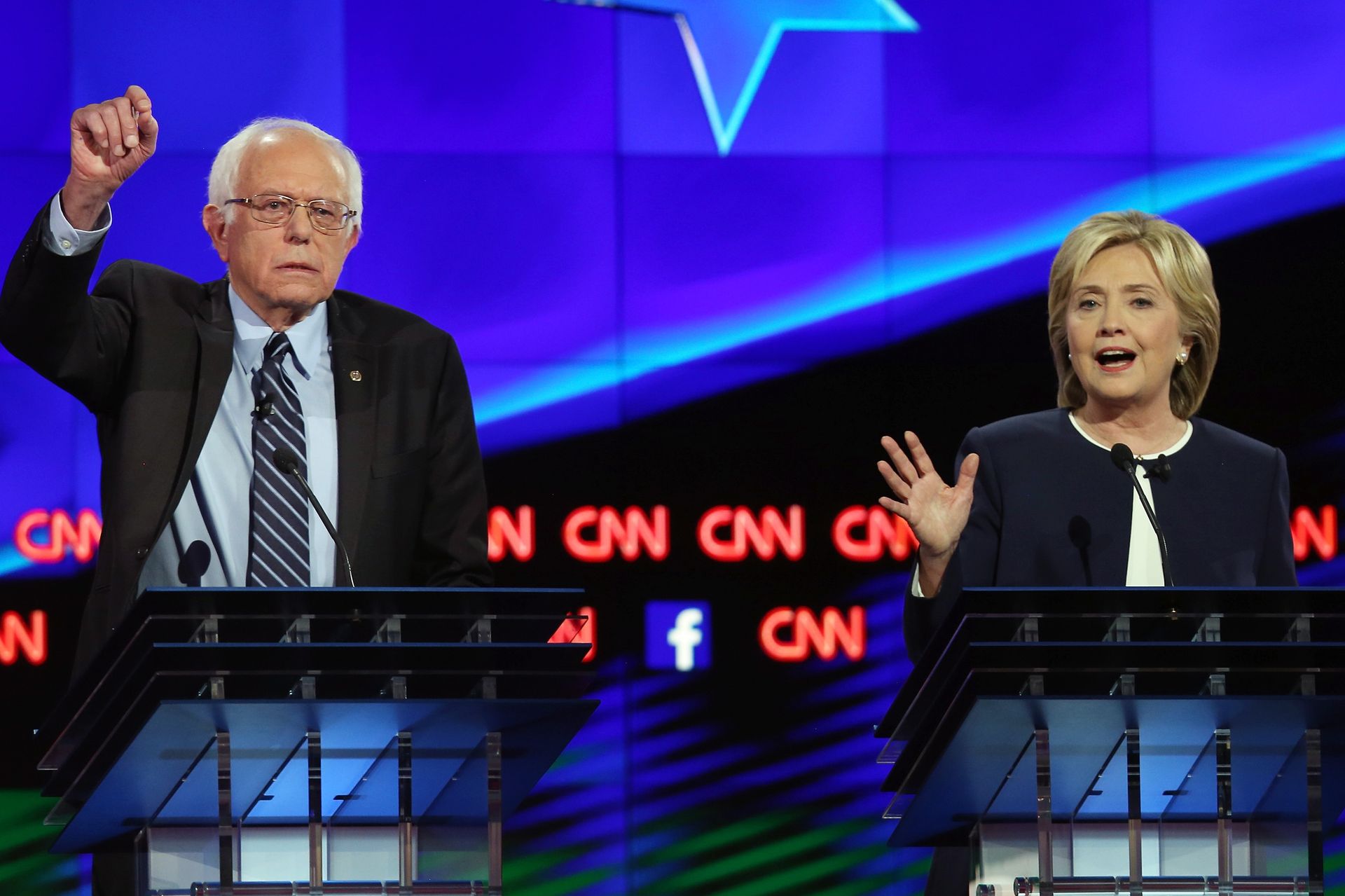
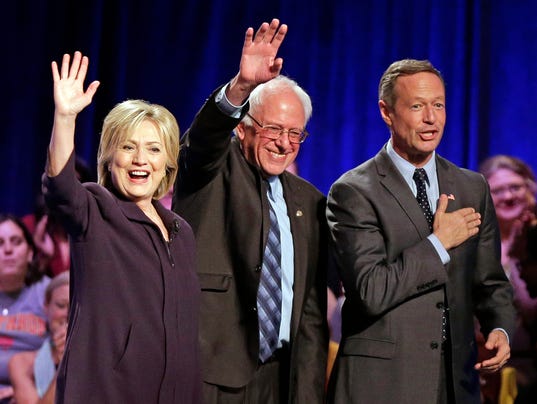
Who's debating?The Democratic race shrank quite a bit in the month since the last debate. Hillary Clinton, Bernie Sanders, and Martin O'Malley are the only people left running.
Wait, there were other people running?Therein lies the rub. There were three other candidates vying for the Democratic nomination, but they didn't have much luck getting anyone to pay attention to them. And when they finally had a chance to introduce themselves to the public in October ... they failed miserably. The day after the debate, Wolf Blitzer asked Lincoln Chafee, "So at what point will you drop out?" The answer turned out to be "soon." Jim Webb spent most of the last debate complaining about how no one would let him answer any questions, and later dropped out and said he was thinking about running as an independent instead. Lawrence Lessig, a campaign-finance advocate and law professor, dropped out of the race after it became clear he was never going to make it on the debate stage. While the Republican primary contest remains so large that two separate debates are necessary every time the party takes the stage, the Democratic debate, with only three candidates, is going to look pretty empty. 
What about Joe Biden?
Nope, he's still not in the race. He announced last month, shortly after the first Democratic debate, that it was too late for him to enter the race. Since a month has passed, it seems probable that the same logic holds. However, he did say he "will not be silent," which means he will probably be watching the debate at home tomorrow, periodically yelling at the screen with the answers he thinks they should give. 
So why is this debate on a Saturday again? Good question. The Democratic National Committee has been criticized extensively for its decision to hold only six prime-time debate — the Clinton camp was reportedly pushing for even fewer. Bernie Sanders and Martin O'Malley have been particularly incensed about losing the chance for more exposure. The prevailing theory for why the DNC is sanctioning only a few debates is that the committee is trying to help Clinton keep her lead — preventing the possibility of a drawn-out primary that leaves the nominee weakened for the general election. The DNC disputes this theory. 
Once you look at the debate calendar, however, it's hard to believe that the people planning these events weren't secretly writing "The Guide to Throwing a Party Where No One Shows Up and You Can Have Your Cake and Eat It Alone." According to Vox, only 7 of the 100 debates held since 2000 took place on a Saturday. Half of the Democratic debates scheduledthis year will take place on the weekend — including one on a Saturday before Christmas and a Sunday before Martin Luther King Jr. Day. The next two won't take place until February and March. The only one scheduled to take place during the week already happened.
Saturday's debate — which is taking place in Iowa — happens to have a scheduling conflict with a big Iowa Hawkeyes game, too
The Republican National Committee scheduled ten debates before April — and many of them have already broken viewership records, thanks to Trump. "Left unchecked," Democratic consultant Stuart Rosenberg wrote in an op-ed in Time, "the superior RNC schedule could easily reach 50 to 100 million more eyeballs than the current Democratic schedule — meaning tens if not hundreds of millions of dollars of lost opportunities to persuade, engage and excite the audiences all Democrats will need to win in 2016." 
As of now, however, the next three Democratic debates will all be held on the weekend. 
And how am I supposed to stay awake during this debate?According to moderator John Dickerson — host of Sunday show Face the Nation — the debate will focus a lot on the economy, which should be more than exciting enough to keep you from falling asleep! (Update: This guide was written on Friday, but as of Saturday, the debate will now focus more on terrorism and national security in light of the Paris attacks.)
I fall asleep every night listening to a recording of Bernie Sanders talking about stagnant wages and Glass–Steagall.Hmmm, well ... the smaller lineup — and Clinton's growing lead in the polls — could make for some suspenseful moments onstage.
In the weeks since the last debate, when Sanders announced that he was tired of hearing about Clinton's damn emails, the front-runner managed to make the Benghazi committee look bad and win a few union endorsements. Sanders is expected to be a bit tougher on Clinton in their second round on stage — highlighting her "evolution" on issues like the Keystone XL Pipeline, the Trans-Pacific Partnership, and the Iraq War. “I disagree with Hillary Clinton on virtually everything,” Sanders told the Boston Globe editorial board last week. He added to the Burlington Free Press, “Also, how we came to our point of view — and when we came to our point of view — is something that I think the voters in the Democratic primary process should know about, and they will know about.” These are things he'll probably try to mention at least a few times on Saturday. He also talked to the Globe about those damn emails, saying that she was still being investigated over them. “I didn’t let her off the hook. There is a process going on in this country. There is an investigation. The FBI is doing what it is doing. ... Whatever happens with the email thing will happen. I don’t know. I’m not an expert. Let it take place.” Clintoncurrently leads the Iowa polls — but Sanders keeps getting closer. Clinton came in third place during the 2008 Iowa Caucus.
“He’s closely studying her past remarks, trying to get a greater understanding of her past and present positions, so he can make the strongest substantive case for their differences on issues and decision-making,” one Sanders adviser told the New York Times. However, it's not clear that Sanders is willing to go completely negative — his campaign definitely doesn't want him to relinquish the essential Bernie-ness that made him so surprinsingly effective in the first place — but don't expect him to give away a handshake photo op to the competition this time around. 
Sanders, in turn, will have to face criticism from his opponents on his past stances on gun control as the senator of a rural state. It seems likely his rivals will also question the feasibility of many of his ambitious plans to help reduce income inequality. 
Martin O'Malley is already a pro when it comes to listing all of the reasons he thinks Clinton and Sanders are wrong about everything — given how far behind he is in the polls, his potential success is predicated on Clinton or Sanders shedding a bunch of supporters in the near future. In the few moments when the focus shifted away from Sanders and Clinton in the first debate, O'Malley made sure to stare right into the camera and give a stump-speech-esque declaration for why he was such a better choice than his two far more successful opponents. (The stare-into-the-camera-to-try-and-hack-voters'-minds method was last tried by Chris Christie, who is desperate to find new fans after being demoted to the happy-hour debate this week.) The former Maryland governor has received some good press recently — he was profiled in a Rolling Stone article titled "Why Martin O'Malley Could Be the Future of the Democratic Party." The candidate has tried to latch on to immigration as a way to distinguish himself from his opponents, according to the Times — although immigration is debated endlessly among the endless number of Republican candidates, it hasn't played quite as big a role in the Democratic contest. If O'Malley doesn't become a scene-stealer, it's not clear that he has many more debates in him. He only raised $1.3 million in the last fund-raising cycle.
In other words, you've got two candidates eager to topple the front-runner — in a nerdy substantive way that doesn't make them look like negative meanies, of course — and you've got the person leading the race, who also happens to be the most gifted debater, eager to keep floating so high above them that she can stay out of reach of their barbs. 
Who else will be asking questions?The other moderators will be CBS reporter Nancy Cordes, local anchor Kevin Cooney, and Des Moines Register columnist Kathie Obradovich.According to Politico, Dickerson met with each of the campaigns to learn more about their platforms. Cordes told Politico“The beauty of having just three candidates is that you can spend more time on each issue and with each candidate,” Cordes said. "You don’t feel like you need to jump from topic to topic so quickly that you never get to explore what it is that the candidate would do and how they deal with perhaps some of the drawback of the plans they have proposed. We can go beyond the 35- or 45-second talking point you hear in their stump speech all the time.”

Democratic presidential debate to highlight terrorism after Paris attacks


By Nicole Gaudiano and Heidi Przybyla


The threat of terrorism will be a key topic during tonight’s Democratic debate in a reshuffling of plans by moderators following Friday’s attacks in Paris.
"Last night's attacks are a tragic example of the kind of challenges American presidents face in today's world and we intend to ask the candidates how they would confront the evolving threat of terrorism,” said Christopher Isham, CBS News vice president and Washington bureau chief.
Democratic candidates former secretary of State Hillary ClintonSen. Bernie Sanders, I-Vt., and former Maryland Gov. Martin O’Malley will face off in their second debate Saturday night from 9-11 p.m. ET at Drake University in Des Moines, Iowa. CBS News is hosting the debate in conjunction with CBS' Des Moines affiliate, KCCI, and the Des Moines Register.
The Islamic State has claimed responsibility for the multiple Paris attacks, which killed at least 127 people. Americans will want candidates during the debate to explain their strategy for preventing such attacks from happening on U.S. soil, said Dennis Goldford, a political science professor at Drake.
“The question will be, Can Sanders look stronger (rather) than being soft and dovish?” asked Goldford. “Can Clinton thread this line between the doves and the hawks in this party? And can O’Malley say anything that makes him stand out and win him a second look from a lot of people?”
The attacks put in bright contrast what is probably the biggest remaining difference between Clinton and Sanders – her advocacy for a more muscular approach to using the U.S. military to combat terrorism across the globe.
The debate creates a challenge for Clinton, as it magnifies her public split with Obama on his approach to Syria. Several weeks ago, she was critical of Obama by saying there should be a no-fly zone and humanitarian corridors in Syria, something Obama’s rejected.
Clinton has long advocated for a more robust approach in the Middle East to thwart the Islamic State, including when she was a member of Obama’s administration. As a U.S. senator she voted to authorize the war in Iraq, though she has since called that decision a mistake.
Though Sanders voted for the war in Afghanistan, he opposed Iraq and has highlighted that difference with Clinton. Sanders, who believes the Islamic State must be defeated primarily by Muslim nations in the region, opposed Obama’s recent decision to putSpecial Operations boots on the ground in Syria while a Clinton spokesman said she “sees merit” in the approach.
“I think people across the country, no matter their stand on something like the Iraq war, recognize it’s vital to defend our nation,” said Tad Devine, Sanders’ senior adviser. “I think he’ll speak to that.”
For Clinton, Saturday will provide an opportunity to address Republicans who question her accomplishments as secretary of State. “It also give her a way of contrasting herself with her Democratic opponents who have not had the kind of experience that lends to foreign policy credibility,” Goldford said.
Beyond Saturday’s debate, the attacks are likely to change the focus of the Democratic primary, which has heavily concentrated on economic and domestic issues including income inequality, student debt and guns.
Sanders has struggled to regain his footing after Clinton solidified commanding leads over him in national polls and in Iowa and erased his advantage in New Hampshire. A shift to national security issues and terrorism plays to her strength, as the nation’s former top diplomat, and will put him in a potentially uncomfortable position of defending his more hands-off approach to the Middle East. Early reports suggest at least one of the attackers was a young Frenchman with links to terrorism, making clear that Islamic State is taking its campaign to the West.

Video Report: Paris attacker identified as French national

Video - Message from President Obama to the People of Burundi

President Obama's Weekly Address: Giving Veterans their Chance

Video - Paris attacks: Couse of events, investigation, witness stories

Video - 'Paris tragedy should motivate world leaders combat terrorism together' - Russian official

Putin: Russia ready for close cooperation in investigating into Paris terrorist attacks

Russia’s President Vladimir Putin sent a condolences telegram to France’s President Francois Hollande, the Kremlin said on Saturday.
"This tragedy is another proof of the barbarian nature of terrorism, which challenges the human civilization. Clearly, for effective fighting this evil, the entire international community should unite efforts," Putin said in the telegram. "I would like to confirm the Russian side is ready for most close cooperation with the French counterparts in investigating into the crime in Paris. I hope the initiators and executors will receive deserved punishments."

Paris terrorist attacks

A series of terrorist acts took place at six various venues in Paris Friday evening with the use of automatic weapons and explosive devices. Hostages were taken in the Bataclan concert hall where 1,500 people gathered for a rock concert. The president declared the state of emergency in the country and closed the state borders.
Five terrorists, according to preliminary data, took part in the terrorist acts in Paris, the French capital’s prosecutor Francois Molins said Saturday.
Meanwhile, Agence France Presse reported citing sources close to investigation that eight participants of the terrorist attacks were killed. Four attackers died in the Bataclan hall: three activated suicide belts, and one was liquidated by law enforcers. Three suicide bombers activated their belts near the Stade de France stadium. Another terrorist blew himself up near Bataclan, sources said.
Molins also said the death toll in the terrorist acts could exceed 120 people. He said there are confirmed data on the death of overall 38 people at various points in the city close to the Bataclan concert hall where the main tragedy occurred. "The figures are very serious, as, if we add that to the Bataclan death toll, there unfortunately is a probability that the final death toll will reach or even exceed 120."
Later on the day, BFMTV reported the death toll reached 127; another 192 are injured and 80 of them are in poor conditions.
The Elysee Palace said after an extraordinary ministerial conference led by President Francois Hollande that the French authorities have sent their 1,500-strong unit of servicemen to ensure security in Paris after the large-scale terrorist attack occurred in the French capital on Friday evening.
President Hollande announced a three-day mourning in the country and said Islamic State was behind the tragedy.

French MPs Say Russian Operation in Syria is in ‘Interest of Global Peace’

Members of the French Parliament think Russia’s airstrikes are doing an effective job in the fight against ISIL and other terrorists in Syria, Le Figaro reported.

Five French MPs, who came to Syria to meet President Bashar al-Assad, said Russian airstrikes are very effective in weakening ISIL.
"Russia is conducting a realistic foreign policy. It is in the interest of global peace," said Nicolas Dhuicq, a member of the Republicans Party (LR), following a meeting with President of the Syrian Parliament Jihad al-Lahham.
Dhuicq expressed hope that a broader coalition to fight ISIL is needed to bring peace in Syria. Another French delegate, Thierry Mariani, also welcomed Russian airstrikes and stressed that "anything that contributes to the fight against terrorism is welcome," Le Figaro reported.
The position of French MPs visiting Syria runs counter to that of the official stance of the French government which condemns Russia's actions. When Russia began bombing ISIL targets on September 30, French President Francois Hollande said they wouldn't contribute to the fight against terrorism.

Mariani added that during their three-day visit in Syria, the French MPs are expected to meet al-Assad himself and other high-ranking figures within the Syrian government, as well as civil society leaders and NGO representatives.


Aside from Mariani and Dhuicq, the delegation consists of Yannick Moreau, Jean Lasalle and Michel Voisin.
Syria has been in a state of civil war since 2011, with forces of the country's President Bashar Assad fighting opposition factions and numerous extremist groups, including Islamic State (ISIL) and the Nusra Front.
Since 2014, a US-led coalition has been bombing IS terrorist positions in Syria without the approval of the UN Security Council or the Syrian authorities.

On September 30, Russia launched a multinational aerial campaign aimed at assisting Damascus-led forces in their fight against terrorist groups trying to oust President Bashar al-Assad. The operation was authorized by legitimate Syrian authorities. Russia, Syria, Iran and Iraq agreed in September to cooperate on security and intelligence sharing in Syria and set up an information center in Baghdad to coordinate their efforts.


Read more: http://sputniknews.com/middleeast/20151113/1030058036/french-mps-russia-airstrikes-syria.html#ixzz3rUSs7igr

Russia Extends Condolences to France Following Paris Attacks


Russian President Vladimir Putin sent a telegram of condolences to French President Francois Hollande in the wake of Friday night's terrorist attacks in Paris, the Kremlin press service reported Saturday.
Almost 130 people were killed in the French capital as a result of a series of co-ordinated gun and bomb attacks. At least 180 people are wounded, 80 of whom are in a critical condition, the BBC news agency reported Saturday.
Putin extended his condolences to the people of France in his official message to Hollande, and confirmed that Russia was ready to assist France in investigating the crime committed against peaceful citizens in Paris.
"In this hour of trial for France I would like you to convey our sincere sympathy and support to the families and friends of the victims and our wishes of a speedy recovery to all those who suffered at the hands of the extremists," Putin said, the Kremlin press service reported.
Friday's tragedy was proof of the challenge terrorism presents to civilisation and the international community must work together to counter its "barbaric nature," the Russian president said.
Hollande said that the attacks were an "act of war" carried out by Islamic State militants. France has declared the country in a state of emergency with the security threat level at its highest point.

What if Allama Iqbal had remained an Ahmadi?

By Kashif N Chaudhry


Sir Chaudhry Muhammad Zafarullah Khan was one of the leading founding fathers of Pakistan. You know, the Pakistan Resolution that our national struggle was based on? He drafted it. He was the first foreign minister of Pakistan. He was known for his eloquent representation of Pakistan at the United Nations and is the only Pakistani to have served as the President of the United Nations General Assembly, and that of the International Court of Justice in Hague.
Zafarullah Khan would have been our Iqbal today 
and Iqbal our Zafarullah Khan.


While working in international diplomacy, Sir Zafarullah Khan’s tireless advocacy for the freedom of Arab states and for the resolution of the Kashmir and Palestine issues is well known.

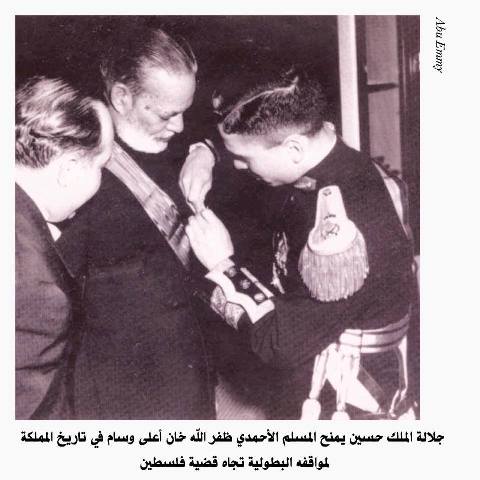
The King of Jordan, His Majesty the Late King Hussein bin Talal, invited Mr Khan to his palace in 1953 and awarded him the highest honour in his Kingdom for Mr Khan’s heroic and courageous fight for the cause of Palestine.

When he passed away, the King paid him a personal tribute in these words:

“He was indeed a champion of the Arab cause and his ceaseless efforts whether among the Muslim and non-aligned countries or at the International Court of Justice will remain for ever a shining example of a great man truly dedicated to our faith and civilisation.” (Review of Religions Sept/Oct 1986, page 6)

Paying tribute to his bold stance on Palestine, the Iraqi Foreign Minister at the time, Mr Muhammad Fadhel al-Jamali, said:
“In fact, it was not possible for any Arab, however capable and competent he may be, to serve the cause of Palestine in a manner in which this distinguished and great man dedicated himself. We expect from all Arabs and followers of Islam that they will never forget this great Muslim fighter. After Palestine, the services of this man for the independence of Libya also deserve admiration. In the United Nations, his struggle for the rights of Arabs formed the basis of firm and lasting friendship between us.” (Al-Sabah Oct 10, 1985)
Many other world leaders expressed similar sentiment and hailed him as a hero of the Arab world and of human rights in general. King Faisal al Saud’s letter is also worth reading in this regard.

Sir Zafarullah Khan was also a prolific author on Islam and human rights.

Think for a minute. Is there anyone who comes close to his achievements for a progressive Pakistan and a free and empowered Muslim world in general? Yet, he is rarely mentioned in Pakistani textbooks, and unfortunately not even acknowledged as the founding father that he was. And we all know why – he was an Ahmadi.

Now consider this:

What if Sir Zafarullah Khan had left the Ahmadi community just as Sir Muhammad Iqbal did? Today, he would have been the shining star of right-wing Pakistan. Chapters in Pakistani textbooks would have been dedicated to his work. There would have been endless songs singing his praise, and every time the state of the Muslim world was discussed, he would have been presented as an icon, a flag bearer of our rights and freedoms. Mullahs would have been heads over heels in love with him. He would have been declared the saviour of the Ummah. Every Pakistan – young and old – would have been celebrating his legacy like no other.
And now consider this.

What if Sir Allama Iqbal had remained an Ahmadi?

For those who do not know, Allama Iqbal joined the Ahmadi community at the hands of its founder, Mirza Ghulam Ahmad, in 1897. He is known to have said,

“If you want to see Islam alive in this age, you must visit Qadian.”

He considered the founder of the Ahmadi community as the most prolific theologian in the Muslim world. Sometime after the demise of Mirza Ghulam Ahmad, Allama Iqbal left the Ahmadi community. It is not clear exactly when, but he continued to be in close contact with the Ahmadi leadership till at least 1931, when he vouched for the Ahmadi Khalifa as the most able person to lead as the first president of the newly founded all-India Kashmir Committee. His parents and elder brother remained Ahmadis.

Back to the question – what if Allama Iqbal remained an Ahmadi?

Today, he would have been absolutely no one.

He would have been abused and ridiculed by mullahs and right-wing Pakistan. Instead of the eagle, his symbol would probably have been the snake – out to bite the Ummah, out to hurt the Muslims, an agent of the western imperialist powers. And much proof – like his knighthood and his poems in reverence of the British rule and the Queen – would have been found, tailored and then floated around.

While official books would probably only have dedicated a one-liner to his role in the Pakistani Movement, there would have been no shortage of books in the market condemning him and his work. He would have made the perfect poster boy for a ‘British agent out to destroy the Ummah’ – sound familiar?

And this is our tragedy.

We are fond of reading history with glasses coloured in religious prejudice and intellectual dishonesty. We do not honour people for their services, as much as we do for their perceived proximity with us on the religious spectrum.

This is just one of the numerous examples of how our religious biases have influenced the history taught to us in Pakistani schools and media.

But while we continue to commit crimes against our own selves by distorting the history, the truth is like the sun; it does not remain hidden for long, and it shines even brighter in this age of global connection and information. I am certain, a few generations down, we will be forced to embrace intellectual honesty and honour Sir Muhammad Zafarullah Khan for the real superhero that he was. For in celebrating a shining star, we do the star no honour, we honour ourselves.

So, to answer the question, what if Allama Iqbal remained Ahmadi and Zafarullah Khan did not? Zafarullah Khan would have been our Iqbal today and Iqbal our Zafarullah Khan.

Muslims Who Gang raped Christian Girls at Gunpoint Acquitted by Pakistani Court

BY SAMUEL SMITH 

Muslim men who gangraped two teenage Pakistani Christian sisters at gunpoint last year have been acquitted of their charges by a Pakistani court after a key witness was bribed into changing his testimony.
During the middle of the night on Nov. 28, 2014, sisters Sherish and Farzana went outside of their home in the village of Jaranwala in the Punjab province to use the bathroom since their home did not have inside plumbing. The two girls did not return home that night and were found the next morning lying unconscious along the side of the road several miles from their home.
After the girls were taken to the hospital, they told police that a well-known Muslim landlord, Muhammad Shabaz, and other Muslim men had abducted them at gunpoint and raped them repeatedly throughout the night.
After the incident, the girls and their father were threatened against pursuing legal action against the perpetrators but pressed charges anyway. After the men were arrested, Muslims opposed to the family's pressing of charges fired gunshots at the their house. Fortunately, no one was hurt in the incident.
Although the family pressed charges, the family claimed that local police "obstructed attempts to gather medical evidence."
Given the threats the family faced, the girls were held in a secretly located safe house rented by the London-based humanitarian organization, British Pakistani Christian Association, for their own safety and were taught English, math and vocational skills such as tailoring.
Shabaz and fellow Muslim Muhammad Azeem were both charged with the crime and forced to stand trial. However, the girl's father, Ilyas Masih, maintains that the men were cleared of their charges in October because a key prosecution witness changed his testimony in favor of the defendants after being threatened and accepting a bribe.
"The case has allegedly been lost due to the unreliability of a key witness who originally, in the face of threats, refused to attend the court, then when instructed to attend by the court changed his original statement," a BPCA press release explains. "Mr. Ghafoor, who was previously a family friend, has been accused of taking a bribe and altering his statement in lieu of this payment."
Masih said he plans to appeal the ruling to a higher court in order to receive justice for his daughters. Masih accuses the judge and police of religious bias and also partly blames the loss on prosecution attorney Sardar Mushtaq Gill.
"The judge and police displayed a clear bias toward the culprits because of the religious discrimination," Masih told BPCA. "I am really upset and disappointed that we have lost the case and didn't get justice. Mushtaq Gill didn't fight the case very well and showed a poor level of commitment. Mostly he stayed absent from the hearings of the case in the court. The lawyer didn't even participate in the cross questioning of the culprits in the court."
Gill told The Christian Post that he attended "every necessary hearing in court" and insisted that his attendance was not the issue. Gill said the result of the hearing is likely because of the fact that statements from the victims were different than what was recorded on the police report. Gill added that a DNA test found no semen detected on the girls' bodies.
But given the fact that medical evidence was obstructed by the police during the early stages of the investigation and the fact that Masih claims the police had religious bias against him and his daughters, the case could have likely been lost simply because of the police department's bias.
"From the very first day, there were many drawbacks in the investigation," Gill argued.
With the culprits being released from jail, Masih is terrified of the hostility that could come his family's way in retaliation if they returns home.to Jaranwala. Masih is trying to relocate outside of the village and is looking to buy another house.
The lease on the safe house that BPCA has rented for the family is set to expire in eight months and the organization looks to extend the lease another year to give the family more time to figure out where and how to relocate. BPCA is also considering buying a house that can be used to house and protect other persecuted Pakistani Christians.
Although the girls are safe for the time being, BPCA reports that Farzana has suffered from severe anxiety since the attack.
"The girls have been doing relatively well despite everything that they have been through, but Farzana, the elder of the two, has suffered anxiety and depression since the attack and has been even more withdrawn since the court's announcement that the prosecution has failed," the BPCA release states. "In recent weeks a donor has offered to pay for a series of 10 trauma counselling sessions with a professional licensed psychiatrist for Farzana and we hope to begin these soon."

Why Christians are fleeing Pakistan?

Though Christians in Pakistan have never been safe or given the equal citizenship status promised to their forefathers by the Quaid e Azam, and despite of all the disparity, suffering and deprivation, they hoped that one day they would be considered an equal and that their situation would improve. 

But now they seem completely despondent and see no end to their miseries. They have lost all hope and have started fleeing to different countries in search of peace and security. They are going somewhere where they will be treated with dignity and respect and can practice their religion with freedom. Somewhere where they can lead their lives without fear of persecution because of their Christian faith. 

In fact Christians realised years ago that Pakistan holds no future for them, as soon after the death of the Quaid e Azam the social and political situation started turning against them, the Objective Resolution was adopted in 1949, and subsequently the constitution in which they were permanently barred from becoming president and prime minister of the country was passed. 

Christians took part in the movement of Pakistan and supported Quaid e Azam Muhammad Ali Jinnah in his struggle. He promised equal status in the new country and he made it clear in his first presidential speech that: “You are free; you are free to go to your temples, you are free to go to your mosques or to any other place or worship in this State of Pakistan. 

"You may belong to any religion or caste or creed that has nothing to do with the business of the State”. 

He set an example by appointing several people from minorities on very high posts like Joginder Nath Mandel (Hindu) as law minister and Sir Muhammad Zafarullah Khan (Ahmadiyya Muslim) as foreign minister, while Mr S P Singha was already a speaker who had played a main role in making present Punjab part of Pakistan. 

Without Christian parliamentarians’ support, Pakistan's geography would have been different, but the irony is that Christians are suffering most in this province. Although hatred against them continues to grow throughout the country, statistically they are suffering most in this province. 

A large number of false blasphemy cases are being registered against them in Pakistan, kidnapping and forced conversion of Christian girls is common, the majority of their churches have been ransacked, desecrated and burnt in Punjab, most of their settlements have been set on fire in this province and more Christians than anywhere else have been killed extra judicially and even burnt alive in this province. 

Youhanabad, where 17 Christians were killed and 80 were injured in a twin suicide bomb attack in March is a constituency of Mian Shahbaz Sharif, chief minister of Punjab, and the Prime Minister's brother. But he has never visited his constituents to find out about their wellbeing, or to support them during their difficult times. 

I cannot find an example of such recklessness, discrimination and hateful behaviour of any MP towards his own constituents anywhere else in the world, or even elsewhere in Pakistan.

The world's political and religious leaders have expressed their concerns and several reports have been prepared by international organisations witnessing Christians' persecution, but it is all falling on deaf ears and I am disappointed as there are no signs of change. 

Politicians seem oblivious and the lack of will, while the voices from other quarters like academics, artists, writers are also very low compared to what Indian film makers, actors, writers, politicians and academics have done in India against the new wave of discrimination against minorities, and particularly against Muslims. 

The Pakistan Supreme Court has expressed its concern over minorities' security and ordered a special task force and the establishment National Council for Minorities Rights earlier this year, but as far as I am aware, no progress has been made on either matter. 

During the recent hearing of Malik Mumtaz Qadri’s case, the killer of the then governor of the Punjab Salmaan Taseer, the Supreme Court addressed the issue of the misapplication and misuse of the blasphemy law - which is considered a root cause of the Christians’ persecution. 

The government and politicians seem unwilling to take any action to bring about changes to the blasphemy law. On the contrary, Islamic groups are asking for Qadri's release and the execution of all those in prison under blasphemy charges, without due process of justice. 

Such behaviour from the government and politicians has disappointed and pushed Christians to the edge. They see no future for themselves and for future generations in Pakistan. Consequently, they have come to the conclusion to flee Pakistan to save their and their children's lives.

Though this is a painful fact, since they are being forced to flee the country they have no other choice and I think it is somehow a wise decision for Christians in the present scenario, as extremism and religious intolerance continues to rise against them and they are under constant attack.

I have to admit that this is not a solution. But as the government and Muslim politicians are turning a blind eye to their persecution. The responsibility to address these issues rests on the shoulders of Christian political and religious leadership to address these issues.

But unfortunately it seems that some of the leadership has compromised and become subservient to the government, while others have lost all hope and interest and have already fled to seek asylum in other countries. 

Intellectuals, NGOs’ workers, journalists and influential individuals have also fled Pakistan, those who are left behind are busy in packing their suitcases because nobody feels safe in Pakistan. There are witnesses that Christians are not safe and have no future in Pakistan. 

The Netherlands has recently designated Pakistani Christians the status of a 'high risk group", while struggles for a similar status are ongoing in different countries. 

The USCIRF (United States Commission on International Religious Freedom) and UNO have also raised their concerns about the treatment of minorities. Recently the All Party Parliamentarian Group for international Freedom of Religion or Belief, in the House of Lords, organised Evidence Hearing Sessions regarding the 'Plight of Religious Minorities in Pakistan and as Refugees'. 

Lord David Alton has recently come back from visiting Pakistani Christian asylum seekers in Thailand, where thousands of them are living in bad conditions but are not willing to return to Pakistan because of the fear of persecution. 


A few days earlier a team of European MEPs including Mr. Petr Van Dalen, Mr. Arne Gericke and Mr. Marek Jurek, visited Pakistan to get first-hand information about the ongoing persecution of Christians and other religious minorities because of the misapplication and misuse of the blasphemy law. 

They met with Aasia Bibi’s family, the Prime Minister’s advisor on foreign Affairs, Sartaj Aziz and some other important dignitaries. They also met Christian activists and leaders like Joseph Francis and Bishop Samuel Azariah. I am sure they will use this information to endeavour to bring pressure on the Pakistani government to stop the mistreatment of Christians and other religious minorities. 

But keeping in mind the view of Pakistan's leadership, I have very little hope the situation against Christians and other religious minorities will ever improve. Minorities believe, since they are never accepted equal citizens of the Pakistan and Pakistan was achieved in the name of Islam and as a homeland of Muslims, these are organised, deliberate and sustained attempts of cleansing the country, to make it as pure as its name. - See more at: http://www.pakistanchristianpost.com/detail.php?articleid=2582#sthash.5DSMD6fW.dpuf

Persecuted Pakistani Christian

By Andrew Harrod

This was an interesting presentation of often stark views.
"We witness our Christian faith and proclaim the word of God in the land where Islamic fundamentalists and extremists are in power," stated recently a Pakistani Christian to a Washington, DC, area Christian gathering. Speaking anonymously for fear of reprisals back home, "Thomas" expressed with somewhat rudimentary English stark views about Islam during a church reception for about 30 and subsequent interview.
"You are very much free and blessed people," Thomas noted for his American audience who "do not need guards while you worship." By contrast, reception displays on Pakistani Christians included a photo of an adolescent pastor's son standing guard with an assault rifle before a church. This "son is protecting the worshippers by putting his life in danger and father is preaching the gospel to save the life of the worshippers," he stated.
An interviewed Thomas noted how guards averted massive casualties during a March 2015 attack on Lahore, Pakistan's Catholic Church by preventing suicide bombers from entering, yet he distrusted Muslims in Pakistani security forces. While he perceived a lax official response to attacks upon Christian institutions or mosques of Pakistan's Shiite minority, the army responded vigorously to a 2014 terrorist massacre at a Peshawar army children's school. Christians often insist upon having private Christian guards for whom "their brothers and sisters are inside" church.
Should Christian refugee children be allowed to celebrate Christmas?http://www.religiousfreedomcoalition.org/
Thomas in his presentation exemplified violence against Pakistani Christians by introducing a couple now in American asylum. The husband described being followed home from his bank job by a hostile Muslim and a subsequent Muslim attack during home prayer. Seen as allied with "Christian" America, Pakistani Christians also often suffer from Muslim rioting in opposition to American foreign policy such as the 2003 Iraqi regime change, an interviewed Thomas noted.
Accusations of blasphemy have become a custom" as well for Christians under Pakistan's notorious law punishing blasphemy with death, Thomas' presentation noted. Although Pakistan has yet to execute any imprisoned defendant under this law, it is a source of incitement for popular vigilante killings. This law means "I have to be very careful" evangelizing Muslims, he noted during the interview while citing the case of the American evangelist Hickey whom Pakistan banned from the country after one evangelical tour. While Thomas openly evangelizes among Pakistani Hindus whose faith is not covered under the blasphemy law's Muslims provisions, he will only evangelize Muslims who have already personally decided to convert.
Thomas' presentation recognized that modern American Christians "have some sort of problems but not like ours" in Pakistan. He described various forms of discrimination facing Pakistan's small Christian minority such that they can often find only menial employment like cleaning jobs and face exclusion from Pakistani party electoral candidate lists. Given prejudices that Christians are unclean, Pakistani Muslims often will not use utensils handled by Christians or eat meals prepared by them, precluding Christian management of hotels or restaurants.
An interviewed Thomas discussed how Pakistan had increasingly strayed from the vision of a secular republic advocated during Pakistan's 1947 independence from British rule by founder father Muhammad Ali Jinnah. Thomas focused on Pakistan's 1973 constitution as a key turning point in the country's Islamization, noting in particular this document reserved the presidency and office of prime minster to Muslims. Yet the interview noted to Thomas that the 1973 constitution merely reiterated various Islamic provisions from Pakistan's original 1956 constitution that first proclaimed Pakistan an Islamic Republic.
An interviewed Thomas noted the irony of Indian Christians having supported the creation of a Muslim-majority Pakistan during the Indian subcontinent's independence struggle under the British. The descendant of a Punjabi Sikh who converted to Christianity, he highlighted how Punjabi Christians like S.P. Singha supported joining this province to Pakistan while Sikhs voted to stay in a Hindu-majority India. While Jinnah's envisioned secular Pakistan appealed to Christians fearing Hindu domination, now Thomas wondered what they had received for their loyalty to Pakistan.
Thomas' presentation attributed Pakistani Muslim persecution of Christians to fundamental differences between Christianity and Islam. "If you read the Quran, strange things you will find," he stated while focusing on Quran 5:51's injunction for Muslims not to befriend Christians and Jews. "Without any discrimination Christianity accepts everybody" but Muslims look at "first the religion, then the man."
Ignoring that the word "Islam" means submission in Arabic, Thomas' presentation offered the common misperception that Islam "comes from shalom. It means peace but in practice it is not peace." Yet while "Christianity is a religion of peace," an interviewed Thomas stated, "Islam pretends to say we are peacemaker, but in fact we are not peacemaker." "When a Christian pastor speaks and proclaims, he has a Gospel in one hand, a cross in the second hand," Thomas' address stated, but "when a Muslim preaches, they have the Quran in one hand and sword in the other hand." Muslims "gave the idea of fight and war whereas Christians gave the idea of life."
An interviewed Thomas worried that the "picture which is given to Western countries and America...is a different Islam" that makes Westerners "think Islam is good." He criticized Pope Francis for supposedly saying that "there is no difference between the Quran and the Bible," a view Thomas might have acquired from Francis' positive statements about Islam or from a similar sounding internet satire. He likewise criticized President Barack Obama, perceived by Thomas to be a "Muslim guy inside," for "not doing anything for Christians" while Russian President Vladimir "Putin has taken a step" with anti-jihadist military action Syria. Thomas urged caution towards Syrian Muslim refugees "going as refugees" to Europe "but inside they are invaders" while comparing them to a poison that can cause disturbances to a body.
Thomas appealed for aid for Pakistan's persecuted Christians, such as international pressure upon the Pakistani government. At least at the reception his appeals met with a response of over $6,400 contributed to his Pakistani church in a spontaneous collection. Pakistan's beleaguered Christians will need such help and more along with many prayers.

Pakistan - Enforcing NAP

By 

In the next ten days our National Action Plan (NAP) will be one year old. It was on December 24, 2014 that an All Parties Conference, in which the army leadership was also present, had approved the 21 points plan for fighting extremism and terrorism in the country. Consensus on the plan was significant because Pakistan had lived for quite some time in a denial mode. Significant portions of state and society were not prepared to give ownership to the war on terror as they had been claiming that it was some one else’s war. Under General Musharraf the government had claimed to take action against terrorism but actually that was the worst period in the country’s history as not only all kinds of Taliban networks mushroomed here but the country also became a hub of international terrorism. In 2003 Afghan Taliban were not only allowed to regroup in Waziristan and other parts of FATA but they also used these sanctuaries for launching attacks in Afghanistan and in Pakistan. So the approval of NAP in December 2014 was a turning point of sorts when the country came to accept the fact that it was its own war and that it has to fight it to avert the existential threat posed by it. That was not all. The political and military leadership of the country declared that they will take on all types of terrorists and that they will not make any distinction between “good” and “bad” terrorists.
Taking stock of the situation after one year one finds serious gaps in the implementation of the plan. What is more disturbing is the fact that both civil and military leadership of the state are not only reluctant to take responsibility of the failure but are out to shift it to one another. The civilian part of the government has clearly not been able to implement reforms regarding NACTA revival, Madrassas and FATA mainstreaming. We already know about the lack of allocation of resources for NACTA in the last annual budget. Now it has been revealed that even service rules have not yet been framed for the authority, which means that no fresh recruitment can be made for it and only personnel from service pool can be deployed in it. So the most important counter terrorism authority of the country is still in a limbo six years after its creation. Madrassas reform has not progressed in an effective way. Even the completion of the registration process is under question. The government has yet to come out with an authentic and final figure about the number of Madrassas existing in the country. Reforming their syllabus and controlling their finances is still a wishful thinking. There has been a lot of talk recently about mainstreaming FATA. But the officialdom ruling FATA is clearly hell bent upon gaining more time for squeezing the dying system. It is interesting to note that although Pakistan Muslim League (N) is a part of the All Parties Alliance on FATA formed in 2010 and is committed to support its 11 points reform agenda but refuses to implement it without stating any reason. Governor Khyber Pakhtunkhwa has appointed yet another commission to prepare recommendations for reforms. The move is clearly aimed at gaining some more time as Governor’s secretariat is full of reports previously prepared by governmental and non governmental bodies. As if that is not enough the federal government has deemed it fit to appoint a ministerial committee. Basic problem is the lack of political will on the part of the federal government to go ahead for taking practice steps to reform FATA. Unfortunately the present federal government is too Punjab centric to spare time and energy for the pressing problems of the other areas that constitute the periphery of the country. Pashtun IDPs from North Waziristan and other parts of FATA are still living a miserable and uncertain life. Operation Zarb-e-Azb seems to be an open-ended affair and it is difficult to talk about any time line about it. In the total absence of any civilian oversight no one can strategize to mitigate the hardship faced by non-combatants in the area of the armed conflict.
It is interesting to see that the top leadership of the army has deemed it fit very recently to publicly point finger at the failure of civilian leadership of the government in implementing NAP. As pointed out earlier there are a number of shortcomings. There are no two opinions about that. But government servants from any branch or institution are not supposed to issue public political statements. They have relevant government forums for raising issues. It is particularly so as the military dominated apex committees are practically ruling the country. We know that even after retirement the government servants have to wait for two years to take part in politics. Flouting the rules of the game (theConstitution) is some thing that turns an important country like Pakistan into a banana republic. But there is another and a more serious point. And that is the question of proscribed organizations. Unfortunately origin of most of these “ non state players” can be traced back to the intelligence agencies of the country. No one can disagree with choking of terror financing from all sources. The government should do whatever it can do to block terror financing. But first and foremost is the need for crystal clear state policy of zero tolerance towards extremist militancy and private militias. The hope that the state will translate the new stated policy in action remains unfulfilled. Afghan Taliban is still making large-scale use of their sanctuaries in Pakistan. The activities of their leadership and camp followers in choosing a successor to Mullah Mohammad Omar on Pakistani soil has deprived the country of the fig leaf of plausible deniability that was maintained to some extent in the past. Extremist militancy is one large body. You can’t do away with it by smashing one part while keeping intact other part of it. Curbing this menace will not be possible without a clean break with the past policies of the security establishment of the country. A clear and practical shift in this area will be necessary to honor the valiant sacrifices rendered by the personals of law enforcement agencies and the people of Pakistan in fighting terrorism.
The writer is a retired Senator and an analyst of regional affairs.