Friday, November 6, 2015

Obama Rejects Construction of Keystone XL Oil Pipeline


By 


President Obama announced on Friday that he had rejected the request from a Canadian company to build the Keystone XL oil pipeline, ending a seven-year review that had become a symbol of the debate over his climate policies.
Mr. Obama’s denial of the proposed 1,179-mile pipeline, which would have carried 800,000 barrels a day of carbon-heavy petroleum from the Canadian oil sands to the Gulf Coast, comes as he seeks to build an ambitious legacy on climate change. “America is now a global leader when it comes to taking serious action to fight climate change,’’ Mr. Obama said in remarks from the White House. “And frankly, approving this project would have undercut that global leadership.’’
The move was made ahead of a major United Nations summit meeting on climate change to be held in Paris in December, when Mr. Obama hopes to help broker a historic agreement committing the world’s nations to enacting new policies to counter global warming. While the rejection of the pipeline is largely symbolic, Mr. Obama has sought to telegraph to other world leaders that the United States is serious about acting on climate change.
The once-obscure Keystone project became a political symbol amid broader clashes over energy, climate change and the economy. The rejection of a single oil infrastructure project will have little impact on efforts to reduce greenhouse gas pollution, but the pipeline plan gained an outsize profile after environmental activists spent four years marching and rallying against it in front of the White House and across the country. Mr. Obama said that the pipeline has occupied what he called “an overinflated role in our political discourse.’’ “It has become a symbol too often used as a campaign cudgel by both parties rather than a serious policy matter,’’ he said. “And all of this
obscured the fact that this pipeline would neither be a silver bullet for the economy, as was promised by some, nor the express lane to climate disaster proclaimed by others.’’
The rejection of the pipeline is one of several actions Mr. Obama has taken as he intensifies his push on climate change in his last year in office. In August, he announced his most significant climate policy, a set of aggressive new regulations to cut emissions of planet-warming carbon pollution from the nation’s power plants.
Republicans and the oil industry had demanded that the president approve the pipeline, which they said would create jobs and stimulate economic growth. Many Democrats, particularly those in oil-producing states such as North Dakota, also supported the project. In February, congressional Democrats joined with Republicans in sending Mr. Obama a bill to speed approval of the project, but the president vetoed the measure. Both sides saw the Keystone rejection as a major symbolic step, a sign that the president was willing to risk angering a bipartisan majority of lawmakers in the pursuit of his environmental agenda. And both supporters and critics of Mr. Obama saw the surprisingly powerful influence of environmental activists in the decision.
“Once the grass-roots movement on the Keystone pipeline mobilized, it changed what it meant to the president,” said Douglas G. Brinkley, a historian at Rice University who writes about presidential environmental legacies. “It went from a routine infrastructure project to the symbol of an era.” Environmental activists cheered the decision as a vindication of their influence.
“President Obama is the first world leader to reject a project because of its effect on the climate,’’ said Bill McKibben, founder of the activist group 350.org, which led the campaign against the pipeline. “That gives him new stature as an environmental leader, and it eloquently confirms the five years and millions of hours of work that people of every kind put into this fight.’’
Environmentalists had sought to block construction of the pipeline because it would have provided a conduit for petroleum extracted from the Canadian oil sands. The process of extracting that oil produces about 17 percent more planet-warming greenhouse gases than the process of extracting conventional oil.
But numerous State Department reviews concluded that construction of the pipeline would have little impact on whether that type of oil was burned, because it was already being extracted and moving to market via rail and existing pipelines. In citing his reason for the decision, Mr. Obama noted the State Department findings that construction of the pipeline would not have created a significant number of new jobs, lowered oil or gasoline prices or significantly reduced American dependence on foreign oil. “From a market perspective, the industry can find a different way to move that oil,” said Christine Tezak, an energy market analyst at ClearView Energy Partners, a Washington firm. “How long it takes is just a result of oil prices. If prices go up, companies will get the oil out.”
However, a State Department review also found that demand for the oil sands fuel would drop if oil prices fell below $65 a barrel, since moving oil by rail is more expensive than using a pipeline. An Environmental Protection Agency review of the project this year noted that under such circumstances, construction of the pipeline could be seen as contributing to emissions, since companies might be less likely to move the oil via expensive rail when oil prices are low — but would be more likely to move it cheaply via the pipeline. The price of oil has plummeted this year, hovering at less than $50 a barrel. The recent election of a new Canadian prime minister, Justin Trudeau, may also have influenced Mr. Obama’s decision. Mr. Trudeau’s predecessor, Stephen Harper, had pushed the issue as a top priority in the relationship between the United States and Canada, personally urging Mr. Obama to approve the project. Blocking the project during the Harper administration would have bruised ties with a crucial ally. While Mr. Trudeau also supports construction of the Keystone pipeline, he has not made the issue central to Canada’s relationship with the United States, and has criticized Mr. Harper for presenting Canada’s position as an ultimatum, while not taking substantial action on climate change related to the oil sands.
Mr. Trudeau did not raise the issue during his first post-election conversation with Mr. Obama.
The construction would have had little impact on the nation’s economy. A State Department analysis concluded that building the pipeline would have created jobs, but the total number represented less than one-tenth of 1 percent of the nation’s total employment. The analysis estimated that Keystone would support 42,000 temporary jobs over its two-year construction period — about 3,900 of them in construction and the rest in indirect support jobs, such as food service. The department estimated that the project would create about 35 permanent jobs. Republicans and the oil industry criticized Mr. Obama for what they have long said was his acquiescence to the pressure of activists and environmentally minded political donors. “A decision this poorly made is not symbolic, but deeply cynical,’’ said Senator Lisa Murkowski, the Alaska Republican who leads the Senate Energy and Natural Resources Committee. “It does not rest on the facts — it continues to distort them.’’
Jack Gerard, the head of the American Petroleum Institute, which lobbies for oil companies, said in a statement, “Unfortunately for the majority of Americans who have said they want the jobs and economic benefits Keystone XL represents, the White House has placed political calculations above sound science.’’
Russ Girling, the president and chief executive of TransCanada, said in a statement that the president’s decision was not consistent with the State Department’s review. “Today, misplaced symbolism was chosen over merit and science,’’ said Mr. Girling, whose company is based in Calgary, Alberta. “Rhetoric won out over reason.’’ The statement said that the company was reviewing the decision but offered no indication if it planned to submit a new application. If a Republican wins the 2016 presidential election, a new submission of the pipeline permit application could yield a different outcome.
“President Obama’s rejection of the Keystone XL pipeline is a huge mistake, and is the latest reminder that this administration continues to prioritize the demands of radical environmentalists over America’s energy security,’’ said Senator Marco Rubio of Florida, who is seeking the Republican nomination for president. “When I’m president, Keystone will be approved, and President Obama’s backward energy policies will come to an end.’’
As Mr. Obama seeks to carve out a substantial environmental legacy, his decision on the pipeline pales in import compared with his use of Environmental Protection Agency regulations. The power plant rules he announced in August have met with legal challenges, but if they are put in place, they could lead to a transformation of the nation’s energy economy, shuttering fossil fuel plants and rapidly increasing production of wind and solar.
Those rules are at the heart of Mr. Obama’s push for a global agreement. But advocates of the agreement said that the Keystone decision, even though it is largely symbolic, could show other countries that Mr. Obama is willing to make tough choices about climate change.
“The rejection of the Keystone permit was key for the president to keep his climate chops at home and with the rest of the world,” said Durwood Zaelke, the president of the Institute for Governance and Sustainable Development, a Washington research organization.

Video Report - President Obama Delivers a Statement on the Keystone XL Pipeline

Down the drain in Afghanistan: Column

David A. Andelman


USAID and the Pentagon have poured millions into inefficient, corruption-riddled projects.


The United States is flushing hundreds of millions of dollars a year down the drain in programs in Afghanistan that often seem only to be aiding and abetting the Taliban or squandering U.S. taxpayer funds on items of little or no use to the Afghan people. Those are the conclusions in a succession of reports to Congress by the special inspector general for Afghanistan reconstruction that rarely attract much attention or action.
One State Department agency, USAID, pumped more than $137 million from 2011 to September into one program called, in typical Washington bureaucratese “Stability in Key Areas” or SIKA. The result? “The relationship between USAID stability programs and the insurgency ... found increased support for the Taliban when USAID stabilization programs were implemented in Taliban-controlled villages. Additionally, violence increased in government-controlled villages that received USAID stability projects,” the inspector general’s office observes.
Why might this be happening? Well, the report continues that “insurgents will purposely target villages because of stability projects,” and indeed suggests that the “Taliban substantially boosted its local popularity by allowing programming to take place in these villages.” None of this should be especially astonishing to anyone who understands what has been going on since the start of hostilities in America’s longest war — 14 years and counting. While, as in the case of the Iraq War, U.S. forces were initially welcomed as liberators, the United States all too quickly turned into occupiers. While American programs might have been intended to help build local infrastructure and industrial self-sufficiency, all too often they blundered into blind alleys.
One inspector general report points out that Afghanistan has vast mineral resources that could lead to economic self-sufficiency. Yet, as a result of competition and bungling between Defense and State Department initiatives, “the $488 million U.S. government investment in efforts to develop Afghanistan’s extractive industries could be wasted, and Afghanistan may not be able to generate the additional revenues it needs to meet its long-term budgetary requirements without continued international assistance.”
Then there’s the outright criminality. Last year, the inspector general’s office found contractors bidding on a nearly $1 billion Afghan Ministry of Defense fuel contract had met in Dubai to rig their bids and inflate prices for the fuel. After evidence was presented to Afghan President Ashraf Ghani, the contract — worth $200 million in U.S. Army funds — was canceled. “With billions of dollars at stake, many times we have observed the absence of rudimentary management skills that should have been grounded on proper planning and a sound strategy,” said Special Inspector Gen. John Sopko, in response to questions from USA TODAY. Indeed, the waste and fraud embedded in many U.S. funded programs uncovered by Sopko’s investigators is staggering. Together, just his group’s investigations directorate, the federal law enforcement component of the agency, has accumulated $944.5 million in criminal fines, restitution, forfeitures, civil settlement recoveries and government cost savings.
“Among the best practices for development assistance includes determining that the intended recipient actually wants and needs the project in question,” Sopko added.
A special after-conflict United Nations assessment group led by a top German academic, Michael Daxner, went into village after village that had been “liberated” during the height of the conflict and found tales of ham-handedness that only led to bitterness and resentment. In one case, U.S. forces decided it would be “good” for a liberated village to have an elaborate new bridge in the middle of nowhere, far from the one destroyed in the fighting, instead of on the well-traveled path where the original bridge was located.
But it’s not only the misuse of funds; it’s the utter squandering of them. Take the inspector general’s latest revelation — that the Department of Defense's Task Force for Business and Stability Operations "spent nearly $43 million to construct a compressed natural gas (CNG) automobile filling station in the city of Sheberghan.” A similar station in neighboring Pakistan cost $500,000. But there’s more. Seems that Afghanistan doesn’t even have a natural gas transmission and local distribution infrastructure to support a viable market for CNG cars. And converting a car to run on CNG instead of gasoline costs $700 in a country where the average annual income is $690.
You would think that the least we could learn in a 14-year-old war is how to help the Afghan people without making our enemies more popular in the process. It would appear that the, very expensive, record suggests we haven't learned very much at all

Video Report - Enduring Damage To Historic Sites Follows Pakistan Earthquake

Pakistan's Shia Genocide - ASWJ TERRORISTS SHOT KILLED A SHIA MAN & INJURED HIS BROTHER AT QUETTA

Armed terrorists Of Notorious Banned Outfit AhleSunnat Wal Jamaat (ASWJ) on Friday shot martyred a Shia Man and injured another at Arbab Karam Khan Road Quetta , Balochistan.
According to the Shiite News Correspondent, The Saudi funded terrorist of Banned terror Outfit AhleSunnat Wal Jamaat (ASWJ) aka Sipah-e-Sahaba Pakistan opened the fire on the Pro-Box Car AAW-512 Of Shiite elders at Quetta Arbab Karam Khan Road and killed Syed Jaffar Abbas son of Syed Asghar Ali and injured his brother Syed Tanveer Abbas residents of Kirani Road. The Injured Syed Tanveer Abbas was shifted at BMC Hospital Quetta for medical treatment.
The unabated killings Of Shiite Muslims have been witnessed in Pakistan from last three decades by the Saudi-funded terrorist of Banned outfits ASWJ, LeJ, Taliban, Jundullah and Takfiri seminaries. These Banned Takfiri Outfits have also enjoyed the patronaged of Pakistani establishment to victimize the Shiite Muslims of Pakistan on Saudi-Takfiri Agenda. More than 20,000 Shia Muslims were shot killed by the Takfiri terrorists in three decades but the families of the victims still waiting for justice.  
http://www.shiitenews.org/index.php/pakistan/item/19382-aswj-terrorists-shot-killed-a-shia-man-injured-his-brother-at-quetta

The news from Kabul…bleak


Alissa J Rubin, a journalist, has written a dispatch in the New York Times about the situation in Kabul. It is eye-opening. Americans in the city, even the troops, no longer travel by road. If they have to go to the embassy from the airport and vice versa they take a helicopter ride. Most of the cafes and restaurants frequented by expatriates have closed down. Security contractors and aid workers are pulling out.

Long queues form every morning, starting from as early as 2am, outside Kabul’s lone passport office. The rush to get out of Kabul is getting desperate. This is a city under siege. And it’s quaint to think that the Americans have spent close to 715 billion dollars ever since their imperial entry into Afghanistan.

They experienced this before in Vietnam, Saigon, South Vietnam’s capital, falling to the North Vietnamese army within two years of the Paris Accords. The same thing is happening in Afghanistan or about to happen there, although not many people are willing to admit it yet in these stark terms.

At any rate, isn’t it odd that outsiders should be telling us what it’s like in Kabul? If we had any sense there would be Pakistani reporters permanently based in Kabul. But we thrive on ignorance. There should be Pakistani reporters in Delhi, Kathmandu, Dhaka, Colombo and Teheran, not to mention Kabul. But it’s like asking for the moon.

Anyone regularly watching our local TV channels wouldn’t have the foggiest idea what it’s like in the region. Kabul could be in Central America for all that most Pakistanis know about what’s happening there. And we think Afghanistan should lie in our sphere of influence. Whatever for? We can’t keep a single reporter in Kabul and we want to be its godfathers.

Private channels are into quickie profits and ‘infotainment’. Expect them not to throw money the wrong way. But what about the state news agency, APP, and that mother of all that is holy, Pakistan Television? What about our experts in the foreign office and the leading temple of national security, General Headquarters? Do they never think about such things?

Afghanistan’s defences against the Taliban are just not holding up. Afghans in leadership positions can rant and rave all they like about Pakistan but it is not Pakistan’s fault that the Taliban are on the march. The Taliban are no one’s puppets. They are playing their own game. If the Americans couldn’t defeat them with their endless resources and occupation army it is too much to expect that Pakistan can turn the Afghan tide. Since when did Pakistan become that powerful? Pakistan can help but it cannot turn matters around.

The one abiding lesson from the last 200 years of Afghan history – ever since the First Afghan War – is that the Afghans do their own thing and do not take kindly to outside interference or dictation. The Taliban have proved tough and resilient. The Afghan government and its security forces will have to prove equally tough – a match for the Taliban on the ground – if there is to be any hope of a negotiated settlement. You can’t lose on the battlefield and hope for victory, or even a draw, on the negotiating table.

But as the storm-clouds gather over Afghanistan, there are certain things that we could do. Now is the time to devote all our attention to the western frontier, the Durand Line. It is a porous border. It can’t be plugged entirely, not even with the best goodwill in the world, the geography just being too tough. But it can be made less porous if we treat the Afghan border as we treat the Line of Control in Kashmir or the Working Boundary next to Sialkot.

Despite the occasional sabre-rattling from the Indian side, our eastern border is static with heavy troop concentrations on both sides. But the western border is the more dynamic and dangerous one because danger lurks on the other side. The native Taliban, the TTP, fleeing their safe havens in Fata are now based there.

And the political leadership should have the imagination to do something about the constitutional status of the tribal areas. Isn’t it high time they were formally integrated into Pakistan? Wouldn’t the ordinary tribesman welcome this?

In socio-economic terms Pakistan is a land divided, the central Islamabad-Lahore corridor and the Karachi region far ahead of the rest of the country. Fata and Balochistan are in a slightly different century. Pakistan’s central security problem is not the threat from India – we have an adequate measure of that threat and have ample means to meet it. The central problem is to bring Fata and Balochistan closer to the rest of the country. The focus of development therefore should be on those far-flung areas and not, as is presently happening, the already relatively pampered urban centres of Punjab and Sindh.

But who’ll do the thinking? Is everything the army’s responsibility? This underlines the crisis of leadership in Pakistan. Those who should be taking the lead as far as these issues are concerned have their attention fixed on a narrow range of subjects: 1) the power crisis which of course merits the most careful attention but even on that front progress is not what it should be; and 2) a lopsided view of development emphasising eye-catching projects like metro-buses, etc.

Unfortunately, there is little prospect of any change in this equation. The civilian leadership will continue sailing in those waters where it feels more comfortable while Afghanistan, India, the Taliban, etc, will remain the army’s babies. And national direction on these issues will be set by the army.

It needs no professor of political science to tell us that this is not an ideal situation. It signifies an imbalance, a strengthening of the military arm and an atrophying of the democratic process. But this is how it is and although after the 2013 elections it was widely expected that Nawaz Sharif with his credible mandate and years of experience would be able to assert civilian authority, it hasn’t turned out that way.

Where he should have acted such as on the terrorism issue he chose to sit quietly, banging on about talks when any fool could have seen that talks would lead nowhere. And where he should have bided his time such as on the Musharraf treason trial he chose to rush in without properly weighing the pros and cons.

He thus squandered much of his political capital and the army lost little time in stepping into the breach. This is an old story by now but it is relevant in the Afghan context. The situation there poses a danger to Pakistan because if the Taliban become stronger, knocking in time at the gates of Kabul, our own Taliban – the Fazlullah and Khorasani brands and even elements sympathetic to the Islamic State – will have reason enough to be emboldened by the Afghan example.

Who’ll think about these issues? Who will decide what Pakistan should do? Will it again be the army and will the civilians keep swatting the flies on their desks? Pakistan needs leadership, firm and decisive leadership. God knows, it also needs an electric charge up its collective spine. And it needs to rethink India and take advantage of the witches’ brew being prepared there by the ruling BJP and its fellow-travellers. Who will do this?

Pakistan - Punjab Youth Festival Fraud

The Punjab Youth Festival is under investigation following allegations of widespread embezzlement and corruption, confirmed by the National Accountability Bureau (NAB) officials.
Allegations of such widespread fraud have overshadowed the success of the festival, where officials have wasted millions of rupees and paid suspiciously high prices for thousands of chairs and tracksuits for the participants.
The PTI has in this regard out-rightly questioned both the economic management of the festival and several of the records.
They said the government had planned to gather 400,000 people to create the world’s largest human flag and bought 200,000 tracksuits to make up the colours.
The event was cancelled and millions of rupees were wasted.
The Minister for Sports and Education Punjab, denied the allegations and said NAB Lahore Bureau had simply taken notice of media reports of the alleged embezzlement, without having any actual proof.
In Pakistan however, there is always a level of truth to such allegations, where we tend to often make a debacle out of any successful venture that takes place.
This is not the first project in Punjab that is suspicious for its large waste of money and resources.
The Sports ministry is the second Punjab ministry this week accused of fraud.
The Education Department is also under scrutiny.
NAB officials and the Sports Minister are now going head to head, to provide evidence for their positions.
Hailed as the world’s largest-ever youth festival, it is said that more than four million people took part in a series of events throughout 2014 to promote sports in Pakistan.
Yet, it is all a profit-making ventures- a profit not for Pakistan, but for private individuals.
It is time that there is a protest against such state managed activities, where corruption and lack of transparency has become routine.

Pakistan's Foreign policy crisis


One of the most critical and persistent failures of the Nawaz Sharif government has been the deficiencies of his cabinet, both in terms of personnel and performance. Despite criticism in this regard since 2013, the government seems to be incapable of appreciating the seriousness of this shortfall and has not made any moves to change the trend of giving multiple essential portfolios to one close insider. But most ministries at least get a minister in charge and their hierarchical structures remain intact. Shockingly however, the Foreign Office (FO) remains a store without a keeper and there is a distinct diffusion of responsibility, which has resulted in Pakistan’s foreign policy being a jumbled mess lacking any central vision or cohesion. Sartaj Aziz, the octogenarian involved in the bureaucracy and foreign affairs of Pakistan for more than half a century, has been given the role of a ‘special advisor’ to the Prime Minister on Foreign Affairs and is the closest approximate of a functioning Foreign Minister. But, despite an opportunity in March to promote him to the Senate, he is not eligible to be a minister and as an advisor does not have final authority and has to contend with other such ‘special advisors’ to the prime minister.

The results of this dillydallying and a thorough lack of decisiveness in the arena of foreign policy has resulted in the continued fall of Pakistan’s influence and position internationally. The anti-India terrorism dossier shenanigans at the UN have predictably backfired and rather than winning over new allies, Pakistan seems to have lost old ones. A recent election to the UN Human Rights Council (HRC) saw Pakistan fail to muster the required votes, in what is being termed by opposition Senators as a direct result of the headless FO’s debacles. It defies good reason that Pakistan of all countries, mired in conflict and in need of a proactive policy to win favour internationally, would pursue such an ad hoc approach towards foreign policy undeterred. After Pakistan’s refusal to join the Saudi coalition waging war in Yemen, the country has lost its stock with its traditional backers in the Gulf, and their ‘no’ votes seem to have contributed to Pakistan’s failure to secure election to the HRC. And the best solution the FO can up with is to insist the Supreme Court repeal the ban on the hunting of Houbara bustards. As ever, the failings of the civilian government provide space to the military, whose chiefs are stepping in and going on foreign ‘diplomatic’ tours on their own. Pakistan can no longer afford to put off having a responsible and proactive Foreign Minister who can implement a well thought through strategic foreign policy.

PPP is a Party of poor and working classes: Bilawal Bhutto

Bilawal Bhutto Zardari Chairman Pakistan Peoples Party said that PPP is a Party of poor and working classes and its very inception and presence itches Waderas and Jagirdars for protecting interests of downtrodden and weak.
PPP Chairman was talking to the delegations of Pakistan Peoples Party District Malir, South and West delegations, who called on him at Bilawal House today. Aseefa Bhutto Zardari, Chief Minister Sindh Syed Qaim Ali Shah, MNA Faryal Talpur, Senior Minister Nisar Ahmed Khuhro, Senator Sherry Rehman, other Parliamentarians and District Office-bearers and notables were present on the occasion.
Bilawal Bhutto Zardari said that history is the witness that whoever stabbed the PPP in back ended up in humiliation and ignominy but Party always staged comeback with more vigor and strength.
PPP leaders from three districts of Karachi Division briefed the Party Chairman about the scheduled local bodies elections in the city besides the development process in the city and discussed the party matters as well. They said that PPP and workers are doing hard-work and expressed confidence that Party will great number of Local Bodies seats to induct a Jiyala as Mayor of the city.

All Pakistan Union of Press issue warning to PTI chief Imran Khan


Pakistan - Journalists protest Imran Khan’s harsh words

Journalists protested outside Chief Minister House on Thursday against Pakistan Tehreek-e-Insaf Chairperson Imran Khan and his defamatory attitude towards a TV reporter. On the directives of Khyber Union of Journalists (KHUJ), the demonstrators walked from Peshawar Press Club to CM House and condemned Imran’s harsh behaviour. They shouted slogans like, ‘Go Imran Go,’ and also demanded the PTI chief apologise to the reporter publicly and take back his “defamatory words”.

Addressing participants at the protest, KHUJ President Nisar Mehmood said Imran should not have used unkind words for the journalist. Mehmood was referring to Imran’s reaction to a reporter questioning his recent divorce. Mehmood said the entire community frowned upon Imran’s action and if he did not apologise and take back his words, the journalists will continue their protest. He also condemned the brutal killing of Tank-based journalist Zaman Mehsud and demanded the government immediately arrest the people involved in the murder. “Journalists should have freedom of speech,” he said. On the occasion, Peshawar Press Club General Secretary Fida Adeel said Imran is a public figure and people are interested in his personal life. “Since PTI publicly announced Imran Khan and Reham’s divorce, it did not remain such a personal matter after all,” he said.
Adeel added journalists had a right to pose questions to public figures and if the latter did not wish to reveal answers, a simple statement like, “Sorry, no comments on this topic,” should suffice. “Using this kind of language for journalists will ruin Imran Khan’s image,” he said. The general secretary also demanded Imran apologise to the journalist.
The past and present
Arif Yousafzai, the television reporter who was shut down by Imran Khan when he enquired about his recent divorce at CM House on Monday, said the aim of the protest was not to blame the PTI chief.  “I am a journalist and it is my right to ask questions at a press conference,” said Yousafzai. He urged Imran to apologise to him publicly. Earlier, an enraged Imran had said, “Those talking about someone’s personal life should be ashamed.”

#Peshawar medics' 'black day' call against Imran's statement fails

Doctors’ call to observe black day on Friday against Pakistan Tehreek-e-Insaf (PTI) chairman Imran Khan’s statement has failed.
Peshawar medics had called for a black day today which demanded all colleagues to tie black ribbons around arms to condemn Khan’s statement. However, Lady Reading Hospital medics are performing duties indifferently.
In different areas of the city placards and banners have been put on display. The situation in Lady reading Hospital is different than other areas.
No medic has neither tied a black ribbon nor is protesting on cost of professional commitments.
No leader of different doctors’ organizations made himself available for comment on the situation. On other hand, HealthEmployees Coordination Council has not only termed Khan’s statement a contempt of court but has warned of taking it to roads also.
Among the resented groups also is Pakistan Islamic Medical Association.
Association’s president Dr Hussain Haroon has said that Khan should not have commented on the cases that are under trail in courts.
Few days earlier, PTI leader had held doctors responsible for failure to bring reforms in Khyber Pakhtukhwa (KP) hospitals.
It should also be mentioned here journalists’ community had also demonstrated protest outside the Peshawar Press Club on November 5. Khan apparently also offended journalists in a statement during the recent press conference in the KP city.
He had used strong language against journalists for speculating about his recent divorce with Libya-born Reham Khan.
http://dunyanews.tv/en/Pakistan/307309-Peshawar-medics-black-day-call-against-Imrans-

Thursday, November 5, 2015

Video - President Barack Obama Mocking Republicans - ( Nov 2, 2015 )

Video - Chaos in London as Million Mask March breaks permitted route

Video Report - 'No moderate rebels in Syria

Russian planes in Syria destroy warehouse containing terrorists’ anti-tank weapons

Russia’s Sukhoi-25 planes have destroyed a warehouse in Syria’s Idlib province containing anti-tank missiles meant for the terrorist group Jabhat al Nusra, Defense Ministry spokesman Major-General Igor Konashenkov has said.
"In the area of Maarat al Nu’man, Idlib province, according to data obtained through the joint information centre in Baghdad, a batch of anti-tank missiles had been delivered to a warehouse several days ago," Konashenkov said, adding that the weapons were addressed to militants for destroying the Syrian troops’ advancing armour.
"After this information was confirmed by several other sources a pair of Sukhoi-25 fighter-bombers attacked the target. The warehouse and the stored ammunition was destroyed," Konashenkov said.

Russian air group wipes out Islamic State stronghold 30 km away from Palmira

According to the spokesperson Russia’s Sukhoi-24 bomber has wiped out an Islamic State stronghold near the community of Tadmor, 30 kilometers away from Palmira.
"In the area of the community of Tadmor, Homs province, a Sukhoi-24 bomber has destroyed a large stronghold of the Islamic State, a tank in a firing position, an anti-aircraft system ZSU-23 and a mortar battery," Konashenkov said.
"The destroyed stronghold was more than 30 kilometers away from Palmira," Konashenkov said, adding that Tadmor was the largest community in this desert area, so its name was used for convenience to denote the specific location.
"Let me point out that Russian aircraft have been attacking only terrorist targets far away from architectural monuments," Konashenkov said.
It was not the first strike against terrorist forces in the area of Tadmor over the past few days. On Monday, the Defense Ministry said that a Sukhoi-25 fighter-bomber destroyed fortified positions and two ZSU-23 air defense systems.
http://tass.ru/en/defense/834224

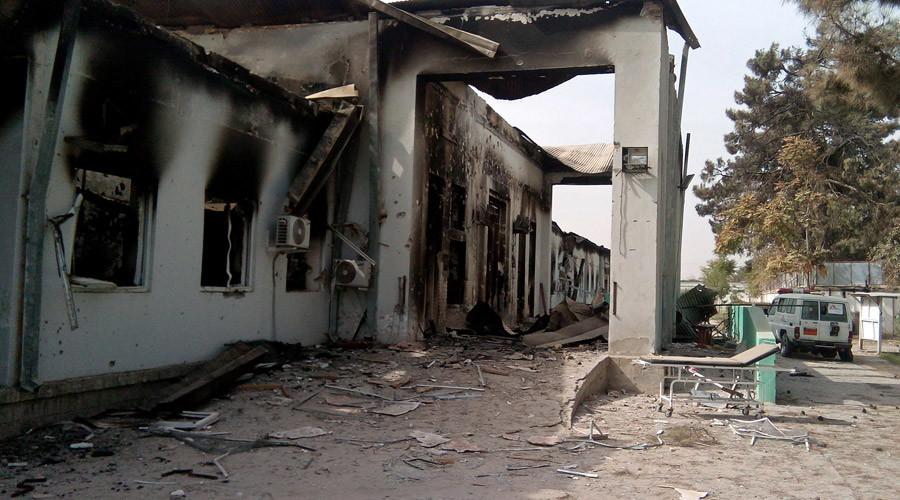
Afghanistan - 'No armed combatants, no fighting': MSF issues Afghan hospital bombing report


A Médecins Sans Frontières investigation into the Afghan hospital bombing by US forces has found that there were no armed combatants or weapons within the compound, and no fighting in the direct vicinity of the hospital at the time of the airstrikes.
In its report released on Thursday, Médecins Sans Frontières (MSF/Doctors Without Borders) addressed the “relentless and brutal aerial attack by US forces” which took place in Kunduz on October 3 and killed at least 30 people, including MSF staff.
“The MSF rules in the hospital were implemented and respected, including the 'no weapon' policy and MSF was in full control of the hospital at the time of the airstrikes,” the organization stated.
The document also said there were “no armed combatants within the hospital compound and there was no fighting from or in the direct vicinity” of the trauma center at the time of the strikes.
The hospital was “fully functioning” at the time of the airstrikes, with 105 patients admitted and surgeries taking place, according to the findings of the investigation.
In addition, MSF said the “agreement to respect the neutrality of our medical facility based on the applicable sections of International Humanitarian Law was fully in place and agreed with all parties to the conflict prior to the attack.”
Despite that neutrality, the hospital was still the target of a US airstrike, leading MSF to ask how such an attack was allowed to happen.
“The question remains as to whether our hospital lost its protected status in the eyes of the military forces engaged in this attack – and if so, why,” MSF said in its statement.
Presenting the report, MSF general director Christopher Stokes said: "From what we are seeing now, this action is illegal in the laws of war. There are still many unanswered questions, including who took the final decision, who gave the targeting instructions for the hospital."
The MSF statement described the tragic situation at the hospital.
“Patients burned in their beds, medical staff were decapitated and lost limbs, and others were shot by the circling AC-130 gunship while fleeing the burning building. At least 30 MSF staff and patients were killed,” it states.
MSF says its demand is simple: “A functioning hospital caring for patients, such as the one in Kunduz, cannot simply lose its protection and be attacked; wounded combatants are patients and must be free from attack and treated without discrimination; medical staff should never be punished or attacked for providing treatment to wounded combatants.”
Following the aerial attack, the Pentagon initially attempted to shift responsibility onto Afghan security forces, claiming they had requested the airstrikes.
However, the commander of the US and NATO forces in Afghanistan, Gen. John Campbell, later admitted the attack was a“US decision made within the US chain of command.” He went on to say that Washington would “never intentionally target a protected medical facility.”

Music - Benjamin Sisters - Menon Rab Di Saun Tere Naal Pyar

Muslims Who Gangraped Christian Girls at Gunpoint Acquitted by Pakistani Court

BY SAMUEL SMITH


Muslim men who gangraped two teenage Pakistani Christian sisters at gunpoint last year have been acquitted of their charges by a Pakistani court after a key witness was bribed into changing his testimony.
During the middle of the night on Nov. 28, 2014, sisters Sherish and Farzana went outside of their home in the village of Jaranwala in the Punjab province to use the bathroom since their home did not have inside plumbing. The two girls did not return home that night and were found the next morning lying unconscious along the side of the road several miles from their home.
After the girls were taken to the hospital, they told police that a well-known Muslim landlord, Muhammad Shabaz, and other Muslim men had abducted them at gunpoint and raped them repeatedly throughout the night.

Read more at http://www.christianpost.com/news/muslims-who-gangraped-christian-girls-at-gunpoint-acquitted-by-pakistani-court-149178/#ycqhxDxXl5fTu3KJ.99
Muslim men who abducted and gang-raped two Pakistani Christian teenage sisters have been acquitted of the charges by a Pakistani court. 
 
The Christian Post reports that sisters Sherish and Farzana went outside in the middle of the night to use the bathroom since their home does not have inside plumbing. While outside, they were captured by Muslim men and gangraped at gunpoint.
 
The two young women were found the next morning lying unconscious on the side of the road several miles from their home.
 
Although the family of the young women was threatened against pursuing legal action, they pressed charges against Muslim landlord Muhammad Shabaz and the other Muslim men.
 
Gunshots were fired at the family’s house after they took the girls’ case to court. Sherish and Farzana have taken up residence in a safe house, rented by the London-based humanitarian organization, British Pakistani Christian Association (BPCA), due to the threats the family has received.
 
Although Shabaz and fellow Muslim Muhammad Azeem were charged with the crime in court and brought to trial, they were ultimately acquitted.
 
The family of Sherish and Farzana claim the acquittal was due to a key witness taking a bribe and changing his testimony.
 

"The case has allegedly been lost due to the unreliability of a key witness who originally, in the face of threats, refused to attend the court, then when instructed to attend by the court changed his original statement," a BPCA press release explains. "Mr. Ghafoor, who was previously a family friend, has been accused of taking a bribe and altering his statement in lieu of this payment."

Farzana has been struggling with anxiety and depression caused by the ordeal. The girls’ father says he will appeal the court’s decision so that his daughters can receive justice.

Muslim men who gangraped two teenage Pakistani Christian sisters at gunpoint last year have been acquitted of their charges by a Pakistani court after a key witness was bribed into changing his testimony.
During the middle of the night on Nov. 28, 2014, sisters Sherish and Farzana went outside of their home in the village of Jaranwala in the Punjab province to use the bathroom since their home did not have inside plumbing. The two girls did not return home that night and were found the next morning lying unconscious along the side of the road several miles from their home.
After the girls were taken to the hospital, they told police that a well-known Muslim landlord, Muhammad Shabaz, and other Muslim men had abducted them at gunpoint and raped them repeatedly throughout the night.

Read more at http://www.christianpost.com/news/muslims-who-gangraped-christian-girls-at-gunpoint-acquitted-by-pakistani-court-149178/#ycqhxDxXl5fTu3KJ.99

Pakistan - Punjab Education’s Financial Fiasco

The Auditor General has detected corruption and financial irregularities amounting to Rs 5.28 billion at the Punjab Education Department and directed the authorities concerned to take punitive action against the responsible officers. This comes as no surprise considering the sad state of public education in the region.
According to the audit report of 2014 there have been massive financial irregularity in the Education Ministry of Punjab. Purchased items worth Rs363 million have been wasted at the Lahore Engineering University while nine educational institutions have made bad investments of Rs 3.78 billion at different levels. Moreover, nine government colleges have wasted Rs 269 billion in the name of maintenance of buildings and other repair work.
The report further says that various colleges have made transaction of Rs212 million in bank accounts of their own choice while different colleges have spent Rs117 million on the purchase of unnecessary items. “Purchase(s) of Rs27 million was made without the permission of purchasing committee while Rs20 million were distributed among undeserving people in the name of cash award,” the document read.
Moreover, Rs7 million have been wasted in the name of scholarship and various colleges have given Rs100 million to employees in advance, while students have not been given Rs20 million in allocated scholarships. Such vast sums of money were simply wasted or pocketed and there was no accountability of where it was going.
The Secretary of the Provincial Higher Education Commission expressed complete ignorance about this mega-corruption fiasco. Under his nose the Education Department has become the most lucrative departments in the government, having one of the highest numbers of employees, teachers and the greatest neglect in transparency.
Recently, a new summary of Rs4 billion has been prepared to seek funds to “overhaul the dormant system”, in rural and urban schools of Islamabad. But there really isn’t any point considering past performance. Big budgets are spent each year on the construction of schools staffed with ghost teachers, and upon the salaries of such ghost teachers. Hiring, transfers and postings at voluminous levels bring windfalls for those at the helm of this department.
The government officials themselves are one of the sources and causes of this parasitic and dysfunctional system. The top echelons in the education branch barely spare time to fix the faults, except for directors, deputy directors and the director-general ferrying between to sort out bundle of official files that are only related to promotions, perks and privileges.

#earthquakeinpakistan - Khyber Pakhtunkhwa - In numbing cold, Chitral's homeless sleep amidst rubble


The nights are bone chillingly cold in Khyber Pakhtunkhwa's Chitral district — especially for those who have to sleep out in the open because their houses were destroyed in the aftermath of the deadly October 26 earthquake.
For Ahmed Shah and many other residents, it is an ordeal to endure these nights. "I shiver all throughout the night despite wrapping myself in a blanket and a heavy quilt," Shah says.
The mercury is falling in KP's Malakand division with temperatures plummeting below freezing in Chitral, which has also seen snow and heavy rain.
The massive October 26 quake wreaked destruction in upper districts of KP which is situated near the epicentre, and shares borders with Afghanistan.
Chitral's historial fort destroyed in the Oct 26 quake. — Photo by authorChitral's historial fort destroyed in the Oct 26 quake. — Photo by author
Almost 231 people were reported killed in five districts of Malakand:
  • Shangla (50)
  • Chitral (32)
  • Swat (35)
  • Lower Dir (26)
  • Upper Dir (20)

Houses, schools destroyed in quake

According to the Pakistan Disaster Management Authority (PDMA), the high-intensity jolts also destroyed infrastructure, including houses and schools, in Malakand.
The disaster management body's initial report said that 26,697 houses were destroyed in total, including 8,307 in Chitral.
Students sit outdoors in the aftermath of the deadly quake. —  Photo by authorStudents sit outdoors in the aftermath of the deadly quake. — Photo by author
Soon after the quake occurred, the centre provided a helicopter to KP's provincial government for carrying out smooth relief operations in affected areas. Several days have gone by but survivors in remote and hilly areas say they are yet to receive any form of assistance from the government.
A spokesman for the PDMA in Peshawar says that the weather conditions do not allow them to run helicopter services in Chitral. He, however, says the government has directed the local administration to arrange tents, food items and other relief goods for the quake survivors of the district.
Speaking to DawnNews, an official at the District Disaster Unit claimed that the body launched relief operations soon after the quake and that relief goods and tents were distributed among the affected people with the help of the local administration.
So far, it has distributed 5,565 tents, 4,865 blankets, 1,877 food items and 850 foams among survivors in Drosh, Danin and other areas.
But the assistance is yet to reach upper and remote villages such as Owir, Lashpur and Yarkhun.
A view of the destruction in Upper Dir. — Photo by authorA view of the destruction in Upper Dir. — Photo by author

'Actual losses higher than what PDMA states'

Locals and survivors reject the PDMA report, claiming that the actual losses are much higher than what it states. "No one bothered to pay a visit to us to express solidarity or to collect data on damages," Dinar Gul, 52, laments.
“I am worried about my children and parents because they are more vulnerable to the extreme cold,” says Ahmed Shah.
A small girl looks out through a makeshift tent in Chitral in the aftermath of the quake. — Photo by authorA small girl looks out through a makeshift tent in Chitral in the aftermath of the quake. — Photo by author
Disappointed with what they call the lukewarm response of the government, district administration and aid bodies towards quake relief activities, the survivors of these remote villages of Chitral have started rehabilitation work themselves, and are trying to retrieve their belongings from the debris.
A group of volunteers, including 60 members from Booni, were the first ones to reach Owir village in Upper Chitral to help survivors build temporary shelters for protection from the chilly weather.
A small and remote village, Owir — which is a two-and-a-half-hour drive from Chitral — has been badly affected in the quake.
“We were the first ones to reach the area,” says Shah Nawaz Ali, who is leading the group of volunteers. He says that he spent a full day there to help the locals in removing debris, and to facilitate the reconstruction of temporary shelters.
The volunteers worked all throughout the day and restored water channels and roads, he adds.
"The entire village has been affected," says local Aasim Sheraz, adding that 150 houses have been damaged, forcing inhabitants to spend nights outside.
"Over 20 houses have been completely destroyed in the Moghlan Deh area of Owir and we need urgent help. We cannot build houses on our own; it is the responsibility of the government to reconstruct houses before the cold becomes unbearable," he pleas.

“We are forced to spend nights under the open sky. We need immediate relief and the government should launch a project to provide temporary weather proof shelter to the survivors.”


The quake also caused damage in Molkhow, Torkhow and Lashpur valleys of Upper Chitral.
According to the local community, more than 100 houses were completely destroyed in towns in Lashpur —including 38 in Harcahn, 70 in Solashpur, 58 in Balim and 28 in Brok. The Shandur road leading to the valley has also been blocked due to landslides.
With the onset of winter, survivors are in also in dire need of tents, blankets and quilts.
"A few days ago, a local tehsildar paid a visit to the area, and assured the survivors that relief activities would be launched soon," says a local resident Noorul Huda Yaftali.
“We are forced to spend nights under the open sky. “Children and women are at risk as temperature drops each passing day. We need immediate relief and the government should launch a project to provide temporary weather proof shelter to the survivors.”

Pakistan - Loss of seat at the UN human rights body result of government neglect of both foreign policy and degradation of human rights

Taking part in the discussion on the adjournment motion on the loss of its seat at the UN Human Rights Council (UNHRC) Senator Farhatullah Babar said it was a grim reminder of the fast degradation of the state of human rights in the country on the one hand and of lack luster and performance of the foreign office on the other.
When the first task of the government on assuming office was to abolish the human rights ministry and the foreign policy mandarins seek to convince the Supreme Court that giving licenses to Arab shaikhs for houbarba hunting was a corner stone of our foreign policy then we were fated to lose the seat on the Human Rights Council he said.
He said that there was no regular full time foreign minister, the incumbent Advisor wearing two hats had to lose the hat of national security to a retired general, federal ministers vied with one another to issue far reaching foreign policy statements, the ambassador in Geneva was retired just two weeks before the elections to the UN body, the newly set up National Commission on Human Rights (NCHR) in the county had been rendered dysfunctional by denying it funds and office accommodation and the government failed to adopt the anti torture legislation passed unanimously by the Senate the writing on the wall should have been clear.
Farhatullah Babar also asked whether the debacle was related to the Arab countries voting against Pakistan as a reaction to our policy to not send troops to Yemen and asked that the FO should come out clean and also to take appropriate damage control measures.

https://mediacellppp.wordpress.com/2015/11/04/loss-of-seat-at-the-un-human-rights-body-result-of-government-neglect-of-both-foreign-policy-and-degradation-of-human-rights/