Tuesday, November 3, 2015

How President Obama's Legacy Will Define the 2016 Election


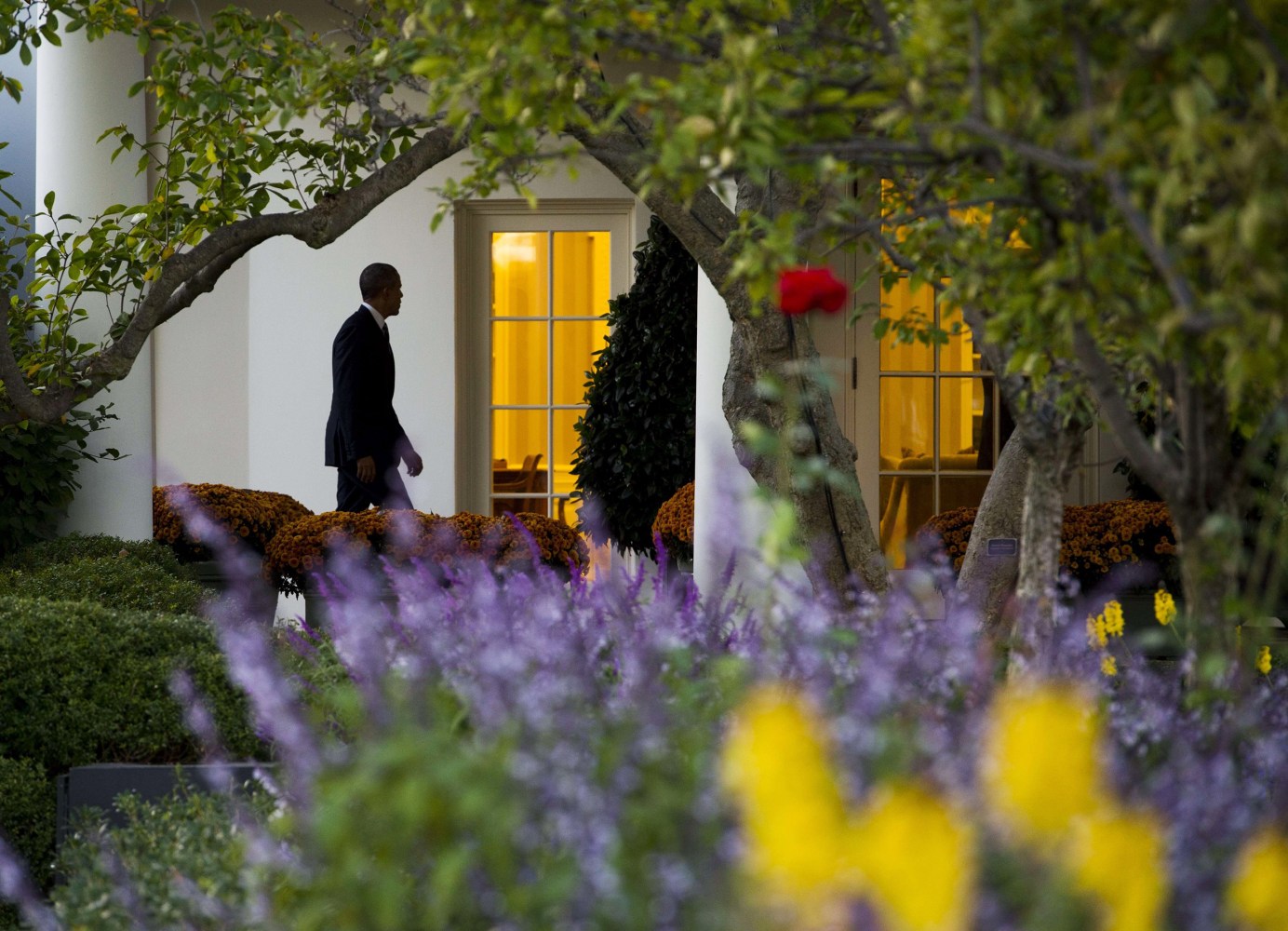
His name won't be on the ballot on November 8, 2016, but Barack Obama will be one of the most important factors in who becomes the next president of the United States.
Voters will likely face a choice between Hillary Clinton, who served in Obama's cabinet and has said she will look to build on the president's policies on many issues, and a Republican candidate who has pledged to repeal the Affordable Care Act, suspend Obama's executive actions on immigration and climate change, and sever the nuclear accord with Iran.
Watch the second installment of Lester Holt's interview with President Obama on the "NBC Nightly News" at 6:30 p.m. ET.
Obama's legacy is complicated, creating challenges and opportunities for both parties.
The Upside for Democrats
The most obvious boon for the eventual Democratic nominee is that the president has strongly embraced a changing America, where a growing number of people are openly gay, lesbian or transgender, either non-religious or practicing a faith other than Christianity, and non-white.
His support for gay marriage, measures to legalize the largely Latino population of undocumented immigrants and appointments of Asians, blacks, gays and Latinos to key posts, often for the first time in U.S. history, has solidified the Democratic Party as the one perceived as more inclusive. That gives Clinton, or whoever is the Democratic nominee, a key advantage in swing states like Virginia or Florida.
It's not only that the growing number of minority voters back Democrats, but that many moderate white voters are also likely to favor gay marriage and be wary of measures like those favored by Donald Trump that would limit the rights of Latino migrants.
On these cultural issues, the official positions of the Republican Party, like opposition to gay marriage, will force the GOP nominee to campaign on positions that are in the minority among Americans.
"I believe we will never again elect a president that opposes same-sex marriage. The rhetoric has cooled some, but the Republicans are still more than a couple of steps behind the country, and dozens of steps behind younger Americans of both parties. Watching a politician explain to younger voters why they oppose marriage equality is so uncomfortable it makes you cringe, it's almost as if they are speaking two separate languages," says Dan Pfeiffer, who was President Obama's top political adviser until earlier this year.
The Downside for Democrats
For Democrats, the most obvious challenge posed by Obama's legacy is on foreign policy.
U.S. presidents have limited power to alter events abroad. But the rise of the Islamic State, an increasingly assertive Russia and sectarian conflicts throughout the Middle East have happened on Obama's watch. On the campaign trail, Marco Rubio, one of the leading GOP 2016 candidates, says all these crises show America is being "humiliated" by foreign leaders.
And Obama's foreign affairs record includes a number of blunders, perhaps most notably when referred to ISIS as a "jayvee team" only eight months before he was forced to start U.S. airstrikes to fight the Sunni insurgent organization.
Clinton of course was both the president's secretary of state and a key architect of the Iran nuclear agreement. She has already started campaigning against some of Obama's foreign policy moves, arguing the president and his team should have been forceful in taking on Russian President Vladimir Putin and not allowed relations to become so tense between the U.S. and Israeli Prime Minister Benjamin Netanyahu.
But it will be hard for Clinton to suggest every mistake in Obama's foreign affairs approach happened after she left the State Department in 2013.
Obama's emphasis on diplomacy and cautious posture in terms of intervention abroad were what he campaigned on: a complete reverse from the muscular, aggressive foreign policy of George W. Bush. The president has brought most U.S. troops home from Iraq and Afghanistan and not started another war effort with large numbers of troops.
So the Republican candidates must avoid seemingly like they will repeat Bush's approach, which the public strongly opposed. If they oppose the nuclear deal, GOP candidates must illustrate how they can restrain Iran's weapons development without starting a war.
Political scientists argue that one of the most important factors determining which party will win a presidential election is the economy. And on this issue, the Obama legacy is mixed. He has presided over a recovery from the deep recession that started in 2008. Because of that job growth and Obamacare, the number of Americans without health insurance has plunged downward.
At the same time, wages in the middle-class have been largely stagnant and many of the gains in the recovery have gone to the wealthy, as even Clinton has argued.
"Our poor families are becoming poorer, and 70 percent of us are earning the same, or less than we were 12 years ago. We need new leadership, and we need action," said ex-Maryland Gov. Martin O'Malley in last month's Democratic primary debate, using words Republicans will likely repeat next fall in suggesting Obama's party should not have a third straight term in the White House.
The Uncertain Big Picture
These policy results in part shape a fourth critical factor that will help determine which party wins the White House: Obama's overall approval rating. Currently, between 45 and 50 percent of Americans approve of the president. If he maintains that number, he will be much more popular than Bush, who had just a 25 percent approval rate when Obama was elected in November 2008.
At the same time, Obama is unlikely to reach 57 percent, the approval ratings of both Ronald Reagan in November 1988 and Bill Clinton in November 2000. Both of those presidents' designated successors won the popular vote, although Gore's eventually lost the Electoral College, and the White House, to George W. Bush.
Obama, according to his aides, is deeply invested in having a Democrat succeed him, aware that some of his biggest accomplishments, like Obamacare, could be reversed by a GOP president and Republican-controlled Congress.
What is unknown is how he will position himself over the next year, aware that his decisions will affect the prospects of the Democratic nominee. The president has been very aggressive in his seventh year, speaking out bluntly on racial issues that he had often been silent about before, pushing through the Iran deal, fighting for the controversial Trans-Pacific Partnership and proposing to make community college free and universal.
He is already intent on pushing through either this year or next a bipartisan bill that would reduce jail sentences for non-violent offenders of drug crimes. And the president is considering an executive action to expand background checks for gun sales, taking on an issue that many Democrats say hurts their chances of winning elections.
Obama's actions next year may have little impact. There appear to be relatively few swing voters in America, so a large swath of the country's vote is already known, a year from the election. It's hard to see either the Democratic or Republican presidential nominee getting below 45 percent of the vote.
But Obama's legacy is already on the ballot next year, even if he is not. Clinton is not his vice-president, but some of Obama's top staffers now work for her, and she is campaigning to expand his policies, particularly on economic and cultural issues.
Perhaps the most consequential president of this era was Ronald Reagan and that was in part because George H.W. Bush, Reagan's vice-president, was in office and achieved one of Reagan's biggest goals: the fall of the Soviet Union. Obama is already a historic figure, for having been the first non-white person elected president. But his push to make American more inclusive would look even successful if he helped ensure his successor was the first female president. 

Video - President Obama relentlessly mocks Republicans, 2016 field

“د سولې په راوستلو کې د چین ونډه مهمه ده”


د افغانستان ولسمشرمحمد اشرف غني وايي چین او د افغانستان نور ستراتېژیک هیوادونه باید لومړی د افغانستان او پاکستان تر منځ او 
بیا د سیمه ییزې پایښتي سولې لپاره ګډ او دوامدار اقدامات وکړي.

د افغانستان ولسمشرمحمد اشرف غني وايي چین او د افغانستان نور ستراتېژیک هیوادونه باید لومړی د افغانستان او پاکستان تر منځ او بیا د سیمه ییزې پایښتي سولې لپاره ګډ او دوامدار اقدامات وکړي.

ښاغلي غني د سه شنبې په ورځ په کابل کې د افغانستان او چین د اړیکو د شپېتمې کلیزې په مناسبت په جوړې شوې غونډه کې وویل
چې چین د سیمه ییز ثبات په برخه کې ستراتېیک شریک او په افغانستان کې د سولې د راوستلو لامل دی.
 ((موږ د چین او خپلو ستراتېژیکو همکارانو لکه امریکا، اروپا، استرالیا او کانادا همکاریو ته په یوه سترګه ګورو چې ټول له یو بل سره په ګډه د یوې پايېښتې سولې لپاره لومړی د افغانستان او پاکستان تر منځ د دوو خپلواکو هیوادو د مساواتو له مخې او بیا د سیمې د سولې لپاره مشترک او دوامدار اقدامات وکړو.))
ښاغلي غني دغه شان وویل له بده مرغه افغانستان او چین چې سولې ته ژمن دي د سیمه ییز او نړیوال ترویزم له ګواښ سره مخ دي.
د افغانستان او چین د اړیکو شپیتم کال پوره شو او له همدې امله د چین د ولسمشر مرستیال کابل ته راغلی دی.
په دغه کتنه کې د افغان او چیني چارواکو تر منځ درې تفاهم لیکونه هم لاسلیک شول.
دغه درې تفاهم لیکونه د کابل په څلور دروازو کې د چاودېدونکو موادو د کشف د ماشینونو نصب د پوهنې له انستیوت سره د تخنیکي همکاریو او د ۷۹ ملیونو ډالرو په ارزښت د استوګنې د لسو زرو کورونو جوړول دي.
په ورته وخت کې د چین د جمهور ریس مرستیال لي یوان چاو وايي دوی هیله لري چې هر څومره ژر چې کېږي افغانستان ته سوله راشي.
(( موږ د افغانستان د وضیعت د ښه کېدلو غوښتونکي یو، چین د افغانستان په مشرۍ د سولې له پروسې او له ګوانډیو هیوادونو سره یې د اړیکو په ښه کولو کې له دغه هیواده ملاتړ کوي، چې به اوس او په راتلونکي کې د افغاتنستان یو ملګری او د اعتماد وړ هیواد وي، او مونږ هیله لرو چې په دغه هیواد کې ژر تر ژره یوه پایښتي سوله ټینګه شي.))
په ورته وخت کې یو شمېر سیاسي کارپوهان وايي چې، چین د نړۍ له پیاوړ هیوادونو څخه دی او له پاکستان سره هم نېږدې اړیکي لري او کولای شي پاکستان دې ته اړ کړي چې د افغانستان د سولې په پروسه کې رېښتینې همکاري وکړي.
افغانستان ته د چین د جمهور ریس د مرستیال سفر په داسې حال کې کېږي چې د کابل او اسلام اباد تر منځ اړیکي خړ پړ شوي د طالبانو سره د سولې خبرې هم ځنډېدلي دي.
بل خو افغانستان هڅه کوي چې د امریکا او ناټو تر څنګ د چین او روسیې په شان د سیمې د هیوادونو پوخي او اقتصادي مرستې هم راجلب کړي.
http://www.mashaalradio.com/content/article/27342961.html

(RT Documentary) - Afghan Overdose: Battle against opium trade

Afghanistan is the world’s biggest exporter of black-market opium, from which heroin is made. It’s a multi-billion dollar business, responsible for around a hundred thousand deaths every year and it’s a major source of income for terrorists. RT Doc traveled to the poppy fields where death is harvested to find out why no one can put a stop to this deadly trade.

Pakistan is lagging behind in dealing with natural disasters


By 


Sichuan is a province in southwest China that was completely destroyed in May 2008 due to a mighty earthquake that is still regarded as second most powerful tremor in history in terms of economic loss. The total loss was estimated at $191,913 million and there were 10 million displaced persons along with 87,150 dead after that catastrophe. The amount of people without shelter is the highest in the history of natural disasters, according to the BBC. The scope of devastation can be gauged through a single precedent that for the first time China was forced to acquire international assistance to rebuild its infrastructure. The governor of the province in 2012 announced in a public gathering that the entire province had been reconstructed in the short span of time with improvised Standing Operating Procedures (SPO) for buildings that can now bear the heavy shocks of earthquakes. History witnessed that the same province was jolted once again in 2013 but not a single building collapsed. It was the success story of a developed nation that lifted itself from the debris of the worst ever catastrophe of human history.
The earthquake of 7.5 magnitude that hit Pakistan this October reinvigorated the terrifying memories of the October 2005 earthquake, when more than 80,000 people were reported dead and nearly 2.8 million were displaced. The recent earthquake did not cost as much in comparison because its epicentre was far away from Pakistan. According to the data released by National Disaster Management Authority (NDMA), 281 people have been declared dead in this natural disaster and nearly 2300 were injured. It seems that our institutions that deal with disaster management and plan precautionary measures have not learnt much from past experience as 35,492 houses were damaged in this earthquake if we believe the data released by NDMA.
The earthquake of 7.5 magnitude that hit Pakistan this October reinvigorated the terrifying memories of the October 2005 earthquake, when more than 80,000 people were reported dead and nearly 2.8 million were displaced
A development expert and analyst, Salman Abid, who has carried vast research in the field of local bodies, governance and disaster management, told DNA that the modern world has made much progress but here in Pakistan we are not ready to take natural disasters seriously even today. He was of the view that countries like Japan, Malaysia and China have invented modern techniques and SOPs to tackle the shocks of an earthquake but in Pakistan our rulers and citizens end up by just terming an earthquake the “punishment” for our bad deeds. He further added that prime minister and chief ministers do not bother to conduct the meetings of NDMA and Provincial Disaster Management Authorities (PDMA’s) respectively.
The Earthquake reconstruction and Rehabilitation Authority (ERRA) was established through an ordinance just after the earthquake of 2005 and was made a permanent body by the Pakistan People’s Party (PPP) led government in 2011. The mission statement of ERRA was to reconstruct and rebuild the destroyed houses with “higher” standards of reconstruction and rehabilitation. It is a matter of shame that the slot of ERRA chairman has been lying vacant since 2013 and no effort was made by the government to decide the future of this body. As per some reports, it was decided once in the cabinet in 2014 to quash the ERRA but this idea could not be materialised keeping in view legal implications behind it.
An Assistant Professor of Geography at Government College University (GCU) Lahore, Syed Yasir Usman, was of the view that geographically, Pakistan is situated in a highly risky area and prevention measures can mitigate the effects of earthquakes. He added that building codes must be implemented in this regard. The scientific study of earthquakes is called as seismology and according to Syed, there is not a single seismologist working in the Pakistan Meteorological Department (PMD).
The government has released data which shows that 25,842 houses have been damaged in Khyber Pakhtunkhwa and 9038 in FATA. This figure may tend to rise and actual loss is yet to be ascertained keeping in view the tough terrain of that area. The lawmakers from Bajaur Agency have rejected the government’s claim that 8120 houses were damaged in the Agency because they think that more than 20,000 houses were damaged. Winter is inching closer and to provide shelter to the homeless must be a great concern for the state in these circumstances. All over the world, disaster management is divided into two steps: risk management prior to any disaster and post disaster management. In Pakistan, risk management is completely neglected and all funds are allocated once the disaster takes place.
The government has released data which shows that 25,842 houses have been damaged in Khyber Pakhtunkhwa and 9038 in FATA
According to Salman Abid, precautionary measures must become a part of the national curriculum and resources should be allocated to the third tier.
“There was a time when the training of civil defense was a necessary part in school and college life. This practice is a good option to impart precautionary measures to the citizens. The state must facilitate welfare organisations in relief work and should work jointly in affected areas”, Abid said while talking to DNA.
It is a sheer crime by the state that homeless people have to wait for long to get shelter after every natural disaster despite tall claims of the government. Every time a disaster approaches, the military is called for evacuation and that is not a good sign for civil institutions. The ongoing relations between Pakistan and China are exemplary in the wake of the China Pakistan Economic Corridor (CPEC) and Pakistan must use Chinese expertise to deal with natural disasters as well.

Pakistan - No charges brought against four Muslim teachers who tortured a Christian Head Master for his faith

A Christian Head Master, who was tortured for being a Christian by Muslim teachers working in his school, still facing pressure not to pursue complaint against the perpetrators.

In keeping with details, Saddique Azam who was tortured by four Muslim teachers for being a Christians and appointed as a Head Master of the school in Kasur District. He was remained hospitalized after being severely injured after the Mulism teachers beat him ruthlessly.

The victimized Christian Head Master Saddique Azam says, “On October 1, Muhammad Javed came to my office and told me to write on the school letterhead that he was on duty, so he could be restored. I refused to issue the letter because he was actually absent when the monitoring team was visiting the school.”
Saddique Azam reveals that he is being pressurized to withdraw charges against the four Muslim teachers who had persecuted him. He says he, is left with no choice but to withdraw his complaint.

The incident took place on October 5, when four Muslim teachers namely, Muhammad Javed, Rana Khalid, Muhammad Asif and Muhammad Khasif allegedly beat Christian Head Master of a Primary school in Pernawa near Phool Nagar in Kasur District. Saddique Azam the targeted Christian says he is being urged by the District Education Officer to pull out his complaint against the four Muslim teachers who had tortured him. DEO warned him that if he pursues this case, he would have to face charges of taking revenge filed against himself.

According to a statement made by Saddique Azam he was beaten after one of the perpetrators Muhammad Javed urged him to write a letter, giving fabricated justification of Muhammad Javed’s absence from the school. This Muslim teacher had been suspended for being absent from the school without permission.

Saddique Azam reveals that on October 1, when he refused to issue a fake letter, Muhammad Javed got infuriated and said, “Only a mentally sick man would make you, a chuhra (a pejorative term used for Christians), head of the centre!”


Consequently, on October 5, the four of the named Muslim teachers arrived at Saddique Azam’s office and beat him. “They beat me with sticks and hit me with punches and kicks, leaving me black and blue.” Seeing the seriousness of the incident, the rest of the school employees called the police and so the four of them were arrested later on.

“In their presence, I told City Phoolnagar Police Station Officer Hajji Aziz that none of them were beaten, and he could examine them before arresting them.” After the four of the Muslim teachers were hooked by the police, severely injured Saddique Azam was taken to Jinnah Hospital, Lahore. “There my left eye was miraculously saved. But the police released the attackers only four hours later, due to political influence.”

He laments the fact that Christians are not enjoying equal rights in the country and said,“Due to political pressure, the district education officer requested me not to pursue the case. If we had, we could have faced reprisals from our opponents, and local law enforcement agencies and politicians were supportive of them.”

“We are facing several challenges in serving our community. Hatred in terms of ‘untouchability’ against Christians still remains very high in the area,” Azam said. “If you go to the Bagu’s tea stall and tell that you are Christian, then he would order you to pick a cup from the separate crockery for Christians, wash it yourself, then after taking tea you are supposed to wash the cup and put it back from where it was taken. Even in several places in our city, barbers do not cut hair of Christians because they think their tools would become unclean.”

- See more at: http://www.christiansinpakistan.com/kasur-no-charges-brought-against-four-muslim-teachers-who-tortured-a-christian-head-master-for-his-faith/#sthash.bXPaHPGd.dpuf

Lahore: A girl who converted to Christianity facing life threats from her family

A formerly Muslim girl who converted to Christianity is facing sever threats to her life from her won family.

According to details, a 29-year-old, girl who had converted to Christianity is facing a life threatening situation as a FATWA has been issued against her; claiming she has no right to live because she is an apostate.

This girl, resident of a city in Punjab province (whose name is being withheld for the sake of her security); exhibited an inclination towards Christianity since quite some time. She used to read the Holy Bible while still at her father’s house. Moreover, she used to visit church with her Christian friend after conversion.

In 2005, she accepted Christ and began practicing Christianity, while still in her own house. Seeing her increasing interest in Christianity, her mother strictly, prohibited her to stop her going to church and reading the Bible. However, she continued living her newly found faith.

It so happened that , one day her mother saw her praying like Christians, She became infurious and started beating her violently. Subsequently, her mother locked her up in her room, so that she could not visit the church. The family’s growing concern was to hide their daughter’s interest in Christianity. Moreover, her mother did not disclose to the rest of the family members that their daughter read the Bible regularly and prayed like Christians.

One day, the girl managed to escape from her house some how. She reached a Christian friend’s house and asked for help. Subsequently, her Christian friend offered her shelter and protection. Since the time, she remained away from her house, her mother told all the family that she was away in another city for the sake of her new job, in some way her family got tip off of her conversion and was furious.

With the knowledge that their daughter had converted to Christianity and had deliberately fled from the house for the sake of practicing Christianity, the family started a frenzied search for her in order to kill her. In the due course, her family sought her and found her.

When the enraged Muslim family reached the house of the Christians, they started demanding that their girl be brought out to them. He father along with other family members started harassing the Christian family which has provided her shelter in their house. However, the girl managed to escape before her family could find her. After escaping from the house of her friend, she is now in an unknown place where she is safe from her family.

When the Muslim mob could not find their daughter, they started beating the Christian family. However, the neighbours jumped in and were successful in saving the Christians from the hands of the infuriated Muslims. Moreover, the Muslim mob threatened the Christians that if their daughter is not returned to them, they will kidnap their daughters as well as burn the houses of Christians in the area. The father of that girl also filed and FIR against the Christian friend and the family that they had kidnapped his daughter.

Later on, the girl married a Christian man and since then she had been facing life threats. With the passage of time, the harassed Christian family moved to some other location just for the sake of their lives.

- See more at: http://www.christiansinpakistan.com/lahore-a-girl-who-converted-to-christianity-facing-life-threats-from-her-family/#sthash.paTCuTC0.dpuf

He Named Me Malala


Hailing from the Swat district in Pakistan, Malala dared suggest that girls deserve an education directly conflicting with the Taliban’s decree. For being so brave and courageous, an attempt was made on her life and she was shot in the head. Thankfully due to doctors in both Pakistan and Birmingham she survived and rehabilitated into an international symbol of defiance and a beacon for women’s rights.


Director Davis Guggenheim is no stranger to the genre having previously completed An Inconvenient Truth and Waiting for Superman and he puts his skills to good use weaving a story together to give us a fuller picture of Malala, the girl behind the headlines. A mixture of animation and interviews with the main protagonists in the tale intercut with video footage from the time allow us to see how Malala didn’t quite lick her courageous tendencies off a stone. Her father Ziauddin was the inspiration in her life, through his founding of a school and dedication to education for all he sparked the flame of courage in his young daughter.
The film shows how a force like the Taliban slowly encroaches upon a community winning them over bit by bit until they are completely indoctrinated. They were twisting the teachings of Islam to their lust for power and Ziauddin could not sit idly by and do nothing. He began to speak out instantly putting his own life and that of his family at risk. When the latest edict came through proclaiming that no females could attend school or seek an education and the Taliban began blowing up schools Malala found her voice and would not be silenced.
It’s a heart-warming tale depicting the ordinary story of a father’s love for his daughter while highlighting the importance of education. The father points out how the Taliban talked directly to woman who had never been addressed before or knew nothing of the real world. We see this with Malala’s mother who never received a formal education. She comes across as unsure of herself and careful not to cause a fuss. Malala knows that she is fighting for the young girls of the world who like her mother weren’t afforded the same chances she was lucky enough to receive.
The piece doesn’t shy away from the truth of the incident that propelled Malala into the spot light of the world’s media. It shows the aftermath of the school bus that she was traveling on and how it took some time for her to fully rehabilitate. We also get an insight into how difficult it is for Malala to be a normal teenage girl and international humanitarian figure.
The film is a very slick production with no rough edges or great revelations. Yet this can be forgiven as the root of the documentary is an instructional teaching companion to show all children of the world, especially girls, that you deserve the right to an education. It shows that the idea of an educated woman is so threatening to certain factions of society that they are prepared to kill a child to prevent it from happening.
- See more at: http://spooool.ie/reviews/in-cinemas/12162-he-named-me-malala#sthash.oHRFBZed.dpuf

Persecution of Hindus in Pakistan


By Manzoor Ahmed

A few days ago, reports cropped up from Jaisalmer in Rajasthan about 88 Hindus resident in Pakistan, who had come to India on pilgrim visas refusing to return home. Having come on a pilgrimage to India, these Pakistani nationals who had been staying in Rajasthan said they did not want to go back to Pakistan on account of the persecution of Hindus there.


Local authorities who have been monitoring the situation said the Pak Hindus have been staying in Jogiyon-ke-Vas, near Gajroopsagar. The Hindus belonging to Daharki (Sindh Province) in Pakistan had come on a six-month visa to India issued in April 2015. After visiting Haridwar, they came to Jaisalmer via Delhi and Jodhpur. The group applied for extension of their visa as they did not want to go back to Pakistan. 

A similar incident occurred last year when Kube Singh of Pakistan along with 40 other Pakistani Hindus, including 17 members of his family, landed in India on a religious visa. The family came to Gangangar which has a sizeable number of families belonging to the 'Auth' clan. Even these families refused to go back to Pakistan citing persecution in Pakistan. Singh in the letter to the Rajasthan State Government stated they had sought citizenship in India saying, "India is our grandmother and we are natural citizens of this country". In 2011, 300 families went to India on a pilgrimage and 60 of them stayed back.

The Pakistan Hindu Council (PHC) claimed in 2012 that there were seven million Hindus in the country. Nearly 94 per cent of them are living in Sindh. The 1998 Official Census of Pakistan, however, puts the figure at less than 2.5 million and they constitute around 1.6 per cent of the total population of Pakistan. If the Scheduled Caste Hindus in Pakistan are included then the total figure would be around 3 million. 

The 2014 Report of the US State Department on Religious Freedom states that discrimination against Christians, Hindus, Sikhs, and Ahmadis in admission to higher education institutions has persisted. Minority leaders reported their communities faced restrictions in securing admissions into colleges and universities. Sikh leaders said that in some instances, Sikh students were required to obtain a certificate of permission from the Evacuee Trust Property Board, which they said was a lengthy process that discouraged Sikhs from pursuing higher education. This is just one instance of the wide scale repression of minority rights in Pakistan. 

The Supreme Court of Pakistan announced a detailed judgment regarding minorities’ rights on 20 June 2014, following its 23 February 2014 government action against Hindus in Tando Adam, Sindh, who were denied access to a local temple. The Court directed the federal government to establish a task force to ensure the safety and protection of minorities in the country, develop a strategy for promoting religious tolerance, and evaluate school curricula to promote a culture of religious and social tolerance. The order called on the Government to create a National Council for Minorities’ Rights. On 14 July 2014, the government announced it would create a National Commission for Minorities with Christian, Hindu, Muslim, and Sikh representatives. The Court also directed the federal government to take steps to discourage hate speech in social media and bring accused violators to justice under the law. 

The string of violence against minorities, especially Hindus and Christians in Pakistan in recent years has forced scores of Hindus to flee Pakistan. Some of these are landless labourers. Most of those who came to India in 2014 hailed from Umerkot in the Tharparkar region (Sindh) which has 60 per cent of the Pakistani Hindu population. The Hindus there are frequently persecuted by landlords and subjected to forced conversions.

Though there have been reports of forced conversion of Hindu girls from different parts of Sindh in recent years, community leaders concede that this was generally ignored because the victims belonged to the lower castes. In 2012, the case of Rinkle Kumari, a Hindu girl who was allegedly kidnapped by the Pakistan People’s Party parliamentarian, Mian Mithu, and forcibly married to his son hit the headlines. Three such cases came up for hearing before the Supreme Court in Pakistan. However, the apex court sent the girls back to their ‘husbands’ ruling that they wanted to stay married to them! The girls’ families maintained they said ‘yes’ under duress as they were threatened with dire consequences. No enquiry was ordered into the actions of Mian Mithu — one of the Pirs of Bharchundi Sharif. This added to the Hindu community’s fear that the 2012 judgment would strengthen his hands. 

Though the Hindu community in Pakistan had seen it coming for a while now, since early 2012 there was an escalation in violence, kidnappings and forced conversions of girls according to Amar Nath, the then Vice Chairman of Human Rights Commission of Pakistan, Sindh Chapter. At that point he claimed that 50 per cent of Hindus living in Upper Sindh had moved out, the majority moving to Karachi. Those with the means had also gone overseas. In his estimate, 3,000 families had moved to India between 2009 and 2011. 

Minority rights in Pakistan are thus regularly trampled upon and radicalisation of society has emerged as a major societal problem. The challenge before the Pak state has been and continues to be to check the spread of radicalisation and extremism particularly in terms of its impact on minorities. Jinnah’s Pakistan has turned its back on its founder and is today home to the world’s best known extremists, terrorists and religious fundamentalists. That is what the world really needs to focus its attention on. - See more at: http://www.pakistanchristianpost.com/detail.php?articleid=2572#sthash.A5qSZB9y.dpuf

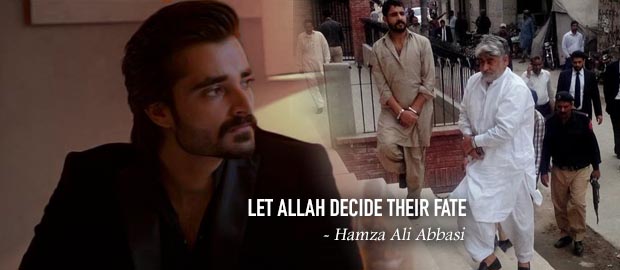
Pakistani actor Hamza Ali Abbasi speaks out in defense of Ahmadiyya Muslims


Pakistani actor Hamza Ali Abbasi, who has not shied away from discussing controversial issues on social media, has this time spoken out in favor of religious freedom and criticized the country’s growing intolerance towards Ahmadiyya and Shia Muslims. In a post on Facebook this weekend, Mr Abbasi said, If you think Ahmedis and Shias are non Muslim, then let ALLAH (SWT) decide their fate on the day of Judgement. Will you dare to punish, hurt or kill a human being for his faith and challenge ALLAH (SWT) on a matter that is only his domain? Judgement and punishment on matters of FAITH is only the domain of Allah (SWT). According to a recent PEW survey, 66% of Pakistanis said they consider Ahmadis to be non-Muslim and 37% considered Shias outside the fold of Islam. Ahmadiyya were declared non-Muslims through a constitutional amendment in 1974 by then Pakistani President Zulfikar Ali Bhutto. A decade later, they were barred from proselytising or identifying themselves as Muslims by military dictator Muhammad Zia-ul-Haq. Since then followers of Ahmadiyya Islam have been subject to severe persecution in Pakistan.

Read more at: https://www.rabwah.net/pakistani-actor-hamza-ali-abbasi-speaks-out-in-defense-of-ahmadiyya-muslims/

Pakistan - LB polls: 'Dacoit' elected on PML-N ticket

The election of a dacoit on the PML-N ticket spotlights flaw in the scrutiny system both on the political and election commission side.
Taking a prompt notice and rising to the occasion to rectify the error, the Election Commission has suspended election of Tahir Naveed and the PML-N dismembered him in party and begun inquiry into the fact how a dacoit and mobile sets snatcher made his way to the party. On the direction of the Chief Minister Muhammad Shahbaz Sharif an exercise to screen out such other elements in the elected lots of the party men in the Local governments election has been launched.
Tahir Naveed voted in the General Councillor seat from UC-124 ward 6 of the City securing 328 votes. He was booked by PS Factory Area on the charges of looting on gun point Rs15lakh besides enjoying the spree of mobile sets snatching that has become a favourite pastime of every ordinary criminal in the country. The seat he secured may not be much important but the process he managed to pass through successfully is significant to bring us home the fact how the criminal minded have become adept to circumvent law and the claimed water tight scrutiny of the candidate at the level of the PML-N.
It is also surprising that no objection was raised at the time his nomination papers were being looked into by the EC. The Commission in this episode is much less guilty than the political side as it indulges into only that material that is produced against a candidate before it although it has power to learn about the candidates from its own sources as well. However if this UC level shortcoming by a major political party is measured at the provincial level where thousands of candidates aspire for the ticket, a doubt strikes the mind that some others may also be of the same dubious character who managed to take political shelter through deceit.
In order to judge credentials and abilities of the candidates, the PML-N had set up three-tier system from office bearers at the local level to the legislators at the head of the central command. Not that but the party had also set a yardstick to see the candidates fitting in that. Despite this foolproof and robust mechanism a person wanted by police in dacoity case sneaked in the party ranks is surprising. The good aspect of the matter is the party took immediate action.
On contact, City President, PML-N, Muhammad Pervez Malik felt sorry for it and explained that Tahir in fact originally belonged to the PTI and he was awarded party ticket when murder to two candidates forced him to come to our side and we acknowledged him after a Masjid Committee gave us in black white about sound character and uprightness of this person. To a question, he said, Tahir is the exclusive case and no other of this type has been detected in the elected LB lots of the party.

Pakistan - Supreme Court on blasphemy


FAISAL SIDDIQI

THE killing of Punjab governor Salmaan Taseer by his security guard Mumtaz Qadri, on the allegation of blasphemy and in the name of Islam, was never merely a murder case. It raised fundamental questions regarding the application of the blasphemy law, right to free speech, Islam and violence, and the power of the courts and state in the face of violence committed in the name of religion.
While dismissing Qadri’s appeal against his conviction for Salmaan Taseer’s murder and upholding his death sentence, the Supreme Court, in a judgement authored by Justice Asif Saeed Khosa, deals with the above questions. The judgment is categorical but is characterised by penetrating reasoning; it is concise but clear and courageous and without prejudice.
Findings of the Supreme Court: “The facts of this case are quite simple and straightforward admitting of no ambiguity but the issues posed before us have been made out to appear [emphasis added] existential and of metaphysical proportions involving religious belief and philosophical reflection,” the Supreme Court curiously notes. It is this puzzle which leads to its six principle findings.
Firstly, Mumtaz Qadri doesn’t deny killing Salmaan Taseer but puts up a legal defence to justify the deed. His legal defence is grave provocation (ie Salmaan Taseer allegedly provoked Qadri which led to loss of personal self-control) because of the alleged statements made by Taseer about the blasphemy law in relation to the Asia Bibi case and the alleged conversation between Qadri and Taseer criticising the blasphemy law immediately before Qadri killed him. The court dismissed the factual basis of this legal justification by holding that Qadri had failed to prove these statements as well as the conversation with Taseer, going to the extent of holding that an alleged conversation just before the killing is “nothing but an afterthought”, or in other words, a lie.

The Qadri case is a good example of the civilian justice system’s ability to deal with terrorism cases.


Secondly, the Supreme Court notes that the issue in this case is not about whether or not anyone is allowed to commit blasphemy; in fact, the “real question involved in the present case is as to whether or not a person can be said to be justified in killing another person on his own on the basis of an unverified impression or an unestablished perception that such other person has committed blasphemy”. The answer to this question is provided by the Quranic verses (Surah Al-Hujurat, verse 6; Surah An-Nisa, verse 94; Surah An-Nisa, verse 83), with which the judgement begins. These, according to the Supreme Court, warn against acting on “hearsay without getting his information ascertained, verified”. In other words, Qadri acted on hearsay and acted against Islamic injunctions.
Thirdly, “any call for reform of the law regarding the offence of blasphemy ought not to be understood as a call for doing away with that law and it ought to be understood as a call for introducing adequate safeguards against malicious application or misuse of that law”, is the Supreme Court’s clear answer to the flawed argument that criticising the manmade blasphemy law is blasphemy.
Fourthly, although not a direct question in this case, the Supreme Court also categorically declares that no existing law authorises the killing of someone because he has, or is perceived to have, committed blasphemy. Thus, the doors to justifying extrajudicial killing for blasphemy have been shut.
Fifthly, the court is categorical in its critique against Qadri’s actions, who acted “cruelly and brutally” by pumping 28 bullets causing 32 grievous injuries and acting illegally and against Islamic injunctions by killing a person in his protection as part of his official duty. It is precisely for this reason and to shut the door to “religious vigilantism which may deal a mortal blow to the rule of law”, that the Supreme Court even declined to reduce the death sentence to life imprisonment.
Sixthly, killing people in the name of religion is not simple murder but a terrorist act, the purpose of which is also to terrorise people to prevent the freedom of speech.
Broader implications: Three broad implications follow:
Firstly, debating and changing the blasphemy law to protect against its misuse or misapplication is permissible but the implied message of the Supreme Court is against the repeal of such a law. Thus, the liberals should not misread this judgement.
Secondly, this is not a victory for secularism but the victory of constitutional over militant Islam. This is the broad consensus of the 1973 Constitution, ie enforce Islam but through constitutional and non-violent means. There is no secularism versus Islam divide in Pakistan. Rather the divide is among various interpretations of Islam with or without violence and this case is a major victory for constitutional Islam.
Thirdly, the Qadri case is a good example of the civilian justice system’s ability to deal with terrorism cases involving violence committed in religion’s name — a competent investigation and prosecution, a case which lasted only four years from trial to the last appeal, courageous judgements from the trial court, Islamabad High Court and the Supreme Court, and the accused person given full due process rights with a fair, open and transparent trial and appeal process. Therefore, this case must lay to rest the propaganda in favour of military courts.
Context of courage: While fully recognising the courage shown by judges there is also a strategic context to it. Firstly, to acquit Qadri would mean to encourage disobedience of state authority by state security officials themselves, whose obedience is essential even for judicial action. Thus, the state’s interest in enforcing obedience by state security officials contradicted the requirements of vigilante militant Islam. Secondly, to acquit Qadri would mean to encourage state officials to engage in direct action for enforcing ‘justice claims’. Thus, executive officers inspired by militant Islam were questioning the judiciary’s exclusive authority to do justice, causing the judiciary to strike back.
In essence; though, this case is not about Islam or blasphemy, the Constitution or state authority but rather about the key trends in Pakistan ie settling disputes through violence, loss of state’s monopoly over violence and the judicial fight-back.

Pakistan Blacks Out Reporting on Islamic Group


A letter to television and radio stations from the Pakistan Electronic Media Regulatory Authority late Monday named 72 “terrorist/banned” organizations that aren’t to be given media coverage.
The list also included the Afghan Taliban and its ally, the Haqqani network—Afghan insurgent groups that Kabul and Washington have been asking Pakistan to suppress.
Pakistan has long been accused of supporting jihadist groups to promote its agenda in India and Afghanistan, an allegation it denies. During a visit to Washington last month, the Pakistani prime minister promised action against militant groups.
“This will have an impact on these organizations,” said Muhammad Amir Rana, director of the Pakistan Institute of Peace Studies, an Islamabad-based think tank. “There is still confusion in some government quarters about completely banning these organizations.” The Electronic Media Regulatory Authority’s order is at odds with the interior ministry, which doesn’t list Jamaat-ud-Dawa, the Taliban or the Haqqani network as banned.
Islamabad has resisted a ban on Jamaat-ud-Dawa, or JuD, despite the fact that the U.N. says the group is connected to the people who carried out the 2008 assault in Mumbai, India, which killed 166 people.
The U.S.—which lost six citizens in that attack—and India have repeatedly asked for action against the group. For Delhi, Pakistan’s inaction has been a big obstacle to peace talks. Washington has a $10 million bounty on the head of JuD’s chief, Hafiz Saeed. JuD operates openly in Pakistan, holding rallies and carrying out charity work. It is currently providing aid to victims of last month’s earthquake, which killed nearly 300 people and destroyed thousands of homes. Its work has attracted media attention domestically and internationally.
In an official notice to media, the regulator described JuD and its charity wing, the Falah-i-Insaniat Foundation, as aliases of Lashkar-e-Taiba, which has been banned in Pakistan since 2002. The JuD says it is unrelated to Lashkar-e-Taiba.
“Some government officials and institutions are trying to please the U.S. and India by imposing a ban on media coverage of JuD’s philanthropic activities,” said a statement from the group, warning the proscription would hinder its earthquake-relief operations.
A Pakistan government official said “Jamaat-ud-Dawa isn't banned. It’s on a watch list, they are monitored.”
In a meeting at the White House last month, Pakistani Prime Minister Nawaz Sharif told President Barack Obama of “Pakistan’s resolve to take effective action against United Nations-designated terrorist individuals and entities, including Lashkar-e-Taiba and its affiliates,” according to a joint statement issued at the time.
http://www.wsj.com/articles/pakistan-blacks-out-reporting-on-islamic-group-1446566660

Tribal journalist Zaman Mehsud gunned down in Tank

Senior tribal journalist Zaman Mehsud was killed Tuesday when unidentified gunmen opened on him in Tank area of Khyber Pahktunkhwa.
Police said Mehsud was riding a motorcycle in Dibra area of Tank when he was attacked by the gunmen. According to police, Mehsud was shot five times.
The journalist was critically injured by the firing, and was taken to the District Headquarters Hospital in Dera Ismail Khan where he succumbed to his wounds.
The FATA Journalists' Association and Khyber Pakhtunkhwa Association of Journalists condemned the killing.
Police say they are still uncertain as to the possible motive behind the killing.
Mehsud's killing comes a day after media workers in Pakistan and the rest of the world observed the International Day to End Impunity for Crimes against Journalists on November 2.
Pakistan is considered amongst the most dangerous countries of the world for journalists and ranks as the fifth worst in terms of the number of unresolved cases of violence against journalists.
More than 70 journalists and media workers have lost their lives since 2001 while pursuing their duties in Pakistan – 47 of whom were deliberately targeted and murdered for practicing their profession.

In the past decade, over 700 journalists have been killed around the world merely for doing their job. Recent years have been worse, with 2012 and 2013 ranking amongst the most brutal years for journalists.

PPP won’t tolerate attacks on journalist community: Bilawal Bhutto

Bilawal Bhutto Zardari Chairman Pakistan Peoples Party has taken notice of murder of a journalist Ali Akbar Kerio Sanghar and asked the Sindh government to immediate arrest the all culprits who are booked in FIR.
PPP Chairman condemned the murder of reporter of Sindhi Daily Sobh in Sanghar district Chotiarion town and made it clear that PPP won’t tolerate attacks on journalist community.
He expressed sympathies with the family of the slain journalist.

چیئرمین پی پی پی بلاول بھٹو کا سانگھڑ میں صحافی علی اکبر کیریو کے قتل کا نوٹس لیتے ہوئے حکومت سندھ کو نامزد ملزمان کی فوری گرفتاری کی ہدایت
پاکستان پیپلزپارٹی کے چیئرمین بلاول بھٹو زرداری نے سانگھڑ میں صحافی علی اکبر کیریو کے قتل کا نوٹس لیا ہے اور حکومت سندھ سے کہا ہے کہ صحافی کے قتل کیس میں نامزد تمام ملزمان کو فوراً گرفتار کیا جائے، پیپلزپارٹی کے چیئرمین نے سانگھڑ کے شہر چوٹیاریوں میں سندھی روزنامہ سوبھ کے رپورٹر علی اکبر کیریو کے قتل کی مذمت کرتے ہوئے واضح کیا ہے کہ پیپلزپارٹی صحافی برادری پر حملے برداشت نہیں کرے گی، بلاول 

بھٹو زرداری نے مقتول صحافی کے ورثاء سے ہمدردی کا اظہار کیا ہے


https://ppppunjab.wordpress.com/2015/11/03/ppp-wont-tolerate-attacks-on-journalist-community-bilawal-bhutto/

Bilawal Bhutto Chairman PPP stressed for an impartial inquiry into the Daraza Sharif incident in Khairpur

Bilawal Bhutto Zardari Chairman Pakistan Peoples Party has stressed for an impartial inquiry into the Daraza Sharif incident in Khairpur and the culprits involved in it should be ferreted out for severe punishment.
He was talking to Chief Minister Syed Qaim Ali Shah who called on him at Bilawal House today and briefed him about Daraza incident and the Local Bodies election results of eight districts of the province where polling was held on Saturday. Senator Sherry Rehman was also present on the occasion.

Syed Qaim Ali Shah informed the PPP Chairman that an independent group and an opposition party had fielded candidates in Daraza Sharif Union Council against each other as PPP had not nominated any candidate in the said UC. He said that investigations have started into the incident by senior and impartial police officers while Judicial Inquiry has also been ordered.

Bilawal Bhutto Zardari said that such incidents were harmful for the growth of democracy and the administration should take proper measures to avert such incidents in the next phases of Local Bodies elections.

Chief Minister also briefed the Chairman about district-wise election results and congratulated him on an overwhelming majority in Larkana, Sukkur, Qambar-Shahdadot, Jacobabad, Shikarpur, Khairpur, Kashmore-Kandhkot and Ghotki districts.


https://ppppunjab.wordpress.com/2015/11/03/chairman-ppp-stressed-for-an-impartial-inquiry-into-the-daraza-sharif-incident-in-khairpur/

Australian High Commissioner to Pakistan Ms Margaret Adamson calls on Chairman PPP

Australian High Commissioner to Pakistan Ms Margaret Adamson called on Chairman Pakistan Peoples Party Bilawal Bhutto Zardari at Bilawal House. She was accompanied by the Second Secretary Matthew Mowtell today. 


Bilawal Bhutto Zardari and Australian envoy discussed matters of mutual interests and emphasized on the need to further expand ties between the two countries in different fields.

Former Ambassador to the United States and PPP Senator Sherry Rehman was also present at the meeting.


https://ppppunjab.wordpress.com/2015/11/03/australian-high-commissioner-to-pakistan-ms-margaret-adamson-calls-on-chairman-ppp/